AFP

NASA gears up to deflect asteroid, in key test of planetary defense

Bet the dinosaurs wish they’d thought of this.

NASA on Monday will attempt a feat humanity has never before accomplished: deliberately smacking a spacecraft into an asteroid to slightly deflect its orbit, in a key test of our ability to stop cosmic objects from devastating life on Earth.

The Double Asteroid Redirection Test (DART) spaceship launched from California last November and is fast approaching its target, which it will strike at roughly 14,000 miles per hour (23,000 kph).

To be sure, neither the asteroid moonlet Dimorphos, nor the big brother it orbits, called Didymos, pose any threat as the pair loop the Sun, passing some seven million miles from Earth at nearest approach.

But the experiment is one NASA has deemed important to carry out before an actual need is discovered.

“This is an exciting time, not only for the agency, but in space history and in the history of humankind quite frankly,” Lindley Johnson, a planetary defense officer for NASA told reporters in a briefing Thursday.

If all goes to plan, impact between the car-sized spacecraft, and the 530-foot (160 meters, or two Statues of Liberty) asteroid should take place at 7:14pm Eastern Time (2314 GMT), and can be followed on a NASA livestream.

By striking Dimorphos head on, NASA hopes to push it into a smaller orbit, shaving ten minutes off the time it takes to encircle Didymos, which is currently 11 hours and 55 minutes — a change that will be detected by ground telescopes in the days that follow.

The proof-of-concept experiment will make a reality what has before only been attempted in science fiction — notably films such as “Armageddon” and “Don’t Look Up.” 

– Technically challenging –

As the craft propels itself through space, flying autonomously for the mission’s final phase like a self-guided missile, its main camera system, called DRACO, will start to beam down the very first pictures of Dimorphos.

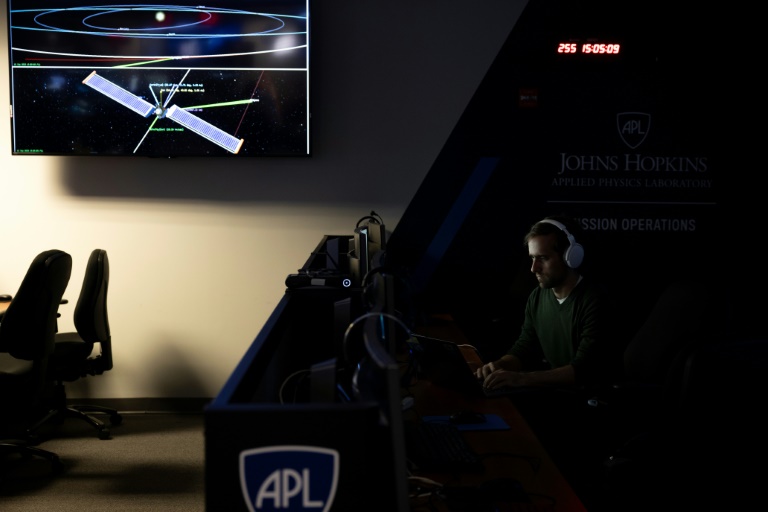
“It’s going to start off as a little point of light and then eventually it’s going to zoom and fill the whole entire field of view,” said Nancy Chabot of Johns Hopkins Applied Physics Laboratory (APL), which hosts mission control in a recent briefing.

“These images will continue until they don’t,” added the planetary scientist.

Minutes later, a toaster-sized satellite called LICIACube, which separated from DART a couple of weeks earlier, will make a close pass of the site to capture images of the collision and the ejecta — the pulverized rock thrown off by impact.

LICIACube’s picture will be sent back in the weeks and months that follow. 

Also watching the event: an array of telescopes, both on Earth and in space — including the recently operational James Webb — which might be able to see a brightening cloud of dust.

Finally, a full picture of what the system looks like will be revealed when a European Space Agency mission four years down the line called Hera arrives to survey Dimorphos’s surface and measure its mass, which scientists can only guess at currently.

– Being prepared –

Very few of the billions of asteroids and comets in our solar system are considered potentially hazardous to our planet, and none in the next hundred or so years. 

But “I guarantee to you that if you wait long enough, there will be an object,” said Thomas Zurbuchen, NASA’s chief scientist. 

We know that from the geological record — for example, the six-mile wide Chicxulub asteroid struck Earth 66 million years ago, plunging the world into a long winter that led to the mass extinction of the dinosaurs along with 75 percent of species.

An asteroid the size of Dimorphos, by contrast, would only cause a regional impact, such as devastating a city, albeit with a greater force than any nuclear bomb in history.

Scientists are also hoping to glean valuable new information that can inform them about the nature of asteroids more generally. 

How much momentum DART imparts on Dimorphos will depend on whether the asteroid is solid rock, or more like a “rubbish pile” of boulders bound by mutual gravity, a property that’s not yet known.

We also don’t know its actual shape: whether it’s more like a dog bone or a donut, but NASA engineers are confident DART’s SmartNav guidance system will hit its target.

If it misses, NASA will have another shot in two years’ time, with the spaceship containing just enough fuel for another pass.

But if it succeeds, then it’s a first step towards a world capable of defending itself from a future existential threat, said Chabot. 

'Safari for sound': New York Philharmonic fine-tunes new home

The New York Philharmonic is tuning up to open their brand-new performance space next month — and it’s not only the instruments that need to strike the perfect pitch.

The hall itself is getting trial runs, with the famed symphony testing their pieces as acousticians make adjustments to wall and ceiling panels to ensure warm, rich tones.

It’s “almost like you’re going on a safari for sound,” said Jaap van Zweden, the philharmonic’s music director since 2018. “It’s really to reinvent the sound of the orchestra.”

The Dutch-born conductor explained to AFP that for years, the former hall’s dated design did little to contribute to the acoustics created by the instruments.

But now, “they get a lot of sounds and beauty back, that’s a little new for them… this honeymoon between them and the hall needs some time.”

The $550 million overhaul of the space that first opened in 1962 accelerated after concerts shut down at David Geffen Hall in March 2020.

As halls across the country went dark, the philharmonic, in partnership with Lincoln Center — the arts complex on Manhattan’s Upper West Side — finally forged ahead on reconstructing their home, talks of which dated back to 1995.

More than 600 construction workers put in hours at any given time, six days a week with multiple shifts and overtime, to revamp the building into a state-of-the-art space with improved acoustics and more accessible design.

The renovation reduces capacity from 2,738 to 2,200, but visibility is improved for nearly every seat in the house. 

And some seating is now positioned behind the orchestra, whose stage is 24 feet (seven meters) forward from its previous spot against the wall, giving concerts a surround-sound feel.

The walls were carefully reconstructed and faced with beech wood, explained chief acoustician Paul Scarbrough, to support the room’s bass frequencies.

Another new feature is an adjustable acoustic canopy: “We were able to fine-tune how much energy is returned to the musicians on the platform so they can hear themselves and play together, versus how much is directed out to the audience,” Scarbrough said.

“So that they get a rich, enveloping experience of the orchestra.”

– New ‘energy’ –

In collaboration with Van Zweden, a team from the firm Akustiks selected a variety of works “that would bring out different colors, textures, timbres, layering of instrumentation,” Scarbrough said.

They then began making subtle adjustments to the room’s features to perfect the sound’s quality onstage and in the audience.

Violinist Yulia Ziskel called the experience and design “incredible,” describing how the orchestra members get to discuss the sound before changes will be made to the room, and five minutes later “things would be vastly different, suddenly different sounding.”

“This hall is so flexible to accommodate so many different options,” said the musician, who has played with the Phil for 22 seasons.

The hall’s tuning, which began in August, marks a homecoming for the philharmonic, which has been a nomadic symphony since March 2020.

The pandemic, and then the major renovation that turned their old venue into a skeleton of itself, meant that one of America’s oldest musical institutions reopened its subscription season last fall in temporary homes in Lincoln Center’s other spaces.

Ethan Bensdorf, a trumpet player about to start his 15th season with the company, said the return felt like “buying a new pair of jeans.”

“You’re really excited to wear the new jeans, they might feel a little stiff at first,” he said. “But the more you get used to it, the more they sort of mold to your body.”

The philharmonic’s public opening is set for October 8, and will feature a performances of Etienne Charles’ “San Juan Hill.” The subscription season then opens October 12 with the world premiere of Brazilian conductor Marcos Balter’s “Oya.”

“I can’t wait to see what the audience will see,” said musician Bensdorf. “That’s why we perform, that’s why we’re musicians, that’s what we get from live music, that’s why live music is so magical.”

“I’m really looking forward to that energy in the hall.”

Fortified Bermuda braces for powerful Hurricane Fiona

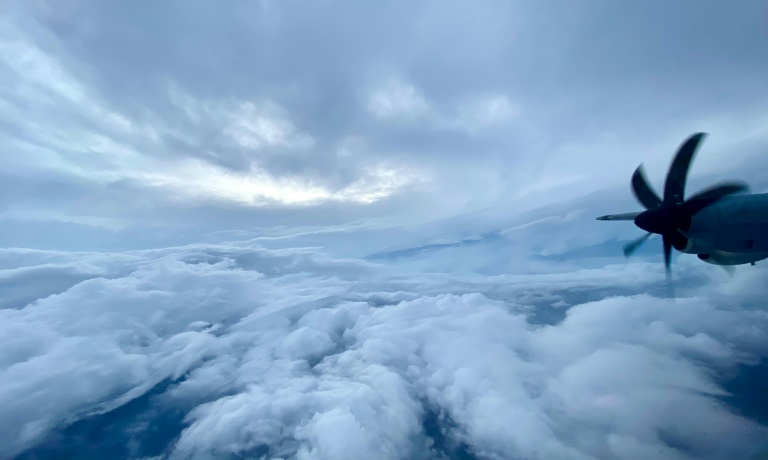
The beach chairs and umbrellas were put away, storefronts were covered and a lighthouse illuminated racing clouds overhead as Bermuda braced Thursday for Hurricane Fiona, a powerful Category 4 storm that has left a trail of destruction in the Caribbean.

Wind and waves were picking up as darkness fell over the British territory, and Bermudians rushed to the safety of their sturdy homes ahead of the storm, whose center will pass more than 100 miles (160 kilometers) to the west-northwest of the island early Friday, according to the Bermuda Weather Service. 

Fiona remained a Category 4 storm, the second-highest level on the Saffir-Simpson scale, though Accuweather forecasters said it could be downgraded to a Category 3 as it passes Bermuda around 5:00 am (0800 GMT).

With a storm of that strength and size, residents were taking no chances. 

“This storm is going to be worse than the last one,” Richard Hartley, owner of the Torwood Home store in the capital, Hamilton, told AFP as he and his wife covered the shop’s cedar-lined windows with metal sheets. 

The US National Hurricane Center (NHC) said the Fiona was packing maximum sustained winds of near 130 miles per hour, with higher gusts.

Hurricane force winds extend more than 70 miles from the storm’s eye, and tropical storm force winds up to 200 miles, the NHC said, predicting up to four inches (10 centimeters) of rain and “large and destructive” waves and storm surge. 

The island of some 64,000 people is no stranger to hurricanes — but it is also tiny, just 21 square miles (54 square kilometers), and one of the most remote places in the world, 640 miles from its closest neighbor, the United States.

That means there is nowhere to evacuate to when a big storm hits.

“You have to live with it because you live here, you can’t run anywhere because it’s just a little island,” said JoeAnn Scott, a shopworker in Hamilton.

Bermudians try to “enjoy it as it comes,” she said. “And pray and pray. That’s what we do, pray and party,” she added with a laugh. 

At Bermuda’s famed Horseshoe Bay Beach, where onlookers came to assess the pounding waves and stretch their legs ahead of a long night inside, resident Gina Maughan said the island would be ready. 

“It’s always interesting to come down and see the surf,” she said, watching two kitesurfers soar into the air. 

“These guys are a little crazy,” she added.

– Construction ‘built to last’ –

Because of the island’s isolation, preparations are taken seriously.

Many boats were taken out of the water earlier in the week, outdoor furniture was moved inside, and the storm shutters bordering windows on most houses were checked. 

Public schools will be closed on Friday, and the government announced that an emergency shelter will be opened. Buses and ferries had stopped running by late Thursday.

The Royal Bermuda Regiment was on standby to help with clearing operations, and National Security Minister Michael Weeks implored residents to stay inside until the all clear was given.

“Please Bermuda, no driving around, no venturing out to take pictures, no reckless behavior,” he told a press conference.

In addition to laying in supplies of candles and food, some Bermudians were also drawing buckets of water and filling bathtubs from the tanks at the side of their homes ahead of expected power outages.

There is no fresh water source on the island, so all buildings have white, lime-washed roofs that are used to catch rainwater that is directed into tanks and pumped into homes as the main water supply. 

Bermuda, whose economy is fueled by international finance and tourism, is wealthy compared to most Caribbean countries, and structures must be built to strict planning codes to withstand storms. Some have done so for centuries. 

“The construction is really built to last, and we don’t see the devastation ever that the Caribbean has experienced over the years,” shop owner Hartley’s wife, Elaine Murray, said.

Fiona killed four people in Puerto Rico earlier this week, according to US media, while one death was reported in the French overseas department of Guadeloupe and another in the Dominican Republic. 

President Joe Biden has declared a state of emergency in Puerto Rico, a US territory that is still struggling to recover from Hurricane Maria five years ago.

In the Dominican Republic, President Luis Abinader declared three eastern provinces to be disaster zones.

Farther north in Bermuda, islanders were calm. 

“I’ve been through a lot of hurricanes, so no, I’m not worried,” said resident Rochelle Jones.

But if things do go wrong, Bermudians will “all come out together and we help each other,” she said. 

US, China top diplomats to meet on high tensions on Taiwan

The top US and Chinese diplomats meet Friday in New York as soaring tensions show signs of easing, but Beijing issued a new warning against support for Taiwan.

Secretary of State Antony Blinken and Chinese Foreign Minister Wang Yi are set to meet on the sidelines of the annual United Nations summit, their first encounter since extensive talks in July in Bali where both sides appeared optimistic for more stability.

One month later, House Speaker Nancy Pelosi visited Taiwan, infuriating Beijing which staged exercises seen as a trial run for an invasion of the self-governing democracy.

President Joe Biden in an interview aired Sunday said he was ready to intervene militarily if China uses force, once again deviating from decades of US ambiguity.

In a sign of smoother ties, Wang said he met in New York with US climate envoy John Kerry despite China’s announcement after Pelosi’s visit that it was curbing cooperation on the issue, a key priority for Biden.

But in a speech before his talks with Blinken, Wang reiterated anger over US support for Taiwan, which China considers part of its territory.

“The Taiwan question is growing into the biggest risk in China-US relations. Should it be mishandled it is most likely to devastate bilateral ties,” he said at the Asia Society think tank.

“Just as the US will not allow Hawaii to be stripped away, China has the right to uphold the unification of the country,” he said.

He denounced the US decision to “allow” the Taiwan visit by Pelosi, who is second in line to the presidency after the vice president. The Biden administration, while privately concerned about her trip, noted that Congress is a separate branch of government.

– Arranging a summit –

But Wang was conciliatory toward Biden. The New York talks are expected to lay the groundwork for a first meeting between Biden and President Xi Jinping since they became their two countries’ leaders, likely in Bali in November on the sidelines of a summit of the Group of 20 economic powers.

Wang said that both Biden and Xi seek to “make the China-US relationship work” and to “steer clear of conflict and confrontation.”

“However, what has happened is that the US seems to have two different sets of musical scores. Their leaders’ political will for a stable bilateral relationship has yet to be translated into logical policies,” he said.

The US Congress is a stronghold of support for Taiwan, a vibrant democracy and major technological power.

Last week a Senate committee took a first step to providing billions of dollars in weapons directly to Taiwan to deter China, a ramp-up from decades of only selling weapons requested by Taipei.

Tensions have also risen over human rights with the United States accusing the communist state of carrying out genocide against the mostly Muslim Uyghur people.

Biden, like his predecessor Donald Trump, has viewed a rising China as the chief global competitor to the United States and vowed to reorient US foreign policy around the challenge.

Russia’s invasion in February of Ukraine quickly diverted the US focus to Europe but also heightened fears that Beijing could make good on years of threats to use force against Taiwan.

Yet US officials have also been heartened that China has shown some distance from Russia, nominally its close ally.

President Vladimir Putin at a meeting last week told Xi that he understood China’s “concerns” on Ukraine, while Wang, in a special Security Council session on Thursday, emphasized the need to end the war rather than support for Russia.

In line with the Biden administration’s focus on allies, Blinken met jointly Thursday with his counterparts from Japan and South Korea and immediately before his talks with Wang is expected to hold a meeting of the so-called Quad with Australia, India and Japan.

Britain unveils anti-inflation budget as recession looms

The UK’s new government unveils Friday multibillion-pound measures aimed at supporting households and businesses hit by decades-high inflation.

Finance minister Kwasi Kwarteng, fresh from being appointed by new Prime Minister Liz Truss, will deliver his mini-budget at 0830 GMT.

Kwarteng announced late Thursday he will scrap Truss’s predecessor Boris Johnson’s plan to hike taxes on salaries.

The news came after the Bank of England warned that Britain was slipping into recession, as rocketing fuel and food prices take their toll.

– Growing economy –

“Taxing our way to prosperity has never worked,” the Chancellor of the Exchequer said.

“To raise living standards for all, we need to be unapologetic about growing our economy.

“Cutting tax is crucial to this.”

He is similarly expected to reverse Johnson’s planned tax increase on company profits.

Kwarteng will also outline Friday the cost of a decision to cap energy bills.

He could axe a bankers’ bonus cap, which has been in place since 2014 and is a legacy of EU membership.

Truss took office on September 6, two days before the death of Queen Elizabeth II, after winning an election of Conservative party members on a tax-cutting platform.

While the tax reversals are not strictly cuts, the government could announce Friday reduced levies on home purchases.

Analysts from British bank Barclays estimate the cost of the government’s total package could hit £235 billion ($267 billion), far more than its jobs protection scheme during the pandemic.

– Capping energy bills –

Britain on Wednesday announced a six-month plan to pay about half of energy bills for businesses.

Truss had already launched a two-year household energy price freeze. The caps will not kick in, however, until Britons face another large hike in gas and electricity bills at the start of October.

The average household will have their annual energy bill capped at £2,500 until 2024 but many are expected to spend above that to keep homes warm over the winter.

Wholesale electricity and gas prices for firms — as well as charities, hospitals and schools — will be capped at half the expected cost on the open market.

UK energy companies including BP and Shell will not benefit from the cap, as they enjoy soaring profits after the invasion of Ukraine by major oil and gas producer Russia.

Britain’s main opposition Labour party has demanded that the government extends a windfall tax on energy companies that former finance minister Rishi Sunak launched earlier this year.

But Truss ruled out such a move, arguing that additional taxes will hinder economic recovery and efforts by energy groups to transition into greener companies.

Growth is at the heart of the new government’s policy, with Kwarteng on Wednesday outlining plans to shake up the welfare system.

Some 120,000 people in part-time work could face a benefit cut should they fail to take new steps to look for more work, he is set to confirm.

Kwarteng has described the policy as a “win-win”, pitching it as a way to fill 1.2 million UK job vacancies.

– Strikes, rate rises –

With prices rocketing, wage values are eroding, triggering some of the biggest strike action Britain has seen in more than 30 years. 

From the rail sector to postal services and even lawyers, tens of thousands of workers are carrying out industrial action aimed at securing bigger salaries.

In addition, soaring interest rates are hurting consumers and businesses.

The cost of government borrowing is also ballooning as a result.

The Bank of England on Thursday ramped up its key rate by another half-point to 2.25 percent to tackle high inflation, and warned the UK would slide into recession in the current third quarter.

Facebook whistleblower launches nonprofit to take on big tech

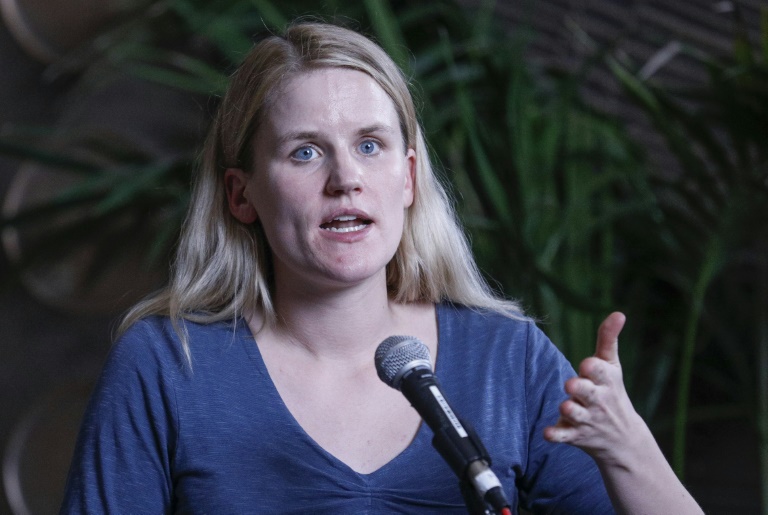
Whistleblower Frances Haugen — a former Facebook engineer who leaked documents suggesting the firm put profits before safety — on Thursday launched an organization devoted to fighting harm caused by social media.

The new Beyond the Screen nonprofit said that its first project will be to document ways big tech is failing in its “legal and ethical obligations to society” and help come up with ways to solve those problems.

“We can have social media that brings out the best in us, and that’s what Beyond the Screen is working toward,” Haugen said in a statement.

“Beyond the Screen will focus on tangible solutions to help users gain control of our social media experience.”

Haugen last year leaked reams of internal studies showing executives knew of their site’s potential for harm, prompting a renewed US push for regulation.

Haugen contended the tech titan, which has since rebranded itself as Meta, put profits over safety. Meta has fought back against the accusation.

Haugen’s nonprofit said it will collaborate with groups including Common Sense Media and Project Liberty that share a “commitment to supporting healthier social media.”

Beyond the Screen’s first project “represents a bold, inclusive, and much-needed effort to drive a seismic shift in how social media operates,” Project Liberty founder Frank McCourt said, according to Beyond the Screen’s statement.

“We look forward to working with Frances and her team to launch this new initiative and advance our shared goal of enabling healthier digital communities and stopping harmful business models.”

Since leaving Facebook in 2021, Haugen has advocated in the US and other countries for legislation meant to make social media platforms safer, particularly for young people.

Facebook whistleblower launches nonprofit to take on big tech

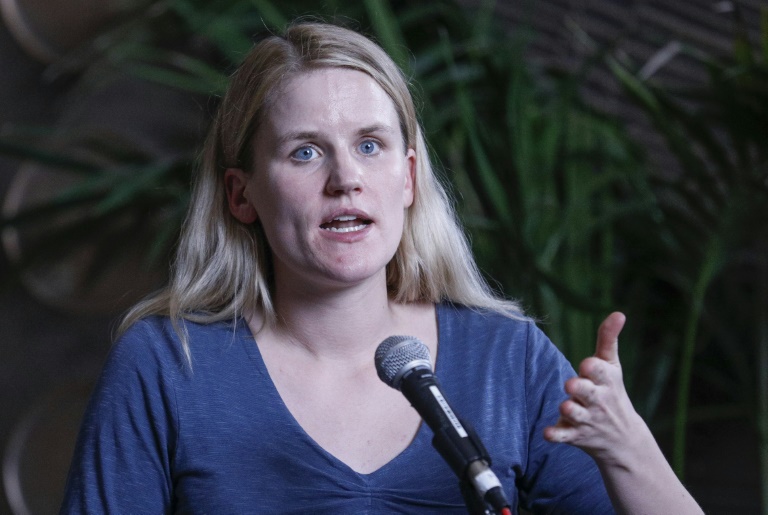
Whistleblower Frances Haugen — a former Facebook engineer who leaked documents suggesting the firm put profits before safety — on Thursday launched an organization devoted to fighting harm caused by social media.

The new Beyond the Screen nonprofit said that its first project will be to document ways big tech is failing in its “legal and ethical obligations to society” and help come up with ways to solve those problems.

“We can have social media that brings out the best in us, and that’s what Beyond the Screen is working toward,” Haugen said in a statement.

“Beyond the Screen will focus on tangible solutions to help users gain control of our social media experience.”

Haugen last year leaked reams of internal studies showing executives knew of their site’s potential for harm, prompting a renewed US push for regulation.

Haugen contended the tech titan, which has since rebranded itself as Meta, put profits over safety. Meta has fought back against the accusation.

Haugen’s nonprofit said it will collaborate with groups including Common Sense Media and Project Liberty that share a “commitment to supporting healthier social media.”

Beyond the Screen’s first project “represents a bold, inclusive, and much-needed effort to drive a seismic shift in how social media operates,” Project Liberty founder Frank McCourt said, according to Beyond the Screen’s statement.

“We look forward to working with Frances and her team to launch this new initiative and advance our shared goal of enabling healthier digital communities and stopping harmful business models.”

Since leaving Facebook in 2021, Haugen has advocated in the US and other countries for legislation meant to make social media platforms safer, particularly for young people.

CIA chief: I'm no Jason Bourne, I drive an old Subaru

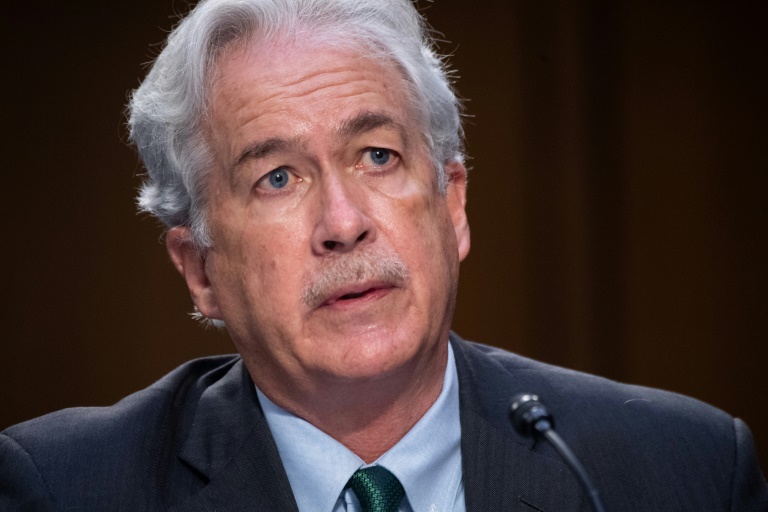
CIA Director Bill Burns said in the US spy agency’s first-ever podcast Thursday that his life is nothing like Jason Bourne and James Bond, ripping hot cars through crowded cities and deploying unimaginable lethal gadgets.

Popular spy films show “a world of heroic individuals who drive fast cars and defuse bombs and solve world crises all on their own every day,” Burns said.

“That, I have to tell you, is a constant source of amusement for my wife and daughters.”

“I’m most comfortable driving our 2013 Subaru Outback at posted speed limits and, for me at least, the height of technological daring is when I can finally get the Roku remote to work at home,” he admitted.

Burns, 66, a veteran diplomat who has run the Central Intelligence Agency since March 2021, made the comments in the first episode of “The Langley Files,” a podcast that pledges to demystify the super-secret agency.

Burns’ main point was to stress that while the CIA has many officers undercover in the field, they are not dramatic solo operators like Bond, Bourne or Jack Ryan of Hollywood fame.

“The truth is that intelligence is very much a team sport. It’s a profession of hard collective work and shared risks,” Burns said.

And besides field operators, it involves teams of people — scientists, digital specialists and other analysts — sifting information in offices.

He held up the operation that found and killed al-Qaeda leader Ayman al-Zawahiri in July, as well as CIA intelligence in December and January showing Russia planned to invade Ukraine, as important successes.

“Our successes are often obscured, our failures are often painfully visible, and our sacrifices are often unknown. But a certain amount of discretion certainly comes with the territory,” Burns said.

The podcast is hosted by “Dee” and “Walter,” but a CIA spokesperson would not give their last names or even say if the first names were authentic.

Asked how often the podcast would appear, the spokesperson said, “Periodically.”

CIA chief: I'm no Jason Bourne, I drive an old Subaru

CIA Director Bill Burns said in the US spy agency’s first-ever podcast Thursday that his life is nothing like Jason Bourne and James Bond, ripping hot cars through crowded cities and deploying unimaginable lethal gadgets.

Popular spy films show “a world of heroic individuals who drive fast cars and defuse bombs and solve world crises all on their own every day,” Burns said.

“That, I have to tell you, is a constant source of amusement for my wife and daughters.”

“I’m most comfortable driving our 2013 Subaru Outback at posted speed limits and, for me at least, the height of technological daring is when I can finally get the Roku remote to work at home,” he admitted.

Burns, 66, a veteran diplomat who has run the Central Intelligence Agency since March 2021, made the comments in the first episode of “The Langley Files,” a podcast that pledges to demystify the super-secret agency.

Burns’ main point was to stress that while the CIA has many officers undercover in the field, they are not dramatic solo operators like Bond, Bourne or Jack Ryan of Hollywood fame.

“The truth is that intelligence is very much a team sport. It’s a profession of hard collective work and shared risks,” Burns said.

And besides field operators, it involves teams of people — scientists, digital specialists and other analysts — sifting information in offices.

He held up the operation that found and killed al-Qaeda leader Ayman al-Zawahiri in July, as well as CIA intelligence in December and January showing Russia planned to invade Ukraine, as important successes.

“Our successes are often obscured, our failures are often painfully visible, and our sacrifices are often unknown. But a certain amount of discretion certainly comes with the territory,” Burns said.

The podcast is hosted by “Dee” and “Walter,” but a CIA spokesperson would not give their last names or even say if the first names were authentic.

Asked how often the podcast would appear, the spokesperson said, “Periodically.”

Russia begins troop mobilisation for Ukraine fight

Moscow began its mandatory troop call-up Thursday to try to bolster a stumbling war effort in Ukraine, with authorities saying thousands had volunteered even as Russian men fled the country to avoid being forced to fight.

Amateur footage posted on social media since President Vladimir Putin ordered the mobilisation of reservists on Wednesday purported to show hundreds of Russian citizens across the country responding to military summons.

The call-up came as Moscow-held regions of Ukraine are to vote in coming days on whether to become part of Russia in referendums that have been called an unlawful land grab by Kyiv and its allies. 

Moscow took these steps after Ukrainian forces seized back most of the northeastern Kharkiv region, which has been seen as a possible turning point in the seven-month war that had fallen into stalemate.

The Russian military said Thursday that at least 10,000 people had volunteered to fight in 24 hours since the order, but men also rushed to leave Russia before they were made to join.

Flights out of Russia to neighbouring countries, mainly former Soviet republics that allow Russians visa-free entry, are nearly entirely booked and prices have skyrocketed, pointing to an exodus of Russians wanting to avoid going to war.

“I don’t want to go to the war,” a man named Dmitri, who had flown to Armenia with just one small bag, told AFP. “I don’t want to die in this senseless war. This is a fratricidal war.”

Military-aged men made up the majority of those arriving off the latest flight from Moscow at Yerevan airport and many were reluctant to speak.

The Armenian capital has become a major destination for Russians fleeing since war began on February 24, drawing fierce international opposition that has aimed to isolate Russia.

Looking lost and exhausted in Yerevan airport’s arrivals hall, 44-year-old Sergei said he had fled Russia to escape being called up.

“The situation in Russia would make anyone want to leave,” he told AFP.

Ukrainian President Volodymyr Zelensky called on Russians to resist Putin’s partial mobilisation during his daily address on Thursday evening.

“Protest. Fight back. Run away. Or surrender” to the Ukrainian army, he said. “You are already complicit in all these crimes, murders and torture of Ukrainians. Because you were silent. Because you are silent.”

More than 1,300 people were arrested during anti-mobilisation demonstrations across Russia on Wednesday, a monitoring group reported.

– Annexation ‘vote’ –

US Secretary of State Antony Blinken on Thursday demanded Putin be held to account as he faced Russia in a Security Council session in which the United Nations catalogued abuses in Ukraine.

“We cannot — we will not — let President Putin get away with it,” Blinken said.

Russian Foreign Minister Sergei Lavrov — whom Blinken has refused to meet individually since the February invasion — lashed out at Western accusations.

“There’s an attempt today to impose on us a completely different narrative about Russian aggression as the origin of this tragedy,” Lavrov told the Security Council.

The confrontation on the diplomatic stage escalated as Kremlin-installed officials in Ukrainian regions controlled by Moscow’s forces vowed on Thursday to press ahead with annexation polls this week.

Four Russian-occupied regions of Ukraine — Donetsk and Lugansk in the east and Kherson and Zaporizhzhia in the south — announced that they would hold the votes over five days, beginning on Friday.

Western leaders convening in New York this week unanimously condemned the ballots. 

Speaking at the United Nations, US President Joe Biden accused Russian counterpart Vladimir Putin of “shamelessly” violating the UN Charter with a war aimed at “extinguishing Ukraine’s right to exist as a state”.

– Nuclear threat –

The integration of the war-scarred regions into Russia would represent a major escalation of the conflict, as Moscow could then try to say it was defending its own territory from Ukrainian forces.

After the votes were announced by his proxy officials in Ukraine, Putin announced that Russia would call up some 300,000 reservists to bolster the war effort and cautioned that Moscow would use “all means” to protect its territory.

Former Russian leader Dmitry Medvedev said in a statement on social media that those means included “strategic nuclear weapons”. He predicted the voting regions “will integrate into Russia”.

For most observers, the results of the concurrent votes are already a foregone conclusion and were rushed because Ukrainian forces were making sweeping gains in a counter-offensive to recapture the east.

The referendums are reminiscent of a similar ballot in 2014 that saw the Crimean Peninsula in Ukraine annexed by Russia. Western capitals said the vote was fraudulent and hit Moscow with sanctions in response.

Election officials in the Donetsk region, partially controlled since 2014 by Moscow-backed separatists, said voting would take place door-to-door for the first days. But it would only be possible in polling stations on the final day, Tuesday.

Close Bitnami banner
Bitnami