AFP

Amanpour says Iran president interview scrapped over headscarf demand

Veteran journalist Christiane Amanpour said Thursday that an interview with Iranian President Ebrahim Raisi was scrapped after he insisted she wear a headscarf, the focus of major protests in the cleric-run state.

Amanpour, the chief international anchor of CNN who also has a show on US public broadcaster PBS, said she was ready for the interview Wednesday on the sidelines of the UN General Assembly when an aide insisted she cover her hair.

“I politely declined. We are in New York, where there is no law or tradition regarding headscarves,” Amanpour, who was born in Britain to an Iranian father, wrote on Twitter.

“I pointed out that no previous Iranian president has required this when I have interviewed them outside Iran,” she said.

“I said that I couldn’t agree to this unprecedented and unexpected condition.”

She posted a picture of herself — without a headscarf — sitting in front of an empty chair where Raisi would have been.

An aide to Raisi, a hardline cleric, told Amanpour that he was insisting on a headscarf because of “the situation in Iran,” she said.

Iran has been swept by nearly a week of protests since the death of 22-year-old Mahsa Amini, who died after being arrested by morality police that enforce the clerics’ rules on how women dress.

A non-governmental group said that at least 31 Iranian civilians have been killed in the crackdown on the protests, in which women have been seen burning headscarves.

S.Africa teens build solar train as power cuts haunt commuters

For years, students in a South African township have seen their parents struggle to use trains for daily commutes, the railways frequently hobbled by power outages and cable thefts.

To respond to the crisis, a group of 20 teenagers invented South Africa’s first fully solar-powered train.

Photovoltaic panels fitted to the roof, the angular blue-and-white test train moves on an 18-metre-long (60 feet) test track in Soshanguve township north of the capital Pretoria. 

Trains are the cheapest mode of transport in South Africa, used mostly by the poor and working class.

“Our parents… no longer use trains (because of) cable theft… and load shedding,” said Ronnie Masindi, 18, referring to rolling blackouts caused by failures at old and poorly maintained coal-powered plants.

The state power company Eskom started imposing on-and-off power rationing 15 years ago to prevent a total national blackout. 

The power outages, known locally as load-shedding, have worsened over the years disrupting commerce and industry, including rail services.

Infrastructure operator Transnet has struggled to keep rail traffic flowing smoothly since the economic challenges of the pandemic fuelled a surge in cable theft.

By 2020, rail use among public transport users was down almost two-thirds compared to 2013, according to the National Households Travel Survey with many commuters turning to more expensive minibus taxis.

Masindi said they decided to “create and build a solar-powered train that uses solar to move instead of (mains) electricity”. 

The journey has not been without its challenges. 

A lack of funding delayed production of the prototype locomotive, and the government later chipped in.

“It was not a straight line,” said another student, Lethabo Nkadimeng, 17. “It was like taking a hike to the highest peak of the mountain.”

The train, which can run at 30 kilometres (20 miles) per hour, was showcased at a recent universities innovation event.

For now, the prototype can run for 10 return trips on the track installed on the grounds of a school. 

It will be used for further research, and eventually presented as a model the government could adopt. 

Fitted with car seats and a flat-screen TV to entertain passengers, it took the students two years to build. 

“What we have realised is, if we you give township learners space, resources and a little mentorship they can do anything that any learner can do around the world,” said Kgomotso Maimane, the project’s supervising teacher.

UK government lifts gas fracking ban in England

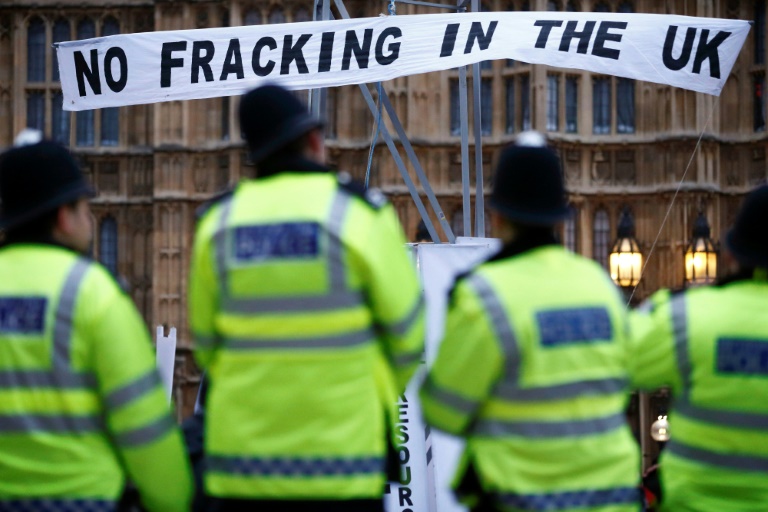
Britain on Thursday lifted England’s moratorium on controversial gas fracking to boost energy security, despite breaking the ruling Conservative party’s manifesto pledge.

Prime Minister Liz Truss had flagged the move two weeks ago, shortly after taking office, in a vast package tackling turmoil in energy markets after key gas supplier Russia invaded Ukraine.

The UK had in 2019 called a halt to fracking — or hydraulic fracturing which is used to release hydrocarbons locked deep underground — due to fears it could trigger earthquakes.

The moratorium was imposed under Truss’ predecessor Boris Johnson following a series of earth tremors, but the government has switched tack after Russia cut off gas supplies to most of Europe, sending prices soaring.

– Energy security –

“In light of Putin’s illegal invasion of Ukraine and weaponisation of energy, strengthening our energy security is an absolute priority,” business and energy secretary Jacob Rees-Mogg said in a government statement.

He reaffirmed Truss’s goal of making Britain a net energy exporter by 2040.

“To get there we will need to explore all avenues available to us through solar, wind, oil and gas production — so it’s right that we’ve lifted the pause to realise any potential sources of domestic gas.”

The Department for Business, Energy and Industrial Strategy (BEIS) confirmed a new oil and gas licensing round next month for 100 new licences, but only with support from local communities.

However, the announcement sparked uproar in parliament because it broke the Conservatives’ manifesto promise from the 2019 general election.

Opposition lawmakers and Conservatives representing constituencies in northern England — where tremors were felt in 2011 — hit out.

– ‘Charter for earthquakes’ –

The main opposition Labour party labelled the new policy “a charter for earthquakes”.

Labour climate spokesman Ed Miliband questioned Rees-Mogg about where the evidence was for the decision.

“The 2019 manifesto on which he and every member of the party opposite stood said this ‘we will not support fracking unless the science shows categorically that it can be done safely’,” Miliband said before parliament.

“They are lifting the ban, but they can’t supply the evidence.”

Liberal Democrat environment spokeswoman Wera Hobhouse added that people in drilling areas were being treated as guinea pigs.

“The Conservatives’ obsession with fracking lays bare that they don’t actually think that climate change is happening and are not willing to take the urgent action needed,” said Hobhouse.

“If people suffer polluted water and dangerous earthquakes, this decision will prove unforgivable.”

– ‘Shown to be safe’ –

Rees-Mogg replied that fracking was “safe” and greener than energy sources from abroad.

“It is more environmentally friendly to use our own sources of fuel rather than to extract them from other countries and transport them here at great cost, both financially and in terms of carbon,” he said.

“It is safe. It is shown to be safe,” he insisted.

He added the policy would “bring us cheaper energy” at a time of rocketing prices.

Fracking is carried out by blasting a mixture of water, sand and chemicals underground to release shale oil and gas.

But environmentalists argue that the process contaminates water supplies, hurts wildlife, causes earthquakes and contributes to global climate change.

Green pressure groups slammed Thursday’s decision.

“Ripping up the rules that protect people from fracking would send shockwaves through local communities,” said Friends of the Earth campaigner Danny Gross.

“If the government caves into the fracking industry and allows them to cause larger earthquakes, it will further undermine confidence that fracking can be done safely.”

The BEIS also published the British Geological Survey’s scientific review into shale gas extraction.

The review highlighted “limited current understanding” of UK geology and onshore shale resources “should be a reason to drill more wells to gather more evidence and data”, the government study added.

Hot gas bubble spotted spinning around Milky Way black hole

Astronomers said Thursday they have spotted a hot bubble of gas spinning clockwise around the black hole at the centre of our galaxy at “mind blowing” speeds.

The detection of the bubble, which only survived for a few hours, is hoped to provide insight into how these invisible, insatiable, galactic monsters work.

The supermassive black hole Sagittarius A* lurks in the middle of the Milky Way some 27,000 light years from Earth, and its immense pull gives our home galaxy its characteristic swirl.

The first-ever image of Sagittarius A* was revealed in May by the Event Horizon Telescope Collaboration, which links radio dishes around the world aiming to detect light as it disappears into the maw of black holes.

One of those dishes, the ALMA radio telescope in Chile’s Andes mountains, picked up something “really puzzling” in the Sagittarius A* data, said Maciek Wielgus, an astrophysicist at Germany’s Max Planck Institute for Radio Astronomy.

Just minutes before ALMA’s radio data collection began, the Chandra Space Telescope observed a “huge spike” in X-rays, Wielgus told AFP.

This burst of energy, thought to be similar to solar flares on the Sun, sent a hot bubble of gas swirling around the black hole, according to a new study published in the journal Astronomy and Astrophysics.

The gas bubble, also known as a hot spot, had an orbit similar to Mercury’s trip around the Sun, the study’s lead author Wielgus said.

But while it takes Mercury 88 days to make that trip, the bubble did it in just 70 minutes. That means it travelled at around 30 percent of the speed of light.

“So it’s an absolutely, ridiculously fast-spinning bubble,” Wielgus said, calling it “mind blowing”.

– A MAD theory –

The scientists were able to track the bubble through their data for around one and half hours — it was unlikely to have survived more than a couple of orbits before being destroyed.

Wielgus said the observation supported a theory known as MAD. “MAD like crazy, but also MAD like magnetically arrested discs,” he said.

The phenomenon is thought to happen when there is such a strong magnetic field at the mouth of a black hole that it stops material from being sucked inside.

But the matter keeps piling up, building up to a “flux eruption”, Wielgus said, which snaps the magnetic fields and causes a burst of energy.

By learning how these magnetic fields work, scientists hope to build a model of the forces that control black holes, which remain shrouded in mystery.

Magnetic fields could also help indicate how fast black holes spin — which could be particularly interesting for Sagittarius A*.

While Sagittarius A* is four million times the mass of our Sun, it only shines with the power of about 100 suns, “which is extremely unimpressive for a supermassive black hole, Wielgus said.

“It’s the weakest supermassive black hole that we’ve seen in the universe — we’ve only seen it because it is very close to us.”

But it is probably a good thing that our galaxy has a “starving black hole” at its centre, Wielgus said. 

“Living next to a quasar,” which can shine with the power of billions of suns, “would be a terrible thing,” he added.

'Fat Leonard' fugitive in US Navy scandal captured in Venezuela

A military contractor known as “Fat Leonard” who pleaded guilty in the US Navy’s worst ever corruption scandal has been captured in Venezuela after fleeing the United States, the Interpol office in Caracas said.

Leonard Francis cut off his GPS monitor and escaped house arrest in California in early September.

“The fugitive was arrested at the Simon Bolivar de Maiquetia International Airport when he was about to leave the country,” a post shared on Instagram Wednesday by the Caracas Interpol office said.

Leonard “entered the country coming from Mexico with a stop in Cuba” and aimed to travel to Russia, the post said, adding that he was the subject of an Interpol red notice.

Francis, a Malaysian national who ran a military contracting company out of Singapore, pleaded guilty in 2015 to offering some $500,000 in bribes to Navy officers to steer official work to his shipyards, carrying out work on US vessels that prosecutors say he overcharged the Navy for, to the tune of $35 million.

Police were sent to his San Diego residence on September 4 after the agency monitoring his ankle bracelet reported a problem with the device, and found that he was gone, the US Marshals Service said.

Francis was arrested in 2013 and pleaded guilty two years later. He suffered numerous health problems, including kidney cancer, which led to him being released to house arrest in 2018 while acting as a cooperating witness for federal prosecutors. 

He was due to be sentenced on September 22.

Four Navy officers have been found guilty in the case so far, while another 29 people, including naval officials, contractors and Francis himself, have pleaded guilty, US media said.

Frenchman rewarded for lifetime of research into narcolepsy

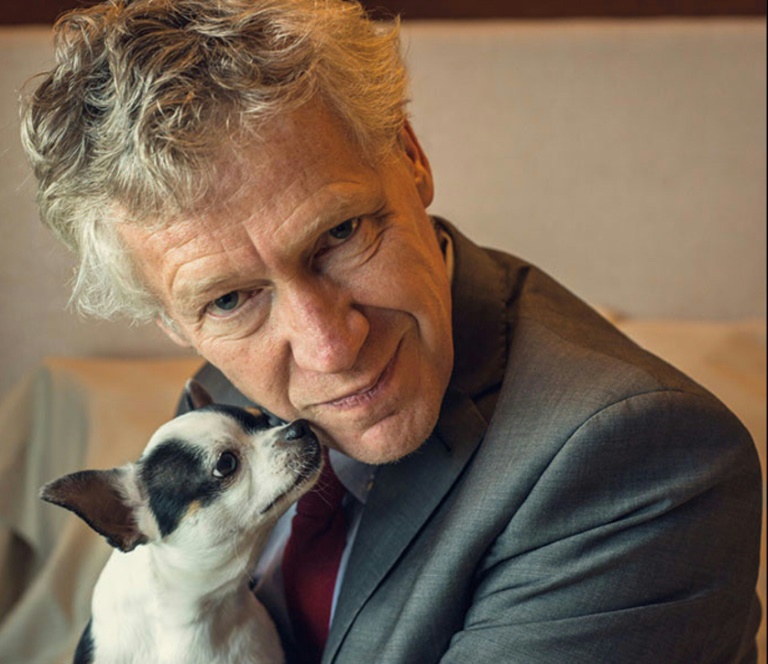
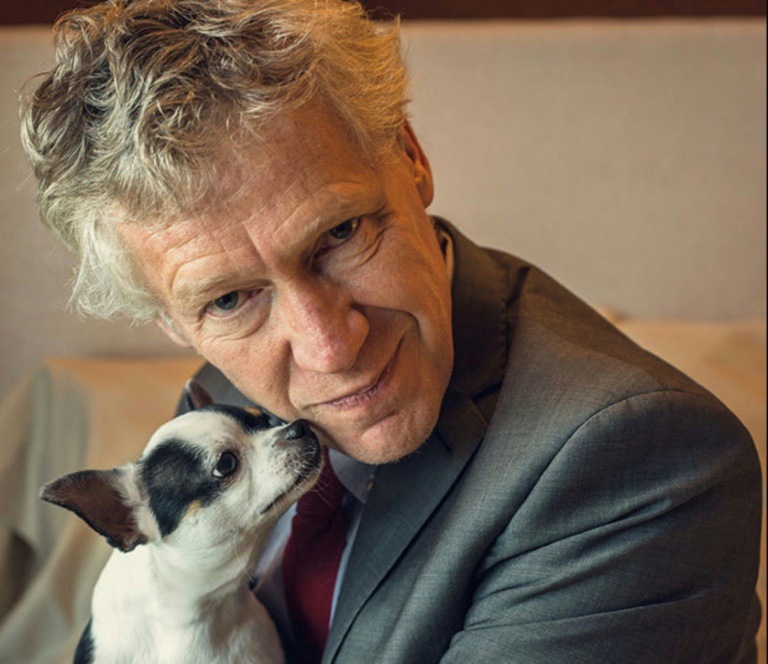
Emmanuel Mignot is one of the world’s leading experts on narcolepsy, a sleep disorder that he finds both “strange” and “fascinating.”

The French-born Mignot has dedicated his life to studying the causes of narcolepsy and shedding light on one of the great biological mysteries — sleep.

His discovery of the genetic and molecular causes of the disorder led to his receiving a prestigious Breakthrough Prize on Thursday along with Japan’s Masashi Yanagisawa, who made related findings around the same time.

Because of their discoveries, new treatments for narcolepsy — which causes people to suddenly fall asleep — and other sleep disorders are being developed.

About one in every 2,000 people suffers from narcolepsy. Some may experience catalepsy — a sudden trance-like state.

“I am quite proud because what I have discovered is making an enormous difference for my patients,” Mignot said in a telephone interview with AFP. “It’s the best reward that one could receive.”

The 63-year-old Mignot is a sleep researcher at Stanford University in California.

Thirty years ago, when he was a medical student, Mignot fulfilled his military service requirements in France by coming to Stanford to study a French-made drug that was being used to treat narcolepsy.

At the time, he said, the disease was “virtually unknown” and no one was actively studying it.

He became “completely fascinated.”

“I told myself it’s incredible, this disease, people fall asleep all the time, we have no idea why, and if we could discover the cause we might understand something new about sleep.”

Stanford was already home to a renowned sleep center and its laboratory housed narcoleptic dogs, which Mignot began studying in an effort to find a genetic cause of the disease.

Genome sequencing was very primitive at that time and “everybody told me I was crazy,” said Mignot, who currently has an adopted narcoleptic dog called Watson.

“I thought it would take a few years and it ended up taking 10.”

In 1999, Mignot found a mutation in the genome of narcoleptic dogs. It was located on membrane receptors in the brain that respond to molecules outside the cell, similar to a lock and a key.

– ‘Remake a key’ –

The Japanese scientist Yanagisawa, meanwhile, had been studying orphan receptors — receptors of unknown function — in mice.

He discovered that a molecule that he named orexin binds to the same receptor Mignot detected as abnormal in dogs.

Mice who were deprived of orexin developed narcolepsy.

Mignot immediately began research on human subjects and found that orexin levels in the brain of narcolepsy patients were zero.

Normally, the molecule is produced in great quantities during the day, especially in the evening, allowing one to fight fatigue.

“You don’t make a discovery like this twice in your life,” Mignot said. “We found the cause of a disease.

“The advantage, is that we can remake a key,” he said, referring to orexin.

For the moment, most patients are treated with a combination of powerful sedatives to help them sleep more soundly and amphetamines to keep them awake during the day.

Mignot said tests using a drug that mimics orexin have been “really miraculous.”

Patients are fully awake and “transformed.”

The challenge is to develop the right dose to be delivered at the right time.

Several companies, including Takeda of Japan, are working on it, and drugs could be authorized in the next few years.

They could be applied to other patients — people suffering from depression, for example — who have difficulty waking up, or to those in a coma.

Mignot meanwhile is studying whether narcolepsy may be caused by a flu virus.

The body’s immune system may be confusing a flu virus with the cells that produce orexin and T-cells that fight infection are attacking them as a result.

“I’ve become interested in how the immune system works in the brain,” a field he said is “beginning to explode.”

As for sleep, Mignot remains fascinated by it even if he has uncovered one of the great mysteries.

“What is it that sleep does that it is so important that we have to do it every day?” he asked. “It’s true that we still don’t know.”


Frenchman rewarded for lifetime of research into narcolepsy

Emmanuel Mignot is one of the world’s leading experts on narcolepsy, a sleep disorder that he finds both “strange” and “fascinating.”

The French-born Mignot has dedicated his life to studying the causes of narcolepsy and shedding light on one of the great biological mysteries — sleep.

His discovery of the genetic and molecular causes of the disorder led to his receiving a prestigious Breakthrough Prize on Thursday along with Japan’s Masashi Yanagisawa, who made related findings around the same time.

Because of their discoveries, new treatments for narcolepsy — which causes people to suddenly fall asleep — and other sleep disorders are being developed.

About one in every 2,000 people suffers from narcolepsy. Some may experience catalepsy — a sudden trance-like state.

“I am quite proud because what I have discovered is making an enormous difference for my patients,” Mignot said in a telephone interview with AFP. “It’s the best reward that one could receive.”

The 63-year-old Mignot is a sleep researcher at Stanford University in California.

Thirty years ago, when he was a medical student, Mignot fulfilled his military service requirements in France by coming to Stanford to study a French-made drug that was being used to treat narcolepsy.

At the time, he said, the disease was “virtually unknown” and no one was actively studying it.

He became “completely fascinated.”

“I told myself it’s incredible, this disease, people fall asleep all the time, we have no idea why, and if we could discover the cause we might understand something new about sleep.”

Stanford was already home to a renowned sleep center and its laboratory housed narcoleptic dogs, which Mignot began studying in an effort to find a genetic cause of the disease.

Genome sequencing was very primitive at that time and “everybody told me I was crazy,” said Mignot, who currently has an adopted narcoleptic dog called Watson.

“I thought it would take a few years and it ended up taking 10.”

In 1999, Mignot found a mutation in the genome of narcoleptic dogs. It was located on membrane receptors in the brain that respond to molecules outside the cell, similar to a lock and a key.

– ‘Remake a key’ –

The Japanese scientist Yanagisawa, meanwhile, had been studying orphan receptors — receptors of unknown function — in mice.

He discovered that a molecule that he named orexin binds to the same receptor Mignot detected as abnormal in dogs.

Mice who were deprived of orexin developed narcolepsy.

Mignot immediately began research on human subjects and found that orexin levels in the brain of narcolepsy patients were zero.

Normally, the molecule is produced in great quantities during the day, especially in the evening, allowing one to fight fatigue.

“You don’t make a discovery like this twice in your life,” Mignot said. “We found the cause of a disease.

“The advantage, is that we can remake a key,” he said, referring to orexin.

For the moment, most patients are treated with a combination of powerful sedatives to help them sleep more soundly and amphetamines to keep them awake during the day.

Mignot said tests using a drug that mimics orexin have been “really miraculous.”

Patients are fully awake and “transformed.”

The challenge is to develop the right dose to be delivered at the right time.

Several companies, including Takeda of Japan, are working on it, and drugs could be authorized in the next few years.

They could be applied to other patients — people suffering from depression, for example — who have difficulty waking up, or to those in a coma.

Mignot meanwhile is studying whether narcolepsy may be caused by a flu virus.

The body’s immune system may be confusing a flu virus with the cells that produce orexin and T-cells that fight infection are attacking them as a result.

“I’ve become interested in how the immune system works in the brain,” a field he said is “beginning to explode.”

As for sleep, Mignot remains fascinated by it even if he has uncovered one of the great mysteries.

“What is it that sleep does that it is so important that we have to do it every day?” he asked. “It’s true that we still don’t know.”

Spanish court opens probe into cannabis 'Ponzi scheme'

Spain’s top criminal court has opened a fraud investigation into a Netherlands-based medicinal cannabis investment platform which allegedly swindled people around the world of millions of dollars.

The National Court opened its probe into JuicyFields on September 15 after a lawsuit filed by nearly 1,200 investors in July, a court document seen by AFP Thursday showed.

The court aims to “identify those allegedly responsible for the crimes” alleged in the lawsuit and understand the “financial mechanics” of the company.

Established in 2020, JuicyFields offered investors the chance to participate in the cultivation, harvesting and sale of cannabis plants, promising returns of up to 66 percent.

But it suddenly stopped operations in mid-July, froze cash withdrawals and vanished from the internet, investors allege.

The class action lawsuit filed by the Martinez-Blanco law firm accuses JuicyFields of operating like a Ponzi scheme, in which early investors are paid out by receipts from later investors.

It estimates that there are nearly 4,500 victims in Spain alone, who each lost an average of 6,500 euros ($6,435). Some individuals lost as much as 200,000 euros.

The minimum investment was 50 euros, and the money could be deposited and withdrawn via bank transfer or cryptocurrencies.

This is believed to be the first class-action lawsuit against JuicyFields, which according to media investigations scammed investors around the world.

A group on mobile messaging service Telegram in France for people who want to take legal action against JuicyFields has over 1,600 members.

Several members of the group say they have filed individual lawsuits against JuicyFields.

A class-action lawsuit is also expected to be filed in France against the firm.

Inflation-hit Turkey cuts rate for second month

Turkey’s central bank on Thursday cut its policy rate for the second straight month despite an annual inflation rate that has reached 80 percent and is still moving higher.

The central bank said it was cutting its one-week repo rate to 12 percent from 13 percent and blamed skyrocketing consumer prices on external factors such as the global jump in the cost of energy and food caused by Russia’s invasion of Ukraine.

The decision highlights Turkish policymakers’ strong focus on economic growth nine months before a general election that polls show President Recep Tayyip Erdogan is on track to lose.

Turkey has gone the opposite direction of other central banks worldwide which have raised their rates to combat inflation, with the US Federal Reserve and European peers announcing hefty hikes this week.

The policy has put the Turkish lira under pressure, and it touched a new historic low of 18.41 against the dollar before recovering some its losses after the announcement.

Official data show Turkey’s industrial production and retail sales both starting to slow.

“Since the beginning of July, leading indicators have been pointing to a slowdown in growth due to the weakening foreign demand,” the central bank said.

“Leading indicators for the third quarter continue pointing to loss of momentum in economic activity due to the decreasing foreign demand.”

Erdogan has openly championed economic growth at all cost.

He also rejects conventional economics and believes that inflation can be brought under control by cutting interest rates.

“I am an economist. Inflation is not an economic danger that cannot be overcome,” Erdogan told US television this week. 

“Currently, there are countries which feel threatened by inflation of even eight or nine percent. We have 80 percent,” he said.

“And in my country, the shelves are not empty in the markets.”

Turkey’s inflation rate is now the highest since 1998.

– ‘Managed markets’ –

Erdogan’s two-decade rule was built around a pledge to create a new middle-class and end the corruption and economic mismanagement that plagued successive secular governments in the 1980s and 1990s.

But his Islamic-rooted party and its hard-right nationalist allies now face the real possibility of losing their parliamentary majority in next year’s polls.

Erdogan himself is expected to struggle in a likely second round runoff against any of his potential opposition rivals.

The Turkish leader has responded to the economic crisis by radically changing his foreign policy and making up with many of his former rivals in the petrodollar-rich Arab world.

Additional deals with Russia have helped shore up Turkey’s dwindling foreign currency reserves and potentially given Erdogan enough breathing room to ride out the economic storm until June.

Analysts at Fitch Ratings said they expect the central bank to end its era of unconventional economics and start raising rates after the election.

But economists believe any rate hike would need to be dramatic to have any meaningful effect.

“The Turkish central bank’s policy rate really has little real meaning these days, given inflation at 80 percent plus,” said BlueBay Asset Management analyst Timothy Ash.

“The managed markets in Turkey are now aimed at engineering Erdogan’s re-election.”

Bank of England hikes rates again, warns on recession

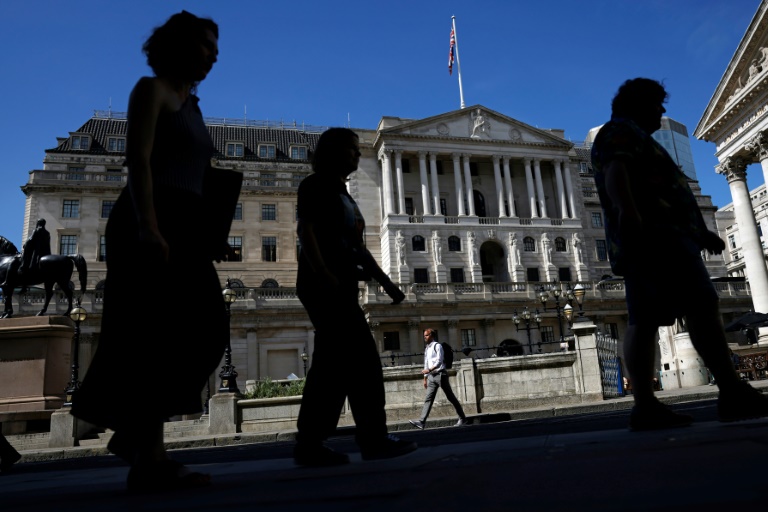
The Bank of England hiked its interest rate sharply again Thursday to combat decades-high inflation but warned the UK economy was slipping into recession.

The BoE’s second half-point increase in a row follows this week’s super-sized rate hikes from the US Federal Reserve and other global central banks, as policymakers seek to tame red-hot consumer prices.

The BoE met most market expectations as it lifted its key rate by 0.5 percentage points to 2.25 percent, repeating its August move that had already taken borrowing costs to a 14-year high.

And it noted the inflation outlook improved as a result of British Prime Minister Liz Truss’s plans to freeze energy prices for businesses and households — and ease the nation’s cost-of-living crisis.

– Rate highest since 2008 –

“The bank rate is now at the highest level since 2008 as the Bank of England attempts to curtail spiralling price rises with inflation just shy of double digits,” said Interactive Investor analyst Victoria Scholar.

The bank also indicated the UK economy would likely shrink in the current third quarter, or three months to the end of September.

That would place it in recession after it contracted by a slender 0.1 percent in the previous three months.

The technical definition of a recession is two straight quarters of negative growth.

The bank meanwhile forecast inflation to peak next month at 11 percent, downgrading its prior guidance of 13 percent.

“Since August, wholesale gas prices have been highly volatile,” the BoE said in minutes from its gathering.

“Uncertainty around the outlook for UK retail energy prices has nevertheless fallen, following the government’s announcements of support measures including an energy price guarantee.”

– Mini-budget –

Markets are on tenterhooks, with Britain set Friday to deliver a mini-budget that will seek to boost economic activity and help cushion the cost of living.

Finance minister Kwasi Kwarteng, fresh from being appointed by Truss, is expected to reverse her predecessor Boris Johnson’s plan to hike taxes on company profits and salaries.

Commentators also warn Truss’ huge spending plans will ravage public finances that are already reeling from huge spending during the deadly Covid pandemic.

Barclays bank analysts estimate that the government’s total cost-of-living expenditure could reach a colossal £235 billion ($267 billion).

UK inflation eased in August to 9.9 percent after striking a 40-year peak of 10.1 percent in July.

Yet it remains elevated largely as a result of surging energy prices following key producer Russia’s invasion of Ukraine.

– Prices gallop higher –

Some commentators had speculated that the BoE could mirror the European Central Bank and the US Federal Reserve and spring a hike of 0.75 percentage points — which would have been the BoE’s largest in three decades.

Across the world, consumer prices have galloped to their highest levels in decades on Ukraine fallout.

Central banks have responded by increasing their rates, fanning recession fears because they push up loan repayments for consumers and companies alike.

After a jumbo rate hike in Sweden earlier this week, the Swiss and Norwegian central banks announced big increases just ahead of the BoE decision, all citing inflation concerns.

The BoE earlier this month defended itself against accusations of being too slow to tackle sky-high inflation, after Truss proposed to review its operational independence.

The BoE has now lifted rates seven times since it began in December to tighten borrowing costs from a record-low level of just above zero.

Thursday’s decision had been postponed from last week following the death of Queen Elizabeth II.

Five members of the bank’s nine-strong monetary policy committee including governor Andrew Bailey voted in favour of the hike.

Three others called for a larger 0.75-percentage-point rise, while one lone voice called for a smaller gain of just 0.25 percentage points.

Close Bitnami banner
Bitnami