AFP

American, Russians to blast off for ISS as war rages in Ukraine

A US astronaut and two Russian cosmonauts are set to blast off to the International Space Station Wednesday on a Russian-operated flight despite soaring tensions between Moscow and Washington over Russia’s invasion of Ukraine.

NASA’s Frank Rubio and Russia’s Sergey Prokopyev and Dmitry Petelin are scheduled to take off from the Russia-leased Baikonur cosmodrome in Kazakhstan at 1354 GMT, according to Russian space agency Roscosmos.

Rubio will become the first US astronaut to travel to the ISS on a Russian Soyuz rocket since President Vladimir Putin sent troops into pro-Western Ukraine on February 24.

In response, Western capitals including Washington have hit Moscow with unprecedented sanctions and bilateral ties have sunk to new lows. 

However, space has managed to remain an outlier of cooperation between the two countries.

Following Rubio’s flight, Russia’s only active female cosmonaut Anna Kikina is expected to travel to the orbital station in early October aboard a SpaceX Crew Dragon. 

She will become only the fifth professional woman cosmonaut from Russia or the Soviet Union to fly to space, and the first Russian to fly aboard a spacecraft of SpaceX, the company of US billionaire Elon Musk.

With both flights set to go ahead, Russian cosmonauts and Western astronauts have sought to steer clear of the conflict that is raging back on Earth, especially when in orbit together.

A collaboration among the United States, Canada, Japan, the European Space Agency and Russia, the ISS is split into two sections: the US Orbital Segment, and the Russian Orbital Segment.

– Russia leaving ISS –

At present, the ISS depends on a Russian propulsion system to maintain its orbit, about 250 miles (400 kilometres) above sea level, with the US segment responsible for electricity and life support systems.

However, tensions in the space field have grown after Washington announced sanctions on Moscow’s aerospace industry — triggering warnings from Russia’s former space chief Dmitry Rogozin, an ardent supporter of the Ukraine war.

Rogozin’s recently appointed successor Yuri Borisov later confirmed Russia’s long-mooted move to leave the ISS after 2024 in favour of creating its own orbital station.

US space agency NASA called the decision an “unfortunate development” that would hinder the scientific work performed on the ISS. 

Space analysts say that the construction of a new orbital station could take more than a decade and Russia’s space industry — a point of national pride — would not be able to flourish under heavy sanctions. 

The ISS was launched in 1998 at a time of hope for US-Russia cooperation following their Space Race competition during the Cold War.

During that era, the Soviet space programme flourished. It boasted a number of accomplishments that included sending the first man into space in 1961 and launching the first satellite four years earlier.

But experts say Roscosmos is now a shadow of its former self and has in recent years suffered a series of setbacks, including corruption scandals and the loss of a number of satellites and other spacecraft.

Russia years-long monopoly on manned flights to the ISS is also gone, to SpaceX, along with millions of dollars in revenue. 

American, Russians to blast off for ISS as war rages in Ukraine

A US astronaut and two Russian cosmonauts are set to blast off to the International Space Station Wednesday on a Russian-operated flight despite soaring tensions between Moscow and Washington over Russia’s invasion of Ukraine.

NASA’s Frank Rubio and Russia’s Sergey Prokopyev and Dmitry Petelin are scheduled to take off from the Russia-leased Baikonur cosmodrome in Kazakhstan at 1354 GMT, according to Russian space agency Roscosmos.

Rubio will become the first US astronaut to travel to the ISS on a Russian Soyuz rocket since President Vladimir Putin sent troops into pro-Western Ukraine on February 24.

In response, Western capitals including Washington have hit Moscow with unprecedented sanctions and bilateral ties have sunk to new lows. 

However, space has managed to remain an outlier of cooperation between the two countries.

Following Rubio’s flight, Russia’s only active female cosmonaut Anna Kikina is expected to travel to the orbital station in early October aboard a SpaceX Crew Dragon. 

She will become only the fifth professional woman cosmonaut from Russia or the Soviet Union to fly to space, and the first Russian to fly aboard a spacecraft of SpaceX, the company of US billionaire Elon Musk.

With both flights set to go ahead, Russian cosmonauts and Western astronauts have sought to steer clear of the conflict that is raging back on Earth, especially when in orbit together.

A collaboration among the United States, Canada, Japan, the European Space Agency and Russia, the ISS is split into two sections: the US Orbital Segment, and the Russian Orbital Segment.

– Russia leaving ISS –

At present, the ISS depends on a Russian propulsion system to maintain its orbit, about 250 miles (400 kilometres) above sea level, with the US segment responsible for electricity and life support systems.

However, tensions in the space field have grown after Washington announced sanctions on Moscow’s aerospace industry — triggering warnings from Russia’s former space chief Dmitry Rogozin, an ardent supporter of the Ukraine war.

Rogozin’s recently appointed successor Yuri Borisov later confirmed Russia’s long-mooted move to leave the ISS after 2024 in favour of creating its own orbital station.

US space agency NASA called the decision an “unfortunate development” that would hinder the scientific work performed on the ISS. 

Space analysts say that the construction of a new orbital station could take more than a decade and Russia’s space industry — a point of national pride — would not be able to flourish under heavy sanctions. 

The ISS was launched in 1998 at a time of hope for US-Russia cooperation following their Space Race competition during the Cold War.

During that era, the Soviet space programme flourished. It boasted a number of accomplishments that included sending the first man into space in 1961 and launching the first satellite four years earlier.

But experts say Roscosmos is now a shadow of its former self and has in recent years suffered a series of setbacks, including corruption scandals and the loss of a number of satellites and other spacecraft.

Russia years-long monopoly on manned flights to the ISS is also gone, to SpaceX, along with millions of dollars in revenue. 
US and Canadian warships sail through Taiwan Strait

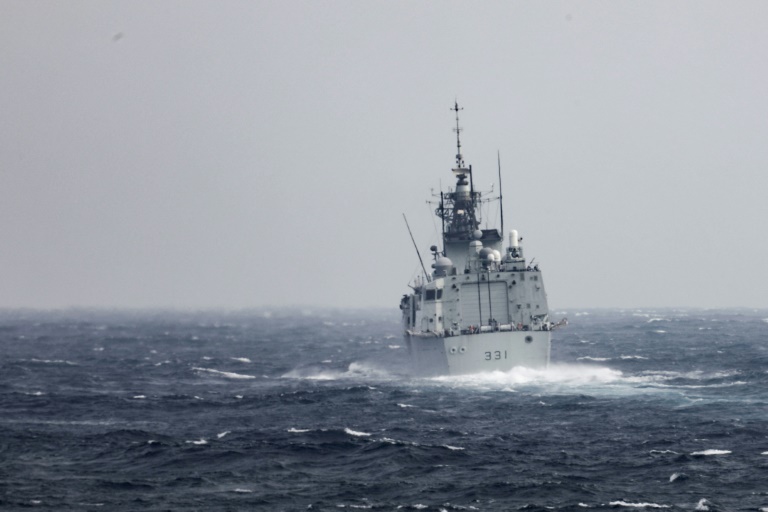
A US destroyer and a Canadian frigate sailed through the Taiwan Strait on Tuesday in the latest joint operation aimed at reinforcing the route’s status as an international waterway.

Beijing views as its own both democratic Taiwan and the narrow body of water separating the island from mainland China — one of the world’s busiest shipping channels.

The United States has long used “freedom of navigation” passages through the Taiwan Strait to push back against Chinese claims and Western allies have increasingly joined these operations.

The USS Higgins, an Arleigh Burke-class destroyer, in cooperation with the Royal Canadian Navy’s Halifax-class frigate HMCS Vancouver “conducted a routine Taiwan Strait transit September 20 (local time)… in accordance with international law”, the US Navy’s Seventh Fleet said.

“The ship transited through a corridor in the Strait that is beyond the territorial sea of any coastal State.”

Canada said the HMCS Vancouver was en route to join an ongoing mission to enforce UN sanctions against North Korea when it transited with the USS Higgins.

“Today’s routine Taiwan Strait transit demonstrates our commitment to a free, open and inclusive Indo-Pacific,” Canadian Defense Minister Anita Anand said in a statement, using another term for the Asia-Pacific region.

A spokesman for China’s Eastern Theatre Command described the latest transit as “public hype”.

“The troops are always on high alert, resolutely counteract all threats and provocations, and resolutely defend national sovereignty and territorial integrity,” Colonel Shi Yi said, according to Chinese state broadcaster CCTV.

British, Canadian, French and Australian warships have made passages through the Taiwan Strait in recent years, sparking protests from Beijing.

They also frequently ply the South China Sea, another vital shipping area that Beijing insists comes under its domain despite a 2016 Hague ruling that dismissed its claims as well as rival ones from multiple neighbours.

The last time US and Canadian warships sailed through the Taiwan Strait was 11 months ago when the destroyer USS Dewey and frigate HMCS Winnipeg made the trip.

The latest joint passage came a day after President Joe Biden again declared that US troops would come to Taiwan’s aid in the event of a Chinese invasion.

This was the fourth time Biden made such comments, despite Washington’s longstanding official policy of “strategic ambiguity” — designed both to ward off a Chinese invasion and discourage Taiwan from provoking Beijing by formally declaring independence.

Each time after Biden’s comments, the White House said there was no change in US policy on Taiwan.

Looking for reasons to be cheerful about climate action

With a sunny smile to the camera Alaina Wood delivers a burst of “good climate news” to her young TikTok audience, trying to reassure them that it is not too late for action on global warming.  

This cheerfulness is not because Wood has somehow failed to notice the litany of storms, floods and heatwaves battering the world and the dire projections of what is to come if fossil fuel emissions are not slashed. 

But the 26-year-old sustainability scientist — along with others working on climate change — worries that the barrage of bad news is causing “climate doomism”, a sense of hopelessness that they fear may undermine action.

“I took a deep dive into optimism,” said Wood, whose day job is in waste and water systems and who posts to her more than 300,000 followers under the name @thegarbagequeen. 

The aim is to inspire action. 

“If I’m going to talk about the harsh realities of it, I’m going to give them something to do with that anxiety,” the American told AFP.

Her positive climate videos, filmed at home in Tennessee or while hiking in the countryside, cover everything from the recovery of a threatened species to early-stage technology for decarbonising cement.

A major new US climate and health bill, signed into law in August, has proven a useful counterpoint to those who say “voting doesn’t matter”, she said.

Wood said she sees the sentiment that it is “too late” to do anything, mainly from users in the US or other wealthy countries, adding that people in the direct path of the most severe climate impacts do not have the option to give up.  

– Doomerism –

The most downbeat tend to be teenagers, she said, echoing concerns about high levels of climate anxiety among young people worldwide.   

One survey of 16- to 25-year-olds in 10 countries found almost 60 percent were very worried about climate change. 

Because every fraction of a degree matters as the planet heats, climate scientists say it is never too late to act to cut fossil fuel emissions — although delay makes impacts worse and actions harder and more costly.

But the nearly 1.2 degrees Celsius (34 degrees Fahrenheit) of global warming since pre-industrial times has unleashed devastating extremes. It can be difficult to look on the bright side. 

“Even my most optimistic followers are turning to climate doom because of all the climate disasters this summer, and I don’t know what to do,” Wood wrote on Twitter in late August. 

The resulting online rows — over whether fear or optimism are the correct response — led her to contemplate a temporary break from social media. 

– ‘You need hope’ –

They also reflect an intense debate among scientists, activists and in the media on how to talk about the enormous scale of the threat to humans and the natural world without overwhelming people. 

“Fear will wake us up, but fear is not the motivator for long-term action,” said climate scientist Katharine Hayhoe, who has written a book on the subject. 

“You need hope when things are dark. Hope is the chance that there is a better future that’s possible if you do everything you can to work towards it.” 

While climate denial has in recent years sunk to the murkier depths of the internet as impacts become harder to ignore, Hayhoe said “doomerism” is taking its place.

“If we decide there’s nothing we can do that will make a difference, we will do nothing,” she told AFP earlier this year. 

“And if we do nothing, we are doomed.” 

Even people who feel they have done their bit — giving up meat or cutting out air travel — fall into despair, Hayhoe said, partly down to an “obsession with individual action” in the US and other wealthy countries.

The co-founder of direct action protest movement Extinction Rebellion (XR), Gail Bradbrook, can agree.

– Better, not best –

She believes that while people are “hardwired” to act for the good of the community, that is undermined by a consumerist system.

But the former research scientist said those behind XR’s creation in 2018 were not motivated by hope or despair.

“It was from a sense of determination to see change happen,” she told AFP.

Likening the need for the bitter truth to a cancer patient wanting an honest diagnosis, Bradbrook said it was important to understand the causes of the climate, biodiversity, health, inequality crises.  

And then have agency to act. 

Even if the situation were irredeemably dire, she said, “what else are you wanting to do with your life?”

Wood remains upbeat on her path of optimism and proud of the impact of her videos, including getting her TikTok followers to call the White House asking President Joe Biden to declare a climate emergency.

“We can make the future better,” she said.

“It may not be the best, because the best would have been if we prevented climate change from happening in the first place. But we can make society better and healthier.”

Looking for reasons to be cheerful about climate action

With a sunny smile to the camera Alaina Wood delivers a burst of “good climate news” to her young TikTok audience, trying to reassure them that it is not too late for action on global warming.  

This cheerfulness is not because Wood has somehow failed to notice the litany of storms, floods and heatwaves battering the world and the dire projections of what is to come if fossil fuel emissions are not slashed. 

But the 26-year-old sustainability scientist — along with others working on climate change — worries that the barrage of bad news is causing “climate doomism”, a sense of hopelessness that they fear may undermine action.

“I took a deep dive into optimism,” said Wood, whose day job is in waste and water systems and who posts to her more than 300,000 followers under the name @thegarbagequeen. 

The aim is to inspire action. 

“If I’m going to talk about the harsh realities of it, I’m going to give them something to do with that anxiety,” the American told AFP.

Her positive climate videos, filmed at home in Tennessee or while hiking in the countryside, cover everything from the recovery of a threatened species to early-stage technology for decarbonising cement.

A major new US climate and health bill, signed into law in August, has proven a useful counterpoint to those who say “voting doesn’t matter”, she said.

Wood said she sees the sentiment that it is “too late” to do anything, mainly from users in the US or other wealthy countries, adding that people in the direct path of the most severe climate impacts do not have the option to give up.  

– Doomerism –

The most downbeat tend to be teenagers, she said, echoing concerns about high levels of climate anxiety among young people worldwide.   

One survey of 16- to 25-year-olds in 10 countries found almost 60 percent were very worried about climate change. 

Because every fraction of a degree matters as the planet heats, climate scientists say it is never too late to act to cut fossil fuel emissions — although delay makes impacts worse and actions harder and more costly.

But the nearly 1.2 degrees Celsius (34 degrees Fahrenheit) of global warming since pre-industrial times has unleashed devastating extremes. It can be difficult to look on the bright side. 

“Even my most optimistic followers are turning to climate doom because of all the climate disasters this summer, and I don’t know what to do,” Wood wrote on Twitter in late August. 

The resulting online rows — over whether fear or optimism are the correct response — led her to contemplate a temporary break from social media. 

– ‘You need hope’ –

They also reflect an intense debate among scientists, activists and in the media on how to talk about the enormous scale of the threat to humans and the natural world without overwhelming people. 

“Fear will wake us up, but fear is not the motivator for long-term action,” said climate scientist Katharine Hayhoe, who has written a book on the subject. 

“You need hope when things are dark. Hope is the chance that there is a better future that’s possible if you do everything you can to work towards it.” 

While climate denial has in recent years sunk to the murkier depths of the internet as impacts become harder to ignore, Hayhoe said “doomerism” is taking its place.

“If we decide there’s nothing we can do that will make a difference, we will do nothing,” she told AFP earlier this year. 

“And if we do nothing, we are doomed.” 

Even people who feel they have done their bit — giving up meat or cutting out air travel — fall into despair, Hayhoe said, partly down to an “obsession with individual action” in the US and other wealthy countries.

The co-founder of direct action protest movement Extinction Rebellion (XR), Gail Bradbrook, can agree.

– Better, not best –

She believes that while people are “hardwired” to act for the good of the community, that is undermined by a consumerist system.

But the former research scientist said those behind XR’s creation in 2018 were not motivated by hope or despair.

“It was from a sense of determination to see change happen,” she told AFP.

Likening the need for the bitter truth to a cancer patient wanting an honest diagnosis, Bradbrook said it was important to understand the causes of the climate, biodiversity, health, inequality crises.  

And then have agency to act. 

Even if the situation were irredeemably dire, she said, “what else are you wanting to do with your life?”

Wood remains upbeat on her path of optimism and proud of the impact of her videos, including getting her TikTok followers to call the White House asking President Joe Biden to declare a climate emergency.

“We can make the future better,” she said.

“It may not be the best, because the best would have been if we prevented climate change from happening in the first place. But we can make society better and healthier.”

Asian traders resume selling as another jumbo Fed hike looms

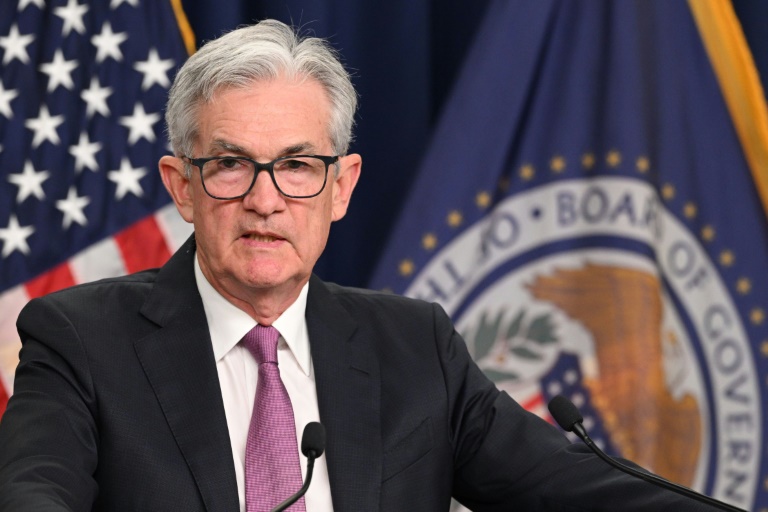
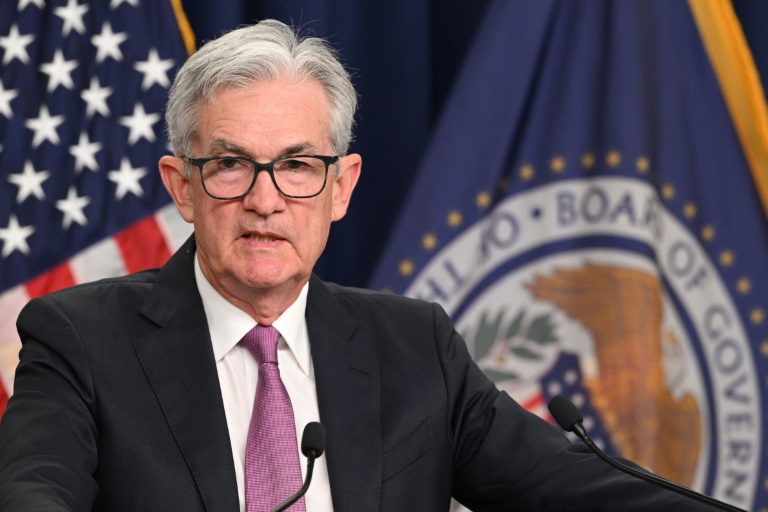
Asian markets resumed their downward spiral Wednesday after a brief respite the previous day, as traders prepared for what many expect to be a third successive jumbo interest rate hike by the Federal Reserve.

Equities around the world have been clattered by fears of a recession in major economies as central banks ramp up borrowing costs to combat the highest inflation in decades, which has been compounded by the Ukraine war and supply chain snarls.

Adding to the dour mood, four regions in Russian-held parts of Ukraine said they will hold weekend referendums on annexation by Moscow — a move that risks escalating the conflict as President Vladimir Putin could claim an attack in those regions was an attack on Russia.

But for now all eyes are on Washington, where the Fed is due to conclude its latest policy meeting, with most analysts predicting it will announce another 75 basis-point lift though some have tipped a full percentage-point move.

However, while the hike has largely been priced into the markets, the US central bank’s forecast and post-meeting comments from boss Jerome Powell are the main attraction for investors.

“Volumes remain light and the mood cautious, with few looking to take on large positions before hearing what the Fed says and where policy makers see rates going by the end of the hiking cycle,” Fiona Cincotta, at City Index, said.

“This is what will drive the markets, not the rate hike… but what the Fed plans to do next.”

Fed officials have for months stuck to the mantra that they will only ease up on their hawkish drive when inflation comes down and remains subdued.

This has led many to warn that rates are unlikely to come down anytime soon, possibly as late as 2024, with a recession more than likely in the United States as well as other major economies.

– ‘Long and ugly’ recession? –

Other central banks are also meeting this week.

On Tuesday, officials in Sweden surprised markets by unveiling a one percentage-point hike, while the United Kingdom and Switzerland are expected to announce more increases.

While there is debate on how bad any contraction will be, Nouriel Roubini, who predicted the 2008 economic meltdown, said he saw a “long and ugly” recession by the end of the year that would not likely end until the end of 2023 with severe consequences for equities.

“Even in a plain vanilla recession, the S&P 500 can fall by 30 percent,” he said, adding that “a real hard landing”, which he has forecast, could see it give up 40 percent.

In early trade, Asian markets were back in the red, reversing Tuesday’s rate bounce.

Tokyo, Hong Kong, Sydney and Manila were all down more than one percent, while there were also losses in Shanghai, Seoul, Wellington, Taipei and Jakarta.

Part of the reason for the weakness is the sharp slowdown in China, which has been battered by a series of Covid-linked lockdowns this year that have seen tens of millions of people shut away and factories close down for months.

In light of that — as well as the Ukraine war and rate hikes — the Asian Development Bank on Wednesday cut its 2022 growth forecast for developing Asia and warned of “global headwinds” to the recovery.

– Key figures at around 0230 GMT –

Tokyo – Nikkei 225: DOWN 1.4 percent at 27,308.66 (break)

Hong Kong – Hang Seng Index: DOWN 1.4 percent at 18,515.54

Shanghai – Composite: DOWN 0.4 percent at 3,110.55

Euro/dollar: DOWN at $0.9969 from $0.9977 on Tuesday

Dollar/yen: DOWN at 143.64 yen from 143.72 yen

Pound/dollar: DOWN at $1.1380 from $1.1384

Euro/pound: DOWN at 87.60 pence from 87.63 pence 

West Texas Intermediate: DOWN 0.1 percent at $83.85 per barrel

Brent North Sea crude: FLAT at $90.63 per barrel

New York – Dow: DOWN 1.0 percent at 30,706.23 (close)

London – FTSE 100: DOWN 0.6 percent at 7,192.66 (close)

— Bloomberg News contributed to this story —

Asian traders resume selling as another jumbo Fed hike looms

Asian markets resumed their downward spiral Wednesday after a brief respite the previous day, as traders prepared for what many expect to be a third successive jumbo interest rate hike by the Federal Reserve.

Equities around the world have been clattered by fears of a recession in major economies as central banks ramp up borrowing costs to combat the highest inflation in decades, which has been compounded by the Ukraine war and supply chain snarls.

Adding to the dour mood, four regions in Russian-held parts of Ukraine said they will hold weekend referendums on annexation by Moscow — a move that risks escalating the conflict as President Vladimir Putin could claim an attack in those regions was an attack on Russia.

But for now all eyes are on Washington, where the Fed is due to conclude its latest policy meeting, with most analysts predicting it will announce another 75 basis-point lift though some have tipped a full percentage-point move.

However, while the hike has largely been priced into the markets, the US central bank’s forecast and post-meeting comments from boss Jerome Powell are the main attraction for investors.

“Volumes remain light and the mood cautious, with few looking to take on large positions before hearing what the Fed says and where policy makers see rates going by the end of the hiking cycle,” Fiona Cincotta, at City Index, said.

“This is what will drive the markets, not the rate hike… but what the Fed plans to do next.”

Fed officials have for months stuck to the mantra that they will only ease up on their hawkish drive when inflation comes down and remains subdued.

This has led many to warn that rates are unlikely to come down anytime soon, possibly as late as 2024, with a recession more than likely in the United States as well as other major economies.

– ‘Long and ugly’ recession? –

Other central banks are also meeting this week.

On Tuesday, officials in Sweden surprised markets by unveiling a one percentage-point hike, while the United Kingdom and Switzerland are expected to announce more increases.

While there is debate on how bad any contraction will be, Nouriel Roubini, who predicted the 2008 economic meltdown, said he saw a “long and ugly” recession by the end of the year that would not likely end until the end of 2023 with severe consequences for equities.

“Even in a plain vanilla recession, the S&P 500 can fall by 30 percent,” he said, adding that “a real hard landing”, which he has forecast, could see it give up 40 percent.

In early trade, Asian markets were back in the red, reversing Tuesday’s rate bounce.

Tokyo, Hong Kong, Sydney and Manila were all down more than one percent, while there were also losses in Shanghai, Seoul, Wellington, Taipei and Jakarta.

Part of the reason for the weakness is the sharp slowdown in China, which has been battered by a series of Covid-linked lockdowns this year that have seen tens of millions of people shut away and factories close down for months.

In light of that — as well as the Ukraine war and rate hikes — the Asian Development Bank on Wednesday cut its 2022 growth forecast for developing Asia and warned of “global headwinds” to the recovery.

– Key figures at around 0230 GMT –

Tokyo – Nikkei 225: DOWN 1.4 percent at 27,308.66 (break)

Hong Kong – Hang Seng Index: DOWN 1.4 percent at 18,515.54

Shanghai – Composite: DOWN 0.4 percent at 3,110.55

Euro/dollar: DOWN at $0.9969 from $0.9977 on Tuesday

Dollar/yen: DOWN at 143.64 yen from 143.72 yen

Pound/dollar: DOWN at $1.1380 from $1.1384

Euro/pound: DOWN at 87.60 pence from 87.63 pence 

West Texas Intermediate: DOWN 0.1 percent at $83.85 per barrel

Brent North Sea crude: FLAT at $90.63 per barrel

New York – Dow: DOWN 1.0 percent at 30,706.23 (close)

London – FTSE 100: DOWN 0.6 percent at 7,192.66 (close)

— Bloomberg News contributed to this story —

World leaders warn of divisions over Ukraine ahead of Biden speech

Ukraine will take center stage at the United Nations on Wednesday as world leaders warned of a new era of divisions over the war and other crises including climate change.

US President Joe Biden will address the UN General Assembly on Wednesday as will Ukrainian President Volodymyr Zelensky, the only leader permitted to speak by video as the massive annual summit returned in person after two years of pandemic restrictions. 

Other speakers will include Iranian President Ebrahim Raisi, who flew to New York despite protests in his nation after the death of a young woman following her arrest by “morality police.” 

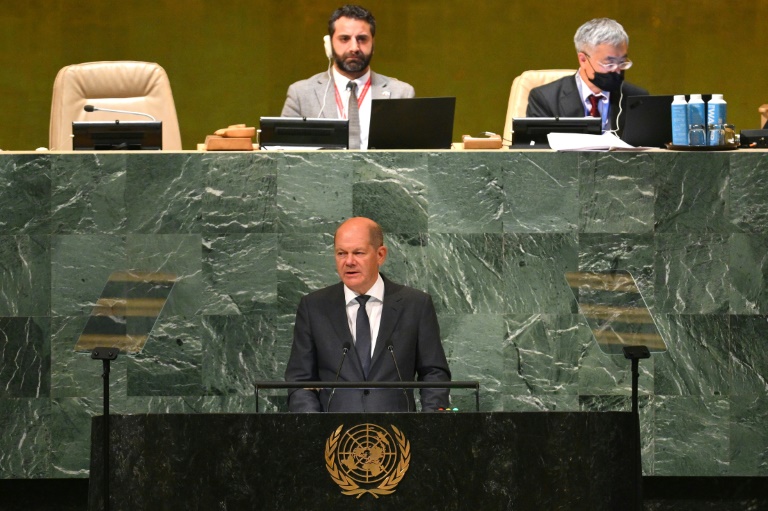
Standing at the UN rostrum late Tuesday, German Chancellor Olaf Scholz said the world was “facing a new fragmentation” after years of hope following the end of the Cold War and his own nation’s reunification.

“Major global crises are piling up before us and are combining and reinforcing one another. Some have even seen this as a harbinger of a world without rules,” he said.

Scholz said that President Vladimir Putin, who invaded Ukraine in February, will “only give up his war and his imperialist ambitions if he realizes he cannot win.”

“We stand firmly at the side of those under attack — for the protection of the lives and the freedom of the Ukrainians, and for the protection of our international order,” he said.

– World forced to choose sides? –

Biden is expected also to address Ukraine and the global order. In a break with tradition for US presidents, he did not speak on the first day as he had traveled to Britain for the funeral of Queen Elizabeth II.

Just as the UN summit was getting underway with the participation of Russian Foreign Minister Sergei Lavrov, Russian-backed forces announced they were going ahead with a move the West had long warned against: referendums on annexation by Moscow.

French President Emmanuel Macron described Russia’s invasion as “a return to a new age of imperialism and colonies” and warned that inaction risked “tearing down the global order without which peace is not possible.”

“It’s not a matter of choosing one side between East and West, or North or South. It’s a matter of responsibility” to the UN Charter, he said.

“Beyond the war, there is a risk of division in the world for reasons both direct and indirect from the conflict.”

But a number of developing nations have resisted Western calls to punish Russia and have voiced unease about the billions of dollars being spent on weapons for Ukraine.

“Africa has suffered enough from the burden of history,” said Senegalese President Macky Sall, the current chair of the African Union, as he pleaded for a “negotiated solution” in Ukraine.

“It does not want to be the breeding ground of a new cold war.”

The new Philippine president, Ferdinand Marcos Jr, also alluded to tensions between the United States and China.

“In Asia, our hard-won peace and stability is under threat by increasing strategic and ideological tensions,” he said.

– Anger over Iranian woman’s death –

Macron met on the UN sidelines with Raisi as he pressed for Iran to agree to the revival of a 2015 nuclear accord rejected by former US president Donald Trump.

But the nuclear issue appeared overshadowed by scenes of protests in Iran following the death of 22-year-old Mahsa Amini, who was arrested by the unit responsible for enforcing the Islamic republic’s dress code for women.

Macron said he encouraged Raisi to show “respect for women’s rights,” as dissident groups staging noisy demonstrations in New York said they were filing a new lawsuit against Raisi over previous human rights concerns.

Chilean President Gabriel Boric, a leftist former student leader, paid tribute to Amini as he called for “an end to abuses by the powerful everywhere.”

UN Secretary-General Antonio Guterres opened the General Assembly by projecting images of a ship carrying grain out of Ukraine — evidence of how diplomacy can succeed.

But he warned that “divides are growing deeper.”

“A winter of global discontent is on the horizon,” he added. 

“Trust is crumbling, inequalities are exploding, our planet is burning. People are hurting — with the most vulnerable suffering the most.”

With global temperatures rising and a chunk of Pakistan the size of the United Kingdom recently under water, Guterres lashed out at fossil fuel companies and the “suicidal war against nature.”

He called on developed economies to tax profits from fossil fuels and dedicate the funds both to compensate for damage from climate change and to help people struggling with high prices.

“Polluters must pay,” he said.

Strengthening Hurricane Fiona heads north off Turks and Caicos

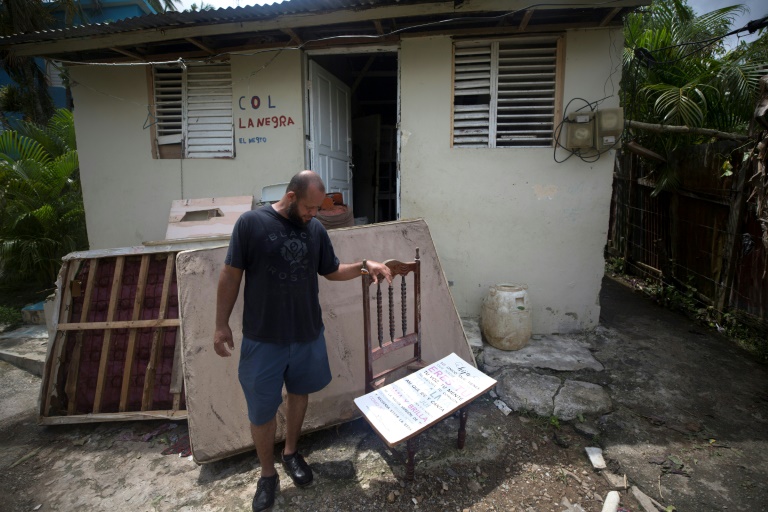
Hurricane Fiona continued its slow and devastating march northward after slamming the Turks and Caicos Islands as a powerful Category 3 storm on Tuesday and leaving a trail of destruction in Puerto Rico and the Dominican Republic.

The US National Hurricane Center (NHC) said Tuesday evening that the storm had moved 75 miles (120 kilometers) north of Turks and Caicos, though it was still producing strong winds and heavy rains on portions of the British territory that is home to some 38,000 people.

NHC aircraft had also measured an uptick in Fiona’s maximum windspeeds, now at 125 miles per hour, making it a major hurricane.

At least five people have died as the storm churned across the Caribbean — one in the French overseas department of Guadeloupe and two each in Puerto Rico and the Dominican Republic.

After leaving the Turks and Caicos Islands, Fiona began a slow crawl northwards on a path that could see the strengthening storm approach Bermuda late Thursday.

“Hurricane Fiona has proven to be an unpredictable storm,” Anya Williams, the deputy governor of Turks and Caicos, said in a broadcast.

Williams said no casualties or serious injuries had been reported in Turks and Caicos, but she urged residents to continue to shelter in place.

Blackouts were reported on Grand Turk and several other islands in the archipelago and 165 people were admitted to shelters, she said, adding that Britain’s Royal Navy and the US Coast Guard are standing by to provide assistance.

Dominican Republic President Luis Abinader has declared three eastern provinces to be disaster zones: La Altagracia — home to the popular resort of Punta Cana — El Seibo and Hato Mayor.

Authorities said Tuesday that more than 10,000 people had been moved to “safe areas,” while some 400,000 are without electricity.

Footage from local media showed residents of the east coast town of Higuey waist-deep in water trying to salvage personal belongings.

“It came through at high speed,” Vicente Lopez told AFP in Punta Cana, bemoaning the destroyed businesses in the area.

– ‘I have food and water’ –

US President Joe Biden has declared a state of emergency in Puerto Rico and dispatched the head of the Federal Emergency Management Agency to the island, which is still struggling to recover from Hurricane Maria five years ago.

“We’re sending hundreds of additional personnel to support all affected communities,” FEMA Administrator Deanne Criswell said Tuesday after a tour with Pedro Pierluisi, the island’s governor. 

Pierluisi said the storm had caused catastrophic damage on the island of three million people since Sunday, with some areas receiving more than 30 inches (76 centimeters) of rain.

Michelle Carlo, medical advisor for Direct Relief in Puerto Rico, told CBS News that “a lot of people in Puerto Rico are suffering right now.”

“About 80 percent of Puerto Ricans are still without power and about 65 percent are without water service,” Carlo said.

Across Puerto Rico, Fiona caused landslides, blocked roads and toppled trees, power lines and bridges, Pierluisi said.

A man was killed as an indirect result of the power blackout — burned to death while trying to fill his generator, according to authorities.

On Monday afternoon, Nelly Marrero made her way back to her home in Toa Baja, in the north of Puerto Rico, to clear out the mud that surged inside after she evacuated.

“Thanks to God, I have food and water,” Marrero — who lost everything when Hurricane Maria devastated Puerto Rico — told AFP by telephone.

The hurricane has left around 800,000 people without drinking water as a result of power outages and flooded rivers, officials said.

After years of financial woes and recession, Puerto Rico in 2017 declared the largest bankruptcy ever by a local US administration. 

Later that year, the double hit from hurricanes Irma and Maria added to the misery, devastating the electrical grid on the island — which has suffered from major infrastructure problems for years.

The grid was privatized in June 2021 in an effort to resolve the problem of blackouts, but the issue has persisted, and the entire island lost power earlier this year.

Strengthening Hurricane Fiona heads north off Turks and Caicos

Hurricane Fiona continued its slow and devastating march northward after slamming the Turks and Caicos Islands as a powerful Category 3 storm on Tuesday and leaving a trail of destruction in Puerto Rico and the Dominican Republic.

The US National Hurricane Center (NHC) said Tuesday evening that the storm had moved 75 miles (120 kilometers) north of Turks and Caicos, though it was still producing strong winds and heavy rains on portions of the British territory that is home to some 38,000 people.

NHC aircraft had also measured an uptick in Fiona’s maximum windspeeds, now at 125 miles per hour, making it a major hurricane.

At least five people have died as the storm churned across the Caribbean — one in the French overseas department of Guadeloupe and two each in Puerto Rico and the Dominican Republic.

After leaving the Turks and Caicos Islands, Fiona began a slow crawl northwards on a path that could see the strengthening storm approach Bermuda late Thursday.

“Hurricane Fiona has proven to be an unpredictable storm,” Anya Williams, the deputy governor of Turks and Caicos, said in a broadcast.

Williams said no casualties or serious injuries had been reported in Turks and Caicos, but she urged residents to continue to shelter in place.

Blackouts were reported on Grand Turk and several other islands in the archipelago and 165 people were admitted to shelters, she said, adding that Britain’s Royal Navy and the US Coast Guard are standing by to provide assistance.

Dominican Republic President Luis Abinader has declared three eastern provinces to be disaster zones: La Altagracia — home to the popular resort of Punta Cana — El Seibo and Hato Mayor.

Authorities said Tuesday that more than 10,000 people had been moved to “safe areas,” while some 400,000 are without electricity.

Footage from local media showed residents of the east coast town of Higuey waist-deep in water trying to salvage personal belongings.

“It came through at high speed,” Vicente Lopez told AFP in Punta Cana, bemoaning the destroyed businesses in the area.

– ‘I have food and water’ –

US President Joe Biden has declared a state of emergency in Puerto Rico and dispatched the head of the Federal Emergency Management Agency to the island, which is still struggling to recover from Hurricane Maria five years ago.

“We’re sending hundreds of additional personnel to support all affected communities,” FEMA Administrator Deanne Criswell said Tuesday after a tour with Pedro Pierluisi, the island’s governor. 

Pierluisi said the storm had caused catastrophic damage on the island of three million people since Sunday, with some areas receiving more than 30 inches (76 centimeters) of rain.

Michelle Carlo, medical advisor for Direct Relief in Puerto Rico, told CBS News that “a lot of people in Puerto Rico are suffering right now.”

“About 80 percent of Puerto Ricans are still without power and about 65 percent are without water service,” Carlo said.

Across Puerto Rico, Fiona caused landslides, blocked roads and toppled trees, power lines and bridges, Pierluisi said.

A man was killed as an indirect result of the power blackout — burned to death while trying to fill his generator, according to authorities.

On Monday afternoon, Nelly Marrero made her way back to her home in Toa Baja, in the north of Puerto Rico, to clear out the mud that surged inside after she evacuated.

“Thanks to God, I have food and water,” Marrero — who lost everything when Hurricane Maria devastated Puerto Rico — told AFP by telephone.

The hurricane has left around 800,000 people without drinking water as a result of power outages and flooded rivers, officials said.

After years of financial woes and recession, Puerto Rico in 2017 declared the largest bankruptcy ever by a local US administration. 

Later that year, the double hit from hurricanes Irma and Maria added to the misery, devastating the electrical grid on the island — which has suffered from major infrastructure problems for years.

The grid was privatized in June 2021 in an effort to resolve the problem of blackouts, but the issue has persisted, and the entire island lost power earlier this year.

Close Bitnami banner
Bitnami