AFP

Heatwave batters Spain's Mediterranean mussel crop

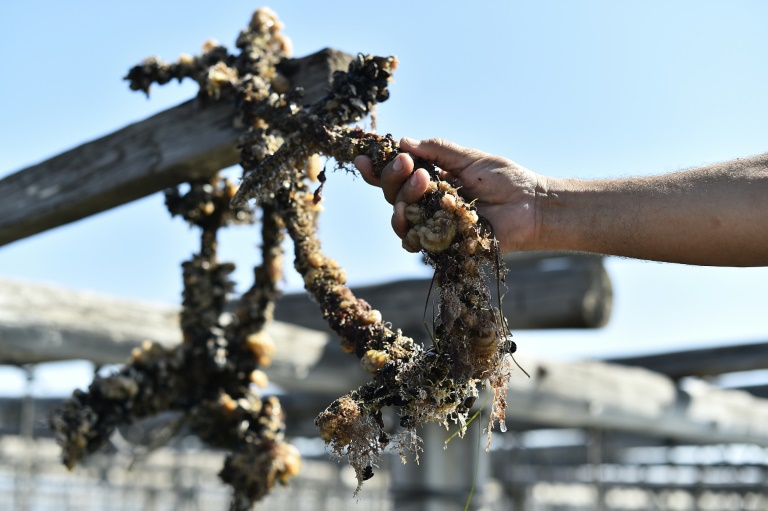
“There’s nothing left here,” sighs Javier Franch as he shakes the heavy rope of mussels he’s just pulled to the surface in northeastern Spain. They are all dead. 

With the country hit by a long and brutal heatwave this summer, the water temperature in the Ebro Delta, the main mussels production area of the Spanish Mediterranean, is touching 30 degrees Celsius (86 degrees Fahrenheit).

And any grower who hasn’t removed their molluscs in time will have lost everything. 

But that’s not the worst of it: most of next year’s crop has also died in one of the most intense marine heatwaves in the Spanish Mediterranean.

By the end of July, experts said the western Mediterranean was experiencing an “exceptional” marine heatwave, with persistently hotter-than-normal temperatures posing a threat to the entire marine ecosystem. 

“The high temperatures have cut short the season,” says Franch, 46, who has spent almost three decades working for the firm founded by his father, which has seen production fall by a quarter this year. 

The relentless sun has heated up the mix of fresh and saltwater along Catalonia’s delicate coastal wetlands where the River Ebro flows into the Mediterranean. 

On a scorching summer morning in Deltebre, one of the municipalities of the Delta, the mussel rafts — long wooden structures with ropes attached which can each grow up to 20 kilograms (44 pounds) of mussels — should be teeming with workers hurrying around during the busy season. 

But there is hardly any movement. 

“We lost the yield that was left, which wasn’t much, because we were working to get ahead so we wouldn’t go through this,” explains Carles Fernandez, who advises the Ebro Delta’s Federation of Mollusc Producers (Fepromodel). 

“But the problem is that we’ve lost the young stock for next year and we’ll have quite a high cost overrun.” 

– Millions in losses –

The heat has wiped out 150 tonnes of commercial mussels and 1,000 tonnes of young stock in the Delta, initial estimates suggest. 

And producers are calculating their losses at over one million euros ($1,000,000) given they will now have to buy young molluscs from Italy or Greece for next year. 

“When you have a week when temperatures are higher than 28C, there can be some mortality, but this summer it has lasted almost a month and a half,” with peak temperatures of almost 31C, says Fepromodel head Gerardo Bonet.

Normally, the Ebro Delta’s two bays produce around 3,500 tonnes of mussels, and 800 tonnes of oysters, making Catalonia Spain’s second-largest producer, although it remains far behind the output of Galicia, the northwestern region on the colder Atlantic coast. 

For years now, the harvest in the Delta has been brought forward, cutting short a season that once ran from April to August. 

– ‘Tropical’ Mediterranean – 

Hit by coastal erosion and a lack of sediment supply, the rich ecosystem of the Ebro Delta — a biosphere reserve and one of the most important wetlands of the western Mediterranean — is particularly vulnerable to climate change. 

And this extreme summer, when Spain endured 42 days of heatwave — a record three times the average over the past decade, the AEMET national forecaster says — has also left its mark below the surface of the water. 

“Some marine populations which are unable to cope with temperatures as high as these over a long period of time are going to suffer what we call mass mortality,” says marine biologist Emma Cebrian of the Spanish National Research Council (CISC). 

“Imagine a forest, it’s like 60 or 80 percent of the trees dying, with the resulting impact on its associated biodiversity,” she says. 

The succession of heatwaves on land has generated another at sea which — pending analysis of all the data in November — may turn out to be “the worst” in this area of the Mediterranean since records began in the 1980s. 

Although marine heatwaves are not a new phenomenon, they are becoming more extreme with increasingly dire consequences. 

“If we compare it with a wildfire, one can have an impact, but if you keep having them, it will probably mean the affected populations are not able to recuperate,” Cebrian said. 

Experts say the Mediterranean is becoming “tropicalised”, and mollusc grower Franch is struck by the mounting evidence as his boat glides between empty mussel rafts in a bay without a breath of wind. 

He is mulling an increase in his production of oysters, which are more resistant to high temperatures, but which currently represent just 10 percent of his output.

But he hopes it will help ensure his future in a sector that employs 800 people directly or indirectly in the Ebro Delta. 

“(The sector) is under threat because climate change is a reality and what we are seeing now will happen again,” he says worriedly. 
UN chief in Pakistan to boost flood aid for devastated millions

United Nations chief Antonio Guterres began a two-day visit to flood-hit Pakistan Friday that officials hope will boost global support for a humanitarian crisis affecting millions.

A third of the country is under water — an area the size of the United Kingdom — following record rains brought by what Guterres has described as “a monsoon on steroids”.

Pakistan officials say it will cost at least $10 billion to rebuild and repair damaged infrastructure — an impossible sum for the deeply indebted nation — but the priority, for now, is food and shelter for millions made homeless.

“Everything is drowned, everything washed away,” said Ayaz Ali, suffering from fever as he reluctantly took his place Thursday on a navy boat rescuing villagers from flooded rural communities in southern Sindh province.

In a tweet en route to Pakistan, Guterres said he wanted to “be with the people in their time of need, galvanize international support and bring global focus on the disastrous repercussions of climate change”.

Pakistan receives heavy — often destructive — rains during its annual monsoon season, which are crucial for agriculture and water supplies.

But a downpour as intense as this year’s not been seen for decades, and Pakistan officials blame climate change, which is increasing the frequency and intensity of extreme weather around the world.

Pakistan is responsible for less than one percent of global greenhouse gas emissions, but is eighth on a list compiled by the NGO Germanwatch of countries deemed most vulnerable to extreme weather caused by climate change.

– Tents and tarpaulins needed –

A flood relief plan scaled by the Pakistan government and UN last month called for an immediate $160 million in international funding, and aid is already arriving.

On Thursday a US Air Force C-17 landed — the first American military plane in Pakistan for years — bringing desperately needed tents and tarpaulins for temporary shelter.

While Washington is a key supplier of military hardware to Islamabad, relations have been fractious as a result of conflicting interests in neighbouring Afghanistan — especially since the Taliban returned to power there in August last year.

The meteorological office says Pakistan received five times more rain than normal in 2022 — Padidan, a small town in Sindh, has been drenched by more than 1.8 metres (70 inches) since the monsoon began in June.

The effect of the heavy rains has been twofold — flash floods in rivers in the mountainous north that washed away roads, bridges and buildings in minutes, and a slow accumulation of water in the southern plains that has submerged hundreds of thousands of square kilometres (miles) of land.

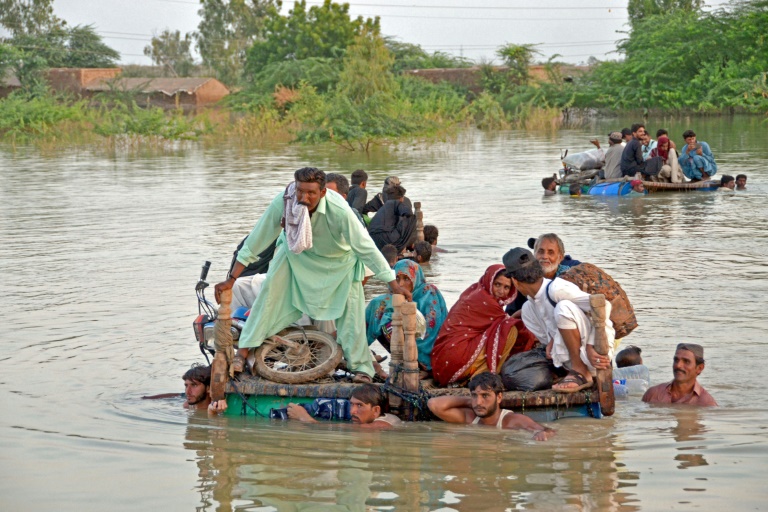
In Jaffarabad district of Balochistan Thursday, villagers were fleeing their homes on makeshift rafts made from upturned wooden “charpoy” beds.

Thousands of temporary campsites have mushroomed on slivers of dry land in the south and west — often roads and railway tracks are the only high ground in a landscape of water.

With people and livestock cramped together, the camps are ripe for outbreaks of disease, with many cases of mosquito-borne dengue reported, as well as scabies.

The floods have killed nearly 1,400 people, according to the latest National Disaster Management Authority report.

Nearly 7,000 km of roads have been damaged, some 246 bridges washed away and more than 1.7 million homes and businesses destroyed.

Asian markets rally, dollar dips as traders price in policy tightening

Asian markets rallied Friday following a healthy performance on Wall Street, with investors largely pricing in more interest rate hikes aimed at taming runaway inflation.

The more confident mood was reflected in a dip in the dollar, which has surged in recent weeks to multi-decade highs against its major peers owing to the Federal Reserve’s hawkish tilt to tighter monetary policy.

The greenback’s softness came even after Fed chief Jerome Powell reasserted the bank’s determination to keep hiking rates to fight prices, even at the cost of economic growth.

His warning that “we need to act now forthrightly, strongly” followed comments from his deputy Lael Brainard, who said policymakers would lift borrowing costs for as long as it takes to bring inflation down from 40-year highs.

Still, Wall Street ended in positive territory, putting markets on course for a weekly gain and easing some pressure after hefty losses in August caused by worries that rising rates will spark a recession.

“The markets have finally digested the fact that rates are almost certain to go up by 75 basis points when the Fed moves next (on September 21),” JoAnne Feeney, at Advisors Capital Management, told Bloomberg TV.

“What we are seeing though is some recognition that perhaps the sell-off that we saw in the second half of August was a bit overdone,” she said.

New York’s rise filtered through to Asia, where Hong Kong added more than two percent heading into a long weekend, while Tokyo, Sydney, Shanghai, Singapore, Wellington, Manila and Bangkok were all up.

OANDA’s Edward Moya said traders cheered as “Powell stuck to his hawkish script and affirmed the commitment to tighten policy until inflation is back towards their target.

“Wall Street is expecting to see some pricing pressure relief with next week’s inflation report, but that shouldn’t derail the current 75 basis-point pace of tightening.”

There was also some cheer from news that inflation in China had eased slightly in August, giving the government more room to introduce more economy-supporting measures, though the recovery remains hostage to leaders’ strict zero-Covid strategy of growth-sapping lockdowns.

On currency markets, the euro was holding well above parity with the dollar after the European Central Bank announced its own 75 basis-point rise as it warned inflation was “far too high” and likely to stay above target for “an extended period”.

ECB chief Christine Lagarde suggested policy would continue to be tightened for some time.

The yen was also slightly stronger, having been in danger of hitting a 32-year low versus the greenback, with senior Japanese officials hinting at possible action to curb its losses if the unit fell further.

However, there is an expectation that it will see more losses as the Bank of Japan sticks rigidly to its ultra-loose policies despite the Fed’s increasingly hawkish moves.

Oil prices extended Thursday’s gains though they remain pressured by ongoing worries about the impact on demand from possible recessions caused by the rate hikes and inflation. 

Weakness in China’s economy and lockdowns in major cities were also cause for concern among commodities traders. 

Reports that President Joe Biden was considering releasing more crude from the US strategic reserves were also weighing on the market.

Washington is concerned that prices could spike in December when European Union sanctions on Russian supplies kick in.

– Key figures at around 0320 GMT –

Tokyo – Nikkei 225: UP 0.6 percent at 28,219.70 (break)

Hong Kong – Hang Seng Index: UP 2.2 percent at 19,269.43

Shanghai – Composite: UP 0.7 percent at 3,258.94

Euro/dollar: DOWN at $1.0070 from $1.0001 on Thursday

Pound/dollar: DOWN at $1.1568 from $1.1500

Euro/pound: UP at 87.07 pence from 86.93 pence

Dollar/yen: DOWN at 143.70 yen from 144.07 yen 

West Texas Intermediate: UP 0.4 percent at $83.91 per barrel

Brent North Sea crude: UP 0.7 percent at $89.73 per barrel

New York – Dow: UP 0.6 percent at 31,774.52 (close)

London – FTSE 100: UP 0.3 percent at 7,262.06 (close) 

Asian markets rally, dollar dips as traders price in policy tightening

Asian markets rallied Friday following a healthy performance on Wall Street, with investors largely pricing in more interest rate hikes aimed at taming runaway inflation.

The more confident mood was reflected in a dip in the dollar, which has surged in recent weeks to multi-decade highs against its major peers owing to the Federal Reserve’s hawkish tilt to tighter monetary policy.

The greenback’s softness came even after Fed chief Jerome Powell reasserted the bank’s determination to keep hiking rates to fight prices, even at the cost of economic growth.

His warning that “we need to act now forthrightly, strongly” followed comments from his deputy Lael Brainard, who said policymakers would lift borrowing costs for as long as it takes to bring inflation down from 40-year highs.

Still, Wall Street ended in positive territory, putting markets on course for a weekly gain and easing some pressure after hefty losses in August caused by worries that rising rates will spark a recession.

“The markets have finally digested the fact that rates are almost certain to go up by 75 basis points when the Fed moves next (on September 21),” JoAnne Feeney, at Advisors Capital Management, told Bloomberg TV.

“What we are seeing though is some recognition that perhaps the sell-off that we saw in the second half of August was a bit overdone,” she said.

New York’s rise filtered through to Asia, where Hong Kong added more than two percent heading into a long weekend, while Tokyo, Sydney, Shanghai, Singapore, Wellington, Manila and Bangkok were all up.

OANDA’s Edward Moya said traders cheered as “Powell stuck to his hawkish script and affirmed the commitment to tighten policy until inflation is back towards their target.

“Wall Street is expecting to see some pricing pressure relief with next week’s inflation report, but that shouldn’t derail the current 75 basis-point pace of tightening.”

There was also some cheer from news that inflation in China had eased slightly in August, giving the government more room to introduce more economy-supporting measures, though the recovery remains hostage to leaders’ strict zero-Covid strategy of growth-sapping lockdowns.

On currency markets, the euro was holding well above parity with the dollar after the European Central Bank announced its own 75 basis-point rise as it warned inflation was “far too high” and likely to stay above target for “an extended period”.

ECB chief Christine Lagarde suggested policy would continue to be tightened for some time.

The yen was also slightly stronger, having been in danger of hitting a 32-year low versus the greenback, with senior Japanese officials hinting at possible action to curb its losses if the unit fell further.

However, there is an expectation that it will see more losses as the Bank of Japan sticks rigidly to its ultra-loose policies despite the Fed’s increasingly hawkish moves.

Oil prices extended Thursday’s gains though they remain pressured by ongoing worries about the impact on demand from possible recessions caused by the rate hikes and inflation. 

Weakness in China’s economy and lockdowns in major cities were also cause for concern among commodities traders. 

Reports that President Joe Biden was considering releasing more crude from the US strategic reserves were also weighing on the market.

Washington is concerned that prices could spike in December when European Union sanctions on Russian supplies kick in.

– Key figures at around 0320 GMT –

Tokyo – Nikkei 225: UP 0.6 percent at 28,219.70 (break)

Hong Kong – Hang Seng Index: UP 2.2 percent at 19,269.43

Shanghai – Composite: UP 0.7 percent at 3,258.94

Euro/dollar: DOWN at $1.0070 from $1.0001 on Thursday

Pound/dollar: DOWN at $1.1568 from $1.1500

Euro/pound: UP at 87.07 pence from 86.93 pence

Dollar/yen: DOWN at 143.70 yen from 144.07 yen 

West Texas Intermediate: UP 0.4 percent at $83.91 per barrel

Brent North Sea crude: UP 0.7 percent at $89.73 per barrel

New York – Dow: UP 0.6 percent at 31,774.52 (close)

London – FTSE 100: UP 0.3 percent at 7,262.06 (close) 

Asian markets rally, dollar dips as traders price in policy tightening

Asian markets rallied Friday following a healthy performance on Wall Street, with investors largely pricing in more interest rate hikes aimed at taming runaway inflation.

The more confident mood was reflected in a dip in the dollar, which has surged in recent weeks to multi-decade highs against its major peers owing to the Federal Reserve’s hawkish tilt to tighter monetary policy.

The greenback’s softness came even after Fed chief Jerome Powell reasserted the bank’s determination to keep hiking rates to fight prices, even at the cost of economic growth.

His warning that “we need to act now forthrightly, strongly” followed comments from his deputy Lael Brainard, who said policymakers would lift borrowing costs for as long as it takes to bring inflation down from 40-year highs.

Still, Wall Street ended in positive territory, putting markets on course for a weekly gain and easing some pressure after hefty losses in August caused by worries that rising rates will spark a recession.

“The markets have finally digested the fact that rates are almost certain to go up by 75 basis points when the Fed moves next (on September 21),” JoAnne Feeney, at Advisors Capital Management, told Bloomberg TV.

“What we are seeing though is some recognition that perhaps the sell-off that we saw in the second half of August was a bit overdone,” she said.

New York’s rise filtered through to Asia, where Hong Kong added more than two percent heading into a long weekend, while Tokyo, Sydney, Shanghai, Singapore, Wellington, Manila and Bangkok were all up.

OANDA’s Edward Moya said traders cheered as “Powell stuck to his hawkish script and affirmed the commitment to tighten policy until inflation is back towards their target.

“Wall Street is expecting to see some pricing pressure relief with next week’s inflation report, but that shouldn’t derail the current 75 basis-point pace of tightening.”

There was also some cheer from news that inflation in China had eased slightly in August, giving the government more room to introduce more economy-supporting measures, though the recovery remains hostage to leaders’ strict zero-Covid strategy of growth-sapping lockdowns.

On currency markets, the euro was holding well above parity with the dollar after the European Central Bank announced its own 75 basis-point rise as it warned inflation was “far too high” and likely to stay above target for “an extended period”.

ECB chief Christine Lagarde suggested policy would continue to be tightened for some time.

The yen was also slightly stronger, having been in danger of hitting a 32-year low versus the greenback, with senior Japanese officials hinting at possible action to curb its losses if the unit fell further.

However, there is an expectation that it will see more losses as the Bank of Japan sticks rigidly to its ultra-loose policies despite the Fed’s increasingly hawkish moves.

Oil prices extended Thursday’s gains though they remain pressured by ongoing worries about the impact on demand from possible recessions caused by the rate hikes and inflation. 

Weakness in China’s economy and lockdowns in major cities were also cause for concern among commodities traders. 

Reports that President Joe Biden was considering releasing more crude from the US strategic reserves were also weighing on the market.

Washington is concerned that prices could spike in December when European Union sanctions on Russian supplies kick in.

– Key figures at around 0320 GMT –

Tokyo – Nikkei 225: UP 0.6 percent at 28,219.70 (break)

Hong Kong – Hang Seng Index: UP 2.2 percent at 19,269.43

Shanghai – Composite: UP 0.7 percent at 3,258.94

Euro/dollar: DOWN at $1.0070 from $1.0001 on Thursday

Pound/dollar: DOWN at $1.1568 from $1.1500

Euro/pound: UP at 87.07 pence from 86.93 pence

Dollar/yen: DOWN at 143.70 yen from 144.07 yen 

West Texas Intermediate: UP 0.4 percent at $83.91 per barrel

Brent North Sea crude: UP 0.7 percent at $89.73 per barrel

New York – Dow: UP 0.6 percent at 31,774.52 (close)

London – FTSE 100: UP 0.3 percent at 7,262.06 (close) 

'End of an era': Americans mourn Queen Elizabeth's death

The news Thursday of Queen Elizabeth II’s death at the age of 96 reverberated across the pond, with US flags lowered to half-staff in response, the Empire State Building illuminated in royal colors, and many Americans reflecting on her legacy.

“It’s the end of an era,” remarked Jose Reyes, 37, in New York’s bustling Time Square.

A large digital billboard nearby projected an image of a beaming queen, clad in one of her famous hats.

A few blocks away, the Empire State Building was illuminated after sunset in purple and silver to “honor the life and legacy of Her Majesty,” the historic skyscraper’s official Twitter account said.

The queen had stood at the top of the building over a half-century ago, when it was the tallest building in the world — a reflection of her reign’s historic 70-year length and the technological advances she’s born witness to.

Downtown, close to where George Washington was inaugurated as the first US president following America’s independence from Britain nearly 250 years ago, the New York Stock Exchange on Thursday afternoon observed a minute of silence.

In recognition of the “special relationship” between the United States and Britain, flags at federal buildings all across the country were ordered by President Joe Biden to be lowered to half-staff, where they will remain until the evening of the queen’s burial.

In the US capital, at 5:00 pm local time (2100 GMT), bells at the Washington National Cathedral chimed 96 times, one for every year of the queen’s life.

Speaking to AFP in the Washington suburb of Bethesda, 26-year-old Drew said she saw the queen “in a positive view” due to her public appearances largely being “involved with charity,” despite other “negative aspects to the monarchy.”

“I definitely saw her as kind of a maternal figure” for her country,” Drew added.

“For many people, she’s the only Queen they’ve ever known their entire lives.”

– “A star is dead” –

Others were only slightly aware of the queen’s story, or had just heard about her recent family woes, especially regarding Prince Harry and his wife Meghan, who have made California their new home.

On the West Coast, some remembered the monarch’s trademark noble image, maintained with utmost precision.

“She was an admirable woman, with a real sense of humor. She was always perfect, despite her mobility problems or the arguments within the royal family” said 45-year-old freelance TV producer Corrine Smith, outside an English pub in Santa Monica, where dozens of Brits gathered Thursday evening.

“We’re all gonna miss her,” Smith said, noting that she watches the Netflix series “The Crown,” which has played a major role in the revival of interest around the royal family in recent years.

“A star is dead,” said Gregg Donovan, dressed as a royal valet and carrying flowers to lay beneath the queen’s portrait at the pub.

The 62-year-old actor and tour guide said he thinks Queen Elizabeth II “should get a star on the Hollywood Walk of Fame.”

“She was the most famous person in the world, after all.”

Recycling firm battles Jakarta's plastic waste emergency

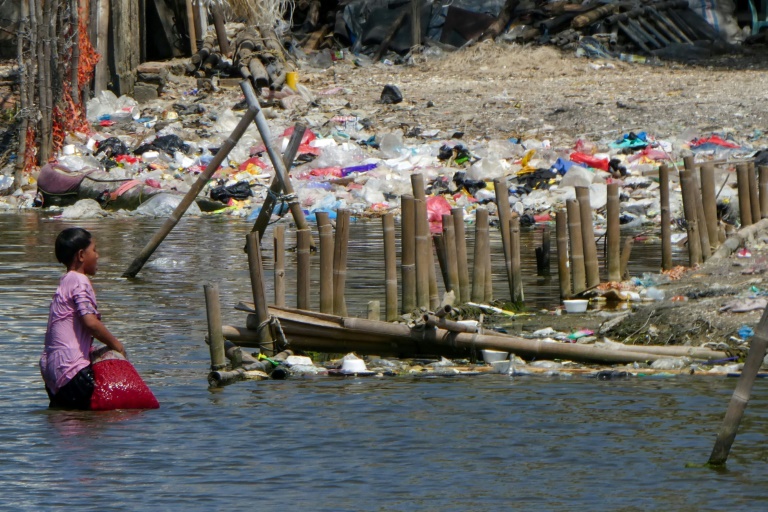
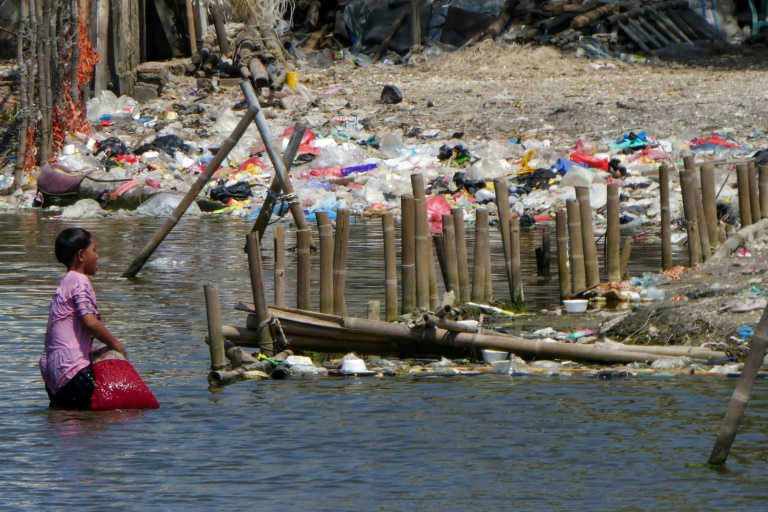
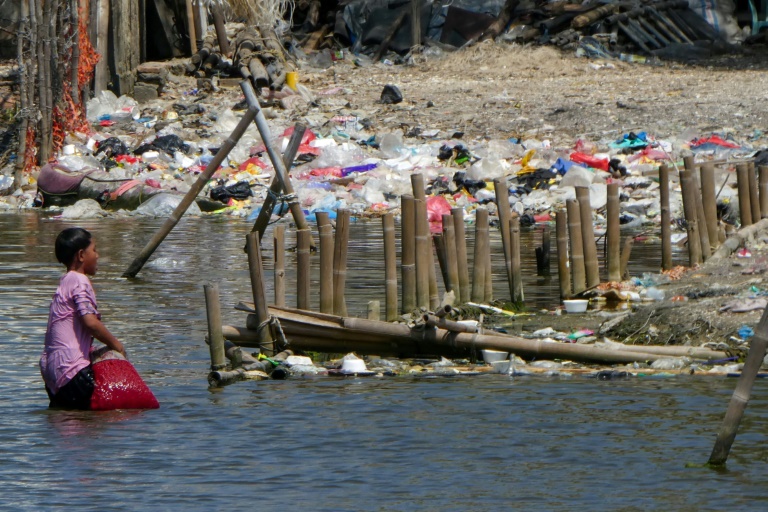
As Indonesia’s capital Jakarta grapples with overflowing plastic waste and pollution pours into the sea, one burgeoning business is trying to turn rubbish into revenue.

Tridi Oasis Group, which employs 120 people, has recycled more than 250 million bottles since it was founded six years ago.

“I don’t see discarded plastic as trash. For me, it is a valuable material in the wrong place,” 35-year-old founder Dian Kurniawati told AFP.

Indonesia has pledged to reduce plastic waste by 30 percent over the next three years — a mammoth task in the Southeast Asian nation of nearly 270 million people where plastic recycling is rare.

The country generates approximately 7.8 million tonnes of plastic waste every year, with more than half mismanaged or disposed of improperly, according to the World Bank.

Kurniawati’s company receives plastic from recycling centres across the greater Jakarta area — which has 30 million people — at its factory in Banten province outside the city.

Then the company exports recycled plastic to European countries and also distributes it locally to be processed and used as packaging or textiles. 

Kurniawati resigned from her consultant job to start the firm, tackling head-on the massive challenges faced by the world’s fourth most populous country in dealing with the plastic crisis.

As one of the initiators of the “Beach Clean Up Jakarta” movement, she saw how Jakarta is littered with plastic waste and was frustrated that little was being done to change the situation.

– ‘Our problem’ – 

Hundreds of piles of crushed clear plastic bottles sit piled neatly in the Banten factory, ready to be sorted to make sure no labels or caps are left behind. 

The bottles are then cleaned thoroughly to eliminate contamination before being cut into small flakes, ready to be transported to clients for processing and reuse as packaging or textiles. 

Fajar Sarbini, a 24-year-old employee, hopes more Indonesians will start recycling.

“People throw away their waste mindlessly, they should at least sort out sharp materials so they won’t hurt garbage collectors,” he said.

Jakarta does not have a municipal collection system for household waste and has no incineration facilities.

With green trends rising and the will of younger generations to live more sustainably growing, the country is not without hope. 

“Indonesia is catching up and the acceleration is quite fast because we got help from social media and youth campaigns,” Kurniawati said. 

But she said the waste problem facing the country is enormous and the regulation to encourage plastic to be recycled is lacking.

“Plastic waste is our problem and solving it takes a concerted effort from everybody,” she said.

“It can’t be solved by just the government or recycling companies.” 

Recycling firm battles Jakarta's plastic waste emergency

As Indonesia’s capital Jakarta grapples with overflowing plastic waste and pollution pours into the sea, one burgeoning business is trying to turn rubbish into revenue.

Tridi Oasis Group, which employs 120 people, has recycled more than 250 million bottles since it was founded six years ago.

“I don’t see discarded plastic as trash. For me, it is a valuable material in the wrong place,” 35-year-old founder Dian Kurniawati told AFP.

Indonesia has pledged to reduce plastic waste by 30 percent over the next three years — a mammoth task in the Southeast Asian nation of nearly 270 million people where plastic recycling is rare.

The country generates approximately 7.8 million tonnes of plastic waste every year, with more than half mismanaged or disposed of improperly, according to the World Bank.

Kurniawati’s company receives plastic from recycling centres across the greater Jakarta area — which has 30 million people — at its factory in Banten province outside the city.

Then the company exports recycled plastic to European countries and also distributes it locally to be processed and used as packaging or textiles. 

Kurniawati resigned from her consultant job to start the firm, tackling head-on the massive challenges faced by the world’s fourth most populous country in dealing with the plastic crisis.

As one of the initiators of the “Beach Clean Up Jakarta” movement, she saw how Jakarta is littered with plastic waste and was frustrated that little was being done to change the situation.

– ‘Our problem’ – 

Hundreds of piles of crushed clear plastic bottles sit piled neatly in the Banten factory, ready to be sorted to make sure no labels or caps are left behind. 

The bottles are then cleaned thoroughly to eliminate contamination before being cut into small flakes, ready to be transported to clients for processing and reuse as packaging or textiles. 

Fajar Sarbini, a 24-year-old employee, hopes more Indonesians will start recycling.

“People throw away their waste mindlessly, they should at least sort out sharp materials so they won’t hurt garbage collectors,” he said.

Jakarta does not have a municipal collection system for household waste and has no incineration facilities.

With green trends rising and the will of younger generations to live more sustainably growing, the country is not without hope. 

“Indonesia is catching up and the acceleration is quite fast because we got help from social media and youth campaigns,” Kurniawati said. 

But she said the waste problem facing the country is enormous and the regulation to encourage plastic to be recycled is lacking.

“Plastic waste is our problem and solving it takes a concerted effort from everybody,” she said.

“It can’t be solved by just the government or recycling companies.” 

Recycling firm battles Jakarta's plastic waste emergency

As Indonesia’s capital Jakarta grapples with overflowing plastic waste and pollution pours into the sea, one burgeoning business is trying to turn rubbish into revenue.

Tridi Oasis Group, which employs 120 people, has recycled more than 250 million bottles since it was founded six years ago.

“I don’t see discarded plastic as trash. For me, it is a valuable material in the wrong place,” 35-year-old founder Dian Kurniawati told AFP.

Indonesia has pledged to reduce plastic waste by 30 percent over the next three years — a mammoth task in the Southeast Asian nation of nearly 270 million people where plastic recycling is rare.

The country generates approximately 7.8 million tonnes of plastic waste every year, with more than half mismanaged or disposed of improperly, according to the World Bank.

Kurniawati’s company receives plastic from recycling centres across the greater Jakarta area — which has 30 million people — at its factory in Banten province outside the city.

Then the company exports recycled plastic to European countries and also distributes it locally to be processed and used as packaging or textiles. 

Kurniawati resigned from her consultant job to start the firm, tackling head-on the massive challenges faced by the world’s fourth most populous country in dealing with the plastic crisis.

As one of the initiators of the “Beach Clean Up Jakarta” movement, she saw how Jakarta is littered with plastic waste and was frustrated that little was being done to change the situation.

– ‘Our problem’ – 

Hundreds of piles of crushed clear plastic bottles sit piled neatly in the Banten factory, ready to be sorted to make sure no labels or caps are left behind. 

The bottles are then cleaned thoroughly to eliminate contamination before being cut into small flakes, ready to be transported to clients for processing and reuse as packaging or textiles. 

Fajar Sarbini, a 24-year-old employee, hopes more Indonesians will start recycling.

“People throw away their waste mindlessly, they should at least sort out sharp materials so they won’t hurt garbage collectors,” he said.

Jakarta does not have a municipal collection system for household waste and has no incineration facilities.

With green trends rising and the will of younger generations to live more sustainably growing, the country is not without hope. 

“Indonesia is catching up and the acceleration is quite fast because we got help from social media and youth campaigns,” Kurniawati said. 

But she said the waste problem facing the country is enormous and the regulation to encourage plastic to be recycled is lacking.

“Plastic waste is our problem and solving it takes a concerted effort from everybody,” she said.

“It can’t be solved by just the government or recycling companies.” 

EU ministers seek ways to face energy shock

EU energy ministers on Friday will attempt to forge a united response to the energy shock from Russia’s war on Ukraine that has sent prices for electricity and heating skyrocketing.

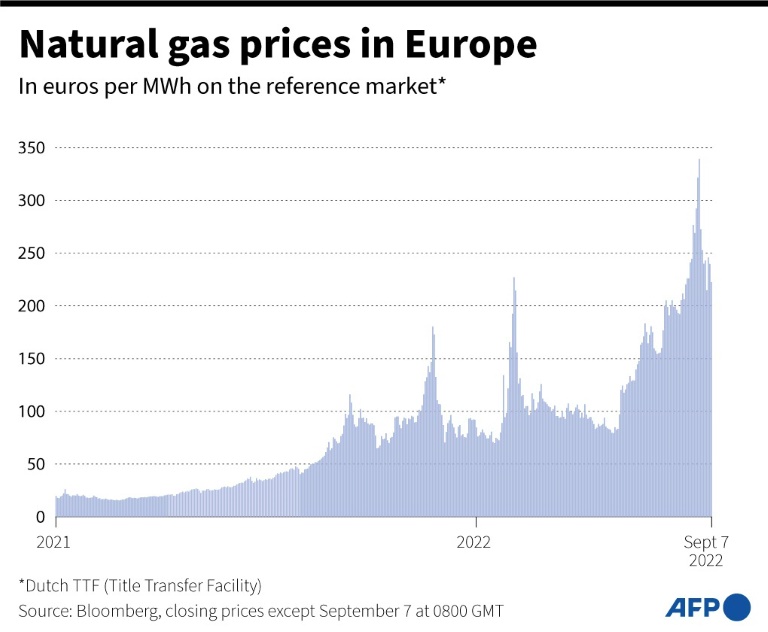
Moscow’s invasion has seen the price of natural gas hit record levels, throwing the EU economy into deep uncertainty with all eyes on whether Russian President Vladimir Putin will cut off the energy flow entirely.

Before the war, 40 percent of the EU’s gas imports came from Russia, with most of the supply going to Germany, the bloc’s economic powerhouse that is now scrambling to come up with new ways to heat homes and power factories.

The European Commission, the EU’s executive, will ask the ministers meeting in Brussels to consider a series of highly complex proposals designed to ease the burden.

The main drive will be to find ways to compensate households and businesses that are struggling to pay their bills and keep activity going.

The EU executive will propose a mechanism that would see non-gas electricity companies, such as nuclear, solar or renewable firms, share windfall revenues won on the back of high prices for electric power.

The market price of electricity in Europe is closely linked to the gas price, meaning non-gas utilities are enjoying a revenue bonanza while companies stuck paying for gas struggle.

Fossil fuel companies would also be levied on their mega profits from the inflated energy prices.

There needs to be a “discussion without qualms” about a potential solidarity levy on “energy companies that make windfall profits in times of war”, said Austrian Energy Minister Leonore Gewessler ahead of the talks.

– Price cap push stalled –

Another proposal that has broad backing is an idea to rescue electricity companies that are struggling to hedge their spending on the financial markets.

This would be done by relaxing EU rules on state rescues of companies that are suddenly facing more onerous terms for cash as fears of a crisis spread.

The commission will also ask member states to agree on a united way to cut back on energy demand, with mandatory cuts on usage still considered an option, diplomats said.

“These are proposals where I feel there is quite a large convergence of views among the member states,” said a key EU diplomat.

An idea to cap Russian gas prices however is stalled, diplomats warned, with fears rife that the retribution from Russia would throw the European economy into even further chaos.

EU chief Ursula von der Leyen on Wednesday urged member states to agree a price cap on Russian gas, a measure that Putin has warned would be “an absolutely stupid decision”.

But an EU diplomat aware of the state of negotiations warned that there was no majority among the member states in favour of the idea. 

The EU’s energy ministers are set to debate the commission’s ideas, with many countries expected to come to the table with their own proposals.

The commission, which draws up laws that are then ratified by member states and the European Parliament, would then formalise the proposal next week.

Close Bitnami banner
Bitnami