AFP

Will take 'a few years' to get US inflation back to 2%: Fed official

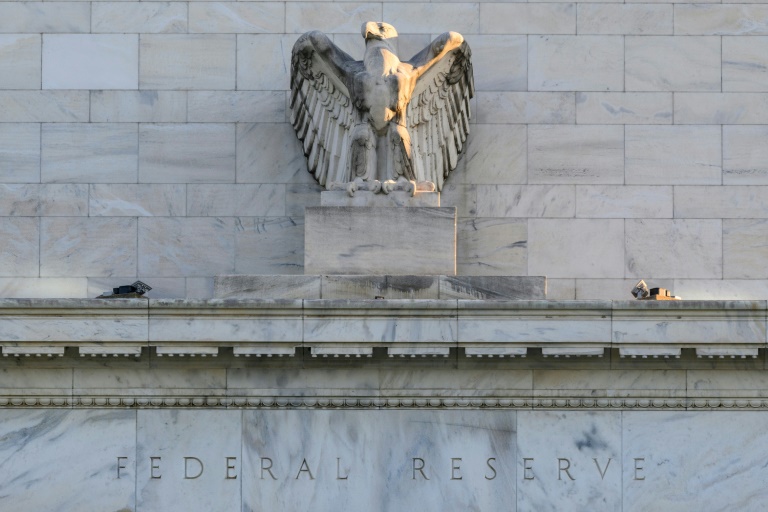
The Federal Reserve is committed to bringing soaring US inflation back down to two percent, but that will take “a few years,” a top central banker said Tuesday.

The Fed this year has moved aggressively to raise interest rates to try to rein in price surges that have hit American families, and central bankers, notably Fed chief Jerome Powell, have doused any hopes they would alter course anytime soon.

New York Federal Reserve Bank President John Williams echoed Powell’s tough comments, saying the benchmark lending rate will have to remain high for some time to bring demand back into line with supply.

US annual inflation ebbed slightly in July to a still-painfully high 8.5 percent, and Williams said the Fed is “absolutely committed” to achieving the two-percent goal.

“The situation is very challenging. Inflation is very high. The economy has a lot of crosscurrents. I do think it will take a few years, but we’re going to get that done,” Williams said in a discussion with The Wall Street Journal.

The Fed has increased the key lending rate four times this year, including two supersized 0.75 percentage point hikes in June and July, and Powell said Friday another similar increase is possible next month as well.

Inflation was already high at the start of the year and spiked globally following the Russian invasion of Ukraine, but gas prices at the pump have been moving down in recent weeks, taking some of the pressure off American consumers.

That in turn led to a jump in consumer confidence in August, according to The Conference Board’s monthly survey released Tuesday.

But the US labor market remains very strong, which the Fed fears will add fuel to the inflation fires as wages rise. 

New data from the Labor Department Tuesday showed that after dipping in June, job openings rebounded slightly in July, which means there are about two positions available for every unemployed person in the country.

The Fed on Friday will get a look at one more employment report before its September 20-21 policy meeting, and will look for a slowdown after the surprise surge in July.

Williams said the September policy decision will depend on the data, but added “it’s clear that we need to get interest rates significantly higher by the end of the year.”

Inflation is “far too high. And that’s really what we’re focusing on.”
Will take 'a few years' to get US inflation back to 2%: Fed official

The Federal Reserve is committed to bringing soaring US inflation back down to two percent, but that will take “a few years,” a top central banker said Tuesday.

The Fed this year has moved aggressively to raise interest rates to try to rein in price surges that have hit American families, and central bankers, notably Fed chief Jerome Powell, have doused any hopes they would alter course anytime soon.

New York Federal Reserve Bank President John Williams echoed Powell’s tough comments, saying the benchmark lending rate will have to remain high for some time to bring demand back into line with supply.

US annual inflation ebbed slightly in July to a still-painfully high 8.5 percent, and Williams said the Fed is “absolutely committed” to achieving the two-percent goal.

“The situation is very challenging. Inflation is very high. The economy has a lot of crosscurrents. I do think it will take a few years, but we’re going to get that done,” Williams said in a discussion with The Wall Street Journal.

The Fed has increased the key lending rate four times this year, including two supersized 0.75 percentage point hikes in June and July, and Powell said Friday another similar increase is possible next month as well.

Inflation was already high at the start of the year and spiked globally following the Russian invasion of Ukraine, but gas prices at the pump have been moving down in recent weeks, taking some of the pressure off American consumers.

That in turn led to a jump in consumer confidence in August, according to The Conference Board’s monthly survey released Tuesday.

But the US labor market remains very strong, which the Fed fears will add fuel to the inflation fires as wages rise. 

New data from the Labor Department Tuesday showed that after dipping in June, job openings rebounded slightly in July, which means there are about two positions available for every unemployed person in the country.

The Fed on Friday will get a look at one more employment report before its September 20-21 policy meeting, and will look for a slowdown after the surprise surge in July.

Williams said the September policy decision will depend on the data, but added “it’s clear that we need to get interest rates significantly higher by the end of the year.”

Inflation is “far too high. And that’s really what we’re focusing on.”
Baltic nations to boost offshore wind energy seven-fold by 2030

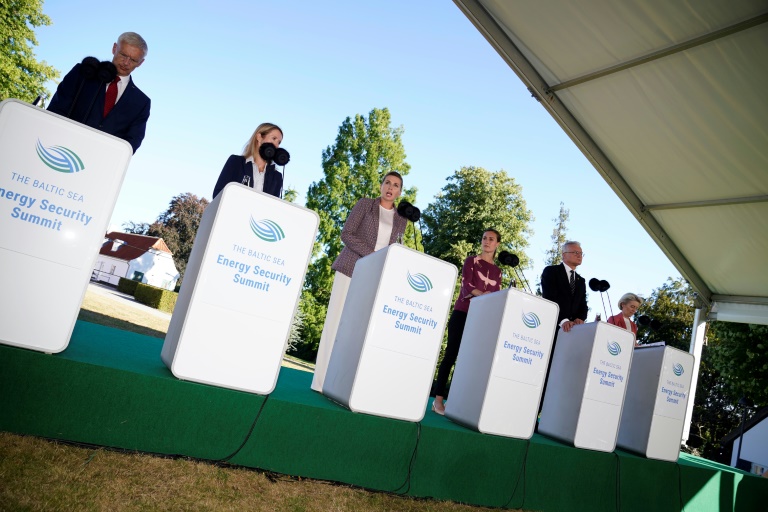
Nations bordering the Baltic Sea agreed Tuesday to increase offshore wind energy  to 20 gigawatts by 2030, as Europe seeks to wean itself off Russian gas following Moscow’s invasion of Ukraine.

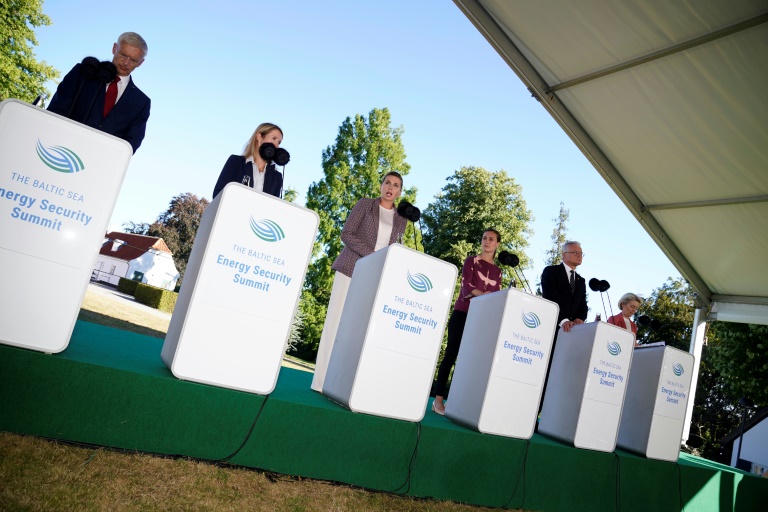
“We have agreed to increase offshore wind in the Baltic Sea seven-fold by 2030,” Danish Prime Minister Mette Frederiksen told reporters after hosting a meeting between Denmark, Estonia, Finland, Germany, Latvia, Lithuania, Poland and Sweden.

“We are the frontline of European energy security”, Frederiksen said.

Russia was the only Baltic Sea nation not in attendance at Tuesday’s meeting. 

“In this war Putin is using energy as a weapon and has put Europe, as we all know, on the brink of an energy crisis with skyrocketing energy prices”, Frederiksen said.

Twenty gigawatts would be enough to supply electricity to 20 million households, “more than the current wind offshore capacity in the whole of the EU today”, she added.

By 2050, the Baltic Sea’s wind energy capacity could be brought to 93 gigawatts, the countries said in a statement.

“Putin’s attempt to blackmail us with fossil fuels is failing”, European Commission President Ursula van der Leyen said.

“We’re accelerating the green transition. We are getting rid of the dependency on Russian fossil fuels,” she added.

The Commission said in March it wanted to reduce dependence on Russian gas by two-thirds this year, and completely by 2030.

It also unveiled a target to increase its share of renewable energy from 40 to 45 percent by 2030.

The EU also aims to reduce greenhouse gases by 55 percent by 2030 and to be carbon neutral by 2050.

On Monday, Denmark said it would increase its wind capacity off the Baltic Sea island of Bornholm from two to three gigawatts, and link this production to Germany’s electricity grid.

In May, Germany, Denmark, the Netherlands and Belgium announced a similar agreement to increase the North Sea’s wind power capacity tenfold to 150 gigawatts by 2050 to help the EU achieve climate goals and avoid Russian hydrocarbons.

Baltic nations to boost offshore wind energy seven-fold by 2030

Nations bordering the Baltic Sea agreed Tuesday to increase offshore wind energy  to 20 gigawatts by 2030, as Europe seeks to wean itself off Russian gas following Moscow’s invasion of Ukraine.

“We have agreed to increase offshore wind in the Baltic Sea seven-fold by 2030,” Danish Prime Minister Mette Frederiksen told reporters after hosting a meeting between Denmark, Estonia, Finland, Germany, Latvia, Lithuania, Poland and Sweden.

“We are the frontline of European energy security”, Frederiksen said.

Russia was the only Baltic Sea nation not in attendance at Tuesday’s meeting. 

“In this war Putin is using energy as a weapon and has put Europe, as we all know, on the brink of an energy crisis with skyrocketing energy prices”, Frederiksen said.

Twenty gigawatts would be enough to supply electricity to 20 million households, “more than the current wind offshore capacity in the whole of the EU today”, she added.

By 2050, the Baltic Sea’s wind energy capacity could be brought to 93 gigawatts, the countries said in a statement.

“Putin’s attempt to blackmail us with fossil fuels is failing”, European Commission President Ursula van der Leyen said.

“We’re accelerating the green transition. We are getting rid of the dependency on Russian fossil fuels,” she added.

The Commission said in March it wanted to reduce dependence on Russian gas by two-thirds this year, and completely by 2030.

It also unveiled a target to increase its share of renewable energy from 40 to 45 percent by 2030.

The EU also aims to reduce greenhouse gases by 55 percent by 2030 and to be carbon neutral by 2050.

On Monday, Denmark said it would increase its wind capacity off the Baltic Sea island of Bornholm from two to three gigawatts, and link this production to Germany’s electricity grid.

In May, Germany, Denmark, the Netherlands and Belgium announced a similar agreement to increase the North Sea’s wind power capacity tenfold to 150 gigawatts by 2050 to help the EU achieve climate goals and avoid Russian hydrocarbons.

Stocks extend Fed-induced sell-off into third day

Stock markets mostly tumbled again on Tuesday, extending losses that were sparked by last week’s Federal Reserve warning that more monetary tightening was on the way.

London’s FTSE 100 ended down after a public holiday closure the day before, while the Paris CAC 40 fell after staging a rally earlier in the day.

Wall Street indices started the morning in the green, only for the rebound to fizzle and dash analyst predictions of “Turnaround Tuesday”.

“US stocks turned negative after confidence and job opening data supported the argument for the Fed to stick to an aggressive stance with fighting inflation,” said Edward Moya, analyst at OANDA trading platform.

“Turnaround Tuesday disappeared faster than dessert does at the Moya household.”

The Frankfurt DAX bucked the trend to end the day up 0.5 percent.

Most markets have been slumping since Friday after Federal Reserve chief Jerome Powell warned of more interest rate hikes to fight runaway four-decade high inflation, even at the cost of economic pain.

A closely-watched US survey found Americans consumers to be happier about the state of the economy than expected, and more willing to spend.

The strong data will boost the idea that the US economy does not need extra help from the Fed, said Ipek Ozkardeskaya, Swissquote Bank analyst.

“Cherry on top: the consumer sentiment regarding the future is improving,” she added. 

“Hence, there is no reason for the Fed to soften its stance.” 

– Energy woes –

Central banks are scrambling worldwide to tame consumer prices that have surged higher since Russia invaded Ukraine in late February.

German inflation data showed consumer prices rose by 7.9 percent in the year to August as the ongoing energy crisis further stoked price pressures.

In Spain, the inflation rate slowed to 10.4 percent in August as fuel prices eased, but it remained elevated due to rising electricity and food prices.

The European Central Bank — which raised interest rates for the first time in over a decade in July — is expected to hike them again when it meets next week.

Energy prices retreated on Tuesday, however, with oil contracts tanking on fears about a major hit to demand from any global economic slowdown — and more Covid restrictions in key consumer market China.

Brent North Sea crude dipped below $100 per barrel.

Natural gas prices, which have soared this year over supply disruptions from key producer Russia, dipped in Europe as German Chancellor Olaf Scholz said government measures have left his country better prepared to cope with further delivery cuts in the winter.

Many European countries are facing severe supply problems as Moscow turns off the gas taps in response to EU military and diplomatic backing for Ukraine.

Russian energy giant Gazprom plans to suspend gas deliveries through the Nord Stream pipeline, which runs to Germany, for three days of “maintenance” work from Wednesday.

Elsewhere, Asian stocks indices diverged on Tuesday, winning limited support from bargain-buying.

A record 96 percent on-year drop in earnings from China’s largest developer Country Garden Holdings served as a grim reminder of the country’s beleaguered property sector.

Investors are also anxious about “flaring geopolitical tensions”, said Naeem Aslam of AvaTrade, especially as Taiwan and Beijing exchanged angry barbs over Chinese drone incursions at an outlying Taiwanese island.

– Key figures at around 1545 GMT –

London – FTSE 100: DOWN 0.9 percent at 7,361.63 points (close)

Frankfurt – DAX: UP 0.5 percent at 12,961.14 (close)

Paris – CAC 40: DOWN 0.2 percent at 6,210.22 (close)

EURO STOXX 50: DOWN 0.2 percent at 3,561.92 

New York – Dow: DOWN 0.8 percent at 31,838.l29

Tokyo – Nikkei 225: UP 1.1 percent at 28,195.58 (close)

Hong Kong – Hang Seng Index: DOWN 0.4 percent at 19,949.03 (close)

Shanghai – Composite: DOWN 0.4 percent at 3,227.22 (close)

Euro/dollar: UP at $0.9993 from $0.9972 on Monday

Pound/dollar: DOWN at $1.1636 from $1.1709

Euro/pound: UP at 85.89 pence from 85.38 pence

Dollar/yen: UP at 138.93 yen from 138.68 yen

West Texas Intermediate: DOWN 5.39 percent at $91.80 per barrel

Brent North Sea crude: DOWN 4.87 percent at $97.93 per barrel

burs-rox/lth

Stocks extend Fed-induced sell-off into third day

Stock markets mostly tumbled again on Tuesday, extending losses that were sparked by last week’s Federal Reserve warning that more monetary tightening was on the way.

London’s FTSE 100 ended down after a public holiday closure the day before, while the Paris CAC 40 fell after staging a rally earlier in the day.

Wall Street indices started the morning in the green, only for the rebound to fizzle and dash analyst predictions of “Turnaround Tuesday”.

“US stocks turned negative after confidence and job opening data supported the argument for the Fed to stick to an aggressive stance with fighting inflation,” said Edward Moya, analyst at OANDA trading platform.

“Turnaround Tuesday disappeared faster than dessert does at the Moya household.”

The Frankfurt DAX bucked the trend to end the day up 0.5 percent.

Most markets have been slumping since Friday after Federal Reserve chief Jerome Powell warned of more interest rate hikes to fight runaway four-decade high inflation, even at the cost of economic pain.

A closely-watched US survey found Americans consumers to be happier about the state of the economy than expected, and more willing to spend.

The strong data will boost the idea that the US economy does not need extra help from the Fed, said Ipek Ozkardeskaya, Swissquote Bank analyst.

“Cherry on top: the consumer sentiment regarding the future is improving,” she added. 

“Hence, there is no reason for the Fed to soften its stance.” 

– Energy woes –

Central banks are scrambling worldwide to tame consumer prices that have surged higher since Russia invaded Ukraine in late February.

German inflation data showed consumer prices rose by 7.9 percent in the year to August as the ongoing energy crisis further stoked price pressures.

In Spain, the inflation rate slowed to 10.4 percent in August as fuel prices eased, but it remained elevated due to rising electricity and food prices.

The European Central Bank — which raised interest rates for the first time in over a decade in July — is expected to hike them again when it meets next week.

Energy prices retreated on Tuesday, however, with oil contracts tanking on fears about a major hit to demand from any global economic slowdown — and more Covid restrictions in key consumer market China.

Brent North Sea crude dipped below $100 per barrel.

Natural gas prices, which have soared this year over supply disruptions from key producer Russia, dipped in Europe as German Chancellor Olaf Scholz said government measures have left his country better prepared to cope with further delivery cuts in the winter.

Many European countries are facing severe supply problems as Moscow turns off the gas taps in response to EU military and diplomatic backing for Ukraine.

Russian energy giant Gazprom plans to suspend gas deliveries through the Nord Stream pipeline, which runs to Germany, for three days of “maintenance” work from Wednesday.

Elsewhere, Asian stocks indices diverged on Tuesday, winning limited support from bargain-buying.

A record 96 percent on-year drop in earnings from China’s largest developer Country Garden Holdings served as a grim reminder of the country’s beleaguered property sector.

Investors are also anxious about “flaring geopolitical tensions”, said Naeem Aslam of AvaTrade, especially as Taiwan and Beijing exchanged angry barbs over Chinese drone incursions at an outlying Taiwanese island.

– Key figures at around 1545 GMT –

London – FTSE 100: DOWN 0.9 percent at 7,361.63 points (close)

Frankfurt – DAX: UP 0.5 percent at 12,961.14 (close)

Paris – CAC 40: DOWN 0.2 percent at 6,210.22 (close)

EURO STOXX 50: DOWN 0.2 percent at 3,561.92 

New York – Dow: DOWN 0.8 percent at 31,838.l29

Tokyo – Nikkei 225: UP 1.1 percent at 28,195.58 (close)

Hong Kong – Hang Seng Index: DOWN 0.4 percent at 19,949.03 (close)

Shanghai – Composite: DOWN 0.4 percent at 3,227.22 (close)

Euro/dollar: UP at $0.9993 from $0.9972 on Monday

Pound/dollar: DOWN at $1.1636 from $1.1709

Euro/pound: UP at 85.89 pence from 85.38 pence

Dollar/yen: UP at 138.93 yen from 138.68 yen

West Texas Intermediate: DOWN 5.39 percent at $91.80 per barrel

Brent North Sea crude: DOWN 4.87 percent at $97.93 per barrel

burs-rox/lth

Severe drought in Spain uncovers submerged monuments

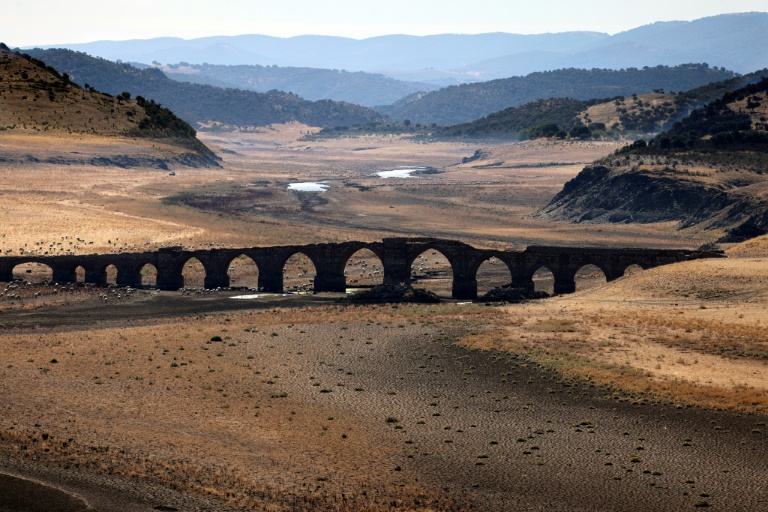
A centuries-old church and a huge megalithic complex are among the underwater monuments that have resurfaced in Spain as a severe drought causes water levels in reservoirs to plunge.

After a prolonged dry spell, Spain’s reservoirs — which supply water for cities and farms — are at just under 36 percent capacity, according to environment ministry figures for August.

The receding waters have exposed the ruins of an 11th-century church in the usually submerged village of Sant Roma de Sau, which was flooded in the 1960s when a nearby dam was built.

Normally, the church’s bell tower is the only visible sign of the village in the northeastern region of Catalonia.

Drawn by pictures on social media and television reports, crowds of tourists fill the restaurants in the nearby village of Vilanova de Sau.

“It has been years since (water levels) are as low as they are now,” said 45-year-old Nuria Ferrerons during a recent visit to the site.

“We saw it on social media and we said ‘well let’s see how it is’,” she added.

Two tourists on a canoe paddled through an arch of the church, which is fenced off to prevent people from getting too close due to the risk the ruins could collapse.

“Normally you can only see the bell tower,” said Sergi Riera, who came to see “something that has not been visible for years”.

In Spain’s western Extremadura region, the receding waters of the Valdecanas reservoir have revealed a prehistoric stone circle on an islet that is normally underwater.

Dubbed the “Spanish Stonehenge”, the circle of dozens of megalithic stones was discovered by archaeologists in 1926 but the area was flooded in 1963 when the reservoir was built.

The stones are also drawing tourists, who reach the islet on boats operated by several private firms.

Officially known as the Dolmen of Guadalperal, the site is believed to date back to 5000 BC.

“People leave delighted,” said Ruben Argenta, who owns a firm offering guided tours of the stones.

Manuel Mantilla, a sixty-year-old from the southern city of Cordoba, was visiting with his wife after hearing about the site through the media.

“We saw that as a unique opportunity,” he said.

Climate change has left parts of Spain at their driest in more than 1,000 years, and winter rains are expected to diminish further, a study published in July by the Nature Geoscience journal showed.

Nadal launches US Open bid, Swiatek, Raducanu head women's draw

Rafael Nadal opens his bid for a 23rd Grand Slam title at the US Open on Tuesday as world number one Iga Swiatek and defending champion Emma Raducanu headline the women’s draw.

After the searing emotion of Monday’s salute to Serena Williams, the Open was set to return to something like normal service as action on the court took center stage.

Nadal launches his latest Grand Slam title campaign in Tuesday’s night session, where he faces unheralded Australian Rinky Hijikata on Arthur Ashe Stadium.

The second-seeded Spaniard is chasing a fifth victory in New York to go along with titles won in 2010, 2013, 2017 and 2019.

The 36-year-old has already won the Australian Open and French Open titles this season, but was forced to withdraw before his Wimbledon semi-final with an abdominal injury.

Since that curtailed Wimbledon campaign, Nadal has played just once — a first-up loss to Borna Coric in Cincinnati earlier this month.

That has inevitably led to questions about whether Nadal’s creaking body can stand up to the punishing demands of a two-week campaign at Flushing Meadows.

Nadal acknowledged those concerns in a pre-tournament press conference, revealing that he had deliberately held himself back in Cincinnati to protect his injury.

“I take it very easy in the Cincinnati, too, in the practices. The match, I try my best without putting all the effort there on the serve,” Nadal said.

“I hope to be ready for the action. That’s the only thing that I can say.”

– Raducanu, Swiatek in action –

Injury concerns have also flared for Britain’s reigning champion Raducanu in the women’s draw.

The 19-year-old created a sensation last year when she emerged from qualifying to sweep to the title, the first qualifier ever to win a Grand Slam title.

However Raducanu has struggled to build on that success this season, suffering a trio of second round exits at the Australian Open, French Open and Wimbledon.

Raducanu, who faces French veteran Alize Cornet in Tuesday’s first round in a night match, was seen tearfully complaining about a problem with her right hand during practice last week but later brushed off the incident, insisting she was ready to defend her title.

“It’s just one of those weird days where you feel a bit like nothing… I don’t know. You just feel a bit out of it,” she said.

Elsewhere on Tuesday, women’s world number one and top seed Swiatek faces Jasmine Paolini in her opening game.

The 21-year-old two-time French Open champion was invincible during the early part of the season, going on a remarkable 37-match winning streak that netted six titles in a row, including her second Roland Garros crown.

But she has never been further than the fourth round in three previous appearances at the US Open, and freely admits that New York is not her preferred environment.

“I wouldn’t choose it as a place to live because I’m more of a person that needs a calm place with the proper environment to rest,” Swiatek said on the eve of the tournament.

“New York is kind of always alive. That’s not for sure my place. But, you know, the tournament is great. It’s a totally different atmosphere than any other tournament.”

Energy price hikes could force UK pubs to shut

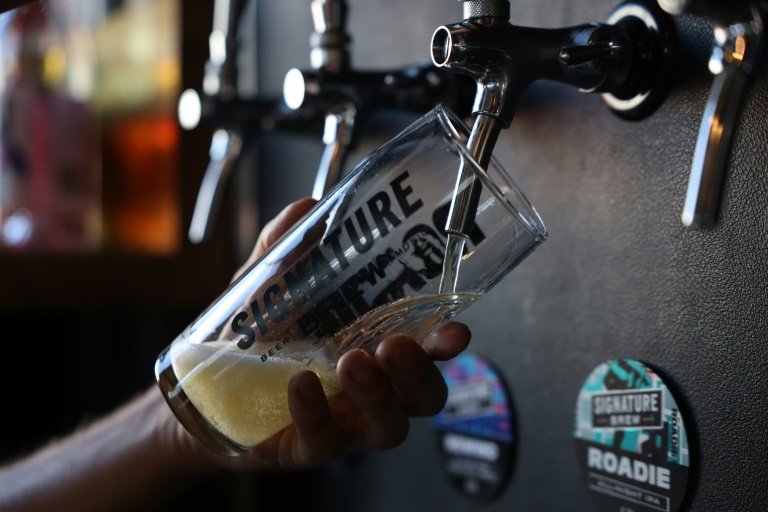
British pubs could be forced to close because of massive increases in energy prices, leading industry figures said on Tuesday as they urged the government to step in.

Six of the country’s biggest pub and brewing firms said some pubs had seen a more than 300-percent hike in bills this year, as part of a wider cost of living crisis.

“In some instances, tenants are giving us notice since their businesses do not stack up with energy at these costs,” said William Lees Jones, managing director of the JW Lees pub group.

One pub tenant in the 2,700-strong Greene King group has seen a £33,000 ($38,600) increase in their energy bill this year, said chief executive Nick Mackenzie.

“While the government has introduced measures to help households cope with this spike in prices, businesses are having to face this alone, and it is only going to get worse come the autumn.

“Without immediate government intervention to support the sector, we could face the prospect of pubs being unable to pay their bills, jobs being lost and beloved locals across the country forced to close their doors,” he added. 

– Hospitality fears –

Britain’s cost-of-living crisis has seen inflation soar to 40-year highs, with a growing number of strikes over wages that fail to keep pace with rising prices.

Last week energy regulator Ofgem announced an eye-watering 80-percent increase in gas and electricity prices for the average household from October, with even higher bills expected from January.

But the energy price cap does not apply to businesses.

The brewers — Greene King, JW Lees, Carlsberg Marston’s, Admiral Taverns, Drake & Morgan and St Austell Brewery — urged the government in an open letter to extend the cap to businesses.

Independent restaurants and takeaways — from fish and chips shops to Indian takeaways and kebab houses — have also voiced concern.

On Monday, more than 750 outlets said the increased costs were making hospitality “unsustainable”.

Pubs — a mainstay of British social life for centuries — have faced a torrid few years due to the slump in business due to coronavirus lockdowns and social distancing restrictions.

The number of pubs in England and Wales plunged below 40,000 for the first time ever in the first six months of this year, down more than 7,000 in a decade.

The British Beer and Pub Association, an industry body, said energy price rises, caused by hikes in wholesale costs and a squeeze on supplies due to the war in Ukraine, could damage the sector more than the pandemic if nothing is done.

– Energy intensive –

Craft or micro-breweries, which have enjoyed a boom in the last 20 years due to smaller start-up costs and a tax break for producing less than 4,000 litres a year, could also feel the brunt of the hikes.

Last year there were more than 2,400 craft breweries — five times as many as in the early 2000s — with companies such as Beavertown and Brewdog now household names.

But supply chain issues and inflation threaten to turn the tide. While 200 craft establishments opened in Britain last year, up to 60 closed, after some 160 were forced to shut due to the pandemic.

“These breweries haven’t been doing a massive amount of money, just enough to get by,” Nik Antona, chairman of the Campaign for Real Ale (CAMRA), told AFP.

“Unfortunately brewing is quite a high energy intensive industry. You have to boil water. We’re going to see massive rises in energy bills.”

Supplies have also been squeezed by the war in Ukraine, one of the world’s leading producers of wheat and barley.

Josh Walker, production manager at the Exale craft brewery in Walthamstow, northeast London, is trying to remain positive.

SMEs such as his got creative during the pandemic, developing their online presence and launching home-brewing kits for those stuck at home.

Since the lifting of the lockdown, they have organised events to attract customers. Walker said Exale and others like it were still protected from inflation by forward contracts fixing prices of raw materials.

“A lot of our beer is sold at retail price in our tap room. That will protect us more than those selling only wholesale,” he added.

But Antona warned: “There’s going to be a limit on what you can pass on (to the customer).”

Pakistan floods 'worst in country's history', aid efforts gather pace

Aid efforts ramped up across flooded Pakistan on Tuesday to help tens of millions of people affected by relentless monsoon rains that have submerged a third of the country and claimed more than 1,100 lives.

Prime Minister Shehbaz Sharif called the flooding “the worst in the history of Pakistan”, adding it would cost at least $10 billion to repair damaged infrastructure spread across the country. 

The rains that began in June have unleashed powerful floods across the country that have washed away swathes of vital crops and damaged or destroyed more than a million homes.

Authorities and charities are struggling to accelerate aid delivery to more than 33 million people, a challenging task in areas cut off because many roads and bridges have been critically damaged.

Displaced people have been wandering what dry land remains, seeking shelter, food and drinking water.

“For God’s sake help us out,” said Qadir, 35, who was camped out with his extended family on a road near the southern city of Sukkur.

“We walked along the road for three days to reach here. There’s nothing left back at home, we only managed to save our lives.”

In the country’s south and west, many Pakistanis have crammed onto elevated highways and railroad tracks to escape the flooded plains.

“We don’t even have space to cook food. We need help,” Rimsha Bibi, a schoolgirl in Dera Ghazi Khan in central Pakistan, told AFP.

Pakistan receives heavy — often destructive — rains during its annual monsoon season, which are crucial for agriculture and water supplies.

But such intense downpours have not been seen for three decades.

Pakistani officials have blamed climate change, which is increasing the frequency and intensity of extreme weather around the world.

– ‘Mind-boggling devastation’ –

“To see the devastation on the ground is really mind-boggling,” Pakistan’s climate change minister Sherry Rehman told AFP.

“When we send in water pumps, they say, ‘Where do we pump the water?’ It’s all one big ocean, there’s no dry land to pump the water out.”

She said “literally a third” of the country was under water, comparing scenes from the disaster to a dystopian movie.

The Indus River, which runs the length of the South Asian nation, is threatening to burst its banks as torrents of water rush downstream from its tributaries in the north.

Pakistan as a whole has been deluged with twice the usual monsoon rainfall, the meteorological office said, but Balochistan and Sindh provinces have seen more than four times the average of the last three decades.

– ‘Monsoon on steroids’ –

The disaster could not have come at a worse time for Pakistan, where the economy is in free fall.

Appealing for international help, the government has declared an emergency.

Aid flights have arrived in recent days from Turkey and the United Arab Emirates, while other countries including Canada, Australia and Japan have also pledged assistance.

The United Nations launched a formal $160 million appeal on Tuesday to fund emergency aid.

“Pakistan is awash in suffering. The Pakistani people are facing a monsoon on steroids — the relentless impact of epochal levels of rain and flooding,” UN Secretary-General Antonio Guterres said in a video statement, calling it a “colossal crisis”.

PM Sharif promised donors that any funding would be responsibly spent.

“I want to give my solemn pledge and solemn commitment… every penny will be spent in a very transparent fashion. Every penny will reach the needy,” he said.

Pakistan was already desperate for international support and the floods have compounded the challenge.

Prices of basic goods — particularly onions, tomatoes and chickpeas — are soaring as vendors bemoan a lack of supplies from the flooded breadbasket provinces of Sindh and Punjab.

There was some relief on Monday when the International Monetary Fund approved the revival of a loan programme for Pakistan, releasing a $1.1 billion tranche.

Makeshift relief camps have sprung up all over Pakistan — in schools, on motorways and in military bases.

In the northwestern town of Nowshera, a technical college was turned into a shelter for up to 2,500 flood victims.

They sweltered in the summer heat with sporadic food aid and little access to water.

“I never thought that one day we will have to live like this,” said 60-year-old Malang Jan.

“We have lost our heaven and are now forced to live a miserable life.”

Close Bitnami banner
Bitnami