AFP

Biden to give prime-time warning on US democracy

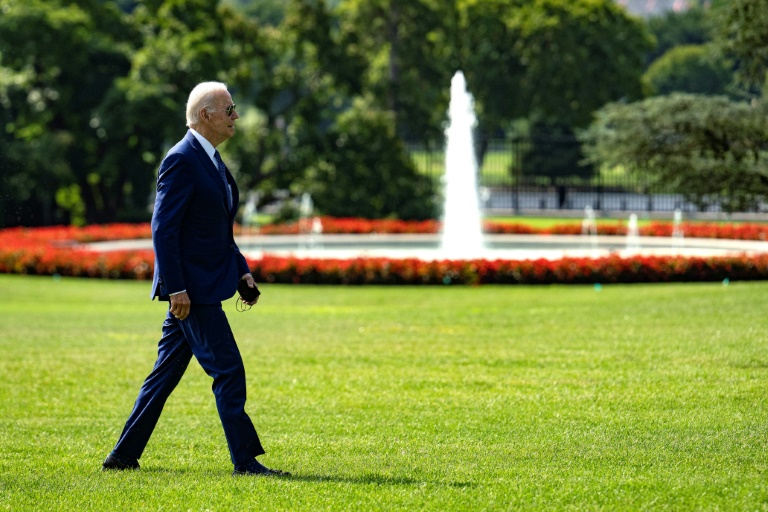
President Joe Biden will sound the alarm on threats to US democracy in a rare prime-time address to the nation in the key swing state of Pennsylvania Thursday as his party fights to hold on to Congress in the midterm elections.

The Keystone State — which will host Biden three times in the coming days, including on Tuesday — is one of the most hotly contested battlegrounds on the midterm map.

But Republican strategists worry that controversial candidates backed by former president Donald Trump are muddying their path to victory.

The Democratic leader will echo his 2020 campaign theme about the battle for the “soul of nation” in historic Philadelphia, where the Declaration of Independence and US Constitution were written.

He will set out how an imperiled democracy threatens America’s standing on the international stage, according to White House officials, highlighting action to protect voting rights but warning that access to the ballot box is still at risk.

The outcome of the upcoming Senate election in Pennsylvania could decide whether the Democrats cede control of the evenly divided upper chamber of Congress to the Republicans for the next two years.

The Cook Political Report moved the race to “lean Democrat” this month, however, citing widespread Republican concerns with Trump-backed celebrity physician Mehmet Oz’s campaign.

Initially preferring to present himself as a unifier in a deeply divided country, Biden has recently been concentrating his fire on Trumpist Republicans he has accused of embracing “semi-fascism.”

– Curbing violent crime –

The 79-year-old Democrat, who narrowly beat Trump in Pennsylvania in 2020, will bookend Thursday’s address with two other visits to the state.

Biden heads first to the city of Wilkes-Barre on Tuesday — near his hometown of Scranton — where he will promote community policing, curbing violent crime and getting guns off the streets. 

Republicans have presented themselves as the party of law-and-order amid a nationwide spike in murders — with some success, according to multiple polls — while accusing Democrats of wanting to defund the police.

But Biden recently has attempted to turn the tables by pointing to the Republicans’ defense of US Capitol rioters and highlighting the various criminal investigations embroiling Trump.

The president is expected to set out his party’s action on gun violence Tuesday, highlighting the bipartisan gun safety package he signed into law, as well as substantial new funding for policing.

“Every Republican lawmaker in Pennsylvania turned their backs on police and safer communities when they voted against President Biden’s American Rescue Plan, which provided hundreds of billions of dollars for states to help fund law enforcement and public safety programs,” Democratic National Committee DNC spokeswoman Brooke Goren said ahead of Biden’s visit.

The president is due for his third Pennsylvania stop-off in six days on Monday when he heads to Pittsburgh to celebrate Labor Day with Oz’s Democratic midterm rival, John Fetterman. 

In every post-World War II midterm election, the president’s party has lost an average of 26 seats in the House of Representatives and four Senate seats. 

Republicans were heavy favorites to make big gains in both chambers in this cycle but an unexpected special election victory in New York’s Hudson Valley has given Democrats hope of averting a washout.   

A spate of Democratic legislative achievements has also started to pierce the consensus about a Republican wave — along with a recent drop in gas prices, stumbling Trump-backed Senate candidates in several states and a backlash to efforts to restrict abortion. 

Every seat in the House is up for election in November, while 36 of the 100 Senate spots are up for grabs — 20 of which are currently held by Republicans.


Stocks extend Fed-induced sell-off

Stock markets mostly tumbled again on Tuesday, extending losses that were sparked by last week’s Federal Reserve warning that more monetary tightening was on the way.

London’s FTSE 100 was down in afternoon deals after a public holiday closure the day before, while the Paris CAC 40 fell after staging a rally earlier in the day.

Wall Street indices started the morning in the green, only for the rebound to fizzle.

The Frankfurt DAX bucked the trend as it rose 0.5 percent, though lower than earlier in the day.

Most markets have been slumping since Friday after Federal Reserve chief Jerome Powell warned of more interest rate hikes to fight runaway four-decade high inflation, even at the cost of economic pain.

Oil prices tanked Tuesday on fears about a major hit to demand from any global economic slowdown — and news of more Covid restrictions in key consumer China.

Brent North Sea crude dipped below $100 per barrel.

– Energy woes –

Central banks are scrambling worldwide to tame consumer prices that have surged higher since Russia invaded in Ukraine in late February

German inflation data showed consumer prices rose by 7.9 percent in the year to August as the ongoing energy crisis further stoked price pressures.

In Spain, the inflation rate slowed to 10.4 percent in August as fuel prices eased, but it remained elevated due to rising electricity and food prices.

The European Central Bank, which raised interest rates for the first time in over a decade in July, is expected to hike them again when it meets next week.

Natural gas prices dipped Tuesday despite jitters over supply disruptions from key producer Russia.

Europe’s benchmark Dutch TTF gas contract edged down to 272.500 euros per megawatt hour, having struck a March peak late on Friday.

Many European countries are facing severe supply problems as Moscow turns off the gas taps in response to EU military and diplomatic backing for Ukraine

Russian energy giant Gazprom plans to suspend gas deliveries through the Nord Stream pipeline, which runs to Germany, for three days of “maintenance” work from Wednesday.

In France, French energy firm Engie said Tuesday that Gazprom was further slashing its gas deliveries to the company “due to a disagreement between both sides over the execution of contracts”.

Elsewhere, Asian stocks indices diverged on Tuesday, winning limited support from bargain-buying.

In China, a record 96 percent on-year drop in first-half earnings from the country’s largest developer Country Garden Holdings also served as a grim reminder of China’s beleagured property sector.

– Key figures at around 1330 GMT –

London – FTSE 100: DOWN 0.6 percent at 7,384.94 points

Frankfurt – DAX: UP 0.5 percent at 12,962.09

Paris – CAC 40: DOWN 0.1 percent at 6,214.24 

EURO STOXX 50: DOWN 0.1 percent at 3,567.30

New York – Dow: DOWN 0.6 percent at 31,921.35

Tokyo – Nikkei 225: UP 1.1 percent at 28,195.58 (close)

Hong Kong – Hang Seng Index: DOWN 0.4 percent at 19,949.03 (close)

Shanghai – Composite: DOWN 0.4 percent at 3,227.22 (close)

Euro/dollar: UP at $1.0008 from $0.9972 on Monday

Pound/dollar: DOWN at $1.1664 from $1.1709

Euro/pound: UP at 85.79 pence from 85.38 pence

Dollar/yen: UP at 138.72 yen from 138.68 yen

West Texas Intermediate: DOWN 4.84 percent at $92.31 per barrel

Brent North Sea crude: DOWN 5.05 percent at $99.78 per barrel

burs-rox/lth

Stocks extend Fed-induced sell-off

Stock markets mostly tumbled again on Tuesday, extending losses that were sparked by last week’s Federal Reserve warning that more monetary tightening was on the way.

London’s FTSE 100 was down in afternoon deals after a public holiday closure the day before, while the Paris CAC 40 fell after staging a rally earlier in the day.

Wall Street indices started the morning in the green, only for the rebound to fizzle.

The Frankfurt DAX bucked the trend as it rose 0.5 percent, though lower than earlier in the day.

Most markets have been slumping since Friday after Federal Reserve chief Jerome Powell warned of more interest rate hikes to fight runaway four-decade high inflation, even at the cost of economic pain.

Oil prices tanked Tuesday on fears about a major hit to demand from any global economic slowdown — and news of more Covid restrictions in key consumer China.

Brent North Sea crude dipped below $100 per barrel.

– Energy woes –

Central banks are scrambling worldwide to tame consumer prices that have surged higher since Russia invaded in Ukraine in late February

German inflation data showed consumer prices rose by 7.9 percent in the year to August as the ongoing energy crisis further stoked price pressures.

In Spain, the inflation rate slowed to 10.4 percent in August as fuel prices eased, but it remained elevated due to rising electricity and food prices.

The European Central Bank, which raised interest rates for the first time in over a decade in July, is expected to hike them again when it meets next week.

Natural gas prices dipped Tuesday despite jitters over supply disruptions from key producer Russia.

Europe’s benchmark Dutch TTF gas contract edged down to 272.500 euros per megawatt hour, having struck a March peak late on Friday.

Many European countries are facing severe supply problems as Moscow turns off the gas taps in response to EU military and diplomatic backing for Ukraine

Russian energy giant Gazprom plans to suspend gas deliveries through the Nord Stream pipeline, which runs to Germany, for three days of “maintenance” work from Wednesday.

In France, French energy firm Engie said Tuesday that Gazprom was further slashing its gas deliveries to the company “due to a disagreement between both sides over the execution of contracts”.

Elsewhere, Asian stocks indices diverged on Tuesday, winning limited support from bargain-buying.

In China, a record 96 percent on-year drop in first-half earnings from the country’s largest developer Country Garden Holdings also served as a grim reminder of China’s beleagured property sector.

– Key figures at around 1330 GMT –

London – FTSE 100: DOWN 0.6 percent at 7,384.94 points

Frankfurt – DAX: UP 0.5 percent at 12,962.09

Paris – CAC 40: DOWN 0.1 percent at 6,214.24 

EURO STOXX 50: DOWN 0.1 percent at 3,567.30

New York – Dow: DOWN 0.6 percent at 31,921.35

Tokyo – Nikkei 225: UP 1.1 percent at 28,195.58 (close)

Hong Kong – Hang Seng Index: DOWN 0.4 percent at 19,949.03 (close)

Shanghai – Composite: DOWN 0.4 percent at 3,227.22 (close)

Euro/dollar: UP at $1.0008 from $0.9972 on Monday

Pound/dollar: DOWN at $1.1664 from $1.1709

Euro/pound: UP at 85.79 pence from 85.38 pence

Dollar/yen: UP at 138.72 yen from 138.68 yen

West Texas Intermediate: DOWN 4.84 percent at $92.31 per barrel

Brent North Sea crude: DOWN 5.05 percent at $99.78 per barrel

burs-rox/lth

Turkish cryptocurrency boss arrested in Albania

The founder of cryptocurrency exchange Thodex, suspected of having fled Turkey with the assets of his clients, has been arrested in Albania, the Turkish interior ministry said on Tuesday.

Turkey issued an international arrest warrant in April last year for fugitive businessman Faruk Fatih Ozer, who fled with a reported $2 billion in investors’ assets.

Tirana had informed Turkish Interior Minister Suleyman Soylu that Ozer, who was wanted by Interpol, “was arrested in Vlora, Albania”, the ministry said.

It added that “extradition procedures to Turkey have been initiated.”

The Istanbul-based Thodex exchange launched aggressive campaigns to lure investors. 

It first pledged to distribute luxury cars through a flashy advertising campaign featuring famous Turkish models.

But the exchange suspended trading in April 2021 after having posted a mysterious message days earlier saying it needed five days to deal with an unspecified outside investment.

It went dark after running a promotional campaign that sold Dogecoins at one-fourth the price at which they were trading on other exchanges.

But the exchange locked in those investments and did not allow the coins to be either sold or converted into other cryptos.

Turkish security officials then released a photo of Ozer going through passport control at Istanbul airport on his way to an unspecified location.

Media reports said the exchange shut down while holding at least $2 billion from 391,000 investors and more than 60 people linked to the company were arrested.

In a statement Tuesday Albanian police said the 28-year-old Ozer had been arrested at a hotel in Himara, a small town in southern Albania on the Ionian coast. 

Two people suspected of having assisted him were also arrested, police said, with computers, mobile phones and bank cards seized.

Footage released by the Albanian police shows a man lying on a bed in a hotel room with his hands restrained behind his back.

– ‘Baseless’ –

Two days after leaving Turkey last year, Ozer denounced the “baseless allegations” against him in a message posted on his company’s official Twitter account.

The businessman said he had gone abroad to meet investors.

“I will return to Turkey in a few days and cooperate with the judicial authorities so that the truth comes out,” he promised at the time.

The manhunt for Ozer came as Turkey’s crypto market started to unravel. President Recep Tayyip Erdogan’s government warned of the risks and announced plans to rein in the digital currency market.

In the same week, officials blocked the account of the Vebitcoin exchange and launched an investigation after it also abruptly ceased operations.

Many Turks turned to cryptocurrencies in an attempt to preserve their savings during a steep drop in the value of the lira and runaway inflation.

The Turkish currency has lost nearly 27 percent of its value against the dollar since January.

A number of governments, including the United States, have said they will introduce tighter regulation on cryptocurrencies amid concerns over volatile trading and its potential use for criminal purposes.

In recent years, the crypto sector has benefitted from a vast infusion of cash due to easy money policies by the world’s biggest central banks.

However, rampant inflation has sparked tighter monetary policy across the globe, helping to send the industry crashing.

Bitcoin has lost more than half its value since the beginning of the year.

UN appeals for $160 mn to help worst hit in Pakistan floods

The United Nations and the Pakistani government launched an emergency appeal for $160 million on Tuesday to help those hit hardest by the floods devastating the country.

The funds will provide 5.2 million of the worst-affected and most vulnerable people with food, clean water, sanitation, emergency education, protection and health support, UN Secretary General Antonio Guterres said, calling the disaster a “colossal crisis”.

“Pakistan is awash in suffering. The Pakistani people are facing a monsoon on steroids — the relentless impact of epochal levels of rain and flooding,” he said in a video statement.

The aid, covering the initial six months of the crisis response, will help to avoid outbreaks of diseases such as cholera, and to provide nutrition aid to young children and their mothers.

It will also provide assistance to refugees and facilitate schemes to reunite families separated by the disaster.

“The people of Pakistan urgently need international solidarity and support,” Jens Laerke, spokesman for the UN humanitarian agency OCHA, told a press briefing in Geneva.

He said some 500,000 people displaced by the floods were sheltering in relief camps, with many more temporarily staying with host families.

Around 150 bridges have been washed away, he said, and 3,500 kilometres (2,175 miles) of roads damaged in flooding and landslides, hampering access.

“The heavy rains are forecast to continue and with many dams and rivers already at flood levels, the flooding is likely to get worse before it gets better,” Laerke said.

– Health facilities wrecked –

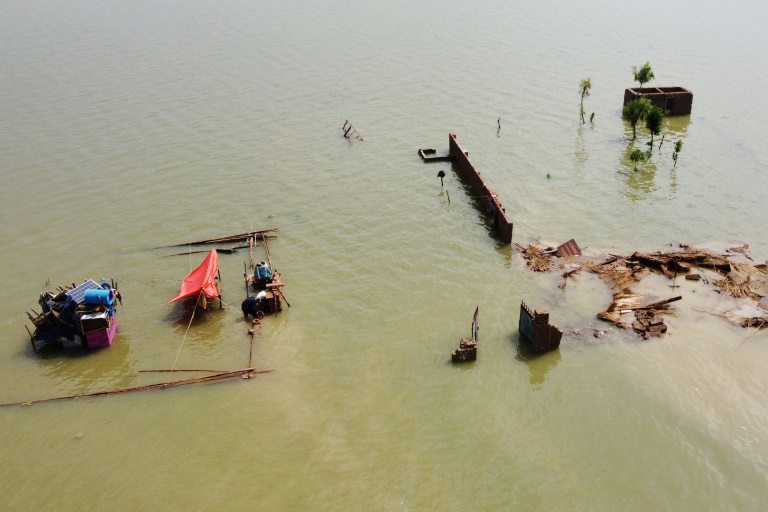
Tens of millions of people have been affected by relentless monsoon rains that have submerged a third of Pakistan and claimed more than 1,100 lives.

The rains that began in June have unleashed the worst flooding in more than a decade, washing away swathes of vital crops and damaging or destroying more than a million homes.

World Health Organization spokesman Christian Lindmeier said Pakistan’s health facilities had been severely affected by the flooding, with 180 “completely damaged”.

He said there was already a vast disparity between rural and urban healthcare provision, while treatment for non-communicable diseases such as diabetes would be “severely” impacted.

“It’s a vast problem which opens up here,” he said.

The UN refugee agency said there were 1.3 million Afghan refugees registered in Pakistan and it had already delivered $1.5 million worth of emergency relief and shelter items — but “much, much more” would be needed in the coming weeks.

– ‘Climate catastrophe’ –

Guterres branded the floods a “climate catastrophe”, saying South Asia was one of the world’s hotspots where people are “15 times more likely to die from climate impacts”.

“It is outrageous that climate action is being put on the back burner as global emissions of greenhouse gases are still rising, putting all of us — everywhere — in growing danger,” he said.

The UN’s World Meteorological Organization said that Pakistan and northwest India have been witnessing an intense 2022 monsoon season.

One site at Padidan in the southern Sindh province was reporting 1,288 millimetres of rain so far in August, compared to the monthly average of 46 mm, said WMO spokeswoman Clare Nullis.

'Third' of Pakistan under water as flood aid efforts gather pace

Aid efforts ramped up across flooded Pakistan on Tuesday to help tens of millions of people affected by relentless monsoon rains that have submerged a third of the country and claimed more than 1,100 lives.

The rains that began in June have unleashed the worst flooding in more than a decade, washing away swathes of vital crops and damaging or destroying more than a million homes.

Authorities and charities are struggling to accelerate aid delivery to more than 33 million people, a challenging task in areas cut off because roads and bridges have been washed away.

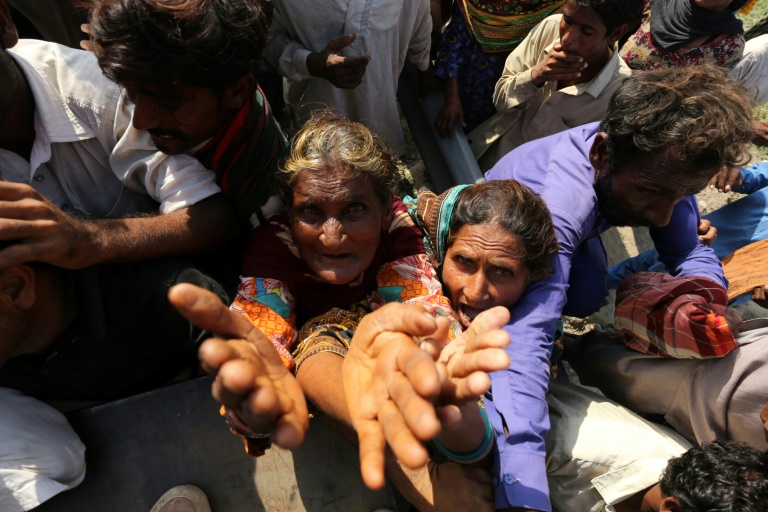
Displaced people have been wandering what remains of dry land seeking shelter, food and drinking water.

“For God’s sake help us out,” said Qadir, 35, who was camped out with his extended family on a road near the southern city of Sukkur.

“We walked along the road for three days to reach here. There’s nothing left back at home, we only managed to save our lives.”

In the country’s south and west, many Pakistanis have crammed onto elevated highways and railroad tracks to escape the flooded plains.

“We don’t even have space to cook food. We need help,” Rimsha Bibi, a schoolgirl in Dera Ghazi Khan in central Pakistan, told AFP.

Pakistan receives heavy — often destructive — rains during its annual monsoon season, which are crucial for agriculture and water supplies.

But such intense downpours have not been seen for three decades.

Pakistani officials have blamed climate change, which is increasing the frequency and intensity of extreme weather around the world.

– ‘Mind-boggling devastation’ –

“To see the devastation on the ground is really mind-boggling,” Pakistan’s climate change minister Sherry Rehman told AFP.

“When we send in water pumps, they say, ‘Where do we pump the water?’ It’s all one big ocean, there’s no dry land to pump the water out.”

She said “literally a third” of the country was under water, comparing scenes from the disaster to a dystopian movie.

Planning Minister Ahsan Iqbal said Pakistan needed more than $10 billion to repair and rebuild damaged infrastructure.

“Massive damage has been caused… especially in the areas of telecommunications, roads, agriculture and livelihoods,” he told AFP Tuesday.

The Indus River, which runs the length of the South Asian nation, is threatening to burst its banks as torrents of water rush downstream from its tributaries in the north.

Pakistan as a whole has been deluged with twice the usual monsoon rainfall, the meteorological office said, but Balochistan and Sindh provinces have seen more than four times the average of the last three decades.

– International help –

The disaster could not have come at a worse time for Pakistan, where the economy is in free fall.

Appealing for international help, the government has declared an emergency.

Aid flights have arrived in recent days from Turkey and the UAE, while other nations including Canada, Australia and Japan have also pledged assistance.

The United Nations has announced it will launch a formal $160 million appeal on Tuesday to fund emergency aid.

“Pakistan is awash in suffering. The Pakistani people are facing a monsoon on steroids — the relentless impact of epochal levels of rain and flooding,” UN Secretary-General Antonio Guterres said in a video statement, calling it a “colossal crisis”.

Pakistan was already desperate for international support and the floods have compounded the challenge.

Prices of basic goods — particularly onions, tomatoes and chickpeas — are soaring as vendors bemoan a lack of supplies from the flooded breadbasket provinces of Sindh and Punjab.

There was some relief on Monday when the International Monetary Fund approved the revival of a loan programme for Pakistan, releasing an initial $1.1 billion.

Makeshift relief camps have sprung up all over Pakistan — in schools, on motorways and in military bases.

In the northwestern town of Nowshera, a technical college was turned into a shelter for up to 2,500 flood victims.

They sweltered in the summer heat with sporadic food aid and little access to water.

“I never thought that one day we will have to live like this,” said 60-year-old Malang Jan.

“We have lost our heaven and are now forced to live a miserable life.”

Turkish cryptocurrency boss arrested in Albania

The founder of cryptocurrency exchange Thodex, suspected of having fled Turkey with the assets of his clients, has been arrested in Albania, the Turkish interior ministry said on Tuesday.

Turkey issued an international arrest warrant in April last year for fugitive businessman Faruk Fatih Ozer, who fled with a reported $2 billion in investors’ assets.

Tirana had informed Turkish Interior Minister Suleyman Soylu that Ozer, who was wanted by Interpol, “was arrested in Vlora, Albania”, the ministry said.

It added that “extradition procedures to Turkey have been initiated.”

The Istanbul-based Thodex exchange launched aggressive campaigns to lure investors. 

It first pledged to distribute luxury cars through a flashy advertising campaign featuring famous Turkish models.

But the exchange suspended trading in April 2021 after having posted a mysterious message days earlier saying it needed five days to deal with an unspecified outside investment.

It went dark after running a promotional campaign that sold Dogecoins at one-fourth the price at which they were trading on other exchanges.

But the exchange locked in those investments and did not allow the coins to be either sold or converted into other cryptos.

Turkish security officials then released a photo of Ozer going through passport control at Istanbul airport on his way to an unspecified location.

Media reports said the exchange shut down while holding at least $2 billion from 391,000 investors and more than 60 people linked to the company were arrested.

In a statement Tuesday Albanian police said a 28-year-old Turkish national had been arrested at a hotel in Himara, a small town in southern Albania on the Ionian coast. 

Two people suspected of having assisted him were also arrested, police said, with computers, mobile phones and bank cards seized.

Footage released by the Albanian police shows a man lying on a bed in a hotel room with his hands restrained behind his back.

– ‘Baseless’ –

Two days after leaving Turkey last year, Ozer denounced the “baseless allegations” against him in a message posted on his company’s official Twitter account.

The businessman said he had gone abroad to meet investors.

“I will return to Turkey in a few days and cooperate with the judicial authorities so that the truth comes out,” he promised at the time.

The manhunt for Ozer came as Turkey’s crypto market started to unravel. President Recep Tayyip Erdogan’s government warned of the risks and announced plans to rein in the digital currency market.

Cryptocurrency had proved a way for many Turks to preserve their savings during a steep drop in the value of the lira and runaway inflation.

The Turkish currency has lost nearly 27 percent of its value against the dollar since January.

A number of governments, including the United States, have said they will introduce tighter regulation on cryptocurrencies amid concerns over volatile trading and its potential use for criminal purposes.

In recent years, the crypto sector has benefitted from a vast infusion of cash due to easy money policies by the world’s biggest central banks.

However, rampant inflation has sparked tighter monetary policy across the globe, helping to send the industry crashing.

Bitcoin has lost more than half its value since the beginning of the year.

Musk cites whistleblower in new filing to scrap Twitter deal

Elon Musk made a fresh filing to terminate his Twitter deal, citing new revelations from the platform’s former security boss about major security gaps and misleading account data, a document made public Tuesday showed.

In their filing to the Securities and Exchange Commission, Musk’s lawyers said the information recently provided by whistleblower Peiter Zatko illustrated “far-reaching misconduct at Twitter… that is likely to have severe consequences for Twitter’s business.”

Musk, who has sought repeatedly to pull out of the $44 billion agreement to purchase the social media giant, has formally subpoenaed Zatko to have him share information about spam accounts and data protection shortcomings at Twitter.

The Tesla boss hopes allegations made by Zatko will bolster his case. According to court documents released Monday, Zatko was ordered to answer questions on the record for Musk lawyers on September 9.

The claims by Zatko have been sent to two US regulators as well as the Department of Justice.

Zatko claims Twitter misled users and regulators about “extreme, egregious” security gaps.

In a letter to Twitter’s general counsel included in the SEC filing, Musk lawyer Mike Ringler wrote that allegations about certain facts known to Twitter prior to July 8 but undisclosed to Musk “have since come to light that provide additional and distinct bases to terminate the Merger Agreement.”

Ringler added that the new elements are not necessary to justify a termination of the deal, but constitute additional arguments “in the event that the July 8 Termination Notice is determined to be invalid for any reason.”

In early July, Musk announced he was breaking the buyout agreement with Twitter’s board of directors, accusing the company of not living up to its commitments by not disclosing the exact number of inauthentic and spam accounts. 

The move prompted Twitter to sue the billionaire entrepreneur to force him to honor the terms of the agreement. 

A trial, which is scheduled to last five days, will begin on October 17 in a special court in Delaware.

Musk’s attempt to back out of buying Twitter has struggled for momentum in court.

Twitter won some early battles in the case, including a fast-track trial date, and its stock had risen as analysts predicted the platform would prevail over the mercurial Musk.

But a US judge last week told Twitter to surrender more data to Musk on the key issue of fake accounts, and the billionaire hopes Zatko’s whistleblower complaint could further turn the tide in its favor.

According to Dan Ives of Wedbush Securities, Zatko’s accusations, just weeks away from trial, are “a huge potential win for Musk which could complicate the Twitter case.”

Musk cites whistleblower in new filing to scrap Twitter deal

Elon Musk made a fresh filing to terminate his Twitter deal, citing new revelations from the platform’s former security boss about major security gaps and misleading account data, a document made public Tuesday showed.

In their filing to the Securities and Exchange Commission, Musk’s lawyers said the information recently provided by whistleblower Peiter Zatko illustrated “far-reaching misconduct at Twitter… that is likely to have severe consequences for Twitter’s business.”

Musk, who has sought repeatedly to pull out of the $44 billion agreement to purchase the social media giant, has formally subpoenaed Zatko to have him share information about spam accounts and data protection shortcomings at Twitter.

The Tesla boss hopes allegations made by Zatko will bolster his case. According to court documents released Monday, Zatko was ordered to answer questions on the record for Musk lawyers on September 9.

The claims by Zatko have been sent to two US regulators as well as the Department of Justice.

Zatko claims Twitter misled users and regulators about “extreme, egregious” security gaps.

In a letter to Twitter’s general counsel included in the SEC filing, Musk lawyer Mike Ringler wrote that allegations about certain facts known to Twitter prior to July 8 but undisclosed to Musk “have since come to light that provide additional and distinct bases to terminate the Merger Agreement.”

Ringler added that the new elements are not necessary to justify a termination of the deal, but constitute additional arguments “in the event that the July 8 Termination Notice is determined to be invalid for any reason.”

In early July, Musk announced he was breaking the buyout agreement with Twitter’s board of directors, accusing the company of not living up to its commitments by not disclosing the exact number of inauthentic and spam accounts. 

The move prompted Twitter to sue the billionaire entrepreneur to force him to honor the terms of the agreement. 

A trial, which is scheduled to last five days, will begin on October 17 in a special court in Delaware.

Musk’s attempt to back out of buying Twitter has struggled for momentum in court.

Twitter won some early battles in the case, including a fast-track trial date, and its stock had risen as analysts predicted the platform would prevail over the mercurial Musk.

But a US judge last week told Twitter to surrender more data to Musk on the key issue of fake accounts, and the billionaire hopes Zatko’s whistleblower complaint could further turn the tide in its favor.

According to Dan Ives of Wedbush Securities, Zatko’s accusations, just weeks away from trial, are “a huge potential win for Musk which could complicate the Twitter case.”

Barbecue-bashing French green MP stirs up carnivores

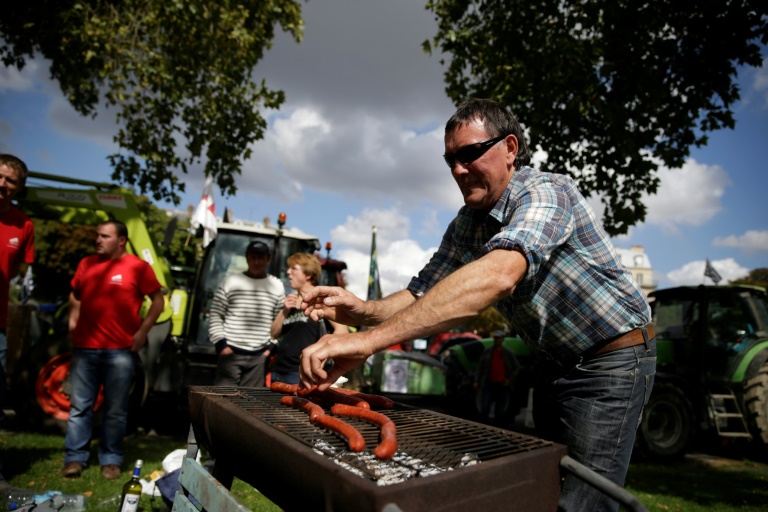
Are barbecues “a symbol of virility”? A prominent French green MP has sparked a national debate by suggesting that red meat is macho and grilled ribs are a gender issue.

Sandrine Rousseau, a leading figure in the EELV party and self-declared “eco-feminist”, has raised one of the most talked about topics of the end-of-holidays period.

In seeking to draw attention to the impact of meat-eating on climate change, she told an event at the weekend that the country needed “to change mentality so that eating steak cooked on a barbecue is not a symbol of virility.”

Citing figures from researchers, the 50-year-old former academic said that men ate twice as much red meat as women in the country of “steak frites” and “beef bourguignon”. 

As French people return to work after the long August break, radio and TV stations as well as social media are sizzling with hot-headed views on Rousseau’s barbecue-bashing.

“That’s enough of accusing our boys of everything. Stop ‘deconstructing’ our men. Stop Rousseau’s fantasies,” right-wing MP Nadine Morano wrote on Twitter.

Far-right lawmaker Julien Odoul asserted that “since the dawn of time, the muscular mass of men means they eat more meat (protein) than women. It’s not ‘virilism’, it’s nature.” 

He vowed to continue his “Cro-Magnon diet based on French meat,” referring to carnivorous cave-dwelling early humans found in southwest France.

– Climate change fears –

The EELV is seeking to capitalise on a summer of weather-related catastrophes ranging from a severe drought to huge wildfires in France to draw attention to climate change.

In recent weeks, the party has floated the idea of a ban on building new private swimming pools as well as restrictions on private jets.

Rousseau defended herself in an interview on LCI television on Monday, saying she was taking part in a discussion about how to convince people to change their eating habits.

“In fact, reducing your quantity of meat is the most effective action against climate change from a personal perspective, even more so than the car,” she said.

Men are more resistant than women to change their diets, she alleged, while admitting that she ate “small amounts” of red meat and was not fully vegetarian.

“I’m fed up… What are we prepared to do? We’ve just lived through a summer when we’ve seen the real impact of climate change for the first time and what are we prepared to do?” she said.

The United Nations Intergovernmental Panel on Climate Change (IPCC) devoted a chapter this year to its climate solutions report to stress how consumers could drastically reduce global emissions.

It also singled out shifting to a plant-based diet instead of meat as one of the most effective changes individuals could make.

But the biggest potential for avoidance was in reducing long-haul flights.

– Fall in meat consumption –

Rousseau cited work by French writer Nora Bouazzouni, author of the 2021 book “Steaksisme,” which explored attitudes to food consumption.

Bouazzouni argues that eating habits are not gendered — or driven by protein requirements — but are instead learned cultural behaviours.

Health scares, higher prices and growing awareness about animal rights have led to a gradual fall in meat consumption in France since the end of the 1990s.

But most French people remain proudly carnivorous and the majority of school children are fed meat at least four days a week despite recent efforts to introduce vegetarian options.

Rousseau has emerged as a leading face in the EELV party since seeking the party’s nomination for April’s presidential elections by promising “punk ecology”, though she lost out to rival Yannick Jadot.

Though EELV fared poorly in the presidential and parliamentary elections this year, they won control of a host of major towns and cities at the local level in 2020, including Lyon.

Lyon’s Mayor Gregory Doucet caused another food-related scandal last year by taking meat off the menu in school canteens to simplify the feeding of children during the Covid-19 epidemic. 

Interior Minister Gerald Darmanin attacked that move as an “unacceptable insult” to French farmers and butchers. 

burs-adp/js/pvh

Close Bitnami banner
Bitnami