AFP

Drought blamed for dozens of cow poisoning deaths in Italy

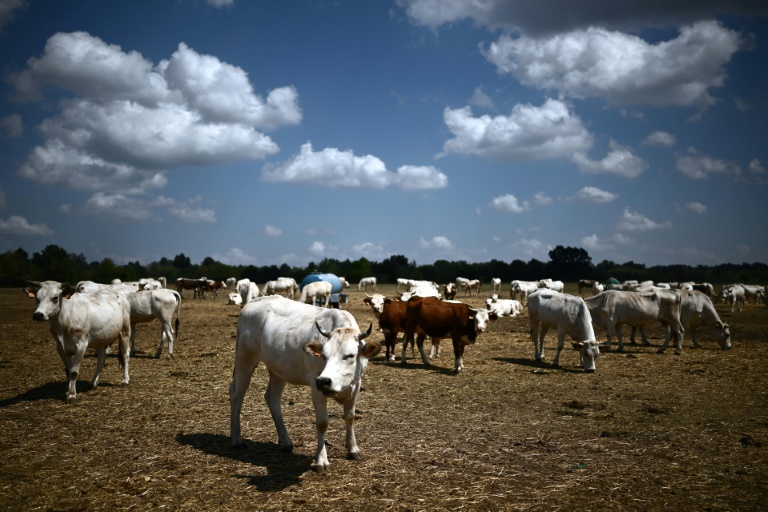
An Italian farm became an open-air morgue earlier this month after around 50 cows were poisoned by young sorghum plants, an accident experts blame on drought.

The Piedmontese cattle on the farm in Sommariva del Bosco, near Turin in northwest Italy, died suddenly due to acute prussic acid poisoning on August 6, according to the local IZS animal welfare body.

This acid comes from dhurrin, which is naturally present in young sorghum plants, although not in the same high concentrations as those found in samples taken at the site.

“We suspect that the drought caused this very large quantity of dhurrin within the sorghum plants,” said Stefano Giantin, a vet at the Istituto Zooprofilattico Sperimentale for northwest Italy, who is on the case.

With normal growing plants, the amount of dhurrin would lower as the plants grew larger. But since the ongoing drought has stunted the growth of sorghum plants, dhurrin has concentrated inside them.  

Prussic acid poisoning in cattle is quick and brutal, with symptoms occurring 10-15 minutes after ingestion and death some 15-30 minutes later. It causes respiratory, nervous and muscular disorders.

Dhurrin naturally occurs in sorghum, particularly in young shoots that use it as a defence against herbivores, but when digested, releases prussic acid, also known as hydrogen cyanide.

But “normally, it doesn’t cause death”, Giantin told AFP.

In the samples taken from Sommariva del Bosco, the concentration of dhurrin in the shoots was at an unusually high level, which Giantin said appeared to be the result of the drought that has hit Italy and much of Europe this summer.

A dose of more than 700 mg/kg of prussic acid is considered fatal for cattle, but the animals at Sommariva were found to have quantities of more than 900 mg/kg in their blood.

The only way of saving affected cows is to inject them with sodium thiosulfate, to neutralise the hyrogen cyanide.

With this, experts were able to save around 30 cows on August 11, when three more farms in Piedmont were hit by the same phenomenon — although not before 14 died.

Stocks mostly up as markets digest Fed rate signals

US and European stock markets mostly rose on Thursday as investors digested US economic data and Federal Reserve signals that it will maintain its agressive monetary-tightening policy to combat inflation. 

European equities closed higher after seesawing earlier in the day.

Wall Street indices were mixed, with the Dow Jones Industrial Average flat near midday while the S&P 500 and the tech-rich Nasdaq were up after closing lower on Wednesday.

Major Asian markets finished the day in the red.

“Closely watched minutes of the last Federal Reserve meeting show US central bank policymakers are set to stay firmly on the path of rate rises,” noted Susannah Streeter, senior investment and markets analyst at Hargreaves Lansdown.

While policymakers said they would eventually have to start tempering their tightening pace, they said they would keep borrowing costs elevated “for some time”, though admitted there was a risk of going too far and damaging the economy.

But Craig Erlam, analyst at OANDA trading platform, said Wednesday’s minutes could also indicate that the Fed “is aware of the risks and may therefore ease off the break as soon as the opportunity arises in order to avoid tightening too much”.

“It also raises the possibility of a swift U-turn from hiking rates to cutting them as markets have indicated recently and policymakers have pushed back against,” he said.

“Needless to say, there are many more twists and turns to come.”

US markets were also reacting to US industry data showing that existing home sales fell sharply in July, the sixth consecutive monthly decline as borrowing costs rise.

Other data in focus were better-than-expected initial jobless claims and manufacturing activity in the very industrialised Philadelphia area, which was back in the green in August after two straight months of contraction.

Oil prices, meanwhile, rallied by more than 2.5 percent after data showed US crude inventories dropped last week due to strong domestic demand and higher exports.

Elsewhere, Norway’s central bank raised interest rates by half a percentage point to 1.75 percent, and flagged another hike in September.

Turkey’s central bank, meanwhile, stunned the markets by lowering its main interest rate even as inflation soared to a 24-year high — the opposite approach of other countries facing rising prices.

Turkish President Recep Tayyip Erdogan subscribes to the unorthodox belief that high interest rates cause inflation rather than rein it in.

– Key figures at around 1545 GMT –

New York – Dow: FLAT at 33,980.87 points

London – FTSE 100: UP 0.4 percent at 7,541.85 (close) 

Frankfurt – DAX: UP 0.5 percent at 13,697.41 (close)

Paris – CAC 40: UP 0.5 percent at 6,557.40 (close)

EURO STOXX 50: UP 0.6 percent at 3,777.38

Tokyo – Nikkei 225: DOWN 1.0 percent at 28,942.14 (close)

Hong Kong – Hang Seng Index: DOWN 0.8 percent at 19,763.91 (close)

Shanghai – Composite: DOWN 0.5 percent at 3,277.54 (close)

Euro/dollar: DOWN at $1.0120 from $1.0178 Wednesday

Pound/dollar: DOWN at $1.1984 from $1.2050

Euro/pound: UP at 84.47 pence from 84.44 pence

Dollar/yen: UP at 135.28 yen from 135.08 yen

Brent North Sea crude: UP 2.7 percent at $96.15 per barrel

West Texas Intermediate: UP 2.5 percent at $90.33 per barrel

Five dead after storms lash France's Corsica: police

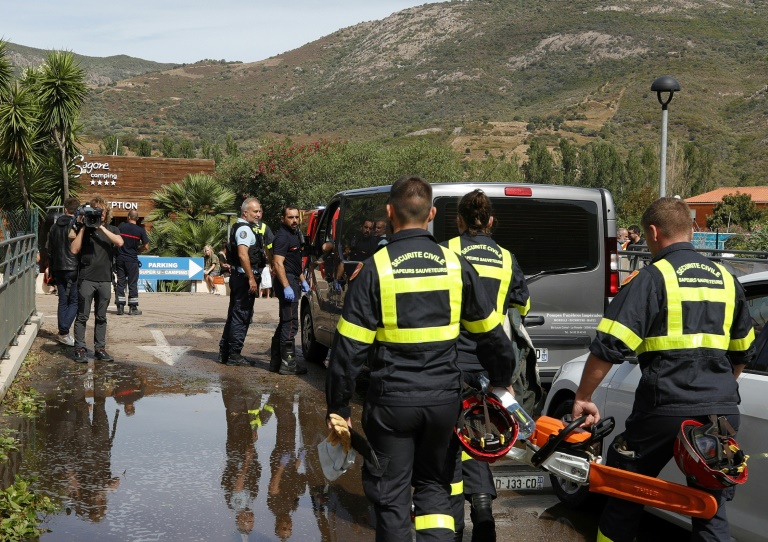
Brutal storms with winds gusting up to 224 kilometres per hour (140 miles per hour) left five people dead on the French Mediterranean island of Corsica early Thursday, including a 13-year-old girl who was killed when a tree fell onto her campground bungalow, authorities said.

It was the third day of intense rains across much of southern France that had produced flash floods and lightning, but left no casualties until now. 

The girl was killed at a campground near Sagone, on the island’s rugged western coast, where nine others were also injured, including one seriously, rescue workers told AFP.

At a nearby beach in Coggia, a 72-year-old woman died after the roof of a beachside hut was blown off and landed on the vehicle she was in, regional authorities said.

“I was woken around 7:30 am by a very huge storm” that knocked out both electricity and mobile phone networks, said Benjamin Roux, a 26-year-old tourist, at the beach near where the woman was killed.

He had been planning to go scuba diving, but instead helped the passengers of a boat who were sleeping aboard when it was suddenly thrown onto the shore by the choppy waves.

“They managed to get out without injuries, but they’re just devastated,” he told AFP.

Further north near the resort of Calvi, a 46-year-old Frenchman was also killed at a campground, and a 23-year-old Italian woman suffered serious injuries while camping nearby.

Maritime authorities later said a fisherman had died near Girolata, and a female kayaker near Erbalunga, north of Bastia.

“Several rescues of pleasure boats” were also undertaken near the capital Ajaccio, said Jean-Jacques Peraldi, head of the SDIS fire and rescue service.

Maritime authorities reported 60 to 70 sea rescue operations, mainly along the western coast that bore the brunt of the overnight storm, which the Meteo France weather service said was now moving towards Italy.

Authorities had urged people to avoid travel and take other precautions after storm alerts were issued Wednesday for several Mediterranean departments, but also along the Normandy coast and near the southeast city of Lyon.

Around 35,000 homes on Corsica remain without electricity, power provider EDF said.

UK pet owners face grim choices amid soaring costs

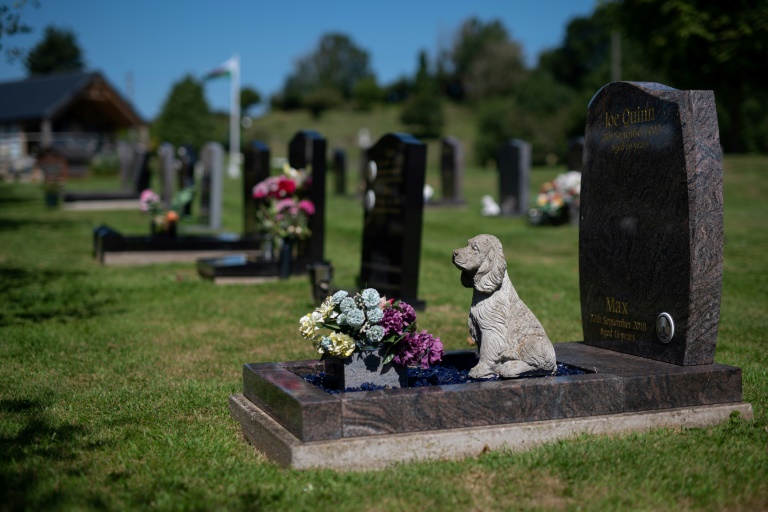
Unable to afford the cost of cremation for his much-loved dog Khan under the weight of sharply increasing living costs, David Mcauliffe turned to a social media group offering help for under-pressure pet owners.

With inflation in the UK at a 40-year high, millions are feeling the pinch from soaring bills. 

“Especially the way things are going: the gas, the electric, food prices, fuel everything is a struggle,” said Mcauliffe, as he sat with his partner Julie Fielding at Pet Cemetery in Holywell, North Wales. 

“(But) the dogs rely on you for everything and you’ve got to do right by them at the end of the day.”

The pair, who live on welfare, turned to a Facebook group that channels donations to families who otherwise would not be able to afford expenses such as cremations, which are becoming pricier as fuel bills soar.

It costs over £200 ($241) to cremate a medium-sized dog, with prices up 10 percent over the last two years.

Jason Ward, general manager of The Pet Cemetery, said most owners want their pets to have a private cremation so they can take the remains to bury or keep at home. 

“The alternative, for families who don’t have a private cremation, is for their body to be disposed of en masse with other pets,” he said, adding they are often collected in bags from veterinary surgeries with other clinical waste.

During Britain’s lengthy pandemic lockdowns, furry companions were many people’s main crutch and source of companionship.

That strong bond is on full display at Pet Cemetery, where many plots serve as the resting place for both pets and owners. 

The ashes of Mcauliffe’s mother and Fielding’s sister are already laid alongside Khan and their previous dog Flash, and it is the couple’s final wish to be interred with them. 

“When the time comes, that is where we want to rest,” they said.

– Costs of living –

It is not only pet cremation that has become more expensive. 

Mcauliffe and Fielding, who have two other dogs, have seen insurance and other costs increase.

“You just do what you have to do and take care of your pets the best you can,” said Mcauliffe.

“If we have to go without, then we’ll go without. As long as our pets are OK.”

Pets that have recently passed away often required emergency medical care soon before their death — delivering a brutal financial double blow to an already grieving family. 

Sometimes families have no choice but to send their pet’s body to be disposed of as waste, which Ward says can cause “distress”.

“(Pets) are a member of the family, they contribute a great deal to our well-being, and during the pandemic all families have spent more time with their pets,” he said.

Cyprus row over threat to dig up protected turtle nests

A row has erupted in Cyprus after a community leader threatened to dig up the nests of protected turtles because his village is missing out on land development compensation.

On Thursday the authorities said his “inexcusable” threat would undo decades of conservation efforts if it went ahead.

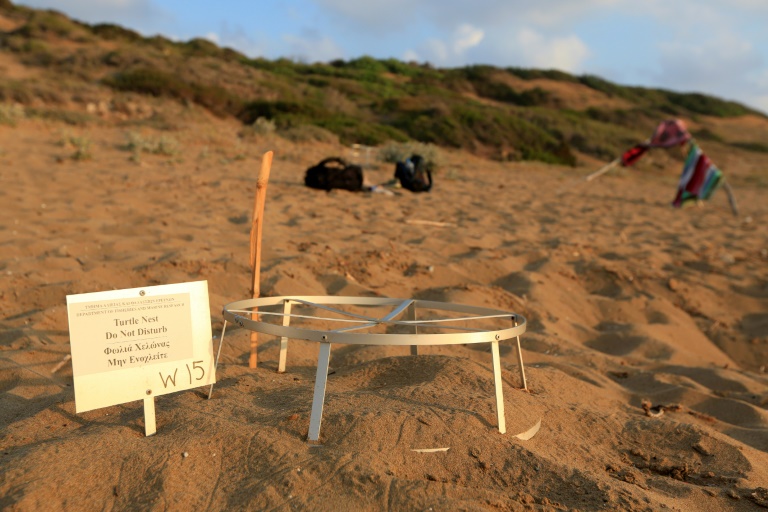
Yiangos Tsivikos, leader of the Ineia community in the Akamas region in the west of the Mediterranean island, posted a video on YouTube on Wednesday saying he would dig up turtle nests on the nearby Lara beach.

He claimed that nest markings there were fake, and called on the agriculture minister and media to go to Lara beach on Sunday to watch him dig up the nests.

“Residents are ready for war,” Tsivikos said.

The fisheries department warned Akamas residents that Cyprus sea turtles and their eggs have been protected by law since 1971.

Conservationists estimate the number of turtle nests in Lara at around 2,000 in 2021. Lara is a habitat of enormous ecological importance for both loggerhead and green sea turtles.

Akamas residents have been protesting over the government’s Akamas development plan which they claim prevents them from commercially exploiting their land.

Environmentalists also oppose the plan, saying it endangers the eastern Mediterranean island’s nature reserve, home to unique fauna and endangered species.

Ineia residents say that while the other villages will receive compensation under the plan, they will not.

Agriculture Minister Costas Kadis conceded on Wednesday that the community of Ineia and landowners in the area were most affected by the plan.

“Akamas should be preserved, but on the other hand, the area’s residents should not suffer,” he added.

Protection of the turtles’ habitat, the Lara-Toxeftra Akamas area, was secured in 1989.

“Sea turtles are included in the Barcelona Convention for specially protected areas, and biological diversity of the Mediterranean ratified by Cyprus in 2001,” the fisheries department said.

“They are also protected by the EU Habitats Directive, transferred into national legislation in 2003,” it said, adding that actions to destroy or try to destroy turtle nests or eggs are prohibited.

Turkey stuns markets by cutting rate despite soaring inflation

Turkey’s central bank on Thursday stunned the markets by lowering its main interest rate even as inflation soared to a 24-year high and looks set to climb further.

The central bank said “recession is increasingly assessed as an inevitable risk factor” as it lowered its one-week repo auction rate to 13 percent from 14 percent.

“Just insane — with inflation at 80 percent and rising,” BlueBay Asset Management economist Timothy Ash remarked in an emailed comment.

“Turkey’s central bank (has) stepped up its fight against economic orthodoxy,” Jason Tuvey of Capital Economics added in an ironic note.

“The move increases the risk of yet another currency crisis.”

The Turkish lira lost one percent of its value against the dollar within moments of the announcement.

Turkey’s monetary policy decision contradicts the approach pursued by most other countries as they try to combat the spike in consumer prices caused by Russia’s invasion of Ukraine.

The war has sent food and energy prices soaring and forced central banks to raise borrowing costs — even as economic growth remains anaemic. 

But Turkish President Recep Tayyip Erdogan subscribes to the unorthodox belief that high interest rates cause inflation rather than rein it in.

He has fired three central bank governors since 2019 who have tried to pursue a more conventional economic course.

– Election focus on growth –

Turkey now has a real interest rate of negative 66.6 percent when adjusted for inflation.

This forces businesses and ordinary people to spend as much as possible before their liras lose even more value with each month.

Turkey’s approach has propelled economic growth that Erdogan hopes can help him secure a third decade in power in a general election scheduled for next June.

But it has been accompanied by a sharp depreciation of the lira that has eroded living standards and pushed the financial sector to the brink of crisis.

The Turkish government has adopted a series of alternative measures to combat inflation which most economists dismiss as either insufficient or too complex and expensive to work.

These include limiting bank lending and offering state guarantees to ensure that Turks’ deposits do not lose too much value over time.

The central bank has also dug in deeply into its foreign currency reserves to try and prop up the lira’s exchange rate.

These interventions have made Turkey increasingly dependent on deals with petrodollar-rich nations such as Russia and Ankara’s one-time rivals in the Middle East.

Turkey reported a big jump in its hard currency holdings this month that the finance minister linked to a financial transaction with an unnamed foreign country.

Media reports said Russia’s state-held nuclear energy firm Rosatom had transferred billions of dollars for the construction of Turkey’s first nuclear power plant.

The central bank vowed on Thursday to push ahead with its “liraisation strategy” aimed at reducing the use of foreign currency.

It also spelled out its sharp focus on economic growth.

“It is important that financial conditions remain supportive to preserve the growth momentum in industrial production and the positive trend in employment,” it said.

– Weak lira –

Some economists interpreted the rate decision as a concerted effort by Erdogan’s team to devalue the lira in order to spur growth through cheaper exports.

Erdogan has touted this export-driven growth as a “new economic model” that a powerful and independent Turkey should pursue in order reduce its dependence on global powers.

“The need to devalue the lira is an integral component of this path,” economist Umut Akcay of the Institute for International Political Economy tweeted after the rate cut.

“This decision was driven by the need to support growth and further increase exports in the face of the global slowdown.”

Other economists question why Turkey would be spending tens of billion of dollars trying to prop up the lira if it actually wants the currency to fall.

The lira has lost more than half its value against the dollar in the past year alone.

Climate change causes wonky bumblebee wings: scientists

Warmer and wetter weather linked to climate change appears to stress out bumblebees and make their wings more asymmetrical, which could ultimately affect their future development, according to UK scientists in a new research paper.

“With hotter and wetter conditions predicted to place bumblebees under higher stress, the fact these conditions will become more frequent under climate change means bumblebees may be in for a rough time over the 21st century,” scientists at Imperial College, London, wrote in the Animal Ecology journal on Wednesday.

The large furry bees, known for their distinctive buzz, only feed on flowers, making them vulnerable to changes to the countryside due to intensive farming. 

Their population has declined in Britain over the past century, with two species becoming extinct, according to the Bumblebee Conservation Trust.

The Imperial College scientists looked at more than 6,000 bumblebee specimens in natural history museums, collected across Britain during the 20th century.

The scientists examined the right-left symmetry between the bees’ four wings, because asymmetry is an indication that the insect experienced stress during development.

They found that bees from the second half of the 20th century consistently had a higher average rate of asymmetry. 

Asymmetry was also “consistently higher in warmer and wetter years,” according to the paper’s senior co-author Richard Gill.

“Overall, these results could suggest bumblebees experienced increasing stress as the century progressed and that aspects of climate change could have contributed to this trend,” the paper said.

The weather conditions linked to wonky wings “will likely increase in frequency with climate change”, it continued.

In April, scientists in the United States who studied more than 20,000 bees in the Rocky Mountains found that bumblebees had lower heat tolerance than smaller bees and were “more threatened under climate warming than other bees”.

Insects are facing a huge impact from both warming climate and intensive agriculture.

Another study released in April in the journal Nature found that these factors cause insect populations to plummet by nearly half compared to areas less affected by temperature rises and industrial farming.

Wildfires in Portugal, Spain contained

Massive wildfires in Portugal and Spain were largely under control Thursday after forcing thousands from their homes and destroying large swathes of land. 

The fires in both countries followed punishing heatwaves and long dry spells, leaving forests parched and primed to burn.

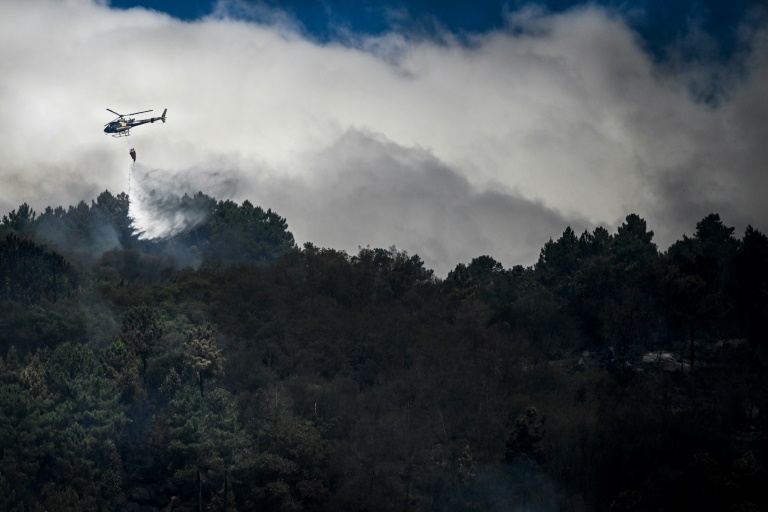
In Portugal, over 1,000 firefighters were still deployed in the Serra da Estrela national park, but the blaze was mostly contained after days of burning out of control.

With more hot weather forecast, however, there were fears it could flare up again. 

“The fire is under control, but it is not extinguished. Consolidation work will continue in the coming days,” civil protection commander Miguel Oliveira told TSF radio. 

“It is always possible, and very likely, that there will be new reactivations, but we hope that they do not take on worrying proportions,” he said.

The huge fire in central Portugal was brought under control last week, only to restart again Monday. 

More than 25,000 hectares (nearly 61,800 acres) of land is estimated to have been scorched by the fire in the UNESCO-listed park, home to diverse wildlife species including wildcats and lizards. 

Forecasts are predicting a fresh heatwave on Saturday, the latest in a string of hot spells in Portugal this year. July was the hottest on record in nearly a century. 

Interior Minister Jose Luis Carneiro said Wednesday “we will experience increased risks” of fires in the coming days due to hot and dry conditions. 

– ‘Some good news’ –

In neighbouring Spain, rain and lower temperatures eased pressure on firefighters who for days have been battling two major fires in the eastern Valencia region, officials said Thursday. 

“Finally, some good news: the rain and the drop in temperatures have helped to contain the fire in Vall d’Ebo,” regional leader Ximo Puig tweeted late Wednesday. 

He hoped the conditions would also “help stabilise the fire in Bejis” further north. 

By Thursday morning, there were “few visible flames left”, Puig told Cadena Ser radio, as the emergency services said the rain had almost completely put out the fires.

The two wildfires had forced the evacuation of 3,000 people and burnt their way through some 25,000 hectares. 

So far this year, Spain has been hit by 391 wildfires, which have destroyed over 283,000 hectares of land in total, the latest figures from the European Forest Fire Information System show.

This year’s fires in Spain have been particularly devastating, destroying more than three times the area consumed by wildfires in the whole of 2021, which totalled over 84,000 hectares, the figures show.

In Portugal, some 92,000 hectares have burned this year, according to the Institute for Nature Conservation and Forests, in the worst fires since 2017 when around 100 people were killed. 

Experts say climate change driven by human activity is boosting the intensity and frequency of extreme weather events, such as heatwaves, droughts and wildfires. 

burs-hmw/jv

Germany to lower tax on gas to help consumers

Chancellor Olaf Scholz said on Thursday that Germany would temporarily slash the sales tax on gas to help consumers facing soaring bills amid a crunch in Russian energy supplies.

Scholz said the move to cut the VAT on gas to seven percent from 19 percent currently was intended to offset an energy surcharge in the wake of the Ukraine war expected to cost households hundreds of euros.

“The discounted sales tax will apply as long as the gas surcharge is being applied, that is until March 31, 2024,” he told reporters.

“With this measure we are offering gas customers relief that is significantly larger than the extra burden imposed by the surcharges.”

Scholz said the government expected energy companies “to pass on this reduction in full to consumers,” while pledging further state relief measures “to ease the pressure” on households.

“The question of social justice is decisive so that the country remains united in this crisis,” Scholz said. 

Trading Hub Europe, a non-profit company of energy network operators in Germany, on Monday said the surcharge had been set at 2.419 cents per kilowatt hour.

For a family of four with an annual average energy usage of 20,000 kwh, this would come to about 483.80 euros ($491.85) before goods and services taxes.

The surcharge is aimed at sharing out the surging costs borne by energy importers after Russia drastically choked off gas supplies to Germany following its invasion of Ukraine.

Gas importers have so far swallowed the additional costs themselves, but a new rule agreed by the government allows them to pass on ballooning costs via the levy to households from October 1.

Scholz has attempted to reassure Germans that they will receive state aid to help cushion the blow of the additional costs, repeatedly intoning: “You’ll never walk alone.”

The centre-left-led coalition has expressed fears that the soaring bills could lead to social unrest in Europe’s top economy.

Far-right and left-wing parties have announced street protests beginning in September demanding relief for German consumers.

16 killed, many missing in northwest China floods

Sixteen people were killed and many left missing in flash flooding in northwest China, state media reported Thursday, as the country battles extreme weather that has shuttered factories and caused rolling power cuts.

The deluge comes during a summer of soaring temperatures and torrential rains in China, with multiple cities clocking their hottest days on record and floods causing hundreds of millions of dollars worth of damage.

Floods hit this week in a mountainous region of Datong county in Qinghai province, affecting more than 6,200 people from six villages, state broadcaster CCTV said.

Photos of the aftermath showed roads covered in mud, uprooted trees, damaged homes and rescue workers carrying shovels.

“As of noon on the 18th, 16 people have been killed,” added CCTV, saying that rescue work was ongoing.

At least 18 people are missing and 20 have since been rescued, and a “frontline headquarters” has been set up to organise the emergency response, according to state media reports.

“The rescue work is progressing in an orderly manner,” the report said, adding that sudden heavy rainfall Wednesday night had triggered the situation.

– Extreme weather –

Scientists say extreme weather across the world has become more frequent due to climate change, and will likely grow more intense as temperatures rise.

Severe flooding in southern China in June displaced more than half a million people and caused an estimated $250 million in damage.

On Wednesday, Chinese authorities warned that heavy rains were also expected to hit northern regions of the country including the capital Beijing and its neighbouring Tianjin and Hebei.

Earlier this week, President Xi Jinping called on officials in the northeastern Liaoning province to “ensure the safety of people’s lives in flood control”, state media reported.

Meanwhile, millions of people in southwest China are facing rolling power cuts after a crushing heatwave led to an electricity supply crunch that has forced factories to halt work.

Sichuan province relies heavily on dams to generate its electricity but the heat has caused reservoirs to dry up, exacerbating the energy shortage.

On Thursday, Sichuan authorities ordered employers to stop requiring staff to perform outdoor work when temperatures are forecast to hit 40 degrees Celsius or above.

Water volume in the province’s major rivers has fallen by around 20 to 50 percent in the absence of rain as well, impacting hydropower generation, state news agency Xinhua reported Wednesday citing provincial energy officials.

The China Meteorological Administration said the country was going through its longest period of sustained high temperatures since records began in 1961, with 64 straight days of heat warnings in various regions starting in June.

More than a third of weather stations in China recorded extreme heat this summer, with 262 of them reaching or surpassing previous records, the administration said.

Close Bitnami banner
Bitnami