AFP

Crisis-hit Sri Lanka warns of record 8% economic contraction

Sri Lanka’s economic meltdown will result in a record contraction of at least eight percent this year but the public could soon expect some relief from runaway inflation, the head of the country’s central bank said Thursday.

The island nation defaulted on its $51 billion foreign debt in April and is seeking an International Monetary Fund bailout after months of food, fuel and medicine shortages. 

Its 22 million people have also suffered through lengthy blackouts and spiralling cost-of-living pressures after scarcity and a currency crash drove up prices.

The Central Bank of Sri Lanka had already projected the economy could shrink a painful 7.5 percent for the calendar year, dwarfing the previous record 3.6 percent contraction in 2020 as the pandemic raged.

“But now we think it will exceed 8.0 percent,” governor Nandalal Weerasinghe told reporters in Colombo.

He said inflation — officially running at 60.8 percent — will peak at “about 65 percent” in September, followed by a gradual easing caused by lower demand and improvements in supplies.

The foreign exchange shortage that sparked the economic crisis had eased thanks to better currency inflows and lower imports, he added. 

“We are now able to finance the most essential imports such as petrol and diesel and medicines,” Weerasinghe said.

At the peak of Sri Lanka’s fuel shortages, motorists had to wait for days and sometimes weeks to top up, but strict fuel rationing has shortened queues.

Months of protests over the collapsing economy culminated in the resignation of president Gotabaya Rajapaksa, who was forced to flee his official residence after it was stormed by a huge crowd last month.

Rajapaksa is accused of mismanaging the island nation’s economy to the point where it was unable to finance even the most essential imports.

He has since travelled to Thailand and close associates have said he was desperate to return home, where he faces corruption charges that had been suspended because of his presidential immunity.

The political upheavals last month stalled talks with the IMF, but a delegation from the international lender of last resort is expected in Colombo before the end of August.

Weerasinghe said he was hopeful authorities would finalise a staff-level agreement with the Fund later this month ahead of a formal bailout deal.

Crisis-hit Sri Lanka warns of record 8% economic contraction

Sri Lanka’s economic meltdown will result in a record contraction of at least eight percent this year but the public could soon expect some relief from runaway inflation, the head of the country’s central bank said Thursday.

The island nation defaulted on its $51 billion foreign debt in April and is seeking an International Monetary Fund bailout after months of food, fuel and medicine shortages. 

Its 22 million people have also suffered through lengthy blackouts and spiralling cost-of-living pressures after scarcity and a currency crash drove up prices.

The Central Bank of Sri Lanka had already projected the economy could shrink a painful 7.5 percent for the calendar year, dwarfing the previous record 3.6 percent contraction in 2020 as the pandemic raged.

“But now we think it will exceed 8.0 percent,” governor Nandalal Weerasinghe told reporters in Colombo.

He said inflation — officially running at 60.8 percent — will peak at “about 65 percent” in September, followed by a gradual easing caused by lower demand and improvements in supplies.

The foreign exchange shortage that sparked the economic crisis had eased thanks to better currency inflows and lower imports, he added. 

“We are now able to finance the most essential imports such as petrol and diesel and medicines,” Weerasinghe said.

At the peak of Sri Lanka’s fuel shortages, motorists had to wait for days and sometimes weeks to top up, but strict fuel rationing has shortened queues.

Months of protests over the collapsing economy culminated in the resignation of president Gotabaya Rajapaksa, who was forced to flee his official residence after it was stormed by a huge crowd last month.

Rajapaksa is accused of mismanaging the island nation’s economy to the point where it was unable to finance even the most essential imports.

He has since travelled to Thailand and close associates have said he was desperate to return home, where he faces corruption charges that had been suspended because of his presidential immunity.

The political upheavals last month stalled talks with the IMF, but a delegation from the international lender of last resort is expected in Colombo before the end of August.

Weerasinghe said he was hopeful authorities would finalise a staff-level agreement with the Fund later this month ahead of a formal bailout deal.

US, Taiwan agree trade talks in face of 'growing China coercion'

Taiwan and the United States announced plans on Thursday for trade talks in the early autumn as a senior US diplomat warned Beijing will continue to squeeze the self-ruled democracy it claims as its own.

Tensions in the Taiwan Strait have soared to their highest in years after US House Speaker Nancy Pelosi visited Taipei, sparking a furious response from Beijing which launched its largest military drills around the island.

The negotiations would cover a variety of areas, including agriculture, digital trade, regulatory practices and removing trade barriers, the Office of the US Trade Representative said in a statement.

The talks “will deepen our trade and investment relationship, advance mutual trade priorities based on shared values, and promote innovation and inclusive economic growth for our workers and businesses,” said Deputy United States Trade Representative Sarah Bianchi. 

“We welcome this opportunity to deepen economic collaboration between our 2 freedom-loving countries while shaping a new model for trade cooperation in the Indo-Pacific,” Taiwan’s foreign ministry said in a tweet. 

Taipei’s representative in Washington Hsiao Bi-Khim wrote: “We welcome this announcement, and Taiwan’s ready to start!”

The United States and Taiwan share a longstanding trade and investment relationship. The island is also a crucial global supplier of some of the most advanced semiconductors, used in everything from mobile phones and laptops to cars and missiles. 

But Taiwan’s largest trading partner by far remains China, which bristled at the announcement and said it “firmly opposes this”.

“China has always opposed any official exchanges between any country and the Taiwan region of China,” Beijing’s commerce ministry spokeswoman Shu Jueting told reporters on Thursday, adding that the matter concerned China-US relations.

Beijing views Taiwan as its own territory to be seized one day, by force if necessary, and last year 42 percent of Taiwan’s exports went to China and Hong Kong compared with 15 percent for the United States.

Washington diplomatically recognises Beijing over Taipei, but maintains de facto relations with Taiwan and supports the island’s right to decide its future.

– ‘Intimidate and coerce’ –

The United States has said its position on Taiwan remains unchanged and has accused China of threatening peace in the Taiwan Strait and using the visit by Pelosi as a pretext for military exercises.

Its top envoy in East Asia on Thursday said Beijing will likely ramp up pressure on Taiwan in the coming months after the drills.

“While our policy has not changed, what has changed is Beijing’s growing coercion,” Daniel Kritenbrink, assistant secretary of state for East Asian and Pacific affairs, told reporters on a teleconference call.

“These actions are part of an intensified pressure campaign… to intimidate and coerce Taiwan and undermine its resilience,” he said.

The envoy said Washington would respond to China’s aggression with “calm, but resolute steps” to keep the Taiwan Strait open and peaceful.

His comments come after a top US naval commander said this week that Washington and its allies must contest China’s ballistic missile fire over Taiwan, which he called a “gorilla in the room”.

China’s exercises included firing multiple ballistic missiles into waters off Taiwan — some of the world’s busiest shipping routes — which was the first time China has taken such a step since the mid-1990s.

Taiwan has staged its own drills simulating a defence against invasion and on Wednesday displayed its most advanced fighter jet in a rare nighttime demonstration in the wake of China’s moves around the island.

“In the face of the threat from Chinese communist forces’ recent military exercises, we have stayed vigilant while establishing the concept of ‘battlefields everywhere and training anytime’… to ensure national security,” Taiwan’s air force said in a statement. 

US, Taiwan agree trade talks in face of 'growing China coercion'

Taiwan and the United States announced plans on Thursday for trade talks in the early autumn as a senior US diplomat warned Beijing will continue to squeeze the self-ruled democracy it claims as its own.

Tensions in the Taiwan Strait have soared to their highest in years after US House Speaker Nancy Pelosi visited Taipei, sparking a furious response from Beijing which launched its largest military drills around the island.

The negotiations would cover a variety of areas, including agriculture, digital trade, regulatory practices and removing trade barriers, the Office of the US Trade Representative said in a statement.

The talks “will deepen our trade and investment relationship, advance mutual trade priorities based on shared values, and promote innovation and inclusive economic growth for our workers and businesses,” said Deputy United States Trade Representative Sarah Bianchi. 

“We welcome this opportunity to deepen economic collaboration between our 2 freedom-loving countries while shaping a new model for trade cooperation in the Indo-Pacific,” Taiwan’s foreign ministry said in a tweet. 

Taipei’s representative in Washington Hsiao Bi-Khim wrote: “We welcome this announcement, and Taiwan’s ready to start!”

The United States and Taiwan share a longstanding trade and investment relationship. The island is also a crucial global supplier of some of the most advanced semiconductors, used in everything from mobile phones and laptops to cars and missiles. 

But Taiwan’s largest trading partner by far remains China, which bristled at the announcement and said it “firmly opposes this”.

“China has always opposed any official exchanges between any country and the Taiwan region of China,” Beijing’s commerce ministry spokeswoman Shu Jueting told reporters on Thursday, adding that the matter concerned China-US relations.

Beijing views Taiwan as its own territory to be seized one day, by force if necessary, and last year 42 percent of Taiwan’s exports went to China and Hong Kong compared with 15 percent for the United States.

Washington diplomatically recognises Beijing over Taipei, but maintains de facto relations with Taiwan and supports the island’s right to decide its future.

– ‘Intimidate and coerce’ –

The United States has said its position on Taiwan remains unchanged and has accused China of threatening peace in the Taiwan Strait and using the visit by Pelosi as a pretext for military exercises.

Its top envoy in East Asia on Thursday said Beijing will likely ramp up pressure on Taiwan in the coming months after the drills.

“While our policy has not changed, what has changed is Beijing’s growing coercion,” Daniel Kritenbrink, assistant secretary of state for East Asian and Pacific affairs, told reporters on a teleconference call.

“These actions are part of an intensified pressure campaign… to intimidate and coerce Taiwan and undermine its resilience,” he said.

The envoy said Washington would respond to China’s aggression with “calm, but resolute steps” to keep the Taiwan Strait open and peaceful.

His comments come after a top US naval commander said this week that Washington and its allies must contest China’s ballistic missile fire over Taiwan, which he called a “gorilla in the room”.

China’s exercises included firing multiple ballistic missiles into waters off Taiwan — some of the world’s busiest shipping routes — which was the first time China has taken such a step since the mid-1990s.

Taiwan has staged its own drills simulating a defence against invasion and on Wednesday displayed its most advanced fighter jet in a rare nighttime demonstration in the wake of China’s moves around the island.

“In the face of the threat from Chinese communist forces’ recent military exercises, we have stayed vigilant while establishing the concept of ‘battlefields everywhere and training anytime’… to ensure national security,” Taiwan’s air force said in a statement. 

Once hated by the left, FBI is now US conservatives' evil demon

Agents of the US Federal Bureau of Investigation are used to criticism, but never in the agency’s history have they faced anything like the attacks from conservatives after last week’s raid on former president Donald Trump’s Florida home.

Over its more than 100-year history, the FBI has been excoriated by southerners committed to racist segregation, by civil libertarians defending political activists and especially by African Americans whose 1960s liberation movement was treated as an acute national threat by the agency.

But the extraordinary threats of the past week originate in the FBI’s political bedrock: conservative Republicans.

“It’s the world turned upside down,” said Kenneth O’Reilly, a retired University of Alaska historian, who has written books about the FBI and politics.

According to O’Reilly, the FBI has historically been a “deeply conservative institution” with a bipartisan constituency in Washington.

But since Trump condemned the FBI as corrupt and fascist after they searched his Mar-a-Lago estate on August 8 for illegally retained top secret documents, the attacks have kept coming — and his supporters have fanned the flames. 

Republican National Committee chairwoman Ronna McDaniel accused the bureau of “abuse of power.”

Senator Marco Rubio, a Republican from Florida, compared the agency to secret police in a Marxist dictatorship, while Representative Paul Gosar declared: “We must destroy the FBI.”

Online, including on Trump’s own Truth Social network,  the threats were more violent — and turned real. 

On August 11, an armed 42-year-old man attacked the FBI’s branch in Cincinnati after writing on social media accounts attributed to him that people should “respond with force” to the raid on Trump and “kill the FBI on sight.”

The man failed to enter the office in the Ohio city, and was later shot dead by police.

One day later, a 46-year-old man in Pennsylvania was arrested for making similar threats. 

“If You Work For The FBI Then You Deserve To Die,” he wrote on social media. 

“My only goal is to kill more of them before I drop.”

– Criticism, but no violence –

Long mythologized in film and television, the FBI — the storied home of the 1930s G-Men and the powerful, inscrutable J. Edgar Hoover — has regularly fielded criticism from all sides, O’Reilly told AFP.

“Among southern racists in the early 60s, there was a big backlash against the FBI, treating it like the Gestapo” when it investigated the lynchings of African Americans.

The worst period, O’Reilly said, was in the 1960s when the FBI spied extensively on and sought to undermine the civil rights movement, smearing Martin Luther King Jr. and stoking violence between rival groups to discredit them.

But the reactions at the time, said O’Reilly, who documented the FBI’s war on the Black nationalist movement, were outrage and litigation, and then a sweeping Congressional probe that exposed the abuses.

“You didn’t have violence directed at FBI agents,” he said.

– Popular support until now –

In 1995, FBI actions did spark a violent attack. Anti-government extremists bombed a federal office building in Oklahoma City that included the regional FBI headquarters, killing 168 people.

The two extremists were motivated in part by the FBI’s poor handling of two hostage-like sieges in 1992 and 1993 that turned deadly.

But through all of that, the FBI maintained general political and popular support.

The current anti-FBI turn has its roots in Trump’s long battle with the bureau’s investigations, and specifically its probes into hundreds of his supporters who violently stormed the US Capitol on January 6, 2021.

For O’Reilly, the open threats by Trump supporters and politicians are what makes the current moment shocking.

“I would guess the overwhelming majority of FBI agents voted for Trump,” he said.

“So it’s just a wild idea that the most conservative elements of the Republican Party see the FBI as a tool of the radical left.”

– Climate of violence –

The strong response by US justice authorities to the threats has also been extraordinary.

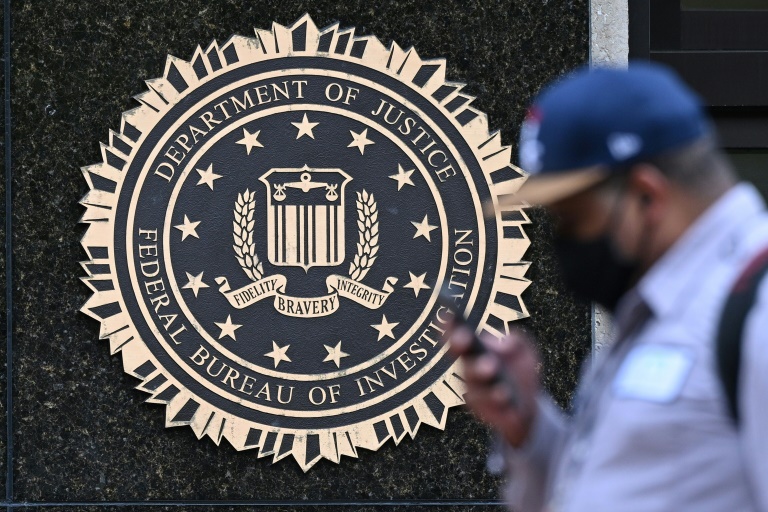
Fences were erected to protect the FBI headquarters in Washington 

“Violence and threats against law enforcement, including the FBI, are dangerous and should be deeply concerning to all Americans,” warned FBI Director Chris Wray.

The Department of Homeland Security alerted in a special bulletin that agents could be in danger.

“I don’t recall a threat stream similar to this in the last many years,” Brian O’Hare, the president of the FBI Agents Association, told NPR.

“It’s troubling. It’s unacceptable. And it should be condemned by all who are aware of it,” he said.

“It’s a climate of acceptance of violence that needs to be changed.”

In UK, workers strike as inflation crushes earnings

Railway and postal staff, dockers too. Britain’s workers are striking in vast numbers as decades-high inflation erodes the value of wages at a record pace.

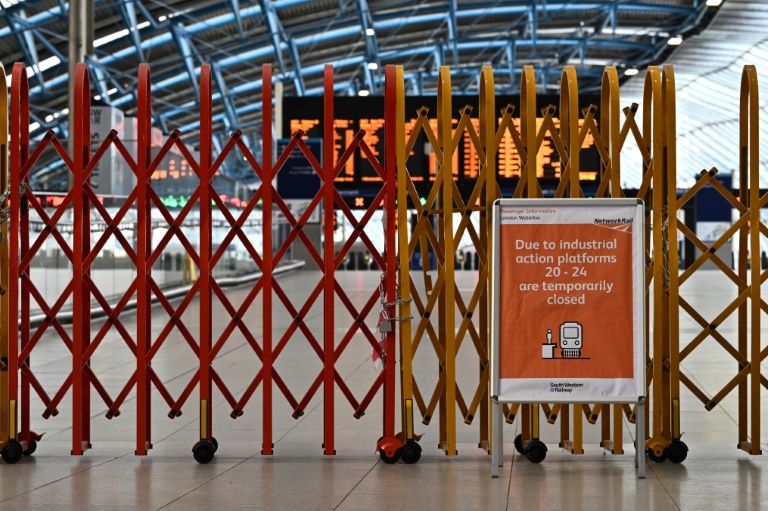
Britain’s train network faces further heavy disruption Thursday and Saturday in major walkouts that follow the sector’s biggest strike action for 30 years already this summer.

Tens of thousands of staff are expected to strike over the two days, leaving a skeleton train service that will hit holidaymakers and commuters, even if home-working continues for many office staff after Covid restrictions were lifted.

London’s underground railway, the Tube, will be hit by a strike Saturday, ahead of an eight-day stoppage starting Sunday by dockers at Felixstowe, Britain’s largest freight port that is situated in eastern England.

“We will continue to do whatever is necessary to defend jobs, pay and conditions during this cost-of-living crisis,” Sharon Graham, head of major British union, Unite, said this week.

Official data Wednesday showed UK inflation at a 40-year-high above 10 percent, as soaring food and energy prices hurt millions of Britons.

– Inflation to keep rising –

And the situation is set to worsen under a new prime minister, as under-fire Boris Johnson prepares to step down.

The Bank of England has forecast inflation to top 13 percent this year, tipping the British economy into a deep and long-lasting recession.

“This record fall in real wages demonstrates the vital need for unions like Unite to defend the value of workers’ pay,” Graham said, while hitting out at suggestions, including from BoE governor Andrew Bailey, that pay rises were fuelling inflation.

“Wages are not driving inflation,” she insisted ahead of the latest UK inflation data that showed rocketing food prices were the main factor behind July’s spike.

Inflation has soared worldwide this year also on surging energy prices, fuelled by the invasion of Ukraine by major oil and gas producer Russia.

– Pay deals –

Some proposed strikes planned for the British summer have been halted after unions and companies agreed pay deals at the eleventh hour.

But while British Airways ground staff and plane refuellers at Heathrow airport have scrapped proposed walkouts, other sectors are holding firm.

More than 115,000 British postal workers employed by former state-run Royal Mail plan a four-day strike from the end of August. 

Telecoms giant BT will face its first stoppage in 35 years and walkouts have recently taken place or are soon to occur by Amazon warehouse staff, criminal lawyers and refuse collectors.

Major UK business lobby group, the CBI, this week acknowledged workers’ ongoing “struggle with rising costs like energy prices” and said employers were “doing their level best to support staff”.

It also claimed, however, that “the vast majority” of companies “can’t afford large enough pay rises to keep up with inflation”.

Regarding the part-privatised British railway sector, unions accuse Transport Secretary Grant Shapps of not helping to resolve the impasse.

Shapps is part of the Conservative government that recently amended a law to allow agency staff to help fill gaps caused by strikes, further angering the RMT railway union.

According to Unite, London’s luxury department store Harrods has informed staff that it stands ready to use agency staff in the event of strike action by its workers.

Analysts are meanwhile forecasting sector-wide stoppages to last beyond the summer as inflation keeps on rising.

It comes as teachers and health workers have hinted at possible walkouts should they not receive new pay deals deemed acceptable.

China reconnects nuclear reactor after shutdown due to damage

A nuclear reactor in southern China has been reconnected to the electricity grid more than a year after it was shut down to repair damage, its operator said.

Part of Taishan nuclear power plant in Guangdong province was taken offline last July after Chinese authorities reported minor fuel rod damage and a build-up of radioactive gases at the plant.

Operators reconnected the damaged reactor after months of “inspection and maintenance”, China General Nuclear Power Group (CGN) said in a stock exchange filing late on Tuesday.

“The monitoring results of Taishan Nuclear Power Plant and its surrounding environment are normal,” CGN said in the filing, without giving further details.

The plant is operated in a partnership with French energy giant EDF and uses the European Pressurised Reactor (EPR) design, which was developed to relaunch nuclear power in Europe after the Chernobyl catastrophe of 1986.

The design is touted as offering higher power and better safety, but EPR projects in Finland, France and Britain have been plagued by delays and cost overruns.

There are more than 60,000 fuel rods in the reactor and the proportion of damaged rods was “less than 0.01 percent”, China’s environment ministry and nuclear regulator said before the reactor’s closure.

They called the damage “inevitable” due to factors including fuel manufacturing and transportation.

EDF also previously blamed the build-up of radioactive gases at the Taishan plant on deteriorating coating on some uranium fuel rods.

EDF on Wednesday confirmed that the reactor resumed production on Monday.

“After an in-depth investigation, the Chinese safety authority gave its agreement for the restart of EPR reactor 1 at Taishan,” EDF’s spokeswoman said.

Official environmental monitoring data last year showed a slight increase in radiation near Taishan compared with other nuclear plants in China, but within the normal range of environmental radiation levels in Guangdong.

China reconnects nuclear reactor after shutdown due to damage

A nuclear reactor in southern China has been reconnected to the electricity grid more than a year after it was shut down to repair damage, its operator said.

Part of Taishan nuclear power plant in Guangdong province was taken offline last July after Chinese authorities reported minor fuel rod damage and a build-up of radioactive gases at the plant.

Operators reconnected the damaged reactor after months of “inspection and maintenance”, China General Nuclear Power Group (CGN) said in a stock exchange filing late on Tuesday.

“The monitoring results of Taishan Nuclear Power Plant and its surrounding environment are normal,” CGN said in the filing, without giving further details.

The plant is operated in a partnership with French energy giant EDF and uses the European Pressurised Reactor (EPR) design, which was developed to relaunch nuclear power in Europe after the Chernobyl catastrophe of 1986.

The design is touted as offering higher power and better safety, but EPR projects in Finland, France and Britain have been plagued by delays and cost overruns.

There are more than 60,000 fuel rods in the reactor and the proportion of damaged rods was “less than 0.01 percent”, China’s environment ministry and nuclear regulator said before the reactor’s closure.

They called the damage “inevitable” due to factors including fuel manufacturing and transportation.

EDF also previously blamed the build-up of radioactive gases at the Taishan plant on deteriorating coating on some uranium fuel rods.

EDF on Wednesday confirmed that the reactor resumed production on Monday.

“After an in-depth investigation, the Chinese safety authority gave its agreement for the restart of EPR reactor 1 at Taishan,” EDF’s spokeswoman said.

Official environmental monitoring data last year showed a slight increase in radiation near Taishan compared with other nuclear plants in China, but within the normal range of environmental radiation levels in Guangdong.

Chinese tech giant Tencent revenue falls for first time since going public

Chinese tech giant Tencent on Wednesday posted its first drop in quarterly revenue since going public, as the company grapples with China’s economic downturn, pandemic disruptions and ongoing scrutiny from regulators.

Revenue in the second quarter fell three percent to 134 billion yuan ($19.8 billion) compared to the year before, while profits plunged by 56 percent to 18.6 billion yuan, an earnings statement said.

Tencent also cut around 5,500 jobs down to 110,715 employees by the end of June, the first quarterly decline in workforce since 2014.

“We actively exited non-core businesses, tightened our marketing spending, and trimmed operating expenses, enabling us to sequentially increase our non-IFRS earnings, despite difficult revenue conditions,” the company said in the statement. 

Around half of Tencent’s revenues came from fintech and business services as well as online advertising, which would position the company for growth when China’s economy expands, the company added.

China has spent months cracking down on the video game industry to fight addiction among children, cutting into profits of giants like Tencent and its rival NetEase.

Beijing started approving new video games again in April after a hiatus, but no Tencent games were on the list, meaning it must rely on older titles like “Honor of Kings” for revenue.

Tencent said China’s domestic gaming market was facing “transitional challenges”, while the international market was in a “post-pandemic digestion period” as people resumed spending on other entertainment avenues.

Online advertising revenue fell a record 18 percent in the second quarter year-on-year, which reflected “notable weakness in the Internet services, education and finance sectors”, the firm added.

“Tencent has tightened its belt as the Chinese tech industry embraces a downturn,” Analyst Willer Chen at Forsyth Barr Asia told Bloomberg News. 

“The company’s performance now largely depends on its progress on cost control and operation optimisation.”

– Tech sector reeling –

Tencent is among the biggest names in China’s tech industry that is still reeling from Beijing’s regulatory crackdown, which began in late 2020 to target anti-competitive practices and put an end to a decade of freewheeling growth.

The regulatory actions have wiped more than $1 trillion off the combined market value of the country’s tech giants in 2021, according to Bloomberg News estimates — though Tencent has retained the crown as China’s most valuable company.

The latest economic slump has further damaged bottom lines for the sector’s biggest firms, with Alibaba Group earlier this month reporting flat quarterly revenue growth for the first time.

Shares in Tencent rose less than 0.1 percent in Hong Kong before the Wednesday results announcement.

The announcement came a day after news broke that Tencent plans to sell all or much of its $24 billion stake in Chinese food delivery giant Meituan.

The Hong Kong-listed shares of Meituan fell more than 10 percent on Tuesday following the news, while Tencent dipped slightly before recovering.

Tencent went public in Hong Kong in 2004 and enjoyed double-digit growth for much of China’s decades-long internet boom, dominating the market with instant messaging app WeChat and its roster of games.

Earnings data on the company’s performance before its listing on the stock exchange is not publicly available.

Forced labour, possible 'enslavement' in China's Xinjiang: UN expert

Minorities have been drafted into forced labour in China’s Xinjiang region in sectors such as agriculture and manufacturing, a report by an independent UN expert has concluded, in what it said could amount to “enslavement as a crime against humanity”.

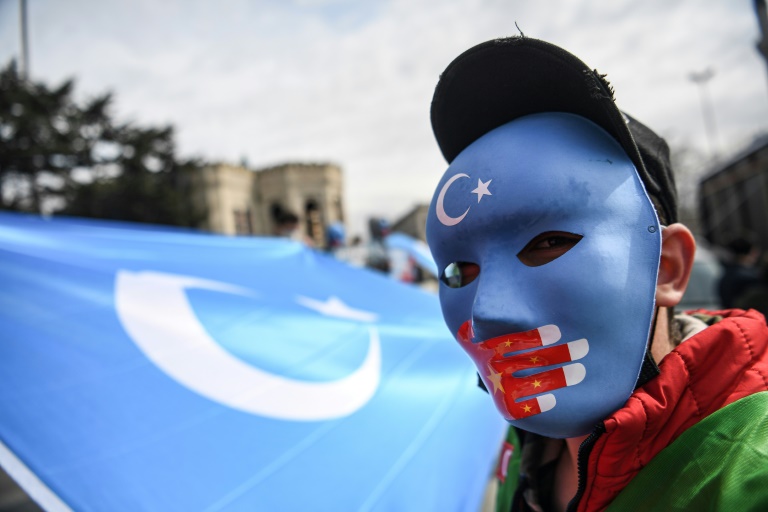
Beijing has been accused of detaining over a million Uyghurs and other Muslim minorities in Xinjiang, as well as carrying out forced sterilisation of women and coerced labour.

The United States and lawmakers in other western countries have gone as far as accusing China of committing “genocide” against the minority groups, allegations that Beijing denies.

The report released Tuesday by UN special rapporteur on modern slavery Tomoya Obokata pointed to two “distinct state-mandated systems” in China in which forced labour has occurred, citing think tank and NGO reports as well as victims. 

One is a vocational skills education and training centre system in which minorities are detained and subject to work placements, while another involves attempts to reduce poverty through labour transfer, in which rural workers are moved into “secondary or tertiary work”.

“While these programmes may create employment opportunities for minorities and enhance their incomes… the special rapporteur considers that indicators of forced labour pointing to the involuntary nature of work rendered by affected communities have been present in many cases,” the report said.

The nature and extent of powers exercised over the workers — including excessive surveillance and abusive living and working conditions — could “amount to enslavement as a crime against humanity, meriting a further independent analysis”, it said.

The report noted a similar labour transfer system exists in Tibet, where the “programme has shifted mainly farmers, herders and other rural workers into low-skilled and low-paid employment”.

Special rapporteurs are independent experts appointed by the UN Human Rights Council, but who do not speak on behalf of the world body.

China’s foreign ministry spokesman Wang Wenbin on Wednesday accused Obokata of “choosing to believe lies and disinformation fabricated by the US… as well as anti-China forces”.

Insisting that minorities’ rights were protected, Wang slammed the UN special rapporteur for “viciously smearing China and acting as a political tool for anti-China forces.”

China has long claimed it was running vocational training centres in Xinjiang designed to counter extremism, with President Xi Jinping visiting the region last month and hailing the “great progress” made in reform and development.

In May, the United Nations human rights chief Michelle Bachelet concluded a rare six-day visit to China that also took her to Xinjiang.

Her trip was criticised by the United States and major rights groups for a lack of firmness towards Beijing, with critics saying she visited more as a diplomat rather than a human rights champion.

Bachelet is due to publish a long-awaited report on the issue before she steps down at the end of the month.

Close Bitnami banner
Bitnami