AFP

Forced labour, possible 'enslavement' in China's Xinjiang: UN expert

Minorities have been drafted into forced labour in China’s Xinjiang region in sectors such as agriculture and manufacturing, a report by an independent UN expert has concluded, in what it said could amount to “enslavement as a crime against humanity”.

Beijing has been accused of detaining over a million Uyghurs and other Muslim minorities in Xinjiang, as well as carrying out forced sterilisation of women and coerced labour.

The United States and lawmakers in other western countries have gone as far as accusing China of committing “genocide” against the minority groups, allegations that Beijing denies.

The report released Tuesday by UN special rapporteur on modern slavery Tomoya Obokata pointed to two “distinct state-mandated systems” in China in which forced labour has occurred, citing think tank and NGO reports as well as victims. 

One is a vocational skills education and training centre system in which minorities are detained and subject to work placements, while another involves attempts to reduce poverty through labour transfer, in which rural workers are moved into “secondary or tertiary work”.

“While these programmes may create employment opportunities for minorities and enhance their incomes… the special rapporteur considers that indicators of forced labour pointing to the involuntary nature of work rendered by affected communities have been present in many cases,” the report said.

The nature and extent of powers exercised over the workers — including excessive surveillance and abusive living and working conditions — could “amount to enslavement as a crime against humanity, meriting a further independent analysis”, it said.

The report noted a similar labour transfer system exists in Tibet, where the “programme has shifted mainly farmers, herders and other rural workers into low-skilled and low-paid employment”.

Special rapporteurs are independent experts appointed by the UN Human Rights Council, but who do not speak on behalf of the world body.

China’s foreign ministry spokesman Wang Wenbin on Wednesday accused Obokata of “choosing to believe lies and disinformation fabricated by the US… as well as anti-China forces”.

Insisting that minorities’ rights were protected, Wang slammed the UN special rapporteur for “viciously smearing China and acting as a political tool for anti-China forces.”

China has long claimed it was running vocational training centres in Xinjiang designed to counter extremism, with President Xi Jinping visiting the region last month and hailing the “great progress” made in reform and development.

In May, the United Nations human rights chief Michelle Bachelet concluded a rare six-day visit to China that also took her to Xinjiang.

Her trip was criticised by the United States and major rights groups for a lack of firmness towards Beijing, with critics saying she visited more as a diplomat rather than a human rights champion.

Bachelet is due to publish a long-awaited report on the issue before she steps down at the end of the month.


South Korean founder of failed Terra coin admits he was 'wrong'

The co-founder of the failed Terra cryptocurrency, which collapsed and wiped out about $40 billion of investors’ money in May, has admitted he was “wrong”, but said that he was not talking to South Korean investigators.

The dramatic disintegration of stablecoin TerraUSD and its sister token Luna — which both dropped to nearly zero in value — hit the wider crypto market, sparking over $500 billion in losses.

Stablecoins are designed to have a relatively stable price and are usually pegged to a real world commodity or currency.

Many retail investors lost their life savings when Luna and Terra entered a “death spiral” and collapsed, and South Korean authorities have opened multiple criminal probes into the crash.

In his first public comments since, Do Kwon, the 31-year-old South Korean founder of Terraform Labs, spoke to crypto media start-up Coinage from Singapore, saying the collapse had been “brutal”.

“I think in terms of healing wounds, the best that I can do is to just be upfront with everything that happened. You know, just admit that I was wrong,” Kwon said.

South Korean prosecutors last month raided the home of Do Kwon’s co-founder Daniel Shin as part of a probe into allegations of illegal activity behind Terra’s collapse.

Authorities have also banned key former and current employees of Terraform Labs from leaving the country — and have required Kwon to notify them when he returns.

But Kwon said in his interview that he had not been contacted by the prosecutors, and has not decided whether he would return to South Korea to cooperate.

“It’s kind of hard to make that decision, because we’ve never been in touch with the investigators,” he said, adding: “They’ve never charged us with anything.”

– ‘Cautionary tale’ –

Do Kwon and Terra are a cautionary tale for the crypto market.

TerraUSD was once the fourth-largest stablecoin and the 10th-largest cryptocurrency by market value, according to CoinMarketCap.

Unlike other stablecoins backed by real world assets like cash, TerraUSD was algorithmic — using code to maintain its price at around one US dollar based on a complex system of minting and burning.

A TerraUSD token was created by destroying some of the sister cryptocurrency Luna to maintain the dollar peg.

To maintain demand for Terra, Terraform Labs started offering eye-watering interest rates, which many critics derided as a Ponzi scheme.

When the TerraUSD crashed, investors panicked and tried to pull out their money, causing a vicious, self-perpetuating bank run.

Many experts had predicted precisely this eventuality, saying the model was fundamentally flawed.

“If demand falls away, then the price will go to zero,” Hilary Allen, a professor of financial regulation at the US-based American University, told AFP.

“This is a characteristic of almost all cryptoassets, and so Terra/Luna should be seen as a cautionary tale for all crypto investors.”

– Ponzi scheme –

Prior to the May crisis, Kwon had two starkly different reputations, depending on who you asked: he was either a genius mastermind, or the head of a Ponzi scheme.

A Stanford graduate from South Korea who had done stints at Microsoft and Apple, Kwon frequently belittled critics online who expressed doubt over his algorithmic stablecoin model.

When British economist Frances Coppola tweeted that self-correction mechanisms — used by TerraUSD — will fail when panicking investors are stampeding for the exit, Kwon tweeted back: “I don’t debate the poor on Twitter.”

Cory Klippsten, CEO of crypto trading app Swan.com said the structure of the Terra system “constituted an actual Ponzi scheme”.

“I believe Do Kwon and Terraform Labs committed fraud and should be prosecuted in multiple jurisdictions,” he told AFP.

In the interview in Singapore, Kwon said he still believes in Terra.

Just weeks after the coin failed he launched a fresh iteration dubbed Terra 2.0, but its value dropped quickly from as high as $11 to $2.

“I’m always going to be doing things on Terra and for the Terra community,” Kwon said. “This is my home and this is where I feel like there’s the brightest future.”

But with multiple lawsuits and investigations pending, analysts say Kwon’s next projects are unlikely to succeed.

“Do Kwon’s name basically now carries negative goodwill,” said Kelvin Low, a law professor at the National University of Singapore. 

“His involvement in a project hurts rather than helps it.”

Forced labour, possible 'enslavement' in China's Xinjiang: UN expert

Minorities have been drafted into forced labour in China’s Xinjiang region in sectors such as agriculture and manufacturing, a report by an independent UN expert has concluded, in what it said could amount to “enslavement as a crime against humanity”.

Beijing has been accused of detaining over a million Uyghurs and other Muslim minorities in Xinjiang, as well as carrying out forced sterilisation of women and coerced labour.

The United States and lawmakers in other western countries have gone as far as accusing China of committing “genocide” against the minority groups, allegations that Beijing denies.

The report released Tuesday by UN special rapporteur on modern slavery Tomoya Obokata pointed to two “distinct state-mandated systems” in China in which forced labour has occurred, citing think tank and NGO reports as well as victims. 

One is a vocational skills education and training centre system in which minorities are detained and subject to work placements, while another involves attempts to reduce poverty through labour transfer, in which rural workers are moved into “secondary or tertiary work”.

“While these programmes may create employment opportunities for minorities and enhance their incomes… the special rapporteur considers that indicators of forced labour pointing to the involuntary nature of work rendered by affected communities have been present in many cases,” the report said.

The nature and extent of powers exercised over the workers — including excessive surveillance and abusive living and working conditions — could “amount to enslavement as a crime against humanity, meriting a further independent analysis”, it said.

The report noted a similar labour transfer system exists in Tibet, where the “programme has shifted mainly farmers, herders and other rural workers into low-skilled and low-paid employment”.

Special rapporteurs are independent experts appointed by the UN Human Rights Council, but who do not speak on behalf of the world body.

China has long insisted it was running vocational training centres in Xinjiang designed to counter extremism, with President Xi Jinping visiting the region last month and hailing the “great progress” made in reform and development.

In May, the United Nations human rights chief Michelle Bachelet concluded a rare six-day visit to China that also took her to Xinjiang.

Her trip was criticised by the United States and major rights groups for a lack of firmness towards Beijing, with critics saying she visited more as a diplomat rather than a human rights champion.

Bachelet is due to publish a long-awaited report on the issue before she steps down at the end of the month.

Forced labour, possible 'enslavement' in China's Xinjiang: UN expert

Minorities have been drafted into forced labour in China’s Xinjiang region in sectors such as agriculture and manufacturing, a report by an independent UN expert has concluded, in what it said could amount to “enslavement as a crime against humanity”.

Beijing has been accused of detaining over a million Uyghurs and other Muslim minorities in Xinjiang, as well as carrying out forced sterilisation of women and coerced labour.

The United States and lawmakers in other western countries have gone as far as accusing China of committing “genocide” against the minority groups, allegations that Beijing denies.

The report released Tuesday by UN special rapporteur on modern slavery Tomoya Obokata pointed to two “distinct state-mandated systems” in China in which forced labour has occurred, citing think tank and NGO reports as well as victims. 

One is a vocational skills education and training centre system in which minorities are detained and subject to work placements, while another involves attempts to reduce poverty through labour transfer, in which rural workers are moved into “secondary or tertiary work”.

“While these programmes may create employment opportunities for minorities and enhance their incomes… the special rapporteur considers that indicators of forced labour pointing to the involuntary nature of work rendered by affected communities have been present in many cases,” the report said.

The nature and extent of powers exercised over the workers — including excessive surveillance and abusive living and working conditions — could “amount to enslavement as a crime against humanity, meriting a further independent analysis”, it said.

The report noted a similar labour transfer system exists in Tibet, where the “programme has shifted mainly farmers, herders and other rural workers into low-skilled and low-paid employment”.

Special rapporteurs are independent experts appointed by the UN Human Rights Council, but who do not speak on behalf of the world body.

China has long insisted it was running vocational training centres in Xinjiang designed to counter extremism, with President Xi Jinping visiting the region last month and hailing the “great progress” made in reform and development.

In May, the United Nations human rights chief Michelle Bachelet concluded a rare six-day visit to China that also took her to Xinjiang.

Her trip was criticised by the United States and major rights groups for a lack of firmness towards Beijing, with critics saying she visited more as a diplomat rather than a human rights champion.

Bachelet is due to publish a long-awaited report on the issue before she steps down at the end of the month.
Earning its stripes: tech bid to crack tiger trade

In a town in northeastern Scotland, Debbie Banks looks for clues to track down criminals as she clicks through a database of tiger skins.

There are thousands of photographs, including of rugs, carcasses and taxidermy specimens. 

Banks, the crime campaign leader for the Environmental Investigation Agency (EIA), a London-based charity, tries to identify individual big cats from their stripes.

Once a tiger is identified, an investigator can pinpoint where it comes from. 

“A tiger’s stripes are as unique as human fingerprints,” Banks told AFP.

“We can use the images to cross-reference against images of captive tigers that might have been farmed.”

Currently this is slow painstaking work.

But a new artificial intelligence tool, being developed by The Alan Turing Institute, a centre in the UK for data science and artificial intelligence, should make life much easier for Banks and law enforcement officials. 

The project aims to develop and test AI technology that can analyse the tigers’ stripes in order to identify them.

“We have a database of images of tigers that have been offered for sale or have been seized,” Banks said.

“When our investigators get new images, we need to scan those against the database.

“At the moment we are doing that manually, looking at the individual stripe patterns of each new image that we get and cross-referencing it against the ones we have in our database.”

It is hoped that the new technology will help law enforcement agencies determine where tiger skins come from and allow them to investigate the transnational networks involved in trafficking tigers.

Once the officials know the origins of confiscated tiger skins and products, they will be able to tell whether the animal was farmed or poached from a protected area.

Poaching, fuelled by consumer demand, remains a major threat to the survival of the species, according to the EIA. 

Tiger skins and body parts are sought after, partly due to their use in traditional Chinese medicine.

An estimated 4,500 tigers remain in the wild across Asia. 

“Tigers faced a massive population decline in the last 120 years, so we want to do everything we can to help end the trade in their parts and products, including tiger skins,” Banks said.

Anyone with photographs of tigers is invited to submit them to the EIA to help bolster the AI database. 

“We are inviting individuals — whether they are photographers or researchers and academics — who may have images of tigers where their stripe patterns are clear,” Banks said.

“They could be live tigers, dead tigers or tiger parts.

“If they can share those with us, the data scientists can then develop, train and test the algorithm,” she said.

“We need thousands of images just to do that phase of the project.”

Earning its stripes: tech bid to crack tiger trade

In a town in northeastern Scotland, Debbie Banks looks for clues to track down criminals as she clicks through a database of tiger skins.

There are thousands of photographs, including of rugs, carcasses and taxidermy specimens. 

Banks, the crime campaign leader for the Environmental Investigation Agency (EIA), a London-based charity, tries to identify individual big cats from their stripes.

Once a tiger is identified, an investigator can pinpoint where it comes from. 

“A tiger’s stripes are as unique as human fingerprints,” Banks told AFP.

“We can use the images to cross-reference against images of captive tigers that might have been farmed.”

Currently this is slow painstaking work.

But a new artificial intelligence tool, being developed by The Alan Turing Institute, a centre in the UK for data science and artificial intelligence, should make life much easier for Banks and law enforcement officials. 

The project aims to develop and test AI technology that can analyse the tigers’ stripes in order to identify them.

“We have a database of images of tigers that have been offered for sale or have been seized,” Banks said.

“When our investigators get new images, we need to scan those against the database.

“At the moment we are doing that manually, looking at the individual stripe patterns of each new image that we get and cross-referencing it against the ones we have in our database.”

It is hoped that the new technology will help law enforcement agencies determine where tiger skins come from and allow them to investigate the transnational networks involved in trafficking tigers.

Once the officials know the origins of confiscated tiger skins and products, they will be able to tell whether the animal was farmed or poached from a protected area.

Poaching, fuelled by consumer demand, remains a major threat to the survival of the species, according to the EIA. 

Tiger skins and body parts are sought after, partly due to their use in traditional Chinese medicine.

An estimated 4,500 tigers remain in the wild across Asia. 

“Tigers faced a massive population decline in the last 120 years, so we want to do everything we can to help end the trade in their parts and products, including tiger skins,” Banks said.

Anyone with photographs of tigers is invited to submit them to the EIA to help bolster the AI database. 

“We are inviting individuals — whether they are photographers or researchers and academics — who may have images of tigers where their stripe patterns are clear,” Banks said.

“They could be live tigers, dead tigers or tiger parts.

“If they can share those with us, the data scientists can then develop, train and test the algorithm,” she said.

“We need thousands of images just to do that phase of the project.”

Musk says tweet about buying Manchester United was a joke

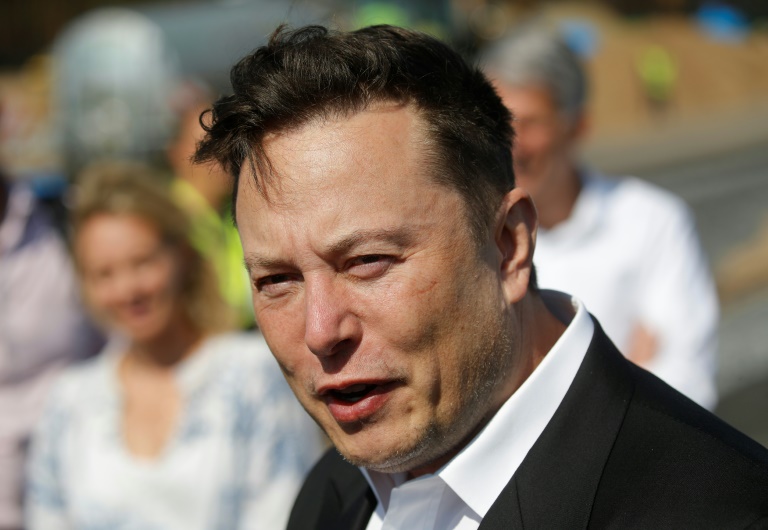
Elon Musk tweeted on Tuesday that “I’m not buying any sports teams”, calling a viral post about him purchasing Manchester United a joke.

The world’s richest man has a habit of posting provocative statements on Twitter for fun and Musk was at it again when he told his more than 103 million followers: “Also, I’m buying Manchester United ur welcome.”

The billionaire Tesla and SpaceX CEO made the comment in reply to another of his tweets, about supporting both of the United States’ two major political parties.

The 51-year-old, who is embroiled in a lawsuit over his bid to buy Twitter, was subsequently asked on the platform if he was serious about owning Manchester United. 

“No, this is a long-running joke on Twitter. I’m not buying any sports teams,” Musk replied, after his original tweet garnered nearly 500,000 “likes” in a matter of hours.

“Although, if it were any team, it would be Man U. They were my fav team as a kid.”

Manchester United, one of the biggest clubs in world football but suffering a prolonged slump, are owned by the Glazer family. They have been targeted by angry fans.

There was no immediate reaction from United or its owners to Musk’s tweets.

Shares of the team listed on the New York Stock Exchange are down year to date, but ended Tuesday flat, with a market capitalization of $2.1 billion.

Despite calling it a joke, Musk’s tweet could land him in trouble with US regulators.

The Glazers are the focus of fan fury after the team’s dramatic fall from grace.

The Americans also own the Tampa Bay Buccaneers, an NFL franchise in Florida.

United fans have protested against the team’s senior management for poor performances in recent years, as well as their involvement in a plan to start a new “Super League” of Europe’s richest teams.

The Red Devils finished last season a lowly sixth in the English Premier League.

United have made another poor start to the campaign under their new coach Erik ten Hag and are bottom of the table after two defeats in as many games.

Fresh protests against the Glazers are planned ahead of United’s next game, at home to fierce rivals Liverpool on August 22.

Musk, who recently sold nearly $7 billion worth of Tesla shares, is in a major legal battle in the US state of Delaware over his aborted plan to buy Twitter.

China heat wave pushes up prices as hens lay fewer eggs

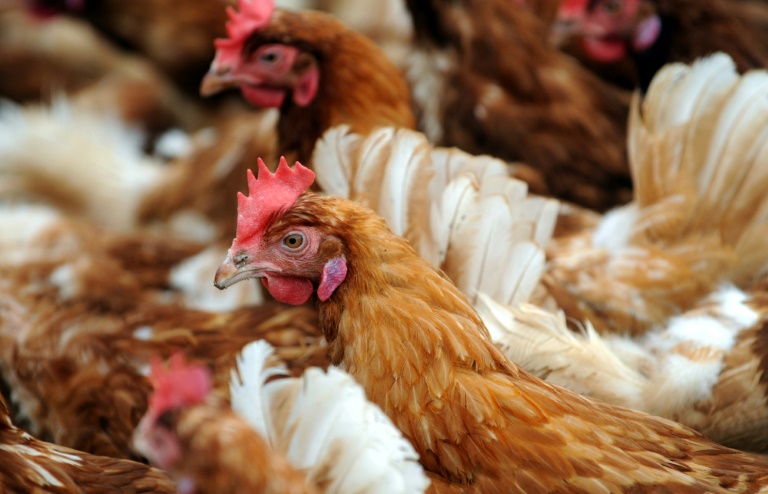
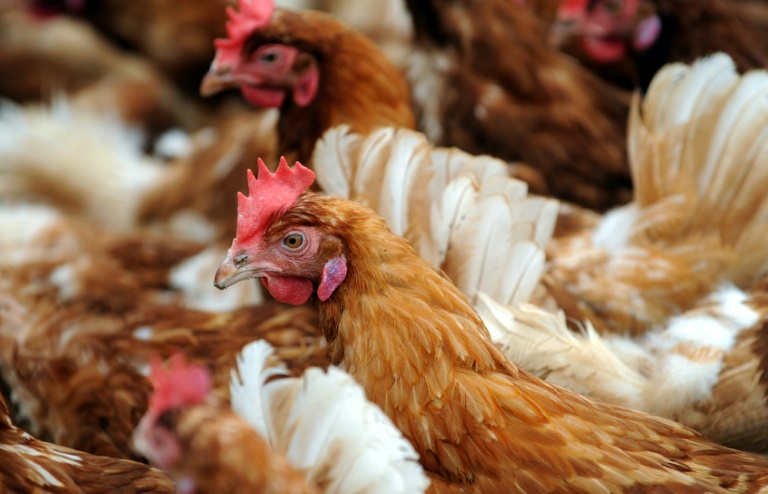
Scorching temperatures in eastern China have pushed up egg prices because hens are laying fewer in a hotter-than-usual summer, local media reported.

Extreme weather has become more frequent owing to climate change, scientists say, and this will likely grow more intense as temperatures rise, impacting economies and societies around the world.

Multiple major cities in China have recorded their hottest days ever this year, and the country’s national observatory issued a red alert on Monday.

And the heat wave is putting not only humans, but animals under stress too.

In Hefei city, farmers reported a drop in egg production because of the heat, according to a Jianghuai Morning News report last week, adding that some facilities have installed cooling systems for their hens.

The drop in supply in several provinces has caused egg prices to jump.

In Hefei, Anhui province’s capital, they were up around 30 percent, and there were similar spikes in the cities of Hangzhou and Hai’an, according to local media.

Hefei has so far logged 14 days of temperatures above 38 degrees Celsius, Hefei Evening News said, noting that this was a record.

Sustained exposure to extreme temperatures can exacerbate losses in production from animals, including eggs and milk, according to the US Department of Agriculture.

While the number of hens laying in China has not decreased, they have been eating less on hot days, Qianjiang Evening News added.

In addition to impacting poultry farms, the heat wave has also forced electricity rationing in lithium hub Sichuan in the face of soaring demand for power.

Provinces including Zhejiang, Jiangsu and Anhui that rely on power from western China have also issued electricity curbs for industrial users to ensure homes had enough power, local media reported.

And in eastern China’s Jiangxi province, which is in the grip of a severe drought, 11,000 people had difficulty accessing drinking water while more than 140,000 hectares of crops were damaged, according to the official Xinhua news agency on Tuesday.

China heat wave pushes up prices as hens lay fewer eggs

Scorching temperatures in eastern China have pushed up egg prices because hens are laying fewer in a hotter-than-usual summer, local media reported.

Extreme weather has become more frequent owing to climate change, scientists say, and this will likely grow more intense as temperatures rise, impacting economies and societies around the world.

Multiple major cities in China have recorded their hottest days ever this year, and the country’s national observatory issued a red alert on Monday.

And the heat wave is putting not only humans, but animals under stress too.

In Hefei city, farmers reported a drop in egg production because of the heat, according to a Jianghuai Morning News report last week, adding that some facilities have installed cooling systems for their hens.

The drop in supply in several provinces has caused egg prices to jump.

In Hefei, Anhui province’s capital, they were up around 30 percent, and there were similar spikes in the cities of Hangzhou and Hai’an, according to local media.

Hefei has so far logged 14 days of temperatures above 38 degrees Celsius, Hefei Evening News said, noting that this was a record.

Sustained exposure to extreme temperatures can exacerbate losses in production from animals, including eggs and milk, according to the US Department of Agriculture.

While the number of hens laying in China has not decreased, they have been eating less on hot days, Qianjiang Evening News added.

In addition to impacting poultry farms, the heat wave has also forced electricity rationing in lithium hub Sichuan in the face of soaring demand for power.

Provinces including Zhejiang, Jiangsu and Anhui that rely on power from western China have also issued electricity curbs for industrial users to ensure homes had enough power, local media reported.

And in eastern China’s Jiangxi province, which is in the grip of a severe drought, 11,000 people had difficulty accessing drinking water while more than 140,000 hectares of crops were damaged, according to the official Xinhua news agency on Tuesday.

Top Republican Trump critic Cheney loses seat in US Congress

Republican rebel Liz Cheney lost her seat in Congress Tuesday to an election conspiracy theorist, but vowed to fight on and do “whatever it takes” to ensure that former president Donald Trump is never returned to power.

Once considered Republican royalty, the lawmaker from Wyoming has become a pariah in the party over her membership on the congressional panel investigating the January 6 assault on the US Capitol — and Trump’s role in fanning the flames.

“I have said since January 6 that I will do whatever it takes to ensure Donald Trump is never again anywhere near the Oval Office, and I mean it,” the Wyoming congresswoman said in a concession speech after losing her bid at reelection.

Defeat for the 56-year-old daughter of former vice president Dick Cheney in the Wyoming Republican primary marks the end of the family’s four-decade political association with one of America’s most conservative states.

The Republican nomination to contest November’s midterms instead goes to 59-year-old lawyer Harriet Hageman — Trump’s hand-picked candidate who has amplified his false claims of a “rigged” 2020 election.

In her speech Tuesday night, Cheney delivered a stark warning about the danger of Trump’s election fraud conspiracy theories, urging politicians on both sides of the aisle to join her fight to protect US democracy.

Speaking at a cattle ranch near Jackson, Cheney sought to move quickly beyond her defeat, setting out what she said was “real work” of her effort to ensure Trump never regains the White House. 

She blamed the former president, who is embroiled in numerous criminal and civil investigations over alleged misconduct in office, for sending the deeply-divided United States towards “crisis, lawlessness and violence” with his inflammatory rhetoric. 

“No American should support election deniers, for any position of genuine responsibility, (because) their refusal to follow the rule of law will corrupt our future,” she warned.

– ‘Under attack’ –

There is already speculation that Cheney may challenge Trump for the Republican presidential nomination in 2024 — or even run as an independent — and supporters were hoping her concession speech would double up as a blueprint for her political future.

She pointedly avoided addressing the issue, but had earlier told CBS that the primary — regardless of the result — would be “the beginning of a battle that is going to continue.”

“We are facing a moment where our democracy really is under attack and under threat,” she said.

Cheney had framed her campaign as a battle for the soul of a party she is trying to save from the anti-constitutional forces of Trumpism.

She was the last of 10 Republicans in the House of Representatives who backed Trump’s second impeachment to face primary voters. 

Four retired rather than seek reelection, three lost to Trump-backed opponents, and only two — California’s David Valadao and Dan Newhouse of Washington state — have made it through to November’s midterm elections.

Cheney voted in line with Trump’s positions 93 percent of the time when he was president but he didn’t pull his punches as he sought vengeance for her role in the House committee probe.

Trump has made Cheney his bete noire, calling her “disloyal” and a “warmonger,” prompting death threats that have forced her to travel with a police escort.

He called her defeat Tuesday night “a wonderful result for America.”

“Now she can finally disappear into the depths of political oblivion where, I am sure, she will be much happier than she is right now,” he posted on his Truth Social platform.

– Palin comeback bid –

During the lead-up to Tuesday’s vote in Wyoming — the first US state to grant women the right to vote, in 1869 — the congresswoman was forced to run a kind of shadow campaign, with no rallies or public events.

She even avoided the traditional election day photo op Tuesday, eschewing media at her local polling station to instead cast her ballot in nearby Jackson.

“Liz is representing the constituents that are in her mind, and they aren’t the constituents of Wyoming,” said Mary Martin, chairwoman of the Republican Party in Teton County — Cheney’s Wyoming base.

There were also elections on Tuesday in Alaska, where 2008 Republican vice presidential candidate Sarah Palin’s comeback battle — to complete the term of a congressman who died in office — divided locals.

Fourteen years after rising to international fame on the losing Republican presidential ticket headed by John McCain, Palin remains popular among women as the “soccer mom” who pioneered the ultra-conservative “Tea Party” movement that paved the way for Trumpism.

But many voters blame her for abandoning her single term as governor halfway through, amid ethics complaints, and a recent poll showed her to be viewed unfavorably by 60 percent of Alaskans.

The results in Palin’s race are not expected for several days.

Close Bitnami banner
Bitnami