AFP

Low Rhine deepens Germany's energy crisis

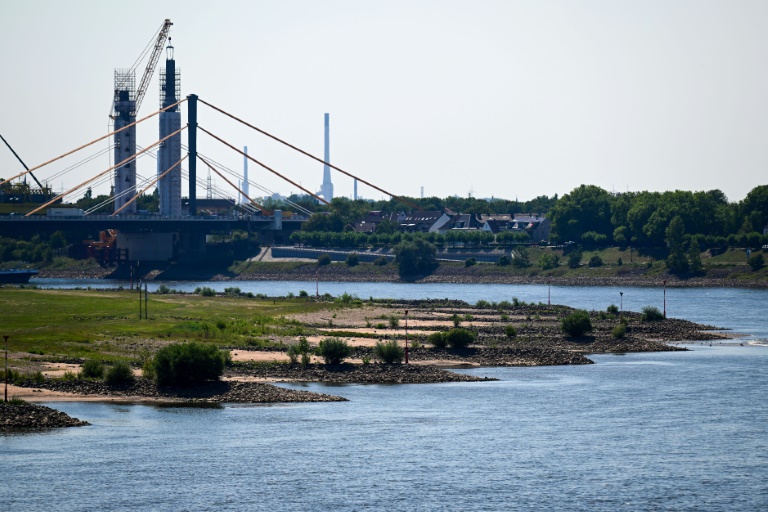
A hot, dry July made worse by climate change has raised the risk that the German economy could run aground as sinking Rhine waters make shipping along the river harder.

The prospect of severe, longer-term limits to traffic spells a new headache for the industries lined up on the river’s banks and threatens to further strain Germany’s efforts to wean itself off Russian energy imports as coal counts among key cargo moved on the waterway.

Roberto Spranzi, boss of DTG, a shipping cooperative, says the volumes that his fleet can carry are already limited by the unusually low water levels.

“At the moment we have a capacity where, we have to use three or four vessels where we would normally need one,” Spranzi tells AFP. 

Pointing at the worrying ebb at the entrance to the inland port of Duisburg in western Germany, Spranzi notes that “currently it’s at 1.70 metres (5.6 feet) In theory, the normal water level is over two metres”.

Further up the river in Kaub, a noted bottleneck for shipping where the Rhine runs narrow and shallow, the reference level is forecast to go below 40 centimetres by the end of the week and squeeze traffic further.

“We supply factories on the Rhine with their raw materials. When that’s not possible any more — or less often — that’s a threat to German industry, too,” Spranzi says.

– Coal power – 

Around four percent of freight in Germany is carried via its waterways, including the Rhine, which winds its way from Switzerland, along the border with France, through Germany’s industrial heartland and the Netherlands to the sea.

As Berlin turns to mothballed coal power capacity to plug the gap after Russia curtailed its energy deliveries, the Rhine has taken on added significance as a key artery for coal transport.

But the sinking water level has already led energy providers to warn they may have to limit output.

Uniper has said the low level of the Rhine may lead to the “irregular operation” of two of its coal plants into September.

EnBW, which runs sites in the southwestern region of Baden-Wurttermberg, has warned that deliveries of the fuel could be restricted.

The dwindling waters have seen “transport costs per tonne rise”, EnBW said in a statement, adding that it had preemptively built stocks of coal earlier in the year.

Alternative routes were available — either by road or rail — but capacity was “tight”, EnBW said.

The Rhine freight restrictions have added to the supply chain disruption seen by industry and increased the risk of scarcity. 

Across southern Germany, a shortage of fuel at the pump has been traced back to the dry weather, among other factors.

“Low water levels on the Rhine mean that in this area very important transportation of oil products, such as petrol, diesel or heating oil can’t operate as normal,” says Alexander von Gersdorff, spokesman for the German energy and fuel industry lobby.

– ‘Much earlier’ – 

A 2018 drought, which saw the Rhine’s reference depth at Kaub fall as low as 25 centimetres in October, shaved 0.2 percent off German GDP that year, according to Deutsche Bank Research.

“The low levels have come much earlier this time,” Deutsche Bank Research economist Marc Schattenberg tells AFP.

“If the problems we are now observing last longer (than in 2018), the loss of economic value becomes all the more serious.” 

Industrial heavyweights stationed along the Rhine rely on the waterway to ferry goods to and from their sites.

Duisburg-based conglomerate ThyssenKrupp said in a statement it had “taken measures” to assure its supplies of raw materials.

The chemical giant BASF, whose Ludwigshafen base sits south of the Kaub choke-point, said its production had not yet been limited by the low water levels, but warned that it could not rule out “reductions for specific units in the coming weeks”.
Brazil farmers bet on environmentally friendly cotton

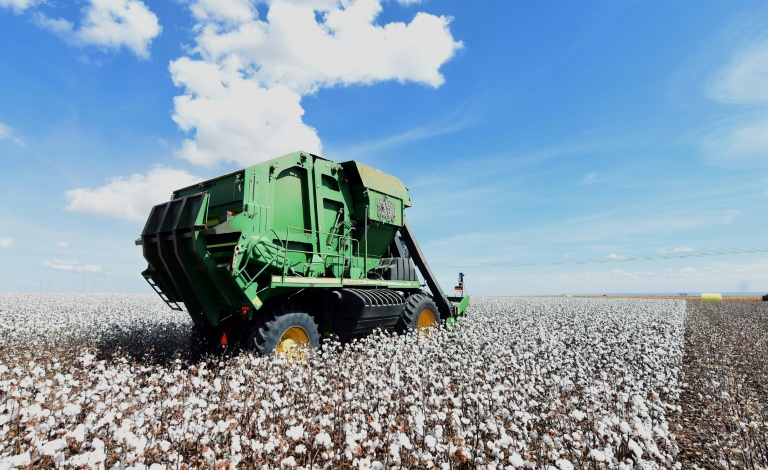
The road through Cristalina, Brazil is in the middle of the tropics, but the fields on either side look like they are covered in snow — little white puffs of cotton stretching to the horizon.

The alabaster plants interspersed with the corn and soybean fields outside the central-western town are part of a silent revolution in Brazil: facing negative attention over the agribusiness industry’s environmental impact, farmers are increasingly turning to cotton and adopting sustainable techniques to produce it.

After increasing exports 15-fold in the past two decades, Brazil is now the world’s second-biggest cotton supplier, after the United States — and the biggest producer of sustainable cotton.

No less than 84 percent of the cotton grown in the South American agricultural giant is certified by the Better Cotton Initiative (BCI), an international non-profit group to promote sustainable cotton farming.

“Consumers have changed. People don’t want to buy products any more that don’t respect nature and its cycles,” says entomologist Cristina Schetino of the University of Brasilia, who specializes in cotton farming.

The industry is trying to improve the international image of Brazilian farming, tarnished by a history of slave labor, heavy pesticide use and the destruction of the Amazon rainforest for agriculture, a trend that has accelerated under far-right President Jair Bolsonaro — an agribusiness ally.

In 2005, the Brazilian Cotton Producers’ Association (Abrapa) launched a sustainability training program for farmers and introduced protocols on efficiently using water and pesticides and phasing out toxic products in favor of biological fertilizers.

A new tracing program launched with Brazilian clothing brands, meanwhile, lets consumers check how cotton goods were produced.

Last season, cotton farmers in Brazil replaced 34 percent of chemical pesticides with biological ones, Abrapa says.

They have also started using drones to apply pesticides more efficiently.

Switching to sustainable techniques is “a re-education process,” says Abrapa’s executive director, Marcio Portocarreiro.

“At first, farmers tend to think mainly about the impact on their bottom line. But when they get past that phase… they realize that farming sustainably gives them a guaranteed market,” he told AFP.

– Added value –

Located outside Cristalina, around 130 kilometers (80 miles) south of Brasilia, the capital, Fazenda Pamplona is one of Brazil’s biggest proponents of sustainable cotton.

The 27,000-hectare (67,000-acre) operation, run by agribusiness giant SLC Agricola, is like a small city in the middle of the countryside, with a banquet hall, a children’s park, sports fields and housing for employees.

The farm aims to retain workers by creating a home where they will want to stay, says production coordinator Diego Goldschmidt.

He stands in front of two enormous bales of cotton, labeled with QR codes that detail their harvest.

“These are already sold,” he beams.

The farm produced more than 600,000 tonnes last year, 99 percent of it for export.

Sustainable cotton sells for prices up to 10 percent higher than conventional cotton.

“Besides being the right thing to do for society and the environment, it provides added value,” says Goldschmidt.

– Aiming high –

But cotton remains one of the most pesticide-intensive crops, using more than double that of soy per hectare.

The problem is the prevalence of pests such as boll weevils and the absence of organic products to stop them, says Schetino.

“There’s still a lot of dependence on chemical products, which have a negative environmental impact,” says the entomologist, who is researching alternatives.

Brazil cultivates around 1.6 million hectares of cotton a year. It is a key supplier for the global garment industry, exporting to the likes of China, Vietnam, Pakistan and Turkey.

Abrapa has set itself the ambitious goal of surpassing the US to become the world’s biggest cotton supplier in 2030.

“Brazil may not have a good image on sustainable farming yet,” says Goldschmidt.

“But we will soon. There’s a lot of potential.”

Brazil farmers bet on environmentally friendly cotton

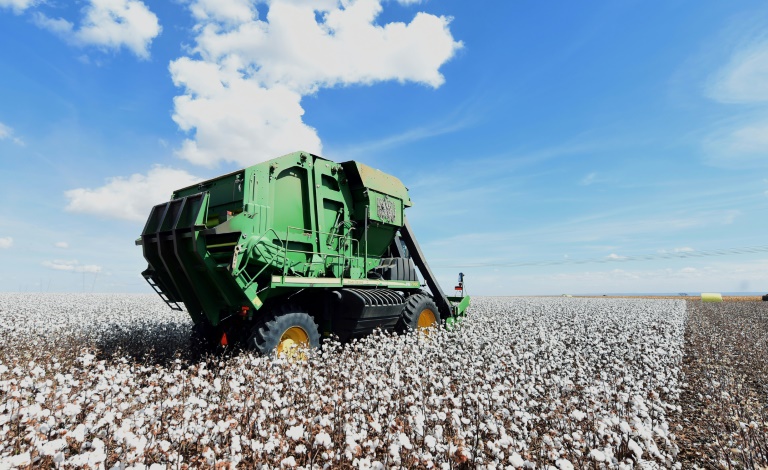
The road through Cristalina, Brazil is in the middle of the tropics, but the fields on either side look like they are covered in snow — little white puffs of cotton stretching to the horizon.

The alabaster plants interspersed with the corn and soybean fields outside the central-western town are part of a silent revolution in Brazil: facing negative attention over the agribusiness industry’s environmental impact, farmers are increasingly turning to cotton and adopting sustainable techniques to produce it.

After increasing exports 15-fold in the past two decades, Brazil is now the world’s second-biggest cotton supplier, after the United States — and the biggest producer of sustainable cotton.

No less than 84 percent of the cotton grown in the South American agricultural giant is certified by the Better Cotton Initiative (BCI), an international non-profit group to promote sustainable cotton farming.

“Consumers have changed. People don’t want to buy products any more that don’t respect nature and its cycles,” says entomologist Cristina Schetino of the University of Brasilia, who specializes in cotton farming.

The industry is trying to improve the international image of Brazilian farming, tarnished by a history of slave labor, heavy pesticide use and the destruction of the Amazon rainforest for agriculture, a trend that has accelerated under far-right President Jair Bolsonaro — an agribusiness ally.

In 2005, the Brazilian Cotton Producers’ Association (Abrapa) launched a sustainability training program for farmers and introduced protocols on efficiently using water and pesticides and phasing out toxic products in favor of biological fertilizers.

A new tracing program launched with Brazilian clothing brands, meanwhile, lets consumers check how cotton goods were produced.

Last season, cotton farmers in Brazil replaced 34 percent of chemical pesticides with biological ones, Abrapa says.

They have also started using drones to apply pesticides more efficiently.

Switching to sustainable techniques is “a re-education process,” says Abrapa’s executive director, Marcio Portocarreiro.

“At first, farmers tend to think mainly about the impact on their bottom line. But when they get past that phase… they realize that farming sustainably gives them a guaranteed market,” he told AFP.

– Added value –

Located outside Cristalina, around 130 kilometers (80 miles) south of Brasilia, the capital, Fazenda Pamplona is one of Brazil’s biggest proponents of sustainable cotton.

The 27,000-hectare (67,000-acre) operation, run by agribusiness giant SLC Agricola, is like a small city in the middle of the countryside, with a banquet hall, a children’s park, sports fields and housing for employees.

The farm aims to retain workers by creating a home where they will want to stay, says production coordinator Diego Goldschmidt.

He stands in front of two enormous bales of cotton, labeled with QR codes that detail their harvest.

“These are already sold,” he beams.

The farm produced more than 600,000 tonnes last year, 99 percent of it for export.

Sustainable cotton sells for prices up to 10 percent higher than conventional cotton.

“Besides being the right thing to do for society and the environment, it provides added value,” says Goldschmidt.

– Aiming high –

But cotton remains one of the most pesticide-intensive crops, using more than double that of soy per hectare.

The problem is the prevalence of pests such as boll weevils and the absence of organic products to stop them, says Schetino.

“There’s still a lot of dependence on chemical products, which have a negative environmental impact,” says the entomologist, who is researching alternatives.

Brazil cultivates around 1.6 million hectares of cotton a year. It is a key supplier for the global garment industry, exporting to the likes of China, Vietnam, Pakistan and Turkey.

Abrapa has set itself the ambitious goal of surpassing the US to become the world’s biggest cotton supplier in 2030.

“Brazil may not have a good image on sustainable farming yet,” says Goldschmidt.

“But we will soon. There’s a lot of potential.”

Chinese medical portal censored after doubting herbal 'Covid remedy'

A popular Chinese medical information site has been censored by authorities for “violation of relevant laws and regulations”, months after its criticism of a government-backed herbal Covid-19 treatment sent shares in a pharmaceutical giant tumbling.

DXY, which counts tech giant Tencent among its investors and runs a host of health-related services, previously questioned the value of Lianhua Qingwen, a herbal remedy marketed for fever and sore throats, as a Covid-19 treatment.

China approved the concoction — made up of ingredients like honeysuckle and apricot seeds — as a Covid-19 treatment in 2020, and it was distributed to Shanghai residents during the city’s outbreak this year.

DXY’s article, which has now been deleted from its website, was part of a wave of reports that caused shares in Lianhua Qingwen’s producer — one of China’s largest traditional medicine companies — to plunge.

The website has now been banned from posting on at least five of its Weibo social media accounts, with a notice at the top of its official page saying that due to “violation of relevant laws and regulations, this user is currently prohibited from posting”.

DXY’s official WeChat accounts, which typically publish multiple articles a day on medical topics, have not been updated since Monday.

The Weibo notice did not specify which regulations had been violated by DXY, which did not immediately respond to AFP’s request for comment.

– ‘No right to ban them’ –

The Chinese government has increasingly promoted traditional medicine at home and abroad in recent years, often with nationalistic undertones.

DXY’s coverage prompted criticism that it was targeting traditional Chinese medicine (TCM) in order to promote Western pharmaceuticals. 

The decision to freeze DXY’s social media accounts was lauded by some Weibo users, who accused the company of working with “anti-China forces” and peddling false information.

“For this vicious thing eating the anti-Chinese capitalists’ dog food, the best days are in the past,” one Weibo user wrote.

But others lamented the loss of a valued source of misinformation-free medical guidance and said they disagreed with the censorship.

“My mother used to be the kind of person who would make her kids eat chicken gallbladder for fevers,” one wrote, crediting DXY with giving her parent access to modern medical information.

“You have the right to (criticise) DXY on Weibo, but you don’t have the right to ban them,” the user wrote.

The United States and other countries have warned there is no evidence Lianhua Qingwen works to prevent or cure Covid-19, even as it has increasingly been promoted by government authorities in China and Hong Kong.

The US Food and Drug Administration has said it has not approved Lianhua Qingwen and that coronavirus-related claims about it were “not supported by competent and reliable scientific evidence”.

Beijing issued its first white paper on TCM in 2016, laying out plans to build medicine centres and dispatch practitioners to developing countries in Africa and Southeast Asia.

President Xi Jinping has described TCM as a “treasure of Chinese civilisation” and has said that it should be given as much weight as other treatments.

Beijing’s National Health Commission has also dispatched TCM practitioners as part of its medical reinforcement teams sent to fight Covid-19 outbreaks across the country.

Chinese medical portal censored after doubting herbal 'Covid remedy'

A popular Chinese medical information site has been censored by authorities for “violation of relevant laws and regulations”, months after its criticism of a government-backed herbal Covid-19 treatment sent shares in a pharmaceutical giant tumbling.

DXY, which counts tech giant Tencent among its investors and runs a host of health-related services, previously questioned the value of Lianhua Qingwen, a herbal remedy marketed for fever and sore throats, as a Covid-19 treatment.

China approved the concoction — made up of ingredients like honeysuckle and apricot seeds — as a Covid-19 treatment in 2020, and it was distributed to Shanghai residents during the city’s outbreak this year.

DXY’s article, which has now been deleted from its website, was part of a wave of reports that caused shares in Lianhua Qingwen’s producer — one of China’s largest traditional medicine companies — to plunge.

The website has now been banned from posting on at least five of its Weibo social media accounts, with a notice at the top of its official page saying that due to “violation of relevant laws and regulations, this user is currently prohibited from posting”.

DXY’s official WeChat accounts, which typically publish multiple articles a day on medical topics, have not been updated since Monday.

The Weibo notice did not specify which regulations had been violated by DXY, which did not immediately respond to AFP’s request for comment.

– ‘No right to ban them’ –

The Chinese government has increasingly promoted traditional medicine at home and abroad in recent years, often with nationalistic undertones.

DXY’s coverage prompted criticism that it was targeting traditional Chinese medicine (TCM) in order to promote Western pharmaceuticals. 

The decision to freeze DXY’s social media accounts was lauded by some Weibo users, who accused the company of working with “anti-China forces” and peddling false information.

“For this vicious thing eating the anti-Chinese capitalists’ dog food, the best days are in the past,” one Weibo user wrote.

But others lamented the loss of a valued source of misinformation-free medical guidance and said they disagreed with the censorship.

“My mother used to be the kind of person who would make her kids eat chicken gallbladder for fevers,” one wrote, crediting DXY with giving her parent access to modern medical information.

“You have the right to (criticise) DXY on Weibo, but you don’t have the right to ban them,” the user wrote.

The United States and other countries have warned there is no evidence Lianhua Qingwen works to prevent or cure Covid-19, even as it has increasingly been promoted by government authorities in China and Hong Kong.

The US Food and Drug Administration has said it has not approved Lianhua Qingwen and that coronavirus-related claims about it were “not supported by competent and reliable scientific evidence”.

Beijing issued its first white paper on TCM in 2016, laying out plans to build medicine centres and dispatch practitioners to developing countries in Africa and Southeast Asia.

President Xi Jinping has described TCM as a “treasure of Chinese civilisation” and has said that it should be given as much weight as other treatments.

Beijing’s National Health Commission has also dispatched TCM practitioners as part of its medical reinforcement teams sent to fight Covid-19 outbreaks across the country.

Cheaper, changing and crucial: the rise of solar power

Generating power from sunlight bouncing off the ground, working at night, even helping to grow strawberries: solar panel technology is evolving fast as costs plummet for a key segment of the world’s energy transition.

The International Energy Agency says solar will have to scale up significantly this decade to meet the Paris climate target of limiting temperature rises to 1.5 degrees Celsius above pre-industrial levels.

The good news is that costs have fallen dramatically. 

In a report on solutions earlier this year, the Intergovernmental Panel on Climate Change said solar unit costs had dropped 85 percent between 2010 and 2019, while wind fell 55 percent. 

“There’s some claim that it’s the cheapest way humans have ever been able to make electricity at scale,” said Gregory Nemet, a professor at the University of Wisconsin–Madison and a lead author on that report.

Experts hope the high fossil fuel prices and fears over energy security caused by Russia’s invasion of Ukraine will accelerate the uptake of renewables. 

Momentum gathered pace on Sunday with the ambitious US climate bill, which earmarks $370 billion in efforts to cut greenhouse gas emissions by 40 percent by 2030.

An analysis by experts at Princeton University estimates the bill could see five times the rate of solar additions in 2025 as there were in 2020.

Nemet said solar alone could plausibly make up half of the world’s electricity system by mid-century, although he cautioned against looking for “silver bullets”. 

“I think there really is big potential,” he told AFP.

– Rapid changes –

The “photovoltaic effect” — the process by which solar cells convert sunlight to electrical energy — was first discovered in 1839 by the French physicist Edmond Becquerel.

After decades of innovations, silicon-based solar cells started to be developed in the United States in the 1950s, with the world’s first solar-powered satellite launched in 1958.

The IPCC said of all energy technologies, small-scale ones like solar and batteries have so far proved quicker to improve and be adopted than bulkier options like nuclear.

Today, almost all of the panels glimmering on rooftops and spreading across vast fields are made in China using silicon semiconductors. 

But the technology is changing quickly. 

In a recent report, the IEA said these new solar cells have proven to be one-fifth more efficient in converting light to energy than standard modules installed just four or five years ago.

There are also a host of new materials and hybrid cells that experts predict could supercharge efficiency.

These include cheap, efficient and lightweight “thin film” technologies, like those using perovskites that can be printed from inks. 

Experts say they raise the prospect of dramatically expanding where solar energy can be harvested — if they can be made durable enough to withstand a couple of decades of use. 

Recent research has raised hopes that it could be possible.

In one study, published in the journal Science in April, scientists added metal-containing materials to perovskite cells, making them more stable with efficiency near traditional silicon models.

Other research mixes materials for different purposes.

One study in Nature used “tandem” models, with perovskite semiconductors to absorb near-infrared light on the solar spectrum, while an organic carbon-based material absorbed ultraviolet and visible parts of the light.

And what happens after sunset? 

Researchers from Stanford said this year they had produced a solar cell that could harvest energy overnight, using heat leaking from Earth back into space.

“I think that there’s a lot of creativity in this industry,” said Ron Schoff, who heads the Electric Power Research Institute’s Renewable Energy and Fleet Enabling Technologies research.

– Location, location –

Generating more energy from each panel will become increasingly crucial as solar power is rolled out at greater scale, raising concerns about land use and harm to ecosystems.

Schoff said one efficiency-boosting design that is becoming more popular for large-scale projects is “bifacial” solar. 

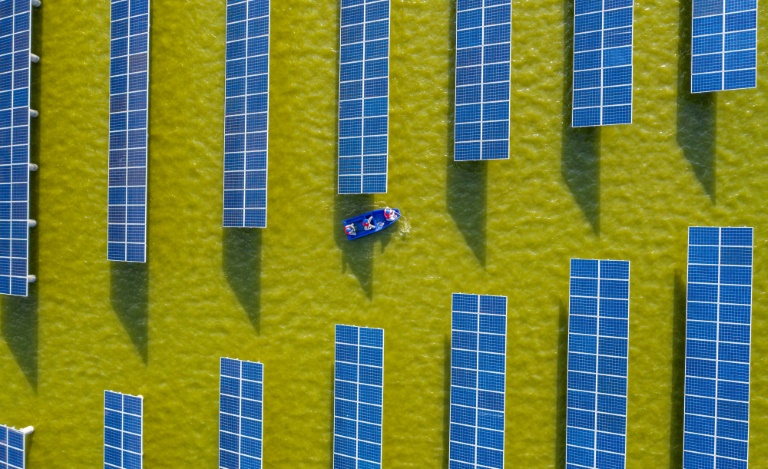
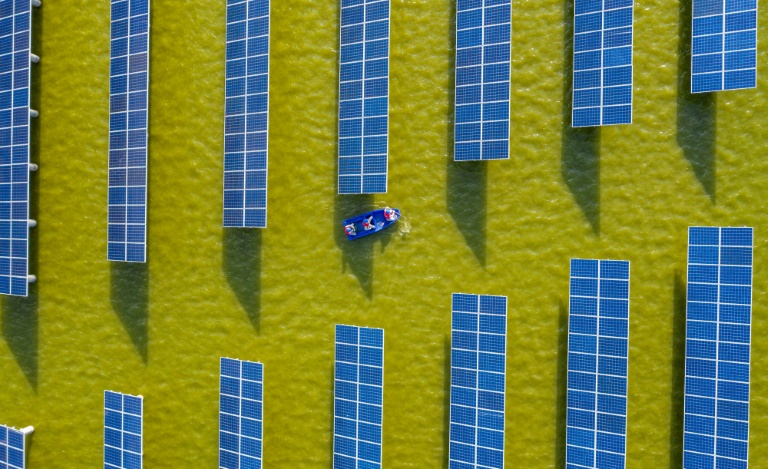
These double-sided units absorb energy not just directly from the sun’s rays, but also from light reflected off the ground beneath. 

Other solutions involve using the same space for multiple purposes — like semi-transparent solar panels used as a protective roof for strawberry plants or other crops.

India pioneered the use of solar panels over canals a decade ago, reducing evaporation as they generate power.

Scientists in California have said that if the drought-prone US state shaded its canals, it could save around 63 billion gallons.

Construction on a pilot project is due to begin this year.

– All shapes, sizes –

Experts say solar will be among a mix of energy options, with different technologies more suitable for different places.

Schoff said ultimately those energy grids with more than 25 percent solar and wind need ways to store energy — with batteries or large-scale facilities using things like pumped water or compressed air.

Consumers can also play their part, said Nemet, by shifting more of their energy use to daytime periods, or even hosting their own solar networks in an Airbnb-style approach.

He said the modular nature of solar means it can be rolled out in developing countries with sparse access to traditional grids.

“You could have solar on something as small as a watch and something as big as the biggest power plants in the world,” he said.

“I think that’s what’s making people excited about it.”

Cheaper, changing and crucial: the rise of solar power

Generating power from sunlight bouncing off the ground, working at night, even helping to grow strawberries: solar panel technology is evolving fast as costs plummet for a key segment of the world’s energy transition.

The International Energy Agency says solar will have to scale up significantly this decade to meet the Paris climate target of limiting temperature rises to 1.5 degrees Celsius above pre-industrial levels.

The good news is that costs have fallen dramatically. 

In a report on solutions earlier this year, the Intergovernmental Panel on Climate Change said solar unit costs had dropped 85 percent between 2010 and 2019, while wind fell 55 percent. 

“There’s some claim that it’s the cheapest way humans have ever been able to make electricity at scale,” said Gregory Nemet, a professor at the University of Wisconsin–Madison and a lead author on that report.

Experts hope the high fossil fuel prices and fears over energy security caused by Russia’s invasion of Ukraine will accelerate the uptake of renewables. 

Momentum gathered pace on Sunday with the ambitious US climate bill, which earmarks $370 billion in efforts to cut greenhouse gas emissions by 40 percent by 2030.

An analysis by experts at Princeton University estimates the bill could see five times the rate of solar additions in 2025 as there were in 2020.

Nemet said solar alone could plausibly make up half of the world’s electricity system by mid-century, although he cautioned against looking for “silver bullets”. 

“I think there really is big potential,” he told AFP.

– Rapid changes –

The “photovoltaic effect” — the process by which solar cells convert sunlight to electrical energy — was first discovered in 1839 by the French physicist Edmond Becquerel.

After decades of innovations, silicon-based solar cells started to be developed in the United States in the 1950s, with the world’s first solar-powered satellite launched in 1958.

The IPCC said of all energy technologies, small-scale ones like solar and batteries have so far proved quicker to improve and be adopted than bulkier options like nuclear.

Today, almost all of the panels glimmering on rooftops and spreading across vast fields are made in China using silicon semiconductors. 

But the technology is changing quickly. 

In a recent report, the IEA said these new solar cells have proven to be one-fifth more efficient in converting light to energy than standard modules installed just four or five years ago.

There are also a host of new materials and hybrid cells that experts predict could supercharge efficiency.

These include cheap, efficient and lightweight “thin film” technologies, like those using perovskites that can be printed from inks. 

Experts say they raise the prospect of dramatically expanding where solar energy can be harvested — if they can be made durable enough to withstand a couple of decades of use. 

Recent research has raised hopes that it could be possible.

In one study, published in the journal Science in April, scientists added metal-containing materials to perovskite cells, making them more stable with efficiency near traditional silicon models.

Other research mixes materials for different purposes.

One study in Nature used “tandem” models, with perovskite semiconductors to absorb near-infrared light on the solar spectrum, while an organic carbon-based material absorbed ultraviolet and visible parts of the light.

And what happens after sunset? 

Researchers from Stanford said this year they had produced a solar cell that could harvest energy overnight, using heat leaking from Earth back into space.

“I think that there’s a lot of creativity in this industry,” said Ron Schoff, who heads the Electric Power Research Institute’s Renewable Energy and Fleet Enabling Technologies research.

– Location, location –

Generating more energy from each panel will become increasingly crucial as solar power is rolled out at greater scale, raising concerns about land use and harm to ecosystems.

Schoff said one efficiency-boosting design that is becoming more popular for large-scale projects is “bifacial” solar. 

These double-sided units absorb energy not just directly from the sun’s rays, but also from light reflected off the ground beneath. 

Other solutions involve using the same space for multiple purposes — like semi-transparent solar panels used as a protective roof for strawberry plants or other crops.

India pioneered the use of solar panels over canals a decade ago, reducing evaporation as they generate power.

Scientists in California have said that if the drought-prone US state shaded its canals, it could save around 63 billion gallons.

Construction on a pilot project is due to begin this year.

– All shapes, sizes –

Experts say solar will be among a mix of energy options, with different technologies more suitable for different places.

Schoff said ultimately those energy grids with more than 25 percent solar and wind need ways to store energy — with batteries or large-scale facilities using things like pumped water or compressed air.

Consumers can also play their part, said Nemet, by shifting more of their energy use to daytime periods, or even hosting their own solar networks in an Airbnb-style approach.

He said the modular nature of solar means it can be rolled out in developing countries with sparse access to traditional grids.

“You could have solar on something as small as a watch and something as big as the biggest power plants in the world,” he said.

“I think that’s what’s making people excited about it.”

Singapore trims 2022 growth forecast on strong global headwinds

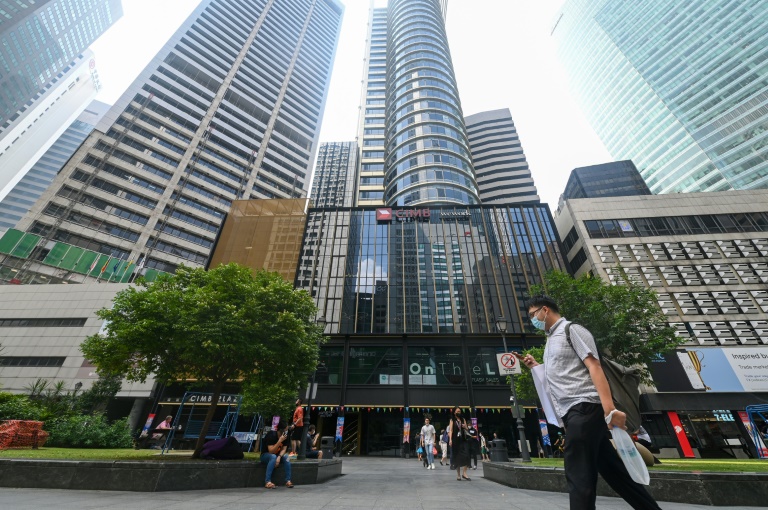
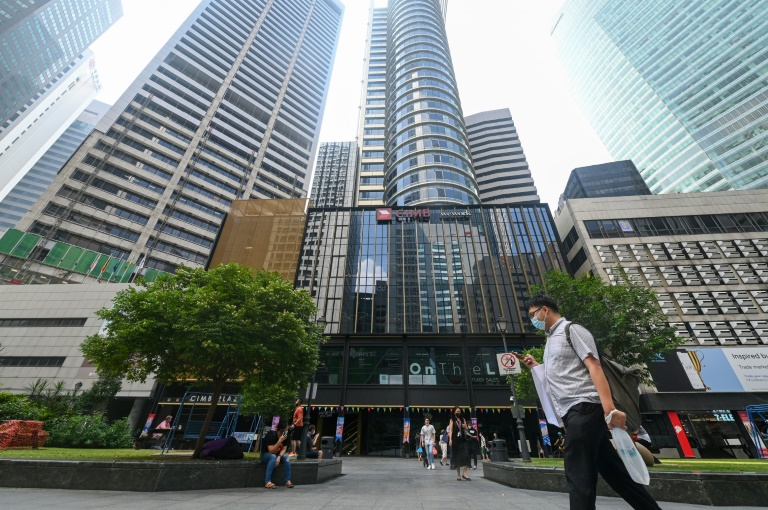
Singapore on Thursday narrowed its economic growth forecast this year after the economy contracted in the second quarter compared to the previous three months due to rising inflation and tighter monetary policies, the government said.

Moves by central banks worldwide to tighten borrowing costs in order to deal with rocketing prices have weighed down on global demand for Singapore’s exports, with the government painting a grim picture for the rest of the year.

Economists often see the performance of the city state’s open, trade-driven economy as a barometer for global trading activity.

Singapore’s economy is now projected to expand by 3.0 to 4.0 percent this year, trimmed from a 3.0 to 5.0 forecast earlier, the trade ministry said in a statement.

The economy grew by 4.4 per cent year-on-year in the second quarter to June, faster than the 3.8 per cent growth recorded in the previous quarter, it said.

But compared to the previous three months, the economy contracted by 0.2 per cent, reversing the 0.8 percent expansion in the first quarter.

“Since May, the global economic environment has deteriorated further,” the ministry said.

“Stronger than expected inflationary pressures and the more aggressive tightening of monetary policy in response are expected to weigh on growth in major advanced economies such as the US and Eurozone.”

China, a key market for global exports, “continues to grapple with a deepening property market downturn and recurring domestic Covid-19 outbreaks”, it said.

“Notwithstanding recent signs of a slight easing in global supply disruptions, the disruptions are likely to persist for the rest of the year as underlying factors such as the Russia-Ukraine conflict and China’s zero-Covid policy remain,” it added.

Growth in the United States is expected to slow further in the second half of the year, and “the persistent disruption in natural gas supplies from Russia could also trigger a sharp slowdown in the Eurozone economy”, it warned.

Selena Ling, chief economist at OCBC Bank, said the strong recovery in the aviation and tourism sectors after Singapore lifted coronavirus restrictions should help cushion the effects of slowing global demand.

Singapore trims 2022 growth forecast on strong global headwinds

Singapore on Thursday narrowed its economic growth forecast this year after the economy contracted in the second quarter compared to the previous three months due to rising inflation and tighter monetary policies, the government said.

Moves by central banks worldwide to tighten borrowing costs in order to deal with rocketing prices have weighed down on global demand for Singapore’s exports, with the government painting a grim picture for the rest of the year.

Economists often see the performance of the city state’s open, trade-driven economy as a barometer for global trading activity.

Singapore’s economy is now projected to expand by 3.0 to 4.0 percent this year, trimmed from a 3.0 to 5.0 forecast earlier, the trade ministry said in a statement.

The economy grew by 4.4 per cent year-on-year in the second quarter to June, faster than the 3.8 per cent growth recorded in the previous quarter, it said.

But compared to the previous three months, the economy contracted by 0.2 per cent, reversing the 0.8 percent expansion in the first quarter.

“Since May, the global economic environment has deteriorated further,” the ministry said.

“Stronger than expected inflationary pressures and the more aggressive tightening of monetary policy in response are expected to weigh on growth in major advanced economies such as the US and Eurozone.”

China, a key market for global exports, “continues to grapple with a deepening property market downturn and recurring domestic Covid-19 outbreaks”, it said.

“Notwithstanding recent signs of a slight easing in global supply disruptions, the disruptions are likely to persist for the rest of the year as underlying factors such as the Russia-Ukraine conflict and China’s zero-Covid policy remain,” it added.

Growth in the United States is expected to slow further in the second half of the year, and “the persistent disruption in natural gas supplies from Russia could also trigger a sharp slowdown in the Eurozone economy”, it warned.

Selena Ling, chief economist at OCBC Bank, said the strong recovery in the aviation and tourism sectors after Singapore lifted coronavirus restrictions should help cushion the effects of slowing global demand.

China's ex-Covid patients live under 'dark shadow' of stigma

When Zuo tested positive for Covid-19 while working as a cleaner in one of Shanghai’s largest quarantine centres, she hoped it wouldn’t be long before she could pick up the mop and start earning again.

But four months on, she is still fighting to get her job back — one of scores of recovering Covid patients facing what labour rights activists and health experts say is a widespread form of discrimination in zero-Covid China. 

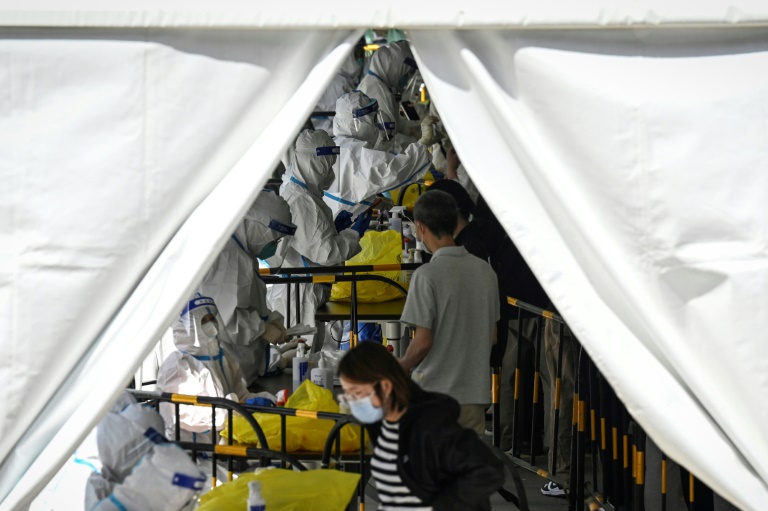
Using snap lockdowns and mass testing, China is the last major economy still pursuing the goal of stamping out the virus completely.

Those who test positive, as well as their contacts, are all sent to central quarantine facilities, while a flare-up in a factory can grind production to a halt.

Rights groups say the strict rules are feeding Covid-related discrimination and shutting out thousands of people from China’s already bleak job market — with migrant workers and young people hit hardest.

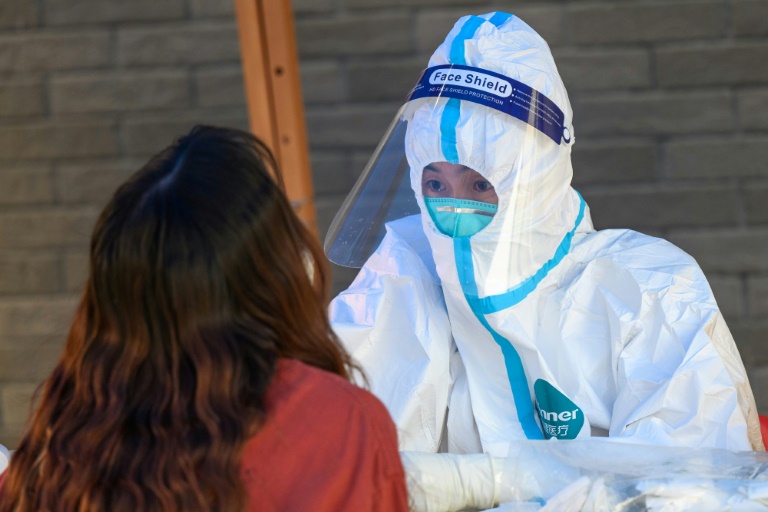
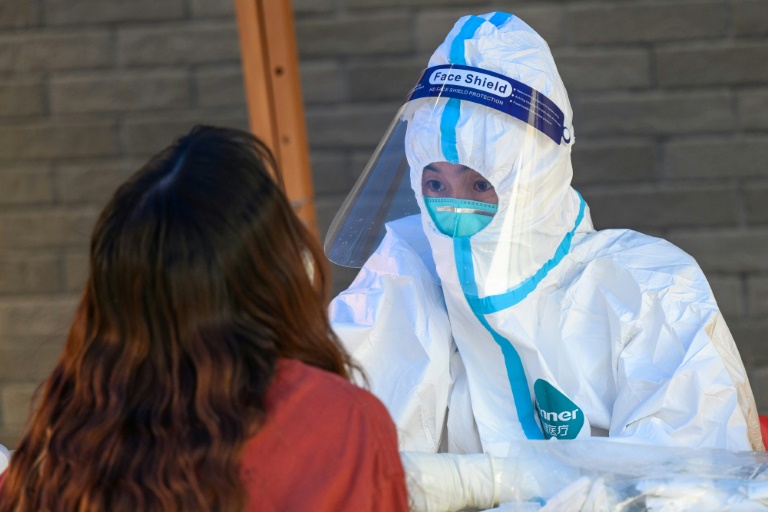
“People are afraid they might contract the virus from us, so they shun us,” said Zuo, who only gave her last name for fear of retribution for speaking to AFP.

“Recruiters check Covid testing history going back several months during an interview.”

China’s strict control measures have led to stigma against not just recovered patients, but also their families, neighbours, friends and even frontline healthcare workers, said Jin Dongyan from the School of Biomedical Sciences at Hong Kong University.

“It is unscientific to think that people who were infected once will continue to carry the virus and be infectious long after recovering,” Jin told AFP.

“Due to the lack of awareness, some fear that those who have been infected are more susceptible to being reinfected, but in reality, it’s the opposite.”

Zuo is now fighting a court battle with her employer, who has refused to pay her wages since she got sick, and who cites her disease history as a reason to bar her from returning to work. 

Her employer, a service company named Shanghai Yuanmao BPO, declined to comment citing the pending court case. 

– ‘Treated like a virus’ – 

He Yuxiu is a Chinese social media influencer who goes by a pseudonym and was living in Ukraine until Russia invaded.

She fled the war and returned home, then found a job as a Russian-language teacher in north China’s Hebei province, relieved to have left her troubles behind.

But when her school learned that she had been infected with Covid-19 while in Ukraine, she was fired.

“I never imagined I’d lose my first job for this reason,” she said in a video posted on China’s Twitter-like Weibo. 

“Why should we be treated like a virus when we have defeated it?”

The stigma is widespread — job ads for factory workers in Shanghai posted last month said applicants with a history of Covid-19 infection would be refused work. 

The story of a young woman who lived in a toilet for weeks in Shanghai’s Hongqiao railway station since she was unable to find work or return to her village due to the stigma of having been infected went viral last month.

And a theatre in the southern Chinese city of Foshan was forced to apologise after a notice banning recovered patients from entering sparked a public backlash. 

– ‘Little sheep people’ –

Beijing’s National Health Commission and human resources ministry last month banned employers from discriminating against recovered Covid patients, while Premier Li Keqiang has called for heavy punishments for those breaking the rules.

But job seekers and activists are sceptical.

Factories in Shanghai continued to refuse to hire recovered workers even after the city announced strict anti-discrimination rules, employment agent Wang Tao said, because they fear a mass outbreak or health inspections.

“Some factories give different excuses despite being short of workers,” Wang added.

“But all those who are turned down have tested positive in the past.”

AFP contacted eight manufacturers named by Chinese state media as having engaged in discriminatory practices — including iPhone manufacturer Foxconn — but they declined to comment.

“It’s very difficult for workers to protect their rights since most employers offer different excuses and it is hard to prove that a labour law has been violated in these cases,” said Aidan Chau, a researcher for the rights group China Labour Bulletin.

“It is important for labour unions to step up. But many small and medium factories don’t have one.”

Those who have tested positive are often referred to as “little sheep people” on Chinese social media. In Mandarin, the word for “positive” and “sheep” are pronounced the same way.

“It is very difficult for recovered patients to go back to our normal lives,” said Zuo, the cleaner from Shanghai.

“No matter where we go, our infection history will follow us like a dark shadow.”

Close Bitnami banner
Bitnami