AFP

Fresh fears after Facebook's role in US abortion case

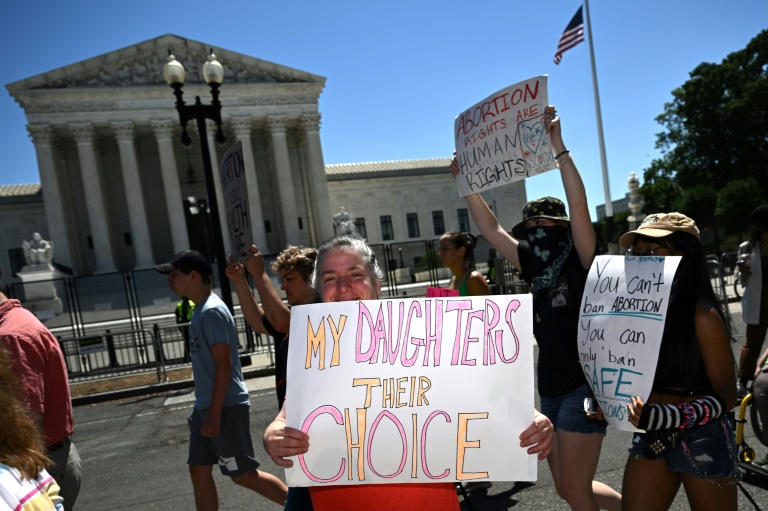
Facebook sparked outrage by complying with US police probing an abortion case, boosting simmering fears the platform will be a tool for clamping down on the procedure.

Criticism built after media reports revealed the social networking giant had turned over messages key to a mother being criminally charged with an abortion for her daughter.

Advocates had warned of exactly this kind of thing after America’s top court revoked the national right to abortion in late June, as big tech companies hold a trove of data on users locations and behavior.

Jessica Burgess, 41, was accused of helping her 17-year-old daughter to terminate a pregnancy in the midwestern US state of Nebraska.

She faces five charges — including one under a 2010 law which only allows abortion up to 20 weeks after fertilization.

The daughter faces three charges, including one of concealing or abandoning a corpse.

Yet Facebook owner Meta defended itself Tuesday by noting the Nebraska court order “didn’t mention abortion at all”, and came before the Supreme Court’s highly divisive decision in June to overturn Roe v Wade, the case which conferred right to abortion in the United States.

“That sentence would seem to imply that *if* the search warrants mentioned abortion, there would be a different result. But of course that’s not true,” tweeted Logan Koepke, who researches on how technology impacts issues like criminal justice.

When queried about handing over the data, the Silicon Valley giant pointed AFP to its policy of complying with government requests when “the law requires us to do so.”

Nebraska’s restrictions were adopted years before Roe was overturned. Some 16 states have outright bans or limits in the early weeks of pregnancy in their jurisdictions.

– ‘Can’t release encrypted chats’ –

For tech world watchers, the Nebraska case surely won’t be the last. 

“This is going to keep happening to companies that have vast amounts of data about people across the country and around the world,” said Alexandra Givens, CEO of the non-profit Center for Democracy & Technology.

She went on to note that if companies receive a duly-issued legal request, under a valid law, there are strong incentives for them to want to comply with that request. 

“The companies at a minimum have to make sure that they’re insisting on a full legal process, that warrants are specific and not a fishing expedition, searches are very narrowly construed and that they notify users so that users can try to push back,” Givens added.

Meta did not provide AFP the Nebraska court’s order. The police filing asked the judge to order the company not to tell Burgess’s daughter about the search warrant for her Facebook messages.

“I have reason to believe that notifying the subscriber or customer of the issuance of this search warrant may result in the destruction of or tampering with evidence,” police detective Ben McBride wrote.

He told the court he began investigating “concerns” in late April that Burgess’s daughter had given birth prematurely to a “stillborn child”, which they allegedly buried together.

Advocates noted that apart from not using Meta’s products, one sure way to keep users’ communications out of government hands would be for them to be automatically encrypted.

Meta-owned WhatsApp has end-to-end encryption, which means the company does not have access to the information, but that level of privacy protection is not the default setting on Facebook messenger.

“The company has never said it would not comply with a request from law enforcement in a situation related to abortions,” said Caitlin Seeley George, a campaign director at advocacy group Fight for the Future. 

“If users could rely on encrypted messaging, Meta wouldn’t even be in a position where they could share conversations,” she added.
Fresh fears after Facebook's role in US abortion case

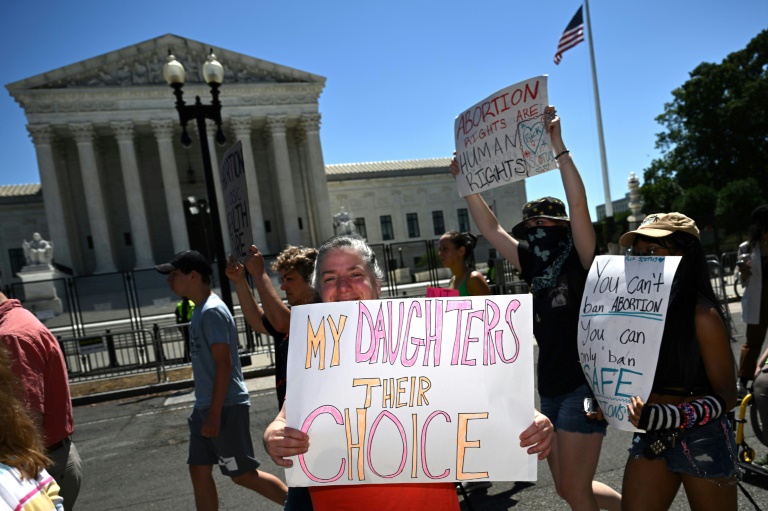
Facebook sparked outrage by complying with US police probing an abortion case, boosting simmering fears the platform will be a tool for clamping down on the procedure.

Criticism built after media reports revealed the social networking giant had turned over messages key to a mother being criminally charged with an abortion for her daughter.

Advocates had warned of exactly this kind of thing after America’s top court revoked the national right to abortion in late June, as big tech companies hold a trove of data on users locations and behavior.

Jessica Burgess, 41, was accused of helping her 17-year-old daughter to terminate a pregnancy in the midwestern US state of Nebraska.

She faces five charges — including one under a 2010 law which only allows abortion up to 20 weeks after fertilization.

The daughter faces three charges, including one of concealing or abandoning a corpse.

Yet Facebook owner Meta defended itself Tuesday by noting the Nebraska court order “didn’t mention abortion at all”, and came before the Supreme Court’s highly divisive decision in June to overturn Roe v Wade, the case which conferred right to abortion in the United States.

“That sentence would seem to imply that *if* the search warrants mentioned abortion, there would be a different result. But of course that’s not true,” tweeted Logan Koepke, who researches on how technology impacts issues like criminal justice.

When queried about handing over the data, the Silicon Valley giant pointed AFP to its policy of complying with government requests when “the law requires us to do so.”

Nebraska’s restrictions were adopted years before Roe was overturned. Some 16 states have outright bans or limits in the early weeks of pregnancy in their jurisdictions.

– ‘Can’t release encrypted chats’ –

For tech world watchers, the Nebraska case surely won’t be the last. 

“This is going to keep happening to companies that have vast amounts of data about people across the country and around the world,” said Alexandra Givens, CEO of the non-profit Center for Democracy & Technology.

She went on to note that if companies receive a duly-issued legal request, under a valid law, there are strong incentives for them to want to comply with that request. 

“The companies at a minimum have to make sure that they’re insisting on a full legal process, that warrants are specific and not a fishing expedition, searches are very narrowly construed and that they notify users so that users can try to push back,” Givens added.

Meta did not provide AFP the Nebraska court’s order. The police filing asked the judge to order the company not to tell Burgess’s daughter about the search warrant for her Facebook messages.

“I have reason to believe that notifying the subscriber or customer of the issuance of this search warrant may result in the destruction of or tampering with evidence,” police detective Ben McBride wrote.

He told the court he began investigating “concerns” in late April that Burgess’s daughter had given birth prematurely to a “stillborn child”, which they allegedly buried together.

Advocates noted that apart from not using Meta’s products, one sure way to keep users’ communications out of government hands would be for them to be automatically encrypted.

Meta-owned WhatsApp has end-to-end encryption, which means the company does not have access to the information, but that level of privacy protection is not the default setting on Facebook messenger.

“The company has never said it would not comply with a request from law enforcement in a situation related to abortions,” said Caitlin Seeley George, a campaign director at advocacy group Fight for the Future. 

“If users could rely on encrypted messaging, Meta wouldn’t even be in a position where they could share conversations,” she added.

World's biggest ice sheet could cause massive sea rise without action: study

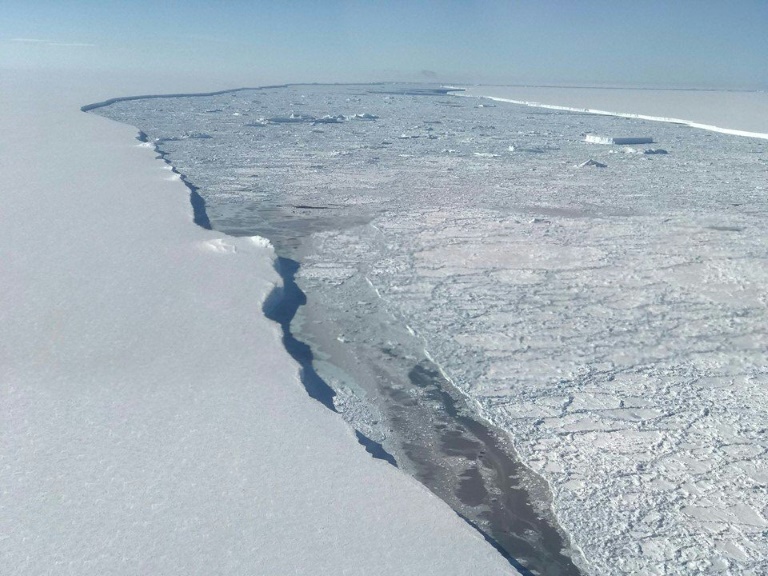
The world’s biggest ice sheet could cause “several metres” of sea-level rise over centuries if the global temperature rises more than 2°C, according to a British study published Wednesday.

Researchers at Durham University concluded that if global greenhouse emissions remain high, the melting East Antarctica Ice Sheet (EAIS) could cause nearly half a metre of sea-level rise by 2100. Their analysis was published in the scientific journal Nature.

If emissions remain high beyond that, the EAIS could contribute around one to three metres to global sea levels by 2300, and two to five metres by 2500, they said.

However, if emissions were dramatically reduced, EAIS could contribute around two centimetres of sea level rise by 2100, according to the assessment. 

This would represent far less than the ice loss expected from Greenland and West Antarctica. 

“A key conclusion from our analysis is that the fate of the East Antarctic Ice Sheet remains very much in our hands,” said lead author Chris Stokes, from Durham University’s Department of Geography.

“This ice sheet is by far the largest on the planet, containing the equivalent of 52 metres of sea level and it’s really important that we do not awaken this sleeping giant.

“Restricting global temperature increases to below the 2°C limit set by the Paris Climate Agreement should mean that we avoid the worst-case scenarios, or perhaps even halt the melting of the East Antarctic Ice Sheet, and therefore limit its impact on global sea level rise,” he added.

– Computer simulations –

The study did note that the worst scenarios projected were “very unlikely”.

World leaders agreed at the 2015 UN Climate Change Conference in Paris to limit global warming to well below 2°C and pursue efforts to limit the rise to 1.5°C.

The research team, which included scientists from the UK, Australia, France and the US, analysed how the ice sheet responded to past warm periods when making their predictions.

They ran computer simulations to model the effects of different greenhouse gas emission levels and temperatures on the ice sheet by the years 2100, 2300 and 2500.

They found evidence to suggest that three million years ago, when temperatures were around 2-4°C higher than present, part of the EAIS “collapsed and contributed several metres to sea-level rise”.

“Even as recently as 400,000 years ago — not that long ago on geological timescales — there is evidence that a part of the EAIS retreated 700 km inland in response to only 1-2°C of global warming,” they added.

Nerilie Abram, a co-author of the study from the Australian National University in Canberra, warned the sheet “isn’t as stable and protected as we once thought.”

Disney+ subscribers surge as Netflix stumbles

The Disney+ streaming service saw its number of paying subscribers leap beyond expectations in the last quarter, as rival Netflix’s client count ebbed, results showed Wednesday.

The number of people subscribing to Disney+ topped 152 million, up some 31 percent from the same period a year earlier, the entertainment giant said in an earnings report.

Disney’s bottom line was also boosted by rising revenue from its theme parks, which showed signs of recovering from stifled attendance during the pandemic.

Better-that-expected earnings reported by Disney came as many of the tech titans that flourished during the pandemic curb costs in the face of inflation and people get back to living life in the real world instead of online.

Disney shares were up more than 6 percent in after-market trades that followed release of the earnings figures.

“We had an excellent quarter, with our world-class creative and business teams powering outstanding performance at our domestic theme parks, big increases in live-sports viewership, and significant subscriber growth at our streaming services,” said Disney chief executive Bob Chapek.

The 14.4 million Disney+ subscribers added in the recently ended quarter raised the overall number of subscriptions to its streaming services, which include Hulu and ESPN+, to 221 million, Chapek added.

The overall number of subscribers to Disney streaming services topped those of Netflix for the first time.

“Investors will breathe a sigh of relief from Disney’s robust fiscal (quarterly) earnings,” said Insider Intelligence principal analyst Paul Verna.

“The streaming figures will be seen as an indicator of the health of the market, especially after lackluster subscriber figures from Netflix and Comcast.”

Disney also announced that an ad-subsidized version of its streaming television subscription service will be offered in the United States starting December 8 at a monthly price $3 less than the ad-free offering.

– K-pop and superheroes –

Taking a page from Netflix’s playbook, Disney has been investing in shows created in places outside the United States.

The company plans to “step up” investments in such local original content, Chapek said, pointing out a film concert and docu-series focused on South Korean music sensation BTS.

He expressed confidence in Disney theater films in the works, including an eagerly anticipated “Black Panther: Wakanda Forever” addition to its Marvel superhero line-up.

A trailer for the Black Panther film logged more than 170 million views in the 24 hours after its release, Chapek said.

“Disney still faces economic uncertainty and intense competition, but performance should at least temporarily put to rest some of Wall Street’s gloomier perceptions about the company, and more broadly about the entertainment industry,” said Paul Verna, an analyst at Insider Intelligence.

Rival Netflix has reported losing subscribers for two quarters in a row, as the streaming giant battles fierce competition and viewer belt tightening, though the firm assured investors of better days ahead.

The loss of 970,000 paying customers in the most recent quarter was less than expected, leaving Netflix with just shy of 221 million subscribers.

“Our challenge and opportunity is to accelerate our revenue and membership growth… and to better monetize our big audience,” the firm said in its earnings report.

After years of amassing subscribers, Netflix lost 200,000 customers worldwide in the first quarter compared to the end of 2021. 

Netflix said in its earnings report that it had expected to gain a million paid subscribers in the current quarter.

Netflix executives have made it clear the company will get tougher on sharing logins and passwords, which allow many to access the platform’s content without paying. 

In an effort to draw new subscribers, Netflix said it will work with Microsoft to launch a cheaper subscription plan that includes advertisements.

The ad-supported offering will be in addition to the three account options already available, with the cheapest plan coming in at $10 per month in the United States.

Disney+ subscribers surge as Netflix stumbles

The Disney+ streaming service saw its number of paying subscribers leap beyond expectations in the last quarter, as rival Netflix’s client count ebbed, results showed Wednesday.

The number of people subscribing to Disney+ topped 152 million, up some 31 percent from the same period a year earlier, the entertainment giant said in an earnings report.

Disney’s bottom line was also boosted by rising revenue from its theme parks, which showed signs of recovering from stifled attendance during the pandemic.

Better-that-expected earnings reported by Disney came as many of the tech titans that flourished during the pandemic curb costs in the face of inflation and people get back to living life in the real world instead of online.

Disney shares were up more than 6 percent in after-market trades that followed release of the earnings figures.

“We had an excellent quarter, with our world-class creative and business teams powering outstanding performance at our domestic theme parks, big increases in live-sports viewership, and significant subscriber growth at our streaming services,” said Disney chief executive Bob Chapek.

The 14.4 million Disney+ subscribers added in the recently ended quarter raised the overall number of subscriptions to its streaming services, which include Hulu and ESPN+, to 221 million, Chapek added.

The overall number of subscribers to Disney streaming services topped those of Netflix for the first time.

“Investors will breathe a sigh of relief from Disney’s robust fiscal (quarterly) earnings,” said Insider Intelligence principal analyst Paul Verna.

“The streaming figures will be seen as an indicator of the health of the market, especially after lackluster subscriber figures from Netflix and Comcast.”

Disney also announced that an ad-subsidized version of its streaming television subscription service will be offered in the United States starting December 8 at a monthly price $3 less than the ad-free offering.

– K-pop and superheroes –

Taking a page from Netflix’s playbook, Disney has been investing in shows created in places outside the United States.

The company plans to “step up” investments in such local original content, Chapek said, pointing out a film concert and docu-series focused on South Korean music sensation BTS.

He expressed confidence in Disney theater films in the works, including an eagerly anticipated “Black Panther: Wakanda Forever” addition to its Marvel superhero line-up.

A trailer for the Black Panther film logged more than 170 million views in the 24 hours after its release, Chapek said.

“Disney still faces economic uncertainty and intense competition, but performance should at least temporarily put to rest some of Wall Street’s gloomier perceptions about the company, and more broadly about the entertainment industry,” said Paul Verna, an analyst at Insider Intelligence.

Rival Netflix has reported losing subscribers for two quarters in a row, as the streaming giant battles fierce competition and viewer belt tightening, though the firm assured investors of better days ahead.

The loss of 970,000 paying customers in the most recent quarter was less than expected, leaving Netflix with just shy of 221 million subscribers.

“Our challenge and opportunity is to accelerate our revenue and membership growth… and to better monetize our big audience,” the firm said in its earnings report.

After years of amassing subscribers, Netflix lost 200,000 customers worldwide in the first quarter compared to the end of 2021. 

Netflix said in its earnings report that it had expected to gain a million paid subscribers in the current quarter.

Netflix executives have made it clear the company will get tougher on sharing logins and passwords, which allow many to access the platform’s content without paying. 

In an effort to draw new subscribers, Netflix said it will work with Microsoft to launch a cheaper subscription plan that includes advertisements.

The ad-supported offering will be in addition to the three account options already available, with the cheapest plan coming in at $10 per month in the United States.

Russian strikes near Ukraine nuclear plant kill 14

Ukraine on Wednesday accused Russia of carrying out rocket strikes that killed 14 civilians in areas near a nuclear power plant, as the G7 warned that Russian control of the facility “endangers the region”.

Overnight strikes in the Dnipropetrovsk region in central Ukraine killed 13 people and injured 11, with five reported to be in a serious condition, regional governor Valentin Reznichenko wrote on Telegram.

Most of the casualties were in the town of Marganets, just across the Dnipro River from the Zaporizhzhia nuclear power plant, Europe’s biggest.

“It was a terrible night,” Reznichenko said, urging residents to shelter when they hear air raid sirens.

“I am asking and begging you… Don’t let the Russians kill you,” he wrote.

Another woman died after Russian missiles slammed into a village in the Zaporizhzhia region on Wednesday morning, local governor Oleksandr Starukh wrote on Telegram.

Regional council head Mykola Lukashuk said the strikes had hit a local power line, leaving thousands of people without electricity.

– G7 call over nuclear plant –

Ukraine and Russia have accused each other of recent shelling around the Zaporizhzhia plant, which has six reactors.

Ukraine says Russia has stationed hundreds of troops and stored ammunition at the facility since taking it over on March 4, shortly after starting its invasion.

The tensions have revived memories of the 1986 Chernobyl nuclear disaster in Soviet Ukraine, which killed hundreds of people and spread radioactive contamination over much of Europe.

The Group of Seven industrialised nations condemned Russia’s occupation and called on Moscow to immediately hand back full control of the plant.

Ukrainian staff operating the plant must be able to work “without threats or pressure” and Russia’s control of the plant “endangers the region”, the G7 foreign ministers said in a statement.

The UN Security Council will hold an emergency meeting Thursday to address the crisis at the nuclear plant, diplomatic sources said.

The UN nuclear safety watchdog, the International Atomic Energy Agency (IAEA), said in a statement that its Director General Rafael Grossi would brief the Security Council meeting “about the nuclear safety and security situation” at the plant as well as his “efforts to agree and lead an IAEA expert mission to the site as soon as possible”.

The strikes came a day after major blasts at the Saki airfield, a key military base on the Russian-annexed Crimea peninsula.

Moscow insisted that the explosions were caused by detonating ammunition rather than Ukrainian fire, and Ukraine has not claimed responsibility.

– ‘There is a lot of shooting’ –

Fighting also ground on in eastern Ukraine, where Russian troops are gradually advancing.

Strikes on the city of Bakhmut killed at least six people and injured three others, regional governor Pavlo Kyrylenko said on Telegram, adding that 12 residential buildings were damaged.

The city of Soledar was under constant shelling, AFP reporters saw, as Russian troops attempted to drive out Ukrainian forces and seize a foothold towards Bakhmut.

The echoes of cluster bombs and artillery bounced off apartment buildings with their windows shattered, while roads were cratered and shops boarded up or destroyed.

The city was shrouded with black and white smoke arising from artillery and air strikes.

Some of those who remain now live underground in cellars ill-suited as bomb shelters.

“Most have left. It’s very scary. There is a lot of shooting,” said 62-year-old Svitlana Klymenko.

“I just want to leave to grow old in a normal way, die a normal death, not be killed by a missile.”

– EU ban on Russian coal –

The war has severely hampered grain supply from Ukraine, leading to an international food crisis as it is one of the world’s biggest producers.

Some ships have been able to leave Ukrainian ports in recent days after a deal with Russia brokered by the United Nations and Turkey.

The first exports of wheat should start next week under the agreement, top UN official Frederick Kenney said on Wednesday.

The first grain shipment to leave on the Sierra Leone-flagged vessel Razoni departed the Ukrainian port of Odessa on August 1 and had been expected to dock in the Lebanese port of Tripoli at the weekend.

But the Ukrainian embassy said a new buyer for the shipment was being sought after the original Lebanese buyer cancelled the order.

Marine traffic sites showed the Razoni docked in Turkey’s Mediterranean port of Mersin, following reports a new buyer had been found for its cargo.

Spain on Wednesday launched a pilot project to import Ukrainian grain by train to avoid blocked maritime routes, with a freight train leaving Madrid for the Polish town of Chelm late on Tuesday.

Western countries have meanwhile imposed increasingly stringent sanctions on Moscow, raising fears that Russia may cut off gas supplies.

EU countries have started putting into place different measures to save energy, with air conditioning curbs coming into force in Spain on Wednesday and Vienna dimming street lighting.

A total EU ban on imports of Russian coal was due to come into force overnight. 

Trial on Kobe Bryant death crash photos begins in US

A court case brought by Kobe Bryant’s widow over graphic photographs taken by first responders at the site of the helicopter crash that killed him got under way in the United States on Wednesday.

The basketball superstar and his teenage daughter were among nine people who died when their chopper smashed into a hillside near Los Angeles in January 2020.

Vanessa Bryant alleges she suffered emotional distress because personnel from the Los Angeles Sheriff’s Department and firefighters snapped pictures of the scene, which they later shared with friends and first responders.

“At least 11 (sheriff’s) personnel and a dozen firefighters shared the photos within 24 hours of the crash,” Bryant’s attorneys wrote in court papers.

“In the following weeks, one (sheriff’s) deputy flaunted photos of remains at a bar, another texted photos to a group of video game buddies, and (county fire) personnel displayed photos at an awards gala.”

Lawyers for Los Angeles County do not dispute that the photos were taken, but insist they have never been made public and have now been deleted.

Mira Hashmall, representing the county in the civil litigation, said the case hinged on this issue of public dissemination.

“From the time of the crash to now, the county has worked tirelessly to prevent its crash site photos from getting into the public domain,” she said.

“Over two and a half years later, no county photos have appeared in the media, none can be found online, and the plaintiffs admit they’ve never seen them.”

Vanessa Bryant’s case has been combined with a similar case brought by Chris Chester, whose wife and 13-year-old daughter also died in the crash.

A jury of six women and four men were selected Wednesday, CNN reported.

Relatives of several other victims were last year granted $2.5 million in compensation over the photo-taking.

An investigation into the crash found the pilot had probably become disorientated after flying the Sikorsky S-76 into fog.

Bryant is widely recognized as one of the greatest basketball players ever, a figure who became the face of his sport during a glittering two decades with the Los Angeles Lakers.

He was a five-time NBA champion in a career that began in 1996 straight out of high school and lasted until his retirement in 2016, after which he began building a lucrative business portfolio.

He was also a two-time Olympic gold medalist, helping the US squad of NBA stars to titles in 2008 in Beijing and 2012 in London.

Boeing delivers first 787 in a year

Boeing delivered a 787 Dreamliner to American Airlines on Wednesday, the first of that aircraft to be sent to a customer in over a year due to defects discovered in the plane.

US air safety regulators on Monday cleared the aviation giant to resume deliveries of the top-selling widebody after Boeing made changes to its production process.

“We have resumed 787 deliveries, following our thorough engineering analysis, verification and rework activities to ensure all airplanes conform to Boeing’s exacting specifications and regulatory requirements,” a company spokesperson confirmed to AFP.

It was the first delivered to a customer since June 2021. 

But for American the wait was longer.

“Today is an exciting day! We’re thrilled to welcome our first BoeingAirplanes 787-8 delivery since April 2021,” the company said on Twitter.

The 787’s travails date to late summer 2020, when the company uncovered manufacturing flaws with some jets, and subsequently identified additional issues, including with the horizontal stabilizer.

The difficulties curtailed deliveries between November 2020 and March 2021. Boeing suspended deliveries later in spring 2021 after more problems surfaced.

However, the company said none of the issues posed “an immediate safety of flight concern for the in-service 787 fleet.”

The news will be welcomed by US airlines and travelers who have suffered from massive delays and canceled flights in recent weeks, partly due to the shortage of aircraft.

American said it currently has 47 of the planes in its fleet, and has ordered another 42.

Inability to deliver the Dreamliner has dragged down Boeing’s profits, which plunged 67 percent in the second quarter. And the manufacturing changes have led to billions in additional costs for the company.

The firm has delivered just over 1,000 of the planes since it was first introduced in 2004.

Boeing delivers first 787 in a year

Boeing delivered a 787 Dreamliner to American Airlines on Wednesday, the first of that aircraft to be sent to a customer in over a year due to defects discovered in the plane.

US air safety regulators on Monday cleared the aviation giant to resume deliveries of the top-selling widebody after Boeing made changes to its production process.

“We have resumed 787 deliveries, following our thorough engineering analysis, verification and rework activities to ensure all airplanes conform to Boeing’s exacting specifications and regulatory requirements,” a company spokesperson confirmed to AFP.

It was the first delivered to a customer since June 2021. 

But for American the wait was longer.

“Today is an exciting day! We’re thrilled to welcome our first BoeingAirplanes 787-8 delivery since April 2021,” the company said on Twitter.

The 787’s travails date to late summer 2020, when the company uncovered manufacturing flaws with some jets, and subsequently identified additional issues, including with the horizontal stabilizer.

The difficulties curtailed deliveries between November 2020 and March 2021. Boeing suspended deliveries later in spring 2021 after more problems surfaced.

However, the company said none of the issues posed “an immediate safety of flight concern for the in-service 787 fleet.”

The news will be welcomed by US airlines and travelers who have suffered from massive delays and canceled flights in recent weeks, partly due to the shortage of aircraft.

American said it currently has 47 of the planes in its fleet, and has ordered another 42.

Inability to deliver the Dreamliner has dragged down Boeing’s profits, which plunged 67 percent in the second quarter. And the manufacturing changes have led to billions in additional costs for the company.

The firm has delivered just over 1,000 of the planes since it was first introduced in 2004.

Stocks jump on easing US inflation

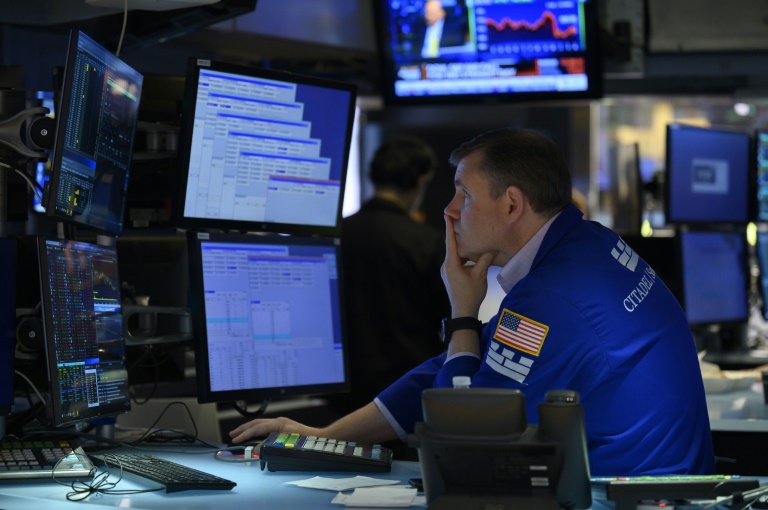
Stock markets bounced on Wednesday as better-than-expected US inflation data raised hopes that the US Federal Reserve will tone down its aggressive interest-rate policy.

With energy costs dropping in recent weeks, the annual US consumer price index eased to 8.5 percent in July from a 40-year high of 9.1 percent the previous month, the Labor Department reported, while the monthly rate was unchanged — a big surprise.

Signs that inflation could be coming off the boil in the world’s biggest economy could persuade the Fed to move much more gradually.

Investors had been worried that too steep an increase in borrowing costs could choke off economic recovery. 

Wall Street soared on the news, while the dollar took a tumble.

European stock markets closed firmly in the black after falling earlier in the day.

“The slowdown in US inflation was anticipated, but was sharper than economists had expected,” said Asteres analyst Sylvain Bersinger.

“Softer US inflation will brake the interest rate hikes.”

But economists and Fed officials warned against that hopeful view saying inflation is still high, and a third consecutive, 0.75-percentage-point hike remains possible.

“This is just the first hint that maybe inflation is starting to move in the right direction,” said Minneapolis Fed chief Neel Kashkari, adding that “we are a long way away from saying that we’re anywhere close to declaring victory.”

The data on Wednesday come at a sensitive time for world markets, which have been buffeted by the war in Ukraine, supply chain snarls and rising China-US tensions over Taiwan.

– Oil down –

While the latest earnings season has been less painful than feared, there are increasing signs that the economic slowdown is beginning to impact companies, with some major firms — including Apple and Amazon, and chipmakers Micron and Nvidia — providing downbeat outlooks.

On the oil markets, crude prices rose but remain stuck around six-month lows, as the prospect of lower demand caused by a possible recession has essentially wiped out all of the gains seen since Russia’s invasion of its neighbor in February.

But Edward Moya, analyst at OANDA trading group, said the market was unlikely to fall much further. 

“Whatever crude demand destruction that occurs from a weakening global economy won’t be able to drag down oil prices much lower given how low the supply outlook remains,” he said. 

– Key figures at around 2130 GMT –

New York – Dow: UP 1.5 percent at 33,309.51 (close)

New York – S&P 500: UP 2.1 percent at 4,210.24 (close)

New York – Nasdaq: UP 2.9 percent at 12,854.81 (close)

London – FTSE 100: UP 0.3 percent at 7,507.11 (close)

Frankfurt – DAX: UP 1.2 percent at 13,700.93 (close)

Paris – CAC 40: UP 0.5 percent at 6,523.44 (close)

EURO STOXX 50: UP 0.9 percent at 3,749.35 (close)

Tokyo – Nikkei 225: DOWN 0.7 percent at 27,819.33 (close)

Hong Kong – Hang Seng Index: DOWN 2.0 percent at 19,610.84 (close)

Shanghai – Composite: DOWN 0.5 percent at 3,230.02 (close)

Euro/dollar: UP at $1.0299 from $1.0213 Tuesday

Pound/dollar: UP at $1.2213 from $1.2071

Euro/pound: DOWN at 84.29 pence from 84.57 pence

Dollar/yen: DOWN at 132.89 yen from 135.12 yen

West Texas Intermediate: UP 1.2 percent at $91.57 per barrel

Brent North Sea crude: UP 0.8 percent at $97.11 per barrel

burs-spm/kjm/hs/bfm

Close Bitnami banner
Bitnami