AFP

Trump declines to answer questions in New York civil probe

Donald Trump on Wednesday declined to answer questions under oath about alleged fraud at his family business, as legal pressures pile up for the former president whose house was raided by the FBI just two days ago.

Trump said he had “no choice” but to invoke the Fifth Amendment — which allows individuals to remain silent under questioning — during hours of deposition at the New York attorney general’s office in Manhattan.

“I declined to answer the questions under the rights and privileges afforded to every citizen under the United States Constitution,” Trump said in a statement.

“When your family, your company, and all the people in your orbit have become the targets of an unfounded, politically motivated Witch Hunt supported by lawyers, prosecutors, and the Fake News Media, you have no choice.”

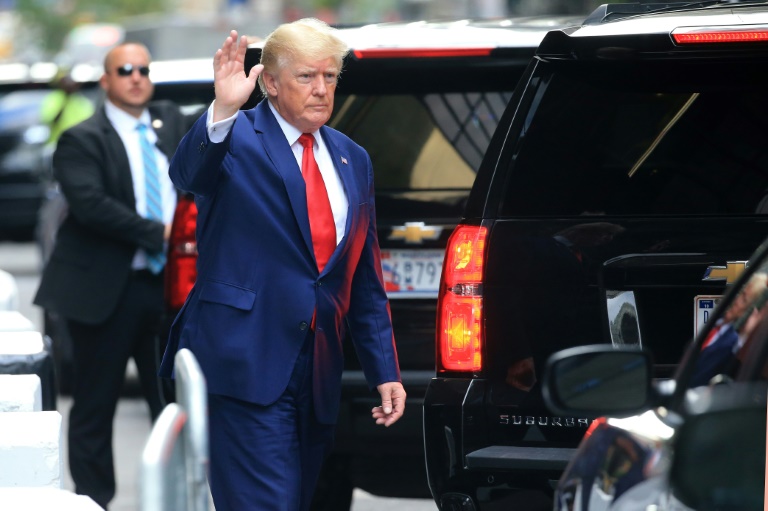
After about six hours, Trump emerged from the office building where the deposition took place, waving through the closed windows of his vehicle at a small crowd of onlookers as his motorcade pulled away.

“A very professional meeting,” he wrote his Truth Social site. “Have a fantastic company with great assets, very little debt, and lots of CASH. Only in America!”

The deposition followed a Federal Bureau of Investigation search earlier this week at Trump’s Mar-a-Lago residence in Florida, signaling an escalation of legal woes for the 45th president.

– ‘Pursue the facts’ –

Trump on Wednesday again took aim at the search, decrying what he called a lack of “moral and ethical bounds of decency.”

He said his team had complied with an official request to install an extra lock on a storage area at the residence.

“Then on Monday, without notification or warning, an army of agents broke into Mar-a-Lago, went to the same storage area, and ripped open the lock,” he said on Truth Social.

Trump had arrived in a convoy of cars guarded by Secret Service agents at the offices of New York Attorney General Letitia James.

James suspects the Trump Organization fraudulently overstated the value of real estate properties when applying for bank loans, while understating them with tax authorities to pay less in taxes.

If James, a Democrat, finds any evidence of financial misconduct, she can sue the Trump Organization for damages but cannot file criminal charges, as it is a civil investigation.

“Attorney General Letitia James took part in the deposition during which Mr Trump invoked his Fifth Amendment right,” her office said in a statement.

“Attorney General James will pursue the facts and the law wherever they may lead.”

The Manhattan district attorney’s office, meanwhile, is running a parallel probe into the Trump Organization that does have the potential for criminal charges.

That investigation could be a reason Trump’s legal team advised him to remain silent, as his deposition could energize the case.

The brash billionaire, 76, did not mince words in attacking James, calling her a “failed politician who has intentionally colluded with others to carry out this phony years-long crusade.”

The Trumps have denied any wrongdoing. Trump and his eldest children, Donald Jr and Ivanka, had been due to start testifying under oath in July, but the depositions were postponed due to the death of the former president’s first wife.

– Possible White House return –

Trump’s myriad legal battles have the potential to complicate any bid for another run for the White House in 2024.

The FBI declined to provide a reason for the raid on Trump’s Florida home.

But US media outlets said agents were conducting a court-authorized search related to the potential mishandling of classified documents that had been sent to Mar-a-Lago after Trump left the White House in January 2021.

White House officials say President Joe Biden did not have any advance notice about the raid and respected the independence of the Justice Department.

Since leaving office, Trump has remained the country’s most divisive figure, continuing to sow falsehoods that he won the 2020 presidential vote.

He also has faced legal scrutiny for his efforts to overturn the results of the 2020 election, and over the January 6 attack on the US Capitol by his supporters.

Trump declines to answer questions in New York civil probe

Donald Trump on Wednesday declined to answer questions under oath about alleged fraud at his family business, as legal pressures pile up for the former president whose house was raided by the FBI just two days ago.

Trump said he had “no choice” but to invoke the Fifth Amendment — which allows individuals to remain silent under questioning — during hours of deposition at the New York attorney general’s office in Manhattan.

“I declined to answer the questions under the rights and privileges afforded to every citizen under the United States Constitution,” Trump said in a statement.

“When your family, your company, and all the people in your orbit have become the targets of an unfounded, politically motivated Witch Hunt supported by lawyers, prosecutors, and the Fake News Media, you have no choice.”

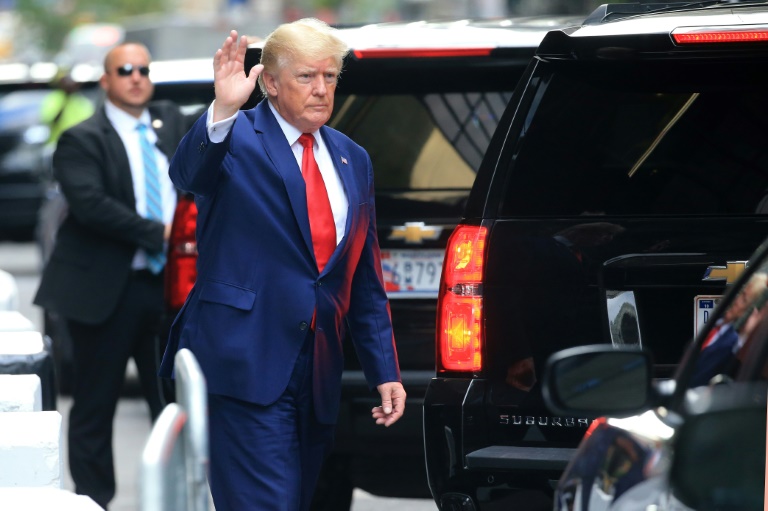
After about six hours, Trump emerged from the office building where the deposition took place, waving through the closed windows of his vehicle at a small crowd of onlookers as his motorcade pulled away.

“A very professional meeting,” he wrote his Truth Social site. “Have a fantastic company with great assets, very little debt, and lots of CASH. Only in America!”

The deposition followed a Federal Bureau of Investigation search earlier this week at Trump’s Mar-a-Lago residence in Florida, signaling an escalation of legal woes for the 45th president.

– ‘Pursue the facts’ –

Trump on Wednesday again took aim at the search, decrying what he called a lack of “moral and ethical bounds of decency.”

He said his team had complied with an official request to install an extra lock on a storage area at the residence.

“Then on Monday, without notification or warning, an army of agents broke into Mar-a-Lago, went to the same storage area, and ripped open the lock,” he said on Truth Social.

Trump had arrived in a convoy of cars guarded by Secret Service agents at the offices of New York Attorney General Letitia James.

James suspects the Trump Organization fraudulently overstated the value of real estate properties when applying for bank loans, while understating them with tax authorities to pay less in taxes.

If James, a Democrat, finds any evidence of financial misconduct, she can sue the Trump Organization for damages but cannot file criminal charges, as it is a civil investigation.

“Attorney General Letitia James took part in the deposition during which Mr Trump invoked his Fifth Amendment right,” her office said in a statement.

“Attorney General James will pursue the facts and the law wherever they may lead.”

The Manhattan district attorney’s office, meanwhile, is running a parallel probe into the Trump Organization that does have the potential for criminal charges.

That investigation could be a reason Trump’s legal team advised him to remain silent, as his deposition could energize the case.

The brash billionaire, 76, did not mince words in attacking James, calling her a “failed politician who has intentionally colluded with others to carry out this phony years-long crusade.”

The Trumps have denied any wrongdoing. Trump and his eldest children, Donald Jr and Ivanka, had been due to start testifying under oath in July, but the depositions were postponed due to the death of the former president’s first wife.

– Possible White House return –

Trump’s myriad legal battles have the potential to complicate any bid for another run for the White House in 2024.

The FBI declined to provide a reason for the raid on Trump’s Florida home.

But US media outlets said agents were conducting a court-authorized search related to the potential mishandling of classified documents that had been sent to Mar-a-Lago after Trump left the White House in January 2021.

White House officials say President Joe Biden did not have any advance notice about the raid and respected the independence of the Justice Department.

Since leaving office, Trump has remained the country’s most divisive figure, continuing to sow falsehoods that he won the 2020 presidential vote.

He also has faced legal scrutiny for his efforts to overturn the results of the 2020 election, and over the January 6 attack on the US Capitol by his supporters.

Economists urge US to return Afghanistan's frozen assets

Several dozen prominent US and international economists urged the United States Wednesday to hand over to Afghanistan $7 billion in central bank reserves frozen when the Taliban seized control of the country nearly one year ago.

“We are deeply concerned by the compounding economic and humanitarian catastrophes unfolding in Afghanistan, and, in particular, by the role of US policy in driving them,” 71 economists and development experts said in a letter to US President Joe Biden and US Treasury Secretary Janet Yellen. 

“Without access to its foreign reserves, the central bank of Afghanistan cannot carry out its normal, essential functions,” they wrote.

“Without a functioning central bank, the economy of Afghanistan has, predictably, collapsed.”

The signatories included Nobel economics prize winner Joseph Stiglitz and Yanis Varoufakis, who served as Greece’s minister of finance when the country was negotiating with creditors after the 2008 economic collapse.

In the letter they argued the United States could not justify holding onto the reserves, which it froze in American banks as the prior Washington-backed government in Kabul fell to the Islamist Taliban in August 2021.

The economists said that the plunge in economic activity and the sharp cuts to foreign aid by previous supporters of the country after the US military withdrawal had sent the Afghan economy into a tailspin.

“Seventy percent of Afghan households are unable to meet their basic needs,” they wrote. “Some 22.8 million people — over half the population — face acute food insecurity, and three million children are at risk of malnutrition.” 

This is worsened by the refusal of the United States to return to the Afghan central bank the $7 billion in foreign exchange reserves, as well as $2 billion blocked by Britain, Germany, and the United Arab Emirates, they said.

“These reserves were critical to the functioning of the Afghan economy, in particular, to manage money supply, to stabilize the currency and to pay for the imports  — chiefly food and oil — on which Afghanistan relies,” they wrote.

The economists said a recent US offer to give the Taliban access to half the money by setting up a trust with international oversight was not enough.

“By all rights, the full $7 billion belong to the Afghan people,” they said.

“Returning anything less than the full amount undermines the recovery of a devastated economy.”

US inflation eases in July amid falling oil prices

Red-hot US inflation cooled slightly in July, which could open the door for the Federal Reserve to dial back its aggressive interest rate hikes while bringing a much-needed boost to President Joe Biden just months before crucial midterm elections.

Helped by the drop in energy costs dropping in recent weeks, the annual consumer price index dipped to 8.5 percent last month, the Labor Department reported Wednesday, lower than markets were projecting.

That 12-month increase soared 9.1 percent in June, the highest in 40 years, fueled by aggressive consumer spending of pandemic savings, global supply chain snarls, domestic worker shortages and Russia’s war on Ukraine.

But the big surprise was that the latest data showed the key inflation index was flat compared to June, a dramatic shift from the steep jump the prior month. Other than the drop in prices seen at the start of the pandemic, it was the first time monthly CPI was unchanged since June 2019.

“Today we received news that our economy had zero percent inflation in the month of July. Zero percent,” Biden said at a White House event.

“We are seeing signs that inflation may be beginning to moderate,” he said, although he acknowledged that the global challenges remain and the economy could face “additional headwinds.”

When volatile food and energy prices are excluded from the calculation, the so-called core CPI rate rose just 0.3 percent in the month — the smallest in four months — according to the report. But the annual increase remained stuck at the same level as June.

Soaring prices have squeezed family budgets — and by extension Biden’s popularity — with many costs still rising, especially food and housing.

Biden’s opponents accuse the president of precipitating the inflationary spike with a gigantic $1.9 trillion coronavirus relief package, enacted in March last year shortly after assuming office.

Republicans have renewed their criticism of Biden’s economic policy, warning that Sunday’s passage in the Senate of his massive climate and health care bill titled the “Inflation Reduction Act,” would do the opposite of its stated purpose.

But the president said his plan is working.

In addition to cooling inflation “jobs are booming” and wages are rising, he said. “That’s what happens when you build an economy from the bottom up from the middle out.”

“Our work is far from over… (but) the economic plan is working.”

– Devil in the details –

Still, the devil is in the details. 

Economists caution against taking too much solace from a single good report, or betting the Fed will ease up on its anti-inflation campaign.

The US central bank has increased borrowing costs four times this year, to a range of 2.25 to 2.5 percent, including two consecutive 0.75-point hikes.

Fed officials have made it clear that a third jumbo rate increase remains on the table at next month’s policy meeting.

Neel Kashkari, head of the Minneapolis Fed Bank, said while the latest data is welcome “this is just the first hint that maybe inflation is starting to move in the right direction.”

Policymakers are “far, far, far away from declaring victory,” he said at a conference Wednesday, and they remain committed to bringing inflation back down to the 2 percent goal.

But investors did not let the comments spoil their optimism. Wall Street shares soared, with the benchmark Dow gaining more than 500 points, even as economists say the Fed is likely to produce another big rate hike next month.

The question now facing Washington is whether it will be possible to bring inflation down without plunging the world’s largest economy into recession, after two quarters of economic contraction in the first half of the year.

Spending has remained resilient and the US enjoys a robust jobs market, which pushed the July unemployment rate to the pre-pandemic level of 3.5 percent. 

But that has a downside: There are still nearly two job openings for every available worker, and labor costs have risen sharply, which pushes wages up and fuels more inflation.

Rubeela Farooqi of High-Frequency Economics cautioned that “prices remain uncomfortably high.”

“Coupled with strength in job growth and wages, the data support the case for another aggressive rate hike in September,” she said in an analysis.

US inflation eases in July amid falling oil prices

Red-hot US inflation cooled slightly in July, which could open the door for the Federal Reserve to dial back its aggressive interest rate hikes while bringing a much-needed boost to President Joe Biden just months before crucial midterm elections.

Helped by the drop in energy costs dropping in recent weeks, the annual consumer price index dipped to 8.5 percent last month, the Labor Department reported Wednesday, lower than markets were projecting.

That 12-month increase soared 9.1 percent in June, the highest in 40 years, fueled by aggressive consumer spending of pandemic savings, global supply chain snarls, domestic worker shortages and Russia’s war on Ukraine.

But the big surprise was that the latest data showed the key inflation index was flat compared to June, a dramatic shift from the steep jump the prior month. Other than the drop in prices seen at the start of the pandemic, it was the first time monthly CPI was unchanged since June 2019.

“Today we received news that our economy had zero percent inflation in the month of July. Zero percent,” Biden said at a White House event.

“We are seeing signs that inflation may be beginning to moderate,” he said, although he acknowledged that the global challenges remain and the economy could face “additional headwinds.”

When volatile food and energy prices are excluded from the calculation, the so-called core CPI rate rose just 0.3 percent in the month — the smallest in four months — according to the report. But the annual increase remained stuck at the same level as June.

Soaring prices have squeezed family budgets — and by extension Biden’s popularity — with many costs still rising, especially food and housing.

Biden’s opponents accuse the president of precipitating the inflationary spike with a gigantic $1.9 trillion coronavirus relief package, enacted in March last year shortly after assuming office.

Republicans have renewed their criticism of Biden’s economic policy, warning that Sunday’s passage in the Senate of his massive climate and health care bill titled the “Inflation Reduction Act,” would do the opposite of its stated purpose.

But the president said his plan is working.

In addition to cooling inflation “jobs are booming” and wages are rising, he said. “That’s what happens when you build an economy from the bottom up from the middle out.”

“Our work is far from over… (but) the economic plan is working.”

– Devil in the details –

Still, the devil is in the details. 

Economists caution against taking too much solace from a single good report, or betting the Fed will ease up on its anti-inflation campaign.

The US central bank has increased borrowing costs four times this year, to a range of 2.25 to 2.5 percent, including two consecutive 0.75-point hikes.

Fed officials have made it clear that a third jumbo rate increase remains on the table at next month’s policy meeting.

Neel Kashkari, head of the Minneapolis Fed Bank, said while the latest data is welcome “this is just the first hint that maybe inflation is starting to move in the right direction.”

Policymakers are “far, far, far away from declaring victory,” he said at a conference Wednesday, and they remain committed to bringing inflation back down to the 2 percent goal.

But investors did not let the comments spoil their optimism. Wall Street shares soared, with the benchmark Dow gaining more than 500 points, even as economists say the Fed is likely to produce another big rate hike next month.

The question now facing Washington is whether it will be possible to bring inflation down without plunging the world’s largest economy into recession, after two quarters of economic contraction in the first half of the year.

Spending has remained resilient and the US enjoys a robust jobs market, which pushed the July unemployment rate to the pre-pandemic level of 3.5 percent. 

But that has a downside: There are still nearly two job openings for every available worker, and labor costs have risen sharply, which pushes wages up and fuels more inflation.

Rubeela Farooqi of High-Frequency Economics cautioned that “prices remain uncomfortably high.”

“Coupled with strength in job growth and wages, the data support the case for another aggressive rate hike in September,” she said in an analysis.

Russian strikes near Ukraine nuclear plant kill 14

Ukraine on Wednesday accused Russia of carrying out rocket strikes that killed 14 civilians in areas near a nuclear power plant, as the G7 warned that Russian control of the facility “endangers the region”.

Overnight strikes in the Dnipropetrovsk region in central Ukraine killed 13 people and injured 11, with five reported to be in a serious condition, regional governor Valentin Reznichenko wrote on Telegram.

“It was a terrible night,” he said, urging residents to shelter when they hear air raid sirens.

“I am asking and begging you… Don’t let the Russians kill you,” he wrote.

A woman died after Russian missiles slammed into a village in the Zaporizhzhia region on Wednesday morning, local governor Oleksandr Starukh wrote on Telegram.

Most of the casualties were in the town of Marganets, just across the Dnipro River from the Zaporizhzhia nuclear power plant, Europe’s biggest.

Regional council head Mykola Lukashuk said the strikes had hit a local power line, leaving thousands of people without electricity.

– G7 call over nuclear plant –

Ukraine and Russia have accused each other of recent shelling around the plant, which has six reactors.

Ukraine says Russia has stationed hundreds of troops and stored ammunition at the facility since taking it over on March 4, shortly after starting its invasion.

The tensions have revived memories of the 1986 Chernobyl nuclear disaster in Soviet Ukraine, which killed hundreds of people and spread radioactive contamination over much of Europe.

The Group of Seven industrialised nations condemned Russia’s occupation and called on Moscow to immediately hand back full control of the plant.

Ukrainian staff operating the plant must be able to work “without threats or pressure” and Russia’s control of the plant “endangers the region”, the G7 foreign ministers said in a statement.

The strikes came a day after major blasts at the Saki airfield, a key military base on the Russian-annexed Crimea peninsula.

Moscow insisted that the explosions were caused by detonating ammunition rather than Ukrainian fire and Ukraine has not claimed responsibility.

– ‘There is a lot of shooting’ –

Fighting also ground on in eastern Ukraine, where Russian troops are gradually advancing.

Strikes on the city of Bakhmut killed at least six people and injured three others, regional governor Pavlo Kyrylenko said on Telegram, adding that 12 residential buildings were damaged.

The city of Soledar was under constant shelling, AFP reporters saw, as Russian troops attempted to drive out Ukrainian forces and seize a foothold towards Bakhmut.

The echoes of cluster bombs and artillery bounced off apartment buildings with their windows shattered, while roads were cratered and shops boarded up or destroyed.

The city was shrouded with black and white smoke arising from artillery and air strikes.

Some of those who remain now live underground in cellars ill-suited as bomb shelters.

“Most have left. It’s very scary. There is a lot of shooting,” said 62-year-old Svitlana Klymenko.

“I just want to leave to grow old in a normal way, die a normal death, not be killed by a missile.”

– EU ban on Russian coal –

The war has severely hampered grain supply from Ukraine, leading to an international food crisis as it is one of the world’s biggest producers.

Some ships have been able to leave Ukrainian ports in recent days after a deal with Russia brokered by the United Nations and Turkey.

The first exports of wheat should start next week under the agreement, top UN official Frederick Kenney said on Wednesday.

The first grain shipment to leave on the Sierra Leone-flagged vessel Razoni departed the Ukrainian port of Odessa on August 1 and had been expected to dock in the Lebanese port of Tripoli at the weekend.

But the Ukrainian embassy said a new buyer for the shipment was being sought after the original Lebanese buyer cancelled the order.

Marine traffic sites showed the Razoni docked in Turkey’s Mediterranean port of Mersin, following reports a new buyer had been found for its cargo.

Spain on Wednesday launched a pilot project to import Ukrainian grain by train to avoid blocked maritime routes, with a freight train leaving Madrid for the Polish town of Chelm late on Tuesday.

Western countries have meanwhile imposed increasingly stringent sanctions on Moscow, raising fears that Russia may cut off gas supplies.

EU countries have started putting into place different measures to save energy, with air conditioning curbs coming into force in Spain on Wednesday and Vienna dimming street lighting.

A total EU ban on imports of Russian coal was due to come into force overnight. 

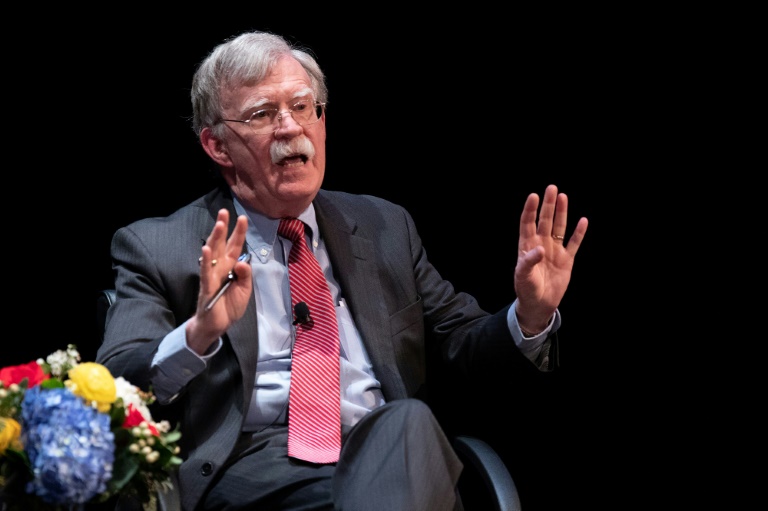
US uncovers Iran 'plot' to kill ex-White House official John Bolton

The US Justice Department said Wednesday it had uncovered an Iranian plot to kill former White House National Security Advisor John Bolton, and announced charges against a member of the Islamic Revolutionary Guard Corps.

The Justice Department said 45-year-old Shahram Poursafi had offered to pay an individual in the United States $300,000 to kill Bolton, the former US ambassador to the United Nations.

The Justice Department said that plan was likely set in retaliation for the US killing of top Guard commander Qassem Soleimani in Iraq in January 2020.

The allegation came as Iran weighs a proposed agreement in Vienna talks to revive the 2015 agreement that aims to prevent Tehran from developing nuclear weapons.

For months Tehran has held up the deal, officially called the Joint Comprehensive Plan of Action (JCPOA), demanding that the United States remove its official designation of the Islamic Revolutionary Guard Corps as a sponsor of terrorism.

“This is not the first time we have uncovered Iranian plots to exact revenge against individuals on US soil and we will work tirelessly to expose and disrupt every one of these efforts,” said US Assistant Attorney General Matthew Olsen.

– FBI informant –

According to the charges, Poursafi tried to arrange Bolton’s murder beginning in October 2021, when he contacted online an unidentified person in the United States, first saying he wanted to commission photographs of Bolton. 

That person passed the Iranian onto another contact, who Poursafi then asked to kill Bolton. 

He offered $250,000, which was then negotiated up to $300,000.

“Poursafi added that he had an additional ‘job,’ for which he would pay $1 million,” the Justice Department said. 

But that second person, court documents say, was an informant for the US Federal Bureau of Investigation.

The informant stalled, waiting for an initial payment, but only in late April did Poursafi send money, paying a total of $100 in cryptocurrency.

Poursafi was charged with the use of interstate commerce facilities in the commission of murder-for-hire, which brings up to 10 years in prison, and with providing and attempting to provide material support to a transnational murder plot, which carries a 15-year sentence.

– Foreign policy ‘hawk’ –

Bolton, one of the leading “hawks” of the US foreign policy establishment and a strong critic of Iran, was national security advisor in the White House of president Donald Trump from April 2018 to September 2019.

In the administration of president George Bush, he was ambassador to the United Nations from 2005-2006.

He was strongly opposed to the 2015 JCPOA putting limits on Iran’s nuclear program, and supported the Trump administration’s unilateral pullout from the pact in May 2018.

The court documents indicated Bolton was aware of the plot and cooperated with investigators, allowing photographs of himself outside his Washington office to be sent to Poursafi. 

The also reveal that Poursafi was receiving intelligence on Bolton’s movements from other sources inside the United States.

In encrypted messages with the informant, Poursafi disclosed that the plot related to Tehran’s desire for revenge for the US killing of Soleimani.

Soleimani was head of Iran’s Revolutionary Guard Corps’ Quds Force and personally maintained its network of allies and proxies across the Gulf region.

He was targeted by a US drone strike just after he landed at Baghdad’s airport on January 7, 2020.

Since that strike Tehran has vowed to extract revenge, a security was ramped up for US official, including for Mike Pompeo, who was secretary of state at the time of the assassination of Soleimani, and before that director of the Central Intelligence Agency.

In a statement Bolton blasted Iran’s government as “liars, terrorists and enemies of the United States,” and urged President Joe Biden to not restore the nuclear agreement.

The European Union, which is brokering the talks, said Monday a final deal had been submitted to the United States and Iran.

In March, the Washington Examiner reported that the department was investigating an Iranian plot against Bolton and that the case was delayed be the nuclear negotiations. The department denied timing the case according to the talks.

“Should Iran attack any of our citizens, to include those who continue to serve the United States or those who formerly served, Iran will face severe consequences,” said current White House National Security Advisor Jake Sullivan.

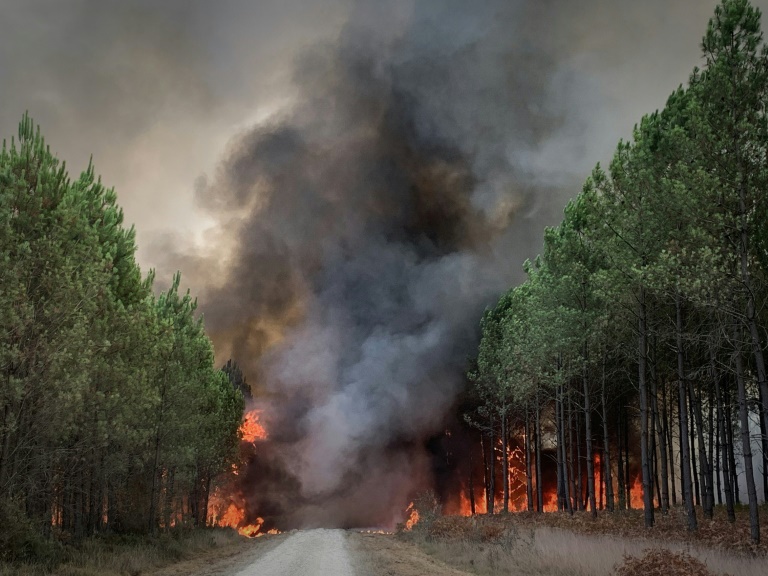
Arson suspected as huge French wildfire reignites

A wildfire that officials thought was under control in southwest France has reignited amid a record drought and extreme heat, possibly the result of arson, officials said Wednesday.

More than 6,000 hectares (15,000 acres) of tinder-dry forest have burned in just 24 hours in the so-called Landiras blaze, the largest of several that scorched the region last month.

It had been brought under control — but not fully extinguished — after burning nearly 14,000 hectares, before flaring up on Tuesday, forcing the evacuation of some 6,000 people.

The government said Interior Minister Gerald Darmanin would travel to the frontline of fire-fighting efforts in the southwestern French region of Gironde on Thursday.

No one has been injured but 16 homes were destroyed or damaged near the village of Belin-Beliet, and officials said six fire engines had been burned.

“The risks are very high” that parched conditions will allow the fire to spread further, said Martin Guespereau, prefect of the Gironde department.

“The weather is very unfavourable because of the heat, the dry air, the record drought and the fact that there is a lot of peat in the ground… the fire didn’t go out in July, it went underground,” he told journalists.

Darmanin said more than 1,000 firefighters were now battling the blaze, adding that investigators suspected arson may be involved.

“There were eight fires that erupted between 8:00 and 9:00 am (0600 and 0700 GMT) that erupted at intervals of a few hundred metres, which is extremely unusual,” he said in Mostuejouls, north of the Mediterranean city of Montpellier, where another fire was raging in the Grands Causses natural park.

He also told reporters that Sweden and Italy would send fire-fighting aircraft to France within 24 hours to help.

– ‘The sky was roaring’ –

“It’s a major fire… much more intense and fast-moving” than at the height of the Landiras blaze last month, Marc Vermeulen of the regional fire-fighting authority told journalists.

“I opened the door last night and there was (a) red wall in front of us, the sky was roaring like the ocean,” said Eliane, a 43-year-old at a temporary shelter for evacuees in Belin-Beliet.

For Christian Fostitchenko, 61, and his partner Monique, waiting at a martial arts dojo in nearby Salles, it was their second evacuation of the summer from their home in Saint-Magne.

“This time we were really scared — the flames were less than 100 metres (328 feet) from the house,” he said.

The fire was spreading toward the A63 motorway, a major artery linking Bordeaux to Spain, with thick smoke forcing the road’s closure between Bordeaux and Bayonne.

France has been buffeted this summer by a record drought that has forced water-use restrictions nationwide, as well as a series of heatwaves that many experts warn are being driven by climate change.

Wildfires have also ignited in the dry hills of the southeast and even in the normally lush areas of Brittany along the coast.

On Wednesday, officials in western France said a wildfire near Angers and Le Mans has burned 1,200 hectares since Monday as nearly 400 firefighters struggle to contain it.

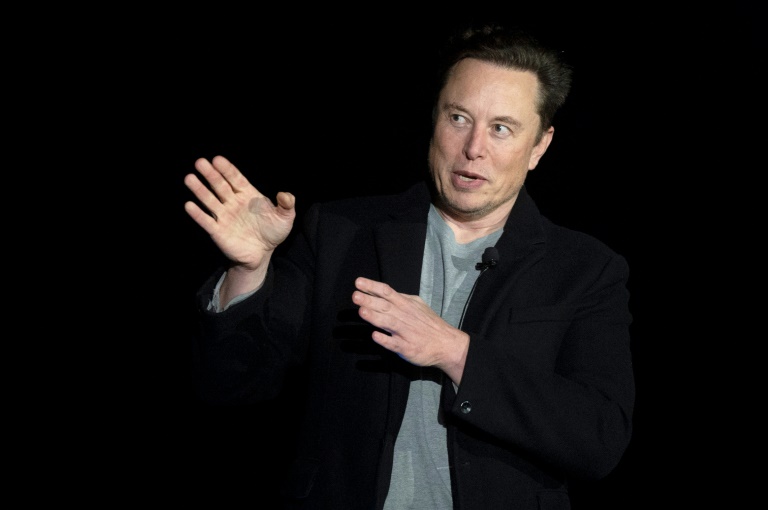
Elon Musk sells nearly $7 bn in Tesla stock

Elon Musk has sold nearly $7 billion worth of Tesla shares, according to legal filings, amid a high-stakes court battle with Twitter over a $44 billion buyout deal.

The billionaire offloaded about 7.9 million shares in the electric carmaker between August 5 and 9, according to documents filed with the Securities and Exchange Commission on Tuesday.

“In the (hopefully unlikely) event that Twitter forces this deal to close and some equity partners don’t come through, it is important to avoid an emergency sale of Tesla stock,” Musk, the world’s richest man, said on Twitter late Tuesday.

The social media network is locked in a legal battle with the mercurial Tesla boss over his effort to walk away from the April agreement to buy the company, and a judge has ordered the trial to begin in October.

Musk has filed a countersuit, accusing Twitter of fraud and alleging the platform misled him about key aspects of its business before he agreed to a $44 billion deal.

The latest move comes after Musk sold around $8.5 billion worth of Tesla shares in April as he was preparing to finance the Twitter deal. He tweeted at the time: “No further TSLA sales planned after today.”

Tesla had gained 2.2 percent to $868.34 by midday Wednesday, while Twitter jumped 3.4 percent to $44.28.

Musk has now sold about $32 billion worth of Tesla shares since November.

Dan Ives de Wedbush Securities said he thinks the Twitter purchase will go ahead in the end.

“Musk has now sold enough TSLA stock to fund the Twitter deal which looks more likely,” he told AFP. “This selling pressure has been an overhang on Tesla’s stock and for now the pressure is gone as the agita is gone.”

But he notes in an analysis that there are multiple options to the drama.

“We can also see Musk trying to resolve this powder keg situation before the Twitter deal officially heads to court in October,” Ives said.

Tesla share prices have been tied to the fate of the Twitter deal in recent weeks, first slumping over concerns that pursuing the purchase could distract Musk and lead to unnecessary financial risk, and then rebounding when he said he wanted to abandon the takeover.

The Twitter deal included a provision that if it fell apart, the party breaking the agreement would pay a termination fee of $1 billion under certain circumstances.

At a net worth of $250 billion, Musk tops the Bloomberg Billionaires Index, although he has lost $20.1 billion since the start of the year, mainly due to the decline in Tesla’s stock price.

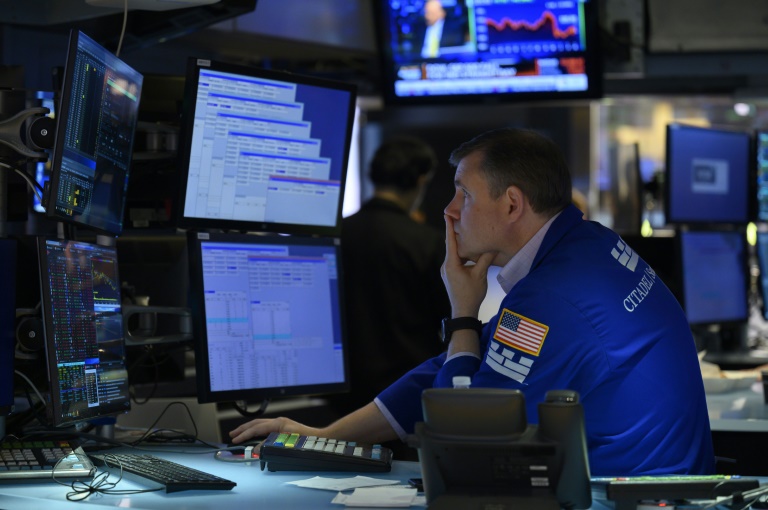
Stocks jump on easing US inflation

Stock markets bounced on Wednesday as better-than-expected US inflation data raised hopes that the US Federal Reserve will tone down its aggressive interest-rate policy.

With energy costs dropping in recent weeks, the US consumer price index eased to an annual rate of 8.5 percent in July from a 40-year high of 9.1 percent the previous month, the Labor Department reported.

Signs that inflation could be coming off the boil in the world’s biggest economy could persuade the US Fed to tighten monetary conditions much more gradually than first anticipated.

Investors had been worried that too steep an increase in borrowing costs could choke off economic recovery. 

Wall Street soared on the news, while the dollar took a tumble.

European stock markets closed firmly in the black after falling earlier in the day.

“The slowdown in US inflation was anticipated, but was sharper than economists had expected,” said Asteres analyst Sylvain Bersinger.

“Softer US inflation will brake the interest rate hikes.”

Briefing.com analyst Patrick O’Hare agreed.

“The key takeaway from the report is that it supports the peak inflation view, which in turn supports the market’s hope that the Fed will temper its aggressive rate-hike approach in coming months,” he wrote.

The data on Wednesday come at a sensitive time for world markets, which have been buffeted by the war in Ukraine, supply chain snarls and rising China-US tensions over Taiwan.

– Oil down –

While the latest earnings season has been less painful than feared, there are increasing signs that the economic slowdown is beginning to impact companies, with some major firms — including Apple and Amazon — providing downbeat outlooks.

Chip-maker Micron became the latest, saying revenue would likely come in at the low end of its forecasts in the fourth quarter owing to weak demand.

A day before, rival Nvidia unveiled disappointing results.

On the oil markets, crude prices remain stuck around six-month lows, as the prospect of lower demand caused by a possible recession has essentially wiped out all of the gains seen since Russia’s invasion of its neighbour in February.

But Edward Moya, analyst at OANDA trading group, said the market was unlikely to fall much further. 

“Whatever crude demand destruction that occurs from a weakening global economy won’t be able to drag down oil prices much lower given how low the supply outlook remains,” he said. 

– Key figures at around 1545 GMT –

New York – Dow: UP 1.6 percent at 33,287.33 points

London – FTSE 100: UP 0.3 percent at 7,507.11 (close)

Frankfurt – DAX: UP 1.2 percent at 13,700.93 (close)

Paris – CAC 40: UP 0.5 percent at 6,523.44 (close)

EURO STOXX 50: UP 0.2 percent at 3,657.09

Tokyo – Nikkei 225: DOWN 0.7 percent at 27,819.33 (close)

Hong Kong – Hang Seng Index: DOWN 2.0 percent at 19,610.84 (close)

Shanghai – Composite: DOWN 0.5 percent at 3,230.02 (close)

Euro/dollar: UP at $1.0340 from $1.0213 Tuesday

Pound/dollar: UP at $1.2244 from $1.2071

Euro/pound: DOWN at 84.43 pence from 84.57 pence

Dollar/yen: DOWN at 132.58 yen from 135.12 yen

West Texas Intermediate: DOWN 0.5 percent at $89.98 per barrel

Brent North Sea crude: DOWN 0.6 percent at $95.72 per barrel

burs-spm/kjm

Close Bitnami banner
Bitnami