AFP

Stocks jump on easing US inflation

Stock markets bounced on Wednesday as better-than-expected US inflation data raised hopes that the US Federal Reserve will tone down its aggressive interest-rate policy.

With energy costs dropping in recent weeks, the US consumer price index eased to an annual rate of 8.5 percent in July from a 40-year high of 9.1 percent the previous month, the Labor Department reported.

Signs that inflation could be coming off the boil in the world’s biggest economy could persuade the US Fed to tighten monetary conditions much more gradually than first anticipated.

Investors had been worried that too steep an increase in borrowing costs could choke off economic recovery. 

Wall Street soared on the news, while the dollar took a tumble.

European stock markets closed firmly in the black after falling earlier in the day.

“The slowdown in US inflation was anticipated, but was sharper than economists had expected,” said Asteres analyst Sylvain Bersinger.

“Softer US inflation will brake the interest rate hikes.”

Briefing.com analyst Patrick O’Hare agreed.

“The key takeaway from the report is that it supports the peak inflation view, which in turn supports the market’s hope that the Fed will temper its aggressive rate-hike approach in coming months,” he wrote.

The data on Wednesday come at a sensitive time for world markets, which have been buffeted by the war in Ukraine, supply chain snarls and rising China-US tensions over Taiwan.

– Oil down –

While the latest earnings season has been less painful than feared, there are increasing signs that the economic slowdown is beginning to impact companies, with some major firms — including Apple and Amazon — providing downbeat outlooks.

Chip-maker Micron became the latest, saying revenue would likely come in at the low end of its forecasts in the fourth quarter owing to weak demand.

A day before, rival Nvidia unveiled disappointing results.

On the oil markets, crude prices remain stuck around six-month lows, as the prospect of lower demand caused by a possible recession has essentially wiped out all of the gains seen since Russia’s invasion of its neighbour in February.

But Edward Moya, analyst at OANDA trading group, said the market was unlikely to fall much further. 

“Whatever crude demand destruction that occurs from a weakening global economy won’t be able to drag down oil prices much lower given how low the supply outlook remains,” he said. 

– Key figures at around 1545 GMT –

New York – Dow: UP 1.6 percent at 33,287.33 points

London – FTSE 100: UP 0.3 percent at 7,507.11 (close)

Frankfurt – DAX: UP 1.2 percent at 13,700.93 (close)

Paris – CAC 40: UP 0.5 percent at 6,523.44 (close)

EURO STOXX 50: UP 0.2 percent at 3,657.09

Tokyo – Nikkei 225: DOWN 0.7 percent at 27,819.33 (close)

Hong Kong – Hang Seng Index: DOWN 2.0 percent at 19,610.84 (close)

Shanghai – Composite: DOWN 0.5 percent at 3,230.02 (close)

Euro/dollar: UP at $1.0340 from $1.0213 Tuesday

Pound/dollar: UP at $1.2244 from $1.2071

Euro/pound: DOWN at 84.43 pence from 84.57 pence

Dollar/yen: DOWN at 132.58 yen from 135.12 yen

West Texas Intermediate: DOWN 0.5 percent at $89.98 per barrel

Brent North Sea crude: DOWN 0.6 percent at $95.72 per barrel

burs-spm/kjm
Biden calls on Syria to help secure release of journalist Austin Tice

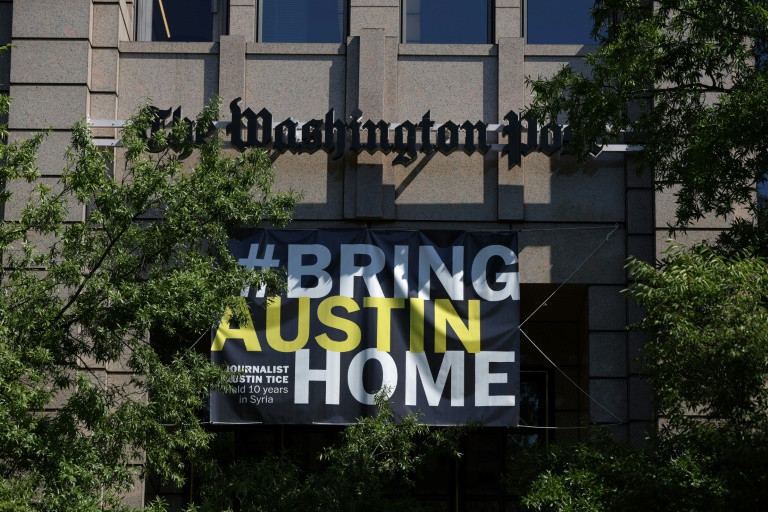
US President Joe Biden on Wednesday called on Syria to help secure the release of American journalist Austin Tice, who was abducted a decade ago in Damascus.

“We know with certainty that he has been held by the Syrian regime,” Biden said in a statement. “We have repeatedly asked the government of Syria to work with us so that we can bring Austin home.

“On the tenth anniversary of his abduction, I am calling on Syria to end this and help us bring him home,” he said.

Biden said Tice, a former US Marine turned journalist, “put the truth above himself and traveled to Syria to show the world the real cost of war.”

“There is no higher priority in my administration than the recovery and return of Americans held hostage or wrongfully detained abroad,” Biden said.

“That is a pledge I have made to the American people and to Austin’s parents, and it is one that I am determined to uphold,” he added.

Tice was a freelance photojournalist working for Agence France-Presse, McClatchy News, The Washington Post, CBS and other news organizations when he disappeared after being detained at a checkpoint near Damascus on August 14, 2012.

Thirty-one years old at the time he was captured, Tice appeared blindfolded in the custody of an unidentified group of armed men in a video a month later but there has been little news since.

Trump declines to answer questions in New York civil probe

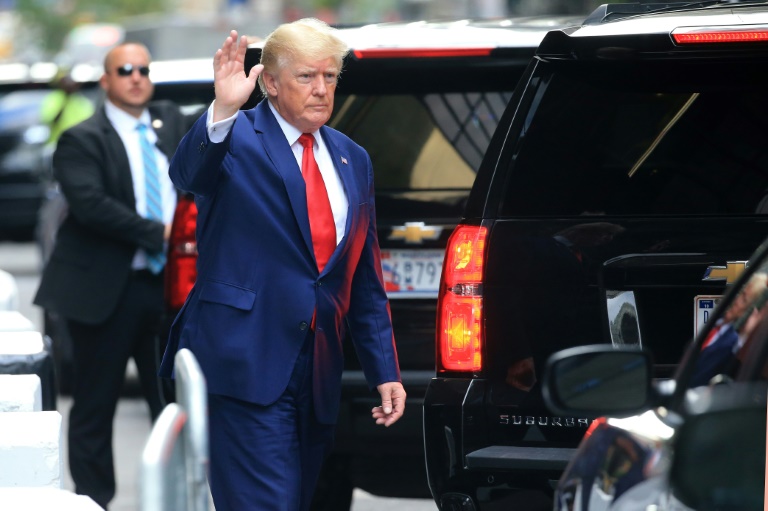
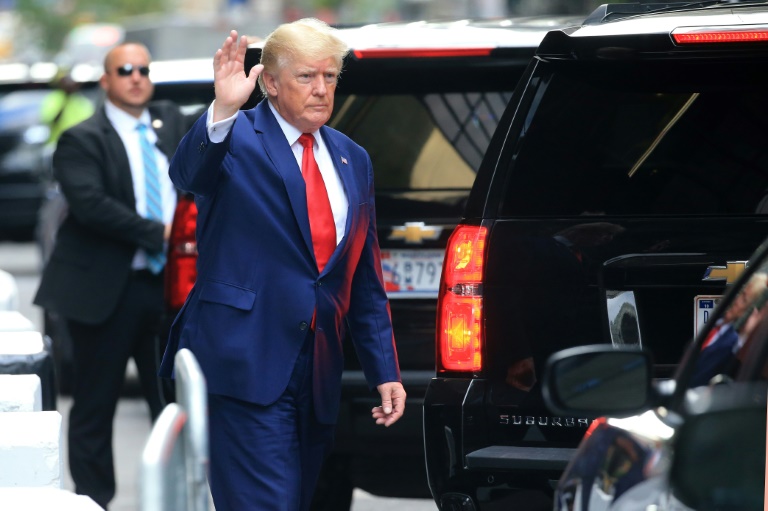
Donald Trump on Wednesday declined to answer questions under oath in New York over alleged fraud at his family business, as legal pressures pile on the former president whose house was raided by the FBI just two days ago.

Trump said he had “no choice” but to invoke the fifth amendment — which allows individuals to remain silent under questioning to protect against self-incrimination — during a deposition at the New York attorney general’s office.

In a statement apparently issued after the deposition began, Trump said, “I declined to answer the questions under the rights and privileges afforded to every citizen under the United States Constitution,” adding he took the advice from his legal counsel.

“I once asked, ‘If you’re innocent, why are you taking the Fifth Amendment?’ Now I know the answer to that question,” he continued. 

“When your family, your company, and all the people in your orbit have become the targets of an unfounded, politically motivated Witch Hunt supported by lawyers, prosecutors, and the Fake News Media, you have no choice.”

The deposition follows an extraordinary Federal Bureau of Investigation search earlier this week on Trump’s Mar-a-Lago residence in Florida, signaling an escalation of legal probes into the 45th president.

Trump took aim at the search in his statement Wednesday, saying, “The current Administration and many prosecutors in this Country have lost all moral and ethical bounds of decency.” 

He arrived early Wednesday in a convoy of cars guarded by the secret service at the offices of New York Attorney General Letitia James, whose investigation is one of several active probes into the brash billionaire’s business practices and other actions.

James suspects the Trump Organization of fraudulently overstated the value of real estate properties when applying for bank loans, while understating them with tax authorities to pay less in taxes.

If James, a Democrat, finds any evidence of financial misconduct, she can sue the Trump Organization for damages but can not file criminal charges, as it is a civil investigation.

The Manhattan district attorney’s office, meanwhile, is running a parallel probe into the Trump Organization that does have the potential for criminal charges. That investigation could be a reason Trump’s legal team advised him to remain silent, as his deposition could energize the case.

– Another White House run? –

The former president did not mince words in attacking James, calling her a “failed politician who has intentionally colluded with others to carry out this phony years-long crusade.”

“We cannot permit a renegade and out-of-control prosecutor to use this investigation as a means of advancing her political career,” Trump wrote in his statement.

The Trumps have denied any wrongdoing. Trump and his eldest children, Donald Jr and Ivanka, had been due to start testifying under oath in July, but the depositions were postponed due to the death of the former president’s first wife.

Trump’s son Eric hit out the state attorney general in a tweet Wednesday, calling her “corrupt.”

Trump’s myriad legal battles have the potential to complicate any bid for another run for the White House in 2024.

US authorities’ search of Donald Trump’s Florida residence drew renewed attention to the various investigations the former Republican leader is embroiled in.

The FBI — which is led by Christopher Wray, a Trump appointee — declined to provide a reason for the raid.

But US media outlets said agents were conducting a court-authorized search related to the potential mishandling of classified documents that had been sent to Mar-a-Lago after Trump left the White House in January 2021.

Trump voiced outrage over the search, dubbing it “weaponization of the justice system.”

At the White House, Press Secretary Karine Jean-Pierre said President Joe Biden did not have any advance notice about the raid and respected the independence of the Justice Department.

Since leaving office, Trump has remained the country’s most divisive figure, continuing to sow falsehoods that he won the 2020 presidential vote.

He also has faced intense legal scrutiny for his efforts to overturn the results of the 2020 election and over the January 6 attack on the US Capitol by his supporters.

Trump declines to answer questions in New York civil probe

Donald Trump on Wednesday declined to answer questions under oath in New York over alleged fraud at his family business, as legal pressures pile on the former president whose house was raided by the FBI just two days ago.

Trump said he had “no choice” but to invoke the fifth amendment — which allows individuals to remain silent under questioning to protect against self-incrimination — during a deposition at the New York attorney general’s office.

In a statement apparently issued after the deposition began, Trump said, “I declined to answer the questions under the rights and privileges afforded to every citizen under the United States Constitution,” adding he took the advice from his legal counsel.

“I once asked, ‘If you’re innocent, why are you taking the Fifth Amendment?’ Now I know the answer to that question,” he continued. 

“When your family, your company, and all the people in your orbit have become the targets of an unfounded, politically motivated Witch Hunt supported by lawyers, prosecutors, and the Fake News Media, you have no choice.”

The deposition follows an extraordinary Federal Bureau of Investigation search earlier this week on Trump’s Mar-a-Lago residence in Florida, signaling an escalation of legal probes into the 45th president.

Trump took aim at the search in his statement Wednesday, saying, “The current Administration and many prosecutors in this Country have lost all moral and ethical bounds of decency.” 

He arrived early Wednesday in a convoy of cars guarded by the secret service at the offices of New York Attorney General Letitia James, whose investigation is one of several active probes into the brash billionaire’s business practices and other actions.

James suspects the Trump Organization of fraudulently overstated the value of real estate properties when applying for bank loans, while understating them with tax authorities to pay less in taxes.

If James, a Democrat, finds any evidence of financial misconduct, she can sue the Trump Organization for damages but can not file criminal charges, as it is a civil investigation.

The Manhattan district attorney’s office, meanwhile, is running a parallel probe into the Trump Organization that does have the potential for criminal charges. That investigation could be a reason Trump’s legal team advised him to remain silent, as his deposition could energize the case.

– Another White House run? –

The former president did not mince words in attacking James, calling her a “failed politician who has intentionally colluded with others to carry out this phony years-long crusade.”

“We cannot permit a renegade and out-of-control prosecutor to use this investigation as a means of advancing her political career,” Trump wrote in his statement.

The Trumps have denied any wrongdoing. Trump and his eldest children, Donald Jr and Ivanka, had been due to start testifying under oath in July, but the depositions were postponed due to the death of the former president’s first wife.

Trump’s son Eric hit out the state attorney general in a tweet Wednesday, calling her “corrupt.”

Trump’s myriad legal battles have the potential to complicate any bid for another run for the White House in 2024.

US authorities’ search of Donald Trump’s Florida residence drew renewed attention to the various investigations the former Republican leader is embroiled in.

The FBI — which is led by Christopher Wray, a Trump appointee — declined to provide a reason for the raid.

But US media outlets said agents were conducting a court-authorized search related to the potential mishandling of classified documents that had been sent to Mar-a-Lago after Trump left the White House in January 2021.

Trump voiced outrage over the search, dubbing it “weaponization of the justice system.”

At the White House, Press Secretary Karine Jean-Pierre said President Joe Biden did not have any advance notice about the raid and respected the independence of the Justice Department.

Since leaving office, Trump has remained the country’s most divisive figure, continuing to sow falsehoods that he won the 2020 presidential vote.

He also has faced intense legal scrutiny for his efforts to overturn the results of the 2020 election and over the January 6 attack on the US Capitol by his supporters.

World's biggest ice sheet could cause massive sea rise without action: study

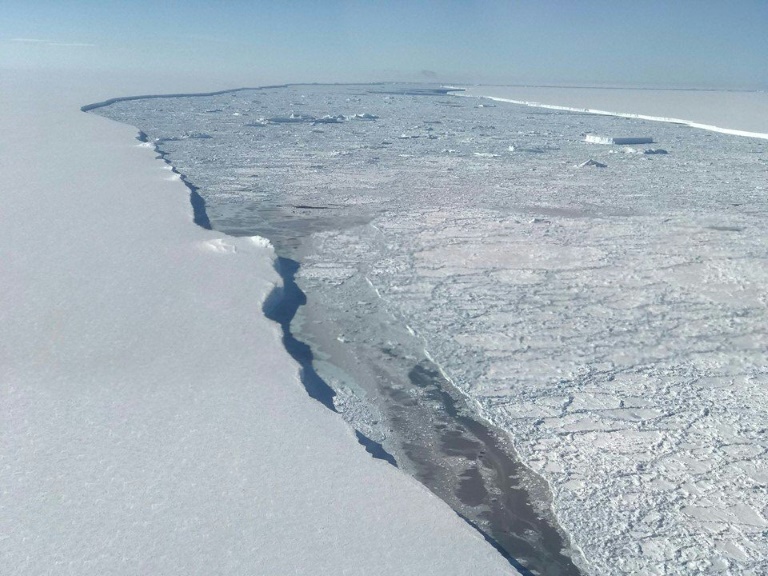
The world’s biggest ice sheet could cause “several metres” of sea-level rise over centuries if the global temperature rises more than 2°C, according to a British study published Wednesday.

Researchers at Durham University concluded that if global greenhouse emissions remain high, the melting East Antarctica Ice Sheet (EAIS) could cause nearly half a metre of sea-level rise by 2100. Their analysis was published in the scientific journal Nature.

If emissions remain high beyond that, the EAIS could contribute around one to three metres to global sea levels by 2300, and two to five metres by 2500, they said.

However, if emissions were dramatically reduced, EAIS could contribute around two centimetres of sea level rise by 2100, according to the assessment. 

This would represent far less than the ice loss expected from Greenland and West Antarctica. 

“A key conclusion from our analysis is that the fate of the East Antarctic Ice Sheet remains very much in our hands,” said lead author Chris Stokes, from Durham University’s Department of Geography.

“This ice sheet is by far the largest on the planet, containing the equivalent of 52 metres of sea level and it’s really important that we do not awaken this sleeping giant.

“Restricting global temperature increases to below the 2°C limit set by the Paris Climate Agreement should mean that we avoid the worst-case scenarios, or perhaps even halt the melting of the East Antarctic Ice Sheet, and therefore limit its impact on global sea level rise,” he added.

– Computer simulations –

The study did note that the worst scenarios projected were “very unlikely”.

World leaders agreed at the 2015 UN Climate Change Conference in Paris to limit global warming to well below 2°C and pursue efforts to limit the rise to 1.5°C.

The research team, which included scientists from the UK, Australia, France and the US, analysed how the ice sheet responded to past warm periods when making their predictions.

They ran computer simulations to model the effects of different greenhouse gas emission levels and temperatures on the ice sheet by the years 2100, 2300 and 2500.

They found evidence to suggest that three million years ago, when temperatures were around 2-4°C higher than present, part of the EAIS “collapsed and contributed several metres to sea-level rise”.

“Even as recently as 400,000 years ago — not that long ago on geological timescales — there is evidence that a part of the EAIS retreated 700 km inland in response to only 1-2°C of global warming,” they added.

Nerilie Abram, a co-author of the study from the Australian National University in Canberra, warned the sheet “isn’t as stable and protected as we once thought.”

13 killed in Russian strikes near nuclear plant

Ukraine on Wednesday accused Russia of carrying out rocket strikes that killed 13 civilians in areas near a nuclear power plant, as the G7 warned that Russian control of the facility “endangers the region”.

The overnight strikes in the Dnipropetrovsk region in central Ukraine also injured 11 people, with five reported to be in a serious condition.

“It was a terrible night,” regional governor Valentin Reznichenko wrote on Telegram, urging residents to shelter when they hear air raid sirens.

“I am asking and begging you… Don’t let the Russians kill you,” he wrote, adding that Russia had fired a total of 80 rockets at the area.

Most of the casualties were in the town of Marganets, just across the Dnieper River from the Zaporizhzhia nuclear power plant, Europe’s biggest.

Regional council head Mykola Lukashuk said the strikes had hit a local power line, leaving thousands of people without electricity.

– G7 call over nuclear plant –

Ukraine and Russia have accused each other of recent shelling around the plant, which has six reactors.

Ukraine says Russia has stationed hundreds of troops and stored ammunition at the facility since taking it over on March 4, shortly after starting its invasion.

The tensions have brought back memories of the 1986 Chernobyl nuclear disaster in then Soviet Ukraine, which killed hundreds of people and spread radioactive contamination over much of Europe.

The Group of Seven industrialised nations condemned Russia’s occupation and called on Moscow to immediately hand back full control of the plant.

Ukrainian staff operating the plant “must be able to carry out their duties without threats or pressure. It is Russia’s continued control of the plant that endangers the region,” the G7 foreign ministers said in a statement.

The strikes came a day after major blasts at the Saki airfield, a key military base on the Russian-annexed Crimea peninsula.

Moscow insisted that the explosions were caused by detonating ammunition rather than Ukrainian fire and Ukraine has not claimed responsibility.

– ‘There is a lot of shooting’ –

Fighting also ground on in eastern Ukraine, where Russian troops are gradually advancing.

The city of Soledar was under constant shelling, AFP reporters saw, as Russian troops attempted to drive out Ukrainian forces and seize a foothold towards the larger city of Bakhmut.

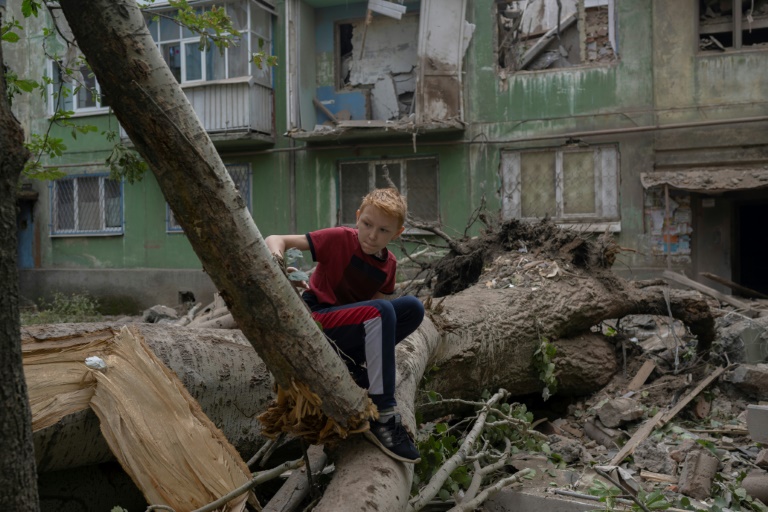
The echoes of cluster bombs and artillery bounced off apartment buildings with their windows shattered, while roads were cratered and shops boarded up or destroyed.

The city was shrouded with black and white smoke arising from artillery and air strikes.

Some of those who remain now live their lives underground in cellars ill-suited as bomb shelters.

“Most have left. It’s very scary. There is a lot of shooting,” said 62-year-old Svitlana Klymenko.

“I just want to leave to grow old in a normal way, die a normal death, not be killed by a missile.”

– Vienna dims street lights –

The war has severely hampered grain supply from Ukraine, leading to an international food crisis as it is one of the world’s biggest producers.

Some ships have been able to leave Ukrainian ports in recent days after a deal with Russia brokered by the United Nations and Turkey.

The first grain shipment to leave on the Sierra Leone-flagged vessel Razoni departed the Ukrainian port of Odessa on August 1 and had been expected to dock in the Lebanese port of Tripoli at the weekend.

But the Ukrainian embassy said a new buyer for the shipment was being sought after the original Lebanese buyer cancelled the order.

A five-month delay after Russia’s invasion “prompted the buyer and the shipping agent to reach agreement on the cancellation of the order,” the Ukraine embassy said in a statement late Tuesday.

It is currently anchored off the Turkish port of Mersin.

Western countries have meanwhile imposed increasingly stringent sanctions on Russia, raising fears that Russia may cut off gas supplies.

EU countries have started putting into place different measures to save energy, with air conditioning curbs coming into force in Spain on Wednesday and Vienna dimming street lighting.

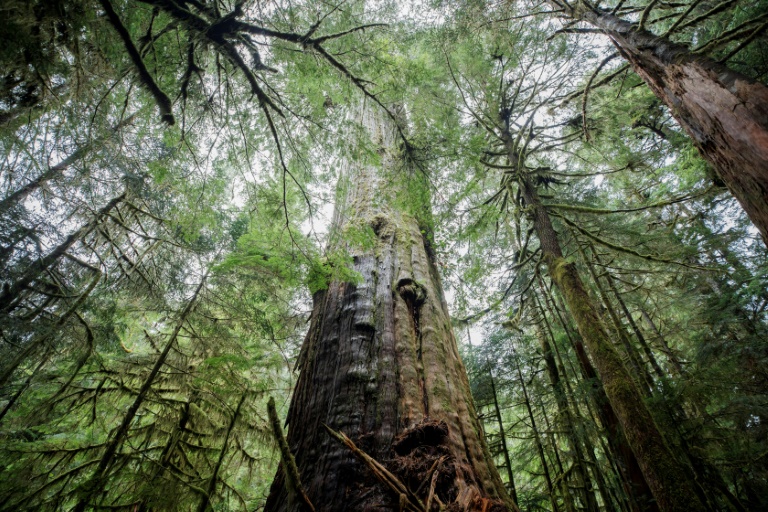
Even modest climate change imperils northern forests: study

Even relatively moderate heating and rainfall loss could dramatically alter the make-up of Earth’s northern forests, risking their biodiversity rich ecosystems and undermining their ability to store planet-warming carbon pollution, researchers said Wednesday.

Boreal forests cover much of Russia, Alaska and Canada and are a major carbon sink, but they are menaced by more frequent wildfires and invasive species outbreaks linked to climate change.

To assess how higher temperatures and less rainfall may impact the tree species most commonly found in the forests, a team of researchers based in the United States and Australia conducted a unique five-year experiment.

Between 2012-2016 they grew some 4,600 saplings of nine tree species — including spruce, fir and pine — in forest sites in northeastern Minnesota.

Using undersoil cables and infrared lamps, the saplings were warmed around the clock at two different temperatures — one lot at 1.6 degrees Celsius hotter than ambient, the second at 3.1C warmer. 

In additional, moveable tarps were positioned over half the plots before storms to capture rainwater and mimic the type of precipitation shifts that climate change is anticipated to bring. 

The study, published in Nature, found that even the trees grown under 1.6C of warming experienced major problems, including reduced growth and increased mortality. 

“I thought we’d see modest declines — of a few percent — in survival and growth for even the boreal species like spruce and fir, but we saw very large increases in mortality and decreases in growth in a number of species,” lead author Peter Reich told AFP. 

The team found that warming on its own, or combined with reduced rainfall, increased juvenile mortality in all nine tree species studied.

– ‘Exponential negative effects’ –

The 2015 Paris goals committed nations to work towards limiting temperature rises to “well below” two degrees Celsius above pre-industrial levels, and to work towards a safer 1.5C cap. 

Wednesday’s research suggests that even this relatively modest heating would have profound impacts on boreal ecosystems.

Current government plans put Earth on course to warm as much as 2.7C this century. 

Previous research has shown that boreal forests are likely to experience both positive and negative effects from climate change, such as a longer growing season in the far north. 

The experiment showed that modest warming — in the 1.6C sample — enhanced the growth of some hardwood species such as maple and oak. These are currently scarce in boreal forests but abundant in more temperate, southerly forests. 

The team however suggested that the southern hardwoods are likely too rare to fill the void left by other species such as conifers, which fared very poorly in the experiment. 

Reich, director of the University of Michigan’s Institute for Global Change Biology, said that increased CO2 levels were likely to have “modest positive effects” on some species.  

“But as CO2 and temperatures continue to rise, plants will be saturated with CO2, so further increases will have less and less effect,” he said. 

“Whereas the negative effects of climate change will get worse exponentially.”

Reich said that warming was likely to impact boreal forests’ ability to store carbon due to poorer plant regeneration.

“Additionally, more fires, which will accompany warming, will cause greater losses of carbon back to the atmosphere too,” he said.

Ailing beluga put down as last-ditch French rescue bid fails

An ailing beluga whale that strayed into France’s Seine river was put down by vets Wednesday after a last-ditch rescue attempt failed because of its rapidly deteriorating health, local officials said.

The fate of the whale captured the hearts of people across the world since it was first spotted in the highly unusual habitat of the river that flows through Paris, far from its usual Arctic waters.

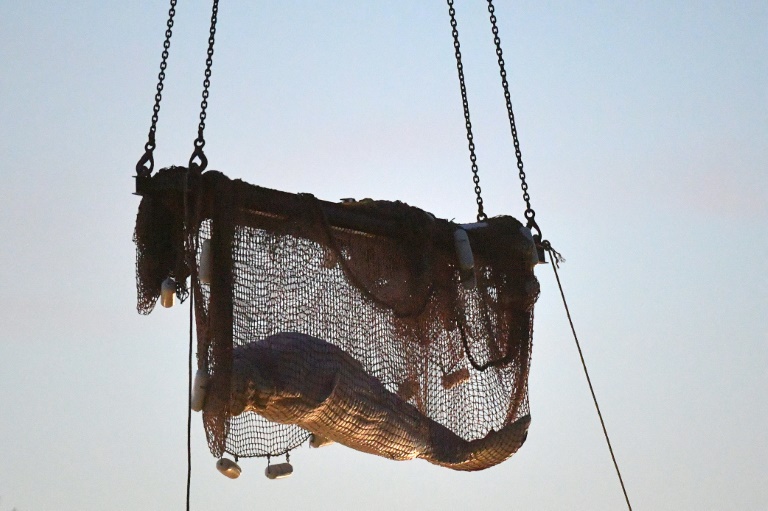
Rescuers had worked overnight to lift the male out of the Seine by crane for transfer to a saltwater pen, in a precarious effort to save the life of the mammal, which was no longer eating.

It was then driven at a painstakingly slow speed north to the Normandy port of Ouistreham, where vets hoped to release the animal into a harbourside pen and then possibly into the wild.

But the six vets unanimously decided after examining the beluga on arrival in Ouistreham that there was no other option than to put it down, the local authority of the Calvados region said.

“Despite the technical and logistical efforts, the condition of the cetacean unfortunately deteriorated during the trip,” it said. 

“Examinations showed that the beluga was in a state of great weakness and its respiratory activity failing. The decision was therefore taken collectively, with the veterinarians, to euthanize it,” it added.

– ‘Tragic outcome’ –

After nearly six hours of work by dozens of divers and rescuers, the 800-kilogramme (1,800-pound) cetacean had been lifted from the river by a net and crane at around 4:00 am (0200 GMT) and placed on a barge under the immediate care of a dozen veterinarians.

The 24 divers involved in the operation and the rescuers handling the ropes had to try several times to lure the animal into the nets to be lifted out of the water.

The beluga was then given a health check and driven to Ouistreham.

“During the journey the vets noted a worsening of his health and in particular the breathing,” said Florence Ollivet-Courtois, a vet for the local emergency services, in a video posted on social media.

“The animal was not getting enough air and suffering visibly. We therefore decided that it made no sense to set it free and proceeded to euthanasia.”

It remains unclear why the beluga had strayed this far south and Ollivet-Courtois said an autopsy may give further clues about is condition.  

The Sea Shepherd NGO, which has been assisting in the rescue, said on Twitter that the rescue operation was “risky” but “essential” to give the animal a chance.

“Following the deterioration of his condition, the vets took the decision to euthanize him. We are devastated by this tragic outcome that we knew was very likely,” it said.

The four-metre (13-foot) whale was discovered more than a week ago heading towards Paris and was stranded about 130 kilometres (80 miles) inland from the English Channel at Saint-Pierre-la-Garenne in Normandy.

Since Friday, the animal’s movement inland had been blocked by a lock some 70 kilometres northwest of Paris, and its health deteriorated after it refused to eat.

– Killer whale also died –

This is the second drama involving a big marine mammal in an unexpected area to grip France in the last months.

A sick killer whale — a member of the dolphin family also known as an orca — was spotted in the Seine in May but died after attempts failed to guide the animal back to the sea.

Interest in the beluga’s fate has spread far beyond France, generating a large influx of financial donations and other aid from conservation groups as well as individuals, officials said.

While belugas migrate south in the autumn to feed as ice forms in their native Arctic waters, they rarely venture so far.

According to France’s Pelagis Observatory, which specialises in sea mammals, the nearest beluga population is off the Svalbard archipelago, north of Norway, 3,000 kilometres from the Seine.

The trapped whale is only the second beluga ever sighted in France. The first was pulled out of the Loire estuary in a fisherman’s net in 1948.

Facebook use plunges among US teens: survey

US teens have left Facebook in droves over the past seven years, preferring to spend time at video-sharing venues YouTube and TikTok, according to a Pew Research Center survey data out Wednesday.

TikTok has “emerged as a top social media platform for US teens” while Google-run YouTube “stands out as the most common platform used by teens,” the report’s authors wrote.

Pew’s data comes as Facebook-owner Meta is in a battle with TikTok for social media primacy, trying to keep the maximum number of users as part of its multi-billion dollar ad-driven business.

The report said some 95 percent of the teens surveyed said they use YouTube, compared with 67 percent saying they are TikTok users.

Just 32 percent of teens surveyed said they log on to Facebook — a big drop from the 71 percent who reported being users during a similar survey some seven years ago.

Once the place to be online, Facebook has become seen as a venue for older folks with young drawn to social networks where people express themselves with pictures and video snippets.

About 62 percent of the teens said they use Instagram, owned by Facebook-parent Meta, while 59 percent said they used Snapchat, researchers stated.

“A quarter of teens who use Snapchat or TikTok say they use these apps almost constantly, and a fifth of teen YouTube users say the same,” the report said.

In a bit of good news for Meta’s business, its photo and video sharing service Instagram was more popular with US teens than it was in the 2014-2015 survey.

Meanwhile, less than a quarter of the teens surveyed said they ever use Twitter, the report said.

The study also confirmed what casual observers may have suspected, 95 percent of US teens say they have smartphones, while nearly as many of them have desktop or laptop computers.

And the share of teens who say they are online almost constantly has nearly doubled to 46 percent when compared to survey results from seven years ago, researchers noted.

The report was based on a survey of 1,316 US teens, ranging in age from 13 years old to 17 years old, conducted from mid-April to early May of this year, according to Pew.

Facebook use plunges among US teens: survey

US teens have left Facebook in droves over the past seven years, preferring to spend time at video-sharing venues YouTube and TikTok, according to a Pew Research Center survey data out Wednesday.

TikTok has “emerged as a top social media platform for US teens” while Google-run YouTube “stands out as the most common platform used by teens,” the report’s authors wrote.

Pew’s data comes as Facebook-owner Meta is in a battle with TikTok for social media primacy, trying to keep the maximum number of users as part of its multi-billion dollar ad-driven business.

The report said some 95 percent of the teens surveyed said they use YouTube, compared with 67 percent saying they are TikTok users.

Just 32 percent of teens surveyed said they log on to Facebook — a big drop from the 71 percent who reported being users during a similar survey some seven years ago.

Once the place to be online, Facebook has become seen as a venue for older folks with young drawn to social networks where people express themselves with pictures and video snippets.

About 62 percent of the teens said they use Instagram, owned by Facebook-parent Meta, while 59 percent said they used Snapchat, researchers stated.

“A quarter of teens who use Snapchat or TikTok say they use these apps almost constantly, and a fifth of teen YouTube users say the same,” the report said.

In a bit of good news for Meta’s business, its photo and video sharing service Instagram was more popular with US teens than it was in the 2014-2015 survey.

Meanwhile, less than a quarter of the teens surveyed said they ever use Twitter, the report said.

The study also confirmed what casual observers may have suspected, 95 percent of US teens say they have smartphones, while nearly as many of them have desktop or laptop computers.

And the share of teens who say they are online almost constantly has nearly doubled to 46 percent when compared to survey results from seven years ago, researchers noted.

The report was based on a survey of 1,316 US teens, ranging in age from 13 years old to 17 years old, conducted from mid-April to early May of this year, according to Pew.

Close Bitnami banner
Bitnami