AFP

'Unprecedented' fire rips through munitions site in Berlin forest

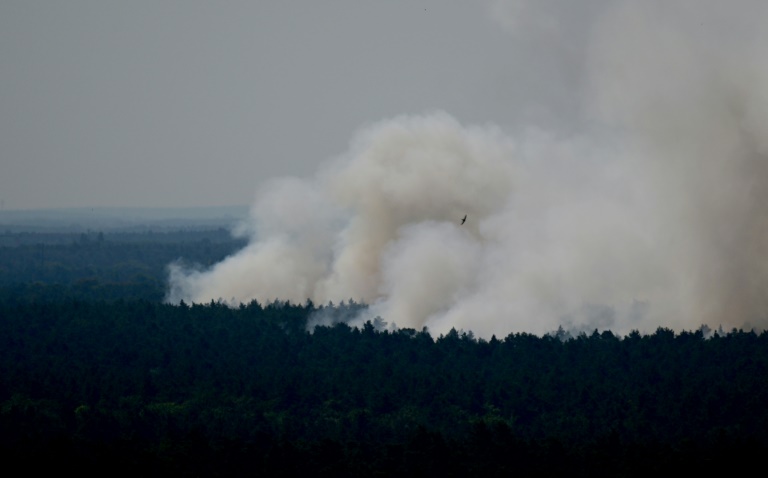
An “unprecedented” fire broke out Thursday around a German police munitions storage site in a popular forest in western Berlin, sending plumes of smoke into the skies and setting off a series of explosions.

The fire began in the Grunewald forest in the early hours of the morning, with residents reporting a series of explosions. 

Firefighters were initially unable to tackle the blaze directly due to the danger of further blasts, with emergency services setting up a 1,000-metre (3,280-foot) safety zone around the site. 

Around 250 emergency personnel were deployed to the site.

The fire had spread across 50 hectares by the evening, according to police, but the emergency services were hoping to bring it under control overnight.

The most dangerous zones have been identified and firefighters have been cleared to proceed to within 500 metres of the blaze in some areas, they said.

The army had earlier sent in a tank aimed at evacuating munitions at the affected storage site as well as remote-controlled de-mining robots, while drones circled the air to assess the emergency.

– Heatwave –

Water cannons were also deployed around the safety zone to prevent the fire from spreading.

But authorities said no firefighting helicopters were available as they were already in use to tackle forest fires in eastern Germany.

They also said the 1,000-metre safety zone applied to the air, so there was a limit to how useful it would be to drop water on the fire from above.

Berlin mayor Franziska Giffey interrupted her holiday to visit the scene, calling the events “unprecedented in the post-war history of Berlin”.

Giffey advised Berliners to close their windows but said the danger was minimal as there were no residential buildings within a two-kilometre (1.2-mile) radius and so no need to issue evacuation orders.

Road and rail traffic had been disrupted but was expected to return to normal in the course of the evening. 

The fire came as a heatwave swept across Germany, with temperatures hitting 39 degrees Celsius (102 Fahrenheit) on Thursday.

Scientists say climate change is making heatwaves around the world more frequent and more intense, which increases the risk of fires.

Germany has suffered a series of forest fires this summer, with Brandenburg — the state that surrounds Berlin — among the hardest hit areas, along with the mountainous parts of Saxony state.

– Unexploded bombs –

Police said they were investigating what set off the fire in Grunewald.

The store holds munitions uncovered by police, but also unexploded World War II-era ordnance which is regularly dug up during construction works.

German media questioned the wisdom of having a bomb disposal site located in a major city.

“At least 25 tons of World War II ammunition and illegal fireworks were hoarded at the munitions site there, in the middle of the forest. How can this be?” Berlin newspaper BZ asked.

Cyclist Hellmut Schmidt, 64, who commutes through the forest to work, told AFP that “when you see all these fires, of course you worry”.

“But I don’t know where else you could have (a munitions site) in Berlin… If it was further from the city, then it would also be dangerous with the transport because something could explode,” he said.

Giffey said local authorities would “have to think about how to deal with this munitions site in the future and whether such a place is the right one in Berlin”.

The German capital is rarely hit by forest fires, even though its 29,000 hectares of forests make it one of the greenest cities in the world.

Heavy thunderstorms are expected to sweep into the country from the west on Friday, the German weather service said.

A cold front is predicted to bring temperatures down by more than 10C overnight in western Germany, falling to around 20-25C on Friday.
European stocks rise as BoE unleashes big rate hike

European stocks pushed slightly higher on Thursday as the Bank of England delivered its biggest interest rate hike in 27 years and traders tracked Chinese military drills around Taiwan.

Although economists had anticipated the 0.50-percentage point rise, the UK central bank also grimly predicted the country would dip into a lengthy recession later in the year.

“The UK economy does not look like it is positioned for a prolonged downturn, so that should allow the mostly hawkish BoE to be aggressive with tightening,” said Edward Moya, from OANDA trading platform.

The rate hike mirrored aggressive monetary policy from the US Federal Reserve and the European Central Bank last month, as the world races to cool red-hot inflation that has been fuelled by Russia’s invasion of Ukraine.

Underscoring the urgency, the Bank of England also predicted UK inflation would peak this year at just over 13 percent, its highest level since 1980.

Analyst Kallum Pickering, from Berenberg, said the UK central bank’s moves would “contribute to a further tightening of UK financial conditions”.

“While this will do little to dampen the likely further rise in inflation near-term, it should help to contain inflation expectations. This will reduce the risk that high inflation persists once its mostly external triggers have faded,” he said. 

After the rate hike announcement, the British pound sank 0.7 percent versus the euro and dollar as dealers fretted over the gloomy outlook.

Shares in London closed just in the black, while Paris was 0.6 percent higher and Frankfurt advanced 0.5 percent. Wall Street stocks dipped slightly in mid-morning trading ahead of key US jobs data.

– Oil tumbles –

Oil prices tumbled with the main US oil contract falling back down to levels not seen since before the war in Ukraine sent crude prices soaring.

West Texas Intermediate dropped below the $90-mark in afternoon trading in Europe.

The fall comes after a decision by the OPEC+ oil cartel, led by Saudi Arabia and Russia, a day earlier to undertake just a small increase in production.

US energy data also revealed unexpectedly weak gasoline demand.

“The oil market is a mixed bag as demand destruction is met with limited spare capacity,” said OANDA’s Moya.

Most Asian indices tracked a Wall Street rally the previous session fuelled by healthy economic and earnings data, despite lingering Taiwan concerns.

New York surged on Wednesday after a report on the crucial US services sector showed surprise improvement, soothing recession fears in the world’s top economy.

Markets have swung this week after a number of Federal Reserve officials lined up to suggest there were still some big US rate hikes likely and talk of cuts next year might be overdone.

– Pelosi visit –

The mood in Asia was also a lot more settled after the upheaval of this week’s visit to Taiwan by US House Speaker Nancy Pelosi, which sparked outrage in China with warnings of stern military and economic responses.

Beijing has suspended a limited amount of cross-strait imports and exports, and on Thursday began its largest-ever military exercises encircling Taiwan that are expected to last for days.

Soon after, Taiwan’s defence ministry said it was “preparing for war without seeking war”.

Taipei stocks fell again on worries that the Chinese manoeuvres would hit shipping lanes and flights into Taiwan.

– Key figures at around 1545 GMT –

New York – Dow: DOWN 0.4 percent at 32,680.46 points

EURO STOXX 50: UP 0.6 percent at 3,754.60

London – FTSE 100: FLAT at 7,448.06 (close)

Frankfurt – DAX: UP 0.5 percent at 13,662.68 (close)

Paris – CAC 40: UP 0.6 percent at 6,513.39 (close) 

Tokyo – Nikkei 225: UP 0.7 percent at 27,932.20 (close)

Hong Kong – Hang Seng Index: UP 2.1 percent at 20,174.04 (close)

Shanghai – Composite: UP 0.8 percent at 3,189.04 (close)

Euro/dollar: UP at $1.0214 from $1.0166 Wednesday

Pound/dollar: DOWN at $1.2132 from $1.2149

Euro/pound: UP at 84.22 pence from 83.63 pence

Dollar/yen: DOWN at 133.35 yen from 133.86 yen

Brent North Sea crude: DOWN 2.8 percent at $94.09 per barrel

West Texas Intermediate: DOWN 2.6 percent at $88.32 per barrel

burs/rfj-kjm/raz

European stocks rise as BoE unleashes big rate hike

European stocks pushed slightly higher on Thursday as the Bank of England delivered its biggest interest rate hike in 27 years and traders tracked Chinese military drills around Taiwan.

Although economists had anticipated the 0.50-percentage point rise, the UK central bank also grimly predicted the country would dip into a lengthy recession later in the year.

“The UK economy does not look like it is positioned for a prolonged downturn, so that should allow the mostly hawkish BoE to be aggressive with tightening,” said Edward Moya, from OANDA trading platform.

The rate hike mirrored aggressive monetary policy from the US Federal Reserve and the European Central Bank last month, as the world races to cool red-hot inflation that has been fuelled by Russia’s invasion of Ukraine.

Underscoring the urgency, the Bank of England also predicted UK inflation would peak this year at just over 13 percent, its highest level since 1980.

Analyst Kallum Pickering, from Berenberg, said the UK central bank’s moves would “contribute to a further tightening of UK financial conditions”.

“While this will do little to dampen the likely further rise in inflation near-term, it should help to contain inflation expectations. This will reduce the risk that high inflation persists once its mostly external triggers have faded,” he said. 

After the rate hike announcement, the British pound sank 0.7 percent versus the euro and dollar as dealers fretted over the gloomy outlook.

Shares in London closed just in the black, while Paris was 0.6 percent higher and Frankfurt advanced 0.5 percent. Wall Street stocks dipped slightly in mid-morning trading ahead of key US jobs data.

– Oil tumbles –

Oil prices tumbled with the main US oil contract falling back down to levels not seen since before the war in Ukraine sent crude prices soaring.

West Texas Intermediate dropped below the $90-mark in afternoon trading in Europe.

The fall comes after a decision by the OPEC+ oil cartel, led by Saudi Arabia and Russia, a day earlier to undertake just a small increase in production.

US energy data also revealed unexpectedly weak gasoline demand.

“The oil market is a mixed bag as demand destruction is met with limited spare capacity,” said OANDA’s Moya.

Most Asian indices tracked a Wall Street rally the previous session fuelled by healthy economic and earnings data, despite lingering Taiwan concerns.

New York surged on Wednesday after a report on the crucial US services sector showed surprise improvement, soothing recession fears in the world’s top economy.

Markets have swung this week after a number of Federal Reserve officials lined up to suggest there were still some big US rate hikes likely and talk of cuts next year might be overdone.

– Pelosi visit –

The mood in Asia was also a lot more settled after the upheaval of this week’s visit to Taiwan by US House Speaker Nancy Pelosi, which sparked outrage in China with warnings of stern military and economic responses.

Beijing has suspended a limited amount of cross-strait imports and exports, and on Thursday began its largest-ever military exercises encircling Taiwan that are expected to last for days.

Soon after, Taiwan’s defence ministry said it was “preparing for war without seeking war”.

Taipei stocks fell again on worries that the Chinese manoeuvres would hit shipping lanes and flights into Taiwan.

– Key figures at around 1545 GMT –

New York – Dow: DOWN 0.4 percent at 32,680.46 points

EURO STOXX 50: UP 0.6 percent at 3,754.60

London – FTSE 100: FLAT at 7,448.06 (close)

Frankfurt – DAX: UP 0.5 percent at 13,662.68 (close)

Paris – CAC 40: UP 0.6 percent at 6,513.39 (close) 

Tokyo – Nikkei 225: UP 0.7 percent at 27,932.20 (close)

Hong Kong – Hang Seng Index: UP 2.1 percent at 20,174.04 (close)

Shanghai – Composite: UP 0.8 percent at 3,189.04 (close)

Euro/dollar: UP at $1.0214 from $1.0166 Wednesday

Pound/dollar: DOWN at $1.2132 from $1.2149

Euro/pound: UP at 84.22 pence from 83.63 pence

Dollar/yen: DOWN at 133.35 yen from 133.86 yen

Brent North Sea crude: DOWN 2.8 percent at $94.09 per barrel

West Texas Intermediate: DOWN 2.6 percent at $88.32 per barrel

burs/rfj-kjm/raz

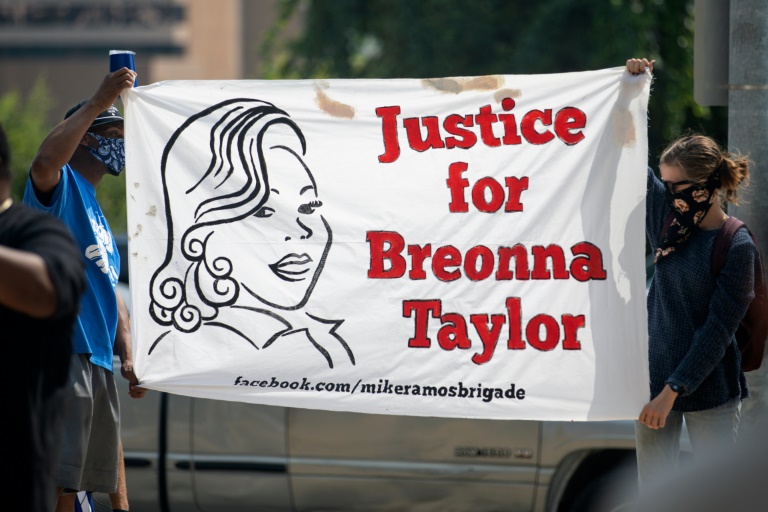
Four US cops charged over Breonna Taylor death

The US Justice Department charged four police officers on Thursday over the death of Breonna Taylor, a Black woman killed in a botched 2020 raid on her home in Louisville, Kentucky.

Attorney General Merrick Garland said the officers face federal charges of civil rights offenses, unlawful conspiracy, making false statements unconstitutional use of force and obstruction.

“We allege that these offenses resulted in Miss Taylor’s death,” Garland said. “Breonna Taylor should be alive today.”

The deaths of Taylor and George Floyd, a 46-year-old Black man who was murdered by a white police officer in Minneapolis in May 2020, became the focus of a wave of mass protests in the United States and beyond against racial injustice and police brutality.

The 26-year-old Taylor and her boyfriend, Kenneth Walker, were sleeping in her apartment around midnight on March 13, 2020 when they heard a noise at the door.

Walker, believing it was a break-in, fired his gun, wounding one police officer.

Police, who had obtained a controversial no-knock warrant to make a drug arrest, fired more than 30 shots back, mortally wounding Taylor.

Garland said three of the Louisville police officers — Joshua Jaynes, 45, Kyle Meany, 35, and Kelly Goodlett — were involved in the falsification of a search warrant in a drug trafficking case against Taylor’s ex-boyfriend.

They are accused of violating Taylor’s rights by seeking a warrant to search her home when they knew they lacked probable cause.

“We allege that the defendants knew that the affidavit in support of that warrant contained false and misleading information and that it omitted material information,” Garland said.

He added that the officers also allegedly “took steps to cover up their unlawful conduct after Miss Taylor was killed.”

– ‘Huge step towards justice’ –

The fourth police officer, Brett Hankison, was charged with using excessive force by opening fire wildly during the raid which left Taylor dead.

The 46-year-old Hankison had previously been found not guilty in March of this year of state charges of “wanton endangerment” for his actions during the raid on Taylor’s home.

Taylor’s boyfriend Walker said police battered down the door unannounced. The officers insisted they had identified themselves.

Two of the officers involved were fired but Hankison had been the only one to face state charges — which related not to the death of Taylor but to endangering residents of neighboring apartments.

Ben Crump, a civil rights attorney who represented Taylor’s family, welcomed the charges filed against the officers.

“Today was a huge step toward justice,” Crump said in a statement.

He said he hopes it “sends a message to all other involved officers that it is time to stop covering up and time to accept responsibility for their roles in causing the death of an innocent, beautiful young Black woman.”

“Because of Breonna Taylor, we can say this is a day that Black women saw equal justice in the United States of America,” Crump went on to say during a press conference with family members.

The city of Louisville, the largest in Kentucky, settled a wrongful death suit with Taylor’s family for $12 million in September 2020.

The Justice Department said violation of a person’s constitutional rights carries a maximum sentence of life imprisonment when it results in death or involves an attempt to kill.

Obstruction carries a maximum sentence of 20 years while conspiracy and making false statements are punishable by up to five years in prison.

Mexico races to rescue 10 trapped coal miners

Rescuers raced Thursday to free 10 workers trapped in a coal mine after a cave-in in northern Mexico, where desperate relatives spent a sleepless night waiting for news.

Dozens of military personnel, emergency workers and rescue dogs were deployed after flooding caused the collapse Wednesday in Sabinas in the state of Coahuila, President Andres Manuel Lopez Obrador said.

“What I want with all my soul is that we rescue the miners,” he told reporters.

“We must not lose faith. We must not lose hope,” he added.

Five miners managed to escape alive and were taken to hospital, civil defense national coordinator Laura Velazquez said, adding that two had been discharged.

“Time is crucial here,” she said.

“To get to the mines you have to go down three shafts. It’s complicated but we’ve been managing to do it, pumping out water… to rescue the miners as soon as possible,” Velazquez added.

– ‘Not much hope’ –

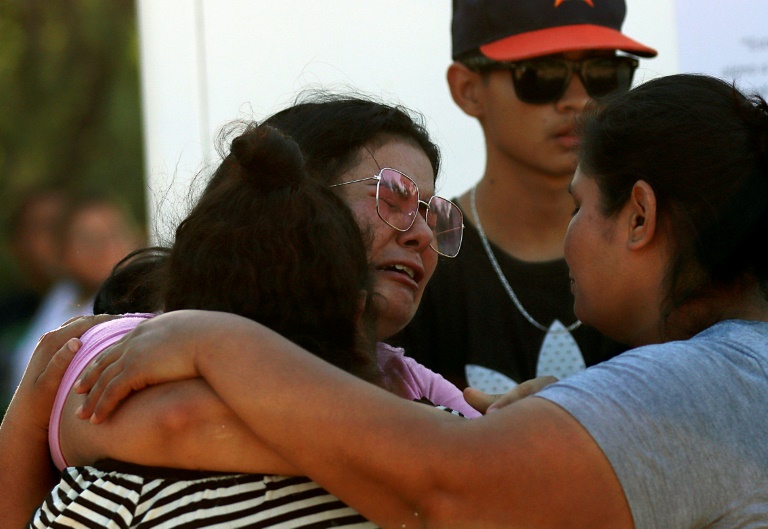
Anxious relatives gathered to wait for news, with some crying and comforting each other at the site, about 1,130 kilometers (700 miles) north of Mexico City.

“Unfortunately, there’s not much hope,” Jose Luis Amaya, whose cousin and brother-in-law were among those trapped, told Milenio TV on Wednesday night.

The mother of one of the workers wept inconsolably, unable to answer questions from the press.

Through tears, another woman at the scene said two of her children worked in the mine, though one of them had managed to escape after the accident.

As night fell hours later, the families gathered under tents outside the mine in silence as state police, the national guard, medical teams and other rescuers worked to find the trapped workers.

Coahuila’s state government said that the miners had been carrying out excavation work when they hit an adjoining area full of water, causing the shaft to collapse and flood.

“The mine began operating in January of this year and until now there have been no reports of any type of anomaly,” it said in a statement.

State governor Miguel Riquelme said he had asked labor authorities and the local prosecutor’s office to prioritize the rescue and investigation.

Coahuila, the country’s main coal-producing region, has seen a series of fatal mining accidents over the years.

The worst was an explosion that claimed 65 lives at the Pasta de Conchos mine in 2006.

Last year, seven miners died when they were trapped after another accident in Coahuila.

US says Russia will fake scene around mass POW deaths to blame Ukraine

A US official accused Moscow Thursday of preparing to plant fake evidence to make it look like the recent mass killing of Ukrainian prisoners in an attack on a Russian-controlled prison was caused by Ukraine.

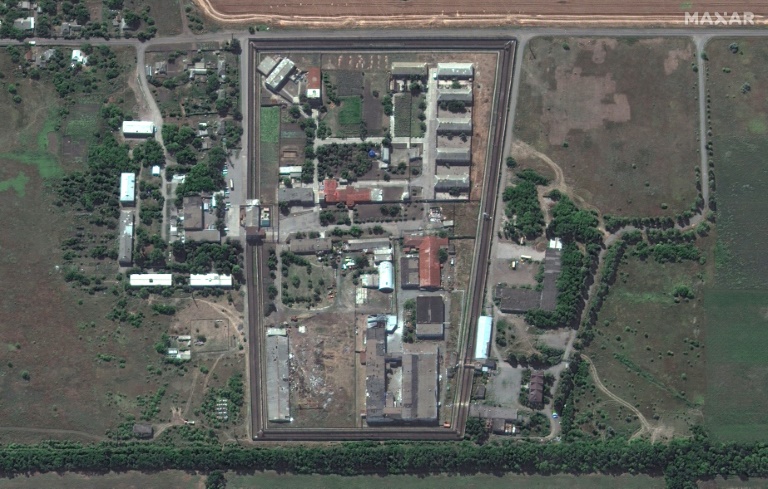
Kyiv and Moscow have traded blame over the strikes on the prison in Kremlin-controlled Olenivka in eastern Ukraine, which Russia said took place overnight on July 29.

On Thursday the US official, who asked not to be named, said that intelligence reports show Russia will doctor the scene at the prison ahead of the possible visits by outside investigators.

“We expect that Russian officials are planning to falsify evidence in order to attribute the attack on Olenivka Prison on 29 July to the Ukrainian Armed Forces,” the official told AFP, without sharing the evidence.

“We anticipate that Russian officials will try to frame (Ukraine’s military)… in anticipation of journalists and potential investigators visiting the site of the attack,” the official said.

More than 50 soldiers died in the incident, including troops who had surrendered after weeks of defending the Azovstal steel works in Mariupol. 

Russia has claimed that Ukraine carried out a strike on its own captured fighters, while Ukrainian authorities accuse Russia of covering up a deliberate massacre.

Russian television images showed a charred room crammed with burned bed frames but independent experts are so far unclear on what could have caused the damage visible.

The United Nations has announced a fact-finding mission, though it has not yet received final approval from Kyiv or Moscow.

President Volodymyr Zelensky claimed there had been “a deliberate mass murder of Ukrainian prisoners of war.”

Russia has carried out numerous attacks on civilians in its invasion of Ukraine, with evidence of summary executions and frequent aerial bombing or shelling of civilians. 

In each case, Moscow has either denied committing atrocities or blamed them on Ukraine attacking its own side.

On Tuesday, Russian authorities said that Russian prisoners held by Ukraine had been subjected to “inhuman treatment.”

Four US cops charged over Breonna Taylor death

The US Justice Department charged four police officers on Thursday over the death of Breonna Taylor, a Black woman killed in a botched 2020 raid on her home in Louisville, Kentucky.

Attorney General Merrick Garland said the four officers were being charged with civil rights offenses, unlawful conspiracy, unconstitutional use of force and obstruction.

“We allege that these offenses resulted in Miss Taylor’s death,” Garland said.

The deaths of the 26-year-old Taylor and George Floyd, a 46-year-old Black man who was murdered by a white police officer in Minneapolis in May 2020, became the focus of a wave of mass protests in the United States and beyond against racial injustice and police brutality.

Garland said three of the Louisville police officers — Joshua Jaynes, Kelly Goodlett and Kyle Meany — have been charged with falsifying a search warrant in a suspected drug trafficking case.

They are accused of violating Taylor’s rights by seeking a warrant to search her home when they knew they lacked probable cause.

“We allege that the defendants knew that the affidavit in support of that warrant contained false and misleading information and that it omitted material information,” Garland said.

He added that the officers also allegedly “took steps to cover up their unlawful conduct after Miss Taylor was killed.”

The fourth police officer, Brett Hankison, was charged with using excessive force by opening fire wildly during the raid which left Taylor dead.

Hankison had previously been found not guilty in March of this year of state charges of “wanton endangerment” for his actions during the raid on Taylor’s home.

Taylor, 26, and her boyfriend, Kenneth Walker, were sleeping in her apartment around midnight on March 13, 2020 when they heard a noise at the door.

Walker, believing it was a break-in, fired his gun, wounding one police officer.

Police, who had obtained a controversial no-knock warrant to make a drug arrest, fired some 30 shots back, mortally wounding Taylor.

While Taylor’s boyfriend Walker said police battered down the door unannounced, the officers insisted they had identified themselves.

Two of the officers involved were fired but Hankison had been the only one to face state charges — which related not to the death of Taylor but to endangering residents of neighboring apartments.

The city of Louisville, the largest in Kentucky, settled a wrongful death suit with Taylor’s family for $12 million in September 2020.

Four US cops charged over Breonna Taylor death

The US Justice Department charged four police officers on Thursday over the death of Breonna Taylor, a Black woman killed in a botched 2020 raid on her home in Louisville, Kentucky.

Attorney General Merrick Garland said the four officers were being charged with civil rights offenses, unlawful conspiracy, unconstitutional use of force and obstruction.

The deaths of Taylor and George Floyd, who was murdered by a white police officer in Minneapolis in May 2020, became the focus of a wave of mass protests in the United States and beyond against racial injustice and police brutality.

Garland said three of the officers — Joshua Jaynes, Kelly Goodlett and Kyle Meany — were charged with falsification of a search warrant in a suspected drug trafficking case.

They are accused of violating Taylor’s rights by seeking a warrant to search her home when they knew they lacked probable cause for such a search.

The fourth officer, Brett Hankison, was charged with using excessive force by opening fire wildly during the raid which left Taylor dead.

BoE forecasts recession as inflation soars, unveils big rate hike

Britain will sink into a lengthy recession later this year as inflation rockets even higher, the Bank of England forecast Thursday as it unveiled the biggest interest rate hike since 1995.

The move comes as Britons endure a cost-of-living crisis that has dominated the race to succeed Boris Johnson following his resignation as prime minister.

The BoE’s Monetary Policy Committee voted 8-1 to lift its key rate by 0.50 percentage points to 1.75 percent, it said in a statement.

Most policymakers felt that a “more forceful policy action was justified” than in previous meetings to combat rampant inflation fuelled by rocketing domestic energy bills.

The BoE is the latest central bank to ramp up its rates as countries around the world battle decades-high consumer prices that have soared since Russia invaded Ukraine in February.

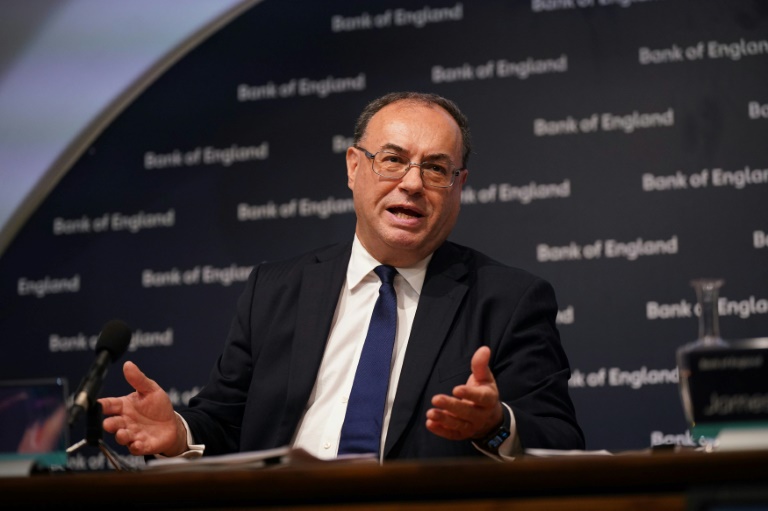
“I have huge sympathy for those who are struggling and are asking why we’re making it even harder,” bank governor Andrew Bailey said at a news conference.

“All I can say is the alternative is worse,” he said.

– ‘Winter is coming’ –

UK inflation was predicted to peak this year at just over 13 percent, reaching the highest level since 1980. The BoE’s chief task is to keep inflation close to a target of 2.0 percent.

The bank said wholesale gas prices have nearly doubled since May due to Russia restricting supplies to Europe, warning that this will “exacerbate” the fall in real incomes and further increase inflation in the near term.

The bank now anticipates the UK economy will enter a painful recession in the fourth quarter that will last until late 2023.

The UK economy is expected to shrink by up to 2.1 percent in size from its highest point, according to the forecast.

“Winter is coming, and it’s shaping up to be an absolute horror show for the UK economy,” said Laith Khalaf, analyst at AJ Bell, an investment platform.

“Make no mistake, 0.5 percent is a historic interest rate rise, but it is overshadowed by the abysmal economic forecasts produced by the Bank of England,” Khalaf said.

UK inflation had already jumped to a four-decade high of 9.4 percent in June.

“Our job is to make sure that this inflation, created by the crisis, isn’t still around in two, three years,” said BoE deputy governor Ben Broadbent.

The BoE rate hike met expectations but the British pound sank 0.7 percent versus the euro and dollar as dealers fretted over the gloomy outlook.

– ‘Challenging winter ahead’ –

The two Conservatives vying to succeed Johnson seized on the BoE announcement to highlight their cost-of-living plans.

Liz Truss, who leads in the polls, has pledged to start cutting taxes from day one with an emergency budget. 

“Today’s (BoE) news underlines the need for the bold economic plan that I am advocating. We need to take immediate action to deal with the cost of living crisis, grow the economy and delivering as much support to people as possible,” she said.

Former finance minister Rishi Sunak tweeted that “one of the most urgent challenges we face as a country is getting inflation under control as quickly as possible.”

“As prime minister I would prioritise gripping inflation, growing the economy and then cutting taxes.”

Added to the picture, UK energy regulator Ofgem is due to ramp up domestic electricity and gas prices again in October, just ahead of the colder northern hemisphere winter.

The BoE said Thursday that the typical UK household energy bill will leap to £3,500 ($4,255) per year as a result.

Separately, Ofgem warned Thursday that Britons face a “very challenging winter ahead”, adding its energy price cap will now be reviewed every quarter instead of every six months.

Half of species not assessed for endangered list risk extinction: study

More than half of species whose endangered status cannot be assessed due to a lack of data are predicted to face the risk of extinction, according to a machine-learning analysis published Thursday.

The International Union for the Conservation of Nature (IUCN) currently has nearly 150,000 entries on its Red List for threatened species, including some 41,000 species threatened with extinction. 

These include 41 percent of amphibians, 38 percent of sharks and rays, 33 percent of reef building corals, 27 percent of mammals and 13 percent of birds.

But there are thousands of species that the IUCN has been unable to categorise as they are “data insufficient” and are not on the Red List even though they live in the same regions and face similar threats to those species that have so far been assessed. 

Researchers from the Norwegian University of Science and Technology used a machine learning technique to predict the likelihood of 7,699 data deficient species being at risk of extinction. 

They trained the algorithm on a list of more than 26,000 species that the IUCN has been able to categorise, incorporating data on the regions where species live and other factors known to influence biodiversity to determine whether it predicted their extinction risk status.

“These could include climatic conditions, land use conditions or land use changes, pesticide use, threats from invasive species or really a range of different stressors,” lead author Jan Borgelt, from the university’s Industrial Ecology Programme, told AFP.

After comparing the algorithm’s results with the IUCN’s lists, the team then applied it to predict the data deficient species’ extinction risk. 

Writing in the journal Communications Biology, they found that 4,336 species — or 56 percent of those sampled — were likely threatened with extinction, including 85 percent of amphibians and 61 percent of mammals. 

This compares to the 28 percent of species assessed by the IUCN Red List.

“We see that across most land areas and coastal areas around the world that the average extinction risk would be higher if we included data deficient species,” said Borgelt.

A global United Nations biodiversity assessment in 2019 warned that as many as a million species were threatened with extinction due to a number of factors including habitat loss, invasive species and climate change.

Borgelt said the analysis revealed some hotspots for data-deficient species risk, including Madagascar and southern India. He said he hoped the study could help the IUCN develop its strategy for underreported species, adding that the team had reached out to the union.

“With these predictions from machine learning we can get really sort of pre-assessments or we could use those as predictions to prioritise which species have to be looked at by the IUCN,” he said.

Head of the IUCN’s Red List Craig Hilton-Taylor said the organisation was continuously harnessing new technology with a view to reduce the number of data deficient species.

“We also understand that a proportion of data deficient species are at risk of extinction, and include this in our calculations when we estimate the proportion of threatened species in a group,” he told AFP.

Close Bitnami banner
Bitnami