AFP

Sanctions have huge toll on Russian economy: report

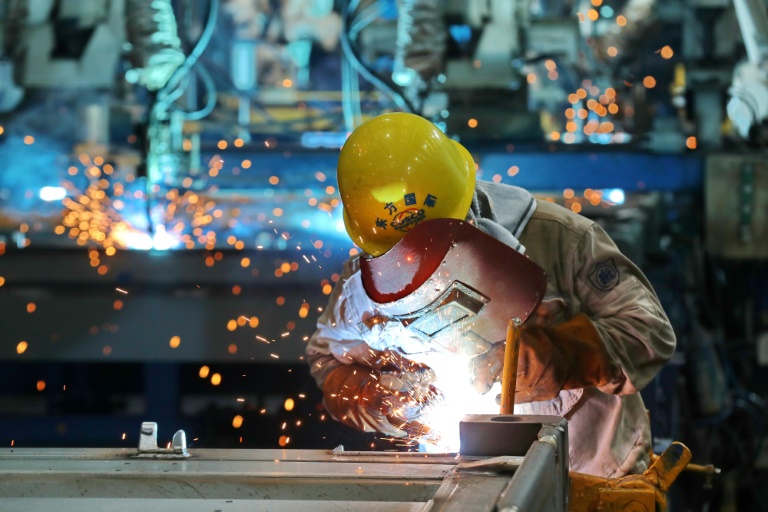
The Russian economy has been deeply damaged by sanctions and the exit of international business since the country invaded Ukraine, according to a new report by Yale University business experts and economists.

Even though Moscow has been able to pull in billions of dollars from continued energy sales at elevated prices, largely unpublished data shows that much of its domestic economic activity has stalled since the February 24 invasion, according to the report released in late July.

“The findings of our comprehensive economic analysis of Russia are powerful and indisputable: Not only have sanctions and the business retreat worked, they have thoroughly crippled the Russian economy at every level,” said the report from the Yale School of Management.

“Russian domestic production has come to a complete standstill with no capacity to replace lost businesses, products and talent,” the 118-page report said.

The report was produced by Jeffrey Sonnenfeld, president of the Yale Chief Executive Leadership Institute, and other members of the institute, a mix of economists and business management experts.

With Moscow having halted or pared the release of official economic statistics, including crucial trade figures, Sonnenfeld’s group tapped into data held by companies, banks, consultants, Russian trading partners and others to build a picture of Russian economic performance.

They also said they obtained unreleased data from experts on the Russian economy, and data in other languages which supported their conclusions.

Even if Russia is able to earn more foreign exchange on gas and oil exports, that has not offset the impact of Western sanctions.

And, they argue, the country’s dependence on Europe to buy 83 percent of its energy exports leaves it under a greater medium-term threat.

“Russia is far more dependent on Europe than Europe is on Russia,” they said.

– Car industry crashes –

Russia largely survived Western economic sanctions after Moscow’s 2014 seizure of the Ukraine region of Crimea.

President Vladimir Putin pushed a program of replacing some imports with domestic products and built up a cushion of financial reserves.

But the country’s industry remained heavily driven by foreign capital investment and the import of higher-tech inputs that Russia had not mastered, like semiconductors.

The barrage of deeper sanctions after the invasion took aim at both of those vulnerabilities, the report said.

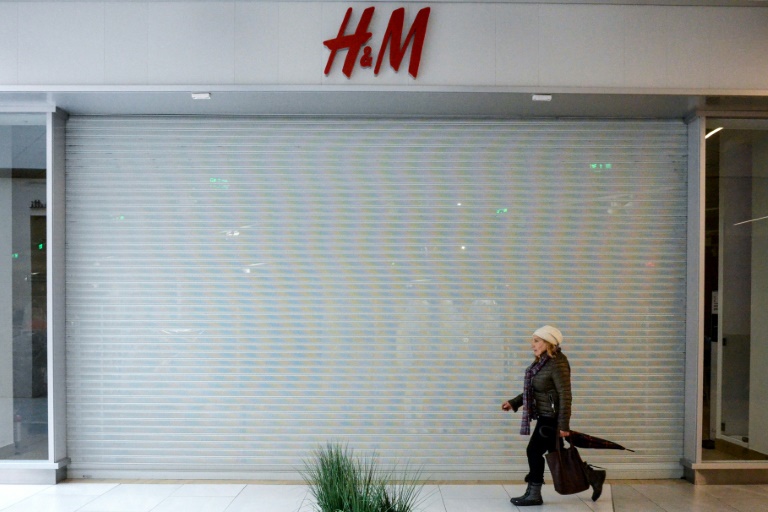
Some 1,000 foreign companies halted their activities in the country, potentially impacting up to five million jobs, according to the report.

Industrial output plunged, and Russian retail sales and consumer spending have fallen at an annual rate of 15-20 percent.

Imports have plunged across the board, the report said; crucial imports from China fell by more than half.

A key example of Russian problems, according to the report, is the automobile sector.

Car sales went from 100,000 a month to 27,000 a month, and output has stalled due to a lack of parts and machinery.

Without access to imported components, Russian producers are putting out cars without airbags or modern anti-lock brakes, and only with manual transmissions.

– Threat to gas revenues –

The report challenged the belief that the Russian economy was surviving thanks to the tens of billions of dollars the country reaps each month from oil and gas exports.

Last week the IMF said the Russian economy, though contracting, was doing better than expected due to its energy and commodity export income.

The Yale report said data indicates energy revenues have been falling for the last three months.

If Western Europe succeeds in cutting itself off from Russian natural gas, Moscow faces an “unsolvable” situation with a lack of a market for its output, according to the report.

“Any decrease in oil and gas revenues or oil and gas export volumes would immediately put a strain on the Kremlin’s budget,” it said.
Stock markets waver, oil prices sink

Oil prices tumbled Monday following surprisingly weak China manufacturing data, while global stocks were mixed ahead of key jobs data, earnings and central bank announcements.

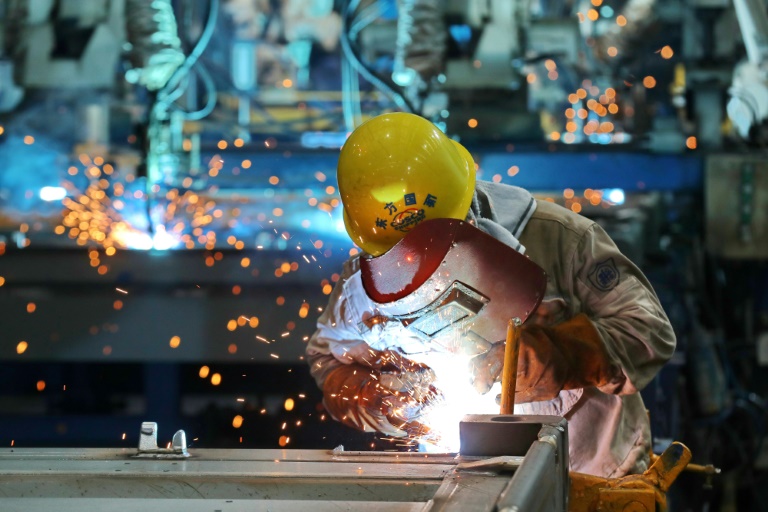
China’s closely-watched Purchasing Managers’ Index of manufacturing activity shrank in July as the result of weak demand and the strict zero-Covid measures imposed in parts of the country.

The index, a key gauge of manufacturing activity in the world’s second-biggest economy, came in at 49.0 in July, down from 50.2 June and below the 50-point mark separating growth from contraction, according to the National Bureau of Statistics.

While sweeping curbs have eased in major hubs such as Shanghai and Beijing, sporadic lockdowns in other cities and towns have kept businesses and consumers worried with few signs of the policy easing.

“Oil prices were under pressure after weak Chinese manufacturing figures which really show the continuing impact of lockdowns on the country’s economy,” said AJ Bell investment director Russ Mould.

Oil traders also standing by for another output decision by the OPEC+ group of major crude-producing nations on Wednesday.

Wall Street stocks ended modestly lower after a choppy session as petroleum-linked shares retreated.

London’s FTSE 100 and the Paris CAC 40 were down a bit while the Frankfurt DAX was flat at the close.

In corporate news, Asia-focused lender HSBC provided another boost with a “bullish” outlook, alongside its intention to revert to quarterly shareholder dividends next year.

HSBC shares jumped by more than six percent in the British capital. 

On Wall Street, Boeing surged 6.1 percent as it moved closer to final regulatory approval to resume deliveries of its 787 jet.

This week’s calendar includes the US jobs report for July, which will be closely scrutinized for clues as to whether the Federal Reserve can be expected to dial back its aggressive interest rate hikes, as markets hope.

Major corporate earnings reports include those from oil giant BP, US ride-hailing firm Uber, Japanese automaker Toyota and Chinese tech giant Alibaba.

The Bank of England is expected to deliver a bumper 0.5-percentage-point interest rate hike Thursday as it continues  to combat rocketing inflation.

“Sharp hikes by the US Federal Reserve and European Central Bank in July make it all the more likely that it will pull the trigger on an outsize rate hike,” Markets.com analyst Neil Wilson told AFP.

Global central banks are ramping up borrowing costs in an attempt to get a handle on runaway consumer price inflation.

– Key figures at around 2040 GMT –

New York – Dow: DOWN 0.1 percent at 32,798.40 (close)

New York – S&P 500: DOWN 0.3 percent at 4,118.63 (close)

New York – Nasdaq: DOWN 0.2 percen at 12,368.98 (close)

London – FTSE 100: DOWN 0.1 percent at 7,413.42 (close)

Frankfurt – DAX: FLAT at 13,479.63 (close)

Paris – CAC 40: DOWN 0.2 percent at 6,436.86 (close)

EURO STOXX 50: UP 0.1 percent at 3,711.36 (close)

Tokyo – Nikkei 225: UP 0.7 percent at 27,993.35 (close)

Hong Kong – Hang Seng Index: UP 0.1 percent at 20,165.84 (close)

Shanghai – Composite: UP 0.2 percent at 3,259.96 (close)

Euro/dollar: UP at $1.0262 from $1.0220 Friday

Pound/dollar: UP at $1.2255 from $1.2171 

Euro/pound: DOWN at 83.70 pence from 83.97 pence

Dollar/yen: DOWN at 131.61 yen from 133.27 yen

Brent North Sea crude: DOWN 3.8 percent at $100.03 per barrel

West Texas Intermediate: DOWN 4.7 percent at $93.89 per barrel

burs-jmb

Texas man gets seven years for Capitol riot, longest sentence yet

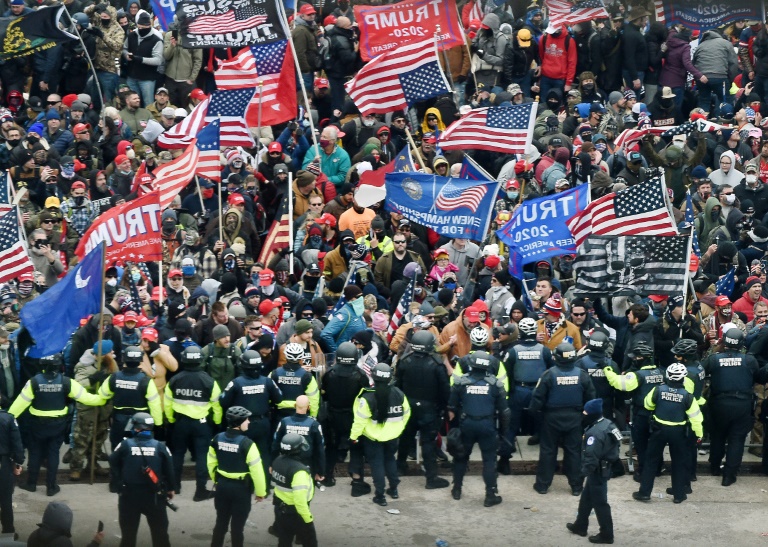
A Texas militia member was sentenced to more than seven years in prison on Monday, the longest jail term yet for a participant in the January 6 attack on the US Capitol by supporters of former president Donald Trump.

Guy Reffitt, 49, was convicted in March of bringing a gun to Washington, interfering with police and impeding an official proceeding — the certification by Congress of Democrat Joe Biden’s victory in the November 2020 presidential election.

Reffitt, a member of a right-wing militia called the Texas Three Percenters, was also found guilty of obstruction for threatening his teenaged son and daughter if they spoke to law enforcement about his involvement in the attack on the Capitol.

Reffitt’s then 18-year-old son did go to the FBI despite his father’s warning that “traitors get shot” and delivered emotional testimony against his father in court.

US District Judge Dabney Friedrich sentenced Reffitt to 87 months in prison, the stiffest sentence meted out to a Capitol riot defendant so far.

Two men who pleaded guilty to assaulting police officers were sentenced previously to 63 months in prison.

US Attorney Matthew Graves said Reffitt’s sentence “holds him accountable for his violent, unconscionable conduct.”

“Guy Reffitt came to the Capitol on Jan. 6 armed and determined to instigate violence,” Graves said in a statement. “He and others contributed to the many assaults on law enforcement officers that day, putting countless more people — including legislators — at risk.”

Reffitt, an oil industry worker from Wylie, Texas, was the first person to go on trial on charges stemming from the January 6, 2021 attack on Congress.

Dozens of other participants in the Capitol riot have been sentenced after entering into plea agreements.

Video of Reffitt confronting police on the steps of the Capitol and urging on the pro-Trump crowd was played for the jury during his trial.

Prosecutors also displayed text messages from Reffitt in which he promised to drag lawmakers out of Congress “by their hair.”

Reffitt was wearing body armor and a helmet, carrying zip-tie handcuffs and armed with a .40 caliber handgun when he arrived at the Capitol, according to prosecutors.

More than 850 people have been arrested for their roles in the January 6 attack and around 330 have pleaded guilty to various charges.

The storming of the Capitol left at least five people dead and 140 police officers injured and followed a fiery speech by Trump to thousands of his supporters near the White House.

Trump was impeached for a historic second time by the House after the Capitol riot — he was charged with inciting an insurrection — but was acquitted by the Senate.

Man with loaded AK-47 arrested outside Iranian journalist's New York home

A man has been arrested after he was found with an assault rifle outside the New York City home of an Iranian-American journalist who has been critical of Iran’s regime.

The journalist — 45-year-old Masih Alinejad — was the target of a kidnap plot by Iranian intelligence agents last year, according to US prosecutors.

On Wednesday and Thursday of last week, suspect Khalid Mehdiyev was spotted acting suspiciously outside a house in Brooklyn, the FBI said in documents filed in a Manhattan criminal court.

He was apprehended by New York Police Department officers who found in his Subaru car a loaded AK-47 and approximately 66 rounds of ammunition, the report added.

Feminist activist Alinejad was not named in the documents but confirmed on Twitter that the man had been outside her home.

“These are the scary scenes capturing a man who tried to enter my house in New York with a loaded gun to kill me,” Alinejad wrote, posting CCTV footage of a man on her porch.

“Last year the FBI stopped the Islamic Republic from kidnapping me. My crime is giving voice to voiceless people. The US administration must be tough on terror,” she added.

Mehdiyev was charged with one count of possessing a firearm with an obliterated serial number and was ordered detained without bond by a judge.

Dual US-Iranian citizen Alinejad is known for her criticism of Iran’s clerical regime, including its requirement that women veil themselves.

She founded the My Stealthy Freedom movement, which encourages women to remove their hijabs.

In July last year, the US Justice Department revealed charges against four Iranian intelligence agents, who had allegedly planned to seize the dissident and smuggle her to Iran.

According to the indictment, intelligence officers had first tried in 2018 to force relatives of their kidnap target to lure her to a third country to be arrested and brought to Iran to be imprisoned.

They then moved to surveilling the victim and other members of her household in Brooklyn “on multiple occasions in 2020 and 2021,” the Justice Department’s statement had said.

A fifth person in California was accused of financing the alleged operation. 

Iran called the US charges “baseless and absurd.”

Beyonce to remove offensive lyric after disabled community outcry

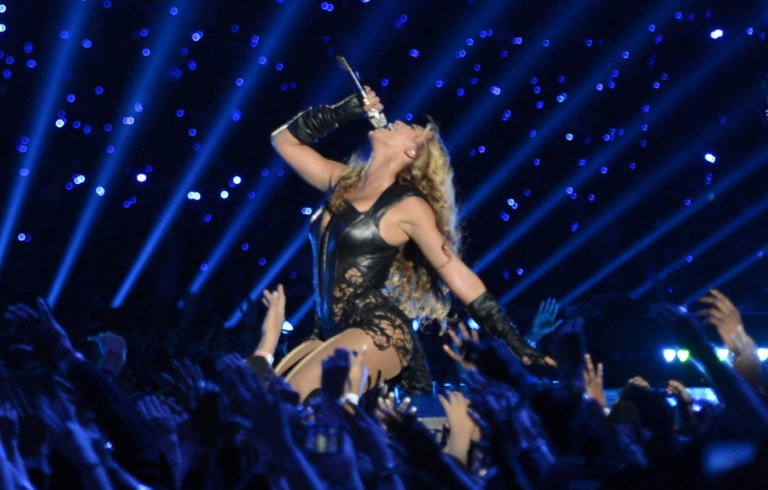
Beyonce will remove a derogatory term for disabled people from her new song “Heated,” a spokesperson said Monday, after its use was condemned as offensive by campaigners.

The US pop megastar will re-record the track from her latest album “Renaissance” on which she originally sang the lyrics “Spazzin’ on that ass, spazz on that ass.”

“The word, not used intentionally in a harmful way, will be replaced,” a spokesperson for Beyonce told AFP via email.

Co-written with Canadian rapper Drake, the dance track appears to use the word “spaz” in the colloquial sense of temporarily losing control or acting erratically.

But disability campaigners noted that the word is derived from “spastic.” 

According to the Centers for Disease Control and Prevention, spasticity is a movement disorder involving stiff muscles and awkward movement, suffered by 80 percent of people with cerebral palsy.

In June, US singer Lizzo re-recorded her song “Grrrls” to remove the same term following complaints that it was derogatory.

Australian disability campaigner Hannah Diviney said the inclusion of the word by Beyonce “feels like a slap in the face to me, the disabled community & the progress we tried to make with Lizzo.”

“Guess I’ll just keep telling the whole industry to ‘do better’ until ableist slurs disappear from music,” she tweeted.

Beyonce’s eagerly anticipated seventh solo studio album “Renaissance” was released Friday, drawing mainly positive reviews with its nods to disco and electronic dance.

Other collaborators on the album — which leaked online in the days prior to its official release — include Nile Rodgers, Skrillex, Nigerian singer Tems, Grace Jones, Pharrell and Beyonce’s rap mogul husband Jay-Z.

In an Instagram post published soon after the album’s release, Beyonce said creating the album “allowed me a place to dream and to find escape during a scary time for the world.

“My intention was to create a safe place, a place without judgment,” she wrote.

“A place to be free of perfectionism and overthinking. A place to scream, release, feel freedom.”

Pelosi's Asia tour kicks off under Taiwan cloud

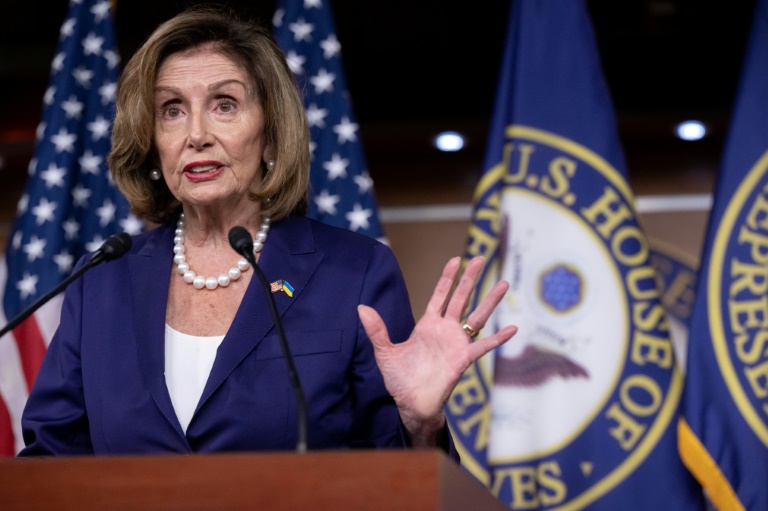
US House Speaker Nancy Pelosi on Monday kicked off an Asia tour that has been shrouded in secrecy following an escalation in tensions with China over Taiwan.

With no word if Pelosi will visit the island, she stopped first in Singapore, where Prime Minister Lee Hsien Loong urged her at a meeting to strive for “stable” ties with Beijing.

Her itinerary also includes Malaysia, South Korea and Japan, but a possible Taiwan visit has dominated attention in the run-up.

Reports about a plan to visit the island have enraged Beijing and caused unease in the White House, with President Joe Biden trying to lower the temperature.

Beijing considers self-ruled Taiwan its territory — to be seized one day, by force if necessary — and said it would regard a Pelosi visit as a major provocation.

Pelosi’s office confirmed her Asia trip in a statement Sunday once her plane was in the air, following days of US media speculation and the speaker refusing to confirm her itinerary.

“The trip will focus on mutual security, economic partnership and democratic governance in the Indo-Pacific region,” it said, referring to the Asia-Pacific.

The statement did not mention Taiwan. But visits by US officials there are usually kept secret until delegations land.

And as speculation mounted, both foreign and local media cited unnamed sources Monday to report that Pelosi does indeed plan to include the island on her Asia tour, while the Financial Times said she would meet with President Tsai Ing-wen on Wednesday in Taipei.

– ‘Bury all enemies’ –

The Global Times, China’s state-run tabloid, suggested that Pelosi might use “emergency excuses like an aircraft fault or refuelling” to land at a Taiwanese airport.

“If she dares to stop in Taiwan, it will be the moment to ignite the powder keg of the situation in the Taiwan Straits,” Hu Xijin, a former Global Times editor and now commentator, tweeted.

And the Chinese army’s Eastern Theater Command shared footage on social media site Weibo featuring a combat-ready army with fighters and helicopters taking off, amphibious troops landing on a beach and a stream of missiles raining down on various targets.

“We will bury all enemies who invade our territory,” a short text accompanying the footage read. 

“We’re ready to fight,” it added. “Advance towards a joint combat and a victorious war.”

Taiwan’s 23 million people have long lived with the possibility of an invasion but the threat has intensified under Chinese President Xi Jinping.

The United States maintains a policy of “strategic ambiguity” over whether it would militarily intervene were China to invade.

While it diplomatically recognises Beijing over Taipei, it also backs Taiwan’s democratic government and opposes any forced change to the island’s status.

American officials often make discreet visits to Taiwan to show support but a Pelosi trip would be higher-profile than any in recent history.

Taiwan’s government has remained silent on the prospect of a Pelosi visit and there has been minimal local press coverage. 

“I really hate what the Chinese are doing,” Hsu Ching-feng, a fruit vendor in Taipei, told AFP.

“But there’s nothing us common folks can do about it but ignore them. I will just ignore them.”

– ‘Wrong target’ –

As House speaker, Pelosi is second in line to the US presidency and one of the country’s most powerful politicians.

The last House speaker to visit was Newt Gingrich in 1997.

Biden and Xi had a tense phone call last week clouded by disagreements over Taiwan.

Xi issued an oblique warning to the United States not to “play with fire” over the island.

Speculation about Pelosi’s Taiwan plans has coincided with an uptick in military activity across the region.

US officials have sought to downplay the significance of a Pelosi visit, urging calm from Chinese leaders.

Kharis Templeman, a Taiwan expert at the Hoover Institution, said Beijing “misread US politics and screwed their signalling up” with its intense reaction.

“They picked the wrong target. Biden doesn’t control the Speaker or any other member of Congress,” he tweeted Sunday.

“They’ve drawn the line at the Speaker of the House, on a visit rich in symbolism but of limited practical value. And now it will be politically costly for either Pelosi not to go, or Xi not to respond with something dramatic.”

In Taiwan, there have been mixed views about the prospect of Pelosi visiting, but figures from both the ruling party and the main opposition have said the island should not cave to Chinese pressure.

“If Pelosi were to cancel or postpone the trip, it would be a victory for the Chinese government and for Xi as it would show that the pressure it has exerted has achieved some desired effects,” Hung Chin-fu, from Taiwan’s National Cheng Kung University, told AFP. 

France and parts of England see driest July on record

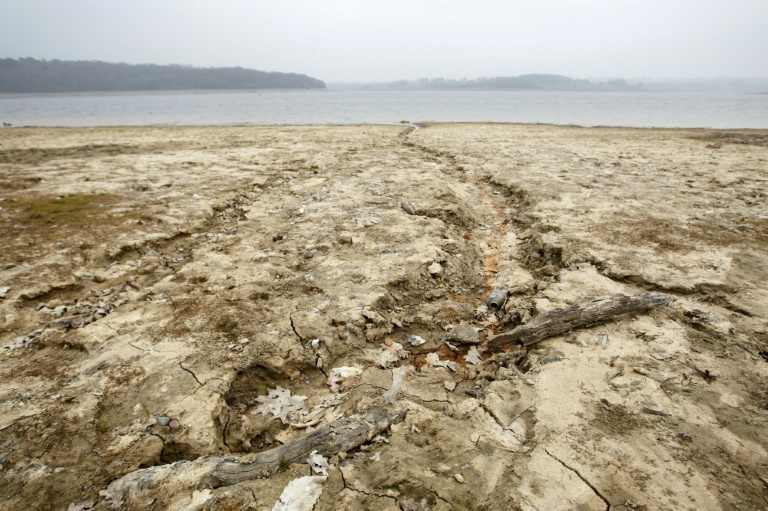
France and parts of England saw their driest July on record, the countries’ weather agencies said on Monday, exacerbating stretched water resources that have forced restrictions on both sides of the Channel.

In France, where an intense drought has hammered farmers and prompted widespread limits on freshwater use, there was just 9.7 millimetres (0.38 inches) of rain last month, Meteo France said.

That was 84 percent down on the average levels seen for July between 1991 and 2022, and made it the second driest month since March 1961, the agency added.

Meanwhile swathes of southern and eastern England recorded the lowest rainfall in July on record, the UK’s Met Office. 

The whole of England recorded an average of 23.1 mm of rain — the lowest figure for the month since 1935 and the seventh lowest July total on record, it said.

The Met Office has been compiling records since 1836.

The low rainfall in both countries has been coupled with a summer of unprecedentedly high temperatures, which topped 40 degrees Celsius (104 degrees Fahrenheit) in England last month for the first time ever.

Climate scientists overwhelmingly agree that carbon emissions from humans burning fossil fuels are heating the planet, raising the risk and severity of droughts, heatwaves, and other extreme weather events.

Analysis by an international team of researchers released last Friday found climate change caused by human activity made the recent record-shattering UK heatwave at least 10 times more likely to occur.

– ‘Vicious circle’ –

Water companies on both sides of the Channel are struggling to respond to the parched conditions.

Nearly all of France’s 96 mainland regions have imposed water use restrictions, also a record. 

The country is bracing for its third heatwave this summer, beginning in the southeast on Monday before heading north toward Paris.

Farmers nationwide are reporting difficulties in feeding livestock because of parched grasslands, while irrigation has been banned in large areas of the northwest and southeast due to freshwater shortages.

On the eastern river Rhine, which runs along the France-Germany border, commercial boats are having to run at a third of their carrying capacity in order to avoid hitting the bottom because the water level is so low.

Environment Minister Christophe Bechu said July’s rainfall represented “just 12 percent of what’s needed”. 

“We have a heatwave that increases the need (for water) and a drought that is limiting what is available, pushing us into this vicious cycle,” Bechu told BFM television during a visit to the hard-hit Isere department in the southeast.

In England, one water provider has so far announced restrictions.

Southern Water, which is responsible for supplies over a swathe of central southern England, will impose limits on its almost one million customers from later this week.

But the so-called hosepipe ban could soon be replicated by other providers, following a warning by the UK government’s Environment Agency that people needed to use water “wisely”.

Most of England has moved into “prolonged dry weather” status, the agency said last week. 

This means it is now taking precautionary actions to mitigate impacts “as hydrological conditions deteriorate”.

Fires increase in Brazilian Amazon in July

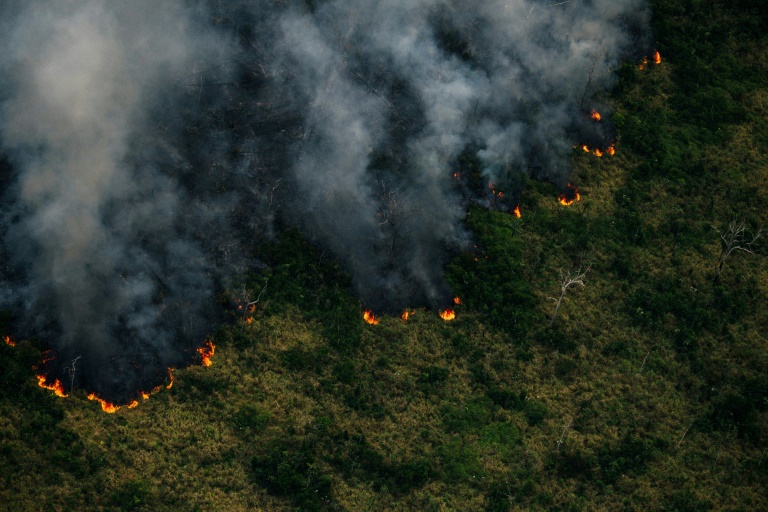
The number of forest fires in the Brazilian Amazon increased by eight percent last month compared with July 2021, according to official figures released Monday, the latest alarm bell for the world’s biggest rainforest.

Satellite monitoring detected 5,373 fires last month, up from 4,977 in July last year, according to the Brazilian space agency, INPE.

However, the number was well short of the worst July on record: 19,364 fires in 2005.

July is typically the start of the Amazon “fire season,” when drier weather fuels more fires — mostly set by farmers and speculators clearing land for agriculture, according to experts.

The increase in the Amazon came as major fires raged in California, France and Portugal amid rising temperatures.

This has been a worrying year for fires in the Amazon, a key resource in the race to curb global warming: INPE has detected 12,906 so far, up 13 percent from the same period last year.

“It’s only the beginning of the Amazon dry season, when the number of criminal forest fires unfortunately explodes,” said Romulo Batista of Greenpeace Brazil.

“In addition to decimating the forest and its biodiversity, those fires and destruction also affect the local population’s health due to smoke inhalation,” he said in a statement.

President Jair Bolsonaro, who comes up for reelection in October, is facing scrutiny for his government’s controversial stewardship of Brazil’s 60-percent share of the Amazon, where there has been a surge of fires and deforestation on his watch.

Since the far-right agribusiness ally took office in 2019, average annual deforestation in the Brazilian Amazon has increased by 75 percent compared to the previous decade.

Stock markets waver, oil prices sink

Stock markets diverged on Monday as investors track a raft of corporate earnings reports while oil prices sank over concerns about Chinese demand.

London’s FTSE 100 and the Paris CAC 40 were down slightly by 0.1 percent respectively while the Frankfurt DAX was flat at the close.

Wall Street was up later in the afternoon after opening lower on the first day of August following a strong month in July.

Asian stock markets finished higher despite another disappointing reading on the health of the Chinese economy.

The closely watched Purchasing Managers’ Index of manufacturing activity shrank in July on the back of weak demand and the strict zero-Covid measures imposed in parts of the country.

While sweeping curbs have eased in major hubs such as Shanghai and Beijing, sporadic lockdowns in other cities and towns have kept businesses and consumers worried with few signs of the policy easing.

The China data sent oil prices sharply lower, with the international benchmark, Brent, slipping just under $100 per barrel while the main US contract, WTI, fell by five percent to around $94.

“Oil prices were under pressure after weak Chinese manufacturing figures which really show the continuing impact of lockdowns on the country’s economy,” said AJ Bell investment director Russ Mould.

“China remains one of the biggest consumers of oil and other commodities.” Mould said.

Traders are also waiting for another output decision by the OPEC+ group of major crude-producing nations on Wednesday.

– ‘Bullish’ HSBC –

In corporate news, Asia-focused lender HSBC provided another boost with a “bullish” outlook, alongside its intention to revert to quarterly shareholder dividends next year.

HSBC shares jumped by more than six percent in the British capital. 

Other major corporate earnings reports this week include those from oil giant BP, US ride-hailing firm Uber, Japanese automaker Toyota and Chinese tech giant Alibaba.

Last week, strong earnings from US titans Amazon and Apple sparked healthy Wall Street gains and eased concerns about the economic impact of surging inflation and rising rates.

That came after investors took Federal Reserve chief Jerome Powell’s comments Wednesday to indicate the US central bank could start slowing down its monetary tightening, providing a much-needed boost to stocks.

The Bank of England is expected to deliver a bumper 0.5-percentage-point interest rate hike this Thursday to combat rocketing inflation.

“Sharp hikes by the US Federal Reserve and European Central Bank in July make it all the more likely that it will pull the trigger on an outsize rate hike,” Markets.com analyst Neil Wilson told AFP.

Global central banks are ramping up borrowing costs in an attempt to get a handle on runaway consumer price inflation.

Investors will also be looking ahead to critical US employment data out on Friday.

“If we start to see weakness in employment again, then this will further worry investors about the health of the world’s largest economy,” said Fawad Razaqzada at City Index and FOREX.com.

– Key figures at around 1545 GMT –

New York – Dow: UP 0.2 percent at 32,923.84 points

EURO STOXX 50: FLAT at 3,706,62

London – FTSE 100: DOWN 0.1 percent at 7,413.42 (close)

Frankfurt – DAX: FLAT at 13,479.63 (close)

Paris – CAC 40: DOWN 0.1 percent at 6,436.86 (close)

Tokyo – Nikkei 225: UP 0.7 percent at 27,993.35 (close)

Hong Kong – Hang Seng Index: UP 0.1 percent at 20,165.84 (close)

Shanghai – Composite: UP 0.2 percent at 3,259.96 (close)

Euro/dollar: UP at $1.0275 from $1.0228 Friday

Pound/dollar: UP at $1.2272 from $1.2189 

Euro/pound: DOWN at 83.73 pence from 83.89 pence

Dollar/yen: DOWN at 131.72 yen from 133.25 yen

Brent North Sea crude: DOWN 4.3 percent at $99.46 per barrel

West Texas Intermediate: DOWN 5.4 percent at $93.27 per barrel

burs/raz

Stock markets waver, oil prices sink

Stock markets diverged on Monday as investors track a raft of corporate earnings reports while oil prices sank over concerns about Chinese demand.

London’s FTSE 100 and the Paris CAC 40 were down slightly by 0.1 percent respectively while the Frankfurt DAX was flat at the close.

Wall Street was up later in the afternoon after opening lower on the first day of August following a strong month in July.

Asian stock markets finished higher despite another disappointing reading on the health of the Chinese economy.

The closely watched Purchasing Managers’ Index of manufacturing activity shrank in July on the back of weak demand and the strict zero-Covid measures imposed in parts of the country.

While sweeping curbs have eased in major hubs such as Shanghai and Beijing, sporadic lockdowns in other cities and towns have kept businesses and consumers worried with few signs of the policy easing.

The China data sent oil prices sharply lower, with the international benchmark, Brent, slipping just under $100 per barrel while the main US contract, WTI, fell by five percent to around $94.

“Oil prices were under pressure after weak Chinese manufacturing figures which really show the continuing impact of lockdowns on the country’s economy,” said AJ Bell investment director Russ Mould.

“China remains one of the biggest consumers of oil and other commodities.” Mould said.

Traders are also waiting for another output decision by the OPEC+ group of major crude-producing nations on Wednesday.

– ‘Bullish’ HSBC –

In corporate news, Asia-focused lender HSBC provided another boost with a “bullish” outlook, alongside its intention to revert to quarterly shareholder dividends next year.

HSBC shares jumped by more than six percent in the British capital. 

Other major corporate earnings reports this week include those from oil giant BP, US ride-hailing firm Uber, Japanese automaker Toyota and Chinese tech giant Alibaba.

Last week, strong earnings from US titans Amazon and Apple sparked healthy Wall Street gains and eased concerns about the economic impact of surging inflation and rising rates.

That came after investors took Federal Reserve chief Jerome Powell’s comments Wednesday to indicate the US central bank could start slowing down its monetary tightening, providing a much-needed boost to stocks.

The Bank of England is expected to deliver a bumper 0.5-percentage-point interest rate hike this Thursday to combat rocketing inflation.

“Sharp hikes by the US Federal Reserve and European Central Bank in July make it all the more likely that it will pull the trigger on an outsize rate hike,” Markets.com analyst Neil Wilson told AFP.

Global central banks are ramping up borrowing costs in an attempt to get a handle on runaway consumer price inflation.

Investors will also be looking ahead to critical US employment data out on Friday.

“If we start to see weakness in employment again, then this will further worry investors about the health of the world’s largest economy,” said Fawad Razaqzada at City Index and FOREX.com.

– Key figures at around 1545 GMT –

New York – Dow: UP 0.2 percent at 32,923.84 points

EURO STOXX 50: FLAT at 3,706,62

London – FTSE 100: DOWN 0.1 percent at 7,413.42 (close)

Frankfurt – DAX: FLAT at 13,479.63 (close)

Paris – CAC 40: DOWN 0.1 percent at 6,436.86 (close)

Tokyo – Nikkei 225: UP 0.7 percent at 27,993.35 (close)

Hong Kong – Hang Seng Index: UP 0.1 percent at 20,165.84 (close)

Shanghai – Composite: UP 0.2 percent at 3,259.96 (close)

Euro/dollar: UP at $1.0275 from $1.0228 Friday

Pound/dollar: UP at $1.2272 from $1.2189 

Euro/pound: DOWN at 83.73 pence from 83.89 pence

Dollar/yen: DOWN at 131.72 yen from 133.25 yen

Brent North Sea crude: DOWN 4.3 percent at $99.46 per barrel

West Texas Intermediate: DOWN 5.4 percent at $93.27 per barrel

burs/raz

Close Bitnami banner
Bitnami