AFP

Cannabis investment platform hit with Spain lawsuit

Nearly 1,200 investors have filed a class-action lawsuit in Spain against a medicinal cannabis investment platform operating worldwide, accusing it of fraud, embezzlement and money laundering, their lawyers said Monday.

JuicyFields, which is based in the Netherlands, promised high returns to invest online in medicinal cannabis plants, said Norberto Martinez from the Martinez-Blanco law firm that filed the case.

A spokesman with Spain’s National Court, the country’s top criminal court, confirmed the lawsuit was filed over the weekend.

This is believed to be the first class-action lawsuit against JuicyFields, which according to media investigations allegedly scammed investors around the world.

Established in 2020, JuicyFields offered investors the chance to participate in the cultivation, harvesting and sale of cannabis plants, promising returns of between 29 percent and 66 percent, according to the law firm.

But JuicyFields suddenly stopped operations in mid-July, froze cash withdrawals and vanished from the internet, according to several investors.

The lawsuit accuses JuicyFields of operating like a Ponzi scheme, in which early investors are paid out by receipts from later investors.

It estimates that there are nearly 4,500 victims in Spain alone, who each lost an average of 6,500 euros ($6,645). Some individuals lost as much as 200,000 euros.

The minimum investment was 50 euros, and the money could be deposited and withdrawn via bank transfer or cryptocurrencies.

The overall scale of JuicyFields’ alleged fraud is unclear. A woman has already filed a police complaint against the firm in France’s northern city of Tourcoing.

The 58-year-old woman, who did not want to be identified, said she started by investing 50 euros in December 2021 and in just three and a half months she earned a profit of 25 euros.

“This gave me confidence so I immediately reinjected the money and I invested larger sums,” she told AFP, adding she had lost 3,600 euros.

She is part of a group on mobile messaging service Telegram in France for people who want to take legal action against JuicyFields which has over 1,600 members.

A class-action lawsuit against JuicyFields is expected to be filed in a French court before the end of the year, according to Arnaud Delomel, a lawyer who represents hundreds of investors.

AFP was unable to contact JuicyFields for comment and the company has issued no official statement.


Two dead in California's largest wildfire this year

Hundreds of firefighters were battling a fast-moving forest fire in northern California on Monday which has killed two people and forced thousands to evacuate their homes.

The McKinney Fire, the largest in the state so far this year, has ravaged 55,493 acres (22,500 hectares) in the Klamath National Forest near the border with Oregon, CalFire said.

The fire was zero percent contained on Monday morning as searing temperatures and gusty winds hampered the efforts of the more than 850 firefighters deployed to combat the inferno.

California and other parts of the western United States have been ravaged by huge wildfires in recent years, driven by years of drought and exacerbated by a warming climate.

The Siskiyou County Sheriff’s Office said firefighters found two people dead inside a burned-out car on Sunday in the driveway of a home in the community of Klamath River.

Speaking on ABC News, Sheriff Jeremiah LaRue said firefighters suspected the pair were caught in the swift-moving fire as they tried to flee.

California Governor Gavin Newsom has declared a state of emergency in Siskiyou County, and more than 2,000 residents of the rural area are under evacuation orders.

A heat wave with temperatures of over 100 degrees Fahrenheit (38 degrees Celsius), tinder dry terrain and thunderstorms packing strong winds are complicating the efforts of firefighters battling the blaze.

“Fire growth is expected to spread in all directions,” the Klamath National Forest service said in a statement. “Warning for thunderstorms and lightning. Gusty outflow winds of 30 to 50 mph (50 to 80 kph) will be possible near thunderstorm cells.”

According to the Siskiyou County Sheriff’s Office, the fire has destroyed more than 100 structures — including homes, a grocery store and a community center — in the area surrounding Yreka, though it has not yet encroached upon the town of about 7,800 people.

“Surrounding areas should be ready to leave if needed. Please don’t hesitate to evacuate,” the county sheriff tweeted.

The McKinney fire is California’s largest wildfire so far this year — though it remains much smaller than last year’s Dixie Fire, which burned nearly one million acres.

– ‘Very, very serious’ –

Yreka resident Larry Castle told the Sacramento Bee newspaper that he and his wife had packed up a few possessions and their three dogs to be ready to leave, as other fires in recent years had taught them the situation could turn “very, very serious.”

Search and rescue teams evacuated 60 people who had been hiking the area’s popular Pacific Crest Trail, according to the sheriff’s department in Jackson County, Oregon.

CalFire said the cause of the McKinney fire was still under investigation.

The US Forest Service said thick smoke had helped to limit the fire’s growth on Sunday, but also meant that firefighters’ aircraft were “mostly grounded.”

The fast-spreading blaze comes just days after the Oak Fire near Yosemite National Park destroyed dozens of buildings and forced thousands to evacuate.

California, which is facing a punishing drought, still has months of fire season ahead of it.

Other parts of the world have also faced intense wildfires this year, as scientists say climate change is making heatwaves more frequent and more intense, increasing the risk of fires.

In Portugal, a blaze broke out in the Mafra area, north of Lisbon, at the weekend while in France at least four firefighters were seriously injured and motorways were closed.

Also over the weekend, hundreds of firefighters battled a blaze in eastern Germany, with four people injured.

Two dead in California's largest wildfire this year

Hundreds of firefighters were battling a fast-moving forest fire in northern California on Monday which has killed two people and forced thousands to evacuate their homes.

The McKinney Fire, the largest in the state so far this year, has ravaged 55,493 acres (22,500 hectares) in the Klamath National Forest near the border with Oregon, CalFire said.

The fire was zero percent contained on Monday morning as searing temperatures and gusty winds hampered the efforts of the more than 850 firefighters deployed to combat the inferno.

California and other parts of the western United States have been ravaged by huge wildfires in recent years, driven by years of drought and exacerbated by a warming climate.

The Siskiyou County Sheriff’s Office said firefighters found two people dead inside a burned-out car on Sunday in the driveway of a home in the community of Klamath River.

Speaking on ABC News, Sheriff Jeremiah LaRue said firefighters suspected the pair were caught in the swift-moving fire as they tried to flee.

California Governor Gavin Newsom has declared a state of emergency in Siskiyou County, and more than 2,000 residents of the rural area are under evacuation orders.

A heat wave with temperatures of over 100 degrees Fahrenheit (38 degrees Celsius), tinder dry terrain and thunderstorms packing strong winds are complicating the efforts of firefighters battling the blaze.

“Fire growth is expected to spread in all directions,” the Klamath National Forest service said in a statement. “Warning for thunderstorms and lightning. Gusty outflow winds of 30 to 50 mph (50 to 80 kph) will be possible near thunderstorm cells.”

According to the Siskiyou County Sheriff’s Office, the fire has destroyed more than 100 structures — including homes, a grocery store and a community center — in the area surrounding Yreka, though it has not yet encroached upon the town of about 7,800 people.

“Surrounding areas should be ready to leave if needed. Please don’t hesitate to evacuate,” the county sheriff tweeted.

The McKinney fire is California’s largest wildfire so far this year — though it remains much smaller than last year’s Dixie Fire, which burned nearly one million acres.

– ‘Very, very serious’ –

Yreka resident Larry Castle told the Sacramento Bee newspaper that he and his wife had packed up a few possessions and their three dogs to be ready to leave, as other fires in recent years had taught them the situation could turn “very, very serious.”

Search and rescue teams evacuated 60 people who had been hiking the area’s popular Pacific Crest Trail, according to the sheriff’s department in Jackson County, Oregon.

CalFire said the cause of the McKinney fire was still under investigation.

The US Forest Service said thick smoke had helped to limit the fire’s growth on Sunday, but also meant that firefighters’ aircraft were “mostly grounded.”

The fast-spreading blaze comes just days after the Oak Fire near Yosemite National Park destroyed dozens of buildings and forced thousands to evacuate.

California, which is facing a punishing drought, still has months of fire season ahead of it.

Other parts of the world have also faced intense wildfires this year, as scientists say climate change is making heatwaves more frequent and more intense, increasing the risk of fires.

In Portugal, a blaze broke out in the Mafra area, north of Lisbon, at the weekend while in France at least four firefighters were seriously injured and motorways were closed.

Also over the weekend, hundreds of firefighters battled a blaze in eastern Germany, with four people injured.

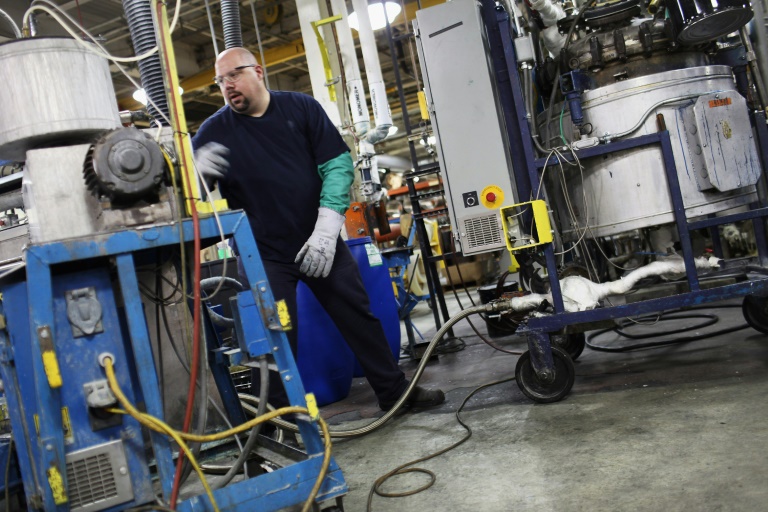
US manufacturing growth slows further in July: survey

The US manufacturing sector continued to grow in July, but the pace was impacted by dimming demand while price increases have slowed dramatically, according to an industry survey released Monday.

And amid a tight American job market, hiring slowed for the third straight month, but firms are reporting less trouble filling open positions and no signs of layoffs, the Institute for Supply Management’s latest report showed.

But firms continue to have trouble filling orders due to ongoing problems getting materials.

ISM’s manufacturing index dipped to 52.8 percent, just two-tenths below the prior month, but the lowest level since June 2020 during the pandemic downturn.

However, that level was still above the 50-percent threshold indicating expansion for the 26th consecutive month.

“The U.S. manufacturing sector continues expanding — though slightly less so in July — as new order rates continue to contract, supplier deliveries improve and prices soften to acceptable levels,” ISM manufacturing survey chair Timothy Fiore said.

The new orders index fell 1.2 points, to 48 percent, signaling a slowdown, and production fell by slightly more but continues to grow.

“Lead times remain at elevated levels, and fundamental raw material prices continue to persuade buyers to remain on the sidelines,” Fiore said

The prices index fell a whopping 18.5 points — the fourth biggest decline on record — to 60 percent, with a much higher share of firms reporting falling prices, the survey showed. The index has been above 60 percent for nearly two years.

Covid-19 lockdowns in China and Russia’s war in Ukraine have been exacerbating shortages experienced, fueling the global inflation surge, especially for energy, and prompted the Federal Reserve to raise borrowing costs aggressively.

Survey respondents noted ongoing supply issues and the impact of rising prices, and several expressed concern about the future

“Our markets are still holding up; however, I believe a slowdown is coming,” one said. “I believe the general market is in the beginnings of a recession.”

Oren Klachkin of Oxford Economics said challenges are mounting for firms.

“Manufacturers will face many of the same challenges in the second half of 2022 that they did in H1,” he said in an analysis.

“The confluence of hot inflation, higher interest rates, ongoing supply chain issues and normalizing spending patterns will make demand more fragile.”

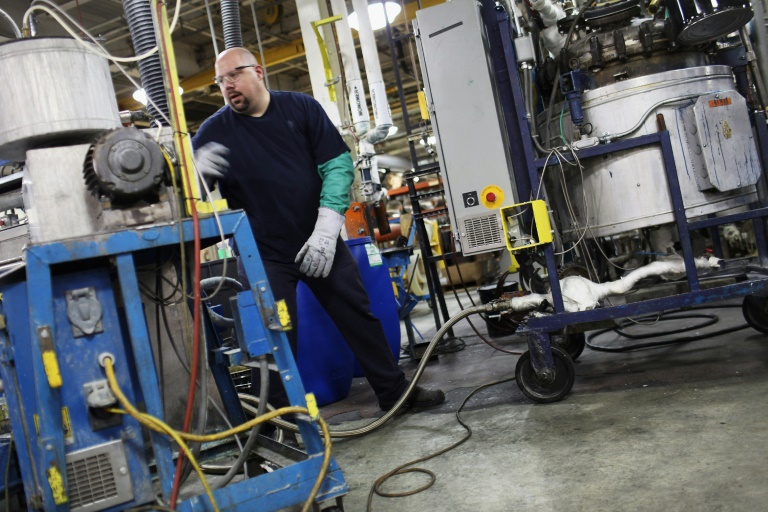
US manufacturing growth slows further in July: survey

The US manufacturing sector continued to grow in July, but the pace was impacted by dimming demand while price increases have slowed dramatically, according to an industry survey released Monday.

And amid a tight American job market, hiring slowed for the third straight month, but firms are reporting less trouble filling open positions and no signs of layoffs, the Institute for Supply Management’s latest report showed.

But firms continue to have trouble filling orders due to ongoing problems getting materials.

ISM’s manufacturing index dipped to 52.8 percent, just two-tenths below the prior month, but the lowest level since June 2020 during the pandemic downturn.

However, that level was still above the 50-percent threshold indicating expansion for the 26th consecutive month.

“The U.S. manufacturing sector continues expanding — though slightly less so in July — as new order rates continue to contract, supplier deliveries improve and prices soften to acceptable levels,” ISM manufacturing survey chair Timothy Fiore said.

The new orders index fell 1.2 points, to 48 percent, signaling a slowdown, and production fell by slightly more but continues to grow.

“Lead times remain at elevated levels, and fundamental raw material prices continue to persuade buyers to remain on the sidelines,” Fiore said

The prices index fell a whopping 18.5 points — the fourth biggest decline on record — to 60 percent, with a much higher share of firms reporting falling prices, the survey showed. The index has been above 60 percent for nearly two years.

Covid-19 lockdowns in China and Russia’s war in Ukraine have been exacerbating shortages experienced, fueling the global inflation surge, especially for energy, and prompted the Federal Reserve to raise borrowing costs aggressively.

Survey respondents noted ongoing supply issues and the impact of rising prices, and several expressed concern about the future

“Our markets are still holding up; however, I believe a slowdown is coming,” one said. “I believe the general market is in the beginnings of a recession.”

Oren Klachkin of Oxford Economics said challenges are mounting for firms.

“Manufacturers will face many of the same challenges in the second half of 2022 that they did in H1,” he said in an analysis.

“The confluence of hot inflation, higher interest rates, ongoing supply chain issues and normalizing spending patterns will make demand more fragile.”

US, allies hit Russia for 'dangerous' nuclear rhetoric ahead of UN talks

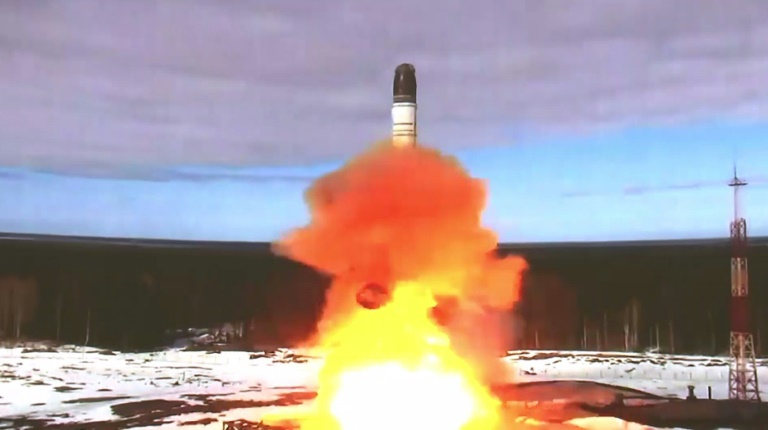
The United States and its nuclear allies rebuked Russia Monday for “irresponsible and dangerous” talk about possibly deploying nuclear weapons as a review of the keystone nuclear treaty opened at the United Nations.

“Following Russia’s unprovoked and unlawful war of aggression against Ukraine, we call on Russia to cease its irresponsible and dangerous nuclear rhetoric and behavior, to uphold its international commitments,” said the United States, France and Britain in a statement.

“Nuclear weapons, for as long as they exist, should serve defensive purposes, deter aggression, and prevent war. We condemn those who would use or threaten to use nuclear weapons for military coercion, intimidation, and blackmail,” they said.

The call was issued as leaders met at the United Nations in New York for the 10th review conference of the Treaty on the Non-Proliferation of Nuclear Weapons (NPT), which came into force in 1970.

It comes as concerns are rising about the spread of nuclear technology, especially in Iran and North Korea, and China’s rapid expansion of its nuclear arsenal.

While five leading nuclear powers are among the 191 states party to the pact, India, Pakistan, Israel and North Korea are not.

“The NPT has reduced the risk of a devastating nuclear war, and further reduction of that risk must be a priority for all NPT states parties and for this Review Conference,” the US-France-Britain statement said.

They said that Iran, currently in negotiations to limit its nuclear development, “must never develop a nuclear weapon,” and called on North Korea to halt its nuclear-related tests and launches.

In a separate statement US President Joe Biden called on Russia and China to demonstrate their commitment to limiting nuclear arms.

Russia should demonstrate its willingness to renew a separate bilateral nuclear arms reduction pact, the New START Treaty, when it expires in 2026, Biden said.

“My administration is ready to expeditiously negotiate a new arms control framework to replace New START,” he said. 

“But negotiation requires a willing partner operating in good faith. And Russia’s brutal and unprovoked aggression in Ukraine has shattered peace in Europe and constitutes an attack on fundamental tenets of international order.”

Biden said China meanwhile has a responsibility “to engage in talks that will reduce the risk of miscalculation and address destabilizing military dynamics.”

“There is no benefit to any of our nations, or for the world, to resist substantive engagement on arms control and nuclear non-proliferation,” Biden said.

“The health of the NPT has always rested on meaningful, reciprocal arms limits between the United States and Russian Federation. Even at the height of the Cold War, the United States and the Soviet Union were able to work together to uphold our shared responsibility to ensure strategic stability,” Biden said.

“The world can be confident that my administration will continue to support the NPT and seek to strengthen the nonproliferation architecture that protects people everywhere.”

Boeing shares surge as it nears 787 delivery resumption

Shares of Boeing jumped early Monday as the aviation giant moved closer to final regulatory approval to resume deliveries of the 787 jet.

The Federal Aviation Administration signed off on Boeing’s certification plan for the top-selling widebody plane, a person familiar with the situation told AFP.

“Deliveries aren’t imminent and there are additional steps in the process that we will follow,” this person said.

Shares surged 5.8 percent to $168.60 early Monday, reflecting enthusiasm at the restoration of revenues from a cash cow plane whose struggles have crimped company finances for more than a year.

Deliveries have been halted since spring 2021 while officials from the company and FAA have worked to hash out an inspection and repair system following manufacturing defects uncovered on the plane.

The FAA referred questions to Boeing, saying “we don’t comment on ongoing certifications.”

A Boeing spokesman said, “we will continue to work transparently with the FAA and our customers towards resuming 787 deliveries.”

The 787’s travails date to late summer 2020, when the company uncovered manufacturing flaws with some jets. Boeing subsequently identified additional issues, including with the horizontal stabilizer.

The difficulties curtailed deliveries between November 2020 and March 2021. Boeing suspended deliveries later in  spring 2021 after more problems surfaced.

On a July 27 earnings conference call, Chief Executive Dave Calhoun described the company as “on the verge” of garnering approval from US air safety officials on the 787, though he declined to give a precise target date.

At the end of June, Boeing had 120 Dreamliner planes in inventory and was producing the jet “at very low rates,” the company said in a filing.

The FAA is expected to inspect each 787 before it is delivered to airlines.

Boeing shares surge as it nears 787 delivery resumption

Shares of Boeing jumped early Monday as the aviation giant moved closer to final regulatory approval to resume deliveries of the 787 jet.

The Federal Aviation Administration signed off on Boeing’s certification plan for the top-selling widebody plane, a person familiar with the situation told AFP.

“Deliveries aren’t imminent and there are additional steps in the process that we will follow,” this person said.

Shares surged 5.8 percent to $168.60 early Monday, reflecting enthusiasm at the restoration of revenues from a cash cow plane whose struggles have crimped company finances for more than a year.

Deliveries have been halted since spring 2021 while officials from the company and FAA have worked to hash out an inspection and repair system following manufacturing defects uncovered on the plane.

The FAA referred questions to Boeing, saying “we don’t comment on ongoing certifications.”

A Boeing spokesman said, “we will continue to work transparently with the FAA and our customers towards resuming 787 deliveries.”

The 787’s travails date to late summer 2020, when the company uncovered manufacturing flaws with some jets. Boeing subsequently identified additional issues, including with the horizontal stabilizer.

The difficulties curtailed deliveries between November 2020 and March 2021. Boeing suspended deliveries later in  spring 2021 after more problems surfaced.

On a July 27 earnings conference call, Chief Executive Dave Calhoun described the company as “on the verge” of garnering approval from US air safety officials on the 787, though he declined to give a precise target date.

At the end of June, Boeing had 120 Dreamliner planes in inventory and was producing the jet “at very low rates,” the company said in a filing.

The FAA is expected to inspect each 787 before it is delivered to airlines.

OPEC+ faces output decision after Biden's Saudi trip

The OPEC+ group of oil exporters meets Wednesday to discuss another output increase, weeks after US President Joe Biden sought to persuade Saudi Arabia to boost production during a controversial visit to the country.

The White House has been pressing the oil cartel to step up production to tame prices that have surged since Russia invaded Ukraine in late February.

But the group, which is led by Saudi Arabia and Russia, has stuck to modest increases so far.

The 13-member Organization of the Petroleum Exporting Countries, along with 10 allies that include Russia, had slashed production at the height of the Covid pandemic in 2020 after a plunge in demand caused prices to sink.

The group began to raise production last year, agreeing to add 400,000 barrels per day to the market. It backed an increase of nearly 650,000 barrels per day in June, still not enough to spark a big drop in oil prices.

The alliance’s output is back to pre-virus levels, but just on paper as a few members have struggled to meet their quotas.

All eyes will be on whether OPEC+ sticks to the same output policy or steps it up.

– Biden’s Saudi voyage –

Biden travelled to Saudi Arabia in mid-July to meet Crown Prince Mohammed bin Salman despite his promise to make the kingdom a “pariah” in the wake of the 2018 killing of journalist Jamal Khashoggi.

Part of the reason for the controversial trip was to convince Riyadh to continue loosening the production taps to stabilise the market and curb rampant inflation.

After his meetings with Saudi leaders in mid-July, Biden said he was “doing all I can” to increase the oil supply but added that concrete results would not be seen “for another couple weeks” — and it was unclear what those might be. 

Wednesday’s meeting will reveal whether his efforts were successful.

“The US administration appears to be anticipating some good news but it’s hard to know whether that’s based on assurances during Biden’s trip or not,” Craig Erlam, analyst at OANDA trading platform, told AFP.

Stephen Innes, managing partner at SPI Asset Management, said it “wouldn’t be a surprise to see the Saudis announce something that Biden could tout as a win to voters at home.”

– Sceptical market –

According to the London-based research institute Energy Aspects, OPEC+ could adjust its current agreement in order to keep raising crude production volumes.

However, analysts warn against expecting any drastic increases.

OPEC+ has to take into account the fact that the interests of Russia — a key player in the alliance — are diametrically opposed to those of Washington.

“Saudi Arabia has to walk a fine line,” said Tamas Varga, analyst at PVM Energy. 

Any decision on Wednesday will have to be unanimous, which may lead to a longer meeting than normal.

“Any new OPEC+ deal aimed at further ramping up supplies is likely to be met with market scepticism, considering the supply constraints already evident within the alliance,” said Han Tan, chief market analyst at Exinity. 

The group will decide output policy under a new secretary general, Kuwait’s Haitham Al-Ghais, who took office on Monday following the death of Nigeria’s Mohammed Barkindo last month.

“I look forward to working with all our Member Countries and our many partners around the world to ensure a sustainable and inclusive energy future which leaves no one behind,” Al-Ghais said in a statement.

OPEC+ faces output decision after Biden's Saudi trip

The OPEC+ group of oil exporters meets Wednesday to discuss another output increase, weeks after US President Joe Biden sought to persuade Saudi Arabia to boost production during a controversial visit to the country.

The White House has been pressing the oil cartel to step up production to tame prices that have surged since Russia invaded Ukraine in late February.

But the group, which is led by Saudi Arabia and Russia, has stuck to modest increases so far.

The 13-member Organization of the Petroleum Exporting Countries, along with 10 allies that include Russia, had slashed production at the height of the Covid pandemic in 2020 after a plunge in demand caused prices to sink.

The group began to raise production last year, agreeing to add 400,000 barrels per day to the market. It backed an increase of nearly 650,000 barrels per day in June, still not enough to spark a big drop in oil prices.

The alliance’s output is back to pre-virus levels, but just on paper as a few members have struggled to meet their quotas.

All eyes will be on whether OPEC+ sticks to the same output policy or steps it up.

– Biden’s Saudi voyage –

Biden travelled to Saudi Arabia in mid-July to meet Crown Prince Mohammed bin Salman despite his promise to make the kingdom a “pariah” in the wake of the 2018 killing of journalist Jamal Khashoggi.

Part of the reason for the controversial trip was to convince Riyadh to continue loosening the production taps to stabilise the market and curb rampant inflation.

After his meetings with Saudi leaders in mid-July, Biden said he was “doing all I can” to increase the oil supply but added that concrete results would not be seen “for another couple weeks” — and it was unclear what those might be. 

Wednesday’s meeting will reveal whether his efforts were successful.

“The US administration appears to be anticipating some good news but it’s hard to know whether that’s based on assurances during Biden’s trip or not,” Craig Erlam, analyst at OANDA trading platform, told AFP.

Stephen Innes, managing partner at SPI Asset Management, said it “wouldn’t be a surprise to see the Saudis announce something that Biden could tout as a win to voters at home.”

– Sceptical market –

According to the London-based research institute Energy Aspects, OPEC+ could adjust its current agreement in order to keep raising crude production volumes.

However, analysts warn against expecting any drastic increases.

OPEC+ has to take into account the fact that the interests of Russia — a key player in the alliance — are diametrically opposed to those of Washington.

“Saudi Arabia has to walk a fine line,” said Tamas Varga, analyst at PVM Energy. 

Any decision on Wednesday will have to be unanimous, which may lead to a longer meeting than normal.

“Any new OPEC+ deal aimed at further ramping up supplies is likely to be met with market scepticism, considering the supply constraints already evident within the alliance,” said Han Tan, chief market analyst at Exinity. 

The group will decide output policy under a new secretary general, Kuwait’s Haitham Al-Ghais, who took office on Monday following the death of Nigeria’s Mohammed Barkindo last month.

“I look forward to working with all our Member Countries and our many partners around the world to ensure a sustainable and inclusive energy future which leaves no one behind,” Al-Ghais said in a statement.

Close Bitnami banner
Bitnami