AFP

World Bank refuses new funding for bankrupt Sri Lanka

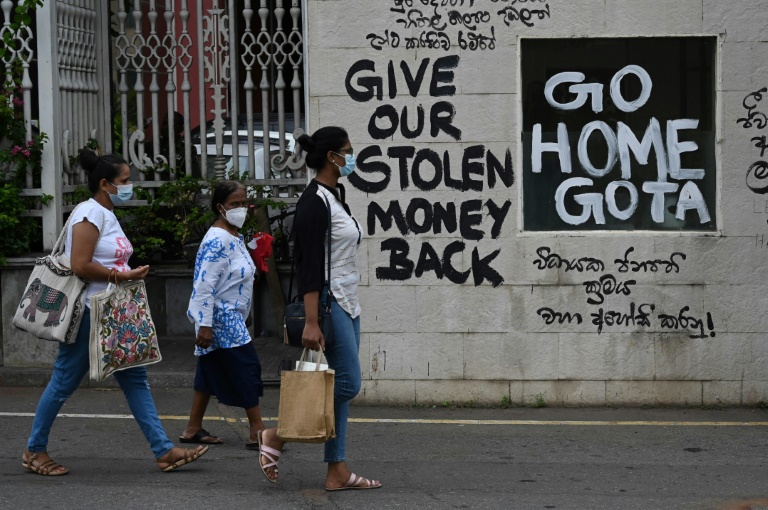
The World Bank said Friday it would not offer new funding to Sri Lanka unless the bankrupt island nation carried out “deep structural reforms” to stabilise its crashing economy.

Sri Lanka has suffered an unprecedented downturn with its 22 million people enduring months of food and fuel shortages, rolling blackouts and rampant inflation. 

The South Asian nation defaulted on its $51-billion foreign debt in April and huge protests earlier this month forced then president Gotabaya Rajapaksa to flee the country and resign.

The World Bank said it was concerned about the impact of the crisis on Sri Lanka’s people but was not ready to give funds until the government had bedded down necessary reforms. 

“Until an adequate macroeconomic policy framework is in place, the World Bank does not plan to offer new financing to Sri Lanka,” the lender said in a statement.

“This requires deep structural reforms that focus on economic stabilisation, and also on addressing the root structural causes that created this crisis.”

The World Bank said it had already diverted $160 million from existing loans to finance urgently needed medicines, cooking gas and school meals.

Sri Lanka is currently in bailout talks with the International Monetary Fund but officials say the process could take months.

The island nation has run out of foreign exchange to finance even the most essential imports, and chronic shortages have inflamed public anger.

Motorists stay in long queues for days to get rationed petrol and government officials have been told to work from home to reduce commuting and save fuel.

The UN World Food Programme estimates the crisis has forced five out of every six Sri Lankan families to buy lower-quality food, eat less or in some cases skip meals altogether.

The crisis came to a head on July 9, when tens of thousands of protesters stormed Rajapaksa’s residence, forcing the president to flee to Singapore and resign.

His successor, Ranil Wickremesinghe, has declared a state of emergency and vowed a tough line against “trouble-makers”, with several activists who helped lead the mass demonstrations arrested this week.

Venezuela's Maduro regime loses latest step of UK gold case

Opposition leader Juan Guaido’s rival Venezuelan government said Friday it was a step closer to taking control of the oil-rich country’s gold reserves, after the latest judgment by a UK court.

High Court judge Sara Cockerill ruled against President Nicolas Maduro’s regime in a technical ruling concerning appointments made to the Banco Central de Venezuela (BCV) by Guaido.

She found that rulings by Venezuela’s supreme court, blocking the appointments, could not be recognised in English law.

One factor cited by Cockerill was “clear evidence” that the Supreme Tribunal of Justice had been stacked with Maduro-supporting judges.

“This is an unfortunate ruling that ultimately rests on a narrow issue of law about the recognition of foreign judgments,” said Sarosh Zaiwalla of the law firm Zaiwalla and Co, representing the Maduro-backed BCV.

“The BCV is considering an appeal,” he added.

But in a statement, Guaido expressed gratitude for Britain’s “honest and transparent judicial process”, contrasting it with the Maduro government’s focus on “power and money”.

“This decision represents another step in the process of protecting Venezuela’s international gold reserves and preserving them for the Venezuelan people and their future,” he said.

The ultimate thrust of the case remains to be decided, after the UK Supreme Court last year ruled that the dispute should be heard again by the lower Commercial Court in London.

Cockerill’s ruling put the value of the 31 tonnes of Venezuelan gold deposited with the Bank of England at about $1.95 billion. Maduro wants to recover the gold. 

But access has so far been denied as Britain, in line with other countries including the United States, acknowledges Guaido as interim president.

UK judges have already ruled that they are obliged to follow the British government’s decision on which government to recognise but had left open the legal point decided on Friday. 

Further hearings are expected later this year before the case as a whole can be decided.

The United States and Venezuela severed diplomatic ties in 2019 after Maduro was re-elected the year before to a second term in a ballot boycotted by the opposition.

In a tentative sign of a potential warming of relations, however, Washington sent a high-level delegation to energy-rich Venezuela in March, just days after Russia invaded Ukraine. 

Russia, Ukraine trade blame over strike on POW jail

Moscow and Kyiv on Friday accused each other of bombing a jail holding Ukrainian prisoners of war in Russian-held territory, with Russia saying 40 prisoners and eight prison staff were killed.

Russia’s defence ministry said the Ukrainian strikes were carried out with US-supplied long-range missiles, in an “egregious provocation” designed to stop soldiers surrendering.

It said that among the dead were Ukrainian forces that had laid down their arms after repelling Moscow’s assault on the sprawling Azovstal steel works in Mariupol.

The claims came as President Volodymyr Zelensky visited a port in southern Ukraine to oversee a ship being loaded with grain for export under a UN-backed plan aimed at ending a food crisis.

Ukraine’s presidency said exports could start in the “coming days” under the plan aimed at getting millions of tonnes of Ukrainian grain stranded by Russia’s naval blockade to world markets.

– ‘Petrifying war crime’ –

Following the strike on the prison, Russian state-television showed what appeared to be destroyed barracks and tangled metal beds but no casualties could be seen.

Ukraine’s military denied carrying out the attack saying its forces “did not launch missile and artillery strikes in the area of Olenivka settlement.”

It instead blamed Russia’s invading forces for “a targeted artillery shelling” on the detention facility, saying it was being used to “accuse Ukraine of committing ‘war crimes’, as well as to hide the torture of prisoners and executions”.

“Russia has committed another petrifying war crime by shelling a correctional facility in occupied” Olenivka where it held Ukrainian POWs, Ukraine’s Foreign Minister Dmytro Kuleba wrote on Twitter. 

Ukraine’s forces in May ended a weeks-long siege of Azovstal, with around 2,500 combatants surrendering after calling a halt to their first resistance. 

Moscow’s state media has reported that some officers — including those from the controversial Azov regiment — have been taken into Russia. 

Kyiv says it has captured thousands of Russian troops during the invasion and has begun putting some on trial for alleged war crimes. 

A Ukrainian court on Friday reduced the life sentence handed to a Russian soldier in May for pre-meditated murder in the country’s first war crimes trial, instead jailing the serviceman for 15 years.

– Mykolaiv strikes –

Russian strikes elsewhere in Ukraine killed five people and wounded seven more on Friday on the heavily bombed city of Mykolaiv near the country’s southern frontline, the regional governor said.

“They shot at another area near a public transport stop,” governor Vitaliy Kim said in a statement on social media.

Mykolaiv, near the Black Sea, has seen roughly half of its estimated pre-war population of nearly 500,000 people leave and the city has been shelled daily for weeks.

It is the largest Ukrainian-controlled urban hub near the frontlines in the Kherson region, where Kyiv’s army has launched a counter-offensive to regain control of the economically and strategically important coastal territory.

The Ukrainian presidency said Friday that Russian strikes on the city a day earlier had struck a humanitarian aid distribution point and injured three people.

In the eastern Donetsk region, governor Pavlo Kyrylenko also said Friday that Moscow’s forces had killed eight people and wounded 19 more in attacks over the previous day.

– Grain ship loading –

The ceaseless violence on the ground comes as Ukraine looks to push ahead with restarting crucial grain exports under a plan brokered by Turkey and the United Nations to lift Russia’s Black Sea naval blockade. 

Ukraine’s presidency released footage of Zelensky standing in front of Turkish ship Polarnet in the port of Chornomorsk on a visit to inspect grain being loaded.

“The first vessel, the first ship is being loaded since the beginning of the war,” Zelensky said in a statement. 

Zelensky said Kyiv was “waiting for a signal” from Ankara and UN to start exports that it is hoped will help mitigate a global food crisis that has seen prices soar. 

The hike in food costs is just one of the shock waves that Moscow’s war in Ukraine has sent reverberating around the world.

Energy prices have also risen dramatically as Moscow has cut gas supplies to Europe and the turbulence has wracked the oil markets. 

The French presidency said that leader Emmanuel Macron and Saudi Crown Prince Mohammed bin Salman had agreed to work together to limit the impact of the war at talks in Paris. 

Macron took the meeting despite fierce criticism from rights groups in a bid to get major crude producer Saudia Arabia to up its production. 

burs-jbr/kjm

ExxonMobil profits surge to $17.9 bn on lofty commodity prices

ExxonMobil’s profits nearly quadrupled to $17.9 billion in results released Friday that underscored the elevated state of oil and natural gas prices amid commodity market tightness.

The US oil giant saw profits of $4.7 billion in the year-ago period. Revenues rose 68.7 percent to $111.3 billion.

ExxonMobil joined rivals Royal Dutch Shell and TotalEnergies in releasing massive second-quarter profit increases in the aftermath of the Russian invasion of Ukraine, which has pressured energy markets.

ExxonMobil’s results were also boosted by a strong performance in its downstream business amid high gasoline prices and limited refining capacity.

“Earnings and cash flow benefited from increased production, higher realizations, and tight cost control,” said Chief Executive Darren Woods.

“Strong second-quarter results reflect our focus on the fundamentals and the investments we put in motion several years ago and sustained through the depths of the pandemic.”

The oil giant, which endured a series of quarterly losses early in the pandemic when petroleum demand cratered, is prospering following the turn in the market.

During the quarter, ExxonMobil benefited from a 71 percent surge in crude price realizations compared with the year-ago period and a 186 percent increase in natural gas.

The refining business, which lost money in the 2021 quarter, notched $5.3 billion in profits.

Shares of ExxonMobil jumped 2.6 percent to $95.03 in pre-market trading.

ExxonMobil profits surge to $17.9 bn on lofty commodity prices

ExxonMobil’s profits nearly quadrupled to $17.9 billion in results released Friday that underscored the elevated state of oil and natural gas prices amid commodity market tightness.

The US oil giant saw profits of $4.7 billion in the year-ago period. Revenues rose 68.7 percent to $111.3 billion.

ExxonMobil joined rivals Royal Dutch Shell and TotalEnergies in releasing massive second-quarter profit increases in the aftermath of the Russian invasion of Ukraine, which has pressured energy markets.

ExxonMobil’s results were also boosted by a strong performance in its downstream business amid high gasoline prices and limited refining capacity.

“Earnings and cash flow benefited from increased production, higher realizations, and tight cost control,” said Chief Executive Darren Woods.

“Strong second-quarter results reflect our focus on the fundamentals and the investments we put in motion several years ago and sustained through the depths of the pandemic.”

The oil giant, which endured a series of quarterly losses early in the pandemic when petroleum demand cratered, is prospering following the turn in the market.

During the quarter, ExxonMobil benefited from a 71 percent surge in crude price realizations compared with the year-ago period and a 186 percent increase in natural gas.

The refining business, which lost money in the 2021 quarter, notched $5.3 billion in profits.

Shares of ExxonMobil jumped 2.6 percent to $95.03 in pre-market trading.

Ultra-fast fashion charms young despite damaging environment

So-called “ultra-fast fashion” has won legions of young trend-setting fans who snap up relatively cheap clothes online amid surging inflation, but the booming genre masks darker environmental problems.

Britain’s Boohoo, China’s SHEIN and Hong Kong’s Emmiol operate the same internet-based business model — produce items and collections at breakneck speed and rock-bottom prices.

They are giving intense competition to more well-known “fast fashion” chains with physical stores, like Sweden’s H&M and Spain’s Zara.

Young people under the age of 25 — widely known as Generation Z — love placing multiple orders for ultra-fast fashion, which then arrive in the post.

– ‘Consequences for planet’ –

Greenpeace has, however, slammed the “throwaway clothing” phenomenon as grossly wasteful, arguing it takes 2,700 litres of water to make one T-shirt that is swiftly binned.

“Many of these cheap clothes end up… on huge dump sites, burnt on open fires, along riverbeds and washed out into the sea, with severe consequences for people and the planet,” the green pressure group says.

Photographs of mountains of shoddy clothing, returned to the vendor or dumped soon after purchase, have gone viral, highlighting the vast amount of waste.

Demand for low-price garments has nevertheless soared due to decades-high inflation, while many Covid-hit high-street shops with big overhead costs struggle to compete.

And it is wildly popular: SHEIN generated $16 billion in global sales last year, Bloomberg says.

– Mirage of cheapness –

Customers purchase T-shirts for £4.0 ($4.80), while bikinis and dresses sell for as little as £8.0 apiece.

For French high-school student Lola, 18, who lives in the city of Nancy, SHEIN shopping has become a cheap hobby.

The brand simply allows her to follow the latest trends “without spending an astronomical amount”, she told AFP, oblivious to the environmental cost.

Lola normally places two to three orders per month on SHEIN with an average combined value of 70 euros ($71) for about 10 items.

Ultra-fast fashion’s young target demographic — like Lola — simply have less cash to spend.

Those consumers therefore “seek quantity rather than quality” of clothing, according to economics professor Valerie Guillard at Paris-Dauphine University.

SHEIN, which was founded in late 2008, now sells across the world helped by its massive presence on social media networks.

– ‘Haul’ videos –

Customers post so-called “haul” videos online — where they unwrap SHEIN packages, try on clothes and review them.

That has boosted its popularity on TikTok, which is favoured by teenagers and young adults, while there are also such videos on Instagram and YouTube.

On TikTok alone, there are 34.4 billion mentions of the hashtag #SHEIN and six billion for #SHEINhaul.

Brands extends their reach via low-cost partnerships with a large number of people on social media, to build trust and increase sales.

Irish social-media influencer Marleen Gallagher, 45, who works with SHEIN and other firms, praised them for offering broader size ranges than regular stores.

“They are unrivalled when it come to choices for plus-size women,” she told AFP.

– Climate emergency –

Yet the industry has a reputation for devouring valuable resources and damaging the environment.

Ultra-fast fashion companies have also been plagued by scandals over allegedly poor working conditions in their factories.

Swiss-based NGO Public Eye discovered in November 2022 that employees in some SHEIN factories worked up to 75 hours per week, in contravention of Chinese labour laws.

Britain’s Boohoo also faced criticism following media reports that its suppliers were underpaying workers in Pakistan.

Added to the picture, the French Agency for Ecological Transition estimates that fast fashion accounts for a staggering two percent of global greenhouse emissions per year.

That is as much as air transport and maritime traffic combined.

The genre has meanwhile attracted the anger of climate campaigner Greta Thunberg.

“The fashion industry is a huge contributor to the climate and ecological emergency, not to mention its impact on the countless workers and communities who are being exploited around the world in order for some to enjoy fast fashion that many treat as disposables,” Thunberg wrote last year, urging change.

Ultra-fast fashion charms young despite damaging environment

So-called “ultra-fast fashion” has won legions of young trend-setting fans who snap up relatively cheap clothes online amid surging inflation, but the booming genre masks darker environmental problems.

Britain’s Boohoo, China’s SHEIN and Hong Kong’s Emmiol operate the same internet-based business model — produce items and collections at breakneck speed and rock-bottom prices.

They are giving intense competition to more well-known “fast fashion” chains with physical stores, like Sweden’s H&M and Spain’s Zara.

Young people under the age of 25 — widely known as Generation Z — love placing multiple orders for ultra-fast fashion, which then arrive in the post.

– ‘Consequences for planet’ –

Greenpeace has, however, slammed the “throwaway clothing” phenomenon as grossly wasteful, arguing it takes 2,700 litres of water to make one T-shirt that is swiftly binned.

“Many of these cheap clothes end up… on huge dump sites, burnt on open fires, along riverbeds and washed out into the sea, with severe consequences for people and the planet,” the green pressure group says.

Photographs of mountains of shoddy clothing, returned to the vendor or dumped soon after purchase, have gone viral, highlighting the vast amount of waste.

Demand for low-price garments has nevertheless soared due to decades-high inflation, while many Covid-hit high-street shops with big overhead costs struggle to compete.

And it is wildly popular: SHEIN generated $16 billion in global sales last year, Bloomberg says.

– Mirage of cheapness –

Customers purchase T-shirts for £4.0 ($4.80), while bikinis and dresses sell for as little as £8.0 apiece.

For French high-school student Lola, 18, who lives in the city of Nancy, SHEIN shopping has become a cheap hobby.

The brand simply allows her to follow the latest trends “without spending an astronomical amount”, she told AFP, oblivious to the environmental cost.

Lola normally places two to three orders per month on SHEIN with an average combined value of 70 euros ($71) for about 10 items.

Ultra-fast fashion’s young target demographic — like Lola — simply have less cash to spend.

Those consumers therefore “seek quantity rather than quality” of clothing, according to economics professor Valerie Guillard at Paris-Dauphine University.

SHEIN, which was founded in late 2008, now sells across the world helped by its massive presence on social media networks.

– ‘Haul’ videos –

Customers post so-called “haul” videos online — where they unwrap SHEIN packages, try on clothes and review them.

That has boosted its popularity on TikTok, which is favoured by teenagers and young adults, while there are also such videos on Instagram and YouTube.

On TikTok alone, there are 34.4 billion mentions of the hashtag #SHEIN and six billion for #SHEINhaul.

Brands extends their reach via low-cost partnerships with a large number of people on social media, to build trust and increase sales.

Irish social-media influencer Marleen Gallagher, 45, who works with SHEIN and other firms, praised them for offering broader size ranges than regular stores.

“They are unrivalled when it come to choices for plus-size women,” she told AFP.

– Climate emergency –

Yet the industry has a reputation for devouring valuable resources and damaging the environment.

Ultra-fast fashion companies have also been plagued by scandals over allegedly poor working conditions in their factories.

Swiss-based NGO Public Eye discovered in November 2022 that employees in some SHEIN factories worked up to 75 hours per week, in contravention of Chinese labour laws.

Britain’s Boohoo also faced criticism following media reports that its suppliers were underpaying workers in Pakistan.

Added to the picture, the French Agency for Ecological Transition estimates that fast fashion accounts for a staggering two percent of global greenhouse emissions per year.

That is as much as air transport and maritime traffic combined.

The genre has meanwhile attracted the anger of climate campaigner Greta Thunberg.

“The fashion industry is a huge contributor to the climate and ecological emergency, not to mention its impact on the countless workers and communities who are being exploited around the world in order for some to enjoy fast fashion that many treat as disposables,” Thunberg wrote last year, urging change.

European stocks end week higher on growth hopes

European stock markets rose robustly on Friday as official data showed eurozone growth holding up in the face of soaring inflation.

Stock markets in Asia ended the session lower after data showed that the US economy contracted again, reinforcing recession fears, but boosting expectations that the US Federal Reserve will slow its pace of interest rate hikes.

After an extended period of pessimism on trading floors, investors were beginning to speculate that the market may be bottoming out. 

The EU’s official data agency said the 19-country eurozone grew by 0.7 percent in the second quarter, even though inflation rose to a new record of 8.9 percent in July. 

A day earlier, US data showed the world’s biggest economy shrank by 0.9 percent in the period from April to June after already contracting by 1.6 percent in the preceding three months. 

But the reading was taken as a sign of good news, since it could give the Fed room to take its foot off the pedal and treasury yields — considered a barometer of future interest rates — eased.

Officials were expected to continue raising US interest rates, but analysts estimate they would announce a half-point rise in September, compared with three-quarters of percentage point at the past two meetings.

“Stocks continued their rally in Europe on Friday, alongside US futures, as market sentiment improved following reassuring macro data in addition to positive corporate results,” said ActivTrades analyst Pierre Veyret.

The prospect of US interest rates not rising as fast as previously expected has knocked the dollar slightly after soaring against other major currencies in recent months.

A second successive contraction in growth is widely considered a technical recession, although it is not officially considered so in the United States until identified as such by the National Bureau of Economic Research.

But while debate rages over that issue, the consensus is that the economy is struggling.

“The more important point is that the economy has quickly lost steam in the face of four-decade high inflation, rapidly rising borrowing costs, and a general tightening in financial conditions,” said Sal Guatieri, of BMO Capital Markets.

China is also struggling, hit by Covid-induced lockdowns in major cities including Shanghai and Beijing that have hammered all sectors and supply chains.

– Key figures at around 0930 GMT –

London – FTSE 100: UP 0.6 percent at 7,386.66 points

Frankfurt – DAX: UP 0.8 percent at 13,386.61

Paris – CAC 40: UP 1.4 at 6,425.71

EURO STOXX 50: UP 1.0 percent at 3,688.90

Tokyo – Nikkei 225: DOWN 0.1 percent at 27,801.64 (close)

Hong Kong – Hang Seng Index: DOWN 2.3 percent at 20,156.51 (close)

Shanghai – Composite: DOWN 0.9 percent at 3,253.24 (close)

New York – Dow: UP 1.0 percent at 32,529.63 (close)

Euro/dollar: UP at $1.0200 from $1.0197 Thursday

Pound/dollar: DOWN at $1.2153 from $1.2177 

Euro/pound: UP at 83.92 pence from 83.70 pence

Dollar/yen: DOWN at 133.29 yen from 134.25 yen

Brent North Sea crude: UP 2.0 percent at $109.23 per barrel

West Texas Intermediate: UP 2.2 percent at $98.57 per barrel

European stocks end week higher on growth hopes

European stock markets rose robustly on Friday as official data showed eurozone growth holding up in the face of soaring inflation.

Stock markets in Asia ended the session lower after data showed that the US economy contracted again, reinforcing recession fears, but boosting expectations that the US Federal Reserve will slow its pace of interest rate hikes.

After an extended period of pessimism on trading floors, investors were beginning to speculate that the market may be bottoming out. 

The EU’s official data agency said the 19-country eurozone grew by 0.7 percent in the second quarter, even though inflation rose to a new record of 8.9 percent in July. 

A day earlier, US data showed the world’s biggest economy shrank by 0.9 percent in the period from April to June after already contracting by 1.6 percent in the preceding three months. 

But the reading was taken as a sign of good news, since it could give the Fed room to take its foot off the pedal and treasury yields — considered a barometer of future interest rates — eased.

Officials were expected to continue raising US interest rates, but analysts estimate they would announce a half-point rise in September, compared with three-quarters of percentage point at the past two meetings.

“Stocks continued their rally in Europe on Friday, alongside US futures, as market sentiment improved following reassuring macro data in addition to positive corporate results,” said ActivTrades analyst Pierre Veyret.

The prospect of US interest rates not rising as fast as previously expected has knocked the dollar slightly after soaring against other major currencies in recent months.

A second successive contraction in growth is widely considered a technical recession, although it is not officially considered so in the United States until identified as such by the National Bureau of Economic Research.

But while debate rages over that issue, the consensus is that the economy is struggling.

“The more important point is that the economy has quickly lost steam in the face of four-decade high inflation, rapidly rising borrowing costs, and a general tightening in financial conditions,” said Sal Guatieri, of BMO Capital Markets.

China is also struggling, hit by Covid-induced lockdowns in major cities including Shanghai and Beijing that have hammered all sectors and supply chains.

– Key figures at around 0930 GMT –

London – FTSE 100: UP 0.6 percent at 7,386.66 points

Frankfurt – DAX: UP 0.8 percent at 13,386.61

Paris – CAC 40: UP 1.4 at 6,425.71

EURO STOXX 50: UP 1.0 percent at 3,688.90

Tokyo – Nikkei 225: DOWN 0.1 percent at 27,801.64 (close)

Hong Kong – Hang Seng Index: DOWN 2.3 percent at 20,156.51 (close)

Shanghai – Composite: DOWN 0.9 percent at 3,253.24 (close)

New York – Dow: UP 1.0 percent at 32,529.63 (close)

Euro/dollar: UP at $1.0200 from $1.0197 Thursday

Pound/dollar: DOWN at $1.2153 from $1.2177 

Euro/pound: UP at 83.92 pence from 83.70 pence

Dollar/yen: DOWN at 133.29 yen from 134.25 yen

Brent North Sea crude: UP 2.0 percent at $109.23 per barrel

West Texas Intermediate: UP 2.2 percent at $98.57 per barrel

Shakira faces call in Spain for eight-year prison term

Spanish prosecutors said Friday they would seek a prison sentence of more than eight years against global music superstar Shakira, after she rejected a plea deal on accusations of tax evasion.

Prosecutors in Barcelona will also demand a fine of nearly 24 million euros ($24.5 million) from the 45-year-old “Hips don’t Lie” songstress, whom they accuse of defrauding the Spanish tax office out of 14.5 million euros on income earned between 2012 and 2014.

Shakira, who has sold over 60 million albums, rejected a plea deal on Wednesday, saying in a statement through her lawyers that she was “absolutely certain of her innocence” and had decided to let the case go to court, “confident” that her innocence would be proven.

A formal referral to court has not yet been announced, neither has a trial date been set.

Lawyers for Shakira, one of the biggest names in the global music industry, say an agreement remains possible until the start of any trial.

Prosecutors say Shakira moved to Spain in 2011 when her relationship with FC Barcelona defender Gerard Pique became public but maintained official tax residency in the Bahamas until 2015. The couple, who share two children, announced their separation in June.

On Wednesday, the star slammed the “complete violation of her rights” and “abusive methods” carried out by the prosecutor’s office.

She claimed prosecutors were “insisting on claiming money earned during my international tours and the show ‘The Voice'” on which she was a judge in the United States, when she was “not yet resident in Spain”.

Shakira was on the singing competition show between 2013 and 2014.

Her lawyers say that until 2014 she earned most of her money from international tours, moved to Spain full time only in 2015 and has met all tax obligations.

She says she has paid 17.2 million euros to Spanish tax authorities and that she has “no debt to the Treasury for many years”.

A Barcelona court in May dismissed an appeal from the singer to drop the charges.

Shakira was named in one of the largest ever leaks of financial documents in October 2021, known as the “Pandora Papers”, among public figures linked to offshore assets.

With her mix of Latin and Arabic rhythms and rock influence, three-time Grammy winner Shakira scored major global hits with songs such as “Hips don’t Lie”, “Whenever, Wherever” and “Waka Waka”, the official song of the 2010 World Cup.

Close Bitnami banner
Bitnami