AFP

Asian markets rise as US data boosts hopes of slower Fed hikes

Asian stocks rose Friday after data showing another contraction in the US economy boosted hopes that the Federal Reserve will slow its pace of interest rate hikes.

After an extended period of pessimism on trading floors fuelled by soaring inflation and the central bank’s monetary tightening campaign, investors are beginning to speculate that the market may have reached its nadir.

The world’s top economy shrank 0.9 percent in April-June following a 1.6 percent retreat in the first quarter as it was buffeted by the four-decade spike in inflation and rising borrowing costs.

But the reading was taken as a sign of good news, as it could give the Fed room to take its foot off the pedal, with Treasury yields — considered a barometer of future interest rates — easing.

Officials are expected to continue lifting rates, but analysts estimate they will announce a 50-basis-point rise in September, compared with 75 at the past two meetings.

And analysts said the quick, sharp pace of increases would allow the bank to begin cutting sooner in 2023 while others said any recession would likely only be shallow and short.

The news saw all three main indexes on Wall Street rally more than one percent, with tech firms — which are susceptible to higher rates — leading the way.

The gains extended a rally Wednesday that came after Fed chief Jerome Powell hinted that the bank could start to take it easier in its tightening.

Most of Asia followed suit, with Tokyo, Sydney, Seoul, Singapore, Taipei, Jakarta and Wellington all up. However, Hong Kong dropped and Shanghai struggled.

The prospect of US rates not rising as fast as previously expected hit the dollar, which has soared in recent months against most other currencies. 

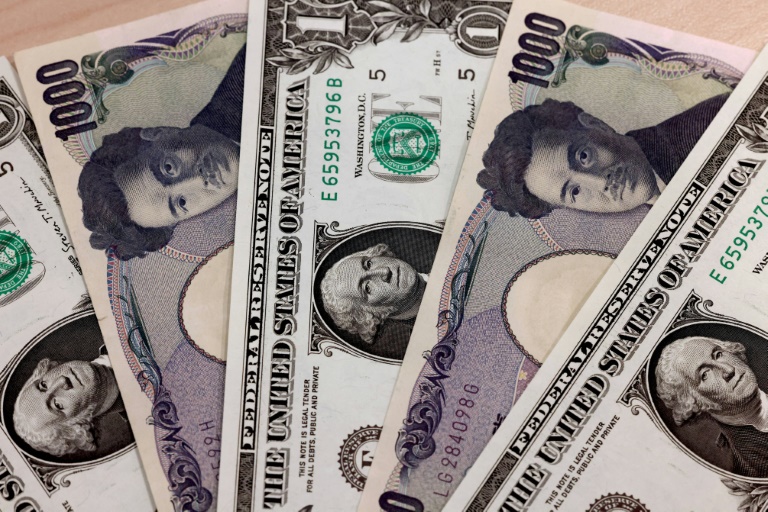
The greenback dropped below 135 yen Thursday for the first time since July 6, having hit a 24-year high of 139.39 yen just two weeks ago.

A second successive contraction is widely considered a technical recession, though it is not officially considered so in the United States until identified as such by the National Bureau of Economic Research.

But while debate rages over that issue, the general consensus is that the economy is struggling.

“The more important point is that the economy has quickly lost steam in the face of four-decade high inflation, rapidly rising borrowing costs, and a general tightening in financial conditions,” Sal Guatieri, of BMO Capital Markets, wrote.

The retreat in the US economy comes as China also struggles, hit by painful Covid-induced lockdowns in major cities including Shanghai and Beijing that hammered all sectors and supply chains.

On Thursday, the country’s leadership offered a dour assessment of the world’s number two economy but offered no plans to stimulate growth, leaving traders disappointed.

– Key figures at around 0230 GMT –

Tokyo – Nikkei 225: UP 0.5 percent at 27,944.55 (break)

Hong Kong – Hang Seng Index: DOWN 1.4 percent at 20,343.08

Shanghai – Composite: DOWN 0.4 percent at 3,269.18

Dollar/yen: UP at 134.36 yen from 134.25 yen Thursday

Euro/dollar: DOWN at $1.0193 from $1.0197 

Pound/dollar: DOWN at $1.2167 from $1.2177 

Euro/pound: UP at 83.77 pence from 83.70 pence

West Texas Intermediate: DOWN 0.8 percent at $97.16 per barrel

Brent North Sea crude: UP 0.3 percent at $107.50 per barrel

New York – Dow: UP 1.0 percent at 32,529.63 (close)

London – FTSE 100: FLAT at 7,345.25 (close) 
Asian markets rise as US data boosts hopes of slower Fed hikes

Asian stocks rose Friday after data showing another contraction in the US economy boosted hopes that the Federal Reserve will slow its pace of interest rate hikes.

After an extended period of pessimism on trading floors fuelled by soaring inflation and the central bank’s monetary tightening campaign, investors are beginning to speculate that the market may have reached its nadir.

The world’s top economy shrank 0.9 percent in April-June following a 1.6 percent retreat in the first quarter as it was buffeted by the four-decade spike in inflation and rising borrowing costs.

But the reading was taken as a sign of good news, as it could give the Fed room to take its foot off the pedal, with Treasury yields — considered a barometer of future interest rates — easing.

Officials are expected to continue lifting rates, but analysts estimate they will announce a 50-basis-point rise in September, compared with 75 at the past two meetings.

And analysts said the quick, sharp pace of increases would allow the bank to begin cutting sooner in 2023 while others said any recession would likely only be shallow and short.

The news saw all three main indexes on Wall Street rally more than one percent, with tech firms — which are susceptible to higher rates — leading the way.

The gains extended a rally Wednesday that came after Fed chief Jerome Powell hinted that the bank could start to take it easier in its tightening.

Most of Asia followed suit, with Tokyo, Sydney, Seoul, Singapore, Taipei, Jakarta and Wellington all up. However, Hong Kong dropped and Shanghai struggled.

The prospect of US rates not rising as fast as previously expected hit the dollar, which has soared in recent months against most other currencies. 

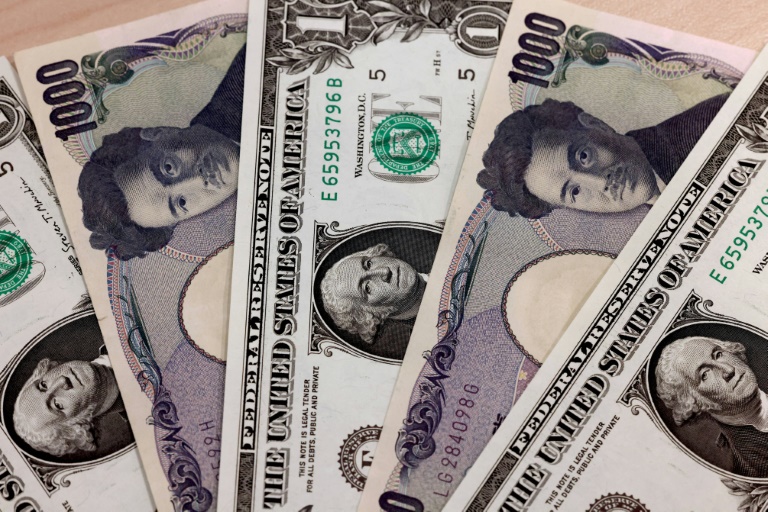
The greenback dropped below 135 yen Thursday for the first time since July 6, having hit a 24-year high of 139.39 yen just two weeks ago.

A second successive contraction is widely considered a technical recession, though it is not officially considered so in the United States until identified as such by the National Bureau of Economic Research.

But while debate rages over that issue, the general consensus is that the economy is struggling.

“The more important point is that the economy has quickly lost steam in the face of four-decade high inflation, rapidly rising borrowing costs, and a general tightening in financial conditions,” Sal Guatieri, of BMO Capital Markets, wrote.

The retreat in the US economy comes as China also struggles, hit by painful Covid-induced lockdowns in major cities including Shanghai and Beijing that hammered all sectors and supply chains.

On Thursday, the country’s leadership offered a dour assessment of the world’s number two economy but offered no plans to stimulate growth, leaving traders disappointed.

– Key figures at around 0230 GMT –

Tokyo – Nikkei 225: UP 0.5 percent at 27,944.55 (break)

Hong Kong – Hang Seng Index: DOWN 1.4 percent at 20,343.08

Shanghai – Composite: DOWN 0.4 percent at 3,269.18

Dollar/yen: UP at 134.36 yen from 134.25 yen Thursday

Euro/dollar: DOWN at $1.0193 from $1.0197 

Pound/dollar: DOWN at $1.2167 from $1.2177 

Euro/pound: UP at 83.77 pence from 83.70 pence

West Texas Intermediate: DOWN 0.8 percent at $97.16 per barrel

Brent North Sea crude: UP 0.3 percent at $107.50 per barrel

New York – Dow: UP 1.0 percent at 32,529.63 (close)

London – FTSE 100: FLAT at 7,345.25 (close) 
When Russia leaves, what's next for the International Space Station?

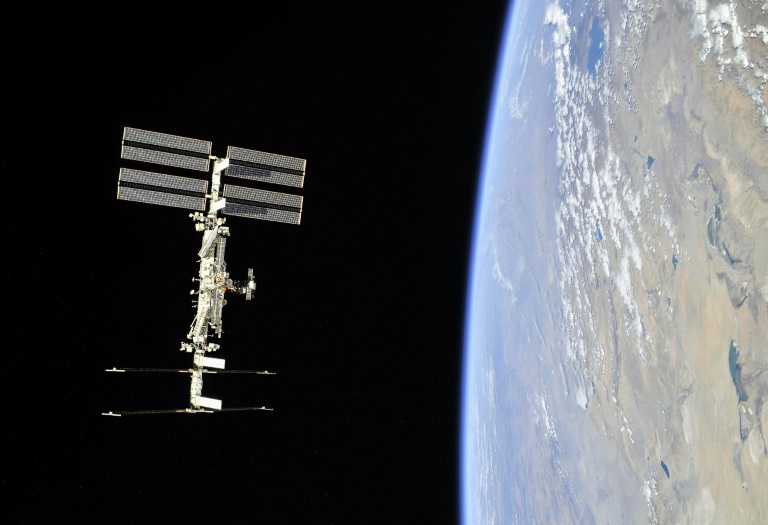
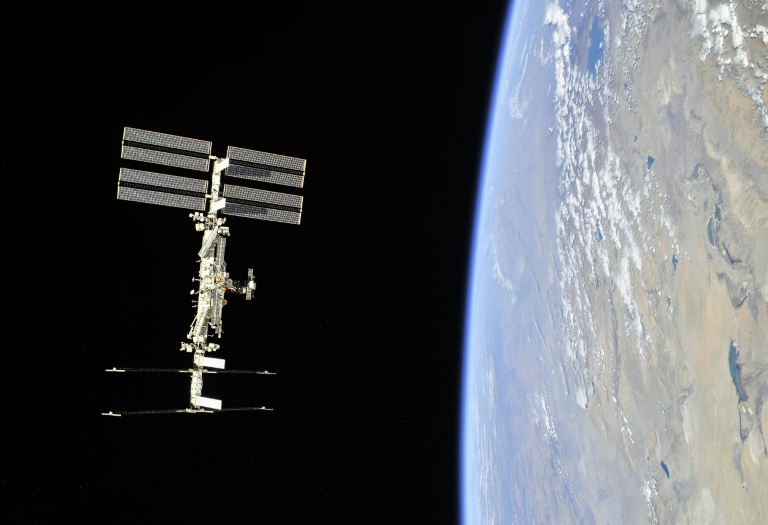
Russia’s announcement this week that it will leave the International Space Station “after 2024” raises critical questions about the outpost’s future viability. 

Here’s what you should know about Moscow’s decision, and the potential effect on one of the last remaining examples of US-Russia cooperation.

– Why does Russia want to leave? – 

Russia’s invasion of Ukraine has pitted it against the West, eviscerating its relationship with the United States and leading to broad sanctions, including against its space industry.

Back in March, Dmitry Rogozin, then-chief of Russian space agency Roscosmos, warned that without his nation’s cooperation, the ISS could plummet to Earth on US or European territory.

But Rogozin’s penchant for bombast, combined with a lack of a firm plan, left things uncertain — and just two weeks ago, Russia and the United States vowed to continue flying each other’s cosmonauts and astronauts to the station.

Scott Pace, director of the Space Policy Institute at George Washington University, said that if anything, the new announcement by Rogozin’s successor Yury Borisov was “mildly helpful.”

“The fact they said, ‘We’re going to be committed through 2024’ is good,” Pace, a former high-ranking government official, told AFP. 

It means Moscow isn’t planning to pull out sooner, even though what precisely is meant by “after 2024” isn’t yet clear.

The year 2024 is what the partners had previously agreed to, though NASA’s goal is to keep the ISS in orbit until at least 2030 and then transition to smaller commercial stations.

The next step in the process is to notify a body called the multilateral control board, comprising all the ISS partners — the United States, Russia, Europe, Japan and Canada — at which point details of the transition will be defined.

If Russia does follow through, it could end up grounding its once proud space program for some time. The country doesn’t have a commercial space economy, and Russian analysts don’t see the country building a new station anytime soon.

– Can the station fly without Russia? –

Probably — but it would be challenging.

The ISS was launched in 1998 at a time of hope for US-Russia cooperation following their Space Race competition during the Cold War.

Since the Space Shuttle was retired, the ISS has relied on Russian propulsion systems for periodic boosts to maintain its orbit, some 250 miles (400 kilometers) above sea level. The US segment is responsible for electricity and life support systems.

The United States has recently taken strides in gaining an independent propulsion system through Northrop Grumman’s Cygnus spacecraft, which successfully carried out a re-boost test in late June.

But altitude is only a part of the equation: the other is “attitude,” or orientation. 

Cygnus “can push, but it can’t keep the station pointed in the right direction while it pushes,” explained astronomer and space watcher Jonathan McDowell.

The ISS itself can make small attitude adjustments, but if the Russians pulled out, the United States would need a more permanent solution — perhaps involving the SpaceX Dragon, Northrop Grumman’s Cygnus or Orion, said Pace.

Russia has two propulsion systems: progress spaceships that dock to the station and the Zvezda service module. All of the control systems are handled out of Moscow.

It would be helpful if Russia left their segment in place rather than took it with them when they go — one of the station’s two bathrooms are on the Russian side — observed Pace, but that’s another unknown. 

“If it’s still there, and we wanted to use it, would there be some sort of rental arrangement? I don’t know.” 

– What do experts predict? –

NASA itself has adopted a bullish position.

“We’re running and gunning, we’re gonna go to 2030 full up,” Joel Montalbano, NASA ISS program manager, said Tuesday on the morning of the Russian announcement. 

“Anybody thinks that there’s a different plan, you’re wrong.”

But while Russia’s withdrawal could present a new opportunity for the private sector, McDowell isn’t so certain.

For him, “how hard they really want to work to get an extra few years out of ISS” is an open question.

“It’s maybe not the right move for the US to go to extreme lengths to save (the) Station,” he said, especially since NASA has bigger goals of building a lunar space station called Gateway, establishing a Moon presence and going to Mars.

“Maybe they should take the Russian pull-out as an excuse, and go, ‘Okay, bye.’ And now let’s put our money in Gateway.”

When Russia leaves, what's next for the International Space Station?

Russia’s announcement this week that it will leave the International Space Station “after 2024” raises critical questions about the outpost’s future viability. 

Here’s what you should know about Moscow’s decision, and the potential effect on one of the last remaining examples of US-Russia cooperation.

– Why does Russia want to leave? – 

Russia’s invasion of Ukraine has pitted it against the West, eviscerating its relationship with the United States and leading to broad sanctions, including against its space industry.

Back in March, Dmitry Rogozin, then-chief of Russian space agency Roscosmos, warned that without his nation’s cooperation, the ISS could plummet to Earth on US or European territory.

But Rogozin’s penchant for bombast, combined with a lack of a firm plan, left things uncertain — and just two weeks ago, Russia and the United States vowed to continue flying each other’s cosmonauts and astronauts to the station.

Scott Pace, director of the Space Policy Institute at George Washington University, said that if anything, the new announcement by Rogozin’s successor Yury Borisov was “mildly helpful.”

“The fact they said, ‘We’re going to be committed through 2024’ is good,” Pace, a former high-ranking government official, told AFP. 

It means Moscow isn’t planning to pull out sooner, even though what precisely is meant by “after 2024” isn’t yet clear.

The year 2024 is what the partners had previously agreed to, though NASA’s goal is to keep the ISS in orbit until at least 2030 and then transition to smaller commercial stations.

The next step in the process is to notify a body called the multilateral control board, comprising all the ISS partners — the United States, Russia, Europe, Japan and Canada — at which point details of the transition will be defined.

If Russia does follow through, it could end up grounding its once proud space program for some time. The country doesn’t have a commercial space economy, and Russian analysts don’t see the country building a new station anytime soon.

– Can the station fly without Russia? –

Probably — but it would be challenging.

The ISS was launched in 1998 at a time of hope for US-Russia cooperation following their Space Race competition during the Cold War.

Since the Space Shuttle was retired, the ISS has relied on Russian propulsion systems for periodic boosts to maintain its orbit, some 250 miles (400 kilometers) above sea level. The US segment is responsible for electricity and life support systems.

The United States has recently taken strides in gaining an independent propulsion system through Northrop Grumman’s Cygnus spacecraft, which successfully carried out a re-boost test in late June.

But altitude is only a part of the equation: the other is “attitude,” or orientation. 

Cygnus “can push, but it can’t keep the station pointed in the right direction while it pushes,” explained astronomer and space watcher Jonathan McDowell.

The ISS itself can make small attitude adjustments, but if the Russians pulled out, the United States would need a more permanent solution — perhaps involving the SpaceX Dragon, Northrop Grumman’s Cygnus or Orion, said Pace.

Russia has two propulsion systems: progress spaceships that dock to the station and the Zvezda service module. All of the control systems are handled out of Moscow.

It would be helpful if Russia left their segment in place rather than took it with them when they go — one of the station’s two bathrooms are on the Russian side — observed Pace, but that’s another unknown. 

“If it’s still there, and we wanted to use it, would there be some sort of rental arrangement? I don’t know.” 

– What do experts predict? –

NASA itself has adopted a bullish position.

“We’re running and gunning, we’re gonna go to 2030 full up,” Joel Montalbano, NASA ISS program manager, said Tuesday on the morning of the Russian announcement. 

“Anybody thinks that there’s a different plan, you’re wrong.”

But while Russia’s withdrawal could present a new opportunity for the private sector, McDowell isn’t so certain.

For him, “how hard they really want to work to get an extra few years out of ISS” is an open question.

“It’s maybe not the right move for the US to go to extreme lengths to save (the) Station,” he said, especially since NASA has bigger goals of building a lunar space station called Gateway, establishing a Moon presence and going to Mars.

“Maybe they should take the Russian pull-out as an excuse, and go, ‘Okay, bye.’ And now let’s put our money in Gateway.”

US couple arrested decades after assuming false identities

A couple living in the United States for decades under false names stolen from dead babies have been charged with identity theft and conspiring against the government, in a case tinged with suspicion of espionage.

Walter Primrose and his wife Gwynn Morrison, both born in 1955, were arrested Friday in Hawaii. According to documents, a search of the pair’s home turned up an old photo of the couple dressed in KGB uniforms.

A federal judge ruled Thursday that the husband was a flight risk and ordered his continued detention. The wife will appear before the judge next week.

According to the indictment, the pair studied together in Texas in the 1970s, and married there in 1980. For unknown reasons, in 1987, they assumed the identities of Bobby Fort and Julie Montague, babies who had died years earlier and are buried in nearby cemeteries.

The couple then remarried in 1988 under the assumed identities. In 1994, so-called Bobby Fort entered the Coast Guard, where he served for 20 years before taking a job as a Department of Defense contractor. 

Over the years, the pair obtained numerous official documents under their false identities, including driver’s licenses and several passports.

While the indictment does not allege espionage, a document filed in opposition to their bail suggests a complex case. 

“Federal agents have seized letters” addressed to the couple that “refer to defendants by names other than Bobby, Julie, Walter, or Gwynn,” federal prosecutor Clare Connors said, suggesting they were using multiple aliases.

Agents additionally found the photos of the couple in the KGB uniforms.

A relative of Morrison told agents that she had lived in Romania when it was still a part of the communist bloc, Connors said.

Primrose, meanwhile, had been required to report all foreign travel and had failed to do so for several trips to Canada, the prosecutor said.

Morrison’s lawyer, Megan Kau, said in a brief comment to AFP that her client denied the accusations.

Eight dead in 'devastating' Kentucky flooding

Flash flooding caused by torrential rains has killed at least eight people in eastern Kentucky and left some residents stranded on rooftops and in trees, the governor of the south-central US state said Thursday.

The world has been hit by extreme weather events in recent months, incidents that scientists say are an unmistakable sign of climate change.

“This is going to be the worst flooding in recent memory — devastating and deadly,” Governor Andy Beshear told local NBC affiliate WLEX in an interview.

“We’re going to end up with double-digit deaths. Right now, I believe we can confirm at least eight, but that number is increasing, it seems, by the hour.”

The victims include an 81-year-old woman in Perry County.

Beshear said that responders have rescued “between 20 and 30” people by air. Earlier, he described people standing on rooftops or climbing up trees to escape the floodwaters while waiting for rescue.

Many roads resembled rivers, mangled cars littered the landscape and muddy brown floodwaters lapped against the rooftops of low-lying houses in the state’s Appalachian region.

Some areas reported receiving more than eight inches (20 centimeters) of rain in a 24-hour period.

The North Fork of the Kentucky River at Whitesburg, usually one to two feet deep at this time of year, rose to a staggering 20 feet, well above its previous record of 14.7 feet.

The governor said a state of emergency had been declared in half a dozen counties, and four National Guard helicopters have been deployed to help with rescue efforts.

The Kentucky Department of Fish and Wildlife had deployed Zodiac boats to carry out water rescues.

“There’s a lot of people out there who need help,” Beshear told reporters earlier in the day. “And we’re doing the very best we can to reach each and every one of them.

“The situation right now is tough,” he added.

“Hundreds will lose their homes, and this is going to be yet another event that it’s going to take not months, but likely years for many families to rebuild and recover from,” he said.

Beshear said around 25,000 homes were without power statewide, and many were without water.

The National Weather Service said the area was still at risk of flash flooding and warned more heavy rain was expected.

White House Press Secretary Karine Jean-Pierre said President Joe Biden had been briefed about the flooding.

Jean-Pierre said Deanne Criswell, head of the Federal Emergency Management Agency, would travel to Kentucky on Friday and report back to the president.

Eight dead in 'devastating' Kentucky flooding

Flash flooding caused by torrential rains has killed at least eight people in eastern Kentucky and left some residents stranded on rooftops and in trees, the governor of the south-central US state said Thursday.

The world has been hit by extreme weather events in recent months, incidents that scientists say are an unmistakable sign of climate change.

“This is going to be the worst flooding in recent memory — devastating and deadly,” Governor Andy Beshear told local NBC affiliate WLEX in an interview.

“We’re going to end up with double-digit deaths. Right now, I believe we can confirm at least eight, but that number is increasing, it seems, by the hour.”

The victims include an 81-year-old woman in Perry County.

Beshear said that responders have rescued “between 20 and 30” people by air. Earlier, he described people standing on rooftops or climbing up trees to escape the floodwaters while waiting for rescue.

Many roads resembled rivers, mangled cars littered the landscape and muddy brown floodwaters lapped against the rooftops of low-lying houses in the state’s Appalachian region.

Some areas reported receiving more than eight inches (20 centimeters) of rain in a 24-hour period.

The North Fork of the Kentucky River at Whitesburg, usually one to two feet deep at this time of year, rose to a staggering 20 feet, well above its previous record of 14.7 feet.

The governor said a state of emergency had been declared in half a dozen counties, and four National Guard helicopters have been deployed to help with rescue efforts.

The Kentucky Department of Fish and Wildlife had deployed Zodiac boats to carry out water rescues.

“There’s a lot of people out there who need help,” Beshear told reporters earlier in the day. “And we’re doing the very best we can to reach each and every one of them.

“The situation right now is tough,” he added.

“Hundreds will lose their homes, and this is going to be yet another event that it’s going to take not months, but likely years for many families to rebuild and recover from,” he said.

Beshear said around 25,000 homes were without power statewide, and many were without water.

The National Weather Service said the area was still at risk of flash flooding and warned more heavy rain was expected.

White House Press Secretary Karine Jean-Pierre said President Joe Biden had been briefed about the flooding.

Jean-Pierre said Deanne Criswell, head of the Federal Emergency Management Agency, would travel to Kentucky on Friday and report back to the president.

US tech titans stumble after pandemic boom

Amazon and Apple were a relative bright spot in a week of otherwise lackluster earnings results for an industry reckoning with the end of heady pandemic-era growth.

A crowded period of quarterly financial releases from the world’s biggest tech firms has been marred by misses and uncertainty — making it clear that the boom triggered by Covid-19 restrictions on getting about has tipped toward downturn.

As people are freed from pandemic lifestyles that had them relying on the internet for shopping, playing, working and learning, inflation is pushing up prices and Covid-19 is causing temporary shutdowns of factories in China relied on by tech firms.

Recession fears, a strong dollar, shrinking advertising budgets and inflation — headwinds are coming from every direction at the moment.

“When you think about the number of challenges in the quarter, we feel really good about the growth that we put up,” Apple chief executive Tim Cook said on an earnings call.

For Apple, product sales tallied $63.4 billion in a drop from the same period a year earlier, but the dip was more than made up for by services revenue that climbed to $19.6 billion, earnings figures showed.

Demand for iPads and Mac computers exceeded supply in the recently-ended quarter, the main cause being pandemic restrictions that caused “plant closures and plants running at less than full utilization,” Cook noted.

Apple was also hobbled by an ongoing shortage of computer chips, Cook said.

Meanwhile, US chip giant Intel reported disappointing earnings battered by its own missteps as well as economic conditions — a post-Covid drop in demand and “supply dislocations in China and other parts of the supply chain,” executives said on an earnings call.

Amazon beat sales estimates to reach $121 billion in the quarter, and revenue climbed at its cloud-computing platform Amazon Web Services.

The retailer has made progress reducing ranks of employees that had been beefed up to handle online shopping that surged during the pandemic, executives said.

“Amazon managed pretty well through the second quarter despite tough macro conditions and added costs weighing on its bottom line,” said analyst Andrew Lipsman.

Apple, Microsoft and Facebook-owner Meta have talked of the strong dollar eating into earnings, since when America’s currency gains too much value, it can make products more expensive overseas or eat away at a beneficial exchange rate.

Meta pointed to the greenback’s role in the firm’s first year-on-year revenue decline since going public in 2012.

– Not much good news –

In addition to the generally bumpy economic times, firms such as Netflix and Meta are fighting fierce competition from rivals — and both reported losing some ground.

Meta lost about two million monthly users between quarters, and Netflix shed nearly a million paying customers.

Yet Netflix stock is up about a percent in the past five days, with investors potentially hopeful after the firm projected a coming rebound in subscribers.

Markets seemed similarly assuaged despite Google parent Alphabet missing on revenue and profit.

The Silicon Valley giant’s bad news was not unexpected, as the flow of online ad dollars that fuels the company’s fortunes has slowed as inflation, war and other troubles vex the overall economy.

“Still, with its tremendous market share in search advertising, Google is relatively well positioned to weather the rough waters that lie ahead,” said analyst Evelyn Mitchell.

As advertisers have tightened their belts, and Apple’s privacy changes have bitten into firms’ sales of costly but highly targeted ads, the damage was uneven.

Meta’s income has taken a beating, and with a share price that has lost about half its value since February, it’s clear that investors are still wary about the company’s future.

“The good news, if we can call it that, is that its competitors in digital advertising are also experiencing a slowdown,” said analyst Debra Aho Williamson.

Snapchat’s parent firm, for example, reported that its loss in the recently ended quarter nearly tripled to $422 million, despite revenue increasing 13 percent under “more challenging” conditions than expected.

“We are not satisfied with the results we are delivering, regardless of the current headwinds,” California-based Snap said in a letter to investors last week.

US tech titans stumble after pandemic boom

Amazon and Apple were a relative bright spot in a week of otherwise lackluster earnings results for an industry reckoning with the end of heady pandemic-era growth.

A crowded period of quarterly financial releases from the world’s biggest tech firms has been marred by misses and uncertainty — making it clear that the boom triggered by Covid-19 restrictions on getting about has tipped toward downturn.

As people are freed from pandemic lifestyles that had them relying on the internet for shopping, playing, working and learning, inflation is pushing up prices and Covid-19 is causing temporary shutdowns of factories in China relied on by tech firms.

Recession fears, a strong dollar, shrinking advertising budgets and inflation — headwinds are coming from every direction at the moment.

“When you think about the number of challenges in the quarter, we feel really good about the growth that we put up,” Apple chief executive Tim Cook said on an earnings call.

For Apple, product sales tallied $63.4 billion in a drop from the same period a year earlier, but the dip was more than made up for by services revenue that climbed to $19.6 billion, earnings figures showed.

Demand for iPads and Mac computers exceeded supply in the recently-ended quarter, the main cause being pandemic restrictions that caused “plant closures and plants running at less than full utilization,” Cook noted.

Apple was also hobbled by an ongoing shortage of computer chips, Cook said.

Meanwhile, US chip giant Intel reported disappointing earnings battered by its own missteps as well as economic conditions — a post-Covid drop in demand and “supply dislocations in China and other parts of the supply chain,” executives said on an earnings call.

Amazon beat sales estimates to reach $121 billion in the quarter, and revenue climbed at its cloud-computing platform Amazon Web Services.

The retailer has made progress reducing ranks of employees that had been beefed up to handle online shopping that surged during the pandemic, executives said.

“Amazon managed pretty well through the second quarter despite tough macro conditions and added costs weighing on its bottom line,” said analyst Andrew Lipsman.

Apple, Microsoft and Facebook-owner Meta have talked of the strong dollar eating into earnings, since when America’s currency gains too much value, it can make products more expensive overseas or eat away at a beneficial exchange rate.

Meta pointed to the greenback’s role in the firm’s first year-on-year revenue decline since going public in 2012.

– Not much good news –

In addition to the generally bumpy economic times, firms such as Netflix and Meta are fighting fierce competition from rivals — and both reported losing some ground.

Meta lost about two million monthly users between quarters, and Netflix shed nearly a million paying customers.

Yet Netflix stock is up about a percent in the past five days, with investors potentially hopeful after the firm projected a coming rebound in subscribers.

Markets seemed similarly assuaged despite Google parent Alphabet missing on revenue and profit.

The Silicon Valley giant’s bad news was not unexpected, as the flow of online ad dollars that fuels the company’s fortunes has slowed as inflation, war and other troubles vex the overall economy.

“Still, with its tremendous market share in search advertising, Google is relatively well positioned to weather the rough waters that lie ahead,” said analyst Evelyn Mitchell.

As advertisers have tightened their belts, and Apple’s privacy changes have bitten into firms’ sales of costly but highly targeted ads, the damage was uneven.

Meta’s income has taken a beating, and with a share price that has lost about half its value since February, it’s clear that investors are still wary about the company’s future.

“The good news, if we can call it that, is that its competitors in digital advertising are also experiencing a slowdown,” said analyst Debra Aho Williamson.

Snapchat’s parent firm, for example, reported that its loss in the recently ended quarter nearly tripled to $422 million, despite revenue increasing 13 percent under “more challenging” conditions than expected.

“We are not satisfied with the results we are delivering, regardless of the current headwinds,” California-based Snap said in a letter to investors last week.

Golden Globes group approve bid to take Hollywood award show private

The scandal-hit group behind Hollywood’s Golden Globes has approved a bid to spin off the lucrative film and television awards show into a new, for-profit entity controlled by US billionaire Todd Boehly, it said Thursday.

Composed of around 100 entertainment writers with links to foreign publications, the Hollywood Foreign Press Association has been plagued by allegations of corruption, racism and amateurism.

These led to a Hollywood boycott that saw its flagship, high-profile awards show taken off the air by NBC this year.

Boehly, who has major stakes in the Los Angeles Dodgers baseball team and Chelsea soccer team, was already the HFPA’s interim CEO before the members on Thursday voted to approve his proposal for a new private company controlling the Golden Globes.

“This is a historic moment for the HFPA and the Golden Globes,” said HFPA president Helen Hoehne in a statement.

“We have taken a decisive step forward to transform ourselves and adapt to this increasingly competitive economic landscape for both award shows and the journalism marketplace.”

The HFPA itself will remain a non-profit entity, focused on charitable efforts largely funded by the Golden Globes.

Meanwhile, Boehly’s Eldridge Industries will create a new company “empowered to oversee the professionalization and modernization of the Golden Globe Awards.”

New Golden Globes voters from beyond the HFPA will be added “to increase the size and diversity of the available voters for the annual awards,” said the statement.

The awards have traditionally been second only to the Oscars in Hollywood, at least in terms of prominence and publicity.

Thursday’s vote follows months of fierce debate and internal reviews of Boehly’s offer and alternative proposals.

But it is unlikely to end the controversy surrounding the Globes.

NBC has not yet confirmed it will broadcast the Globes next year despite the group’s previous attempts at reforms, and several powerful Hollywood publicists continue to hold back their star clients from HFPA events. 

Critics have alleged that Boehly’s takeover raises new legal and ethical issues, noting that it could further reduce transparency, and create a “two-tier” system between HFPA members and outside voters, who are expected to predominantly be from minority backgrounds.

Eldridge Industries already owns MRC, which produces the Golden Globes ceremony, and has a stake in the Beverly Hilton hotel, where the awards are held.

According to the Los Angeles Times, the move still requires a final sign-off from California’s attorney general.

The HFPA did not respond to AFP’s request for further comment.

Close Bitnami banner
Bitnami