Africa Business

Africa struggling to reduce dependency on imported Indian rice

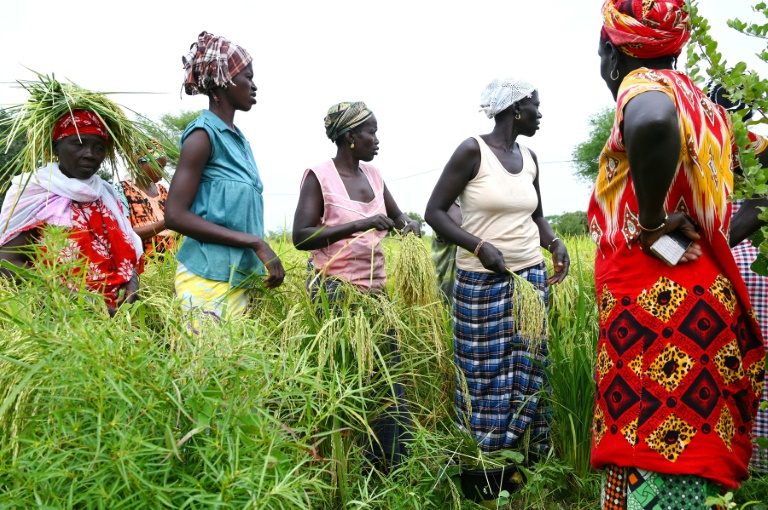
Outside Dak village in central Senegal women sing and dance as they scythe through rice stalks with sickle or knife. The harvest is underway in the west African nation, but there will not be enough for everyone.

Many African countries depend on imports — and the market has been roiled by restrictions imposed in September by India.

In a bid to control domestic prices affected by a crippling drought, the leading global rice exporter banned exports of broken rice and slapped a 20 percent export tax on some non-basmati varieties.

In several African countries that rely on imported rice, self-sufficiency has become a buzzword.

“The risk (of a rice shortage) in Senegal is for real,” said Waly Diouf, coordinator of a programme aimed at ending foreign dependence on this staple.

“We don’t want to buy imported rice anymore, it’s very expensive,” said Dieteo Diouf, who runs a women’s association at Dak, in the central region of Fatick.

Fish and rice, or ceebu jen in the Wolof language, is the most popular dish in Senegal and UNESCO has even put it on the list of humanity’s intangible cultural heritage.

Rice became a major staple after French colonialists seeking a new outlet shipped it from Indochina during the 19th century, to the detriment of local subsistence farming.

– Panic and speculation –

Africa accounts for 13 percent of the world population but 32 percent of global rice imports, according to Africa Rice, a research centre set up by 28 nations and based in Abidjan.

“Local rice production covers only about 60 percent of current demand in sub-Saharan Africa, which means 14-15 million tonnes are imported annually,” the centre said.

India’s move to restrict exports caused panic in several countries, notably the Indian Ocean Comoros islands. A quarter of its 890,000 people live under the poverty line of two euros a day per person.

Clashes broke out at the end of September as the price of a 25-kilogram sack of rice rose by almost a third.

On the east coast of the continent in Liberia, which also experiences intense poverty, big queues formed outside wholesalers as rumours spread of rice shortages.

That helped lift the price of a sack from just under $14 euros to over $24 in Liberia and saw the government issue a call for calm.

The Senegalese government recently intervened and fixed the price of one kilogram of Indian and Pakistani broken rice at 50 euro cents to avoid panic and try to halt speculation.

Broken rice is one of the cheapest available and almost the only one imported into Senegal, said Waly Diouf.

In 2008, the country suffered “hunger riots” over the spiralling cost of food.

– New strategy –

Over recent years Senegal has grown about 840,000 tonnes of rice annually, or some nine months of local consumption, Diouf said.

The country “imports on average 900,000 tonnes of rice. That is more than is needed but the imports keep the product available and avoid speculation,” he added.

The aim is to reduce dependency on imports, mainly by increasing acreage under production. 

“By 2030, rice consumption in Senegal is expected to reach 1.5 million tonnes,” Diouf said.

“We have worked out a new strategy to move towards self-sufficiency. Financially it will cost around 1.37 billion FCFA ($2.22 million),” said Diouf.

Others say that many obstacles have to be overcome to meet this often-declared goal of self-sufficiency.

“We need more rice field areas, more credit, more combine harvesters, we need to rebuild our irrigation systems,” said Mouhamadou Moustapha Diack, who heads the producers’ union at Boundoum in the north.

The old dykes and water channels between the paddy fields are covered in lilies and eucalyptus.

Aside from quantity, the supposed lower quality rice grown in Senegal has for a long time put off some local consumers.

“That’s changed,” stated Birame Diouf, who runs a rice factory at Ross Bethio, in the north.

The plant removes impurities such as grit and tiny stones before the rice grains are swallowed up by huge cleaning tanks and transformed into whole or broken grains ready for cooking.

Senegal is hoping to follow the example of Ivory Coast where rice imports from India fell 24 percent from 2021 to 2022.

Abidjan’s rice development agency Aderiz reports “clear progress” in substituting Ivorian rice for foreign imports.

Nigeria meanwhile has followed a different strategy and slapped heavy taxes on imported rice to try to boost local production.
US citizens trapped in Tigray, detained in Addis Ababa

US citizens trapped in war-torn Tigray are being detained and interrogated by Ethiopian authorities while trying to leave the country, interviews with fleeing people and family members show.

Leaked emails by US officials say that the Ethiopian government, citing national security grounds, insisted on holding and questioning US citizens from Tigray — a stance, they say, that caused Washington to abort plans to airlift Americans from the region last year.

The lucky few to escape the region, cut off from the outside world for two years as government forces battled Tigrayan rebels, told AFP they had been singled out and interrogated when attempting to leave.

Gebremedhn Gebrehiwot, an American citizen who made it out of Tigray earlier this year, said he was pulled aside and questioned at Addis Ababa’s international airport while trying to board a flight home. 

“I had all the documents, there was no reason to stop me,” the San Diego-based deacon told AFP. He believed his “typically Tigrayan” name was the reason he was detained.

After a 90-minute wait, he was finally allowed to leave.

“I just ran to the gate and barely made it.”

Zenebu Negusse, 52, told AFP she too was targeted while attempting to board her US-bound flight.

The Colorado-based caregiver, who was in Tigray visiting her elderly mother when the war began in November 2020, managed to escape the region by road and took shelter with relatives in Addis Ababa.

She took care to hide her Tigrayan tribal markings, afraid of being detained like some of her friends, but her name aroused suspicion.

She said that after a harrowing interrogation last year during which she explicitly denied being Tigrayan, she was allowed to fly home.

Some who had been on her flight were intercepted and taken into custody, she said: “I was lucky. Many others were not.” 

AFP spoke to eight Americans who shared their stories and spoke of the plight of friends and family — US citizens or permanent residents — still in Tigray.

Ethiopia does not recognise dual nationality, meaning officials there can treat US citizens of Ethiopian descent as Ethiopians, regardless of their passport.

– Aborted evacuation –

The US government drafted a plan to evacuate Americans trapped in Tigray as fighting spread toward Addis Ababa in November 2021.

But it was aborted at the last minute, with US officials blaming Ethiopia’s demand that evacuees be subject to indefinite detention for vetting. 

“The Ethiopian government… pulled clearance the day of (travel) when the United States disagreed with the Ethiopian government’s request to clear passengers and potentially detain them indefinitely before being cleared for further travel,” read one email by an official at the US Senate seen by AFP.

Another email by an official at the US House of Representatives also blamed Addis Ababa’s “security vetting requirements (for) preventing the U.S. embassy from moving forward with evacuation plans”.

US and Ethiopian authorities did manage to “facilitate the departure of 217 U.S. citizens, lawful permanent residents, immigrant visa applicants, and guardians of minors from Mekelle (Tigray’s capital) to Addis Ababa” in February, a US State Department spokesperson told AFP.

The State Department did not comment on whether any evacuees were detained in Addis Ababa or on the number who travelled onward to the United States.

It has no estimate of the number of Americans still stuck in Tigray, the spokesperson said.

Ethiopian government officials did not respond to repeated requests from AFP for comment.

– Ethnic profiling –

All the Americans interviewed by AFP said they had been ethnically profiled in Addis Ababa after leaving Tigray.

Yohannes, a 54-year-old Uber driver who asked AFP not to reveal his last name, said he was placed in solitary confinement at Addis Ababa airport while trying to leave with his family in December 2020.

“I said I was a US citizen, but they said they were not going to let me go.”

The security officials eventually relented after he shelled out a hefty bribe, he said.

It was a price worth paying to save his severely diabetic teenage son, he added.

A peace deal was signed last month between Addis Ababa and Tigrayan rebels, but many Americans told AFP they were frightened their loved ones would be detained even if they were able to make it out of Tigray.

Maebel Gebremedhin told AFP that “around 50” family members were trapped in Tigray — all US citizens and permanent residents.

“Almost my entire family is there,” said the Brooklyn-based activist, who has had no news of her father in over a year.

“There is such fear within our community about (what) the Ethiopian government could do to our families.”

– Blackout –

The communications blackout has also affected US businessman Awet — not his real name — who told AFP he hadn’t spoken to his wife in well over a year and has never held their baby girl.

The 30-year-old flew to Ethiopia last year to bring them home to Colorado, but wasn’t allowed to travel to Tigray.

He has approached US officials repeatedly for help in getting his family out of Ethiopia, but to no avail.

“It’s always the same answer — we don’t have an evacuation plan.”

A handful of photos and videos are his only mementos of his two-year-old daughter. And even looking at them is too painful sometimes, he said.

In one video seen by AFP, that was shot a year ago and sent by someone with rare access to satellite internet in Tigray, the little girl was struggling to stand up or raise her spindly arms. 

“Her legs were too weak because of a lack of food,” the distraught father said.

“It’s strange to feel like you are a dad when you haven’t even seen your daughter.”

Saba Desta’s parents retired to Tigray after two decades in Seattle and settled in Shire, which was heavily bombed in October before its capture by Ethiopian forces and their allies.

She has been frantic with worry for her 70-year-old father, who suffers from a debilitating neurological disorder, leaving him especially vulnerable in a region with crippling medicine shortages.

The 36-year-old had reached out to the State Department and the US Embassy in Addis Ababa to ask for help.

“Everyone gave me the run around,” she told AFP, fighting back tears.

Even so, she added, life could be worse.

She knows several people detained in Addis Ababa, including a friend who was held for six months, and her own aunt who was in custody for around a week.

Her greatest fear, she said, was to get her elderly parents out of Tigray, only for them to be detained in Addis Ababa. 

“I am more scared of what might happen to them in Addis than in a war zone like Tigray.”

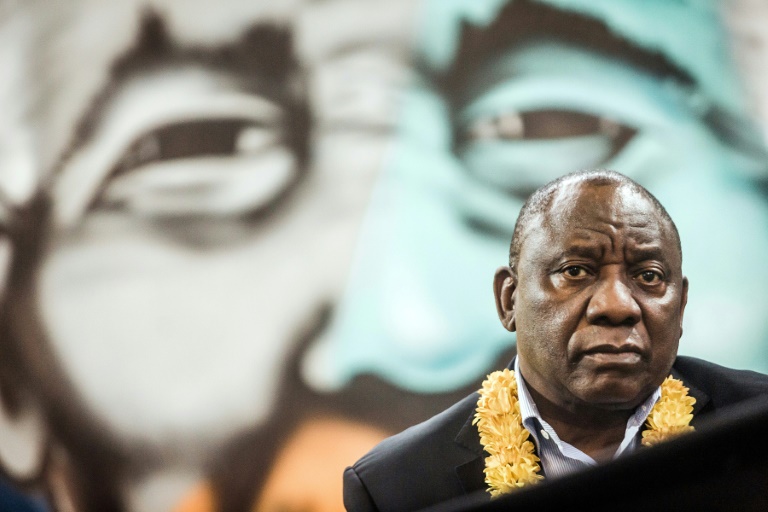
Ramaphosa: From Mandela's protege to scandal-hit leader

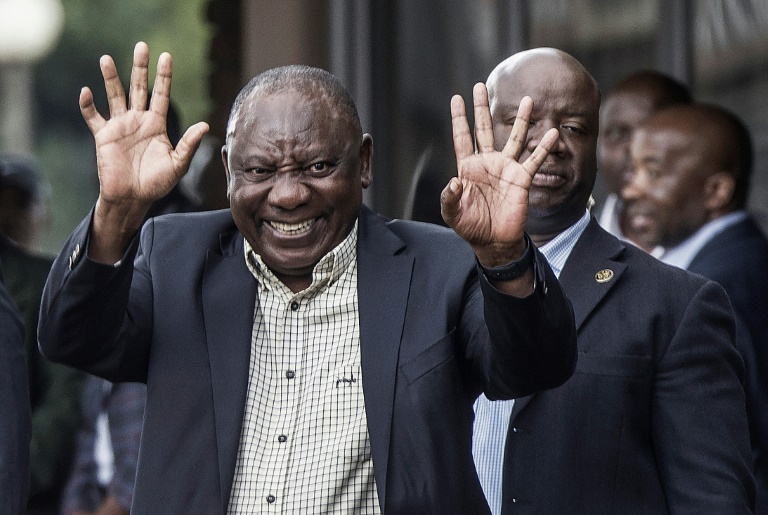
Pragmatic, wealthy and ambitious, Cyril Ramaphosa promised “a new dawn” for corruption-ridden South Africa when he became president in 2018.

Today, nearly five years later, his reputation is tarnished by scandal and his political future uncertain. 

Earlier this week, the 70-year-old survived the most immediate threat to his tenure as his party shot down an opposition-led attempt to open impeachment proceedings against him. 

He now looks set to secure re-election at the helm of the ruling African National Congress (ANC) party — a stepping stone to a second term as state president.

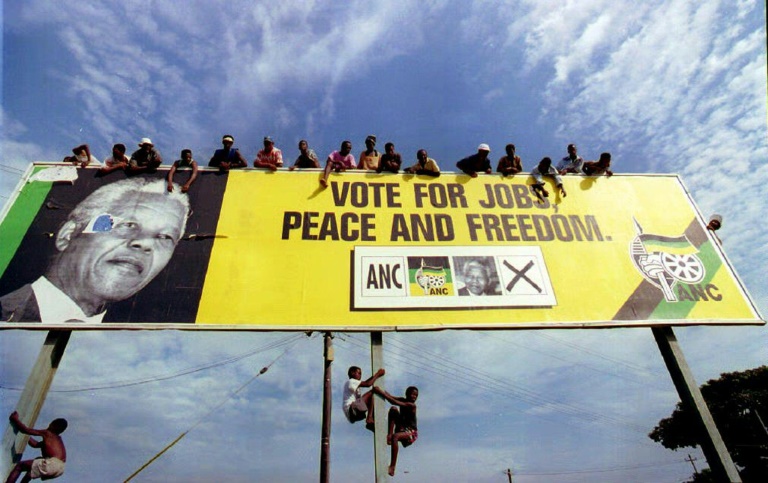
The vanguard of the anti-apartheid struggle once led by Nelson Mandela, the ANC convenes on Friday to elect new leadership. 

Ramaphosa is the frontrunner for the top role, but the findings of a special inquiry that he probably broke the law over the alleged cover-up of a burglary, have heightened divisions within the party and emboldened his enemies.

Details about a huge cash haul stolen from his farmhouse have dealt a massive reputational blow to the man who took the reins of Africa’s most industrialised economy on a pledge to root out graft.

Ramaphosa is now in the unenviable position of having his graft-tainted predecessor and party rival Jacob Zuma calling him a “criminal”.

Born on November 17, 1952 in Johannesburg’s Soweto township — the cradle of the anti-apartheid struggle — Ramaphosa had long eyed South Africa’s top job, but only came to it after a long detour. 

He took up activism while studying law in the 1970s, and spent 11 months in solitary confinement in 1974.

Ramaphosa turned to trade unionism, one of the few legal ways of protesting the white-minority regime. 

– From Mandela to Coca-Cola –

A protege of Mandela, who once described him as one of the most gifted leaders of the “new generation,” Ramaphosa stood alongside the anti-apartheid icon when he walked out of jail in 1990. 

He was a key member of the task force that steered the transition to democracy.

But after missing out on becoming Mandela’s successor, Ramaphosa swapped politics for a foray into business that made him one of the wealthiest people in Africa.

He held stakes in McDonald’s and Coca-Cola, making millions in deals that required investors to partner with non-white shareholders. 

Ramaphosa developed a passion for breeding rare buffalos and cattle, a business that would come back to haunt him. 

The opposition once nicknamed him “The Buffalo” after he bid for an 18-million-rand ($104,000) beast in 2012. 

He later apologised for making the glitzy bid “in a sea of poverty.” 

In 2012, his image was badly tarnished when police killed 34 striking workers at a platinum mine, where he was then a non-executive director and had called for a crackdown on the miners.

– Covid-19 –

He became Zuma’s vice president in 2014, often drawing criticism for failing to speak out against government corruption.

Renowned for his patience and strategic thinking, Ramaphosa narrowly defeated pro-Zuma rivals to take over leadership of the ANC party in 2017 and then the presidency when Zuma was forced out two months later.

Relaxed at public appearances, he attracts a support base crossing South Africa’s racial and class divides, but still faces strong opposition from inside the ANC.

His anti-corruption drive has yielded some results, with charges being brought against some high-profile figures.

His handling of the Covid health crisis also won praise internationally. But the pandemic dealt a heavy blow to plans to revive South Africa’s sagging economy. Unemployment remains stratospherically high and prolonged power cuts are a deep source of anger.

– Cash under cushions –

Yet it is the accusations that Ramaphosa may be guilty of serious violations and misconduct, for allegedly attempting to conceal a theft at his Phala Phala farmhouse that have most damaged him.

The stolen cash, more than half-a-million dollars stashed beneath sofa cushions, was for 20 buffalo bought by a Sudanese businessman, Ramaphosa said.

The findings have little direct consequence on his upcoming re-election bid. But the stain on his reputation remains.  

“His chances of leaving in a dignified manner are minimal,” said analyst Sandile Swana.

South Africa's ruling ANC in dates

Founded more than a century ago, the African National Congress (ANC) led the struggle that toppled apartheid and went on to govern South Africa continuously after the transition to democracy in 1994.

The venerable but troubled party gathers on Friday for a five-day conference during which it will elect its leadership.

Key dates in its history:

– 1912: Founded –

The South African Native National Congress was founded in 1912 in response to discrimination against blacks in the Union of South Africa — a self-governing dominion of the British empire created two years earlier.

It changed its name to the ANC in 1923.

– 1952: Defiance –

After the white-minority National Party government institutionalised the apartheid system in 1948, the ANC organised its first mass “Defiance Campaign” in 1952.

Tens of thousands of blacks broke curfews, burned their “passbook” identity documents and entered whites-only areas.

– 1960: Banned –

In 1960, police opened fire on a demonstration against passbooks, killing 69 people in what became known as the Sharpeville Massacre. 

The government then banned the ANC, which went underground.

The following year, Nelson Mandela created the ANC’s military wing, Umkhonto we Sizwe (Spear of the Nation), which launched an armed struggle against apartheid.

– 1964: Leaders jailed –

Mandela, Walter Sisulu and other ANC leaders were jailed for life in 1964 for sabotage and conspiracy. 

The ANC continued to fight apartheid in exile, and allied itself with the Soviet bloc.

– 1985: Secret talks –

By the mid-1980s, South Africa was deadlocked, its economy under growing pressure and the white-minority regime increasingly isolated.

Despite the regime’s public stance of rejecting the ANC, it began secret talks in Zambia in 1985 with the movement’s leadership in exile, regarded by most capitals around the world as the black majority’s legitimate representative.

– 1990: Unbanned –

The new president F.W. de Klerk unbanned the ANC in 1990, releasing Mandela and other political prisoners. 

Mandela became ANC president the following year.

Negotiations started and in 1991 parliament abolished the remaining apartheid laws.

– 1994: ANC in power –

The first all-race elections were held on April 27, 1994, with the ANC winning 62.6 percent and Mandela becoming South Africa’s first black president.

Thabo Mbeki took over in 1999 but his two terms were tarnished by allegations of abuse of power and denial about the AIDS epidemic ravaging the country.

– 2009: first Zulu leader –

The ANC compelled Mbeki to resign in 2008, before the end of his second term, amid a power struggle with party leader Jacob Zuma.

The ANC won 2009 elections by 65.9 percent and Zuma became the first president from the Zulu ethnic group.

– 2016: election setback – 

In its worst-ever election result, the ANC took less than 54 percent of the vote at 2016 municipal polls.

– 2018: Zuma ousted –

After a nine-year presidential term marked by corruption scandals and an economic slowdown, Zuma was forced to resign by the ANC in 2018.

He spent two months in jail in mid-2021 for refusing to testify before a commission investigating corruption during his presidency. He was released on medical grounds. 

He was replaced by his deputy, Cyril Ramaphosa, who vowed to tackle state corruption. But amid party in-fighting corruption scandals continue to dog the ANC.

– 2019: Ramaphosa elected –  

Struggling with unemployment, corruption and widening inequality, the ANC lost ground in 2019 legislative elections but maintained its absolute majority in parliament. Ramaphosa therefore remained president.

In 2021 local elections, the ANC for the first time in its history dipped below the 50 percent bar.

– 2022: Damning report –

In June 2022, investigators determine after a four-year probe that the ANC under Zuma “permitted, supported and enabled corruption and state capture.”

By November, Ramaphosa seemed firmly ahead in the race to elect the ANC’s top leaders at the year-end conference.

But his image then received a hefty blow over allegations he concealed a huge heist of cash in foreign currency at his luxury ranch. 

A special panel said there is enough evidence to warrant a parliamentary debate on removing him.

On December 13, Ramaphosa survived a vote in parliament on whether to initiate impeachment proceedings, as the ANC defeats the motion by 214 votes to 148.

S. Africa's Ramaphosa on track for re-election as ANC leader despite scandal

South Africa’s ruling party on Friday launches a closely watched conference that looks set to re-elect Cyril Ramaphosa as its leader, despite a tarnishing cash-heist scandal.

Ramaphosa is bidding to retain the reins of the African National Congress (ANC) as the storied party struggles with rifts and declining support after 28 long years in power.

Ramaphosa, portraying himself as a graft-busting champion, took control of the ANC in 2017 after his boss Jacob Zuma became mired in corruption affairs.

The party’s majority in parliament means that it also approves the national president.

But Ramaphosa’s clean-hands image has been dented by allegations he concealed a huge cash burglary at his farm rather than report the matter to the authorities.

Despite this, analysts say the 70-year-old leader remains on track to win the party leadership election, set to take place among delegates on Saturday.

“The ANC needs Ramaphosa. He will win,” said political writer Ralph Mathekga.

“Even those who hate him need him to win.”

A victory would secure him a ticket to a fresh term as president after the 2024 elections, if his party wins that vote.

– Reprieve –

Ramaphosa won a reprieve ahead of the conference when the ANC used its majority in parliament to block a possible impeachment inquiry.

He is leading the list of only two nominated presidential candidates so far and is seen to be the most viable in the absence of better options in the 110-year-old party.

The former trade union leader led the historic negotiations to end apartheid and helped draft the country’s constitution — hailed as one of Africa’s most progressive charters.

Dodging the impeachment bullet “probably strengthened his bid to seek re-election” because it removed any “immediate uncertainty,” said political analyst Susan Booysen.

His rival is his former health minister Zweli Mkhize, who has corruption allegations linked to Covid-19 funds hanging over his head.

“ANC members can be dishonest but they are not idiots — they know that Zweli Mkhize is not a bankable star,” said Mathekga, author of “The ANC’s Last Decade.”

– Decline – 

The venerable party was shaped by Nelson Mandela into the main weapon that ended apartheid.

But its image today is stained by corruption and factionalism.

Protests, which spiralled into looting, broke out last year when Zuma was jailed for contempt of court for snubbing a probe into state corruption.

Ramaphosa told a party fundraising dinner Thursday night that the conference was “a watershed moment” for the ANC and South Africa.

His government has had to “steer the ship through stormy and unexpectedly rough waters,” he said after listing Covid, the riots, floods and Ukraine war-induced cost of living crisis. 

“Likewise, the ANC has been experiencing its own challenges and some may even say turbulence.”

Over the past decade, the ANC has lost its grip over key cities in municipal elections.

Its showing in this battlefield slumped last year to below 50 percent for the first time.

On a national level, the ANC won the 2019 nation election with 57.50 percent of the vote, down from 62.15 percent in 2014.

But it remains South Africa’s largest party with 230 out of 400 seats in the National Assembly.

More than 4,500 delegates will convene at an events centre near the Johannesburg suburb of Soweto for the conference.

Ramaphosa said the next five days will “determine where South Africa goes not only the next five years but in the next decade and beyond that”.

He will open the gathering with a political report, and his deputy David Mabuza will later deliver the party’s organisational report.

Whoever emerges victorious in the vote will have to get the party on track for the next elections due in 2024, and defuse anger at crippling power cuts and entrenched poverty.

Biden tells leaders US is 'all in' for Africa

US President Joe Biden threw his support Thursday behind a larger African role in the world as he also vowed to champion democracy in a continent where China and Russia have enjoyed rising clout.

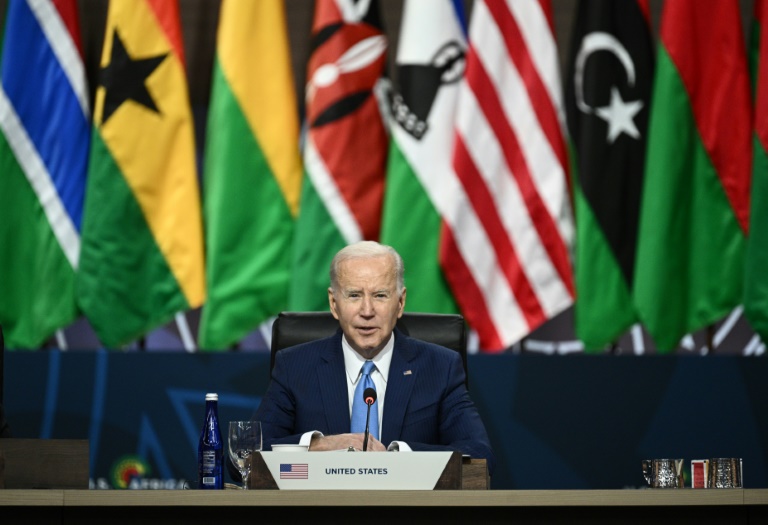
“The United States is all in on Africa and all in with Africa,” Biden told nearly 50 African leaders who have spent three days in a wintry Washington summit that featured a gala White House dinner.

“Africa belongs to the table in every room — every room for global challenges that are being discussed,” Biden said. 

Biden, who in September called for an African permanent seat on the UN Security Council, backed a permanent African Union role in the Group of 20 economies and said he was planning a visit — the first by a US president since 2015 — to sub-Saharan Africa.

The summit is the first of its kind since African leaders came in 2014 to see Barack Obama, whose successor Donald Trump made no secret of his lack of interest in Africa.

China for the past decade has eclipsed the United States as an investor, and Russia in recent years has sent in mercenaries and sought diplomatic support against Western pressure.

Biden announced $2.5 billion in new assistance on food as price increases lead to hunger across the continent, especially in the drought-struck Horn.

“Russia’s brutal war in Ukraine has led to the disruption of food and energy supplies that affect all of our economies,” Vice President Kamala Harris told a luncheon.

She told African leaders that “international rules and norms are under threat — for example, sovereignty and territory integrity, unimpeded commerce and peaceful resolution of disputes.”

– Democracy in ‘DNA’ –

The Biden administration has been more veiled in its criticism of China, which has poured in funding for high-profile infrastructure projects and lent more than $120 billion across the continent since the start of the century.

The United States at the summit laid out $55 billion in projects over the coming three years including in green energy, training for health workers and modernization of internet networks, with the private sector also pledging $15 billion led by investment in technology.

In a contrast with China, which has been happy to do business with all African regimes, the United States has made a point of stressing democracy, even if Biden still invited leaders seen as authoritarian.

“The United States will always lead with our values,” Biden told the African leaders.

“Support for democracy, respect for the rule of law, commitment to human rights, responsible government, all are part of our DNA.”

Biden, while announcing $100 million for security, also said the United States would invest $75 million to counteract “democratic backsliding” including by strengthening electoral authorities and civil society.

On Wednesday, Biden met jointly with the leaders of six nations that hold elections next year including Nigeria and the Democratic Republic of Congo, sub-Saharan Africa’s largest countries in population and size respectively, to seek promises on free elections.

Mark Green, a former congressman and head of the US Agency of International Development, said that the United States was focused on building self-reliance in Africa, while China was looking to “reinforce aid dependency.”

“If a Chinese investment in Africa leads to greater self-reliance, somebody in Beijing is going to lose his or her job,” said Green, now president of the Wilson Center.

China denies US accusations it is putting developing nations into a “debt trap” and in turn has called on Washington not to see Africa through the prism of geopolitical competition.

– Will not ‘dictate’ to Africa –

African leaders largely welcomed the summit. But the continent has also been reluctant to take sides among major powers.

Secretary of State Antony Blinken, speaking to reporters at the end of the summit, said: “America will not dictate Africa’s choices. Neither should anyone else.”

Senegalese President Macky Sall, the current chair of the African Union, welcomed US support for the institution and voiced appreciation for Biden’s summit.

But he also called for the United States to end longstanding rights sanctions on Zimbabwe and voiced alarm over a bill in the US Congress that would impose sanctions on African countries over dealings with Russia.

“This would be the first time in international relations that a whole continent is targeted,” Sall said.

US announces $2.5 billion in food assistance to Africa

The United States on Thursday committed another $2.5 billion in food assistance to Africa, pledging to help the continent cope with rising prices blamed in part on Russia’s invasion of breadbasket Ukraine.

President Joe Biden laid out the new commitment at the close of a three-day summit that brought nearly 50 African leaders to Washington.

Biden told leaders that the United States was concerned about rising hunger triggered “in part due to Russia’s unprovoked war against Ukraine.”

“Today, famine once more stalks the Horn of Africa,” Biden said.

“Food security is an essential foundation for peace and prosperity. Simply put, if a parent can’t feed their child, nothing else really matters.”

He said the United States also wanted to work with Africa on developing arable land.

“Africa has the potential to feed its people but also to help feed the world,” Biden said.

The White House said the $2.5 billion would provide emergency aid as well as medium- and long-term assistance to stabilize the African food supply.

The United States said it would also pursue a partnership with the African Union to bring together the public and private sectors and international financial institutions to address food needs.

The United States has already provided $11 billion in food assistance for the continent this year, the White House said.

The Horn of Africa has been especially hard hit after successive failed rainy seasons, with the United Nations saying that aid has staved off full-fledged famine in Somalia.

US backs fund for sustainable safaris in Africa

The United States is committing support to promote sustainable safaris in Africa, hoping to prevent environmental destruction as the tourism sector recovers, officials said Thursday.

The US Agency for International Development (USAID) made the announcement at a three-day summit that brought nearly 50 African leaders in Washington.

The nascent Africa Conservation and Communities Tourism Fund, led by investors and conservationists, aims to raise $75 million to fund safari operators across the continent.

USAID said it was committing $2.5 million to reduce risks and jumpstart the fund, which it estimated would benefit 44,000 people.

The fund will work with safari operators in Botswana, Kenya, Namibia, South Africa, Tanzania, and Zambia.

A notice on the project earlier this year by advisors Impact Align said that ecotourism operators had been devastated by Covid-19, which shut down international travel.

“The fate of millions of acres of wildlands and wildlife hangs in the balance,” it said.

“If operators fail to financially recover, once protected wildlands will be at high risk of destruction which would worsen planetary health, exacerbate climate change and deprive local communities of employment and management opportunities.”

The United States during the summit has laid out some $55 billion in funding over the next several years including to improve health infrastructure, promote green energy and stave off hunger.

Biden tells leaders US is 'all in' for Africa

President Joe Biden threw his support Thursday behind a larger African role in the world but also vowed the United States would not shy away from promoting democracy.

“The United States is all in on Africa,” Biden told nearly 50 African leaders who have gathered in Washington for three days.

“Africa belongs to the table in every room — every room for global challenges that are being discussed — and in every institution,” Biden said. 

Biden, who in September called for an African permanent seat on the UN Security Council, backed a permanent African Union role in the Group of 20 economies and said he was planning a visit, the first by a US president since 2015, to sub-Saharan Africa.

“We’re all going to be seeing you and you’re going to see a lot of us,” Biden said, without specifying the dates or destinations.

Biden a night earlier invited African leaders to a gala White House dinner, with the African Union arriving first to the red carpet, as he pulled out the stops for the first such summit since Barack Obama launched an initiative in 2014.

Obama’s successor Donald Trump made little secret of his lack of interest in Africa, where in the ensuing years China — seen by the United States as its top global competitor — has become a key player through major investment.

– Democracy in ‘DNA’ –

The United States at the summit is laying out $55 billion in projects over the coming three years including investment in green energy, training for health workers and modernization of internet networks. 

The private sector also pledged $15 billion in deals led by investments by US firms in digital technology.

In a contrast with China, which has been happy to do business with all African regimes, the United States has made a point of stressing democracy, even if Biden still invited leaders seen as authoritarian.

“The United States will always lead with our values,” Biden told the African leaders.

“Support for democracy, respect for the rule of law, commitment to human rights, responsible government, all are part of our DNA.”

Biden, while announcing $100 million for security, also said the United States would invest $75 million to counteract “democratic backsliding” including by strengthening electoral authorities and civil society.

On Wednesday, Biden met jointly with the leaders of six nations that hold elections next year including Nigeria and the Democratic Republic of Congo, sub-Saharan Africa’s largest countries in population and size respectively, to seek promises on free elections.

Mark Green, a former congressman and head of the US Agency of International Development, said that the United States was focused on building self-reliance in Africa, while China was looking to “reinforce aid dependency.”

“If a Chinese investment in Africa leads to greater self-reliance, somebody in Beijing is going to lose his or her job,” said Green, now president of the Wilson Center. 

China denies US accusations it is putting developing nations into a “debt trap” and in turn has called on Washington not to see Africa through the prism of geopolitical competition.

– Countering Russia –

Senegalese President Macky Sall, the current chair of the African Union, welcomed US support for the institution and voiced appreciation for Biden’s summit.

But he also called for the United States to end longstanding rights sanctions on Zimbabwe and voiced alarm over a bill in the US Congress that would impose sanctions on African countries over dealings with Russia.

“This would be the first time in international relations that a whole continent is targeted,” Sall told Biden before the leaders.

Biden will later Thursday lead a session on food security as his administration emphasizes US assistance and points the finger at Russia for a sharp spike in global prices that has contributed to hunger, especially on the drought-struck Horn of Africa.

Russia in February invaded Ukraine, a major exporter of grains to the developing world.

Russia has sought to rally African public opinion by blaming food inflation not on the war itself, but on Western sanctions imposed on Moscow in response.

Last French troops leave Central African Republic

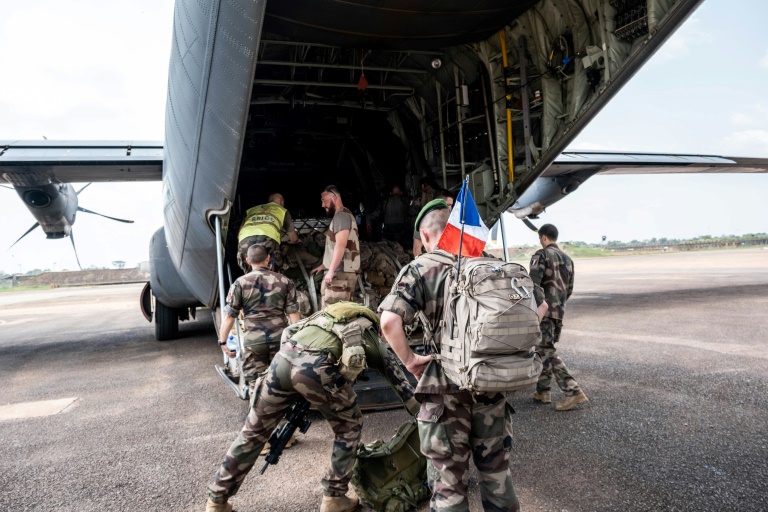
The last French troops deployed in the Central African Republic left on Thursday following a chill in relations caused by closer ties between Bangui and Moscow, an AFP reporter saw.

Forty-seven troops from a logistical support unit left Bangui airport aboard a C-130 transporter aircraft, becoming the last of a 130-person French contingent to leave the troubled country.

France, the former colonial power, dispatched up to 1,600 troops to help stabilise the country after a coup in 2013 unleashed a civil war along sectarian lines. 

The operation, named Sangaris, was France’s seventh military intervention in the CAR since the country gained independence in 1960.

It wound up in October 2016 after elections, leaving a residual French contingent.

Over the last few years, friction has grown between France and CAR over a mounting Russian military presence.

In 2018 Moscow sent instructors to the country, and in 2020 followed this with hundreds of paramilitaries to help President Faustin Archange Touadera defeat rebels advancing on the capital.

France, the UN and others say they are mercenaries from the Kremlin-backed Wagner group, who have been linked with atrocities and looting of resources.

Paris last year decided to suspend military cooperation, deeming Bangui complicit in an anti-French campaign allegedly steered by Russia.

“France decided that the conditions were no longer appropriate for us to continue working for the benefit of the Central African armed forces,” General Francois-Xavier Mabin, the commander of the MISLOG logistical force, told AFP.

French troops stationed at Bangui airport’s M’Poko base had been providing logistical support for the European Union Training Mission and a contingent of the UN peacekeeping mission in the Central African Republic (MINUSCA).

– Deadly fighting –

“It is with great regret that we note this unilateral withdrawal,” said Fidele Gouandjika, special adviser to President Touadera.

“Today we have a battle-hardened army — thank you, France, which has been training and equipping it for 62 years,” he said, adding: “Now we are going to do (it) with Wagner.”

Roland Marchal, a researcher at the Sciences Po school in Paris, called the French pullout a “very strong sign of discontent.”

But “from a military point of view, it won’t change much because the scope of the mission became more and more restricted,” he said.

Earlier this year Paris withdrew the last of its troops from former colony Mali.

They had been deployed since 2013 to help the country fight a jihadist insurgency.

Relations between France and Mali plummeted after the military seized power in Bamako in August 2020 and eventually brought in Russian paramilitaries.

CAR ranks among the poorest and most unstable countries in the world, and continues to bear the scars of the traumatic war. 

Violence has fallen back in intensity since 2018 although swathes of territory lie in the hands of rebel groups and civilians continue to pay a high price.

Close Bitnami banner
Bitnami