Africa Business

ICC upholds conviction of Ugandan former child soldier

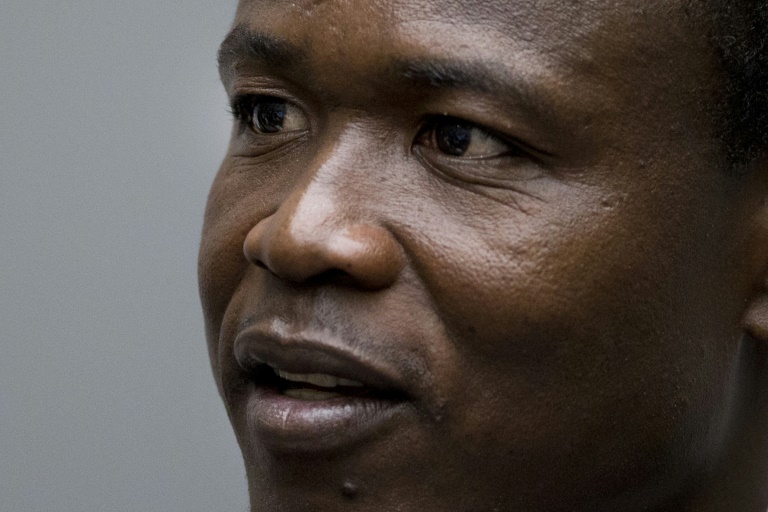
The International Criminal Court on Thursday threw out an appeal by Dominic Ongwen, a Ugandan child soldier-turned-commander in the Lord’s Resistance Army, against his conviction and 25-year sentence for war crimes.

Dominic Ongwen, who was himself abducted aged nine by the rebel group led by the fugitive Joseph Kony, was found guilty last year of murder, rape and sexual enslavement in northern Uganda during the early 2000s.

“The appeals chamber unanimously rejects all the grounds of appeal” against his conviction, said Judge Luz del Carmen Ibanez Carranza. One ground of appeal against his sentence was rejected by majority and the rest unanimously.

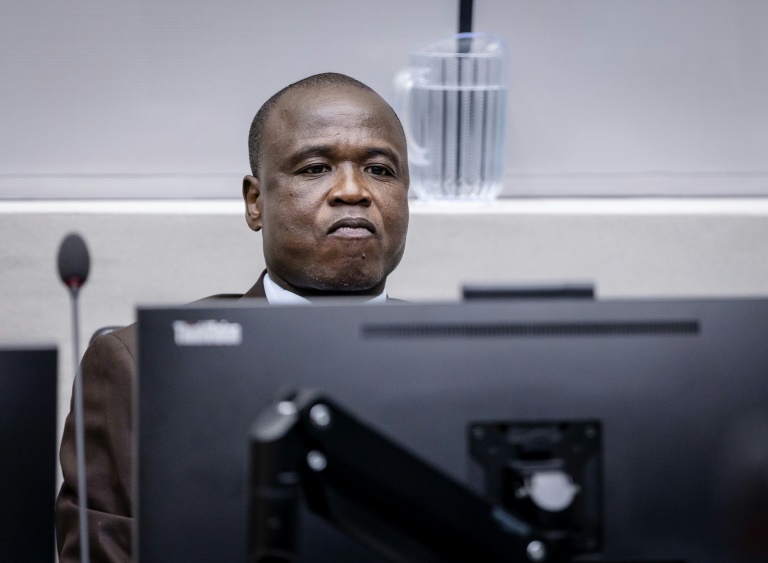
Dressed in a dark suit and tie, Ongwen briefly waved to the public gallery but otherwise remained impassive as he listened through headphones to the judgment.

Appeals judges said that although Ongwen had been kidnapped as a “defenceless child” it did not mitigate his guilt. They also rejected his arguments about mental illness, and said he had a key role in LRA atrocities as an adult.

The LRA was founded three decades ago by former Catholic altar boy and self-styled prophet Joseph Kony, who launched a bloody rebellion in northern Uganda against President Yoweri Museveni.

Defence lawyers argued earlier this year that Ongwen, who is believed to be in his mid-40s but whose birth date remains unclear, had been scarred by his own experience as a youth in the LRA.

“Dominic Ongwen was, and still is, a child,” Ongwen’s defence lawyer Krispus Ayena Odongo told the court in February, adding that Ongwen still believed he was “possessed” by the spirit of Kony.

ICC prosecutor Karim Khan said last month said he would ask judges to confirm charges against Kony despite his absence, as the rebel leader is still at large.

– ‘Scapegoat’ –

Ongwen surrendered to US special forces who were hunting Kony in the Central African Republic in early 2015 and he was transferred to the ICC to face trial.

The LRA’s bid to set up a state based on the Bible’s Ten Commandments killed more than 100,000 people and saw 60,000 children abducted, spreading to Sudan, the Democratic Republic of Congo and Central African Republic.

Ongwen, whose nom de guerre was “White Ant”, was found guilty on 61 charges of war crimes and crimes against humanity, which also included charges of himself turning young abductees into child soldiers.

Prosecutors portrayed Ongwen as leading a reign of terror by the LRA, personally ordering the massacres of more than 130 civilians at the Lukodi, Pajule, Odek and Abok refugee camps between 2002 and 2005.

Judges ruled that Ongwen had not suffered from mental illness despite his own history of being abducted on his way to school by the LRA, described by experts as one of Africa’s “most brutal militia forces”.

Ongwen’s lawyers had appealed the conviction on 90 different grounds and the sentence on 11, saying there were errors in “law, fact and procedure”.

“The trial was a proxy prosecution, a prosecution of the LRA using (Ongwen), a child soldier, as a scapegoat,” Krispus Ayena Odongo said in court papers.

Kony should be in the dock instead of Ongwen, since it was he who had decided on the distribution of women and children as sex slaves, he added.

“Kony remains unapprehended; he has escaped the tentacles of various states,” Odongo added.
Tunisia awaits languid election for powerless parliament

Tunisians go to the polls Saturday to elect a parliament largely stripped of its powers, under a hyper-presidential system installed by the head of state Kais Saied after his power grab last year. 

Over a decade since Tunisia’s popular revolution unseated dictator Zine El Abidine Ben Ali, opposition parties have urged a boycott of the vote, which they say is part of a “coup” against the only democracy to have emerged from the 2011 Arab Spring uprisings.

The election for the new 161-seat assembly comes after President Saied froze the previous legislature on July 25 last year, following months of political crisis exacerbated by the coronavirus pandemic.

He later dissolved the parliament, which had long been dominated by his nemesis the Islamist-inspired Ennahdha party. 

Saied on Wednesday defended his decision, saying that the “Tunisian people, wherever I went, were all asking to dissolve the parliament”.

“The country was on the brink of civil war,” he told US Secretary of State Antony Blinken in Washington.

The previous legislature had far-reaching powers, in the mixed presidential-parliamentary system enshrined in the North African country’s post-revolution constitution.

Last July, Saied used a widely shunned referendum to push through a new constitution, stripping parliament of any real clout and giving his own office almost unlimited powers.

The legal expert who oversaw its drafting said the version Saied published had been changed in a way that could lead to a “dictatorial regime”. Saied later published a slightly amended draft.

– ‘Rump parliament’ –

Analyst Hamadi Redissi said the aim of Saturday’s polls was “to complete the process that started on July 25” last year.

The resulting parliament “won’t have many powers — it won’t be able to appoint a government or censure it, except under draconian conditions that are almost impossible to meet”. 

Saied’s new system essentially does away with political parties and electoral lists, meaning candidates will be elected as individuals with no declared affiliation.

The assembly’s final make-up is not expected to be determined until March next year, after any second-round run-offs have been completed.

The vote aims “to increase the legitimacy of the presidency”, Redissi said, adding that the result would be “a rump parliament without any powers”.

Almost all the country’s political parties, including Ennahdha, have said they will boycott the vote, labelling Saied’s moves a “coup”.

The head of the National Salvation Front, the main opposition alliance which includes Ennahdha, said the bloc would not recognise the results.

The elections “will plunge the country even further into political crisis,” Ahmed Nejib Chebbi told journalists in Tunis on Thursday.

He also voiced alarm over the postponement of a critical International Monetary Fund meeting next Monday, at which the Washington-based lender was to decide on a bailout package for the deeply indebted North African country.

The delay “threatens the country’s economic balance”, he said.

The powerful UGTT trade union federation, which did not openly oppose the initial power grab, has called the poll meaningless.

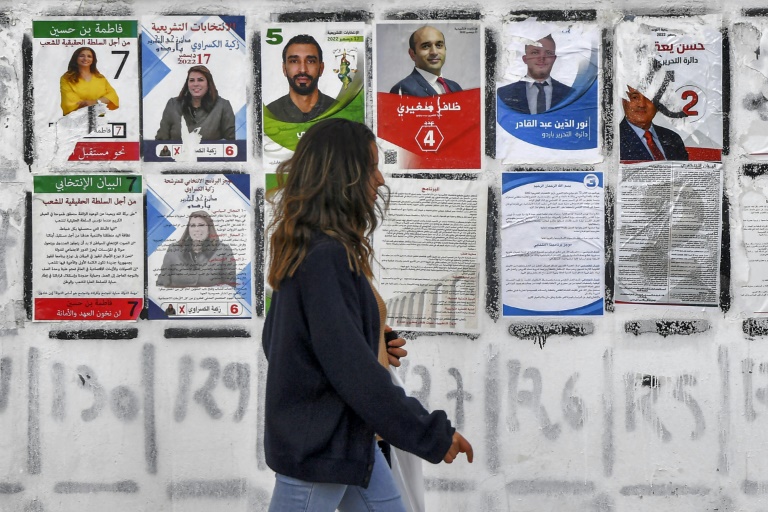
Most of the 1,058 candidates are unknowns.

The Tunisian Observatory for Democratic Transition says some 26 percent are teachers, and a further 22 are mid-level public servants.

The election result will likely see a drop in the representation of women, with just 122 female candidates.

– ‘Bad to worse’ –

Few of the country’s nine million registered voters are expected to turn out.

Several young people told AFP they had little interest in the election or desire to know more about the candidates.

Marwa Ben Miled, a 53-year-old shopkeeper, told AFP the country was “going from bad to worse”.

“What happens on the political scene doesn’t interest me anymore,” she said. “I don’t trust anyone.”

Saied’s electoral law forbids candidates from speaking to the foreign press, a stance the North Africa Foreign Correspondents’ Club said would make it difficult for journalists to do their jobs.

Saied has made several public appearances, meeting market traders in the Old City of Tunis in the run-up to the vote.

Some social media users have posted satirical images ridiculing the vote.

In one video, a mock candidate appears with a cigar and smelling a posy of jasmine, before giving a donation to a pair of musicians who then shout pro-Saied slogans.

ICC upholds conviction of Ugandan former child soldier

The International Criminal Court on Thursday threw out an appeal by Dominic Ongwen, a Ugandan child soldier-turned-commander in the Lord’s Resistance Army, against his conviction for war crimes.

Dominic Ongwen, who was himself abducted aged nine by the rebel group led by the fugitive Joseph Kony, was found guilty last year of murder, rape and sexual enslavement in northern Uganda during the early 2000s.

“The appeals chamber unanimously rejects all the grounds of appeal,” said Judge Luz del Carmen Ibanez Carranza, adding that the court would rule later Thursday on Ongwen’s appeal against his 25-year sentence.

Appeals judges dismissed Ongwen’s arguments about his own past as a child combatant and that he suffered from mental illness, saying that he had a key role in the LRA’s atrocities as an adult.

The LRA was founded three decades ago by former Catholic altar boy and self-styled prophet Joseph Kony, who launched a bloody rebellion in northern Uganda against President Yoweri Museveni.

Defence lawyers argued earlier this year that Ongwen, who is believed to be in his mid-40s but whose birth date remains unclear, had been scarred by his own experience as a youth in the LRA.

“Dominic Ongwen was, and still is, a child,” Ongwen’s defence lawyer Krispus Ayena Odongo told the court in February, adding that Ongwen still believed he was “possessed” by the spirit of Kony.

ICC prosecutor Karim Khan said last month said he would ask judges to confirm charges against Kony in his absence, as he remains at large.

– ‘Proxy prosecution’ –

The LRA’s bid to set up a state based on the Bible’s Ten Commandments killed more than 100,000 people and saw 60,000 children abducted, spreading to Sudan, the Democratic Republic of Congo and Central African Republic.

Ongwen, whose nom de guerre was “White Ant”, was found guilty on 61 charges of war crimes and crimes against humanity, which also included charges of himself turning young abductees into child soldiers.

Prosecutors portrayed Ongwen as leading a reign of terror by the LRA, personally ordering the massacres of more than 130 civilians at the Lukodi, Pajule, Odek and Abok refugee camps between 2002 and 2005.

Judges ruled that Ongwen had not suffered from mental illness despite his own history of being abducted on his way to school by the LRA, described by experts as one of Africa’s “most brutal militia forces”.

Ongwen’s lawyers had appealed the conviction on 90 different grounds and the sentence on 11, saying there were errors in “law, fact and procedure”.

“The trial was a proxy prosecution, a prosecution of the LRA using (Ongwen), a child soldier, as a scapegoat,” Krispus Ayena Odongo said in court papers.

Kony should be in the dock instead of Ongwen, since it was he who had decided on the distribution of women and children as sex slaves, he added.

“Kony remains unapprehended; he has escaped the tentacles of various states,” Odongo added.
Going pro: Senegal's young gamers betting on eSport

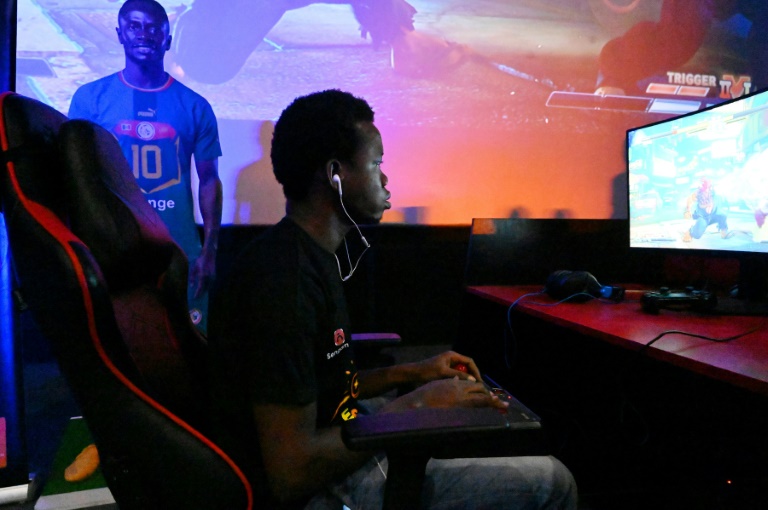
Avid fans of the best-selling FIFA video game watched on a big screen as leading Senegalese gamers battled it out as virtual iterations of footballing royalty like Cristiano Ronaldo and Olivier Giroud. 

Some 400 eSports enthusiasts attended Dakar’s recent Esport Experience tournament, inspired by local heroes like Mouhamed Thiam, 19, alias “Dex77” — three-time continental champion — and by Senegal’s real-life football team, the continent’s reigning champions.

Rising star Cheikh Thiaw, 20, alias “Coldfire Junior”, said that the national football team’s recent successes, making it into the World Cup’s last 16, motivated him “to face off against any foreign gamer”. 

The tournament featured one million CFA francs ($1,626) in prizes, divided among the top players of the games FIFA, eFootball and Street Fighter. 

Gamers from the West African nation are now eyeing global eSport success, with their stars competing in tournaments throughout the region. 

Establishing a career in eSports is no mean feat — the prize money in Senegal is low compared to the rest of the world, and few can become professionals.

But the country is an emerging economy in Africa, and analysts say gaming is likely to expand in the coming years.

Senegal is home to some 20,000 competitive video game players, according to Sengames, the country’s main gamers’ association.     

– ‘Doctor Dexx’ –

Dex77’s older brother Papa Adama Thiam, 26, alias “Doctor Dexx”, is also on the forefront of Senegal’s gaming revolution. Alongside his pharmacy studies he has become five-time national FIFA champion. 

“My father gave me my first PlayStation when I was 11,” he said. 

“My mother used to work half the year as a hairdresser in the United States and brought back the latest version of PlayStation.” 

With help from Senegal’s few gaming sponsors, Doctor Dexx earns about three million CFA francs per year — more than twice the average yearly salary.

He spends his free time coaching younger gamers to nurture “the stars of tomorrow”.

According to Newzoo, which analyses gaming trends, the African continent is fertile ground for eSports thanks to internet connections that are becoming quicker and cheaper, as well as a growing middle class. 

– ‘Very promising’ –

The Middle East and Africa are home to 488 million video game players, or 15 percent of the global total, Newzoo’s 2022 report shows. 

The combined super-region has the highest growth rate, up eight percent in a year. 

“More and more young amateur gamers want to become professionals,” said Mamoudou Soumare, deputy director of the SOLO Esport club, home of Senegal’s best players. 

Gaming consoles remain prohibitively expensive for many in Senegal. Older models change hands for around 150,000 CFA francs. 

“Our recruits work and take part in international tournaments,” said Baba Dioum, the SOLO Esport club’s co-founder and president of Sengames. 

“It’s a new field that needs to be structured, and that is very promising for Senegal’s youth,” said Laurent Montillet, deputy director of Dakar’s French Institute, which staged a tournament with players from across the Sahel. 

Senegal is also slowly seeing the emergence of local video games, mainly inspired by African mythology rather than football.

“The only sports game we’ve seen so far is about wrestling,” which is Senegal’s other main sport, said Soumare. 

He said that the video game sector will need support in the form of a federation, public funding and training to spur the creation of more Senegalese start-ups. 

Tunisia awaits languid election for powerless parliament

Tunisians go to the polls Saturday to elect a parliament largely stripped of its powers, under a hyper-presidential system installed by the head of state Kais Saied after his power grab last year. 

Over a decade since Tunisia’s popular revolution unseated dictator Zine El Abidine Ben Ali, opposition parties have urged a boycott of the vote, which they say is part of a “coup” against the only democracy to have emerged from the 2011 Arab Spring uprisings.

The election for the new 161-seat assembly comes after President Saied froze the previous legislature on July 25 last year, following months of political crisis exacerbated by the coronavirus pandemic.

He later dissolved the parliament, which had long been dominated by his nemesis the Islamist-inspired Ennahdha party. 

Saied on Wednesday defended his decision, saying that the “Tunisian people, wherever I went, were all asking to dissolve the parliament”.

“The country was on the brink of civil war,” he told US Secretary of State Antony Blinken in Washington.

The previous legislature had far-reaching powers, in the mixed presidential-parliamentary system enshrined in the North African country’s post-revolution constitution.

Last July, Saied used a widely shunned referendum to push through a new constitution, stripping parliament of any real clout and giving his own office almost unlimited powers.

The legal expert who oversaw its drafting said the version Saied published had been changed in a way that could lead to a “dictatorial regime”. Saied later published a slightly amended draft.

– ‘Rump parliament’ –

Analyst Hamadi Redissi said the aim of Saturday’s polls was “to complete the process that started on July 25” last year.

The resulting parliament “won’t have many powers — it won’t be able to appoint a government or censure it, except under draconian conditions that are almost impossible to meet”. 

Saied’s new system essentially does away with political parties and electoral lists, meaning candidates will be elected as individuals with no declared affiliation.

The assembly’s final make-up is not expected to be determined until March next year, after any second-round run-offs have been completed.

The vote aims “to increase the legitimacy of the presidency”, Redissi said, adding that the result would be “a rump parliament without any powers”.

Almost all the country’s political parties, including Ennahdha, have said they will boycott the vote, labelling Saied’s moves a “coup”.

The powerful UGTT trade union federation, which did not openly oppose the initial power grab, has called the poll meaningless.

Most of the 1,058 candidates are unknowns.

The Tunisian Observatory for Democratic Transition says some 26 percent are teachers, and a further 22 are mid-level public servants.

The election result will likely see a drop in the representation of women, with just 122 female candidates.

– ‘Bad to worse’ –

Few of the country’s nine million registered voters are expected to turn out.

Several young people told AFP they had little interest in the election or desire to know more about the candidates.

Marwa Ben Miled, a 53-year-old shopkeeper, told AFP the country was “going from bad to worse”.

“What happens on the political scene doesn’t interest me anymore,” she said. “I don’t trust anyone.”

Saied’s electoral law forbids candidates from speaking to the foreign press, a stance the North Africa Foreign Correspondents’ Club said would make it difficult for journalists to do their jobs.

Saied has made several public appearances, meeting market traders in the Old City of Tunis in the run-up to the vote.

Some social media users have posted satirical images ridiculing the vote.

In one video, a mock candidate appears with a cigar and smelling a posy of jasmine, before giving a donation to a pair of musicians who then shout pro-Saied slogans.

Tunisia awaits languid election for powerless parliament

Tunisians got to the polls Saturday to elect a parliament largely stripped of its powers, under a hyper-presidential system installed by the head of state Kais Saied after his power grab last year.

Over a decade since Tunisia’s popular revolution unseated dictator Zine El Abidine Ben Ali, opposition parties have urged a boycott of the vote, which they say is part of a “coup” against the only democracy to have emerged from the 2011 Arab Spring uprisings.

The election for the new 161-seat assembly comes after President Saied froze the previous legislature on July 25 last year, following months of political crisis exacerbated by the coronavirus pandemic.

He later dissolved the parliament, which had long been dominated by his nemesis the Islamist-inspired Ennahdha party. 

Saied on Wednesday defended his decision, saying that the “Tunisian people, wherever I went, were all asking to dissolve the parliament”.

“The country was on the brink of civil war,” he told US Secretary of State Antony Blinken in Washington.

The previous legislature had far-reaching powers, in the mixed presidential-parliamentary system enshrined in the North African country’s post-revolution constitution.

Last July, Saied used a widely shunned referendum to push through a new constitution, stripping parliament of any real clout and giving his own office almost unlimited powers.

The legal expert who oversaw its drafting said the version Saied published had been changed in a way that could lead to a “dictatorial regime”. Saied later published a slightly amended draft.

– ‘Rump parliament’ –

Analyst Hamadi Redissi said the aim of Saturday’s polls was “to complete the process that started on July 25” last year.

The resulting parliament “won’t have many powers — it won’t be able to appoint a government or censure it, except under draconian conditions that are almost impossible to meet”. 

Saied’s new system essentially does away with political parties and electoral lists, meaning candidates will be elected as individuals with no declared affiliation.

The assembly’s final make-up is not expected to be determined until March next year, after any second-round run-offs have been completed.

The vote aims “to increase the legitimacy of the presidency”, Redissi said, adding that the result would be “a rump parliament without any powers”.

Almost all the country’s political parties, including Ennahdha, have said they will boycott the vote, labelling Saied’s moves a “coup”.

The powerful UGTT trade union federation, which did not openly oppose the initial power grab, has called the poll meaningless.

Most of the 1,058 candidates are unknowns.

The Tunisian Observatory for Democratic Transition says some 26 percent are teachers, and a further 22 are mid-level public servants.

The election result will likely see a drop in the representation of women, with just 122 female candidates.

– ‘Bad to worse’ –

Few of the country’s nine million registered voters are expected to turn out.

Several young people told AFP they had little interest in the election or desire to know more about the candidates.

Marwa Ben Miled, a 53-year-old shopkeeper, told AFP the country was “going from bad to worse”.

“What happens on the political scene doesn’t interest me anymore,” she said. “I don’t trust anyone.”

Saied’s electoral law forbids candidates from speaking to the foreign press, a stance the North Africa Foreign Correspondents’ Club said would make it difficult for journalists to do their jobs.

Saied has made several public appearances, meeting market traders in the Old City of Tunis in the run-up to the vote.

Some social media users have posted satirical images ridiculing the vote.

In one video, a mock candidate appears with a cigar and smelling a posy of jasmine, before giving a donation to a pair of musicians who then shout pro-Saied slogans.

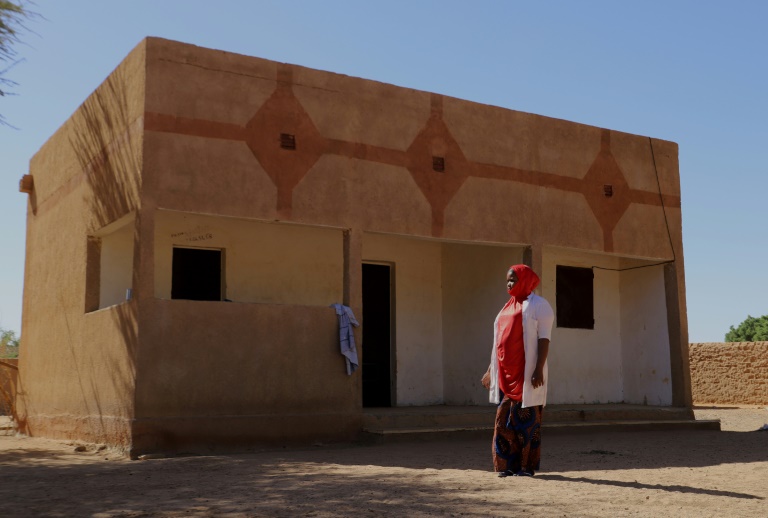
Doctors, drugs, even bandages lacking in remote Niger clinics

Asked what’s on her wish-list for her tiny clinic, Tchimaden Tafa starts to reel off a long string of items but doesn’t reach the end, for another patient has come in, seeking her help.

In Souloufeta, a village in the remote Aiir Mountains of northern Niger, healthcare comes in the form of a building that is all but empty, manned by a nurse lacking equipment, drugs and even bandages.

Tafa’s facility amounts to a two-room concrete-walled structure with a barbed-wire enclosure to keep out camels and goats. 

One room is used for examining patients, the other is the storeroom, containing perhaps half a dozen boxes of supplies.

There is neither a refrigerator nor lights, because there is no electricity. Tafa has to examine patients with the door open, to let in sunlight. There is not even a scale on which to weigh patients.

Often, “all you can do is look at them and observe” their symptoms, the young nurse said with a sigh. “What can you do?”

– Poverty –

Niger, a huge former French colony in the heart of the arid Sahel, is the poorest country in the world, according to the Human Development Index.

Its population, the fastest-growing in the world, has per capita GDP of less than $600 per year, compared to $70,000 in the United States, according to the World Bank.

Soulefeta comprises around 100 inhabitants living in around 15 mud-brick homes.

It lies about seven kilometres (four miles) from Iferouane, where there is a bigger health centre — but in this mountainous part of the Sahara, that distance is long and gruelling.

The roads are rough, and can be washed out by downpours in the rainy season, says Azori Lahou, who drives a four-wheel-drive ambulance.

He takes patients to Iferouane and, if need be, to the nearest hospitals, in Arlit and Agadez.

They are respectively five and nine hours’ drive away along desert tracks — “And that’s on a good day,” Lahou remarked.

In this vast empty region the size of France, there is just a single tarmacked road. It was built years ago with revenue from uranium mining, but today is almost a memory, eroded by the wind, sand and truck wheels.

– Motorbikes –

The head doctor in Iferouane, Ada Daouda, one of two doctors in the area, said one of his biggest concerns was to get sick patients in a transport-worthy condition so that they could make the long trek to hospital.

“Someone whose vital signs are in danger and who has to wait hours to be treated — you can imagine what this (trip) is like,” he said.

“Tell them we need resources,” he added, in comments that regional and other health officials echoed to AFP.

Niger has a mere 0.35 doctors per 10,000 people, according to the World Health Organization. By comparison, the figure in Sweden is 70 doctors per 10,000.

Often, sick people are transported from Soulefeta to Iferouane on the back of a motorbike — cheaper and more rugged than an ambulance, despite the obvious risks, said Tafa.

The village’s health committee is proposing that local inhabitants contribute a total of 1,000 CFA francs ($1.50) per month towards buying drugs for the health hut.

Moussa Ibrahim, a gardener by profession who chairs the committee, said he knew that this sum fell well short of what was needed.

“People are poor and not all of them are able to contribute, but they are doing their best,” he said.

ICC to rule on appeal by Ugandan former child soldier

The International Criminal Court will decide Thursday on an appeal by a Ugandan child soldier-turned-commander in the Lord’s Resistance Army against his conviction and 25-year sentence for war crimes.

Dominic Ongwen, who was abducted aged nine by the rebel group led by the fugitive Joseph Kony, was found guilty last year of murder, rape and sexual enslavement in northern Uganda during the early 2000s.

The LRA was founded three decades ago by former Catholic altar boy and self-styled prophet Joseph Kony, who launched a bloody rebellion in northern Uganda against President Yoweri Museveni.

Judges will read the verdict from 1030 GMT at the ICC’s high-security headquarters in The Hague, where Ongwen’s trial had started six years ago, in what is expected to be a lengthy session.

Defence lawyers argued earlier this year that Ongwen’s conviction and sentence should be overturned as he had been scarred by his own experience as a child soldier.

“Dominic Ongwen was, and still is, a child,” Ongwen’s defence lawyer Krispus Ayena Odongo told the court in February, adding that Ongwen still believed he was “possessed” by the spirit of Kony.

ICC prosecutor Karim Khan said last month said he would ask judges to confirm charges against Kony in his absence, as he remains at large.

– ‘Proxy prosecution’ –

The LRA’s bid to set up a state based on the Bible’s Ten Commandments killed more than 100,000 people and saw 60,000 children abducted, spreading to Sudan, the Democratic Republic of Congo and Central African Republic.

Ongwen, whose nom de guerre was “White Ant”, was found guilty on 61 charges of war crimes and crimes against humanity, which also included charges of himself turning young abductees into child soldiers.

Prosecutors portrayed Ongwen as leading a reign of terror by the LRA, personally ordering the massacres of more than 130 civilians at the Lukodi, Pajule, Odek and Abok refugee camps between 2002 and 2005.

Judges ruled that Ongwen had not suffered from mental illness despite his own history of being abducted on his way to school by the LRA, described by experts as one of Africa’s “most brutal militia forces”.

But Ongwen’s lawyers have appealed the conviction on 90 different grounds and the sentence on 11, saying there were errors in “law, fact and procedure”.

“The trial was a proxy prosecution, a prosecution of the LRA using (Ongwen), a child soldier, as a scapegoat,” Krispus Ayena Odongo said in court papers.

Kony should be in the dock instead of Ongwen, since it was he who had decided on the distribution of women and children as sex slaves, he added.

“Kony remains unapprehended; he has escaped the tentacles of various states,” Odongo added.
Biden seeks principled Africa partnership as US businesses pour in

President Joe Biden called Wednesday for a long-term partnership with Africa rooted in good governance as US businesses unveiled billions of dollars led by tech investment for a continent where China has become a top player.

Addressing a summit that brought 49 African leaders to the Washington cold, Biden avoided uttering China’s name but made clear the United States would take a different approach.

At the first such gathering since Barack Obama invited African leaders in 2014, Biden said the United States sought “partnerships — not to create political obligation, to foster dependence, but to spur shared success and opportunity.”

“When Africa succeeds, the United States succeeds. Quite frankly, the whole world succeeds as well,” the president said.

The Biden administration is laying out more than $55 billion in support over the three-day summit and on Wednesday welcomed US and African businesses, which promised more than $15 billion in trade deals.

In an implicit contrast with China, which takes a hands-off approach in countries where it invests, Biden highlighted “the core values that unite our people — all our people, especially young people: freedom, opportunity, transparency, good governance.”

Africa’s economic transition, he said, “depends on good government, healthy populations and reliable and affordable energy.”

Biden stayed uncharacteristically brief, saying leaders likely wanted to see the World Cup, and watched a semi-final with the prime minister of Morocco, the first African nation to advance so far in the football tournament.

Biden later invited the leaders to the White House to a dinner of sea bass and black-eyed peas and a performance by Gladys Knight.

In a toast, Biden spoke of the “unimaginable cruelty” of “my nation’s original sin” — the enslavement of Africans — and hailed the contributions of the diaspora.

“Our people lie at the heart of the deep and profound connection that forever binds Africa and the United States together,” Biden said.

– Pushing tech investment –

China in the past decade has surpassed the United States on investing in Africa via highly visible infrastructure projects, often funded through loans that have totaled more than $120 billion since the start of the century.

Defense Secretary Lloyd Austin on Tuesday warned African leaders that both China and Russia were “destabilizing” the continent, saying Beijing’s mega-contracts lacked transparency.

Biden announced a $100 million aid package for clean energy and the White House unveiled another $800 million in public and private financing for digital development in Africa.

In one of the biggest corporate announcements, Visa said it would pump $1 billion into Africa to develop digital payments — an area in which China has emerged as a global leader.

Cisco and partner Cybastion said they would commit $858 million to bolster cybersecurity through 10 contracts across Africa, addressing a key vulnerability, and the ADB Group promised $500 million starting in Ivory Coast for cloud technology centers that can draw major US firms.

Microsoft said it would employ satellites to bring internet access for the first time to some 10 million people, half of them in Africa, starting in Egypt, Senegal and Angola.

In Africa, “there is no shortage of talent, but there is a huge shortage of opportunity,” Microsoft president Brad Smith told AFP.

– Putting standards on aid –

China denies US accusations it is imposing a “debt trap” in Africa and in turn has accused Washington of turning the continent into a geopolitical battlefield.

The United States has made much of its infrastructure aid conditional on democratic standards.

Biden announced that four nations — Gambia, Mauritania, Senegal and Togo — were selected to design future US grants through the Millennium Challenge Corporation, which funds projects in countries that meet key standards on good governance.

Secretary of State Antony Blinken took part in the signing of a $504 million infrastructure package through the corporation that will connect Benin’s port of Cotonou with landlocked Niger’s capital Niamey, with US officials estimating 1.6 million people will benefit.

“For a long time we’ve considered this to be our natural port,” Niger’s President Mohamed Bazoum said, as he promised “institutional reforms” to support trade.

Benin’s President Patrice Talon thanked the United States for addressing development, saying: “The attractiveness of Africa must be a part of the relationship with the US.”

Blinken said the deal will not “saddle governments with debt.”

“Projects will bear the hallmarks of America’s partnership,” Blinken said. “They’ll be transparent. They’ll be high quality. They’ll be accountable to the people that they mean to serve.”

Tunisia awaits languid election for powerless parliament

Tunisians are to vote Saturday on a parliament largely stripped of its powers, the final pillar of a hyper-presidential system installed by President Kais Saied after a power grab last year.

Over a decade since the country’s revolution that unseated dictator Zine El Abidine Ben Ali, opposition parties have urged a boycott of the poll, which they say is part of a “coup” against the only democracy to have emerged from the 2011 Arab Spring uprisings.

The election for the new 161-seat assembly comes after Saied froze its predecessor on July 25 last year, following months of political crisis exacerbated by the coronavirus pandemic.

He later dissolved the body, long dominated by his nemesis the Islamist-inspired Ennahdha party.

Saied on Wednesday defended his decision, saying: “Tunisian people wherever I went were all asking to dissolve the parliament.”

“The country was on the brink of civil war,” he told US Secretary of State Antony Blinken in Washington.

The previous legislature had far-reaching powers, in the mixed presidential-parliamentary system enshrined in the North African country’s post-revolt constitution.

In July this year, Saied used a widely shunned referendum to push through a new constitution, stripping parliament of any real clout and giving his own office almost unlimited powers.

– ‘Rump parliament’ –

Analyst Hamadi Redissi said the aim of Saturday’s polls was “to complete the process that started on July 25” last year.

The resulting parliament “won’t have many powers — it won’t be able to appoint a government or censure it, except under draconian conditions that are almost impossible to meet”. 

Saied’s new system essentially does away with political parties and electoral lists, meaning candidates will be elected as individuals with no declared affiliation.

The assembly’s final make-up is not expected to be determined until March next year, after any second-round run-offs have been completed.

The vote aims “to increase the legitimacy of the presidency”, Redissi said, adding that the result would be “a rump parliament without any powers”.

Almost all the country’s political parties, including Ennahdha, have said they will boycott the vote, labelling Saied’s moves a “coup”.

The powerful UGTT trade union federation, which did not openly oppose the initial power grab, has called the poll meaningless.

Most of the 1,058 candidates are unknowns.

The Tunisian Observatory for Democratic Transition says some 26 percent are teachers, and a further 22 are mid-level public servants.

The election result will likely see a drop in the representation of women, with just 122 female candidates.

– ‘Bad to worse’ –

Few of the country’s nine million registered voters expected to turn out.

Several young people told AFP they had little interest in the election or desire to know more about the candidates.

Marwa Ben Miled, a 53-year-old shopkeeper, told AFP the country was “going from bad to worse”.

“What happens on the political scene doesn’t interest me anymore,” she said. “I don’t trust anyone.”

Saied’s electoral law forbids candidates from speaking to the foreign press, a stance the North Africa Foreign Correspondents’ Club said would make it difficult for journalists to do their jobs.

Saied has made several public appearances, meeting market traders in the Old City of Tunis in the run-up to the vote.

Some social media users have posted satirical images ridiculing the vote.

In one video, a mock candidate appears with a cigar and smelling a posy of jasmine, before giving a donation to a pair of musicians who then shout pro-Saied slogans.

Close Bitnami banner
Bitnami