Africa Business

Biden watches World Cup semi with Morocco PM

US President Joe Biden on Wednesday saluted Morocco’s achievement as the first African and Arab country in the World Cup semi-finals as he watched the match alongside its prime minister.

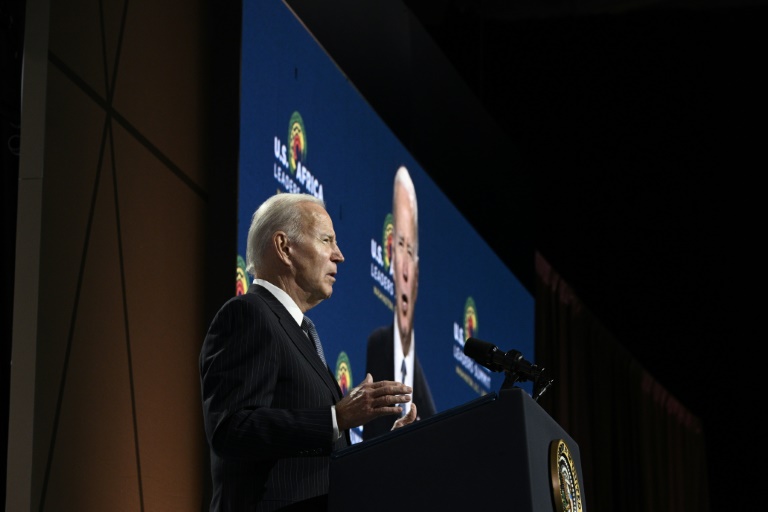
Biden, not known for being punctual or concise, was keenly aware of the history-making World Cup match against France as he delivered a speech to nearly 50 heads of state gathered for a US-Africa summit in Washington.

“I know you’re saying to yourselves, make it short, Biden, there’s a semi-final game coming up. I get it,” he said to laughter and applause.

He quipped that he saw climate envoy John Kerry, a well-known fan of soccer, nodding in agreement.

Biden stayed true to his word, wrapping up shortly after kickoff.

He then watched the match with Moroccan Prime Minister Aziz Akhannouch and several other leaders attending the summit at central Washington’s convention center.

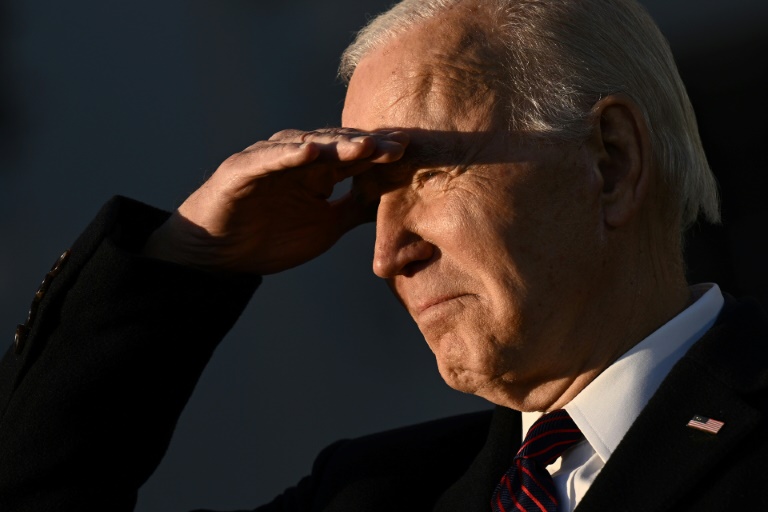
Posting a picture afterward in which he looked intensely at the screen with his guests, Biden said it was a “great honor” to watch the match together.

“No matter who you’re rooting for, it was remarkable to watch how much this team has been able to achieve,” Biden wrote on Twitter.

Morocco wound up losing to France, one of the closest US allies, whose President Emmanuel Macron paid a state visit two weeks ago.

The United States was eliminated earlier in the tournament by The Netherlands.

Egypt seeks US help in reviving Ethiopia dam deal

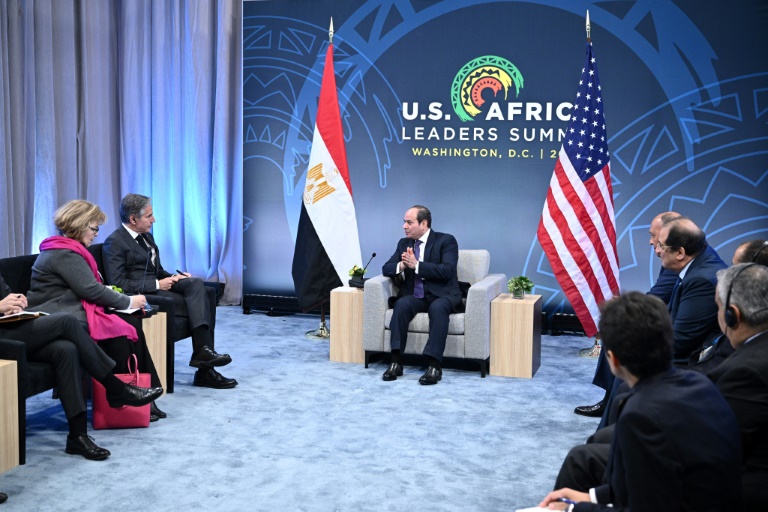
Egyptian President Abdel Fattah al-Sisi on Wednesday sought US help in pressing Ethiopia into an agreement on a mega-dam that the parched Arab country sees as an existential threat.

Visiting Washington for a US-Africa summit, Sisi raised the Grand Ethiopian Renaissance Dam with Secretary of State Antony Blinken, who met a day earlier with Ethiopian Prime Minister Abiy Ahmed.

“This is a very vital and existential matter to us. And we thank the United States for its support and its attention,” Sisi told Blinken.

“Reaching a legally binding agreement can achieve something good in accordance with international standards and norms. We are not asking for anything other than that,” he said.

“We need your support on this matter.”

Blinken in the meeting “emphasized the importance of a diplomatic resolution” on the dam “that would safeguard the interests of all parties,” State Department spokesman Ned Price said.

Blinken also raised human rights, acknowledging recent releases of political prisoners but calling for “further progress to advance human rights and fundamental freedoms,” Price said.

The massive $4.2 billion dam on the Nile, set to be the largest in Africa, has been the source of intense friction between Ethiopia and Egypt as well as Sudan.

Egypt, which relies on the river for 97 percent of its irrigation and drinking water, fears that the dam will reduce its already scarce supply of water.

Abiy has promised to continue talks on the dam but has also gone ahead both with filling and operating the initial turbines.

The previous US administration of Donald Trump, a close ally of army chief turned president Sisi, sought to negotiate a solution and cut off aid to Ethiopia after accusing Addis Ababa of failing to engage in good faith.

Trump, while in the White House, made waves by suggesting Egypt could attack the dam, a possibility publicly dismissed by Cairo.

President Joe Biden’s administration has taken a lower-key approach, favoring diplomacy but not linking aid to the issue. 

But Biden’s relations soured with Ethiopia over unrelated concerns of rights abuses in an offensive against rebels in the Tigray region, which has come to a halt after a deal last month.

Biden took office seeking a greater distance from Sisi over domestic rights concerns but he has welcomed his role in brokering a ceasefire last year in the Gaza Strip and in hosting last month’s UN climate summit.

WHO chief says uncle 'murdered' in Tigray bloodshed

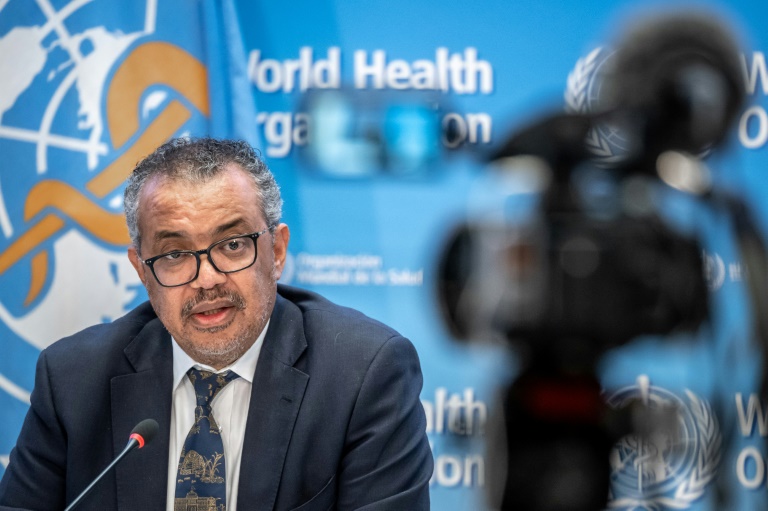
Tedros Adhanom Ghebreyesus, the head of the World Health Organization, said Wednesday that his uncle had been “murdered” by Eritrean troops in Ethiopia’s war-torn northern Tigray region.

Tedros held a press conference with the UN correspondents’ association on Wednesday. At the very end, he revealed he had been on the verge of cancelling the event “because it was a difficult moment for me”.

“I was informed that my uncle was murdered by the Eritrean army,” he told reporters.

“I spoke to my mother and she was really devastated, because he was the youngest from their family and he was almost the same age as me, a young uncle.

“So I was not in good shape.

“He was not alone. In the village, when they killed him in his home, from the same village more than 50 people were killed. Just arbitrary.

“I hope the peace agreement will hold and this madness would stop.”

Tedros, 57, said he was glad he went ahead with the press conference.

Ethiopia’s government and Tigrayan rebels signed a ceasefire deal on November 2, after two years of fighting that brought widespread human misery.

The conflict caused an untold number of deaths, forced more than two million people from their homes and drove hundreds of thousands to the brink of famine.

But the ceasefire makes no mention of the presence on Ethiopian soil or any possible withdrawal of Eritrean troops, who have backed Ethiopian Prime Minister Abiy Ahmed’s forces and been accused of atrocities.

Tedros hails from Tigray, and the former Ethiopian health and foreign minister has repeatedly called for peace and for unfettered aid access to the region.

At a press conference on December 2, Tedros raised concerns for areas still under the control of troops from neighbouring Eritrea.

US launches bid to bring power to African hospitals

The United States on Wednesday announced a $150 million initiative to bring power to hospitals in Africa, hoping to address a key challenge holding up health care on the continent.

The US Agency for International Development (USAID) said the five-year program aimed at bringing electricity as well as internet access to at least 10,000 health facilities across sub-Saharan Africa.

Funded through partnerships with the private sector, the so-called Health Electrification and Telecommunication Alliance will focus on renewable energy in keeping with US promises on climate change.

USAID estimated that more than 100,000 public health facilities in sub-Saharan Africa lacked reliable electricity, which is also a prerequisite to internet access.

“Millions of people seeking care and treatment are at risk because they cannot depend on refrigeration for medical commodities like vaccines, the presence of lights for births or emergency surgeries at night or the digital connectivity for communications and records management that modern medicine relies on,” USAID said in a statement.

“In short, insufficient power denies access to life-saving care.”

Communities will also be able to sell excess electricity from power generation, providing jobs, USAID said.

The electricity push is one of a slew of announcements at the US-Africa summit led by President Joe Biden, the first continent-wide meeting by a US leader in eight years.

The United States at the summit pledged $55 billion over three years to support Africa. Private companies have also promised to step up efforts to improve electricity and internet access on the continent.

The Biden administration has sought to draw a contrast with China, which has surpassed the United States as Africa’s top investor led by major infrastructure projects that often come through loans.

S.Africa's power utility CEO resigns amid energy crisis

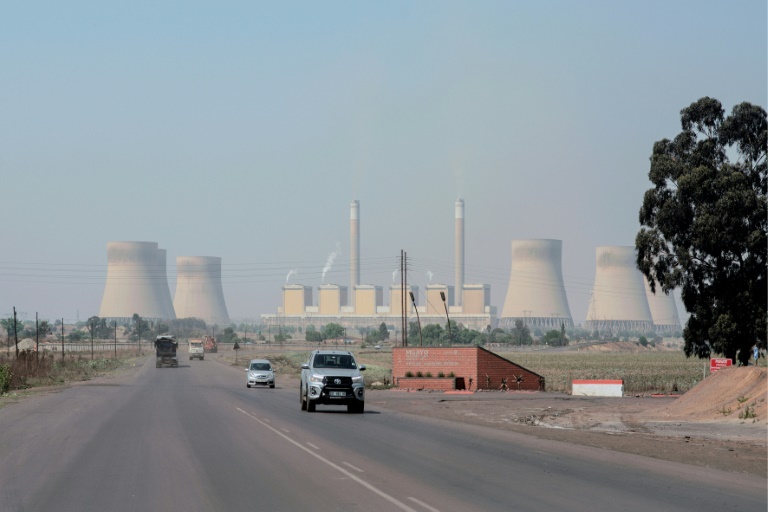
The head of South Africa’s beleaguered state-owned power utility Eskom, Andre de Ruyter, has resigned, the company said on Wednesday, as the country suffers from a worsening energy crisis. 

De Ruyter, a former packaging executive who took over as CEO in 2020, will stay on until the end of March next year to give the firm time to look for a successor, Mpho Makwana, the chairman of Eskom’s board said in a statement. 

“It has been an honour and privilege to serve Eskom and South Africa. I wish all the hard working people of Eskom well,” said De Ruyter.

Scheduled blackouts have burdened Africa’s most industrialised economy for years, with Eskom failing to keep pace with demand and maintain its ageing coal power infrastructure.

But the outages reached new extremes this year. 

Record power cuts have cost the country hundreds of millions of dollars in lost output, disrupting commerce and industry and angering the population, with lights going off often several times a day for a few hours. 

Last month, Eskom, which is struggling under a 400-billion-rand ($23.3 billion) debt — half of which the government has pledged to take on — said it had run out of funds to buy diesel to stabilise the system. 

De Ruyter had come under pressure from some government ministers that accused the company of not properly attending to the crisis, which analysts say is the result of years of mismanagement, disrepair and corruption.

“At a time when de Ruyter needed all the support he could muster and a free hand to deal with the most pressing challenge facing the country, he has been sacrificed at the altar of political expediency,” said Ghaleb Cachalia a lawmaker with the opposition Democratic Alliance (DA) party.

Public Enterprises Minister, Pravin Gordhan thanked De Ruyter for his “sacrifice and resilience in a difficult job”.

Dirty Durban ocean waters vex South Africa tourist trade

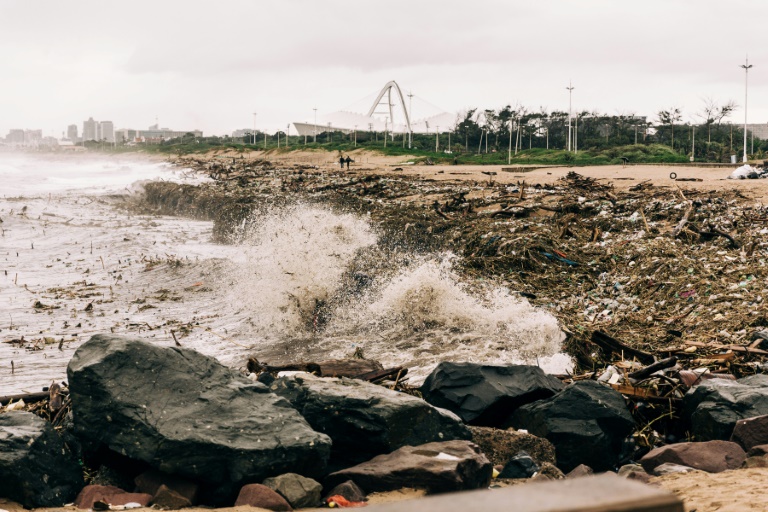
Untreated sewage flowing into the Indian Ocean has hoteliers in tourist hotspot Durban up in arms as South Africa gears up for the holiday season. 

The city’s sewer system was badly damaged by deadly floods — the worst in living memory — that hit the southeastern KwaZulu-Natal province earlier this year. 

In April, Durban shut all beaches after high levels of E.coli, a bacteria that can cause diarrhoea, fever and vomiting, were found in the water. 

Some started reopening in July but as of Wednesday, with the southern hemisphere’s summer knocking on the door, water readings from four of about two dozen beaches still showed critically high levels of E.coli.

Popular for its idyllic beaches and game and nature reserves, Durban — South Africa’s third-largest city — is usually a magnet for both local and international tourists. 

“The reaction from the municipality has been at a snail’s pace,” said Brett Tungay, a leader of hospitality trade group FEDHASA. 

“Resorts and hotels have taken a huge impact. And of course that then has knock-on effects on all the restaurants and tourism activities in the city.”

The floods, in which more than 400 people died, added to years of disrepair, according to Janet Simpkins, director of environmental group Adopt a River. 

“Sewer lines and infrastructure have not been maintained. Upgrades have not been done. And so our entire sewer system is overburdened,” she said.

Earlier this month the opposition Democratic Alliance challenged the mayor to take a dip at a beach the party said was prematurely re-opened. 

Mayor Mxolisi Kaunda of the ruling African National Congress (ANC) did go for a swim, but at a different beach. 

Authorities in eThekwini, the municipality that includes Durban, said this week they have been fixing sewerage pump stations and one of the water treatment plants causing the problem. 

“The repair work to our sanitation infrastructure is progressing very well,” eThekwini spokesman Msawakhe Mayisela told AFP. “There is a huge likelihood that all beaches will be open soon.”

Mayisela said the health of the public was the city’s priority adding it had moved “with speed” to start repairs after the floods.

“Our city is open for business,” Mayisela said.

Tunisia president defends parliament sacking to US

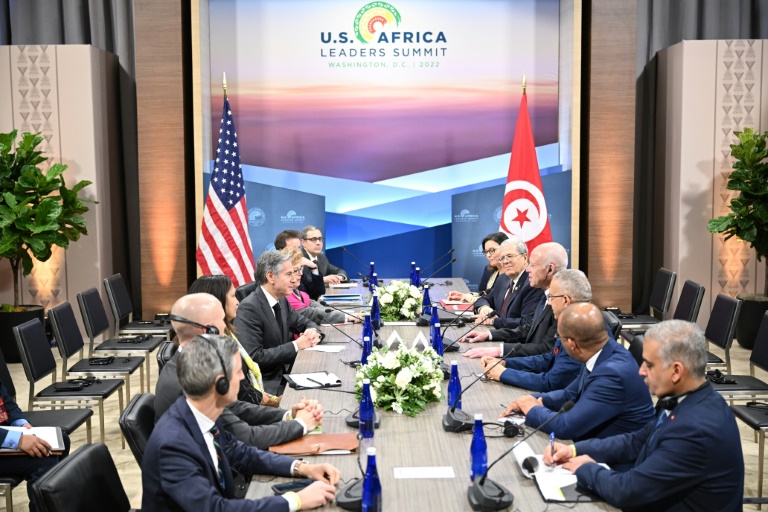
Tunisian President Kais Saied defended his dissolution of parliament in a meeting Wednesday with US Secretary of State Antony Blinken, saying the country had been on the brink of civil war.

Days ahead of parliamentary elections that the opposition says will consolidate Saied’s power, the Tunisian leader traveled to Washington to take part in a US-Africa summit.

The United States “supports inclusive, transparent elections,” Blinken told him at the start of a meeting, calling for respect for “diverse voices in Tunisia.”

Saied told Blinken why he decided to fire the government and suspend parliament in June last year amid mounting public discontent.

“Tunisian people wherever I went were all asking to dissolve the parliament so I eventually decided to dissolve the parliament,” he said.

“Why? Because the country was on the brink of civil war all over the country, so I had no other alternative but to save the Tunisian nation from undertaking any nasty action.”

He said that Tunisians had taken to the streets to support him.

“They were so happy and so joyful as if they were getting rid of a real nightmare,” he said.

But Saied has faced growing discontent after taking further steps, including pushing through a referendum on a new constitution that sharply curtails the parliament’s powers.

His moves have raised fears among critics that Tunisia, the only democracy to emerge from the 2011 Arab Spring revolts, is headed back to autocracy.

Opposition parties are boycotting Saturday’s parliamentary elections, accusing Saied of consolidating power.

US leads technology investment in Africa at Biden summit

President Joe Biden was set Wednesday to unveil a long-term commitment to African leaders as the United States laid out a major investment push in technology in the continent, where China’s infrastructure spending has made it a top player.

Biden will deliver an address on Africa to some 49 leaders who have gathered in Washington for the continent-wide summit, the first held by a US president since Barack Obama in 2014.

The White House said Biden will stress the importance of Africa, back a greater role for the African Union, and outline some $55 billion in support for the continent over the next few years.

After an initial announcement on training health workers, the White House said Wednesday that the United States will commit $350 million and mobilize $450 million in financing for digital development in Africa.

Improving connectivity will both spur development and advance social equality while creating more opportunities for US companies, the White House said.

China in the past decade has surpassed the United States on investing in Africa, mostly through highly visible infrastructure projects, often funded through loans that have totaled more than $120 billion since the start of the century.

Defense Secretary Lloyd Austin on Tuesday warned African leaders that both China as well as Russia were “destabilizing” the continent, saying Beijing’s mega-contracts lacked transparency.

– Investing in technology –

US and African businesses laid out details of $15 billion in new trade on the second day of the forum, with a heavy push on the goal of digital development.

Cisco and partner Cybastion said they would commit $858 million to bolster cybersecurity through 10 contracts across Africa, addressing a vulnerability that has held up online development.

The ABD Group said it would commit $500 million starting in Ivory Coast to adopt cloud technology through data centers that can work with major US technology firms.

Technology leader Microsoft said it would employ satellites to bring internet access to some 10 million people, half of them in Africa, hoping to bridge a digital divide that has held back the continent.

The project will prioritize internet access in areas of Egypt, Senegal and Angola that have not had access to the internet, often due to unreliable electricity.

Microsoft president Brad Smith said that the company has been impressed by its engineers in Nairobi and Lagos.

In Africa, “there is no shortage of talent, but there is a huge shortage of opportunity,” Smith told AFP.

Smith said he saw wide support in Africa for bringing internet access, saying many governments have leapfrogged over their Western counterparts in ease of regulation as the continent did not have the same “extraordinary web of licensing regimes” in place from the past.

– Support for democracy –

Unlike China, which has had a hands-off policy toward countries where it invests, the United States has also emphasized democracy, with Biden planning to press leaders up for election next year to ensure free and fair polls.

Secretary of State Antony Blinken took part in the signing of a $504 million compact with Benin and Niger under the Millennium Challenge Corporation, which funds projects in countries that meet key standards on good governance.

The deal aims to connect Benin’s port of Cotonou with landlocked Niger’s capital Niamey, with the United States estimating benefits to 1.6 million people.

“For a long time we’ve considered this to be our natural port,” Niger’s President Mohamed Bazoum said.

He hailed the partnership with the United States and promised “institutional reforms” to support trade.

In a veiled allusion to China, Blinken said that the deal will not “saddle governments with debt.”

“Projects will bear the hallmarks of America’s partnership. They’ll be transparent. There’ll be high quality. They’ll be accountable to the people that they mean to serve,” Blinken said.

Kenyan guard dies after fall at Qatar World Cup stadium

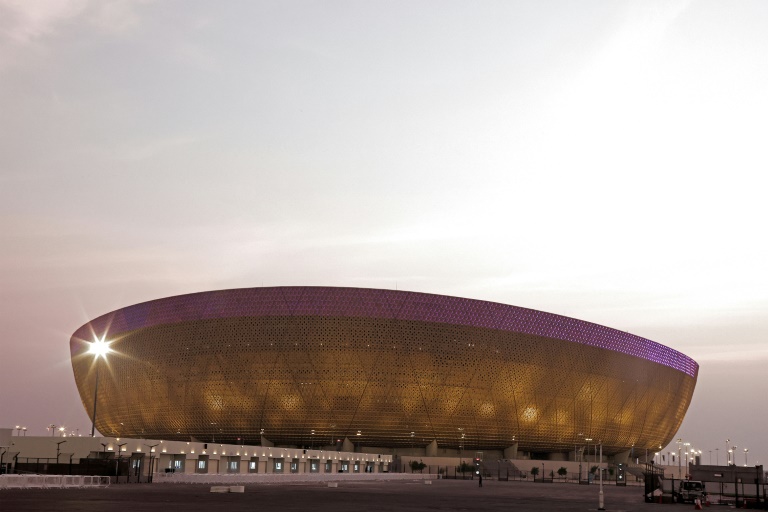
World Cup organisers said Wednesday that an urgent investigation had been launched into the death of a Kenyan security guard who fell from an upper floor at the Lusail Stadium in Qatar.

John Njau Kibue, 24, suffered critical injuries in the early hours of Saturday, hours after Argentina beat the Netherlands in the quarter-finals.

“Stadium medical teams immediately attended the scene and provided emergency treatment before he was transferred to Hamad Medical Hospital’s intensive care unit,” said an organising committee spokesperson.

“We regret to announce that, despite the efforts of his medical team, he sadly passed away in hospital on Tuesday 13 December, after being in the intensive care unit for three days.”

The death adds to the toll at World Cup stadiums since Qatar was awarded the tournament in 2010.

Organisers had said before the latest fatality that there had been 37 deaths of World Cup workers, but only three involving “work-related” accidents.

Rights groups have said thousands of foreign migrant workers have died on construction projects across Qatar over the past decade and demanded that football’s world governing body FIFA and the government launch a special compensation fund. 

The government has said its existing fund has already paid out more than $350 million and would handle any future claims.

Kibue’s family in Kenya has been told, said the spokesperson, who added: “We send our sincere condolences to his family, colleagues and friends during this difficult time.”

Organisers are “investigating the circumstances leading to the fall as a matter of urgency and will provide further information pending the outcome of the investigation.

“We will also ensure that his family receive all outstanding dues and monies owed.”

American journalist Grant Wahl died after collapsing in the same stadium, which will host the World Cup final, during Friday’s match between Argentina and the Netherlands.

Over 160 civilians killed in South Sudan clashes: UN

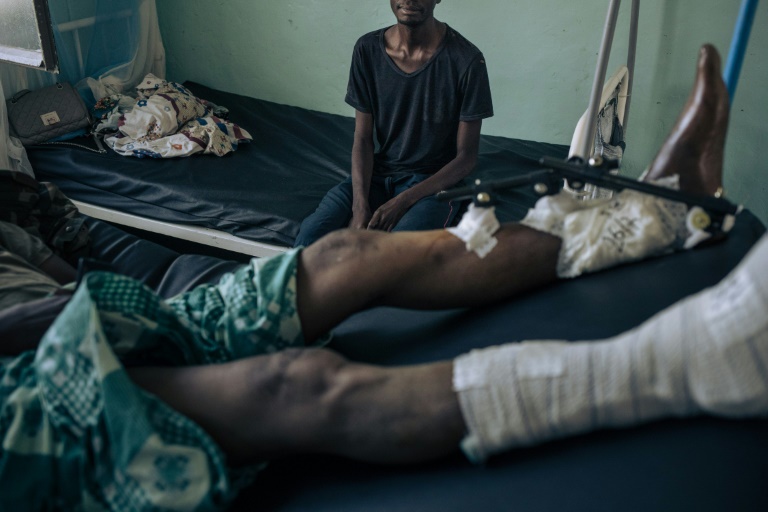
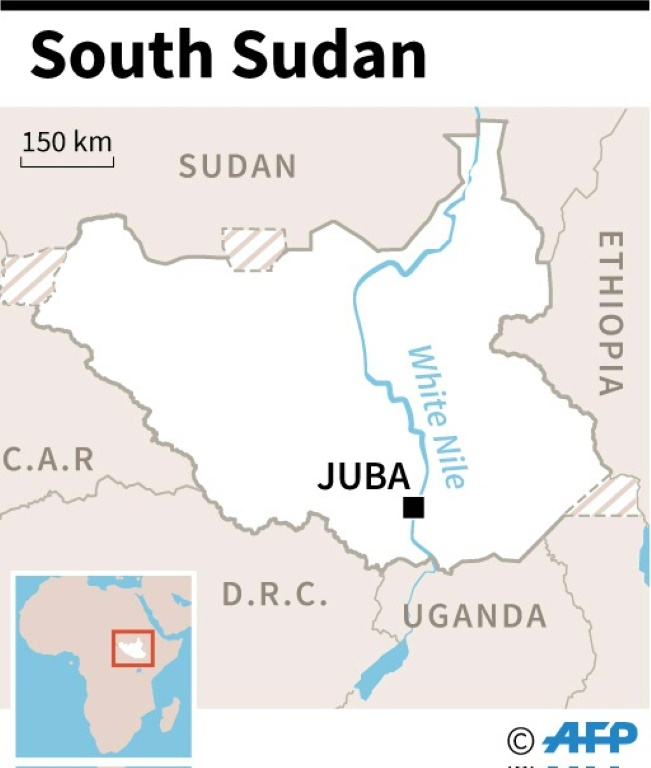
At least 166 civilians have died in clashes in South Sudan’s far north over the past four months, the United Nations said Wednesday, urging the government to act swiftly to end the violence.

Thousands of people in Upper Nile state have sought shelter in swamps to escape the bloodshed, amid reports of civilians being raped, kidnapped or murdered.

“At least 166 civilians have been killed and 237 injured in the last four months as clashes have intensified between armed elements, and between rival community-based militias in the region,” the Office of the UN High Commissioner for Human Rights said in a statement.

“These killings, along with reports of gender-based violence, abductions, destruction of property and looting, are severe human rights violations and abuses and must stop,” rights chief Volker Turk said.

The violence has displaced over 20,000 people since August, the statement said, citing reports of “random shooting of civilians”.

Around 3,000 people have fled into neighbouring Sudan, with those left behind seeking refuge in bushes along the banks of the White Nile, the UN refugee agency UNHCR said last week.

As the fighting spreads to the bordering states of Jonglei and Unity, fears are growing for some 10,000 civilians trapped in the town of Kodok in Upper Nile state, with the International Crisis Group think tank warning that they were “at risk of attack” by armed militias.

The United Nations Mission in South Sudan (UNMISS) has publicly appealed for government forces based in Kodok to intervene and de-escalate the violence.

President Salva Kiir last week called on all sides to embrace peace. His office said he was “determined to do whatever it takes” to end the violence.

Turk urged the government to conduct a “prompt, thorough and impartial investigation” and hold those responsible to account in line with international law.

Since achieving independence from Sudan in 2011, the world’s newest nation has lurched from one crisis to another, including a brutal five-year civil war that left nearly 400,000 people dead.

A peace deal was signed in 2018 but sporadic bursts of violence between government and opposition forces continue to occur, while conflict between rival ethnic groups in lawless parts of the country exacts a terrible toll on civilians.

Close Bitnami banner
Bitnami