Africa Business

Flooding kills more than 120 in DR Congo capital

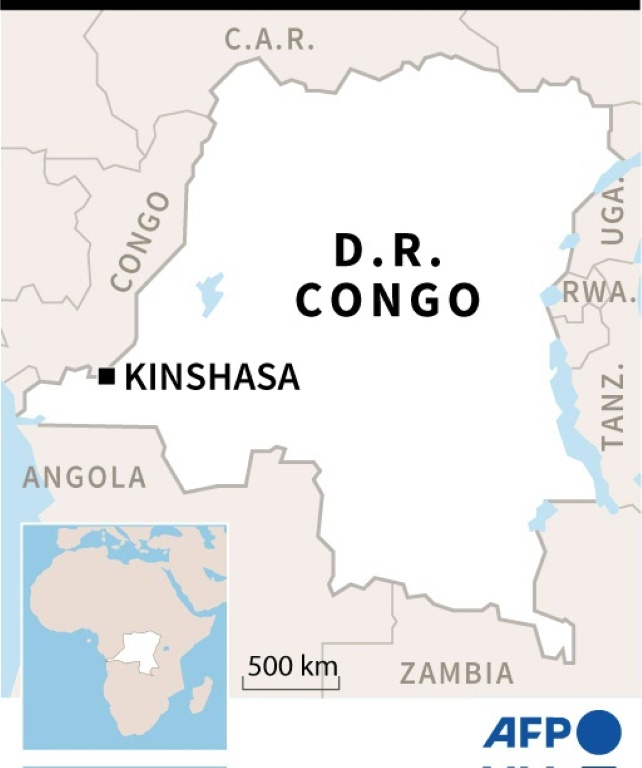
More than 120 people were killed Tuesday as the worst floods in years battered DR Congo’s capital Kinshasa following an all-night downpour, authorities said in a provisional assessment.

Major roads in the centre of Kinshasa, a city of some 15 million people, were submerged for hours, and a key supply route was cut off.

The death toll — which was first estimated in the late afternoon to be at least 55 — jumped to more than 120 by nightfall. 

The government has announced three days of national mourning beginning Wednesday, according to a statement from Prime Minister Jean-Michel Sama Lukonde’s office.

City police chief General Sylvano Kasongo told AFP that the bulk of people dead were on hillside locations where there had been landslides.

An AFP reporter saw the bodies of nine members of the same family — including young children — who had died after the collapse of their home in the Binza Delvaux district.

“We were woken up at around 4:00 am (0300 GMT) by water entering the house,” a relative said.

“We drained the water out, and thinking that there was no more danger we went back indoors to sleep — we were soaked,” he said.

The family went back to bed and “just afterwards, the wall collapsed”.

Located on the Congo River, Kinshasa has seen a huge population influx in recent years.

Many dwellings are shanty houses built on flood-prone slopes, and the city suffers from inadequate drainage and sewerage. 

A major landslide occurred in the hilly district of Mont-Ngafula, smothering National Highway 1, a key supply route linking the capital with Matadi, a port further down the Congo River and a crucial outlet to the Atlantic Ocean.

Lukonde told reporters at the scene that about 20 people there had died when “homes were swept away”.

Searches are continuing for survivors, he said.

The highway should be reopened to small vehicles within the next day, but it could take “three or four days” for trucks, the prime minister said.

The streets of the up-market Gombe district — home to government buildings and usually spared the problems affecting other areas of Kinshasa such as inadequate waste disposal and power supplies — were also inundated.

– ‘Disaster’ –

In November 2019, around 40 people in Kinshasa died in floods and landslides.

Mont-Ngafula was one of the worst-hit areas, but a local resident said the flooding this time was even worse.

“We’ve never seen a flood here on this scale,” said Blanchard Mvubu, who lives in the Mont-Ngafula neighbourhood of CPA Mushie.

“I was asleep and I could feel water in the house… it’s a disaster — we’ve lost all our possessions in the house, nothing could be saved.”

He added: “People are building big houses and that blocks up the drains. The water can’t move freely and that’s what causes the floods.”

Another man, who gave his name as Freddy, said everything in his home was underwater,

“Shoes, food stocks, clothes — everything is lost, there’s nothing to be saved,” he said.

Close by, a young man was asking for 500 Congolese francs (24 US cents) from passers-by to carry them on his back across the submerged street.

Another man, who identified himself as a teacher, was walking barefoot in the water, holding a pair of shoes in one hand and a plastic bag containing documents in the other.

“I’ve got no other choice,” he said. “I have to give schoolchildren an exam.”

Landslides  are common in Mont-Ngafula, often triggered by heavy rainfall and rampant urban development.
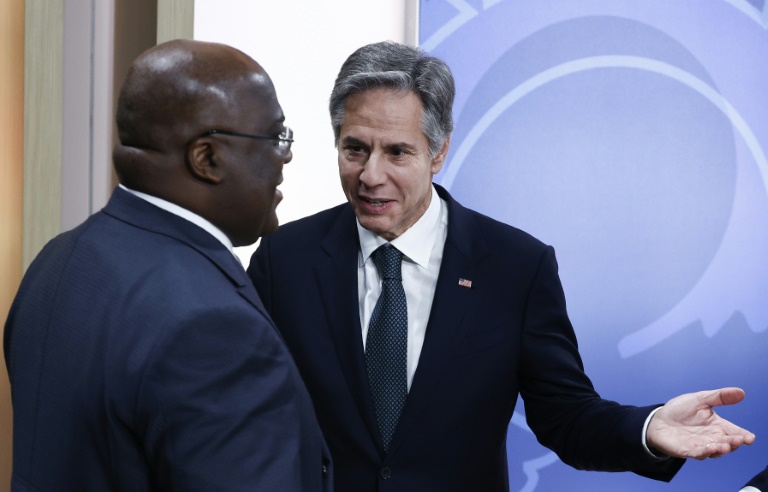
DR Congo leader blames climate change for devastating floods

The president of the Democratic Republic of Congo joined the United States on Tuesday in blaming climate change for major floods that have claimed around 100 lives in the capital Kinshasa.

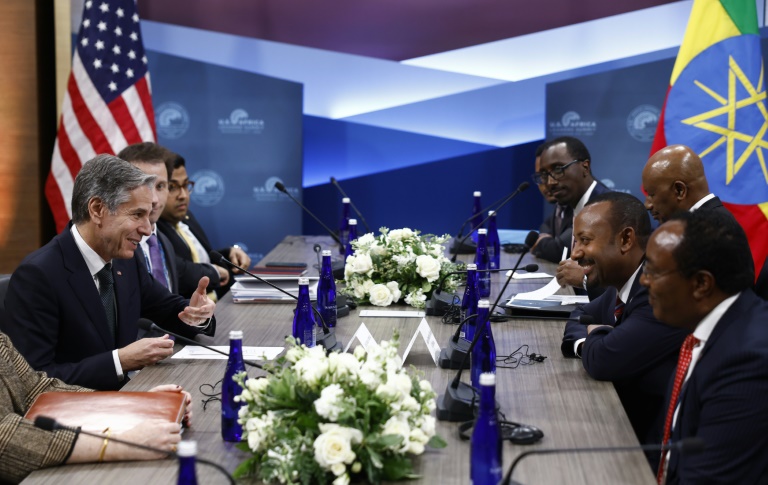
“The DRC is under pressure but unfortunately it’s not sufficiently heard or supported,” President Felix Tshisekedi told Secretary of State Antony Blinken as they met at a US-Africa summit in Washington.

The flooding is an example of “what we have been deploring for some time,” he said.

“Support must come from countries that pollute and unfortunately trigger the harmful consequences in our countries that lack the means to protect themselves,” he said.

Blinken offered condolences for the deaths, saying the flooding was “further evidence of the challenges we are facing with climate and something we need to work on together.”

Despite a series of international conferences, scientists say the planet is far off course from meeting a UN-blessed goal of checking warming at 1.5 degrees Celsius (2.7 Fahrenheit) above pre-industrial levels.

Blinken was also speaking to Tshisekedi as the United States puts pressure on Rwanda to stop alleged support for M23 rebels who have made rapid advances in the eastern DRC.

“Our country is unfortunately the victim of a secret aggression by Rwanda through the M23 movement,” Tshisekedi said.

“It is causing serious destabilization in part of our country that is already in distress, with hundreds of thousands of displaced living in precarious conditions.”

Rwanda, whose President Paul Kagame is also in Washington, denies support to the M23, which is mostly made of Congolese Tutsis. 

Relations between Rwanda and DR Congo have been strained since the mass arrival in the eastern DRC of Rwandan Hutus accused of slaughtering Tutsis during the 1994 genocide in Rwanda.

Aid staves off Somalia famine, for now: UN

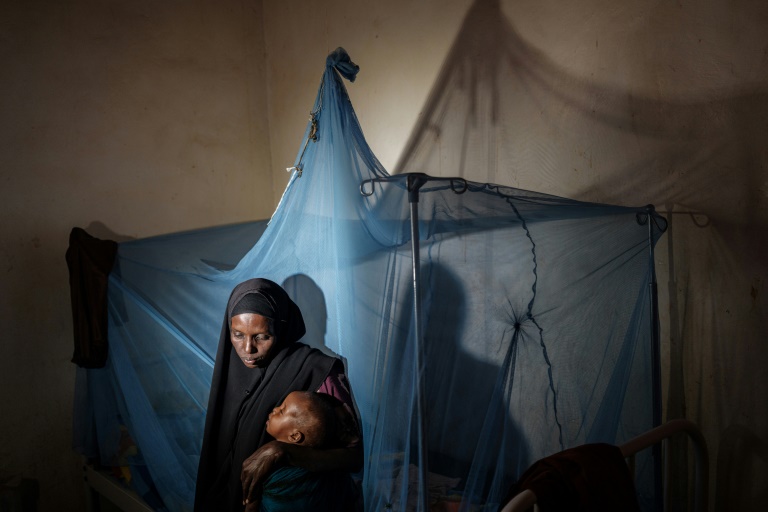
Humanitarian aid and support from local communities have helped avert a dreaded famine declaration in Somalia this year, but the situation remains “catastrophic,” the UN said on Tuesday.

The United Nations humanitarian agency OCHA said the latest assessment found that, technically, Somalia was not yet in the grip of full-blown famine.

The report “does not lead to a declaration of famine at this point, in large part thanks to the response of humanitarian organisations and local communities,” OCHA spokesman Jens Laerke told reporters in Geneva.

But, he warned, that “does not mean that people are not experiencing catastrophic food shortages.” 

“They have kept famine outside the door, but nobody knows for how much longer,” he said. 

“The underlying crisis has not improved.” 

The United States announced in response that it was contributing another $411 million in emergency food and other relief to Somalia, bringing its contribution this year to $1.3 billion.

“The warnings of the Famine Review Committee serve not as a stamp of inevitability, but as an alarm bell alerting us to our last lingering opportunities to avoid catastrophe,” said Samantha Power, administrator of the US Agency for International Development.

Somalia has been wracked by decades of civil war, political violence and an Islamist insurgency.

Millions of people are at risk of starvation across the wider Horn of Africa, in the grip of the worst drought in four decades after five consecutive failed rainy seasons wiped out livestock and crops.

If assistance is not scaled up, Laerke warned, “famine is expected to occur between April and June 2023 in southern Somalia,” including in the capital.

Agropastoral populations in Baidoa and Burhakaba districts, and displaced people in Baidoa town and in Mogadishu itself were most at risk, he said.

– ‘Step up’ –

The report indicated surging numbers of  people at the highest level on the UN’s five-scale food insecurity classification, known as IPC, which means they have dangerously little access to food and could face starvation.

When a large enough portion of a population is estimated to be at IPC level 5, a famine is declared.

Between last October and next June, the number of people at IPC5 in Somalia was expected to more than triple from 214,000 to 727,000, according to Tuesday’s report.

At the same time, some 8.3 million people across the country are expected to be at crisis level (IPC3) or above between April and June next year, up from 5.6 million today, it said.

A full 2.7 million of them were expected to be at IPC level 4, facing major food shortages, very high acute malnutrition and excess mortality.

“The situation can hardly get any worse,” Laerke warned.

He called countries “to step up and help the humanitarian organisations continue the very important and truly life-saving work” in Somalia.

James Elder, a spokesman for the UN children’s agency Unicef, said that the famine declaration had, for now, only been averted.

If the world wants to delay a famine declaration further or stave it off altogether, this would require “backbreaking work with proper funding,” he said.

“There is no doubt that large numbers of children have died… (and) that children are dying now.”

Rolling red carpet to Africans, US warns of 'destabilizing' China, Russia

The United States warned Tuesday that China and Russia were destabilizing Africa with their growing inroads as it rolled out the red carpet to the continent’s leaders and pledged billions of dollars in support.

Forty-nine African leaders flew into the Washington cold for the first continent-wide summit with the United States in eight years as President Joe Biden seeks to use personal diplomacy to win back influence.

Defense Secretary Lloyd Austin, at a panel with several African presidents at the start of the three-day summit, charged that US rivals had a different approach.

Austin said China was expanding its footprint in Africa “on a daily basis” through its growing economic influence.

“The troubling piece there is they’re not always transparent in terms of what they’re doing and that creates problems that will be eventually destabilizing, if they’re not already,” Austin said.

Russia is “continuing to peddle cheap weapons” and deploying “mercenaries across the continent,” he added.

“And that is destabilizing as well.”

But the Biden administration has been careful not to present Africans with an us-or-them choice, believing it is futile to try to turn the tide on China’s massive infrastructure spending.

– Health and space cooperation –

Biden plans to unveil $55 billion for Africa over three years. In one of the first announcements, the White House said the United States would invest $4 billion by the 2025 fiscal year to train African health workers, a rising priority for Washington since the Covid-19 pandemic.

The summit also brought in NASA, with Nigeria and Rwanda becoming the first African nations to sign the Artemis accords, a US-led bid for international cooperation on traveling to the Moon, Mars and beyond.

The Artemis accords, which already include European allies, Japan and several Latin American powers, come as China rapidly expands its own lunar program and as tensions with Russia threaten its post-Cold War work with the United States on space.

China has rejected criticism of its role in Africa, with its ambassador in Washington, Qin Gang, saying the continent should not be a place for “major powers’ competition.”

The US-Africa summit is the first since Barack Obama invited leaders in 2014, with his successor Donald Trump making no secret of his lack of interest in Africa.

Security remains a major focus of the United States, which has used the summit to focus on some of the continent’s hotspots.

Ethiopian Prime Minister Abiy Ahmed, a onetime US ally whose relations with Washington soured sharply over the Tigray war that broke out two years ago, paid his first visit to Washington since the conflict.

Meeting him inside central Washington’s convention center, Secretary of State Antony Blinken voiced hope over an agreement signed last month in South Africa between Ethiopia’s government and Tigrayan rebels.

“We have, I think, a historic moment for the country,” Blinken told him.

– Climate and security –

The United States also announced another $411 million in assistance for Somalia where a new assessment found “catastrophic” hunger, even though the United Nations said aid has averted a full-blown famine.

The Horn of Africa has been devastated by five consecutive failed rainy seasons, with Somalia already struggling after decades of turbulence and the Al-Shabaab rebels.

“These climate shocks have weakened the society,” Somali President Hassan Sheikh Mohamud said, ahead of expected announcements by Biden on climate efforts in Africa.

Democratic Republic of Congo President Felix Tshisekedi, in talks with Blinken, blamed climate change for floods that have killed some 100 people in the capital Kinshasa.

In Somalia, Mohamud also claimed successes against the jihadists, days after Somali forces seized the key town held by jihadists since 2016 with the help of US air strikes and an African Union force.

But he warned that military means alone were insufficient.

“I have been telling my colleagues today that engaging with the society and the community is what makes these terrorists like a fish that has run out of water; they cannot exist without a community,” he said.

The Biden administration has stressed working with the African Union, both on the security and diplomatic fronts.

Biden during a speech Wednesday is expected to outline US support for the African Union to gain a formal berth in the Group of 20 club of major economies, months after he threw support behind a permanent African seat on the UN Security Council.

African Union chief Moussa Faki Mahamat hailed US support but warned that there was still far more focus on fighting extremists in the Middle East.

“This double standard has had disastrous consequences for Africa and for peace and democracy in the world,” he said.

S.Africa's Ramaphosa dodges cash-in-sofa scandal impeachment process

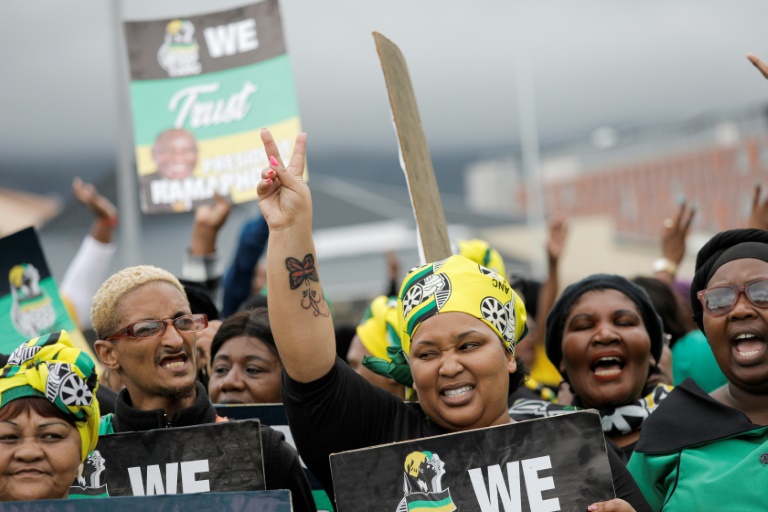
South Africa’s scandal-engulfed President Cyril Ramaphosa will not face an impeachment inquiry after easily surviving Tuesday a vote in parliament that could have initiated proceedings to remove him from office.

His ruling African National Congress (ANC) party defeated the motion by 214 votes to 148, with two abstentions through open voting.

Lawmakers voted after debating the findings of an independent panel which said Ramaphosa may be guilty of serious violations and misconduct over allegations he concealed a huge cash theft at his farm.

The vote prevented a procedure that some feared could have politically destabilised Africa’s most industrialised country.

In a terse response, his office said it had noted the National Assembly’s decision. “President Ramaphosa consistently stated his commitment to due process,” his spokesman said in a text message to AFP.

Ramaphosa — championed as a graft-busting saviour after corruption-stained predecessor Jacob Zuma — survived thanks to the support of a majority of ANC MPs.

The 70-year-old president had last week secured the backing of the ANC, which holds 230 of the National Assembly’s 400 seats, after mounting a legal bid to have the damning report annulled. Some MPs were absent.

Justice Minister Ronald Lamola trashed the report saying “there is not sufficient evidence to impeach the president”.

– ‘Constitutional delinquent’ –

Ramaphosa’s escape comes just days ahead of a crucial ANC meeting to elect the new leadership.

Although the ANC, which has governed since the end of apartheid, has shot down any attempt to force Ramaphosa from office, he is not yet out of the woods.

His “leadership will be tested again at the party’s national conference”, Aleix Montana, analyst at risk intelligence firm Verisk Maplecroft, said in a note. 

He will likely be re-elected as leader because “there is no viable alternative candidate in the ANC,” said Montana.

That will position him for a second term as head of state, if the ANC wins the 2024 national election.

The ANC’s decision to back Ramaphosa upset some in the divided party.

A few ANC lawmakers, including Nkosazana Dlamini-Zuma — Ramaphosa’s rival, a cabinet minister and Zuma’s ex-wife — defied the party command.

“As a disciplined member of the ANC, I vote yes,” she said drawing cheers and loud applause from some opposition MPs. 

She walked out of parliament saying that if Ramaphosa wants to fire her, “it’s his democratic right. I won’t hold it against him”.

Ramaphosa’s graft-tainted predecessor Zuma survived several no-confidence motions during his tenure before his own party forced him to resign in 2018.

Opposition parties presented a largely united front on the scandal.

“Today South Africans were left in no doubt that the presidency of… Ramaphosa is no different to the presidency of… Zuma,” said John Steenhuisen, leader of the largest opposition Democratic Alliance, accusing both of weakening parliament “to evade scrutiny and the law”.

Julius Malema, the fiery leader of the second largest opposition Economic Freedom Fighters party, expressed “deepest disappointment” in Ramaphosa who was once a “celebrated… architect” of South Africa’s constitution. 

He said Ramaphosa was now “peeing” on that document, calling him a “constitutional delinquent”.

The ANC vote defended “corruption”, said the EFF.

– Sudanese element –

Ramaphosa was at his home during the vote, said his spokesman.

The president, who was a wealthy businessman before entering politics, found himself in hot water in June when a controversial ex-spy boss filed a complaint against him to the police.

Arthur Fraser alleged Ramaphosa had concealed the theft of several million dollars from his farm in 2020.

He accused the president of having the burglars kidnapped and bribed into silence instead of reporting the matter to the authorities. 

Ramaphosa has not been charged with any crime and has denied wrongdoing.

The findings of the three-person special probe, issued last week, revealed details that have left South Africa agog.

Ramaphosa acknowledged the theft of $580,000 in cash that was stashed under sofa cushions at his farm — a safer place, his employees said, than the office safe.

He said the money was payment for buffaloes bought by a Sudanese businessman, who recently confirmed the transaction in interviews with British media.

DR Congo militias take fight to M23 rebels

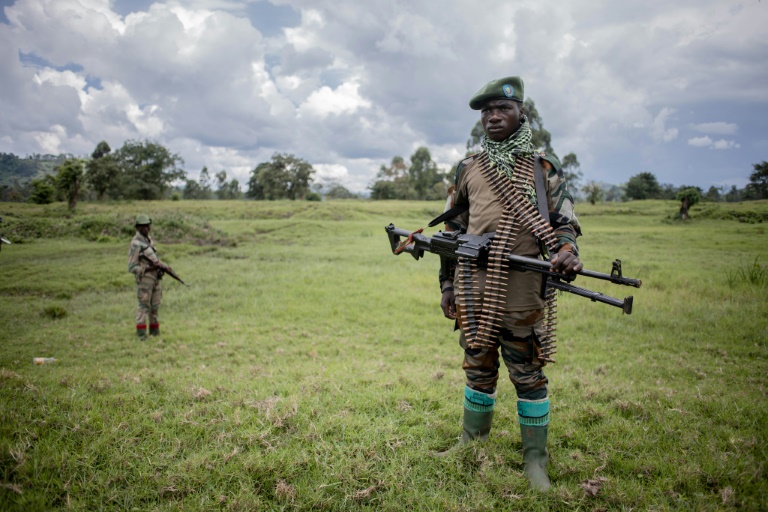
Casting his gaze far and wide from a hilltop in eastern Democratic Republic of Congo, warlord Janvier Karairi commands his forces in the battle against the feared M23 rebel group.

The self-proclaimed lieutenant-general leads a militia called the Patriotic Alliance for a Free and Independent Congo (APCLS), mostly made up of fighters from the Hunde ethnic group, in a coalition dedicated to thwarting the M23’s advance.

The APCLS and other armed groups joined forces “to fight the aggressor”, Karairi, 60, told AFP reporters in his operational headquarters, a thatched hut in the Kitshanga region of North Kivu province.

Sporting a commando uniform, Karairi has spent more than a quarter of a century in the bush, including a spell fighting the M23 in 2012.

The Tutsi-led M23 is one of scores of armed groups active in the DRC’s volatile east, many of them legacies of two brutal wars in the late 20th century.

It briefly occupied provincial capital Goma that year before being beaten back in 2013.

It resumed fighting in late 2021, blaming the Congolese government for failing to honour a commitment to integrate its fighters into the army.

In recent months, the M23 has conquered part of Rutshuru territory near the borders with Uganda and Rwanda.

Kinshasa accuses neighbouring Rwanda of backing the rebels, who now lie around 20 kilometres (12 miles) north of Goma and have made gains further west towards Masisi territory, Karairi’s stronghold.

That prompted the battle-hardened militia leader to take up arms against his old foes once again, with his movement controlling much of the area.

– ‘Fighting for my country’ –

“We continue to protect the population,” Karairi said at his headquarters in between phone calls to his troops on the ground. A silence descends every time he speaks.

Accompanying the veteran warrior was Heritier Ndagendange, who had just arrived from Goma with a heavy red bag that another militiaman carried on his head to present to the commander.

Ndagendange said it held ammunition he had brought from Goma after passing several checkpoints manned by the security forces on the road.

“We are rebels, we are good at finding weapons. The government doesn’t help us with anything in any case,” Karairi said.

He said his hundreds of combatants are unpaid volunteers motivated by the same desire to fight. “Our country will pay us when we finish the job,” he claimed.

Baseme, a 25-year-old under his command, proudly declared that he was “fighting for my country.” His comrade Mwisha, 23, said he joined the movement “to stand in the way of the aggressors, Rwanda.”

– ‘Total fear’ –

An APCLS spokesman said the army’s withdrawal from certain key routes had allowed the M23 to make rapid gains.

Ndagendange said Congolese army officers had “betrayed” the cause, and this had forced the APCLS to intervene to stop the M23.

Human Rights Watch (HRW) published a report in October which claimed the Congolese army was collaborating with armed groups — some of which stand accused of rights abuses — in the campaign against the M23.

Among them are the Democratic Forces for the Liberation of Rwanda (FDLR), a mainly Hutu group that includes some actors involved in the 1994 Rwanda genocide against the Tutsis.

HRW also said the leaders of several Congolese armed groups, including Karairi’s APCLS, met in May to forge a “patriotic” coalition.

The army and the APCLS say they do not fight alongside these militias.

But with a myriad of armed men patrolling the streets of Kitshanga, some in military uniform and others in civilian clothing, a young telephone seller who gave her name as Muhoza said she could no longer tell the difference between them.

“Here you don’t know who’s who. We’re living in total fear, with all these armed groups,” she whispered.

Two young Hunde villagers, returning from the fields, said they felt safe since the arrival of the APCLS in their settlement.

On the other hand, a Tutsi woman in Goma said she had to flee Kitshanga when “General Janvier” and his young fighters entered the town.

Mali's world-beating nonuplets back home

A Malian mother who gave birth to nine babies in Morocco last year returned home on Tuesday with her infants, Health Minister Dieminatou Sangare told AFP.

“Joy and satisfaction to see them in good health. The mother and babies are doing well and have arrived safe and sound in Mali,” she said in a message.

Sangare showed pictures on her Facebook page of her welcoming the two parents and their nine children in the capital Bamako.

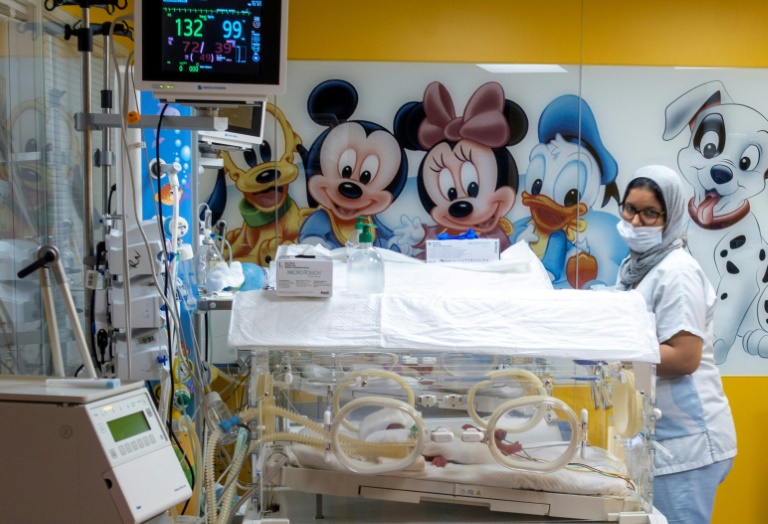
Halima Cisse, a young woman from the northern city of Timbuktu, gave birth to five girls and four boys in Casablanca in May 2021.

Mali’s government flew her to the city’s Ain Borja clinic, which had better facilities to cope with multiple pregnancies than in the impoverished Sahel state.

Doctors had worried for the health of the mother-to-be and for the babies’ chances of survival, given the high risk of very premature birth.

She was 25 weeks pregnant when admitted and medical staff managed to extend her term to 30 weeks.

All were delivered safe and sound by Caesarean section, using a team of 10 doctors assisted by 25 paramedics.

They each weighed between 500 grams and one kilogram (1.1 and 2.2 pounds) but needed to stay in Morocco to benefit from specialist care.

The verified world record for the most living births is eight, born to an American woman, Nadya Suleman, nicknamed “Octomum”, in 2009 when she was 33.

“This is a first. It’s a source of pride for us,” Sangare said.

She said “the state honoured its commitments” in helping Cisse and expressed her thanks to the Moroccan medical team.

US rolls out red carpet, opens wallet for African leaders

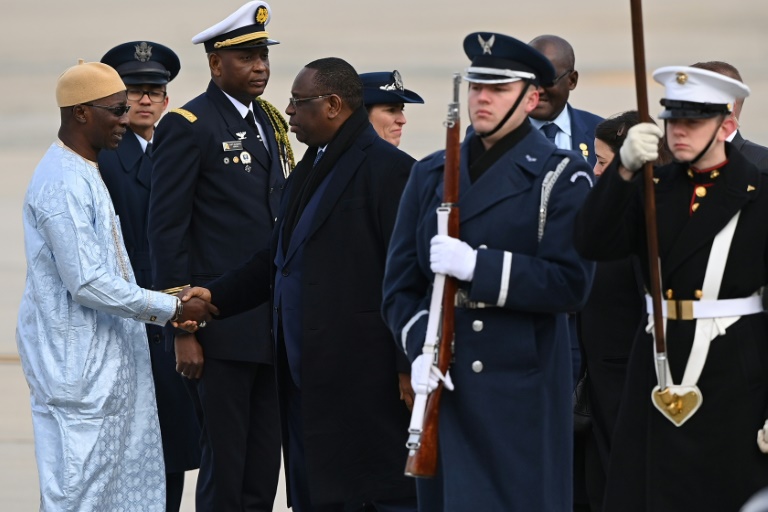
The United States on Tuesday rolled out the red carpet to leaders from across Africa as it started unveiling $55 billion in support as part of a renewed bid to win back influence on the continent.

Nearly 50 heads of state or government have descended on Washington in the midst of a pre-Christmas cold snap for three days of courtship by President Joe Biden after years of inroads in the continent by China and Russia. 

Biden plans to unveil $55 billion for Africa over three years. In one of the first announcements, the White House said the United States would invest $4 billion by the 2025 fiscal year to train African health workers, a rising priority for Washington since the Covid-19 pandemic.

The summit’s first day also brought in NASA, with Nigeria and Rwanda becoming the first African nations to sign the Artemis accords, a US-led bid for international cooperation on traveling to the Moon, Mars and beyond.

The Artemis accords, which already include European allies, Japan and several Latin American powers, come as China rapidly expands its own lunar program and as tensions with Russia threaten its post-Cold War work with the United States on space.

The summit will also address the immediate security concerns of Africa. US leaders met Tuesday with Somali President Hassan Sheikh Mohamud, voicing guarded hope at progress in the turbulent country.

The United States “is fortunate to partner with Somalia’s courageous armed forces and will continue to support your government’s effort,” Defense Secretary Lloyd Austin told him.

The Biden administration has identified China as its top global competitor but hopes to show a subtle contrast from Beijing during the summit rather than hammering home criticism.

“This is going to be about what we can offer. It’s going to be a positive proposition about the United States, its partnership with Africa,” Biden’s national security advisor, Jake Sullivan, told reporters Monday.

“We are bringing the resources to the table in significant numbers,” he added.

Welcoming African entrepreneurs for a reception Monday evening, Secretary of State Antony Blinken said the United States was guided by the principle of partnership.

“We can’t solve any of the really big challenges we face if we don’t work together. So it’s about what we can do with African nations and people, not for them,” Blinken said.

– Push on democracy –

Biden during the summit will outline US support for the African Union to gain a formal berth in the Group of 20 club of major economies, months after he threw support behind a permanent African seat on the UN Security Council.

Unlike China, which holds summits every three years with Africa, the United States plans to promote democratic values.

Sullivan said Biden will meet with African leaders facing election in 2023.

“We would like to do everything we can to support those elections being free, fair and credible,” Sullivan said.

Successive US presidents have pursued signature initiatives for Africa, with George W. Bush launching a major push to fight HIV/AIDS that he considers among his top legacies and Barack Obama spearheading a drive to bring electricity, which US officials say has brought power for the first time to 165 million people.

Obama’s successor Donald Trump, by contrast, made no secret of his lack of interest in Africa, and Biden’s summit with the region’s leaders will be the first by a US president since Obama’s landmark first edition in 2014. 

In the eight ensuing years, China’s investment in Africa has consistently outpaced that of the United States, with countries brushing aside US warnings that Beijing’s billions in infrastructure spending could put them in long-term arrears.

Ahead of the summit, China’s ambassador to Washington, Qin Gang, said that his country was “sincere” in Africa” and that its investment “is not a trap.” 

“We believe that Africa should be a place for international cooperation, not for major powers’ competition for geopolitical gains,” he told an event of the news site Semafor.

“We welcome all other members of the international community, including the United States, to join us in the global efforts to help Africa.” 

Fifty-five dead as floods strike DR Congo capital

At least 55 people died on Tuesday as the worst floods in years battered DR Congo’s capital Kinshasa following an all-night downpour, according to an official toll.

Major roads in the centre of Kinshasa, a city of some 15 million people, were submerged for hours, and a key supply route was cut off.

City police chief General Sylvano Kasongo, in a statement to AFP, gave a provisional toll of at least 55 dead, concentrated especially on hillside locations where there had been landslips.

An AFP reporter saw the bodies of nine members of a family who had died after the collapse of their home in the Binza Delvaux district.

“We were woken up at around 4:00 a.m. by water entering the house,” a relative said.

“We drained the water out, and thinking that there was no more danger we went back indoors to sleep — we were soaked,” he said.

The family went back to bed and “just afterwards the wall collapsed”.

Located on the Congo River, Kinshasa has seen a huge population influx in recent years.

Many dwellings are shanty houses built on flood-prone slopes and the city suffers from inadequate drainage and sewerage. 

A major landslide occurred in the hilly district of Mont-Ngafula, smothering National Highway 1, a key supply route linking the capital with Matadi, a port further down the Congo River and a crucial outlet to the Atlantic Ocean.

Prime Minister Jean-Michel Sama Lukonde told reporters at the scene that around 20 people there had died when “homes were swept away”.

Searches are continuing for survivors, he said.

The highway should be reopened to small vehicles within the next day, but it could take “three or four days” for trucks, the prime minister said.

The streets in the up-market government district of Gombe, which houses ministries and embassies, were also inundated.

– ‘Disaster’ –

In November 2019, around 40 people in Kinshasa died in floods and landslides. 

Mont-Ngafula was one of the worst-hit areas, but a local resident said the flooding this time was even worse.

“We’ve never seen a flood here on this scale,” said Blanchard Mvubu, who lives in the Mont-Ngafula neighbourhood of CPA Mushie.

“I was asleep and I could feel water in the house… it’s a disaster — we’ve lost all our possessions in the house, nothing could be saved.”

He added: “People are building big houses and that blocks up the drains. The water can’t move freely and that’s what causes the floods.”

Another man, who gave his name as Freddy, said everything in his home was under water — “shoes, food stocks, clothes. Everything is lost, there’s nothing to be saved.”

Close by, a young man was asking 500 Congolese francs (24 cents) from passers-by to carry them on his back across the submerged street.

Another man, who identified himself as a teacher, was walking barefoot in the water, holding a pair of shoes in one hand and a plastic bag containing documents in the other.

“I’ve got no other choice,” he said. “I have to give schoolchildren an exam.”

Guinea ex-dictator says gave no order in 2009 massacre

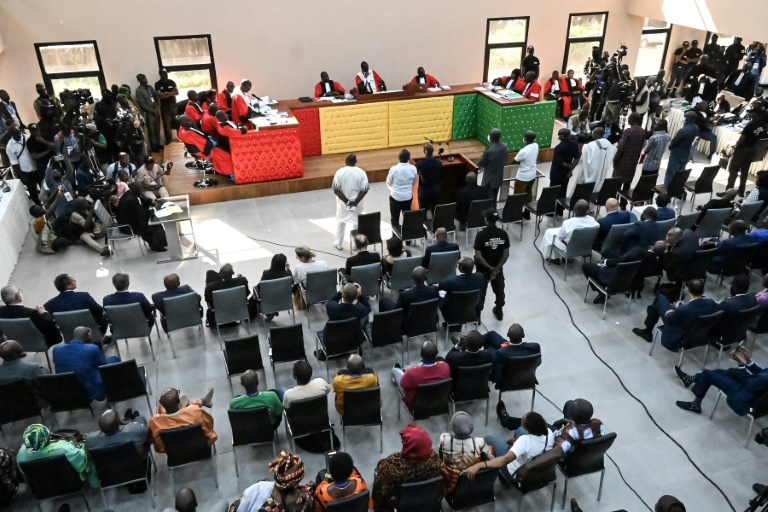
Guinean ex-dictator Moussa Dadis Camara denied at a long-awaited trial on Tuesday that he had given any orders to initiate a 2009 massacre in which hundreds of people were slaughtered or raped.

Camara, 57, is on trial with 10 other officials of his regime over the killing of at least 156 people and rape of at least 109 women at an opposition rally.

He returned to the stand on Tuesday for the second day running in a trial that began on September 28, 13 years to the day after the slaughter by regime forces.

“I didn’t give orders to anyone, Mr. Prosecuting Emperor,” Camara said sardonically to the prosecutor.

Earlier in the trial, Camara’s former aide, Lieutenant Aboubacar Sidiki Diakite, had accused him of preparing the massacre and of having said that day: “Power lies in the street. We have to counter them, to make them regret it.”

Camara on Tuesday denied this.

“It’s utterly false. It’s not the truth,” he said.

“A man who has had the courage to shoot you point blank… is he going to have any problems about (making up) allegations?” he asked, referring to an attempt by Sidiki Diakite to assassinate him.

He was asked why he had failed to intervene to stop the massacre, which continued over several days at a sports stadium in the capital Conakry where tens of thousands of opposition supporters had gathered.

“The carnage would have been even worse… I could not do it, and even if I had, I would have dangerously worsened the situation,” he contended.

“I immediately took steps to arrest the main individual who was under my command,” he said, referring to Sidiki Diakite.

“But he immediately understood. He got himself fully prepared… I couldn’t arrest him because he was powerfully armed.”

“I think, Mr. Prosecutor, that you should congratulate me,” he said, an another apparently ironic flourish.

Had he or Sidiki Diakite died that day, he suggested, “this trial would never have taken place.”

Camara did confirm, however, that members of the Red Berets, an elite unit of the armed forces, had taken part in the killing.

– Philosophers and pharaohs –

On Monday, Camara rejected any responsibility for the killings and said he was the victim of a plot, in a lengthy monologue that included references to philosophers Heraclitus and Immanuel Kant and the Egyptian pharaohs.

Camara, an unknown army captain, seized power in the West African state in December 2008 shortly after the death of its second post-independence president, General Lansana Conte, who had ruled for 24 years.

In December the following year, he was shot in the head by Sidiki Diakite and headed to Morocco for medical treatment. 

Forced from power, he fled into exile in Burkina Faso, where he was indicted in July 2015 by Guinean magistrates for his alleged role in the massacre.

The former strongman returned to his homeland in September. 

He was detained on September 27, a day before the trial began in a purpose-built court in Conakry.

Close Bitnami banner
Bitnami