Africa Business

S.Africa parliament holds crunch Ramaphosa impeachment debate

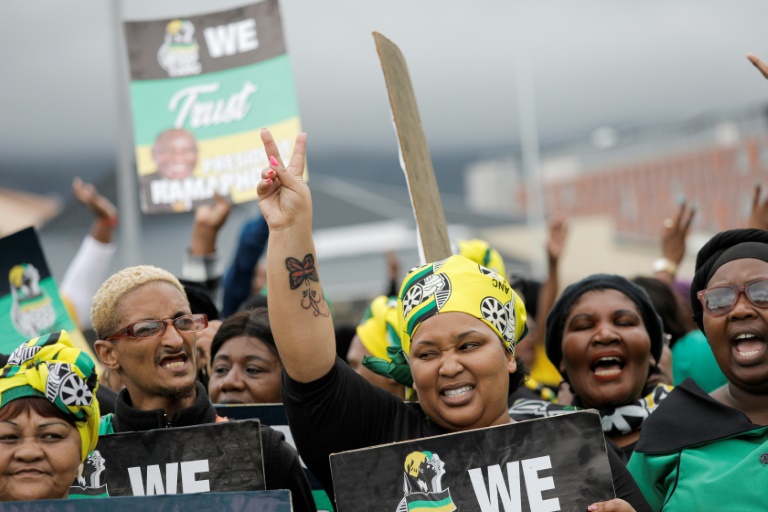
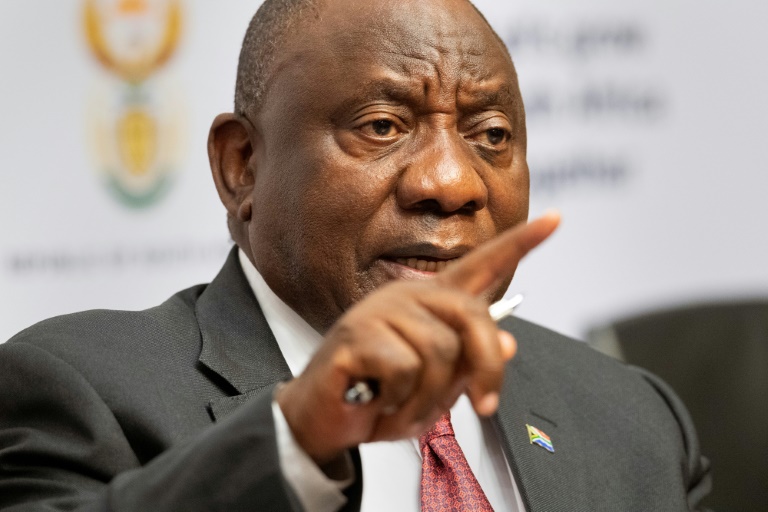
South African MPs on Tuesday started debating whether to initiate proceedings that could force out President Cyril Ramaphosa over allegations he concealed a huge cash theft at his farm.

Ramaphosa — championed as a graft-busting saviour after corruption-stained predecessor Jacob Zuma — is counting on support from the ruling African National Congress (ANC) party, which has been further divided by the scandal.

An extraordinary parliamentary session opened noisily in Cape Town to discuss the findings of an independent panel which said Ramaphosa may be guilty of serious violations and misconduct.

Lawmakers are called to decide in an open vote, by simple majority, whether to launch an impeachment investigation against Ramaphosa — a lengthy probe that could lead to his removal from office.

But opposition lawmakers kicked off the session demanding secret balloting.

National Assembly speaker Nosiviwe Mapisa-Nqakula shot down the demand, insisting that lawmakers would safely be able to exercise their right to vote with “their conscience” through open balloting.

Julius Malema, the fiery leader of the second largest opposition Economic Freedom Fighters party, expressed “deepest disappointment” in Ramaphosa who was once a “celebrated… architect” of South Africa’s constitution. 

He said Ramaphosa was now “peeing” on that document, calling him a “constitutional delinquent”.

Vuyolwethu Zungula, leader of the African Transformation Movement, a small opposition party with just two MPs but which tabled the motion for the parliament-sanctioned inquiry into the scandal, said the “watershed moment” would “affirm that no one is above the law or some people are above the law”. 

But the 70-year-old president seems likely to survive the day.

Last week, he secured the renewed backing of the ANC, which holds 230 of the National Assembly’s 400 seats, after mounting a legal bid to have the damning report annulled. 

Justice Minister Ronald Lamola trashed the report saying “there is not sufficient evidence to impeach the president”.

– Toe the line? –

Yet others believe there might be room for surprises, as the scandal has deepened rifts within the factionalised ANC.

Its national executive vowed last week to shoot down any attempt to force Ramaphosa from office. 

That decision upset some, who said the executive had forced their hand. 

Ramaphosa’s graft-tainted predecessor Zuma survived several no-confidence motions during his tenure before his own party forced him to resign in 2018.

Opposition parties are presenting a largely united front on the issue. 

John Steenhuisen of the largest opposition party, the Democratic Alliance, said the ANC cannot be allowed to use “the tyranny of their majority to protect a president from scrutiny”. 

– Scrutiny –

Ramaphosa kicked off his day in the capital Pretoria, attending under pouring rain a police graduation ceremony.

If the opposition has its way, Ramaphosa would face the prospect of having the affair further scrutinised by parliament in a year that leads to general elections in 2024.

An impeachment vote itself would need the support of a two-thirds majority of MPs to succeed.

The president, who was a wealthy businessman before entering politics, found himself in hot water in June when a controversial ex-spy boss filed a complaint against him to the police.

Arthur Fraser alleged Ramaphosa had concealed the theft of several million dollars from his farm in 2020.

He accused the president of having the burglars kidnapped and bribed into silence instead of reporting the matter to the authorities. 

Ramaphosa has not been charged with any crime and has denied wrongdoing.

The findings of the three-person special probe, issued last week, brought forward details that have left South Africa agog.

Ramaphosa acknowledged the theft of $580,000 in cash that was stashed under sofa cushions at his farm — a safer place, his employees said, than the office safe.

He said the money was payment for buffaloes bought by a Sudanese businessman, who recently confirmed the transaction in interviews with British media.
French-Moroccan ties marked by affection and tensions

France and Morocco have a relatively relaxed post-colonial relationship but ties are still not without tensions that risk being exposed when their national football sides clash in a World Cup semi final in Qatar.

The relationship France has with Morocco is not nearly as traumatic as with neighbouring Algeria, which fought Paris in a bloody seven-year War of Independence that scars both nations to this day.

But as in any post-colonial relationship, Morocco, which won independence in 1956, has its grievances with France, most notably over the question of visas.

Over a million Moroccans are believed to live in France and security forces will be on alert during the match Wednesday for any clashes like those in Brussels that marked Morocco’s shock win over Belgium in the group stages. 

There were exuberant scenes in central Paris on Saturday when Morocco overcame Portugal in the semi finals but only minor incidents were reported amid a heavy  police presence.

“The relationship between Morocco and France is not a replica of France’s relationship with Algeria. The relationship is calmer,” the Moroccan writer and political scientist Hassan Aourid told AFP.

“There are unquestionably segments of Moroccan society that have a very emotional relationship with France,” he added.

– ‘Language of elite’ –

But Aourid acknowledged that the growing influence of pan-Arabism and Islamism meant there were now also segments in society for whom France is not just a Western country, “but the enemy who dominated and colonised Morocco”.

In a sign of the emotional complexities of the game, many on the Moroccan team were born outside the country, including in France, such as manager Walid Regragui and defender Romain Saiss.

France are the overwhelming favourites to win the showdown and keep alive their hopes of retaining the World Cup.

But with Morocco emerging as the breakout team in this World Cup — and with rousing support from across the Arab and African world — it coud yet pull off one of the biggest upsets in the history of the competition.

Moroccan independence put an end to 44 years of French and Spanish protectorates over separate parts of its territory.

Since then, France has become Morocco’s leading economic partner and by far the main foreign investor. And French culture remains very popular among Moroccan elite, most of whom were trained in French institutions.

Ruled by King Mohammed VI, the country is seen as a Western ally in North Africa, and in 2020 he angered some in the Muslim world including Algeria by re-establishing ties with Israel and pursuing security cooperation with the Jewish state.

But elsewhere in Africa, France has seen its influence eroded in recent years by new competitors, as shown by growing numbers of schools teaching in standard Arabic and English as well as the presence of China’s controversial Confucius Institutes.

The younger generations in particular “have seized on English because it is the language of new technology and social networks, but also because French is seen as the language of the elite,” the prominent young Moroccan novelist Hajar Azell told AFP.

– ‘Feeling of hostility’ –

The rise in importance of relationships other than with France has led to a loss of “economic and political influence” of France in Morocco, Beatrice Hibou, a director of research at France’s CNRS institute, told AFP.

But the greatest source of tension stems from a decision taken by France at the end of 2021 to halve to the number of entry visas granted to Moroccans every year, citing its reluctance to readmit illegal immigrants who have arrived in France. 

Rabat had slammed the move as “unjustified”.

“We must not underestimate the question of visas, which is crucial,” said Hibou, adding that Morocco saw the French move “as a slap in the face, with a real anti-French feeling and a great waste.”

There are also bilateral tensions over the conflict in Western Sahara has pitted Morocco against the Sahrawi independence fighters of the Polisario Front, supported by Algeria, for more than 40 years.

Moroccan academic Ali Bouabid told AFP that he fears the controversy will leave a lasting mark fuelling a “feeling of hostility towards France”.

Cash and cushions: The scandal engulfing S.Africa's Ramaphosa

South African President Cyril Ramaphosa is embroiled in a scandal over an alleged cover-up that has imperilled his political future.

Here’s a factfile on the case: 

– What is this about? – 

A complaint filed in June accused Ramaphosa of having attempted to conceal the theft of a cash haul at his farm.

It alleged he arranged for the burglars to be kidnapped and bribed into silence when he should have reported the robbery to police. 

Following an outcry by a tiny opposition party, parliament empowered an independent panel to investigate the affair.

The probe has concluded Ramaphosa may have committed serious violations and misconduct. 

Parliament is discussing the report on Tuesday — a debate that potentially opens the way to a vote to remove Ramaphosa from office.

– Who filed the complaint? – 

The allegations were first made by South Africa’s ex-spy boss, Arthur Fraser, an ally of Ramaphosa’s predecessor and political rival Jacob Zuma. 

After Zuma was jailed last year, it was Fraser, who had by then been appointed head of the prison service, who controversially granted him release on medical parole. 

– The burglary – 

Ramaphosa told the investigators that $580,000 in cash was stolen from his Phala Phala ranch in northeastern South Africa in February 2020. 

At the time, he was attending an African Union (AU) summit in Addis Ababa, Ethiopia.

He said the sum was payment for buffaloes bought by a Sudanese citizen who had visited the farm on Christmas Day, 2019. 

Initially stored in a safe, the cash was later hidden beneath sofa cushions in his residence at the ranch — a place staff believed to be the “safest,” he said.

The amount of money involved has been disputed by, among others, the panel which says it could have been around $800,000. Fraser, in his complaint, said it was more than $4 million.

– The buyer –

Little was initially known about Hazim Mustafa, who bought the buffaloes from Ramaphosa, other than that he was said to have paid a large sum in cash for 20 animals that the president admitted in his submissions to be “substandard” and a “financial drain” on the ranch. 

More than two years after paying for the buffaloes, Mustafa had yet to take possession of the animals, the inquiry noted.

But in interviews with British media this month, Mustafa, who lives in Dubai, confirmed the transaction and said he did not know the buffaloes belonged to Ramaphosa when he bought them. 

The animals have not yet been delivered to him because of delays triggered by the coronavirus pandemic, and he has been waiting for a refund, he said.  

– What does the report say? – 

The panel’s report raised questions about the source of the money and Ramaphosa’s conduct, and said the evidence warranted further scrutiny by parliament.

“There is a substantial doubt about the legitimacy of the source of the currency that was stolen,” it said.

It also said Ramaphosa “may have committed” serious violations and misconduct in not reporting the theft directly to police and in seeking the help of his Namibian counterpart to apprehend the thieves.

The president reported the robbery to the head of his presidential protection unit, General Walther Rhoode, who in turn failed to adequately pass the information onto police, the investigators said.

Ramaphosa’s accusers say the president tasked Rhoode with investigating the matter directly.

– What has Ramaphosa said? – 

The allegations strike at the heart of the image that Ramaphosa has sought to a project as a clean-hands president after Zuma’s corruption-drenched era.

Shortly after Fraser filed his complaint in June, Ramaphosa described the allegations against him as politically motivated.

In his lengthy submission to the investigators, he denied any wrongdoing, singling out in particular allegations that he had had the burglars kidnapped.

“I did not ‘hunt’ for the perpetrators of the theft… nor did I give any instructions for this to take place,” he wrote, describing charges against him as “without any merit.”

Ghana reaches $3 billion IMF deal

Ghana on Tuesday agreed on a $3 billion credit deal with the International Monetary Fund (IMF) as part of the country’s battle to end its worst economic crisis in decades.

The West African state is facing more than 40 percent inflation, a risky debt burden and a sharp decline in its cedi currency since the start of the year.

The IMF said Ghana’s government had committed to “a wide-ranging economic reform program” that will restore stability and debt sustainability.

“These are really grave times and in a really difficult economic environment,” Finance Minister Kenneth Ofori-Atta told reporters in Accra. 

“But this now today paves the way for the IMF management and executive board to approve Ghana’s programme request early, hopefully, next year.”

The three-year IMF loan agreement has yet to be approved by the fund’s board.

The programme also aims to reduce inflation, strengthen the economy’s resilience to external shocks and improve market confidence in the country, the IMF said. 

A top cocoa and gold producer, Ghana also has oil and gas reserves, but its debt has soared and like the rest of sub-Saharan Africa it has been hit hard by fallout from the Covid pandemic and the Ukraine war.

The crisis forced President Nana Akufo-Addo’s government to reverse its position earlier this year and seek IMF help as economists warned of a default on debt payments.

The government has already announced a domestic debt swap as part of the programme to ease a crunch in payments and is soon expected to release details about restructuring foreign debt.

– ‘Good news’ –

IMF mission chief Stephane Roudet said IMF board approval for the deal would come after Ghana’s creditors give assurances and the debt exchange programme is shown to be sufficient.

“What is very important for the IMF is that the government strategy as a whole be sufficient to put debt on a sustainable path and to bring debt sustainability over the medium term,” he said.

The government has already increased VAT by 2.5 percent and frozen state-sector hiring to help trim spending and boost domestic revenues. 

Officials say vulnerable groups will be protected, but critics are concerned the government programme will lead to more austerity.

“Ghana having reached a staff level deal with the IMF is quite good news, although we have yet to get the full details. But on the whole, it will facilitate the final approval,” Ghanaian economist Daniel Anim Amarteye said.

“The government really needs the bailout to bring about macroeconomic stability and credibility.”

Debt payments currently gobble up more than half of government revenues. A 50 percent slide in the cedi against the dollar has also increased Ghana’s debt values by $6 billion this year.

Major credit ratings agencies have downgraded their outlook on Ghana, reflecting market worries that the country risked missing debt payments.

The IMF negotiations came after a new tax on electronic transactions, known as the E-levy, faced resistence and failed to generate expected revenue levels for the government.

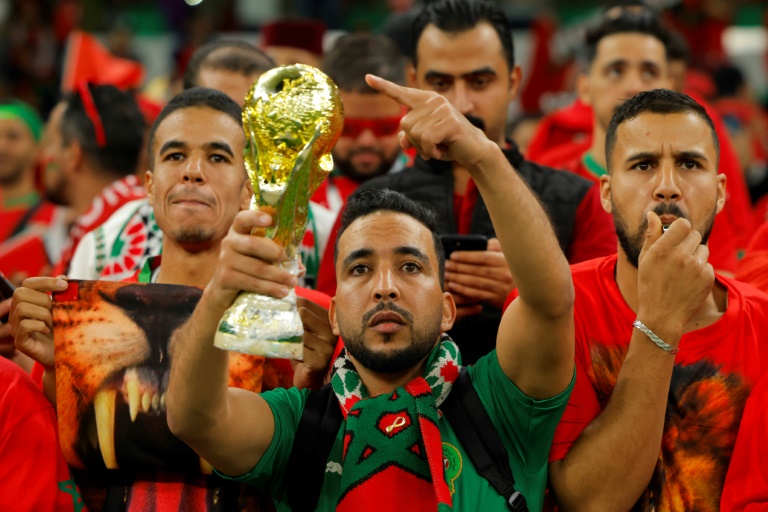
Morocco wins Africa support in World Cup clash with France

His country is in diplomatic crisis with Morocco, but that’s not stopping Tunisian Wissam Sultani supporting the first ever Arab or African team to reach a football World Cup semi-final.

“There’s no politics on the pitch. Supporting an Arab country, whichever one, is a duty when it gets to this stage of a tournament,” said Sultani, a 41-year-old greengrocer in Tunis, capital of the North African nation.

“Football brings people together, but politics divides them.”

Morocco’s “Lions of the Atlas”, who beat Portugal on Saturday to reach the final four, will face former colonial power France on Wednesday.

They will have the backing of many fans across Africa and the Arab world.

Three African teams — Cameroon, Ghana and Senegal — have made it to the quarter-finals since 1990, but Morocco is the first ever to reach the semis.

Sultani is one of many Tunisians supporting the team — with little regard for a diplomatic stand-off between their two governments over the disputed Western Sahara territory.

Morocco withdrew its ambassador from Tunis in August after Tunisian President Kais Saied welcomed the head of the Polisario Front, which seeks independence for the Western Sahara.

Morocco, which called Saied’s act “hostile”, sees the mineral-rich desert region as a sovereign part of its own territory.

“Political problems end when the match starts,” said Tunis lemon merchant Hamza Ayari, aged 35. “What’s important is to see the Arab team win”.

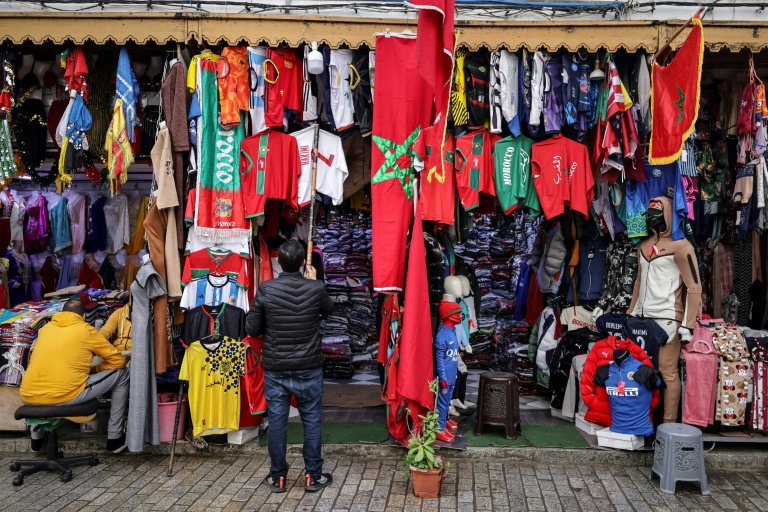
In a nearby Tunis street, a sports shop plays Moroccan folk songs to attract customers, and the red jersey of the Moroccan team is the highlight of the display.

Tunisia’s media hailed the Moroccan victory over Portugal in glowing terms.

“The kingdom of courage has struck again by taking Portugal out after Spain,” the La Presse newspaper wrote.

– ‘Stand up to France’ –

Even in the kingdom’s arch-rival Algeria — which failed to qualify for the tournament — many have celebrated the Moroccan wins.

Official media has remained silent, but the private press has heaped praise on the team.

“The Atlas Lions were able to count on an iron defence to reach the last four. Solidity and efficiency, the ingredients for success,” Algeria’s Reporters newspaper wrote.

Algiers public servant Salim, 45, said Moroccans and Algerians “ignore political differences” between their governments.

“The Algerians are with the Moroccan team”, he said, noting both North African nations were home to the Berber people.

Tunisian sociologist Mohamed Jouili said the support for Morocco across North Africa was partly due to a shared history of French colonialism.

“The countries of this region can’t compete with France economically, militarily or geopolitically,” Jouili said.

“But they can stand up to France for 90 minutes on a football pitch and even beat it,” he said, alluding to Tunisia’s victory over France during the group stages.

Arab fans have also thrown their weight behind Morocco as its players have raised the Palestinian flag — despite Rabat normalising relations with Israel in December 2020.

In Senegal, Rabat is often accused of abuses against African migrants who travel north through Morocco on the way to Europe.

But Senegalese President Macky Sall — who also heads the African Union — hailed the team’s “historic” qualification for the semi-final.

Civil society figure Alioune Tine also urged Senegalese to support the team and hang out Moroccan flags.

“Bringing the World Cup to Africa is now close to reality,” he wrote on Twitter.

In Nigeria, national star Jay-Jay Okacha, who used to play for Paris Saint Germain, said that “the French team are dominated by players who have their roots in Africa, but Africa will be solidly behind Morocco to go past them and get to the World Cup final”.

That sentiment reaches even as far as South Africa, which failed to get beyond the group stages when it hosted the tournament in 2010.

“I’ve become a big supporter of the Lions of the Atlas,” said young fan Monthati Molosankwein in Johannesburg.

“Even if they only have a slim chance against the title-holders France, nothing is impossible”. 

Aid staves off Somalia famine, for now: UN

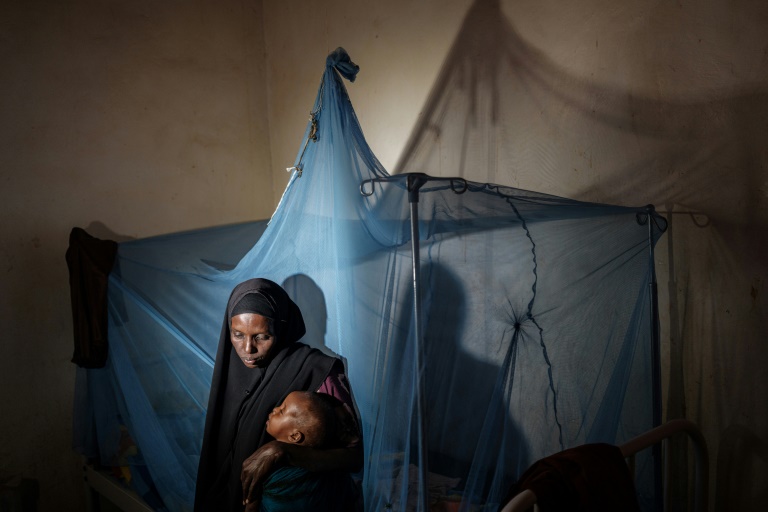
Humanitarian aid and support from local communities have helped avert a dreaded famine declaration in Somalia this year, but the situation remains “catastrophic,” the UN said on Tuesday.

The United Nations humanitarian agency OCHA said the latest assessment found that, technically, Somalia was not yet in the grip of full-blown famine.

The report “does not lead to a declaration of famine at this point, in large part thanks to the response of humanitarian organisations and local communities,” OCHA spokesman Jens Laerke told reporters in Geneva.

But, he warned, that “does not mean that people are not experiencing catastrophic food shortages.” 

“They have kept famine outside the door, but nobody knows for how much longer,” he said. 

“The underlying crisis has not improved.” 

Somalia has been wracked by decades of civil war, political violence and an Islamist insurgency.

Millions of people are at risk of starvation across the wider Horn of Africa, in the grip of the worst drought in four decades after five consecutive failed rainy seasons wiped out livestock and crops.

If assistance is not scaled up, Laerke warned, “famine is expected to occur between April and June 2023 in southern Somalia,” including in the capital.

Agropastoral populations in Baidoa and Burhakaba districts, and displaced people in Baidoa town and in Mogadishu itself were most at risk, he said.

The report indicated surging numbers of  people at the highest level on the UN’s five-scale food insecurity classification, known as IPC, which means they have dangerously little access to food and could face starvation.

When a large enough portion of a population is estimated to be at IPC level 5, a famine is declared.

Between last October and next June, the number of people at IPC5 in Somalia was expected to more than triple from 214,000 to 727,000, according to Tuesday’s report.

At the same time, some 8.3 million people across the country are expected to be at crisis level (IPC3) or above between April and June next year, up from 5.6 million today, it said.

A full 2.7 million of them were expected to be at IPC level 4, facing major food shortages, very high acute malnutrition and excess mortality.

“The situation can hardly get any worse,” Laerke warned.

He called countries “to step up and help the humanitarian organisations continue the very important and truly life-saving work” in Somalia.

James Elder, a spokesman for the UN children’s agency Unicef, said that the famine declaration had, for now, only been averted.

If the world wants to delay a famine declaration further or stave it off altogether, this would require “backbreaking work with proper funding,” he said.

“There is no doubt that large numbers of children have died… (and) that children are dying now.”

Nine dead as floods hit DR Congo capital

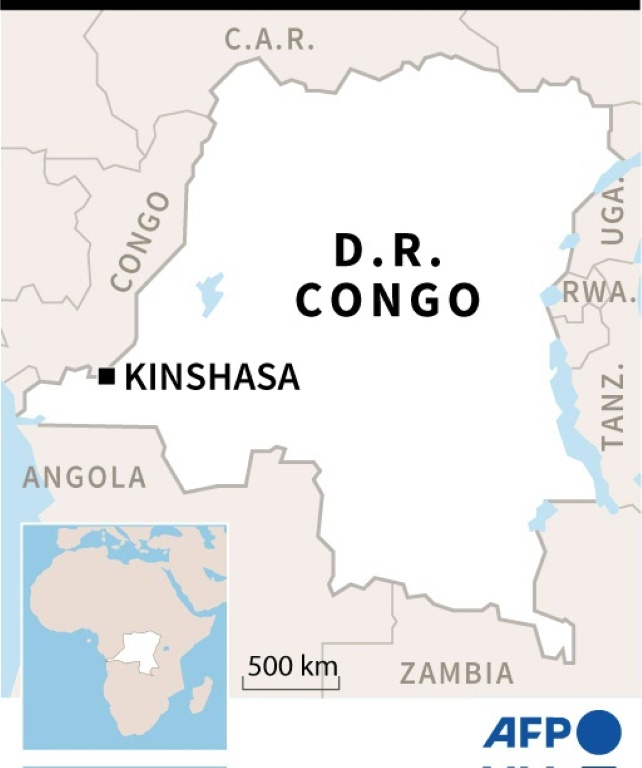
Floods caused by heavy rains swept parts of DR Congo’s capital Kinshasa on Tuesday, in one case killing nine people when their home collapsed, an AFP reporter saw.

Major roads in the centre of Kinshasa, a city of some 15 million people, were submerged.

Images circulating on social media showed a landslide in hilly Mont-Ngafula district, cutting off Highway 1, a key supply route linking the capital with the Atlantic Ocean port of Matadi.

Floods also inundated streets in the up-market government district of Gombe, which houses ministries and embassies.

The AFP reporter saw the bodies of nine members of a family who had died after the collapse of their home in the Binza Delvaux district.

Located on the Congo River, Kinshasa has seen a huge population influx in recent years.

Many dwellings are shanty houses built on flood-prone slopes and the city suffers from inadequate drainage and sewerage. 

In 2019, around 40 people died in floods and landslips. 

Mont-Ngafula was one of the worst-hit areas, but a local resident said the flooding this time was even worse.

“We’ve never seen a flood here on this scale,” Blanchard Mvubu, who lives in the Mont Ngafula neighbouring of CPA Mushie, told an AFP reporter on the scene.

“I was asleep and I could feel water in the house… it’s a disaster — we’ve lost all our possessions in the house, nothing could be saved.”

He added: “People are building big houses and that blocks up the drains. The water can’t move freely and that’s what causes the floods.”

Another man, who gave his name as Freddy, said everything in his home was underwater — “shoes, food stocks, closes. Everything is lost, there’s nothing to be saved?

Close by, a young man was asking 500 Congolese francs (24 cents) from passersby to carry them on his back across the submerged street.

Another man, who identified himself as a teacher, was walking barefoot in the water, holding a pair of shoes in one hand and a plastic bag containing documents in the other.

“I’ve got no other choice,” he said. “I have to give schoolchildren an exam.”

Jihadist-hit Niger brings back former soldiers, police

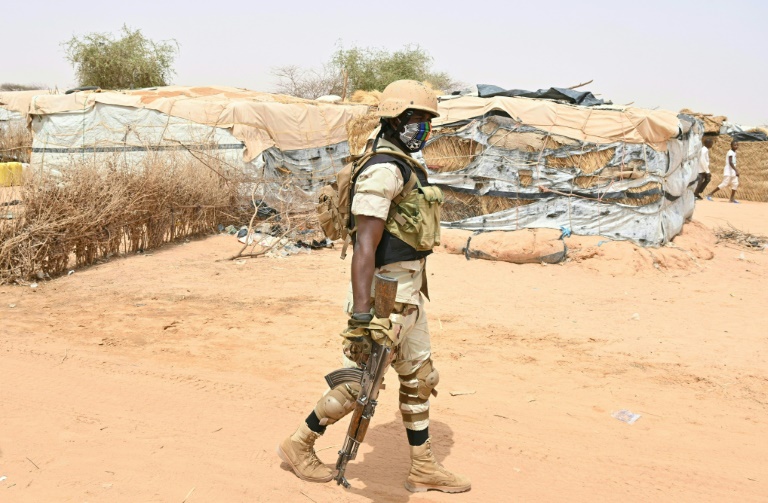
The Sahel state of Niger is urging former soldiers and police to get back into uniform to help the years-long battle against jihadists, security sources said on Tuesday.

The authorities began an operation on Monday aimed at mustering a thousand men, “who won’t go directly to the front, but will be used to secure important sites”, one source said.

Colonel Abdoulaye Mounkaila, a retired officer and member of Niger’s Military Reserve Commission, told state TV that the defence ministry was “appealing to former soldiers and gendarmes who have been retired five years” or less.

The returnees — for which specialists are particularly sought — will provide “relief for the defence and security forces, which are constantly on active duty”, he said.

Niger, the poorest state in the world by the benchmark of the UN’s Human Development Index, is struggling with two jihadist emergencies.

Militants who swept in from neighbouring Mali have been carrying out bloody attacks in the southwest of the country since 2015.

In the southeast, Niger is suffering from the spillover from the ongoing jihadist insurgency in northeast Nigeria, which has affected neighbouring states in the Lake Chad region.

In 2020, the country had declared the goal of doubling armed forces personnel, from 25,000 to 50,000 over the following five years.

It has also pushed back retirement age for non-commissioned ranks from 47 to 52.

The country is getting logistical and training support from former colonial power France, as well as from the United States, Italy, Germany and Belgium.

France and the United States both have important military bases in the vast arid country, while Germany has a logistics base.

S.Africa's Ramaphosa faces crunch impeachment debate

South African MPs on Tuesday prepared to debate whether to initiate proceedings that could force out President Cyril Ramaphosa over allegations he concealed a huge cash theft at his farm.

Ramaphosa — championed as a graft-busting saviour after corruption-stained predecessor Jacob Zuma — is counting on support from the ruling African National Congress (ANC) party, which has been further divided by the scandal.

An extraordinary parliamentary session opening in Cape Town at 1200 GMT will discuss the findings of an independent panel which said Ramaphosa may be guilty of serious violations and misconduct.

Lawmakers are called to decide in an open vote, by simple majority, whether to launch an impeachment investigation against Ramaphosa — a lengthy probe that could lead to his removal from office.

The 70-year-old president seems likely to survive the day, although analysts predicted the debate could be long and bitter.

Last week, he secured the renewed backing of the ANC, which holds 230 of the National Assembly’s 400 seats, after mounting a legal bid to have the damning report annulled. 

“We are going to use our numbers as ANC… because we cannot be dictated to by a panel that has not been objective,” Communications Minister Khumbudzo Ntshavheni told reporters before entering parliament.

“We are not going to be bullied by anyone,” she said.  

– Toe the line? –

Political analyst Ongama Mtimka from the Nelson Mandela University predicted ANC MPs would toe the party line ahead of a crunch meeting this Friday, when they hold a five-yearly conference to elect new leaders.

The ANC conference “presents the members with a chance to make a change at a party level, where it matters the most,” said Mtimka.

Yet others believe there might be room for surprises, as the scandal has deepened rifts within the deeply factionalised ANC.

Its national executive vowed last week to vote down any attempt to force Ramaphosa from office. 

That decision upset some, who said the executive had forced their hand. 

Ramaphosa’s graft-tainted predecessor Zuma survived several no-confidence motions during his tenure, before his own party forced him to resign in 2018.

Opposition parties are presenting a largely united front on the issue. 

John Steenhuisen, leader of the largest opposition party, the Democratic Alliance, said the ANC cannot be allowed to use “the tyranny of their majority to protect a president from scrutiny”.

It is likely to be “a very heated and long procedure,” said analyst Daniel Silke. 

– Scrutiny –

Ramaphosa, who will not be in parliament on Tuesday, kicked off his day in the capital Pretoria, presiding under pouring rain at a police graduation ceremony.

Were the opposition to have its way, Ramaphosa would face the prospect of having the affair further scrutinised by parliament in a year that leads to general elections in 2024.

An impeachment vote itself would need the support of a two-thirds majority of MPs to succeed.

The president, who was a wealthy businessman before entering politics, found himself in hot water in June when South Africa’s former spy boss filed a complaint against him to the police.

Arthur Fraser alleged Ramaphosa had concealed the theft of several million dollars from his luxury farm in 2020.

He accused the president of having the burglars kidnapped and bribed into silence instead of reporting the matter to the authorities. 

A police inquiry is ongoing. Ramaphosa has not been charged with any crime and has denied wrongdoing. 

The findings of the three-person special probe, issued last week, brought forward details that have left South Africa agog.

Ramaphosa acknowledged the theft of $580,000 in cash that was stashed under sofa cushions at his farm — a safer place, his employees said, than the office safe.

He said the money was payment for buffaloes bought by a Sudanese businessman, who recently confirmed the transaction in interviews with British media.
The huge amount of greenback cash has raised questions about declaration of foreign currency and tax concerns.

Morocco's Ounahi poised for bigger things after World Cup breakout

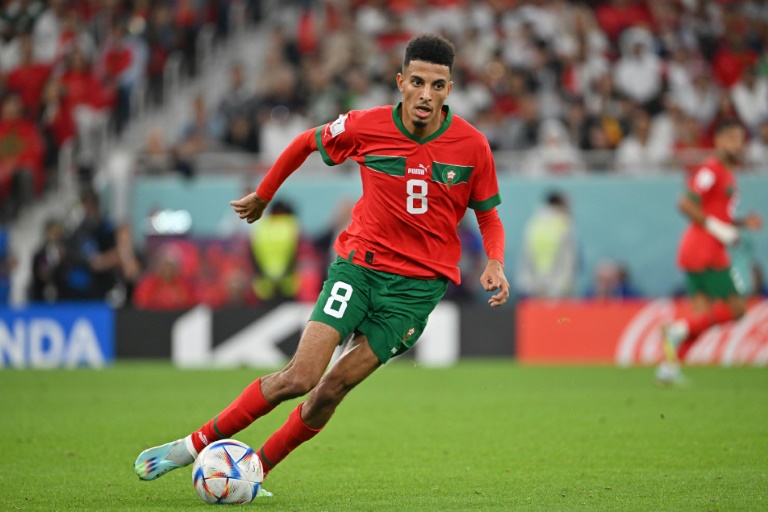
Azzedine Ounahi has been at the heart of Morocco’s run to the World Cup semi-finals, tirelessly stamping his authority on the midfield and emerging as one of the revelations of the tournament.

Yassine Bounou’s penalty-saving heroics stole the headlines in the last 16, but it was Ounahi who caught the eye of Spain coach Luis Enrique following his side’s shootout loss to Morocco.

“I was surprised by (Ounahi). My goodness, where does that boy come from?” asked Luis Enrique, in awe of the midfielder’s “spectacular” display.

“He plays like the Spanish players. He plays really well. I was very surprised. He hasn’t stopped running, he must be exhausted.”

On Wednesday he will face France, where he has forged his club career.

It was only 18 months ago that Ounahi was toiling away in the French third tier, his slender physique put through the rigours of lower-league football — a vital stepping stone on his journey.

Ounahi is one of four players in the Morocco squad who are a product of the Mohammed VI Academy in Sale, a state-of-the-art facility opened in 2009 and designed to develop the country’s young talent.

Morocco’s huge investment in its football infrastructure — after numerous failed bids to host the World Cup — is paying off, as the performance of the Atlas Lions in Qatar has shown.

Moroccan clubs are also the dominant force in African football right now — winners of the men’s and women’s Champions League titles as well as the Confederation Cup. 

In addition, the Atlas Lionesses became the first ever North African team to qualify for the Women’s World Cup by virtue of finishing runners-up as hosts of this year’s Africa Cup of Nations.

Those successes are reflected by the progress made by the 22-year-old Ounahi, who has come on leaps and bounds since first signing for Strasbourg after leaving his homeland in 2018.

– ‘Phone ringing quite a lot’ –

He is now with Ligue 1 club Angers, who have made a habit of developing and selling on players such as Nicolas Pepe, Karl Toko Ekambi and current Morocco captain Romain Saiss.

They are aware it won’t be long before Ounahi departs.

“Is the phone ringing? It’s ringing quite a lot,” Angers chairman Said Chabane told France’s RMC of the interest in Ounahi and countryman Sofiane Boufal, who has also started every game in Qatar.

“You know very well that we can’t hold back a player who wants to leave,” added Chabane, whose team sit bottom of France’s top flight after heading into the World Cup break with seven straight defeats.

Ounahi made his Ligue 1 debut at the beginning of last season, gradually forcing his way into the starting line-up for an Angers side that finished 14th.

He earned a call-up from Vahid Halilhodzic for the AFCON in Cameroon, winning his first cap in a 1-0 victory over Ghana but dropping to the bench once Morocco reached the knockout rounds.

A bystander during the fractious quarter-final exit to Egypt, Ounahi seized his opportunity with both hands in the World Cup play-off against the Democratic Republic of Congo.

Unused in the 1-1 draw in the first leg, Ounahi struck twice and grabbed an assist in a 4-1 win in the return clash to seal Morocco’s place in Qatar.

He has started 10 of his country’s 11 games since, every bit as valuable to Walid Regragui, the French-born former Morocco international who replaced Halilhodzic as coach in August.

“Azzedine is a great player, he’s got a lot of high level qualities, he’s only 22, he still has room for improvement, but I think he will play for a big club,” said Regragui. 

“He will have to make the right choices.”

Ounahi, who has excelled alongside midfield enforcer Sofyan Amrabat, is a reported target for Barcelona. Fiorentina star Amrabat, 26, is also said to be on Liverpool’s radar.

A relative unknown outside his homeland and France, where only Lionel Messi has completed more dribbles in Ligue 1 this season, few are unlikely to forget Ounahi’s name after the World Cup.

Close Bitnami banner
Bitnami