Africa Business

S.Africa's Ramaphosa faces 'heated' impeachment debate

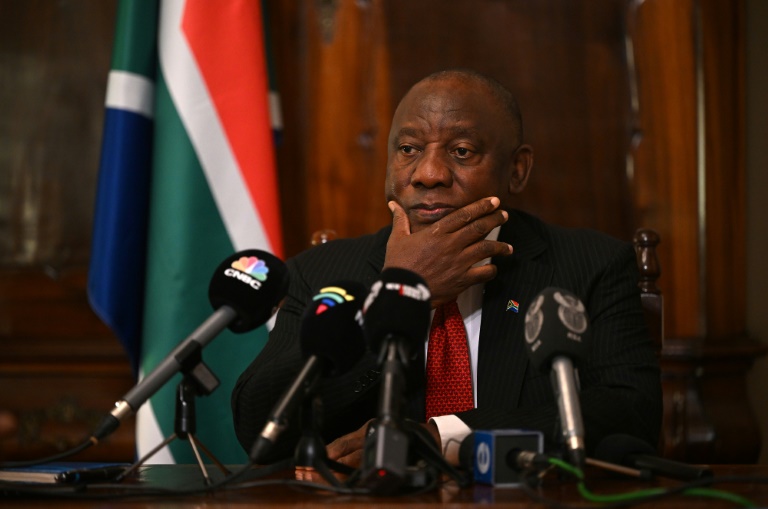
South Africa’s parliament is to debate Tuesday whether to initiate proceedings to remove scandal-engulfed President Cyril Ramaphosa from office.

Ramaphosa, who was championed as a graft-busting saviour after the corruption-tainted tenure of predecessor Jacob Zuma, has been marred by accusations that he attempted to cover up a huge cash theft at his luxury farm.

The findings of an independent panel, which said the president “may” be guilty of serious violations and misconduct, will be at the centre of an extraordinary parliamentary session in Cape Town at 1200 GMT.

Lawmakers are called to decide, by simple majority, whether to press ahead with impeachment proceedings. 

The 70-year-old president seems likely to survive the day, having last week secured the renewed backing of his ruling African National Congress (ANC) party — which holds 230 of the National Assembly’s 400 seats — after mounting a legal bid to have the damning report annulled. 

“The ANC caucus is likely to be relatively united,” said Daniel Silke, director of Political Futures Consultancy. 

“The fact that this is not a secret ballot will make it very difficult for any MP to vote against the party line.”

Yet others believe there might be room for surprises, as the scandal has heightened rifts within the deeply factionalised ANC.

The party’s national executive vowed last week to vote down any attempt to force Ramaphosa from office. 

That decision upset some within the party, who said the executive had forced their hand. 

“It’s not a done deal, they (the ANC) are divided,” said political analyst Sandile Swana. 

Opposition parties are presenting a largely united front on the matter and are expected to make their voices heard. 

“It could very well be a very heated and long procedure,” said Silke. 

– ‘Untenable’ –

Were the opposition to have its way, Ramaphosa would face the unappealing prospect of having the affair further scrutinised by parliament in the year leading to general elections in 2024.

This could make his position “untenable” in the long term, said Swana. 

An impeachment vote itself would need the support of a two-thirds majority of MPs to succeed.

The president, who was a wealthy businessman before entering politics, found himself in hot water in June when South Africa’s former spy boss filed a complaint against him to the police.

Arthur Fraser alleged Ramaphosa had concealed the theft of several million dollars from his game and rare cattle farm in 2020.

He accused the president of having the burglars kidnapped and bribed into silence. 

A police inquiry is ongoing, but Ramaphosa has not so far been charged with any crime and has denied wrongdoing. 

He has acknowledged the theft of $580,000, which was stashed under sofa cushions at his farm, but said the money was payment for buffalo bought by a Sudanese businessman.

The latter recently confirmed the transaction in interviews with British media.

The vote comes just three days before the ANC meets for its five-yearly conference to elect a new leader. 
US rolls out red carpet, opens wallet for African leaders

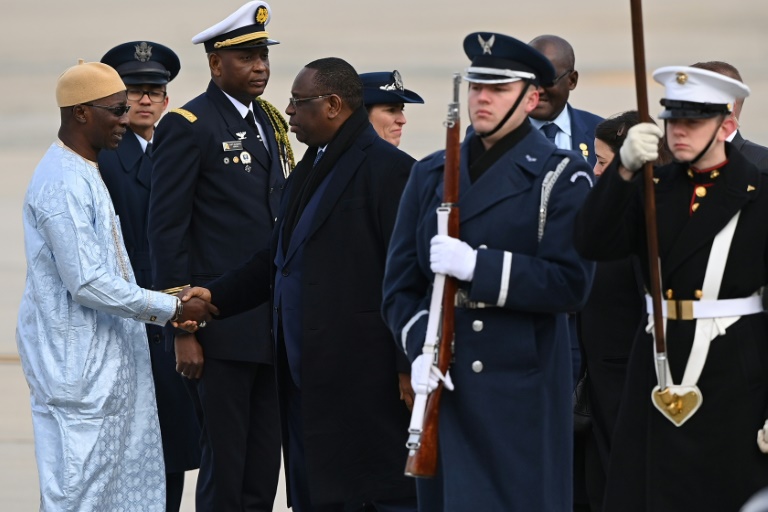
The United States on Tuesday is rolling out the red carpet to leaders across Africa with plans to unveil $55 billion in support as part of a renewed bid to win back influence in the continent.

Nearly 50 African heads of state or government have descended on Washington in the midst of a pre-Christmas cold snap for three days of courtship by President Joe Biden after years of inroads in the continent by China and Russia. 

Previewing the summit, Biden’s national security advisor, Jake Sullivan, said the administration would seek $55 billion for Africa over the next three years “across a wide range of sectors to tackle the core challenges of our time.”

He said the blueprint would be the African Union’s own Agenda 2063, its plan for sustainable development.

“We are lifting up African voices and African priorities in what we are doing in this summit,” Sullivan told reporters.

The Biden administration, which has identified China as its top global competitor, hopes to show a subtle contrast from Beijing during the summit rather than hammering home criticism.

“This is going to be about what we can offer. It’s going to be a positive proposition about the United States, its partnership with Africa,” Sullivan said.

“We are bringing the resources to the table in significant numbers,” he added.

Welcoming African entrepreneurs for a reception Monday evening, Secretary of State Antony Blinken said the United States was guided by the principle of partnership.

“We can’t solve any of the really big challenges we face if we don’t work together. So it’s about what we can do with African nations and people, not for them,” Blinken said.

– Push on democracy –

Biden during the summit will outline US support for the African Union to gain a formal berth in the Group of 20 club of major economies, months after he threw support behind a permanent African seat on the UN Security Council.

Unlike China, which holds summits every three years with Africa, the United States plans to promote democratic values.

Sullivan said Biden will meet with African leaders facing election in 2023.

“We would like to do everything we can to support those elections being free, fair and credible,” Sullivan said.

Successive US presidents have pursued signature initiatives for Africa, with George W. Bush launching a major push to fight HIV/AIDS that he considers among his top legacies and Barack Obama spearheading a drive to bring electricity, which US officials say has brought power for the first time to 165 million people.

Obama’s successor Donald Trump, by contrast, made no secret of his lack of interest in Africa, and Biden’s summit with the region’s leaders will be the first by a US president since Obama’s landmark first edition in 2014. 

In the eight ensuing years, China’s investment in Africa has consistently outpaced that of the United States, with countries brushing aside US warnings that Beijing’s billions in infrastructure spending could put them in long-term arrears.

Ahead of the summit, China’s ambassador to Washington, Qin Gang, said that his country was “sincere” in Africa” and that its investment “is not a trap.” 

“We believe that Africa should be a place for international cooperation, not for major powers’ competition for geopolitical gains,” he told an event of the news site Semafor.

“We welcome all other members of the international community, including the United States, to join us in the global efforts to help Africa.” 

– Cultural connections –

The United States has also been alarmed by a rising presence of Russia, whose Wagner mercenary group has become involved in several hotspots and which has sought to convince African nations that Western sanctions, not its invasion in Ukraine, are responsible for a spike in global food prices. 

Biden will highlight food security during an event with African leaders on Thursday, officials said.

The summit will also feature events connecting the African diaspora, hoping to stress cultural familiarity.

New York Mayor Eric Adams said that the success of African Americans showed the need for Africans to “walk differently.”

“You have been denied, ignored and exploited on the continent of Africa for too long,” Adams, the second Black person to lead America’s largest city, told African visitors at the State Department.

“You’re the largest producer of cocoa and others have made the chocolate out of it. Now you make the chocolate out of your cocoa!”

US sanctions son of Zimbabwe president on eve of Africa summit

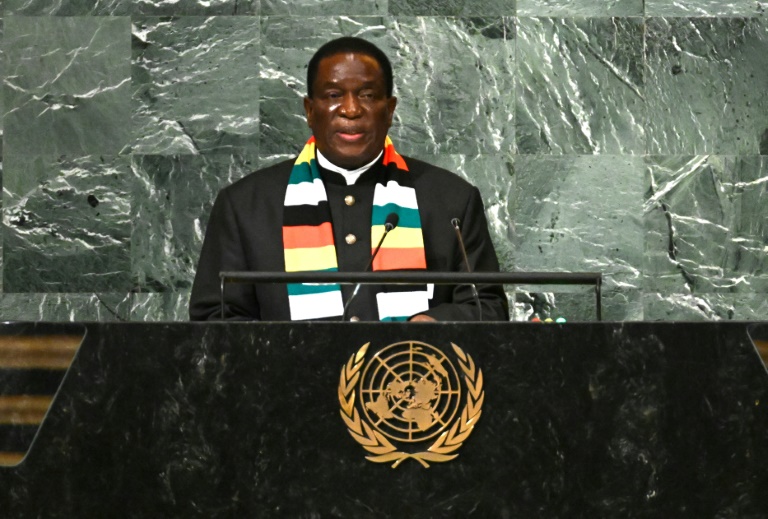
The United States slapped sanctions on the son of Zimbabwe’s president and three others for alleged involvement in corruption Monday, one day before President Joe Biden hosts a summit with African leaders in Washington.

The US Treasury Department sanctioned Emmerson Mnangagwa Jr, son of Zimbabwe President Emmerson Mnangagwa, for his involvement with Kudakwashe Tagwirei and his company, Sakunda Holdings, which were singled out for sanctions related to alleged corruption and human rights violations in 2020.

The Treasury also placed Tagwirei’s wife Sandra Mpunga, Nqobile Magwizi, and Obey Chimuka, and two companies controlled by Chumuka, Fossil Agro and Fossil Contracting, for their involvement with Sakunda.

It said Tagwirei has been granted favorable state contracts and special access to hard currency, and “in turn… provided high priced items such as expensive cars to senior-level Zimbabwean government officials.”

“Since former Zimbabwe President Robert Mugabe’s 2017 departure, Tagwirei used a combination of opaque business dealings and his ongoing relationship with President Mnangagwa to grow his business empire dramatically and rake in millions of US dollars,” it said.

Mpunga is executive director of Sakunda and Magwizi is chief marketing officer, according to Treasury.

It said Chimuka is close to Tagwirei and has benefitted from large government program contracts, also involving Sakunda, which “failed to account for billions of dollars in disbursements.”

Meanwhile Mnangagwa Jr. “has been in charge of the president’s business interests related to Tagwirei,” according to the Treasury.

The sanctions announcement came one day before Biden hosts nearly 50 heads of state from the African continent for the US-Africa Leaders summit.

President Mnangagwa is not planning to attend; instead, Zimbabwe’s Foreign Minister Frederick Shava will represent the country, according to a list of expected attendees.

Mnangagwa came to power in 2017 after generals forced long-time ruler Mugabe to resign.

In October the ruling ZANU-PF party handed 80-year-old Mnangagwa a five-year term as party leader during its annual congress, opening the door for him to run for reelection as president in 2023.

But his leadership remains criticized for corruption and rights violations, including a crackdown on dissent that saw two opposition lawmakers and 16 opposition supporters imprisoned from June to November.

Guinea ex-dictator denies responsibility at 2009 massacre trial

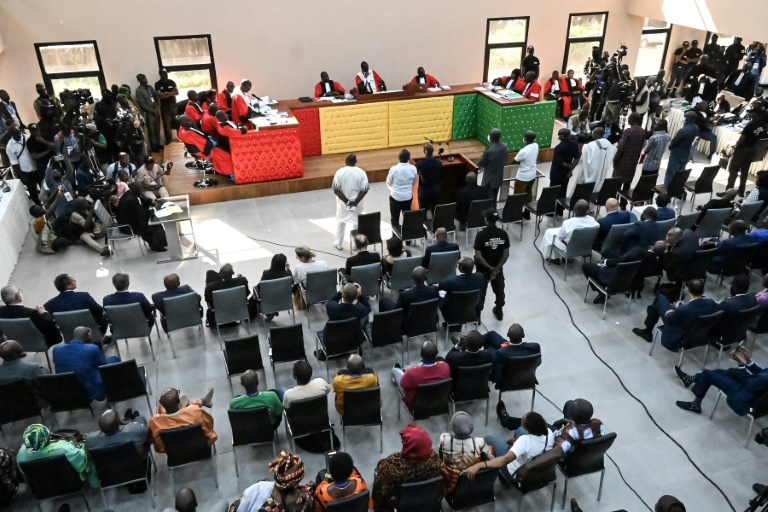
Guinea’s former dictator Moussa Dadis Camara denied responsibility when he took the stand Monday at a trial of officials implicated in a 2009 massacre.

Camara and 10 other former military and government officials stand accused over the killing of 156 people and the rape of at least 109 women by pro-junta forces at an opposition rally in a Conakry stadium in September 2009.

They face charges ranging from murder to sexual violence, kidnappings, arson and looting. Camara himself is charged with “personal criminal responsibility and command responsibility”.

Presiding judge Ibrahima Sory Tounkara reminded Camara, 57, of the charges the court had brought against him.

“And to the question to know whether you recognise them, you replied in the negative,” Tounkara said.

“Absolutely,” Camara replied before launching into a long monologue citing philosophers Heraclitus and Immanuel Kant along with the Egyptian pharaohs.

He also evoked God, saying, “If it’s you who gave me power …. if I killed at the September 28 stadium, God, I will not step foot back into Guinea.”

Camara’s deposition was a key moment which survivors and relatives of the victims had been waiting since the trial opened on September 28, 13 years to the day after the massacre.

Outside the court, Conakry residents gathered round television screens in shops and markets to follow the proceedings in the historic trial.

A week ago the hearings had been adjourned, until Monday, after Camara said he was too ill to give testimony.

The lawyer for Aboubacar Sidiki Diakite, a former aide de camp to Camara known as Toumba, has accused Guinea’s ex-leader of preparing the massacre and alleged Camara had faked his illness.

Camara in turn told the court Toumba had prevented him from going to the stadium to restore order.

Toumba, he said, was carrying grenades. “I understood I could not arrest him, he (had) the weapons with him.”

Camara said he could have remained in Burkina Faso and kept out of the trial.

“What is the life of a man,” he asked. “It is honour … my honour depends on it.” 

One of Camara’s lawyers said his client had been suffering from an exhausting bout of malaria for weeks and that he had the “absolute right” to rest.

At the time an unknown army captain, Camara seized power in December 2008 shortly after the death of Guinea’s second post-independence president, General Lansana Conte, who had ruled for 24 years.

In December 2009, Camara was shot in the head by Toumba and headed to Morocco for medical treatment. 

He fled into exile in Burkina Faso, where he was indicted in July 2015 by Guinean magistrates for his alleged role in the stadium massacre.

The former strongman was detained on September 27, a day before the long-awaited trial began in a purpose-built court in the capital Conakry.

Guinea ex-dictator denies role at 2009 massacre trial

Guinea’s former dictator Moussa Dadis Camara denied responsibility when he took the stand Monday at a trial of officials implicated in a 2009 massacre.

Camara and 10 other former military and government officials are accused over the killing of 156 people and the rape of at least 109 women by pro-junta forces at a political rally in a Conakry stadium in September 2009.

They face charges ranging from murder to sexual violence, kidnappings, arson and looting. Camara himself is charged with “personal criminal responsibility and command responsibility”.

Presiding judge Ibrahima Sory Tounkara reminded Camara of the charges the court had brought against him.

“And to the question to know whether you recognise them, you replied in the negative,” Tounkara said.

“Absolutely,” Camara replied before launching into a long monologue evoking philosophers Heraclitus and Immanuel Kant along with the Egyptian pharaohs.

Camara’s deposition was a key moment survivors and relatives of the victims had been waiting for at the trial that opened September 28, 13 years to the day after the massacre.

Proceedings in the trial were postponed until today from a week ago after Camara said he was too ill to give testimony.

The lawyer for Aboubacar Sidiki Diakite, a former aide de camp to Camara who has accused him of preparing the massacre, accused Guinea’s ex-leader of faking his illness.

One of Camara’s lawyers said his client had been suffering from an exhausting bout of malaria for weeks and that he had the “absolute right” to rest.

Camara, at the time an unknown army captain, seized power in December 2008 shortly after the death of Guinea’s second post-independence president, General Lansana Conte, who had ruled for 24 years.

In December 2009, Camara was wounded in the head in an attempted assassination and headed to Morocco for medical treatment. 

He fled into exile in Burkina Faso, where he was indicted in July 2015 by Guinean magistrates for his alleged role in the stadium massacre.

The former strongman was detained on September 27, a day before the long-awaited trial began in a purpose-built court in the capital Conakry.

S. Africa's embattled Ramaphosa faces decisive week

Embattled South African President Cyril Ramaphosa faces a decisive week as a scandal hangs over his future, with an impeachment vote on Tuesday preceding a key ruling party conference.

Ramaphosa, who was championed as a graft-busting saviour after the corruption-tainted tenure of predecessor Jacob Zuma, has been marred by accusations that he attempted to cover up a huge cash theft at his luxury farm. 

Parliament is due to decide on Tuesday whether to greenlight proceedings to remove him from office, after a report by an independent panel found that he “may” be guilty of serious violations and misconduct. 

The vote comes just three days before Ramaphosa’s party, the African National Congress (ANC), meets for its five-yearly conference to elect a new leader. 
The president is the front-runner of the two candidates for the top ANC post — which is also the key to him possibly staying on as head of state for a second term.

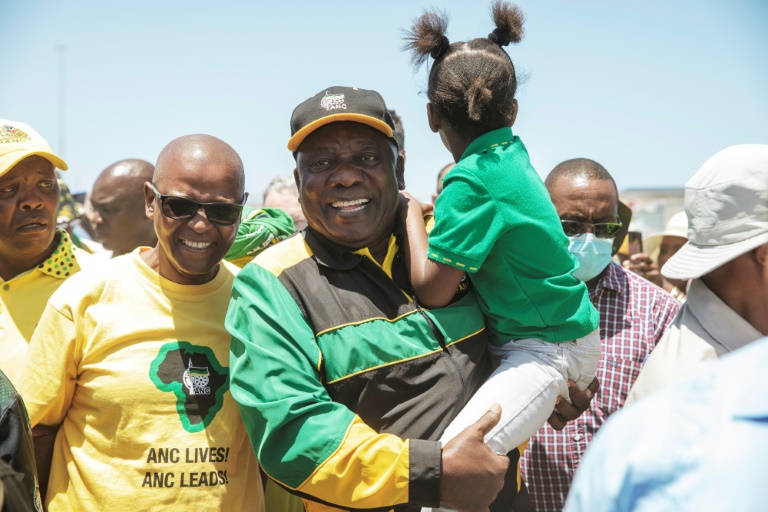
He was rumoured to be on the verge of resigning earlier this month. But in a show of confidence, he campaigned on the streets of Cape Town over the weekend. 

“There’s no issue. There’s no crisis. Just relax,” he told reporters as, greeted like a star by cheers and camera flashes, he shook hands with supporters and patted children’s heads.

Renowned for his patience and strategic thinking, Ramaphosa remains popular despite the scandal, attracting a support base crossing South Africa’s racial and class divisions. 

– Counter-attack –

A simple majority in the National Assembly, where the ANC has 230 of the 400 seats, would be sufficient on Tuesday to initiate the impeachment process.

An impeachment vote itself would need the support of a two-thirds majority of MPs to succeed.

Last week, the 70-year-old president went on the counter-attack, asking the country’s top court to annul the investigative report. 

The ANC’s national executive vowed last week to close ranks around Ramaphosa and vote down any attempt to force him from office.

That decision upset some within the party who said the executive had forced their hand. 

Dissenting voices included former health minister Zweli Mkhize, 66, who is challenging Ramaphosa for the ANC leadership. 

But party officials seem confident there will be insufficient votes in parliament to start impeachment proceedings. 

“(Lawmakers) normally tow the party line. The ANC is on top of it,” a senior party official told AFP on condition of anonymity. 

The vote might even not happen at all, analysts say. 

That would ease pressure on Ramaphosa ahead of the ANC leadership election.

“There is a possibility that the speaker of National Assembly, who is a political ally of Ramaphosa, decides to postpone the whole process and says, ‘Let’s have it next year’,” said political scientist William Gumede.

– Cash in sofa –

The president, who was a wealthy businessman before entering politics, found himself in hot water in June when South Africa’s former spy boss filed a complaint against him to the police.

Arthur Fraser alleged Ramaphosa had concealed the theft of several million dollars from his game and rare cattle farm in 2020.

He accused the president of having the burglars kidnapped and bribed into silence. 

A police inquiry is ongoing but Ramaphosa has not so far been charged with any crime and has denied wrongdoing. 

He has acknowledged the theft of $580,000, which was stashed under sofa cushions at his farm, but said the money was payment for buffalo bought by a Sudanese businessman. 

The latter, Hazim Mustafa, recently confirmed the transaction in interviews with British media.

Mustafa said he did not know the 20 buffalo belonged to Ramaphosa when he bought them in late 2019 and was waiting for a refund since the animals had not yet been delivered to him in Dubai. 

DR Congo Tutsis face threats, prejudice amid rebel crisis

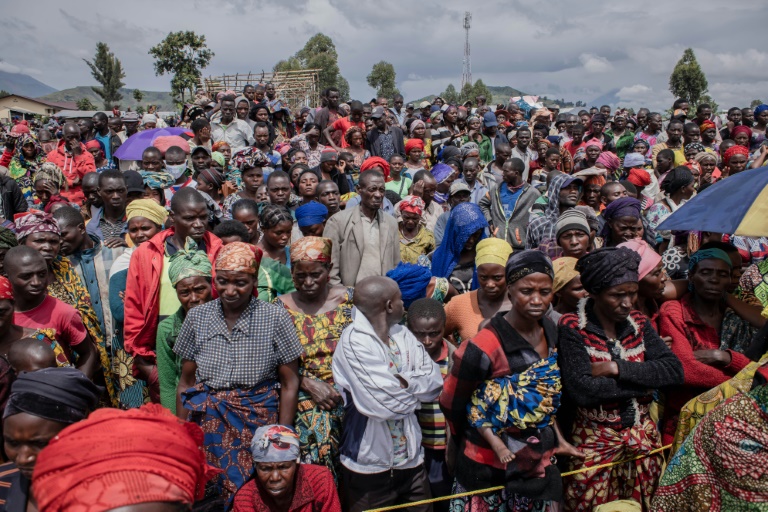
Sitting in a small courtyard in Goma, eastern DR Congo, a 55-year-old Tutsi woman joked darkly that she would be killed if she spoke under her real name. 

She fled to the city last week after a militia leader known as General Janvier, an opponent of the Tutsi-led M23 rebel group, arrived in her town of Kitschanga.

“We saw children with machetes and guns saying they’d come to kill the Tutsis,” said the woman, in a poor Goma neighbourhood of clapboard houses on the Rwandan border. 

The M23 has advanced across North Kivu province in recent weeks, winning victories over the army as well as other militias and forcing hundreds of thousands to flee in its wake. 

The Democratic Republic of Congo accuses its smaller neighbour Rwanda of backing the M23, something UN experts and US officials agree with — although Kigali denies it.

Knife-edge tensions have escalated pressure on Congolese Tutsis, whose history is contested in the central African nation. 

Many assume that Tutsis support the M23, for example, or perceive them as Rwandan implants rather than native Congolese.

The government in Kinshasa has repeatedly argued against tribalism and stressed that the Rwandan government alone is to blame for the M23 crisis. 

But the reality in the east of the country, about a thousand miles (1,600 kilometres) from the capital, is often different. 

AFP interviewed six Congolese Tutsis who had recently arrived in Goma, mostly from Kitschanga in North Kivu’s Masisi territory. 

Five said they had fled death threats from militias.

“It hurts me,” said the 55-year-old Tutsi woman, who explained that all her relatives were Congolese but her children were accused of being Rwandans at school. 

“Our children ask us: What’s Rwanda?”

– Cut off your nose –

The sense of injustice is widely shared. A 36-year-old Tutsi mother of two, who’d also recently fled to Goma, told AFP she wanted the same rights as everyone else. 

She fiddled nervously with her wedding ring as she described why she left Kitschanga. “Militiamen notice your nose and threaten to cut it off with a knife,” she said. 

Tutsis are often stereotyped as having straight noses.

The woman — speaking in the Kinyarwanda language native to Rwandans as well as many Congolese Tutsis and Hutus — said militiamen also looted her home after she fled. 

“They say every Tutsi is an M23,” she said. “It’s terrible.”

The M23 first leapt to international prominence in 2012 when it captured Goma, before being driven out and going to ground. 

But the rebels took up arms again late last year, claiming the DRC had failed to honour a pledge to integrate them into the army. 

They’ve since seized swaths of territory and come within about 20 miles (12 kilometres) of Goma, a key hub of over a million people. 

The M23 advance has also driven a wave of virulent anti-Tutsi hate speech on social media, with calls for them to depart for Rwanda and worse.

Emmanuel Runigi Kamanzi, the president of a North Kivu livestock farmers’ association, said his Tutsi ancestors arrived in the region in the middle ages. 

“This is our home,” he added, decrying extremist attitudes  fanned by Mai-Mai militias and so-called Nyatura armed groups that claim to represent Congolese Hutus.

Nyatura means “those who strike mercilessly” in Kinyarwanda.

– ‘Uproot us’ –

In public statements, the M23 has frequently accused other armed groups as well as government forces of targeting Tutsis. 

But Lieutenant-Colonel Guillaume Ndjike, the Congolese army spokesman in North Kivu, said soldiers have not attacked Tutsis and that the allegations are “excuses put forward by the Rwandan army”. 

M23 fighters have themselves committed alleged atrocities. 

The rebels killed 131 civilians and raped 27 women and girls in two neighbouring villages in late November, according to a preliminary UN probe. 

Congolese Tutsi leaders have also condemned the M23. 

David Karambi, the president of a North Kivu Tutsi association, told reporters in December that recent massacres could not even be “committed by animals,” for example.

Many Congolese Tutsis interviewed by AFP said they felt unfairly blamed, and in danger.

In a Goma district where many Tutsis recently fled, a 27-year-old woman said Mai-Mai and Nyatura members had threatened “to kill us as they did to Tutsis in Rwanda”. 

“This war, it’s to uproot us,” she said, eyes downcast.

Restoring French West Africa's capital to its original splendour

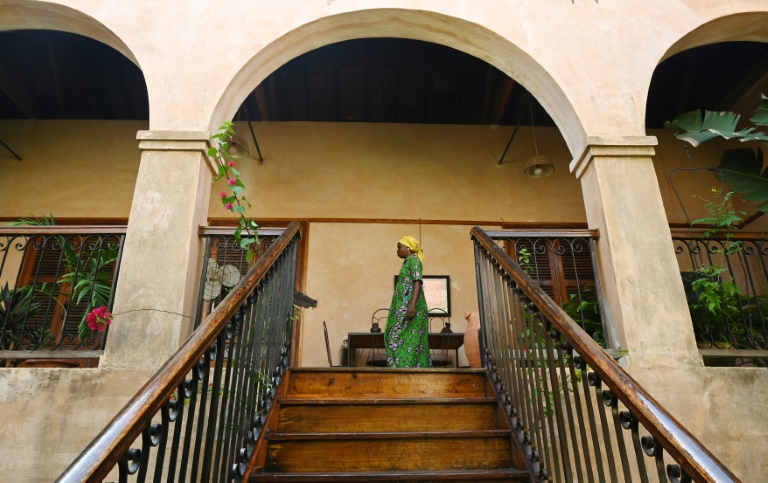
An intricately detailed balcony, a coat of fresh paint and large bay windows opening onto the street: this house, in Saint-Louis, northern Senegal, has regained its former glory. 

Next to it, one building has been gutted and another is about to collapse.

The house is one of several that have recently been refurbished, part of a movement to renew the face of Saint-Louis, the former colonial capital of French West Africa, which has been a UNESCO World Heritage Site since 2000.

It follows a long period of political and economic decline that has left the historic architecture and other cultural heritage in a state of disrepair.

Amadou Diaw, a local business magnate, is trying to help “revitalise the city while preserving its identity”. 

He buys up old, dilapidated houses to restore and transforms them into museums.

He has opened seven so far, including one on photography, and says he plans to continue.

“We have to put this city on the cultural map of the continent,” said Diaw, adding that he has already invested two million euros into the initiative. 

With its grid street plan, large, airy houses and metal bridge linking it to the mainland, the island of Saint-Louis — which sits in the Senegal River delta — still offers glimpses of a former era, when it was enriched by the trade of slaves, gum arabic and animal skins.

In 1957, the capital of Senegal was moved to Dakar. Soon neglected, Saint-Louis became a lethargic symbol of the past.

– Hopes and threats –

Now, Saint-Louis is facing a new threat: rising sea levels.

But a large gas deposit discovered off its coast — slated for exploitation by the end of 2023 — has given residents hope of a renaissance.

The conservation movement, which has been driven by private individuals and funded by public donors, is gaining momentum.

The city’s cathedral was refurbished in 2020. Then the French Development Agency (AFD) began renovating 16 privately-owned houses — a 2.2-million-euro endeavour, to which the homeowners are contributing about 15 percent.

Following those initiatives, the World Heritage Committee opted not to include the island of Saint-Louis on its list of endangered heritage sites.

That’s despite UNESCO having long highlighted the “extremely poor” state of many buildings in Saint-Louis, “endangering their occupants” and “affecting the integrity and authenticity” of the city.

Alpha Ndiaye, 69, a now-retired pharmacist’s assistant, says his house fell to ruin after years of neglect. 

“It was very nice — you would enter through the big door and then go up the stairs opposite”, he said, tracing a floor plan with a finger in the sand.

“When everything collapsed, I was very sad — I would have liked it to be rebuilt as it was before,” he said, standing in front of the ruined building, with large, rounded doors and vast rooms hinting at ancient splendour. 

– Succession problems –

One major problem when it comes to restoring the houses is the question of succession.

“Sometimes we don’t know who the heirs are and therefore who the owners are,” Deputy Mayor Aida Mbaye Dieng told AFP.

Fatima Fall, director of the Centre for Research and Documentation of Senegal, campaigns to raise awareness among Senegalese people about the wealth of their cultural heritage.

“There are also those who prefer modern comforts to the charm of old houses, those who do not respect standards because it is cheaper, and owners who have left the city and no longer want to invest,” she noted.

On a recent visit to the Bou El Mogdad, a restored former cargo ship that is now used for tourist cruises, AFP met students from Dakar’s Cheikh Anta Diop University learning about the city’s treasures.

“I’ve always heard about Saint-Louis without really knowing it”, said El Hadji Yadaly Ba, a student journalist, adding that the city could serve as a bridge between cultures and boost tourism.

“For me, this city was associated with France — it suffers from this image even though its history is very rich and complex,” he said.

Inspired by Morocco World Cup run, Laklalech takes LPGA spot

Inspired by her homeland’s historic run at the World Cup, Moroccan golfer Ines Laklalech earned a place on the 2023 LPGA Tour after an eight-round qualifying tournament ended Sunday.

Laklalech fired a one-over par 73 in Sunday’s final round at Highland Oaks in Dothan, Alabama, to finish on 19-under par 555 and share 12th place.

Despite closing with her worst round of the event, her total meant the 25-year-old from Casablanca was among those who claimed berths on next year’s LPGA Tour.

Laklalech fired her low round of the event, a 6-under 66, on Saturday as her beloved Atlas Lions, the Morocco national team, became the first African and Arab team to advance to the World Cup semi-finals by upsetting Portugal 1-0 in Qatar.

“I’m a big fan of the Moroccan national team so I’m super, super happy,” Laklalech said. “It definitely gave me an extra boost (Saturday) on the course.”

Morocco World Cup coach Walid Regragui’s comments about his squad made an impression with Laklalech during her own breakthrough quest.

“I’ve been watching very closely what the national coach is saying about the team because it’s history,” she said. “And his words really gave me confidence that everything is possible because that’s their mindset right now.

“I think it’s all connected and related because I’ve been watching videos of the press conferences every single day.”

Laklalech won September’s Ladies Open de France on the Ladies European Tour (LET), becoming the LET’s first Moroccan and Arab winner. She also had four other top-10 finishes on the LET this season.

In S.Africa's Soweto, Ramaphosa scandal fuels resentment

In the township of Soweto, where South Africa’s President Cyril Ramaphosa grew up — and where he visited last year promising better days — nothing has changed for Solomzi Dzanzbe.

Another Sunday passes and he still has no work, and no money.

Ramaphosa “told us he’s going to fix the electricity but there’s no change”, the 24-year-old told AFP, before taking a large sip of his beer.

When Ramaphosa visited Nomzamo Park in Soweto in 2021, he promised to improve conditions in the tough neighbourhood on the edge of Johannesburg.

Visiting before local elections, Ramaphosa saw the paraffin wax stocks in houses that had had no electricity for three years. 

He saw the empty fridges and the children’s legs with cuts that would not heal because of the dirty water.

In front of the cameras, he made many promises — but for some local people, they were just words.

“As always, ANC (Ramaphosa’s ruling party) people, they talk and they don’t do anything,” said Dzanzbe.

In flip-flops and a bucket hat, he planned to spend the rest of the day finishing a bunch of two-litre beer bottles with other young people.

It is against this backdrop of anger over unkept promises and a growing frustration with the ruling African National Congress (ANC) that Ramaphosa faces the worst scandal of his career — one that could yet bring him down.

The claims of over half a million dollars stashed beneath sofa cushions in Ramaphosa’s home have fuelled resentment in Soweto and elsewhere.

– Critical report –

The 70-year-old president is accused of concealing a huge cash theft from his game and rare cattle farm in 2020.

Ramaphosa has denied any wrongdoing, saying the cash was payment for buffaloes bought by a Sudanese businessman.

But a parliament-sanctioned independent panel said last month that he “may have committed” serious violations and misconduct.

“Why didn’t he change the money?” Dzanzbe wanted to know. “And how did the money first come into the country?”

He could no longer vote for the ANC after the affair, he said.

South Africa’s parliament will decide on Tuesday whether to hold a vote in the future on the president’s impeachment, which in South Africa means removal from office.

Tuesday’s parliamentary vote will be just days before the ANC holds an election for a new party leader, which Ramaphosa hopes to win ahead of 2024 general elections.

In Nomzamo Park, the ANC has always won, its vote sometimes exceeding 80 percent.

– Ramaphosa ‘must go’ –

Soweto is a historic stronghold of the anti-Apartheid party.

But in last year’s local election, voters in Nomzamo Park turned away from the party that has dominated the country for the past 30 years.

The ANC only won 46 percent of the vote in the area compared with 67 percent in previous local elections.

And the same picture has emerged on the national level for the party of Nelson Mandela. For the first time in its history, the ANC last year won less than 50 percent of the vote.

For Sucre Dlamini, 24, the scandal is further proof that the ANC “can’t survive”.

Ramaphosa “must go”, he said. Although a criminal investigation is ongoing and the president has not been charged at this stage, Dlamini believes “if there is smoke, there is fire”.

“It’s clearly an abuse of power. I have no house, no car and I’m making just enough to pay for the bills. What did he do for us, Ramaphosa?”

Close Bitnami banner
Bitnami