Africa Business

Body of Zambian student killed in Ukraine repatriated

The body of a Zambian student who died while fighting in Ukraine after he was recruited in a Russian jail arrived home in a makeshift coffin Sunday.

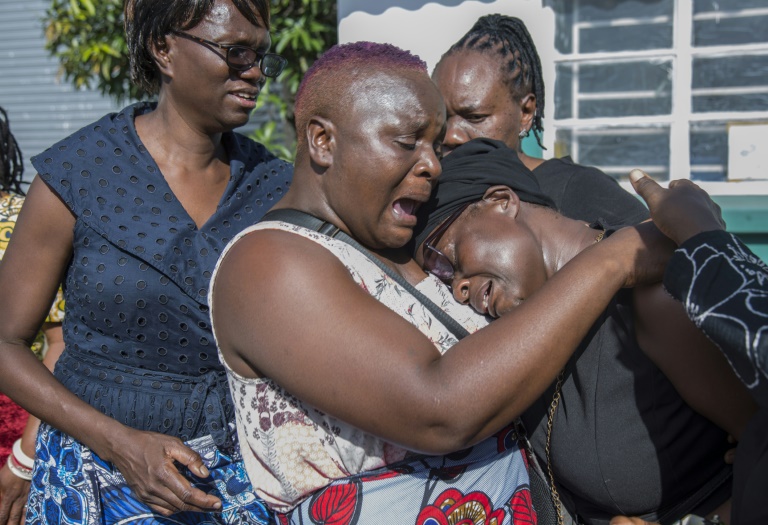
AFP journalists saw a white, glass-panelled hearse adorned with small curtains affording a partial view of the container holding the body arrive on the tarmac at Lusaka airport, where grieving relatives gathered.

On the coffin was a code written in black marker pen along with letters in the Cyrillic alphabet, betraying its provenance.

Zambia demanded an urgent explanation from Moscow last month over the death of Lemekhani Nathan Nyirenda in September while fighting on the Russian side in Ukraine, where he ended up after his spell in prison.

The 23-year-old had been studying nuclear engineering at Moscow Engineering Physics Institute but was handed a nine-and-a-half year jail term in April 2020 over a drugs offence.

Two weeks after Zambia’s demand for information, Russia’s Wagner paramilitary group admitted it had recruited him for Moscow’s “special operation” in Ukraine, adding he had voluntarily joined up before dying “a hero”.

Russian law allows for a prisoner to be pardoned specifically for a “special military operation”, Zambian Foreign Minister Stanley Kakubo said earlier this month.

Tearful relatives, including the student’s parents and brother, were on hand at the airport, clasping each other as a choir led those present in religious chants.

The family declined to comment to media. A family spokesman said the body was to be transferred to a morgue for an autopsy with a burial date to follow.

Kakubo said Friday the issue of compensation to the family over the death would be discussed “in due course”.

French sports minister wore rainbow-sleeved pullover in Qatar

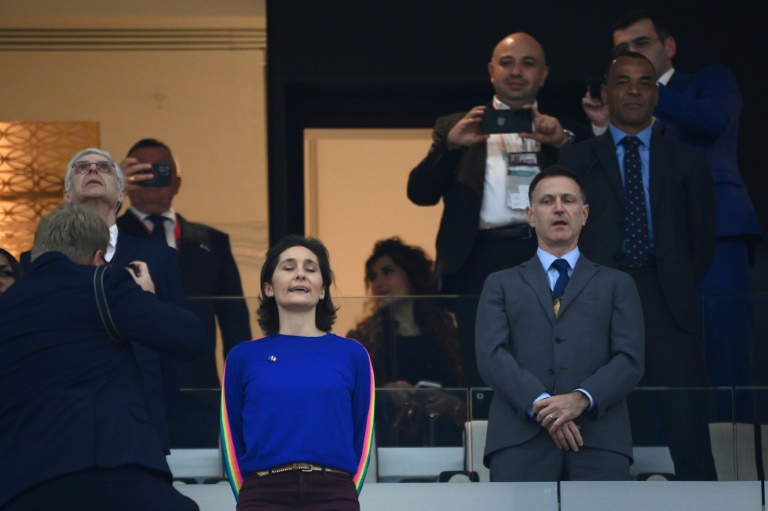
France’s Sports Minister Amelie Oudea-Castera wore a sweater with rainbow-coloured sleeves to France’s World Cup quarter-final in Qatar on Saturday in a message of support for gay rights. 

Oudea-Castera, a former professional tennis player, watched the game from the VIP box as  France beat England 2-1 to move a step closer to successfully defending their title.

The rights of the LGBTQ+ community and the use of the rainbow symbol have been a recurrent point of discussion at the World Cup in Qatar, where homosexuality is illegal.

“It was important to express my support for human rights on the whole, notably LGBT rights.. and to do it in an unaggressive way with regards to Qatar, which is our partner,” she told Franceinfo radio. 

Saturday was the anniversary of the Universal Declaration of Human Rights by the UN General assembly in Paris in 1948, she said.

Before the tournament, the French capital and several other major cities said they would not show matches from Qatar on public screens amid calls for a boycott of the competition.

President Emmanuel Macron, who argued that “we must not politicise sport”, is set to travel to Qatar on Wednesday to watch France play Morocco in the semi-final.

He had promised to support France in person if they made it to the semi-final.

“I will come back with the president on Wednesday,” Oudea-Castera told Franceinfo radio. “We’re working the details out.

“He (Macron) made this commitment and he will honour it with pleasure.” 

– Champs-Elysees clashes –

Macron’s presence underlines the close ties between France and Qatar, which is an important gas supplier to Europe and major client for French military hardware.

France’s game with Morocco will be given added spice by the countries’ history, with Morocco one of France’s north African colonies during the 20th century.

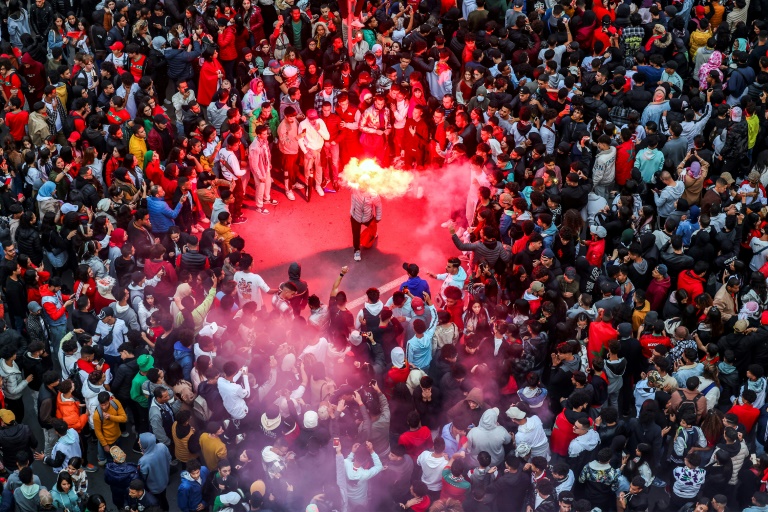
France is also home to large Moroccan and Franco-Moroccan populations, with thousands of fans seen out in the streets celebrating on Saturday after the Atlas Lions beat Portugal 1-0.

Around 20,000 people headed to the Champs-Elysees in Paris on Saturday night where French and Moroccan supporters celebrated together, many of them with torn loyalties. 

“It will be as if my father were playing against my mother,” Lilia, a 36-year-old woman of Franco-Moroccan origin, told AFP with a smile.

“I’m hugely proud, especially when you come from these two cultures, France and Morocco,” Hassan Ikan told AFP in a raucous bar just after the match.

“Seeing them both in a semi-final, it’s just utter joy,” he added.

The Champs-Elysees celebrations were soured late on Saturday night after police were targeted with fireworks and other projectiles, the city’s police department told AFP. 

Seventy-four people were arrested and police fired teargas to disperse the crowd.

Football matches involving France and north African teams have been a source of divisive tension about immigration and national identity in the past.

A France-Algeria friendly in 2001 in Paris saw the French national anthem roundly booed in what was the first meeting on the pitch between the countries since Algeria’s independence in 1962.

Conservative and far-right politicians were incensed that many of those booing were apparently French people of Algerian origin. 

The mood was not helped as the match had to be abandoned due to a pitch invasion with France leading 4-1. 

“The Algerian national anthem was not booed, there was respect for Algeria,” said French player Lilian Thuram afterwards.

“Why did these young people, most of whom were born in France, boo their country’s anthem?”

Algeria’s victorious campaign at the 2019 Africa Cup of Nations also saw clashes with police in France during fan celebrations.

'Everything increasing except wages': inflation batters Ethiopia

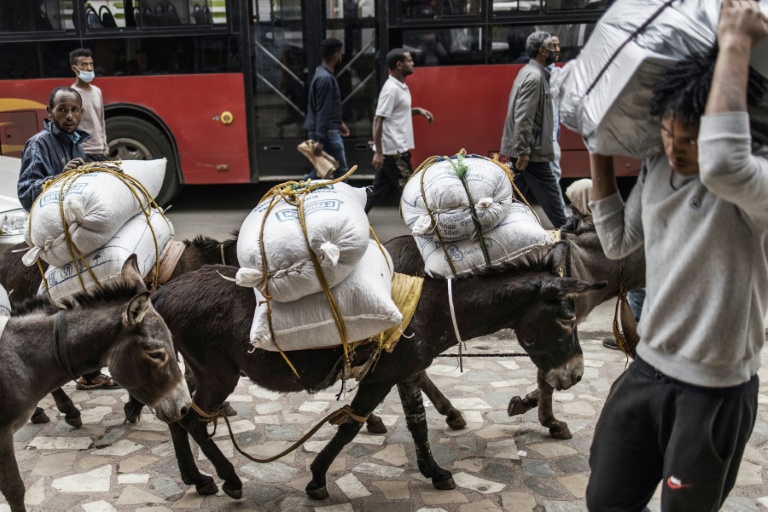
“Everything is increasing except our wages,” Ethiopian porter Zerihun told AFP, summing up the financial crisis facing the Horn of Africa nation as it reels from skyrocketing inflation and an economic slowdown.

After a decade of dynamic growth during the 2010s, Africa’s second most populous country has suffered multiple shocks, including the Covid-19 pandemic, a record drought, a two-year war in its northernmost region of Tigray and the global impact of the invasion of Ukraine.

Annual average inflation is expected to hit 30 percent in 2022 (compared to 26 percent last year), driven by an increase in food costs.

“Groceries, food, rent, all prices have gone up,” said Zerihun, a 30-year-old father of two working at the sprawling Merkato market in the capital Addis Ababa.

“Because of the cost of living, life is very difficult… life has become expensive,” said his colleague Sintayeh Tadelle, who has two sons aged 12 and six and “no savings”. 

Were it not for handouts from the Addis Ababa municipal government including uniforms, books and school meals, his family would struggle to survive, the 29-year-old porter told AFP.

The porters at Merkato, considered Africa’s largest open-air market, earn five birr (nine US cents) for loading or unloading a crate.

On average, a good day brings in than five dollars in wages. 

“The economy is slow, so there’s less work and my pay is less,” said Zerihun.

– ‘Very difficult’ – 

Packed with thousands of stalls stocking everything from clothing to industrial machinery, the busy lanes of Merkato teem with buyers, sellers, touts and day labourers.

But regulars say business has taken a sharp hit this year as inflation dampens customer appetite for spending.

“Business is very cold, not only here but in all sectors,” said Hamat Redi, manager of a shop selling televisions and washing machines.

A few doors down, shopkeeper Sisai Desalegn complained about a nationwide shortage of foreign currency, making it difficult for him to import the sound equipment and solar panels sold in his store.

“Because of the shortage, we are not getting enough foreign exchange from the bank to import goods,” he told AFP.

“We estimate that our business has lost 40 percent in two years,” Desalegn said, adding that the downturn has forced him to sell everything at the purchase price, putting profits out of reach.

As a result, he has reduced his daily expenses.

“It’s very difficult to make do with what you have,” he said, underlining that the war in Tigray meant his former customers — traders and farmers from the north — were no longer coming to the market.

The slowdown in trade with the north has also seen fewer trucks turning up at Merkato, meaning less work for porters like Zerihun and Sintayeh.

– Multiple causes – 

The conflict put pressure on government finances and hit key sectors such as agriculture and industry. 

It also scared away investors and foreign partners, contributing to a shortage of foreign currency in an importing nation.

A peace deal signed last month between the federal government and Tigrayan rebels has raised hopes of an economic recovery.

“I hope the peace agreement will make the situation better in the future,” said Zerihun.

But Ethiopia’s economy hit roadblocks before the war began in November 2020, with the Covid-19 pandemic triggering a sharp slowdown.

Growth, which averaged 9.7 percent between 2010 and 2018, fell to 6.1 percent in 2020 and is forecast to drop below four percent this year, according to the International Monetary Fund. 

The drought ravaging the Horn of Africa has weighed on agriculture — a key employer in the largely rural nation — and contributed to the explosion in food prices, with the conflict in Ukraine also affecting the cost of living.

The causes behind the crisis may be manifold and complex, but the impact is easy to see, according to Zerihun.

“Eventually, all this affects low-income people like us,” he said.

Biden tries to reboot US brand in Africa amid China, Russia inroads

When Barack Obama welcomed African leaders to Washington in 2014, many viewed the summit as historic, not just due to the US president’s background but for the pledges to make the partnership deeper and such events routine.

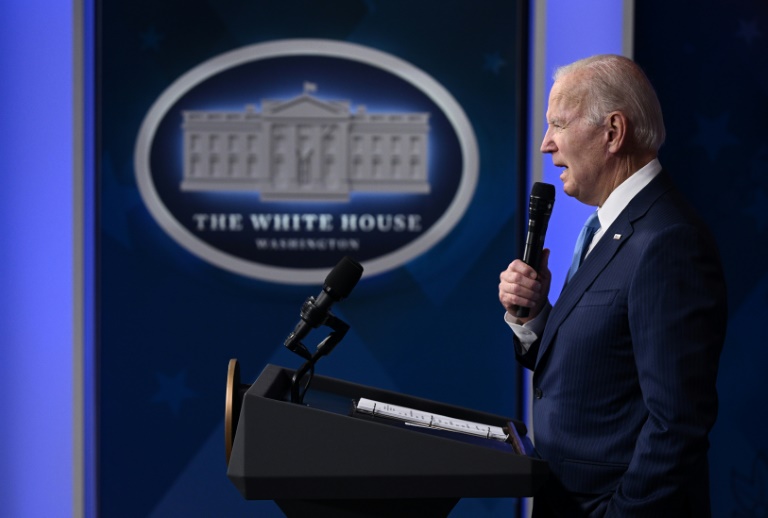
The sequel took eight years — the equivalent of two presidential terms — but on Tuesday, Joe Biden will host a second US-Africa summit.

Since 2014, China — viewed by Washington as its main long-term challenger — has consistently outpaced the United States as the largest investor in Africa and Russia has increasingly flexed its muscle, sending mercenaries to hotspots and trying to rally opinion to blunt Western pressure over Ukraine.

Biden’s three-day summit will feature announcements of new US investment and highlight food security — worsened by the invasion of Ukraine — but, unlike China, also focus on values such as democracy and good governance, as well as fighting climate change.

But the biggest message from Biden, a lover of backslapping face-to-face diplomacy, will be that the United States cares.

Since defeating Donald Trump, who made no secret of his lack of interest in Africa, Biden has thrown his support behind an African seat on the Security Council and at the Washington summit will call for the African Union to formally join the Group of 20 major economies, an aide said.

“We believe that this is a decisive decade. The way in which the world will be ordered will be determined in the coming years,” said Biden’s top Africa advisor, Judd Devermont.

Biden and Secretary of State Antony Blinken “believe strongly that African voices are going to be critical in this conversation,” he said.

African leaders have already been holding summits every three years with China and also have regular meetings with several US allies — France, Britain, Japan and the European Union.

– All, almost, welcome –

After a row over invitations distracted attention from his Western Hemisphere summit in Los Angeles in June, Biden has been open with the guest list from Africa.

The United States is inviting all African Union members in good standing — meaning not Burkina Faso, Guinea, Mali or Sudan — and with which Washington has full relations, which excludes authoritarian Eritrea.

One of the most closely watched leaders expected in Washington will be Ethiopian Prime Minister Abiy Ahmed, a onetime US ally whom the Biden administration has accused of backing widespread abuses in the Tigray conflict, which has subsided with a breakthrough November 2 agreement signed in South Africa.

Also in Washington will be the presidents of Rwanda and the Democratic Republic of Congo as Blinken leads international pressure on Rwanda over alleged support to rebels advancing in its giant neighbor.

Other presidents due at the summit include Egypt’s Abdel Fattah al-Sisi and Tunisia’s Kais Saied, who have both faced criticism on democratic rights, and Equatorial Guinea’s Teodoro Obiang Nguema Mbasogo, days after the United States called his latest election a sham. The foreign minister of Zimbabwe, which is under US sanctions, is also expected to attend.

“We’ve taken some criticism, I think it’s fair to say, from some who wonder why we invited this government or that government about which there are some concerns,” said Molly Phee, the top State Department official for Africa.

“But that reflects the commitment of President Biden and Secretary Blinken to having respectful conversations even where there are areas of difference.”

– ‘Robust’ debate on trade –

One key topic will be the fate of the African Growth and Opportunity Act, the 2000 deal that granted duty-free access to the US market for most products from sub-Saharan nations that meet standards on rights and democracy.

The pact expires in 2025, leading African leaders to seek clarity at a time that the United States has soured on trade deals.

“We regret that AGOA trade preferences have not been utilized to the maximum,” Phee said.

She expected a “robust discussion” and said the United States may look after 2025 to engage instead with a nascent continental free trade area.

Mvemba Phezo Dizolele, director of the Africa program at the Center for Strategic and International Studies, said the United States was entering the summit with a “trust deficit” from Africans due to the long wait since 2014.

“The summit presents great opportunities but it also poses some risks,” he said.

“This is an opportunity to show Africa that the US really wants to listen to them,” he added.

“But now that we have high expectations, the question will be, what will be different now?”

France battle past England as Morocco make World Cup history

Defending champions France edged past England 2-1 on Saturday as Harry Kane missed a late penalty in the World Cup quarter-finals, after Morocco became the first African team ever to reach the last four.

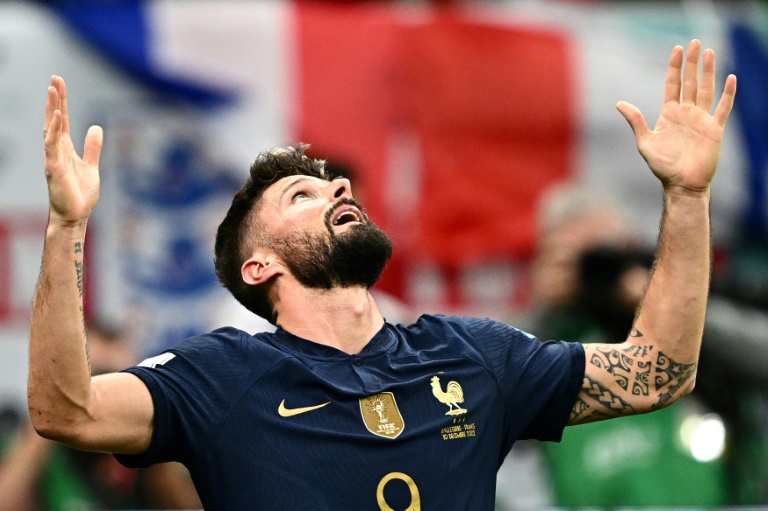
France will face the surprising north Africans in a semi-final on Wednesday, earning their place when Olivier Giroud’s header proved the difference at Al Bayt Stadium.

In a tense match, Aurelien Tchouameni’s strike opened the scoring with 17 minutes gone, but Kane brought England level from the penalty spot early in the second half.

England were the best side for large parts of the match but Giroud scored when it mattered most, rising above Harry Maguire to nod the ball into the net on 78 minutes for his 53rd goal for France.

As England desperately searched for an equaliser, they were thrown a late lifeline when Theo Hernandez needlessly shoved over Mason Mount and the referee gave a spot-kick following a VAR review.

But Kane blasted his kick high over the crossbar, spurning the chance to send the game into extra time.

He was the first England player to sink to his knees at the final whistle, his head in his hands. 

“We gave them a little ammunition with two penalties, but it is with hearts and guts that we held onto this result,” France coach Didier Deschamps said. 

“It’s fabulous because it was a big match against a very good English team. 

“We responded once again, it’s wonderful to reach the last four again, you have to savour it, a World Cup semi-final is quite something.”

England coach Gareth Southgate said he had told his players, “I don’t think they could have given any more”.

“They’ve played really well against a top team. It’s fine margins and things at both ends that have decided the game,” Southgate added. 

– Moroccan joy –

Only the most fervent Morocco fan would have bet on their side reaching the World Cup semi-finals before the tournament kicked off.

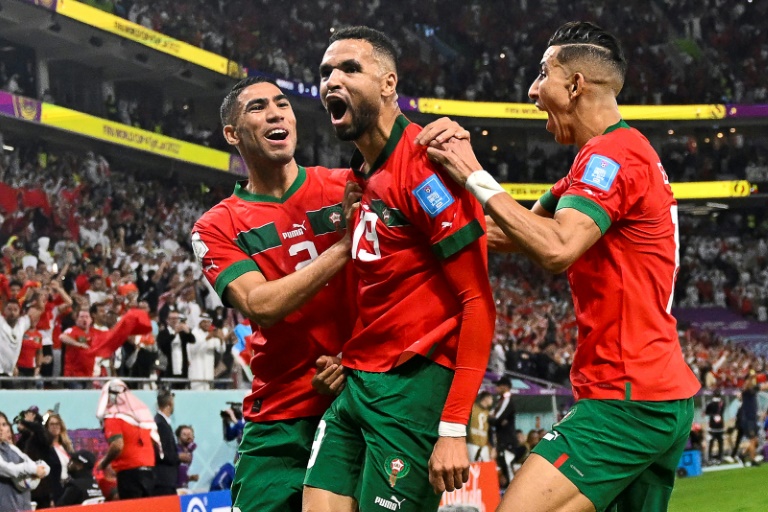
On Saturday, they beat Cristiano Ronaldo and Portugal 1-0 thanks to Youssef En-Nesyri’s first-half header to go further than any African team ever has at a World Cup.

Morocco, ranked 22 in the world before the tournament started, have surpassed the three other African sides to reach the quarter-finals — Cameroon in 1990, Senegal in 2002 and Ghana in 2010.

Ronaldo, who came on as a second-half substitute, was unable to rescue his side and at the final whistle walked off down the tunnel wiping away tears without acknowledging either his teammates or the victorious Moroccans.

Ronaldo, 37, who with Lionel Messi has dominated world football for the past two decades, has likely played his last World Cup match after making a world record-equalling 196th international appearance at the Al Thumama Stadium in Doha.

The Moroccans have wildly surpassed expectations in Qatar and coach Walid Regragui lauded the battling spirit of his injury-hit side.

“We’re drawing on all we have, we still have guys injured. I told the guys before the match we had to write history for Africa. I’m very, very happy,” Regragui said.

As their national team made history, crowds gathered in Casablanca and chanted “Qualified! Qualified!”

There were also celebrations across the Arab world and in Europe as Morocco are also the first Arab team to reach a World Cup semi-final. 

“My heart will stop, what a team, what stamina, what an achievement,” Ilham El Idrissi, a 34-year-old woman, told AFP in Casablanca. 

Argentina and Lionel Messi will face 2018 losing finalists Croatia in the other semi-final after the Croatians dumped out pre-tournament favourites Brazil on Friday.

The five-time champions crashed out in dramatic fashion, losing on penalties after a 1-1 draw, while Argentina survived a fightback from the Netherlands to also win in a shootout.

Brazil star Neymar said he was contemplating retiring from international football after the crushing loss, but on Saturday Brazilian legend Pele urged him to “keep inspiring us”.

“I’m 82 years old, and after all this time, I hope I’ve inspired you in some way to get this far… Your legacy is far from over,” Pele wrote on Instagram.

Neymar had equalled Pele’s official Brazil scoring record of 77 international goals in Friday’s match.

Morocco make it fourth time lucky for Africa at World Cup

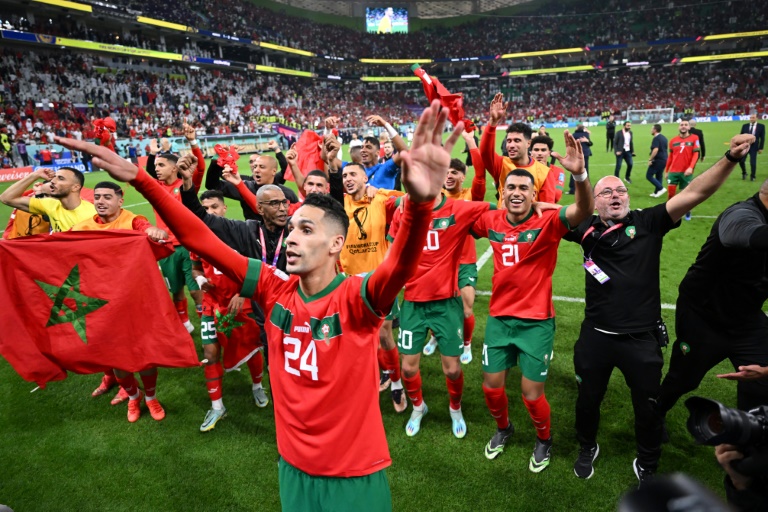
Morocco’s 1-0 victory over Portugal on Saturday made them the first African team to reach the last four of a World Cup.

Three African teams had fallen in the quarter-final stage before Walid Regragui’s side finally ended the continent’s long wait for a semi-final spot.

Cameroon in 1990, Senegal in 2002 and Ghana in 2010 had all made strong runs in the tournament but were unable to go beyond the last eight.

– Cameroon’s pioneers –

The first African team to reach the quarters were Cameroon in Italia ’90 where the ‘Indomitable Lions’, having beaten Colombia in the last 16, came up against Bobby Robson’s England.

David Platt put England ahead in the 25th minute but the introduction of the 38-year-old Roger Milla at the break sparked a turnaround.

Milla won a penalty which Emmanuel Kunde converted in the 61st minute and then four minutes later set Eugene Ekeke to put the African side ahead.

But Gary Lineker’s 83rd minute penalty took the game into extra-time and the England poacher struck again in the 105th minute to end Cameroon’s dream.

Despite the defeat Cameroon took a deserved lap of honour at the San Paolo stadium in Naples having won many hearts and much respect with their performances which began with a 1-0 win over Argentina in their opening group game.

– ‘Golden Goal’ ends Senegal surge –

Senegal’s run to the last eight in South Korea and Japan was all the more impressive given it was their first appearance in a World Cup tournament.

The Lions made a grand entry beating the defending champion and favourite France 1-0 in the opening match.

That shock victory was followed up draws with Denmark (1-1) and Uruguay (3-3) to set up a round of 16 clash with Sweden which was won 2-1 thanks to two goals from Henri Camara, the second the match-winning ‘golden goal’ in extra-time.

Turkey were the opponents in the last eight but this time the golden goal rule proved to be the undoing of the Africans — after the game ended goalless in 90 minutes, Ilhan Mansiz struck four minutes into extra-time to send the Turks through.

That was the last ‘golden goal’ scored in a men’s international tournament, with FIFA returning to normal extra-time for the 2006 edition.

– Gyan and Ghana’s agony-

Until Saturday’s Moroccan success, the nearest an African team had been to the last four was in 2010 when Ghana were a last-second penalty away from the semi-finals.

The game finished 1-1 after normal time with Sulley Muntari cancelling out Diego Forlan’s opener.

In the final moments of extra-time Uruguay forward Luis Suarez prevented a certain goal with a deliberate handball on the goalline to deny Ghana a winner.

Suarez was sent off but Asamoah Gyan smashed the resulting spot kick against the bar and Uruguay then won the penalty shoot-out

Morocco fans celebrate the impossible and ask for more

As their national team made history, crowds gathered in Casablanca on Saturday evening and chanted “Qualified! Qualified!”

Morocco beat Portugal 1-0 in Qatar to become the first African or Arab team to reach a World Cup semi-final. 

“My heart will stop, what a team, what stamina, what an achievement,” Ilham El Idrissi, a 34-year-old Casablanca woman, told AFP. 

She was not alone in hailing the team known as the Atlas Lions.

“I think I am dreaming awake. Pinch me! What a huge pride. I thank them from the bottom of my heart,” said Mouad Khairat, 29, an executive in a call centre. 

“The Moroccan team has managed to do the impossible. We want the cup now.”

The collective celebrations that greeted the final whistle are becoming a habit across the kingdom.  

Morocco topped their group, beating Canada and Belgium and then eliminated Spain on penalties in the round of 16 before overcoming Portugal. 

“There is no such thing as impossible in soccer, that’s the magic of this sport”, former Moroccan international Abderrazak Khairi told AFP.

Khairi scored twice in the surprise 3-1 victory over the same opponents, Portugal, in the 1986 World Cup in Mexico, when Morocco became the first African nation to reach the knockout rounds.  

No African or Arab country had managed to go beyond the quarter-finals. Cameroon in 1990, Senegal in 2002 and Ghana in 2010 came closest to reaching the final four of the most prestigious tournament. 

“The Moroccan team has managed to do the impossible. We want the cup now,” said Ali Gyme, 24. 

In Casablanca, the temple of Moroccan football, the shirts of the national team and the red flags with the green star, are everywhere in the windows, the stalls, the markets. 

Giant frescoes have appeared showing Chelsea attacker Hakim Ziyech and coach Walid Regragui, who has been elevated to the rank of national hero.  

Regragui took over the team less than three months before the start of the competition after Vahid Halilhodzic was fired.  

Beyond the borders of the kingdom, the Moroccan team has been cheered in the African continent and the Arab world.  

After the victory over Spain, broadcaster Al Jazeera spoke of “the wave of euphoria” across the Arab world. 

“Cheers rang out from Tunis, Beirut, Baghdad, Ramallah and other cities as Arabs gathered to rejoice in the largely unexpected victory over Spain — a contrast to the political differences that have long divided Arab nations,” the Qatari TV site said. 

Weekly publication TelQuel agreed.

“It is the World Cup of recovered pride,” it wrote. “It is the World Cup of the voiceless who shout their joy and vent their frustration at a newfound visibility and a rehabilitated self-esteem.”

Morocco make World Cup history before France face England

Morocco became the first African team ever to reach the semi-finals of a World Cup when they beat Portugal 1-0 on Saturday, before reigning champions France take on England in a mouth-watering clash.

Youssef En-Nesyri’s first-half header secured a historic win for Morocco, who will play France or England for a place in the final.

Morocco have surpassed the three other African sides to reach the quarter-finals — Cameroon in 1990, Senegal in 2002 and Ghana in 2010.

Cristiano Ronaldo, who came on as a second-half substitute, was unable to rescue his side and at the final whistle walked off down the tunnel wiping away tears without acknowledging either his teammates or the victorious Moroccans.

Ronaldo, 37, who with Lionel Messi has dominated world football for the past two decades, has likely played his last World Cup match after making a world record-equalling 196th international appearance at the Al Thumama Stadium in Doha.

The Moroccans have wildly surpassed expectations in Qatar and coach Walid Regragui lauded the battling spirit of his injury-hit side.

“We came up against a really great Portugal team. We’re drawing on all we have, we still have guys injured. I told the guys before the match we had to write history for Africa. I’m very, very happy,” Regragui said.

– Mouth-watering clash –

Reigning champions France take on England in a World Cup knock-out match for the first time in Saturday’s second quarter-final.

France have overcome a series of injuries to key players to reach the last eight in their title defence, inspired by Kylian Mbappe, the tournament’s leading scorer with five goals.

“Kylian will always be Kylian, with the ability to be decisive at any moment,” said coach Didier Deschamps, who is bidding to become the first coach to win back-to-back World Cups since World War II.

England are the joint-highest scorers in the tournament with 12 goals after cruising past African champions Senegal 3-0 in the previous round.

They are still waiting for a first major title since the 1966 World Cup, after losing to Croatia in the semi-finals four years ago before a penalty shootout loss to Italy in the European Championship final at Wembley last year.

“Those big matches are important reference points for the team,” said England coach Gareth Southgate.

“There have been some defeats that hurt that prepare you for nights like tomorrow where you have to be the very best version of yourself. We are ready to fight France for that place in the semi-finals.”

The tournament is wide open after favourites Brazil were dumped out in the quarter-finals on Friday.

The five-time champions crashed out in dramatic fashion, losing to Croatia on penalties after a 1-1 draw, while Lionel Messi’s Argentina survived a fightback from the Netherlands to win in a shootout.

Neymar said he was unsure of continuing in international football after Brazil’s crushing shootout loss, but on Saturday Brazilian legend Pele urged him to “keep inspiring us” .

“I’m 82 years old, and after all this time, I hope I’ve inspired you in some way to get this far… Your legacy is far from over,” Pele wrote on Instagram.

Neymar had equalled Pele’s official Brazil scoring record of 77 international goals in Friday’s match.

Kenya's Maasai swap lion hunts for sports to display their prowess

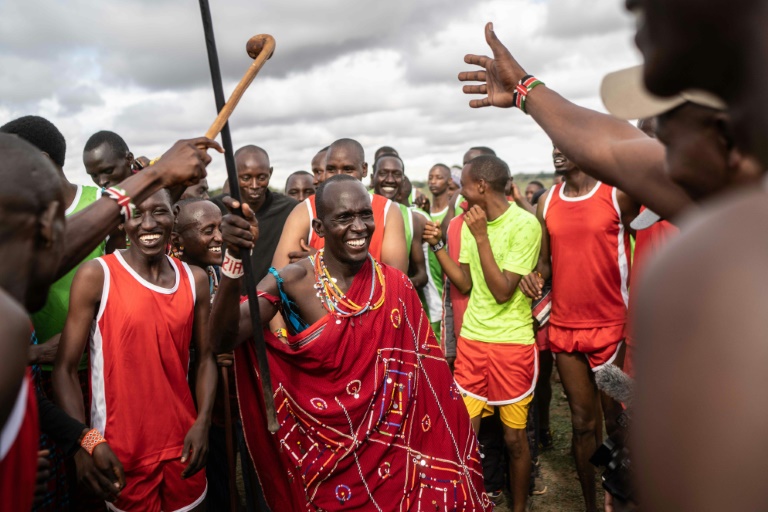
In a Kenyan reserve near Africa’s highest mountain, Maasai youths on Saturday swapped traditional lion hunts for a series of sporting events to test and display their prowess and strength.

For generations, Maasai warriors had to kill a lion as part of the “Olamayio” rite to prove their skills, identify their leaders, and attract girlfriends. 

But as the numbers of lions in Kenya plummeted from about 30,000 in the 1970s to just over 2,000 today, community leaders and conservation group Big Life Foundation created the “Maasai Olympics” a decade ago to replace hunting with sport. 

Draped in colourful costumes and sporting beads, dozens of athletes took part in the fifth edition of the biannual event.

The competition in Kimana reserve, near Mount Kilimanjaro, drew some 160 participants, including 40 women and is credited with playing a stellar role in lion conservation.

“It has dropped lion killing to near zero,” in the region, Tom Hill, co-founder of the Big Life Foundation, told AFP.

“There are only 23,000 lions left in Africa and the figure is declining,” he warned.

The sanctuary where the games are held is part of the famed Amboseli–Tsavo ecosystem and near the Tanzanian border.

The games are a “good way to preserve our lands,” said 30-year-old Joseph Lekatoo, who has been competing since 2012. 

Esther Sereya, 20, agreed, adding: “We are learning a lot about the animals.”

Lions are sometimes hunted for attacking livestock, Hill said, adding that the foundation has a fund to compensate herders.

The games saw participants sprint on a hard dirt track for distances ranging from 100 metres (328 feet) to 5,000 metres. 

Other competitions have been adapted to local customs: wooden clubs known as ‘rungus’ and used to ward off hyenas are used instead of discuses in throwing events. 

In a revisited high jump event, the goal is to leap into the air to touch a rope with the top of one’s head, like the traditional Adumu dance performed at ceremonies. 

– ‘Now I hunt medals’ –

Since its inception, the event has been sponsored by David Rudisha, a two-time Olympic champion and world record holding sprinter who is also Maasai.

“We are doing this event for conservation,” he said.

Elder Maasai men were all praise for the games.

“I killed two lions when I was young,” 66-year-old herder Lenkai ole Ngola told AFP.

“But today, it is important to protect them, because their numbers are declining and also because they provide jobs for young people, he said, referring to tourism.

Lions are threatened by poaching as well as an unprecedented drought affecting Kenya.

Following several failed rainy seasons, the land on the Kimana reserve is scorched due to the worst drought in the area in 40 years.

The winners of the various events do not receive medals but are rewarded with cattle, scholarships or money. 

Lekatoo, who won the javelin throw, said: “Now, I am hunting the medals, I am not hunting lions.” 

Tunisians protest president ahead of polls

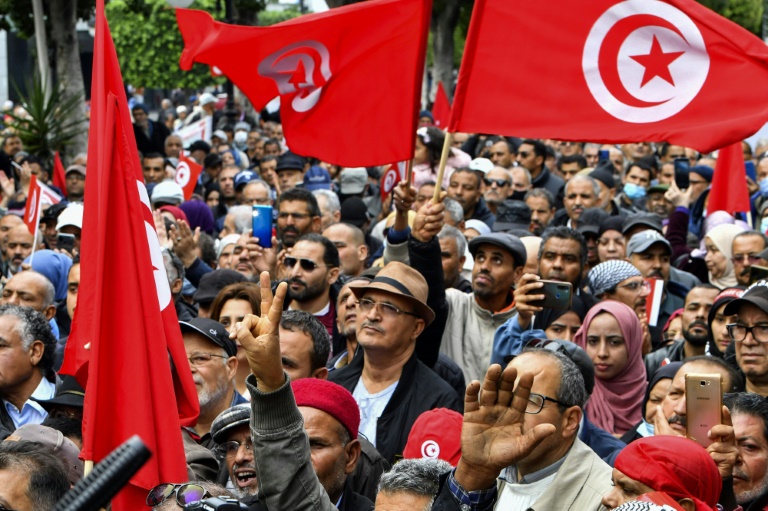
Hundreds protested in Tunisia Saturday against President Kais Saied ahead of parliamentary elections that represent the latest consolidation of a power grab he began in July last year. 

The protests were organised by political parties that have been marginalised by Saied — first by him firing the government and suspending parliament last year, then by a new constitution. 

“Freedoms, freedoms — the police state is finished!” protesters shouted. 

Demonstrators marched in central Tunis holding aloft banners with the words “resign” and others complaining that people have become “poorer and hungrier”, AFP correspondents saw.

Elevated food prices and shortages of basic goods reflect a long-running economic crisis in the North African country.

After protests toppled longtime dictator Zine El Abidine Ben Ali in 2011, Tunisia established a democracy that was quickly riven by factional infighting.

Saied’s moves since July last year, while initially welcomed by some, have raised fears among others that the only democracy to emerge from the Arab Spring protest movements is headed back to autocracy. 

The economy has been struck by the coronavirus pandemic and the spike in commodity prices driven in large part by Russia’s invasion of Ukraine. 

The International Monetary Fund in October announced agreement on a $1.9 billion rescue package for Tunisia, on condition of reforms. 

Opposition parties are boycotting parliamentary elections set for December 17, saying the new electoral law is part of Saied’s “coup”.

Close Bitnami banner
Bitnami