Africa Business

Burkina Faso to raise 150 million euros for war fund

The Burkina Faso government has announced plans to raise 152 million euros for a “fund to support the war” against a bloody jihadist insurgency.

The fund “should enable us to raise 100 billion CFA for the year” 2023, Economy Minister Aboubacar Nacanabo said on Friday after talks with President Ibrahim Traore, employers and social partners.

“As part of the fight against terrorism, the government has decided to recruit 50,000 members of the Volunteers for the Defence of the Fatherland,” or VDP, the minister said.

The civilian auxiliaries who support the army would be paid 60,000 CFA a month, or 91 euros, he added.

“Beside this cost, weapons have to be bought to equip them, uniforms to fit them out, vehicles and fuel to move them,” Nacanabo said.

He also floated the “idea” of a one percent levy on all salaries, including those of members of parliament, and a sales tax on drinks, cigarettes, internet and luxury goods to help cover the costs of the fighting that has spread from Mali since 2015.

Prime Minister Apollinaire Kielem de Tembela last week asked France for arms and munitions for the auxiliaries.

The VDP auxiliary force was set up in late 2019 and provides two weeks’ military training for surveillance, information-gathering or escort duties. 

But hundreds of volunteers have been killed in ambushes or by roadside bombs. 

Despite the losses, 90,000 people signed up during a recruitment drive for the VDP in November, according to the authorities.

Burkina Faso has experienced two military coups this year, driven by army officers angered at the failure to tackle the jihadist threat.

But the number of attacks linked to the Islamic State group and Al-Qaeda have increased in recent months, particularly in the north and east of the landlocked nation in the heart of the Sahel.

Captain Ibrahim Traore, who took over as president after a coup on September 30, has declared his intention to win back territory occupied by the “terrorist hordes”.

'I decided to run': Survivors recount escape from DR Congo massacre

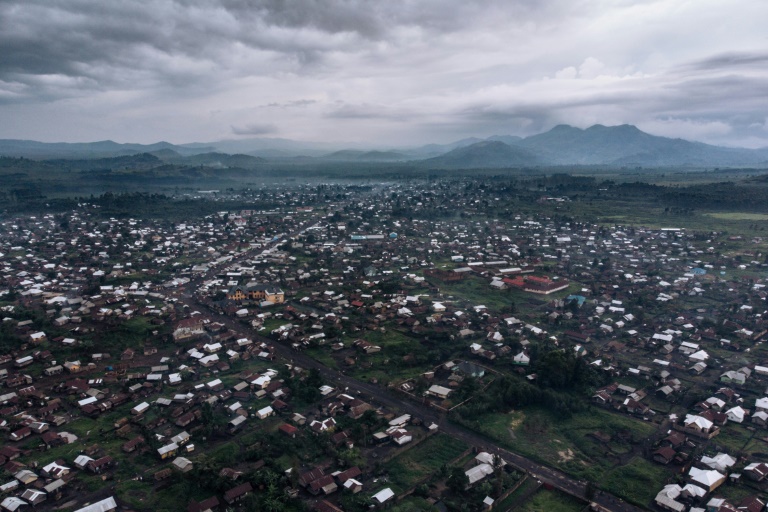
In a displacement camp in eastern Democratic Republic of Congo, Eric, Samuel, Tuyisenge and Florence recounted walking for miles to flee a horrific rebel attack on their village.

M23 rebels massacred at least 131 civilians — including 12 children — and committed more than two dozen rapes on November 29-30 in two villages in Rutshuru territory, including Kishishe, the United Nations says.

The group has denied any responsibility, blaming “stray bullets” for the deaths of just eight civilians.

But in the Mungote camp, Eric Nesehose said he could not forget seeing his nephews Jacques and Musayi gunned down before his eyes.

“They went out of the house, shouting ‘there’s gunfire’,” he said.

“Bullets hit them at the door and killed them instantly.”

Fleeing for their lives, Eric and other villagers walked 40 to 60 kilometres (25 to 37 miles) across the hills to the Mungote camp in Kitshanga district.

Samuel said he saw six dead bodies — three villagers and three members of his own family, including his elder brother James.

“The rebels started shooting everywhere,” the young man said.

“I decided to run and it took me a week to get here by foot.”

Eastern DRC has been restive for years, and is home to dozens of armed groups.

The March 23 movement, a mostly Congolese Tutsi group, resumed fighting in late 2021 after lying dormant for years.

It has in recent months seized control of swathes of land in Rutshuru territory north of Goma city.

The UN’s MONUSCO peacekeeping mission has said it was not able to reach Kishishe and neighbouring Bambo to investigate last month’s killings, but gathered evidence from witnesses and other sources.

It says the violence against civilians was in reprisal for clashes between the M23 and other, mostly Hutu armed groups.

– Four children missing –

In Mungote, 30-year-old Twisenge Manirakiz said most of her family had gone missing in the massacre.

“We were in the church when we heard the bullets,” she said, carrying a young child in a bundle on her back.

“Everybody ran in one direction or the other to try to save themselves. Some hid behind the school, and when the gunfire continued, they ran into the bush.”

“I saw nine bodies on the ground,” she added, tears in her eyes.

“I have seven children, but I arrived here with just three. The other four have disappeared and I have no idea where my husband is,” she said.

Nearby, amid the huts, 45-year-old Florence said she had to walk for days to reach the camp.

She too said her husband and two of her children were missing.

Like most of the displaced, she arrived with just the clothes on her back.

“People who pity me give me sweet potatoes,” she said.

Mungote has long welcomed those displaced by conflict in eastern DRC, including civilians who fled a previous M23 offensive in 2012, when the rebels briefly overran the main city of Goma.

Camp officials said 40,000 households already lived there before the latest bout of violence, and 4,000 more have arrived in recent weeks, stretching resources.

“Up to four families are sleeping in a single hut — men, women and children,” the camp’s deputy head Vumilia Peruse said.

“They arrive with nothing… The authorities must intervene as soon as possible to avoid a disaster.”

Spain shock New Zealand at World Rugby Sevens

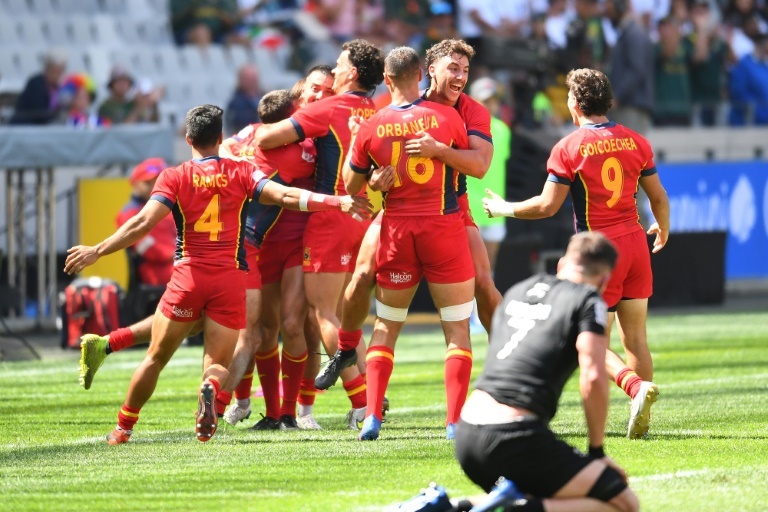
Mighty New Zealand suffered a shock start to their bid for the World Rugby Sevens Series at the Cape Town Stadium when they slipped to a 14-10 defeat at the hands of outsiders Spain on Friday. 

Australia also had a setback on the opening day when they lost to Great Britain but it was the defeat of New Zealand, the most successful team in the history of the series, that was the big surprise in the men’s event. 

New Zealand, who reached the semi-finals of last week’s tournament in Dubai, produced an error-ridden display against a tigerish Spanish team. 

The Spanish were good value for a 7-0 lead at half-time, with Manu Moreno scoring a try after the hooter following a period of sustained pressure.

New Zealand hit back with an unconverted try by Regan Ware immediately after the break but Spain made virtually certain of victory when Juan Ramos scored in the last minute.

New Zealand’s Moses Leo scored with seconds remaining but there was no time to push for a New Zealand win.

New Zealand will have to defeat Argentina and Kenya in their remaining pool matches on Saturday in order to have a chance of continuing their dominance in South Africa, where they have won 11 of the 21 World Series tournaments held in the country.

Australia, joint leaders after two rounds of the current 2023 series, went down 21-19 to Great Britain.

Australia, who won the opening leg of the 2023 series in Hong Kong, fought back from a 7-5 half-time deficit to lead Great Britain 19-14 but were thwarted by a long range try under the posts by Femi Sofolarin in the last minute. 

They play the United States and Uganda in pool matches on Saturday.

South Africa, winners in Dubai and joint series leaders with Australia, opened their campaign with a 17-7 win over Canada. 

The host nation are seeking their first home tournament win since 2015, the first year in which the event was held in Cape Town.

Other men’s winners on the first day were Fiji, Samoa, Ireland, Argentina and the United States.

In contrast to their men’s teams, Australia and New Zealand gained two wins each in the women’s competition.

Australia, who won the opening women’s tournament in Dubai, scored 90 points without reply. They demolished South Africa 52-0 and defeated Spain 38-0.

New Zealand, runners-up in Dubai, beat Brazil 31-7 and Great Britain 19-7.

The United States, Fiji and Ireland also won twice.

China's Xi promotes Mideast security, energy ties at Saudi summits

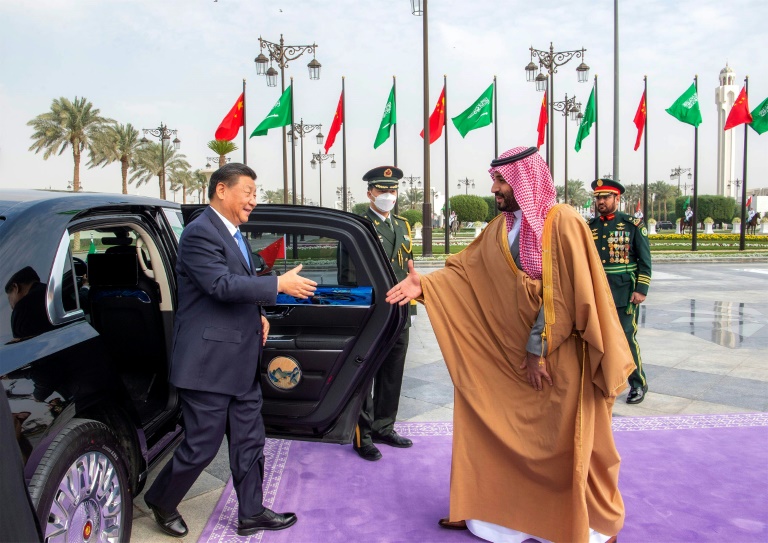
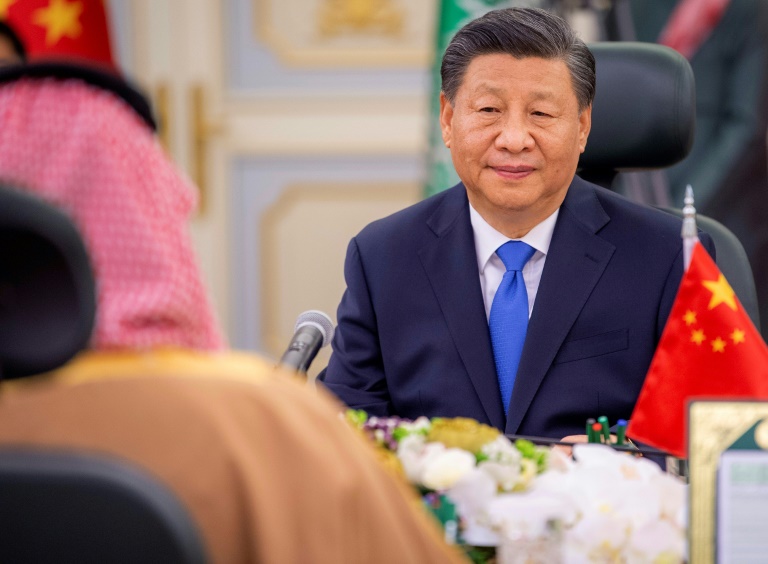
Chinese President Xi Jinping on Friday touted close security and energy ties with Gulf nations during summits in Saudi Arabia that have highlighted tensions with Washington.

On the third and final day of his visit, Xi attended a gathering of the six-member Gulf Cooperation Council and a broader China-Arab leaders’ meeting.

It was only Xi’s third journey outside China since the coronavirus pandemic began.

Friday’s talks followed bilateral sit-downs on Thursday with Saudi royals that yielded a joint statement stressing “the importance of stability” in oil markets — a point of friction with the United States, which has urged the Saudis to raise production.

“China will continue to firmly support the GCC countries in maintaining their own security… and build a collective security framework for the Gulf,” Xi said on Friday at the start of the China-GCC summit.

“China will continue to import large quantities of crude oil from GCC countries on an ongoing basis,” he said, also vowing to expand other areas of energy cooperation including liquefied natural gas imports.

Additionally, Xi said China would make full use of a Shanghai-based platform “to carry out RMB [yuan] settlement of oil and gas trade” — a move that, if Gulf countries participate, could weaken the global dominance of the US dollar.

Asked at a press conference, as the summits came to close Friday evening, if Riyadh would agree to such a scheme, Saudi Foreign Minister Prince Faisal bin Farhan said he had “nothing to add”.

Oil from Saudi Arabia alone accounted for 17 percent of China’s imports last year, and last month Qatar announced a 27-year natural gas deal with China.

– Rejecting ‘polarity’ – 

Xi’s visit comes amid persistent rancour between Saudi Arabia and the US, its long-time partner and security guarantor, over oil production, human rights issues and regional security. 

It follows US President Joe Biden’s trip to Jeddah in July, before midterm elections, when he failed to persuade the Saudis to pump more oil to reduce prices.

Xi’s arrival in the kingdom on Wednesday earned a rebuke from the White House, which warned of “the influence that China is trying to grow around the world”. 

Washington called Beijing’s objectives “not conducive to preserving the international rules-based order”.

Saudi officials have repeatedly stressed that they value deep ties with Washington but will not hesitate to explore relationships elsewhere.

“We are very much focused on cooperation with all parties and I think competition is a good thing,” Prince Faisal said on Friday, adding that Riyadh will also continue to have strong relations with the US “across the board”. 

“We will continue to work with all of our partners and we don’t see it as a zero-sum game by any means,” he added.

“We don’t believe in polarity.”

– Trade talks –

Crown Prince Mohammed bin Salman, Saudi Arabia’s 37-year-old de facto ruler, addressed both summits on Friday, promising “continuing Arab-Chinese cooperation to serve our common goals and aspirations of our peoples”.

The Gulf countries, strategic partners of Washington, are bolstering ties with China as part of an eastward turn that involves diversifying their fossil fuel-reliant economies. 

At the same time China, hit hard by its Covid lockdowns, is trying to revive its economy and widen its sphere of influence, notably through its Belt and Road Initiative which provides funding for infrastructure projects around the world. 

One area of focus for the China-GCC summit was a free trade agreement under discussion for nearly two decades. 

Drawing those negotiations to a close would be “a matter of prestige for Beijing”, said Robert Mogielnicki of the Arab Gulf States Institute in Washington.

“It’s not as simple for the GCC states, which seem to be more invested in advancing bilateral ties and are engaged in varying degrees of regional economic competition with their neighbouring member states.”  

No breakthrough was announced on Friday.

rcb/jsa

Biden backs African Union spot in G20

US President Joe Biden at a summit next week will back a permanent spot for the African Union in the Group of 20 major economies, seeking to elevate the continent’s role, the White House said Friday.

Biden will make the announcement during a three-day US-Africa Summit that opens Tuesday in Washington, where the administration will make a case for US commitment to the continent amid inroads by China and Russia.

“It’s past time Africa has permanent seats at the table in international organizations and initiatives,” said Judd Devermont, the senior director for African affairs at the National Security Council.

“We need more African voices in international conversations that concern the global economy, democracy and governance, climate change, health and security,” he said.

He said the United States would discuss the African Union’s role with India, the G20 president for 2023.

South Africa currently is the only African member of the G20, which was launched in its current form during the 2008 financial crisis as a way to bring together the world’s top economies. The European Union participates.

Biden’s pledge on the G20 comes after he threw his support behind expansion of the UN Security Council, including representation of Africa, during a speech to the world body in September.

While few expect quick changes at the Security Council, the stance pits the United States against China and especially Russia which are seen as opposed to any move to dilute their veto power.

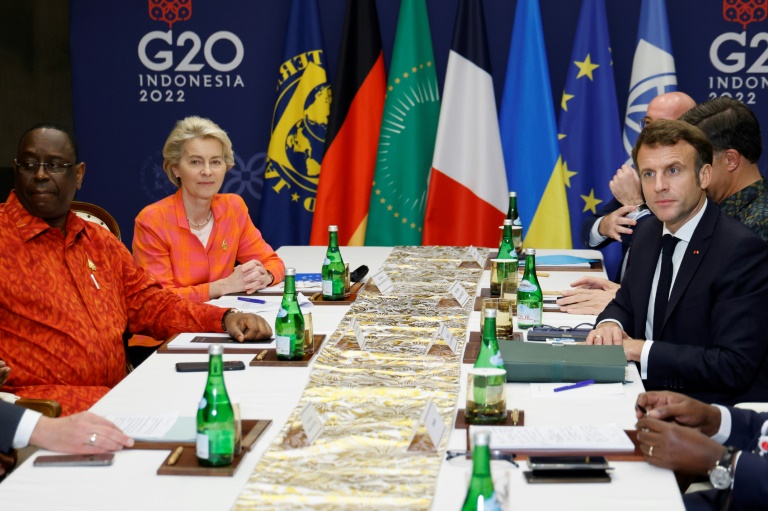
The Biden administration has backed the African Union’s diplomatic role on the continent and sought warm ties with the bloc’s current chair, Senegalese President Macky Sall, who is expected at the Washington summit.

Host Indonesia invited Sall to take part in the latest G20 summit last month in Bali.

Arab rivalries set aside for Morocco's World Cup run

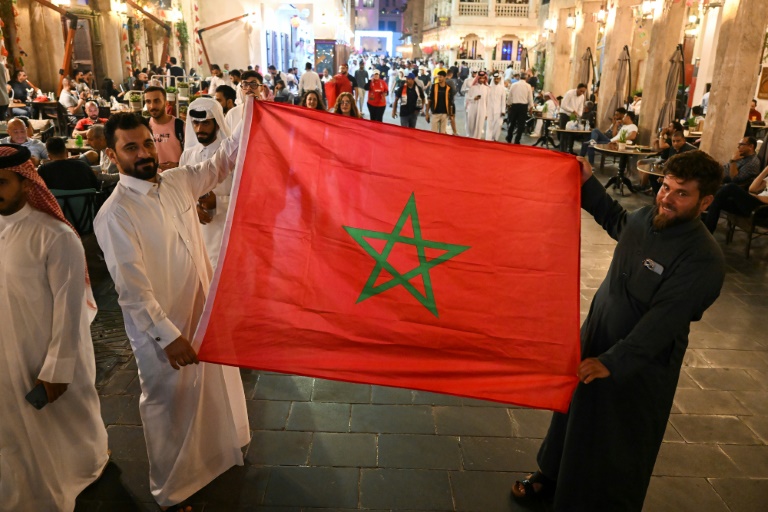
The T-shirt on sale at Doha’s main market declares “Our blood is Arab”, and that is the mood buoying Morocco as it prepares to become on Saturday the first Arab nation to play a World Cup quarter-final.

Regional rivalries are being forgotten. Morocco’s red flag with a green star is becoming a best-seller seen across Doha ahead of their clash with Portugal.

The flag — along with those of Qatar, Tunisia and Saudi Arabia — features on the “Our blood is Arab” T-shirt selling at Doha’s Souq Waqif market.

Organisers of the first World Cup in the Middle East have long portrayed the tournament as a chance to build up Arab fervour.

Omar Babiker, an Algerian, is dreaming of Morocco reaching the last four even though his country has strained ties with its neighbour.

After decades of mistrust over the disputed Western Sahara territory, Algeria severed diplomatic relations in 2021 over “hostile actions”.

But Oran businessman Babiker, who is in Doha with his son, echoed the feelings of many Arabs when he told AFP: “Politics is for politicians.

“I am with Morocco. Morocco is like Algeria. I hope they go a long way.”

Morocco’s run has inspired similar joy across the Arab world. Many leaders sent messages of congratulations to the team after they beat Spain on Tuesday.

Libyans set off fireworks in Tripoli despite their country’s conflict and economic crisis. 

In war-ravaged Syria, Mustafa Yassin, a dentist in the city of Idlib, honoured a Facebook pledge to treat 20 people for free if Morocco reached the quarter-finals.

Lebanon’s French-language L’Orient-Le Jour newspaper put the team on its front page, proclaiming: “Pride of the Arabs”.

– ‘Arab dream’ –

Moroccan student Osama al-Qabbani, 26, had been feeling far from home in Doha. But he said: “The huge number of Arabs who support Morocco makes me feel like I’m in Casablanca or Rabat.”

Egyptian teenager Mohi Khaled wrapped himself in a Moroccan flag bought for 25 riyals ($6.80) as he joined the intense hunt for a ticket to Saturday’s game. 

“Morocco represents a beautiful Arab dream that makes us all happy,” he said.

After defeating Spain on penalties to seal their entry into the quarter-finals, Morocco’s players have been praised on social media for celebrating with the Palestinian flag, another feature of festivities in Souq Waqif’s cafes.

Qatar, backing Palestinian claims to statehood, has refused to follow Gulf neighbours the United Arab Emirates and Bahrain by normalising ties with Israel.

In December 2020 Morocco also recognised Israel, though that hasn’t dented the pan-Arab sentiment supporting the team.

Arab pride did suffer at seeing hosts Qatar fall in the first round without a point from three games. Saudi Arabia beat Argentina, however, and Tunisia defeated France.

Pan-Arab celebrations have been prominent during the tournament. Despite Saudi Arabia’s role in a Gulf blockade of Qatar from 2017 to 2021, Qatar’s emir and Saudi’s de facto ruler draped themselves in each other’s colours at the tournament.

Many Qataris have adopted the Moroccan and Palestinian flags for the World Cup. Qatar fan Mohammed Fakhro, 52, said Morocco had “made up” for his team’s early exit.

Former Moroccan international Talal al-Karkouri said the public support has played a decisive role in Morocco’s results.

“The massive presence of the fans affected the opponent and pushed the players to get results,” he told AFP.

In a taste of what may greet Portugal on Saturday, two Portuguese fans were faced with chants of “Dima (always) Morocco, Fifa (Long live) Morocco” as they walked through waves of Moroccan red shirts at Souq Waqif.

The quarter-final would be like “playing Morocco on their home ground”, said Portuguese fan Fernando Lobo, 56.

China's Xi promises security, energy cooperation at Saudi summits

Chinese President Xi Jinping on Friday touted close security and energy ties with Gulf nations during summit meetings in Saudi Arabia that have highlighted tensions with Washington.

On the third and final day of his visit, Xi attended summits of the six-member Gulf Cooperation Council and a broader China-Arab leaders’ meeting.

This is only Xi’s third journey outside China since the coronavirus pandemic began.

The discussions came one day after bilateral sit-downs with Saudi royals yielded a joint statement stressing “the importance of stability” in oil markets — a point of friction with the United States. Washington has urged the Saudis to raise production.

“China will continue to firmly support the GCC countries in maintaining their own security… and build a collective security framework for the Gulf,” Xi said at the start of the China-GCC summit.

“China will continue to import large quantities of crude oil from GCC countries on an ongoing basis,” he said, also vowing to expand other areas of energy cooperation including liquefied natural gas imports.

Oil from Saudi Arabia alone accounted for 17 percent of China’s imports last year, and last month Qatar announced a 27-year natural gas deal with China.

Earlier on Friday, a joint Chinese-Saudi statement spoke of “focusing on emissions rather than sources” in tackling climate change, the approach championed by the resource-rich Gulf monarchies. 

Forty-six bilateral agreements and memorandums of understanding were announced on everything from housing to Chinese language teaching. Both sides are seeking economic and strategic benefits by deepening cooperation. 

However, few details were released despite a Saudi state media report on Thursday that about $30 billion in deals would be signed during Xi’s visit. 

Riyadh and Beijing stressed “deepening relations within the framework of the comprehensive strategic partnership between the two countries, and reaching new and promising horizons”, the statement said. 

Xi’s visit comes during tensions between Saudi Arabia and the United States, its long-time partner and security guarantor, over oil production, human rights issues and regional security. 

It follows US President Joe Biden’s trip to Jeddah in July, before midterm elections, when he failed to persuade the Saudis to pump more oil to calm prices.

– ‘Prestige’ trade deals –

Crown Prince Mohammed bin Salman, Saudi Arabia’s 37-year-old de facto ruler, addressed both summits on Friday, promising “continuing Arab-Chinese cooperation to serve our common goals and aspirations of our peoples”.

The Gulf countries, strategic partners of Washington, are bolstering ties with China as part of an eastward turn that involves diversifying their fossil fuel-reliant economies. 

At the same time China, hit hard by its Covid lockdowns, is trying to revive its economy and widen its sphere of influence, notably through its Belt and Road Initiative which provides funding for infrastructure projects around the world. 

Officials provided few details about the agenda for Friday’s talks, but one potential area of focus was a China-GCC free trade agreement under discussion for nearly two decades. 

Drawing those negotiations to a close would be “a matter of prestige for Beijing,” said Robert Mogielnicki of the Arab Gulf States Institute in Washington.

“It’s not as simple for the GCC states, which seem to be more invested in advancing bilateral ties and are engaged in varying degrees of regional economic competition with their neighbouring member states.”  

A breakthrough on the trade pact could help Saudi Arabia, the Middle East’s biggest economy, diversify its economy in line with the Vision 2030 reform agenda championed by Prince Mohammed. 

Beijing’s foreign ministry has described Xi’s trip as the “largest-scale diplomatic activity between China and the Arab world” since the People’s Republic of China was founded. 

The visit earned a rebuke from the White House, which warned of “the influence that China is trying to grow around the world”. 

Washington called Beijing’s objectives “not conducive to preserving the international rules-based order”.

Whole of Africa behind Morocco at World Cup: Regragui

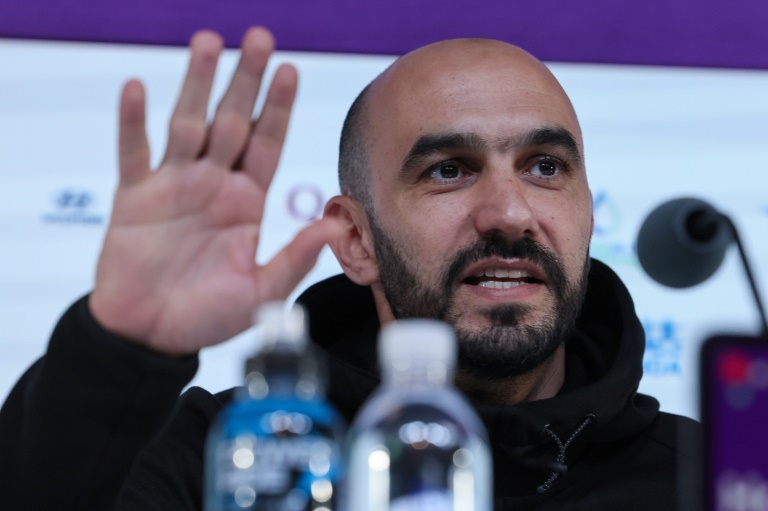
Morocco will have the backing of an entire continent when they attempt to become Africa’s first World Cup semi-finalists by beating Portugal on Saturday, said coach Walid Regragui.

The North Africans will take on Portugal at Al Thumama Stadium as the first Arab nation to reach the last eight after beating Spain on penalties in the last 16.

A World Cup semi-final against either England or France is up for grabs, alongside a place in the history books.

Cameroon in 1990, Senegal’s 2002 side and the 2010 Ghana team all fell at the quarter-final stage.

“We have nothing to lose. The challenge is to do as well as we did in the previous games,” Regragui said on the eve of the match against Portugal.

“We want to show that Africa deserves to be here, Morocco deserves to be here.

“We have a whole people behind us, a continent behind us and the Arab world behind us. That’s a lot of energy behind us. We’re going to try and do everything we can.

“We can do it, we can make history again. It (the support) can push us, help us actually to play with this pressure, not to make any mistakes.”

Morocco have the best defensive record in the tournament, having conceded only one goal in their four matches.

But Regragui warned: “We can’t rest on our laurels. We haven’t got carried away, we’ve just surprised a few people and a few algorithms who expected Belgium or Spain to be in the quarter-finals.”

– Ronaldo factor –

Cristiano Ronaldo was a surprise omission from Portugal’s starting XI for their match against Switzerland in the last 16, with his replacement, Goncalo Ramos, scoring a hat-trick in a 6-1 win.

But Regragui would prefer to see the Portuguese teamsheet without the name of international men’s football’s greatest goalscorer.

“They’re going to be fresh,” he said. “I don’t know if Ronaldo’s going to play, but I hope he doesn’t. I know he’s one of the best players in history so I don’t want him to play.”

Morocco’s success in Qatar has sparked celebrations back home, but also in several European countries where the Moroccan diaspora live.

Fourteen of Regragui’s 26-man squad were born outside the African country.

“People are identifying with us and we’ve managed to unite Moroccans behind this football team,” he said. “I think that’s worth more than anything, it’s worth more than money, it’s worth more than titles.

“We’ve made people happy, we’ve made people proud but that’s not the only reason we’re here — we’re here to win matches and go as far as we can in this tournament.”

Morocco have had a series of injury concerns, with full-backs Achraf Hakimi and Noussair Mazraoui playing despite not being fully fit.

Centre-back Nayef Aguerd hobbled off injured in the Spain match but could be ready to play on Saturday.

“Lots of injuries, people sick. We’ve played lots of games without people 100 percent,” said Regragui.

“I’m proud for that because nobody has seen Morocco at 100 percent power. Aguerd is waiting tomorrow to see if he can play or not.”

China's Xi to hold Arab summits on Saudi trip

Chinese President Xi Jinping will meet Arab leaders at summits in Riyadh on Friday after striking a series of agreements with Saudi Arabia, strengthening ties as the top oil exporter quarrels with Washington.

The leader of the world’s second biggest economy will sit down with regional rulers on the third and final day of his trip, only his third journey outside China since the coronavirus pandemic began.

After talks with King Salman and his 37-year-old son Crown Prince Mohammed bin Salman, the de facto ruler, the two sides stressed “the importance of stability” in oil markets — a point of friction with the United States, which has urged the Saudis to raise production.

In a joint statement, they also spoke of “focusing on emissions rather than sources” in tackling climate change, the approach championed by the resource-rich Gulf monarchies. 

Forty-six agreements and memorandums of understanding were announced on everything from housing to Chinese language teaching. Both sides are seeking economic and strategic benefits by deepening cooperation.

However, few details were released despite a Saudi state media report on Thursday that about $30 billion in deals would be signed during Xi’s visit.

The two sides “stressed the importance of continuing joint action in all fields, deepening relations within the framework of the comprehensive strategic partnership between the two countries, and reaching new and promising horizons”, the statement said.

Xi’s visit comes at a time of tension between Saudi Arabia and the United States, its long-time partner and security guarantor, over oil production, human rights issues and regional security.

It follows US President Joe Biden’s trip to Jeddah in July, before mid-term elections, when he failed to persuade the Saudis to pump more oil to calm prices.

– ‘Prestige’ trade deals –

State television showed leaders from the six-country, resource-rich Gulf Cooperation Council — including the Qatari emir and Bahraini king — arriving at the conference venue in Riyadh on Friday.

Prince Mohammed addressed the group, briefly reiterating the kingdom’s positions on regional issues such as the war in Yemen. They met privately, to be joined later by Xi and his delegation.

A broader China-Arab summit will follow the China-GCC talks.

The Gulf countries, strategic partners of Washington, are bolstering ties with China as part of an eastward turn that involves diversifying their fossil fuel-reliant economies.

At the same time China, hit hard by its Covid lockdowns, is trying to revive its economy and widen its sphere of influence, notably through its Belt and Road Initiative which provides funding for infrastructure projects around the world.

Officials have provided few details about Friday’s agenda, but one potential area is a China-GCC free trade agreement that has been under discussion for nearly two decades. 

“China will want to draw the lengthy negotiations to a close, as FTAs with major trading blocs is a matter of prestige for Beijing,” said Robert Mogielnicki of the Arab Gulf States Institute in Washington.

“It’s not as simple for the GCC states, which seem to be more invested in advancing bilateral ties and are engaged in varying degrees of regional economic competition with their neighbouring member states.” 

A breakthrough on the trade pact could help Saudi Arabia, the Middle East’s biggest economy, diversify its economy in line with the Vision 2030 reform agenda championed by Prince Mohammed. 

China’s foreign ministry has described Xi’s trip as the “largest-scale diplomatic activity between China and the Arab world” since the People’s Republic of China was founded.

The visit has already earned a rebuke from the White House, which warned of “the influence that China is trying to grow around the world”. Washington called Beijing’s objectives “not conducive to preserving the international rules-based order”.

Tuareg festival revives dreams of tourism in troubled Niger

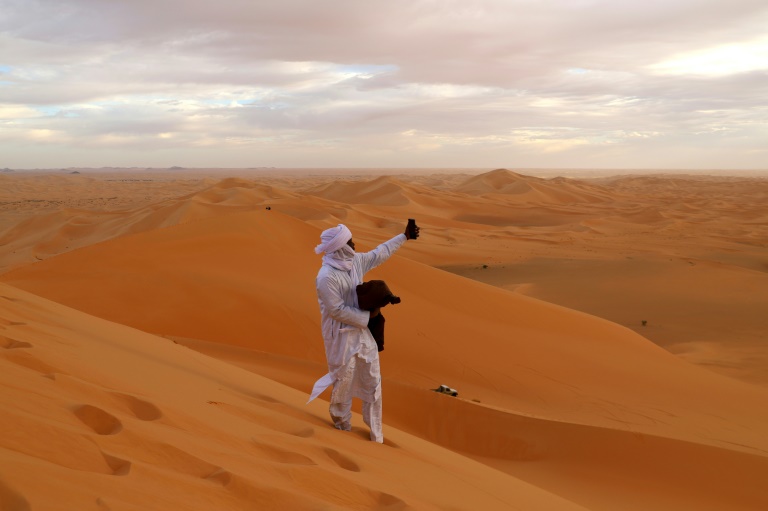
Dishes of spit-roasted lamb were served and the sound of electric guitars echoed across the pink Saharan dunes towards the Air Mountains.

“It’s like playing at home,” said musician Oumara Moctar. 

The desert, he said, “is where we were born, where we grew up, and reminds us of where we come from.”

One of the biggest cultural events in the Sahel region, the Aïr Festival returned last week, bringing the songs, dances and oral traditions of the nomadic Tuareg culture to an audience of thousands — and a burst of hope for jihadist-scarred Niger.

The eagerly-awaited three-day party unfolded in Iferouane, an oasis sandwiched between desert and mountains 1,200 kilometres (750 miles) from the Nigerien capital Niamey.

Some 5,000 people, many of them local VIPs and a few foreigners, replaced the desert’s usual calm with a ballet of 4x4s whipping up plumes of dust.   

After attending concerts and beauty pageants, festival-goers spent long hours reclining on mats where, in between rounds of tea, discussion ranged from the merits of Toyota pick-up trucks to barely-concealed regionalism. 

“Tuareg culture, in a nutshell,” smiled  young Iferouane resident Mohamed Bouhamid.

If not for the pervasive presence of troops to provide security, this scene could have taken place some two decades ago.

The festival, launched in 2001, last took place in 2020. In its prime, well-heeled European visitors beat a path to Niger and neighbouring Mali, and men who are now rebel chiefs worked as tourist guides.

An airline linked Paris directly to Agadez in Niger and to Gao and Kidal in Mali. For many years, the Paris-Dakar rally raced through the desert.

Memories of this halcyon time persist today, despite the two jihadist insurgencies that beset Niger, and its chronic poverty — it is ranked the world’s poorest country by the benchmark of the UN Human Deveopment Index.

– ‘Hysteria’ –

After six French citizens were killed just outside Niamey in 2020, France — previously the main source of tourists — declared Niger a “red zone” and recommended travel there be avoided. 

For those wishing to visit the festival in Iferouane, the French authorities recommended postponement.

Deputy mayor Hamadi Yahaya denounced “these embassies” that “have sparked hysteria” despite the conflict being more than 1,000 kms away from Iferouane. 

Mayor El Gondj Ahmed, or “the Honorable” as he is called locally, repeatedly said “everything is secure here.” 

In addition to the troops, dozens of Ishumars — a name given to former rebels — “have been deployed in the surrounding desert”, said Rhissa Ag Boula, a rebel leader who now serves as an adviser to Nigerien President Mohamed Bazoum.

At nearby Chiriet, the Ishumars’ trucks bearing recognisable white flags remained at a discreet distance. They flanked a rowdy race between some 80 drivers speeding through the sand.  

Rocco Rava, an Italian who manages a tour agency called Societe de Voyages Sahariens (SVS), had returned to the region for the first time in 15 years.

He grew up in the regional capital Agadez where he developed his tourism business before moving to neighbouring Chad when the “turbulence” began in Niger.  

– Tourism and machine guns –

“There is a strong demand,” he said, explaining he had come to Iferouane to check out the  possibility of bringing tourists back. 

But the situation is paradoxical, he said: “If it’s really secure, then tourists ask us why we need to have a military escort.”

Niger requires all Westerners travelling to the desert to be accompanied by an armed escort, for which they must pay. 

“In what country in the world do you do tourism with a machine gun in front of you and another one behind you?” asked another tourism professional, who spoke on the condition of anonymity. 

People must accept that the “before” times are over, said the president of Iferouane’s artisan collective, Kader Hamadede, who has been making jewellery for three decades. 

“The tourism we’ll have from now on will always involve the military, and I don’t know if tourists are interested in that.”

Many local people were downbeat about prospects for a better life and some saw migration or working in the illegal gold mines dotting the Sahara as their only hope.

“There’s nothing more to do here,” said 22-year-old Mohamed Bouamid, who hopes to make his fortune with a four-month stint in the gold business.

Close Bitnami banner
Bitnami