Africa Business

China's Xi to hold Arab summits on Saudi trip

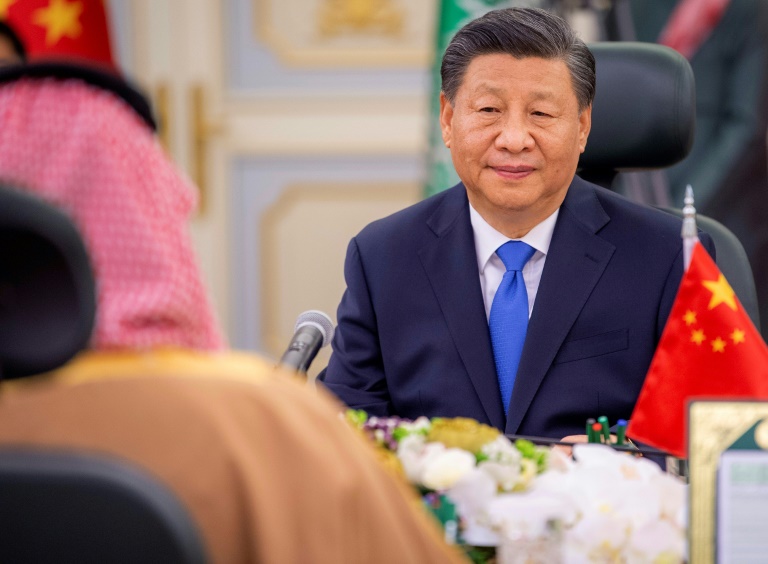
Chinese President Xi Jinping will meet Arab leaders at summits in Riyadh on Friday after striking a series of agreements with Saudi Arabia, strengthening ties as the top oil exporter quarrels with Washington.

The leader of the world’s second biggest economy will sit down with regional rulers on the third and final day of his trip, only his third journey outside China since the coronavirus pandemic began.

After talks with King Salman and his 37-year-old son Crown Prince Mohammed bin Salman, the de facto ruler, the two sides stressed “the importance of stability” in oil markets — a point of friction with the United States, which has urged the Saudis to raise production.

In a joint statement, they also spoke of “focusing on emissions rather than sources” in tackling climate change, the approach championed by the resource-rich Gulf monarchies. 

Forty-six agreements and memorandums of understanding were announced on everything from housing to Chinese language teaching. Both sides are seeking economic and strategic benefits by deepening cooperation.

However, few details were released despite a Saudi state media report on Thursday that about $30 billion in deals would be signed during Xi’s visit.

The two sides “stressed the importance of continuing joint action in all fields, deepening relations within the framework of the comprehensive strategic partnership between the two countries, and reaching new and promising horizons”, the statement said.

Xi’s visit comes at a time of tension between Saudi Arabia and the United States, its long-time partner and security guarantor, over oil production, human rights issues and regional security.

It follows US President Joe Biden’s trip to Jeddah in July, before mid-term elections, when he failed to persuade the Saudis to pump more oil to calm prices.

– ‘Prestige’ trade deals –

On Friday, Xi is to hold talks with the six-country, resource-rich Gulf Cooperation Council and attend a broader China-Arab summit.

The Gulf countries, strategic partners of Washington, are bolstering ties with China as part of an eastward turn that involves diversifying their fossil fuel-reliant economies.

At the same time China, hit hard by its Covid lockdowns, is trying to revive its economy and widen its sphere of influence, notably through its Belt and Road Initiative which provides funding for infrastructure projects around the world.

Officials have provided few details about Friday’s agenda, but one potential area is a China-GCC free trade agreement that has been under discussion for nearly two decades. 

“China will want to draw the lengthy negotiations to a close, as FTAs with major trading blocs is a matter of prestige for Beijing,” said Robert Mogielnicki of the Arab Gulf States Institute in Washington.

“It’s not as simple for the GCC states, which seem to be more invested in advancing bilateral ties and are engaged in varying degrees of regional economic competition with their neighbouring member states.” 

A breakthrough on the trade pact could help Saudi Arabia, the Middle East’s biggest economy, diversify its economy in line with the Vision 2030 reform agenda championed by Prince Mohammed. 

Yet Mogielnicki said the significance of the announcements made during Xi’s trip would only be clear if the projects become reality.

“When it comes to China’s bilateral relations with the Gulf and broader Middle East, one must remember that signing MoUs and making investment pledges is much easier than actually committing capital,” he said. 

Xi’s trip has already earned a rebuke from the White House, which warned of “the influence that China is trying to grow around the world”. Washington called Beijing’s objectives “not conducive to preserving the international rules-based order”.
China's Xi meets Arab leaders on 'milestone' Saudi trip

Chinese President Xi Jinping will meet Arab leaders in the Saudi capital on Friday for summits he has described as “milestone events” at a time of economic uncertainty and geopolitical realignment.

The meetings come on the third and final day of Xi’s first visit to Saudi Arabia since 2016 and only his third overseas trip since the coronavirus pandemic began. 

On Thursday, he met with King Salman and Saudi Arabia’s de facto ruler, Crown Prince Mohammed bin Salman, announcing deals on everything from hydrogen energy to housing, although few details were released. 

Friday’s agenda was expected to include a summit with the six-member Gulf Cooperation Council as well as a broader China-Arab summit.

Egyptian President Abdel Fattah al-Sisi and Tunisian President Kais Saied were among the heads of state who arrived on Thursday, with leaders from Qatar, Lebanon, Iraq and elsewhere also planning to attend. 

“China looks forward to working with Saudi Arabia and Arab countries to make the two summits milestone events in the history of China-Arab relations and China-GCC relations,” Xi said on Thursday in remarks carried by Chinese state broadcaster CCTV.

The Gulf countries, strategic partners of Washington, are bolstering ties with China as part of an eastward turn that involves diversifying their fossil fuel-reliant economies.

Meanwhile China is trying to widen its sphere of influence, notably through its Belt and Road Initiative, in which it is providing funding for infrastructure projects around the world.

– ‘Prestige’ trade deals –

Officials have provided few details about Friday’s agenda, but one potential area of focus is a China-GCC free trade agreement that has been under discussion for nearly two decades. 

“China will want to draw the lengthy negotiations to a close, as FTAs with major trading blocs is a matter of prestige for Beijing,” said Robert Mogielnicki of the Arab Gulf States Institute in Washington. 

“It’s not as simple for the GCC states, which seem to be more invested in advancing bilateral ties and are engaged in varying degrees of regional economic competition with their neighbouring member states.” 

A breakthrough on the trade deal could help Saudi Arabia, the world’s biggest oil exporter and the Middle East’s biggest economy, diversify its economy in line with the Vision 2030 reform agenda championed by Prince Mohammed. 

Saudi state media have said that bilateral deals worth about $30 billion were expected to be signed during the visit. 

Yet Mogielnicki said the significance of any announcements would only be clear if they went beyond pledges.

“When it comes to China’s bilateral relations with the Gulf and broader Middle East, one must remember that signing MoUs (memoranda of understanding) and making investment pledges is much easier than actually committing capital,” he said. 

Xi’s Middle East trip has already earned a rebuke from the White House, which on Wednesday warned of “the influence that China is trying to grow around the world”, calling its objectives “not conducive to preserving the international rules-based order”.
S.Africa's Mkhize lies in wait, should Ramaphosa fall

His chances of success seem remote, but former health minister Zweli Mkhize is eagerly polishing his bid to beat South Africa’s scandal-troubled president, Cyril Ramaphosa, in elections next week of the ruling ANC.

Mkhize has long been cast in the role of underdog in the race to be president of the African National Congress (ANC) party — a job that opens the way to being head of state.

Today, though, Ramaphosa’s standing has been savaged by scandal — and Mkhize is making it loud and clear that, if the frontrunner stumbles further, he’s waiting in the wings.

“The president says he’s innocent and no one has reason to doubt that,” Mkhize said in an interview with AFP, one of a string he conducted with the media ahead of the December 16 ballot.

But, he said, in a suave snipe at the scandal that has left South Africa agog, “I don’t think it’s a usual experience.”

The 70-year-old president’s political future is in doubt over accusations that he covered up the theft of a huge amount of cash at his farm instead of reporting the matter to the police.

– Party bosses –

Ramaphosa, in submissions to a three-person investigative panel, denied any wrongdoing.

He said the cash — more than half a million dollars, stashed beneath sofa cushions — was payment for buffaloes bought by a Sudanese businessman. 

But his explanations did not convince the panel, which raised questions about the source of the cash and said he “may have committed” serious violations and misconduct.

Their report is going to be put to parliament next Tuesday, stoking speculation that MPs could move towards a vote to remove Ramaphosa from office. 

But, at the height of the storm, the ANC’s paramount National Executive Committee rallied around the beleaguered president, announcing that any such move would be opposed.

Mkhize was deeply critical of that meeting.

“I wasn’t able to speak,” he said. “The way they ran the meeting was a very unusual, weird way.”

“Whilst in the middle and people were still supposed to speak, they decided to close the meeting and say, ‘Now we have an agreement,’ and closed. I stood up and objected.”

“It creates an impression that the views of certain members must be muzzled,” he said pointedly.

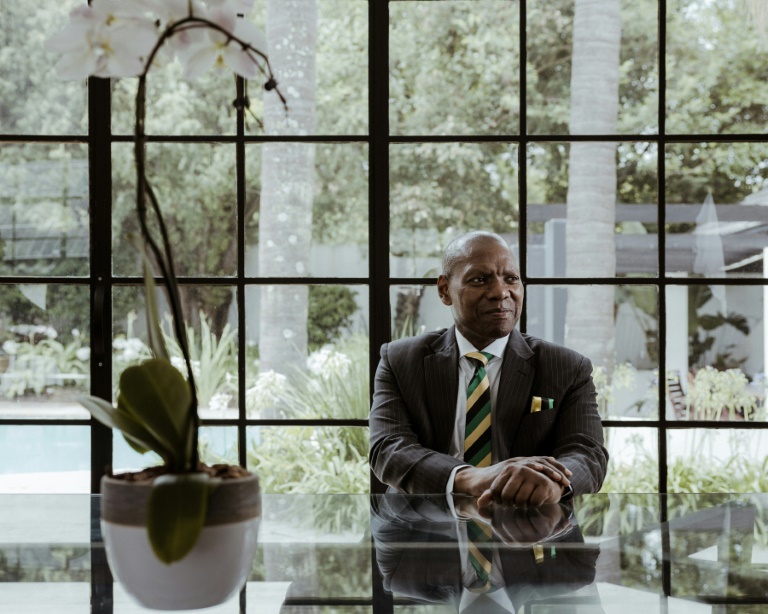
Mkhize conducted his media blitz at a rented house in the Johannesburg suburbs, with a garden and swimming pool visible behind large bay windows.

Between interviews, he wondered whether he should change ties — his assistant held out several for him to choose from, all in the green, yellow and black of the ANC.

– ANC’s troubles –

Forged by Nelson Mandela into the main weapon which destroyed apartheid, the ANC has ruled South Africa since the advent of democracy in 1994.

But its popularity is slumping. 

The long spell in office has left the party riven by factional infighting and a reputation for corruption that Ramaphosa, elected party chief in 2018 after the graft-stained era of Jacob Zuma, was supposed to cleanse.

Mkhize, a 66-year-old doctor by training, is among those whose image has been tainted by corruption allegations.

As health minister, he was lauded for his handling of the coronavirus pandemic, but his two-year spell came to an abrupt end when he was replaced by Ramaphosa in August 2021.

He was placed on special leave after investigators opened a probe into a 150 million rand ($10.4 million) contract for a Covid awareness campaign.

Mkhize has denied the allegations and complained against the investigation, but, he admitted, “Nobody’s perfect.”

In a schoolmasterly tone, he spelt out what he would do if he was given the helm: create jobs, train young people and build homes.

None of these goals is revolutionary, although they have all failed to advance significantly under Ramaphosa.

Mkhize can look to strong support for his presidential bid from his native region, the southeastern province of KwaZulu-Natal, which has the largest number of party delegates.

But if Mkhize has a serious chance of beating Ramaphosa on December 16, he must count on his rival’s further fall from grace and to widen his backing among the divided party.

S.Africa's Mkhize lies in wait, should Ramaphosa fall

His chances of success seem remote, but former health minister Zweli Mkhize is eagerly polishing his bid to beat South Africa’s scandal-troubledpresident, Cyril Ramaphosa, in elections next week of the ruling ANC.

Mkhize has long been cast in the role of underdog in the race to be president of the African National Congress (ANC) party — a job that opens the way to being head of state.

Today, though, Ramaphosa’s standing has been savaged by scandal — and Mkhize is making it loud and clear that, if the frontrunner stumbles further, he’s waiting in the wings.

“The president says he’s innocent and no one has reason to doubt that,” Mkhize said in an interview with AFP, one of a string he conducted with the media ahead of the December 16 ballot.

But, he said, in a suave snipe at the scandal that has left South Africa agog, “I don’t think it’s a usual experience.”

The 70-year-old president’s political future is in doubt over accusations that he covered up the theft of a huge amount of cash at his farm instead of reporting the matter to the police.

– Party bosses –

Ramaphosa, in submissions to a three-person investigative panel, denied any wrongdoing.

He said the cash — more than half a million dollars, stashed beneath sofa cushions — was payment for buffaloes bought by a Sudanese businessman. 

But his explanations did not convince the panel, which raised questions about the source of the cash and said he “may have committed” serious violations and misconduct.

Their report is going to be put to parliament next Tuesday, stoking speculation that MPs could move towards a vote to remove Ramaphosa from office. 

But, at the height of the storm, the ANC’s paramount National Executive Committee rallied around the beleaguered president, announcing that any such move would be opposed.

Mkhize was deeply critical of that meeting.

“I wasn’t able to speak,” he said. “The way they ran the meeting was a very unusual, weird way.”

“Whilst in the middle and people were still supposed to speak, they decided to close the meeting and say, ‘Now we have an agreement,’ and closed. I stood up and objected.”

“It creates an impression that the views of certain members must be muzzled,” he said pointedly.

Mkhize conducted his media blitz at a rented house in the Johannesburg suburbs, with a garden and swimming pool visible behind large bay windows.

Between interviews, he wondered whether he should change ties — his assistant held out several for him to choose from, all in the green, yellow and black of the ANC.

– ANC’s troubles –

Forged by Nelson Mandela into the main weapon which destroyed apartheid, the ANC has ruled South Africa since the advent of democracy in 1994.

But its popularity is slumping. 

The long spell in office has left the party riven by factional infighting and a reputation for corruption that Ramaphosa, elected party chief in 2018 after the graft-stained era of Jacob Zuma, was supposed to cleanse.

Mkhize, a 66-year-old doctor by training, is among those whose image has been tainted by corruption allegations.

As health minister, he was lauded for his handling of the coronavirus pandemic, but his two-year spell came to an abrupt end when he was replaced by Ramaphosa in August 2021.

He was placed on special leave after investigators opened a probe into a 150 million rand ($10.4 million) contract for a Covid awareness campaign.

Mkhize has denied the allegations and complained against the investigation, but, he admitted, “Nobody’s perfect.”

In a schoolmasterly tone, he spelt out what he would do if he was given the helm: create jobs, train young people and build homes.

None of these goals is revolutionary, although they have all failed to advance significantly under Ramaphosa.

Mkhize can look to strong support for his presidential bid from his native region, the southeastern province of KwaZulu-Natal, which has the largest number of party delegates.

But if Mkhize has a serious chance of beating Ramaphosa on December 16, he must count on his rival’s further fall from grace and to widen his backing among the divided party.

Glitz and the 70s as travelling fashion show arrives in Africa

Glitz and 1970s cuts were centre-stage this week when Chanel brought a special show to Senegal that places the spotlight on the work of its craftspeople.

It’s the first time the luxury French fashion house has staged such an event in Africa.

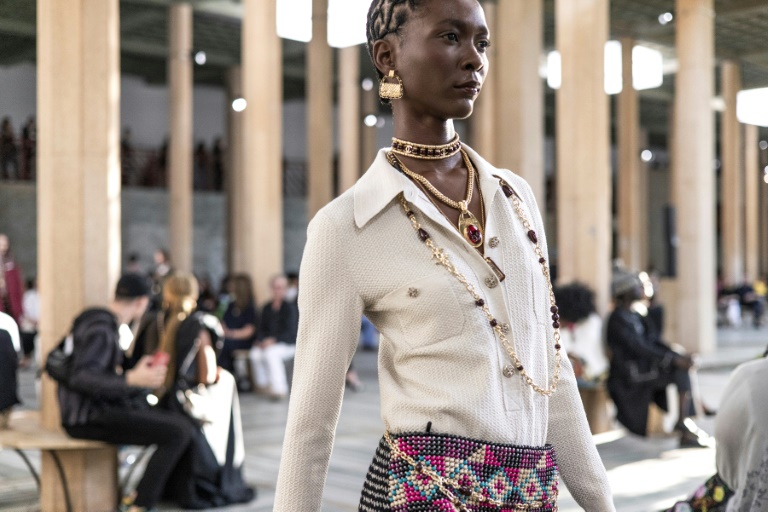
In the grand halls of Dakar’s former law courts, the models showcased pieces in embroidery, lace, sequins and gold — the work of Chanel’s behind-the-scenes artisans.

Creative director Virginie Viard put the accent on the 1970s, with long, slim coats, flared trousers and platform shoes.

Invited guests were US singer Pharrell Williams, Senegalese rapper Nix, Burundian singer Khadja Nin and British supermodel Naomi Campbell.

Chanel has presented its “Metiers d’art” collection outside the official fashion show calendar since 2002, displaying the skill of artisan workers from embroiderers to glove makers and jewellers.

The event has travelled to New York, Salzburg and Shanghai, but never before to the African continent.

The project, which unfolded on Tuesday, was in preparation for three years but was delayed by the Covid pandemic.

Bruno Pavlovsky, president of Chanel’s fashion activities, said the choice of Dakar was the result of chance encounters and the Senegalese capital’s growing cultural influence rather than commercial strategy.

Asked if Chanel was hoping to expand in Africa, he said the company was present in Dakar through distributors selling perfumes, beauty products and glasses, and had a “certain number of loyal customers” in Senegal.

“In the long term, everything is possible, but it will require seeing that the conditions are there” to become established in a new market, he said.

At least 131 civilians killed in DR Congo by M23 rebels: UN

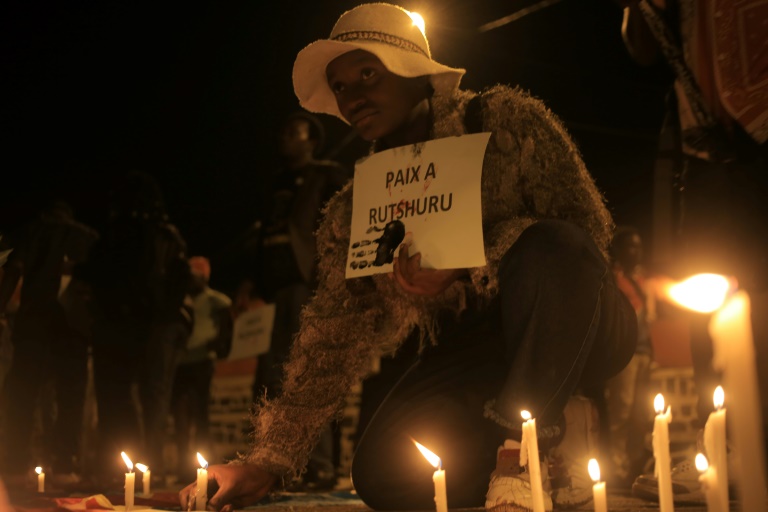
M23 rebels last month massacred at least 131 civilians in eastern DR Congo and committed more than two dozen rapes, according to a preliminary probe into the killings, the UN mission in the country said.

The government has said some 300 people, almost all civilians, died in the massacre in North Kivu province on November 29-30. 

The group has denied any responsibility, blaming “stray bullets” for the deaths of just eight civilians.

In a statement issued overnight Wednesday, the UN’s MONUSCO peacekeeping mission said investigators found 131 people had died, killed “as part of reprisals against the civilian population.”

The evidence comes from witnesses and other sources as investigators were unable to reach the villages where the massacre took place, which means the toll “could change,” MONUSCO warned.

The victims — 102 men, 17 women and 12 children — were “arbitrarily executed” by bullets or knives, it said.

“Eight people were wounded by bullets and 60 others kidnapped. At least 22 women and five girls were raped,” it said.

“This violence was carried out as part of a campaign of murders, rapes, kidnappings and looting against two villages in Rutshuru territory as reprisals for the clashes between the M23” and other armed groups, the statement said.

The probe, carried out by the UN Joint Human Rights Office (UNJHRO) and MONUSCO, centred on events in the neighbouring villages of Kishishe and Bambo. 

Investigators could not go to the villages themselves because of security concerns, but interviewed 52 victims, witnesses and other sources in the town of Rwindi 20 kilometres (12 miles) away, MONUSCO said.

“Kishishe at the moment is controlled by the M23 and (there is) a high risk of reprisals against victims and witnesses who are still in the area,” it said.

– ‘Fabricated’ –

Eastern Democratic Republic of Congo (DRC) has been restive for years.

Dozens of militias operate in the region, many of them legacies of two regional wars that raged at the end of the last century.

The M23, a mostly Congolese Tutsi group, resumed fighting in late 2021 after lying dormant for years.

It claimed among other things that the DRC had failed to honour a pledge to integrate its fighters into the army.

The group then went on the offensive, advancing towards the city of Goma and causing tens of thousands of people to flee.

The group’s political spokesman, Lawrence Kanyuka, lashed the UN report as a sham.

“It’s regrettable to see a respectable organisation… compile a report that has been completely fabricated,” he said. “We are staggered.”

Kanyuka said the group had told MONUSCO “several times that it could come” to Kishishe to carry out its investigation.

Instead, he charged, MONUSCO “went and did an investigation 20 kilometres away… and decided to bring out a report which supports the accusations of the Congolese government — this shows its bias.”

Local inhabitants who spoke to AFP last week recounted that the rebels had pressed them into burying victims at Kishishe in mass graves.

In its statement, MONUSCO said M23 members “reportedly buried victims’ bodies themselves, in would may be an attempt to destroy evidence.”

– Truce question –

The M23 crisis has led to a surge in tensions between the DRC and neighbouring Rwanda, which Kinshasa accuses of backing the group.

Rwanda denies providing any support and in turn accuses the DRC of colluding with the 

One of those groups, it said, was the Democratic Forces for the Liberation of Rwanda (FDLR) — a former Rwandan Hutu rebel group established in the DRC after the genocide of the Tutsi community in 1994.

Despite the friction, the two countries last month agreed on a ceasefire in the region, scheduled to take effect on November 25 and followed by an M23 pullout two days later, something that did not happen.

The truce applied to government forces and the M23, not to local armed groups, some of which have also been fighting the rebels.

One of the groups named in the UN report was the FDLR.

On Tuesday the M23 said it would “maintain” the ceasefire “even though it was not represented” at the peace talks, held in the Angolan capital of Luanda. It also said it was “willing to start to disengage and withdraw.”

Misery in Zimbabwe over 19-hour power cuts

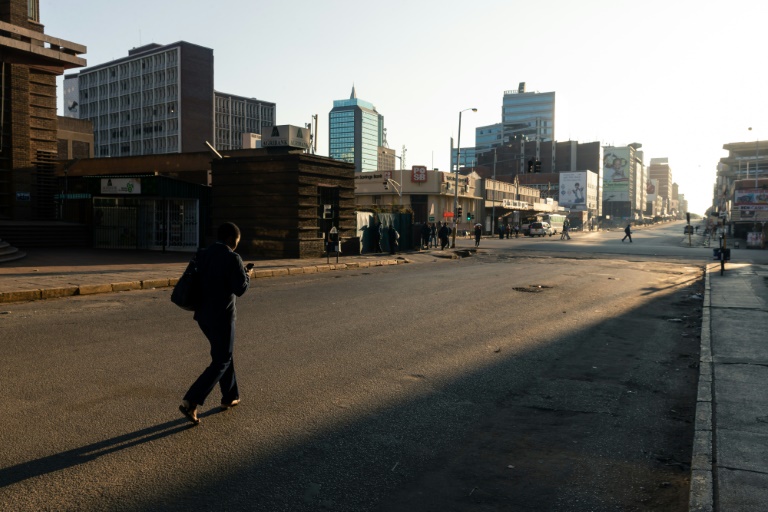
When midnight strikes, most Zimbabweans jump out of bed to make stews, iron their clothes or collect water — capitalising on a few hours of electricity as the country reels from crippling power cuts.

The southern African country has long battled with outages but the problem has sharply worsened since its main generator, a hydro plant at the giant Kariba Dam, began to struggle with low water levels caused by recurring droughts.

Since last week, the authorities have been imposing up to 19 hours of cuts each day, usually turning on power between midnight and 5am.

“The situation is now painful,” said Irvine Magede, a fruit vendor in front of a block of apartments in Harare’s oldest township of Mbare.

“We simply wake up during (the) time they switch on local grids to charge our phones and iron our clothes,” said Magede, who is in his 30s.

Life has become a daily grind for most Zimbabweans as the shrinking levels of water in one of the world’s largest reservoirs inflict prolonged blackouts and devastate livelihoods.

University students this week had to do their exams in a half-lit hall, and hospitals are sometimes left without water because pumps are inoperative. 

The latest wrench in Zimbabwe’s power crisis began at the end of November, when the hydro plant in the Kariba Dam had to be switched off for lack of volume passing through its turbines, according to the Zambezi River Authority which manages the water supply.

The blackouts have wreaked havoc on small businesses, already battered by a nearly two-decade-old economic downturn.

Charles Svidzi, a 59-year-old barber, said he had had to close his shop as he depends on electric hair clippers and there are no customers at night.

“My clients can only come during the day,” Svidzi explained. He is now instead offering a phone-charging service for clients, using a small solar-powered battery.

– Rotten meat –

The welder he shares his business unit with has started sleeping on the workshop floor. He now works at night, making use of the available power supply to weld metal frames for windows and doors. 

Most families have stopped buying perishables in bulk, especially meat, and instead ration grocery purchases daily to avoid the produce going off.

But butchers are also badly hit by the outages.

Prince Muza, 28, owns a butchery and says he has had to throw out meat that was starting to decay.

“At times there will be no money to buy diesel for the generators, and the meat goes bad. In such cases we throw away or sell the meat at a giveaway price,” he said.

The government has admitted the crisis is disrupting daily life.

“The power cuts are causing distress, inconvenience and cost to the citizenry and business. This is regrettable,” government spokesman Nick Mangwana said in a tweet this week.

Senior government official Gloria Magombo said on Tuesday that the country was importing electricity from neighbouring South Africa — which is also suffering recurring power shortages due to old and poorly-maintained plants.

It is also supplementing supplies with imports from Mozambique and Zambia.

But Zambia, which shares the Kariba reservoir, has said it too will start its own six-hour daily power outages from mid-December.

Zimbabwe also generates power from Hwange — its largest coal-fired power station — but the plant is currently operating at less than half its capacity due to poor maintenance.

“This is a crisis situation,” Energy Minister Soda Zhemu told a news conference last week, adding that the Kariba plant will be shut down completely during the Christmas period until the water situation improves.

A century on, French-built train in Ethiopia still 'a blessing'

The train pulled out of Dire Dawa station with a creak and disappeared into the pre-dawn gloom, the lights that once illuminated its decades-old carriages having stopped working long ago.

Over a century after the French laid a railroad in eastern Ethiopia, the old track remains indispensable for trade and transport, even with the recent arrival of a modern, Chinese-built line.

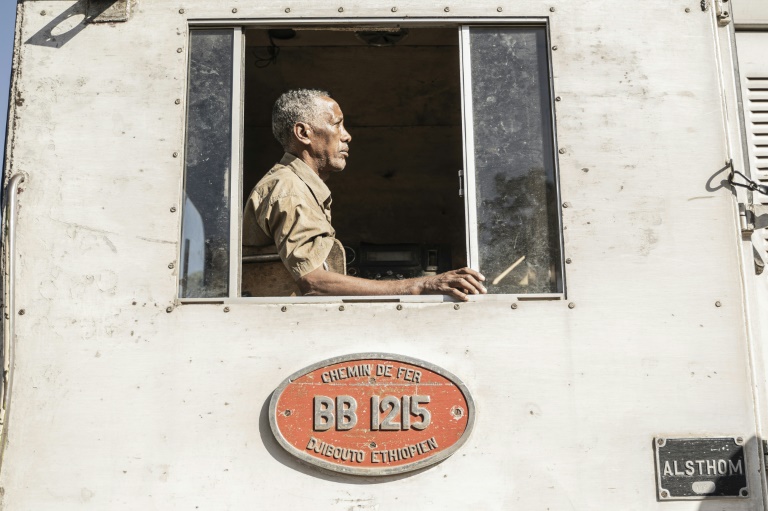
Twice a week, passengers and cargo pile into carriages dating from 1955 to make the 12-hour, 200-kilometre (125-mile) journey by diesel locomotive from Dire Dawa to Dewele, on the border of Djibouti.

There, they trade vegetables and khat — a mildly narcotic shrub — for food and other items.

“We use it as transport,” said a young shopkeeper who declined to give her name, and said she exchanged goods for rice, sugar, pasta, spices, tomato sauce and oil.

The journey today spans the only functioning part of the original 784-kilometre line, which once ran between Addis Ababa, the capital of landlocked Ethiopia, and Djibouti City on the Gulf of Aden.

Since 2016, a modern, electrified railway line built by China connects the two capitals in anywhere between 12 hours and 18 hours.

But in Dire Dawa, which was built by the French to accommodate rail workers with the advent of the “Franco-Ethiopian Railway”, the “Chinese train” as it is locally known does not suit everyone.

– ‘A blessing’ –

Stops along the Chinese line are outside city lines, and the ticket price is higher.

Crucially, it only makes three stops between Dire Dawa and Dewele, compared to eight along the French line.

“The (Chinese) train doesn’t stop at any station near us,” said the young shopkeeper.

“The railway was built along small towns and districts, and people settled near the stations,” said Mulugeta Kebede, 70, a driver on the old train for four decades.

“There are places that cars can’t go, and the only means of transportation is the train.”

Ismail Khayad, deputy general manager of the ‘Dire Dawa-Dewele Railway’, said the new route did not service the region in the same way the French-built line did.

“People say the old railway is a blessing; the other one is… useless for us,” he said.

People have come to depend on the train as a bringer of food and other essentials, said Ayoub Asofa, 62, who mans the first stop after Dire Dawa, a shack about 10 kilometres from the city.

“This train is tied to the existence of the people,” he said.

“It will affect people’s daily lives if this train stops.”

– Slow decline –

Nostalgia and bitterness is evident among the railway workers of Dire Dawa, a pretty town with tree-shaded streets.

At the old train station, signs in Amharic and French — a language still spoken by some of the older railway workers — are a reminder of its storied past.

Ordered by Emperor Menelik, work on the line began in 1897 in modern-day Djibouti, then a French colony. The line reached Dire Dawa, 311 kilometres to the south, by Christmas 1902, and Addis Ababa by the summer of 1917.

Sitting at an economic crossroads, Dire Dawa was for a long time Ethiopia’s second-most populated city.

“It was the railroad that founded this city,” said Ismail. 

But the railway went into decline in the 1970s with the rise of road transport and greater access to the sea via Eritrea, then part of Ethiopia.

Neglect, frequent derailments and a plodding pace saw the line fall into disuse. The Addis-Dire Dawa line was abandoned in the early 2000s, followed by the Djibouti leg.

Just 300 of its 2,500 employees remain, and the luxury sleeping cars that once ferried guests in style now lie rusting by the station.

The city, too, has deteriorated economically and socially over the years, said Ismail, who accused the Ethiopian government of having “abandoned” the railroad and its workers.

– Century-old trade –

To keep these historic trains running, the original rail workshops are kept operational, manned by a few dozen technicians.

Some of the machinery is as old as the railroad itself.

“Elwell&Seyrig, Plaine St-Denis, 1903”, reads a steel plate on a particularly vintage machine operated by veteran technician Belay Mulu, who switches it on to prove it still works. 

Today he relies on a newer model, but all parts are repaired and repurposed on site because they don’t buy spares, the 53-year-old said.

“We don’t have much work now, because there’s not much traffic,” says Berhanou Bekele, 60, who heads the “Towed Equipment Repair” department at the station.

Beyond keeping trains on the tracks, these workshops are a crucial service for the region, their tradesmen turning their skills to repairing equipment at hospitals and factories.

“There is no workshop like it” within 500 kilometres, said Woubest Arefe, who relies on technicians at the railyard to build crucial parts for the detergent factory he manages.

“If it’s not here, either we have to bring it from China, which is very costly… otherwise we have to go to Addis Ababa,” he said, adding that would increase the overall cost.

The railway workers refuse to let their century-old know-how disappear. 

“We have received it from our elders and we need to pass it to the next generation to preserve it,” said Ahmed Abdallah, a 53-year-old train driver. “People get old, but knowledge never gets old.” 

Thousands flee violence in South Sudan's Upper Nile: UN

Violence in South Sudan’s far north has forced thousands of civilians to flee in recent weeks, UN agencies said Wednesday, adding some were hiding in swamps and eating shrubs to survive.

The bloodshed in Upper Nile state has killed an unknown number of people while rape, murder and kidnapping of civilians have been reported as the conflict intensifies.

The UN’s humanitarian agency OCHA said over 9,100 people had been displaced since clashes between armed factions erupted in Upper Nile’s Fashoda County in mid-November.

“The humanitarian community in South Sudan is appalled by the continuous violence that has a devastating impact on the lives and livelihoods of ordinary men, women and children,” OCHA’s Peter Van der Auweraert said in a statement.

At least 20,000 people had fled the violence since it first erupted in August, including 3,000 over the border into neighbouring Sudan, said the UN refugee agency UNHCR.

Those unable to flee, such as the elderly and disabled, had sought refuge in bushes along the banks of the White Nile, UNHCR said.

The fighting has spread to the bordering states of Jonglei and Unity with grave fears for civilians trapped in the town of Kodok.

A UN protection camp in nearby Malakal has swollen with new arrivals. Opened a decade ago to host 12,000 people, it currently shelters 37,000.

Survivors of one attack told UNHCR that dozens were killed or wounded while others drowned in the river trying to escape.

In another location, people were eating wild plants to survive.

“Their situation is desperate,” said UNHCR’s country representative Arafat Jamal, who described witnessing “the aftermath of raw violence” in some villages that were raided.

The United Nations Mission in South Sudan (UNMISS) has publicly appealed for government forces based in Kodok to intervene and de-escalate the violence.

– ‘Whatever it takes’ –

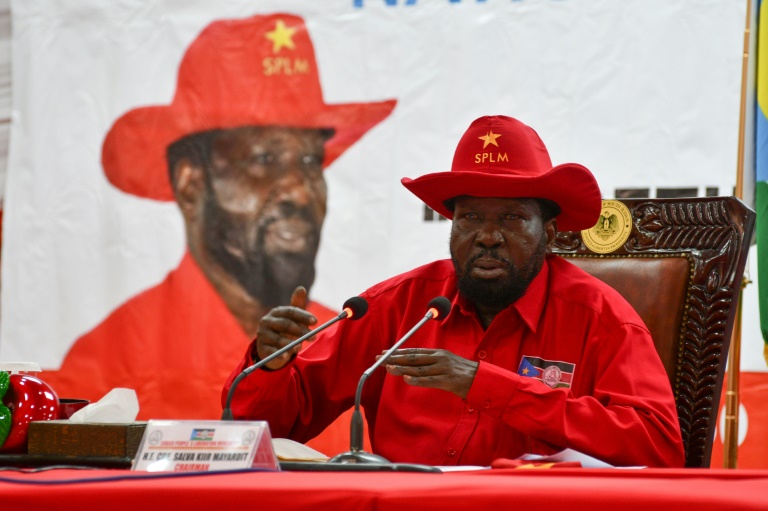
At the close of a ruling party conference on Tuesday, President Salva Kiir said he “cannot stop” the fighting in Upper Nile and called on all sides to embrace peace.

In a statement published Wednesday, the president’s office said: “Despite the complexity, the president is determined to do whatever it takes to end this violence in Upper Nile and other regions of South Sudan.”

Last week, the UN convened a meeting with diplomats from the African Union and international community to discuss the escalating crisis.

South Sudan achieved independence in 2011 but descended into a civil war two years later that left nearly 400,000 people dead.

A peace deal was signed in 2018 but sporadic bursts of violence between government and opposition forces continue to occur, while conflict between rival ethnic groups in lawless parts of the country exacts a terrible toll on civilians.

Nerveless Hakimi fires Morocco into uncharted territory at World Cup

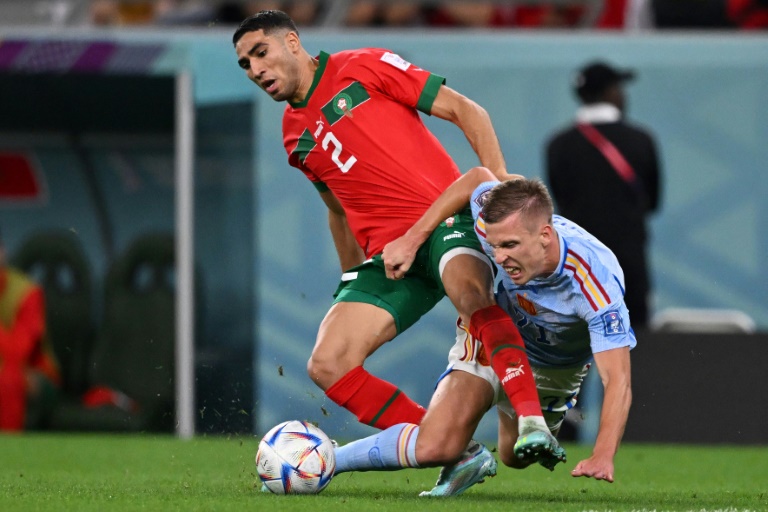
If Achraf Hakimi was feeling the weight of expectation on his shoulders as he stepped up to take a history-making penalty for Morocco against Spain, he did not show it.

The defender showed nerves of steel to dink the ball over goalkeeper Unai Simon and seal a 3-0 shootout win over the hapless Spaniards, after the match finished goalless on Tuesday.

The Madrid-born Paris Saint-Germain player steered Morocco into uncharted territory, with the north African side becoming the first from the Arab world to reach the last eight at a World Cup.

Wild celebrations erupted in Morocco and across Europe as the diaspora rejoiced, from Paris to Brussels to Barcelona, while other African and Arab countries felt buoyed by their success.

Although coach Walid Regragui prefers to credit the team rather than individuals, Hakimi is one of his standout players.

A dynamic, explosive presence, he is fond of lung-bursting sprints to join the attack, while maintaining discipline in defence.

Hakimi trained with Spain at youth level, before deciding to pledge his allegiance to the country of his parents.

“I also went to the Spanish national team to try it,” he told Spanish newspaper Marca before the game.

“I was at Las Rozas for a couple of days and I saw that it wasn’t the right place for me, I didn’t feel at home.

“It wasn’t because of anything in particular, but for what I felt, because it was not what I had at home, which is the Arab culture, being Moroccan. I wanted to be here.”

Those family bonds have played an important role in sustaining Morocco’s historic charge.

A photograph of Hakimi, 24, kissing his mother in the stands after their 2-0 group stage win over Belgium made waves on social media.

The team’s families have been allowed to stay in close proximity and it lets the players feel the love which in many cases led to them choosing to play for Morocco.

As well as Hakimi, several other players were born elsewhere but opted for the North African nation.

“For me, my mum is the most important thing in my life,” an elated Sofiane Boufal — born in Paris — said after beating Spain.

“Of course (she was crying), the emotions in this game make you crazy. The support of your family is the most important thing.”

– Rising up –

Hakimi came from a modest family, living in the Madrid suburb of Getafe.

His mother cleaned houses, while his father was a street vendor.

“I fight every day for them,” said Hakimi in 2018. “They sacrificed themselves for me, they deprived my brothers of many things, for me to succeed.” 

Hakimi made his Morocco debut back in 2016, while still a Real Madrid player, winning the Champions League with Los Blancos but never fully establishing himself.

He was loaned for two years to Borussia Dortmund and then signed permanently for Inter Milan. After a strong season in Italy, winning Serie A, PSG snapped him up in 2021.

With a Ligue 1 title in his pocket, Hakimi arrived with Morocco at the World Cup willing to perform the job the team needed him to do despite his star status.

Hakimi has occasionally thrilled in Qatar, setting up Youssef En-Nesyri with a perfectly weighted pass against Canada, but has also helped form part of the strongest defence at the World Cup.

Morocco’s only goal conceded came in that 2-1 win over Canada, while they shut out 2018 runners-up Croatia, plus fancied Belgium and Spain.

Winger Hakim Ziyech has also drawn praise after returning from a period of exile due to a falling out with the previous coach, but through thick and thin, Hakimi has been there for his country.

Now, packed densely into stadiums in Doha and supporting from afar, Hakimi’s people are there for him too.

Close Bitnami banner
Bitnami