Africa Business

World Cup win makes Morocco the 'pride' of Arab fans

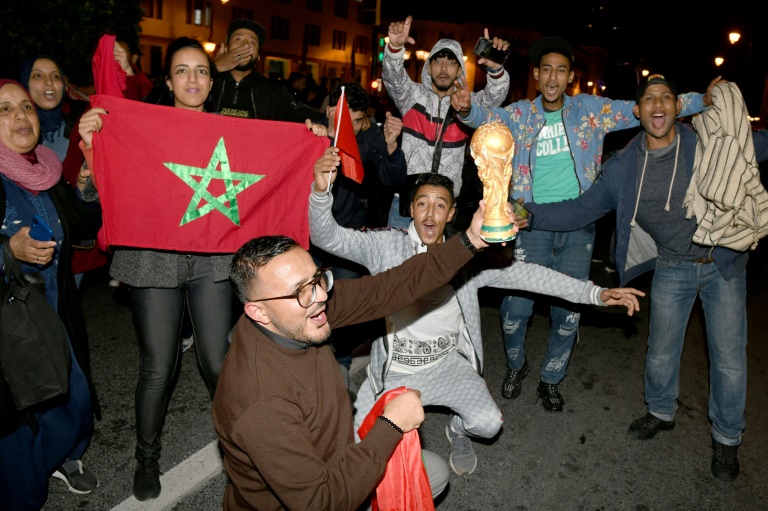
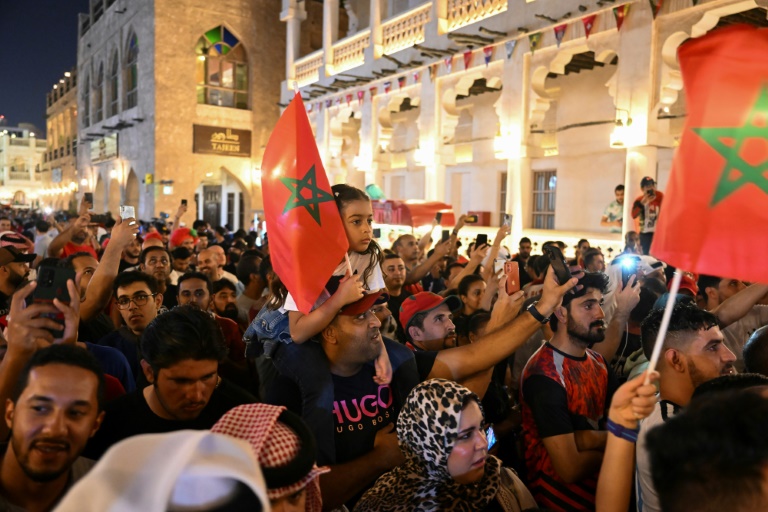
Thousands of Morocco fans descended on the streets of Doha to celebrate their country becoming the first Arab nation to reach the World Cup quarter-finals on Tuesday.

Despite some minor trouble outside the stadium, the victory over Spain became a celebration of “Arab pride” for supporters from across the region.

Walid Regragui’s side won 3-0 in a penalty shootout after the match finished goalless following extra-time.

So many people packed Doha’s central Souq Waqif market — a traditional gathering point for World Cup fans — that police sealed it off just before midnight, with thousands waiting in groups at different entrances.

Copying the celebration of Moroccan players inside Doha’s Education City Stadium, many fans waved Palestinian flags, stepping up a political show of solidarity that has marked this World Cup.

“This is the first World Cup on Arab territory and we are carrying the Arab flag in this tournament,” said Yussuf Akram, who waved Moroccan and Palestinian emblems in the crowded Souq alleys.

Saudis, Qataris and Egyptians joined the celebrations, waving their countries’ flags in the traditional market as police gathered around the edge.

“This is a matter of pride, we are all happy for Morocco,” said Aysha Bedawi, who came from Cairo to watch World Cup matches.

“It does not matter which team reached this stage, as long as there is one Arab team there we still have hope.”

Arab teams have previously reached the last 16 at a World Cup three times — Morocco (1986), Saudi Arabia (1994) and Algeria (2014).

The prospect of playing Portugal in a quarter-final did not worry supporters who chanted “bring on Ronaldo” outside a TV studio set up in the Souq.

“If Morocco can beat Spain, who have been world champions, then they can handle Cristiano Ronaldo,” said Mohamed Benyoub, a Moroccan living in Qatar. 

“I cried when the game finished, I never thought I would see something like this.”

Organisers said police had to move in to stop “unticketed fans” beating down a stadium boundary fence to gain entry. No injuries were reported.

tw/jw
Guinea ex-strongman faces history in massacre trial

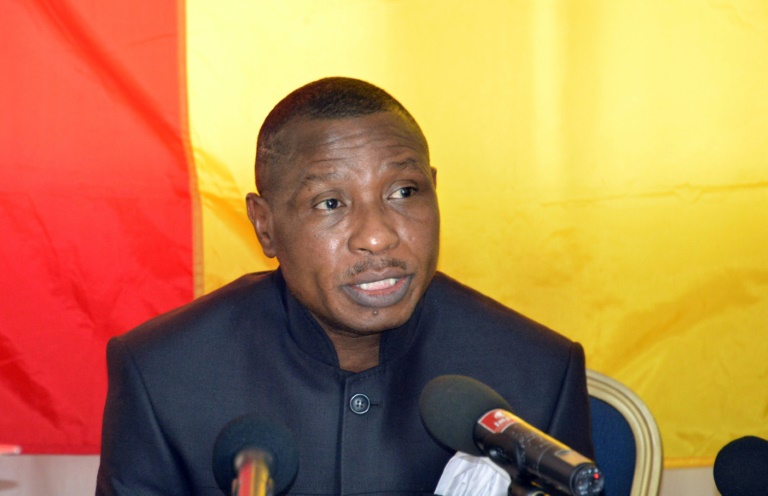
When a judge curtly interrupted Guinea’s ex-leader Moussa Dadis Camara during his trial over a 2009 massacre, the former strongman’s feebleness was starkly exposed to compatriots who remembered his authoritarian rule.

The frail-looking former military captain on Monday resorted to meekly beseeching the judge to adjourn his historic trial for health reasons, a stark reversal in fortunes for a man who once commanded the West African nation.

Camara’s brief but brutal tenure as Guinean president would have been memorable for his dramatic power grab and erratic rants against fellow officers on national television even without the events of September 28, 2009. 

On that day, his soldiers went on a rampage of shooting and rape, killing 156 people and raping at least 109 women at an opposition political rally in a sports stadium in the capital Conakry. 

Camara is charged with “personal criminal responsibility and command responsibility” and is being tried with 10 other former military and government officials over the bloodbath. 

On Monday, he humbly thanked the court for adjourning his trial, acknowledging he was not above the law as he left with an unsteady gait and a chain bracelet on his arm. 

– ‘Chosen by God’ – 

Camara’s rollercoaster life journey saw him rise from humble beginnings as a low-ranking officer born in a remote corner of southeastern Guinea, far from the centre of political power in Conakry.

He said his illiterate father was a simple peasant. 

“I’m a man of the people… I was born in a hut,” he insisted during his time in power.

In his mid-40s, he is known to have joined the armed forces in 1990 and to have served mainly in the army’s fuel supply department.

In 2007 he was among army officers who took part in a wave of unrest against the regime of veteran president Lansana Conte, aimed notably at gaining payment of salary arrears.

He later stated that his role in the incidents, and in similar events the following year, had been mainly to calm down his fellow soldiers.

He seized power with a group of officers in December 2008 immediately after the death of Conte, Guinea’s second post-independence president who had ruled autocratically for 24 years.

He described the takeover as bloodless and emerged as head of a ruling junta, justifying his power grab by claiming no civilian could manage a country marked by corruption and instability since independence from France in 1958.

“I am the father of the nation,” he declared in 2009, asserting on several occasions that he had been “chosen by God, who confers power on whomever He wishes”.

The junta leader spent most of his days in the main military camp that served as his headquarters near Conakry, where he had large numbers of pictures of himself put on display.

– The ‘Dadis Show’ –

His popular rhetoric earned him the support of many Guineans at the start of his presidency as he often highlighted his modest origins.

In his frequent appearances on national television, which became known as the “Dadis Show”, he would rail against fellow officers, accusing them of systematic corruption.

But he soon showed signs of letting his power go to his head, becoming increasingly erratic and reneging on a promise not to run in a presidential election the junta promised to hold in 2010. 

That came before the fateful day in Conakry’s sports stadium in September 2009, where a large crowd of opposition supporters were attending a rally against Camara as a potential election candidate.

After the event, which turned most Guineans against him, Camara expressed little remorse, stating that his army was “uncontrollable”, but that it also had “feelings and respect” for him.

He was unceremoniously ousted from power after suffering a head wound in an attempted assassination by his aide de camp in December 2009, formally giving up power in January 2010.

After receiving treatment in Morocco, he fled into exile in Burkina Faso, where he was indicted in July 2015 by Guinean magistrates for his alleged role in the stadium massacre.

He finally returned to his homeland in September 2022 for his trial, the once mighty head of state humbled by the experience of being imprisoned.

Moroccans celebrate 'historic' World Cup win over Spain

With shouts, songs, cries and tears, Moroccans exploded with joy Tuesday as their football team beat Spain to reach the quarter-finals of the World Cup for the first time.

“There were millions behind Morocco — this team represents a spirit, a union,” said Imad Ait Ounejjar, from a noisy, crowded restaurant in the coastal city of Casablanca.

“This victory is for Morocco, Africa, the Arab world and all the nations that believed in us. We are proud to be Moroccans,” added the young man, who works as a project manager.

Morocco is the last remaining team from Africa and the only Arab team left in Qatar, and will face either Portugal or Switzerland in a quarter-final on Saturday.

“I can’t believe it, this team is performing miracles! It’s so beautiful!” said Lamia Afria, 24. “I feel proud, we did the unthinkable.”

For the loyal supporters of the Morocco’s team — dubbed the “Atlas Lions” — it was a dream come true after long years of waiting and frustration.

Supporters, both men and women, wrapped in red national flags or wearing the team strip, kept up a solid chant of support for their sporting heroes.

After the victory, the crowd chanted as one: “Next!” and then “Always with Morocco.”

Morocco are just the fourth African team to reach the last eight of the World Cup — after Cameroon in 1990, Senegal in 2002 and Ghana in 2010.

Before Tuesday’s game, Morocco’s best result at the football World Cup had been in 1986, when they reached the last 16.

– Neighbouring derby –

The epic duel took on the appearance of a derby: mainland Spain is only some 14 kilometres (nine miles) from Morocco, visible across the Strait of Gibraltar at the entrance of the Mediterranean Sea.

But beyond the sporting clash, Rabat and Madrid share common interests, including economic, as well as the fight against irregular immigration.

After a diplomatic quarrel lasting almost a year over the issue of the disputed territory of Western Sahara, Spain and Morocco drew a line under the spat in mid-March.

Several Moroccan internationals play in the Spanish league, including striker Youssef En-Nesyri and goalkeeper Yassine Bounou, for Sevilla, forward Ez Abde at Osasuna, and defender Jawad El Yamiq at Real Valladolid.

National team star Achraf Hakimi, whose chipped kick settled the penalty shootout for Morocco, was born in Madrid and has played for Real Madrid.

But the Atlas Lions have also won hearts outside Morocco, with scenes of jubilation erupting in Syria, Saudi Arabia and the Palestinian enclave of Gaza after the kingdom’s group matches.

Palestinian supporters even improvised a song in honour of the Moroccan team.

Morocco’s players unfurled a Palestinian flag during their on-pitch celebrations after their stunning World Cup victory.

Even in a context of acute tension between Morocco and neighbouring North African nation Algeria, football has managed to bridge a gap.

“Your brothers and neighbours are with you,” wrote Algeria’s DZfoot Twitter account, which has more than one million followers.

Several Algerian internationals also praised the Moroccan feat on social media.

“Far from all the hateful and malicious trolls of social networks, the Algerian people are behind the Moroccan people”, DZfoot added.

Tigray capital back on Ethiopia power grid: operator

The capital of Ethiopia’s Tigray region has been reconnected to the national power grid after more than a year of cuts caused by war, the electricity operator said on Tuesday.

The announcement came a month after a peace deal between the federal government and Tigrayan rebels aimed at ending the brutal two-year conflict and humanitarian crisis in northern Ethiopia.

The power control centre in Mekele and its line were “connected to the national power grid after repair work was finished”, Ethiopian Electric Power said in a statement.

Access to and communications in Tigray are limited or banned and it is impossible to independently verify the situation on the ground.

Humanitarian aid has trickled into the north since the agreement but remains well short of meeting the population’s acute needs.

Prime Minister Abiy Ahmed sent troops to Ethiopia’snorthernmost region in November 2020, accusing the local governing party, the Tigray People’s Liberation Front (TPLF), of attacking federal army camps.

The war spread to the neighbouring regions of Afar and Amhara and drew in Eritrean forces, leaving Tigray devastated and lacking access to basic services including banking, electricity, fuel and communications for more than a year.

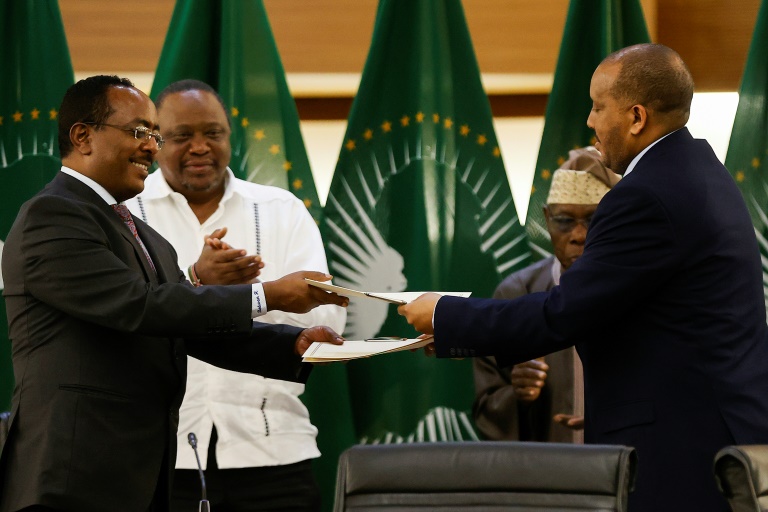
On November 2, the government and the TPLF signed an agreement in South Africa aimed at ending the hostilities, withdrawing and disarming Tigrayan fighters, restoring federal government authority and reopening access to the region.

The peace deal does not explicitly mention restoring electricity and telecommunications in Tigray, but its terms are gradually being applied and the fighting has ceased.

Ahmed told Ethiopian lawmakers last month  the authorities had begun to restore telecommunications and electricity in some areas affected by the conflict.

The casualty toll of the war is unclear, but the International Crisis Group think-tank and Amnesty International have described it as one of the bloodiest in the world.

All sides have been accused of abuses, while the United Nations says more than two million Ethiopians have been displaced and hundreds of thousands are in extreme food insecurity.

– ‘Forces that don’t want peace’ –

The commander-in-chief of the Tigray rebels, General Tadesse Worede, has said 65 percent of his forces have “disengaged” from battle lines and “moved to designated places”.

But he added that there were still “forces in the areas that don’t want peace”, apparently referring to Eritrean soldiers and other regional Ethiopian militias.

Tigrayan authorities in recent weeks have regularly denounced abuses against civilians allegedly committed by troops from Eritrea, which did not take part in the November peace accord, and regional Amhara forces.

According to the UN World Food Programme, more than 13 million people in northern Ethiopia now depend on humanitarian aid, including more than five million in Tigray, whose population is around six million.

The TPLF had long ruled over the Horn of Africa country before Nobel Peace Prize laureate Ahmed came to power in 2018.

Somalia forces recapture key town from jihadists

Somali government forces and allied militias have recaptured a strategic town held by Al-Shabaab jihadists since 2016, President Hassan Sheikh Mohamud said on Tuesday.

The army and local clan militias known as “Macawisley” have retaken swathes of territory in the central states of Galmudug and Hirshabelle in recent months in an operation backed by US air strikes and an African Union (AU) force, ATMIS.

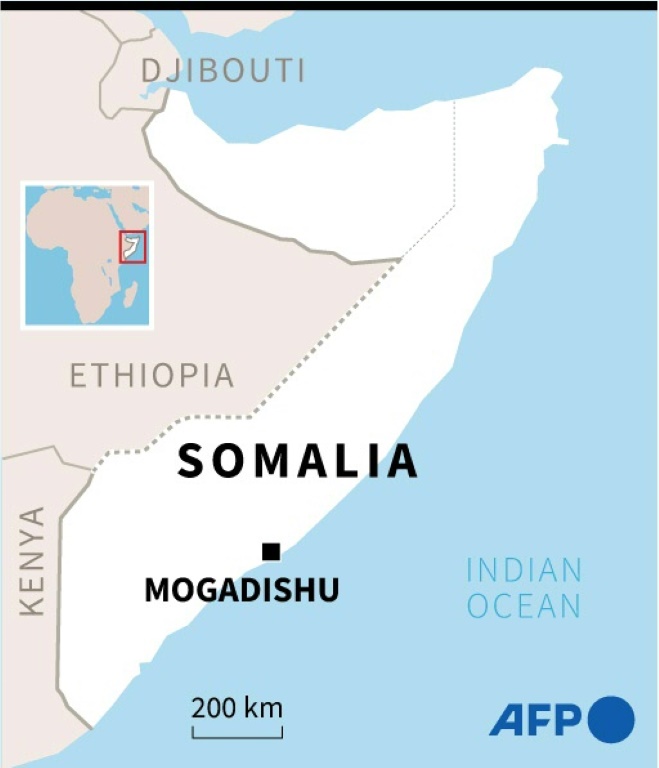
Pro-government forces entered the town of Adan Yabal in Hirshabelle, around 220 kilometres (140 miles) northeast of the capital Mogadishu, after the Al-Qaeda-affiliated rebels withdrew, the president said.

“Somali government forces are in Adan Yabal this morning… They (Al-Shabaab) did not even fight and vacated instead,” Mohamud said in a televised address.

Colonel Mohamed Ali, one of the operation’s commanders, told AFP the rebels fled when they learned the army was approaching. 

“We have taken the town without any resistance and the army is in full control,” he added.

Military sources said the jihadists pulled out on Monday evening.

ATMIS, which supported the operation with helicopters, said Al-Shabaab had used Adan Yabal as a training base.

The force welcomed its return to Somali government control.

The rebels, who have been waging a bloody insurgency against Somalia’s internationally backed federal government for 15 years, also used the town as a logistics hub.

Mohamud accused Al-Shabaab of making off with electric pumps from the town’s wells and forcing people to “flee with them, to be human shields.”

The president, who declared an “all-out war” against Al-Shabaab after his election in May, said the effort to rid Hirshabelle and Galmudug of the group was in its “final stages” with only “pockets” of resistance remaining.

Forced out of the country’s main urban centres around 10 years ago, Al-Shabaab remains entrenched in vast swathes of rural central and southern Somalia and continues to carry out deadly attacks in Mogadishu.

On October 29, 116 people in the capital were killed in two car bomb explosions at the education ministry, and eight civilians died in a 21-hour hotel siege on November 27.

AMISOM, a previous incarnation of the AU force in Somalia, seized Adan Yabal from the rebels in 2016 before ceding control a few months later after Ethiopian troops withdrew.

Niger finance minister rebuffs pressure to drop oil drive

Niger’s finance minister says lack of support from rich countries makes it impossible for his impoverished nation to abandon revenue from oil.

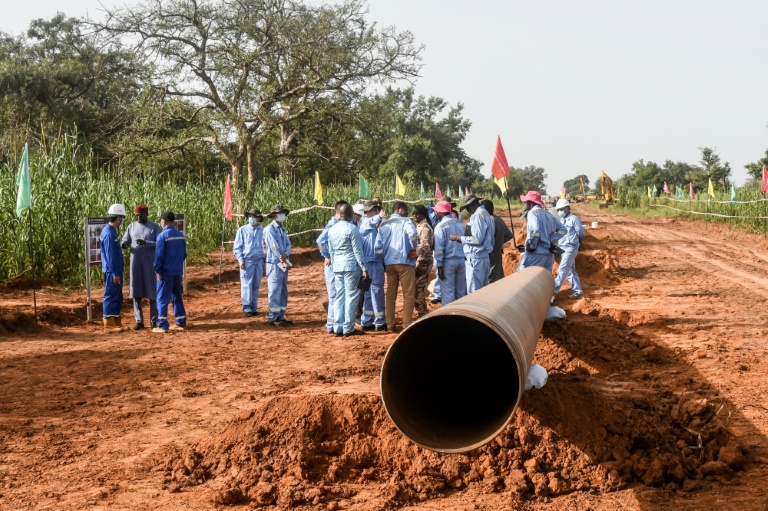
The landlocked Sahel state has launched a scheme to build Africa’s longest pipeline, shuttling crude oil over nearly 2,000 kilometres (1,250 miles) to a port in Benin.

Environmental campaigners are dismayed about initiatives that perpetuate the use of climate-damaging fossil fuels.

But in an interview with AFP, Finance Minister Ahmat Jidoud said Niger had no alternative.

“Right now it’s not possible,” he said.

“It is important for us to be able to exploit our own resources until the conditions are there for the climate transition to unfold,” he said.

Niger’s 26 million people are the poorest in the world, according to the benchmark of the UN’s Human Development Index.

The population is also one of the fast-growing in the world, expanding by 3.7 percent annually.

Without income from oil, “our development is compromised,” Jidoud said, warning of a “social (time-) bomb.”

Niger became an oil producer in 2011, with the China National Petroleum Corporation (CNPC) sending crude by pipeline to refineries in Zinder in the south-centre of the country.

The new $6-billion pipeline will connect wells in the eastern region of Agadem with the Beninese port of Seme.

Launched in 2019, the project was supposed to be completed in 2022, but was hampered by the Covid-19 pandemic.

More than 600 km of pipeline has already been laid, and Niger is on track to sell crude on the international market from next July, according to the ministry of petroleum and energy.

Jidoud spoke to AFP on the sidelines of a conference in Paris aimed at mustering public and private funds to support Niger’s 2022-26 $29.6-billion development plan.

The blueprint, unveiled on Monday by President Mohamed Bazoum, aims to reduce the poverty rate from 43 percent to 35 percent.

It says the state can count on $13.35 billion from its own resources, a figure that is crucially dependent on oil exports.

Thanks to the new pipeline, oil sales by the end of 2023 should rise from 20,000 barrels per day to 110,000, according to his plan.

Under this scenario, oil income would account for half of the country’s fiscal revenue and a quarter of GDP.

Income from oil compares starkly with the funds channelled by rich countries to help poorer nations move to a climate-friendlier path, said Jidoud.

“You can’t talk to us about the energy transition if the support promised by the G20 countries doesn’t show up,” he said.

He pointed to a promise, first made by rich economies at the 2009 Copenhagen climate summit, to muster $100 billion a year in support — a vow that remains unfulfilled.

In addition to entrenched poverty, Niger is battling climate extremes in a deeply arid region, and struggling with two jihadist insurgencies.

Jidoud said that in early commitments on Monday, the African Development Bank (AfDB) had promised 2.4 billion euros (dollars), the West African Development Bank (WADB) 680 million euros and France — Niger’s former colonial power and ally — 550 million.

Soul-searching in Senegal after woman MP hit in parliament

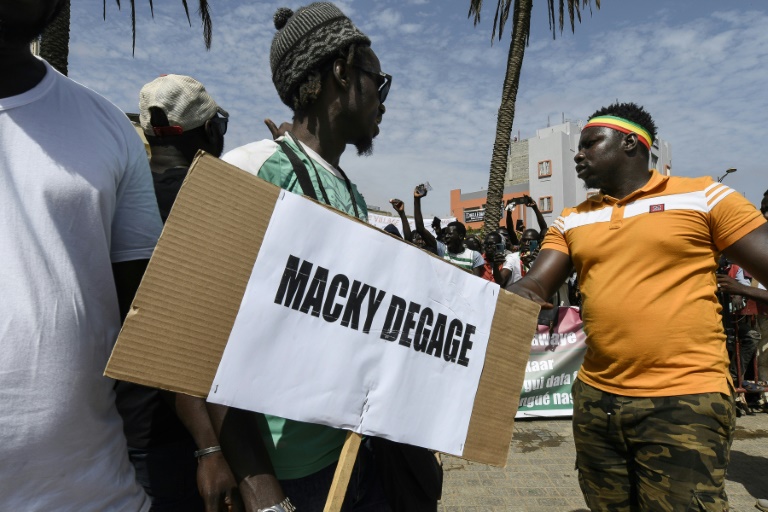
Senegal is asking some tough questions about the state of its democracy, reputedly one of the strongest in Africa, after opposition lawmakers physically attacked a woman MP in parliament.

Shocking images have gone viral of a brawl that erupted in the National Assembly last Thursday — the legislature’s second punch-up in less than three months.

During what should have been a run-of-the-mill debate about the justice ministry’s budget for 2023, opposition MP Massata Samb slapped government lawmaker Amy Ndiaye.

She threw a chair in reprisal and then was kicked in the belly by another MP, Mamadou Niang.

Later, after order was restored, Ndiaye fainted and was taken to hospital — her lawyer says she was pregnant, and there are fears she could lose her baby.

Commentators are poring over the incident, which with dreadful irony occurred during a nationwide campaign against violence towards women.

Some said the West African state, acclaimed for its stability and respectful discourse in a region notorious for coups and dictatorships, had lost its way.

“A slap to the Republic,” the daily Walf Quotidien headlined.

MPs “are not respecting their positions”, Cheikh Gueye, secretary of a moderate Islamic group called CUDIS which often mediates in Senegalese politics, told AFP.

“They have mashed up the National Assembly with some national (gladiatorial) arena, and the result is a place where blows, insults, invective and personal attacks can rain down.” 

Police are hunting for the two MPs who struck Ndiaye, a senior police official told AFP on Monday.

They went into hiding after prosecutors launched proceedings against them following a complaint by the parliamentary speaker, the source said.

The immediate spark for the violence was remarks Ndiaye made about Serigne Moustapha Sy, an influential Muslim leader who supports the opposition but is not a lawmaker.

On November 27, Ndiaye accused him of betraying his word and disrespecting President Macky Sall, and fiery protests from the opposition resulted.

– Tensions –

But the flare-up also occurred against a wider background of tensions, stoked by protests in March and the dramatic outcome of elections in July.

For the first time since Senegal gained independence from France in 1960, the president’s party lost its overall majority in parliament.

The near-tie forced Sall’s party to hunt around for a coalition in order to stay in power.

Two months later, chaos and violence broke out in the National Assembly when MPs came to elect the speaker.

The political mood has also been soured by questions over Sall himself.

He was elected to a seven-year term in 2012 and re-elected for a five-year tenure in 2019.

But he has not divulged his plans for the next presidential vote, due in 2024, which has fuelled uncertainty.

Opposition figures accuse him of using the judiciary to sideline potential rivals and stifle criticism, something that his aides deny.

Those mired in judicial problems include opposition leader Ousmane Sonko, who has been accused of rape, and journalist Pape Ale Niang, who has been detained for “divulging information liable to harm national defence”.

“Our parliament has hit rock-bottom,” Alioune Tine, a long-time campaigner on human rights, said on Twitter.

He appealed for a fresh approach from religious and political figures to overcome the deadlock.

“When you reach this point, it’s up to the caliphs, politicians, (other) MPs, imams, bishops and pastors” to speak to warring legislators, he said.

Religious leaders are highly regarded in Senegal and often play a role in mediating political disputes. 

The country, which is famous for its religious tolerance, is 95-percent Muslim, dominated by Sufi brotherhoods whose spiritual heads are called caliphs.

S.Africa's Ramaphosa future fragile despite party backing

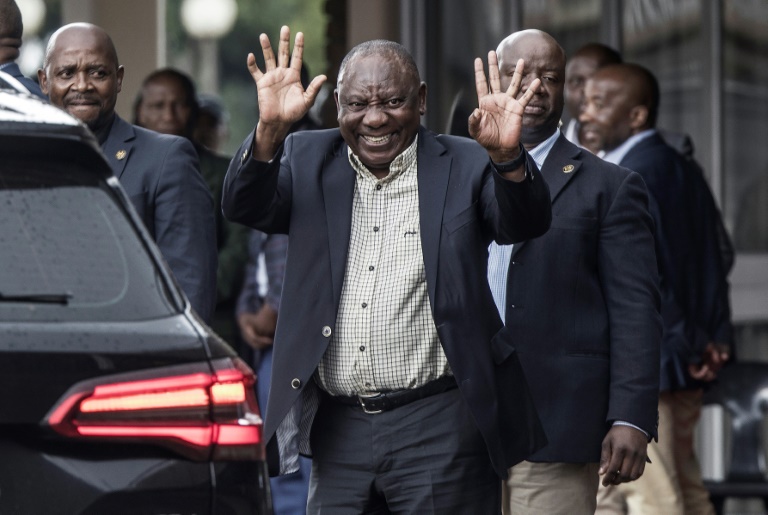
The threat of South African President Cyril Ramaphosa’s immediate exit from office over a cash-in-sofas scandal has temporarily faded after his party vowed to rally around him at next week’s impeachment vote, but his woes are far from over.

The next days are critical for the head of state who has been championed as a graft-busting saviour after the corruption-drenched tenure of predecessor Jacob Zuma.

Ruling African National Congress (ANC) party lawmakers vowed to close ranks around him at an impeachment vote in parliament next week, but Ramaphosa remains embroiled in the worst scandal of his career that could yet bring him down.

After a tumultuous week following a report by a parliament-sanctioned independent panel which found that he “may have committed” serious violations and misconduct, Ramaphosa appeared to have earned a respite.

The parliament sitting to vote on whether he should face impeachment, initially slated for Tuesday, was at the 11th hour pushed back by a week, prolonging the uncertainty around Ramaphosa’s future.

That vote will come just three days before the ANC meets for its five-yearly conference to elect a new president. Ramaphosa is the leading candidate of the two nominees named so far for the party leadership.

But that is no guarantee he will be re-elected, or serve out his full state presidential term which should run until April 2024.

ANC members facing criminal allegations or charges are expected to step aside.

Ramaphosa is not charged yet over the scandal dubbed “Phala Phala farm-gate”, after the name of the estate in northeastern South Africa.

That gives him room to still try his luck and contest the ANC leadership — a ticket to the national presidency.

“The step-aside rule doesn’t apply here, Cyril Ramaphosa is not charged with anything,” lawyer and ANC veteran Mathews Phosa told eNCA news at the weekend.

But scandals do not necessarily decide the fate of an ANC president and the party throughout its nearly three decades in power has exhibited a tendency to protect its own people.

“In the ANC you could be charged for rape and still become president, you could be charged for an international arms deal and still be a president,” said political analyst Sandile Swana.

– Undignified exit? –

Formerly a wealthy businessman, the president may follow the footsteps of two of his predecessors, Zuma and Thabo Mbeki, who did not complete their tenures and were forced out by the ANC.

“The presidency of Ramaphosa is going to be short,” said Swana, but “his chances of leaving in a dignified manner are minimal”.

The 70-year-old president found himself in hot water in June when South Africa’s former spy boss filed a complaint to the police alleging Ramaphosa had concealed a huge cash theft from his game and rare cattle farm in 2020.

He accused the president of having organised for the burglars to be kidnapped and bribed into silence. 

Ramaphosa has denied any wrongdoing, saying the cash — more than half a million dollars, stashed beneath sofa cushions — was payment for buffaloes bought by a Sudanese businessman.

But his explanations did not convince the special panel, which raised questions about the source of the cash.

On Monday Ramaphosa rushed to the country’s top court asking it to annul the panel’s report, but it is uncertain if his request will be granted.

The Constitutional Court case, which may take days or weeks to be concluded, “does not in itself stop the parliamentary (impeachment) proceedings from continuing”, said public law professor at the University of Cape Town Cathy Powell.

If the impeachment process is greenlighted it will take months of investigations and hearings before the final vote.

“The problem with this one is that it doesn’t seem to be completely frivolous,” the question whether it is serious enough to be fired for, said Powell.

When lawmakers meet next week a simple majority in the National Assembly, where the ANC has 230 out of 400 seats, will be required to initiate the impeachment process.

The impeachment vote itself would need a two-thirds majority to succeed.

If the impeachment proceedings go ahead, Ramaphosa risks being the first South African leader to be formally removed from office by parliament, said Swana.

The scandal has preoccupied South Africans who are already battling economic hardships, the inadequate provision of basic services such as electricity and a dizzying rate of unemployment.

Libya tells foreign energy firms it's safe to return

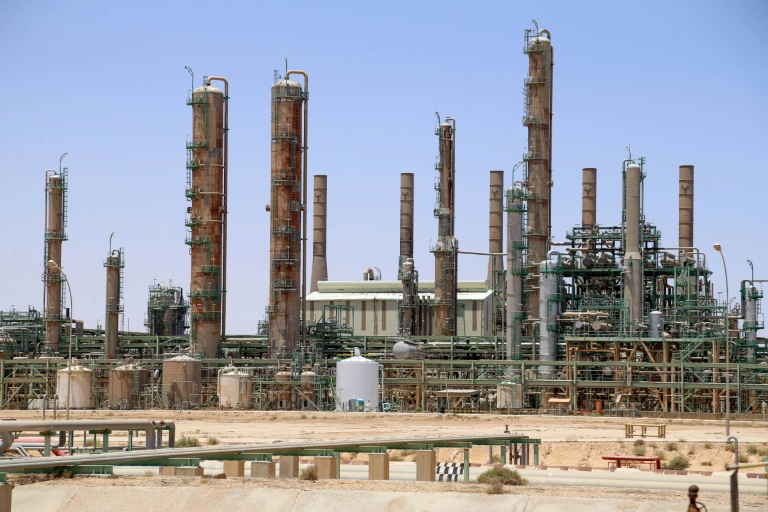
Libya’s state energy firm urged its foreign oil and gas partners to resume exploration and production Tuesday assuring them security had begun to improve dramatically after clashes earlier this year.

Rival administrations in east and west have vied for power since March, in a standoff that has hampered Libya’s efforts to sharply ramp up output in response to a surge in European demand for non-Russian oil and gas. 

“The National Oil Corporation calls (on) the international oil and gas companies with whom it has signed oil and gas exploration and production agreements to lift the force majeure declared by them,” the firm said in a statement.

Force majeure is a legal measure allowing companies to free themselves from contractual obligations in light of circumstances beyond their control.

NOC said its appeal followed a “realistic and  logical analysis of the security situation, which has begun to improve dramatically.”

The firm expressed “readiness to provide all necessary support… along with providing a safe working environment in cooperation with the civil and military authorities.”

Libya aims to raise its oil output from around 1.2 million barrels per day currently to 2.0 million bpd by 2027, NOC chairman Farhat Bengdara said last week.

On taking up his post in July, Bengdara lifted force majeure at all of the country’s oil fields and export terminals as an eastern-based militia abandoned a three-month blockade of six of them that had cut output by 400,000 bpd.

Since Russia invaded Ukraine in February, European countries have looked to alternative supplies from Africa to help end their dependence on Russian oil and gas.

Libya, which boasts the biggest proven crude reserves on the continent, has been wracked by years of conflict and division since a NATO-backed revolt toppled dictator Moamer Kadhafi in 2011.

Prime Minister Abdulhamid Dbeibah was appointed as part of a United Nations-guided peace process following the last major fighting in 2020, but the eastern-based parliament and military strongman Khalifa Haftar say his mandate has expired.

In March, parliament appointed a new government to take his place, but the rival administration has failed to install itself in Tripoli.

NOC chairman Bengdara was appointed by the Dbeibah government but has vowed to “work to prevent political interference” in the vital sector.

NOC has predicted oil revenues alone will amount to between $35 billion and $37 billion this year.

South African GDP rebounds to scale new peak

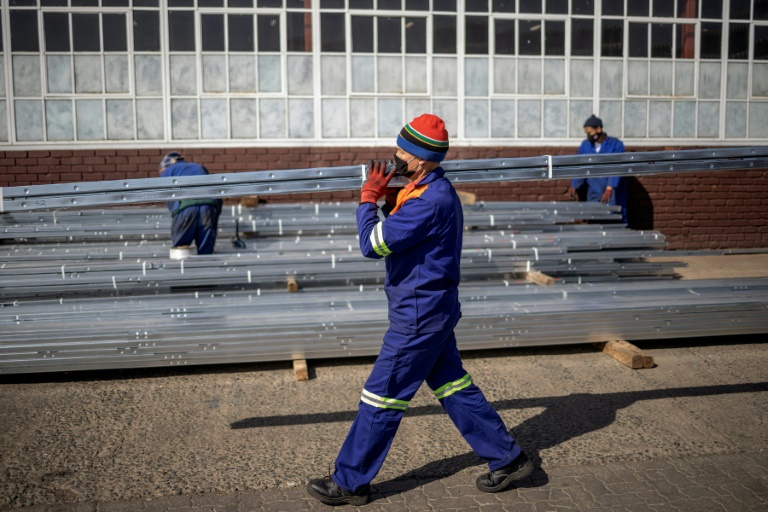
South Africa’s economy rebounded beyond pre-Covid levels in the third quarter of 2022 to reach its highest-ever peak, official data showed Tuesday.

Gross domestic product (GDP) expanded by 1.6 percent in the three months to September, following a 0.7 dip in the previous trimester, StatsSA said. 

“The size of the economy now exceeds pre-pandemic levels,” the official statistics agency said in a statement.

“Quarterly real GDP is now the highest it’s ever been, exceeding the previous peak of 1,152 billion (rand) ($66 billion) recorded in the fourth quarter of 2018.”

Agriculture, finance, transport and manufacturing were the main drivers, with demand benefiting from a rise in exports and government consumption, it said.

Africa’s most industrialised economy was badly hit by the Covid-19 pandemic, which amplified joblessness, poverty and inequality.

Economic growth was braked for about two years.

GDP returned to its pre-pandemic size only in the first quarter of 2022, on the back of six months of modest growth.

But some of those gains were lost in the second quarter, when economic activity was hit by floods in the southeastern KwaZulu-Natal province and power cuts caused by a prolonged energy crisis.

Close Bitnami banner
Bitnami