Africa Business

Missing Springbok Nkosi found at home of father

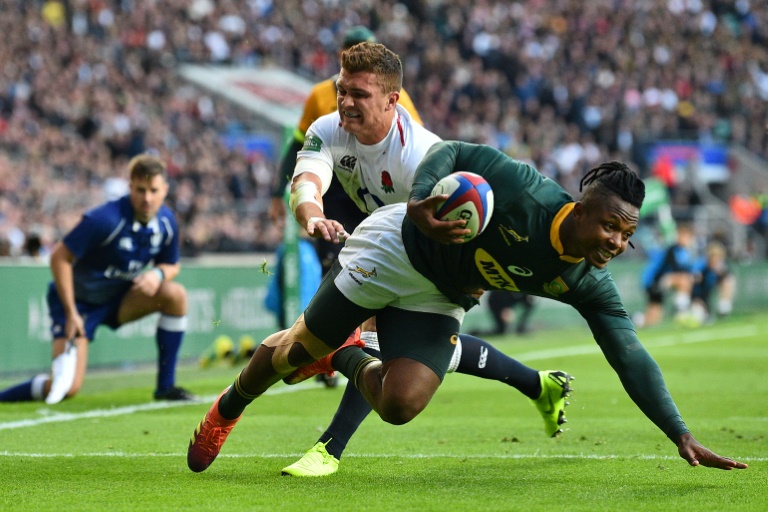
South Africa Rugby World Cup winner Sibusiso Nkosi, who had been missing for three weeks, was found on Monday at the home of his father, an official from his club, the Bulls, told AFP.

The Pretoria-based Bulls later issued a statement confirming that the 26-year-old winger had spoken to the chief executive of the club, Edgar Rathbone, in Emalahleni, east of Pretoria.

“Sibusiso was safe, unharmed and in a position to speak to Edgar,” the statement said as a police search launched at the weekend for the missing star ended.

“Edgar spent time alone with Sibusiso to understand how best the company can provide him with the support he needs and what that support is.”

There was no immediate explanation as to what triggered the disappearance of Nkosi. He was sent home from a Bulls tour of Europe in October after missing a team meeting in Ireland. 

Nkosi made the last of 16 appearances for the Springboks in 2021 and missed a tour of Europe last month due to a rib injury.

He recently slipped down the pecking order for the right wing position with Bulls team-mates Kurt-Lee Arendse and Canan Moodie preferred when first choice Cheslin Kolbe was injured.

Chad jails 262 in mass trial after deadly protests

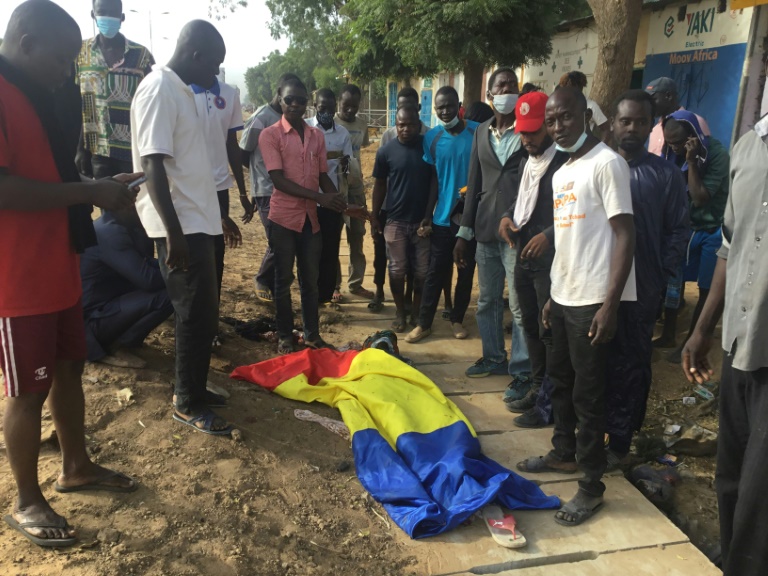
A Chadian court has handed jail terms of between two and three years to 262 people who were arrested after deadly protests in October, the public prosecutor said on Monday.

A total of 401 people had been put on trial in Koro Toro prison, a high-security jail located in the desert 600 kilometres (375 miles) from the capital N’Djamena.

Lawyers had boycotted proceedings on the grounds of the “illegal” transfer far from the public gaze for the trial. 

Of the others, 80 were given suspended terms and 59 were released, prosecutor Moussa Wade Djibrine said.

The trial ended on Friday after four days, with only state TV having the right to provide coverage, and the sentences were announced on Monday after the prosecutor returned to the capital.

The defendants were charged with taking part in an unauthorised gathering, destroying belongings, arson and disturbing public order.

Around 50 people, including 10 members of the security forces, died when police opened fire on demonstrators in N’Djamena and several other cities on October 20, according to an official toll.

But opposition groups say the real count was much higher, and allege unarmed civilians were massacred.

Local and international NGOs, the European Union and the African Union condemned the bloody crackdown and the use of violence against civilians.

Chadian lawyers stopped working during and after the trial, with the Chad Bar Association calling it a “parody of justice” as the defendants were “kidnapped” and “deported” to Koro Toro.

The bar announced its intention to appeal and that it would resume its work on Tuesday.

The protests had been called to mark the date when Chad’s ruling military had initially promised to cede power — a timeline that has now been extended by two years.

– ‘Insurrection’ –

Strongman General Mahamat Idriss Deby Itno accused the demonstrators of “insurrection” and attempting to stage a coup.  

Deby, 38, took power when his father, Idriss Deby Itno, who had ruled the arid Sahel state for 30 years, died during an operation against rebels in April 2021.

The authorities had previously said that 601 people, including 83 minors, were arrested in the N’Djamena area alone and taken to Koro Toro, a remote location two days by road from the capital.

Around 80 minors held there have been taken back to N’Djamena, the prosecutor said.

The state of emergency decreed in N’Djamena and other cities on the evening of October 20 was lifted on Monday.

Amnesty International has denounced what it said was the denial of the right to a fair and public trial, the preparation of a defence case and access to information.

The main leaders of Chad’s opposition now live in hiding or in exile.

Guinea trial adjourned after ex-dictator pleads ill health

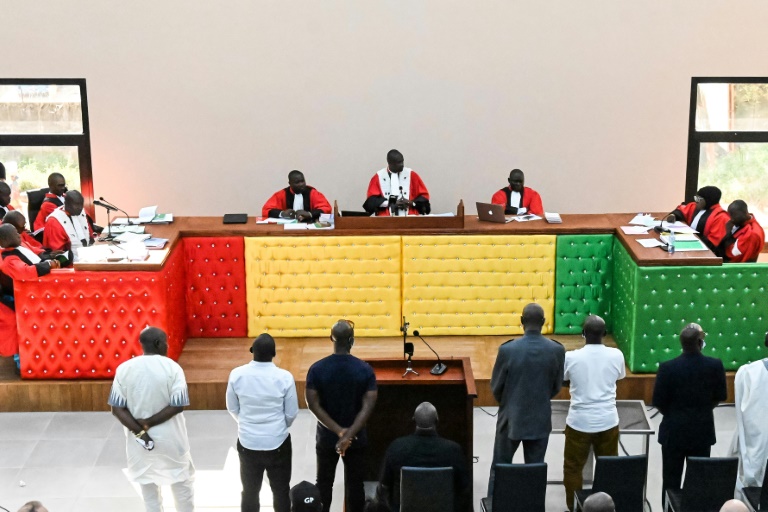
Proceedings in a trial over a 2009 massacre in Guinea were adjourned for a week on Monday after former dictator Moussa Dadis Camara said he was too ill to give testimony.

Survivors of the bloodbath and relatives of the dead had been eagerly awaiting the moment when Camara would take the stand.

But the former military ruler, who appeared at the bar in civilian clothes and walking with some difficulty, said he was unwell.

“With all the respect that I have for your distinguished tribunal, I have already informed the director of the penitentiary, the head doctor of the penitentiary, (that) I have been ill for some time,” Camara said.

He said he felt “completely weak, from malaria I caught”.

“I’m not above the law but quite sincerely I absolutely think that I can’t (testify) right now.”

Camara and 10 other former military and government officials are accused over the killing of 156 people and the rape of at least 109 women by pro-junta forces at a political rally in a Conakry stadium in September 2009.

They face charges ranging from murder to sexual violence, kidnappings, arson and looting. Camara himself is charged with “personal criminal responsibility and command responsibility.”

Chief judge Ibrahima Sory Tounkara said, “The court cannot force you to say or do something that you do not wish to do… If you say that you cannot give testimony, the court acknowledges this.”  

“You have a week, Mr. Camara,” he said, adjourning the trial until December 12.

Camara, at the time an unknown captain in the army, seized power in December 2008 shortly after the death of Guinea’s second post-independence president, General Lansana Conte, who had ruled for 24 years.

In December 2009, Camara was wounded in the head in an attempted assassination and headed to Morocco for medical treatment. 

He fled into exile in Burkina Faso, where he was indicted in July 2015 by Guinean magistrates for his alleged role in the stadium massacre.

The 58-year-old former strongman was detained on September 27, a day before the long-awaited trial began in a purpose-built court in the capital Conakry.

Nigeria train resumes eight months after deadly attack

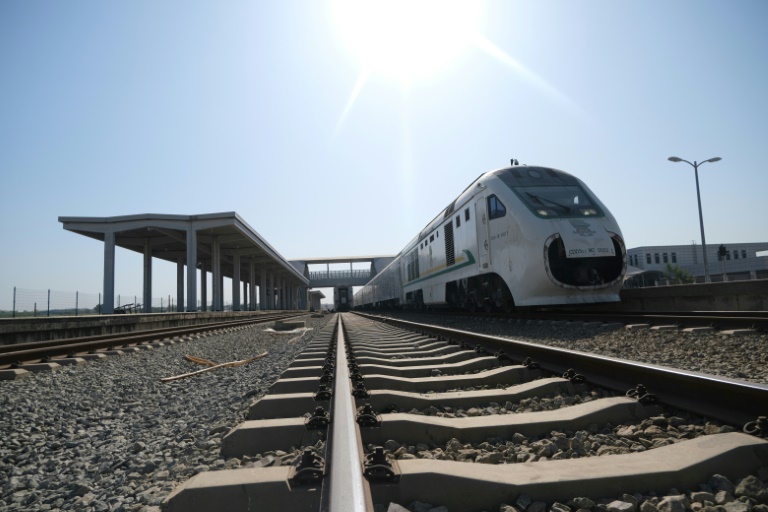
Nigeria on Monday resumed a train service linking the capital with a northern city, eight months after it was suspended following one of the country’s most high-profile attacks.

Gunmen with explosives on March 28 blew up the tracks and assaulted the train travelling between Abuja and Kaduna and opened fire, killing eight people, wounding 26 and taking an unspecified number of passengers hostage.

The hostages were released in batches following negotiations with their captors who were believed to have collected huge ransoms from their families. 

An AFP reporter at the railway station in Abuja on Monday said the train departed the nation’s capital at around 10:00 am (0900 GMT) for the two-hour journey to Kaduna.

Passengers were few — only occupying one-third of the train’s capacity — but excited that the service was back after eight months.

They were equally worried about security.

“I was just waiting for the commencement of this train service again, so I was so happy to be here today,” said passenger Ganiyat Adesina, a 50-year-old university professor.

She had arrived early at the station to beat the gridlock on the road.

“Just like 30 minutes after my arrival, we saw a team of military men with two armoured tanks and other vehicles — about five of them parading all these places,” she added.

“This is what I’m actually expecting the federal government to do.”

She said moving between Abuja and Kaduna had been “very stressful for people and for myself, I have to even stop going to Kaduna for the last eight months”.

Ayodeji Othman was happy “the train services are resuming and it’s been a very long time that we’ve been waiting for this.”

The 30-year-old passenger told AFP he had not travelled to Kaduna since the attack “because of the road condition as well as the security issues on the road, kidnapping and every other thing”.

Police said they had deployed personnel and equipment to protect the passengers and secure the tracks.

The Nigerian Railway Corporation — operators of the train — had planned to restart the Abuja-Kaduna service much earlier, but the families of the hostages insisted on their release first.

They were also concerned about the safety of passengers on the route.

– Security challenges –

The Abuja highway has been repeatedly attacked by gunmen who kidnap passengers, forcing travellers to opt for the train.

President Muhammadu Buhari, who steps down after a February election, sees the development of the railway as key to his infrastructure programmes.

The Kaduna train attack was one of several major incidents this year underscoring the challenge facing Nigeria’s overstretched security forces.

The military is battling a 13-year jihadist insurgency in the northeast, criminal militias in the northwest and separatist tensions in the country’s southeast.

The security challenge is a major issue for Buhari’s successor ahead of the presidential ballot. 

Morocco to 'come out swinging' against Spain at World Cup

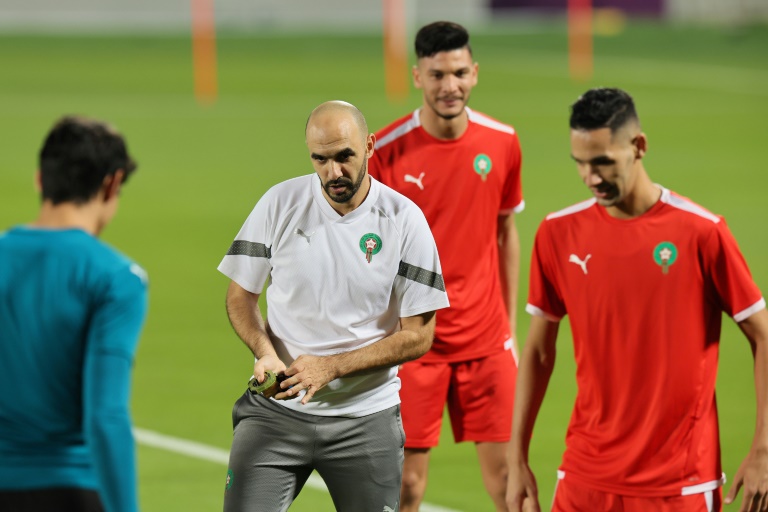
Morocco coach Walid Regragui has urged his team to believe they can defeat powerhouse Spain as they attempt to reach a first World Cup quarter-final.

The north African side are in the last 16 for only the second time after advancing as winners of Group F ahead of 2018 runners-up Croatia, having defeated Belgium and Canada in Qatar.

“It will be a very testing game for us. We’re coming up against one of the best footballing nations in the world. I think they’re one of the favourites to reach the final,” Regragui said on Monday.

“That said, we’ve also got things up our sleeve. We’ve had one extra rest day compared to them and we’re going to try and pull a surprise out of the bag. 

“If we’re able to send Spain packing I think this will be a wonderful surprise not only for us but for our country.”

Spain denied Morocco a famous win at the 2018 World Cup with a last-gasp equaliser in a 2-2 draw, the only point the Moroccans picked up in Russia.

“We’re not seeking revenge at all. We’re not looking at what happened in the past,” said Regragui, who was appointed in August.

“We’ve got a new generation and, for me, the mentality has to change with the Moroccan team. All the negative aspects, that’s the old Morocco, we’ve changed. Our country’s changed.”

Morocco, the lone Arab nation and the last African team remaining in Qatar, will have the vocal backing of thousands of fans for Tuesday’s game at Education City Stadium.

“We’ll come out swinging. We want to hoist the Moroccan flag way up high. We’re playing first and foremost for us and our country,” said Regragui. 

“All Arabs and Africans, we want to make them happy. We want their prayers and we want their support so it can give us that extra ingredient to win. Before it was just the Moroccans that supported us.” 

Morocco would become just the fourth African team to reach the quarter-finals — after Cameroon in 1990, Senegal in 2002 and Ghana in 2010 — if they beat the 2010 champions.

Morocco’s only other appearance in the last 16 came in 1986, when they lost 1-0 to eventual runners-up West Germany.

“I don’t think we should go out with any sort of complex,” said Regragui.

“Yes, we’re the underdog, but we know what Spain are made of and the recipe is easy. We shouldn’t be worried, we should have no regrets and give the best of ourselves.”

Sudan's military, civilian factions sign deal seeking to end crisis

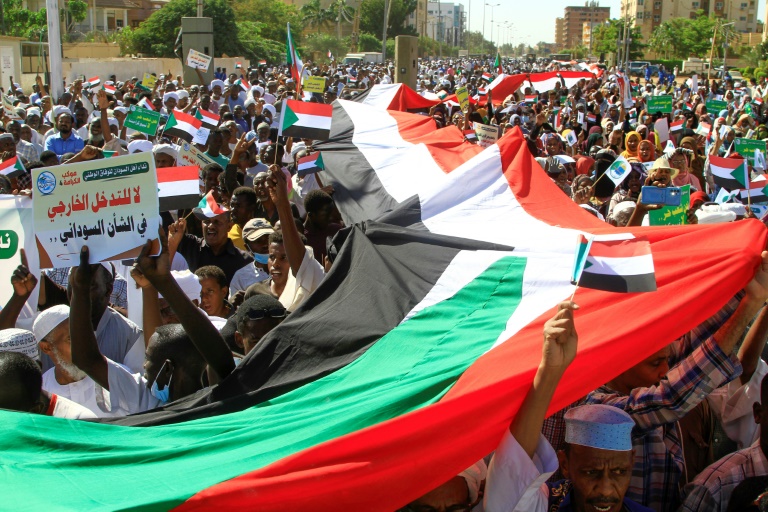
Sudan’s military and civilian leaders signed Monday an initial deal aimed at ending a deep crisis caused by last year’s military coup, prompting sceptical protesters to cry betrayal. 

Army chief Abdel Fattah al-Burhan seized power in October 2021, derailing a rocky transition to civilian rule that began after the 2019 ouster of veteran autocrat Omar al-Bashir. 

The past year has seen near-weekly protests and a crackdown that pro-democracy medics say has killed at least 121, a spiralling economic crisis exacerbated by donors slashing funding, and a rise in ethnic violence in several remote regions.

Divisions among civilian groups have deepened since the coup, with some urging a deal with the military while others insist on “no partnership, no negotiation”.

Monday’s deal was signed by Burhan, paramilitary commander Mohamed Hamdan Dagalo and multiple civilian groups, most notably the Forces for Freedom and Change (FFC) — the main civilian faction that was ousted in the coup.  

Hundreds of citizens rallied in Khartoum following online calls to protest against the deal. 

“The settlement is betrayal” and the FFC “sold our blood,” demonstrators cried. 

Under the deal, signatories will agree on a prime minister who will steer the country through a 24- month transition.

“The ceremony today is a culmination of the sustained efforts of Sudanese stakeholders over the past year to find a solution to the political crisis and restore constitutional order,” said UN special representative Volker Perthes.

Other signatories included the Islamist Popular Congress Party, a faction of the Democratic Unionist Party and some ex-rebel groups who signed a 2020 peace deal.

During the ceremony, Dagalo reiterated the military’s purported commitment to exit the political scene, saying “it is essential to build a sustainable democratic regime”. 

– Thorny issues ahead – 

“We reject this deal as it overlooked street demands for justice for the people killed since the coup,” said another protester in Khartoum, Mohamed Ali.

“We heard that the deal grants immunity to military figures and we do not accept this.” 

The agreement — based on a proposal by the Sudanese Bar Association — was negotiated in the presence of officials from the United Nations, Western diplomats as well as Saudi Arabia and the United Arab Emirates, according to the FFC. 

On Friday, the FFC said the “framework agreement lays the groundwork for establishing a transitional civilian authority.” 

A final deal tackling issues including transitional justice and reforms to the military should be completed “within weeks,” it said.

Perthes urged Sudanese factions to “immediately” start the second phase to resolve the outstanding issues and reach a comprehensive deal. 

However, that part is far thornier, with observers questioning whether the military would be willing to give up economic interests and wider powers that it views as its privileged domain.

Phase one of the deal “is a very low level commitment on Burhan’s part… allowing him to survive” politically, said Kholood Khair founder of the Confluence Advisory, a Khartoum-based think-tank.

But the signatories will likely face “a real political crisis as they start talking in earnest about security sector reforms, transitional justice (and) financial accountability,” she added. 

Monday’s signing comes months after Burhan pledged that the military would step aside and make way for factions to agree on a civilian government. 

Some of the former rebels who signed peace deals with Sudan in 2020 also voiced their opposition to Monday’s agreement.

Mohamed Zakaraia, spokesman for former rebel group the Justice and Equality Movement, told AFP that it “will bring about dire consequences and further complicate the political scene”.

S.Africa's ruling ANC debates embattled president's future

The top leaders of South Africa’s ruling party went into talks on Monday to discuss the fate of embattled President Cyril Ramaphosa on the eve of a parliamentary vote that could lead to his impeachment.

Ramaphosa insisted at the weekend that he would not resign after a special panel reported on an alleged coverup of a cash robbery at his farm, but his political future remains uncertain.  

On Monday morning the president arrived at the venue where the African National Congress’ highest body — the National Executive Committee (NEC) — was meeting to discuss the crisis. He left shortly afterwards, smiling and waving to the media.

ANC spokesman Pule Mabe said the president was recused from the meeting, in line with standard practice for a person under discussion. 

“We convened the meeting because we want to seek the wisdom of the collective,” said Mabe.

Forged by Nelson Mandela into the weapon that led the fight against apartheid, the ANC has been deeply divided by the affair, but after a pendulum swing a majority now seems be backing the president.

The country marked the ninth anniversary of Mandela’s death on Monday.

“In remembering him we are going to make sure that the (NEC meeting) concludes being united,” said Mabe.

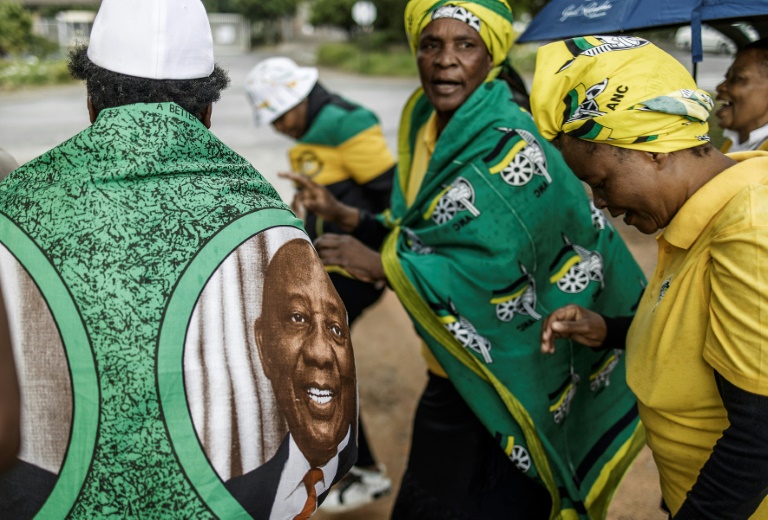
A small group of demonstrators, some supporting the president, others calling for him to go, gathered outside the meeting in the Johannesburg area of Nasrec.

“The right thing is to tell Cyril Ramaphosa that he must step down,” said ANC member Carl Niehaus, 63, a former spokesman to Mandela and critic of his successor.

He wore an ANC T-shirt and holding a framed sign reading “Ramaphosa must go”. 

But Ramaphosa supporter Maropeng Serakwana, 40, warned against any leap to judgement.

Ramaphosa “must be treated fairly like any other citizen in this country,” he said. 

The bombshell report was submitted last week to parliament, which will debate it on Tuesday — a step that could lead to a vote on forcing Ramaphosa from office.

For him to be forced out, two-thirds of the assembly must vote in favour of the removal motion. The ANC has 230 out of 400 seats.

– ‘Phala Phala’ – 

The scandal has become known as the Phala Phala affair, named after Ramaphosa’s farm in the northeast of the country.

It began in June, when South Africa’s former spy boss filed a complaint with the police alleging that Ramaphosa had concealed the theft of a huge haul of cash from the farm.

He accused the president of having organised for the robbers to be kidnapped and bribed into silence.

Ramaphosa, in submissions to the three-person investigative panel, denied any wrongdoing.

He said the cash — more than half a million dollars, stashed beneath sofa cushions — was payment for buffaloes bought by a Sudanese businessman. 

But his explanations did not convince the panel, which raised questions about the source of the cash and said he “may have committed” serious violations and misconduct.

A police inquiry is ongoing, but he has not so far been charged with any crime.

The scandal comes at the worst possible time for Ramaphosa. 

On December 16, he will contest elections for the ANC presidency — a position that also holds the key to staying on as the nation’s president.

A former mine union president who made a fortune in business in post-apartheid era, Ramaphosa came to office in 2018 riding on a graft-free image after the corruption-tainted presidency of Jacob Zuma.

– ‘Flawed’ report –

In his weekly newsletter on Monday, Ramaphosa did not address the scandal directly, but flaunted the government’s anti-corruption work.

“Now that we see that progress is being made, we must do everything we can to ensure that this work continues unhindered,” he wrote.

His spokesman, Vincent Magwenya, on Saturday said Ramaphosa would not resign on the basis of a “flawed” report and would contest the document in court.

Julius Malema, an ex-ANC youth leader and now opposition Economic Freedom Fighters president called for Ramaphosa to “be arrested — he committed crime, he committed corruption.”

But the ANC’s overwhelming majority in the National Assembly means that it is not even certain that parliament will vote to launch the procedure of removal.

As well as Ramaphosa, some legal experts have outlined flaws in the report.

They argue that without recourse to the ongoing criminal investigation, the document is based largely on hearsay, Ramaphosa’s statements and the initial complaint lodged by an opponent of the president.

W.African leaders agree to create regional force

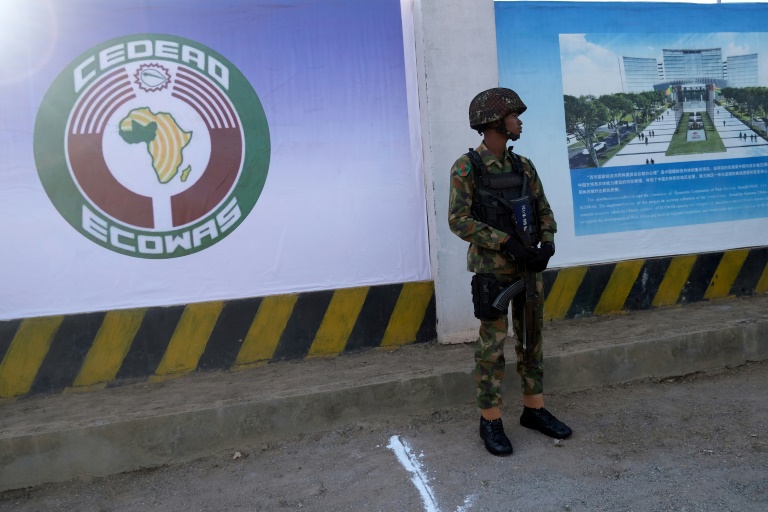
West African leaders agreed on Sunday to create a regional force to intervene against jihadism and in the event of coups, a senior official said.

Leaders of the Economic Community of West African States had decided to act to “take care of our own security in the region”, Omar Alieu Touray, president of the ECOWAS commission, told journalists at a summit in Nigeria.

They are “determined to establish a regional force that will intervene in the event of need, whether this is in the area of security, terrorism and restore constitutional order in member countries,” he added.

Mali, Guinea and Burkina Faso have all been hit by military coups in the last two years.

Several countries in the region are also suffering from the spread of jihadism, including Mali, Burkina Faso and Niger, and southwards to the Gulf of Guinea. 

National armies, largely powerless against the jihadist forces operating across borders, have been cooperating with external actors such as the UN, France and Russia.

But Touray said this decision would “restructure our security architecture”.

The modalities of the planned regional force will be considered by defence chiefs in the second half of January, 2023, Touray said.

The funding of the force must also be decided, but the ECOWAS official stressed that such an operation could not be solely dependent on voluntary contributions.

– Pressure on Mali –

Addressing another regional problem, the West African leaders told Mali’s ruling junta to release 46 Ivorian troops it has held since July.

“We ask the Malian authorities to release the Ivorian soldiers by January 1, 2023 at the latest,” said Touray, at the Abuja summit.

The Gambian diplomat said the West African bloc reserved the right to act if the soldiers were not released by January 1.

If Mali fails to do so, ECOWAS will impose sanctions, a West African diplomat told AFP.

Togolese President Faure Gnassingbe, who has been mediating between Mali and Ivory Coast on the issue, will travel to Mali to “demand” the release of the soldiers, the diplomat added.

The Ivorian troops were arrested on July 10 on their arrival at the airport in Mali’s capital Bamako.

Ivory Coast says the troops were sent to provide backup for the UN peacekeeping mission in Mali, MINUSMA, and are being unfairly detained. 

Mali says the troops are mercenaries and has placed them in custody on charges of attempting to harm state security. 

ECOWAS had decided at an extraordinary summit in September to send a high-level delegation to Mali to try to resolve the crisis. But no progress was reported from this mission.

– Coup-hit nations –

The West African leaders, concerned about instability and contagion, have been pressing for months for the quickest possible return to civilian rule in the three countries which have undergone coups in recent years.

Mali and Burkina Faso have both been severely shaken by the spread of jihadism.

All three countries have been suspended from the decision-making bodies of ECOWAS.

Leaders of the military juntas have pledged, under pressure, to step down after two years, allowing for a transition period during which they all say they want to “rebuild” their state.

ECOWAS has been looking to see what progress each nation has been making towards restoring constitutional order.

In Mali, “it is essential that constitutional order returns within the planned timeframe”, said Touray.

If Mali’s military meets the announced deadline of March 2024 — after months of confrontation with ECOWAS and a severe trade and financial embargo that has now been lifted — the “transition” will in fact have lasted three and a half years.

Touray urged the junta in Guinea to involve all parties and civil society in dialogue “immediately” on the process of restoring civilian rule.

The main political parties and much of civil society there have been boycotting the authorities’ offer of dialogue.

As for Burkina Faso, Touray expressed ECOWAS’s “serious concerns” about the security situation and the humanitarian crisis there, while pledging support for the country. 

Ghana offers local debt swap as part of IMF talks

Ghana offered investors a domestic debt swap on Monday to ease a crunch in payments as the government negotiates an IMF bailout during its worse economic crisis in decades.

The West African state is in talks for up to $3 billion in credit from the International Monetary Fund to help shore up its public finances.

Inflation is at more than 40 percent and the cedi currency has lost 50 percent in value this year, helping push up debt by $6 billion in 2022.

As part of IMF negotiations, Ghana’s government is seeking to make its debt more sustainable after facing warnings about the risks of it defaulting on obligations.

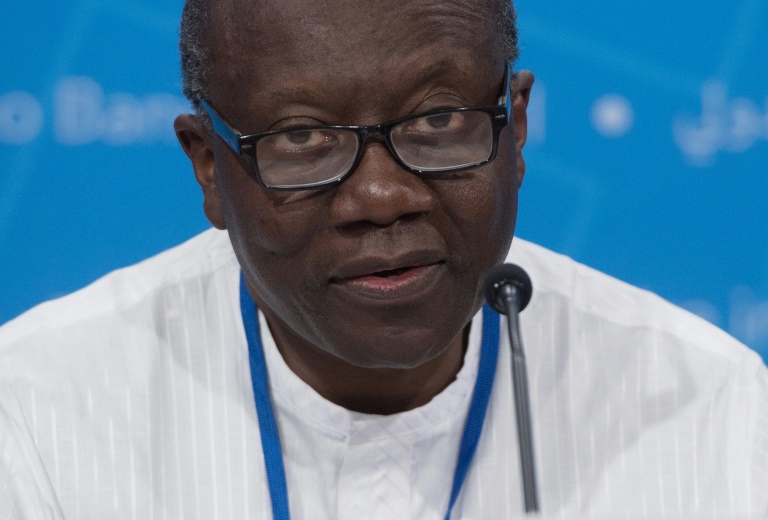
Finance Minister Kenneth Ofori-Atta said in a recorded statement late on Sunday on social media the debt exchange starting Monday would swap current debt for four new bonds maturing between 2027 and 2037.

“Our commitment to Ghanaians and the investor community, in line with the negotiations with the IMF is to restore macroeconomic stability in the shortest possible time,” he said.

A foreign debt restructuring programme would be presented later, he said.

Ghana, a top cocoa and gold producer, has oil and gas reserves but its debt payments are high and its revenues weak. Like the rest of Africa, it has been hit by economic fallout from the global pandemic and the Ukraine war. 

Ofori-Atta said the government had worked to minimise the swap impact on investors holding government bonds, especially small investors and other vulnerable groups. 

There will be no “haircuts” on principle value of bonds, he said.

The minister said the government recognised banks and financial institutions hold a large amount of local government debt, but regulatory agencies and the central bank would help ease the impact on them.

“These are difficult times and we count on the support of all Ghanaians and the investment community to make this exercise successful,” he said.

President Nana Akufo-Addo and his economic team have come under growing pressure over the crisis, after the government earlier this year did a U-turn and said it would go to the IMF for help.

Lawmakers have moved to censure Ofori-Atta over his economic performance and parliament is still reviewing that motion.

Last month, Akufo-Addo fired the government’s junior finance minister, Charles Adu Boahen, over corruption allegations after he appeared in a documentary on illegal gold mining.

Australia starts building 'momentous' radio telescope

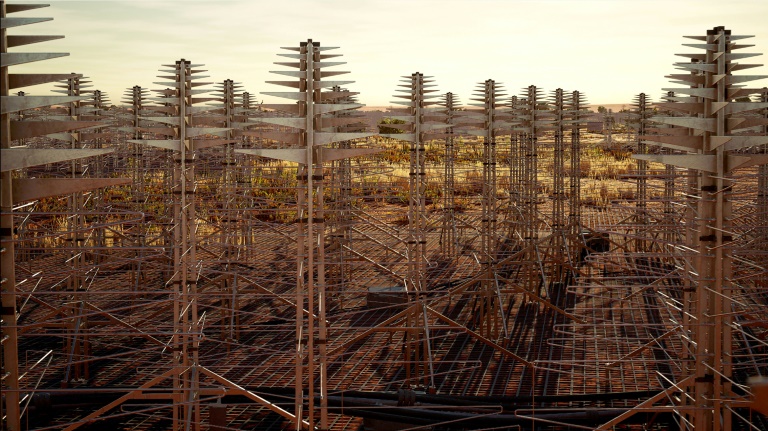
Australia on Monday started building a vast network of antennas in the Outback, its section of what planners say will eventually become one of the most powerful radio telescopes in the world.

When complete, the antennas in Australia and a network of dishes in South Africa will form the Square Kilometre Array (SKA), a massive instrument that will aim to untangle mysteries about the creation of stars, galaxies and extraterrestrial life.

The idea for the telescope was first conceived in the early 1990s, but the project was plagued by delays, funding issues and diplomatic jockeying.

The SKA Observatory’s Director-General Philip Diamond described the beginning of its construction as “momentous”.

The telescope “will be one of humanity’s biggest-ever scientific endeavours”, he said.

Its name is based on the planners’ original aim, a telescope that could observe a one-square-kilometre surface, but the current South African and Australian sections will have a combined collecting area of just under half that, according to the observatory.

Both countries have huge expanses of land in remote areas with little radio disturbance — ideal for such telescopes.

More than 130,000 Christmas tree-shaped antennas  are planned in Western Australia, to be built on the traditional lands of the Wajarri Aboriginal people.

They have dubbed the site “Inyarrimanha Ilgari Bundara”, or “sharing sky and stars”.

“We honour their willingness to share their skies and stars with us as we seek to find answers to some of the most fundamental science questions we face,” said Diamond.

The South African site will feature nearly 200 dishes in the remote Karoo region, according to the organisation.

Comparison between radio telescopes is difficult as they operate in different frequencies, according to SKA’s planners.

But they have said that the two sites will give SKA higher sensitivity over single-dish radio telescopes because its arrays are spread out, forming a much bigger “virtual dish”.

The project will help in “charting the birth and death of galaxies, searching for new types of gravitational waves and expanding the boundaries of what we know about the universe”, said telescope director Sarah Pearce.

Danny Price from the Curtin Institute of Radio Astronomy said the telescope would be extremely powerful.

“To put the sensitivity of the SKA into perspective, the SKA could detect a mobile phone in the pocket of an astronaut on Mars, 225 million kilometres away,” he said.

The SKA Observatory, headquartered at Jodrell Bank in Britain, has said the telescope should start making scientific observations by the late 2020s.

The organisation has 14 members: Britain, Australia, South Africa, Canada, China, France, Germany, India, Italy, New Zealand, Spain, Sweden, Switzerland, and The Netherlands.

Close Bitnami banner
Bitnami