Africa Business

Liberian president's long stay abroad criticised

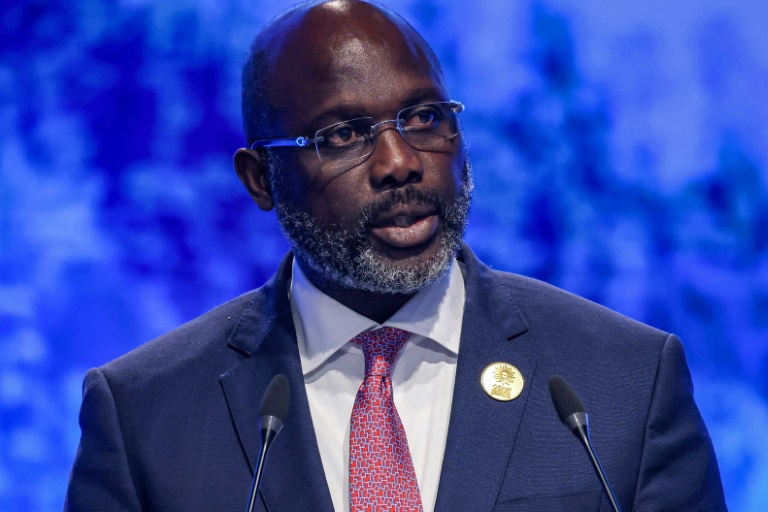
Liberian President George Weah’s long absence from the country has raised eyebrows and prompted criticism, leading one opposition figure to ask if the West African nation is running on “autopilot”.

Weah went abroad at the end of October for a string of political gatherings in numerous countries — and to watch his footballer son represent the United States at the World Cup in Qatar.

Since then, the president — himself a former football star — has not been seen in his homeland where people are battling soaring prices and shortages of basic goods.

Even those with an understanding of the demands of top-flight diplomacy, or the enduring love of the beautiful game, are beginning to wonder.

Weah has shared pictures and video of himself with his son in Qatar on Twitter, speaking of being a “proud daddy” as the US national team qualified for the knockout stages.

But images of Weah enjoying himself in the stands in Qatar — where he is a “guest of honour” — while Liberians struggle have not gone down well with many compatriots venting their anger on social media.

“This one here has passed the limit now… who (has) he left us with?” 23-year-old Abraham Kaneh told AFP in the capital Monrovia.

“He’s not going to do the work of the Liberian people. He went to do the work of his own son. He did not go on our plea, he’s gone to see other friends,” said fellow Monrovian Momo Fully.

Well-known media personality Henry Costa joked online that the president would extend his absence to January if his son Timothy scored against England last month.

– ‘Abandoning the entire country’ –

New York-born Timothy Weah is one of many people to hold US and Liberian nationality, with the countries maintaining close ties dating back to Americans’ role in the creation of the West African state in the 19th century.

Plenty of football-loving Liberians follow the younger Weah’s performances for his French club Lille, but for opposition politician Lewis Browne that does not justify the president’s globe-trotting activities.

“Weah continues to insult the intelligence of Liberians and exhibit a high degree of don’t-care attitude by abandoning the entire country and citizens to witness soccer matches,” he said.

Browne also accused Weah of misusing public money to lead a celebrity lifestyle.

The opposition has also condemned what it sees as the president’s gallivanting between Qatar and international summits in Morocco, Egypt, France, Monaco and the United States, with former vice president Joseph Boakai saying Liberia was “on autopilot”.

“We continue to witness other acts of poor leadership, irresponsible behaviour, lack of concern, impunity, and wanton misuse of our finances,” the Unity Party heavyweight added, suggesting others could have represented the country in Weah’s place.

– A ‘necessary’ absence –

Other Liberians defended Weah, who acquired iconic status after becoming the first and only African to win football’s most prestigious individual award, the Ballon d’Or, in 1995. 

“I support the president. The man wants to see his son playing, what’s wrong with that?” Alex Bono, 31, told AFP.

Entrepreneur Antoinette Anderson praised Weah for “trying to render services to the Liberian people” and “gather funds out there to make Liberia a better place to live”.

“I don’t have problems with the events he went on. The fact he went there on behalf of the country, I think it’s necessary,” added Tarlue Zeyon in Monrovia.

Weah last month extended his stint abroad, the longest since he became president, by another 25 days and is due back in Liberia on December 18.

His government is also facing criticism over its handling of a census that must take place before elections in 2023.

Weah, who came to power in 2017 on a pledge to fight poverty and corruption, has been chosen by his party to seek re-election, but critics say he has failed to honour his commitments.
Ex-hostages of DR Congo rebels reunited with families

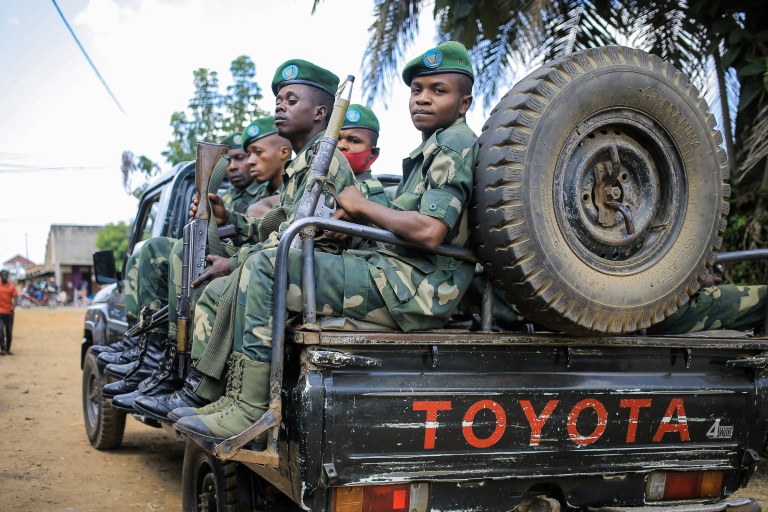
Fifty-seven former hostages of a rebel group in eastern Democratic Republic of Congo, some young women used as sex slaves, were reunited with their families Saturday, AFP correspondents saw.

They were freed last weekend after a large-scale Congolese-Ugandan military operation allowed them to escape the Allied Democratic Forces (ADF), one of dozens of armed groups in the volatile region.

The Ugandan and Congolese armies have led an offensive against the ADF in the eastern provinces of North Kivu and Ituri for more than a year.

The former hostages, mostly women, were reunited with their families during a ceremony in Beni territory in North Kivu.

“Kavira” — not her real name — just 15, said the ADF kidnapped 25 people in her village of Kikingi, around 70 kilometres (43 miles) from Beni, in August last year.

“Some were killed, others are still there,” she told AFP.

“I was raped every day by a man they chose for me as a husband. It was that or death.”

Euphrasie, 15, whose real identity is also being protected, was kidnapped in a hospital in nearby Lume. The rebels tied her up and carried her off.

“After three weeks, they gave me the commander as a husband, a Tanzanian called Tsalamana,” she said as she saw her family again.

A grateful and emotional Jeff Manyama, whose 22-year-old daughter was also seized in the hospital raid, told AFP he was “living in despair, the mother killed, the child taken away”.

Another father, Fredy Kuko, also expressed his thankfulness after his daughter was seized in a field in June 2020 aged 12. “We had no hope of seeing her again,” he said.

The ADF, presented by the Islamic State group as its Central African affiliate, have been accused of massacring civilians in eastern Congo and carrying out attacks in neighbouring Uganda.

Mineral-rich eastern DR Congo has been the scene of fighting between government troops, a host of militia groups and even soldiers from neighbouring countries for three decades.

Afro-Greeks struggle to emulate 'idol' Antetokounmpo

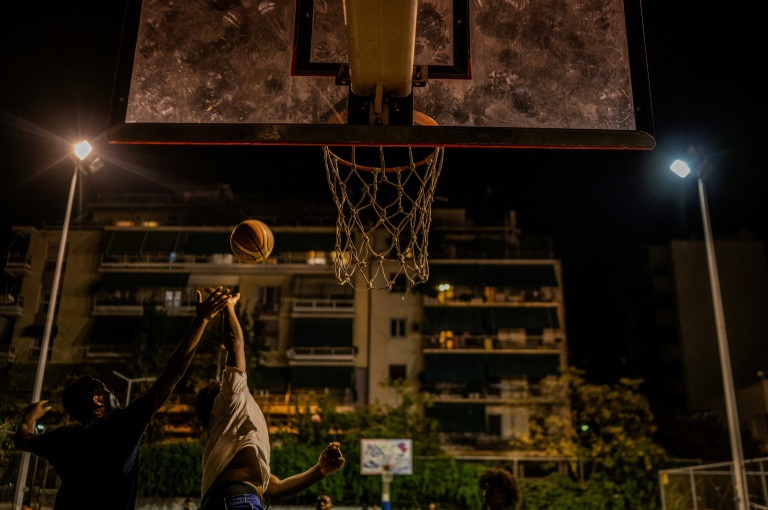
Young Athenians sharpen their shooting skills under the dazzling white lights of an outdoor basketball court, forever dreaming of emulating local hero and global star Giannis Antetokounmpo.

The sport offers the tantalising hope of obtaining Greek nationality — and the promise of an easier life — for the children of African immigrants born or raised in Greece but whose presence in the country is questioned.

But many of the budding basketball players believe the daunting obstacles placed in their path by Greek administration make it hard to follow their role model Antetokounmpo and his rags-to-riches story.

Originally from Nigeria, brothers David and Joshua Nnadi told AFP their efforts to follow in the footsteps of Giannis and his sibling Thanasis have been thwarted at every turn.

“Every year the school organises a trip abroad. Without the papers, I cannot leave the country,” said David, 17.

“I don’t understand, the Antetokounmpos were like us… today, they receive all the glory, and we get nothing,” he regretted.

Their playmate Tangu shares the feeling of injustice. “They say we all have the same rights, but that’s false,” he told AFP.

Giannis Antetokounmpo, born in Athens to Nigerian parents, is everywhere in the Greek capital, adorning advertising billboards and acting as a role model for aspiring basketball players of African origin.

An enormous fresco on a basketball court depicts Antetokounmpo, 27, leaping with superhuman agility towards a basket, soaring towards the clouds and a Greek god. 

His number 34 jersey sells by the thousands in city-centre alleyways.

Dave Okonkwo, also born in Greece to Nigerian parents, aspires to follow Antetokounmpo’s example and become a professional player.

“I dream of meeting him, learning from him. Giannis has always been my idol,” said the 18-year-old, as he laced up his trainers on the court.

– Legal limbo –

Antetokounmpo’s dizzying rise to international sporting stardom had humble beginnings. Penniless and without a regular legal status in Greece, his family survived off the proceeds of odd jobs and informal trading.

Basketball gave the two eldest children, Thanasis and Giannis, an escape from the precarity of day-to-day life. Scouts spotted their talent, with Giannis joining North America’s prestigious NBA league with the Milwaukee Bucks in 2013.

Giannis’s sporting achievements facilitated the regularisation of his status in Greece, where he obtained citizenship at 18 as he jetted off to the United States.

The granting of Greek citizenship to these children of immigrants is not automatic and the criteria vary by age, the situation of the parents and the youngsters’ education.

The administrative hurdles often leave youngsters in a legal limbo, especially when the response times drag on seemingly indefinitely.

Nikos Odubitan, who founded the organisation Generation 2.0 to help integrate and offer legal support to young people facing such difficulties, said the bureaucratic delays exceed the timeframe stipulated by law.

“The law says the steps should be completed in six months. In reality, the average is more than four years and some people wait for six to seven years,” he said.

The uncertainty prevents the children from accessing free healthcare, the organisation added. “One Giannis doesn’t make a summer,” said Odubitan.

– Hard work and perseverance –

Okonkwo took up basketball aged 11 at the AntetokounBros Academy, an organisation founded by the Antetokounmpo brothers to give opportunities to “underserved youth” and allow them to change their lives through the power of sport.

It was also at the academy that budding basketball star Benjamin Tangu practised his first dribbles, after arriving in Greece aged 13.

“He (Giannis) showed that if you work hard enough, you will succeed,” said the young man of Congolese and Angolan origin.

“He succeeded through work and perseverance. Nothing is easy but you’ve always got to follow your dreams,” added Okonkwo.

“We always want to compare ourselves to Giannis, but everyone follows their own path. He made it. Now it’s our turn to be recognised.”

Morocco reaps cash, clout from fertiliser supply shock

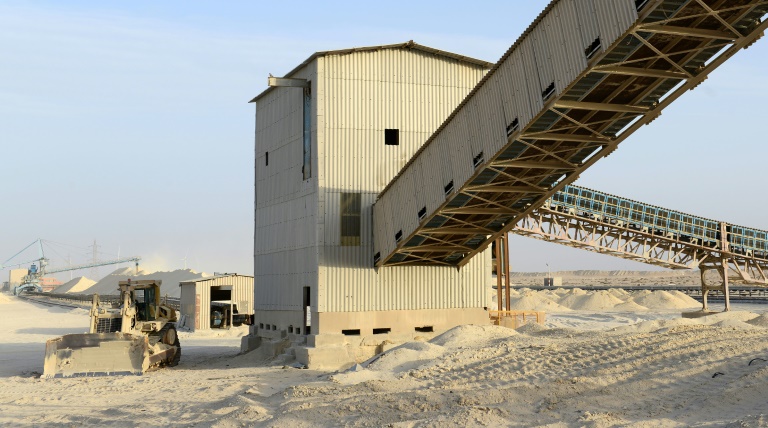
A global fertiliser supply shock deepened by Russia’s Ukraine invasion has brought boom times for the North African phosphate superpower Morocco and earned the kingdom new diplomatic capital.

Rabat is using the leverage especially in the decades-old fight over the disputed desert territory of Western Sahara, a former Spanish colony also claimed by Algeria-backed rebels, analysts say.

Morocco is set to chalk up record revenues for a second year running as farmers worldwide scramble for phosphate, made scarce by sanctions against top world producer Russia and a Chinese ban on exports.

Phosphate is a key ingredient of artificial fertilisers, which are vital for industrial agriculture and global grain supplies despite the long-term damage they inflict on soil and groundwater.

“It’s a strategic mineral for the future because it’s crucial for global food security,” said Abderrahim Handouf, an agricultural policy expert.

“As populations grow, fertilisers are the most effective way to increase farm productivity.”

According to Morocco’s state-owned phosphates firm OCP, the kingdom controls around 31 percent of the international trade in the substance.

The OCP, which holds a national monopoly in the trade, is on track to record more than 131 billion dirhams ($12.4 billion) in revenue this year, up 56 percent on 2021 — already a bumper year.

– ‘Geopolitical tensions’ –

Even before the start of the year, prices had been edging higher as the world emerged from the Covid pandemic and market leaders like China imposed export restrictions, said sector expert Mounir Halim.

There was also “strong demand from India, one of the world’s biggest importers, which had exhausted its stocks,” Halim told AFP.

Then as Western powers imposed sanctions on Russia after its invasion of Ukraine, prices of fertiliser shot up.

That made Morocco a vital alternative supplier. The kingdom’s exports of phosphates and their derivatives jumped by two thirds year-on-year in the first nine months of 2022, according to the latest official figures.

Morocco has around 70 percent of the world’s phosphate reserves, and has been mining four sites since 1921, including in the disputed Western Sahara.

Morocco’s OCP has ramped up its production capacity by a factor of four since 2008, hitting 12 million tonnes last year, on target to reach 15 million by the end of 2023.

That makes it a major player in a global market fearful of further supply shocks.

The UN Food and Agriculture Organization warned in a report this year that “fertiliser supplies remain restricted, stocks are depleted and geopolitical tensions could spark additional supply restrictions at short notice.”

– Phosphate diplomacy –

The result is that Morocco is enjoying not only an influx of cash, but also growing diplomatic muscle, particularly on Western Sahara.

The kingdom sees the vast stretch of desert as an integral part of its territory, but the Polisario movement backed by Morocco’s arch-rival Algeria seeks independence there.

Rabat has placed the question at the heart of its diplomacy. 

King Mohammed VI in August demanded that Morocco’s allies “clarify” their stances on the issue, calling it “the prism through which Morocco views its international environment”.

According to L’Economiste, a Moroccan French-language newspaper, OCP has become “the economic arm of Moroccan diplomacy”.

In September, Rabat recalled a shipment of 50,000 tonnes of fertiliser destined for Peru after Lima restored diplomatic relations with the Polisario’s self-proclaimed Sahrawi Arab Democratic Republic.

– Sticks and carrots –

But as well as sticks, OCP offers carrots. 

The firm has been expanding its presence across Africa, with branches in 16 countries, a fertiliser factory in Nigeria and a deal signed in September to open another one in Ethiopia.

It has also put aside four million tonnes of fertiliser “to support food security in Africa” next year, it said.

This year Morocco exported half a billion tonnes of fertiliser to various African countries, either for free, as aid or at preferential prices.

Morocco is even looking across the Atlantic for new markets. 

In September it signed a deal with Guatemala focusing on “fertilisers and farming”, according to the two countries’ foreign ministers.

In the same statement, Guatemala gave its backing to Morocco’s autonomy plan for the Western Sahara.

But while OCP is a potential source of international leverage on the issue, Morocco does not demand public support for its position with every contract signed.

“Morocco is using its economic arms in a pragmatic way, not in a transactional way,” said international relations expert Tajeddine El Husseini.

But, he added, economic ties can have “a political impact”.

Burkina Faso suspends French broadcaster RFI

Burkina Faso on Saturday ordered the immediate suspension of Radio France Internationale (RFI) broadcasts, accusing it of putting out a “message of intimidation” attributed to a “terrorist chief”.

It is the second West African country under military rule, after Mali, to take the French broadcaster off the airwaves this year.

RFI had contributed to “a desperate manoeuvre of terrorist groups” to dissuade thousands of Burkinabe citizens mobilised for the defence of the country, said Burkinabe government spokesman Jean Emmanuel Ouedraogo.

At the beginning of the week, the Al-Qaeda-affiliated Support Group for Islam and Muslims (GSIM) threatened in a video to attack villages defended by the pro-government VDP militia in Burkina Faso.

The VDP are civilian volunteers given two weeks’ military training to work alongside the army carrying out surveillance, information-gathering or escort duties. 

The government had already, on November 3, protested the contents of the French broadcaster’s reports, said the government statement.

“Considering everything that has happened before, the government has decided on the immediate suspension, until further notice, of the broadcasting of Radio France Internationale’s programmes.”

The government also accused RFI of having relayed “misleading information” suggesting the leader of the Burkinabe junta, Captain Ibrahim Traore, had said there had been an attempted coup against him.

– ‘Unfounded accusations’ –

RFI’s management, in a statement late Saturday, said it “deeply deplores this decision and protests against the totally unfounded accusations calling into question the professionalism of its stations”.

The decision to cut off RFI’s broadcasting service “was taken without prior notice and without implementing the procedures… drawn up by Burkina Faso’s Higher Council for Communication,” it added.

The France Medias Monde group, to which RFI belongs, “will explore all avenues to restore RFI’s broadcasting, and reiterates its unwavering commitment to the freedom to inform and the professional work of its journalists,” the statement added.

According to RFI, the radio station is heard every week in Burkina Faso by more than 40 percent of the population and “more than 70 percent of opinion leaders”. 

An AFP journalist in Ouagadougou confirmed that the French radio station could no longer be heard by late afternoon.

The Burkinabe government nevertheless said it wanted to “reaffirm to national and international opinion its attachment to freedom of the press and opinion” and “the public’s right to information”, while exhorting media to “respect the rules and principles laid down in this area in our country”.

Burkina Faso has experienced two military coups this year, driven by army officers angered at the failure to tackle the threat from jihadist groups.

It becomes the second west African nation to ban RFI this year after Mali, another country under the rule of a military junta and fighting jihadist forces.

In March, the ruling junta in Mali announced the suspension of the broadcasting authorisation granted to RFI and France 24, after they published accounts implicating Mali’s army in abuses against civilians.

'Grave worry' for missing Boks winger Nkosi

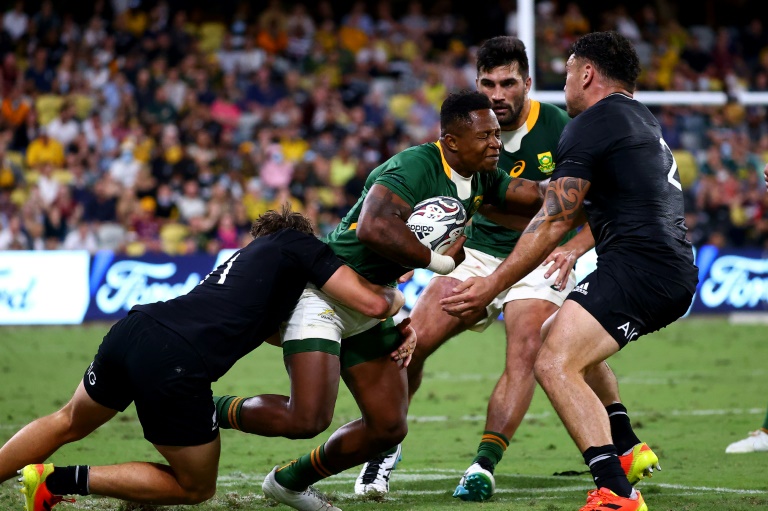
Springboks winger Sbu Nkosi has been missing for three weeks, his South African club side Bulls said on Saturday, with police admitting “concerns about the player’s safety”.

Nkosi, 26, a Rugby World Cup winner three years ago, made the last of his 16 Test appearances in October 2021 but missed out on this year’s Autumn Nations Series with a rib injury.

The Bulls said Nkosi has not been heard from since November 11.

“After numerous failed attempts, which include but are not limited to phone calls, texts messages, calls to relatives, partner and close friends as well as four house visits to his known place of residence, the company took the decision to open a missing person case with police on Thursday 17 November 2022,” the Bulls said in a statement.

“This resulted from the grave worry and concern of everyone at Loftus as well as the need for the expert assistance of the South African Police Services.

“We appreciate both the public and media interest in the matter, as we all share the same concerns about the player’s safety,” they added.

Later on Saturday, the Pretoria-based Bulls host Welsh outfit Cardiff in the United Rugby Championship.

Villagers recount trauma of east DR Congo 'massacre'

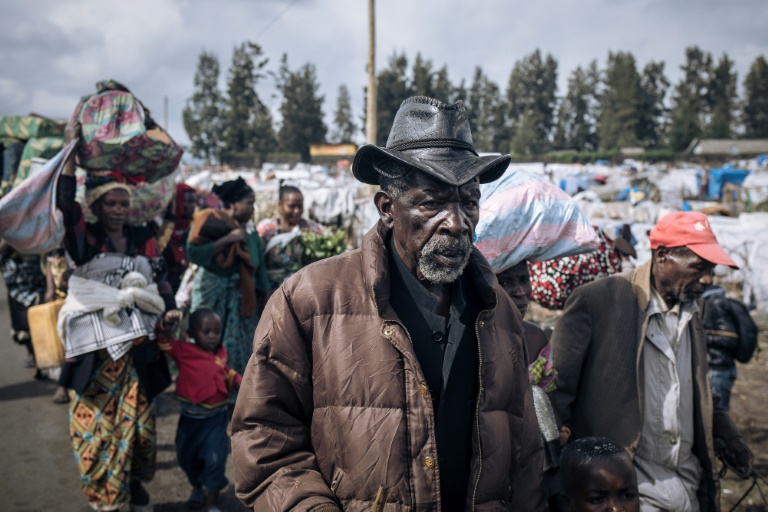
Villagers have described being ordered to bury bodies in mass graves after a rebel “massacre” in the DR Congo’s volatile east, which the government says left more than 100 civilians dead.

“We put three or six people in the same pit,” Kishishe resident Rukundo told AFP, saying rebels forced him to bury the dead.

Another villager, Mukiza, said he saw “six mass graves”.

For their safety AFP has changed the names of the residents.

All said the Mai-Mai militia arrived in the village on Tuesday and confronted the M23, a predominantly Congolese Tutsi rebel group that has taken over large parts of Rutshuru territory, north of provincial capital Goma, in recent months.

A truce was in place at the time between the M23 and Congolese forces, who had been locked in a months-long conflict.

But Mai-Mai militias supported by FDLR Hutu rebels continued fighting to block the M23’s advance towards the neighbouring territory of Masisi.

“Having failed to take the village, the Mai-Mai fled,” said Mukiza. The M23 rebels then “started to kill everything they saw”, equating the inhabitants with the militiamen they had just fought.

– ‘Rebels were watching us’ –

At a council of ministers meeting on Friday, Congolese President Felix Tshisekedi “condemned in the strongest terms the massacre of more than 100 compatriots in Kishishe”, government spokesman Patrick Muyaya said.

The M23 hit back, saying the allegations were “baseless” and denying targeting civilians in the village around 70 kilometres (40 miles) north of Goma.

It is hard to independently verify the toll given the lack of access to the rebel-controlled area.

A medical source who asked to remain anonymous told AFP that 117 deaths had been recorded.

“The rebels themselves buried the victims on Tuesday and Wednesday, saying they were Mai-Mai,” the source said.

Rukundo said the M23 gathered men in the afternoon and ordered them to bury the dead, with many women saying the rebels had killed their husbands rather than the Mai-Mai.

“Before nightfall on Tuesday, 17 bodies were buried. We buried each one where they had been killed,” said Rukundo. “The rebels were watching us. All these people were men and young people.”

– ‘Shock’ –

Speaking from a hospital bed in the neighbouring town of Bambo, Mugenzi spoke of being in “shock”.

“I was wounded in the head on that day by shrapnel from a bomb that the M23 launched,” he said, recounting seeing “several” bodies of members of the Adventist church.

Mugenzi said two civilians were forced out of their home by the rebels, who broke down the door and shot them outside.

“Towards the evening, when calm had returned, a resident who was going to fetch water picked me up and took me to the hospital,” he added.

A local lawmaker from Rutshuru, speaking on condition of anonymity, also put the number of dead at around one hundred.

“In the village, there were Mai-Mai, FDLR, the M23, it’s difficult to know who carried out the killings,” he said.

The politician believes the M23 may have indiscriminately killed civilians but also condemned the Mai-Mai for “bursting into a residential area”.

A local civil society representative said sources told him a further eight villagers were killed on Tuesday in nearby Kazaraho as they harvested beans.

Russia rejects oil price cap agreed by EU, G7

Russia on Saturday rejected a $60 price cap on its oil agreed by the EU, G7 and Australia, which Ukraine said would contribute to the destruction of Russia’s economy.

“We will not accept this price cap,” Kremlin spokesman Dmitry Peskov told domestic news agencies. Russia, the world’s second-largest crude exporter, was “analysing” the move, he added.

The $60 oil price cap will come into effect on Monday or soon after, alongside an EU embargo on maritime deliveries of Russian crude oil.

The embargo will prevent seaborne shipments of Russian crude to the European Union, which account for two thirds of the bloc’s oil imports from Russia, potentially depriving Russia’s war chest of billions of euros.

Kyiv welcomed the price cap, which stops countries paying more than $60 a barrel for Russian oil deliveries by tanker vessel and is designed to make it harder for Russia to bypass EU sanctions by selling beyond the European Union at market prices.

“We always achieve our goal and the economy of Russia will be destroyed, and Russia itself will pay and be responsible for all crimes,” Ukraine’s presidential chief of staff Andriy Yermak said Saturday.

– Limit funds for the ‘war machine’ –

Poland, which initially refused to back the price cap over concerns the $60 ceiling was too high, eventually confirmed its agreement on Friday evening.

Yermak noted a cap of “$30 would have destroyed it (the Russian economy) more quickly”.

The market price of a barrel of Russian Urals crude is currently around $65 dollars, just slightly higher than the $60 cap, suggesting the measure may have only a limited impact in the short term.

The G7 said it was delivering on its vow “to prevent Russia from profiting from its war of aggression against Ukraine, to support stability in global energy markets and to minimise negative economic spillovers of Russia’s war of aggression”.

The White House described the cap as “welcome news” that would help limit Russian President Vladimir Putin’s ability to fund the Kremlin’s “war machine”.

Russia has threatened not to deliver to countries that adopt the measure.

The G7 and Australia said they were prepared to adjust the price ceiling if necessary.

Russia has earned 67 billion euros ($71 billion) from the sale of oil to the European Union since the start of the war in February.

Its annual military budget amounts to around 60 billion, said Phuc-Vinh Nguyen, an energy expert at the Institut Jacques-Delors in Paris.

The EU embargo on seaborne deliveries follows a decision by Germany and Poland to stop taking Russian oil via pipeline by the end of 2022.

In all, more than 90 percent of Russian deliveries to the European Union will be hit, according to the bloc. 

– ‘Endure’ power cuts –

On the ground, Russian forces carried out strikes in the east of Ukraine on Saturday, hitting a “civilian infrastructure facility” in the eastern city of Kramatorsk, the Ukrainian army said.

After suffering humiliating defeats during what has become the largest armed conflict in Europe since World War II, Russia began targeting Ukrainian energy infrastructure in October.

The strikes have caused sweeping blackouts, and cut off water supplies and heating to civilians at a time when the temperature in some regions has dropped to minus five degrees Celsius (41 degrees Fahrenheit).

The authorities have introduced scheduled power cuts several times a day to keep essential infrastructure working.

On Saturday, the governor of the southern region of Mykolaiv, Vitaly Kim, urged citizens to “endure” the electricity shortages.

Putin on Friday told Germany’s Chancellor Olaf Scholz the Russian strikes, which have destroyed close to half of the Ukrainian energy system, were an “inevitable response to Kyiv’s provocative attacks on Russia’s civilian infrastructure”.

He was referring in particular to the October attack on a bridge linking Moscow-annexed Crimea to the Russian mainland.

Scholz “urged the Russian president to come as quickly as possible to a diplomatic solution, including the withdrawal of Russian troops”, according to his spokesman.

But Putin accused the West of carrying out “destructive” policies in Ukraine, the Kremlin said, stressing that Western political and financial aid meant Kyiv “completely rejects the idea of any negotiations”.

Ukrainian President Volodymyr Zelensky has ruled out talks with Russia while Putin is in power after the Kremlin claimed to have annexed several Ukrainian regions.

The Kremlin also said Saturday that Putin would “in due time” visit the Donbas region of eastern Ukraine, which he claims to have annexed. But Peskov gave no indication of when this could happen.

burs-ah/jj

S. Africa's scandal-hit president 'not resigning': spokesman

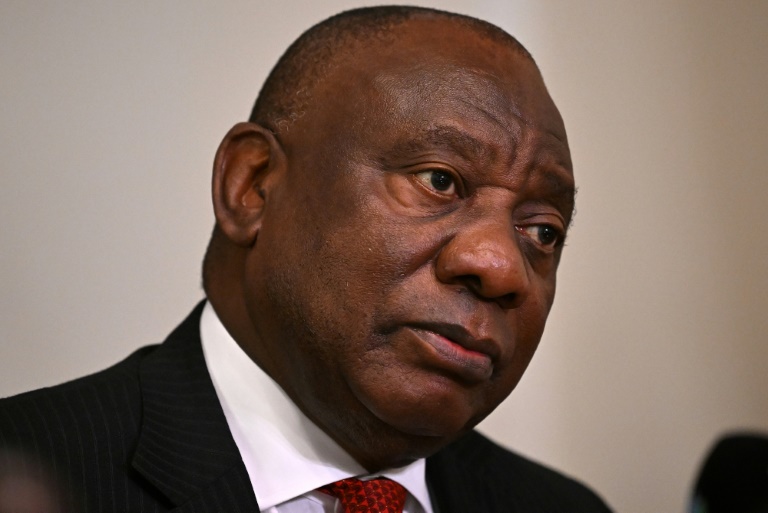
South Africa’s President Cyril Ramaphosa, embroiled in scandal and under threat of impeachment, has no intention of resigning and will fight both politically and judicially, his spokesman said Saturday.

Pressure mounted this week for Ramaphosa to quit or be forced from office over the burglary of more than half a million dollars in cash from his farm, which he allegedly covered up.

On Wednesday, a three-member parliamentary panel, including a former chief justice of the country’s highest court, said Ramaphosa “may have committed” acts contrary to the law and the constitution, paving the way for impeachment proceedings.

“President Ramaphosa is not resigning based on a flawed report, neither is he stepping aside,” his spokesman Vincent Magwenya said.

Ramaphosa has been under fire since June, when a former spy boss filed a complaint with the police alleging that the president had hidden a February 2020 burglary at his farm in northeastern South Africa from the authorities.

He allegedly organised for the burglars to be kidnapped and bribed into silence.

Ramaphosa, who is head of the African National Congress (ANC) ruling party, has denied any wrongdoing.

The president has not been charged with anything at this point, and the police inquiry is ongoing.

But the scandal, complete with details of more than half a million dollars in cash being hidden under sofa cushions, comes at the worst possible moment for the president.

On December 16, Ramaphosa contests elections for the ANC presidency — a position that also holds the key to staying on as national president.

– ‘Continue being of service’ –

“The president has taken to heart the unequivocal message coming from the branches of the governing party who have nominated him to avail himself for a second term of the leadership of the ANC,” Magwenya said.

Ramaphosa understood that “to mean he must continue with both the state and economic reforms”, he added.

“The president has with humility and with great care and commitment accepted that call to continue being of service to his organisation the ANC and to the people of South Africa.”

The ANC leadership met briefly in Johannesburg on Friday, before telling journalists it would look more closely at the facts of the case against the president.

The party said earlier on Saturday its National Executive Committee would hold a special session on Monday morning.

Magwenya also said the president would challenge the parliamentary report in court.

“It is in the long-term interest… of our constitutional democracy, well beyond the Ramaphosa presidency, that such a clearly flawed report is challenged, especially when it’s being used as a point of reference to remove a sitting head of state,” he said. 

Even the head of the South African Anglican Church warned that, if Ramaphosa resigns, the country would be in danger of falling “into anarchy”.

– Buffaloes –

Ramaphosa said the vast sum of cash stashed at the farm was payment for buffaloes bought by a Sudanese businessman.

But the incriminating report questioned why the identity of Mustafa Mohamed Ibrahim Hazim, said to have bought the cattle, could not be verified, and why the buffaloes remained on Ramaphosa’s Phala Phala estate, a two-hour drive from Pretoria.

“There are serious doubts as to whether the stolen foreign currency actually came from their sale,” the report concluded.

The scandal has cast a shadow over Ramaphosa’s bid to portray himself as graft-free after the corruption-stained era of his predecessor, Jacob Zuma.

The report will be examined by parliament on Tuesday.

That debate could open the way to a vote on impeaching Ramaphosa — a term that in South Africa means removal from office.

The South African press remained confident on Saturday that Ramaphosa would remain in office. The president is popular with the public — more so than the ANC.

The party of national hero Nelson Mandela, in power for 28 years since the end of apartheid, is experiencing dwindling support.

Ramaphosa took office at the helm of Africa’s most industrialised economy in 2018, vowing to root out corruption from state institutions.

Senegal coach Cisse unwell ahead of England World Cup clash

Senegal’s preparations for their World Cup last-16 clash against England have been hampered by an illness to coach Aliou Cisse but he is expected to recover in time for Sunday’s game.

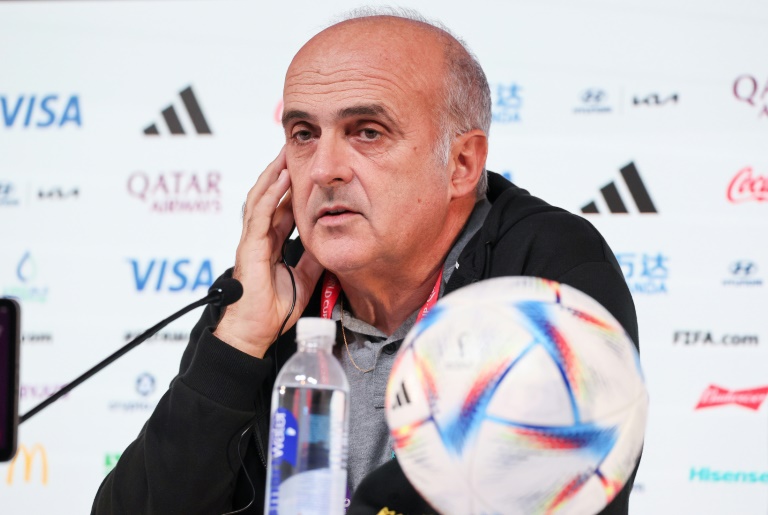
Assistant coach Regis Bogaert told a news conference that Cisse had not been able to take training on Friday and may not be involved in Saturday’s final session.

“Yesterday (Friday) he let us take the training, using his instructions and the content he had decided,” said Bogaert, who stood in for Cisse at the press conference in Doha.

“This afternoon (Saturday) we hope he will be on the field, but we are sure that tomorrow night at 10:00 pm (1900 GMT) it is him who will lead the team”, he added.

Bogaert did not specify Cisse’s illness, saying only that he had “a little fever, that’s why we are vigilant”.

Senegal reached the last 16 after beating Ecuador in their final Group A match, securing second spot behind the Netherlands.

With Morocco also progressing from the group stage, Bogaert said it was clear that Africa was now making its presence felt on the global stage, which was adding to his team’s confidence.

“I think it is a trend we will see more and more of,” he said.

“In 2018 we heard a lot of criticism because there was no African team in the last 16, now we have two, and two others were very close,” he said.

“We have seen Cameroon can beat Brazil, Tunisia can beat France and in our minds we tell ourselves Senegal will beat England,” he said.

“Our team is developing, becoming mature. We are capable of beating anyone and we need to be convinced of that,” he added.

Bogaert said that he and the coaching staff had spoken with Senegal players who play for English clubs to gleen some insight into Gareth Southgate’s players.

“We have talked with some of those players, some are the more senior players as well,” he said. “It is important to have those talks.”

Close Bitnami banner
Bitnami