Africa Business

Tunisia union chief slams elections as pointless

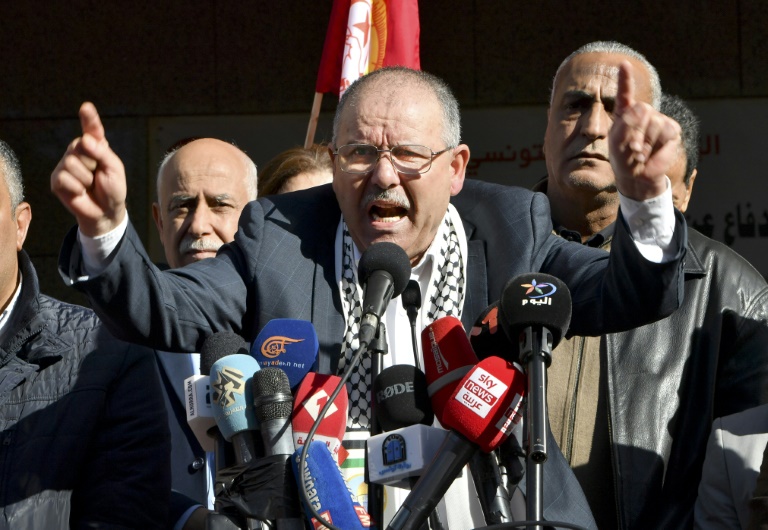
Tunisia’s powerful UGTT trade union chief took aim Saturday at legislative elections due later this month, claiming they serve no purpose in light of constitutional reforms that neutered political parties.

President Kais Saied last year sacked the government and suspended parliament, then this year extended his power grab with a constitutional referendum marred by an official turnout of barely 30 percent.

“We head into these elections which have neither taste nor colour, stemming from a constitution that was not participatory and was not approved by a majority”, Noureddine Taboubi said. 

The new constitution severely limits the power of parliament, previously dominated by the Islamist inspired Ennahdha party, Saied’s longtime nemesis and one of many parties boycotting the December 17 poll.

Tunisia was for many years the sole democracy to emerge from the Arab Spring, but economic progress was stymied by political wrangling and Saied’s power grab has led critics to warn of a return to autocracy.

Thousands of Islamists protest UN mission in Sudan

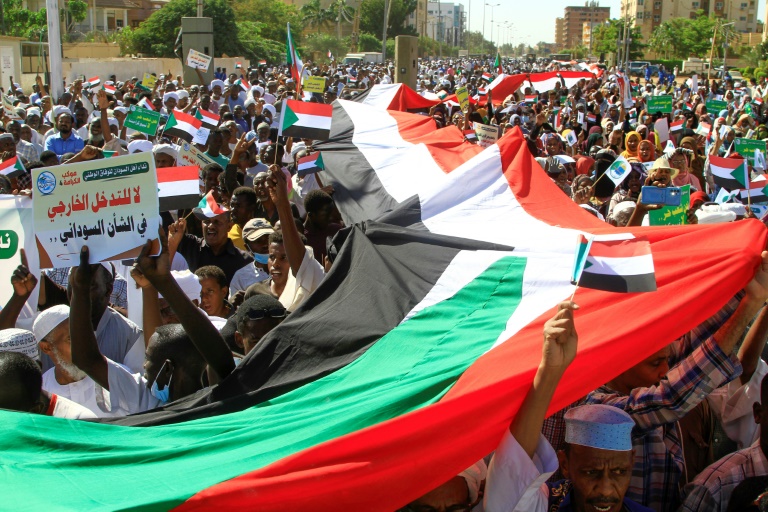
Thousands of Islamists in Sudan rallied Saturday against efforts by the United Nations to solve the political crisis sparked by last year’s coup, AFP journalists said.

The demonstrations, the latest by Islamist factions in recent weeks, came one day after military leaders and a key civilian bloc announced plans to sign an initial deal.

Political turmoil has gripped Sudan since army chief Abdel Fattah al-Burhan led an October 2021 military takeover, derailing a fragile transition to civilian rule installed after the 2019 ouster of long-time Islamist autocrat Omar al-Bashir.

Near-weekly anti-coup protests, a spiralling economic crisis and a rise in ethnic clashes in Sudan’s remote regions have since fed deepening unrest.

“Do not interfere in Sudanese affairs,” protesters chanted outside the headquarters of the UN mission in Khartoum.

Others called on UN special representative Volker Perthes to “get out” of Sudan.

“We are against this deal,” said protester Ahmed Omar.

Protester Mohamed Hasabo also criticised the upcoming deal as a “dual settlement” that excludes others.

On Friday, military leaders met with the Forces for Freedom and Change, the main civilian bloc which was ousted in the 2021 coup.

The FFC said they discussed a potential “political framework agreement” that would “lay the groundwork for establishing of transitional civilian authority”.

Sudan’s sovereign council, chaired by Burhan, confirmed the plan.

Friday’s talks were held in the presence of officials from the African Union, United Nations and the regional IGAD bloc, as well as Western diplomats, the FFC and the sovereign council said.

Divisions among civilian groups in Sudan have deepened since the coup, with some urging for reaching a deal with the military, while others insist on “no partnership, no negotiation”.

Russia rejects oil price cap agreed by EU, G7

Russia on Saturday rejected a $60 price cap on its oil agreed by the EU, G7 and Australia, which Ukraine said would contribute to the destruction of Russia’s economy.

“We will not accept this price cap,” Kremlin spokesman Dmitry Peskov told domestic news agencies, adding that Russia, the world’s second largest crude exporter, was “analysing” the move.

The $60 oil price cap will come into effect on Monday or soon after, alongside an EU embargo on maritime deliveries of Russian crude oil.

The embargo will prevent seaborne shipments of Russian crude to the European Union, which account for two thirds of the bloc’s oil imports, potentially depriving Russia’s war chest of billions of euros.

Kyiv welcomed the price cap, which stops countries paying more than $60 a barrel for Russian oil deliveries by tanker vessel and is designed to make it harder for Russia to bypass EU sanctions by selling beyond the European Union at market prices.

“We always achieve our goal and the economy of Russia will be destroyed, and Russia itself will pay and be responsible for all crimes,” Ukraine’s presidential chief of staff Andriy Yermak said on Saturday.

The Kremlin also said Russian President Vladimir Putin would “in due time” visit the Donbas region of eastern Ukraine, which he claims to have annexed. But Peskov gave no indication of when this could happen.

– Limit funds for the ‘war machine’ –

Poland had earlier refused to back the price cap over concerns the $60 ceiling was too high but confirmed its agreement on Friday evening.

Yermak noted a cap of “$30 would have destroyed it (the Russian economy) more quickly”.

The market price of a barrel of Russian Urals crude is currently around $65 dollars, just slightly higher than the $60 cap, indicating the measure may have only a limited impact in the short term.

The G7 said it was delivering on its vow “to prevent Russia from profiting from its war of aggression against Ukraine, to support stability in global energy markets and to minimise negative economic spillovers of Russia’s war of aggression”.

The White House described the cap as “welcome news” that would help limit Putin’s ability to fund the Kremlin’s “war machine”.

Russia has threatened not to deliver to countries that adopted the measure.

The G7 and Australia said they were prepared to ajust the price ceiling if necessary.

Russia has earned 67 billion euros ($71 billion) from the sale of oil to the European Union since the start of the war in February.

Its annual military budget amounts to around 60 billion, noted Phuc-Vinh Nguyen, an energy expert at the Institut Jacques-Delors in Paris.

The EU embargo on seaborne deliveries follows a decision by Germany and Poland to stop taking Russian oil via pipeline by the end of 2022.

In all, more than 90 percent of Russian deliveries to the European Union will be affected, according to the bloc.  

– ‘Endure’ power cuts –

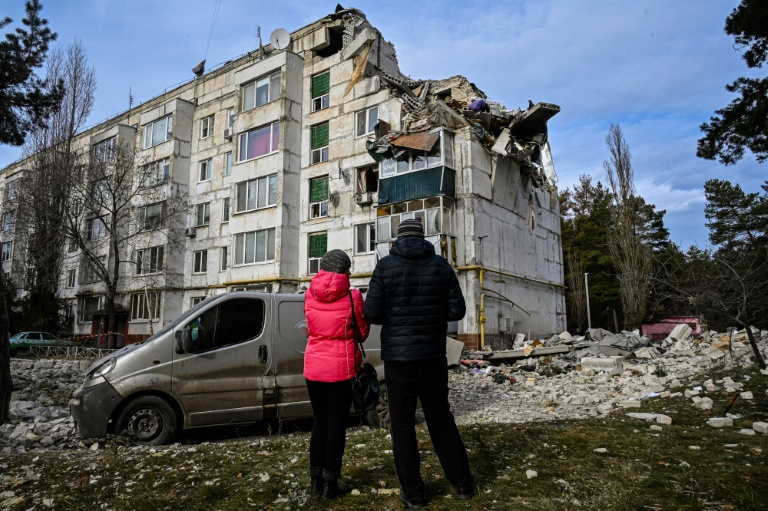
After suffering humiliating defeats during what has become the largest armed conflict in Europe since World War II, Russia began targeting Ukrainian energy infrastructure in October.

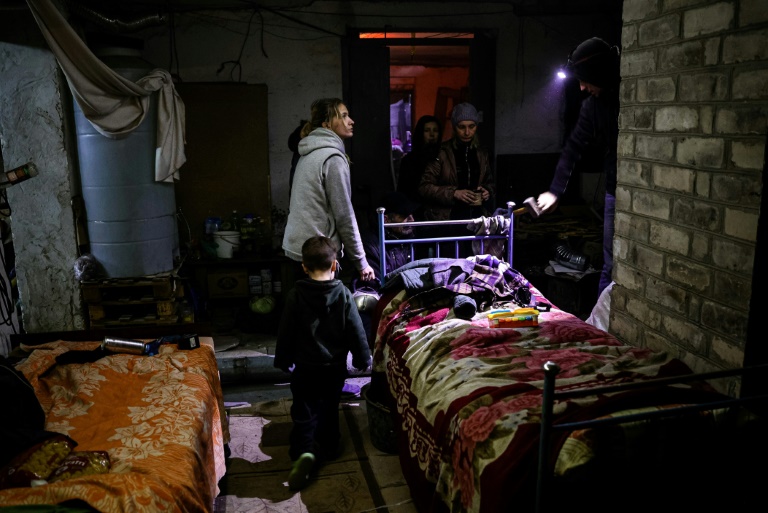
The strikes have caused sweeping blackouts, and cut off water supplies and heating to civilians at a time when the temperature in some regions has dropped to minus five degrees Celsius (41 degrees Farenheit).

The authorities have introduced scheduled power cuts several times a day to keep essential infrastructure working.

On Saturday, the governor of the southern region of Mykolaiv, Vitaly Kim, urged citizens to “endure” the electricity shortages.

Putin on Friday told Germany’s Chancellor Olaf Scholz the Russian strikes, which have destroyed close to half of the Ukrainian energy system, were an “inevitable response to Kyiv’s provocative attacks on Russia’s civilian infrastructure”.

He was referring in particular to the October attack on a bridge linking Moscow-annexed Crimea to the Russian mainland.

Scholz “urged the Russian president to come as quickly as possible to a diplomatic solution, including the withdrawal of Russian troops”, according to his spokesman.

But Putin accused the West of carrying out “destructive” policies in Ukraine, the Kremlin said, stressing that Western political and financial aid meant Kyiv “completely rejects the idea of any negotiations”.

Ukrainian President Volodymyr Zelensky has ruled out talks with Russia while Putin is in power after the Kremlin claimed to have annexed several Ukrainian regions.

– Talks off the table – 

The Kremlin also indicated Moscow was in no mood for talks, after US President Joe Biden said he would be willing to sit down with Putin if the latter truly wanted to end the fighting.

“What did President Biden say in fact? He said that negotiations are possible only after Putin leaves Ukraine,” Peskov told reporters, adding Moscow was “certainly” not ready to accept those conditions.

The White House on Friday downplayed the idea too, saying Biden currently has “no intention” of holding talks with Putin.

Top US general Mark Milley last month said more than 100,000 Russian military personnel have been killed or wounded in Ukraine, with Kyiv’s forces likely suffering similar casualties. 

burs-gil/ah

S.Africa ruling party to discuss Ramaphosa's future Monday: political sources

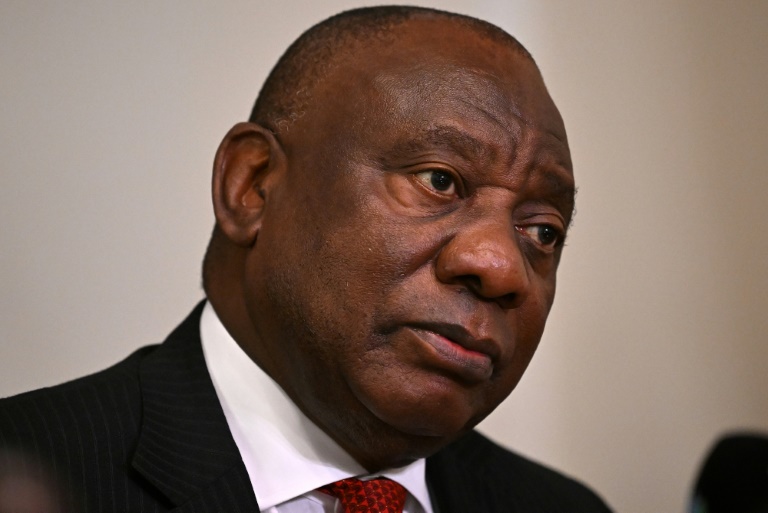
South Africa’s ruling party is set to resume talks on Monday on the future of President Cyril Ramaphosa, who is embroiled in a scandal that has put his presidency at risk, it said.

Pressure mounted this week for Ramaphosa to quit or be forced from office over a cash burglary at his farm which he allegedly covered up.

The African National Congress (ANC) initially said on Saturday morning it would hold a “special session of its National Executive Committee” on Sunday. It then said the meeting had been postponed to Monday morning.

The party leadership met briefly in Johannesburg on Friday before telling journalists it would look more closely at the facts of the case against the president.

Ramaphosa has been under fire since June, when a former spy boss filed a complaint with the police alleging that he had hidden a February 2020 burglary at his farm in northeastern South Africa from the authorities.

He allegedly organised for the robbers to be kidnapped and bribed into silence.

Ramaphosa said a vast sum of cash stashed at the farm was payment for buffaloes bought by a Sudanese businessman.

The scandal has cast a shadow over Ramaphosa’s bid to portray himself as graft-free after the corruption-stained era of his predecessor, Jacob Zuma.

A report submitted to parliament this week concluded Ramaphosa “may have committed” serious violations and misconduct.

It will be examined by parliament on Tuesday.

That debate could open the way to a vote on impeaching Ramaphosa — a term that in South Africa means removal from office.

Ramaphosa has denied any wrongdoing.

The president has not been charged with anything at this point, and the police inquiry is ongoing.

But the scandal, complete with details of more than half a million dollars in cash hidden under sofa cushions, has come at the worst possible moment for him.

On December 16, he contests elections for the ANC presidency — a position that also holds the key to staying on as national president.

The South African press remained confident on Saturday that Ramaphosa would remain in office. The president is popular with the public — more so than the ANC.

S.Africa ruling party to discuss Ramaphosa's future on Sunday

South Africa’s ruling party is set to resume talks Sunday on the future of President Cyril Ramaphosa, who is embroiled in a scandal that has put his presidency at risk.

Pressure is mounting for Ramaphosa to quit or be forced from office over a cash burglary at his farm which he allegedly covered up.

The African National Congress (ANC) will hold a “special session of its National Executive Committee” at 1200 GMT Sunday, the party said Saturday.

The committee met briefly in Johannesburg on Friday before telling journalists it would look more closely at the facts of the case against the president.

Ramaphosa has been under fire since June, when a former spy boss filed a complaint with the police alleging that he had hidden a February 2020 burglary at his farm in northeastern South Africa from the authorities.

He allegedly organised for the robbers to be kidnapped and bribed into silence.

Ramaphosa said a vast sum of cash stashed at the farm was payment for buffaloes bought by a Sudanese businessman.

The scandal has cast a shadow over Ramaphosa’s bid to portray himself as graft-free after the corruption-stained era of his predecessor Jacob Zuma.

An inquiry on Wednesday submitted a report to parliament, concluding Ramaphosa “may have committed” serious violations and misconduct.

The report will be examined by parliament on Tuesday.

That debate could open the way to a vote on impeaching Ramaphosa — a term that in South Africa means to remove from office.

Ramaphosa, in his submission to the panel, denied any wrongdoing.

The president has not been charged with anything at this point, and the police inquiry is ongoing.

But the scandal, complete with details of more than half a million dollars in cash hidden under sofa cushions, has come at the worst possible moment for him.

On December 16, he contests elections for the ANC presidency — a position that also holds the key to staying on as national president.

The South African press remained confident on Saturday that Ramaphosa would remain in office. The president is popular with the public — more so than the ANC.

Ukraine welcomes Russian oil price cap agreed by EU, G7

Ukraine on Saturday welcomed a $60 price cap on Russian oil agreed by the EU, G7 and Australia, saying it would “destroy” Russia’s economy.

The price cap, previously negotiated on a political level between the G7 group of wealthy democracies and the European Union, will come into effect with an EU embargo on Russian crude oil from Monday.

Poland had refused to back the price cap plan over concerns the ceiling was too high, before its ambassador to the EU confirmed Warsaw’s agreement on Friday evening.

The embargo will prevent shipments of Russian crude by tanker vessel to the EU, which account for two thirds of imports, potentially depriving Russia’s war chest of billions of euros.

“We always achieve our goal and Russia’s economy will be destroyed, and it will pay and be responsible for all its crimes,” Ukraine’s presidential chief of staff Andriy Yermak said on Saturday on Telegram. 

But a cap of “$30 would have destroyed it more quickly”, he added.

The G7 said it was delivering on its vow “to prevent Russia from profiting from its war of aggression against Ukraine, to support stability in global energy markets and to minimise negative economic spillovers of Russia’s war of aggression”.

The White House described the deal as “welcome news”, saying a price cap will help limit Russian President Vladimir Putin’s ability to fund the Kremlin’s “war machine”.

– Infrastructure strikes ‘inevitable’ –

After suffering humiliating defeats during what has become the largest armed conflict in Europe since World War II, Russia began targeting Ukrainian energy infrastructure in October, causing sweeping blackouts.

Putin said Russian strikes on Ukrainian infrastructure were “inevitable”, in his first conversation with German Chancellor Olaf Scholz since mid-September.

“Such measures have become a forced and inevitable response to Kyiv’s provocative attacks on Russia’s civilian infrastructure,” Putin told Scholz, according to a Kremlin readout of the telephone talks.

The Kremlin leader referred in particular to the October attack on a bridge linking Moscow-annexed Crimea to the Russian mainland.

During the hour-long call, Scholz “urged the Russian president to come as quickly as possible to a diplomatic solution, including the withdrawal of Russian troops”, according to the German leader’s spokesman.

But Putin urged Berlin to “reconsider its approaches” and accused the West of carrying out “destructive” policies in Ukraine, the Kremlin said, stressing that its political and financial aid meant Kyiv “completely rejects the idea of any negotiations”.

Ukrainian President Volodymyr Zelensky had ruled out any talks with Russia while Putin is in power, shortly after the Kremlin claimed to have annexed several Ukrainian regions.

– Talks off the table – 

The Kremlin also indicated Moscow was in no mood for talks over Ukraine, after US President Joe Biden said he would be willing to sit down with Putin if the Russian leader truly wanted to end the fighting.

“What did President Biden say in fact? He said that negotiations are possible only after Putin leaves Ukraine,” Putin’s spokesman Dmitry Peskov told reporters, adding Moscow was “certainly” not ready to accept those conditions.

The White House, meanwhile, sought to pour water on the idea of talks as well on Friday, saying Biden currently has “no intention” of sitting down with Putin.

Russia’s strikes have destroyed close to half of the Ukrainian energy system and left millions in the cold and dark at the onset of winter.

In the latest estimates from Kyiv, Mykhaylo Podolyak, an adviser to Zelensky, said as many as 13,000 Ukrainian soldiers have died in the fighting.

Both Moscow and Kyiv are suspected of minimising their losses to avoid damaging morale.

Top US general Mark Milley last month said more than 100,000 Russian military personnel have been killed or wounded in Ukraine, with Kyiv’s forces likely suffering similar casualties. 

The fighting in Ukraine has also claimed the lives of thousands of Ukrainian civilians and forced millions to flee their homes.

Those who remain in the country have had to cope with emergency blackouts as authorities seek to relieve the pressure on the energy infrastructure.

burs-raz/gil

Record-breaking African teams bounce back from 2018 disappointment

Four years ago Africa was left without a representative in the World Cup last 16 for the first time since the round was introduced in 1986, but the response has been emphatic in Qatar.

The 2022 tournament has seen two teams from the continent reach the knockout phase for only the second time — after Algeria and Nigeria in 2014.

African nations have also taken a record-breaking 24 points in the group stage, smashing the previous best of 15 points in 1998.

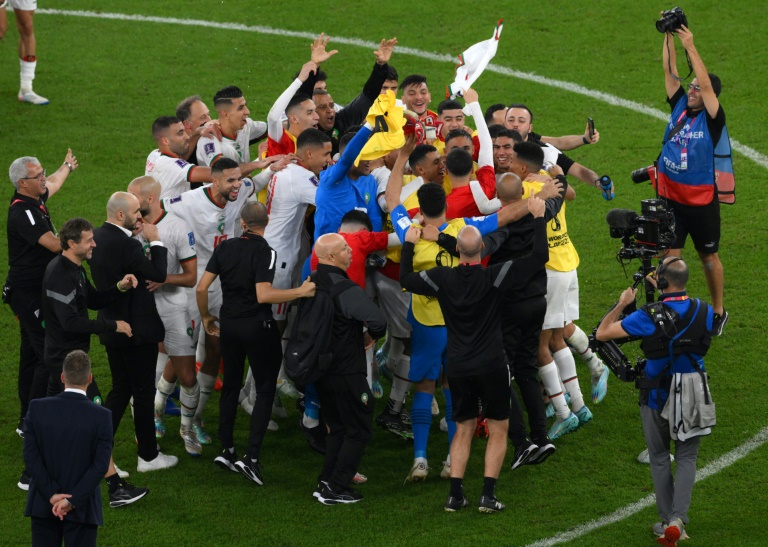
Morocco beat the world’s second-ranked side Belgium and Canada en route to the top of Group F, while Senegal bounced back from an opening defeat by the Netherlands to record wins over Qatar and Ecuador.

Brazil were beaten by an African team for the first time with a 1-0 defeat by Cameroon, who exited the tournament in glory.

For Morocco, their clash with Spain next Tuesday will be a first appearance in the knockout stage for 36 years.

Their fans will turn up in their thousands again to cheer on the only remaining Arab country in the World Cup.

“We hope to fly the flag of African football high,” said Morocco coach Walid Regragui.

“Often we’ve been described as being sub-par, not as good as elsewhere.

“But I think at this World Cup we are showing we can give any other team a run for their money, whether they be European teams or South American teams.

“I hope in the future this means we’ll be seeing more African teams do well at the World Cup and why not an African champion?”

The 2026 World Cup in the United States, Canada and Mexico will involve more African countries than ever before, with the tournament set to expand from 32 to 48 teams.

If it does not happen this year, Africa will be expecting its first World Cup semi-finalists sooner rather than later.

Senegal were the closest to getting past the group stage in Russia in 2018, missing out by virtue of having more yellow cards than Japan.

But they banished those memories when Kalidou Koulibaly volleyed them to victory against Ecuador, after saying they were inspired by Morocco’s win over Belgium.

“We saw what Morocco did. They had a beautiful win over Belgium,” said Senegal coach Aliou Cisse.

“Yes, it can be a source of inspiration for us.”

– Changing mindset –

The sides that went out in the group stage still made a mark on the tournament.

Tunisia claimed a famous 1-0 win over holders France and Cameroon ended an eight-match losing streak at the World Cup with a thrilling comeback to draw 3-3 with Serbia before beating five-time winners Brazil.

More and more African players are starring at top European clubs. Even with Mohamed Salah and Sadio Mane absent from this World Cup, the dividends of that are clear to see.

European teams have won each of the past four World Cups and no side from outside Europe or South America has ever even reached the final.

“You have to be strong for your first match against a European team because European teams are our foes when it comes to these events,” added Regragui.

“We have players who play for European clubs… We need to take the European mindset and make it our mindset.”

The closest an African team has come to making the semi-finals was Ghana in 2010, when Luis Suarez’s handball and the resulting missed penalty by Asamoah Gyan led to a shootout defeat in South Africa.

The Black Stars could not avenge that heartbreak on Friday, as Andre Ayew’s missed penalty at 0-0 was history repeating itself history and proved costly in a 2-0 defeat.

But Ghana were at least happy to knock Uruguay out and send South Korea through.

“For me, yes (It was good to knock Uruguay out),” said midfielder Daniel Amartey.

“It was tough because you can see their centre-back, everybody comes (forward).

“Uruguay needed one goal to go through.”

There is a long way to go, but for the second time, Africa has two hopeful nations that are three wins away from the final.

ABB to pay $315 mn to settle US charges over South Africa bribes

Swedish-Swiss industrial company ABB agreed to pay $315 million to settle US criminal charges that it bribed state-owned Eskom of South Africa over government contracts, the Department of Justice (DOJ) announced Friday.

Two affiliates of ABB each pleaded guilty to one count of conspiracy to violate the US Foreign Corrupt Practices Act as part of a three-year deferred prosecution agreement, the US agency said of a settlement that was coordinated with government authorities in Switzerland, Germany and South Africa.

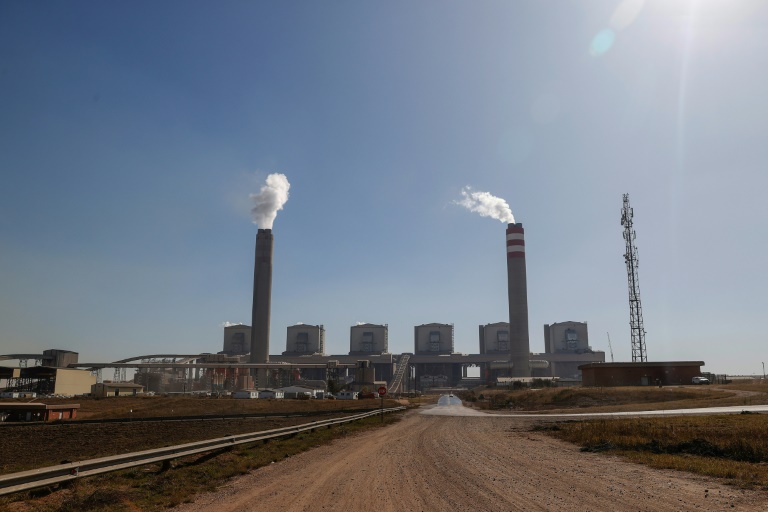
The issue concerns a troubled project near Johannesburg with the Kusile power station, the fourth largest coal-fired generator in the world, which has been fraught with allegations of graft. South Africa’s struggling power utility Eskom commissioned the plant in 2007.

In October eight people, including former Eskom CEO Matshela Koko, were arrested on corruption charges linked to the ABB work.

Between 2014 and 2017, ABB through its subsidiaries secured “multiple” government contracts, syphoning illicit payments through subcontractors associated with an official at Eskom, South Africa’s state-owned power company, the DOJ said.

“ABB worked with these subcontractors despite their poor qualifications and lack of experience,” the DOJ said in a news release. “In return, ABB received improper advantages in its efforts to obtain work with Eskom, including, among other benefits, confidential and internal Eskom information.”

ABB engaged in “sham” negotiations with the Eskom official and falsely reported the payments as legitimate business expenses, according to the press release.

ABB chief executive Bjorn Rosengren said the company has acted in the wake of the case by “launching a new code of conduct, educating employees and implementing an enhanced control system to prevent something similar from happening again.”

In a statement, he said that ABB has “a clear zero tolerance approach to non-ethical behavior within our company.” 

The US agency said the penalty was reduced 25 percent from the high end of the sentencing range in light of ABB’s “extraordinary” cooperation and “extensive” remediation efforts.

But the department noted that ABB had two earlier criminal FCPA resolutions in 2004 and 2010, as well as a guilty plea by an ABB entity for bid rigging in 2001.

The US law on foreign corrupt practices applies to foreign companies with US-issued stock, as is the case with ABB.

The company also settled a parallel civil case with the Securities and Exchange Commission. 

Earlier Friday, the Swiss attorney general’s office said ABB was fined four million Swiss francs ($4.3 million) in the case. ABB said it hoped to reach a resolution with German authorities in the near term.

In total, ABB said the settlements totaled $327 million, and have been accounted for in the company’s third quarter financial results.

Cameroon stun Brazil but go out of World Cup

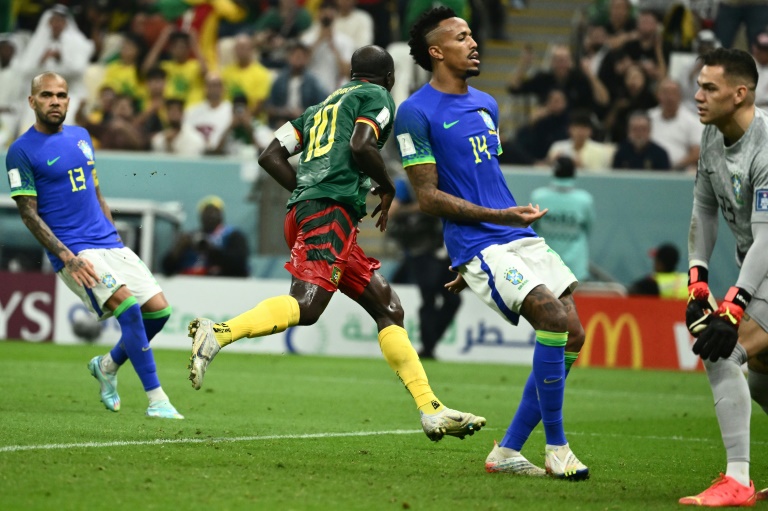
Vincent Aboubakar headed in a stoppage-time winner and was then sent off as Cameroon claimed a memorable 1-0 victory over favourites Brazil at the World Cup on Friday, but still failed to go through to the last 16.

Aboubakar, who had come in to captain Rigobert Song’s team, connected with a cross from substitute Jerome Ngom Mbekeli to break the deadlock in the 92nd minute at Doha’s Lusail Stadium.

He was booked for removing his shirt in the wild celebrations that followed and, having already been cautioned, had to leave his teammates to see out the remainder of the game.

They did so to record a famous win, the first for an African side against Brazil at the World Cup, but Switzerland’s 3-2 defeat of Serbia at the same time meant the Swiss advanced from Group G along with the already-qualified Brazilians.

“Despite the fact we won we are disappointed because we realise we could have done better,” admitted Song.

“It is a shame to stop here but we just need to see the positives and we will keep working.”

Having won their first two matches in Qatar, Brazil topped the group and advance to a last-16 tie against South Korea when their many key players who were rested for this game will return.

Coach Tite sent out a second-string side and the result was Brazil’s first defeat in the group stage of a World Cup since 1998, when they were beaten by Norway.

Tite’s mind was on the knockout stage as he made nine changes, including handing a start to 39-year-old Dani Alves, making him Brazil’s oldest ever men’s international player.

The spine of Brazil’s second-string side still featured Manchester City’s Ederson in goal, Real Madrid’s Eder Militao in central defence, Fabinho of Liverpool in midfield, and Gabriel Jesus of Arsenal supported by Rodrygo up front.

– Martinelli impresses –

They also had the 21-year-old Gabriel Martinelli on the left and the Arsenal prospect was their standout performer.

He almost scored the opening goal in the 14th minute when he leapt unmarked but saw his header tipped over by Cameroon ‘keeper Devis Epassy. Martinelli also threatened in first-half stoppage time with a dribble across the edge of the area and a shot that Epassy turned behind.

It was a piece of play reminiscent of Neymar, who is still recovering from the sprained ankle that forced him off in the opening win over Serbia but watched the action here from just behind the Brazilian bench.

The Brazil fans, who unfurled a banner with a “Get Well Soon” message for Pele, cheered loudly when Neymar appeared on screens inside the stadium.

Needing a win, Cameroon almost went in front just before the interval when a Bryan Mbeumo header forced a flying save from Ederson.

Brazil had won all seven previous meetings with African opponents at the World Cup, including beating Cameroon in 1994 and again in 2014, and Martinelli was their most likely source of a goal.

He forced Epassy to tip over another strike that was arcing towards the top corner early in the second half, and the Cameroon shot-stopper -– continuing in place of Andre Onana who was dropped for unspecified disciplinary reasons -– turned a Militao shot around the post moments later.

Eager to study all his attacking options, Tite sent on the Flamengo duo of Everton Ribeiro and Pedro, but he also saw Alex Telles come off hurt in the second half.

Telles is the third Brazil full-back to succumb to injury at the tournament after Danilo and Alex Sandro.

At this rate Alves, five months short of his 40th birthday, will have a further role to play in Qatar.

Most importantly Brazil will hope to have Neymar back soon but it remains to be seen if he will feature against South Korea on Monday.

Aboubakar grabbed the late winner just when a goalless draw looked likely, and Cameroon deserve huge credit for taking four points from such a difficult group even if they now go home.

UN anxious for unfettered aid access to Tigray

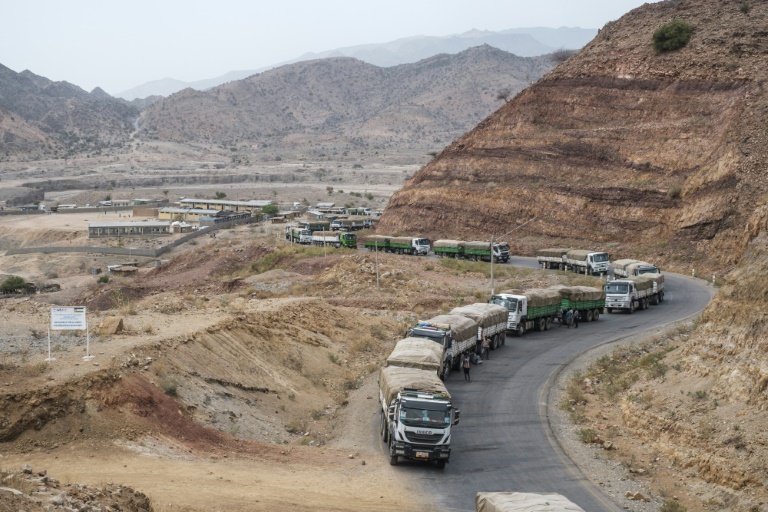
The United Nations still cannot get unfettered access to bring humanitarian aid into Ethiopia’s war-torn northern Tigray region, one month after the ceasefire, the World Health Organization said Friday.

The UN’s health agency said just a trickle of aid had managed to get into Tigray, which is in the grip of a humanitarian crisis after a two-year conflict.

Restoring aid deliveries to Tigray was a key part of an agreement signed on November 2 to end a war that has killed untold numbers of people.

“That peace process has not yet resulted in the kinds of full access, unfettered access and the massive scale-up of medical and health assistance that the people of Tigray need,” WHO emergencies chief Michael Ryan told a press conference.

“I remain cynical on that front because we’ve been a long time waiting to get access to these desperate people.”

Tigray was isolated from the world for over a year, and faced severe shortages of medicines and limited access to electricity, banking and communications — services that need restoring for relief logistics operations to function.

“It’s really hard to plan a scale-up when at every moment you can have your ambitions curtailed,” Ryan lamented.

“The UN system is really anxious to scale up our operations.

“We welcome any cessation of violence, any access that’s given.

“But the people in Tigray are desperate. They’ve been years now without access to proper healthcare and nutrition and they need our help now. Not next week, not next month. Now.”

He said some WHO staff had been able to go in, while a small fuel allocation might allow the organisation to service a tiny percentage of the needs in the region.

– ‘Massive’ needs –

WHO chief Tedros Adhanom Ghebreyesus welcomed the ceasefire, deemed a vital prerequisite for health, but urged that it be implemented in full.

“The need is massive,” said Tedros, who is himself from Tigray.

He insisted that food aid and medical supplies should be delivered to civilians at all times during conflicts.

Tedros and Ryan both raised concerns for areas that are still under the control of troops from neighbouring Eritrea.

The ceasefire makes no mention of the presence on Ethiopian soil or any possible withdrawal of Eritrean troops, who have backed Ethiopian Prime Minister Abiy Ahmed’s forces and been accused of atrocities.

Last week the UN’s World Food Programme said aid deliveries into Tigray were “not matching the needs” of the stricken region.

WFP said an estimated 13.6 million people across Tigray and its neighbouring regions of Amhara and Afar were dependent on humanitarian aid as a result of the war, which broke out in November 2020.

Tigray’s authorities had been resisting central rule for months when Abiy accused their leadership of attacking federal army camps and sent troops into the region.

Close Bitnami banner
Bitnami