Africa Business

Clamour for inquiry after 'massacre' claim in DR Congo

The UN’s peacekeeping mission in DR Congo led calls Friday for an investigation after the government said 50 villagers had been massacred by a notorious armed group in the country’s troubled east.

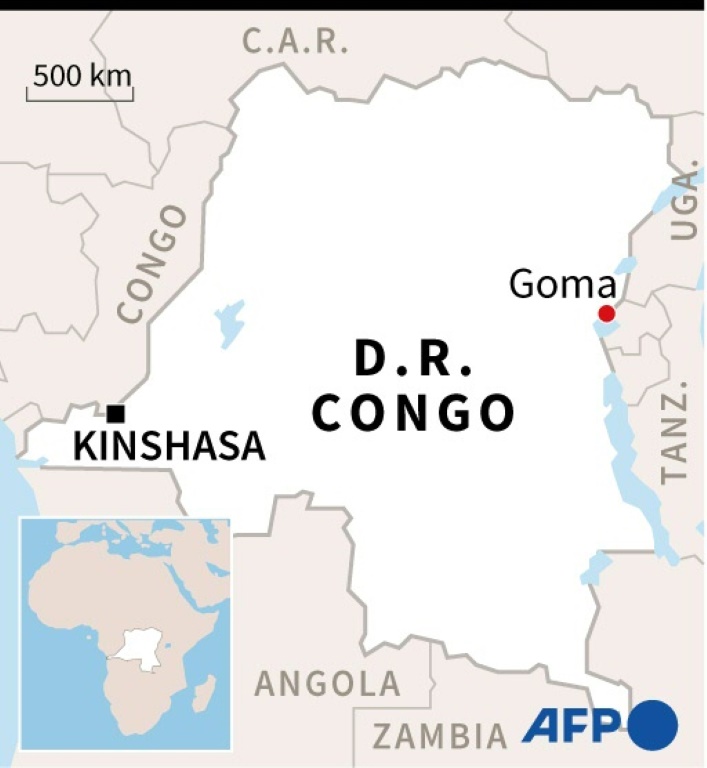
On Thursday, the government accused the M23 militia — with whom it is locked in a months-long conflict — of slaughtering 50 people at Kisheshe, a village some 70 kilometres (40 miles) north of the city of Goma. 

The M23 hit back, saying allegations were “baseless” and denying that it targeted any civilians.

The UN mission MONUSCO on Friday condemned “these horrifying acts” and said its Joint Human Rights Office was standing by to help any probe.

Denis Mukwege, the Congolese doctor who won the 2018 Nobel Peace Prize for helping rape victims in the strife-torn region, also expressed his horror at reports of “mass slaughter, missing people and forced recruitment of children” into conflict.

Representatives for the United States and European Union said the killings were potential war crimes, while Human Rights Watch (HRW) said UN troops should be deployed to protect survivors.

The accusation was made in a statement by the armed forces, who said the massacre had occurred on Tuesday as the M23 was fighting with a local militia.

AFP on Wednesday spoke to people in the area who said there had been a large but unknown number of deaths.

They said the rebels had accused inhabitants of being militia members who had dressed up in civilian clothes to mount a furtive attack.

“There was blind retaliation,” government spokesman Patrick Muyaya said on Friday, citing “a doctor who says there were 120 dead.”

He said arrangements were being made with MONUSCO “to go to the area and verify” what had happened.

The army, in its accusations on Thursday, also said the M23 had breached a ceasefire with government troops, a charge that the group also denied.

– Truce agreement –

The March 23 movement, or M23, is a predominantly Congolese Tutsi rebel group that was dormant for years.

It took up arms again in November last year and seized the town of Bunagana on the border with Uganda in June. 

After a brief period of calm, it went on the offensive again in October, greatly extending the territory under its control and advancing towards Goma.

Kinshasa accuses its smaller neighbour Rwanda of providing M23 with support, something that UN experts and US officials have also pointed to in recent months. 

Kigali disputes the charge, and in turn accuses Kinshasa of collusion with the FDLR — a former Rwandan Hutu rebel group established in the DRC after the genocide of the Tutsi community in 1994 in Rwanda. 

Talks between the two countries in the Angolan capital Luanda unlocked a truce agreement on November 23.

The ceasefire was scheduled to take effect on November 25. It should also have been followed by a pullout by the M23 two days later from territory it had seized, but this did not happen.
Nigeria defamation case against student dropped: lawyer

A student facing a defamation case for a tweet about Nigeria’s first lady had the charges against him dropped Friday, his lawyer said.

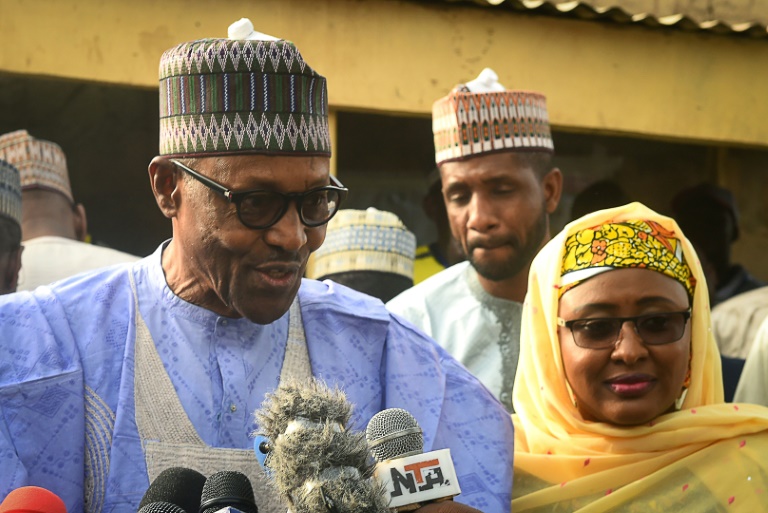
Aminu Adamu, born in 1998, had been charged with “criminal defamation” and arraigned over a tweet about the physical appearance of Aisha Buhari, the wife of President Muhammadu Buhari.

But on Friday, his lawyer and the prosecutor said the charges had now been dropped.

“The first lady has withdrawn the charges,” defence counsel Chiejoke Kingsley Agu told AFP, without giving details.

A police officer prosecuting the case told AFP that Adamu’s charges had been dropped at the insistence of the president’s wife.

“In fact, the defendant will be released from custody any moment from now. The documents for his release are being processed,” said the officer, who asked not to be identified.

Adamu’s arrest and prosecution sparked condemnation from Amnesty International, local rights bodies and activists, who called for his immediate release.

Felix Atah, The president of National Association of Nigerian Students (NANS) who had called for a nationwide protests over Adamu’s arrest, welcomed the news that the case had been dropped.

“We shall personally take him back to school as soon as he is freed so that he can write his final examinations which begin on Monday,” he said.

– Twitter suspension –

Adamu was arrested at his university in northern Jigawa state on November 18 and transferred to the capital Abuja, five months after his online post about Aisha.

He was detained after the first lady filed a complaint, triggering a police investigation, according to court documents seen by AFP and a judicial source who asked to remain anonymous.

Based on the results of that preliminary investigation, the capital’s police commissioner filed a lawsuit against the student.

According to the court documents, Adamu said he had commented on a photo of the first lady on Twitter. It was not immediately clear whether he had intended to make a joke or accuse her of corruption.

It was not the first time that a post on Twitter has caused uproar among the country’s political class — the platform was suspended for seven months last year.

Allegations of mistreatment against detainees are not uncommon in Africa’s most populous country, despite it having had a stable democracy since 1999 after decades of military dictatorships.

Eleven sentenced to death in Tanzania over conservationist's murder

A court in Tanzania sentenced 11 people to death on Friday over the 2017 murder of renowned conservationist Wayne Lotter.

Lotter, a 51-year-old South African based in Tanzania, was a founder of the PAMS Foundation which worked to stop the poaching of elephants and trafficking of ivory in the east African country.

He was shot dead in Dar es Salaam while in a taxi on his way back from the airport.

The exact motive for his killing is still unknown but colleagues of Lotter believe he was targeted for his work on protecting elephants.

“Some of the suspects, in their statements recorded by police officers, confessed to have taken part in the conspiracy meetings and in killing,” the judge, Laila Mgonya, told the court.

“The evidence provided was strong enough to convict them.”

The handing down of death sentences is not uncommon in Tanzania but they are generally commuted to life in prison. 

The last execution carried out in the country was in 1994.

Tanzania has been one of the African countries worst hit by elephant poaching, losing more than 66,000 elephants in a decade, but interdiction efforts mean poaching has declined in recent years.

Berlin says goodbye to part of Germany's colonial past

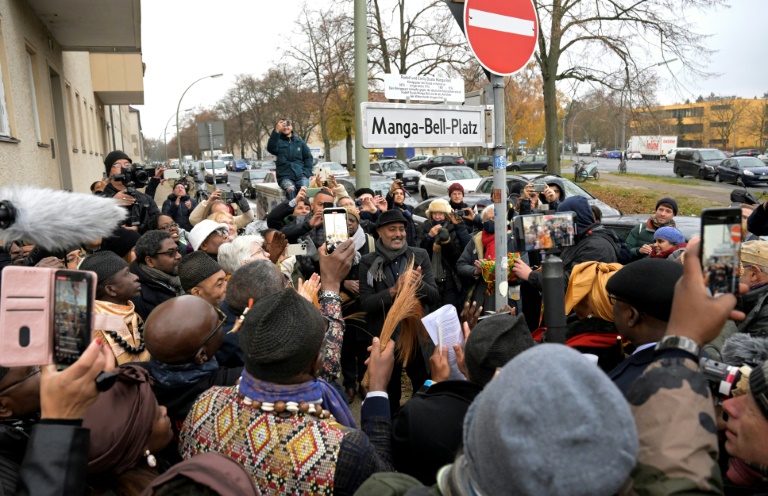
Berlin on Friday stripped a street and a square of German colonialists’ names and dedicated them to African resistance figures, as the country looks to reckon with historical guilt beyond World War II atrocities.

“For far too long in Germany we have minimised our colonial past, understated colonial injustices and the crimes committed,” said Stefanie Remlinger, the Green leader of Berlin’s central borough of Mitte.

During the renaming ceremony in the middle of the capital’s “African Quarter”, Remlinger called on participants to “look not just to the past, but the future, as well”, and to improve the teaching of colonialism in schools.

Built in the early 20th century, before World War I, when Germany presided over a sizeable colonial empire, Berlin’s “African Quarter” has stood as a symbol of the failure to look closer at colonial injustices.

– ‘Symbol’ –

After years of protest from various campaign groups, “Nachtigalplatz” (Nachtigal Square) was renamed “Manga-Bell-Platz”.

The explorer Gustav Nachtigal, who lent his name to the square, played a key role in the 19th century in the creation of German colonies in west Africa — Togo and Cameroon — and Namibia, which was known as German South West Africa.

His name has been replaced by that of Emily and Rudolf Douala Manga Bell, the heads of the royal family of the Douala people from Cameroon. 

Leader of the resistance against the expulsion of the Douala people from their ancestral home, Rudolf was executed in 1914.

“The inauguration of this square… rehabilitates him 108 years after his execution in Douala,” said Victor Ndocki, Cameroon’s ambassador to Germany.

The royal couple’s descendant, the Douala king Jean-Yves Eboumbou Douala Manga Bell, who came from Cameroon for the occasion, told AFP the new name was an “extraordinarily important symbol of recognition”.

Princess Maryline Douala Manga Bell, Rudolf’s great-granddaughter, who also travelled to Berlin, said the move could alert “young Germans to what happened before these young people were born”.

A few hundred metres (yards) from the square, “Luederitzstrasse” (Luederitz Street) was renamed after Cornelius Fredericks, a resistance fighter from the Nama people in Namibia, who died in a camp in 1906.

– Genocide –

A trader from the port city of Bremen, Adolf Luederitz was long celebrated as a “pioneer of colonisation” and the founder of German South West Africa. He is now accused of having deceived the local Nama people by buying their lands for a pittance.

During the ceremony, Namibia’s ambassador to Germany Martin Andjaba said the name change should be “a tool supporting this process leading to reconciliation for the living generation and those to come”. 

“Engaging these colonial legacies should not separate us but bring us together,” he said, noting the twinning of the two towns of Luederitz in Germany and Namibia.

In Namibia, Germany was responsible for the massacre of tens of thousands of indigenous Herero and Nama people between 1904 and 1908.

Last year after long negotiations with the Namibian side, Berlin recognised the acts as a “genocide” and pledged to send development aid to support the indigenous groups.

However last month, Namibia asked to begin renegotiations on the terms of the agreement. 

Despite Friday’s ceremony, many vestiges of colonialism are still to be found, such as Mohrenstrasse — the street of the Moors — in the centre of the capital.

For 25 years, campaigners from the black community have been lobbying to get rid of the name. Local authorities agreed a change in 2021, but a complaint was lodged against the move and a legal process is under way to determine the street’s fate.

Germany’s vaunted culture of remembrance in atoning for its World War II crimes is frequently cited as exemplary among modern nations. 

However, campaigners argue that with its intense focus on the Nazi period and the Holocaust in particular, Germany has neglected to fully reckon with other dark periods of its past.  

Cash and cushions: The scandal engulfing S.Africa's Ramaphosa

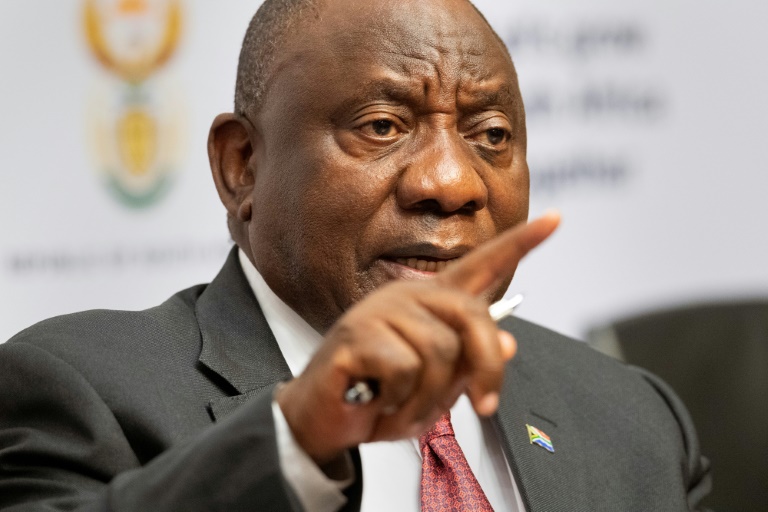
South African President Cyril Ramaphosa is embroiled in a scandal over an alleged cover-up that has imperilled his political future.

Here’s a factfile on the case: 

– What is this about? – 

A complaint filed in June accused Ramaphosa of having attempted to conceal the theft of a cash haul at his farm.

It alleged he arranged for the burglars to be kidnapped and bribed into silence when he should have reported the robbery to police. 

Following an outcry by a tiny opposition party, parliament empowered an independent panel to investigate the affair.

The panel reported back this week, concluding that Ramaphosa may have committed serious violations and misconduct. 

Parliament will discuss the report next Tuesday — a debate that potentially opens the way to a vote to remove Ramaphosa from office.

– Who filed the complaint? – 

The allegations were first made by South Africa’s ex-spy boss, Arthur Fraser, an ally of Ramaphosa’s predecessor and political rival Jacob Zuma. 

After Zuma was jailed last year, it was Fraser, who had by then been appointed head of the prison service, who controversially granted him release on medical parole. 

– The burglary – 

Ramaphosa told the investigators that $580,000 in cash was stolen from his Phala Phala ranch in northeastern South Africa in February 2020. 

At the time, he was attending an African Union (AU) summit in Addis Ababa, Ethiopia.

He said the sum was payment for buffaloes bought by a Sudanese citizen who had visited the farm on Christmas Day, 2019. 

Initially stored in a safe, the cash was later hidden beneath sofa cushions in his residence at the ranch — a place staff believed to be the “safest,” he said.

The amount of money involved has been disputed by, among others, the panel which says it could have been around $800,000. Early reports in the media suggested it was more than $4 million.

– The buyer –

Little has been disclosed about Mustafa Mohamed Ibrahim Hazim, who bought the buffaloes from Ramaphosa, other than that he is said to have paid a large sum in cash for 20 animals that the president described as “substandard” and a “financial drain” on the ranch. 

More than two years after paying for the buffaloes, Hazim had yet to take possession of the animals, the inquiry noted.

– What does the report say? – 

The panel’s report raised questions about the source of the money and Ramaphosa’s conduct, and said the evidence warranted further scrutiny by parliament.

“There is a substantial doubt about the legitimacy of the source of the currency that was stolen,” it said.

It also said Ramaphosa “may have committed” serious violations and misconduct in not reporting the theft directly to police and in seeking the help of his Namibian counterpart to apprehend the thieves.

The president reported the robbery to the head of his presidential protection unit, General Walther Rhoode, who in turn failed to adequately pass the information onto police, the investigators said.

Ramaphosa’s accusers say the president tasked Rhoode with investigating the matter directly.

– What has Ramaphosa said? – 

The allegations against Ramaphosa strike at the heart of the image that he has sought to a project as a clean-hands president after Zuma’s corruption-drenched era.

Shortly after Fraser made his report to police in June, Ramaphosa described the allegations against him as politically motivated.

In his lengthy submission to the investigators, he denied any wrongdoing, singling out in particular allegations that he had had the burglars kidnapped.

“I did not ‘hunt’ for the perpetrators of the theft… nor did I give any instructions for this to take place,” he wrote, describing charges against him as “without any merit.”

Ramaphosa political fate hangs in balance in South Africa

President Cyril Ramaphosa’s political future hung in the balance on Friday, as South Africans wondered whether he would cling to power or resign over accusations that he sought to cover up a burglary at his farm.

On Thursday, the 70-year-old head of state was rumoured to be close to stepping down in the face of calls to quit — but by early Friday, the pendulum seemed to have swung the other way as allies urged him to fight on. 

Leaders of African National Congress (ANC), South Africa’s ruler since the end of apartheid in 1994, held emergency talks as a party source said “a fierce debate” was unfolding “between those for and against the president.”

Its paramount body, the National Executive Committee, met briefly before adjourning, interim secretary-general Paul Mashatile told reporters outside the venue in Johannesburg.

The talks will resume before Monday, he said. The issue of whether Ramaphosa has “the intention to resign or not did not arise,” he said. The president did not attend the talks, he added.

Ramaphosa has been under fire since June, when a former spy boss filed a complaint with police, alleging he had concealed the theft of a cash haul at his farm at Phala Phala in northeastern South Africa.

Instead of alerting the authorities, he allegedly organised for the robbers to be kidnapped and bribed into silence. 

The scandal lurched dramatically into higher gear on Wednesday when an independent investigative panel, in a report to parliament, concluded that Ramaphosa had questions to answer about the money and his behaviour.

Featuring extraordinary details about hundreds of thousands of dollars stashed beneath sofa cushions, the report dealt a huge blow to Ramaphosa’s bid to portray himself as graft-free after the sleaze-tainted era of Jacob Zuma.

Ramaphosa on Thursday faced a volley of demands that he should quit or be forced out by a vote of impeachment. But on Friday, there was a wave of support for him from within and outside the party. 

“There’s no factual and legal basis for (him to go),” Mathole Motshekga, an ANC lawmaker told AFP.

The influential head of the Anglican Church also pleaded for the president to stay on. 

“No one should be above the law, but to pass final judgement on a person based on what is in effect a board of preliminary investigation, which has not made a final determination of the facts, could lead to lawlessness,” Archbishop Thabo Makgoba, who succeeded Desmond Tutu, said. 

– Buffaloes, cash and cushions –

In a lengthy submission to the inquiry, the president denied any wrongdoing and dismissed the accusations against him as “without any merit.” 

But he admitted that $580,000 in cash — which he said was payment for buffaloes bought by a Sudanese citizen — had been stolen from under sofa cushions at his ranch. 

The three-person panel was trenchant in the questions it raised.

“Why would anyone pay such a huge sum of money in cash and thereafter leave the goods without indicating when he would come back to collect the buffaloes or leaving an address for the delivery of the animals?” it asked.

It also concluded Ramaphosa “may have committed” serious violations and misconduct in not reporting the theft directly to police and in seeking the help of his Namibian counterpart to apprehend the thieves.

Parliament is scheduled to examine the report on Tuesday.

The debate could lead to a vote on removing him from office. For this to succeed, a motion has to be supported by at least two-thirds of lawmakers.

– ‘Life goes on’ –

Motshekga, though, vowed the ANC will “just reject that report and life goes on.”

The scandal has come at the worst possible moment for Ramaphosa, who had looked set to secure re-election at the helm of the ANC — a stepping stone to a second term as national president. 

The ANC, which after 28 years in power is experiencing dwindling support, is due to vote in a new leadership on December 16. 

Ramaphosa took office at the helm of Africa’s most industrialised economy in 2018 vowing to root out corruption that had taken root across state institutions.

He now risks becoming the third ANC leader forced out since the party came to power after the end of apartheid. 

The ANC forced Zuma to resign over graft in 2018, and also pushed Thabo Mbeki out of office in 2008 amidst a power tussle.

Ramaphosa: From Mandela's protégé to scandal-hit leader

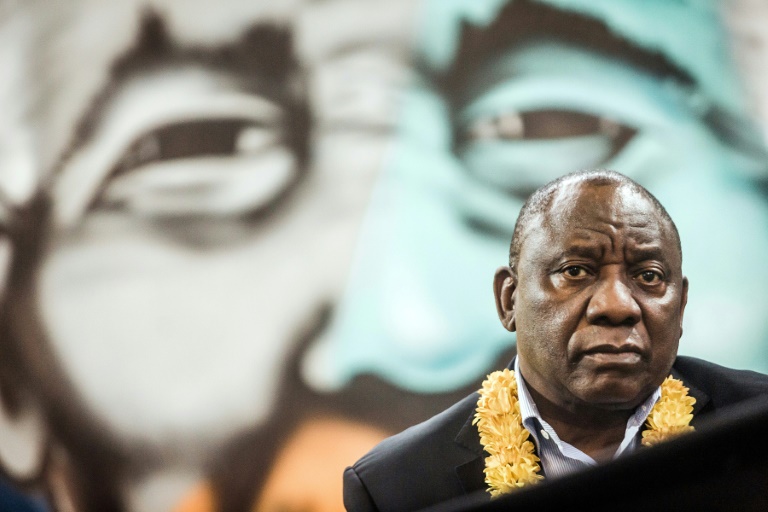
Pragmatic, wealthy and ambitious, Cyril Ramaphosa promised “a new dawn” for corruption-ridden South Africa when he became president.

Today, nearly five years later, his reputation has been overwhelmed by a deeply damaging scandal.  

Just as he looked set to secure re-election at the helm of the ruling ANC party — a stepping stone to a second term as president of the nation -– a special inquiry determined Ramaphosa had probably broken the law over the alleged cover-up of a burglary.

Details about a huge cash haul stolen from his farmhouse have dealt a massive reputational blow to Ramphosa, who took the reins of Africa’s most industrialised economy on a pledge to root out graft.

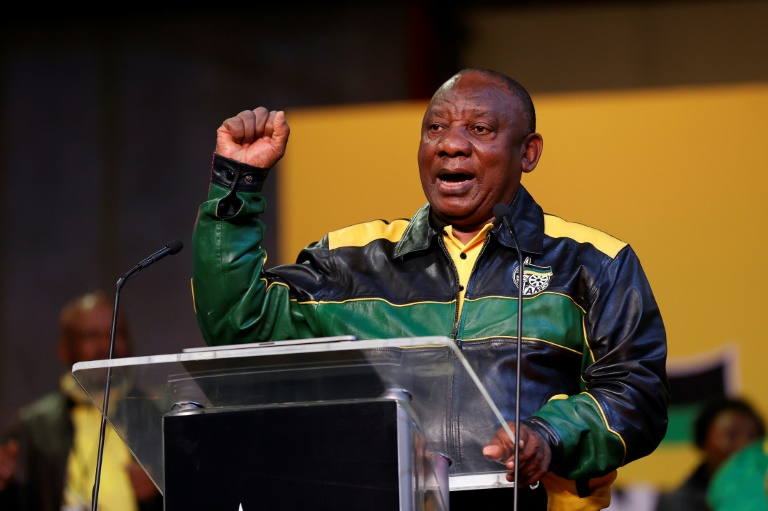
The African National Congress (ANC), the vanguard of the anti-apartheid struggle once led by Nelson Mandela, must now decide whether Ramaphosa should stay or be pushed out like his graft-tained predecessor, Jacob Zuma.

Born on November 17, 1952 in Johannesburg’s Soweto township — the cradle of the anti-apartheid struggle — Ramaphosa had long angled for South Africa’s top job, but only came to it after a long detour. 

He took up activism while studying law in the 1970s, and spent 11 months in solitary confinement in 1974.

After studying, he turned to trade unionism, one of the few legal ways of protesting against the white-minority regime. 

In 1982, he founded the National Union of Mineworkers (NUM), which swelled to 300,000 members and led massive strikes in 1987 that shook the foundations of white rule.

– From Mandela to Coca-Cola –

A protege of Mandela, who once described him as one of the most gifted leaders of the “new generation,” Ramaphosa stood alongside the anti-apartheid icon when he walked out of jail in 1990. 

He was a key member of the taskforce that steered the transition to democracy.

But after missing out on becoming Mandela’s successor, Ramaphosa swapped politics for a foray into business that made him one of the wealthiest people in Africa.

He held stakes in McDonald’s and Coca-Cola, making millions in deals that required investors to partner with non-white shareholders. 

Ramaphosa also developed a passion for breeding rare buffalos and cattle — a business that would come back to haunt him. 

The opposition once nicknamed him “The Buffalo” after he bid for an 18-million-rand ($104,000) beast in 2012. 

He later apologised for making the glitzy bid “in a sea of poverty.” 

In 2012, his image was badly tarnished when police killed 34 striking workers at the Marikana platinum mine, where he was then a non-executive director. He had called for a crackdown on the strikers, whom he accused of “dastardly criminal” behaviour.

– Covid –

He returned to politics to become Jacob Zuma’s vice president in 2014, often drawing criticism for failing to speak out against government corruption.

Renowned for his patience and strategic thinking, Ramaphosa narrowly defeated pro-Zuma rivals to take over leadership of the ANC party in 2017 and then the presidency when Zuma was forced out two months later.

Relaxed at public appearances, he attracts a support base crossing South Africa’s racial and class divides, but still faces strong opposition from inside the ANC, mainly from Zuma supporters.

His anti-corruption drive has yielded some results, with charges being brought against some high-profile figures.

His handling of the Covid health crisis also won praise internationally.

But the pandemic dealt a heavy blow to plans to revive South Africa’s sagging economy, unemployment remains stratospherically high and prolonged power cuts are a deep source of anger.

– Cash under cushions –

Yet it is the accusations that Ramaphosa attempted to conceal a $580,000 heist at his Phala Phala farmhouse that have most damaged him.

The cash was payment for buffalos bought by a Sudanese citizen, Ramaphosa told investigators.

The money was stored beneath sofa cushions in his residence at the ranch, a place staff believed to be the “safest,” he said.

He denied allegations, first made by South Africa’s ex-spy boss, a Zuma ally, that he had arranged for the robbers to be kidnapped and bribed into silence.

But the inquiry panel expressed doubt about the legitimacy of the source of the money. 

It also concluded that Ramaphosa may have committed serious violations and misconduct in being involved at his farm while president, in not reporting the theft directly to police and in seeking the help of his Namibian counterpart to apprehend the thieves.

Its report was submitted to parliament on Wednesday, potentially opening the way for a vote to remove Ramaphosa.

Ramaphosa political fate hangs in balance in South Africa

The political future of President Cyril Ramaphosa hung in the balance on Friday, as South Africans wondered whether he would cling to power or resign over accusations that he sought to cover up a burglary at his farm.

On Thursday, the 70-year-old head of state was rumoured to be close to stepping down in the face of calls to quit — but by Friday morning, the pendulum seemed to have swung the other way as allies urged him to fight on. 

The African National Congress (ANC), which has ruled South Africa since the end of apartheid in 1994, was to hold an emergency session of its decision-making body at 1200 GMT to discuss a crisis that has deepened party divisions.

Ramaphosa has been under fire since June, when a former spy boss filed a complaint with police, alleging he had concealed the theft of a cash haul at his farm at Phala Phala in northeastern South Africa.

Instead of alerting the authorities, he allegedly organised for the robbers to be kidnapped and bribed into silence. Ramaphosa has denied any wrongdoing. 

“There’s no factual and legal basis for (him to go),” Mathole Motshekga, an ANC lawmaker and Ramaphosa ally, told AFP on Friday.

The rand recovered some ground against the dollar early Friday after a sharp drop the previous day, following publication of a report from an independent commission into the scandal.

Late Thursday, Ramaphosa’s spokesman Vincent Magwenya said the president, who has been holed up in talks with ANC leaders, was considering all options.

An announcement was “imminent,” the spokesman said, but stressed the president was not “panicking.” 

The decision would not be “rushed” but made in the interest of the country and the government’s “stability”, Magwenya said.

“The top ANC people don’t want him to leave,” an ANC executive told AFP on condition of anonymity late Thursday.

The head of the influential Anglican Church also pleaded for the president to stay on. 

“No one should be above the law, but to pass final judgement on a person based on what is in effect a board of preliminary investigation, which has not made a final determination of the facts, could lead to lawlessness in South Africa,” Archbishop Thabo Makgoba, the successor of the late Desmond Tutu, said. 

– Cash under cushions –

The president has denied any wrongdoing, saying the accusations against him were “without any merit.” 

But he admitted that $580,000 in cash — which he said was payment for buffaloes bought by a Sudanese citizen — was stolen from under sofa cushions at his ranch. 

The vast sum has cast a dark shadow over Ramaphosa’s bid to portray himself as graft-free after the corruption-tainted era of Jacob Zuma.

On Wednesday, the three-person special panel tasked with probing the affair submitted its report to parliament.

It concluded Ramaphosa “may have committed” serious violations and misconduct in not reporting the theft directly to police and in seeking the help of his Namibian counterpart to apprehend the thieves.

Parliament is scheduled to examine the report on Tuesday.

The debate could lead to a vote on removing him from office. For this to succeed, a motion has to be supported by at least two-thirds of lawmakers.

The scandal has come at the worst possible moment for Ramaphosa, who had looked set to secure re-election at the helm of the ANC — a stepping stone to a second term as national president. 

The ANC, which after 28 years in power is experiencing dwindling support, is due to vote in a new leadership on December 16. 

– ‘Life goes on’ –

“The president has overwhelming support for re-election,” said Motshekga, the ANC lawmaker, describing the panel’s report as “not conclusive”.

“We will go to Parliament on Tuesday and just reject that report and life goes on.”

Ramaphosa took office at the helm of Africa’s most industrialised economy in 2018 vowing to root out corruption that had taken root across state institutions.

He now risks becoming the third ANC leader forced out since the party came to power after the end of apartheid.

Ramaphosa’s predecessor Zuma dodged four impeachment votes until the ANC forced him to resign over graft in 2018.

The ANC also pushed Thabo Mbeki out of office in 2008 in the middle of a power struggle.

Moroccans rejoice at reaching World Cup last 16

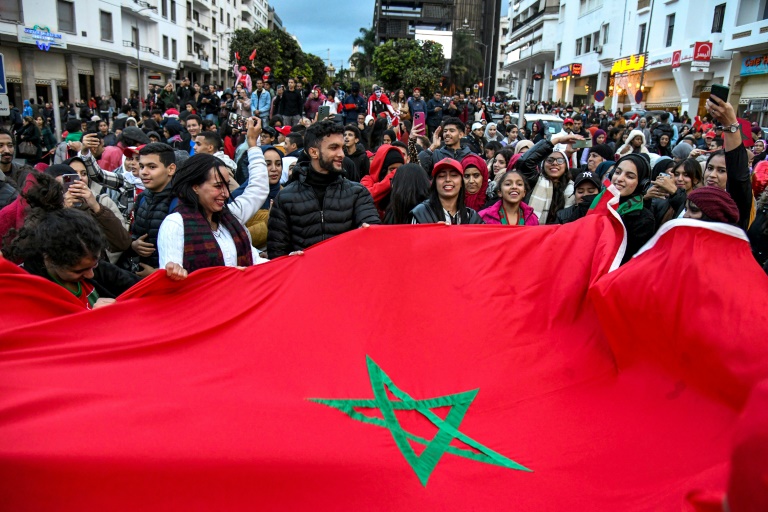
Ecstatic Moroccans celebrated on Thursday after their team qualified for the knockout stages of the World Cup for the first time since 1986.

“We’ve waited 36 years,” one fan cried after the Atlas Lions beat Canada 2-1 to storm into the round of 16 as winners of their group.

In 1986, the football-obsessed North African nation became the first African or Arab country ever to reach the knockout stages, before many of the current players were born.

On Thursday, the iconic Avenue Mohammed V through central Rabat thronged with supporters wrapped in the country’s red flag with its green star, setting off firecrackers as drivers honked their horns.

Heavy rain, a welcome sight in the drought-stricken country, cleared up before the final whistle as men, women and children poured into the streets to celebrate.

Cafes had been packed for the match and even banks had closed early to allow people to watch.

“I was stressed about the match but they blew us away,” said Houda, 34, who was watching at a cafe with her daughter. 

Morocco had gone from a draw with Croatia to a spectacular win on Sunday against Belgium before beating Canada, a huge boost for coach Walid Regragui, who has been in the job for just three months.

According to opinion polls, a fifth of Moroccans believe their team will reach the semi-final, and national carrier Royal Air Maroc has put on special flights to ferry fans back and forth from Qatar.

Maths teacher Mehdi Dida said his joy had “no limits.”

“It’s a historic moment to see the Moroccan flag so high and see our players give their all for their country,” he said.

One social media user wrote that people his father’s age continually talked about the team of 1986.

“In 20 years’ time, I’ll be able to tell my children about the team of 2022,” he wrote. “It’s historic!”

isb-hic-kao-agr/par/gj

Switzerland fines engineering giant $4.3 mn over S.Africa bribery

Swedish-Swiss engineering giant ABB has been fined four million Swiss francs ($4.3 million) over bribery linked to the construction of a huge power plant in South Africa, Switzerland announced on Friday.

The attorney general’s office said ABB Management Services, which is headquartered in Switzerland, admitted not taking “all necessary and reasonable provisions” to prevent bribery payments to officials in South Africa.

“Various ABB employees set up from 2013 on a bribery scheme in order to obtain orders, through excessive payments to subcontractors, for the construction of a coal-fired power plant in South Africa,” the attorney general’s office said.

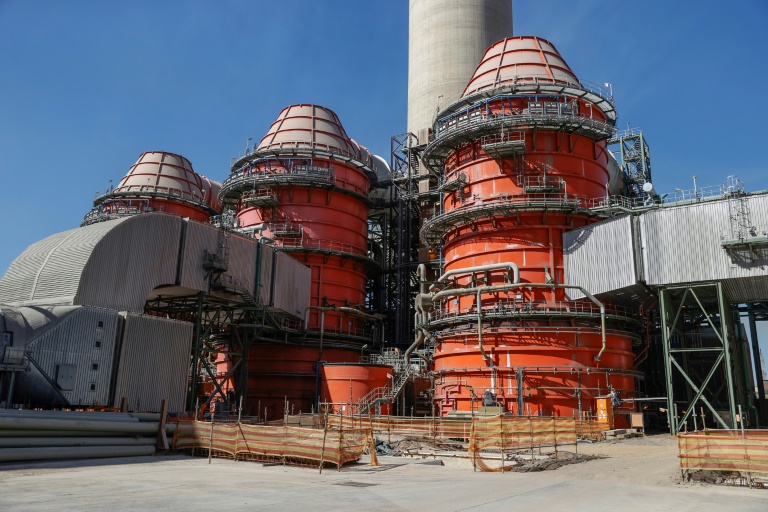
Construction near Johannesburg of the Kusile power station, the fourth largest coal-fired generator in the world, has been fraught with allegations of graft. South Africa’s struggling power utility Eskom commissioned the plant in 2007.

“ABB South Africa received orders for a value of at least $200 million with bribery payments of at least 1.3 million Swiss francs,” the attorney general’s office said.

As a result, it said ABB had been slapped with a fine of four million Swiss francs and ordered the group to pay 50,000 Swiss francs for the cost of proceedings.

The firm has already made a compensation payment of $104 million in South Africa, the attorney general’s office said.

On Thursday, South African prosecutors announced that ABB would pay more than 2.5 billion rand ($144,000) in “punitive reparations” to South Africa over “criminal conduct” at Eskom.

Switzerland said the US justice department and Securities and Exchange Commission were also expected to resolve with ABB on Friday.

In October eight people, including former Eskom CEO Matshela Koko, were arrested on corruption charges linked to a multi-million-dollar contract with the Swedish-Swiss firm.

Close Bitnami banner
Bitnami