Africa Business

Tunisia's spicy Harissa gets UNESCO heritage status

UNESCO on Thursday added Tunisia’s spicy national condiment Harissa to its list of intangible cultural heritage, saying it was part of the North African country’s identity.

The United Nations’ cultural agency is meeting in Morocco to examine proposals for its list of Intangible Cultural Heritage, which aims to protect cultural traditions, practices and knowledge. 

“Just inscribed on the #IntangibleHeritage List: Harissa, knowledge, skills and culinary and social practices,” it tweeted on Thursday.

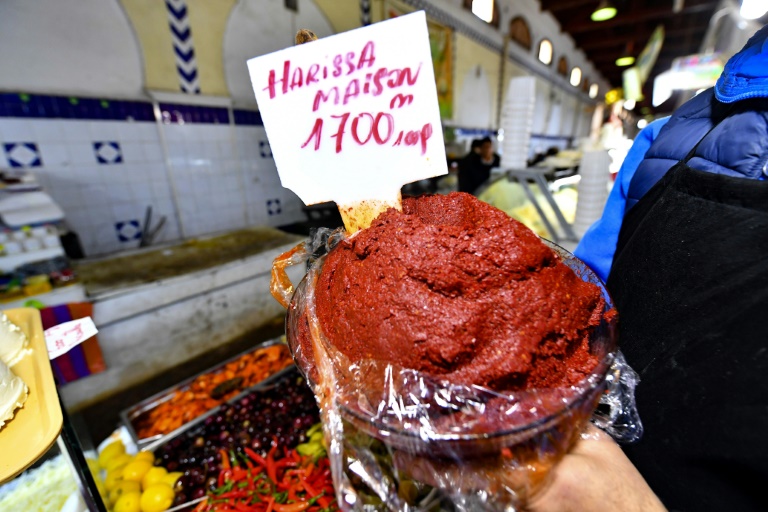
Harissa is a paste made with sun-dried hot peppers, freshly prepared spices and olive oil, which preserves it and slightly reduces its spiciness. It is found in almost every restaurant in Tunisia and also exported worldwide.

Tunisia’s application for the status notes that Harissa is “an integral part of domestic provisions and the daily culinary and food traditions of Tunisian society”, usually prepared in a family or community setting.

“Harissa is used as a condiment, an ingredient, and even a dish in its own right, and is well-known throughout Tunisia, where it is consumed and produced, particularly in the regions where chilli peppers are grown,” it said.

“It is perceived as an identifying element of national culinary heritage, and a factor of social cohesion.”

The 2003 Convention for the Safeguarding of the Intangible Cultural Heritage aims to safeguard and raise awareness about the “intangible cultural heritage of the communities, groups and individuals concerned”.

UNESCO stresses that the list honours traditions, practices and knowledge and all such forms of culture that are “human treasures” that must be protected.

On Wednesday the organisation also recognised French baguettes, adding them to more than 530 items on the list.

DR Congo army and M23 rebels in new clashes

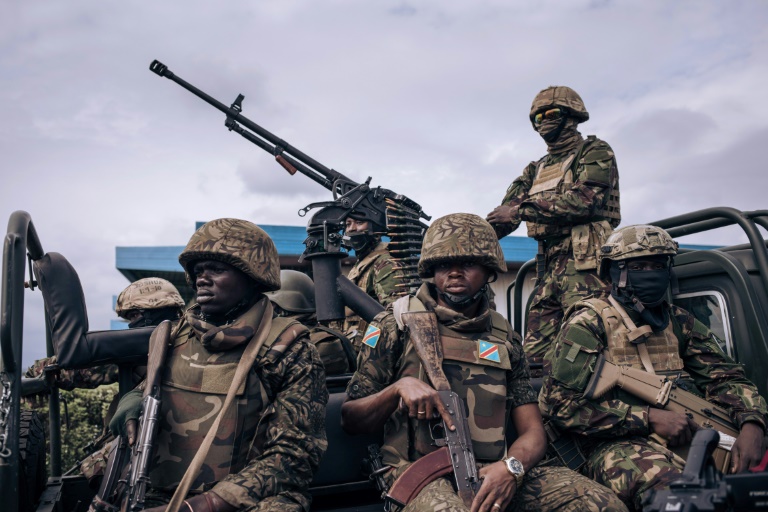
Fighting with heavy weapons erupted between government forces and M23 insurgents in eastern DR Congo on Thursday, shaking a five-day-old truce, security sources and rebels said.

The ceasefire took effect in North Kivu province at the weekend following a summit between DR Congo and its neighbour Rwanda.

It was to have been followed by a rebel pullout from captured territory, a withdrawal that has yet to take place.

The sources said fighting resumed Thursday at Kirima, about 10 kilometres (six miles) from the town of Kibirizi.

“Fighting resumed this morning between the FARDC and the M23,” said Paul Lutibahwa, head of civil society groups for the Bambo region. The FARDC stands for the armed forces of the Democratic Republic of Congo (DRC).

“The rebels have crossed the bridge, heading for Kibirizi… there’s panic,” he said.

Juson Kaniki, a representative of civil groups in Kibirizi, confirmed that “people are starting to flee” in fear of the rebels’ arrival.

A security official, speaking on condition of anonymity, accused the M23 of having breached the ceasefire and “carrying on looting and fighting.”

A DRC army officer, who also asked not to be identified, said, “The fighting is heavy — we are using heavy artillery.”

The M23’s military spokesman, Willy Ngoma, contacted by AFP, confirmed that there was fighting with the army.

– Resurgent force –

The March 23 movement, or M23, is a predominantly Congolese Tutsi rebel group that was dormant for years.

It took up arms again at the end of last year and seized the town of Bunagana on the border with Uganda in June. 

After a brief period of calm, it went on the offensive again in October, greatly extending the territory under its control and advancing towards the city of Goma.

Kinshasa accuses its smaller neighbour Rwanda of providing M23 with support, something that UN experts and US officials have also pointed to in recent months. 

Kigali disputes the charge, and in turn accuses Kinshasa of collusion with the FDLR — a former Rwandan Hutu rebel group established in the DRC after the genocide of the Tutsi community in 1994 in Rwanda. 

Talks between the two countries in the Angolan capital of Luanda unlocked a truce agreement on November 23.

The ceasefire was scheduled to take effect on Friday November 25 at 1600 GMT and be followed by a pullout by the M23 two days later.

Until Thursday’s violence, there had been no fighting between government forces and the M23, although the rebels had clashed with local militia, especially in the Bambo area, where civilian casualties were reported.

Scores of armed groups roam eastern DRC, making it one of Africa’s most violent regions.

Many are legacies of two wars before the turn of the century that sucked in countries from the region and left millions dead.

Pope to visit DR Congo, S. Sudan in early 2023

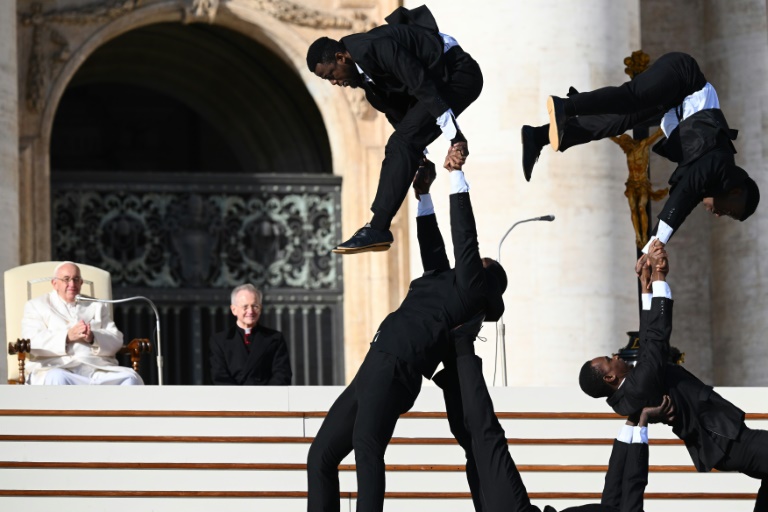
Pope Francis will visit the Democratic Republic of Congo and South Sudan early next year, a trip previously postponed due to problems with his knee, the Vatican said Thursday.

The 85-year-old pontiff will visit Kinshasa during his trip to DRC from January 31 to February 3.

He will then be joined by the Archbishop of Canterbury, Justin Welby, and the Moderator of the General Assembly of the Church of Scotland, Iain Greenshields, in heading to Juba in South Sudan from February 3-5. 

It will be the pontiff’s fifth visit to the African continent since being elected head of the worldwide Catholic church in 2013. 

The pope’s trip to the two countries, both plagued by violence, had initially been planned for July this year.

It was postponed “at the request of his doctors”, the Vatican said at the time, as the pope underwent treatment for knee pain.

There had also been concerns about security on the trip, according to Italian media reports.

– Chronic instability –

The Church of Scotland said that during the visit to Juba, the pope, the archbishop and Greenshields, would “meet local church representatives, civil war victims living in a displaced persons camp and lead a large open-air prayer vigil for peace.”

“The purpose of the visit is to renew a commitment to peace and reconciliation and stand in solidarity with millions of ordinary people who are suffering profoundly from continued armed conflict, violence, floods and famine,” the Church of Scotland said.

The pope — who in recent months has used a wheelchair — had initially planned to visit Goma, in the war-torn east of DRC, but this stop has been removed from the new programme.

South Sudan, the world’s newest nation, has suffered from chronic instability since independence in 2011, including a brutal five-year civil war.

The DRC, which Pope John Paul II visited in 1985, is struggling to contain dozens of armed groups in the east of the vast nation.

About 40 percent of the estimated 90 million inhabitants of DRC are Catholic. Another 35 percent are Protestant or affiliated to Christian revivalist churches, nine percent are Muslim, and 10 percent follow the Kimbanguist Congolese church.

The country has a secular government, but religion is omnipresent in most people’s lives and the Catholic Church has at times played a leading role in local politics.

The pope’s trip will be the 40th abroad of his papacy.

Engineering giant to repay S.Africa over 'criminal conduct' at utility

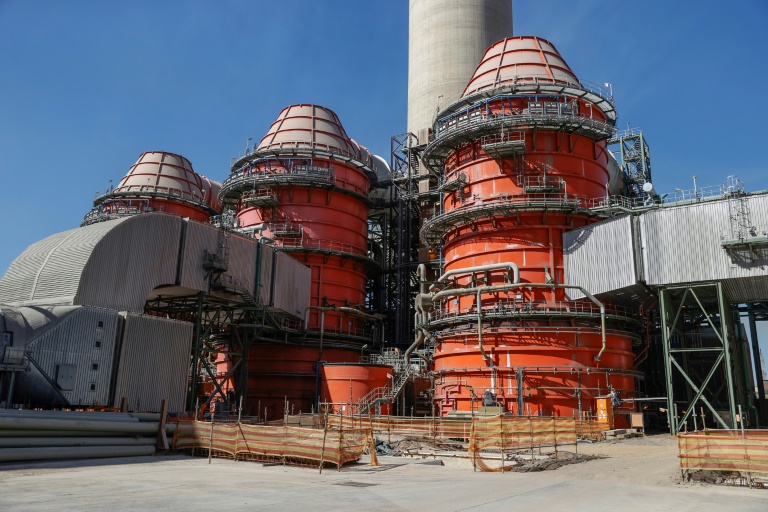
Swedish-Swiss engineering giant ABB, which helped construct a huge power plant near Johannesburg, will pay reparations to South Africa over “criminal conduct” at the struggling power utility Eskom, prosecutors said Thursday.

“ABB has acknowledged liability and taken responsibility for the alleged criminal conduct of its employees involving contracts with Eskom,” the National Prosecuting Authority (NPA) said in a statement.

It said it had finalised a settlement agreement with Asea Brown Boveri (ABB) to pay over more 2.5 billion rand ($144,000) in “punitive reparations” to South Africa.

In 2020, ABB returned 1.6 million rand ($92,000) it received for the construction of the coal-fired Kusile power station, commissioned by Eskom in 2007. 

Construction of the plant, the fourth largest coal-fired generator in the world, has been fraught with allegations of graft. 

The NPA said the latest development showed its determination to “deal with corruption through prosecuting perpetrators and recovering the stolen money.”

“This settlement represents a bold and innovative step towards accountability… particularly in the form of restitution for the serious crimes committed at Eskom, during the state capture (corruption) period,” said the NPA.

The deal was negotiated with partner countries including Italy, Germany, the United States and Switzerland.

In October eight people, including the former CEO of Eskom, Matshela Koko, were arrested on corruption charges linked to a multi-million-dollar contract with the Swedish-Swiss firm.

Coup allegations a bid to eliminate me, says Sao Tome opponent

One of Sao Tome’s leading opposition figures says accusations that he sought to mount a coup in the tiny African state were a “sham” and a bid to destroy him.

Four people were killed last Friday when the military thwarted an attempt to seize power, according to the authorities.

Opposition leader and former parliamentary speaker Delfim Neves was arrested afterwards, and accused by Prime Minister Patrice Trovoada of having staged the attempted putsch.

“All this is just a sham, a show… aimed at physically eliminating people who can be politically troublesome, which includes me,” Neves said at a press conference on Wednesday.

Neves was released on bail on Tuesday, his lawyer and STP-Presse said.

The justice ministry and public prosecutor’s office did not reply to an AFP request on Wednesday to say whether Neves had been charged, and if so for what.

Sao Tome and Principe is a Portuguese-speaking archipelago off central Africa that has a strong reputation for democracy and stability.

– Unclear –

Key details about what happened on Friday and the following days remain murky.

Trovoada on Friday said that four people had been arrested after a six-hour gun battle at army headquarters. 

Four people had died and the detainees had identified Neves and a mercenary named Arlecio Costa as the “sponsors” of the operation, he said.

The authorities then arrested Neves and Costa, Trovoado said.

But two days later, the armed forces chief of staff said, without elaborating, that three of the four detainees had died of wounds sustained in an “explosion” and Costa had died after he “jumped from a vehicle.”

“They killed the living proof” of what had happened, Neves said at the press conference, referring to Costa and the three dead detainees.

“The accuser (the fourth detainee) was left alive to say that Delfim Neves was one of the ringleaders behind this plot,” he charged.

He added, “If people hadn’t mobilised quickly to get me out of the barracks at 5.30 a.m., Delfim Neves would have been dead the following day as well.”

Costa once served in a notorious South African mercenary outfit, the Buffalo Battalion, which was disbanded at the end of apartheid in 1993. He had been previously accused of an attempted coup in Sao Tome in 2009.

– Inquiry –

The government has announced it will launch investigations into the attempted coup and the death of the four.

The European Union on Tuesday added to pressure for transparency, saying the probe should “shed light on the facts… in line with human rights and democratic values.”

Neves lost his position as speaker on November 11 when the new National Assembly was installed following elections in September.

The vote was won with an absolute majority by Trovoada’s centre-right Independent Democratic Action (ADI) party. He returned to the top job for a third time.

The ADI is one of two major parties that have vied to run the nation since independence from Portugal in 1975, along with the Movement for the Liberation of Sao Tome and Principe-Social Democratic Party (MLSTP-PSD).

Neves last year also failed in an attempt to be elected president, a largely symbolic job, losing to the ADI’s Carlos Vila Nova.

He arrived in third place and alleged “massive electoral fraud” had taken place.

Impeachment pressure builds on S.Africa's Ramaphosa

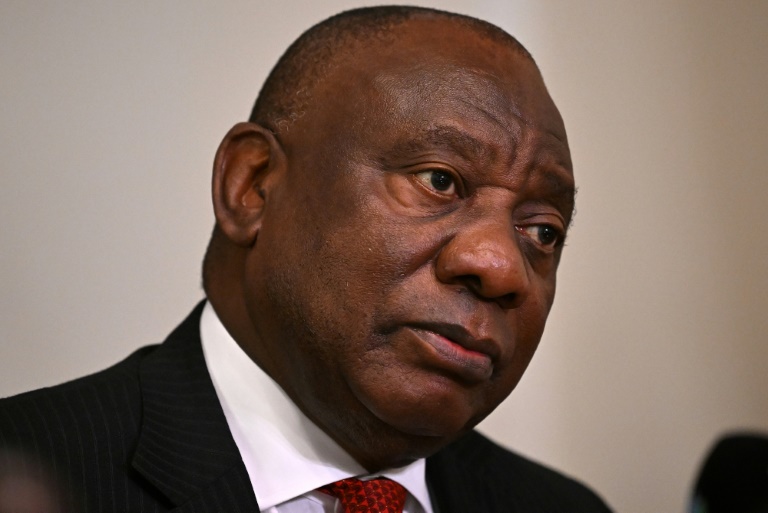
South Africa’s ruling ANC party was due to convene emergency talks on Thursday as pressure mounts for President Cyril Ramaphosa to quit or face impeachment over a burglary that he is accused of concealing at his farm.

An independent panel set up by parliament concluded on Wednesday that Ramaphosa “may have committed… serious violations” of the constitution and anti-corruption laws.

There was enough evidence to warrant a parliamentary debate on whether the president should be removed from office, dealing a serious blow to Ramaphosa’s bid in two-weeks’ time to be re-elected head of the African National Congress (ANC).

Ramaphosa took office at the helm of Africa’s biggest economy in 2018 on a promise to root out corruption. He now risks becoming the third ANC leader forced out since the party came to power after the end of apartheid in 1994.

South African lawmakers are to examine the findings of the panel, which they appointed, on December 6 and adopt a resolution, through a simple majority vote, on whether to impeach Ramaphosa or not.

This could lead to a vote to remove the president. To be successful, any such vote would require the approval by two-thirds of assembly members.

The ANC’s National Executive Committee — the party’s decision-making body — is due to hold urgent talks at 7:00 pm (1700 GMT) to discuss the findings of the farm theft scandal, an ANC official told AFP.

Ramaphosa separately cancelled a scheduled appearance before parliament in which he was supposed to answer questions on Thursday.

– ‘Resignation’ –

His office informed parliament that: “Implications for the stability of the country required that the president take the time to carefully consider the contents of the report and the next course of action”.

Ramaphosa has been deluged with calls to step down from within the ANC and the political opposition.

“The President has to step aside now and answer to the case,” cabinet minister Nkosazana Dlamini-Zuma, who ran unsuccessfully against Ramaphosa as ANC leader in 2017, tweeted late Wednesday.

“His best course of action remains immediate resignation,” said the leftist opposition Economic Freedom Fighters (EFF).

South Africa’s largest opposition party, the Democratic Alliance, called for an early election saying the country faces a “seismic shift”.

The scandal erupted in June after South Africa’s former national spy boss alleged to police that Ramaphosa had hidden a burglary at his Phala Phala farm in northeastern South Africa from the authorities.

Instead, he allegedly organised for the robbers to be kidnapped and bribed into silence.

The president flatly denies this and laid out his position to the panel.

– Cash stuffed in sofa –

Ramaphosa said $580,000 in cash was stolen from beneath sofa cushions at his ranch. 

The sum was payment made by a Sudanese citizen who had bought buffaloes.

Staff at the farm initially locked the money in an office safe, Ramaphosa said. 

But the lodge manager then decided that the “safest place” to store it would be under the cushions of a sofa inside Ramaphosa’s residence at the farm, he said. 

Ramaphosa told the inquiry that the accusations against him were “without any merit” and asked it not to take the matter “any further”.

But his request was rebuffed.

The panel concluded that Ramaphosa did not report the theft directly to police, acting in a way inconsistent with holding office and exposing himself to a clash between his official responsibilities and his private business.

Ramaphosa swept to power after the corruption-stained era of his former boss, Jacob Zuma. His predecessor Zuma survived four impeachment votes until his own party forced him to resign over graft in 2018.

The ANC also forced Thabo Mbeki out of office in 2008 in the middle of a power struggle.

Sudan's Rastas fear new crackdown but vow to fight on

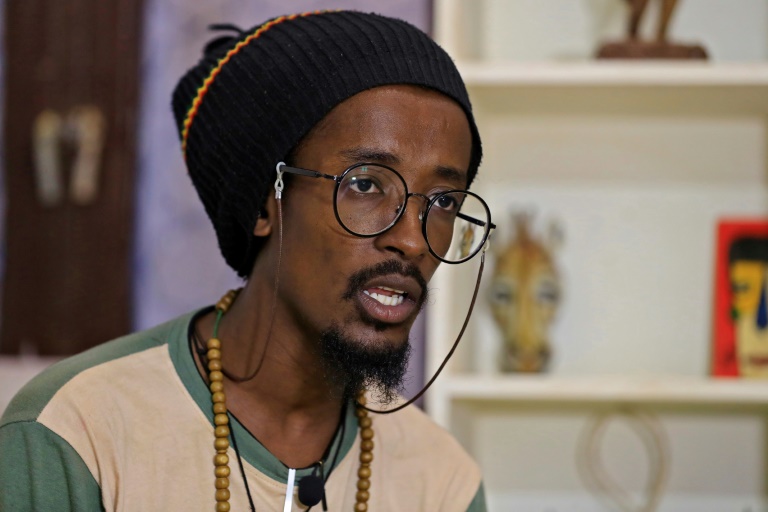
With his long dreadlocks and slouchy beanie, Abdallah Ahmed has always known his choice of lifestyle means trouble in Sudan, where long-oppressed Rastafarians say they are being targeted anew. 

Ahmed, 31, has for years been enamoured of the Rastafari tradition which emerged in Jamaica last century and for him represents “telling the truth, being courageous, fighting for rights”.

The number of Rastafarians in Sudan is unknown, and the community had largely lived underground under the autocratic rule of Omar al-Bashir, who was ousted in April 2019 following mass protests against his regime.

“We were very enthused after Bashir’s fall,” said Ahmed, a long-time Bob Marley fan also known as “Maxman”, at an art exhibition where he performed reggae music with his band.

“Musicians and artists flourished,” said Ahmed, donning brightly coloured head and wrist bands.

But a brief whiff of freedom did not last as a post-Bashir transition to civilian rule was upended last year when army chief Abdel Fattah al-Burhan led a military coup.

Rastafarianism considers former Ethiopian emperor Haile Selassie to be its Messiah, but like many followers in Sudan, Ahmed told AFP that he saw it “not as a religion”.

“It’s a lifestyle, and it’s me.”

Under Bashir, community members were regularly harassed, had their heads shaved and faced persecution under stringent public order laws restricting how people dress or behave in public.

Ahmed said he had been arrested for drug possession in 2017 while performing music in public, and was flogged 20 times.

Followers of the Rastafari tradition have always been “easy targets” for security forces due to their looks, said Ahmed, who was also frisked by security personnel during a Khartoum protest in November and faced charges of “causing public disturbance”.

“It, however, never stopped us from growing our hair,” he added. “Some of us died while holding on to their personal lifestyle.”

– ‘Rasta never dies’ –

The killings of several Sudanese Rastafarians in mass anti-coup demonstrations since Burhan’s takeover last year have given rise to a popular protest slogan: “The Rasta never dies”.

At least 121 people have been killed in the crackdown on protests since the October 2021 coup, according to pro-democracy medics. 

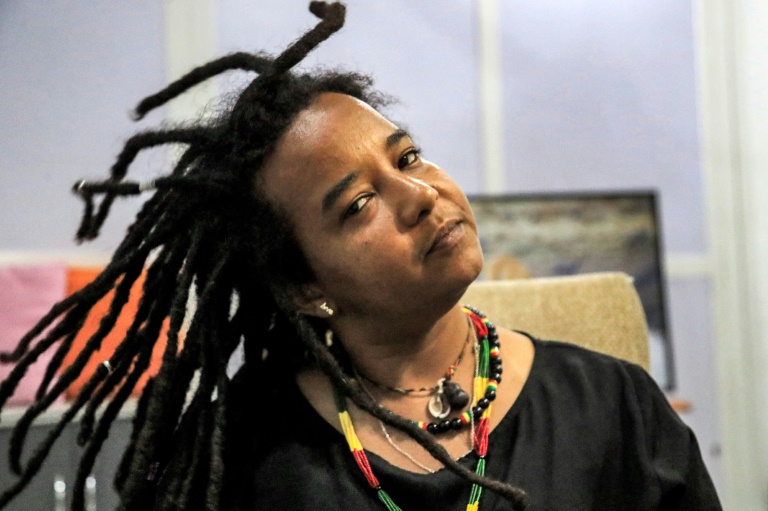
Noting the “peacefulness and spontaneity” of the demonstrations, 35-year-old film-maker Afraa Saad told AFP “this made us believe they were being especially targeted”.

“I believe the slogan emerged to say that their good reputation will last.”

As a woman, Saad said, she has faced greater scrutiny than male Rastafarians since she first embraced the tradition during the height of the anti-Bashir demonstrations.

“The most persistent objection is: why would a girl wear dreadlocks when there are other more acceptable hairstyles,” she said, noting a “prevalent stereotype” tying dreadlocks with drug use and “unbecoming behaviour”.

Saad sees her lifestyle choice as part of Sudanese women’s uphill battle against strict policing of social mores since the Bashir regime.

Women were at the forefront of the mass protests against the longtime autocrat’s rule, voicing their anger at decades of discrimination that severely restricted their role in society.

“I simply don’t heed to this,” Saad said. “This is my identity and it’s who I am.”

For some in Sudan, wearing dreadlocks, listening to reggae music or having a Rasta-like lifestyle is merely an act of defiance.

Saleh Abdalla, 26, who wears his hair in short dreadlocks, said it was his way of protesting the October 2021 military coup. 

“We are refusing all violations that take place on behalf of authorities,” he told AFP during one anti-coup demonstration in the capital Khartoum last month.

“I will keep the Rasta (dreadlocks) until the regime falls.”

S.Africa's ruling ANC calls urgent talks as pressure grows on Ramaphosa

South Africa’s ruling ANC party will hold emergency talks Thursday, the day after a report into scandal-hit President Cyril Ramaphosa paved the way for his possible impeachment.

Pressure has mounted on the president after a special panel probing a burglary scandal at Ramaphosa’s farm concluded that there was enough evidence to warrant a parliamentary debate on whether he should be removed.

The report established that “the president may have committed… serious violations” of parts of the constitution and anti-corruption laws.

Following the report, his party’s National Executive Committee will hold urgent talks today at 7pm (1700 GMT) to discuss the farm theft scandal, an ANC official told AFP.

Coming two weeks before the ANC holds its crucial conference — where it is due to elect new leadership — the report has dealt a serious blow to Ramaphosa’s re-election bid.

The president has also cancelled a scheduled question-and-answer session in parliament Thursday afternoon, his office said.

The president’s written request to cancel said that “implications for the stability of the country required that the President take the time to carefully consider the contents of the report and the next course of action to be taken”, parliamentary authorities said.

The three-person panel set up in September to probe the alleged cover-up of a theft at Ramaphosa’s farmhouse said that the information it gathered shows that Ramaphosa possibly committed serious violations and misconduct.

These include not reporting the theft directly to police, acting in a way inconsistent with holding office and exposing himself to a clash between his official responsibilities and his private business.

Ramaphosa reiterated his denial of any wrongdoing and that he is “giving consideration to the report and an announcement will be made in due course”.

Deputy President David Mabuza, who was scheduled to address an international AIDS day commemoration event, has also cancelled his appearance and sent the health minister in his place.

The opposition has called on Ramaphosa to leave office immediately.

Sudan's Rastas fear new crackdown but vow to fight on

With his distinctive long dreadlocks and slouchy beanie, Abdallah Ahmed has always known his choice of lifestyle means trouble in Sudan, where long-oppressed Rastafarians say they are being targeted anew. 

Ahmed, 31, has for years been enamoured of the Rastafari tradition which emerged in Jamaica last century and for him represents “telling the truth, being courageous, fighting for rights”.

The number of Rastafarians in Sudan is unknown, and the community had largely lived underground under the autocratic rule of Omar al-Bashir, who was ousted in April 2019 following mass protests against his regime.

“We were very enthused after Bashir’s fall,” said Ahmed, a long-time Bob Marley fan also known as “Maxman”, at an art exhibition where he was performing reggae music with his band.

“Musicians and artists flourished,” he said, donning brightly coloured head and wrist bands.

But a brief whiff of freedom did not last as a post-Bashir transition to civilian rule was upended last year when army chief Abdel Fattah al-Burhan led a military coup.

Rastafarianism considers former Ethiopian emperor Haile Selassie to be its Messiah, but like many followers in Sudan, Ahmed told AFP that he saw it “not as a religion”

“It’s a lifestyle, and it’s me.”

Under Bashir, community members were regularly harassed, had their heads shaved and faced persecution under stringent public order laws restricting how people dress or behave in public.

Ahmed said he had been arrested for drug possession in 2017 while performing music in public, and was flogged 20 times.

Followers of the Rastafari tradition have always been “easy targets” for security forces due to their looks, said Ahmed.

“It however never stopped us from growing our hair,” he added.

“Some of us died while holding on to their personal lifestyle.”

– ‘Rasta never dies’ –

The killings of several Sudanese Rastafarians in mass anti-coup demonstrations since Burhan’s takeover last year have given rise to a popular protest slogan, “The Rasta never dies”.

At least 121 people have been killed in the crackdown on protests since the October 2021 coup, according to pro-democracy medics. 

Noting the “peacefulness and spontaneity” of the demonstrations, 35-year-old filmmaker Afraa Saad told AFP “this made us believe they were being especially targeted.”

“I believe the slogan emerged to say that their good reputation will last.”

Being a woman, Saad said she has faced greater scrutiny than men Rastafarians since she embraced the tradition during the height of the anti-Bashir demonstrations.

“The most persistent objection is why would a girl wear dreadlocks when there are other more acceptable hairstyles,” she said, noting a “prevalent stereotype” tying dreadlocks with drug use and “unbecoming behaviour”.

Saad sees her lifestyle choice as part of Sudanese women’s uphill battle against strict policing of social mores since the Bashir regime.

Women were at the forefront of the mass protests against the longtime autocrat’s rule, voicing their anger at decades of discrimination that severely restricted their role in society.

“I simply don’t heed to this,” Saad said.

“This is my identity and it’s who I am.”

For some in Sudan, wearing dreadlocks, listening to reggae music or having a Rasta-like lifestyle is merely an act of defiance.

Saleh Abdalla, 26, who wears his hair in short dreadlocks, said it was his way of protesting the October 2021 military coup. 

“We are refusing all violations that take place on behalf of authorities,” he told AFP during one anti-coup demonstration in the capital Khartoum last month.

“I will keep the Rasta (dreadlocks) until the regime falls.”

S.Africa's Ramaphosa under pressure over 'cash and cushions' scandal

South Africa’s President Cyril Ramaphosa is facing renewed pressure after a panel probing a burglary scandal at his farm said Wednesday it found enough evidence to warrant a parliamentary debate on whether he should be impeached.

Parliament is set to examine the report and decide whether to push ahead with impeachment proceedings next week, only days before Ramaphosa faces a crucial internal party election. 

The three-person panel set up in September to probe the alleged cover-up of a theft at Ramaphosa’s farmhouse wrote in its conclusions that the information it gathered “discloses… that the president may have committed” serious violations and misconduct.

These include not reporting the theft directly to police, acting in a way inconsistent with holding office and exposing himself to a clash between his official responsibilities and his private business.

Reacting to the report, Ramaphosa reiterated his denial of any wrongdoing. 

“The conclusions of the panel require careful reading and appropriate consideration in the interest of the stability of government and that of the country,” the presidency said in a statement. 

– Cash for buffaloes – 

The affair, which has tarnished the president’s reputation and overshadowed his bid for re-election as ruling party leader, erupted in June after South Africa’s former national spy boss filed a complaint with the police.

It alleged that Ramaphosa had hidden a burglary at his farm at Phala Phala in northeastern South Africa from the authorities.

Instead, he allegedly organised for the robbers to be kidnapped and bribed into silence.

The president has denied this, and laid out his position at length in the 138-page submission that was leaked on Wednesday.

“I did not ‘hunt’ for the perpetrators of the theft, as alleged, nor did I give any instructions for this to take place,” he wrote.

Ramaphosa said $580,000 in cash was stolen from beneath sofa cushions at his ranch. 

The sum was payment made by a Sudanese citizen who had bought buffaloes.

Staff at the farm initially locked the money in an office safe, Ramaphosa said. 

But the lodge manager then decided that the “safest place” to store it would be under the cushions of a sofa inside Ramaphosa’s residence at the farm, he said. 

Ramaphosa told the inquiry that the accusations against him were “without any merit” and asked it not to take the matter “any further”.

But his request was rebuffed.

“This is a defining moment for our constitutional democracy and must not be taken lightly,” Siviwe Gwarube, the chief whip of the opposition Democratic Alliance party, said in a statement.

“The panel makes some serious findings against the president … These are grounds for impeachment proceedings.”

Vuyolwethu Zungula, leader of the small ATM party, which pushed for the creation of the panel, said “the president must resign”. 

– Re-election bid –

Ramaphosa came to power in 2018 on a promise to root out graft after the corruption-stained era of his former boss, Jacob Zuma.

He faces elections on December 16 in his bid for a second term as president of the deeply-factionalised African National Congress party.

That position, as head of the dominant party in parliament, is also key to his survival as the country’s president.

Ramaphosa is facing a challenge from Zweli Mkhize, 66, an ex-health minister who resigned from government last year amid graft allegations. 

The special panel was set up following opposition uproar.

It was tasked with ascertaining whether there was sufficient evidence to show that the president committed a serious violation of the constitution or the law or serious misconduct.

Lawmakers will examine the report on December 6, and adopt a resolution, “through a simple majority vote, whether a further action by the House is necessary or not”, said National Assembly speaker Nosiviwe Mapisa-Nqakula.

This could lead to a vote to remove the president, which to be successful would require approval by two-thirds of assembly members.

Mapisa-Nqakula described the handover of the report as “one of the indicative milestones in South Africa’s maturing constitutional democracy”.

Close Bitnami banner
Bitnami