Africa Business

Tunisia out of World Cup despite shock win against France

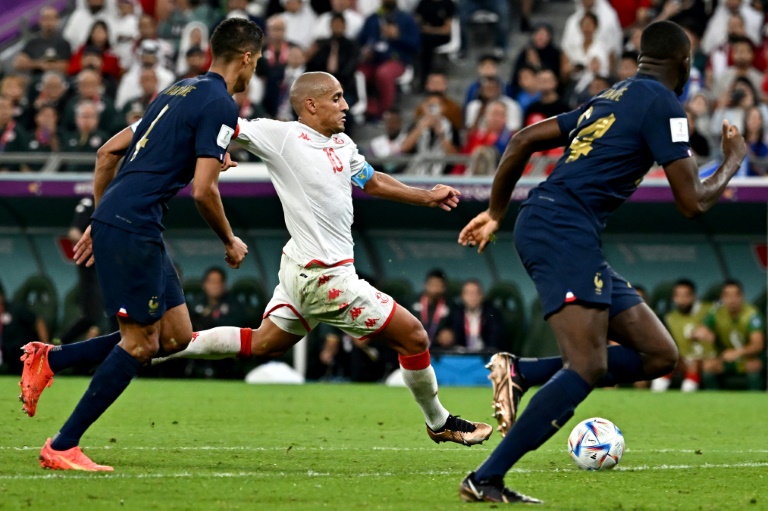
French-born Wahbi Khazri scored the only goal of the game as Tunisia claimed a famous 1-0 win over holders France at the World Cup on Wednesday, but it was not enough for them to reach the last 16.

France coach Didier Deschamps, whose team were already through to the knockout stage, made nine changes but they were a shadow of their usual selves and Khazri punished them in the 58th minute at Education City Stadium.

It looked as though Tunisia would be denied their win in the final moments but an Antoine Griezmann goal in stoppage time was disallowed following a VAR review.

Khazri, who grew up in Corsica and plays in Ligue 1 for Montpellier, was one of six players in the Tunisian line-up who were born on French soil and he was capped by France at Under-21 level.

There is a large Tunisian community in France who will savour the result, the country’s first win against European opposition at a World Cup and just their third ever in 18 matches at the tournament. 

However, Australia’s 1-0 win in the other Group D match against Denmark denied them progress to the last 16 for the first time.

“Unfortunately, in football it is better not to have to rely on others for results but we can go out with our heads held high,” said Khazri.

The world champions and Australia finished level on six points, but France topped the section on goal difference and advance to a last-16 tie on Sunday.

“We clearly had difficulties, because of the choices I made, but we played two high-intensity games in four days and so here I gave other players the chance to get on the pitch,” Deschamps told French broadcaster TF1.

“Obviously when you make so many changes it is not easy but it allowed the players to sample a World Cup game.

“We have fulfilled our objective. Now we are going to recuperate because a second competition is beginning.”

Les Bleus had been the first team to secure a place in the next round after winning their opening two games in Qatar so it was no surprise that Deschamps opted to make changes.

Kylian Mbappe was one of those to drop out, with Eintracht Frankfurt’s Randal Kolo Muani getting his first international start up front.

There was also a start at right-back for Axel Disasi, the first outfield player to make his France debut in a World Cup match since 1966, while Real Madrid midfielder Eduardo Camavinga started at left-back.

– Griezmann denied equaliser –

France were unrecognisable as Deschamps repeated what he had done four years ago, when he made sweeping changes for the final group game against Denmark.

The result then was a soporific 0-0 draw, which did not stop France from winning the title.

This time France’s second string performed as if they had never played together before and Tunisia -– with a partisan crowd behind them — sensed their chance.

The crowd erupted when Tunisia put the ball in the net just eight minutes in.

Nader Ghandri diverted a Khazri free-kick past Steve Mandanda, but he was just offside.

Starting at this World Cup for the first time, captain Khazri also stung the palms of Mandanda with a volley in the 35th minute, while a shot that Kingsley Coman skewed well wide was as close as France came.

They were disjointed, and it was no surprise when Tunisia took the lead.

France appealed in vain for a foul as Youssouf Fofana was dispossessed by Ellyes Skhiri, and Khazri ran through before slotting a shot past Mandanda.

Deschamps then sent on Mbappe, Griezmann and Ousmane Dembele in an attempt to avoid France’s first World Cup group-stage defeat since their disastrous 2010 campaign.

Griezmann thought he had equalised deep into stoppage time when he volleyed home from inside the box, but the referee disallowed the goal for offside after a VAR review.
Trial in 2016 Ivory Coast attack gets underway

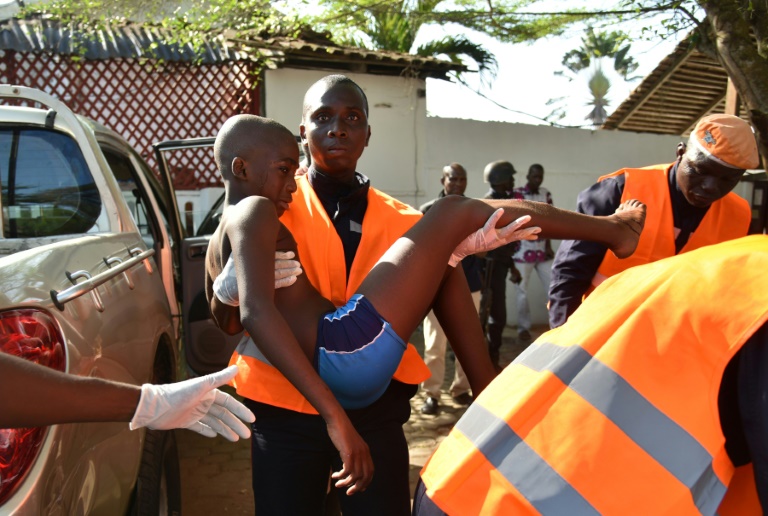
A court in Ivory Coast on Wednesday began the long-awaited trial of 18 people accused of abetting one of West Africa’s bloodiest jihadist attacks — a machine-gun assault on a beach resort in 2016 that left 19 dead.

But only four defendants were physically present for the proceedings in Abidjan, Ivory Coast’s economic hub, an AFP reporter saw.

The others, including the suspected masterminds, are either on the run or being held in Mali, said Aude Rimailho, a lawyer for civilian plaintiffs.

On March 13, 2016, three men wielding assault rifles attacked Grand-Bassam, a tourist complex 40 kilometres (25 miles) east of Abidjan popular with foreigners.

In an operation echoing a jihadist massacre the previous year in Tunisia, the trio stormed the beach and then attacked several hotels and restaurants.

The 45-minute bloodbath ended when the three were shot dead by Ivorian security forces, who themselves suffered three fatalities.

Al-Qaeda’s North African affiliate, Al-Qaeda in the Islamic Maghreb (AQIM), claimed responsibility the same day.

It said the attack was in response to anti-jihadist operations in the Sahel by France and its allies, and targeted Ivory Coast for having handed over AQIM operatives to Mali.

– Terrorism, murder charges – 

Several dozen people were arrested, including three suspected accomplices of the dead attackers, who were detained in Mali.

The charges against the 18 include acts of terrorism, murder, attempted murder, criminal concealment, illegal possession of firearms and ammunition “and complicity in these deeds,” Public Prosecutor Richard Adou said last week.

Nineteen people were killed — nine Ivorians, four French citizens, a Lebanese, a German, a Macedonian, a Malian, a Nigerian and a person who could not be identified.

Thirty-three people of various nationalities were wounded.

The four present in court were identified as Hantao Ag Mohamed Cisse, Sidi Mohamed Kounta, Mohamed Cisse and Hassan Barry.

Mohamed Cisse pleaded not guilty.

“The day of the attack, I was at home,” he said.

He acknowledged he worked as a driver with Kounta Dallah, a man who is considered one of the masterminds of the attack.

“But I was not aware of his dirty work,” he said.

The first day of the trial, set to run for three weeks, wrapped up after his statement.

Rimailho, representing French plaintiffs, said in the runup to the trial that the 18 were “small fry” and cautioned against seeing the proceedings as a chance for closure.

“The people who planned the operation are in Mali,” she said.

The prospects of seeing them on trial there are clouded by “the chill between France and Mali,” she said, referring to a breakdown in relations between Paris and the Malian ruling junta.

Mali is the epicentre of a decade-long jihadist revolt that has shaken the Sahel, claiming thousands of lives and forcing hundreds of thousands to flee their homes.

The attack on Grand-Bassam was the first and deadliest in a string of sporadic assaults in countries lying on the coast of the Gulf of Guinea, south of the Sahel.

In Ivory Coast’s case, the assault had a deeply chilling impact on foreign tourism, an important money-spinner in an economy battered by a post-election conflict in 2010-11 that claimed 3,000 lives.

In January 2017, members of France’s Barkhane anti-jihadist force captured a key suspect, Mimi Ould Baba Ould Cheikh.

He is described by Ivory Coast investigators as one of the instigators of the Grand-Bassam attack and by Burkina Faso as the “operation leader” in an assault on the Burkinabe capital Ouagadougou in January 2016 that claimed 30 lives.

Details leak in South Africa's 'cash and cushions' scandal

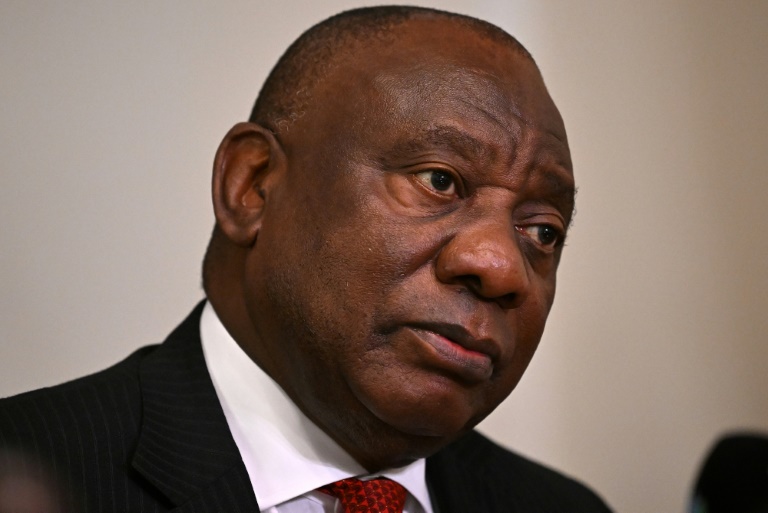
South African President Cyril Ramaphosa has told a probe into a burglary scandal enmeshing him that $580,000 in cash stolen from beneath sofa cushions at his ranch came from a cattle buyer, according to leaked documents on Wednesday.

The sum is part of what the media has reported as a cash haul of $4 million that was stolen at Ramaphosa’s farm — a burglary that he is accused of trying to cover up.

A three-person special panel investigating the affair submitted on Wednesday its report to parliament, which next week will decide whether to push ahead with a vote to impeach the president.

Ramaphosa told the inquiry that the accusations against him are “without any merit,” according to a leak of documents published by local media.

“This matter ought not to be taken any further,” he said in his submission.

However, the leak provided juicy insights into a scandal that has tarnished Ramaphosa’s clean image, imperilling his bid for a second term at the helm of the ruling African National Congress (ANC).

– ‘Cash and cushions’ –

The affair erupted in June after South Africa’s former national spy boss filed a complaint with the police.

It alleged that Ramaphosa had hidden a burglary at his farm at Phala Phala in northeastern South Africa from the authorities.

Instead, he allegedly organised for the robbers to be kidnapped and bribed into silence.

The president has denied any wrongdoing, and spelt out his position at length in the 138-page submission.

“I did not ‘hunt’ for the perpetrators of the theft, as alleged, nor did I give any instructions for this to take place,” he wrote.

Ramaphosa said that $580,000 stashed beneath the cushions was payment made by a Sudanese citizen who had bought buffaloes.

Before the sale, the farm’s manager and Ramaphosa had discussed disposing of buffaloes that were “substandard” and a “financial drain” due to high veterinary and feeding costs, he wrote. 

Staff at the farm initially locked the money in an office safe, Ramaphosa said. 

But the lodge manager then decided that the “safest place” to store it would be under the cushions of a sofa inside Ramaphosa’s residence at the farm, he said. 

– Re-election bid –

Ramaphosa, a 70-year-old former trade union boss who made a fortune in business in post-apartheid South Africa, has two farms.

In his submission, he described his passion for cattle — something that led him in 2017 to write a book called “Cattle of the Ages.” 

Ramaphosa came to power in 2018 on a promise to root out graft after the corruption-stained era of his boss, Jacob Zuma.

He faces elections on December 16 in his bid for a second term as president of the deeply-factionalised ANC.

That position, as head of the dominant party in parliament, is also key to his survival as national president.

Ramaphosa is facing a challenge from Zweli Mkhize, 66, an ex-health minister who resigned from government last year amid graft allegations. 

The special panel was set up in September following a clamour by the opposition.

It was tasked with ascertaining whether there was sufficient evidence to show that the president committed a serious violation of the constitution or the law or a serious misconduct.

Lawmakers will examine the report’s findings in a one-day sitting on December 6, and adopt a resolution, “through a simple majority vote, whether a further action by the House is necessary or not,” said National Assembly speaker Nosiviwe Mapisa-Nqakula.

If so, the next step could be a vote to remove the president, which to be successful would require approval by at least two-thirds of the seats in the assembly.

Mapisa-Nqakula described the handover of the report as “one of the indicative milestones in South Africa’s maturing constitutional democracy.”

It should be published within 24 hours, she said.

Trial in 2016 Ivory Coast attack gets underway

A court in Ivory Coast on Wednesday began the long-awaited trial of 18 people accused of abetting one of West Africa’s bloodiest jihadist attacks — a machine-gun assault on a beach resort in 2016 that left 19 dead.

But only four defendants were physically present for the proceedings in Abidjan, Ivory Coast’s economic hub, an AFP reporter saw.

The others, including the suspected masterminds, are either on the run or being held in Mali, said Aude Rimailho, a lawyer for civilian plaintiffs.

On March 13, 2016, three men wielding assault rifles attacked Grand-Bassam, a tourist complex 40 kilometres (25 miles) east of Abidjan popular with foreigners.

In an operation echoing a jihadist massacre the previous year in Tunisia, the trio stormed the beach and then attacked several hotels and restaurants.

The 45-minute bloodbath ended when the three were shot dead by Ivorian security forces, who themselves suffered three fatalities.

Al-Qaeda’s North African affiliate, Al-Qaeda in the Islamic Maghreb (AQIM), claimed responsibility the same day.

It said the attack was in response to anti-jihadist operations in the Sahel by France and its allies, and targeted Ivory Coast for having handed over AQIM operatives to Mali.

– Terrorism, murder charges – 

Several dozen people were arrested, including three suspected accomplices of the dead attackers, who were detained in Mali.

The charges against the 18 include acts of terrorism, murder, attempted murder, criminal concealment, illegal possession of firearms and ammunition “and complicity in these deeds,” Public Prosecutor Richard Adou said last week.

Nineteen people were killed — nine Ivorians, four French citizens, a Lebanese, a German, a Macedonian, a Malian, a Nigerian and a person who could not be identified.

Thirty-three people of various nationalities were wounded.

The four present in court were identified as Cisse Hantao Ag Mohamed, Kounta Sidi Mohamed, Cisse Mohamed and Barry Hassan.

Rimailho, representing French plaintiffs, said in the runup to the trial that the 18 were “small fry” and cautioned against seeing the proceedings as a chance for closure.

“The people who planned the operation are in Mali,” she said.

The prospects of seeing them on trial there are clouded by “the chill between France and Mali,” she said, referring to a breakdown in relations between Paris and the Malian ruling junta.

Mali is the epicentre of a decade-long jihadist revolt that has shaken the Sahel, claiming thousands of lives and forcing hundreds of thousands to flee their homes.

The attack on Grand-Bassam was the first and deadliest in a string of sporadic attacks on countries lying on the coast of the Gulf of Guinea, south of the Sahel.

In Ivory Coast’s case, the assault had a deeply chilling impact on foreign tourism, an important money-spinner in an economy battered by a post-election conflict in 2010-11 that claimed 3,000 lives.

In January 2017, members of France’s Barkhane anti-jihadist force captured a key suspect, Mimi Ould Baba Ould Cheikh.

He is described by Ivory Coast investigators as one of the instigators of the Grand-Bassam attack and by Burkina Faso as the “operation leader” in an assault on the Burkinabe capital Ouagadougou in January 2016 that claimed 30 lives.

Kenya's Ruto launches flagship credit scheme for poor

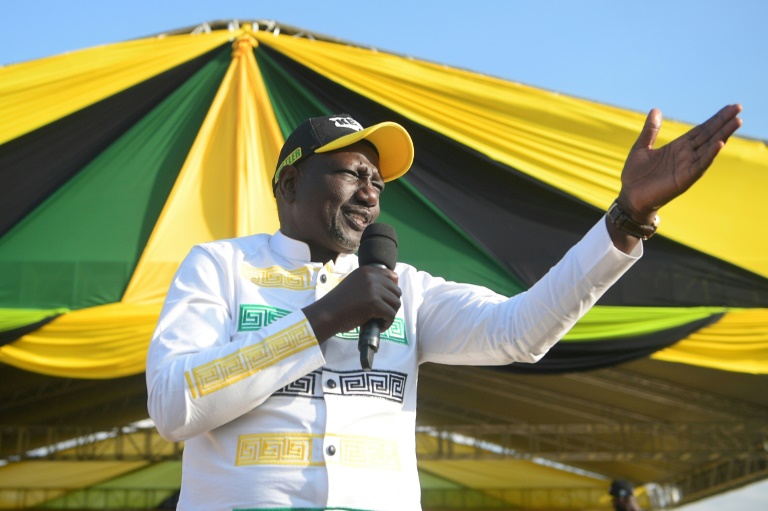
Kenyan President William Ruto on Wednesday launched a low-interest credit scheme to boost financial access for the country’s poorest citizens, fulfilling a key campaign promise made to voters. 

Ruto, who once sold chickens on the roadside, had painted the August 9 poll as a battle between ordinary “hustlers” and elite political dynasties and had vowed to lift the lives of Kenyans battling high inflation and unemployment.

The 50-billion-shilling ($408-million) “hustler fund” will offer personal loans of up to 50,000 shillings to any Kenyan with a cellphone and a mobile money account, with interest charged at eight percent a year.

Ruto said the fund was part of his government’s plan “to create opportunities for millions at the bottom of our economic pyramid to work their way up and fulfil their aspirations.”

“More affordable credit will promote borrower confidence and inject significant amounts of money into productive activity throughout the economy,” he told reporters.

The fund will eventually also offer small-scale enterprises and start-ups access to credit, with those loans set to be launched by the end of May next year.

The new fund will require borrowers to set up a savings account, with five percent of the loan amount automatically going into a personal savings scheme, to which the government will contribute a maximum of 6,000 shillings per year.

Since his inauguration in September, Ruto has struggled to implement his campaign promises in a country facing record drought, a cost of living crisis and a $70-billion debt mountain.

He has slashed food and fuel subsidies introduced by his predecessor Uhuru Kenyatta and pledged to overhaul Kenya’s income tax regime so high earners will have to pay more to help reduce inequality.

Kenya is the most dynamic economy in East Africa but many of its people endure financial hardship, with about a third of the population living in poverty. 

Prices for basic goods rocketed following the Covid pandemic and in response to the war in Ukraine, and unemployment remains a major problem, particularly among the young.

Inflation soared to a five-year high of 9.6 percent in October, while the currency is at record lows at around 122 shillings to the US dollar.

Mozambique court starts ruling on 'hidden debt' graft scandal

A court Wednesday begun handing down verdicts in Mozambique’s biggest corruption scandal, in which the government unleashed a financial earthquake by trying to conceal huge debts.

Judge Efigenio Baptista started reading out the verdicts for the 19 high-profile defendants, who include the son of a former president. The session is expected to last five days.

The scandal arose after state-owned companies in the impoverished country illicitly borrowed $2 billion (1.9 billion euros) in 2013 and 2014 from international banks to buy a tuna-fishing fleet and surveillance vessels.

The government masked the loans from parliament and the public.

When the “hidden debt” finally surfaced in 2016, donors including as the International Monetary Fund (IMF) cut off financial support, triggering a sovereign debt default and currency collapse.

An independent audit found $500 million of the loans had been diverted. The money remains unaccounted for. 

Former finance minister Manuel Chang — who signed off the loans — has been held in South Africa since 2018, pending extradition to the US for allegedly using the US financial system to carry out the fraudulent scheme. 

Former president Armando Guebuza, who was in office when the loans were contracted, testified at the trial. 

He was not been charged himself, but his eldest son Ndambi was in the dock along with 18 other defendants.

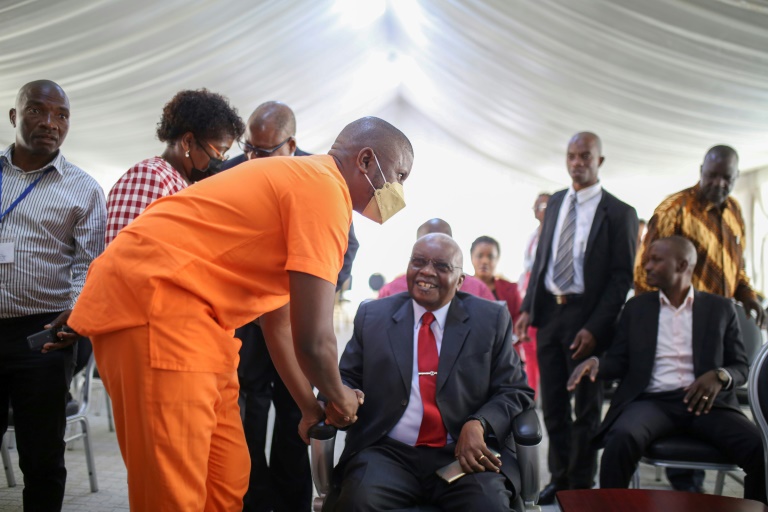
Appearing relaxed, the ex-president attended Wednesday’s proceedings and his son, dressed in orange prison garb and a face mask, walked up to him to greet him. They shook hands and the father smiled.

Judge Baptista listed some of the assets acquired by Guebuza’s son using the $33-million bribe he allegedly received.

They included luxury cars and a 10-million rand ($590,000) mansion in neighbouring South Africa.

Around a hundred people sat in the special courtroom, set up in a white marquee on the grounds of at a high-security jail in the capital Maputo to accomodate the large number of defendants, their lawyers and other parties.

Local civil society organisations and anti-corruption activists are calling for tough sentences.

“The conviction must be strong enough so that it is not annulled or significantly reduced in a second instance court,” said Borges Nhamirre, a researcher at the anti-corruption non-profit watchdog Public Integrity Center.

But Adriano Nuvunga, head of a rights group called the Centre for Democracy and Development, predicted the sentences would be “politically rigged.”

The 19 face charges that include blackmail, counterfeiting, embezzlement and money laundering.

The trial started in August last year and ran until March. It was broadcast live on local TV and radio stations.

In March the IMF awarded $456 million in credit to Mozambique, the first such aid awarded since the debt scandal erupted.

The funds are to help support economic recovery and policies to reduce public debt, according to the IMF.

Angola's Isabel dos Santos says victim of 'political persecution'

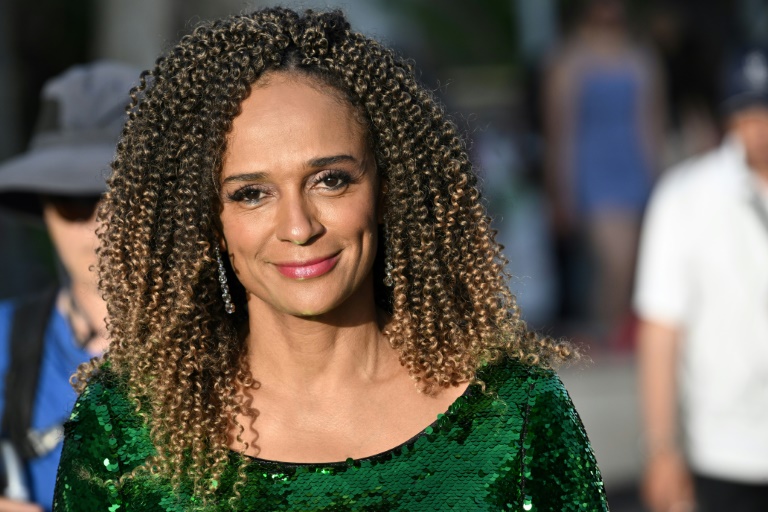
Angolan tycoon Isabel dos Santos says she is the victim of “political persecution” engineered by President Joao Lourenco, her father’s successor at the helm of the oil-rich southern African country.

Angolan public prosecutor Helder Pitta Gros told reporters on Monday that Angola had filed an international arrest warrant for dos Santos.

A draft of the document, released by the Portuguese media, accuses her of fraud.

“There is no doubt that we are in a context of political persecution,” dos Santos, 49, said in an interview broadcast late Tuesday on TVI/CNN Portugal.

“The prosecutor gets his orders directly from the president.”

Dos Santos’ father, Jose Eduardo dos Santos, handed over power to Lourenco in 2017 after a 38-year reign marked by a reputation for corruption and nepotism.

He died this July. The following month, Lourenco, 68, was elected to a second five-year term.

Portugal’s Jornal de Negocios published a draft of the arrest warrant, which said Isabel dos Santos was being sought for fraud against the government, money laundering and criminal association.

In the TV interview, dos Santos said that she was not aware of an “official document.”

According to the leaked arrest warrant, dos Santos allegedly siphoned off money from Angola’s state-run oil company Sonangol, which she had run before her father handed over power. 

The document identifies her main countries of residence as the United Arab Emirates, Portugal or Britain, Portuguese media said.

S.African parole for Hani's killer roiled by appeals, protests

The release from prison of the far-right killer of South African anti-apartheid hero Chris Hani hung in the balance on Wednesday, amid fierce bids to block the move. 

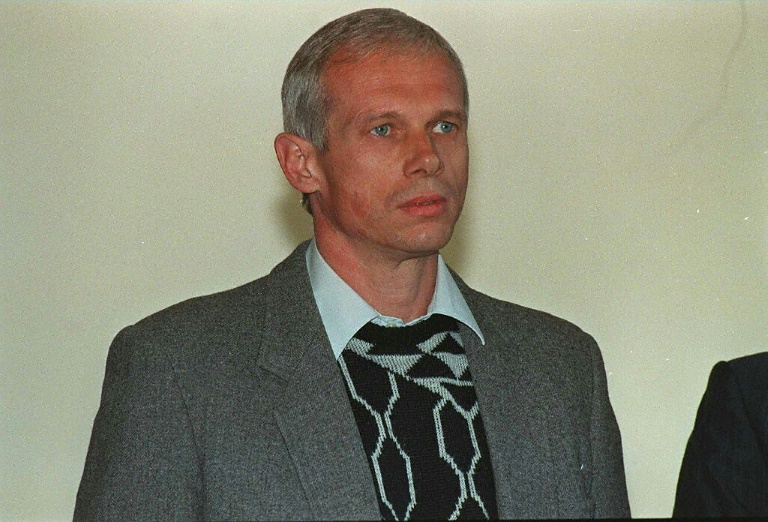
Janusz Walus, a 69-year-old immigrant from then-communist Poland, was to be released by Thursday after being controversially granted parole by the Constitutional Court.

But the decision has ignited angry protests. On Tuesday, Walus was stabbed inside prison.

On Wednesday, the South African Communist Party (SACP), which Hani used to head, said it was petitioning the court to go back on its ruling.

“Yesterday we filed our documents with the Constitutional Court as well as with the High Court, and against the minister of justice to oppose the release,” SACP Secretary-General Solly Mapaila told AFP.

He later explained they were seeking a so-called rescission order, which would “reverse this decision.” 

The party has asked Justice Minister Ronald Lamola to halt execution of the parole order until the petition is heard and concluded.

Mapaila spoke as he led hundreds of demonstrators in front of the Kgosi Mampuru II Correctional Centre in Pretoria where Walus is being held and receiving treatment following Tuesday’s incident.

He was allegedly attacked by another inmate, according to prison authorities which have launched an investigation. Details of his injuries have not been released.

The SACP, a political ally of the ruling African National Congress (ANC), has been leading rolling protests since the weekend. 

– ‘Struggle continues’ –

Protesters, including senior ANC politicians, wore black T-shirts bearing Hani’s portrait captioned “Don’t kill Chris Hani again: The struggle continues”.

Prison officials, armed with rifles and dogs, stood guard behind green metal prison gates as protesters chanted.

Hani, a hugely popular figure and fierce opponent of the apartheid regime was the SACP’s general secretary and chief of staff of Umkhonto we Sizwe, the armed wing of the ANC.

He was shot dead in the driveway of his house on April 10, 1993, in Boksburg, a suburb east of Johannesburg. 

The killing almost plunged South Africa into a race war. 

It occurred just as negotiations to end apartheid were entering their final phase, stoking protests and rioting in black townships that some feared would erupt into civil war.

Then-ANC president Nelson Mandela appeared on national television to appeal for calm, a move that helped ease tensions and open the way to South Africa’s first multi-racial elections the following year.

Walus was quickly arrested after the killing and handed the death sentence — a punishment that was commuted to life imprisonment after the death penalty was abolished in post-apartheid South Africa.

His accomplice Clive Derby-Lewis, who supplied the gun, was released in 2015 on medical parole after 22 years in jail. He died of lung cancer in 2016, aged 80.

A greener ride: West Africans switch on to electric motorbikes

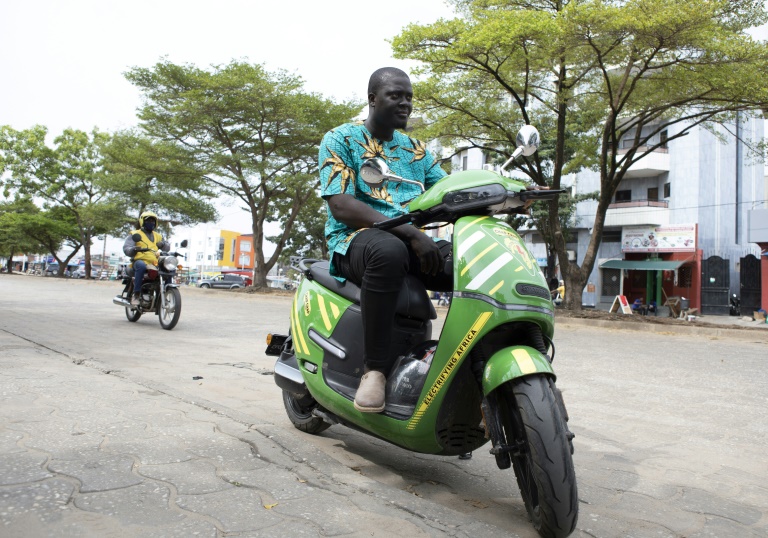
Beninese hairdresser Edwige Govi makes a point these days of using electric motorbike taxis to get around Cotonou, saying she enjoys a ride that is quiet and clean.

Motorcycle taxis are a popular and cheap form of transportation in West Africa. 

But in Benin and Togo, electric models are gaining the ascendancy over petrol-powered rivals.

Customers are plumping for environmentally-friendlier travel and taxi drivers are switching to machines that, above all, are less expensive to buy and operate. 

“They are very quiet and do not give off smoke,” says Govi, 26, who had just completed a half-hour run across Benin’s economic hub.

In African cities, road pollution is becoming a major health and environment issue, although for taxi drivers, the big attraction of electric motorcycles is the cost.

“I manage to get by,” said Govi’s driver, Octave, wearing the green and yellow vest used by Benin’s zemidjan taxis — a word meaning “take me quickly” in the local Fon language. 

“I make more money than with my fuel motorcycle.”

Local environmentalist Murielle Hozanhekpon said the electric motorbikes do have some disadvantages “but not on an environmental level”.

Alain Tossounon, a journalist specialising in environmental issues, said electric bikes were prized by taxi drivers as they were less expensive to maintain or run.

The cost factor has become more and more important in the face of an explosion of fuel prices this year triggered by Russia’s invasion of Ukraine.

– Credit carrot –

In Benin, an electric motorcycle costs between 490,000 CFA (750 euros) and 884,000 CFA (1,345 euros) depending on the model. 

But this price difference is only one factor which explains the trend towards “silent motorcycles,” said Tossounon. 

To allow these motorcycles to be competitive with gasoline motorcycles, Beninese authorities have decided to exempt electric vehicles and hybrids from VAT and customs duties. 

For a few months in Cotonou, at least two companies have been offering electric models. They say they are overwhelmed with requests and each shows strong sales in their own company figures. 

The manufacturer Mauto launched in mid-2022 in Benin and Togo, where it said it has already put 2,900 motorcycles into circulation.

Many taxi drivers are also lured by flexible credit deals — instead of making a hefty one-off purchase, many are able to get loans that they pay off monthly, weekly or even daily. 

“The queue here is from morning to evening. Every hour, at least two roll out of the shop,” said Anicet Takalodjou, a vendor from Mauto’s competitor Zed-Motors. 

Oloufounmi Koucoi, 38, director of the company delivering the models to Cotonou, said they had put thousands of e-motorcycles in circulation.

“The number is growing every day.” 

By assembling the motorcycles locally in Benin, his electric models are cheaper than if they had been imported. 

To attract customers, his company, Zed-Motors, offers solar panels to facilitate recharging for those who do not have electricity at home. 

For decades, Benin and its economy have struggled with power cuts. The situation has improved, but outages remain common.

In rural areas, especially, electricity remains largely inaccessible.

 – Battery change – 

In Lome, capital of neighbouring Togo, Octave de Souza parades proudly through the streets on his brand-new green electric motorcycle made by Mauto. 

One point in particular makes him and his wallet happy: no more fuelling up.

“All you need to do is change the battery,” he smiled. “There are sales outlets, you go there and it’s exchanged for you.” 

A recharge costs 1,000 CFA ($1.50 / euros) and can provide three days’ mobility. For the same price, Octave said, he would only be able to ride for one day using petrol, which is subsidised by the government.

Local authorities also are encouraging the switch to electric in a bid to replace old, highly polluting motorcycles. 

But some drivers remain wary of electric models, citing range anxiety — the worry of coming to a halt with a flat battery.

Taxi driver Koffi Abotsi said he struggled with the “stress” of having to quickly find a charging station so as not to break down. 

“This sometimes leads us to swap (the battery) even with 10 percent or 15 percent charge remaining so as not to have any unpleasant surprises along the way.”

S.African panel files report into Ramaphosa's cover-up scandal

A special panel investigating whether South African President Cyril Ramaphosa should face impeachment for allegedly covering up a crime submitted its findings to parliament Wednesday, two weeks before he faces a crucial party election.

The three-person team, led by an ex-chief justice, handed its report to National Assembly speaker Nosiviwe Mapisa-Nqakula at a televised ceremony in Cape Town.

“The handover of the report… marks one of the indicative milestones in South Africa’s maturing constitutional democracy,” Mapisa-Nqakula said upon receiving the two-volume report.

The panel was set up in September to probe the 2020 alleged cover-up of a theft at Ramaphosa’s farmhouse — a scandal that has tarnished the president’s reputation and overshadowed his bid for re-election at the helm of the ruling African National Congress (ANC) party.

It was tasked with ascertaining whether there was sufficient evidence to show that the president committed a serious violation of the constitution or the law or a serious misconduct, Mapisa-Nqakula said. 

Ramaphosa has denied any wrongdoing.

The head of the panel, retired chief Justice Sandile Ngcobo, explained the scope of its investigation was limited to the information submitted by lawmakers. 

“That’s how the process unfolded. It was done I hope without fear and prejudice,” he said. 

Speaker Mapisa-Nqakula said the report will be published within 24 hours. 

Lawmakers will then examine the findings in a one-day sitting on December 6, where it will adopt a resolution, “through a simple majority vote, whether a further action by the House is necessary or not,” said the speaker.

– ANC leadership election –

The outcome could lead to a potential vote to remove the president, which to be successful would require a two-thirds majority in the National Assembly, where the ANC holds most seats.

Earlier this month, presidential spokesman Vincent Magwenya told journalists that Ramaphosa would “gladly step aside” if he were to be criminally charged.

The report’s filing comes only two weeks before the ANC, which has been in power since the end of apartheid, and is now deeply factionalised, convenes to elect new leadership.

Ramaphosa, 70, is facing a challenge from Zweli Mkhize, 66, an ex-health minister who resigned from government last year amid graft allegations. 

Whoever wins is likely to be the head of state after the 2024 national elections, if the ANC – whose support has been declining in recent years — wins that vote.

The scandal erupted in June after South Africa’s former national spy boss filed a complaint with the police, alleging that in 2020 Ramaphosa had concealed a multi-million-dollar cash theft at his farm in the northeast of the country.

The complaint alleged that Ramaphosa hid the robbery from the authorities and instead organised for the robbers to be kidnapped and bribed into silence.

Ramaphosa came to power in 2018 on a promise of tackling graft. 

He succeeded Jacob Zuma, who was forced to resign by the ANC on the back of a string of corruption scandals.

Close Bitnami banner
Bitnami