Africa Business

US charges three for supporting Cameroon separatists

The US Justice Department announced charges Monday against three men who allegedly  helped fund separatist fighters in Cameroon and supported the 2020 kidnapping of Catholic cardinal Christian Tumi.

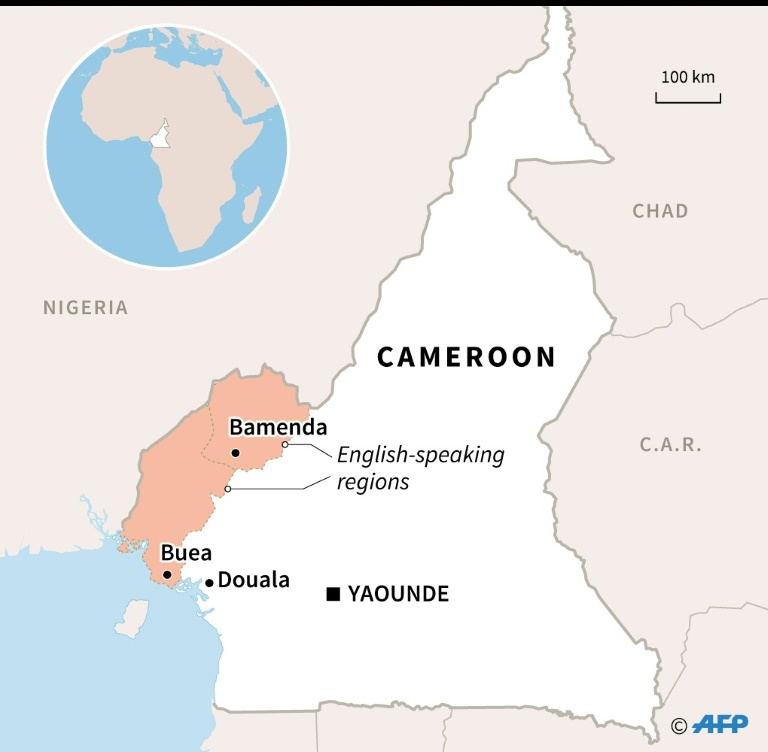
The three men, US citizens of Cameroon origin,  are accused of raising $350,000 for arms and bomb-making materials for the separatist Ambazonian Restoration Forces operating in Cameroon’s English-speaking northwest region.

The funds also supported kidnappings by the separatists, including of Tumi and Sehm Mbinglo, a traditional chief in the troubled region.

Both were freed within days. Tumi, who died in 2021, had frequently sought to mediate between the government and the separatists in the mainly French-speaking country.

The Justice Department said Claude Chi, 40, of Lee’s Summit, Missouri; Francis Chenyi, 49, of St. Paul, Minnesota; and Lah Nestor Langmi, 46, of Buffalo, New York, were arrested Monday on charges of conspiracy to provide material support to support kidnappings and use weapons of mass destruction in a foreign country.

Each man held a senior position in an organization that supported and directed the Ambazonian Restoration Forces, according to the Justice Department.

The three “solicited and raised funds for equipment, supplies, weapons and explosive materials to be used in attacks against Cameroonian government personnel, security forces and property, along with other civilians believed to be enabling the government,” the Justice Department said in a statement.

They also conspired with people in Cameroon to kidnap civilians for ransom, it said.

It said they raised the funds from donations by others in the United States and other countries.

Cameroon’s Northwest and Southwest regions have been gripped by conflict since separatists declared independence in 2017 after decades of grievances at perceived discrimination by the francophone majority.

The conflict has claimed more than 6,000 lives and forced more than a million people to flee their homes, according to the International Crisis Group. 
C.Africa says border nation bombed its troops and Russian allies

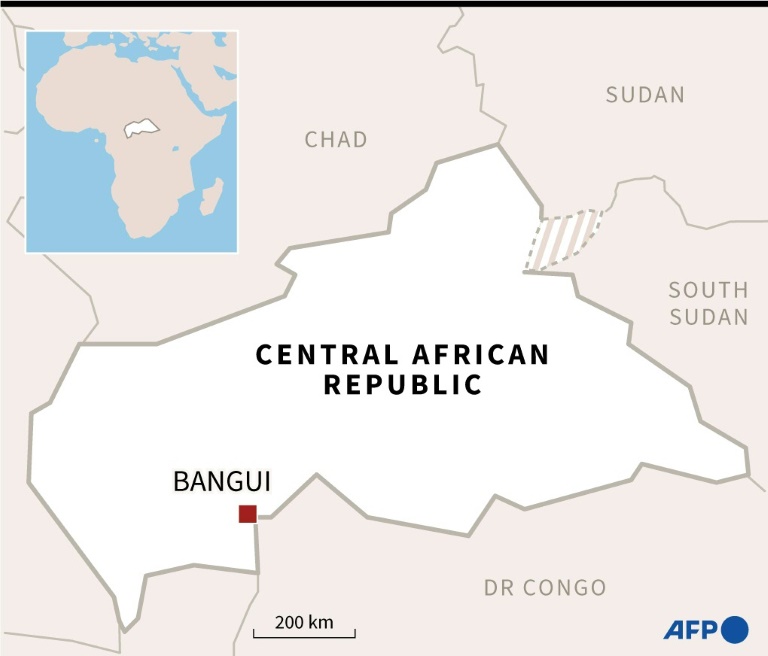
The Central African Republic threatened Monday to take reprisals after an aircraft flew in from a neighbouring country in the middle of the night and bombed CAR troops and their Russian paramilitary allies.

The government said the plane targeted a military base and “dropped explosives on the town” of Bossangoa, in the north, but caused only material damage.

The aircraft flew back out of CAR after the raid before three in the morning, the government said in a statement.

“The explosives caused major material damage,” it said.

“This plane, after committing these crimes … headed north … before crossing our border.”

Chad lies north of Bossangoa, a town which was in rebel hands until recently, and relations with the CAR have been tense recently.

The government said the air raid “could not go unpunished” and an inquiry had been opened “to determine responsibilities” for the “ignoble act perpetrated by the enemies of peace”.

Cameroon also has a border with CAR, but that lies to the west while South Sudan is much further off to the northeast.

Bangui has accused Chad of allowing armed groups to use its territory as a rear base and to have given asylum to their main leader Francois Bozize who was CAR president from 2003-2013.

N’Djamena in turn alleged a Chadian rebel had sought the backing of Russia paramilitaries in CAR, before rallying to the regime.

In May last year, Chad charged CAR soldiers with “war crimes” over the killing six of its soldiers at a border post. And in December 2021 a Chadian soldier disappeared with troops from both sides exchanging fire along the border.

– ‘War crimes’ –

“A plane bombed the Russians’ base at 02:50 in the morning,” regional water and forestry director Etienne Ngueretoum told AFP from Bossangoa by telephone.

“We heard at least four bombs but as it was dark we didn’t see the plane which had no lights and made little noise,” he added.

“The blasts were frightening, I’m OK I just got a scratch on the right leg from the shrapnel.

“I found nails and bits of iron in the roof of my house which is no longer inhabitable,” Ngueretoum said after  two bombs exploded in  his garden, adjacent to the base.

The town’s mayor Pierre Denamguere also confirmed the attack to AFP by telephone.

“It was a plane without lights and we couldn’t identify. The target was the cotton factory which the Russians and the armed force use as a base. There’s not too much damage,” he said.

The CAR is one of the poorest and most unstable countries in the world, experiencing  few moments of peace since it became independent from France in 1960.

It plunged into bloody civil conflict in 2012 that was eased by an intervention by former colonial power France, and the deployment of a UN peacekeeping mission.

In 2020, a coalition of rebels advanced on the capital Bangui, threatening to oust the government.

President Faustin Archange Touadera called Moscow for help and  hundreds of paramilitaries were deployed on top of hundreds already in the country since 2018 to help repel the threat.

Large swaths of territory have been reclaimed from the rebels who nonetheless continue to carry out sporadic attacks on the military, particularly in the area between Bossangoa and the Chadian border.

The Russians are described by Bangui as military advisers but by France, the UN and others as mercenaries from the Kremlin-backed Wagner group.

Eight civilians killed as hours-long Somalia hotel siege ends

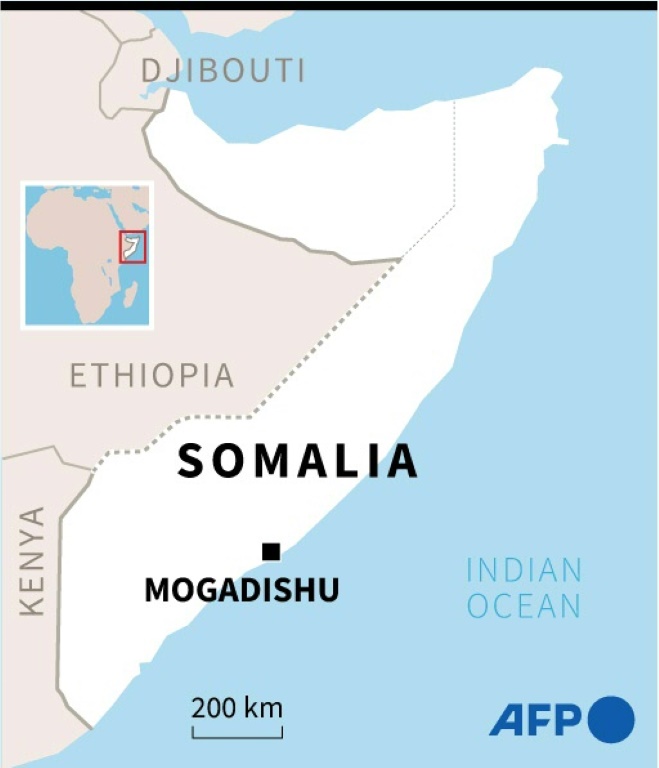
Somali security forces on Monday ended an hours-long siege by Al-Qaeda-linked insurgents who killed eight civilians after storming a prominent hotel in the capital Mogadishu, the police said.

Al-Shabaab militants attacked the Villa Rose, a hotel popular with politicians and government officials, in a hail of bullets and explosions at around 8:00 pm (1700 GMT) on Sunday.

Around 21 hours later, national police spokesman Sadik Dudishe told reporters that “the clearance operation in the Villa Rose hotel has ended.”

The jihadists “killed eight civilians who stayed in the hotel and the security forces succeeded in rescuing about 60 civilians, no one among the civilians was wounded,” he added.

One member of the security forces also died in the attack, he said.

“There were about six attackers involved — five of them were shot and killed by the security forces and one of them detonated himself.” 

The authorities have given no details about the identities of the casualties.

The heavily-guarded Villa Rose is located in a fortified area of the capital a few blocks from the office of President Hassan Sheikh Mohamud.

Its website describes the hotel as the “most secure lodging arrangement in Mogadishu” with metal detectors and a high perimeter wall. 

Al-Shabaab, which has been trying to overthrow Somalia’s central government for 15 years, claimed responsibility for the attack.

– ‘All-out war’ –

In a statement late on Sunday, the African Union Transition Mission in Somalia (ATMIS), a 20,000-strong military force drawn from across the continent, praised the “swift” security response to the assault.

Al-Shabaab has intensified attacks against civilian and military targets as Somalia’s recently elected government has pursued a policy of “all-out war” against the Islamists.

The security forces, backed by local militias, ATMIS and US air strikes, have driven Al-Shabaab from central parts of Somalia in recent months, but the offensive has drawn retribution.

On October 29, two cars packed with explosives blew up minutes apart in Mogadishu followed by gunfire, killing at least 121 people and wounding 333 others.

It was the deadliest attack in the fragile Horn of Africa nation in five years.

At least 21 people were killed in a siege of a Mogadishu hotel in August that lasted 30 hours before security forces were able to overpower the militants inside.

– Closely guarded zone –

The latest hotel siege has raised questions as to how the militants managed to reach the closely guarded heart of Mogadishu’s administrative district undetected. 

Armed checkpoints block roads into the area, which also hosts a detention facility for high-value terror suspects overseen by the National Intelligence and Security Agency.

Somalia’s environment minister, Adam Aw Hirsi, who lives in the Villa Rose, said the attack was not a demonstration of an “emboldened” Al-Shabaab.

“To the contrary, the desperate move shows that the terror kingpins running for dear life are throwing their last kicks. We’ll not let up the war,” he posted on Twitter.

The United Nations said earlier this month that at least 613 civilians had been killed and 948 wounded in violence this year in Somalia, mostly caused by improvised explosive devices (IEDs) attributed to Al-Shabaab. 

The figures were the highest since 2017 and a rise of more than 30 percent from last year.

Truce holds in east DR Congo despite ambushes

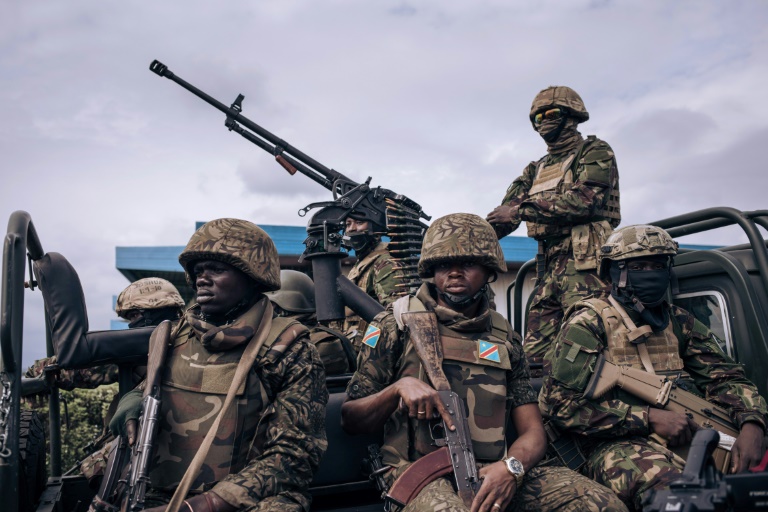
A ceasefire between government troops and M23 rebels appeared to be holding for a third day on Monday in the Democratic Republic of Congo (DRC), despite clashes between rival militias, local residents told AFP.

Under the ceasefire that came into force on Friday night, the March 23 group, which has seized swathes of territory, was to withdraw from “occupied zones,” failing which an East African regional force would intervene.

But by Monday local people reported no sign of a rebel pullout of those zones.

Over the weekend, sporadic clashes occurred between the mainly Congolese Tutsi M23 fighters and Hutu factions such as the Democratic Forces for the Liberation Rwanda (FDLR).

“During the night, an M23 vehicle was caught in an ambush” at Kinyandonyi village in Rutshuru territory, a hospital source said Monday.

“There were deaths but it’s difficult to know more.”

On Sunday, the FDLR, present in the sprawling DRC since the 1994 genocide of Tutsis in neighbouring Rwanda, carried out another attack 30 kilometres 18 miles) away at Biruma, a local resident said.

On Saturday, six civilians died when a local ethnic militia and the FDLR clashed at Kisharo, close to the same area, a hospital source said.

Despite fighting between the M23 and the army continuing right up to the ceasefire deadline north of the provincial capital Goma, no clashes have since been reported between the two, according to locals telephoned by AFP.

The frontlines have remained calm, they said.

AFP was unable to independently confirm the accounts from local people.

The March 23 group had been dormant for years, but took up arms again late last year accusing government of failing to honour a disarmament deal.

M23 has overrun large tracts of mountainous Rutshuru territory north of Goma, a city of one million which they briefly captured 10 years ago.

The advance on Goma has halted over the last two weeks but the rebels had still been gaining  ground on other front, in the west towards Masisi and in the northeast.

The DRC accuses neighbouring Rwanda of supporting the rebels — charges Kigali denies and in turn alleges Kinshasa works with the FDLR.

The M23 is among scores of armed groups that have turned eastern DRC into one of Africa’s most violent regions.

Many are legacies of two wars before the turn of the century that sucked in countries from the region and left millions dead.

Chad lawyers to stop work over mass trial of protesters

Lawyers in Chad have vowed to stop work during a mass trial, due to start Tuesday, of more than 400 people detained over deadly anti-government protests.

Officially, around 50 people — including 10 members of the security forces — died when police opened fire on demonstrators in the capital N’Djamena and several other cities on October 20.

But opposition groups say the actual toll was much higher, with unarmed civilians massacred.

The trial of the 401 detainees is set to run until December 4 inside the high-security prison of Koro Toro in the middle of the desert, more than 600 kilometres (370 miles) northeast of the capital.

Prosecutors say the accused face several charges including taking part in an unauthorised gathering, destroying belongings, arson and disturbing public order.

According to the public prosecutor, 621 people were arrested in N’Djamena after the protests, all of whom were transferred to Koro Toro.

Investigations are ongoing for the 220 other people, including 83 minors, it said.

The Chad Bar Association in a statement lashed the trial as “parody of justice.”

The detainees had been “kidnapped” and “deported” to Koro Toro in the absence of  any lawyers, it said.

The trial in the remote prison “violates procedural regulations,” it said.

Members of the association “have decided to stop all activity” for the duration of the trial, it said.

Opposition groups had encouraged protests on October 20 to mark the date when the ruling military had initially promised to cede power — a timeline General Mahamat Idriss Deby Itno has now extended by two years.

The 38-year-old general accused the demonstrators of “insurrection” and attempting to stage a coup.  

He took power when his father, Idriss Deby Itno, who ruled for 30 years, died during an operation against rebels in April 2021.

Kenyan Sevens players to receive unpaid wages: sports minister

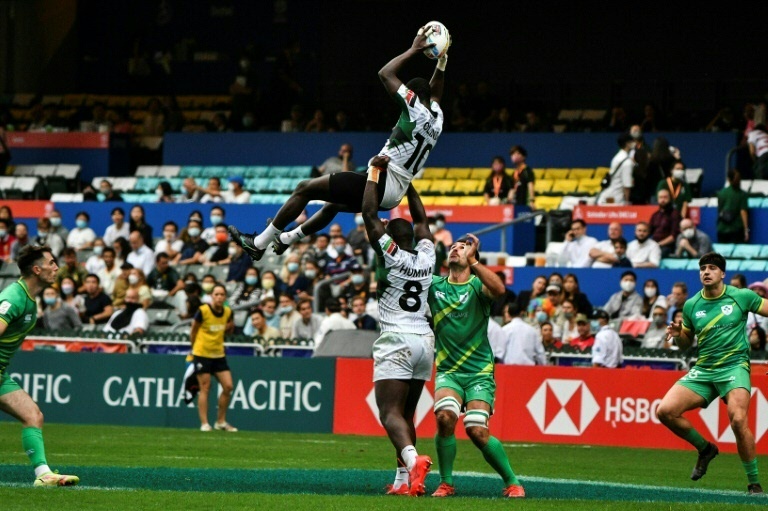
Kenya’s Rugby Sevens players, who launched an appeal for donations to pay their bills, will be paid their overdue salaries this week ahead of the season-opening Dubai series, the country’s sports minister said Monday.

On Sunday, a number of Shujaa stars shared a fundraiser on social media, claiming the team has not been paid in months and describing a “desperate situation” in which players were eating into their savings to cover daily costs.

The appeal came as Kenya prepares for the Dubai Sevens series on December 2-3 and the Cape Town fixture on December 9-11.

Sports Minister Ababu Namwamba, who met the Kenya Rugby Union (KRU) board on Monday to discuss the issue, said the players, who left for Dubai on Sunday night, would get their dues to enable them to compete effectively on the pitch.

“I am authorising this support because I feel the pain of the players,” he told reporters, adding that the team would get their unpaid wages “before they play the first match on Friday.”

“I want really to tell the rugby players that what has happened around your situation is shameful, not just to you but also to the country — for the brand that rugby is to the country. We are not going to allow this to happen again.”

“Our players deserve better,” he added.

Kenya Sevens have struggled to attract sponsorship and it is not the first time the side have been strapped for cash.

The team publicly protested against unpaid salaries in 2018 during the World Rugby Sevens Series in Paris, prompting the government to withdraw its sponsorship deal for the team.

Namwamba urged KRU officials to plan ahead and make financial requests to the government in advance.

“We cannot continue to manage sport by crisis,” he said. 

“Especially in a scenario where we have a calender, and we know what’s going to happen in a year’s time and we wait (until the) last minute to run helter-skelter like headless chickens.”

Eight civilians killed as hours-long Somalia hotel siege ends

Somali security forces on Monday ended an hours-long siege by Al-Qaeda-linked insurgents who killed eight civilians after storming a prominent hotel in the capital Mogadishu, the police said.

Al-Shabaab militants attacked the Villa Rose, a hotel popular with politicians and government officials, in a hail of bullets and explosions at around 8:00 pm (1700 GMT) on Sunday.

Around 21 hours later, national police spokesman Sadik Dudishe told reporters that “the clearance operation in the Villa Rose hotel has ended.”

The jihadists “killed eight civilians who stayed in the hotel and the security forces succeeded in rescuing about 60 civilians, no one among the civilians was wounded,” he added.

One member of the security forces also died in the attack, he said.

“There were about six attackers involved — five of them were shot and killed by the security forces and one of them detonated himself.” 

The authorities have given no details about the identities of the casualties.

The heavily-guarded Villa Rose is located in a fortified area of the capital a few blocks from the office of President Hassan Sheikh Mohamud.

Its website describes the hotel as the “most secure lodging arrangement in Mogadishu” with metal detectors and a high perimeter wall. 

Al-Shabaab, which has been trying to overthrow Somalia’s central government for 15 years, claimed responsibility for the attack.

– ‘All-out war’ –

In a statement late on Sunday, the African Union Transition Mission in Somalia (ATMIS), a 20,000-strong military force drawn from across the continent, praised the “swift” security response to the assault.

Al-Shabaab has intensified attacks against civilian and military targets as Somalia’s recently elected government has pursued a policy of “all-out war” against the Islamists.

The security forces, backed by local militias, ATMIS and US air strikes, have driven Al-Shabaab from central parts of Somalia in recent months, but the offensive has drawn retribution. 

On October 29, two cars packed with explosives blew up minutes apart in Mogadishu followed by gunfire, killing at least 121 people and wounding 333 others.

It was the deadliest attack in the fragile Horn of Africa nation in five years.

At least 21 people were killed in a siege of a Mogadishu hotel in August that lasted 30 hours before security forces were able to overpower the militants inside.

– Closely guarded zone –

The latest hotel siege has raised questions as to how the militants managed to reach the closely guarded heart of Mogadishu’s administrative district undetected. 

Armed checkpoints block roads into the area, which also hosts a detention facility for high-value terror suspects overseen by the National Intelligence and Security Agency.

Somalia’s environment minister, Adam Aw Hirsi, who lives in the Villa Rose, said the attack was not a demonstration of an “emboldened” Al-Shabaab.

“To the contrary, the desperate move shows that the terror kingpins running for dear life are throwing their last kicks. We’ll not let up the war,” he posted on Twitter.

The United Nations said earlier this month that at least 613 civilians had been killed and 948 wounded in violence this year in Somalia, mostly caused by improvised explosive devices (IEDs) attributed to Al-Shabaab. 

The figures were the highest since 2017 and a rise of more than 30 percent from last year.

Kudus double for Ghana sinks South Korea in World Cup thriller

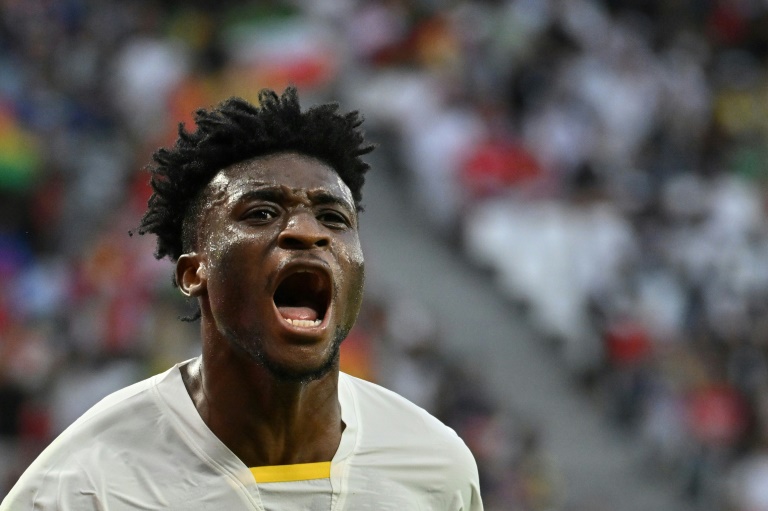
Mohammed Kudus scored twice as Ghana beat South Korea 3-2 in a pulsating World Cup encounter on Monday to keep their World Cup hopes alive and leave Paulo Bento’s side facing an early exit.

Mohammed Salisu opened the scoring against the run of play midway through the first half at Education City Stadium and Ajax midfielder Kudus doubled the Black Stars’ lead.

But the Asian side, who looked toothless in the first half, roared back after the break, pulling level through a quickfire double from forward Cho Gue-sung either side of the hour mark.

Ghana looked shell-shocked as the Korean fans celebrated wildly but they were back in front in the 68th minute when Kudus finished calmly at the back post after Inaki Williams failed to connect with a cross from the left.

The result takes Ghana into second in Group H on three points.

Cristiano Ronaldo’s Portugal will have six points and secure qualification for the last 16 if they beat Uruguay in the later kick-off in Qatar.

Despite their efforts, South Korea look likely to crash out of the tournament at the group stage for the third straight World Cup.

The Asian side, captained by Son Heung-min, were quicker to settle, forcing a succession of corners as they dominated possession but they were unable to fashion a shot on target in the entire first half.

Son looked uncomfortable in the black face mask he is wearing after having surgery for a facial injury he suffered while playing for Spurs, constantly readjusting it.

Ghana, who lost their opener 3-2 to Portugal, struggled to gain a foothold in the game.

But the match totally changed complexion in the 24th minute when the impressive Jordan Ayew, playing down the left for Ghana, swung in a cross following a free-kick.

South Korea failed to clear and Southampton centre-back Salisu finished with his left foot, sparking wild scenes of celebration among the Ghana fans decked out in red, white and green.

The goal revitalised the African nation, who reached the quarter-finals in 2010, with South Korea struggling to deal with their physicality and direct approach.

Now playing with flair and confidence, Ghana poured forward and doubled their lead in the 34th minute when Kudus powered a header home after a pin-point Jordan Ayew cross from the left.

Captain Andre Ayew — the brother of Jordan — called his men into a team huddle on the pitch and the players got soaked by the sprinklers before they went off for their half-time beak.

The Koreans at last produced an effort on target in the 53rd minute, when goalkeeper Lawrence Ati Zigi punched away a header from Cho.

But the Korean found the net just minutes later, heading home a cross from substitute Lee Kang-in, who had just been brought on by Bento.

And they were level just three minutes later when Cho headed home Kim Jin-su’s ball from the left, sparking scenes of delirium among the Korean fans.

Now Ghana were rocking but they restored their lead midway through the second half through Kudus.

South Korea came back again. Zigi was forced into a scrambling save to push away a free-kick while Salisu cleared off the line.

The fourth official held up a board for 10 minutes of added time. South Korea continued to pour forward but they could not find the net and a number of their players collapsed to the turf at the final whistle.

Bento was sent off for protesting at the end of the match.

Truce holds in east DR Congo despite ambushes

A ceasefire between government troops and M23 rebels appeared to be holding for a third day on Monday in the Democratic Republic of Congo (DRC), despite clashes between rival militias, local residents told AFP.

Under the ceasefire that came into force on Friday night, the March 23 group, which has seized swathes of territory, was to withdraw from “occupied zones,” failing which an East African regional force would intervene.

But by Monday local people reported no sign of a rebel pullout of those zones.

Over the weekend, sporadic clashes occurred between the mainly Congolese Tutsi M23 fighters and Hutu factions such as the Democratic Forces for the Liberation Rwanda (FDLR).

“During the night, an M23 vehicle was caught in an ambush” at Kinyandonyi village in Rutshuru territory, a hospital source said Monday.

“There were deaths but it’s difficult to know more.”

On Sunday, the FDLR, present in the sprawling DRC since the 1994 genocide of Tutsis in neighbouring Rwanda, carried out another attack 30 kilometres 18 miles) away at Biruma, a local resident said.

On Saturday, six civilians died when a local ethnic militia and the FDLR clashed at Kisharo, close to the same area, a hospital source said.

Despite fighting between the M23 and the army continuing right up to the ceasefire deadline north of the provincial capital Goma, no clashes have since been reported between the two, according to locals telephoned by AFP.

The frontlines have remained calm, they said.

AFP was unable to independently confirm the accounts from local people.

The March 23 group had been dormant for years, but took up arms again late last year accusing government of failing to honour a disarmament deal.

M23 has overrun large tracts of mountainous Rutshuru territory north of Goma, a city of one million which they briefly captured 10 years ago.

The advance on Goma has halted over the last two weeks but the rebels had still been gaining  ground on other front, in the west towards Masisi and in the northeast.

The DRC accuses neighbouring Rwanda of supporting the rebels — charges Kigali denies and in turn alleges Kinshasa works with the FDLR.

The M23 is among scores of armed groups that have turned eastern DRC into one of Africa’s most violent regions.

Many are legacies of two wars before the turn of the century that sucked in countries from the region and left millions dead.

Comoros ex-president Sambi jailed for life for 'high treason'

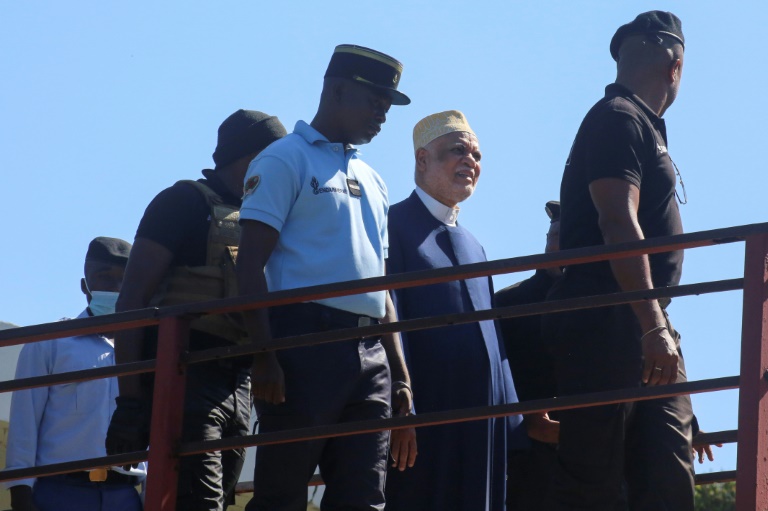
A court in the Comoros on Monday handed down a life sentence for high treason to ex-president Ahmed Abdallah Sambi, who was convicted of selling passports to stateless people living in the Gulf.

Sambi, 64, an arch rival of President Azali Assoumani, was sentenced by the State Security Court, a special judicial body whose rulings cannot be appealed.

“Sambi is sentenced to life imprisonment,” court president Omar Ben Ali said, reading out the verdict, which also stripped the former leader of the right to vote and hold public office.

“The court orders his property and assets to be confiscated to the benefit of the public treasury.”

Sambi was convicted in absentia after refusing to attend proceedings.

He briefly appeared at the first hearing, where his lawyers unsuccessfully asked the judge to recuse himself as he had previously sat on the panel that indicted their defendant.

“The composition of the court is illegal. I do not want to be tried by this court,” Sambi said before boycotting further sessions.

“This sentence is entirely consistent with what we have seen so far, a judicial charade guided by members of the government which ended in life imprisonment for the biggest political opponent of the current regime”, Sambi’s daughter Tisslame Sambi told AFP.

Sambi, who led the small Indian Ocean archipelago between 2006 and 2011, pushed through a law in 2008 allowing the sale of passports for high fees.

The scheme aimed at the so-called bidoon — an Arab minority numbering in the tens of thousands who cannot obtain citizenship.

The former president was accused of embezzling millions of dollars under the scheme.

“He betrayed the mission entrusted to him by the Comorans,” public prosecutor Ali Mohamed Djounaid told the court last week as he requested a life sentence.

– ‘Peanuts’ –

The prosecution said the loss to the public purse amounted to more than $1.8 billion — more than the impoverished nation’s GDP.

“They gave thugs the right to sell Comoran nationality as if they were selling peanuts,” said Eric Emmanuel Sossa, a lawyer for civilian plaintiffs.

But Sambi’s French lawyer Jean-Gilles Halimi said “no evidence” of missing money or bank accounts had been put forward to suggest a crime.

Sambi was originally prosecuted for corruption, but the charges were reclassified as high treason, a crime that “does not exist in Comoran law,” Halimi said. 

The former president had already spent four years behind bars before he faced trial, far exceeding the maximum eight months. He was originally placed under house arrest for disturbing public order.

Another lawyer, Mahamoudou Ahmada, said the court went beyond prosecutors’ requests in stripping his client of his civil rights.

Government secretary general Daniel Ali Bandar said he was “satisfied” that the trial had gone ahead “peacefully” but was waiting to see what would happen in civil proceedings. 

“More than prison sentences, Comorans want to know what happened to the millions of euros that have been embezzled,” he said.

Among other defendants, French Syrian businessman Bashar Kiwan, who had accused the government of seeking to pressure him into testifying against Sambi — something denied by the presidency — was sentenced to 10 years.

Former vice president Mohamed Ali Soilihi, the runner-up in a disputed 2016 vote, was handed a 20-year jail term. 

Both men were convicted in absentia. The authorities issued international arrest warrants for both men. 

– Troubled nation –

Sambi studied in Saudi Arabia, Sudan and in a theological school in Iran, and typically dressed in the traditional garb of Iranian clerics — a style that gave him the nickname of “ayatollah.” 

A former French archipelago of three islands of some 900,000 people located northwest of Mozambique, the Comoros has endured years of political turmoil.

Since independence in 1975, the country has endured more than 20 attempted coups, four of which were successful.

Assoumani seized power in 1999 and was re-elected in 2016 in a vote marred by violence and allegations of irregularities.

He was able to extend his term thanks to a controversial referendum in 2018 that changed the constitution.

Close Bitnami banner
Bitnami