Africa Business

Tunisia ex-speaker in court again over alleged jihadist links

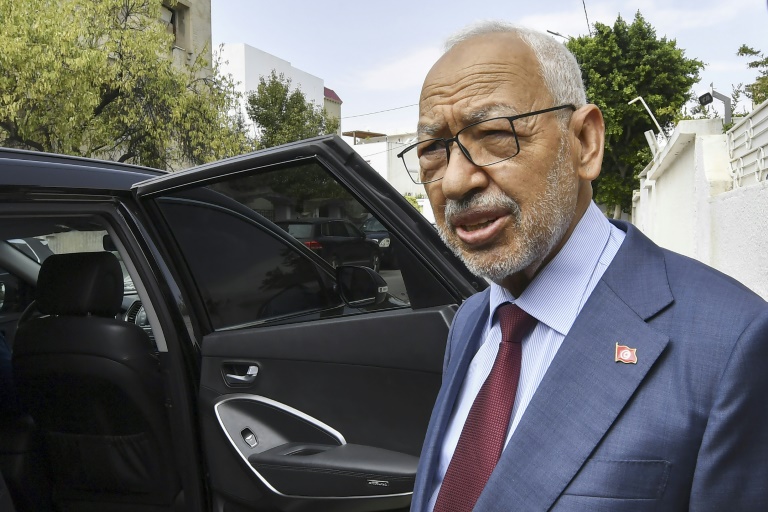
The speaker of Tunisia’s dissolved parliament appeared on Monday before a judge investigating accusations his party helped Tunisian jihadists travel to fight in Iraq and Syria.

Rached Ghannouchi, an arch-rival of President Kais Saied and also head of the Islamist-inspired Ennahdha party, arrived in the morning at the anti-terror court in a suburb of the capital Tunis, said one of his lawyers, Mokhtar Jemai.

At the end of the hearing, the judge is expected to decide whether or not to charge the 81-year-old.

Several other Ennahdha officials have been questioned on the “shipment of jihadists” case since Saied sacked the Ennahdha-supported government and seized full executive authority in July 2021.

After Tunisia’s 2011 revolt which toppled dictator Zine el Abidine Ben Ali and sparked the Arab Spring, thousands of Tunisians joined jihadist groups in neighbouring Libya as well as the Islamic State group in its strongholds in Iraq and Syria.

Rivals of Ennahdha, which dominated Tunisian politics from 2011 until Saied’s power grab, accuse the party of helping them leave.

The party has repeatedly rejected those accusations as “fabricated” and says authorities are trying to distract public attention from “economic and social concerns and the deterioration of people’s living conditions”.

Ghannouchi also appeared before a judge on November 10 as part of a case involving money-laundering and “incitement to violence”.

Four dead as hotel siege in Somali capital enters 18th hour

Somali forces closed in on Monday on Al-Shabaab militants laying siege to a popular hotel in the capital, Mogadishu, where at least four people have been killed in an ongoing attack.

The crackle of gunfire could still be heard coming from the besieged Villa Rose 18 hours after the Islamists stormed the hotel in central Mogadishu in a hail of bullets and explosions.

Mohamed Dahir, an official from the national security agency, told AFP that government forces had taken control of the hotel and pinned the insurgents down in a top-floor room.

“The terrorist gunmen are trapped inside a room in the hotel and the security forces are close to ending the siege very soon,” he told AFP.

“So far we have confirmed the death of four people”, he said, adding that government officials were among those wounded.  

The Villa Rose is frequented by members of parliament and located in a secure central part of the capital just a few blocks from the office of Somalia’s President Hassan Sheikh Mohamud.

Al-Shabaab, a militant group affiliated to Al-Qaeda that has been trying to overthrow Somalia’s central government for 15 years, claimed responsibility for the attack.

Police said the gunmen rushed into the hotel in Bondhere district at around 8:00 pm (1700 GMT) on Sunday and an operation was under way to “eliminate” them.

– Retaliatory attacks –

Witnesses near the scene described still hearing loud explosions and gunfire on Monday morning.

“I saw several military vehicles with special forces heading towards the hotel, and a few minutes later there was heavy gunfire and explosions,” said witness Mahad Yare.

In a statement late on Sunday, the African Union Transition Mission in Somalia (ATMIS), a 20,000-strong military force drawn from across the continent, praised the “swift” security response to the attack.

The Villa Rose website describes the hotel as the “most secure lodging arrangement in Mogadishu” with metal detectors and a high perimeter wall. 

Al-Shabaab has intensified attacks against civilian and military targets as Somalia’s recently elected government has pursued a policy of “all-out war” against the Islamists.

The security forces, backed by local militias, ATMIS and US air strikes, have driven Al-Shabaab from central parts of Somalia in recent months, but the offensive has drawn retribution. 

On October 29, two cars packed with explosives blew up minutes apart in Mogadishu followed by gunfire, killing at least 121 people and wounding 333 others.

It was the deadliest attack in the fragile Horn of Africa nation in five years.

– Closely guarded zone –

At least 21 people were killed in a siege of a Mogadishu hotel in August that lasted 30 hours before security forces were able to overpower the militants inside.

The latest hotel siege has raised questions as to how the militants managed to reach the closely guarded heart of Mogadishu’s administrative district undetected. 

Armed checkpoints block roads into the area, which also hosts a detention facility for high-value terror suspects overseen by the National Intelligence and Security Agency.

Somalia’s environment minister, Adam Aw Hirsi, who lives in the Villa Rose, said the attack was not a demonstration of an “emboldened” Al-Shabaab.

“To the contrary, the desperate move shows that the terror kingpins running for dear life are throwing their last kicks. We’ll not let up the war,” he posted on Twitter.

The United Nations said earlier this month that at least 613 civilians had been killed and 948 wounded in violence this year in Somalia, mostly caused by improvised explosive devices (IEDs) attributed to Al-Shabaab. 

The figures were the highest since 2017 and a rise of more than 30 percent from last year.

Toll in Cameroon landslide rises to 15

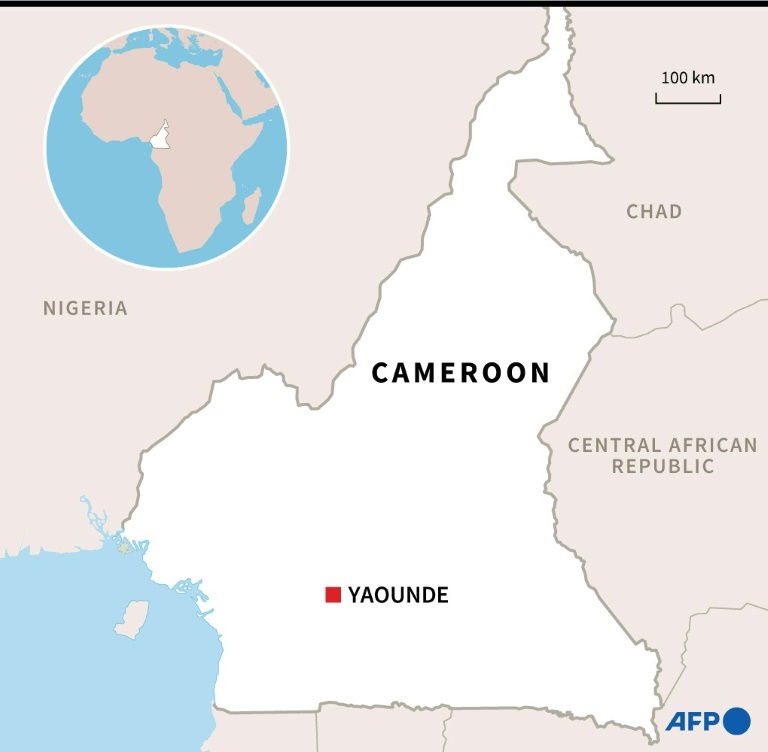
At least 15 people died when a landslide engulfed members of a funeral party in the Cameroonian capital of Yaounde, the local governor said on Monday.

The victims had gathered in marquees at the top of a hill for a memorial service on Sunday when the ground collapsed.

At least one of the tents and the people beneath it were swept away. 

“We are now at 15 dead,” Naseri Paul Bea, governor of the Centre region which includes Yaounde, told AFP, updating an earlier death toll of 11.

A dozen members of the fire brigade were shovelling away a huge mound of reddish soil at the foot of the hill to search for victims.

Nearby, a stream of people went to two houses to present their condolences to the newly-bereaved families.

Sunday’s service had been intended as a memorial tribute to five members of a local association who had died this year.

The disaster took place in Yaounde’s working-class district of Damas, on its eastern outskirts.

Four large white marquees remained on the hill’s summit, at the edge of what seemed to be a ridge, beyond which the ground had opened up, an AFP journalist saw.

The search had been suspended late Sunday evening.

Marie Claire Mendouga, 50, attended the ceremony but her tent was not affected by the landslide.

“We had just started to dance when the ground collapsed,” she told AFP on Sunday.

She said she “went to dig with my hands” to try to extract victims, and was still covered in brown clay.

Landslides occur relatively frequently in Cameroon, but they are rarely as deadly as Sunday’s incident.

Forty-three people were killed in the western city of Bafoussam in 2019, when a landslide triggered by heavy rains swept away a dozen flimsy dwellings built on the side of a hill.

Ex-governor tries 'outsider' upset with Nigeria presidential bid

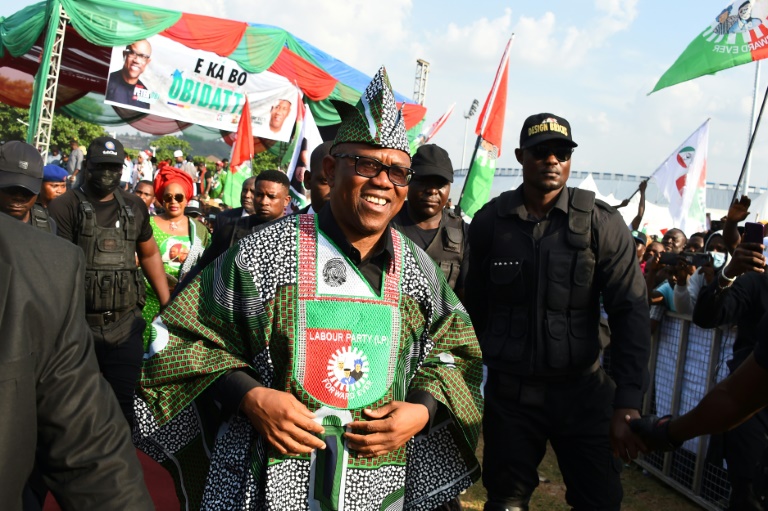
Horns blaring from the crowd, Nigerian candidate Peter Obi makes his pitch, repeating a mantra that he offers youth a chance for change in February’s election.

For 35-year-old footwear seller Joseph Nwankwo it was what he wants to hear. 

“I never voted for any party. They believed our vote never counted. This time round we believe our vote will,” said Nwankwo at the rally in southwest Ibadan city. “We are the youth. If we don’t do it, who will do it for us?” 

Backed by the Labour Party, Obi is emerging as a rare third challenger to the two mainstream parties who have governed Africa’s most populous country since the end of military rule in 1999.

Next February’s election is set to be a tight race to replace President Muhammadu Buhari, who steps down with Nigeria facing huge security challenges and an economy hobbled by fallout from the pandemic and Ukraine’s war.

A former southeast Anambra state governor and one-time PDP vice presidential candidate, Obi has gained momentum with a vibrant social media following and what supporters see as a fresher voice over the other old guard rivals.

Ruling All Progressives Congress (APC) and main opposition Peoples Democratic Party chieftains dismiss Obi as a Twitter phenomenon devoid of a national party network to challenge their deep pockets.

Obi, 61, may face many obstacles in his run to the Aso Rock presidential villa, but his message is resonating especially among younger, urban Nigerians who call themselves “Obi-dients”.

Whether he can win remains unclear — some local polls have him ahead. But analysts say Obi’s challenge is already complicating the political outlook for the PDP and APC.

APC is fielding Bola Tinubu, an 70-year-old former Lagos state governor known as the “Godfather of Lagos” for his political clout.

Against him, the PDP has Atiku Abubakar, 76, a wealthy businessman on his sixth bid for the presidency. He was vice president in 1999.

“All of the political and economic and social conditions have made him a palatable alternative,” SBM Intelligence analyst Ikesemit Effiong said of Obi.

“It is beginning to dent the image of the traditional political parties.”

– Political geography –

Wearing glasses and often dressed in a simple black traditional suit, Obi has run a grass-roots campaign where he touts his experience as governor and his outsider status.

A wealthy trader, Obi says he is about turning Nigeria around — increasing production rather than consumption, governing responsibly and taking on insecurity.   

“The government we intend to form, will be the beginning of a new Nigeria,” he told a crowd of thousands in Ibadan. “We will secure a united Nigeria.”

But with little structure nationwide and no governors, rivals say the Labour party and Obi will struggle. In 2019, the Labour Party candidate won 0.02 percent of the vote. The party elected one lawmaker.

“People say the Obidients, of course they will,” said Edo State governor Godwin Obaseki, who is campaigning for PDP. “But they will run out of steam.”

Nigerian elections are often about geography calculations. To win the presidency, a candidate must get a majority of the votes and also 25 percent of the votes in two thirds of its 36 states.

Almost equally split between predominantly Muslim north and the mostly Christian south, Nigeria is a patchwork of ethnic groups, including the largest Yoruba, Hausa and Igbo.

In an unwritten agreement to promote informal power sharing, the presidency has rotated alternatively between candidates from the north and south.

But 2023 is complex. After two terms under Buhari, a northern Muslim, many expected a southerner. But PDP went with Abubakar, a northerner. APC chose southerner Tinubu, but an all Muslim president and vice president team.

– New dimension –

Obi, an Igbo from the southeast, will likely do well in traditional PDP strongholds in that region, but may also dent APC’s vote in Tinubu’s Lagos stronghold, analysts said.

With the PDP already damaged by a deep split with Rivers State governor over its candidate, APC may benefit more from incumbency and Obi taking away PDP’s votes, risk analysts Eurasia Group said.

But opponents question Obi’s support in the north, where large voting blocks have delivered the presidency in the last two elections.

“Have you seen social media promoting Peter Obi in the north?” Zamfara State governor Bello Matawalle and APC leader told TVS news. “During the election they will understand they have the wrong calculation.”

Voter turnout is often low in Nigeria, and some observers ask whether Obi’s presence could disrupt APC and PDP support enough to force a second-round runoff for the first time ever. 

“Clearly he is going to be a major factor in determining the outcome of the election,” said Chidi Anselm Odinkalu, a professor at Tufts University’s Fletcher School.

Lagos taxi driver Abrahim Babatunde Lawal agrees. He voted twice for Buhari and APC since 2015. Next year he is giving Obi a chance. 

“He’s a new dimension, someone who is different from the old politicians,” Lawal said. “I won’t say he is going to win, it will be very difficult, we are just hoping.”

Four dead in hotel siege in Somali capital: security agency

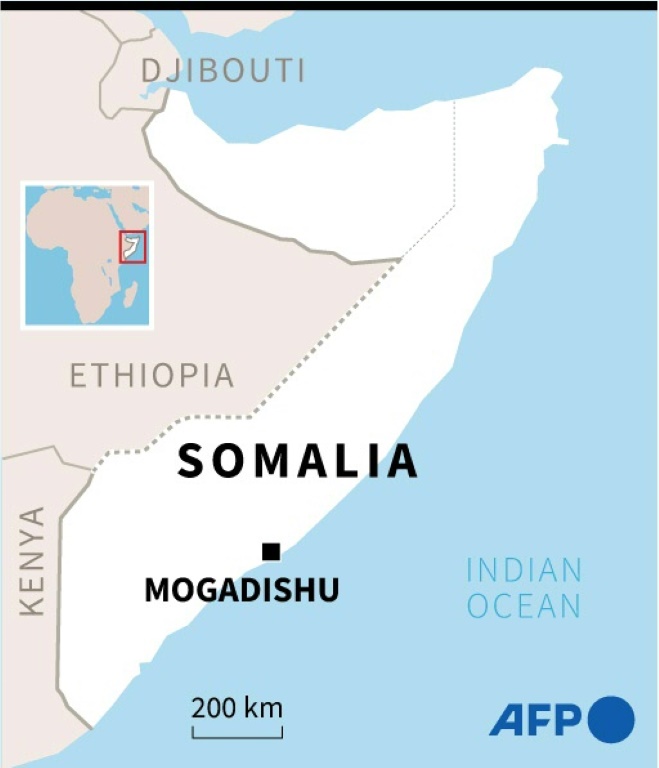
At least four people were killed in an ongoing attack by Al-Shabaab militants who laid siege to a popular hotel in Somalia’s capital Mogadishu overnight, a security agency official told AFP on Monday.

Gunfire and explosions could still be heard more than 12 hours after the militants stormed the hotel near the presidential palace in a hail of bullets.

Mohamed Dahir, an official from the national security agency, told AFP the gunmen were holed up in a room at the Villa Rose surrounded by government forces.

“So far we have confirmed the death of four people”, he said, adding that others had been rescued from the besieged venue.

“Very soon the situation will return to normal.”

Government officials were among others injured, he added. 

The Villa Rose is frequented by MPs and located in a secure central part of the capital just a few blocks from the office of Somalia’s President Hassan Sheikh Mohamud.

Al-Shabaab, a militant group affiliated with Al-Qaeda that has been trying to overthrow Somalia’s central government for 15 years, claimed responsibility for the attack.

Police said the gunmen rushed into the hotel in Bondhere district at around 8:00 pm (1700 GMT) on Sunday and an operation was under way to “eliminate” them.

More than 12 hours later, witnesses near the scene described still hearing loud explosions and gunfire.

“I saw several military vehicles with special forces heading towards the hotel, and a few minutes later, there was heavy gunfire and explosions,” said local witness Mahad Yare.

In a statement late Sunday, the African Union Transition Mission in Somalia (ATMIS), a 20,000-strong military force drawn from across the continent, praised the “swift” security response to the attack.

On its website the Villa Rose describes the hotel as the “most secure lodging arrangement in Mogadishu” with metal detectors and a high perimeter wall. 

– Retaliatory attacks –

Al-Shabaab has intensified attacks against civilian and military targets as Somalia’s recently-elected government has pursued a policy of “all-out war” against the Islamists.

The security forces, backed by local militias, ATMIS and US air strikes, have driven Al-Shabaab from central parts of the country in recent months, but the offensive has drawn retribution.

On October 29, two cars packed with explosives blew up minutes apart in Mogadishu followed by gunfire, killing at least 121 people and injuring 333 others.

It was the deadliest attack in the fragile Horn of Africa nation in five years.

At least 21 people were killed in a siege on a Mogadishu hotel in August that lasted 30 hours before security forces were able to overpower the militants inside.

The UN said earlier this month that at least 613 civilians had been killed and 948 injured in violence this year in Somalia, mostly caused by improvised explosive devices (IEDs) attributed to Al-Shabaab. 

The figures were the highest since 2017 and a more-than 30-percent rise from last year.

Ex-governor tries 'outsider' upset with Nigeria presidential bid

Horns blaring from the crowd, Nigerian candidate Peter Obi makes his pitch, repeating a mantra that he offers youth a chance for change in February’s election.

For 35-year-old footwear seller Joseph Nwankwo it was what wants to hear. 

“I never voted for any party. They believed our vote never counted. This time round we believe our vote will,” said Nwankwo at the rally in southwest Ibadan city. “We are the youth. If we don’t do it, who will do it for us?” 

Backed by the Labour Party, Obi is emerging as a rare third challenger to the two mainstream parties who have governed Africa’s most populous country since the end of military rule in 1999.

Next February’s election is set to be a tight race to replace President Muhammadu Buhari, who steps down with Nigeria facing huge security challenges and an economy hobbled by fallout from the pandemic and Ukraine’s war.

A former southeast Anambra state governor and one-time PDP vice presidential candidate, Obi has gained momentum with a vibrant social media following and what supporters see as a fresher voice over the other old guard rivals.

Ruling All Progressives Congress (APC) and main opposition Peoples Democratic Party chieftains dismiss Obi as a Twitter phenomenon devoid of a national party network to challenge their deep pockets.

Obi, 61, may face many obstacles in his run to Aso Rock presidential villa, but his message is resonating especially among younger, urban Nigerians who call themselves “Obi-dients”.

Whether he can win remains unclear — some local polls have him ahead. But analysts say Obi’s challenge is already complicating the political outlook for the PDP and APC.

APC is fielding Bola Tinubu, an 70-year-old former Lagos state governor known as the “Godfather of Lagos” for his political clout.

Against him, the PDP has Atiku Abubakar, 76, a wealthy businessman on his sixth bid for the presidency. He was vice president in 1999.

“All of the political and economic and social conditions have made him a palatable alternative,” SBM Intelligence analyst Ikesemit Effiong said of Obi.

“It is beginning to dent the image of the traditional political parties.”

– Political geography –

Wearing glasses and often dressed in a simple black traditional suit, Obi has run a grass-roots campaign where he touts his experience as governor and his outsider status.

A wealthy trader, Obi says he is about turning Nigeria around — increasing production rather than consumption, governing responsibly and taking on insecurity.   

“The government we intend to form, will be the beginning of a new Nigeria,” he told a crowd of thousands in Ibadan. “We will secure a united Nigeria.”

But with little structure nationwide and no governors, rivals say the Labour party and Obi will struggle. In 2019, the Labour Party candidate won 0.02 percent of the vote. The party elected one lawmaker.

“People say the Obidients, of course they will,” said Edo State governor Godwin Obaseki, who is campaigning for PDP. “But they will run out of steam.”

Nigerian elections are often about geography calculations. To win the presidency, a candidate must get a majority of the votes and also 25 percent of the votes in two thirds of its 36 states.

Almost equally split between predominantly Muslim north and the mostly Christian south, Nigeria is a patchwork of ethnic groups, including the largest Yoruba, Hausa and Igbo.

In an unwritten agreement to promote informal power sharing, the presidency has rotated alternatively between candidates from the north and south.

But 2023 is complex. After two terms under Buhari, a northern Muslim, many expected a southerner. But PDP went with Abubakar, a northerner. APC chose southerner Tinubu, but an all Muslim president and vice president team.

– New dimension –

Obi, an Igbo from the southeast, will likely do well in traditional PDP strongholds in that region, but may also dent APC’s vote in Tinubu’s Lagos stronghold, analysts said.

With the PDP already damaged by a deep split with Rivers State governor over its candidate, APC may benefit more from incumbency and Obi taking away PDP’s votes, risk analysts Eurasia Group said.

But opponents question Obi’s support in the north, where large voting blocks have delivered the presidency in the last two elections.

“Have you seen social media promoting Peter Obi in the north?” Zamfara State governor Bello Matawalle and APC leader told TVS news. “During the election they will understand they have the wrong calculation.”

Voter turnout is often low in Nigeria, and some observers ask whether Obi’s presence could disrupt APC and PDP support enough to force a second-round runoff for the first time ever. 

“Clearly he is going to be a major factor in determining the outcome of the election,” said Chidi Anselm Odinkalu, a professor at Tufts University’s Fletcher School.

Lagos taxi driver Abrahim Babatunde Lawal agrees. He voted twice for Buhari and APC since 2015. Next year he is giving Obi a chance. 

“He’s a new dimension, someone who is different from the old politicians,” Lawal said. “I won’t say he is going to win, it will be very difficult, we are just hoping.”
Somali forces battle militants for hotel in Mogadishu: police

Somalia’s security forces exchanged gunfire with militants holed up in a hotel in Mogadishu on Monday after Al-Shabaab stormed the popular venue near the presidential palace and laid siege overnight.

Sporadic gunfire and explosions could still be heard after dawn around the Villa Rose, a hotel in a secure central part of Mogadishu frequented by lawmakers and public officials.

Police said late Sunday that government forces were seeking to “eliminate” a number of armed militants inside the Villa Rose after attacking the hotel in a hail of bullets and explosions.

National police spokesman Sadik Dudishe said many civilians and officials had been rescued, but did not offer further details.

Witnesses described two massive explosions followed by gunfire that sent people fleeing the scene in Bondhere district. The hotel is just a few blocks from the office of Somalia’s President Hassan Sheikh Mohamud.

Al-Shabaab, a militant group affiliated with Al-Qaeda that has been trying to overthrow Somalia’s central government for 15 years, claimed responsibility for the attack.

The African Union Transition Mission in Somalia (ATMIS), a 20,000-strong military force drawn from across the continent, praised the “swift” security response to the attack in a statement late Sunday.

On its website the Villa Rose describes the hotel as the “most secure lodging arrangement in Mogadishu” with metal detectors and a high perimeter wall. 

– Retaliatory attacks –

Al-Shabaab has intensified attacks against civilian and military targets as Somalia’s newly-elected government has pursued a policy of “all-out war” against the Islamists.

The security forces, backed by local militias, ATMIS and US air strikes, have driven Al-Shabaab from central parts of the country in recent months, but the offensive has drawn retribution.

On October 29, two cars packed with explosives blew up minutes apart in Mogadishu followed by gunfire, killing at least 121 people and injuring 333 others.

It was the deadliest attack in the fragile Horn of Africa nation in five years.

At least 21 people were killed in a siege on a Mogadishu hotel in August that lasted 30 hours before security forces could take control from the militants inside.

The UN said earlier this month that at least 613 civilians had been killed and 948 injured in violence this year in Somalia, mostly caused by improvised explosive devices (IEDs) attributed to Al-Shabaab. 

The figures were the highest since 2017 and a more-than 30-percent rise from last year.

Landslide in Cameroon kills at least 11

A landslide in Cameroon’s capital Yaounde killed at least 11 people attending a funeral on Sunday, a local official told state media.

The victims had gathered at the top of a hill for a memorial service for five people when the ground collapsed under part of the audience.

“Some were sitting in a tent where there was a landslide early this evening,” Paul Bea, governor of the Centre region that includes Yaounde, told state radio. He added that rescue efforts were ongoing.

The search had been suspended late Sunday evening before a planned resumption on Monday morning, a rescue worker at the scene told AFP.

Marie Claire Mendouga, 50, attended the ceremony but her tent was not affected by the landslide.

“We had just started to dance when the ground collapsed,” she told AFP.

She said she “went to dig with my hands” to try to get people out from under the earth, and was still covered in the brown clay from the site.

– Frantic search –

The disaster took place in Yaounde’s working-class district of Damas, on its eastern outskirts.

Four large white tents were on the hill’s summit, at the edge of what seemed to be a ridge, beyond which the ground had disappeared, an AFP correspondent at the scene said.

Police pick-up trucks were hauling away bodies covered by white sheets early on Sunday evening.

A police cordon prevented journalists from getting closer to the scene.

Emergency services struggled to make their way to the site, as hundreds of people frantically searched for loved ones. Some in the crowd wept as emergency workers scoured the area.

By 10:00 pm (2100 GMT) the search had been called off.

A member of the emergency services who asked not to be named said the death toll remained at 11, and the search for more victims would resume Monday morning.

In the crowd behind the security cordon, tears were streaming down faces.

“I’m not sure if I’ll be able to sleep,” Mendouga said.

“You are sitting down, you have people behind you and afterwards, they’re dead.”

Landslides occur relatively frequently in Cameroon, but they are rarely as deadly as Sunday’s incident in Yaounde.

Forty-three people were killed in the western city of Bafoussam in 2019, when a landslide triggered by heavy rains swept away a dozen precarious dwellings built on the side of a hill.

Al-Shabaab attacks hotel in Somali capital: police

Al-Shabaab militants attacked a hotel near the presidential palace in the Somali capital Mogadishu on Sunday, police and witnesses said, with explosions and gunfire heard in the city centre.

“A team of Al-Shabaab fighters attacked a commercial hotel in Bondhere district tonight (and) the security forces are engaging in an effort to eliminate them,” national police spokesman Sadik Dudishe said in statement.

He said many civilians and officials had been rescued from the Villa Rose, a hotel popular with politicians in a secure central area of the capital near the office of Somalia’s President Hassan Sheikh Mohamud.

Witnesses described hearing loud explosions followed by gunfire.

“I was close to Villa Rose when two heavy explosions rocked the hotel,” said one witness, Aadan Hussein. “There was heavy gunfire. The area was cordoned off and I saw people fleeing.” 

The hotel’s website describes the Villa Rose as the “most secure lodging arrangement in Mogadishu” with metal detectors and a high perimeter wall.

Al-Shabaab, a militant group affiliated with Al-Qaeda that has been trying to overthrow Somalia’s central government in Mogadishu for 15 years, claimed responsibility for the attack.

The African Union Transition Mission in Somalia (ATMIS), a 20,000-strong force drawn from across the continent, condemned the attack.

“ATMIS further applauds Somali Security Force for the swift response to prevent further casualties and property damage,” said ATMIS on Twitter.

– Retaliatory attacks –

President Mohamud declared “all-out war” against Al-Shabaab shortly after being elected in May. The security forces, backed by local militias, ATMIS and US air strikes, have driven Al-Shabaab from some parts of central Somalia.

But the insurgents have retaliated with a series of devastating attacks, underscoring their ability to strike at the heart of Somalia’s cities and military installations.

On October 29, two cars packed with explosives blew up minutes apart in Mogadishu followed by gunfire, killing at least 121 people and injuring 333 others.

It was the deadliest attack in the fragile Horn of Africa nation in five years.

A triple bombing in the central city of Beledweyne earlier that month left 30 dead including local officials, while at least 21 patrons at a hotel in Mogadishu were killed in a 30-hour siege in August.

The UN said earlier this month that at least 613 civilians had been killed and 948 injured in violence this year in Somalia, mostly caused by improvised explosive devices (IEDs) attributed to Al-Shabaab. 

The figures were the highest since 2017 and a more-than 30-percent rise from last year.

Somalia questions foreign 'hostages' found near Al-Shabaab territory

Somali police launched an investigation Sunday after 20 foreigners were discovered near territory controlled by the Al-Shabaab militant group claiming to be fishermen who had been held hostage for years.

Police spokesman Sadik Dudishe said the men — 14 Iranians and six Pakistanis — were apprehended for questioning after they wandered unexpectedly from a part of Galmudug state under militant control.

“Some of these people were kidnapped by Al-Shabaab in 2014, while others were abducted on the Harardhere coast, near Qosol-tire, in southern Somalia in mid-2019,” Dudishe said in a statement.

“Four of them have physical injuries,” he said.

It is not clear how the men came to be released, and police provided no further detail, citing an ongoing inquiry. 

Local authorities in Hobyo, the coastal town where the men appeared, said the foreigners were being held for questioning.

“We are still investigating these 20 men who were detained today after coming from an Al-Shabaab controlled area,” Hobyo’s commissioner Abdullahi Ahmed Ali told reporters.

“They have claimed to be fishermen,” he added.

Al-Shabaab, which controls swathes of rural Somalia, has been trying to overthrow the central government for 15 years, funding its insurgency through criminal activities including kidnapping and ransom.

Somalia has also been plagued by piracy for years, though attacks on maritime vessels off the coast have fallen off sharply in recent years since peaking at 176 in 2011.

Unconfirmed reports suggest the men could have been abducted by pirates and passed on to Al-Shabaab, an affiliate of Al-Qaeda, which includes foreign fighters among its ranks.

In 2020, three Iranian fishermen believed to be the last hostages held by Somali pirates were freed after five years of captivity.

Close Bitnami banner
Bitnami