Africa Business

Fleeing jihadist violence, Niger pupils return to school

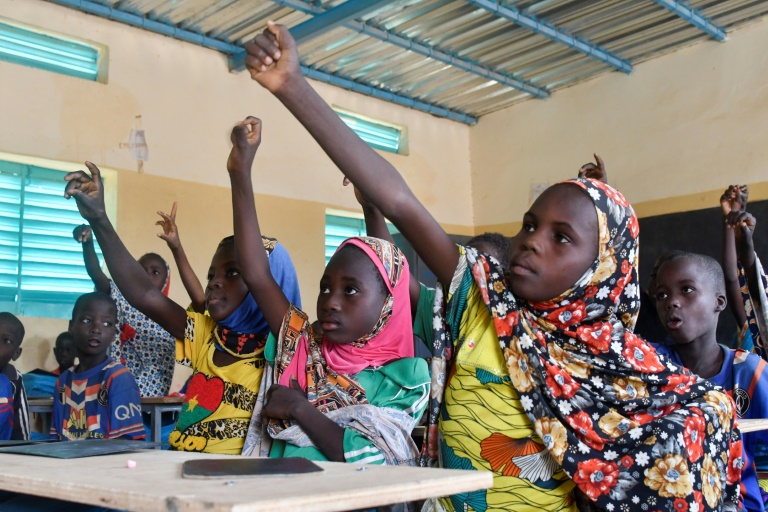
With blue schoolbags bouncing off their backs, hundreds of schoolchildren hurtle down small sand dunes eager to attend class again.

But these boys and girls are survivors of suffering and trauma that few children of their age could conceive.

Their new school is in the town of Ouallam in southwestern Niger, a region that for five years has been plagued by attacks unleashed by groups linked with Al-Qaeda and the Islamic State group.

The pupils come from 18 villages near Mali whose inhabitants fled to the relative safety of Ouallam in 2021 after jihadist killings that also forced the closure of schools.

The UN children’s agency UNICEF says 817 schools with 72,421 pupils — including 34,464 girls — have closed in Niger, mostly in the Tillaberi, the border region where Ouallam is located.

In Ouallam alone, around one hundred schools have had to shut their doors.

The chronic insecurity has prompted the authorities to create dedicated educational centres where displaced children can resume their schooling, Mahamadou Illo Abarchi, an education official in Ouallam, told AFP.

Some 17,000 pupils have already re-entered the school system and another 55,300 are set to follow suit, enrolling in around 20 centres for displaced children across southwestern Niger, the government says.

– ‘Killed by the bandits’ –

In Ouallam, almost 1,600 schoolchildren — some of whom had not attended class for three years — are registered with three centres built near a site for displaced people.

The sites offer free canteens, a vital resource for families who have escaped violence in a nation that, by the UN’s human development index, is the poorest in the world.

Lessons take place in shelters or classrooms equipped with tables and benches provided by NGOs. But in others, the pupils must learn on the floor.

Fatima and Aissa, two young girls from Ngaba, a settlement near Mali, expressed their delight at returning to school as they clutched their slate boards.

But the euphoria of returning to school cannot wipe out the painful memories.

“My uncle was a village chief, he was killed by the bandits in front of our eyes,” said Mariama, who also lived in Ngaba. “There was a lot of blood.” 

Nassirou, Malick, Hasane, Abdou and their parents fled their village of Adabdab on foot after a series of jihadist attacks, the last of which on October 22 claimed the lives of 11 civilians.

“It was the bandits who chased us away, they killed many men,” Nassirou said quietly in the playground.

Moussa, who hails from a hamlet in the same area, said: “I’m not afraid anymore, I no longer hide when I hear the sound of motorcycles” often used by jihadists to attack villages.

– ‘Encouraging results’ –

When they first arrived at the new centres, many children showed “signs of distress and trauma, others were very aggressive”, said education official Morou Chaibou.

He spoke of how some pupils recounted harrowing memories — including seeing their parents being shot.

Adamou Dari, the regional director of the centres, said they also offered the children psychological and social support to give them some stability after their traumatic experience.

“Now they concentrate in class and the results are encouraging,” said a teacher as she played in the courtyard with some of her pupils.

Absenteeism is minor but a source of worry, Dari said, explaining that some pupils played truant to work in the town and feed their families.

Harlem Desir of the International Rescue Committee, who recently visited the site for displaced people in Ouallam, said impoverished families often put their children to work or marry their daughters at a young age.

Chaibou warned that neglected children could become prime recruitment targets for the very jihadist groups whose depredations have left their families in such difficulties.

In 2021, Amnesty International warned that boys aged between 15 and 17 were filling the ranks of armed groups, especially the Al-Qaeda-affiliated GSIM, in the Torodi region near Burkina Faso — with the blessing of their parents.
Burkina Faso says 'fighting for survival' against jihadists

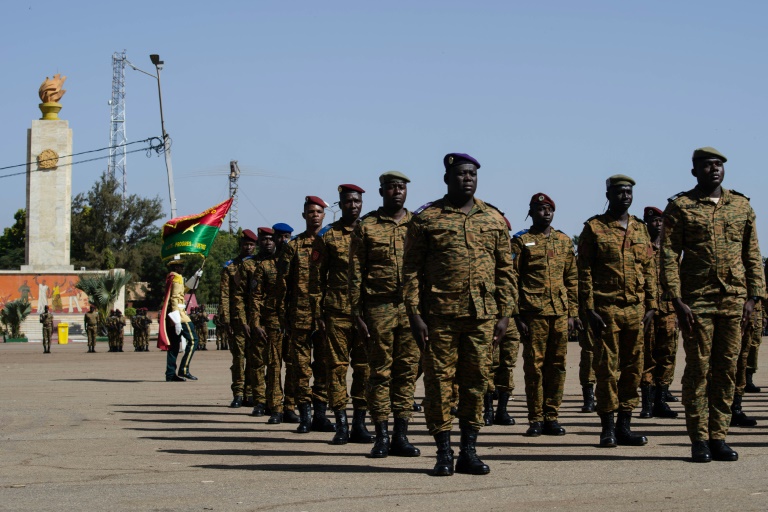
Burkina Faso’s defence minister on Tuesday declared the country was fighting for “survival” in its seven-year-old battle with jihadists as he urged the public to throw itself into the campaign.

“If, for a long time, the fight against terrorism has been seen as a combat pertaining only to the defence and security forces, it is time to change that view and strengthen the effectiveness of public support for the fighting forces,” said Defence Minister Kassoum Coulibaly.

“Every citizen should be aware that this is essentially a war in which our common destiny is at stake, meaning the survival of our nation,” Colonel Coulibaly said at ceremonies to mark the armed forces’ 62nd anniversary.

He called on citizens “to commit themselves” to fighting “armed terrorist groups”.

One of the poorest and most volatile countries in the world, the landlocked Sahel state is struggling with a jihadist offensive launched from neighbouring Mali in 2015.

Thousands of soldiers, police officers and civilians have been killed, around two million people in a population of some 21 million have fled their homes and more than a third of the country is outside government control.

Disgruntled army officers have carried out two coups this year in a show of anger at failures to roll back the insurgency.

Last Wednesday, the authorities launched a drive to recruit 50,000 members of a civilian auxiliary force, the Volunteers for the Defence of the Fatherland (VDP).

The force, set up in December 2019, comprises civilian volunteers who are given two weeks’ military training and then work alongside the army, typically carrying out surveillance, information-gathering or escort duties. 

But they have borne the brunt of many attacks against the armed forces, in the form of ambushes or improvised explosive devices (IEDs). 

The country’s latest strongman is Captain Ibrahim Traore, 34, who on September 30 ousted Lieutenant-Colonel Paul-Henri Sandaogo Damiba.

Damiba in January had led a group of officers to topple the country’s last elected president, Roch Marc Christian Kabore.

Cameroon's electronic waste recyclers struggle despite historic law

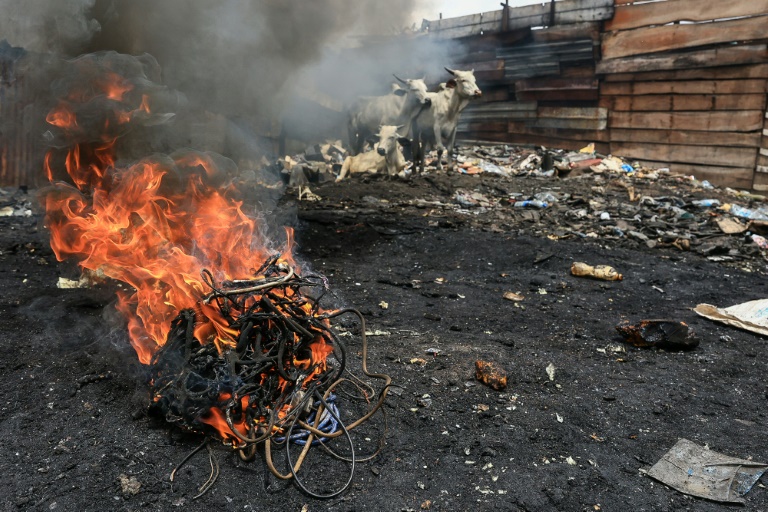
Sheltered from the harsh central African sun by a patched-up parasol, Ismael Alioum rummages through piles of electronic waste, gleaning useful components and high-value metals from circuit boards and switches.

The scrap-metal district of Yaounde, the capital of Cameroon, is in full swing as artisanal workers scavenge through discarded items and sell their harvest to traders, often Chinese or Indians.

But the work can also carry an untold human and environmental cost.

No gloves or masks are in sight as Alioum, 46, bashes away at an old voltage regulator. Near him, three younger men are attacking other old devices with screwdrivers and knives.

“Electronic waste contains harmful substances that can cause diseases such as cancer in humans when they are released into the environment,” said Didier Yimkoua, head of a campaign group called World Action Phyto Protection.

“When scrap metal workers break cathode ray tubes, mercury or lead can leak — it’s dangerous for them and for the public at large.”

Unlicensed recyclers “take what’s useful and toss out the rest, including items that are toxic for the environment,” said Armel Poughela, director of Solidarite Technologique, an NGO that works in licensed processing of e-waste.

A decade ago, Cameroon passed a law requiring greener and safer standards for disposing of e-waste, blazing a trail as concern mounted that Africa was becoming the world’s dumping ground for toxic rubbish.

Founded in 2011, Solidarite became one of the first recycling groups to be approved under the law.

It goes around collecting broken gadgets from companies and households “to prevent the waste from ending up in the trash,” explained Augustin Kenne, in charge of dismantling.

Collections are made by appointment now that word has got around, said employee Camille Ndomo, loading his tricycle with a gas burner, an LCD screen and a landline telephone recovered from a home in the city’s eastern Ewonkan district.

At the organisation’s headquarters, the items are then sorted, washed and dismantled by a dozen staff members equipped with gloves and masks.

Repairable items are fixed and sold in their shop.

Waste that the NGO cannot repair or properly dispose of at its site is taken to specialists in Douala, the economic capital, or if need be to Europe where expertise in the field is more developed.

“Over the past three years, we have been collecting 130 tonnes of waste annually, on average,” said Poughela.

Of this, “about 50 tonnes” is “revalued” — meaning reused — or disposed of at the Yaounde site.

– Unprofitable –

Poughela said Cameroon was the first African country to have passed legislation on e-waste management. 

Despite this important legal step, recycling rates in Senegal are low, Poughela said. No data are available to provide a more accurate picture.

Out of 25 operators who have gained a licence, only two are active, and the field remains dominated by informal workers, who typically are untrained — they “learn on the job,” in Alioum’s words.

Poughela said that on current volume scales, the business was unprofitable, mainly because of infrastructure problems.

“To cover costs, we would have to achieve processing volumes of 5,000 tonnes per year,” Poughela said.

The NGO plans to build a site to crush and safely incinerate waste that cannot be recycled. 

“We have obtained a one-hectare (2.57-acre) site in Douala, but we don’t have the funding,” Poughela said.

Thousands protest Rwanda in eastern DR Congo city

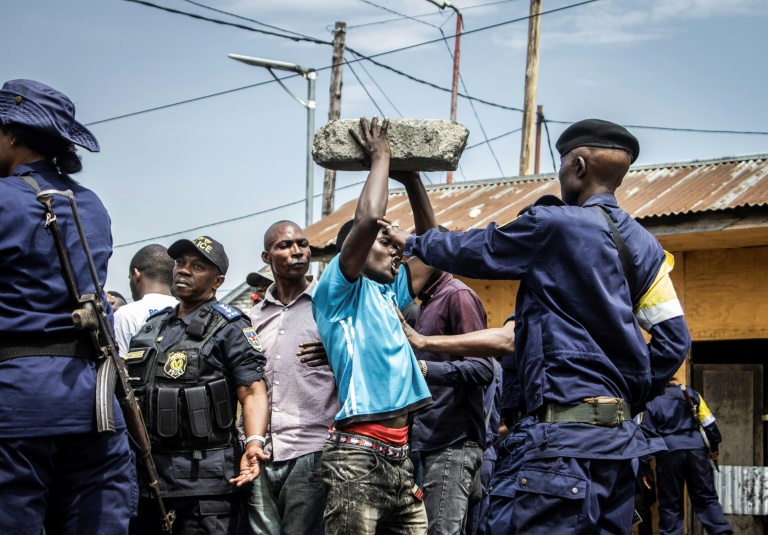
Thousands of anti-Rwanda protesters marched through the eastern DR Congo city of Goma on Monday, AFP journalists saw, as M23 rebels tightened their grip on the surrounding countryside.

A mostly Congolese Tutsi group, the M23 resumed fighting in late 2021 after lying dormant for years, accusing the Democratic Republic of Congo’s government of failing to honour an agreement to integrate its fighters into the army. 

Protesters chanted for weapons to fight Rwanda, as well as slogans hostile to Uganda, which some also accuse of backing the M23. 

Police officers used tear gas to disperse protesters in Goma from the border post with Rwanda.

“We denounce the hypocrisy of the international community in the face of Rwanda’s aggression,” said Mambo Kawaya, a civil society representative attending the demonstration.

The group’s resurgence has destabilised regional relations in central Africa, with the DRC accusing its smaller neighbour Rwanda of backing the militia.

The front line between the Congolese military and the M23 had been calm for several weeks, but fresh clashes from October 20 saw the militia make advances across North Kivu province.

“In less than a week, M23-controlled territory has nearly doubled,” Kivu Security Tracker (KST), a respected violence monitor, said on Twitter.

The rebels “continued to advance north today” while DR Congo troops are “concentrated” in the south “to block their advance on Goma”, it added.

The United Nations said it was worried by the fighting and estimated that it has forced some 50,000 people from their homes in the space of 11 days, including more than 10,000 who fled into Uganda.

Rebels in recent days seized the towns of Kiwanja and Rutshuru, along a strategic highway leading to the provincial capital Goma, which lies on the Rwandan border.

The United States on Monday renewed concern that Rwanda is backing the M23.

“State support of armed groups is unacceptable, and we reiterate our concern about Rwanda’s support to the M23,” State Department spokesman Ned Price told reporters on Monday.

He said US officials have been in frequent contact over the past week with counterparts in both Rwanda and DR Congo on the escalating tensions.

– ‘Hypocrisy’ –

The DRC’s government decided to expel Rwanda’s ambassador on Saturday. Rwanda stated that it had noted the decision “with regret”.

The ambassador, Vincent Karega, left the DRC on Monday. 

The M23 rebel group first leapt to prominence in 2012 when it briefly captured Goma before a joint Congolese-UN offensive drove it out.

It is one of scores of armed groups that roam eastern DRC, many of them a legacy of two regional wars that flared late last century.

Despite official denials from Kigali, an unpublished report for the United Nations seen by AFP in August pointed to Rwandan involvement with the M23.

The same report said the M23 plans to capture Goma, an important trade hub of about one million people, to extract political concessions from the Congolese government. 

Rwandan President Paul Kagame tweeted on Monday that he had held a discussion with UN chief Antonio Guterres on how to de-escalate.

Life term sought for ex-Liberia rebel commander

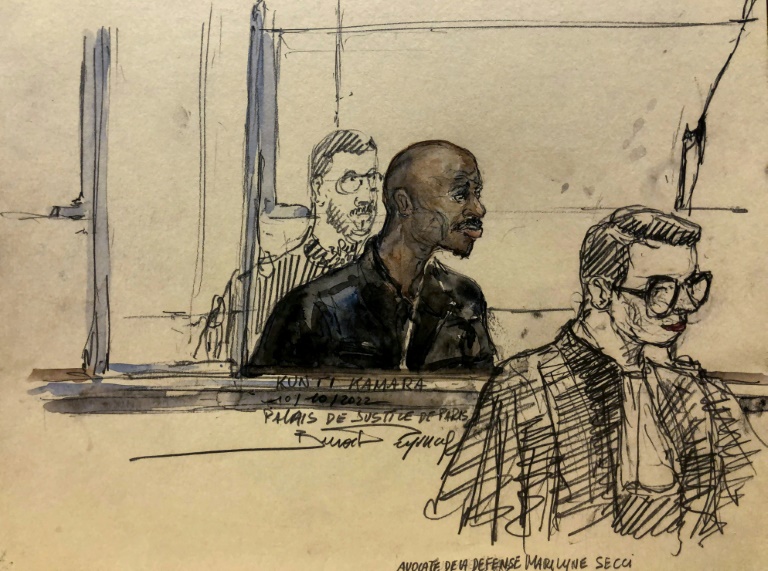
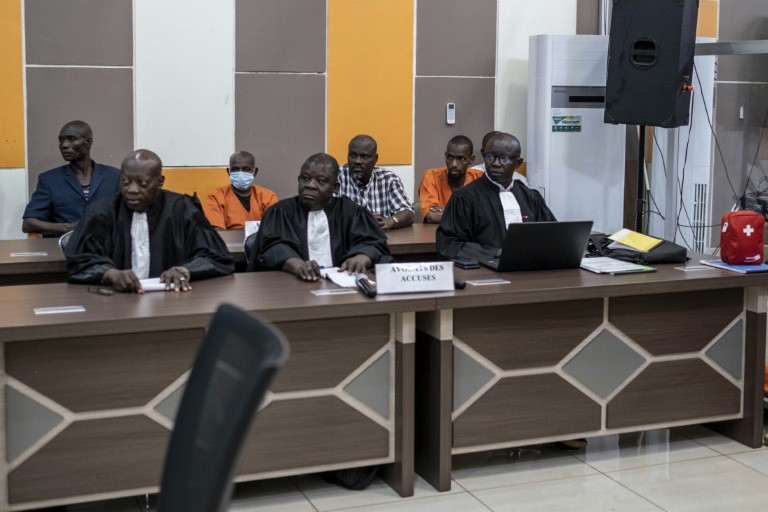
Prosecutors in France’s first trial of a participant in Liberia’s bloody civil wars on Monday sought a life sentence for a former rebel commander accused of crimes against humanity.

The allegations against Kunti Kamara, 47, date back to 1993 and 1994, early years in the back-to-back conflicts that would ultimately kill 250,000 people between 1989 and 2003.

The fighting was marked by mass murders, rape and mutilations, in many cases by child soldiers conscripted by warlords, with atrocities against civilians common.

Kamara was a regional commander of the United Liberation Movement of Liberia for Democracy (ULIMO), a rebel group that fought the National Patriotic Front of ex-president Charles Taylor.

He is accused of torture, complicity in crimes against humanity, civilian executions, facilitating the rape of two teenage girls, cannibalism and organising forced marches.

Prosecution lawyer Aurelie Belliot told the Paris criminal court that Kamara’s crimes “destroyed lives, and their seriousness were an attack on all humanity”.

“Your verdict will be historic and your decision and the sentence you pronounce will be scrutinised in Liberia and elsewhere,” she said.

Another lawyer, Claire Thouault, said “the fight against impunity for the most serious crimes that humanity has known” was at the heart of the trial, drawing parallels with the prosecution of Nazi officials after World War II.

– ‘Governance by terror’ –

Prosecutors described ULIMO’s control of Lofa county in northwestern Liberia in the 1990s as a “governance by terror” which Kamara allegedly took part in.

Belliot spoke of public executions, the distribution of human flesh and intestines used to mark checkpoints.

The defendant has denied the allegations throughout the investigation. On Monday, Kamara’s defence team denounced a “smokescreen” and said there was insufficient proof against him.

A truth and reconciliation commission was set up in 2006 to probe crimes committed during the war, but its recommendations, published in 2009, have remained largely unimplemented in the name of keeping the peace.

And many warlords who were incriminated are still considered heroes in their communities.

The case was brought by the crimes against humanity division of the Paris court, which was set up in 2012 to try suspected perpetrators of war crimes, crimes against humanity and genocide detained on French soil, irrespective of where their alleged crimes were committed.

This is the first case taken by the unit that is not related to the 1994 Rwanda genocide. A verdict is expected on Wednesday.

So far only a handful of people have been convicted in Liberia itself for their part in the conflict, and efforts to establish a war crimes court in the country have stalled.

Former Liberian warlord-turned-president Taylor was imprisoned in 2012, but for war crimes committed in neighbouring Sierra Leone, not in his own country, where he also rampaged. 

Other former participants in the Liberian wars have been tried abroad in recent years.

Somalia attacks toll jumps to 116 amid appeals for aid

The death toll from twin bombings in Somalia at the weekend has increased to 116, officials in charge of rescue operations said Monday, as the country’s president issued an urgent plea for international help for victims.

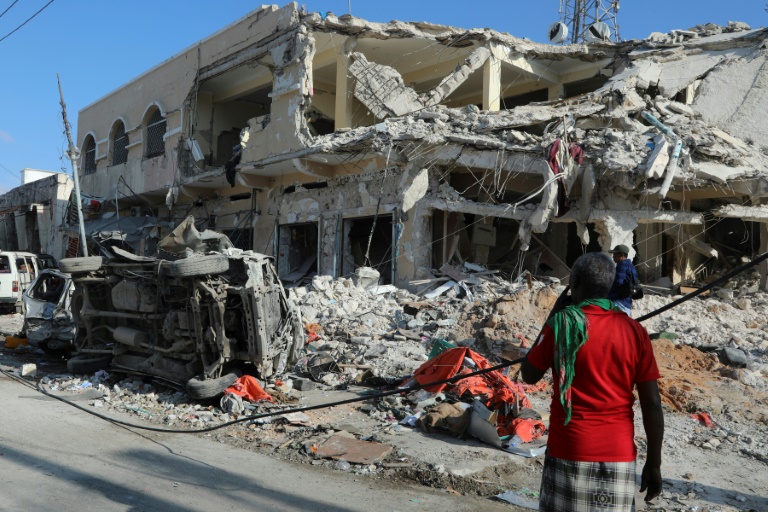
Bulldozers were still clearing the blast site in the capital Mogadishu on Monday in the hunt for bodies feared trapped under the rubble, with a committee in charge of supervising rescue efforts warning the damage was “massive”.

“The number of wounded people recorded is 324… and the overall number of deaths is 116,” the committee said in a statement, adding that 14 others were reported as missing.

Saturday’s attack was claimed by the Al-Shabaab jihadist group and was the deadliest in the fragile Horn of Africa nation in five years. 

“We appeal for the international community, Somali brothers, and other Muslim brothers and or partners to send doctors to Somalia to help the hospitals treat the wounded people,” President Hassan Sheikh Mohamud said in a statement on Sunday. 

He warned that the death toll could rise, as ill-equipped hospitals were swamped.

Somalia has been mired in chaos since the fall of president Siad Barre’s military regime in 1991 and has one of the world’s weakest health systems after decades of conflict.

“We cannot airlift all these numbers of wounded people… anyone who can send us (help) we request to send us,” said Mohamud.

Prime Minister Hamza Abdi Barre has ordered schools closed so that students can take part in a national blood donation drive.

Mohamud said he himself was among several hundred people who had donated blood to hospitals for the victims.

The World Health Organization said on Sunday it was ready to help the government treat the wounded and provide trauma care.

– ‘We are at war’ –

Al-Shabaab, an Islamist group linked to Al-Qaeda, claimed responsibility for the attack in which two cars packed with explosives blew up minutes apart near the city’s busy Zobe intersection, followed by gunfire.

It said it had targeted the country’s ministry of education.

The explosions tore through walls and shattered windows of nearby buildings, sending shrapnel flying and plumes of smoke and dust into the air.

Ali Yare Ali, a local government official in Mogadishu, told reporters that between seven and nine bodies were suspected to be under the rubble of buildings destroyed by the blasts.

The attack took place at the same junction where a truck packed with explosives blew up on October 14, 2017, killing 512 people and injuring more than 290, the deadliest attack in Somalia.

The country’s allies denounced the bombings, with the United States, the United Nations and the African Union among those issuing messages of support.

The attack tests the government’s ability to secure the conflict-weary nation, including the capital of nearly 2.5 million people. 

“The Somali nation and these terrorists are at war, as I speak now, there is fighting ongoing in many parts of the country,” Mohamud said Sunday.

“We are at war with them, and we are killing each other.”

– ‘Horrible scene’ –

Mohamud called on all Somalis to show solidarity and support those affected by the attack.

“We must get united in providing assistance to the families, children and parents of those who were martyred,” he said, lauding donations of water, food and clothes to survivors.

It was not immediately clear how the cars loaded with explosives evaded the numerous checkpoints that ring-fence the coastal city.

Witnesses said the road was busy with rows of tuk-tuks and other vehicles when the first blast hit.

First responders were met with a second explosion, killing the elderly and women with children strapped on their back, police said.

“I could not sleep last night because of the horrible scene,” police officer Adan Mohamed told AFP on Sunday. 

Al-Shabaab fighters have stepped up their attacks in Somalia since Mohamud was elected in May and vowed an “all-out war” on the Islamists.

In August, the group launched a 30-hour gun and bomb attack on the popular Hayat hotel in Mogadishu, killing 21 people and wounding 117.

The insurgents have been seeking to overthrow the fragile foreign-backed government in Mogadishu for about 15 years.

They were driven out of the capital in 2011 by an African Union force but the group still controls swathes of countryside and continues to wage deadly strikes on civilian, political and military targets.

Tanzania population grows nearly 40 percent in a decade

Tanzania’s population jumped by more than 37 percent in a decade to 61.7 million, President Samia Suluhu Hassan said Monday, warning of the challenges posed by expanding numbers as she unveiled the results of the national census.

Tanzania’s commercial capital Dar es Salaam is poised to become one of the world’s most heavily populated cities in the years to come.

The East African country’s population grew from 44.9 million in 2012 to more than 60 million, according to the census carried out earlier this year, with Hassan saying the numbers reflected an annual increase of 3.2 percent.

“Such population might not be a big deal for a huge country like ours but it’s a burden when it comes to allocating resources and delivering social services,” Hassan said during an event broadcast live from the capital Dodoma.

“We need development strategies to serve these people,” she said.

Dar es Salaam remains the most populated region with around 5.4 million residents, while the semi-autonomous archipelago of Zanzibar is home to 1.9 million people, an increase of 600,000.

“We need to start preparing development projects for these people and make necessary reforms in our policies to match with the current numbers,” Hassan said, pointing out that the country’s population was projected to reach 151.2 million in 2050.

Dar es Salaam, which lies on Tanzania’s Indian Ocean coast, grew from a fishing village to become the country’s largest city.

A World Bank report in 2019 said Dar es Salaam was “one of the fastest growing cities in Africa, and with a growth rate of 6.5 percent, it is expected to reach 10 million residents by 2030.

“Because of this rapid growth, the city faces serious congestion and mobility challenges, which are worsened by an undeveloped road network.”

Ethiopia rivals still talking peace in South Africa

Talks between the Ethiopian government and the rebel authorities in Tigray aimed at finding a peaceful resolution to their devastating two-year conflict were continuing Monday, sources familiar with the discussions said.

The negotiations led by the African Union began last Tuesday in South Africa, the first formal dialogue to try to end a war that has killed many thousands of people and unleashed a desperate humanitarian crisis in northern Ethiopia.

In an interview with Chinese state media, Prime Minister Abiy Ahmed voiced hope that peace could be achieved, without making any direct reference to the talks underway in Pretoria.

“We’re working towards peace, we are trying to convince the TPLF (Tigray People’s Liberation Front) to respect the law of the land, to respect the constitution and to act as one state in Ethiopia,” Abiy told the English-language CGTN news channel in an undated interview posted on Twitter.

“Of course if there are lots of interventions from left and right, that is very difficult,” he said.

“Ethiopians should understand, we can solve our own issue by ourselves. And instead of listening from afar, better to respect our own law, better to respect our own culture, better to respect our own (customs),” he said.

“If we could do that, peace is achievable. I hope we’ll achieve that.”

Since the negotiations began, intense fighting has continued unabated in Tigray, where government troops backed by the Eritrean army and regional forces have been waging artillery bombardments and air strikes, capturing a string of towns from the rebels.

The international community has voiced deep alarm over the combat and the human cost it has exacted on civilians caught in the crossfire.

Abiy said that in towns in Tigray now under the control of Ethiopian forces, such as Axum and neighbouring Adwa, the government was providing humanitarian aid but did not elaborate.

South Africa had initially said the discussions between the federal government and the Tigrayans would run until Sunday, but they remain shrouded in secrecy.

Ebba Kalondo, spokeswoman for AU Commission chair Moussa Faki Mahamat, said in a message to AFP that “there was no date limitation put on the talks”.

A diplomat with knowledge of the discussions confirmed to AFP that the talks were continuing on Monday, but added: “They are very strict about confidentiality.”

A source close to the Tigrayan delegation in South Africa had told AFP at the weekend that the talks would likely continue until Tuesday.

– Humanitarian response ‘constrained’ –

Diplomatic efforts to try to bring the government and the rebels to the negotiating table gathered pace after combat resumed in late August, torpedoing a five-month truce that had allowed limited amounts of aid into Tigray.

The international community is calling for an immediate cessation of hostilities, humanitarian access to Tigray where many face hunger, and a withdrawal of Eritrean forces, whose return to the battleground has raised fears of renewed atrocities against civilians.

The conflict erupted on November 4, 2020, when Abiy sent troops into Tigray after accusing the TPLF, the regional ruling party, of attacking federal army camps.

Since then, the fighting in Africa’s second most populous country has forced well over two million people from their homes, and according to US estimates, killed as many as half a million.

UN children’s agency UNICEF said in a report issued at the weekend that about 574,000 people alone had been displaced in Tigray as well as the neighbouring regions of Afar and Amhara since combat resumed in late August.

“Insecurity and restrictions on the movement of aid continue to constrain the humanitarian response across the three regions,” it said. 

Tigray remains largely closed off to the outside world with no communications and a shortage of food, fuel and medicines, while access to northern Ethiopia is restricted for journalists. 

The World Health Organization (WHO) on Friday reported that cases of malaria had increased by 80 percent in Tigray compared to a year ago.

And according to the UN’s World Food Programme, the rate of global acute malnutrition among children under five in Tigray is 29 percent.

Last week, Amnesty International said every party involved in the war had committed crimes against humanity.

“Documented violations of human rights violations… (include) rapes, sexual violence… lootings, torture and extrajudicial killings,” Fisseha Tekle, an Amnesty specialist on Ethiopia and Eritrea, told a press conference in Nairobi.

Thousands protest Rwanda in eastern DR Congo city

Thousands of anti-Rwanda protesters marched through the eastern DR Congo city of Goma on Monday, AFP journalists saw, as M23 rebels tightened their grip on the surrounding countryside.

A mostly Congolese Tutsi group, the M23 resumed fighting in late 2021 after lying dormant for years, accusing the Democratic Republic of Congo’s government of failing to honour an agreement to integrate its fighters into the army. 

The group’s resurgence has destabilised regional relations in central Africa, with the DRC accusing its smaller neighbour Rwanda of backing the militia.

The frontline between the Congolese military and the M23 had been calm for several weeks, but fresh clashes from October 20 saw the militia make advances across North Kivu province. 

Rebels in recent days seized the towns of Kiwanja and Rutshuru, along a strategic highway leading to the provincial capital Goma, which lies on the Rwandan border.

The DRC’s government decided to expel Rwanda’s ambassador on Saturday. Rwanda stated that it had noted the decision “with regret”.

The ambassador, Vincent Karega, left the DRC on Monday. 

Thousands of people demonstrated against Rwanda in Goma the same day, according to AFP journalists, where police officers used tear gas to disperse them from the border post with the country. 

“We denounce the hypocrisy of the international community in the face of Rwanda’s aggression,” said Mambo Kawaya, a civil society representative attending the demonstration.

Protesters chanted for weapons to fight Rwanda, as well as slogans hostile to Uganda, which some also accuse of backing the M23.

The rebel group first leapt to prominence in 2012 when it briefly captured Goma before a joint Congolese-UN offensive drove it out.

It is one of scores of armed groups that roam eastern DRC, many of them a legacy of two regional wars that flared late last century.

Despite official denials from Kigali, an unpublished report for the United Nations seen by AFP in August pointed to Rwandan involvement with the M23.

The same report said the M23 plans to capture Goma, an important trade hub of about one million people, to extract political concessions from the Congolese government. 

Rwandan President Paul Kagame tweeted on Monday that he had held a discussion with UN chief Antonio Guterres on how to de-escalate.

C.Africa special court sentences three for crimes against humanity

In a historic ruling, a UN-backed court in the Central African Republic on Monday convicted three militiamen of crimes against humanity and handed them jail terms ranging from 20 years to life.

Issa Sallet Adoum, Ousman Yaouba and Tahir Mahamat were accused of taking part in an attack by the 3R armed group in May 2019 in which 46 villagers in northwest CAR were massacred.

After its first-ever trial, the Special Criminal Court, a tribunal of local and international judges, sentenced Adoum to life and the others to 20 years.

One of the poorest and most volatile countries in the world, CAR plunged into civil war in 2013 largely along sectarian lines.

Violence fell back in intensity in 2018 but as recently as early 2021, two-thirds of the country lay in the hands of armed groups spawned in the conflict.

The 3R (Return, Reclamation and Rehabilitation) is one of the most powerful of these militias, drawing its members mainly from the Fulani ethnic group, also called Peuls.

The special court’s mandate applies to war crimes and crimes against humanity dating back to 2003.

The tribunal was set up in 2015 with UN backing but struggled for years to get going in the face of logistical hurdles, lack of money and local hostility.

After a faltering start caused by a lack of defence lawyers, its first trial opened on April 25 to a panel of national and international judges, with prosecutors from the CAR, the Democratic Republic of Congo, France and Togo.

– Murder and rape –

Prosecutors had requested life terms for the three, accused of slaughtering civilians in the villages of Koundjili and Lemouna on May 21, 2019.

In a statement, the court said the trio were guilty of murder, inhumane acts and humiliating and degrading treatment.

Adoum, as “military chief”, was additionally convicted over rapes committed by subordinates and of war crimes.

The three were acquitted on charges of torture committed as a crime of war.

Defence attorney Manguereka Andre Olivier said the defendants would file an appeal against the ruling. They have three days in which to submit their petition.

Mahamat, who protested his innocence, went on hunger strike three weeks earlier. He was brought in for sentencing on a stretcher, an AFP journalist saw.

The two other defendants, appearing behind a thick glass screen wearing orange prisoner clothing and with their backs turned to a packed courtroom, betrayed little emotion as the sentence was pronounced.

Victims of the 2019 atrocity hailed the court’s ruling, after years of despair about the prospects for justice in a country sapped by weak governance, poverty and other ills.

“We are very happy with the verdict — it’s a message to the murderers: sooner or later, justice will catch up with them,” said Fernand Made-Djapou, a lawyer who acts as spokesman for an alliance of civilian plaintiffs.

“I was there at the attack on Koundjili, where my elder brother… was killed, along with 13 other people I knew,” a 34-year-old man told AFP, speaking on condition of anonymity.

“I am pleased with the ruling and also that the court mentioned the rape, which affected six of my sisters.”

– ‘Triumph’ –

Justice Minister Arnaud Djoubaye Abazene, speaking outside the court, said the ruling was a “triumph of justice” and “a strong signal… against impunity”.

“The verdict is a milestone for the victims and communities that have been terrorised during the country’s conflicts,” said Elise Keppler, associate international justice director of Human Rights Watch (HRW).

Two other major cases are also pending, in the CAR and in The Hague.

In September 30, the court announced that it had charged an army commander, Vianney Semndiro, with crimes against humanity, torture, rape, sexual slavery and “forced disappearance of persons”.

The alleged atrocities were committed at the Bossembele military camp north of the capital, Bangui, between 2009 and 2013, during the regime of former president Francois Bozize.

Part of the secretive camp had been transformed into jails for “political” prisoners, according to international NGOs and journalists who visited the camp in 2013 after the fall of Bozize.

In a separate case, the International Criminal Court (ICC) in The Hague last month began the trial of Mahamat Said Abdel Kani, an alleged commander of the mainly Muslim Seleka armed group that ousted Bozize. 

He faces seven charges of war crimes and crimes against humanity relating to atrocities at a police compound where suspected Bozize supporters were beaten and tortured.  

Close Bitnami banner
Bitnami