Africa Business

Somalia appeals for international help after deadly blasts

Somalia’s president has issued an urgent plea for international help for wounded victims of devastating car bombings at the weekend that claimed the lives of 100 people.

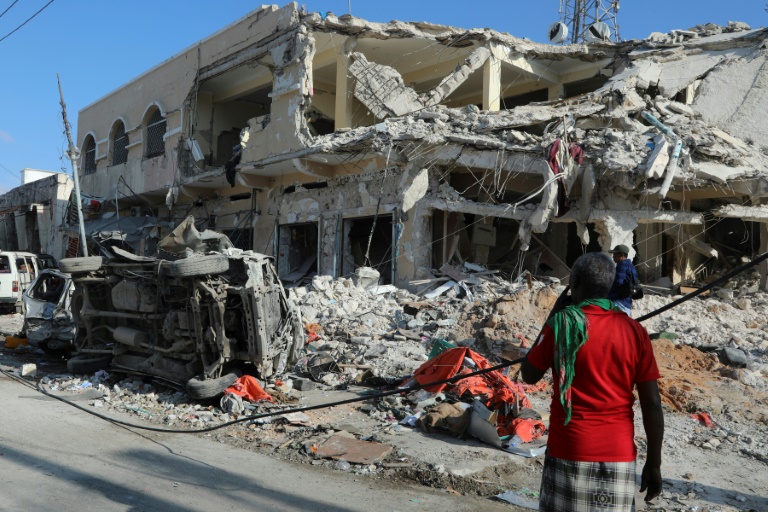
Bulldozers were still clearing the blast site in the capital Mogadishu on Monday in the hunt for bodies feared trapped under the rubble.

Saturday’s attack, which also wounded more than 300 people, was claimed by the Al-Shabaab jihadist group and was the deadliest in the fragile Horn of Africa nation in five years. 

“We appeal for the international community, Somali brothers, and other Muslim brothers and or partners to send doctors to Somalia to help the hospitals treat the wounded people,” President Hassan Sheikh Mohamud said in a statement on Sunday. 

He warned that the death toll could rise, as ill-equipped hospitals were swamped.

Somalia has been mired in chaos since the fall of president Siad Barre’s military regime in 1991 and has one of the world’s weakest health systems after decades of conflict.

“We cannot airlift all these numbers of wounded people… anyone who can send us (help) we request to send us,” said Mohamud.

Prime Minister Hamza Abdi Barre has ordered schools closed so that students can take part in a national blood donation drive.

Mohamud said he himself was among several hundred people who had donated blood to hospitals for the victims.

The World Health Organization said on Sunday it was ready to help the government treat the wounded and provide trauma care.

– We are ‘at war’ –

Al-Shabaab, an Islamist group linked to Al-Qaeda, claimed responsibility for the attack in which two cars packed with explosives blew up minutes apart near the city’s busy Zobe intersection, followed by gunfire.

It said it had targeted the country’s ministry of education.

The explosions tore through walls and shattered windows of nearby buildings, sending shrapnel flying and plumes of smoke and dust into the air.

Ali Yare Ali, a local government official in Mogadishu, told reporters that between seven and nine bodies were suspected to be under the rubble of buildings destroyed by the blasts.

The attack took place at the same junction where a truck packed with explosives blew up on October 14, 2017, killing 512 people and injuring more than 290, the deadliest attack in Somalia.

Somalia’s allies denounced the bombings, with the United States, the United Nations and the African Union among those issuing messages of support.

The attack tests the government’s ability to secure the conflict-weary nation, including the capital of nearly 2.5 million people. 

“The Somali nation and these terrorists are at war, as I speak now, there is fighting ongoing in many parts of the country,” Mohamud said Sunday.

“We are at war with them, and we are killing each other.”

– ‘Horrible scenes’ –

Mohamud called on all Somalis to show solidarity and support those affected by the attack.

“We must get united in providing assistance to the families, children and parents of those who were martyred,” he said, lauding donations of water, food and clothes to survivors.

It was not immediately clear how the cars loaded with explosives evaded the numerous checkpoints that ring-fence the coastal city.

Witnesses said the road was busy with rows of tuk-tuks and other vehicles when the first blast hit.

First responders were met with a second explosion, killing the elderly and women with children strapped on their back, police said.

“I could not sleep last night because of the horrible scene,” police officer Adan Mohamed told AFP on Sunday. 

Al-Shabaab fighters have stepped up their attacks in Somalia since Mohamud was elected in May and vowed an “all-out-war” on the Islamists.

In August, the group launched a 30-hour gun and bomb attack on the popular Hayat hotel in Mogadishu, killing 21 people and wounding 117.

The insurgents have been seeking to overthrow the fragile foreign-backed government in Mogadishu for about 15 years.

They were driven out of the capital in 2011 by an African Union force but the group still controls swathes of countryside and continues to wage deadly strikes on civilian, political and military targets.
Ethiopia peace talks ongoing in South Africa

Talks between the Ethiopian government and the rebel authorities in Tigray aimed at finding a peaceful resolution to their devastating two-year conflict were continuing Monday, a diplomat said.

The negotiations led by the African Union began last Tuesday in South Africa, the first formal dialogue to try to end a war that has killed many thousands of people and unleashed a desperate humanitarian crisis in northern Ethiopia.

South Africa had initially said the talks being held in Pretoria would run until Sunday, but they remain shrouded in secrecy.

Ebba Kalondo, spokeswoman for AU Commission chair Moussa Faki Mahamat, said in a message to AFP that “there was no date limitation put on the talks”.

A diplomat with knowledge of the discussions confirmed to AFP that the talks were continuing on Monday, without giving further details, adding: “They are very strict about confidentiality.”

A source close to the Tigrayan delegation in South Africa had told AFP at the weekend that the talks would likely continue until Tuesday.

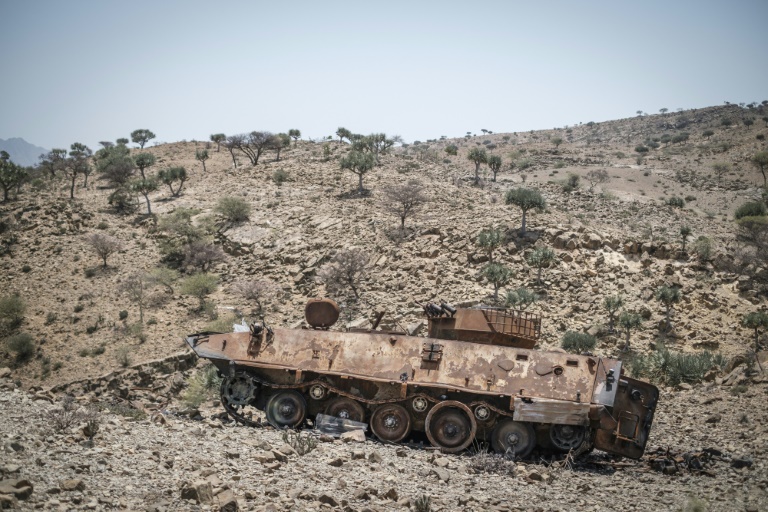
Since the negotiations began, intense fighting has continued unabated in Tigray, where government troops backed by the Eritrean army and regional forces have been waging artillery bombardments and air strikes, capturing a string of towns from the rebels.

Diplomatic efforts to try to bring the government and the rebels to the negotiating table gathered pace after combat resumed in late August, torpedoing a five-month truce that had allowed limited amounts of aid into Tigray.

The international community has voiced deep alarm over the ongoing fighting and the human cost it has exacted on civilians caught in the crossfire.

It is calling for an immediate cessation of hostilities, humanitarian access to Tigray where many face hunger, and a withdrawal of Eritrean forces, whose return to the conflict has raised fears of renewed atrocities against civilians. 

The conflict erupted on November 4, 2020, when Ethiopian Prime Minister Abiy Ahmed sent troops into Tigray after accusing the region’s ruling Tigray People’s Liberation Front (TPLF) of attacking federal army camps.

The fighting in Africa’s second most populous country has forced more than two million people from their homes, and according to US estimates, killed as many as half a million.

However, Tigray remains largely closed off to the outside world with no communications and a shortage of food, fuel and medicines, while access to northern Ethiopia is restricted for journalists. 

C.Africa special court sentences three for crimes against humanity

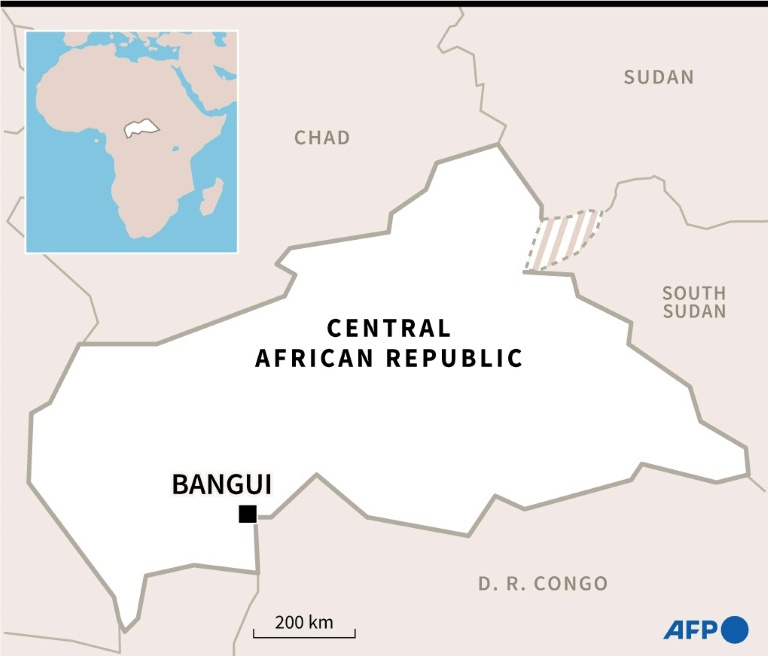
A court in the Central African Republic (CAR) in a historic ruling on Monday convicted three militiamen for crimes against humanity and handed them jail terms ranging from 20 years to life.

Issa Sallet Adoum, Ousman Yaouba and Tahir Mahamat were accused of taking part in an attack by the 3R armed group in May 2019 in which 46 villagers in northwest CAR were massacred.

The Special Criminal Court, a tribunal of local and international judges, sentenced Adoum to life and the others to 20 years after its first-ever trial.

One of the poorest and most volatile countries in the world, CAR plunged into civil war in 2013 largely along sectarian lines.

Violence fell back in intensity in 2018 but as recently as early 2021, two-thirds of the country lay in the hands of armed groups spawned in the conflict.

The mandate of the special court applies to war crimes and crimes against humanity dating back to 2003.

The court was set up in 2015 with UN backing but struggled for years to get going in the face of logistical hurdles, lack of money and local hostility.

After a faltering start, its first trial opened in April to a panel of national and international judges, with prosecutors from the Democratic Republic of Congo, France and Togo.

The 3R (Return, Reclamation and Rehabilitation) is one of the CAR’s most powerful armed groups, drawn mainly from the Fulani ethnic group, also called Peuls.

Prosecutors in August had requested life terms for the three.

In a statement, the court said the trio were guilty of murder, inhumane acts and humiliating and degrading treatment.

Adoum, as “military chief,” was additionally convicted over rapes committed by subordinates and of war crimes.

The three were acquitted on charges of torture committed as a crime of war.

Mahamat, who protested his innocence, went on hunger strike three weeks earlier. He was brought in for sentencing on a stretcher, an AFP journalist saw.

The defendants have three days in which to appeal.

Somalia appeals for international help after deadly blasts

Somalia’s president has issued an urgent plea for international help for wounded victims of devastating car bombings at the weekend that claimed the lives of 100 people.

Bulldozers were continuing to clear the blast site in the capital Mogadishu on Monday in the hunt for bodies feared trapped under the rubble.

Saturday’s attack, which also wounded more than 300 people, was claimed by the Al-Shabaab jihadist group and was the deadliest in the fragile Horn of Africa nation in five years. 

“We appeal for the international community, Somali brothers, and other Muslim brothers and or partners to send doctors to Somalia to help the hospitals treat the wounded people,” President Hassan Sheikh Mohamud said in a statement Sunday. 

He warned that the death toll could rise, as ill-equipped hospitals were swamped.

Somalia has one of the world’s weakest health systems after decades of conflict.

“We cannot airlift all these numbers of wounded people… anyone who can send us we request to send us,” said Mohamud, who himself has donated blood for the victims.

Prime Minister Hamza Abdi Barre has ordered schools closed so that students can take part in a national blood donation drive. 

The World Health Organization said on Sunday it was ready to help the government treat the injured and provide trauma care.

Al-Shabaab, an Islamist group linked to Al-Qaeda, claimed responsibility for the attack in which two cars packed with explosives blew up minutes apart near the city’s busy Zobe intersection, followed by gunfire.

It said in a statement it had targeted the country’s ministry of education.

The explosions tore through walls and shattered windows of nearby buildings, sending shrapnel flying and plumes of smoke and dust into the air.

– ‘All-out-war’ –

Ali Yare Ali, a local government official in Mogadishu, told reporters that between seven and nine bodies were suspected to be under the rubble of buildings destroyed by the blasts.

Somalia’s allies denounced the bombings, with the United States, the United Nations and the African Union among those issuing messages of support.

The attack tests the government’s ability to secure the conflict-weary nation, including the capital of nearly 2.5 million people. 

“The Somali nation and these terrorists are at war, as I speak now, there is fighting ongoing in many parts of the country,” Mohamud said Sunday.

“We are at war with them, and we are killing each other.”

The attack took place at the same busy junction where a truck packed with explosives blew up on October 14, 2017, killing 512 people and injuring more than 290, the deadliest attack in Somalia.

Al-Shabaab fighters have stepped up their attacks in Somalia since Mohamud was elected in May and vowed an “all-out-war” on the Islamists.

The insurgents have been seeking to overthrow the fragile foreign-backed government in Mogadishu for about 15 years.

Al-Shabaab fighters were driven out of the capital in 2011 by an African Union force but the group still controls swathes of countryside and continues to wage deadly strikes on civilian, political and military targets.
Death toll from Somalia twin bombings climbs to 100

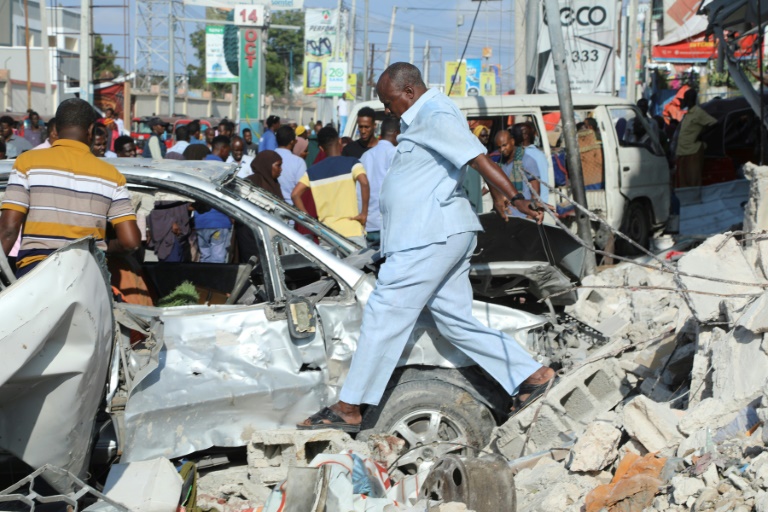
The death toll from twin car bombings in the Somali capital Mogadishu, claimed by Al-Shabaab Islamists, has risen to 100, President Hassan Sheikh Mohamud said on Sunday, drawing condemnation from the country’s international allies.

“So far, the number of people who died has reached 100 and 300 are wounded, and the number for both the death and wounded continues to increase,” he said after visiting the blast location.

Al-Shabaab, an Islamist group linked to Al-Qaeda, claimed responsibility for the attack in which two cars packed with explosives blew up minutes apart near the city’s busy Zobe intersection, followed by gunfire, saying in a statement they had targeted the country’s ministry of education.

The afternoon explosions tore through walls and shattered windows of nearby buildings, sending shrapnel flying and plumes of smoke and dust into the air.

Somalia’s allies swiftly denounced the bloody siege, with the United States, the United Nations and the African Union, as well as Turkey all issuing messages of support.

Women, children and the elderly were among the victims of the attack, police spokesman Sadik Dudishe said. 

“The ruthless terrorists killed mothers. Some of them died with their children trapped on their backs,” he said on Saturday, adding that the attackers had been stopped from killing more “innocent civilians and students”.

“I could not sleep last night because of the horrible scene,” police officer Adan Mohamed said on Sunday.

The attack took place at the same busy junction where a truck packed with explosives blew up on October 14, 2017, killing 512 people and injuring more than 290, the deadliest attack in the troubled country.

Mohamud described the incident as “historic”, saying “it is the same place, and the same innocent people involved”.

“This is not right. God willing, they will not be having an ability to do another Zobe incident,” he said, referring to Al-Shabaab.

– International condemnation –

Shop owner Mohamed Jama said he was with four men when the huge explosions hit. 

His shop, which is located next to a bank, collapsed and its windows shattered, the flying glass penetrating the flesh of the men.

“One of us had serious injuries… we bled there for a few minutes,” he told AFP in hospital.

The White House on Sunday decried the “tragic terrorist attack… and in particular its heinous targeting of the Somali Ministry of Education and first responders”.

UN chief Antonio Guterres “extends his heartfelt condolences to the families of the victims, which include United Nations staff”, his spokesperson, Stephane Dujarric, said in a statement.

The UN mission in Somalia vowed to stand “resolutely with all Somalis against terrorism.”

“These attacks underline the urgency and critical importance of the ongoing military offensive to further degrade Al-Shabaab,” AU Transition Mission in Somalia, which replaced the previous AMISOM peacekeeping force, tweeted late Saturday.

Pope Francis also offered condolences to the victims of the bloody attack.

“Let us pray for the victims of the attack in Mogadishu in which more than 100 people lost their lives, among whom (were) many children,” he said, following his traditional Angelus prayer in Saint Peter’s Square.

The World Health Organisation said it was ready to help the government treat the injured and provide trauma care to the victims.

– ‘All-out war’ –

Al-Shabaab has been seeking to overthrow the fragile foreign-backed government in Mogadishu for about 15 years.

Its fighters were driven out of the capital in 2011 by an African Union force but the group still controls swathes of countryside and continues to wage deadly strikes on civilian and military targets.

In August, the group launched a 30-hour gun and bomb attack on the popular Hayat hotel in Mogadishu, killing 21 people and wounding 117.

Mohamud, who was elected in May, vowed after the August siege to wage “all-out war” on the Islamists.

In September, he urged citizens to stay away from areas controlled by jihadists, saying the armed forces and tribal militia were ratcheting up offensives against them.

Al-Shabaab remains a potent force despite multinational efforts to degrade its leadership and boost Somalia’s own security services, with the AU trying to help them take over primary responsibility for the country’s security by the end of 2024.

But the group last week claimed responsibility for an attack on a hotel in the port city of Kismayo that killed nine people and wounded 47 others.

Somalia has been mired in chaos since the fall of president Siad Barre’s military regime in 1991.

His ousting was followed by a civil war and the ascendancy of Al-Shabaab.

As well as the insurgency, Somalia — like its neighbours in the Horn of Africa — is in the grip of the worst drought in more than 40 years. Four failed rainy seasons have wiped out livestock and crops.

The conflict-wracked nation is considered one of the most vulnerable to climate change but is particularly ill-equipped to cope with the crisis as it battles the deadly Islamist insurgency.

Eleven die in stampede at Fally Ipupa concert in DR Congo

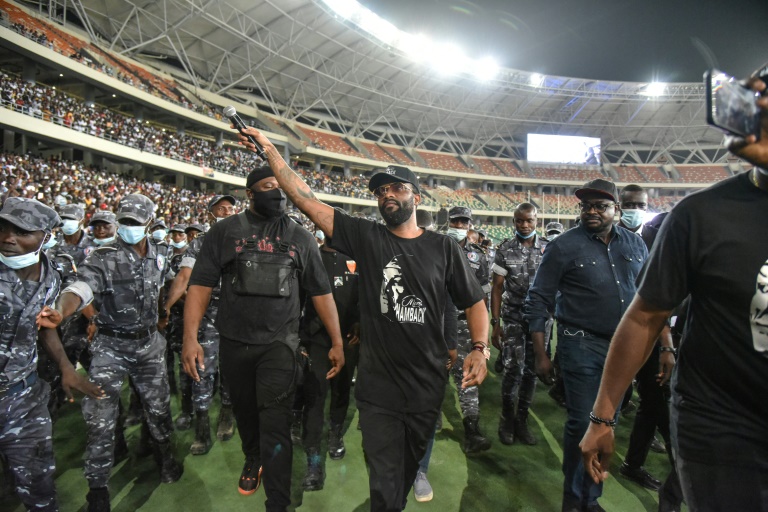
A stampede left nine spectators and two police officers dead during a packed concert by African music star Fally Ipupa at the biggest stadium in DR Congo’s capital, the interior minister said Sunday, blaming the organisers.

Too many people had been allowed into Kinshasa’s 80,000 capacity Martyrs’ stadium on Saturday night, Interior Minister Daniel Aselo Okito told the Actualite.cd news website.

“Eleven people dead… including two police,” the minister told reporters at the stadium, sending condolences to relatives of the casualties.  

He deplored the frequent “loss of human life and damage to equipment” during events held at the stadium.

The organisers “went beyond 100 percent capacity… they must be punished”, the minister said.

“It was a stampede,” that caused the deaths, a policeman on the scene told the official Congolese Press Agency ACP.

“The music-lovers suffocated.”

Kinshasa police chief General Sylvain Sasongo had earlier told ACP nine people had died, amid reports the venue had been absolutely jammed with people for the local favourite’s performance, with one witness saying “even the corridors” of the stadium were overflowing.

ACP, which had reporters in the stadium covering the concert, said police had cordoned off three areas to secure the pitch, the VIP stand and the stage.

“Under the pressure of the crowd, the police could not hold out long,” ACP said.

On his Facebook page, Fally Ipupa said he was horrified to learn what had happened.

“Despite all the measures taken for the strict respect of security requirements, unfortunate and dramatic events marred the end of the concert. 

“It appears from elements at our disposal that after jostling at the exit and around the stadium compatriots were dragged to their deaths.

“I am deeply shocked and offer my most heartfelt condolences to all the families concerned.

“May God in his deep mercy comfort their broken hearts.”

The singer-songwriter, “like all Congolese singers”, had arrived several hours after the show had been scheduled to start, ACP reported.

The Kinshasa-born 44-year-old, who blends traditional African harmonies with urban musical genres, is one of Africa’s leading musicians whose albums sell world-wide.

The disaster comes hours after the more than 150 people were killed in a stamped at a Halloween event in Seoul, South Korea.

AU appeals for ceasefire as rebels advance in DRCongo

African Union officials on Sunday appealed for an end to the growing violence in the Democratic Republic of Congo, a day after rebels made further progress there and Kinshasa expelled Rwanda’s ambassador.

In their statement on Sunday, the AU officials called for an immediate ceasefire.

All parties, they said, should “respect international law, the safety and security of civilians and the stability at the borders of all countries in the region”.

The DR Congo government said on Saturday it was expelling Kigali’s envoy over what it said was Rwanda’s backing for the M23 rebels making fresh inroads in the east of the country.

Rwanda, which denies the accusation, on Sunday expressed regret at the decision, adding that its troops at the two countries’ border were on “high alert”.

The AU on Sunday urged all the parties to engage “in a constructive dialogue” to ensure peace in the troubled region, calling them to peace talks in Nairobi next month.

Angola’s President Joao Lourenco said he would dispatch his Foreign Minister Tete Antonio to DR Congo to mediate the dispute. 

But Kinshasa’s announcement late Saturday suggests they have lost patience with regional mediation efforts.

In recent days “a massive arrival of elements of the Rwandan element to support the M23 terrorists” against DR Congo’s troops had been observed, said government spokesman Patrick Muyaya.

Condemning what he described as a “criminal and terrorist” adventure, he announced the expulsion of Rwanda’s envoy Vincent Karega.

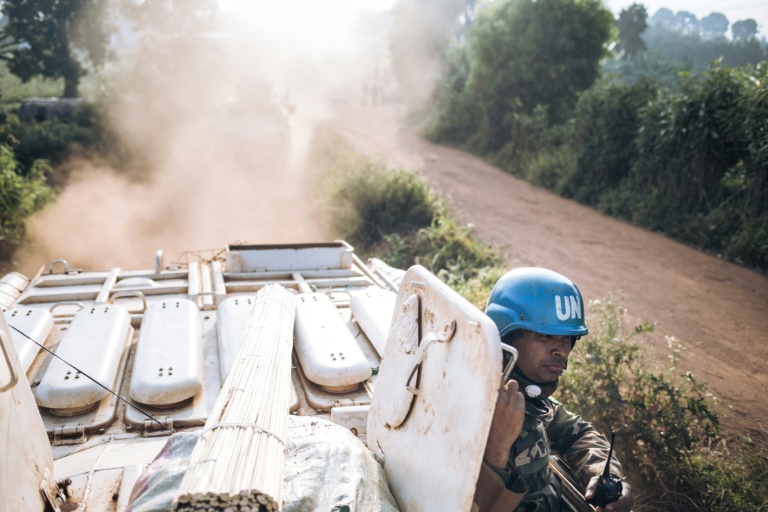
Hours earlier, reports had come in that the M23 rebels had seized more territory in the vast mineral-rich DRC, prompting the UN peacekeeping mission to increase its “troop alert level” and boost support for the army.

– ‘Indiscriminate strikes’ –

The longrunning dispute has already been the object of several regional peace initiatives, including one by the seven nations of the East African Community (EAC) coordinated by former Kenyan president Uhuru Kenyatta.

Kenyatta said on Sunday he was “profoundly concerned” by the escalation of conflict and the resulting humanitarian crisis.

The EAC, he said, called for an end to the fighting and unhindered access for aid work.

Hours after Kinshasa’s announcement late Saturday, UN Secretary General Antonio Guterres said he was trying to reach both DR Congo President Felix Tshisekedi and Rwandan President Paul Kagame.

The UN peacekeeping mission MONUSCO meanwhile condemned the latest advance by the M23 rebels at Kiwanja and Rutshuru in the east, saying their “indiscriminate strikes” were hitting the civilian population.

M23, a mostly Congolese Tutsi group, resumed fighting in late 2021 after lying dormant for years, accusing the government of having failed to honour an agreement over the demobilisation of its fighters.

It has since captured swathes of territory in North Kivu, including the key town of Bunagana on the Ugandan border in June.

Relations between Rwanda and DR Congo have been strained since the mass arrival in the eastern DRC of Rwandan Hutus accused of slaughtering Tutsis during the 1994 genocide in Rwanda.

Kinshasa has regularly accused Rwanda of carrying out incursions into its territory, and of backing armed groups there. Kigali has denied involvement.

Tear gas fired as Sudan pro-democracy protests spread

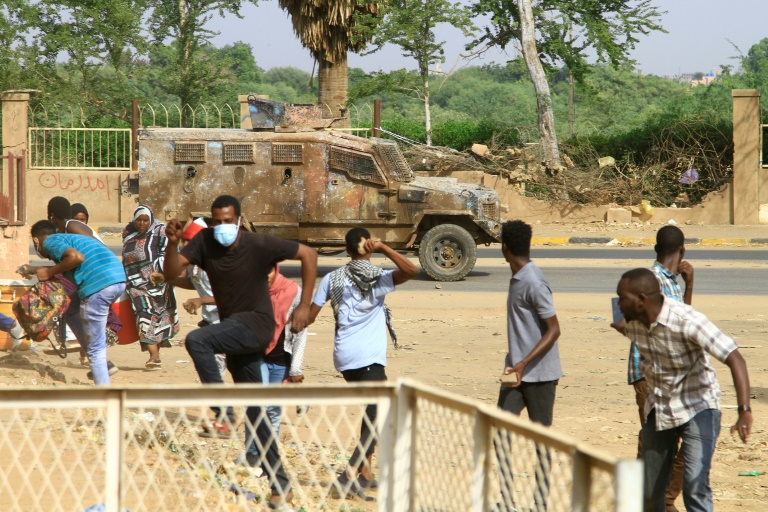
Security forces firing tear gas confronted pro-democracy demonstrators across Sudan on Sunday, AFP correspondents and witnesses said.

Hoisting Sudanese flags and posters of activists killed in the past 12 months of protests, demonstrators attempted to march on the presidential palace in central Khartoum as security forces used tear gas to disperse them.

“We are living in a non-state. It has been a year… But we will continue… The whole country is out in the street,” demonstrator Momen Wad Zineb told AFP.

On October 25, 2021, army chief Abdel Fattah al-Burhan seized power, arresting civilian leaders and derailing a transition to civilian rule that had started with the 2019 ouster of long-time autocrat Omar al-Bashir.

According to pro-democracy medics, 119 people have been killed in the crackdown on near-weekly pro-democracy protests that have been held since.

Mass protests were reignited last week on the first anniversary of the power grab, when thousands marched across Sudan, demanding an end to the political and economic crisis that has gripped the country.

One protester was killed Tuesday when he was crushed by a military vehicle in Omdurman, according to pro-democracy medics.

“We are continuing our movement, holding to our three principles: no negotiation, no partnership, and no legitimacy” for the military, Asma Harzaoui said in Khartoum, echoing the protest movement’s rallying cry.

Eyewitnesses said thousands also demonstrated in the cities of Wad Madani and El Obeid, south of Khartoum, and Kassala, Gedaref and Port Sudan in the east.

Tear gas, usually used against marches in the capital, was fired at protesters in Gedaref and Port Sudan as well as in Khartoum, Omdurman and North Khartoum, where protesters tried to cross the bridge leading to the centre of the capital.

Protesters chanted, “soldiers go back to the barracks” and demanded a return to civilian rule as well as justice for protesters killed in the crackdown.

In addition, a broader security breakdown nationwide has left nearly 600 dead and more than 210,000 displaced as a result of ethnic violence this year, according to the United Nations.

The country, already one of the world’s poorest, has also been sinking deeper into economic crisis.

Western governments say Sudan must return to civilian rule before crucial aid halted in response to the coup can resume.

Between three-digit inflation and chronic food shortages, a third of the country’s 45 million inhabitants now suffer from hunger, a 50-percent increase compared with 2021, according to the World Food Programme (WFP).

Death toll from Somalia twin bombings climbs to 100

The number of people killed in twin car bombings in the Somali capital Mogadishu, claimed by Al-Shabaab Islamists, has risen to 100, President Hassan Sheikh Mohamud said on Sunday.

“So far, the number of people who died has reached 100 and 300 are wounded, and the number for both the death and wounded continues to increase,” he said after visiting the blast location.

Two cars packed with explosives blew up minutes apart near the busy Zobe intersection, followed by gunfire in an attack targeting Somalia’s education ministry.

The afternoon explosions tore through walls, shattered windows of nearby buildings, sending shrapnel flying and plumes of smoke and dust into the air.

The victims included women, children and the elderly, police spokesman Sadik Dudishe said. 

“The ruthless terrorists killed mothers. Some of them died with their children trapped on their backs,” he said on Saturday, adding that the attackers had been stopped from killing more “innocent civilians and students.”

“I could not sleep last night because of the horrible scene,” police officer Adan Mohamed said on Sunday.

The attack took place at the same busy junction where a truck packed with explosives blew up on October 14, 2017, killing 512 people and injuring more than 290, the deadliest attack in the troubled country.

Mohamud described the incident as “historic”, saying “it is the same place, and the same innocent people involved.”

“This is not right. God willing, they will not be having an ability to do another Zobe incident,” he said, referring to the Islamist group Al-Shabaab.

Al-Qaeda-linked Al-Shabaab claimed responsibility for the attack in a statement, saying its fighters were targeting the ministry of education.

Shop owner Mohamed Jama said he was in the company of four men when the huge explosions hit. 

His shop which is located next to a bank collapsed and its windows shattered, the flying glass penetrating the flesh of the men.

“One of us had serious injuries… we bled there for a few minutes,” he told AFP in hospital.

The bloody siege drew international condemnation from Somalia’s allies, including the United Nations, Turkey as well as the African Union and its force tasked with helping Somali forces take over primary responsibility for security by the end of 2024.

The UN mission in Somalia UNSOM vowed to stand “resolutely with all Somalis against terrorism.”

“These attacks underline the urgency and critical importance of the ongoing military offensive to further degrade Al-Shabaab,” AU Transition Mission in Somalia (ATMIS), which replaced the previous AMISOM peacekeeping force, said on Twitter late Saturday. 

EU foreign policy chief Josep Borrell said in a tweet that Brussels “stands by President Hassan Mohamud and the people of Somalia after the terrorist attack”. 

“Our resolve and determination to fight against terrorism and defeat Al Shabab is higher than ever,” he wrote.

Pope Francis condoled with the victims of the bloody attack.

“Let us pray for the victims of the attack in Mogadishu in which more than 100 people lost their lives, among whom many children,” he said, following his traditional Angelus prayer in Saint Peter’s Square.

UN High Commissioner for Refugees Filippo Grandi said the “cowardly” act proved that Somalia need more support to end the violence and drought. 

Meanwhile, the World Health Organisation said it was ready to help the government treat the injured and provide trauma care to the victims. 

– ‘All-out war’ –

Al-Shabaab have been seeking to overthrow the fragile foreign-backed government in Mogadishu for about 15 years.

Its fighters were driven out of the capital in 2011 by an African Union force but the group still controls swathes of countryside and continues to wage deadly strikes on civilian and military targets.

In August, the group launched a 30-hour gun and bomb attack on the popular Hayat hotel in Mogadishu, killing 21 people and wounding 117.

Mohamud, who was elected in May, vowed after the August siege to wage “all-out war” on the Islamists.

In September, he urged citizens to stay away from areas controlled by jihadists, saying the armed forces and tribal militia were ratcheting up offensives against them.

Al-Shabaab remains a potent force despite multinational efforts to degrade its leadership.

The group last week claimed responsibility for an attack on a hotel in the port city of Kismayo that killed nine people and wounded 47 others. 

Somalia has been mired in chaos since the fall of president Siad Barre’s military regime in 1991.

His ousting was followed by a civil war and the ascendancy of Al-Shabaab.

As well as the insurgency, Somalia — like its neighbours in the Horn of Africa — is in the grip of the worst drought in more than 40 years. Four failed rainy seasons have wiped out livestock and crops.

The conflict-wracked nation is considered one of the most vulnerable to climate change but is particularly ill-equipped to cope with the crisis as it battles the deadly Islamist insurgency.

Algeria hosts first Arab summit since Israel normalisation deals

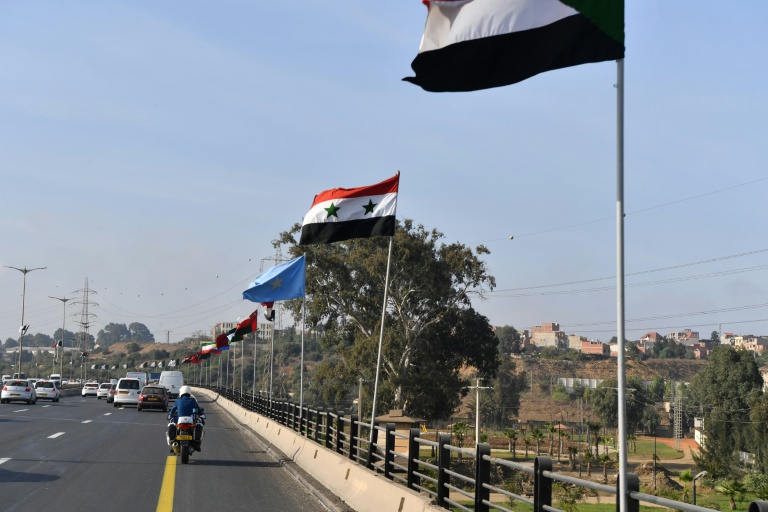
Arab leaders are to meet in the Algerian capital on Tuesday for their first summit since a string of normalisation deals with Israel that have divided the region.

The 22-member Arab League held its last summit in 2019, prior to both the coronavirus pandemic and the UAE’s historic US-backed deal establishing diplomatic ties with the Jewish state.

The agreement, only Israel’s third such deal with an Arab state, was followed by similar accords with Bahrain, Sudan and Morocco, deepening the kingdom’s decades-old rivalry with its neighbour Algeria.

The host of the November 1-2 summit, a steadfast supporter of the Palestinians, mediated a reconciliation deal in October between rival Palestinian factions Fatah and Hamas.

While few believe the deal will last, it was seen as a public relations coup for Algeria, which has been seeking an enhanced regional and international role, on the back of its growing status as a sought-after gas exporter.

But Algeria has been unnerved by Morocco’s security and defence cooperation with Israel, adding to decades of mistrust fuelled by a dispute over the Western Sahara.

The status of Western Sahara –– a former Spanish colony considered a “non-self-governing territory” by the United Nations –– has pitted Morocco against the Algeria-backed Polisario Front since the 1970s.

In August 2021, Algiers cut diplomatic ties with Rabat alleging “hostile acts”.

Participants in the summit, with conflicts in Syria, Libya and Yemen also on the agenda, face the challenge of navigating the wording of a final statement, which has to be passed unanimously.

“The summit should send a message of support to the Palestinians, guaranteeing that they will not be sacrificed for the Abraham Accords,” said Geneva-based expert Hasni Abidi, referring to the Arab normalisation deals with Israel mediated by the administration of former US president Donald Trump.

Algeria has heralded this week’s meeting as an event reunifying the Arab world, but several key figures, notably Saudi Crown Prince Mohamed bin Salman, reported to have an ear infection, and Morocco’s King Mohammed VI will be absent.

The leaders of the United Arab Emirates and Bahrain will also stay away, according to Arab media.

“The Arab states which have normalised with Israel are not enthusiastic about the idea of a coming together to condemn their position,” said Abidi.

– Palestinians at ‘front and centre’ –

Algerian President “Abdelmadjid Tebboune’s move to put the Palestinian issue front and centre haven’t reassured them”, he said.

Another source of controversy has been Algeria’s efforts to bring Syrian President Bashar al-Assad’s regime back into the Arab League, a decade after its membership was suspended amid a brutal crackdown on 2011 Arab Spring-inspired protests.

Abidi said inviting Syria to the summit would have been “highly risky”.

“Algeria realised the consequences of such a presence on the summit. Together with Damascus, it has given up on its initiative,” he said.

Pierre Boussel of France’s Foundation for Strategic Research (FRS) said Syria’s return to the League is backed by Russia, an ally of both Algiers and Damascus, which is staying away from the Algiers summit.

But, he said, “Russia has decided not to try to force this through in a way that would have affected its relations with Arab countries already badly scalded by the economic impact of the Ukrainian conflict”.

Arab League chief Ahmed Aboul Gheit called Friday for an “integrated Arab vision” to tackle the region’s pressing food security challenges.

Boussel said the “shockwave” of the Ukraine war, which has disrupted key grain imports for the region from the Black Sea, was being felt in Algiers.

“Given the scarcity of cereals, soaring inflation and concerns about new energy routes, the Arab League needs to show it is capable of cohesion and inter-state solidarity, which it has lacked since the beginning of the crisis,” he said.

Close Bitnami banner
Bitnami