Africa Business

'Horrible scene': Somalis in desparate search for missing relatives after blasts

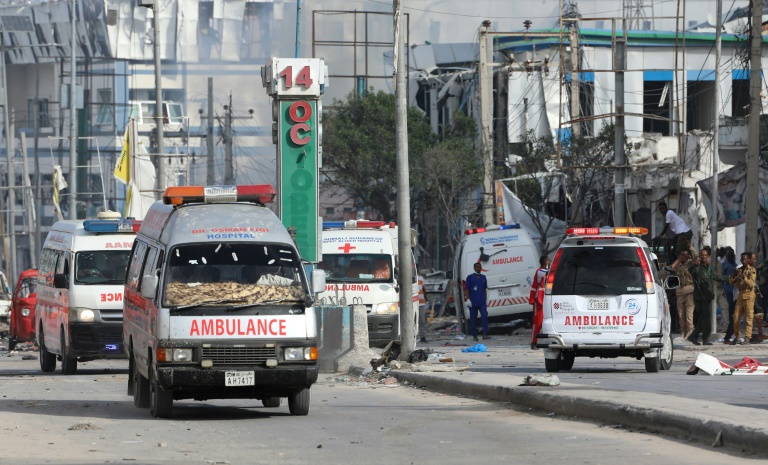
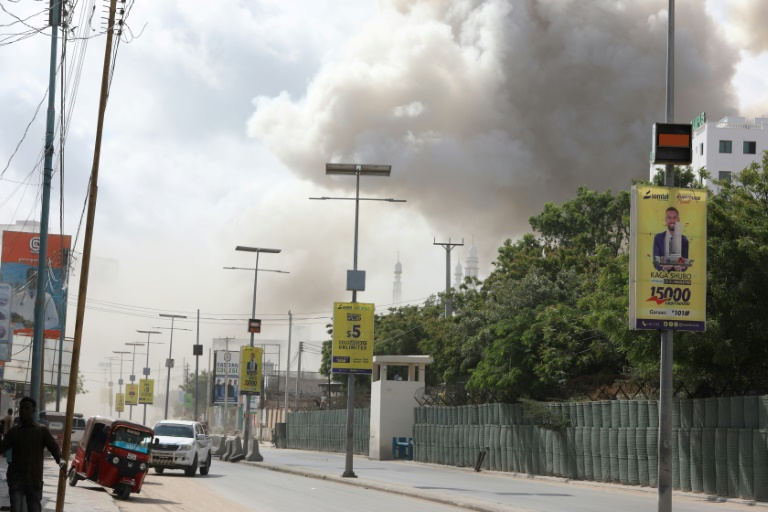
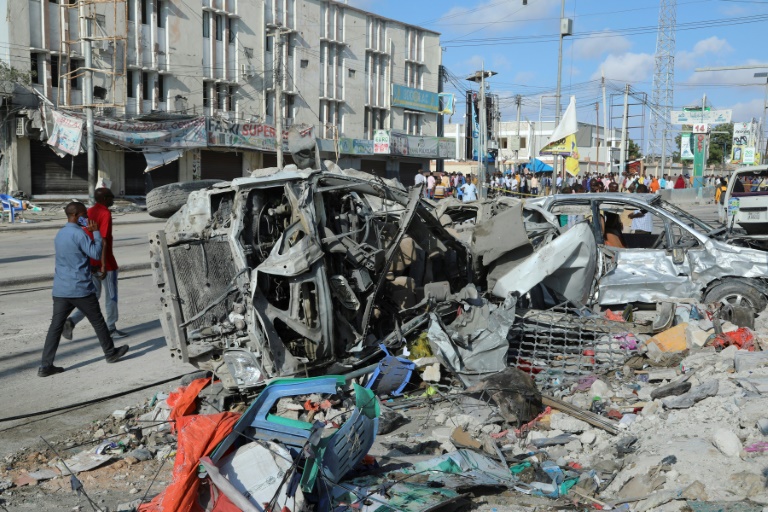
Anguished families in Somalia on Sunday desperately searched under debris and into body bags for loved ones after two simultaneous bombings tore through a busy intersection in the capital Mogadishu.

At least 100 civilians lost their lives and 300 others were wounded in Saturday’s attack claimed by Al-Qaeda-linked Al-Shabaab jihadists, the deadliest assault in the troubled nation in five years. 

President Hassan Sheikh Mohamud said the death toll was expected to rise.

Abdiasis Abdi, a 22-year-old student, spent hours into the night looking for his sister who last said she lived in Zobe, a busy commercial hub with restaurants, pharmacies and banks hit by the car bombs.

“We found her this morning with only some of her clothes recognisable,” Abdi said. Her body had been completely charred.

“I have never seen a horrible scene like that.”

The attack has inundated first responders and hospitals in the Horn of Africa nation, which has one of the world’s weakest health systems after decades of conflict.

The government put out an appeal for blood donations with dozens of people gathered outside hospitals in the capital Mogadishu, seeking news of family members. 

Mohamed Ganey described seeing victims “scattered” on hospital floors as they looked for his missing sister-in-law. But the joy of finding her did not last long.

“Unfortunately, she died from the injuries just a few minutes after we found her.

“Everybody is shocked. The only question people have in common today is why kill so many innocent people?”

Police officer Adan Mohamed who was among the first to arrive at the scene after the second car bomb went off sending shrapnel flying and plumes of smoke and dust into the air, said he could not contain his emotion.

“I could not sleep last night because of the horrible scene,” he told AFP, recounting how his colleagues found a baby whose mother had been killed in the blast. 

“I cried again and again after I saw her face with blood stains presumably from her mother’s body,” he said. 

“She could not even cry because of the horrible situation. All she could do was stare and blink her eyes.”

– ‘Waiting to get killed’-

Police spokesman Sadik Dudishe on Saturday said the “ruthless terrorists” had killed mothers some of whom had “children trapped on their backs.”

The attack took place at the same busy junction where a truck packed with explosives blew up on October 14, 2017, killing 512 people and injuring more than 290, the deadliest attack in the troubled country.

Witnesses said the road was busy with rows of tuk-tuks and other vehicles when the first blast hit.

“Rescuers, security forces and people seeking their relatives immediately rushed to the scene and the second blast went off,” Sumayo Ali who survived the attack said.

Shop owner Mohamed Jama, who was with four other men when he heard a loud explosion, said he crawled through broken glass to safety.

“Outside the shop, dead bodies and injuries were everywhere, some injured were screaming, that’s what I can remember now,” he told AFP from his hospital bed.

On Sunday morning, the area surrounding the intersection was quiet, patrolled by a handful of security officers as emergency workers  cleared the rubble and removed more bodies. 

Nearby buildings sustained heavy damage with their windows shattered and walls collapsed.

International condemnation of the attack has poured in, including from the United Nations, African Union and Turkey.

Pope Francis offered condolences. “Let us pray for the victims of the attack in Mogadishu in which more than 100 people lost their lives, among whom many children,” he said, following the traditional Angelus prayer in Saint Peter’s Square.  

For Hussein Jeeri, who lost his friend at the same intersection five years ago, tragedy stuck again on Saturday as his sister was wounded.

“I think the streets in Mogadishu are like walking on a sharp sword, we are all waiting to get killed or wounded like this one day.”
Eleven die in stampede at Fally Ipupa concert in DR Congo

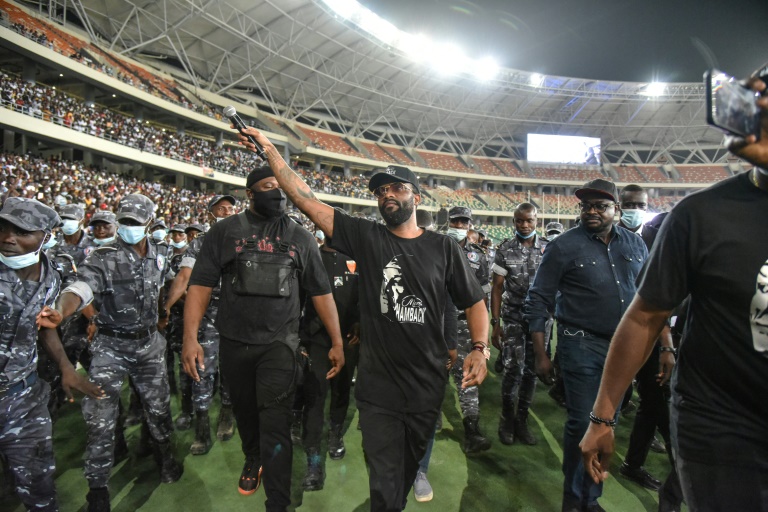
A stampede left nine spectators and two police officers dead during a packed concert by African music star Fally Ipupa at the biggest stadium in DR Congo’s capital, the interior minister said Sunday, blaming the organisers.

Too many people had been allowed into Kinshasa’s 80,000 capacity Martyrs’ stadium on Saturday night, Interior Minister Daniel Aselo Okito told the Actualite.cd news website.

“Eleven people dead… including two police,” the minister told reporters at the stadium, sending condolences to relatives of the casualties.  

He deplored the frequent “loss of human life and damage to equipment” during events held at the stadium.

The organisers “went beyond 100 percent capacity… they must be punished”, the minister said.

“It was a stampede,” that caused the deaths, a policeman on the scene told the official Congolese Press Agency ACP.

“The music-lovers suffocated.”

Kinshasa police chief General Sylvain Sasongo had earlier told ACP nine people had died, amid reports the venue had been absolutely jammed with people for the local favourite’s performance, with one witness saying “even the corridors” of the stadium were overflowing.

ACP, which had reporters in the stadium covering the concert, said police had cordoned off three areas to secure the pitch, the VIP stand and the stage.

“Under the pressure of the crowd, the police could not hold out long,” ACP said.

Singer-songwriter Fally Ipupa, “like all Congolese singers”, had arrived several hours after the show had been scheduled to start, the agency noted.

The Kinshasa-born 44-year-old is one of Africa’s leading musicians whose albums sell world-wide.

Eight die in stampede at Fally Ipupa concert in DR Congo

A stampede left seven spectators and one police officer dead during a packed concert by African music star Fally Ipupa at the biggest stadium in DR Congo’s capital, the police chief told official press agency ACP on Sunday.

“There were eight deaths including one police officer,” general Sylvain Sasongo said.

The Martyrs’ stadium has an 80,000 capacity and reports said it was absolutely full for the local favourite, with one witness saying “even the corridors” of the stadium were overflowing.

“It was a stampede,” that caused the deaths, a policeman on the scene told the official Congolese Press Agency. “The music-lovers suffocated.”

The agency, which had reporters in the stadium covering the concert, said police had cordoned off three areas to secure the pitch, the VIP stand and the stage.

“Under the pressure of the crowd, the police could not hold out long,” ACP said.

Singer-songwriter Fally Ipupa, “like all Congolese singers”, had arrived several hours after the show had been scheduled to start, the agency noted.

The Kinshasa-born 44-year-old is one of Africa’s leading musicians whose albums sell world-wide.

Burkina Faso ambush kills 13 soldiers: security sources

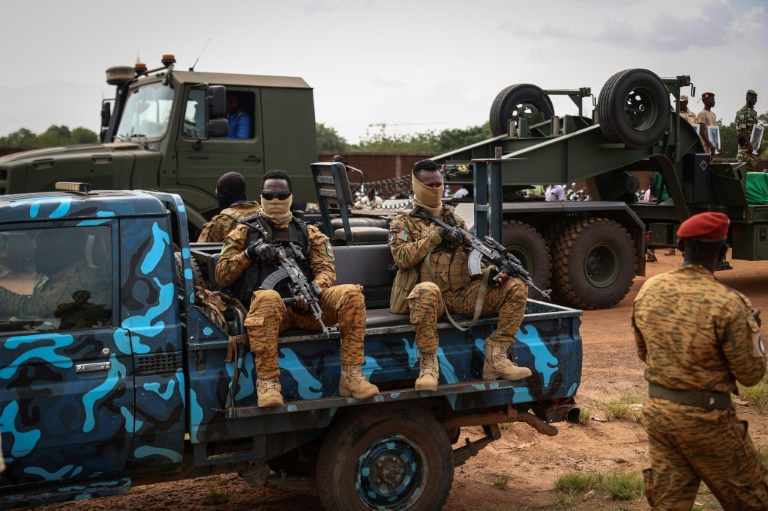
Suspected jihadists have ambushed and killed 13 soldiers in Burkina Faso’s eastern province, security sources told AFP on Sunday in the latest violence to shake the insurgency-torn west African nation.

Four members of the defence forces were also wounded in Saturday’s attack along the road linking Fada N’Gourma with Natiaboani, one of the sources said.

“Reinforcements have been deployed to secure the zone and carry out a search,” a second source added, confirming the casualty toll. The unit that came under fire had been sent to relieve a detachment from Natiaboani.

The ambush comes after the powerful Support Group for Islam and Muslims (GSIM), which is linked to Al-Qaeda, claimed Friday it carried out an attack on a military base in Djibo, a major northern town that has been under a jihadist blockade for three months.

The army said at least 10 soldiers died and 50 were wounded in that “terrorist” assault on the 14th regiment on Monday.

The army added it killed 18 “terrorists” in mopping-up operations.

GSIM also claimed responsibility for an attack on a supply convoy heading for Djibo on September 26 that left 37 dead — 27 of them soldiers. Dozens of truck drivers are still missing.

That assault helped trigger the latest coup in Burkina just four days later, led by young army captain Ibrahim Traore.

He became interim president on October 21, vowing to win back territory from jihadists.

It was Burkina’s second coup in eight months, driven by a seven-year insurgency that has claimed thousands of lives and driven nearly two million people from their homes.

The new government on Wednesday declared securing the Sahel state’s territory would be top priority.

More than a third of national territory remains outside government control.

The authorities also launched a drive to recruit 50,000 civilian defence volunteers to back up the army as the number of attacks increases.

A UN envoy warned this week that 4.9 million people, or a fifth of Burkina’s population, need urgent aid as many “mothers were forced to feed their children with leaves and salt”.

Death toll from Somalia twin bombings climbs to 100

The number of people killed in twin car bombings in the Somali capital Mogadishu, claimed by Al-Shabaab Islamists, has risen to 100, President Hassan Sheikh Mohamud said on Sunday.

“So far, the number of people who died has reached 100 and 300 are wounded, and the number for both the death and wounded continues to increase,” he said after visiting the blast location.

Two cars packed with explosives blew up minutes apart near the busy Zobe intersection, followed by gunfire in an attack targeting Somalia’s education ministry.

The afternoon explosions tore through walls, shattered windows of nearby buildings, sending shrapnel flying and plumes of smoke and dust into the air.

The victims included women, children and the elderly, police spokesman Sadik Dudishe said. 

“The ruthless terrorists killed mothers. Some of them died with their children trapped on their backs,” he said on Saturday, adding that the attackers had been stopped from killing more “innocent civilians and students.”

The attack took place at the same busy junction where a truck packed with explosives blew up on October 14, 2017, killing 512 people and injuring more than 290, the deadliest attack in the troubled country.

Mohamud described the incident as “historic”, saying “it is the same place, and the same innocent people involved.”

“This is not right. God willing, they will not be having an ability to do another Zobe incident,” he said, referring to the Islamist group Al-Shabaab.

Al-Qaeda-linked Al-Shabaab claimed responsibility for the attack in a statement, saying its fighters were targeting the ministry of education.

The bloody siege drew international condemnation from Somalia’s allies, including the United Nations, Turkey as well as the African Union force tasked with helping Somali forces take over primary responsibility for security by the end of 2024.

The UN mission in Somalia UNSOM vowed to stand “resolutely with all Somalis against terrorism.”

“These attacks underline the urgency and critical importance of the ongoing military offensive to further degrade Al-Shabaab,” AU Transition Mission in Somalia (ATMIS), which replaced the previous AMISOM peacekeeping force, said on Twitter late Saturday. 

– ‘All-out war’ –

Al-Shabaab have been seeking to overthrow the fragile foreign-backed government in Mogadishu for about 15 years.

Its fighters were driven out of the capital in 2011 by an African Union force but the group still controls swathes of countryside and continues to wage deadly strikes on civilian and military targets.

In August, the group launched a 30-hour gun and bomb attack on the popular Hayat hotel in Mogadishu, killing 21 people and wounding 117.

Mohamud, who was elected in May, vowed after the August siege to wage “all-out war” on the Islamists.

In September, he urged citizens to stay away from areas controlled by jihadists, saying the armed forces and tribal militia were ratcheting up offensives against them.

Al-Shabaab remains a potent force despite multinational efforts to degrade its leadership.

The group last week claimed responsibility for an attack on a hotel in the port city of Kismayo that killed nine people and wounded 47 others. 

Somalia has been mired in chaos since the fall of president Siad Barre’s military regime in 1991.

His ouster was followed by a civil war and the ascendancy of Al-Shabaab.

As well as the insurgency, Somalia — like its neighbours in the Horn of Africa — is in the grip of the worst drought in more than 40 years. Four failed rainy seasons have wiped out livestock and crops.

The conflict-wracked nation is considered one of the most vulnerable to climate change but is particularly ill-equipped to cope with the crisis as it battles the deadly Islamist insurgency.

DR Congo expels Rwandan ambassador as M23 rebels gain ground

The authorities in Kinshasa on Saturday announced they were expelling the Rwandan ambassador as M23 rebels they accuse Kigali of supporting made fresh gains in the east of the troubled country.

The announcement, made by government spokesman Patrick Muyaya, came after a government meeting to assess the security situation in the Democratic Republic of Congo.

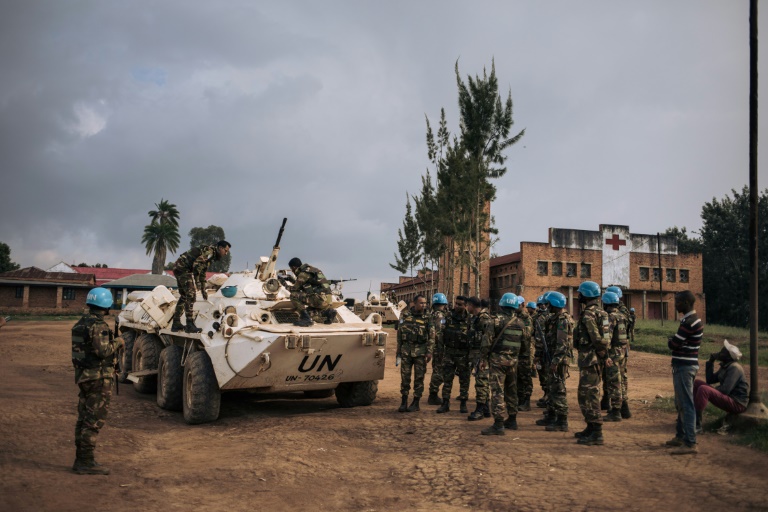
The latest advance by rebel fighters prompted the UN peacekeeping mission there to increase its “troop alert level” and boost support for the army.

Muyaya said that in recent days “a massive arrival of elements of the Rwandan element to support the M23 terrorists” against DR Congo’s troops had been observed.

“This criminal and terrorist adventure” had forced thousands of people to flee their homes, he added.

Given Rwanda’s continued support for the rebels, the defence council, presided over by President Felix Tshisekedi, had decided to ask the government to give Rwandan ambassador Vincent Karega 48 hours to leave the country.

– Rebel advances –

M23 rebel fighters have seized control of Kiwanja and Rutshuru-centre along the strategic RN2 highway in the eastern province of North Kivu, local officials and witnesses told AFP by telephone earlier Saturday.

Rebels had also been seen at Rugari, just 30 kilometres (20 miles) down the RN2 from the provincial capital Goma, which it links with the north and Uganda.

Four peacekeepers were wounded by mortar fire and shooting at Kiwanja, the mission announced.

“Kiwanja and Rutshuru-centre are in M23 hands,” said civil society representative Jacques Niyonzima.

“The rebels have held two meetings and told local people to go about their work and those displaced to return to their villages, saying security was now guaranteed,” he said.

At Kiwanja, “in our area we recorded three deaths, a man, a woman and her child, killed by shells that landed on houses”, said local resident Eric Muhindo.

A general hospital official in Rutshuru added: “There were several wounded in Kiwanja after a small amount of resistance”.

“Calm has returned. People are moving about and shops are opening,” the official said, asking not to be named.

– Hostile acts –

The UN’s MONUSCO mission condemned “the hostile acts of M23” and called for an immediate halt to the fighting.

The mission said on Twitter it was providing “air support, intelligence and equipment” as well as medical assistance.

The peacekeepers said they were “mobilised in support” of DRC’s army after residents reported at least 10 people dead since Sunday and dozens more injured near the RN2.

MONUSCO said it had set up an “operations coordination centre” with the army and was carrying out reconnaissance and surveillance flights, but did not provide further details about the alert level.

M23, a mostly Congolese Tutsi group, resumed fighting in late 2021 after lying dormant for years, accusing the government of having failed to honour an agreement over the demobilisation of its fighters.

It has since captured swathes of territory in North Kivu, including the key town of Bunagana on the Ugandan border in June.

The front line between Congolese troops and M23 rebels had been calm in recent weeks until last week, when clashes erupted again.

Last Sunday, M23 fighters captured the village of Ntamugenga in the Rutshuru area. It lies four kilometres (less than three miles) from the RN2 where the clashes spread on Thursday.

– Tension with Rwanda –

The UN humanitarian affairs office in the DRC said this week around 34,500 people had fled the Rutshuru region.

The group’s resurgence has destabilised regional relations in central Africa, with the DRC accusing its smaller neighbour Rwanda of backing the militia.

Rwanda denies the charges and counters that DRC works with a notorious Hutu rebel movement involved in the 1994 genocide of Tutsis, the Forces for the Liberation of Rwanda (FDLR), which Kinshasa also denies. 

A report by independent UN experts seen by AFP in August found that Kigali had provided direct support to the M23.

And this week a US representative to the United Nations spoke of Rwandan defence forces providing assistance to the M23.

Angola’s President Joao Lourenco said he would dispatch his Foreign Minister Tete Antonio to DR Congo to mediate the dispute, UN Secretary-General Antonio Guterres said following a phone call between the leaders.

Guterres said he was urgently trying to speak to both Tshisekedi and Rwandan President Paul Kagame.

M23 first leapt to prominence in 2012 when it briefly captured Goma before a joint Congolese-UN offensive drove it out.

The militia is one of scores of armed groups that roam eastern DRC, many of them a legacy of two regional wars that flared late last century.

Relations between Kigali and Kinshasa appeared to have improved when Tshisekedi took over as president in DR Congo in 2019 and held several meetings with Kagame.

But the revival of M23 put an end to that rapprochement.

Zimbabwe ruling party endorses president for 2023 vote

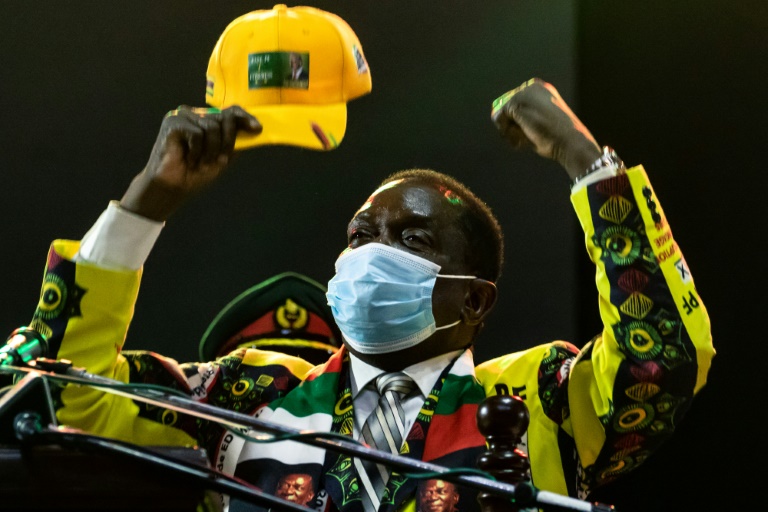
Zimbabwe’s governing party on Saturday declared President Emmerson Mnangagwa as its candidate for next year’s presidential election.

Mnangagwa came to power in 2017 after generals forced long-time ruler Robert Mugabe to resign.

The ruling ZANU-PF on Saturday handed 80-year-old Mnangagwa a five-year term as party leader during its annual congress.

“I wish to express my profound gratitude for electing me and endorsing me as the party’s sole (presidential) candidate,” Mnangagwa said at the event.

No date for the presidential election has been set but the vote is expected in the first half of 2023.

In 2018 Mnangagwa won disputed elections that his main rival Nelson Chamisa insists were rigged to hand him power.

“Our party stands solid, rejuvenated and unshakeable. ZANU-PF is ready. Nothing will stand in our way,” Mnangagwa told some 3,000 delegates at the congress in Harare.

Wearing a bright yellow jacket emblazoned with his portrait and matching baseball cap, Mnangagwa urged his supporters to shun violence.

“Never grow tired of preaching unity. Never grow tired of preaching peace. We reject violence. It’s alien to ZANU-PF.”

ZANU-PF has been accused in the past of using violence and intimidation to instil fear in opponents during elections.

Last week opposition activists including a lawmaker sustained injuries in attacks by alleged ZANU-PF activists.

Mnangagwa has also been accused of using the courts to crackdown on dissent with two opposition lawmakers and 16 opposition supporters languishing in prison since June over accusations of violence.

Prominent author Tsitsi Dangarembga, 63, and a friend were last month convicted by a court after their arrest in 2020 while carrying placards calling for reforms.

When Mnangagwa came to power, he pledged to revive Zimbabwe’s moribund economy and mend ties with Western allies who had turned their backs on the country and imposed sanctions on individuals aligned to ZANU-PF.

The economic woes which plagued Mugabe’s era have largely remained.

Efforts at re-engaging with the West were scuttled after six people were gunned down and several more injured when soldiers were deployed to quell poll-related protests in 2018.

UN ups troop alert as DR Congo rebels take more ground

Rebels seized more territory in the Democratic Republic of Congo on Saturday, prompting the UN peacekeeping mission to increase its “troop alert level” and boost support for the army.

The M23 rebel fighters had seized control of Kiwanju and Rutshuru-centre along the strategic RN2 highway in the eastern province of North Kivu, local officials and witnesses told AFP by telephone.

Rebels had also been seen at Rugari, just 30 kilometres (20 miles) down the RN2 from provincial capital Goma, which it links with the north and Uganda.

Four peacekeepers were wounded by mortar fire and shooting at Kiwanja, the mission announced.

“Kiwanja and Rutshuru-centre are in M23 hands,” said civil society representative Jacques Niyonzima.

“The rebels have held two meetings and told local people to go about their work and those displaced to return to their villages, saying security was now guaranteed,” he said.

At Kiwanja, “in our area we recorded three deaths, a man, a woman and her child, killed by shells that landed on houses”, said local resident Eric Muhindo.

A general hospital official in Rutshuru added: “There were several wounded in Kiwanja after a small amount of resistance”.

“Calm has returned. People are moving about and shops are opening,” the official said, asking not to be named.

In the capital Kinshasa, the presidency said head of state Felix Tshisekedi was holding a “meeting on national security in the light of the change in the security situation in the east of the country”.

– Hostile acts –

The MONUSCO mission condemned “the hostile acts of M23”, the rebel group, and called for an immediate halt to the fighting.

The mission said on Twitter it was providing “air support, intelligence and equipment” as well as medical assistance.

The peacekeepers said they were “mobilised in support” of DRC’s army after residents reported at least ten people dead since Sunday and dozens more injured near RN2.

The MONUSCO said it had set up an “operations coordination centre” with the army and was carrying out reconnaissance and surveillance flights, but did not provide further details about the alert level.

M23, a mostly Congolese Tutsi group, resumed fighting in late 2021 after lying dormant for years, accusing the government of failing to honour an agreement to rehabilitate its fighters.

It has since captured swathes of territory in North Kivu, including the key town of Bunagana on the Ugandan border in June.

The frontline between Congolese troops and M23 rebels had been calm in recent weeks until last week, when clashes erupted again.

Last Sunday, M23 fighters captured the village of Ntamugenga in the Rutshuru area. It lies four kilometres (2.5 miles) from the RN2 where the clashes spread on Thursday.

The UN humanitarian affairs office in the DRC said this week around 34,500 people had fled the Rutshuru region.

The group’s resurgence has destabilised regional relations in central Africa, with the DRC accusing its smaller neighbour Rwanda of backing the militia.

Rwanda denies the charges and counters that DRC works with a notorious Hutu rebel movement involved in the 1994 genocide of Tutsis, which Kinshasa also denies. 

A report by independent UN experts seen by AFP in August found that Kigali had provided direct support to the M23.

And this week a US representative to the United Nations spoke of Rwandan defence forces providing assistance to the M23.

M23 first leapt to prominence in 2012 when it briefly captured Goma before a joint Congolese-UN offensive drove it out.

The militia is one of scores of armed groups that roam eastern DRC, many of them a legacy of two regional wars that flared late last century.

Sudan Islamists protest UN post-coup mediation

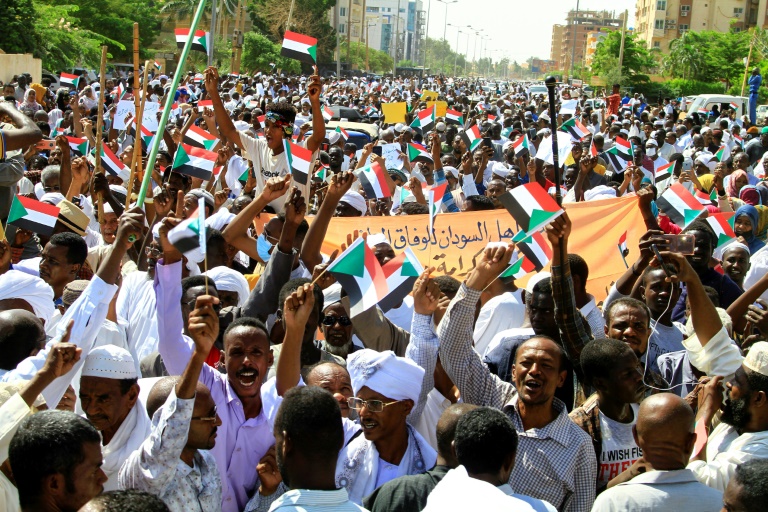
Some 3,000 protesters in Khartoum on Saturday rejected UN mediation efforts between civilian and military leaders as “foreign interference” and called for Islamist rule in Sudan, an AFP correspondent said.

A military coup led by army chief Abdel Fattah al-Burhan last year derailed a fragile transition to civilian rule after the 2019 ouster of long-time autocrat Omar al-Bashir.

For 12 months, near weekly anti-coup protests have been met with force, and efforts by the United Nations and other international actors to bring Sudan’s military government and civilian leaders to the table have stalled.

The crowd that gathered Saturday in front of the headquarters of the UN mission in Sudan chanted pro-Bashir slogans and burned photos of UN envoy Volker Perthes.

“We are demonstrating for our dignity and our sovereignty. Volker has defiled our country,” protester Hafez Joubouri told AFP.

Another told AFP he wanted “the armed forces to side with the people and kick Volker out today”.

An AFP correspondent said some protesters chanted “Volker, you mole, we beheaded Gordon,” referring to British general Charles Gordon who was killed in an 1885 revolt in Sudan.

With police standing nearby, some demonstrators waved banners reading “No to foreign interference” and “No to the UN”, an AFP correspondent said.

The crowd later dispersed without incident.

The country has been grappling with deepening political unrest and a spiralling economic crisis since Burhan seized power on October 25, 2021 and arrested the civilian leaders with whom he had agreed to share power.

Civilian leaders have refused to negotiate with the military before it commits to a timetable for full withdrawal from power.

Pro-democracy activists worry that Burhan’s regime has reappointed Bashir loyalists to official positions, including in the judiciary that is now trying the former Islamist dictator.

On Thursday, security forces had fired tear gas at thousands of demonstrators demanding an end to military rule.

The crackdown on anti-coup protests has killed at least 119 people, according to pro-democracy medics.

Somalia car bombs kill at least nine

At least nine people, including children, died on Saturday in twin car bomb attacks targeting Somalia’s education ministry in the capital Mogadishu, security officers and witnesses said.

Two cars packed with explosives were detonated minutes apart near the busy Zobe junction and followed by gunfire, 

“I was among the first security officers to reach the area, I saw dead bodies of nine people most of them civilians including women and children,” said security officer Ahmed Ali, adding that dozens had been wounded.

Another security officer Yusuf Abdullahi gave a similar toll. 

Police spokesman Sadik Dudishe did not give a death toll figure but said the incident was being investigated. 

“The ruthless terrorists killed mothers. Some of them died with their children trapped on their backs,” he told reporters at a press briefing, adding the attackers had targeted “students and other civilians”.

The response by security forces had stopped the attackers from reaching their intended location, Dudishe said. 

The afternoon explosions shattered windows of nearby buildings, sent shrapnel flying and clouds of smoke and dust into the air.

Abdirahman Ise, a witness, said the road had been busy when the first blast went off. 

“I saw huge smoke in the ministry area and there is massive destruction,” another witness, Amino Salad, said. 

The attack happened at a busy junction where a truck packed with explosives blew up on October 14, 2017, killing 512 people and injuring more than 290.

There was no immediate claim of responsibility for the attack but Islamist group Al-Shabaab remains a potent force in the troubled Horn of Africa nation despite multinational efforts to degrade its leadership.

The jihadists have been seeking to overthrow the fragile foreign-backed government in Mogadishu for about 15 years.

Its fighters were driven out of the capital in 2011 by an African Union force but the group still controls swathes of countryside and has the capacity to wage deadly strikes on civilian and military targets.

They use threats of violence to collect taxes in territory under their jurisdiction.

The group last week claimed responsibility for an attack on a hotel in the port city of Kismayo that killed nine people and wounded 47 others. 

In August, the group launched a 30-hour gun and bomb attack on the popular Hayat hotel in Mogadishu, killing 21 people and wounding 117.

– ‘All-out war’ –

Somali President Hassan Sheikh Mohamud, who was elected in May, vowed after the August siege to wage “all-out war” on the Islamists.

In September he urged citizens to stay away from areas controlled by jihadists, saying the armed forces and tribal militia were ratcheting up offensives against them.

A joint US-Somali drone strike killed one of the militants’ most senior commanders on October 1.

Just hours after his death was announced, a triple bombing in the southern city of Beledweyne killed at least 30 people.

In addition to violence, Somalia — like its neighbours in the Horn of Africa — is in the grip of the worst drought in more than 40 years. Four failed rainy seasons have wiped out livestock and crops. 

The conflict-wracked nation is considered one of the most vulnerable to climate change but is particularly ill-equipped to cope with the crisis as it battles the deadly Islamist insurgency.

Close Bitnami banner
Bitnami