Africa Business

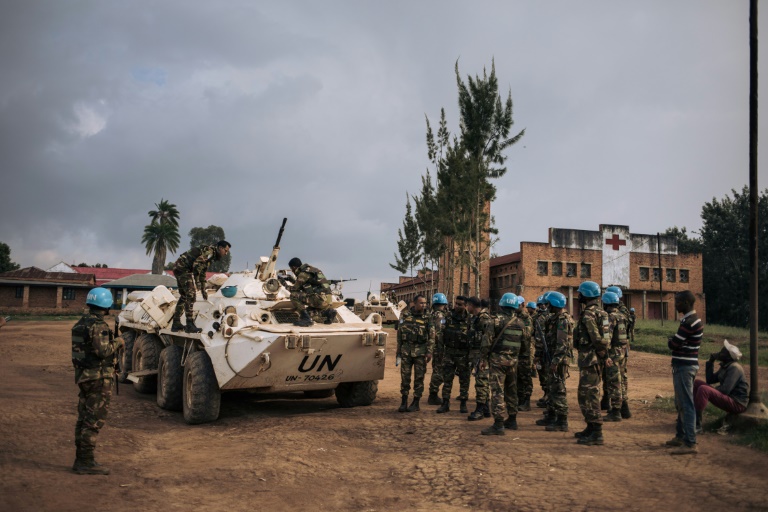
UN steps up troop alert as DR Congo rebels take more territory

Rebels seized more territory in the Democratic Republic of Congo on Saturday, prompting the UN peacekeeping mission to increase its “troop alert level” and boost support for the army.

The M23 rebel fighters had seized control of two localities along the strategic RN2 highway in the eastern province of North Kivu, local officials and witnesses told AFP by telephone.

Rebels had also been seen at Rugari, just 30 kilometres (20 miles) down the RN2 from provincial capital Goma, which it links with the north and Uganda.

“Kiwanja and Rutshuru-centre are in M23 hands,” said civil society representative Jacques Niyonzima.

“The rebels have held two meetings and told local people to go about their work and those displaced to return to their villages, saying security was now guaranteed,” he said from Kiwanja.

A general hospital official in Rutshuru added: “There were several wounded in Kiwanja after a small amount of resistance”.

“Calm has returned. People are moving about and shops are opening,” the official said, asking not to be named.

– Hostile acts –

The MONUSCO mission condemned “the hostile acts of M23”, the rebel group, and called for an immediate halt to the fighting.

The DRC army had made no comment by mid-afternoon Saturday on the latest rebel reports.

But the MONUSCO said on Twitter it was providing “air support, intelligence and equipment” as well as medical assistance.

The peacekeepers said they were “mobilised in support” of DRC’s army after residents reported at least ten people dead since Sunday and dozens more injured near RN2.

The MONUSCO said it had set up an “operations coordination centre” with the army and was carrying out reconnaissance and surveillance flights, but did not provide further details about the alert level.

M23, a mostly Congolese Tutsi group, resumed fighting in late 2021 after lying dormant for years.

It has since captured swathes of territory in North Kivu, including the key town of Bunagana on the Ugandan border in June.

The frontline between Congolese troops and M23 rebels had been calm in recent weeks until last week, when clashes erupted again.

Last Sunday, M23 fighters captured the village of Ntamugenga in the Rutshuru area. It lies four kilometres (2.5 miles) from the RN2 where the clashes spread on Thursday.

The UN humanitarian affairs office in the DRC said this week around 34,500 people had fled the Rutshuru region.

The group’s resurgence has destabilised regional relations in central Africa, with the DRC accusing its smaller neighbour Rwanda of backing the militia.

Rwanda denies the charges and counters that DRC works with a notorious Hutu rebel movement involved in the 1994 genocide of Tutsis, which Kinshasa also denies. 

A report by independent UN experts seen by AFP in August found that Kigali had provided direct support to the M23.

And this week a US representative to the United Nations spoke of Rwandan defence forces providing assistance to the M23.

M23 first leapt to prominence in 2012 when it briefly captured Goma before a joint Congolese-UN offensive drove it out.

The militia is one of scores of armed groups that roam eastern DRC, many of them a legacy of two regional wars that flared late last century.
S.Africa crowns new Zulu king at mega party

A new Zulu King was formally enthroned as the head of South Africa’s most influential traditional monarchy at a colourful ceremony on Saturday attended by tens of thousands.

President Cyril Ramaphosa handed over a giant framed certificate officially recognising the 48-year-old new ruler Misuzulu Zulu in the coastal city of Durban.

“Our king, is indeed officially the King of the Zulu nation and the only king of the Zulu nation,” said Ramaphosa to loud applause at an 85,000-seater soccer stadium.

The king vowed to promote “peace and reconciliation” and to “be a catalyst” for development.

The coronation of the ruler of the country’s richest monarchy comes after a year of bitter feuding over the royal succession that has spilled into the courts.

Misuzulu ascended the throne once held by his late father, Goodwill Zwelithini, who died in March 2021 — after more than 50 years on the throne.

The crowning which followed a traditional coronation ceremony in August, is the first South Africa has witnessed in more than half a century.

“This historic moment only comes once in a lifetime, many of us will never see this historic moment again,” said Ramaphosa.

Although the title of king does not bestow executive power, the monarchs wield great moral influence over more than 11 million Zulus, who make up nearly a fifth of South Africa’s population of 60 million people.

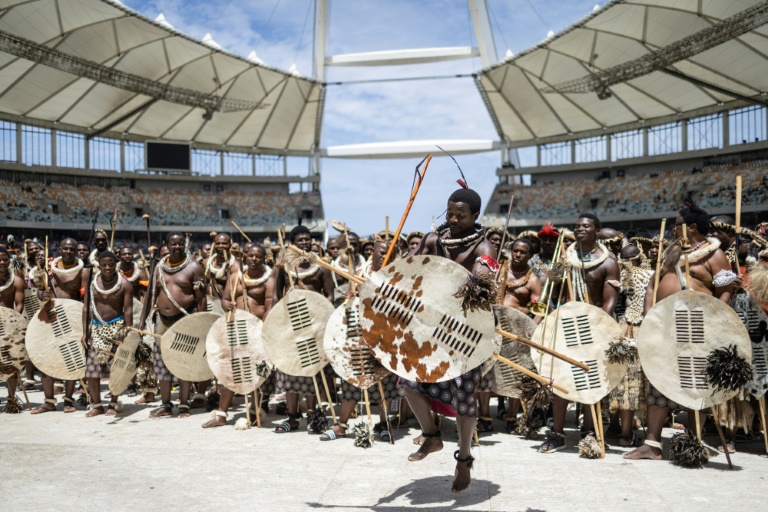
Amabutho, or royal regiments, clad in traditional skirts, leopard skin tops, and carrying shields and sticks chanted songs of praise for their king.

Singing and blowing whistles as they slowly glided around the pitch, women wore broad-brimmed Zulu hats and traditional wraps.

Young girls — some bare breasted — in equally brightly coloured pleated skirts and beads, excitedly danced and ululated in the Moses Mabhida Stadium, built for the 2010 FIFA World Cup tournament.

– ‘Great day for’ Zulus –

Londolo Zungu, 49, was among the women at the party. “We are very happy, more than happy, we are supporting the king 100 percent,” she told AFP.

Khaya Ndwandwe, a Zulu historian, said government’s recognition of Misuzulu as “the real king of the Zulu people” means “now the king will be more than protected”.

“It’s a day of great joy for the Zulu people,” said Ndwandwe. 

The ceremony was given rolling live coverage on all of South Africa’s largest television stations and media outlets.

A long grey feather stuck out from the king’s hair, while a bunch of black feathers were arranged on the back of his head as he sat on a throne covered in leopard skin.   

Head of the Anglican church in South Africa Archbishop Thabo Makgoba dabbed holy oil on the king’s hands, face and head as crowds looked on.

“As you embark upon your reign as king …I believe you are being called to step up and emulate the highest traditions of your ancestors,” said Makgoba.

In his acceptance speech, the king pledged to work for progress as the world grapples “poverty, unemployment, trust deficit in government and traditional leadership structures, climate change disasters, economic meltdown”.

Among the delegates were King Mswati III of Africa’s last absolute monarchy, Eswatini, who is also an uncle to the new Zulu king. 

Two of South Africa’s ex-presidents, Jacob Zuma and Thabo Mbeki, were also present.

Zulu kings are descendants of King Shaka, the 19th-century leader still revered for having united a large swathe of the country as the Zulu nation, which fought bloody battles against the British colonisers.

King Zwelithini, who died after more than 50 years in charge, left six wives and at least 28 children.

Misuzulu is the first son of Zwelithini’s third wife, who he designated as regent in his will. 

The queen however died suddenly a month after Zwelithini, leaving a will naming Misuzulu as the next king — a development that did not go down well with other family members. 

The new monarch’s first name means “strengthening the Zulus” but his path to the crown has not been smooth.

Niger lists 15 anti-rebel operations with French forces

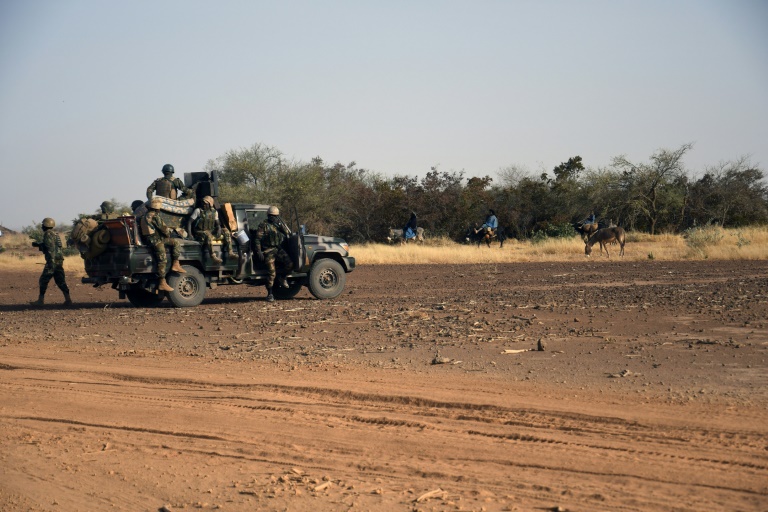
Nigerien and French forces staged 15 “joint operations” seizing arms and ammunition from jihadist insurgents along the African country’s volatile border with Mali from July to October, Niger’s army said Saturday.

The world’s poorest country by the UN’s development index, Niger is battling two insurgencies that have swept in from its neighbours.

“Fifteen operations have been jointly planned and carried out in the Almahaou zone over the period from July to October 2022,” an army statement said.

The Almahaou, meaning whirlwind in the Djerma language, is Niger’s anti-jihadist force deployed mainly in the vast and unstable Tillaberi region bordering Mali and Burkina Faso.

At least 11 people died in a suspected jihadist attack on trucks near the Niger’s Mali border last Saturday. 

The joint operations were reviewed this week during a meeting chaired by Niger’s army chief of staff General Salifou Modi with French “partners”, the army added, referring to the Barkhane forces sent by Paris.

The forays led to the capture of arms, ammunition and communications equipment, as well as the “destruction of several logistical sites” and “motorised transports”.

Some 30 suspects were also arrested.

“These actions… have contributed towards building a climate of peace for a return to farming” activities and the distribution of food, Modi said.

Free medical consultations were also made available in the area.

Modi hailed the “positive outcome of the operations” and the close cooperation with Barkhane.

Niamey faces a longstanding Boko Haram campaign on its southeastern border with Nigeria, and a dynamic seven-year offensive in the southwest which swept in from Mali, where al-Qaeda and Islamic State group jihadists are active.

Following the withdrawal of French forces from Mali this summer, the Niger government fears a security vacuum that could aggravate the situation along the 800-kilometre (500-mile) border they share.

France still fields some 3,000 troops in the Sahel, including 1,700 in Niger.

The ruling junta in Bamako, which is accused of working with Russia’s shadowy private paramilitary group Wagner, has pushed out the Barkhane force since 2020.

Mega party as S.Africa crowns new Zulu king

Tens of thousands of people in colourful regalia gathered at a huge soccer stadium in the coastal city of Durban on Saturday to celebrate the official coronation of South Africa’s Zulu king.

President Cyril Ramaphosa was to hand over the certificate to formally recognise the 48-year-old new ruler of the country’s richest and most influential traditional monarchy.

Misuzulu Zulu ascended the throne once held by his late father, Goodwill Zwelithini, who died in March 2021 after a diabetes-related illness.

The crowning — the first South Africa has witnessed in more than half a century — comes after a year of bitter feuding over the royal succession that has spilled into the courts.

Although the title of king does not bestow executive power, the monarchs wield great moral influence over more than 11 million Zulus, who make up nearly a fifth of South Africa’s population.

Amabutho, or royal regiments, clad in traditional skirts, faux leopard skin tops, and carrying shields and sticks chanted songs of praise for their king.

Singing and blowing whistles as they slowly and majestically glided around the pitch, women wore broad-brimmed Zulu hats and traditional wraps.

Young girls in equally brightly coloured pleated skirts and beads, excitedly danced and ululated in the 85,000-seater Moses Mabhida Stadium — which was built for the FIFA 2010 World Cup tournament.

– ‘Great day for’ Zulus –

Londolo Zungu, 49, in traditional Zulu attire was among the women at the party. “We are very happy, more than happy, we are supporting the king 100 percent,” she told AFP.

Khaya Ndwandwe, a Zulu historian, said at the stadium that recognition of the new king by government as “the real king of the Zulu people” means “now the king will be more than protected”.

“It’s a great day for the Zulu nation. It’s a day of great joy for the Zulu people, for everybody,” said Ndwandwe. 

The ceremony was given rolling live coverage on all of South Africa’s largest television stations and media outlets.

A long grey feather stuck out from the king’s hair, while a bunch of black feathers were arranged on the back of his head as he sat on a throne covered in leopard skin.   

Head of the Anglican church in South Africa Archbishop Thabo Makgoba dabbed holy oil on the king’s hands, face and head as crowds looked on.

“As you embark upon your reign as king of the nation that is recognised internationally as one of the greatest in Africa, I believe you are being called to step up and emulate the highest traditions of your ancestors,” said Makgoba.

Among the delegates were King Mswati III of Africa’s last absolute monarchy, Eswatini, who is also an uncle to the new Zulu king.

Zulu kings are descendants of King Shaka, the 19th-century leader still revered for having united a large swathe of the country as the Zulu nation, which fought bloody battles against the British colonisers.

King Zwelithini, who died after more than 50 years in charge, left six wives and at least 28 children.

Misuzulu is the first son of Zwelithini’s third wife, who he designated as regent in his will. 

The queen however died suddenly a month after Zwelithini, leaving a will naming Misuzulu as the next king — a development that did not go down well with other family members. 

The new monarch’s first name means “strengthening the Zulus” but his path to the crown has not been smooth.

UN steps up 'troop alert level' in DR Congo

The UN peacekeeping mission in the Democratic Republic of Congo on Saturday announced an increase in its “troop alert level” following deadly clashes with rebels in the east. 

The MONUSCO mission condemned “the hostile acts of M23” rebel group and called for an immediate halt to the fighting.

It was providing “air support, intelligence and equipment” as well as medical assistance to the DRC’s army, the mission said on Twitter.

The peacekeepers said they were “mobilised in support” of the FARDC army which clashed this week with the M23 around a strategic highway, with residents reporting at least ten people dead since Sunday and dozens more injured.

MONUSCO said it had set up an “operations coordination centre” with the army and was carrying out reconnaissance and surveillance flights, but did not provide further details about the alert level.

Several witnesses told AFP by telephone on Saturday that the M23 had seized control of Kiwanja and Rutshuru-centre, along the RN2 highway linking the North Kivu provincial capital Goma with the north and Uganda.

M23, a mostly Congolese Tutsi group, resumed fighting in late 2021 after lying dormant for years.

It has since captured swathes of territory in North Kivu province, including the strategic town of Bunagana on the Ugandan border in June.

The group’s resurgence has destabilised regional relations in central Africa, with the DRC accusing its smaller neighbour Rwanda of backing the militia.

The rebel group first leapt to prominence in 2012 when it briefly captured Goma before a joint Congolese-UN offensive drove it out.

The militia is one of scores of armed groups that roam eastern DRC, many of them a legacy of two regional wars that flared late last century.
Confident Zimbabwe see 'huge' chance to make T20 World Cup semis

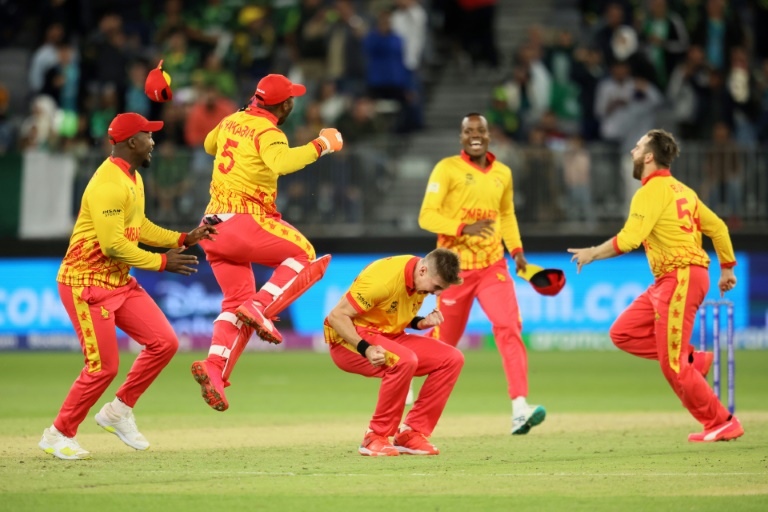
Confident skipper Craig Ervine said Saturday that Zimbabwe had a “huge” chance to reach the Twenty20 World Cup semi-finals, praising new coach Dave Houghton for instilling belief in the team.

The African nation, who came through the first round in Australia to make the Super 12, pulled off a stunning one-run upset over Pakistan on Thursday.

It came on the back of them sharing the points with South Africa from a washed-out game, leaving them level on three points with the Proteas and one behind Group 2 leaders India.

Zimbabwe face Bangladesh next in Brisbane on Sunday, followed by the Netherlands and heavyweights India.

“Look, we’ve got a huge chance to make the semis,” said Ervine.

“Again, it requires us to win against Bangladesh and also to beat (the) Netherlands, and then we’ve got our final game against India, and depending on some other results.”

“The guys, obviously got their tails up,” he added. “We’ve got a lot of confidence obviously with the win against Pakistan, but we just know how fragile this game is and how quickly it can turn around.

“But we can’t look too far ahead right now. I think we’re probably just looking at tomorrow and trying to concentrate on tomorrow’s game.”

Zimbabwe are in the Super 12 for the first time, turning a corner since Houghton, the country’s first Test captain back in 1992, was appointed for his second stint as national coach in July.

He steered them through the qualifying tournament and to a point where Ervine is talking about a semi-final chance.

Ervine said Houghton, considered one of Zimbabwe’s best batsmen, had brought a new approach, along with huge respect.

“When Dave took over, he basically changed the way that we did our training, and installed a lot of belief back into each and every player,” he said. 

“Every time he speaks, you can just look around the room and you can tell that everybody is paying attention. Everybody is taking it in. Everybody respects him.

“He’s managed to just change the mentality of every single player in the squad, and I think through the performances, I think it’s reassured everybody that what Dave is doing for us works.”

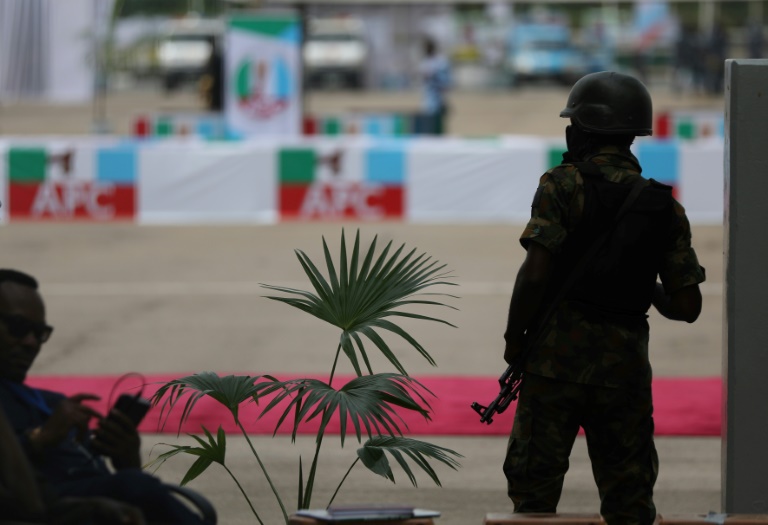
Nigeria beefs up security after US, UK 'terror' warning

Nigeria on Friday said it had beefed up security and called for the public to be vigilant but calm after the United States and Britain warned of a high “terror” threat in the capital Abuja.

Without giving details on any specific threat, the US on Thursday ordered diplomats’ families to leave Abuja due to what it called a “heightened risk of terrorist attacks.”

Residents of the Federal Capital Territory (FCT) have been on high alert since Sunday, when several Western embassies changed their travel advisories citing an elevated risk of attack in Abuja.

Nigerian troops are fighting jihadist insurgents mostly in the northeast, though there are small cells in other parts of the country. 

Militants linked to the Islamic state group claimed several attacks near the capital in the past six months, including a mass jailbreak in July.

The incident in Kuje, in which more than 400 inmates including dozens of suspected jihadists escaped, had prompted Buhari to say he was “disappointed” with his intelligence services.

But since then, “security measures have been reinforced in and around the FCT,” a statement from President Muhammadu Buhari’s office said on Friday, citing “heightened monitoring and interception of terrorist communications.”

“Terror is a reality the world over. However, it does not mean an attack in Abuja is imminent,” it added.

The president said he gave his “assurances that the government is on top of the security situation.”

“Attacks are being foiled. Security agents are proactively rooting out threats to keep citizens safe –- much of their work unseen and necessarily confidential.”

While he ordered “additional precautionary measures be put in place,” Buhari said that “the recent changes in travel advice from the US and UK governments should not be a cause for panic.”

On Thursday, Nigerian police instructed “all strategic police managers in charge of commands and tactical formations within the country to beef up security in their respective jurisdictions, especially in the FCT.”

US State Department spokesman Ned Price praised security efforts both in Nigeria and South Africa, where a separate US alert of a potential attack outraged the government which feared a panic.

“We appreciate the efforts of our Nigerian partners to address security threats in Abuja and across the country,” Price said.

– Soft targets –

The Inspector General of Police Usman Alkali Baba said “all emergency numbers” should be activated to help ensure “a 24/7 prompt response with combatant officers and men on standby.”

The State Department in its country summary for Nigeria warned that “terrorists may attack with little or no warning,” targeting malls, markets, hotels, places of worship, restaurants, bars or schools.

The United States, Britain, Australia and Canada had issued warnings last weekend, although the three latter countries had not ordered any evacuation of staff or their families as of Friday.

Some European embassies and international organisations have not updated their risk assessments or travel advisories for Nigeria.

“We have no crisis to manage, we are managing the panic,” a senior security manager with an international organisation based in Abuja told AFP, asking to remain anonymous.

“We don’t know what the motive is (behind the US evacuation). We are taking some precautionary measures/actions, but activities are normal,” he added.

On Thursday, Jabi Lake Mall, a major shopping centre in Abuja was temporarily shut down for unspecified security reasons.

Nigeria’s military is stretched thin, with soldiers deployed throughout most of the West African nation of some 200 million people.

The last time a jihadist group — Boko Haram — attacked the city centre was in 2014.

In addition to the ongoing terrorism threat, the capital is also surrounded by states with rampant banditry — gangs of gunmen who kidnap and kill with no ideological motivation.

Analysts have warned that insecurity could worsen with the start of political campaigning for the general election to replace Buhari next year.

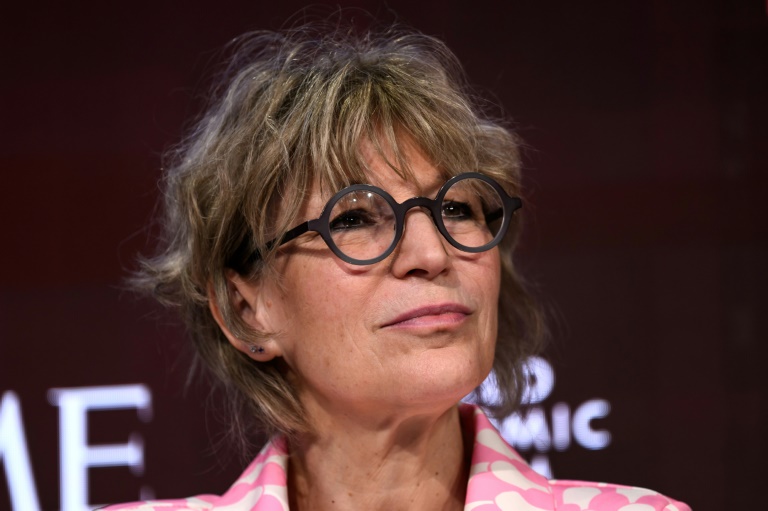
Amnesty head calls for 'new Mandela' in Africa, denounces shrinking freedoms

Amnesty International’s secretary general on Friday called for new “enlightened” political leadership in Africa, lamenting shrinking civil liberties in Mali, Senegal and elsewhere on the continent.

Speaking to reporters in the Senegalese capital Dakar after visiting both countries, Agnes Callamard spoke of worrying reports of abuses in Mali and urged more transparency in probes into protester deaths in Senegal.

She said West African nations were experiencing a reduction in the scope of individual freedoms, with activists being prosecuted, security forces using excessive force against protesters, and journalists under pressure throughout the region.

“In this context, in which human values are being flouted, we need real leaders, we need authentic leadership, we need people who stand out from this,” Callamard said. 

“I would hope that perhaps these leaders could emerge or be found in Africa,” she said, adding former South African president and anti-apartheid activist Nelson Mandela was such an example.

“The world needs enlightened leadership from African leaders. We find it at the level of civil society, now we should also find it at the level of political leadership”, she said.

In Mali, she denounced ill will on the part of the ruling junta.

“Amnesty International and others have noted an increase in violence against civilians since the beginning of the year, an increase that is not at all recognised by the authorities,” she added.

Yet “that denial cannot help”, she said.

She cited “extremely worrying” reports of enforced disappearances and urged investigations into crimes allegedly committed by armed forces against civilians.

But, she said, there had been “progress” on the legal and administrative framework towards fighting impunity.

In Senegal, she called for greater transparency in investigating the violent protests of March 2021 and June this year, in which civilians were killed.

In March 2021, she said 14 people died in protests following the arrest of the opposition politician Ousmane Sonko on rape charges.

In June, protests in the run-up to parliamentary elections again turned violent.

Authorities “claim a willingness to apologise… but for Amnesty the truth about the wrongs (committed) and justice for the families of the victims cannot be compromised,” Callamard said.

“Impunity for the excessive use of force by the security forces must end.”

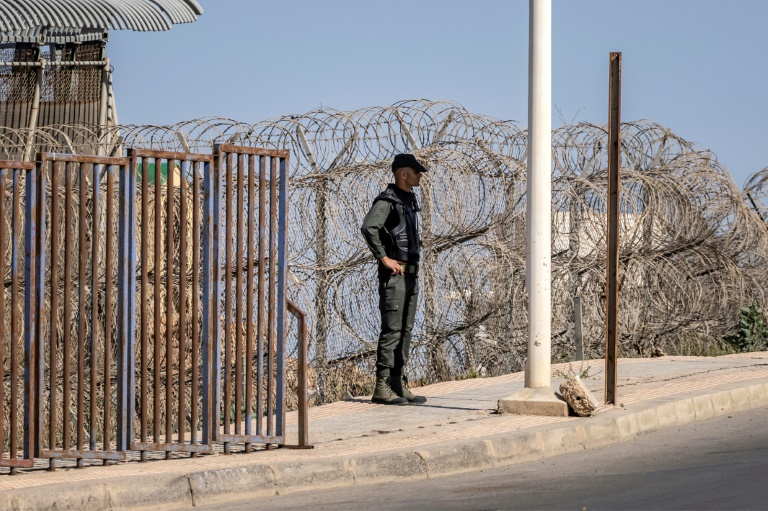
Morocco arrests 32 migrants heading to Spain, jails 80

Moroccan police on Friday arrested 32 migrants as they tried to set sail for Spain, authorities said, including six Moroccans and 26 from other African nations to the south.

The group were arrested on the coast with an inflatable boat near the southern town of Tantan, which lies some 100 kilometres (60 miles) from Spain’s Canary Islands, the DGSN security service said.

At least 11,500 migrants made their way to the Canary Islands this year, according to Spain.

Caminando Fronteras, a Spanish group that helps migrant boats in trouble at sea and families searching for missing relatives, says 978 people have died while trying to reach Spain so far this year.

Moroccan police have arrested dozens of migrants as well as several people smugglers since June, when some 2,000 mostly Sudanese nationals tried to enter the Spanish enclave of Melilla.

At least 23 people died in the attempt, the worst toll in years of such attempted crossings, and rights groups accused both Spanish and Moroccan authorities of using excessive force.

The Spanish enclaves of Melilla and Ceuta have long been a magnet for people fleeing violence and poverty across Africa hoping to find a better life in Europe.

According to Morroco’s AMDH rights group, around 80 migrants of various nationalities were sentenced to prison terms this week ranging from two to four months in jail for illegally entering the North African kingdom.

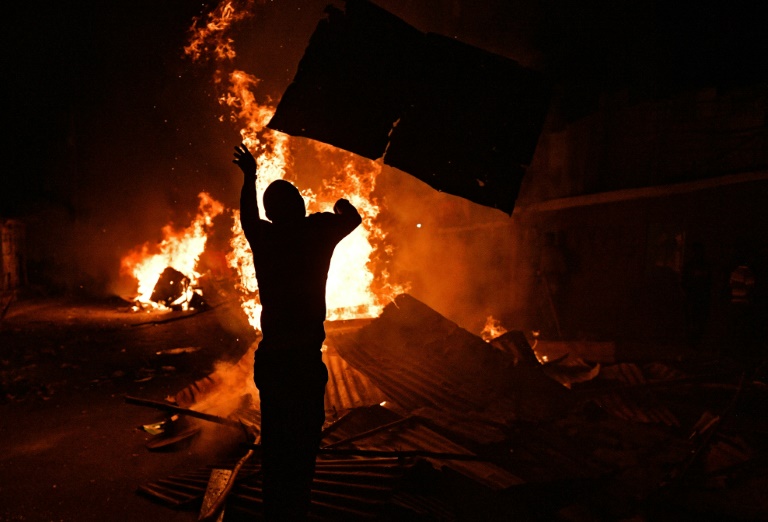
Kenya charges police with crimes against humanity over 2017 violence

In a landmark decision, Kenyan prosecutors said on Friday they would charge police officers with crimes against humanity over a deadly crackdown on post-election protests in 2017.

The charges cover rape, murder and torture and include the case of a six-month-old baby girl whose death became a symbol of police brutality during the bloody election aftermath.

“This is the first case of crimes against humanity charged under Kenyan domestic law using the International Crimes Act and also the first criminal prosecution of electoral-related sexual violence,” the director of public prosecutions (DPP) Noordin Haji said.

An official at the prosecutor’s office said 12 mainly senior police officers were facing charges.

The police crackdown following the disputed presidential election in August 2017 saw dozens of people killed over a four-month period.

The Kenya National Commission on Human Rights documented 94 deaths during the crisis as well as 201 cases of sexual violence and over 300 injuries -– the majority of which were attributed to security forces.

“The attacks were planned, coordinated and not random,” the DPP statement said, saying various offences such as torture, rape and sexual violence “were committed by or under the authority of senior national police officers”.

The baby, Samantha Pendo, died after being beaten by police during a raid on her house as protests flared in the western city of Kisumu.

Officers fired tear gas into their house and battered down the door before raining blows on the couple with batons while the mother held Samantha in her arms. 

An autopsy had shown that Samantha had suffered acute head injuries, her scalp cracking as a result of brutal force by the police.

A Kenyan inquest in 2019 had found five police commanders liable for her death and although they were later convicted they have never served time behind bars.

Extra-judicial killings are rife in Kenya, and justice is rare with few examples of police being held to account.

– ‘Groundbreaking’ decision –

The new UN High Commissioner for Human Rights, Volker Turk, welcomed the Kenyan prosecutor’s “groundbreaking” decision, saying it was “an important advance towards accountability for gross human rights violations in Kenya.”

It “is a positive step towards justice and accountability for survivors and families of victims, including in the context of electoral violence, and can strengthen prevention of future violations,” Turk said in a statement. 

Haji said on Friday that several people had been subjected to untold incidents of pain and suffering during the protest suppression.

“The operation had a well-organised command structure with sector commanders and was executed according to a consistent pattern,” he said.

Kenyan police are often accused by rights groups of using excessive force and carrying out unlawful killings, especially in poor neighbourhoods.

They have also been accused in the past of running hit squads targeting those — including activists and lawyers — investigating alleged rights abuses by police.

Earlier this month, new President William Ruto disbanded a feared 20-year-old police unit accused of extrajudicial killings and vowed an overhaul of the security sector.

The 2017 protests erupted after victory was declared for then president Uhuru Kenyatta, angering supporters of his rival, the veteran opposition leader Raila Odinga.

The result was annulled by the Supreme Court after a challenge by Odinga, but he boycotted the rerun which was won by Kenyatta.

According to Missing Voices, a campaign group focused on extrajudicial killings in Kenya, there have been 1,264 deaths at the hands of police since it began collecting data in 2017.

Close Bitnami banner
Bitnami