Africa Business

Uganda Ebola outbreak death toll 29, says WHO

Sixty-three confirmed and probable cases have been reported in the Ebola outbreak in Uganda, including 29 deaths, the World Health Organization said Wednesday.

WHO chief Tedros Adhanom Ghebreyesus lamented that the outbreak, declared two weeks ago, was taking a deadly toll on health workers as well as patients.

There are six species of the Ebolavirus genus and the one circulating in Uganda is the Sudan ebolavirus — for which there is currently no vaccine.

“So far, 63 confirmed and probable cases have been reported, including 29 deaths,” Tedros told a press conference in Geneva.

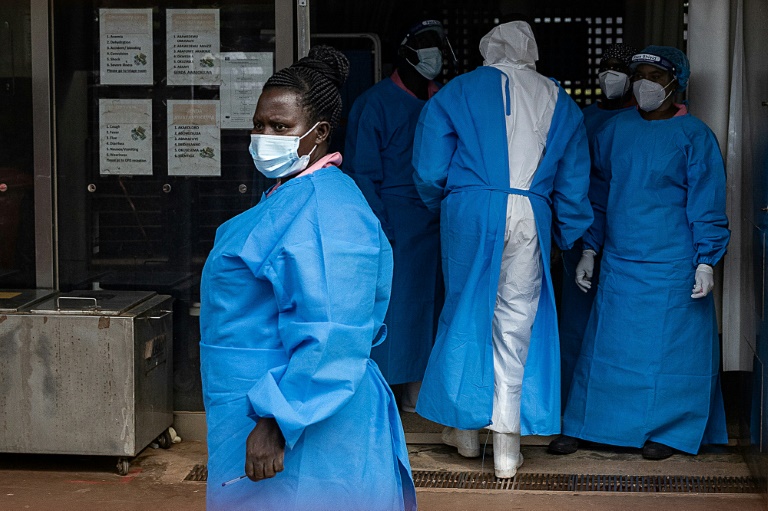
“Ten health workers have been infected and four have died. Four people have recovered and are receiving follow-up care.”

The east African nation’s Health Minister Jane Ruth Aceng Ocero said that a 58-year-old anaesthetist had died of Ebola early Wednesday, following the deaths of a Tanzanian doctor, a health assistant and a midwife.

– Candidate vaccines –

Tedros said the vaccines used successfully to curb recent outbreaks of the Zaire ebolavirus species in the neighbouring Democratic Republic of Congo (DRC) did not provide cross-protection against the Sudan ebolavirus.

“However, several vaccines are in various stages of development against this virus, two of which could begin clinical trials in Uganda in the coming weeks, pending regulatory and ethics approvals from the Ugandan government,” he said.

There are at least six candidate vaccines against the Sudan species, of which three have made it far enough to be tested on humans, producing so-called Phase 1 safety and immunogenicity data.

They could “proceed to be used in the field in a sort of ring vaccination campaign”, WHO’s chief scientist Soumya Swaminathan said.

She mentioned a candidate vaccine from the University of Oxford and another from the Sabin Vaccine Institute, and said which one goes into trials may depend on which one actually has doses ready to deploy.

“Realistically it may take another four to six weeks,” she said.

Swaminathan said plans were also afoot for testing potential therapeutics.

– WHO sending specialists, resources –

The initial outbreak was discovered in the central district of Mubende.

There are gold mines in the Mubende area which attract people from across Uganda, as well as other countries, the WHO’s Africa regional office said.

“The mobile nature of the population in Mubende increases the risk of a possible spread of the virus,” it said.

Infections have since been found in Kassanda, Kyegegwa and Kagadi districts.

The WHO’s Geneva headquarters has released $2 million from its contingency fund for emergencies and is working with partners to support the health ministry by sending additional specialists, supplies and resources, Tedros said.

Ugandan President Yoweri Museveni has vowed not to impose any lockdowns to tackle the disease, saying last week that there was “no need for anxiety”.

– Haemorrhagic fever –

Ebola is an often-fatal viral haemorrhagic fever named after a river in DR Congo where it was discovered in 1976.

Human transmission is through bodily fluids, with the main symptoms being fever, vomiting, bleeding and diarrhoea.

Outbreaks are difficult to contain, especially in urban environments.

People who are infected do not become contagious until symptoms appear, which is after an incubation period of between two and 21 days.

Uganda has experienced several Ebola outbreaks, most recently in 2019 when at least five people died.

The neighbouring DRC last week declared an end to an Ebola virus outbreak that emerged in eastern North Kivu province six weeks ago.

The worst epidemic, in West Africa between 2013 and 2016, killed more than 11,300 people. The DRC has had more than a dozen epidemics, the deadliest killing 2,280 people in 2020.

rjm-burs/nl/pvh
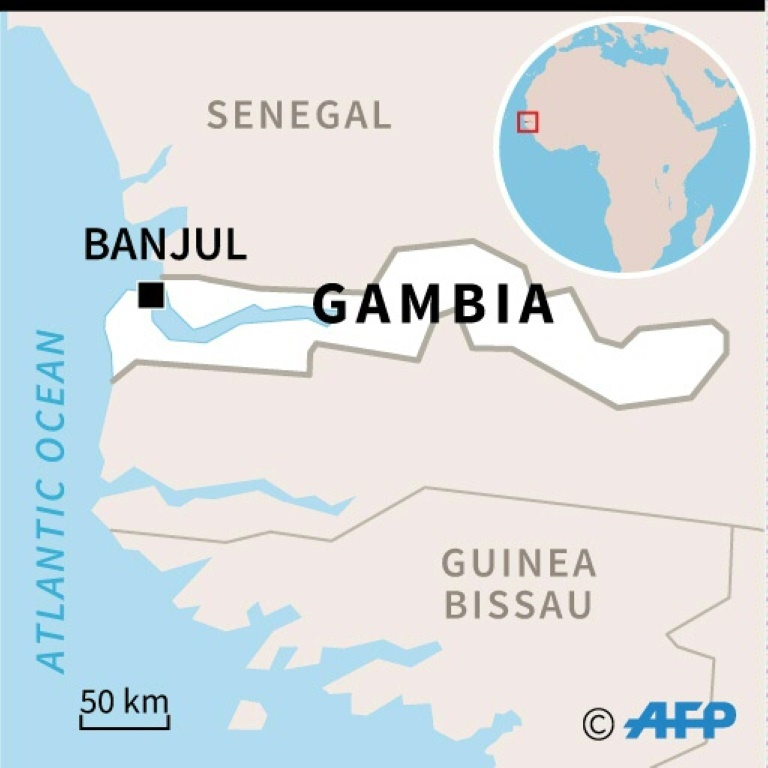
WHO probing Indian cough syrup after 66 children die in The Gambia

The World Health Organization (WHO) issued an alert Wednesday over four cough and cold syrups made by Maiden Pharmaceuticals in India, warning they could be linked to the deaths of 66 children in The Gambia.

The UN health agency also cautioned the contaminated medications may have been distributed outside of the West African country, with global exposure “possible”.

WHO chief Tedros Adhanom Ghebreyesus told reporters the four cold and cough syrups in question “have been potentially linked with acute kidney injuries and 66 deaths among children”.

“The loss of these young lives is beyond heartbreaking for their families.”

Tedros said WHO was also “conducting further investigation with the company and regulatory authorities in India”.

According to the medical product alert issued by WHO Wednesday, the four products are Promethazine Oral Solution, Kofexmalin Baby Cough Syrup, Makoff Baby Cough Syrup and Magrip N Cold Syrup.

On Thursday, Gambian authorities began collecting paracetamol and promethazine syrup from rural households in the West Coast Region and Upper River Region.

A Gambian health ministry investigation, which began in July and is ongoing, also cited the E. coli bacteria as a possible cause of the acute kidney failure outbreak.

“The preliminary results from the ongoing investigation indicate that it is most probably the paracetamol and promethazine syrups that caused the acute kidney injury cases in this outbreak,” Abubacarr Jagne, the nephrologist leading the health ministry’s investigation, told AFP Wednesday.

Health authorities had on September 23 ordered a recall of all medicines containing paracetamol or promethazine syrup.

– Tedros urges caution –

The Gambia experienced its severest flooding in years in July, causing sewers and latrines to overflow.

“Since July 2022, there has been an increase in the number of severe kidney disease with high fatality among children mainly following diarrheal diseases,” the ministry said in a statement in September. 

E. coli bacteria were found in the stools of many children, but many had also taken paracetamol syrup, it said.

“To date, the stated manufacturer has not provided guarantees to WHO on the safety and quality of these products,” the alert said, adding that laboratory analysis of samples of the products “confirms that they contain unacceptable amounts of diethylene glycol and ethylene glycol as contaminants”.

Those substances are toxic to humans and can be fatal, it said, adding that the toxic effect “can include abdominal pain, vomiting, diarrhoea, inability to pass urine, headache, altered mental state and acute kidney injury which may lead to death”.

WHO said information received from India’s Central Drugs Standard Control Organisation indicated that the manufacturer had only supplied the contaminated medications to The Gambia.

“However, the supply of these products through informal or unregulated markets to other countries in Africa, cannot be ruled out,” the UN agency said in an email.

“In addition, the manufacturer may have used the same contaminated material in other products and distributed them locally or exported,” it warned.

“Global exposure is therefore possible.”

Tedros urged caution, calling on all countries to work to “detect and remove these products from circulation to prevent further harm to patients”.

Ethiopian govt, Tigray rebels, say ready for peace talks after AU invite

Ethiopia’s government and rebels from the country’s Tigray region said Wednesday they were ready to attend peace talks after the African Union invited both parties to negotiations in South Africa.

Prime Minister Abiy Ahmed’s national security adviser said the government had “accepted this invitation” while the leader of rebel-held Tigray said they were “ready” to send negotiators but raised questions about process.

Both sides had been invited to talks in South Africa this weekend by AU chair Moussa Faki Mahamat to try and end nearly two years of war in Africa’s second-most populous country.

A major resurgence of fighting in August dashed a five-month truce and halted aid into Tigray, where a shortage of food, fuel, cash and medicine has caused a humanitarian crisis.

The latest upsurge has also drawn Eritrean troops back to the battlefield in support of Ethiopia’s federal and regional forces, which are confronting rebels from the Tigray People’s Liberation Front (TPLF) on multiple fronts.

The deepening conflict has raised international alarm, with the United States this week announcing that its special envoy to the region, Mike Hammer, would be making his second visit to Ethiopia in as many months to seek a halt to the fighting.

Tigrayan authorities said last month they were ready to participate in talks mediated by the AU, removing an obstacle to negotiations with the government in Addis Ababa.

Abiy’s national security advisor, Redwan Hussein, said the AU invitation was “is inline with our principled position regarding the peaceful resolution of the conflict and the need to have talks without preconditions”.

Tigray’s regional authorities said they were “ready to send our negotiating team to South Africa” but wanted to know what other parties would be involved and what role the  international community would play.

“Considering we were not consulted prior to the issuance of this invitation, we need clarification to some of the following issues to establish an auspicious start for the peace talks,” read a statement signed by TPLF leader Debretsion Gebremichael.

– ‘Troika of negotiators’ –

A diplomatic source told AFP that the AU talks would be mediated by “a troika of negotiators” including the bloc’s Horn of Africa envoy Olusegun Obasanjo and former Kenyan president Uhuru Kenyatta.

Another diplomatic source said South Africa’s former deputy president Phumzile Mlambo-Ngcuka would serve as the third negotiator.

The warring sides were previously at odds over who should mediate negotiations, with Abiy’s government pushing for Obasanjo and the TPLF wanting Kenyatta to broker dialogue. 

They have also sparred over the restoration of basic services such as electricity, communications and banking in Tigray — a key precondition for dialogue according to the TPLF.

The region of six million people has been facing desperate shortages of food, fuel, medicines and other emergency supplies, with the UN’s World Food Programme warning of rising malnutrition even before the latest fighting halted aid deliveries.

Fighting has escalated in recent weeks in northern Ethiopia, with air strikes hammering Tigray and new fronts opening.

The US State Department on Monday announced that special envoy Hammer would travel to Kenya, South Africa and Ethiopia this month.

The visit, which will include meetings with federal government and AU officials, comes on the heels of an 11-day trip by Hammer to Ethiopia last month, which the State Department said was aimed at supporting the launch of AU-led peace talks.

The war, which erupted in November 2020, has killed untold numbers of civilians and triggered a deep humanitarian crisis, and all sides to the conflict have been accused of grave abuses against civilians.

The TPLF dominated Ethiopia’s ruling coalition for decades before Abiy took power in 2018.

After months of rising tensions Abiy, a Nobel Peace Prize laureate, sent soldiers into Tigray to unseat the TPLF, saying the move was in response to attacks on federal army camps.

Remaining hostages freed from Nigeria train attack

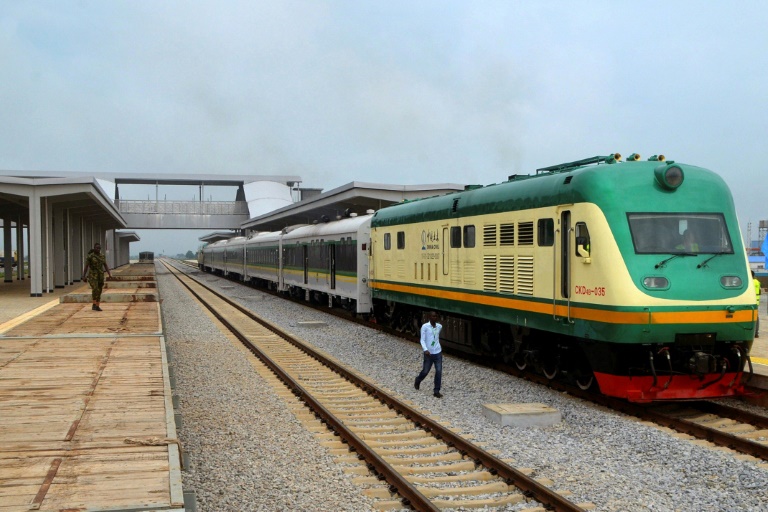
The remaining passengers taken hostage in March after gunmen bombed and attacked a train in northwest Nigeria have been freed, government and security officials said on Wednesday.

Gunmen blew up the tracks and assaulted the train travelling between the capital Abuja and Kaduna, killing eight people and kidnapping dozens in one of the most high-profile attacks this year.

“All 23 kidnapped victims of the ill-fated Kaduna train mishap released,” Transport Minister Mu’azu Jaji Sambo said on Twitter.

A team had secured the release and took custody of passengers “held hostage by Boko Haram Terrorists following the attack on the Abuja to Kaduna train,” a statement from a military committee said, without giving details on how they were freed.

Kaduna state security commissioner Samuel Aruwan confirmed the hostage release.

Security is a major concern for Nigerians as the country prepares for February elections to replace President Muhammadu Buhari, a former army general who is stepping down after two terms leading Africa’s most populous country.

No group claimed the March 28 train attack though officials have blamed jihadists cooperating with heavily armed criminal gangs who terrorise parts of northwest and central Nigeria with looting raids and mass abductions.

Analysts said the sophisticated attack involving explosives showed Islamist militants could have participated.

Nigerian government officials often use the term Boko Haram loosely to refer generally to armed groups.

After halting the high-speed train, the gunmen opened fire on coaches before herding passengers from the train’s so-called VIP section into the bush.

A week later, they freed one hostage — a top bank executive — as a goodwill gesture for the Muslim Holy month of Ramadan.

Groups of other train hostages had been released after negotiations earlier in the year.

The Kaduna train attack was one of several major incidents this year underscoring the challenge facing Nigeria’s overstretched security forces.

In July, Islamic State group affiliates claimed a bold attack on a prison just 40 kilometres (25 miles) from Buhari’s presidential villa in the capital, in a military embarrassment.

That attack — the first major assault around the capital since 2014 — showed militants were capable of threatening areas beyond their northeastern bastion.

Officials have become increasingly concerned that militants are cooperating for pragmatic reasons with criminal bandit gangs in the northwest, who are motivated by profit rather than ideology.

Nigeria’s military is battling on multiple fronts — a 13-year jihadist insurgency in the northeast, criminal militias in the northwest and separatist tensions in the country’s southeast.

OPEC+ angers US with major oil output cut

Saudi Arabia, Russia and other top oil producers agreed on a major cut in production on Wednesday to boost crude prices — a move denounced by the United States as a concession to Moscow that will further hurt the global economy.

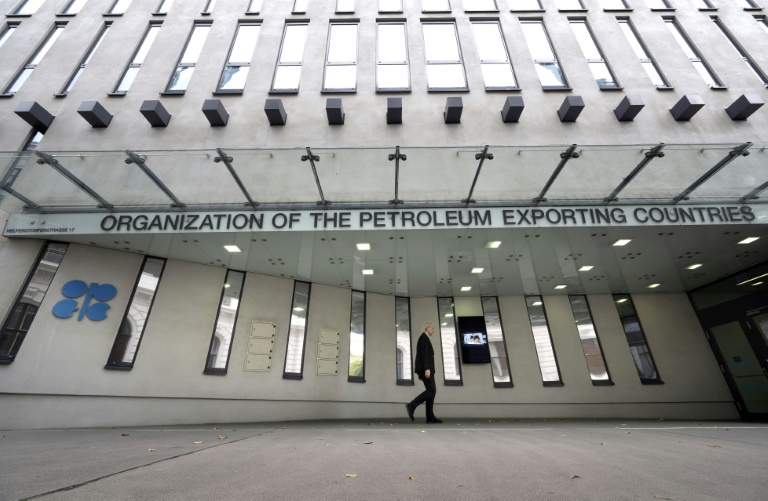
The 13-nation OPEC cartel headed by Riyadh and its 10 allies led by Moscow agreed to reduce output by two million barrels per day from November at a meeting in Vienna, the group said in a statement.

It is the biggest cut since the height of the Covid pandemic in 2020, raising fears that it will turbocharge oil prices at a time when countries are already facing soaring energy-fuelled inflation.

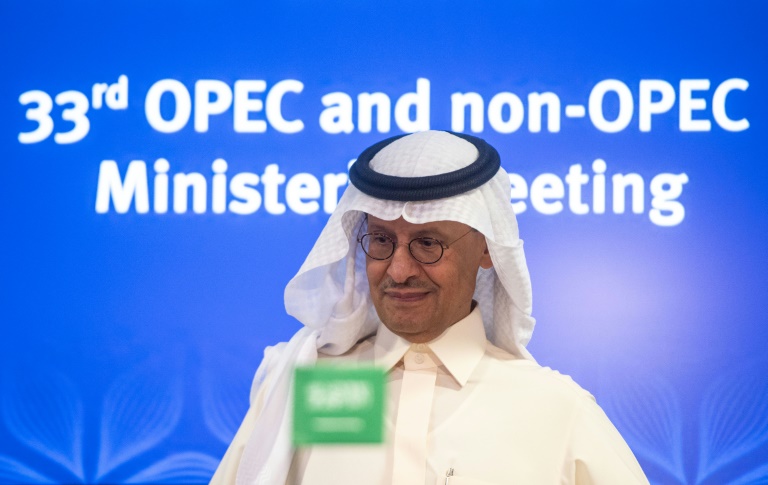
Saudi Arabia’s energy minister, Prince Abdulaziz bin Salman, defended the move, saying the cartel’s priority was “to maintain a sustainable oil market”, at a press conference following OPEC+’s first in-person meeting since March 2020.

But the decision drew a swift rebuke from US President Joe Biden, who had made a controversial trip to Saudi Arabia in July under pressure as Americans faced rising prices at fuel stations.

The timing is also bad for Biden’s political agenda as it comes ahead of US midterm elections next month.

“It’s clear that OPEC+ is aligning with Russia with today’s announcement,” White House Press Secretary Karine Jean-Pierre said aboard Air Force One.

National Security Advisor Jake Sullivan and top economic advisor Brian Deese said in a statement that Biden was “disappointed by the shortsighted decision by OPEC+”.

Western allies led by the United States have tried to isolate Russia’s economy, which relies heavily on energy exports, in retaliation for the invasion of Ukraine.

– Oil prices rise –

OPEC+ decided to slash its output as oil prices fell below $90 per barrel in recent months over concerns about the global economy, after soaring to $140 in the wake of Russia’s invasion of Ukraine earlier this year.

The international benchmark, Brent North Sea crude, was up at $93.43 following Wednesday’s announcement.

The oil production cut could give sanctions-hit Russia a boost ahead of a European Union ban on most of its crude exports later this year and as the Group of Seven wealthy democracies mull a cap on the country’s oil prices.

Russian deputy prime minister Alexander Novak, who is under US sanctions and attended the OPEC+ meeting, said a price cap would have a “detrimental effect” on the global oil sector.

He warned that Russian companies would “not supply oil to those countries” that introduce such a cap.

“There is a reason why Russia is ready to participate with an OPEC cut — because they are not sure whether they will find somebody to buy this oil,” Patrick Pouyanne, chairman of French oil giant TotalEnergies, said at a London oil industry conference.

Collectively known as OPEC+, the alliance drastically slashed output by almost 10 million barrels per day (bpd) in April 2020 to reverse a massive drop in crude prices caused by Covid lockdowns.

OPEC+ began to raise production last year after the market improved. Output returned to pre-pandemic levels this year, but only on paper as some members have struggled to meet their quotas.

The group agreed last month on a small, symbolic cut of 100,000 bpd from October, the first in more than a year.

Consumer countries had pushed for months for OPEC+ to open taps more widely to bring down prices, but the group ignored them again.

Biden travelled to Saudi Arabia in July in part to convince the kingdom to loosen the production taps. The trip saw Biden meet Crown Prince Mohammed bin Salman despite his promise to make Riyadh a “pariah” following the 2018 killing of journalist Jamal Khashoggi.

While the cut was not welcomed by the United States, several OPEC+ nations have struggled to meet their quotas in the first place.

The next ministerial OPEC meeting will be on December 4. In recent months, the cartel and its partners met online each month. 

burs-jza/

Uganda Ebola outbreak death toll 29, says WHO

Sixty-three confirmed and probable cases have been reported in the Ebola outbreak in Uganda, including 29 deaths, the World Health Organization said Wednesday.

WHO chief Tedros Adhanom Ghebreyesus lamented that the outbreak, declared two weeks ago, was taking a deadly toll on health workers as well as patients.

There are six species of the Ebolavirus genus and the one circulating in Uganda is the Sudan ebolavirus — for which there is currently no vaccine.

“So far, 63 confirmed and probable cases have been reported, including 29 deaths,” Tedros told a press conference in Geneva.

“Ten health workers have been infected and four have died. Four people have recovered and are receiving follow-up care.”

The east African nation’s Health Minister Jane Ruth Aceng Ocero said that a 58-year-old anaesthetist had died of Ebola early Wednesday, following the deaths of a Tanzanian doctor, a health assistant and a midwife.

– Candidate vaccines –

Tedros said the vaccines used successfully to curb recent outbreaks of the Zaire ebolavirus species in the neighbouring Democratic Republic of Congo (DRC) did not provide cross-protection against the Sudan ebolavirus.

“However, several vaccines are in various stages of development against this virus, two of which could begin clinical trials in Uganda in the coming weeks, pending regulatory and ethics approvals from the Ugandan government,” he said.

There are at least six candidate vaccines against the Sudan species, of which three have made it far enough to be tested on humans, producing so-called Phase 1 safety and immunogenicity data.

They could “proceed to be used in the field in a sort of ring vaccination campaign”, WHO’s chief scientist Soumya Swaminathan said.

She mentioned a candidate vaccine from the University of Oxford and another from the Sabin Vaccine Institute, and said which one goes into trials may depend on which one actually has doses ready to deploy.

“Realistically it may take another four to six weeks,” she said.

Swaminathan said plans were also afoot for testing potential therapeutics.

– WHO sending specialists, resources –

The initial outbreak was discovered in the central district of Mubende.

There are gold mines in the Mubende area which attract people from across Uganda, as well as other countries, the WHO’s Africa regional office said.

“The mobile nature of the population in Mubende increases the risk of a possible spread of the virus,” it said.

Infections have since been found in Kassanda, Kyegegwa and Kagadi districts.

The WHO’s Geneva headquarters has released $2 million from its contingency fund for emergencies and is working with partners to support the health ministry by sending additional specialists, supplies and resources, Tedros said.

Ugandan President Yoweri Museveni has vowed not to impose any lockdowns to tackle the disease, saying last week that there was “no need for anxiety”.

– Haemorrhagic fever –

Ebola is an often-fatal viral haemorrhagic fever named after a river in DR Congo where it was discovered in 1976.

Human transmission is through bodily fluids, with the main symptoms being fever, vomiting, bleeding and diarrhoea.

Outbreaks are difficult to contain, especially in urban environments.

People who are infected do not become contagious until symptoms appear, which is after an incubation period of between two and 21 days.

Uganda has experienced several Ebola outbreaks, most recently in 2019 when at least five people died.

The neighbouring DRC last week declared an end to an Ebola virus outbreak that emerged in eastern North Kivu province six weeks ago.

The worst epidemic, in West Africa between 2013 and 2016, killed more than 11,300 people. The DRC has had more than a dozen epidemics, the deadliest killing 2,280 people in 2020.

rjm-burs/nl/pvh
WHO probing Indian cough syrup after 66 children die in The Gambia

The World Health Organization (WHO) issued an alert Wednesday over four cough and cold syrups made by Maiden Pharmaceuticals in India, warning they could be linked to the deaths of 66 children in The Gambia.

The UN health agency also cautioned that the contaminated medications may have been distributed outside of the West African country, with global exposure “possible.”

WHO chief Tedros Adhanom Ghebreyesus told reporters that the four cold and cough syrups in question “have been potentially linked with acute kidney injuries and 66 deaths among children.”

“The loss of these young lives is beyond heartbreaking for their families.”

Tedros said that WHO was also “conducting further investigation with the company and regulatory authorities in India.”

According to the medical product alert issued by WHO Wednesday, the four products are Promethazine Oral Solution, Kofexmalin Baby Cough Syrup, Makoff Baby Cough Syrup and Magrip N Cold Syrup.

“To date, the stated manufacturer has not provided guarantees to WHO on the safety and quality of these products,” the alert said, adding that laboratory analysis of samples of the products “confirms that they contain unacceptable amounts of diethylene glycol and ethylene glycol as contaminants.”

Those substances are toxic to humans and can be fatal, it said, adding that the toxic effect “can include abdominal pain, vomiting, diarrhoea, inability to pass urine, headache, altered mental state and acute kidney injury which may lead to death.”

The Gambia’s health ministry asked hospitals last month to stop using a syrup paracetamol, pending the outcome of an investigation, after at least 28 children died of kidney failure.

WHO said that information received from India’s Central Drugs Standard Control Organisation indicated that the manufacturer had only supplied the contaminated medications to The Gambia.

“However, the supply of these products through informal or unregulated markets to other countries in Africa, cannot be ruled out,” the UN agency said in an email.

“In addition, the manufacturer may have used the same contaminated material in other products and distributed them locally or exported,” it warned.

“Global exposure is therefore possible.”

Tedros urged caution, calling on all countries to work to “detect and remove these products from circulation to prevent further harm to patients.”

The Gambian health ministry’s advice on syrup paracetamol was issued on September 9, a month after investigators reported the death of at least 28 children aged five months to four years from acute renal failure.

The investigation had been opened on July 19. No details were given as to when the children died.

Ethiopia govt says accepts AU invite to peace talks

Ethiopia’s government said Wednesday it has accepted an African Union invitation to hold peace talks with Tigrayan rebels after a flare-up in fighting in the nearly two-year war in the country’s north.

Prime Minister Abiy Ahmed’s national security adviser Redwan Hussein said on Twitter that the government had “accepted this invitation which is in line with our principled position regarding the peaceful resolution of the conflict and the need to have talks without preconditions”.

Both sides have been invited to talks in South Africa this weekend, according to a letter written by AU chair Moussa Faki Mahamat, and forwarded to AFP by the foreign ministry in Pretoria.

The Government Communication Service said in a statement that the AU had set “both the date and the venue” for the talks but did not elaborate.

AU spokeswoman Ebba Kalondo declined to provide information about when and where the talks would take place, telling AFP: “We will communicate details as and when appropriate”, adding that the process remained “on track”.

There was no immediate response from the Tigray People’s Liberation Front (TPLF) to the announcement, which comes more than a month after intense fighting resumed in northern Ethiopia, shattering a March truce and dimming hopes of ending the war.

The deepening conflict has raised international alarm, with the United States this week announcing that its special envoy to the region, Mike Hammer, would be making his second visit to Ethiopia in as many months to seek a halt to the fighting.

The latest upsurge has also drawn Eritrean troops back on to the battlefield in support of Ethiopia’s federal and regional forces, which are fighting the TPLF on multiple fronts in the country’s north.

Tigrayan authorities said last month they were ready to participate in talks mediated by the African Union, removing an obstacle to negotiations with the government in Addis Ababa.

But fighting has only escalated in the weeks since, with air strikes hammering Tigray.

– ‘Troika of negotiators’ – 

A diplomatic source told AFP that the AU talks would be mediated by “a troika of negotiators” including the bloc’s Horn of Africa envoy Olusegun Obasanjo and former Kenyan president Uhuru Kenyatta.

Another diplomatic source said South Africa’s former deputy president Phumzile Mlambo-Ngcuka would serve as the third negotiator.

The warring sides were previously at odds over who should mediate negotiations, with Abiy’s government pushing for Obasanjo and the TPLF wanting Kenyatta to broker dialogue. 

They have also sparred over the restoration of basic services such as electricity, communications and banking in Tigray — a key precondition for dialogue according to the TPLF.

The region of six million people has been facing desperate shortages of food, fuel, medicines and other emergency supplies, with the UN’s World Food Programme warning of rising malnutrition even before the latest fighting halted aid deliveries.

The US State Department on Monday announced that special envoy Hammer would travel to Kenya, South Africa and Ethiopia this month.

The visit, which will include meetings with federal government and African Union officials, comes on the heels of an 11-day trip by Hammer to Ethiopia last month, with the State Department saying it was aimed at supporting the launch of AU-led peace talks.

The war, which erupted in November 2020, has killed untold numbers of civilians and triggered a deep humanitarian crisis, and all sides to the conflict have been accused of grave abuses against civilians.

The TPLF dominated Ethiopia’s ruling coalition for decades before Abiy took power in 2018.

After months of rising tensions, Abiy sent soldiers into Tigray to unseat the TPLF, saying the move was in response to attacks on federal army camps.

Uganda Ebola outbreak death toll 29, says WHO

Sixty-three confirmed and probable cases have been reported in the Ebola outbreak in Uganda, including 29 deaths, the World Health Organization said Wednesday.

WHO chief Tedros Adhanom Ghebreyesus said the vaccines used to curb recent outbreaks in the neighbouring Democratic Republic of Congo (DRC) were not effective against the type of Ebola virus circulating in Uganda.

And he lamented that the Uganda outbreak, declared by the government two weeks ago, was taking a deadly toll on health workers.

“So far, 63 confirmed and probable cases have been reported, including 29 deaths,” Tedros told a press conference in Geneva.

“Ten health workers have been infected and four have died. Four people have recovered and are receiving follow-up care.”

The east African nation’s Health Minister Jane Ruth Aceng Ocero said that a 58-year-old anaesthetist had died of Ebola early Wednesday.

“The late Margaret (Nabisubi) is the fourth health worker we have lost in the current Ebola outbreak,” the minister said on Twitter, following the deaths of a Tanzanian doctor, a health assistant and a midwife.

– Candidate vaccines –

Tedros said: “When there is a delay in detecting an Ebola outbreak, it’s normal for cases to increase steadily at the beginning and then decrease as life-saving interventions and outbreak control measures are implemented.”

But he added: “The vaccines used successfully to curb recent Ebola outbreaks in the DRC are not effective against the type of Ebola virus that’s responsible for this outbreak in Uganda.

“However, several vaccines are in various stages of development against this virus, two of which could begin clinical trials in Uganda in the coming weeks, pending regulatory and ethics approvals from the Ugandan government.”

Tedros said the WHO was supporting the Ugandan government in its response to the outbreak, which has been reported in four districts.

Since the initial outbreak was discovered in the central district of Mubende, infections have been found in Kassanda, Kyegegwa and Kagadi.

The UN’s health agency has released $2 million from its contingency fund for emergencies and is working with partners to support the health ministry by sending additional specialists, supplies and resources, Tedros said.

Ugandan President Yoweri Museveni has vowed not to impose any lockdowns to tackle the disease, saying last week that there was “no need for anxiety”.

Uganda had confirmed 10 deaths, with Museveni specifying that 19 other probable Ebola cases had also died, but said they were buried before they could be tested for infection.

– Haemorrhagic fever –

Ebola is an often-fatal viral haemorrhagic fever named after a river in the DRC where it was discovered in 1976.

Human transmission is through bodily fluids, with the main symptoms being fever, vomiting, bleeding and diarrhoea.

Outbreaks are difficult to contain, especially in urban environments.

People who are infected do not become contagious until symptoms appear, which is after an incubation period of between two and 21 days.

There is currently no licensed medication to prevent or treat Ebola, although a range of experimental drugs are in development. 

Uganda, which shares a porous border with the DRC, has experienced several Ebola outbreaks, most recently in 2019 when at least five people died.

The DRC last week declared an end to an Ebola virus outbreak that emerged in eastern North Kivu province six weeks ago.

The worst epidemic, in West Africa between 2013 and 2016, killed more than 11,300 people. The DRC has had more than a dozen epidemics, the deadliest killing 2,280 people in 2020.

OPEC+ agrees major oil output cut

OPEC and its Russia-led allies agreed on a major cut in oil production on Wednesday, a move to prop up prices that could bolster sanction-hit Moscow’s coffers and irk Washington.

The 13-nation OPEC cartel and its 10 Russian-led allies agreed to reduce two million barrels per day from November at a meeting in Vienna, said Iran’s OPEC Governor Amir Hossein Zamaninia.

It is the biggest cut since the height of the Covid pandemic in 2020.

Such a move could turbocharge crude prices, further aggravating inflation which has reached decades-high levels in many countries and is contributing to a global economic slowdown.

It could also give Russia a boost ahead of a European Union ban on most of its crude exports later this year and a bid by the Group of Seven wealthy democracies to cap the country’s oil prices.

US President Joe Biden personally appealed to Saudi leaders in July to boost production in order to tame prices which soared following Russia’s invasion of Ukraine earlier this year. 

But crude price have fallen in recent months on concerns over dwindling demand and fears over a possible global recession.

“With consumers only just breathing a sigh of relief after being forced to pay record prices at the pump, today’s cut is not going to go down well,” said Craig Erlam, an analyst at trading platform OANDA, ahead of the meeting. 

When asked how the United States would react to a cut, the energy minister of the United Arab Emirates, Suhail al-Mazrouei, insisted that OPEC was merely a “technical organisation”.

Alexander Novak, the Russian deputy prime minister in charge of energy who is under US sanctions, remained mum as he arrived for the group’s first in-person meeting at its Vienna headquarters since March 2020.

– Geopolitical tensions –

Collectively known as OPEC+, the alliance drastically slashed output by almost 10 million barrels per day (bpd) in April 2020 to reverse a massive drop in crude prices caused by Covid lockdowns.

OPEC+ began to raise production last year after the market improved. Output returned to pre-pandemic levels this year, but only on paper as some members have struggled to meet their quotas.

The group agreed last month on a small, symbolic cut of 100,000 bpd from October, the first in more than a year.

Consumer countries had pushed for months for OPEC+ to open taps more widely to bring down prices, but the group ignored them again.

“Knowing that Russia is willing to cut output, the move could also be perceived as another escalation of the geopolitical tensions” between Moscow and the West, said Ipek Ozkardeskaya, a Swissquote bank analyst.

– US elections –

Biden made a controversial trip to Saudi Arabia in July in part to convince the kingdom to loosen the production taps. The trip saw Biden meet Crown Prince Mohammed bin Salman despite his promise to make Riyadh a “pariah” following the 2018 killing of journalist Jamal Khashoggi.

The OPEC+ decision comes ahead of a midterm congressional elections in the United States next month, and a surge in prices for Americans at fuel stations would not help Biden’s cause.

White House press secretary Karine Jean-Pierre said on Tuesday that “we will continue to take steps to protect American consumers”, declining to comment on the OPEC discussions directly.

While the cut will not be welcomed by the United States, several OPEC+ nations have struggled to meet their quotas in the first place.

Prices soared close to $140 per barrel in the aftermath of Russia’s invasion of Ukraine in late February but fell as low as below $90 more recently.

After rallying earlier this week on speculation over the OPEC+ cut, the international benchmark, Brent North Sea crude, seesawed on Wednesday at around $92.

burs-jza/lth

Close Bitnami banner
Bitnami