Africa Business

Museveni apologises over son's Twitter rant on Kenya

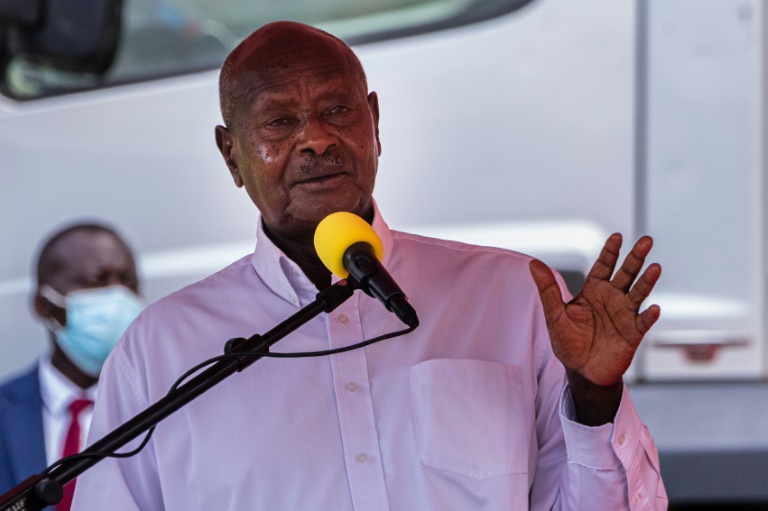
Uganda’s President Yoweri Museveni apologised on Wednesday for a social media tirade by his outspoken son that included a threat to invade Kenya and remarks about the country’s recent elections.

The rant on Twitter earlier this week by Museveni’s 48-year-old son, General Muhoozi Kainerugaba, caused offence in Kenya, and angry calls for a formal explanation from Uganda.

Among other remarks, Kainerugaba suggested taking his troops to capture Nairobi and chided Kenya’s former leader Uhuru Kenyatta for not attempting an unconstitutional third bid at the presidency in recent elections.

Museveni rebuked his son for “meddling in the affairs” of Kenya and speaking publicly about political matters, something he is barred from doing as a high-ranking military official.

“I ask our Kenyan brothers and sisters to forgive us,” said Museveni, who has ruled Uganda uninterrupted since 1986, and has the support of party leaders to run again in the 2026 polls.

“It is not correct for public officers, be they civilian or military, to comment or interfere in any way, in the internal affairs of brother countries.”

Museveni said he had conveyed these remarks to William Ruto, who was sworn in as Kenya’s president last month.

He also offered an explanation as to why Kainerugaba was promoted to general on Tuesday, even as diplomats scrambled to contain the embarrassing repercussions of his remarks.

“There are, however, many other positive contributions the General has made and can still make. This is a time-tested formula -– discourage the negative and encourage the positive,” he said.

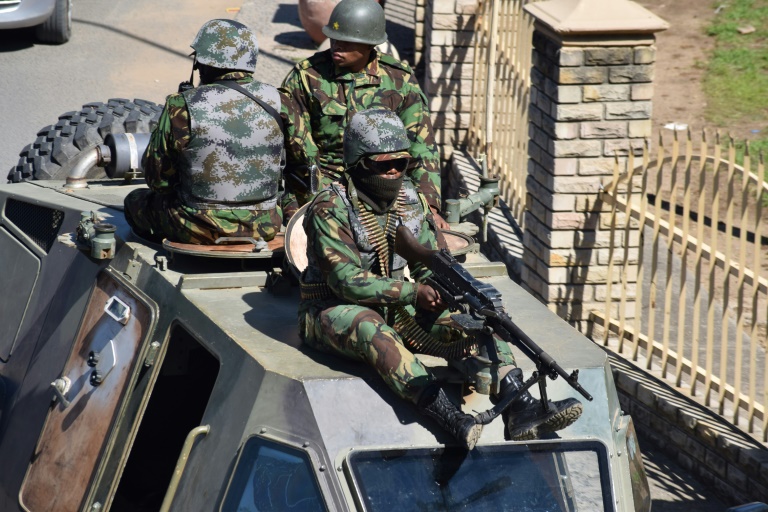
The president also removed Kainerugaba as commander of Uganda’s land forces in a move analysts said was likely aimed at lowering his profile and power.

It is not the first time Kainerugaba’s comments on sensitive foreign policy matters have caused diplomatic headaches for Uganda.

His tweets in support of Tigrayan rebels in northern Ethiopia angered Addis Ababa, while his thoughts on Russia’s invasion of Ukraine and last year’s coup in Guinea also raised eyebrows.

Ethiopia govt says accepts AU invite to peace talks

Ethiopia’s government said Wednesday it has accepted an African Union invitation to hold peace talks with Tigrayan rebels after a flare-up in fighting in the nearly two-year war in the country’s north.

Prime Minister Abiy Ahmed’s national security adviser Redwan Hussein said on Twitter that the government had “accepted this invitation which is in line with our principled position regarding the peaceful resolution of the conflict and the need to have talks without preconditions”.

The Government Communication Service said in a statement that the AU had set “both the date and the venue” for the talks but did not elaborate.

AU spokeswoman Ebba Kalondo declined to provide information about when and where the talks would take place, telling AFP: “We will communicate details as and when appropriate”, adding that the process remained “on track”.

There was no immediate response from the Tigray People’s Liberation Front (TPLF) to the announcement, which comes more than a month after intense fighting resumed in northern Ethiopia, shattering a March truce and dimming hopes of ending the war.

The deepening conflict has raised international alarm, with the United States this week announcing that its special envoy to the region, Mike Hammer, would be making his second visit to Ethiopia in as many months to seek a halt to the fighting.

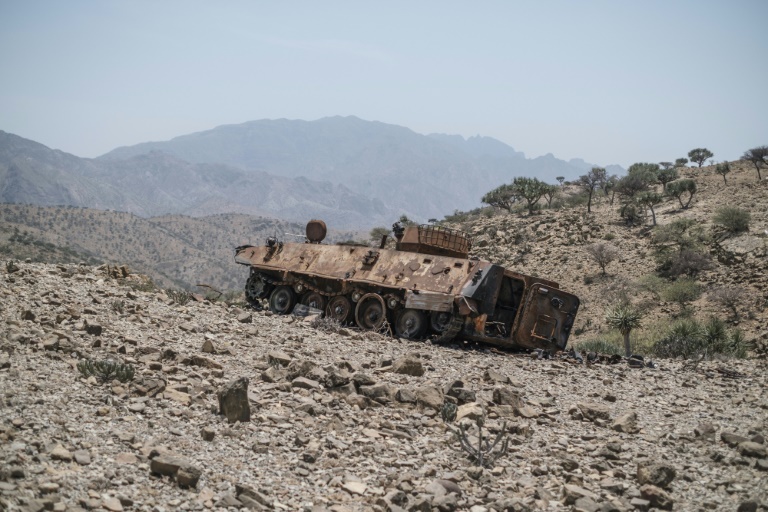
The latest upsurge has also drawn Eritrean troops back on to the battlefield in support of Ethiopia’s federal and regional forces, which are fighting the TPLF on multiple fronts in the country’s north.

Tigrayan authorities said last month they were ready to participate in talks mediated by the African Union, removing an obstacle to negotiations with the government in Addis Ababa.

But fighting has only escalated in the weeks since, with air strikes hammering Tigray.

– ‘Troika of negotiators’ – 

A diplomatic source told AFP that the AU talks would be mediated by “a troika of negotiators” including the bloc’s Horn of Africa envoy Olusegun Obasanjo and former Kenyan president Uhuru Kenyatta.

Another diplomatic source said South Africa’s former deputy president Phumzile Mlambo-Ngcuka would serve as the third negotiator.

According to a letter purportedly from the AU chair Moussa Faki Mahamat, that was circulated on social media and also reported by the Addis Standard, the talks are due to take place in South Africa this weekend.

But Mlambo-Ngcuka told AFP: “That is not true. To know more contact the AU.”

AU spokeswoman Kalondo declined to confirm whether or not the letter was authentic.

The warring sides were previously at odds over who should mediate negotiations, with Abiy’s government pushing for Obasanjo and the TPLF wanting Kenyatta to broker dialogue. 

They have also sparred over the restoration of basic services such as electricity, communications and banking in Tigray — a key precondition for dialogue according to the TPLF.

The region of six million people has been facing desperate shortages of food, fuel, medicines and other emergency supplies, with the UN’s World Food Programme warning of rising malnutrition even before the latest fighting halted aid deliveries.

The US State Department on Monday announced that special envoy Hammer would travel to Kenya, South Africa and Ethiopia this month.

The visit, which will include meetings with federal government and African Union officials, comes on the heels of an 11-day trip by Hammer to Ethiopia last month, with the State Department saying it was aimed at supporting the launch of AU-led peace talks.

The war, which erupted in November 2020, has killed untold numbers of civilians and triggered a deep humanitarian crisis, and all sides to the conflict have been accused of grave abuses against civilians.

The TPLF dominated Ethiopia’s ruling coalition for decades before Abiy took power in 2018.

After months of rising tensions, Abiy sent soldiers into Tigray to unseat the TPLF, saying the move was in response to attacks on federal army camps.

In Morocco hills, cannabis farmers bet on budding industry

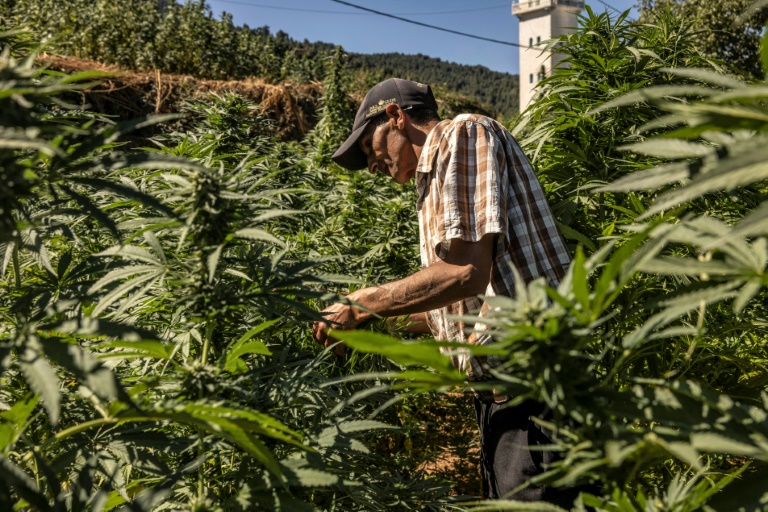
In the hills of northern Morocco, vast cannabis fields are ready for harvest, but farmers complain that a government plan to market the crop legally is yet to deliver them any benefits.

The marginalised Rif region has long been a major source of illicit hashish smuggled to Europe while Moroccan authorities, wary of social unrest, have often turned a blind eye.

Growers now hope that a change in the law last year will help them profit legally from medicinal cannabis, increasingly used to treat conditions including multiple sclerosis and epilepsy.

Morocco — the world’s top producer of hashish according to the United Nations — lies on Europe’s doorstep and is potentially well placed to become a top legitimate exporter.

But a domestic crackdown on growers, slow progress in issuing licences for legal production and strong competition from European operators has left Rif farmers out in the cold.

“We’re still attached to this plant, but it has stopped giving us anything,” said Souad, a cannabis farmer in the village of Azila.

Like others AFP interviewed, she did not want her real name to be published.

“Nobody wants it anymore,” Souad shrugged. “Our lives are hard now.”

Under a law the government approved in March last year, farmers will be able to form cooperatives to grow limited amounts of cannabis for processing and sale by licensed firms.

Souad, who still helps her sons on the family plot despite being in her 60s, holds tentative hope that this will help her community make a better living. 

“If it’s serious, it’s a good thing,” she said.

– ‘We’re just farmers’ –

Demand for the Moroccan product has dropped as legal, highly regulated, production in Europe has fed the market.

Moroccan farmers’ income from cannabis fell from 500 million euros (now around $497 million) a year in the early 2000s to less than 325 million euros in 2020, according to an interior ministry study last year.

“The market has fallen drastically,” said Karim, another grower.

Adding to the pressure, he was only able to farm part of his family’s land in Azila this year because of water shortages driven by the worst drought in decades.

Moroccan authorities have also stepped up raids against farmers in the Rif as they seek to dismantle smuggling networks in favour of the legal trade.

“Farmers are the weak link in the supply chain — we’re the ones who pay the price” for involvement in the illicit market, Karim complained.

“The only option we have left is prison,” said the 44-year-old.

Nourredine, another cannabis grower, said he too holds out hope that legalisation of the drug could help farmers in the Rif.

However, he added, “so far nothing has changed. We’re always seen as thugs and criminals, but we’re just farmers.”

– Complex bureaucracy –

A six-hour drive away in the capital Rabat, a government official insisted that better times were around the corner for cannabis growers.

“There may be concerns, but legalisation will dispel them because it will benefit the growers,” he said, asking not to be identified because he was not authorised to speak to the media on the subject.

The state estimates that growers could receive some 12 percent of revenues from regulated cannabis production, compared to just four percent on the black market, according to state news agency MAP.

But authorities have stressed that the process must not be rushed.

On Tuesday ANRAC, a new government agency inaugurated in June to regulate the industry, issued the first 10 licences to firms that will process the plant for therapeutic purposes.

Then it will be the turn of farmers in the Rifian provinces of Al-Hoceima, Chefchaouen and Taounate to form cooperatives and register with ANRAC with a view to receiving production licences under a quota system.

Under the 2021 law, licences to produce cannabis are granted “only within the limits of the quantities needed to meet the needs for the manufacture of products for medical, pharmaceutical and therapeutic purposes”.

Cannabis farms covered 55,000 hectares (around 136,000 acres) in the northeast of the kingdom in 2019, providing livelihoods for up to 120,000 families, according to a study prior to the law being passed.

Civil society groups in the area are now mobilising to inform farmers about the technical aspects of the new system.

Some details are “complicated”, said Soufiane Zahlaf, who represents Azila residents in dealings with authorities on the matter.

“But if the approach of the authorities is inclusive,” he said, “then great things can be achieved.”

Nigeria's ruling party fends off questions over candidate

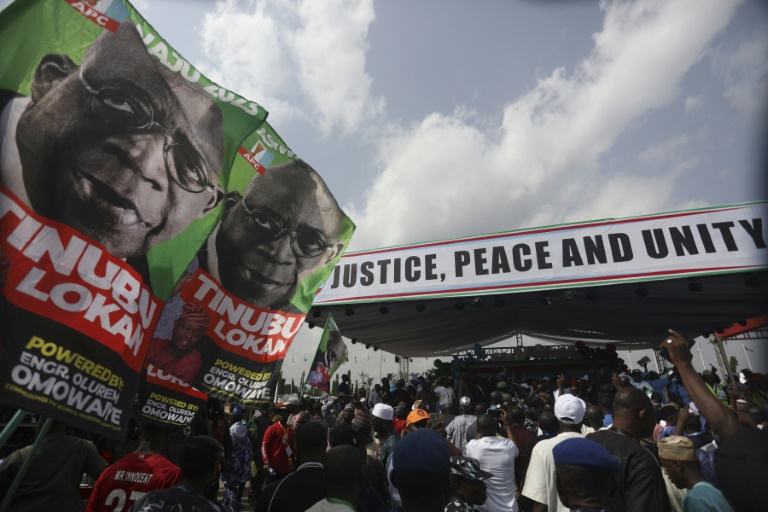
With campaigning underway for Nigeria’s 2023 election, the ruling APC is fending off questions over the health of its presidential candidate, former Lagos governor Bola Ahmed Tinubu, who has been out of the country. 

The health of candidates is sensitive in Nigeria, especially after President Muhammadu Buhari himself spent months away for treatment in his first term, and in 2010, President Umaru Yar’Adua died in office after a long illness.

Nicknamed the “Godfather of Lagos” for his political clout, Tinubu is in a tight race against three major rivals to succeed Buhari, who steps down after two terms governing Africa’s most populous state. 

Conspicuously absent for the signing of a symbolic peace agreement with other candidates last week, Tinubu’s health has come under scrutiny with some asking why he was away. 

The 70-year-old candidate sought to reassure Nigerians on Sunday, with a video of himself on an exercise bike with Afrobeats music playing. 

“Many have said I have died; others claim I have withdrawn from the presidential campaign. Well… Nope. This is the reality: I am strong, I am healthy,” the Twitter message reads with a seven-second video.

APC leaders also appeared on talk shows to dispel rumours of ill health, saying Tinubu was in London to rest because he was unable to do so in Lagos or the capital Abuja.

“The man needed a few days off, because the pressure on him is a bit too much,” APC campaign official Ayo Oyalowo told Channels Televison.

“The man is healthy. They said he is in the hospital; some even said he died. All manner of nonsense has been said about him.”

With Nigeria’s economy flagging, oil production at historic lows, and insecurity a major issue, the next president faces a host of urgent problems.

“No way should anyone be signing a peace accord on behalf of anyone!” well-known activist Aisha Yesufu wrote on Twitter. “Bola Ahmed Tinubu has to sign for himself.”

The hashtag #WhereisTinubu trended on Twitter, with some questioning whether the Tinubu video was new.

“The more Tinubu goes missing, I think the more likely it is going to be a potentially dispositive issue in the campaign,” said Chidi Odinkalu, a Nigerian academic at Tufts University. 

– Long campaign –  

The five-month campaign for the February 25 vote began last week, but the APC delayed its official start to sort out disagreements among party stakeholders.  

Ebonyi State Governor David Umahi, part of APC’s campaign team, said the programme was being put together and dismissed concerns. 

“We have how many months to the election and how many months to campaign. The first to start does not translate to first to finish,” he told Arise TV. “Not to worry at all.” 

Tinubu, whose unofficial campaign slogan is “It’s my turn”, touts his experience as Lagos governor. The APC has s nationwide structure and state governorships to help mobilise voters.

But analysts say Tinubu must also manage discontent over APC’s perceived economic mismanagement, as Nigerians struggle with 20 percent inflation.

Main opposition Peoples Democratic Party candidate Atiku Abubakar, a former vice president, says his experience and business acumen can “rescue” Nigeria.

On his fifth run at the presidency, the 75-year-old also appeared to try to show his own vitality in a video this week of himself dancing.

“Nigeria is in crisis, but we have a five-star recovery plan,” a message says as the candidate sways.

In a country where 70 percent of the population is under 30, Abubakar and Tinubu are seen by some younger Nigerians as old-guard politicians offering little new, analysts say. That leaves room for Labour Party’s Peter Obi, 61, to challenge the long dominance of the APC and PDP. 

The PDP was in power from 1999 when Nigeria returned to civil rule until it was ousted by APC in 2015.

In his first term, Buhari spent months in London getting treated for an undisclosed ailment in 2017, one of several medical trips overseas.

Then president Yar’dua’s long absence in 2010 caused a crisis over a power vacuum. He even gave the BBC an interview from his Saudi hospital to prove he wasn’t dead. He died after he returned from treatment.

Lesotho, Africa's turbulent mountain kingdom

Lesotho, which holds parliamentary elections on Friday, is a politically unstable mountain kingdom entirely surrounded by South Africa, on which its economy largely depends while supplying its huge neighbour with most of its water.

– ‘Kingdom in the sky’ –

Lesotho is known for the beauty of its mountainous terrain, and styles itself the “Kingdom in the Sky”.

More than 80 percent of the country, which is about the size of Belgium, sits 1,800 metres (5,900 feet) above sea level. Its highest peak is Mount Thabana Ntlenyana, with an altitude of at 3,482 metres.

A constitutional monarchy, it is ruled by King Letsie III, who has no formal power. The government is led by a prime minister, who usually comes from the party with the majority in the 120-seat parliament. The country has had a coalition government for the past 10 years.

The Basothos, a people from southern Africa’s Bantu ethnic group, are a large majority in Lesotho, and most of the population is Christian.

Maseru is the capital and largest city, with almost 350,000 inhabitants.

The two official languages are English and Sesotho. 

– Turbulent history –

Lesotho has been plagued by repeated bouts of instability, coup d’etats and scandals.

A former British protectorate known as Basutoland, it achieved independence in 1966 under King Moshoeshoe II.

In 30 years of reign Moshoeshoe was forced into exile twice. First as violence followed a disputed election in 1970 and again in 1990 after a military putsch. He died in a car crash in 1996 and was succeeded by his son Letsie III.

In 1993 the country held its first democratic elections after 23 years of coups and military regimes.

In 1998 political unrest and an army mutiny prompted the intervention of troops from South Africa and Botswana. 

In 2007 a curfew is imposed in Maseru after a series of attacks on ministers and their bodyguards.

And in 2014, the army led by a sacked general seizes control of police headquarters, forcing prime minster Thomas Thabane to flee to South Africa. Thabane returns in 2017 becomes head of government after a ballot box win.

But in 2020 he is forced to step down after being accused of ordering the murder of his estranged wife. 

Charges against him were dropped in July. 

– Water tower –

Lesotho is not only landlocked, it is hemmed in on all sides by the territory of just one other state, South Africa.

A poor country of just over two million people, it is economically dependent on South Africa, where much of the population goes to work.

Remittances account for about 60 percent of household incomes. Unemployment is 22.5 percent, according to the World Bank.

It imports much of its food from South Africa, but South Africa counts on its neighbour for its abundant reserves of water — to an extent that Lesotho is nicknamed South Africa’s “water tower”.

The Katse Dam reservoir supplies Pretoria and Johannesburg.

The country also has several diamond mines, where the 5th largest diamond in the world (910 carats) was discovered in 2018.

In 2017, Lesotho became the first African nation to allow cultivation of medicinal cannabis.

About 70 percent of cannabis in South Africa comes from Lesotho where “green gold” is the third source of income.

– Life expectancy –

With more than 30 percent of its population living on less than $1.90 a day, Lesotho ranks among the world’s poorest countries. About one in three children are stunted due to malnutrition, according to the UN.

The coronavirus pandemic has dealt an additional blow to the fragile economy which is highly reliant on agriculture but highly exposed to the impact of climate change, suffering from shocks, such as drought and early frost.

Almost one in four people is infected with HIV, the second highest rate in the world.  Life expectancy in 2020 was 55 years.

Unstable Lesotho to hold vote with no clear frontrunner

The southern African mountain kingdom of Lesotho holds parliamentary elections on Friday, which analysts expect to deliver another coalition government, unlikely to tackle poverty and instability.

Famed for the beauty of its mountainous terrain, the country that styles itself the “Kingdom in the Sky” has long been beset by political turmoil, with coups and attempted coups dotting its history since independence from Britain in 1966. 

For the past 10 years it has been ruled by coalition governments that have proved fractious and frail, with no premier serving out a full five-year term. 

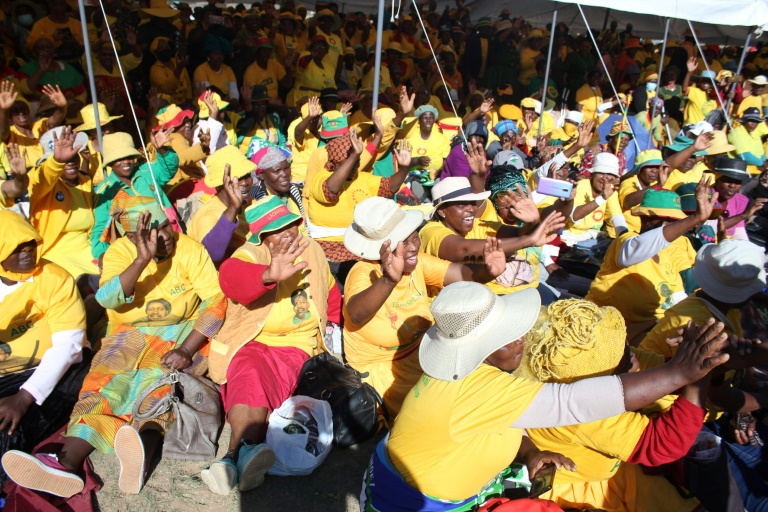
Thousands of people, some wrapped in traditional shepherd’s blankets, gathered around large marquees set up on mountain plateaus for campaign rallies over the weekend. 

The All Basotho Convention (ABC) has been the leading party since the last elections in 2017. 

But current Prime Minister Moeketsi Majoro is not seeking another term, as he was ousted as party head earlier this year. 

His predecessor Thomas Thabane was forced to step down in 2020, after being accused of ordering the murder of his estranged wife. Charges against him were dropped in July. 

The ABC’s new leader, former health minister Nkaku Kabi, will square off against an array of contenders. 

These include Mathibeli Mokhothu, who heads Lesotho’s second largest party, the Democratic Congress, and Sam Matekane, a millionaire believed to be the country’s richest man who could be a dark horse, according to analysts. 

No one is expected to win outright. 

– ‘Haphazard government’ – 

“Whichever party emerges victorious, a coalition government is inevitable,” said Seroala Tsoeu-Ntokoane, a politics expert at the National University of Lesotho.

That could make it difficult to push through much needed reforms. 

The outgoing parliament failed to pass a law on electoral reform aimed at ending political volatility, which would have prohibited lawmakers from switching party allegiance within the first three years of their tenure.

“Our government is haphazard. Coalitions just seem to eat our institutions from inside out,” said Tsoeu-Ntokoane. 

With a population of about two million people, Lesotho is surrounded by South Africa, which relies on it for essential water supplies to Johannesburg and other cities.

It ranks among the world’s poorest countries, with more than 30 percent of its population living on less than $1.90 a day. 

About one in three children are stunted due to malnutrition, according to the UN.

And almost one in four people is infected with HIV, the second highest rate in the world. 

A constitutional monarchy ruled by King Letsie III, who has no formal power, it has a mixed parliamentary system. 

Eighty lawmakers are voted in by constituents, while another 40 seats are distributed proportionally.

A party needs more than 61 of the 120 seats available to rule without being forced into a coalition.

Only 47 percent of registered voters bothered to cast their ballot in 2017. But observers say turnout might be higher this year.

The ABC and the DC have filed relatively young candidates — Kabi and Mokhothu are both under 50s — which could help inspire a larger share of the electorate. 

And Matekane, the 64-year-old outsider, has drawn large crowds at party rallies in recent weeks, which sometimes saw him land from a helicopter. 

International observers will monitor the vote. 

Africa sounds caution on net zero goal ahead of COP27

Africa needs time and money to wean itself off fossil fuels in order to achieve net zero without jeopardising its future, its representatives are warning ahead of next month’s climate talks.

At energy conferences this week, Ghana, South Africa and the African Union have insisted the continent stands by net zero — the goal of an overall balance in heat-stoking greenhouse gases.

But they warned that the continent was still heavily dependent on coal, oil and gas to power its development.

“Africa is fully convinced and committed to a net zero and supportive of the climate agenda, however. where we may differ is on the timeframe,” African Union (AU) energy commissioner Amani Abou-Zeid told AFP on the sidelines of the Green Energy Africa Summit in Cape Town.

Africa’s population of 1.3 billion is set to double by 2050, and AU nations aim to make affordable and reliable energy available to everyone by 2063, she argued. 

Funding for Africa’s green transition is likely to be a flashpoint at the COP27 climate summit, running in the Egyptian resort of Sharm el-Sheikh from November 6-18.

Under the 2015 Paris Agreement, rich nations pledged $100 billion a year to help developing countries limit climate change. 

But they have so far failed to meet the promise — and prospects have been further clouded this year by the resounding economic impacts from the Covid-19 pandemic and war in Ukraine.

– ‘Not in our interest’ –

Ghana’s deputy energy minister Mohammed Amin Adam said international green energy investment in Africa was “still appalling”, accounting only for about two percent of the global total. 

At the same time, African countries also need to secure financing for oil and gas projects, as fossil fuel revenue is needed to finance climate adaptation measures, he told AFP. 

Adam pointed to data showing that most of Africa’s oil and gas producers depended greatly on export revenue derived by these fuels.

“If we give up this, how do we even finance our ability to adapt to the climate effects? We cannot. Unless we have a substitute for our revenue,” he said. 

African countries are among the most exposed to the impacts of climate change, especially worsening droughts and floods, but responsible for only around three percent of global CO2 emissions, former UN chief Ban Ki-moon said last month.

– S.African coal –

Speaking at an Africa Oil Week event in Cape Town, South African Energy Minister Gwede Mantashe said ditching coal too quickly was not in the country’s best interests, as it would damage the economy and cost thousands of jobs. 

South Africa is the continent’s main coal producer and consumer — as well as one of the world’s top 12 carbon emitters. 

Last year, the government secured pledges of $8.5 billion loans and grants from a group of rich nations to finance the transition to greener alternatives.

But the deal is hanging in the balance, amid fraught negotiations with donor countries around how the money should be spent.

“When developed economies come to us and say ‘part of the $8.5 billion is going to be spent on accelerating the exit of coal’, I feel that is not in our interest,” Mantashe said. 

At pre-COP27 talks in Kinshasa this week, the Democratic Republic of Congo fended off demands to abandon oil and gas blocks that it has put up for auction in environmentally sensitive areas.

The DRC launched bids in July for 30 blocks in the Congo Basin, sparking fears that drilling could release carbon dioxide trapped for millennia in the peaty forest floor. 

But DRC Environment Minister Eve Bazaiba, opening the talks on Monday, asked if the government should let children die rather than harvest from its fossil resources. 

“As much as we need oxygen, we also need bread,” she said.

OPEC+ expected to slash oil output

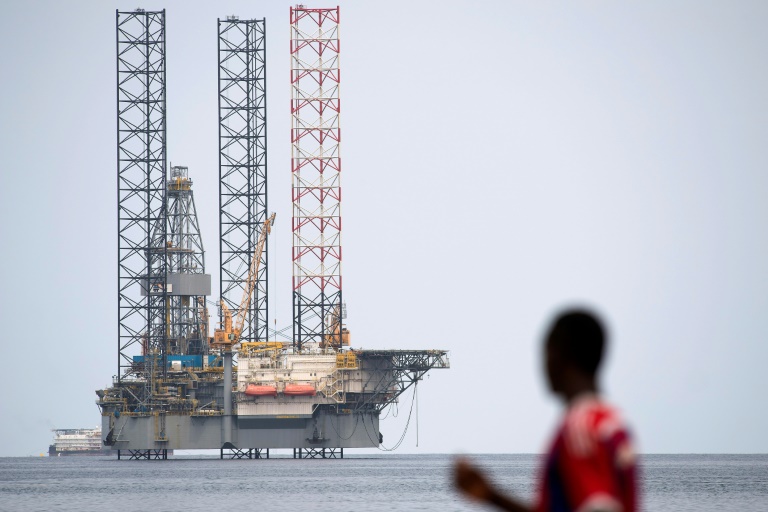
Major oil producers led by Saudi Arabia and Russia were expected Wednesday to agree on a major cut in output to prop up prices despite Western concerns over energy-fuelled inflation.

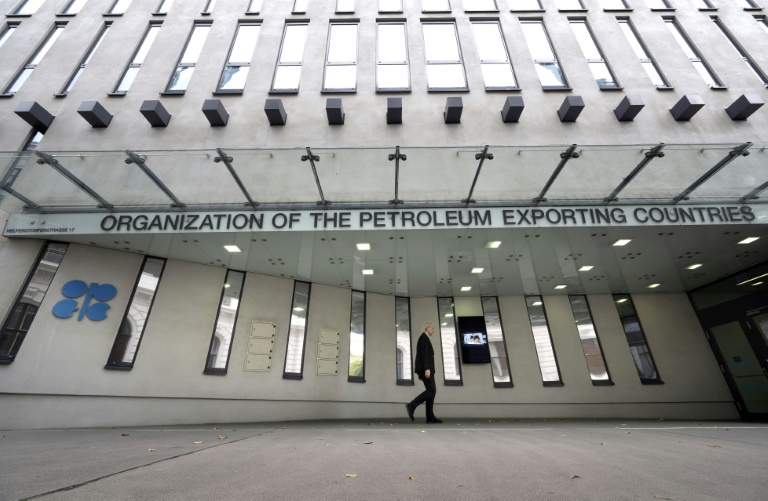
The 13-nation OPEC cartel and its 10 Russian-led allies is reportedly considering a reduction of up to two million barrels per day at a meeting in Vienna — the biggest cut since 2020.

Such a move could turbocharge crude prices, further aggravating inflation which has reached decades-high levels in many countries and is contributing to a global economic slowdown.

US President Joe Biden personally appealed to Saudi leaders in July to boost production in order to tame prices which soared following Russia’s invasion of Ukraine earlier this year. 

But crude price have fallen in recent months on concerns over dwindling demand and fears over a possible global recession.

“With consumers only just breathing a sigh of relief after being forced to pay record prices at the pump, today’s cut is not going to go down well,” said Craig Erlam, an analyst at trading platform OANDA. 

Ministers from the Saudi-led Organization of the Petroleum Exporting Countries and its partners will discuss their next move at their first in-person meeting at the group’s headquarters in Vienna since March 2020.

They were tight-lipped as they arrived for the gathering on Tuesday.

“Let’s wait… We will have to listen to the technical team,” the energy minister of the United Arab Emirates, Suhail al-Mazrouei, told reporters, adding that the group was still reviewing market data.

– Geopolitical tensions –

Collectively known as OPEC+, the alliance drastically slashed output by almost 10 million barrels per day (bpd) in April 2020 to reverse a massive drop in crude prices caused by Covid lockdowns.

OPEC+ began to raise production last year after the market improved. Output returned to pre-pandemic levels this year, but only on paper as some members have struggled to meet their quotas.

The group agreed last month on a small, symbolic cut of 100,000 bpd from October, the first in more than a year.

Bloomberg, the financial news agency, said OPEC+ officials were discussing the removal of about two million bpd out of the market from November, twice as much as earlier predictions.

Consumer countries have pushed for months for OPEC+ to open taps more widely to bring down prices — calls that the group has largely ignored.

“Knowing that Russia is willing to cut output, the move could also be perceived as another escalation of the geopolitical tensions” between Moscow and the West, said Ipek Ozkardeskaya, a Swissquote bank analyst.

The OPEC+ discussion also comes as Western nations mull imposing a price cap on Russian oil while an EU ban on most crude from Russia comes into effect in December. 

– US elections –

Biden made a controversial trip to Saudi Arabia in July in part to convince the kingdom to loosen the production taps. The trip saw Biden meet Crown Prince Mohammed bin Salman despite his promise to make Riyadh a “pariah” following the 2018 killing of journalist Jamal Khashoggi.

A major cut now would be “something that will not be well received by the White House ahead of next month’s midterm elections,” said Tama Varga, analyst at PV Energy, referring to congressional elections.

While such a cut could anger Washington, several OPEC+ nations have struggled to meet their quotas in the first place.

Prices soared close to $140 per barrel in the aftermath of Russia’s invasion of Ukraine in late February but fell as low as below $90 more recently.

After rallying earlier this week on speculation over the OPEC+ cut, the international benchmark, Brent North Sea crude, was slightly down on Wednesday, hovering above $91.

According to UBS bank, a cut of at least 500,000 bpd would be necessary to stop the price plunge.

Ethiopia govt says accepts AU invite to peace talks

Ethiopia’s government said Wednesday it has accepted an African Union invitation to hold peace talks with Tigrayan rebels after almost two years of brutal war in the north of the country. 

Prime Minister Abiy Ahmed’s national security adviser Redwan Hussein said on Twitter that the government had “accepted this invitation which is in line with our principled position regarding the peaceful resolution of the conflict and the need to have talks without preconditions”.

The Government Communication Service said in a statement that the AU had set “both the date and the venue” for the talks but did not elaborate.

AU spokeswoman Ebba Kalondo declined to provide information about when and where the talks would take place, telling AFP: “We will communicate details as and when appropriate”, adding that the process remained “on track”.

There was no immediate response from the Tigray People’s Liberation Front (TPLF) to the announcement, which comes more than a month after intense fighting resumed in northern Ethiopia, shattering a March truce and dimming hopes of ending the war.

The deepening conflict has raised international alarm, with the United States this week announcing that its special envoy to the region, Mike Hammer, would be making his second visit to Ethiopia in as many months to seek a halt to the fighting.

The latest upsurge has also drawn Eritrean troops back on to the battlefield in support of Ethiopia’s federal and regional forces, which are fighting the TPLF on multiple fronts in the country’s north.

Tigrayan authorities said last month they were ready to participate in talks mediated by the African Union, removing an obstacle to negotiations with the government in Addis Ababa.

But fighting has only escalated in the weeks since.

– ‘Troika of negotiators’ – 

A diplomatic source told AFP that the AU talks would be mediated by “a troika of negotiators” including the bloc’s Horn of Africa envoy Olusegun Obasanjo and former Kenyan president Uhuru Kenyatta.

Another diplomatic source said South Africa’s former deputy president Phumzile Mlambo-Ngcuka would serve as the third negotiator.

The warring sides were previously at odds over who should mediate negotiations, with Abiy’s government pushing for Obasanjo and the TPLF wanting Kenyatta to broker dialogue. 

They have also sparred over the restoration of basic services such as electricity, communications and banking in Tigray — a key precondition for dialogue according to the TPLF.

The region of six million people has been facing desperate shortages of food, fuel, medicines and other emergency supplies, with the UN’s World Food Programme warning of rising malnutrition.

The US State Department on Monday announced that special envoy Hammer would travel to Kenya, South Africa and Ethiopia this month.

The visit, which will include meetings with federal government and African Union officials, comes on the heels of an 11-day trip by Hammer to Ethiopia last month, with the State Department saying it was aimed at supporting the launch of AU-led peace talks.

The war, which erupted in November 2020, has killed untold numbers of civilians and triggered a deep humanitarian crisis, and all sides to the conflict have been accused of grave abuses against civilians.

In Morocco hills, cannabis farmers bet on budding industry

In the hills of northern Morocco, vast cannabis fields are ready for harvest, but farmers complain that a government plan to market the crop legally is yet to deliver them any benefits. 

The marginalised Rif region has long been a major source of illicit hashish smuggled to Europe while Moroccan authorities, wary of social unrest, have often turned a blind eye.

Growers now hope that a change in the law last year will help them profit legally from medicinal cannabis, increasingly used to treat conditions including multiple sclerosis and epilepsy.

Morocco — the world’s top producer of hashish according to the United Nations — lies on Europe’s doorstep and is potentially well placed to become a top legitimate exporter.

But a domestic crackdown on growers, slow progress in issuing licenses for legal production and strong competition from European operators has left Rif farmers out in the cold.

“We’re still attached to this plant, but it has stopped giving us anything,” said Souad, a cannabis farmer in the village of Azila.

Like others AFP interviewed, she did not want her real name to be published.

“Nobody wants it anymore,” Souad shrugged. “Our lives are hard now.”

Under a law the government approved in March last year, farmers will be able to form cooperatives to grow limited amounts of cannabis for processing and sale by licensed firms.

Souad, who still helps her sons on the family plot despite being in her 60s, holds tentative hope that this will help her community make a better living. 

“If it’s serious, it’s a good thing,” she said.

– ‘We’re just farmers’ –

Demand for the Moroccan product has dropped as legal, highly regulated, production in Europe has fed the market.

Moroccan farmers’ income from cannabis fell from 500 million euros (now around $497 million) a year in the early 2000s to less than 325 million euros in 2020, according to an interior ministry study last year.

“The market has fallen drastically,” said Karim, another grower.

Adding to the pressure, he was only able to farm part of his family’s land in Azila this year because of water shortages driven by the worst drought in decades.

Moroccan authorities have also stepped up raids against farmers in the Rif as they seek to dismantle smuggling networks in favour of the legal trade.

“Farmers are the weak link in the supply chain — we’re the ones who pay the price” for involvement in the illicit market, Karim complained.

“The only option we have left is prison,” said the 44-year-old.

Nourredine, another cannabis grower, said he too holds out hope that legalisation of the drug could help farmers in the Rif.

However, he added, “so far nothing has changed. We’re always seen as thugs and criminals, but we’re just farmers.”

– Complex bureaucracy –

A six-hour drive away in the capital Rabat, a government official insisted that better times were around the corner for cannabis growers.

“There may be concerns, but legalisation will dispel them because it will benefit the growers,” he said, asking not to be identified because he was not authorised to speak to the media on the subject.

The state estimates that growers could receive some 12 percent of revenues from regulated cannabis production, compared to just four percent on the black market, according to state news agency MAP.

But authorities have stressed that the process must not be rushed.

An initial round of licenses is to be issued to Moroccan and international firms to process cannabis for therapeutic purposes, the official said without specifying a date.

ANRAC, an agency the government has created to regulate the industry, began operating in June and is currently studying license applications by hopeful firms.

Then it will be the turn of farmers in the Rifian provinces of Al-Hoceima, Chefchaouen and Taounate to form cooperatives and register with ANRAC.

But under the 2021 law, licenses to produce cannabis are granted “only within the limits of the quantities needed to meet the needs for the manufacture of products for medical, pharmaceutical and therapeutic purposes”.

Cannabis farms covered 55,000 hectares (around 136,000 acres) in the northeast of the kingdom in 2019, providing livelihoods for up to 120,000 families, according to a study prior to the law being passed.

Civil society groups in the area are now mobilising to inform farmers about the technical aspects of the new system.

Some details are “complicated”, said Soufiane Zahlaf, who represents Azila residents in dealings with authorities on the matter.

“But if the approach of the authorities is inclusive,” he said, “then great things can be achieved.”
Close Bitnami banner
Bitnami