Africa Business

OPEC+ expected to slash oil output

Major oil producers led by Saudi Arabia and Russia were set to meet Wednesday as reports said they were mulling an output cut of up to two million barrels per day in a bid to prop up slumping prices.

If implemented, it would be the first such major cut since a landmark curb on production at the start of the Covid pandemic.

Energy prices soared after Russia invaded Ukraine earlier this year, pushing inflation to decades-high levels that have put pressure on economies across the world.

But they have fallen in recent months on concerns over dwindling demand and a slowdown in the global economy.

The 13 members of the Organization of the Petroleum Exporting Countries (OPEC), led by Saudi Arabia, and their 10 allies headed by Russia will hold their first in-person meeting since March 2020 at the group’s headquarters in Vienna.

Collectively known as OPEC+, the alliance drastically slashed output by almost 10 million barrels per day (bpd) in April 2020 to reverse a massive drop in crude prices caused by Covid lockdowns.

OPEC+ began to raise production last year after the market improved. Output returned to pre-pandemic levels this year, but only on paper as some members have struggled to meet their quotas.

The group agreed last month on a small, symbolic cut of 100,000 bpd from October, the first in more than a year.

– ‘Sizeable cut’? –

Most oil ministers were reluctant to divulge information on possible output cuts as they started to arrive in Vienna.

UAE Energy Minister Suhail al-Mazrouei said Tuesday that the group was still reviewing market data.

“Let’s wait… We will have to listen to the technical team,” he told journalists.

But Bloomberg said officials were discussing the removal of about two million bpd out of the market from November, twice as much as earlier predictions.

“A sizeable cut now looks on the cards, the question is whether it will be large enough to offset the demand destruction caused by the impending economic downturn,” said Craig Erlam, an analyst at trading platform OANDA.

After soaring close to $140 per barrel in the aftermath of Russia’s invasion of Ukraine in late February, oil prices have dropped below the $90 mark.

According to the UBS bank, a cut of at least 500,000 bpd would be necessary to stop the price plunge.

In anticipation of Wednesday’s meeting, oil prices jumped further on Tuesday, with Brent above $90 and WTI around $86, though still far below their March peak.

– Tighter taps ‘unwelcome’ –

Consumer countries have pushed for OPEC+ to open taps more widely to bring down prices — calls that the group has largely ignored.

US President Joe Biden made a controversial trip to Saudi Arabia in July in part to convince the kingdom to loosen the production taps. The trip saw Biden meet Crown Prince Mohammed bin Salman despite his promise to make Riyadh a “pariah” following the 2018 killing of journalist Jamal Khashoggi.

“Any cut would be unwelcome as it’s not the right time for cutting oil supplies to push prices higher,” said Ipek Ozkardeskaya, a Swissquote analyst.

“The global energy crisis, soaring inflation and looming recession already worry the Western leaders,” she said ahead of the Vienna gathering.

“Knowing that Russia is willing to cut output, the move could also be perceived as another escalation of the geopolitical tensions” between Moscow and the West.

Observers have cast doubt on how much more OPEC+ could possibly pump, with some of its members already struggling to meet quotas.

Bjarne Schieldrop, chief commodities analyst at SEB research group, predicted it would be “very easy for the group to implement cuts given that most members are stretched to the limit of what they can produce”.

He said Saudi Arabia was currently producing 11 million bpd.

“It hasn’t maintained such a high production more than twice in history and then only for 1-2 months,” he said.
Pro-Russia demonstrators rally in Burkina after coup

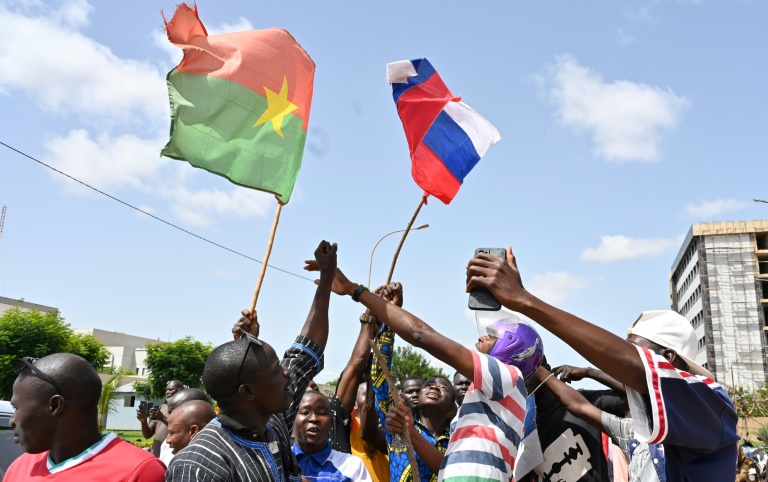
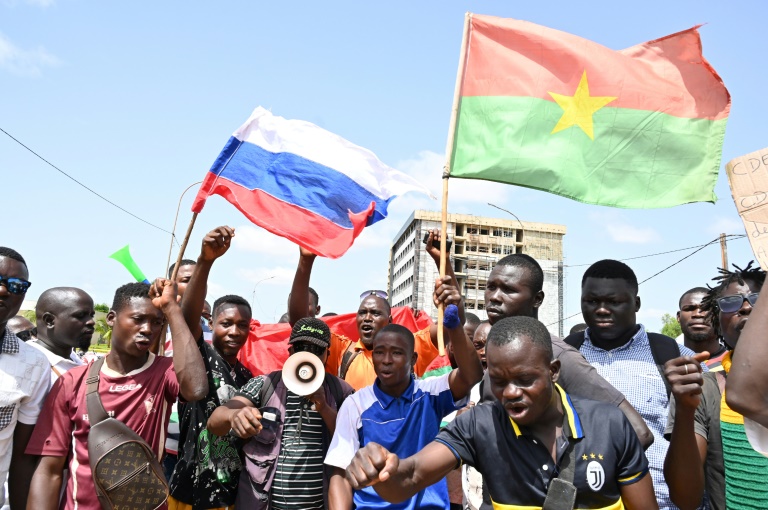
Several dozen protestors waving Russian flags rallied in Burkina Faso’s capital Ouagadougou on Tuesday, as West African envoys wrapped up a fact-finding mission following the country’s second coup in less than nine months.

The impoverished Sahel state plunged into turmoil at the weekend when Lieutenant-Colonel Paul-Henri Sandaogo Damiba — who had seized power in January — was toppled by a newly emerged rival, 34-year-old Captain Ibrahim Traore.

The dramatic takeover, which ended with Damiba fleeing to neighbouring Togo, coincided with violent anti-French protests and the sudden emergence of Russian flags among demonstrators.

Demonstrators Thursday chanted support for Russia, called on France to exit the country and warned ECOWAS — the Economic Community of West African States — against “meddling”, an AFP journalist saw.

The ECOWAS delegates arrived Tuesday morning, headed by Guinea-Bissau Foreign Minister Suzi Carla Barbosa, whose country currently chairs the bloc.

The same day they concluded their mission after “two important meetings… first with traditional and religious leaders, and the main meeting with Captain Ibrahim Traore”, said former Niger president Mahamadou Issoufou, the mediator for Burkina Faso at ECOWAS.

Issoufou said the country had been “on the brink of collapse” over the weekend.

Speculation has risen that Traore may follow other fragile regimes in French-speaking Africa and forge close ties with Moscow at the expense of France, the region’s former colonial power and traditional ally.

On the streets, demonstrators’ slogans included “France get out”, “No to ECOWAS interference”, and “Long live Russia-Burkina cooperation”.

On Tuesday evening, Traore thanked the demonstrators for their “mobilisation” but told them to free up any occupied public spaces and told them their “different messages have been heard”.

In Russia, Yevgeny Prigozhin, founder of the controversial Wagner paramilitary group whose operatives have been documented in the Central African Republic and Mali, congratulated Traore, hailing him “a genuinely brave son… of his homeland”.

“I salute and give my support to Captain Ibrahim Traore,” the usually secretive 61-year-old businessman said on the social media outlets of his company Concord.

Traore and his men “have done what was necessary and they did it simply for the good of their people”, he said.

– Regional worry –

The United States warned the junta of the risks of allying with Russia, saying they condemned “any attempt to exacerbate the current situation in Burkina Faso”.

“Countries where the (Wagner paramilitary group) has been deployed find themselves weaker and less secure, and we’ve seen that in a number of cases in Africa alone,” State Department spokesman Vedant Patel told reporters.

ECOWAS — designed to promote democracy in one of the world’s most volatile regions — has witnessed five coups among three of its 15 members in little more than two years.

Its approach has been to urge junta leaders to set a relatively short timetable for restoring civilian rule — and to impose sanctions against those deemed to be ignoring the demand or sidestepping their pledges.

But it has also taken flak, with some critics accusing it of supporting Western, or specifically French, interests.

Traore said in a statement the ECOWAS visit was to “make contact with the new transition authorities” as part of the support that Burkina Faso derived from the region.

He said he had learned “with astonishment and regret” that messages had circulated on social media “calling for this mission to be hampered” and urged calm and restraint.

“Any person who commits acts aimed at disturbing the smooth course of the ECOWAS mission will face the force of the law,” Traore said.

– Jihadist pressure –

Landlocked and deeply poor, Burkina Faso has experienced little political stability since gaining independence from France in 1960.

The latest turmoil takes place against the backdrop of a jihadist insurgency that swept in from neighbouring Mali in 2015.

Thousands of civilians, troops and police officers have been killed and nearly two million people have fled their homes.

Swelling anger within the armed forces prompted Damiba’s coup against the elected president, Roch Marc Christian Kabore, on January 24.

Appointing himself transitional head of state, Damiba vowed to make security the country’s top priority but after a brief lull the attacks revived, claiming hundreds of lives.

Traore emerged on Friday at the head of a faction of disgruntled junior officers that proclaimed that Damiba had been deposed — also for failing to roll back the insurgency.

Damiba fled following a two-day standoff that was defused by religious and community leaders.

Traore has said he would stand by a pledge that Damiba gave ECOWAS for restoring civilian rule by July 2024.

Jailed Guinean ex-dictator seeks house arrest in 2009 massacre trial

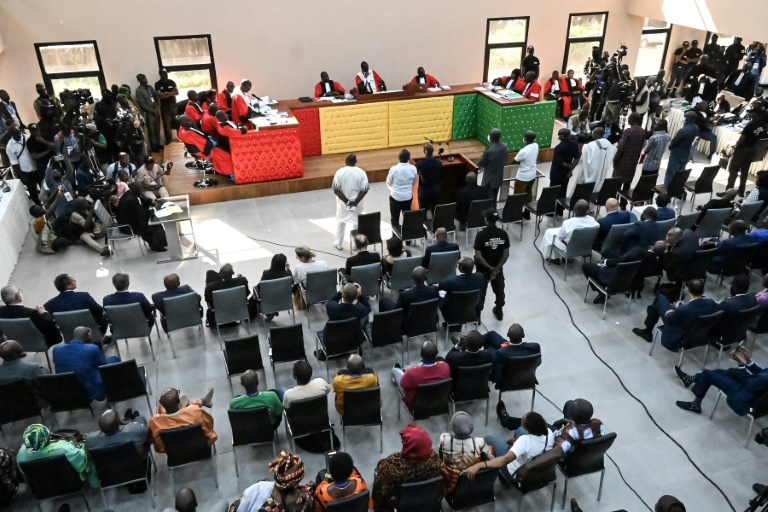
A lawyer for jailed former Guinean dictator Moussa Dadis Camara on Tuesday asked the court to place the ex-leader under house arrest during the trial over the 2009 stadium massacre.

Camara and 10 other former military and government officials are accused over the killing of 156 people and the rape of at least 109 women by security forces loyal to the then-junta leader at a political rally in a Conakry stadium on September 28, 2009 and in the days that followed.

Camara, 58, and the other defendants face a litany of charges from murder to sexual violence, kidnappings, arson and looting, and Camara himself is charged with “personal criminal responsibility and command responsibility” over the crimes.

He was jailed on September 27, a day before the long-awaited trial began in a purpose-built court in the capital Conakry. He had returned to Guinea only a few days before after living in exile in Burkina Faso.

But one of his lawyers, Pepe Antoine Lamah, challenged the decision to keep Camara in jail for the duration of the trial over security fears.

Camara is in jail with others including his former presidential guard chief Aboubacar Sidiki Diakite, alias “Toumba”, who shot him in December 2009 after the ex-junta leader appeared to blame him for the massacre.

“Whether we like it or not, at one point in Guinea’s history, Captain Moussa Dadis Camara led this country, so we must have a little respect,” Lamah told the court.

He added that a “villa” could be arranged for Camara but the prosecutor, Alghassimou Diallo, insisted Camara “will be treated like the others”.

The court has not yet responded to the lawyer’s request.

The hearing began on Tuesday with the questioning of defendants but soon descended into wrangling over procedure.

But the judge was able to ask one suspect, Major Moussa Thieboro Camara, whether he accepted the allegations against him over the massacre, to which he said he would plead not guilty.

A Guinean government spokesman, Ousmane Gaoual Diallo, told AFP in Paris that the trial would last “at least a year to a year-and-a-half” because of the “massive number of victims and thousands of witnesses”.

Tunisian star Jabeur eases into second round at home in Monastir

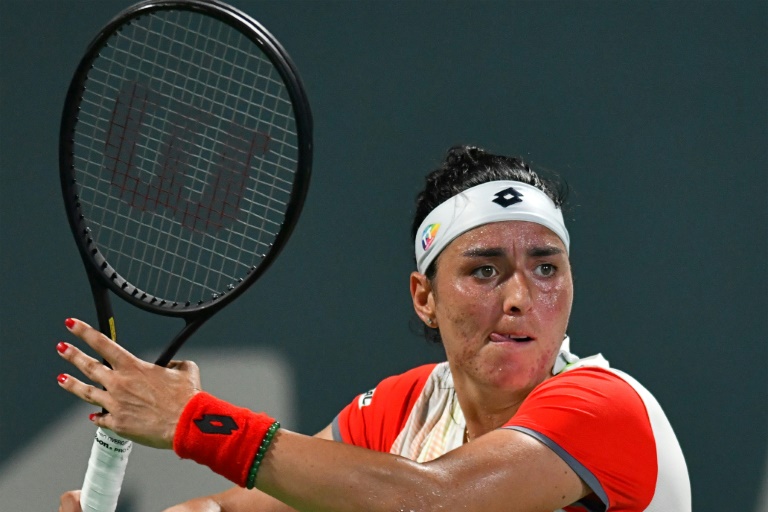
Tunisian tennis star Ons Jabeur eased into the second round of her home tournament at Monastir on Tuesday with a straight sets win over American Ann Li.

Top seed Jabeur, a finalist at both Wimbledon and the US Open this year, won  6-2, 6-3 in the first ever WTA tour event to be hosted in Tunisia.

The world number two took 73 minutes to dispatch her 67th ranked opponent in their first meeting.

The Monastir tournament, staged on the central coast of Tunisia, is just the second women’s professional circuit organised in Africa, after that of Rabat in Morocco.

Jabeur is hugely popular in north Africa, and the world number two is hoping “to reach the final and win in Monastir to make Tunisians happy”.

The 28-year-old, whose ambition is “to be a good example for all the young people who follow her” has won three WTA titles including two this year in Madrid and Berlin.

“Young people must gain self-confidence to achieve their ambitions,” said the player dubbed “Minister of Happiness” in a Tunisia hit by a deep political and economic crisis. 

US warns Burkina Faso coup leaders on Russia

The United States on Tuesday warned Burkina Faso’s junta of the risks of allying with Russia, whose shadowy Wagner paramilitary group has voiced robust support for the latest coup.

“Countries where the group has been deployed find themselves weaker and less secure, and we’ve seen that in a number of cases in Africa alone,” State Department spokesman Vedant Patel told reporters.

“We condemn any attempt to exacerbate the current situation in Burkina Faso and we strongly encourage the new transitional government to adhere to the agreed-upon timeline for a return to a democratically elected, civilian-led government,” he said.

The impoverished Sahel state plunged into turmoil over the weekend when Lieutenant Colonel Paul-Henri Sandaogo Damiba, who had seized power only in January, was toppled by a newly emerged rival, 34-year-old Captain Ibrahim Traore.

A small group of demonstrators in the capital Ouagadougou on Tuesday chanted support for Russia and against France, the former colonial power that has long been the main power in West Africa.

Speculation was further heightened when the Wagner group’s normally taciturn founder, businessman Yevgeny Prigozhin, saluted Traore over social media, saying he and his troops “have done what was necessary” for “the good of their people.”

Neighboring Mali’s junta has forged ties with the Wagner group, also defying Western warnings.

The unit has been accused of rights abuses in the Central African Republic, Libya, Syria and increasingly in Ukraine and has been described by critics as a shadow army for Russian President Vladimir Putin.

Prigozhin — dubbed “Putin’s chef” due to his catering contracts — previously denied a role with Wagner but last week confirmed he founded the group in 2014, saying the original goal was to send “patriots” into eastern Ukraine.

Rossouw's 'dream' ton helps South Africa thrash India in third T20

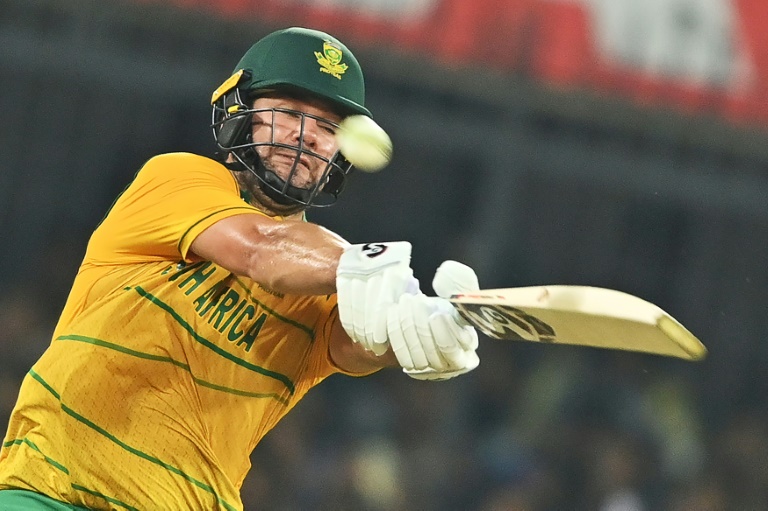
South Africa’s Rilee Rossouw on Tuesday called his maiden Twenty20 international century coming against a “world class” India “special” after he helped the tourists to a consolation 49-run win in the third match.

The left-handed Rossouw, who came into his 21st T20 for South Africa on the back of two ducks, made an unbeaten 100 in 48 balls to steer the team to 227-3 after being invited to bat first in Indore.

South African bowlers then combined to bowl out India for 178 in 18.3 overs, but the hosts took the three-match series 2-1 — their first ever against the Proteas at home — after winning the first two matches.

It was the last match for both the teams ahead of the T20 World Cup in Australia starting later this month and the 32-year-old Rossouw made it count for the tourists.

“(India are) a world class side, I would say, it (the knock) was special,” man of the match Rossouw said of his ton against the top-ranked T20 team in the world.

“It is something that you dream of as a cricketer, to score a hundred in front of a packed crowd and I am glad I could contribute for the winning side tonight.”

Quinton de Kock, who hit 68 off 43 balls, and Rossouw put on 89 for the second wicket after skipper Temba Bavuma, who got ducks in the two losses, fell for three.

Rossouw survived a dropped catch on 24 by Mohammed Siraj in the deep as the ball popped out of his hands for a six. De Kock made his second successive fifty with a hit over the fence off Umesh Yadav.

The pair hit eight sixes between them before the partnership ended with De Kock’s run out in his attempt to steal a second run.

– India’s bowling woes –

Rossouw, who hit eight sixes, then got going with Tristan Stubbs in another big partnership of 87 and surpassed his previous best of 96 not out to reach his hundred in 48 balls.

Stubbs, who was warned by pace bowler Deepak Chahar for backing up too far at the non-striker’s end when on 13, made 23.

Rossouw finished unbeaten and David Miller, who hit a 100 in the second T20, smacked three straight sixes in the final over from Chahar to score an unbeaten 19 off five balls.

India captain Rohit Sharma said bowling remains one of the things to be worked upon before heading into the World Cup Down under.

“Areas of concerns, we have to look at our bowling, what more options we can find in the powerplay, middle and death,” said Rohit whose side also beat Australia 2-1 in a three-match T20 series last month.

“We were playing two quality sides, (we) have to go back and see what we can do better. It will be challenging and we need to find answers, still working towards that.”

India’s chase started badly as they lost two early wickets including Rohit for a duck after the opener got an inside edge on to his stumps from pace bowler Kagiso Rabada.

Wicketkeeper-batsman Rishabh Pant (27) and Dinesh Karthik (46) attempted to revive the chase in an attacking partnership of 41 off 20 balls.

Pant got out after hitting three fours and two sixes in his 14-ball knock, but Karthik kept up the charge.

Left-arm spinner Keshav Maharaj denied Karthik his fifty after the batsman attempted a reverse scoop only to be bowled.

The rest of the batting, which missed Virat Kohli and KL Rahul who were rested, failed to challenge the bowlers apart from Chahar who made a valiant 31 of 17 balls.

Fast bowler Dwaine Pretorius, who came in for the rested Anrich Nortje, stood out with figures of 3-26 in his 3.3 overs.

Moroccans protest 'racist' French, EU visa policies

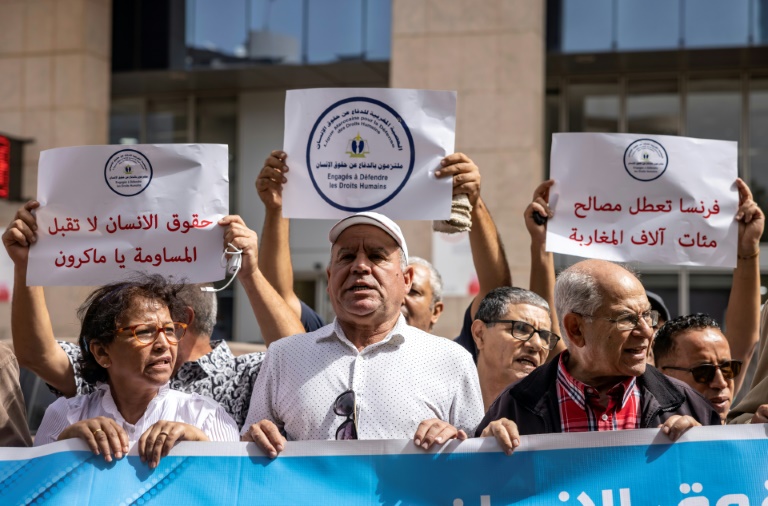
Dozens of Moroccans demonstrated outside the European Union’s office in Rabat on Tuesday in protest at “racist” and “humiliating” treatment over visa applications, particularly by former colonial ruler France.

“We’re here to express our anger at the humiliation, arrogance and racism endured by many of our compatriots whose visa requests have been rejected by EU states,” said Aziz Ghali, one of the organisers and head of the AMDH rights group.

Ghali accused EU states of limiting the number of visas issued and rejecting applicants despite the fact they met the criteria.

“Depriving visas is discriminatory and racist,” one placard read.

Protesters also criticised policies such as refusing to justify rejections or refund processing fees.

Following a call by the AMDH and the LMDDH rights group, around 50 people attended the protest, many chanting: “Yes to freedom of movement, no to colonial agreements!”

Schengen visas issued to non-EU citizens allow the holder to travel freely among 26 EU countries.

AMDH activist Khadija Ryadi said Moroccan applicants for the visas faced “unacceptable and unjustified” rejections, despite having legitimate reasons to travel to EU countries, “particularly France”.

In 2021, France decided to halve the number of visas it issues to Moroccans and Algerians, citing those countries’ reluctance to repatriate their citizens living clandestinely in France.

The decision has sparked ongoing public anger in both countries and tensions between Paris and their governments.

A French official however accused Moroccan media and social media users of exaggerating the rate of rejected applications, insisting that the number of student visas issued in 2022 was similar to that of last year.

Rossouw ton helps South Africa to consolation T20 win

Rilee Rossouw hit his maiden Twenty20 international century to set up a 49-run consolation win for South Africa in the third match against India on Tuesday.

The left-handed Rossouw made an unbeaten 100 in 48 balls to steer South Africa to 227-3 after being invited to bat first in Indore.

South African bowlers then combined to bowl out India for 178 in 18.3 overs, but the hosts took the three-match series 2-1 — their first ever against the Proteas at home — after winning the first two matches.

It was the last match for both the teams ahead of the T20 World Cup in Australia starting later this month and the 32-year-old Rossouw made it count for the tourists.

Quinton de Kock, who hit 68 off 43 balls, and Rossouw put on 89 for the second wicket after skipper Temba Bavuma, who got ducks in the two losses, fell for three.

Rossouw survived a dropped catch on 24 by Mohammed Siraj in the deep as the ball popped out of his hands for a six. De Kock made his second successive fifty with a hit over the fence off Umesh Yadav.

The pair hit eight sixes between them before the partnership ended with De Kock’s run out in his attempt to steal a second run.

Rossouw, who hit eight sixes, then got going with Tristan Stubbs in another big partnership of 87 and surpassed his previous best of 96 not out to reach his hundred in 48 balls.

Stubbs, who was warned by pace bowler Deepak Chahar for backing up too far at the non-striker’s end when on 13, made 23.

Rossouw finished unbeaten and David Miller, who hit a 100 in the second T20, smacked three straight sixes in the final over from Chahar to score an unbeaten 19 off five balls.

In reply, India lost two early wickets including skipper Rohit Sharma for a duck after the opener got an inside edge on to his stumps from pace bowler Kagiso Rabada.

Wicketkeeper-batsman Rishabh Pant (27) and Dinesh Karthik (46) attempted to revive the chase in an attacking partnership of 41 off 20 balls.

The left-handed Pant got out after hitting three fours and two sixes in his 14-ball knock, but Karthik kept up the charge.

Left-arm spinner Keshav Maharaj denied Karthik his fifty after the batsman attempted a reverse scoop only to be bowled.

The rest of the batting, which missed Virat Kohli and KL Rahul who were rested, failed to challenge the bowlers apart from Chahar who made a valiant 31 of 17 balls.

Fast bowler Dwaine Pretorius, who came in for the rested Anrich Nortje, stood out with figures of 3-26 in his 3.3 overs.

New role for Uganda's 'first son' after social media uproar

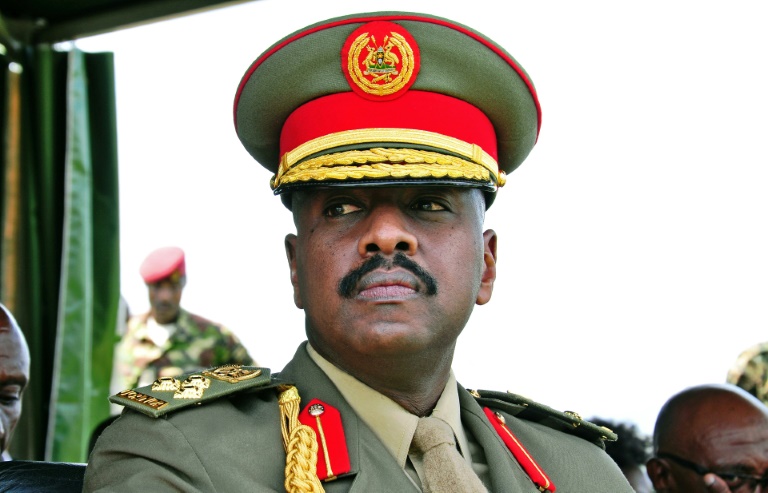
Uganda’s defence ministry on Tuesday announced that the president’s powerful son Muhoozi Kainerugaba would no longer lead the country’s land forces, hours after a social media tirade by the outspoken scion caused uproar in Kenya.

The ministry said that President Yoweri Museveni had also promoted his 48-year-old son to the rank of general, but analysts said the elevation was likely a cosmetic move aimed at lowering his profile in the region.

“According to the powers entrusted to him as the president and commander in chief, President Yoweri Museveni has promoted Lt. Gen. Muhoozi Kainerugaba to the rank of general,” the ministry said in a statement.

Although Kainerugaba has repeatedly denied claims he intends to succeed his 78-year-old father — one of Africa’s longest-serving leaders — he has enjoyed a rapid rise through Uganda’s army ranks and has often sparked controversy on social media.

The move followed an endorsement on the weekend by some senior officials from the ruling National Resistance Movement (NRM) who selected Museveni as their candidate in the country’s 2026 presidential elections.

Soon after, Kainerugaba triggered a firestorm on Twitter with tweets discussing plans to invade Kenya.

“It wouldn’t take us, my army and me, 2 weeks to capture Nairobi,” he said on Monday evening, before making an about-turn.

“I would never beat up the Kenyan army because my father told me never to attempt it! So our people in Kenya should relax!”

The social media fracas forced Uganda’s foreign ministry to wade in and release a statement expressing its “commitment to good neighbourliness (and) peaceful coexistence” with Kenya.

As a serving soldier, Kainerugaba is prohibited from discussing political matters in public.

But this has not stopped him from airing his views on sensitive foreign policy issues, offering up opinions on subjects ranging from last year’s coup in Guinea to the brutal war in northern Ethiopia.

– ‘Lower his profile’ –

“One potential explanation of Muhoozi’s Twitter storm over the last days is the endorsement of his father for the 2026 elections by top NRM officials over the weekend,” said Kristof Titeca, an expert on Central African affairs at the University of Antwerp.

“This could have triggered him, as he might also be eyeing the 2026 elections,” Titeca told AFP.

“It can be questioned whether this promotion effectively entails more power. It could be perceived as a way to lower his profile, and reduce his real power.”

A Ugandan political analyst who spoke to AFP on condition of anonymity agreed, saying “the elevation to general was a cosmetic move (by Museveni) to avoid upsetting” his son.

Kainerugaba said Tuesday’s announcement was grounds for “a celebration”.

“I thank my father for this great honour,” he said on Twitter.

Kainerugaba will continue to serve as a high-profile presidential adviser on special operations — a role that extends to the political sphere. 

His foreign policy interventions have not been limited to social media. 

He is said to have been instrumental in the recent rapprochement between Uganda and Rwanda and was involved in a joint operation launched last year by Ugandan and Congolese forces against the Allied Democratic Forces rebel group in the eastern Democratic Republic of Congo.

The prospect of Kainerugaba’s elevation to the presidency has aroused the ire of opposition politicians and government critics, forcing some into exile.

Prominent author Kakwenza Rukirabashaija fled to Germany in February this year, alleging that he was tortured in custody on charges of insulting Museveni and Kainerugaba, who he has described as “obese”, a “curmudgeon” and a “baby despot”. 

Pro-Russia demonstrators rally in Burkina after coup

Several dozen protestors waving Russian flags rallied in Burkina Faso’s capital Ouagadougou on Tuesday as West African envoys arrived on a fact-finding mission following the country’s second coup in less than nine months.

Demonstrators chanted support for Russia, called on France to exit the country and warned ECOWAS — the Economic Community of West African States — against “meddling”, an AFP journalist saw.

The impoverished Sahel state plunged into turmoil at the weekend when Lieutenant-Colonel Paul-Henri Sandaogo Damiba, who had seized power only in January, was toppled by a newly emerged rival, 34-year-old Captain Ibrahim Traore.

The dramatic takeover, which ended with Damiba fleeing to neighbouring Togo, coincided with violent anti-French protests and the sudden emergence of Russian flags among demonstrators.

Speculation has risen that Traore may follow other fragile regimes in French-speaking Africa and forge close ties with Moscow at the expense of France, the region’s former colonial power and traditional ally.

In Russia, Yevgeny Prigozhin, founder of the controversial Wagner paramilitary group whose operatives have been documented in the Central African Republic and Mali, congratulated Traore, hailing him “a genuinely brave son… of his homeland.”

“I salute and give my support to Captain Ibrahim Traore,” the usually secretive 61-year-old businessman said on the social media outlets of his company Concord.

Traore and his men “have done what was necessary and they did it simply for the good of their people,” he said.

– Regional worry –

The ECOWAS delegation, whose visit was initially scheduled for Monday, arrived on Tuesday morning, officials told AFP.

The bloc, designed to promote democracy in one of the world’s most volatile regions, has witnessed five coups among three of its 15 members in little more than two years.

Its approach has been to urge junta leaders to set a relatively short timetable for restoring civilian rule — and to impose sanctions against those deemed to be ignoring the demand or sidestepping their pledges.

But it has also taken flak, with some critics accusing it of supporting Western, or specifically French, interests.

Traore said in a statement the ECOWAS visit was to “make contact with the new transition authorities” as part of the support that Burkina Faso derived from the region.

He said he had learned “with astonishment and regret” that messages had circulated on social media “calling for this mission to be hampered” and urged calm and restraint.

“Any person who commits acts aimed at disturbing the smooth course of the ECOWAS mission will face the force of the law,” Traore said.

The ECOWAS visit is headed by Guinea-Bissau Foreign Minister Suzi Carla Barbosa, whose country currently chairs the bloc, and includes former Niger president Mahamadou Issoufou, who is the mediator for Burkina Faso.

– Jihadist pressure –

Landlocked and deeply poor, Burkina Faso has experienced little political stability since gaining independence from France in 1960.

The latest turmoil takes place against the backdrop of a bloody jihadist insurgency that swept in from neighbouring Mali in 2015.

Thousands of civilians, troops and police officers have been killed and nearly two million people have fled their homes.

Swelling anger within the armed forces prompted Damiba’s coup against the elected president, Roch Marc Christian Kabore, on January 24.

Appointing himself transitional head of state, Damiba vowed to make security the country’s top priority but after a brief lull the attacks revived, claiming hundreds of lives.

Traore emerged on Friday at the head of a faction of disgruntled junior officers which proclaimed that Damiba had been deposed — also for failing to roll back the insurgency.

Damiba fled to Togo following a two-day standoff that was defused by religious and community leaders.

Traore on Monday said he would stand by a pledge that Damiba gave ECOWAS for restoring civilian rule by July 2024.

He also said he would simply carry out “day-to-day business” until a new civilian or military transitional president was appointed by a national forum gathering political and social representatives.

This meeting would take place “well before the end of the year,” he said.

Close Bitnami banner
Bitnami