Africa Business

Rice shipment brings relief to hungry, shortage-hit Comoros

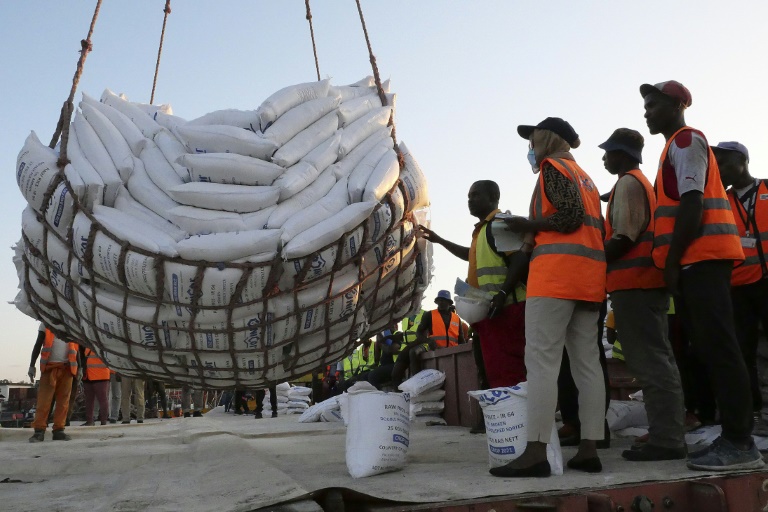
It’s late in the evening in the Comorian capital of Moroni but the city’s port is filled with eager faces. 

An 800-tonne rice shipment has docked in the Indian Ocean archipelago after three months of shortages that have sharpened hunger and stoked unrest. 

“We can officially declare the end to the rice shortage,” declared Ben Abdallah Youssouf of Onicor, a state entity that holds a monopoly on imports and trade in “ordinary” rice, the cheapest and most consumed variety. 

But many locals who have struggled to put food on the table in recent weeks said they were far from convinced.

“They say there’s enough rice for everyone, but I don’t believe it anymore,” said Ben Laden, who like many others had joined the crowd at the dock in the hope of getting his hands on a sack.

Supply-chain snags and Russia’s invasion of Ukraine have caused food shortages and high prices across much of the world. 

But the crisis has been felt acutely in Comoros, an island chain of almost 900,000 people located between Madagascar and Mozambique, which was left virtually without its staple food. 

The country imports most of its food, and Onicor has blamed the lack of rice on suppliers, saying they did not deliver what they promised. 

– Rations and tear gas –

When the supply crunch started to bite, rations were put in place, with a 25-kilogram (55-pound) bag earmarked to feed up to six families until the next shipment arrived. 

When a freighter carrying about 800 tonnes of rice arrived early last month, most families had already run out of stock. 

Long queues had already formed outside distribution points. 

Some people placed bricks on the ground to hold their place in the line while they ran other errands. 

The precious cargo was unloaded under the watchful eye of heavily armed security forces but in any case, could only cover a fraction of the country’s needs. Up to 7,000 tonnes of rice are consumed every month, according to the government.

As government promises to deliver emergency assistance failed to materialise, tensions rose. 

Police arrested nine people after a truck convoy carrying rice bags was attacked. 

Some distribution points were moved to police stations.  

In the town of Ouani, authorities fired tear gas to disperse an angry crowd.

– Surging prices –

The cost of a kilogram (2.2 pounds) of rice, which normally sells for less than one US dollar, more than quadrupled. Most rice is imported from India and Pakistan. 

Families scrambled to find alternatives, but not everyone could afford pasta or root vegetables, which had also gone up in price due to high demand. 

About a quarter of the population lives below the threshold of poverty, according to the World Bank. 

All of this will “soon be just a bad memory,” declared Youssouf, wearing a high-visibility vest as he oversaw the offloading in the port of Moroni on Monday night.

Another 12,000 tonnes of rice would arrive on Tuesday, he promised. 

The sacks were loaded onto trucks and delivered to stores. 

Outside Kirti Khodidas’s shop in the city’s old quarter, soldiers stood guard, ready to intervene in case of overcrowding. 

The shopkeeper hoped to sell 800 sacks in one go.  

Mma Ibou, a woman in her 40s wearing a traditional dress, grabbed hold of a sack and placed it on her head before scuttling off with a smile on her face. 
Uganda minister slams EU criticism of oil project

Uganda’s energy minister on Tuesday slammed the European Parliament for seeking to delay a massive and controversial East African oil project over human rights violations and environmental concerns.

France’s TotalEnergies and the China National Offshore Oil Corporation signed a $10-billion agreement earlier this year to develop Ugandan oilfields and ship the crude through a 1,445-kilometre (900-mile) pipeline to Tanzania’s Indian Ocean port of Tanga.

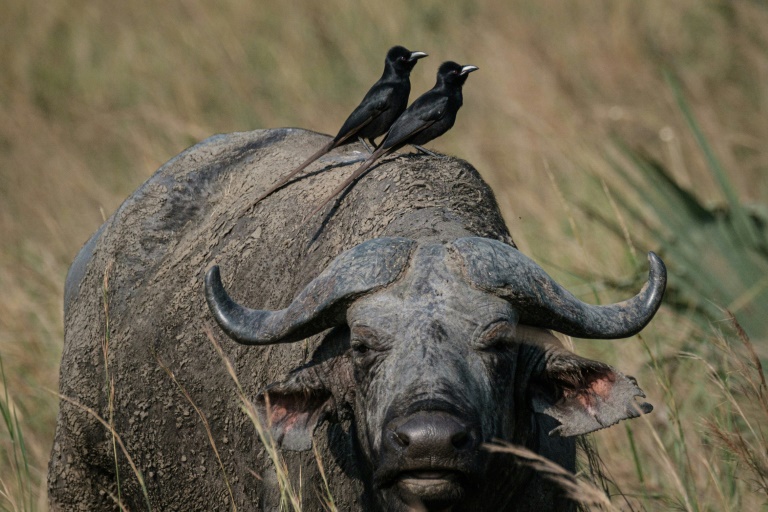
The project, which includes drilling in Murchison Falls, Uganda’s largest national park, has run into strong opposition from activists and environmental groups that say it threatens the region’s fragile ecosystem and the livelihoods of tens of thousands of people.

The European Parliament resolution adopted last month voiced concern over “human rights violations” in Uganda and Tanzania linked to investments in fossil fuel projects.

These included “wrongful imprisonment of human rights defenders, the arbitrary suspension of NGOs, arbitrary prison sentences and the eviction of hundreds of people from their land without fair and adequate compensation”.

It also urged TotalEnergies to take a year before launching the project to study the feasibility of an alternative route “to better safeguard protected and sensitive ecosystems and the water resources of Uganda and Tanzania”.

On Tuesday, Uganda’s Energy Minister Ruth Nankabirwa said the EU resolution took Kampala “by surprise”.

“The EU parliament, at this time, to think about stepping in the way of developing the crude oil pipeline was uncalled for,” she told AFP on the sidelines of the Green Energy Africa Summit in Cape Town.

“Africa has been green but people are cutting down trees because they are poor,” she said.

“We are all partners in the fight against climate change. If we don’t consider ourselves as partners, we are not going to win this war.”

Africa’s carbon footprint is the lowest of any continent, accounting for around three percent of global CO2 emissions.

Uganda’s President Yoweri Museveni has vowed to proceed with the project regardless of the EU resolution, warning that the government would look for other partners in case TotalEnergies chose to “listen to the EU Parliament”.

The project aims to extract the huge crude reserves under Lake Albert, a 160-kilometre-long natural border between Uganda and the Democratic Republic of Congo, and ship the oil through what would become the world’s longest heated pipeline.

Museveni has in the past hailed the project as a major economic boost for the landlocked country, where many live in poverty.

Pro-Russia demonstrators rally in Burkina after coup

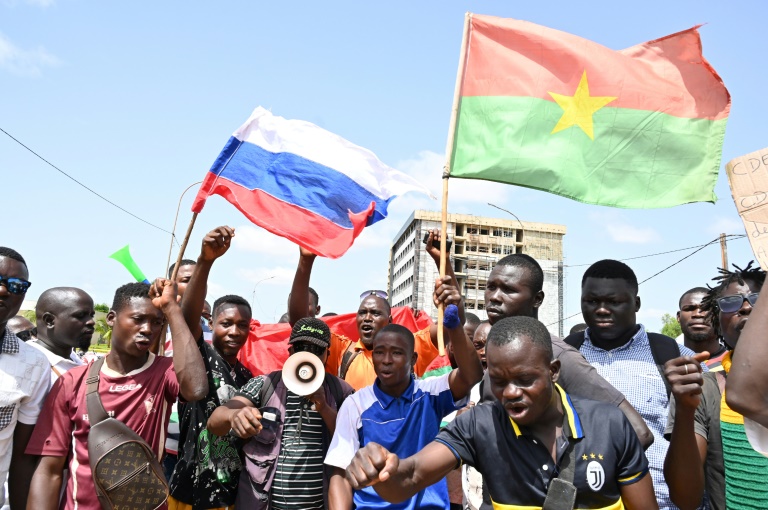
Several dozen protestors waving Russian flags rallied in Burkina Faso’s capital Ouagadougou on Tuesday as West African delegates arrived on a fact-finding mission following the country’s second coup in less than nine months.

Demonstrators chanted support for Russia, called on France to leave the country and warned ECOWAS — the Economic Community of West African States — against “meddling”, an AFP journalist saw.

The impoverished Sahel state was plunged into turmoil at the weekend when Lieutenant-Colonel Paul-Henri Sandaogo Damiba, who had seized power only in January, was toppled by a newly emerged rival, 34-year-old Captain Ibrahim Traore.

The dramatic takeover coincided with violent anti-French protests and the emergence of Russian flags among demonstrators, stoking speculation that Traore may follow other regimes in French-speaking Africa and forge close ties with Moscow at France’s expense.

The ECOWAS delegation, whose visit was initially scheduled for Monday, arrived on Tuesday morning and was to head to the president’s office to meet Traore, officials told AFP.

The bloc, designed to promote democracy in one of the world’s most volatile regions, has witnessed five coups among three of its 15 members in little more than two years.

Its approach has been to urge junta leaders to set a relatively short timetable for restoring civilian rule — and to impose sanctions against those deemed to be ignoring the demand or sidestepping their pledges.

But it has also taken flak, with some critics accusing it of supporting Western, or specifically French, interests.

Traore said in a statement the ECOWAS visit was to “make contact with the new transition authorities” as part of the support that ECOWAS provided to Burkina Faso.

He said he had learned “with astonishment and regret” that messages had circulated on social media “calling for this mission to be hampered” and urged calm and restraint.

“Any person who commits acts aimed at disturbing the smooth course of the ECOWAS mission will face the force of the law,” Traore said.

The ECOWAS visit to Ouagadougou is headed by Guinea-Bissau Foreign Minister Suzi Carla Barbosa, whose country currently chairs the bloc, and includes former Niger president Mahamadou Issoufou, who is the mediator for Burkina Faso.

– Jihadist pressure –

Landlocked and deeply poor, Burkina Faso has experienced little political stability since gaining independence from France in 1960.

The latest turmoil takes place against the backdrop of a bloody jihadist insurgency that swept in from neighbouring Mali in 2015.

Thousands of civilians, troops and police officers have been killed and nearly two million people have fled their homes.

Swelling anger within the armed forces prompted Damiba’s coup against the elected president, Roch Marc Christian Kabore, on January 24.

Appointing himself transitional head of state, Damiba vowed to make security the country’s top priority but after a brief lull the attacks revived, claiming hundreds of lives.

Traore emerged on Friday at the head of a faction of disgruntled junior officers which proclaimed that Damiba had been deposed — also for failing to roll back the insurgency.

Damiba fled to the neighbouring state of Togo on Sunday following a two-day standoff that was defused by religious and community leaders.

Traore on Monday told the French radio station RFI that he would stand by a pledge that Damiba gave ECOWAS for restoring civilian rule by July 2024.

He said that he would simply carry out “day-to-day business” until a new civilian or military transitional president was appointed by a national forum gathering political and social representatives.

This meeting would take place “well before the end of the year,” he said.

Traumatised Mozambique region seeks answers after jihadist attack

As jihadist fighters advanced in northern Mozambique, Henriques Laba saw only one route of escape.

“We fled into the bush,” said Laba, head of the village of Mute.

“We ate what we could — monkeys, elephants.”

Laba survived a jihadist offensive last year that ultimately was crushed, yet even today leaves the region deeply in shock.

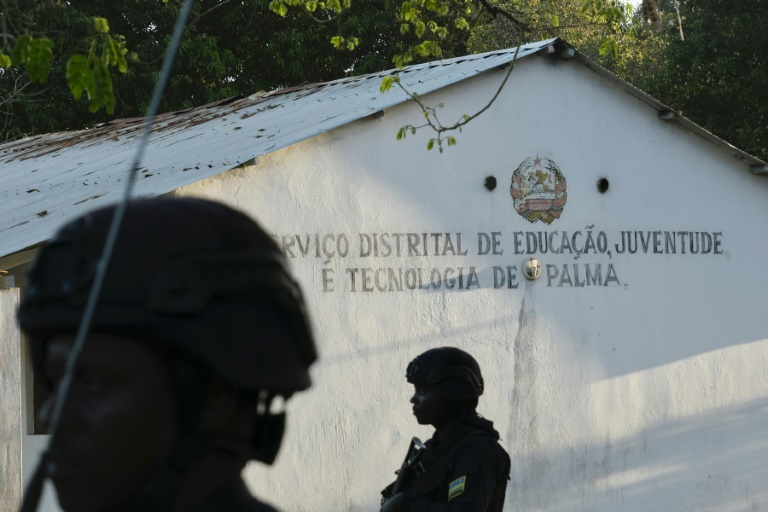
In March 2021, fighters affiliated to the Islamic State group attacked the port city of Palma — the jewel in the crown of a gas project that would supposedly shower Cabo Delgado province with good jobs and desperately-needed infrastructure.

Dozens of people were killed and tens of thousands fled their homes, some of them, like Laba, seeking shelter in the countryside and foraging for wild animals.

The attack marked a turning point in a five-year Islamist insurgency, prompting the deployment of Rwandan forces and troops from other African countries several months later.

The security forces have since regained control of much of the territory, but Palma’s administrative centre is all but in ruins and most Western-led projects to exploit the gas — the largest deposits south of the Sahara — have been placed on indefinite hold.

– Illiteracy and jihad –

The suffering in poor, remote and still-insecure Cabo Delgado has remained outside most of the world’s vision.

But among local people, why and how their region became embroiled in an Islamist uprising is a source of anguish and debate.  

“Some people think the issue is poverty, while the government blames foreigners who came and beguiled young people,” explained Jonas Alvaro Jose, one of the few teachers to have returned to Palma district since the jihadists were ousted last year. 

Only two schools are currently open in the area. 

“It’s easier to manipulate and recruit young people for little money if most are left without education and have only their religious beliefs to hold on to,” said Jose. 

Cabo Delgado has the highest illiteracy rate in Mozambique — one of the world’s poorest countries. Around two in three people are unable to read or write, according to US development agency USAID.  

“No youth from my village has joined the bandits,” said Laba. “But they recruit mainly Mozambicans, so I believe what leads them to join their ranks is poverty. 

“I hope the government will take efforts to prevent this happening.” 

The province is the only part of Mozambique with a Muslim majority.  

The capital, Maputo, is more than 2,000 kilometres (1,240 miles) away.

“The government has significantly increased its budget for the northern provinces, which demonstrates that there is an awareness of the issue,” said Mirko Manzoni, the UN’s special envoy to Mozambique.

But lack of information on the inner workings of the jihadist group — known locally as al-Shabab, though it has no links to the Somali militants of a similar name — hampers the battle for young minds, he added.  

“We must weaken their ability to recruit, and this is not only a question of economic opportunities.”

– Little food, little hope –

Violence has subdued in the months since foreign troops were deployed in support of the Mozambican army.

But sporadic attacks continue and the jihadists have started to stage incursions further south.       

In Olumbi, a village a few dozen kilometres (around 20 miles) from Palma, most houses have been razed to the ground. The settlement is mostly Muslim but the attackers made no distinctions. 

“What happened to me has also happened to my neighbours,” said Najum Ntete, a trader who lost his home and several members of his family.

“We lack food and can’t make ends meet,” said Ntete. 

Humanitarian assistance has been slow in coming, as roads are still under threat from the insurgents. 

To some, foreign forces are the only lifeline. 

“If the Rwandans leave, I’m leaving too,” said Markito, a local resident who gave only his first name, repeating a refrain often heard across the province.

Turkey and Libya sign maritime hydrocarbons deal

Turkey’s foreign minister signed a deal in Libya’s capital Monday allowing for oil and gas exploration in Libya’s Mediterranean waters, three years after a maritime border deal that angered European nations.

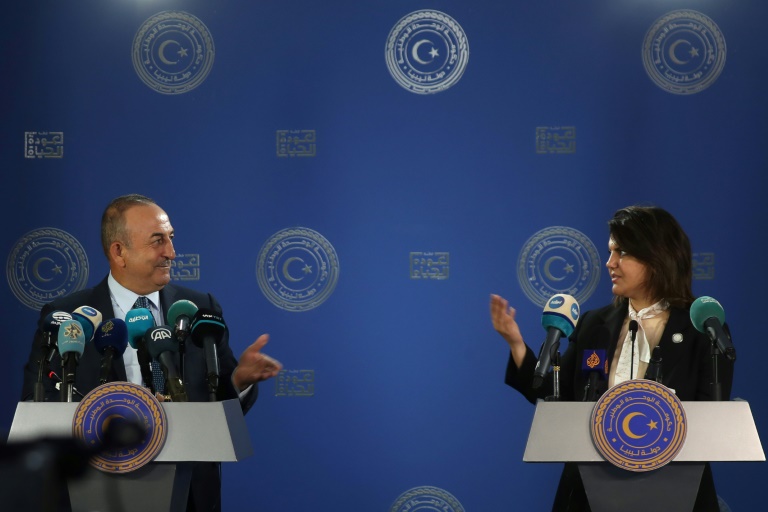
“We’ve signed a memorandum of understanding on exploration for hydrocarbons in Libya’s territorial waters and on Libyan soil, by mixed Turkish-Libyan companies,” Mevlut Cavusoglu said at a press conference in Tripoli.

The deal follows an agreement Turkey signed with authorities in Tripoli in 2019, which demarcated the countries’ shared maritime borders but sparked anger in Greece and Cyprus.

Cavusoglu however stressed on Monday that the new accord was between “two sovereign countries — it’s win-win for both, and other countries have no right to interfere”.

Najla al-Mangoush, foreign minister in Libya’s Government of National Unity, said the new deal was “important”, especially in light of “the Ukrainian crisis and its repercussions” for energy markets.

The deal was rejected by a rival administration in the war-torn country’s east.

Turkey had signed a controversial security agreement in November 2019 with Libya’s UN-recognised government at the time, laying claim to extensive, potentially gas-rich areas of the Mediterranean.

The deal came at the height of a year-long battle between rival governments vying for control of Libya’s capital.

The arrival of Turkish drones shortly afterwards was seen as crucial in the victory of Tripoli-based forces against those of eastern military chief Khalifa Haftar, backed at the time by Egypt, Russia and the United Arab Emirates.

– ‘Unacceptable’ –

Cavusoglu was accompanied in Tripoli by a high-level delegation also including Turkey’s energy, defence and trade ministers.

Turkey continues to play a major role in Libya’s west, where rival governments are again struggling for control two years after the end of the last major conflict.

Since March, a government appointed by Libya’s eastern-based parliament has been attempting to take office in Tripoli, but has so far failed.

Both the speaker of parliament and the head of the rival administration rejected Monday’s accord.

Speaker Aguila Saleh, who has long argued that the Tripoli-based government’s mandate has expired, called the deal “illegal and unacceptable”, while the rival government of former interior minister Fathi Bashagha threatened to use the courts to annul it.

Athens was fiercely opposed to the 2019 deal between Ankara and Tripoli.

On Monday, Greek Foreign Minister Nikos Dendias said he had spoken to his counterpart in Egypt, Sameh Shoukry, and that “both challenged the legitimacy” of the deal.

Dendias said he would visit Cairo on Sunday for “consultations” on the issue.

Libya has been mired in violence for more than a decade since the 2011 toppling of dictator Moamer Kadhafi in a NATO-backed uprising.

Dozens of armed groups have been struggling for influence, backed by multiple foreign powers.

Calm returns to Burkina capital after junta chief flees to Togo

Calm returned to Burkina Faso’s capital on Monday after the country’s military leader fled to neighbouring Togo following the second coup in less than nine months.

The streets of Ouagadougou were quiet after a two-day standoff between junta chief Lieutenant-Colonel Paul-Henri Sandaogo Damiba and a newly-emerged rival for power, 34-year-old Captain Ibrahim Traore.

After a jittery weekend that also saw violent protests at the French embassy and culture centre, Damiba agreed on Sunday to step down.

Diplomats said Damiba had gone to the Togolese capital Lome, and this was confirmed on Monday by the Togolese government, which said it had accepted him in order to support “peace in the sub-region.”

In a video released on Monday, Damiba wished “every success” to those who overthrew him, calling on them “to unite rather than divide”.

West Africa’s regional bloc ECOWAS issued a statement late Sunday welcoming “a peaceful settlement of… differences” and announced it would dispatch a delegation to Ouagadougou the following day.

But sources at the Burkina foreign ministry and president’s office said the mission had been postponed until Tuesday, while an ECOWAS diplomat said the delay was because of “logistical reasons.”

Burkina is struggling with a seven-year-old jihadist campaign that has claimed thousands of lives, forced nearly two million people to flee their homes and left more than a third of the country outside government control.

Anger within the beleaguered armed forces prompted Damiba’s coup against the elected president, Roch Marc Christian Kabore, on January 24.

Appointing himself transitional president, Damiba vowed to make security the country’s top priority but after a brief lull the attacks revived, claiming hundreds of lives.

Traore dramatically emerged on Friday at the head of a faction of disgruntled junior officers, which proclaimed that Damiba had been deposed — also for failing to roll back the insurgency.

– Transition pledge –

Damiba set “seven conditions” for stepping down, according to religious and community leaders who mediated in his standoff with Traore.

These included safety guarantees for him and his allies in the military, and that a pledge he had given to ECOWAS for a return to civilian rule within two years be respected.

Speaking on the French radio station RFI on Monday, Traore vowed to uphold the July 2024 timeline for restoring civilian rule.

This could even happen “before that date” if conditions were right, Traore said.

He said that he would simply carry out “day-to-day business” until a new civilian or military transitional president was appointed.

The appointment would be made by a national forum gathering political and social representatives, the pro-Traore faction in the military said on Sunday.

Traore told RFI that this meeting would take place “well before the end of the year.”

Analysts said that his position, if carried out, would be acceptable to ECOWAS. 

The Economic Community of West African States was created to shore up democracy in one of the world’s most volatile regions, yet has suffered five coups in three of its 15 members since August 2020.

– Anti-French protests –

Burkina’s latest bout of turmoil coincided with a surge of violent protests against France, the former colonial power and ally in its struggle against the jihadists.

Pro-Traore officers accused Damiba of having taken refuge at a French military base near Ouagadougou in order to plot a “counter-offensive” — charges he and France denied.

On Sunday, security forces fired tear gas from inside the French embassy to disperse angry protesters, and the French Institute, which promotes French culture, was also attacked.

The foreign ministry in Paris blamed the violence on “hostile demonstrators manipulated by a disinformation campaign against us.”

Traore on Monday condemned what he called “acts of violence and vandalism” against those buildings and urged “calm and restraint.”

Damiba’s ouster was proclaimed on Friday just hours after a protest rally that also demanded the end of France’s military presence in the Sahel and closer military cooperation with Russia. Some of the demonstrators waved Russian flags.

Russian paramilitaries are supporting fragile regimes in Mali and Central African Republic, sidelining France, those countries’ traditional backer. The Russians have also been tarred with accusations of massacres and other abuses.

On Monday, the Kremlin said Russia wanted the situation in Burkina “to normalise as soon as possible, for complete order to be ensured in the country and for a return to the framework of legitimacy as soon as possible.”

Calls for more funding as pre-COP27 climate talks open in DR Congo

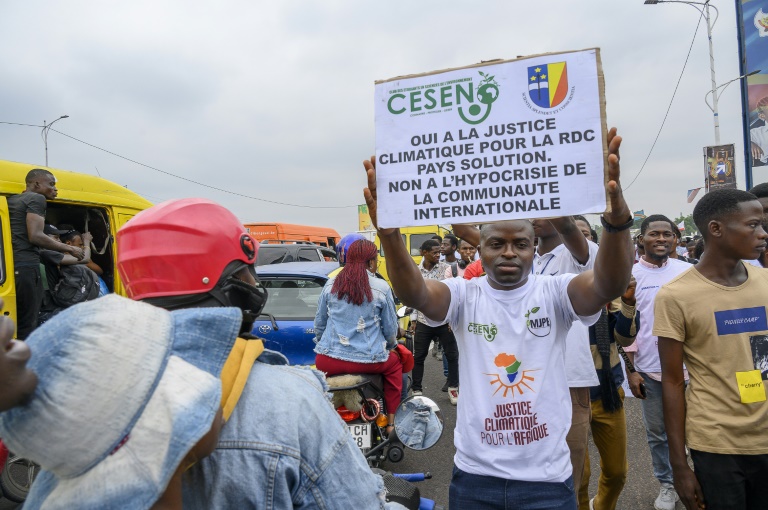
Warning “no-one will escape” a worsening crisis, DR Congo led calls on Monday for a surge in funding to brake global heating and fight its impacts at the start of pre-COP27 climate talks in Kinshasa. 

The haggle comes ahead of COP27 — the UN’s 27th summit-level gathering on climate change, which is due to take place in Egypt next month. 

At opening ceremonies in the DRC’s parliament building, Congolese Environment Minister Eve Bazaiba called on countries to respect financial pledges and endorse plans to help compensate climate-inflicted damage.

She added that money to protect carbon-absorbing rain forests — of which the DRC has vast tracts — should be viewed not as aid but as an investment in humanity’s future.

“Unless a global effort is made… no-one will escape,” Bazaiba warned. “We all breathe the same air.”

Egyptian Foreign Minister Sameh Shoukry also stressed the need for more money, noting an unfulfilled promise — dating back to COP15 in Copenhagen in 2009 — to provide developing countries with $100 billion dollars a year to fight climate change. 

Deputy UN Secretary-General Amina Mohammed offered a gloomy update on the battle today.

“All indicators on climate are heading in the wrong direction,” she said.

– Damages –

Delegates from over 50 countries are attending the two-day informal talks in Kinshasa, including US climate envoy John Kerry. The event winds up on Wednesday with side discussions.

Kerry, after meeting Bazaiba in the afternoon, said he was convinced it was possible to protect the environment, “but also to have appropriate development and job creation in the region”.

No formal announcements are expected in what is billed as a ground-clearing exercise ahead of the next month’s conference, taking place in Sharm el-Sheikh from November 6-18. 

UN Secretary-General Antonio Guterres, in New York, urged the world to act at the pre-COP27 talks against what he called “a life-or-death struggle for our own safety today and our survival tomorrow”.

“A third of Pakistan flooded. Europe’s hottest summer in 500 years. The Philippines hammered. The whole of Cuba in black-out. And here, in the United States, Hurricane Ian has delivered a brutal reminder that no country and no economy is immune from the climate crisis,” he said.

Greater support from wealthier countries, historically the world’s biggest carbon polluters, to their poorer counterparts is expected to dominate the talks. 

But post-pandemic economic strains and Russia’s invasion of Ukraine have cast a pall over the money question.

The last UN climate summit, COP26 in Glasgow in November 2021, reaffirmed the goal — agreed in Paris in 2015 — of limiting the rise in the Earth’s average temperature to well below 2.0 degrees Celsius (3.6 degrees Fahrenheit) above pre-industrial levels and pursuing efforts to limit it to 1.5C.

However, the latter goal may already be beyond reach as the Earth’s temperature is already 1.2C higher than before the Industrial Revolution. 

Poorer countries had also pushed at Glasgow for a financial mechanism to address losses and damage caused by climate change. 

But richer states rejected the call and the participants agreed instead to start a “dialogue” on financial compensation for damages.  

– ‘We also need bread’ –

Egypt, as host of COP27, has made implementing the pledge to curb global heating the priority of the November summit. 

The Democratic Republic of Congo, for its part, is pushing the message that it can act as a “solution country” for climate change due to its vast rainforests, which act as a carbon sink. 

Around 30 billion tonnes of carbon are stored across the Congo Basin, researchers estimated in a study for Nature in 2016. The figure is roughly equivalent to three years of global emissions.

However, the central African nation in July launched an auction for 30 oil and gas blocs — ignoring warnings from environmentalists that drilling could harm ecosystems and release vast amounts of heat-trapping gases. 

Bazaiba, the environment minister, told pre-COP27 delegates that Africa was facing a dilemma since the continent has contributed so little to climate change and yet has fossil-fuel resources that could alleviate poverty. 

“What should we do in this circumstance, let our children and small children die of hunger?” she asked, as applause rung out in the hall of the parliament building.

“As much as we need oxygen, we also need bread,” she said.

Senior officials among nine dead in Somalia car bombings

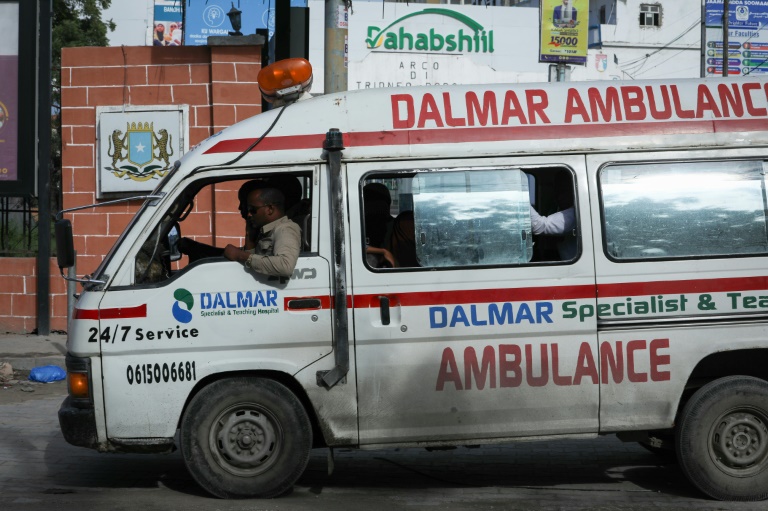
Nine people, including senior regional officials, were killed in twin car bombings claimed by Al-Shabaab in central Somalia on Monday, police said, as the government escalates an offensive against the Islamists. 

Two cars packed with explosives were detonated minutes apart outside local government offices in Beledweyne, a city at the heart of recent offensives against the Al-Qaeda-linked militants who control swathes of Somalia.

“The initial information we have received confirms the death of nine people” including a state minister and a commissioner, said Mohamed Moalim Ali, a local police commander.

The health minister of Hirshabelle state — where Beledweyne is located — and a deputy district commissioner were among the dead, Ali added, with 10 others injured in the “suicide attacks.”

Somali forces and “international security partners” have been waging an aggressive counterinsurgency in recent weeks, with the government on Monday announcing the killing of Abdullahi Yare, a top Al-Shabaab operative, in a joint air strike on Saturday in the south of the country.

“This leader… was the head preacher of the group and one of the most notorious members of the Shabaab group,” the ministry of information said.

A co-founder of Al-Shabaab with a $3 million US bounty on his head, Yare was believed to be next in line to take over the leadership of the movement from its ailing chief Ahmed Diriye, according to the ministry.

The US Africa Command said Monday that it carried out a drone strike targeting Al-Shabaab two days earlier in coordination with Somalia’s federal government.

“The command’s initial assessment is that the strike killed an Al-Shabaab leader and that no civilians were injured or killed,” it said in a statement.

Somalia’s recently elected President Hassan Sheikh Mohamud has vowed an all-out war on the jihadists, after a string of deadly attacks, including a 30-hour hotel siege in the capital Mogadishu that killed 21 people.

Mohamud last month urged citizens to stay away from areas controlled by Al-Shabaab as government forces supported by local clan militias launched offensives in Hiraan region, of which Beledweyne is the capital.

Military officials and clan elders told AFP that local residents had decided to take up arms against the militants, who have been accused of extorting money from them.

– ‘Huge explosion’ –

Witnesses of Monday’s twin bombings described a smaller blast followed by a massive second explosion.

“The explosion was huge, and it destroyed most buildings” nearby, said Mohamud Addow, who witnessed the attack. 

“I saw several people rushed to hospital and some dead bodies… some were unrecognisable.”

The United States, which recently restored a military presence in Somalia to fight the jihadists, condemned the bombings.

The attacks “targeted gov’t officials working to bring peace to the region & healthcare workers tending to the wounded,” the US embassy in Mogadishu said on Twitter.

Al-Shabaab, which claimed responsibility for the bombings, has waged a bloody insurrection against the Mogadishu government for 15 years and remains a potent force despite an African Union operation against the group.

Its fighters were ousted from the capital in 2011 but continue to stage attacks on military, government and civilian targets.

The group last week claimed responsibility for a bomb blast that killed a top Somali police officer near the Al-Shabaab-controlled village of Bursa, some 30 kilometres (20 miles) north of Mogadishu. 

US forces have in the past partnered with African Union soldiers and Somali troops in counterterrorism operations, and have conducted frequent raids and drone strikes on Al-Shabaab training camps throughout Somalia.

Last month, the US military said it had killed 27 jihadist fighters in an air strike near Bulobarde, the main town on the road linking Mogadishu to Beledweyne.

It said the air strike was carried out “at the request” of the Somali government.

President Joe Biden decided to restore a US military presence in Somalia in May, approving a request from the Pentagon, which deemed his predecessor Donald Trump’s rotation system too risky and ineffective.

Tigray rebels announce troop deployment in northern Ethiopia

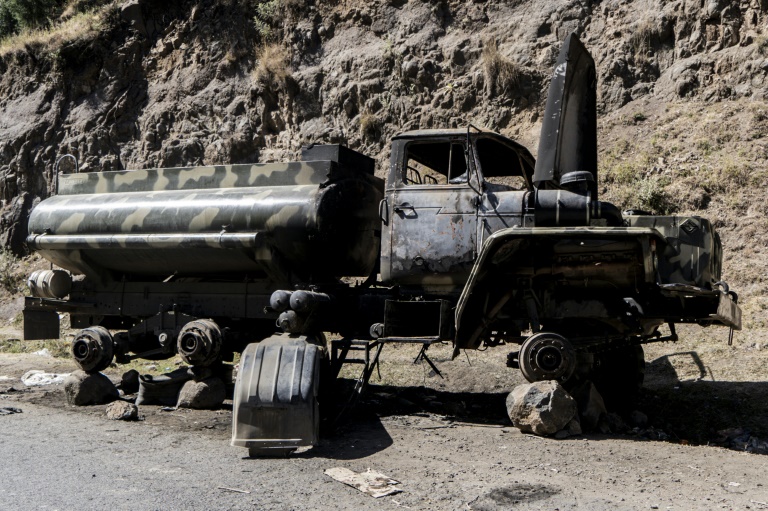
Authorities in Ethiopia’s rebel-held Tigray region said they had withdrawn fighters from occupied parts of a neighbouring region to counter a major offensive unfolding to the north. 

Pro-government forces and rebels led by the Tigray People’s Liberation Front (TPLF) resumed fighting in late August after a five-month truce, dimming hopes of peacefully settling nearly two years of war.

The deepening conflict has raised international alarm, with the United States on Monday announcing that its special envoy to the region would be making his second visit to Ethiopia in as many months to seek a halt to the fighting.

The latest upsurge has drawn Eritrean troops back onto the battlefield in support of Ethiopia’s federal and regional forces, which are fighting the TPLF on multiple fronts in the country’s north.

Tigrayan authorities said late Sunday that a redeployment of fighters from occupied parts of the Amhara region to the south of Tigray was necessary to counter intensifying combat to the north.

“So because of this, on the southern front, we have withdrawn from the areas of Amhara region we entered,” Tigray’s regional authorities said in a statement.

The withdrawal had been under way for three days and could be reversed if the front came under attack again, they added.

An Amhara government official in that part of the region told AFP that TPLF rebels had withdrawn from some towns, and reported some localised fighting.

AFP was not able to independently verify claims of battlefield gains or troop movements. 

Access to northern Ethiopia is severely restricted and Tigray has been under a communications blackout for more than a year.

The US State Department on Monday said in a statement that Mike Hammer, its special envoy to the Horn of Africa, would travel to Kenya, South Africa and Ethiopia this month.

The visit, which will include meetings with Ethiopian government and African Union officials, is part of US efforts “to achieve an immediate cessation of hostilities in northern Ethiopia and support the launch of African Union-led peace talks.”

– Diplomatic efforts –

The announcement came on the heels of a 11-day trip by Hammer to Ethiopia last month as diplomats frantically try to get the warring sides to the negotiating table.

Tigrayan authorities said last month they were ready to participate in talks mediated by the African Union, removing an obstacle to negotiations with Prime Minister Abiy Ahmed’s government in Addis Ababa.

But fighting has only escalated in the weeks since, with Hammer telling reporters last month that the presence of Eritrean troops only served to “inflame an already tragic situation”.

The involvement of Eritrea has provoked strong condemnation from Western nations pushing for a peaceful resolution to the war in Africa’s second-most populous country.

Eritrean troops supported Ethiopian forces in the early stages of the war, which erupted in November 2020 when Abiy sent soldiers into Tigray to unseat the TPLF.

The TPLF dominated Ethiopia’s ruling coalition for decades before Abiy took power in 2018, and is a historic enemy of Eritrea and its iron-fisted ruler Isaias Afwerki.

In September, authorities in the closed-off nation issued a general call for mobilisation of its armed forces.

The war has claimed untold lives and spurred a humanitarian crisis, and all sides to the conflict have been accused of grave abuses against civilians.

Turkey and Libya sign maritime hydrocarbons deal

Turkey’s foreign minister signed a deal in Libya’s capital Monday allowing for oil and gas exploration in Libya’s Mediterranean waters, three years after a maritime border deal that angered European nations.

“We’ve signed a memorandum of understanding on exploration for hydrocarbons in Libya’s territorial waters and on Libyan soil, by mixed Turkish-Libyan companies,” Mevlut Cavusoglu said at a press conference in Tripoli.

The deal follows an agreement Turkey signed with authorities in Tripoli in 2019, which demarcated the countries’ shared maritime borders but sparked anger in Greece and Cyprus.

Cavusoglu however stressed on Monday that the new accord was between “two sovereign countries — it’s win-win for both, and other countries have no right to interfere”.

Najla al-Mangoush, foreign minister in Libya’s Government of National Unity, said the new deal was “important”, especially in light of “the Ukrainian crisis and its repercussions” for energy markets.

The deal was rejected by a rival administration in the war-torn country’s east.

Turkey had signed a controversial security agreement in November 2019 with Libya’s UN-recognised government at the time, laying claim to extensive, potentially gas-rich areas of the Mediterranean.

The deal came at the height of a year-long battle between rival governments vying for control of Libya’s capital.

The arrival of Turkish drones shortly afterwards was seen as crucial in the victory of Tripoli-based forces against those of eastern military chief Khalifa Haftar, backed at the time by Egypt, Russia and the United Arab Emirates.

– ‘Unacceptable’ –

Turkey continues to play a major role in Libya’s west, where rival governments are again struggling for control two years after the end of the last major conflict.

Since March, a government appointed by Libya’s eastern-based parliament has been attempting to take office in Tripoli, but has so far failed.

Both the speaker of parliament and the head of the rival administration rejected Monday’s accord.

Speaker Aguila Saleh, who has long argued that the Tripoli-based government’s mandate has expired, called the deal “illegal and unacceptable”, while the rival government of former interior minister Fathi Bashagha threatened to use the courts to annul it.

Cavusoglu was accompanied in Tripoli by a high-level delegation also including Turkey’s energy, defence and trade ministers.

Libya has been mired in violence for more than a decade since the 2011 toppling of dictator Moamer Kadhafi in a NATO-backed uprising.

Dozens of armed groups have been struggling for influence, backed by multiple foreign powers.

Close Bitnami banner
Bitnami