
Africa Business

Burkina junta leader resigns, flees after coup

Burkina Faso’s junta leader agreed to step down on Sunday, religious and community leaders said, two days after army officers announced his ouster in a coup that sparked internal unrest and international condemnation.

Lieutenant-Colonel Paul-Henri Sandaogo Damiba “himself offered his resignation in order to avoid confrontations with serious human and material consequences”, the religious and community leaders said in a statement.

It followed mediation between Damiba and the new self-proclaimed leader, Ibrahim Traore, by the religious and community leaders, they added.

Regional diplomatic sources said Damiba — who himself took power in a January putsch — had fled to Togo’s capital Lome on Sunday following the unstable and impoverished West African nation’s second coup this year.

Traore announced in the evening that he had received the support of army chiefs to “reinvigorate” the anti-jihadist struggle.

In a statement Sunday, the West African regional bloc ECOWAS welcomed that the various players in the Burkinabe drama had accepted “a peaceful settlement of their differences”. An ECOWAS delegation would travel to Ouagadougou Monday, the statement added.

Damiba set “seven conditions” for stepping down, the religious and community leaders said.

These included security guarantees for him and his allies in the military; and that the pledge he had given to West Africa’s regional bloc for a return to civilian rule within two years be respected.

The religious and community leaders — who are very influential in Burkina Faso — said that Traore, 34, had accepted the conditions and called for calm.

– ‘Disinformation campaign’ – 

The putschists lifted an overnight curfew imposed Friday and reopened the country’s borders. It was on Friday that junior military officers announced they had toppled Damiba.

Saturday Damiba had said he had no intention of giving up power, urging the officers to “come to their senses” amid a backdrop of protests.

But a statement issued on Sunday by the pro-Traore military said he would remain in charge “until the swearing-in of the president of Burkina Faso designated by the nation’s active forces”, at an unspecified date.

The officers had accused Damiba of having taken refuge at a military base of former colonial power France to plot a “counter-offensive”, charges he and France denied.

On Sunday, dozens of Traore’s supporters gathered at the French embassy in Ouagadougou.

Security forces fired tear gas from inside the compound to disperse the angry protesters after they set fire to barriers outside and lobbed rocks at the structure, some trying to scale the fence, according to an AFP reporter on the scene.

The French foreign ministry condemned the violence by “hostile demonstrators manipulated by a disinformation campaign against us”.

That incident followed a fire at the embassy on Saturday and a blaze in front of the French Institute in the western city of Bobo-Dioulasso.

A French institute in the capital also sustained major damage, the French foreign ministry said.

– ‘Burkina Faso needs peace’ –

Damiba came to power in the nation of 16 million people in a January coup, accusing elected president Roch Marc Christian Kabore of failing to beat back jihadist fighters. 

But the insurgency has raged on and more than 40 percent of Burkina Faso remains outside government control.

Thousands have died and about two million have been displaced by the fighting since 2015, when the insurgency spread to Burkina Faso from neighbouring Mali.

The officers said it was Damiba’s failure to quell the jihadist attacks that had prompted them to act.

Friday’s events sparked a wave of international criticism, including from the United States, the African Union, the European Union and ECOWAS.

“Burkina Faso needs peace, stability and unity to fight terrorist groups and criminal networks operating in parts of the country,” said a statement by UN Secretary General Antonio Guterres.

Jihadist violence has also prompted a series of coups in Mali since 2020 and fuelled instability in neighbouring Niger.

The new self-proclaimed Burkina leaders had said they were willing “to go to other partners ready to help in the fight against terrorism”.

No country was explicitly mentioned but Russia, whose influence is growing in French-speaking Africa including Mali and the Central African Republic, is among the possible partners in question.

A few hours before events unfolded on Friday, hundreds of people had rallied in the capital seeking Damiba’s departure, the end of France’s military presence in the Sahel and military cooperation with Russia.
Moroccan nomads' way of life threatened by climate change

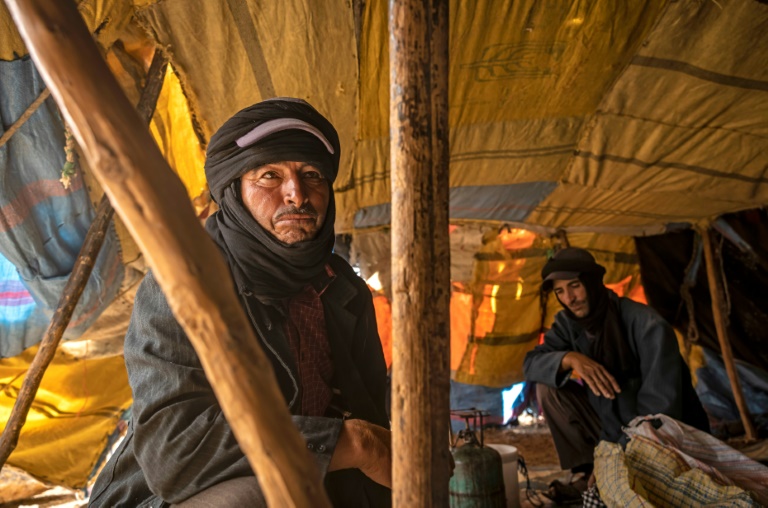
In the blistering desert of Morocco, the country’s last Berber nomads, the Amazigh, say their ancient lifestyle is under threat as climate change brings ever-more intense droughts.  

“Everything has changed,” said Moha Ouchaali, his wrinkled features framed by a black turban. “I don’t recognise myself anymore in the world of today. Even nature is turning against us.” 

Ouchaali, an Amazigh man in his 50s, has set up an encampment near a dry riverbed in barren hills about 280 kilometres (174 miles) east of Marrakesh. 

Amid the rocky, arid landscape near the village of Amellagou, he and his family have pitched two black woollen tents, lined with old animal fodder bags and fabric scraps.

One is for sleeping and hosting guests, the other serves as a kitchen.

“Water has become hard to find. Temperatures are going up and the drought is so harsh, but we can’t do much,” said Ouchaali.

His tribe, the Ait Aissa Izem, has spent centuries roaming the country to find food for their animals, but their way of life is steadily disappearing.

According to the last census, just 25,000 people in Morocco were nomadic in 2014, down by two-thirds in just a decade.

“We’re exhausted,” Ouchaali’s 45-year-old wife Ida said emotionally.

“Before, we managed to live decently, but all these droughts, more and more intense, make our lives complicated. Without water we can’t do anything.”

– ‘Last nail in coffin’ –

This year has seen Morocco’s worst drought in four decades.

Rainfall is set to decline by 11 percent and average temperatures set to rise by 1.3 percent by 2050, according to forecasts from the Ministry of Agriculture.

“Nomads have always been seen as a barometer of climate change,” said anthropologist Ahmed Skounti.

“If these people, used to living in extreme conditions, can’t resist the intensity of global warming, that means things are bad.”

The drying up of water resources was “the last nail in the coffin for nomads”, he added.

In easier times, the Ait Aissa Izem would pass the summer in the relatively cool mountain valley of Imilchil, before heading to the area around regional capital Errachidia for the winter.

“That’s ancient history,” Ouchaali said, sitting in his tent and taking a sip of sweet Moroccan tea. “Today we go wherever there’s a bit of water left, to try to save the animals.”

Severe water shortages have even pushed some nomads to take the rare step of taking out loans to feed their livestock, their most vital asset.

“I’ve gone into debt to buy food for my animals so they don’t starve to death,” said Ahmed Assni, 37, sitting by a tiny, almost dried-out stream near Amellagou.

Saeed Ouhada said the difficulties had pushed him to find accommodation for his wife and children in Amellagou, while he stays with his parents in a camp on the edge of the town.

“Being a nomad isn’t what it used to be,” he said. “I’ll keep at it because I have to. My parents are old but they refuse to live in a town.” 

Driss Skounti, elected to represent nomads in the region, said the area used to have around 460 tents. Today, they don’t even add up to a tenth of that number.

– ‘Tired of fighting’ –

Some Moroccan nomads have given up their ancient lifestyle altogether — and not just because of the ever-worsening climate.

“I was tired of fighting,” said Haddou Oudach, 67, who settled permanently in Er-Rich in 2010.

“We’ve become outcasts from society. I can’t even imagine what nomads are going through today.”

Moha Haddachi, the head of an association for the Ait Aissa Izem nomads, said social and economic changes were making a nomadic lifestyle ever-more difficult. 

The scarcity of pastures due to land privatisation and agricultural investment also contributes to the difficulties, he said.

“Agricultural investors now dominate the spaces where nomads used to graze their herds.”

Nomads also face hostility from some villagers, angered by those camping in their region despite officially belonging to other provinces.

A law was passed in 2019 to delineate where nomads and sedentary farmers could graze their animals, but “nobody applies it”, Haddachi said.

Former nomad Oudach is despondent about “this era of selfishness where everyone thinks only of themselves”. 

“It wasn’t always like this, we used to be welcomed everywhere we went,” he said.

Embarking on a life of nomadism offers little to young people.

Houda Ouchaali, 19, says she can’t stand watching her parents “suffering and battling just to survive”.

“The new generation wants to turn the page on nomadism,” she said.

She now lives with an uncle in Er-Rich and is looking for professional training to allow her to “build a future” and escape the “stigmatising gaze that city people often have for nomads”.

Driss Skounti said he had little hope for the future of nomadism.

“Nomadic life has an identity and a tradition steeped in history,” he said, “but is doomed to disappear within 10 years.”

African climate summit opens in DR Congo

Environment ministers from about 50 countries will gather in the Democratic Republic of Congo on Monday for a “pre-COP27” climate summit, with rich nations likely to come under pressure to raise spending to combat climate change.

The talks in the DRC’s capital, Kinshasa, are informal but meant to allow various countries and green groups to take stock of political positions ahead of COP27 — the United Nations climate gathering of world leaders in Egypt next month.

An opening ceremony will take place in the Congolese parliament building in Kinshasa, followed by discussions on mitigating climate change, and providing funding for countries already damaged by global heating and severe weather events. 

Delegates from about 50 countries are expected to attend the talks, including United States climate envoy John Kerry. 

“The emphasis will certainly be on support from industrialised countries to countries in the south,” a Western diplomat recently told AFP. 

The last UN climate summit, COP26 in Glasgow in November 2021, reaffirmed the goal — agreed in Paris in 2015 — of limiting the rise in the Earth’s average temperature to well below 2.0 degrees Celsius above pre-industrial levels and pursuing efforts to limit it to 1.5C.

That goal may already be beyond reach as the Earth’s temperature is already 1.2C higher than before the Industrial Revolution of the 19th century. 

Poorer countries had pushed at Glasgow for a financial mechanism to address losses and damage caused by climate change. 

But wealthier nations — the largest polluters — rejected the call and the participants agreed instead to start a “dialogue” on financial compensation for damages.  

– Climate justice –

Egypt, which is hosting COP27, has made implementing the pledge to curb global heating the priority of the November summit. 

Poorer countries are again likely to remind their richer counterparts of the need to increase financial support. 

The latter have so far failed to deliver on their promise to provide $100 billion a year to help developing countries limit climate change. 

Demands for climate justice were front and centre of a protest in Kinshasa last month, where young Congolese activists chanted slogans and demanded that world leaders take swift action rather than repeat old promises.

The Congolese government is also expected drive home the message that it requires funding to protect its vast rainforests, which act as a carbon sink. 

Around 30 billion tonnes of carbon are stored across the Congo Basin, researchers estimated in a study for Nature in 2016. The figure is roughly equivalent to three years of global emissions.

However, the central African nation in July launched an auction for 30 oil and gas blocs, ignoring warnings from environmentalists that exploiting them could harm ecosystems and release vast amounts of heat-trapping gases. 

One of the poorest countries in the world, the DRC argues that drilling for oil and gas could help diversify its economy and benefit the Congolese people. 

Burkina junta leader resigns, flees after coup

Burkina Faso’s junta leader agreed to step down on Sunday, religious and community leaders said, two days after army officers announced his ouster in a coup that sparked internal unrest and international condemnation.

Lieutenant-Colonel Paul-Henri Sandaogo Damiba “himself offered his resignation in order to avoid confrontations with serious human and material consequences”, the religious and community leaders said in a statement.

It followed mediation between Damiba and the new self-proclaimed leader, Ibrahim Traore, by the religious and community leaders, they added.

Regional diplomatic sources said Damiba — who himself took power in a January putsch — had fled to Togo’s capital Lome on Sunday following the unstable and impoverished West African nation’s second coup this year.

Traore announced in the evening that he had received the support of army chiefs to “reinvigorate” the anti-jihadist struggle.

In a statement Sunday, the West African regional bloc ECOWAS welcomed that the various players in the Burkinabe drama had accepted “a peaceful settlement of their differences”. An ECOWAS delegation would travel to Ouagadougou Monday, the statement added.

Damiba set “seven conditions” for stepping down, the religious and community leaders said.

These included security guarantees for him and his allies in the military; and that the pledge he had given to West Africa’s regional bloc for a return to civilian rule within two years be respected.

The religious and community leaders — who are very influential in Burkina Faso — said that Traore, 34, had accepted the conditions and called for calm.

– ‘Disinformation campaign’ – 

The putschists lifted an overnight curfew imposed Friday and reopened the country’s borders. It was on Friday that junior military officers announced they had toppled Damiba.

Kate Saturday Damiba had said he had no intention of giving up power, urging the officers to “come to their senses” amid a backdrop of protests.

But a statement issued on Sunday by the pro-Traore military said he would remain in charge “until the swearing-in of the president of Burkina Faso designated by the nation’s active forces”, at an unspecified date.

The officers had accused Damiba of having taken refuge at a military base of former colonial power France to plot a “counter-offensive”, charges he and France denied.

On Sunday, dozens of Traore’s supporters gathered at the French embassy in Ouagadougou.

Security forces fired tear gas from inside the compound to disperse the angry protesters after they set fire to barriers outside and lobbed rocks at the structure, some trying to scale the fence, according to an AFP reporter on the scene.

The French foreign ministry condemned the violence by “hostile demonstrators manipulated by a disinformation campaign against us”.

That incident followed a fire at the embassy on Saturday and a blaze in front of the French Institute in the western city of Bobo-Dioulasso.

A French institute in the capital also sustained major damage, the French foreign ministry said.

– ‘Burkina Faso needs peace’ –

Damiba came to power in the nation of 16 million people in a January coup, accusing elected president Roch Marc Christian Kabore of failing to beat back jihadist fighters. 

But the insurgency has raged on and more than 40 percent of Burkina Faso remains outside government control.

Thousands have died and about two million have been displaced by the fighting since 2015, when the insurgency spread to Burkina Faso from neighbouring Mali.

The officers said it was Damiba’s failure to quell the jihadist attacks that had prompted them to act.

Friday’s events sparked a wave of international criticism, including from the United States, the African Union, the European Union and ECOWAS.

“Burkina Faso needs peace, stability and unity to fight terrorist groups and criminal networks operating in parts of the country,” said a statement by UN Secretary General Antonio Guterres.

Jihadist violence has also prompted a series of coups in Mali since 2020 and fuelled instability in neighbouring Niger.

The new self-proclaimed Burkina leaders had said they were willing “to go to other partners ready to help in the fight against terrorism”.

No country was explicitly mentioned but Russia, whose influence is growing in French-speaking Africa including Mali and the Central African Republic, is among the possible partners in question.

A few hours before events unfolded on Friday, hundreds of people had rallied in the capital seeking Damiba’s departure, the end of France’s military presence in the Sahel and military cooperation with Russia.
Burkina junta leader agrees to resign after coup confusion

Burkina Faso’s junta leader Paul-Henri Sandaogo Damiba agreed to step down Sunday, religious and community leaders said, two days after military officers announced his removal from power, sparking unrest in the West African country and international condemnation.

Damiba “himself offered his resignation in order to avoid confrontations with serious human and material consequences”, the religious and community leaders said in a statement.

It followed mediation between the junta chief and the new self-proclaimed leader, Ibrahim Traore, by the religious and community leaders, they added.

They also said that Damiba had set “seven conditions” for stepping down.

These included a guarantee of security for his allies in the military, “a guarantee of his security and rights” and that those taking power must respect the pledge he had given to West Africa’s regional bloc for a return to civilian rule within two years.

The religious and community leaders — who are very influential in Burkina Faso — said that Traore accepted the conditions and “invites the population to exercise calm, restraint and prayer”.

The upheaval began on Friday when junior military officers announced they had toppled Damiba in the second change of leadership to hit the impoverished, restive nation this year.

Damiba — who led a coup in January — had said late Saturday he had no intention of giving up power and urged the officers to “come to their senses”.

Tension has been high in the country where security forces fired tear gas to disperse angry protesters outside the French embassy in the capital Ouagadougou earlier Sunday.

A statement issued on Sunday by the pro-Traore military said he would remain in charge “until the swearing-in of the president of Burkina Faso designated by the nation’s active forces”, at an unspecified date.

– ‘Disinformation campaign’ – 

The officers had accused Damiba of having hidden at a military base of former colonial power France to plot a “counteroffensive”, charges he and France denied.

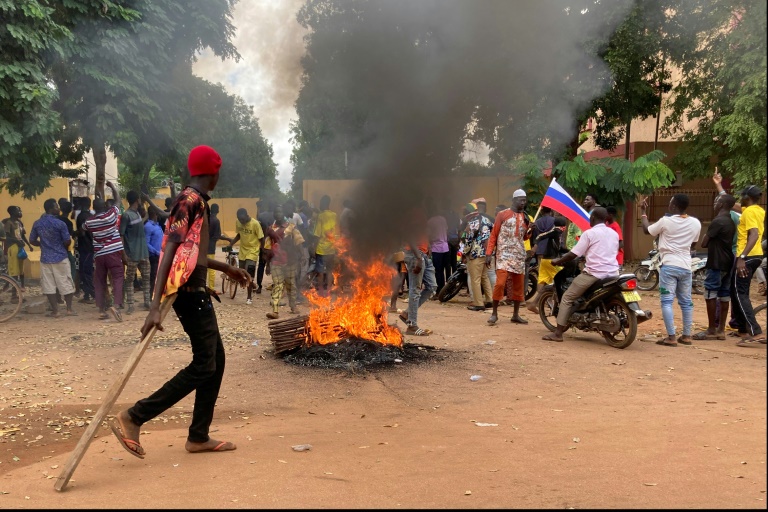
On Sunday, dozens of Traore’s supporters gathered at the French embassy in Ouagadougou.

Security forces fired tear gas from inside the compound to disperse the protesters after they set fire to barriers outside and lobbed rocks at the structure, with some trying to scale the fence, according to an AFP reporter on the scene.

The French foreign ministry condemned “the violence against our embassy in the strongest terms” by “hostile demonstrators manipulated by a disinformation campaign against us”.

It marked the latest incident against a France-linked building in two days, after a fire at the embassy on Saturday and a blaze in front of the French Institute in the western city of Bobo-Dioulasso. 

A French institute in the capital also sustained major damage, the French foreign ministry said.

The officers said they had acted because Damiba had failed to quell jihadist attacks in the country.

Damiba came to power in the nation of 16 million people in a January coup, accusing elected president Roch Marc Christian Kabore of failing to beat back jihadist fighters. 

But the insurgency has raged on and more than 40 percent of Burkina Faso remains outside government control.

Thousands have died and about two million have been displaced by the fighting since 2015, when the insurgency spread to Burkina Faso from neighbouring Mali.

– ‘Burkina Faso needs peace’ –

The events Friday sparked a wave of international criticism, including from the United States, the African Union, the European Union and the regional grouping ECOWAS.

“Burkina Faso needs peace, stability and unity to fight terrorist groups and criminal networks operating in parts of the country,” said a statement by UN Secretary General Antonio Guterres.

Jihadist violence has prompted a series of coups in Mali since 2020 and fuelled instability in neighbouring Niger.

The new self-proclaimed Burkina leaders had said they were willing “to go to other partners ready to help in the fight against terrorism”.

No country was explicitly mentioned but Russia, whose influence is growing in French-speaking Africa including Mali and the Central African Republic, is among the possible partners in question.

A few hours before events unfolded on Friday, hundreds of people had rallied in the capital seeking Damiba’s departure, the end of France’s military presence in the Sahel and military cooperation with Russia.
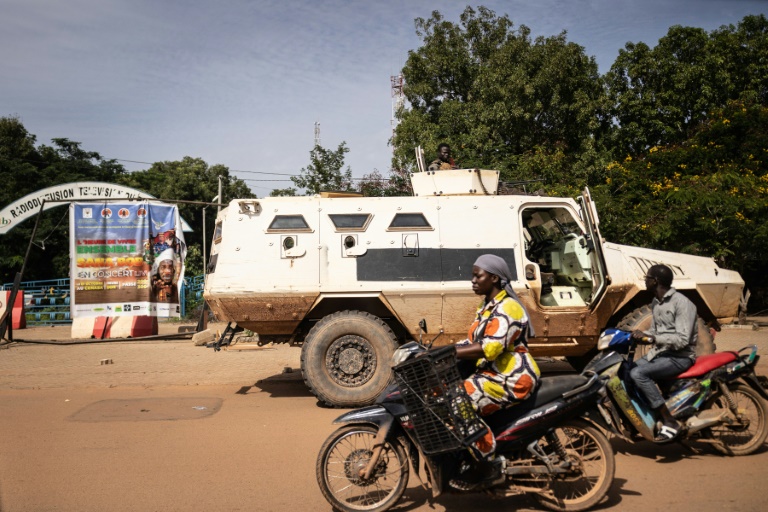
France has a contingent of military special forces based in Kamboinsin, which is about 30 kilometres (19 miles) from Ouagadougou.

Protesters target French embassy in Burkina amid coup confusion

Security forces fired tear gas to disperse angry protesters outside the French embassy in Burkina Faso’s capital on Sunday, as unrest simmered in the impoverished, restive West African nation following the claim of a second coup this year.

The latest upheaval began on Friday, when junior military officers announced they had toppled the country’s junta leader, sparking deep concern among world powers.

Late on Saturday, the junta leader, Paul-Henri Sandaogo Damiba, said he had no intention of giving up power and urged the officers to “come to their senses”.

His comments came shortly after the army general staff dismissed the coup as an “internal crisis” within the military and said dialogue was “ongoing” to remedy the situation.

In a statement read out on television on Sunday, the officers who claimed the coup said they had lifted a curfew they had imposed and called for a meeting of ministry heads for later in the day.

The officers had accused Damiba of having hidden at a military base of former colonial power France to plot a “counteroffensive”, charges that he and France denied.

On Sunday, dozens of supporters of the new self-proclaimed putsch leader, Ibrahim Traore, gathered at the French embassy in the capital Ouagadougou.

Security forces fired tear gas from inside the compound to disperse the protesters after they set fire to barriers outside and lobbed rocks at the structure, with some trying to scale the fence, according to an AFP reporter on the scene.

There were no immediate reports of injuries.

Hundreds of protesters headed to the headquarters of Burkina Faso’s public television, where Traore went in a motorcade to deliver a national address on Sunday.

Some of them were carrying Russian flags and chanted slogans hostile to France and Damiba. Traore supporters were also continuing to occupy several main squares and roads in Ouagadougou, an AFP correspondent saw.

The French foreign ministry condemned “the violence against our embassy in the strongest terms” by “hostile demonstrators manipulated by a disinformation campaign against us”.

It marked the latest incident against a France-linked building in two days, after a fire at the embassy on Saturday and a blaze in front of the French Institute in the western city of Bobo-Dioulasso. 

A French institute in the capital also sustained major damage, the French foreign ministry said.

Traore called for an end to the attacks on Sunday.

An officer, reading a statement on television from Traore, who stood by his side, told the public “to refrain from any act of violence and vandalism”, notably against the French embassy and military base.

The officers said they had carried out their putsch because Damiba had failed to quell jihadist attacks in the country.

Traore said talks with Damiba were ongoing and that order was progressively being restored, although the country’s borders remained shut on Sunday.

Damiba himself came to power in the nation of 16 million people in a January coup, accusing elected president Roch Marc Christian Kabore of failing to beat back jihadist fighters. 

But the insurgency has raged on and more than 40 percent of Burkina Faso remains outside government control.

Thousands have died and about two million have been displaced by the fighting since 2015, when the insurgency spread to Burkina Faso from neighbouring Mali.

– ‘Burkina Faso needs peace’ –

The events Friday sparked a wave of international criticism, including from the United States, the African Union, the European Union and the regional grouping ECOWAS.

“Burkina Faso needs peace, stability and unity to fight terrorist groups and criminal networks operating in parts of the country,” said a statement by UN Secretary General Antonio Guterres.

Jihadist violence has also prompted a series of coups in Mali since 2020 and fuelled instability in neighbouring Niger.

The new self-proclaimed Burkina putschists said they were willing “to go to other partners ready to help in the fight against terrorism”.

No country was explicitly mentioned but Russia, whose influence is growing in French-speaking Africa including Mali and the Central African Republic, is among the possible partners in question.

A few hours before events unfolded on Friday, hundreds of people had rallied in the capital seeking Damiba’s departure, the end of France’s military presence in the Sahel and military cooperation with Russia.
France has a contingent of military special forces based in Kamboinsin, which is about 30 kilometres (19 miles) from Ouagadougou.

Unrest simmers in Burkina Faso after claimed coup

Security forces fired tear gas to disperse angry protesters outside the French embassy in Burkina Faso’s capital on Sunday, as unrest simmered in the impoverished, restive West African nation following the claim of a second coup this year.

The latest unrest began on Friday, when junior military officers announced they had toppled the country’s junta leader, sparking deep concern among world powers over the latest putsch to hit the Sahel region battling a growing Islamist insurgency.

Late on Saturday, the junta leader, Paul-Henri Sandaogo Damiba, said he had no intention of giving up power and urged the officers to “come to their senses”.

His comments came shortly after the army general staff dismissed the coup as an “internal crisis” within the military and said dialogue was “ongoing” to remedy the situation.

The capital remained tense overnight, with demonstrators gathering on the main roads of Ouagadougou as a helicopter hovered above.

In a statement read out on television on Sunday, the officers who claimed the coup said they had lifted a curfew they had imposed and called for a meeting of ministry heads for later in the day.

The officers had accused Damiba of having hidden at a military base of former colonial power France to plot a “counteroffensive,” charges that he and France denied.

On Sunday, dozens of supporters of the new self-proclaimed putsch leader, Ibrahim Traore, gathered at the French embassy in the capital.

Security forces fired tear gas from inside the compound to disperse the protesters after they set fire to barriers outside and lobbed rocks at the structure, with some trying to scale the fence, according to an AFP reporter on the scene.

There were no immediate reports of injuries.

The French foreign ministry condemned “the violence against our embassy in the strongest terms” by “hostile demonstrators manipulated by a disinformation campaign against us.”

It marked the latest incident against a France-linked building in two days, after a fire at the embassy on Saturday and a blaze in front of the French Institute in the western city of Bobo-Dioulasso. A French institute in the capital also sustained major damage, the foreign ministry said.

Traore called for an end to the attacks on Sunday.

“Things are progressively returning to order, so we urge you to freely go about your business and to refrain from any act of violence and vandalism… notably those that could be perpetrated against the French embassy and the French military base,” an officer said, reading a statement on television from Traore, who stood by his side.

The officers said they had carried out their putsch because Damiba had failed to quell jihadist attacks in the country.

Damiba himself came to power in a coup in January. He installed himself as leader of the country’s 16 million people after accusing elected president Roch Marc Christian Kabore of failing to beat back jihadist fighters. But the insurgency has raged on.

More than 40 percent of Burkina Faso remains outside government control.

Thousands have died and about two million have been displaced by the fighting since 2015, when the insurgency spread to Burkina Faso from Mali.

– ‘Burkina Faso needs peace’ –

Friday’s coup claim sparked a wave of international criticism, including from the United States, the African Union, the European Union and the regional grouping ECOWAS.

“Burkina Faso needs peace, stability and unity to fight terrorist groups and criminal networks operating in parts of the country,” said a statement by UN Secretary General Antonio Guterres.

Jihadist violence has also prompted a series of coups in Mali, Guinea and Chad since 2020.

The new Burkina putschists said they were willing “to go to other partners ready to help in the fight against terrorism”.

No country was explicitly mentioned but Russia, whose influence is growing in French-speaking Africa, is among the possible partners in question.

A few hours before the coup on Friday, hundreds of people had rallied in the capital seeking Damiba’s departure, the end of France’s military presence in the Sahel and military cooperation with Russia.
France has a contingent of military special forces based in Kamboinsin, which is about 30 kilometres (19 miles) from Ouagadougou.

Burkina junta chief urges putschists to 'come to their senses'

Burkina Faso’s junta leader Paul-Henri Sandaogo Damiba on Saturday urged junior officers to “come to their senses” after they claimed to have ousted him in a reported coup that sparked deep concern among foreign leaders.

The officers on Friday said they had toppled Damiba, accusing him of failure to quell jihadist attacks. It is the second coup this year in the West African country, and the latest in the Sahel region, much of which is battling a growing Islamist insurgency.

Making his first comments since the putsch, Damiba in a written statement urged his rivals “to come to their senses to avoid a fratricidal war that Burkina Faso doesn’t need”.

He rejected allegations by the army officers who seized power that he was hiding in a French base, but provided no further details about his location.

Damiba himself came to power in a coup in January. He installed himself as leader of the country’s 16 million people after accusing elected president Roch Marc Christian Kabore of failing to beat back jihadist fighters. But the insurgency has raged on.

Damiba “is believed to have taken refuge in the French base at Kamboinsin in order to plan a counter-offensive to stir up trouble in our defence and security forces”, the junior officers said Saturday in a statement read out on national television and signed by Captain Ibrahim Traore, the country’s new leader. 

In his comments on the presidency’s official Facebook page, Damiba called that claim an attempt “to manipulate opinion”.

France, the former colonial power in Burkina Faso, via its embassy earlier Saturday also denied “any involvement of the French army in the events of the last few hours”. 

It denied “rumours that Burkinabe authorities have been hosted or are under the protection of the French military”.

The general staff of Burkina Faso’s army dismissed the coup as an “internal crisis” within the military, and said dialogue was “ongoing” to remedy the situation.

– ‘Burkina Faso needs peace’ –

Among a wave of international criticism, UN Secretary General Antonio Guterres “strongly condemns any attempt to seize power by the force of arms and calls on all actors to refrain from violence and seek dialogue”, his spokesman said.

“Burkina Faso needs peace, stability and unity to fight terrorist groups and criminal networks operating in parts of the country,” the UN statement added.

Jihadist violence has also prompted a series of coups in Mali, Guinea and Chad since 2020.

The new Burkina Faso putschists said they were willing “to go to other partners ready to help in the fight against terrorism”.

No country was explicitly mentioned but Russia, whose influence is growing in French-speaking Africa, is among the possible partners in question.

France has a contingent of military special forces based in Kamboinsin which is about 30 kilometres (19 miles) from the capital Ouagadougou.

A few hours before the coup occurred on Friday, hundreds of people had rallied in the capital seeking the departure of Damiba, the end of France’s military presence in the Sahel and military cooperation with Russia.

– Gunfire, helicopters –

The situation in the capital Ouagadougou was tense on Saturday, with gunfire and soldiers deployed in the streets.

Helicopters hovered above the city and shops shut their doors.

Late Saturday a French government spokeswoman strongly condemned “violence” against its embassy after an AFP reporter said he saw a fire burning outside the building in Ouagadougou.

Witnesses said a fire also broke out in front of the French Institute in the western city of Bobo-Dioulasso.

African Union chief Moussa Faki Mahamat condemned the “unconstitutional change of government” in Burkina Faso.

The European Union warned the latest coup put in danger efforts towards restoring constitutional order by July 2024, while the US government said it was “deeply concerned”.

– Damiba accused of failure –

Just before 8:00 pm (2000 GMT) on Friday, more than a dozen soldiers in fatigues appeared on the state television and radio broadcaster to announce Damiba’s removal.

They proclaimed 34-year-old Captain Traore in charge. He was previously head of the anti-jihadist special forces unit “Cobra” in the northern region of Kaya.

“Damiba failed,” said Habibata Rouamba, a trader and activist.

“Since he came to power, the zones that were peaceful were attacked. He took power but then he betrayed us.”

The new leaders suspended the constitution, sealed the borders, dissolved the transitional government and legislative assembly, and instituted a 9:00 pm to 5:00 am curfew.

More than 40 percent of Burkina Faso remains outside government control.

In the north and east, towns have been blockaded by insurgents who have blown up bridges and attacked supply convoys.

Thousands have died and about two million have been displaced by the fighting since 2015 when the insurgency spread to Burkina Faso from Mali.

Chad to further postpone transition to democracy

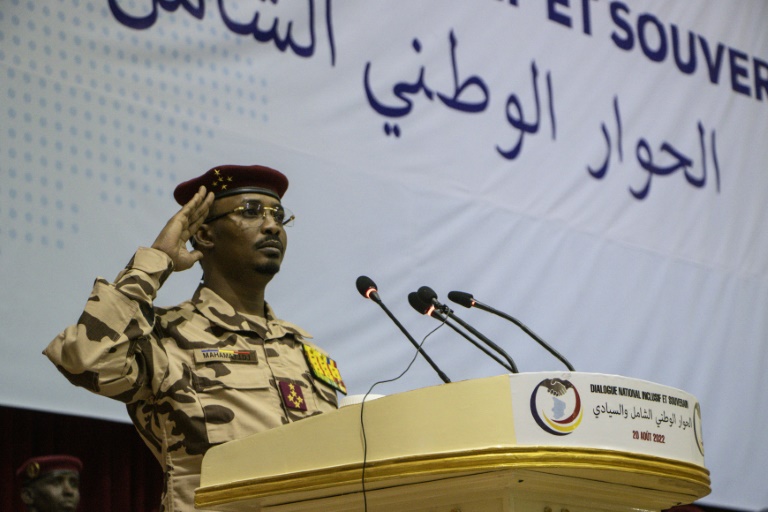
Chad on Saturday extended the transition period to democratic elections and agreed junta leader Mahamat Idriss Deby Itno could run on the ballot, despite international opposition.

The decisions were made by a national reconciliation dialogue forum, which has been boycotted by most opposition members, two out of three main armed rebel groups and civil society organisations.

The forum adopted by “consensus” a measure to “extend the transition for a maximum of 24 months”.

Chad, one of the world’s poorest countries, has endured repeated uprisings and unrest since gaining independence from France in 1960. 

The hundreds of delegates also decided that Deby would not only continue as transitional president but be eligible to run for the presidency when elections are held.

These decisions will face “resistance from political parties, civil society and the African Union”, said Chadian political scientist Evariste Ngarlem.

Neither the European Union nor the United States would accept Deby’s eligibility to run or the extended transition period, Ngarlem said.

“These partners will take sanctions against Chad and the Transitional Military Council’s back will be up against a wall,” the analyst added, using the junta’s formal name.

Government spokesman Abderaman Koulamallah said there would be a debate on Monday before an official decision was announced.

– Up to God –

Deby took over in April last year after his father, Idriss Deby Itno, the country’s iron-fisted ruler for 30 years, was killed during a military operation against rebels. 

He had vowed to hand back power to civilians after 18 months, a deadline that would run out this month.

Deby also pledged to Chadians and the international community that he would not run in the upcoming presidential elections.

After coming to power, the junta of 15 generals scrapped the constitution, dissolved parliament and dismissed the government.

The international community had urged Deby not to extend the transition beyond 18 months, and not to run for president in the eventual elections.

However, in June last year, the junta leader dealt a first blow to those hopes, envisaging another 18 months of transition “if the Chadians do not manage to reach an agreement” on the way forward.

He also said then that he would leave the question of his presidential candidacy to God.

The national dialogue, which began on August 20 after repeated delays, intended to seal changes to the constitution and other reforms.

During the talks, Chad’s foreign minister Mahamat Zene Cherif resigned on September 20, accusing the junta of sidelining him.

In his resignation letter to Deby, Cherif accused the junta of “repetitive and untimely” interference and said he had been “thwarted by parallel initiatives and actions by certain members of your cabinet and of the government”.

Algeria want to replace Guinea as 2025 Cup of Nations hosts

Algeria football boss Zefizef Djahid said on Saturday his country will bid to stage the 2025 Africa Cup of Nations (AFCON) after original choice Guinea were stripped of the hosting rights.

Speaking during the African Nations Championship (CHAN) draw ceremony at an Algiers opera house, he announced that “Algeria will be candidates to host the 2025 AFCON”. 

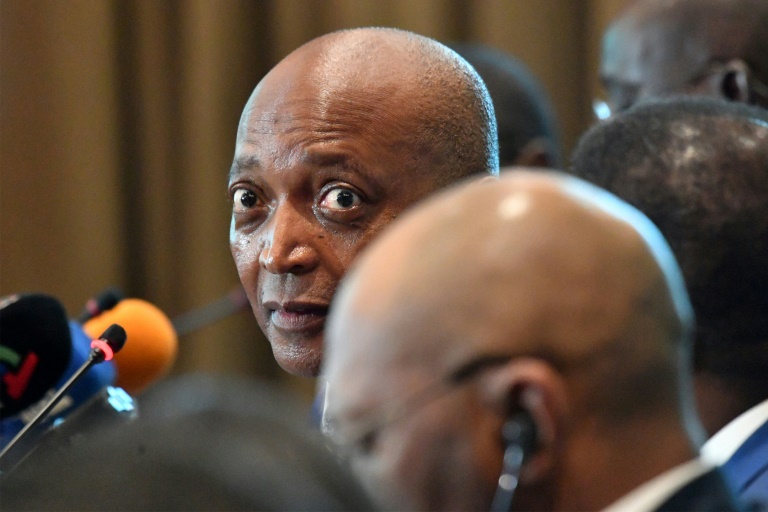
On Saturday, Confederation of African Football (CAF) president Patrice Motsepe said Guinea would not host the 2025 edition because they were “not ready to do so”.

The west African country, one of the poorest in the continent, has currently only one international-standard stadium, and Cup of Nations require six. 

Launched in 1957 in Sudan as a three-country event, the Cup of Nations has gradually increased to 24 teams from the 2019 finals in Egypt.  

Talking at a press conference in the Algerian capital ahead of the CHAN draw, South African billionaire Motsepe said “about 10 countries” are interested in replacing Guinea. 

“What I can assure you is that we are not going to choose a country that is not at an adequate level to meet our quality standards.” 

Motsepe did not name the potential bidders, but AFP understands former hosts Morocco, Nigeria and Senegal could be among the interested countries.

– ‘No country favoured’ –

“I can assure you that there is no country in Africa that is going to be favoured,” stressed Motsepe, seemingly referring to criticism that is he pro-Morocco.

The CAF boss recently told AFP that “the only reason Morocco has been hosting CAF competitions is because they are the only country prepared to do so.

“Our bidding process is open to all 54 member nations and sometimes we stretch the deadline to encourage multiple candidates, but only Morocco deliver a formal bid.” 

Morocco boasts world-class facilities and infrastructure and recently staged a hugely successful Africa Women’s Cup of Nations, with 40,000-plus crowds attending some matches.

Later this year the kingdom will host the eight-club CAF Women’s Champions League and, next year, the men’s qualifying tournament for the 2024 Paris Olympic Games. 

A Moroccan official reportedly said his country “would consider” a bid to stage the premier African football tournament for the first time since 1988.

Outgoing Nigerian football boss Amaju Pinnick recently suggested his nation and neighbours Benin should make a joint bid. 

Nigeria staged and won the Cup of Nations in 1980 and finished runners-up when they co-hosted the 2000 edition with Ghana.

Algeria were another country to host and win the Cup of Nations, defeating Nigeria in the 1990 final. Senegal were the 1992 hosts.

Cameroon hosted the last Cup of Nations this year and the Ivory Coast are next in line with the finals set for January and February 2024.

Close Bitnami banner
Bitnami
