
Africa Business

Burkina putschists accuse France of helping deposed leader plan counterattack

The army officers who have seized power in Burkina Faso said in televised comments on Saturday that toppled junta leader Paul-Henri Sandaogo Damiba was planning a counteroffensive from a “French base”.

Damiba “is believed to have taken refuge in the French base at Kamboinsin in order to plan a counter-offensive to stir up trouble in our defence and security forces,” they said in a statement read out on national television and signed by Captain Ibrahim Traore, the country’s new strongman.   

France, the former colonial power in Burkina Faso, denied any involvement.

An hour before the televised comments by the military figures, who overthrew Damiba on Friday, the French embassy issued a statement “firmly denying any involvement of the French army in the events of the last few hours”. 

The embassy also denied “rumours that Burkinabe authorities have been hosted or are under the protection of French military”. 

UN Secretary General Antonio Guterres “strongly condemns any attempt to seize power by the force of arms and calls on all actors to refrain from violence and seek dialogue,” his spokesman said in a statement Saturday.

“Burkina Faso needs peace, stability and unity to fight terrorist groups and criminal networks operating in parts of the country,” the UN  statement added.

Damiba himself came to power in a coup in January.

He had installed himself as leader of the country of 16 million after accusing elected president Roch Marc Christian Kabore of failing to beat back jihadist fighters.

With much of the Sahel region battling a growing Islamist insurgency, the violence has prompted a series of coups in Mali, Guinea and Chad since 2020. 

According to the new Burkina putschists, the actions by Damiba and the French forces are in response to their willingness “to go to other partners ready to help in the fight against terrorism”.

No country was explicitly mentioned but Russia, whose influence is growing in French-speaking Africa, is among the possible partners in question.

France has a military presence in Burkina Faso, with a contingent of special forces based in Kamboinsin which is some 30 kilometres (19 miles) from the capital Ouagadougou.  

– Tense –

The situation in Ouagadougou was tense on Saturday, with gunfire and the deployment of soldiers in the streets, raising fears of clashes between Damiba’s supporters and the country’s new strongmen. 

Helicopters hovered above the city and shops that had opened for business in the morning shut their doors. 

The European Union and the African Union added their voices to a chorus of global condemnation of the second coup this year in the deeply poor and restive West African country.

“The chairperson calls upon the military to immediately and totally refrain from any acts of violence or threats to the civilian population, civil liberties, human rights,” the AU said in a statement, calling for the restoration of the constitutional order by July 2024.

The junior officers who toppled Damiba on Friday said he had failed to fight jihadist attacks in the country.

The European Union warned that the latest coup put in danger efforts undertaken to restore constitutional order by July 1, 2024 and called for the new authorities to respect previous agreements. 

“The European Union also deplores the degradation of the security and humanitarian situation in the country,” the bloc’s foreign policy chief Josep Borrell said in a statement.

The Economic Community of West African States regional bloc “condemned in the strongest possible terms” the latest seizure of power, calling it “inappropriate.”

The United States called “for a return to calm and restraint by all actors”.

On Friday, pre-dawn gunfire erupted in the dusty and spread-out capital around the presidential palace and culminated in the latest coup.

– Damiba accused of failure –

Just before 8:00 pm (2000 GMT) on Friday, more than a dozen soldiers in fatigues appeared on the state television and radio broadcaster to announce the removal of Lieutenant-Colonel Paul-Henri Sandaogo Damiba.

They proclaimed 34-year-old Captain Traore in charge.

“Damiba failed. Since he came to power, the zones that were peaceful were attacked. He took power but then he betrayed us,” Habibata Rouamba, a trader and activist said on Saturday.

More than 40 percent of the country remains outside government control.

The new leaders swiftly suspended the constitution, sealed the borders, dissolved the transitional government and legislative assembly and instituted a 9:00 pm to 5:00 am curfew.

New strongman Traore was previously head of anti-jihadist special forces unit “Cobra” in the northern region of Kaya.

In the north and east, towns have been blockaded by insurgents who have blown up bridges and attacked supply convoys.

As in bordering countries, insurgents affiliated with Al-Qaeda and the Islamic State group have stoked unrest.

Thousands have died and about two million have been displaced by the fighting since 2015 when the insurgency spread to Burkina Faso, which has since become the epicentre of the violence across the Sahel.

In September, a particularly bloody month, Damiba sacked his defence minister and assumed the role himself.
Thousands rally for Nigeria's Labour party 2023 election campaign

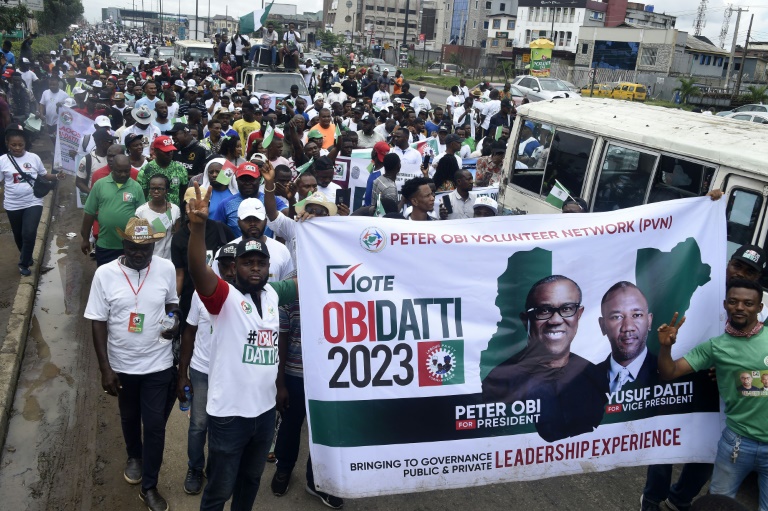
Thousands of supporters for Nigeria’s Labour party candidate Peter Obi rallied in Lagos and other cities on Saturday, in the first major campaign march for the 2023 presidential election.

Obi, a former state governor, is challenging the long dominance of ruling APC and main opposition PDP to succeed President Muhammadu Buhari in governing Africa’s most populous country.

Five months before the February 25 ballot, main candidates appear in a tight race with Nigeria’s faltering economy and rife insecurity among the top priorities for the winner.

With Afrobeats tunes blasting from trucks, and crowds chanting his name, Obi’s supporters packed into highway service lanes in several districts in Lagos, Nigeria’s economic capital.

“We are taking back our country,” said Chijioke Chuwunyere, a tech consultant who was marching in Lagos Surulere area. “This is a chance to right all the wrongs.”

Obi supporters also rallied near the Lekki tollgate, where peaceful #EndSARS protests demanding better governance and an end to police brutality were violently disrupted by security forces in October 2020.

Obi was not at the rallies, but supporters also marched in other cities across the country.

Obi’s supporters who call themselves “Obi-dients” say the 61-year-old former banking executive offers an alternative to the old-guard candidates put forward by the PDP and APC. 

High inflation, lack of jobs and insecurity have left many younger Nigerians frustrated with politics and apathetic about change at the ballot box.

But earlier this year, electoral authorities say 70 percent of newly registered voters for 2023 are aged between 18-34.

Obi has gained a huge following on social media, but analysts question how much he can convert that into votes on election day.

The PDP governed Nigeria from the end of military rule in 1999 until 2015, when the APC defeated it to give Buhari his first term.

Nationwide, the Labour Party does not have the structure of the All Progressives Congress (APC) or Peoples Democratic Party (PDP), or any state governorships. But supporters say they have momentum.

“We want a man, a governor, a president who will hear the voice of the masses,” said therapist and Labour party organiser Felicity Okorocha at one of the Lagos rallies. 

APC’s candidate Bola Ahmed Tinubu, a former governor dubbed “Godfather of Lagos” for his political influence touts his experience running the megalopolis as key.

Tinubu, 70, has been in London resting before the start of his campaign, an APC presidential campaign council member Ayo Oyalowo told Arise TV.

“He has five months to engage with Nigerians,” he said on Friday. 

PDP’s Atiku Abubakar, a former vice president on his fifth run at the presidency, this week launched his campaign with a book event.

Abubakar, 75, says his government experience and business acumen can “rescue” Nigeria from APC’s mismanagement. But the PDP also faces a major split within its ranks with a powerful governor.

Troops in Burkina capital amid international condemnation of new coup

Soldiers blocked main roads and gunfire was heard in the capital of Burkina Faso on Saturday, as world powers condemned the second coup this year in the deeply poor and restive West African country.

Junior officers toppled a junta leader on Friday, saying he had failed to fight jihadist attacks in the country.

On Saturday, several witnesses told AFP they heard gunfire in the centre of the capital Ouagadougou, after which troops once again blocked the main roads in the city, including around the presidency.

Helicopters hovered above the city and shops that had opened for business in the morning shut their doors. 

The European Union and the African Union added their voices to a chorus of global condemnation to the change in power.

“The chairperson calls upon the military to immediately and totally refrain from any acts of violence or threats to the civilian population, civil liberties, human rights,” the AU said in a statement, calling for the restoration of the constitutional order by July 2024.

AU chief Moussa Faki Mahamat said he was deeply concerned about the resurgence of unconstitutional ousters in the West African nation and elsewhere on the continent.

The European Union warned that the coup put in danger efforts undertaken to restore constitutional order by July 1, 2024 and called for the new authorities to respect previous agreements. 

“The European Union also deplores the degradation of the security and humanitarian situation in the country,” the bloc’s foreign policy chief Josep Borrell said in a statement.

The Economic Community of West African States regional bloc “condemned in the strongest possible terms” the latest seizure of power, calling it “inappropriate.”

Burkina Faso’s former colonial ruler France told its citizens in Ouagadougou — believed to number between 4,000 and 5,000 — to stay home.

The United States called “for a return to calm and restraint by all actors”.

On Friday, pre-dawn gunfire erupted in the dusty and spread-out capital around the presidential palace and culminated in the latest coup.

Just before 8:00 pm (2000 GMT) on Friday, more than a dozen soldiers in fatigues appeared on the state television and radio broadcaster to announce the removal of Lieutenant-Colonel Paul-Henri Sandaogo Damiba.

They proclaimed 34-year-old Captain Ibrahim Traore in charge.

“We have decided to take our responsibilities, driven by a single ideal: the restoration of security and integrity of our territory,” they said.

“Damiba failed. Since he came to power, the zones that were peaceful were attacked. He took power but then he betrayed us,” Habibata Rouamba, a trader and activist said on Saturday.

With much of the Sahel region battling a growing Islamist insurgency, the violence has prompted a series of coups in Mali, Guinea and Chad since 2020. 

In January, Damiba installed himself as leader of the country of 16 million after accusing elected president Roch Marc Christian Kabore of failing to beat back the jihadists.

– Damiba accused of failure –

But with more than 40 percent of the country outside government control, the latest putsch leaders said Damiba, too, had failed.

“Far from liberating the occupied territories, the once-peaceful areas have come under terrorist control,” the new military leaders said. 

They then suspended the constitution, sealed the borders, dissolved the transitional government and legislative assembly and instituted a 9:00 pm to 5:00 am curfew.

New strongman Traore was previously head of anti-jihadist special forces unit “Cobra” in the northern region of Kaya.

– Junta leader’s fate unclear –

Damiba’s fate remains unknown. Though he had promised to make security his priority when he took charge on January 24, violent attacks have increased since March.

In the north and east, towns have been blockaded by insurgents who have blown up bridges and attacked supply convoys.

As in bordering countries, insurgents affiliated with Al-Qaeda and the Islamic State group have stoked unrest.

Thousands have died and about two million have been displaced by the fighting since 2015 when the insurgency spread to Burkina Faso, which has since become the epicentre of the violence across the Sahel.

In September, a particularly bloody month, Damiba sacked his defence minister and assumed the role himself.
Earlier this week, suspected jihadists attacked a convoy carrying supplies to the town of Djibo in the north of the country. The government said 11 soldiers died and around 50 civilians were missing.

African Union condemns latest Burkina Faso coup

The African Union on Saturday condemned the “unconstitutional change of government” in Burkina Faso, a day after the second coup this year in the deeply poor and restive West African country.

Junior officers toppled a junta leader on Friday, saying he had failed to fight jihadist attacks in the country.

“The chairperson calls upon the military to immediately and totally refrain from any acts of violence or threats to the civilian population, civil liberties, human rights,” the AU said in a statement, calling for the restoration of the constitutional order by July 2024.

AU chief Moussa Faki Mahamat said he was deeply concerned about the resurgence of unconstitutional ousters in the West African nation and elsewhere on the continent. 

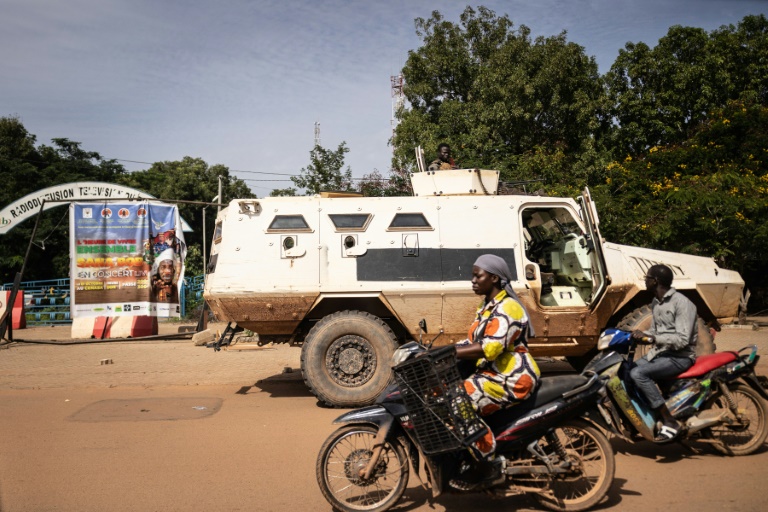
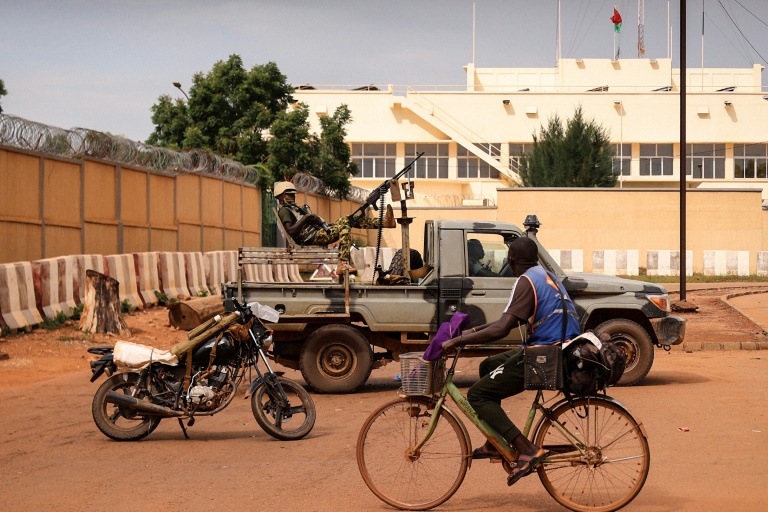
In Burkina Faso’s capital, Ouagadougou, an uneasy calm reigned as soldiers in armoured vehicles and pickup trucks guarded the national television centre but traffic slowly resumed on arterial roads.

Shops slowly started reopening in the dusty and spread-out city, where pre-dawn gunfire on Friday around the presidential palace culminated in the latest coup, that drew wide condemnation. 

The Economic Community of West African States regional bloc “condemned in the strongest possible terms” the latest seizure of power, calling it “inappropriate” at a time when progress was being made for a return to constitutional order by July 1, 2024.

Burkina Faso’s former colonial ruler France told its citizens in Ouagadougou, believed to number between 4,000 and 5,000, to stay home, while the European Union expressed “concern” at the unfolding events.

The United States called “for a return to calm and restraint by all actors”.

Just before 8:00 pm (2000 GMT) on Friday, more than a dozen soldiers in fatigues appeared on the state television and radio broadcaster to announce the removal of Lieutenant-Colonel Paul-Henri Sandaogo Damiba.

They proclaimed 34-year-old Captain Ibrahim Traore in charge.

“We have decided to take our responsibilities, driven by a single ideal: the restoration of security and integrity of our territory,” they said.

“Damiba failed. Since he came to power, the zones that were peaceful were attacked. He took power but then he betrayed us,” Habibata Rouamba, a trader and activist said on Saturday.

With much of the Sahel region battling a growing Islamist insurgency, the violence has prompted a series of coups in Mali, Guinea and Chad since 2020. 

In January, Damiba installed himself as leader of the country of 16 million after accusing elected president Roch Marc Christian Kabore of failing to beat back the jihadists.

– Damiba accused of failure –

But with more than 40 percent of the country outside government control, the latest putsch leaders said Damiba, too, had failed.

“Far from liberating the occupied territories, the once-peaceful areas have come under terrorist control,” the new military leaders said. 

They then suspended the constitution, sealed the borders, dissolved the transitional government and legislative assembly and instituted a 9:00 pm to 5:00 am curfew.

New strongman Traore was previously head of anti-jihadist special forces unit “Cobra” in the northern region of Kaya.

– Junta leader’s fate unclear –

Damiba’s fate remains unknown. 

In the morning, shots rang out in the Ouaga 2000 neighbourhood, which houses both the presidential and junta headquarters.

State television was cut for several hours prior to the military announcement, broadcasting just a blank screen with the message “no video signal”.

Though Damiba had promised to make security his priority when he took charge on January 24, violent attacks have increased since March.

In the north and east, towns have been blockaded by insurgents who have blown up bridges and attacked supply convoys.

As in bordering countries, insurgents affiliated with Al-Qaeda and the Islamic State group have stoked unrest.

Thousands have died and about two million have been displaced by the fighting since 2015 when the insurgency spread to Burkina Faso, which has since become the epicentre of the violence across the Sahel.

In September, a particularly bloody month, Damiba sacked his defence minister and assumed the role himself.
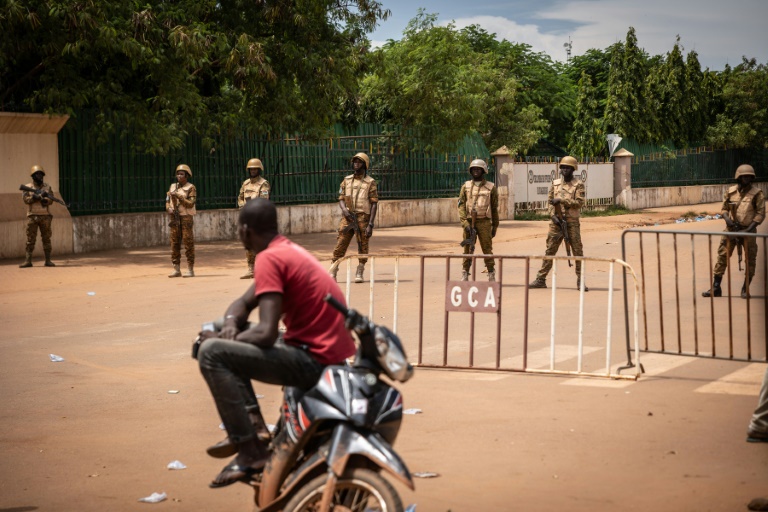
Earlier this week, suspected jihadists attacked a convoy carrying supplies to the town of Djibo in the north of the country. The government said 11 soldiers died and around 50 civilians were missing.

Burkina Faso faces fresh uncertainty after latest coup

Burkina Faso awoke to fresh uncertainty Saturday after its second coup this year when junior officers toppled a junta leader, saying he had failed to fight jihadist attacks in the deeply poor and restive West African nation.

An uneasy calm permeated through the capital Ouagadougou where soldiers in armoured vehicles and pickup trucks guarded the national television centre but traffic slowly resumed on arterial roads.

Shops slowly started reopening in the dusty and spread-out city, where pre-dawn gunfire on Friday around the presidential palace culminated in the latest coup, that drew wide condemnation. 

The Economic Community of West African States regional bloc “condemned in the strongest possible terms” the latest seizure of power, calling it “inappropriate” at a time when progress was being made for a return to constitutional order by July 1, 2024.

Burkina Faso’s former colonial ruler France told its citizens in Ouagadougou, believed to number between 4,000 and 5,000, to stay home, while the European Union expressed “concern” at the unfolding events.

The United States called “for a return to calm and restraint by all actors”.

Just before 8:00 pm (2000 GMT) on Friday, more than a dozen soldiers in fatigues appeared on the state television and radio broadcaster to announce the removal of Lieutenant-Colonel Paul-Henri Sandaogo Damiba.

They proclaimed 34-year-old Captain Ibrahim Traore in charge.

“We have decided to take our responsibilities, driven by a single ideal: the restoration of security and integrity of our territory,” they said.

“Damiba failed. Since he came to power, the zones that were peaceful were attacked. He took power but then he betrayed us,” Habibata Rouamba, a trader and activist said on Saturday.

With much of the Sahel region battling a growing Islamist insurgency, the violence has prompted a series of coups in Mali, Guinea and Chad since 2020. 

In January, Damiba installed himself as leader of the country of 16 million after accusing elected president Roch Marc Christian Kabore of failing to beat back the jihadists.

– Damiba accused of failure –

But with more than 40 percent of the country outside government control, the latest putsch leaders said Damiba, too, had failed.

“Far from liberating the occupied territories, the once-peaceful areas have come under terrorist control,” the new military leaders said. 

They then suspended the constitution, sealed the borders, dissolved the transitional government and legislative assembly and instituted a 9:00 pm to 5:00 am curfew.

New strongman Traore was previously head of anti-jihadist special forces unit “Cobra” in the northern region of Kaya.

– Junta leader’s fate unclear –

Damiba’s fate remains unknown. 

Damiba’s Patriotic Movement for Preservation and Restoration (MPSR) had said earlier on Friday that there was an “internal crisis in the army” prompting troop deployments in key areas of the capital.

Government spokesman Lionel Bilgo had said the “crisis” concerned an army pay dispute, and that Damiba was taking part in negotiations.

In the morning, shots rang out in the Ouaga 2000 neighbourhood, which houses both the presidential and junta headquarters.

State television was cut for several hours prior to the military announcement, broadcasting just a blank screen with the message “no video signal”.

Though Damiba had promised to make security his priority when he took charge on January 24, violent attacks have increased since March.

In the north and east, towns have been blockaded by insurgents who have blown up bridges and attacked supply convoys.

As in bordering countries, insurgents affiliated with Al-Qaeda and the Islamic State group have stoked unrest.

Thousands have died and about two million have been displaced by the fighting since 2015 when the insurgency spread to Burkina Faso, which has since become the epicentre of the violence across the Sahel.

In September, a particularly bloody month, Damiba sacked his defence minister and assumed the role himself.
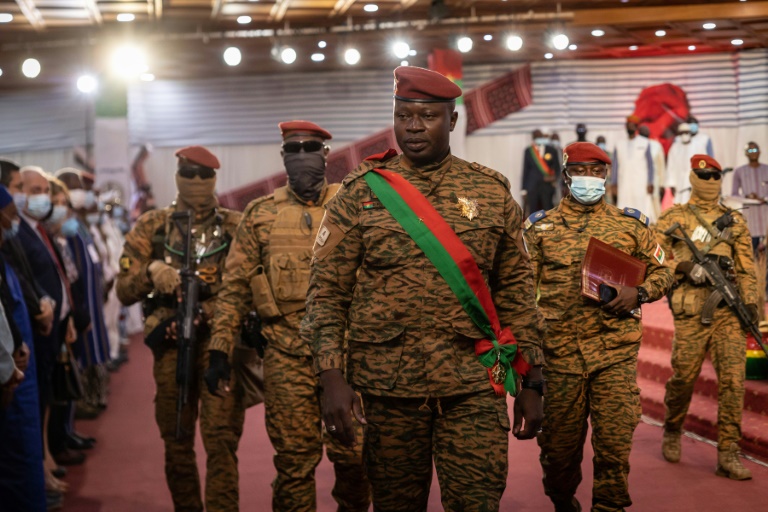
Earlier this week, suspected jihadists attacked a convoy carrying supplies to the town of Djibo in the north of the country. The government said 11 soldiers died and around 50 civilians were missing.

Coup in Burkina Faso as military officers overthrow junta leader

Military officers have seized control of Burkina Faso, claiming to be restoring peace to the jihadist-wracked country as they overthrew a junta leader who had also come to power in a coup at the start of this year.

In the capital Ouagadougou, pre-dawn gunfire around the presidential palace was heard at the start of a day that culminated in the latest ousting. 

Just before 8 pm (2000 GMT) on Friday, more than a dozen soldiers in fatigues appeared on the state television and radio broadcaster to announce the removal of Lieutenant-Colonel Paul-Henri Sandaogo Damiba for failing to stem a jihadist insurgency.

They proclaimed 34-year-old Captain Ibrahim Traore in charge.

“We have decided to take our responsibilities, driven by a single ideal: the restoration of security and integrity of our territory,” they said.

With much of the Sahel region battling a growing Islamist insurgency, the violence has prompted a series of coups in Mali, Guinea and Chad since 2020. 

In January, Damiba installed himself as leader of the country of 16 million after accusing elected president Roch Marc Christian Kabore of failing to beat back the jihadists. 

But with more than 40 percent of the former French colony outside government control, the latest putsch leaders said Damiba, too, had failed.

“Far from liberating the occupied territories, the once-peaceful areas have come under terrorist control,” the new military leaders said. 

They then suspended the constitution, sealed the borders, dissolved the transitional government and legislative assembly and instituted a 9:00 pm to 5:00 am curfew.

New strongman Traore was previously head of anti-jihadist special forces unit “Cobra” in the northern region of Kaya.

Damiba’s fate remained unknown Friday. 

– Calls for ‘restraint’ –

Damiba’s Patriotic Movement for Preservation and Restoration (MPSR) had said earlier on Friday that there was an “internal crisis in the army” prompting troop deployments in key areas of the capital.

AFP journalists saw troops block several main roads and intersections in Ouagadougou, with soldiers also stationed outside the state television centre.

Government spokesman Lionel Bilgo had said the “crisis” concerned an army pay dispute, and that Damiba was taking part in negotiations.

In the morning, shots rang out in the Ouaga 2000 neighbourhood, which houses both the presidential and junta headquarters.

“I heard heavy detonations around 4:30 am and now the roads around my home have been sealed off by military vehicles,” a resident close to the presidential palace said.

State television was cut for several hours prior to the military announcement, broadcasting just a blank screen with the message “no video signal”.

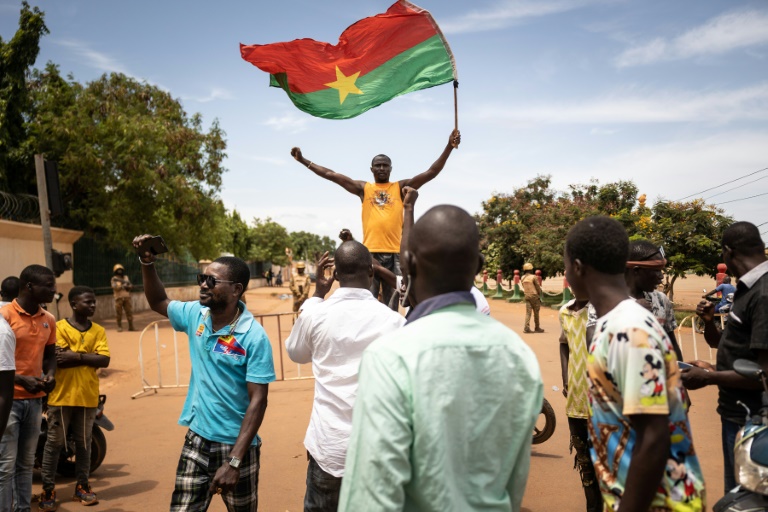
In the afternoon, an AFP journalist saw a group of several hundred people gather in a city square demanding the departure of Damiba and the end of the French military presence.

By evening, soldiers were still in place at key points of the city, and streets were mostly deserted.

In a statement, the Economic Community of West African States (ECOWAS) “condemned in the strongest possible terms” the latest seizure of power, calling it “inappropriate” at a time when progress was being made for a return to constitutional order by July 1, 2024.

The French foreign ministry told its citizens in the Burkina capital, believed to number between 4,000 and 5,000, to stay home, while the European Union expressed “concern” at the unfolding events.

The United States said it was “deeply concerned” by the situation in Ouagadougou.

“We call for a return to calm and restraint by all actors,” a State Department spokesperson said.

– Rein in jihadists –

Though Damiba had promised to make security his priority when he took charge on January 24, violent attacks have increased since March.

In the north and east, towns have been blockaded by insurgents who have blown up bridges and attacked supply convoys.

As in bordering countries, insurgents affiliated with Al-Qaeda and the Islamic State group have stoked unrest.

Thousands have died and about two million have been displaced by the fighting since 2015 when the insurgency spread to Burkina Faso, which has since become the epicentre of the violence across the Sahel.

In September, a particularly bloody month, Damiba sacked his defence minister and assumed the role himself.

Earlier this week, suspected jihadists attacked a convoy carrying supplies to the town of Djibo in the north of the country. The government said 11 soldiers died and around 50 civilians were missing.

On September 5, an improvised explosive device struck a supply convoy in the north killing 35 civilians and wounding 37.

The following day, at least nine people — seven civilians and two soldiers — were killed in two separate attacks by suspected jihadists.

Much of the impoverished Sahel region is battling the insurgency.

Starting in northern Mali in 2012, the insurgents attacked neighbouring Burkina Faso and Niger in 2015.

The violence has in recent years begun to spill over into coastal states Ivory Coast, Togo and Benin.

Coup in Burkina Faso as military officers dismiss junta leader

Military officers seized control of Burkina Faso on Friday, claiming to be restoring peace to the jihadist-wracked country as they dismissed a junta leader who had himself come to power in a coup at the start of this year.

In the capital Ouagadougou, witnesses heard pre-dawn gunfire around the presidential palace and junta headquarters.

Then just before 8 pm (2000 GMT), more than a dozen soldiers in fatigues appeared on the state television and radio broadcaster to announce the removal of Lieutenant-Colonel Paul-Henri Sandaogo Damiba for failing to stem a jihadist insurgency.

In his place, they proclaimed 34-year-old Captain Ibrahim Traore in charge.

“We have decided to take our responsibilities, driven by a single ideal: the restoration of security and integrity of our territory,” they said.

“Our common ideal was betrayed by our leader in whom we had placed all our trust. Far from liberating the occupied territories, the once peaceful areas have come under terrorist control.”

The rebelling military also announced the closure of air and land borders from midnight, as well as the suspension of the constitution and the dissolution of the government and transitional legislative assembly.

A curfew from 9:00 pm to 5:00 am was also put in place.

New strongman Traore was previously head of anti-jihadist special forces unit “Cobra” in the northern region of Kaya.

Ousted leader Damiba’s fate remained unknown. 

The coup plotters promised to convene “the nation’s active forces” to designate a “new president of Faso, whether civilian or military”.

– Calls for ‘restraint’ –

The United States said it was “deeply concerned” by the situation in Ouagadougou and encouraged its citizens to limit movements.

“We call for a return to calm and restraint by all actors,” a State Department spokesperson said.

Earlier on Friday, Damiba’s Patriotic Movement for Preservation and Restoration (MPSR) had said there was an “internal crisis in the army” prompting troop deployments in key areas of the capital.

AFP journalists saw troops block several main roads and intersections in Ouagadougou, with soldiers also stationed outside the state television centre.

Government spokesman Lionel Bilgo had said the “crisis” concerned an army pay dispute, and that Damiba was taking part in negotiations.

During the morning, shots rang out in the Ouaga 2000 neighbourhood, which houses both the presidential and military junta headquarters.

“I heard heavy detonations around 4:30 am and now the roads around my home have been sealed off by military vehicles,” a resident close to the presidential palace said.

State television was cut for several hours prior to the military announcement, broadcasting just a blank screen with the message “no video signal”.

In the afternoon, an AFP journalist saw a group of several hundred people gather in a city square making a range of demands, including the departure of Damiba and the end of the French military presence.

By the evening the soldiers were still in place at key points of the city, and streets were mostly deserted.

In a statement, the Economic Community of West African States (ECOWAS) “condemned in the strongest possible terms the seizure of power by force that has just taken place.”

ECOWAS called the latest coup “inappropriate” at a time when it said progress was being made for a return to constitutional order by July 1, 2024.

The French foreign ministry told its citizens in the city, believed to number between 4,000 and 5,000, to stay home.

In Brussels, the European Union expressed “concern” at the events unfolding in the Burkina capital.

– Rein in jihadists –

When he declared himself in charge on January 24, ousting elected leader Roch Marc Christian Kabore, Damiba had promised to make security his priority and end the bloody jihadist attacks.

But these have increased in recent months, especially in the north and east where whole towns have been blockaded by insurgents who have blown up bridged and attacked supply convoys.

As in bordering countries, insurgents affiliated with Al-Qaeda and the Islamic State group have stoked unrest.

Thousands have died and about two million have been displaced by the fighting since 2015 when the insurgency spread into Burkina Faso, which has since become the epicentre of the violence across the Sahel.

More than 40 percent of Burkina Faso, a former French colony, is outside government control.

Attacks have increased since mid-March, despite the junta’s vow to make security its top priority.

In September, a particularly bloody month, Damiba sacked his defence minister and assumed the role himself.

– Bloody September –

Earlier this week, suspected jihadists attacked a convoy carrying supplies to the town of Djibo in the north of the country. The government said 11 soldiers died and around 50 civilians were missing.

On September 5, an improvised explosive device struck a supply convoy in the north killing 35 civilians and wounding 37.

The following day, at least nine people — seven civilians and two soldiers — were killed in two separate attacks by suspected jihadists.

Much of the impoverished Sahel region is battling the insurgency.

Starting in northern Mali in 2012, the insurgents attacked neighbouring Burkina Faso and Niger in 2015.

The violence has in recent years begun to spill over into coastal states Ivory Coast, Togo and Benin.

The Burkina strongman kicked out in a coup

Burkina Faso strongman Lieutenant-Colonel Paul-Henri Sandaogo Damiba came to power in a military coup eight months ago.

On Friday military officials said they had removed him as head of the junta in the second coup this year.

Damiba had first-hand experience with the brutal jihadist insurgency that he cited as the pretext for seizing power in January.

But it wasn’t enough to placate the rebelling military, who tore into his record on security as they announced his dismissal in a national television address.

When Damiba’s junta overthrew the country’s elected president, Roch Marc Christian Kabore, the latter too was facing anger over his failure to stem the crisis.

Since the first jihadist attacks in 2015, thousands of people have died and about two million have been displaced by the fighting.

During his eight months at the head of the junta, Damiba tried to launch a process of dialogue with some armed groups, while intensifying the “offensive actions of the army”.

In early September, Damiba welcomed a “relative calm” in several places.

But the attacks have remained numerous, with more than 40 percent of the country outside government control.

Before taking power, Damiba had made no secret of his criticism of prevailing strategies to roll back the insurgency, publishing a book last June called “West African Armies and Terrorism: Uncertain Answers?”

He was part of a group of uniformed men who mounted a coup on January 24, declaring they had taken power, although he did not say anything, leaving the job of announcer to a captain, Sidsore Kader Ouedraogo.

Ouedraogo read out a statement signed by Damiba as president of Patriotic Movement for Preservation and Restoration (MPSR), as the junta called itself.

The statement lashed “the continuous deterioration of the security situation, which threatens the very foundation of our nation” and singled out Kabore’s “clear inability to unite the Burkinabe people to tackle the situation effectively”.

Like many military officers in the French-speaking Sahel, Damiba had close affiliations with France, and trained at the prestigious Military School of Paris.

He also trained at the Georges Namoano Military Academy in Po in southern Burkina.

Many of its alumni served in the Presidential Security Regiment (RSP), the former presidential guard of Kabore’s predecessor, Blaise Compaore, who was overthrown by a popular uprising in 2014.

Damiba commanded the RSP from 2003-2011, although he was also among those who opposed a coup bid in 2015 by Compaore’s right-hand man, General Gilbert Diendere.

As a regimental commander from 2019 to 2021, he gained first-hand experience of the problems of Burkina Faso’s poorly-trained and ill-equipped security forces against ruthless and highly mobile jihadists.

Kabore shook up the military and Damiba was sent to command the 3rd military Region.

Morocco court toughens migrants' sentences over border tragedy

A Moroccan appeals court has beefed up prison terms against 15 African migrants involved in a June border tragedy in which two dozen migrants died, a rights group said Friday.

The migrants, from Sudan and Chad, had been arrested after some 2,000 people, stormed the frontier with the Spanish enclave of Melilla on June 24 in a bid to reach European Union territory.

Rights groups have accused border guards on both sides of responding with excessive force, leaving at least 23 migrants dead — the worst toll in years of such attempted crossings.

The 15 migrants had been found guilty of illegally entering Morocco, violence against the police, armed assembly and resisting arrest.

On Thursday, an appeals court in the border town of Nador “decided to increase the initial sentences of 11 months in prison to three years” against 15 migrants arrested after the tragedy, said Omar Naji of the AMDH rights group.

“It’s a very severe ruling — we had expected the sentences to be reduced,” Naji told AFP.

He added that all the migrants had denied using violence.

The Spanish enclaves of Melilla and Ceuta have long been a magnet for people fleeing violence and poverty across Africa and seeking refuge via the continent’s only land borders with the EU.

Since the June 24 incident, dozens of mostly Sudanese migrants have been sentenced to prison terms ranging from eight months to two years in prison without parole.

'Internal crisis' in Burkina Faso army, gunfire near presidency

The Burkina Faso government admitted an “internal crisis” within the army was behind troop deployments Friday in key areas of the capital, saying negotiations were now underway after shots rang out before dawn.

Gunfire was heard around the presidential palace and headquarters of the military junta, which itself seized power in a coup last January, witnesses told AFP.

The transitional government said the developing situation was linked to an “internal crisis in the army”, after AFP journalists saw troops block several main roads in the capital Ouagadougou.

Government spokesman Lionel Bilgo told AFP “talks are continuing to try to reach a settlement without trouble”.

“I heard heavy detonations around 4:30 am (0430 GMT) and now the roads around my home have been sealed off by military vehicles,” said a resident who lives close to the presidential palace.

During the morning more shots had rung out an AFP video journalist said in the Ouaga 2000 neighbourhood that houses both the presidential and military junta headquarters.

Bilgo said the “crisis” was based on army pay claims, and that junta leader Lieutenant-Colonel Paul-Henri Sandaogo Damiba was taking part in discussions with the men.

A government source had earlier confirmed that Damiba was “in a safe place” without giving more details.

The state television was cut for several hours, broadcasting a blank screen for several hours saying: “no video signal”.

A second government source said, “The negotiations are continuing… the soldiers are maintaining pressure through their presence at strategic points they occupied this morning” in the capital.

Soldiers were seen at the city’s main crossroads, especially in Ouaga 2000 but also outside the state television centre, an AFP journalist said. 

In Brussels, the EU voiced “concern” at events in the Burkina capital.

“A military movement was observed from 04:30 this morning. The situation still remains particularly confused,” said spokeswoman Nabila Massrali.

– Rein in jihadists –

Violence has long wracked the landlocked west African country where Damiba took power in a January coup, ousting elected leader Roch Marc Christian Kabore.

Damiba has pledged to restore civilian rule within two years and to defeat the armed factions.

As in bordering countries, insurgents affiliated with Al-Qaeda and the Islamic State group have stoked the unrest.

Thousands have died and about two million have been displaced by the fighting since 2015 when the insurgency spread into Burkina Faso, which has since become the epicentre of the violence across the Sahel.

Damiba earlier this month sacked his defence minister and assumed the role himself.

The mini-shuffle, the first since the appointment of a transitional government in March, saw only one new minister introduced — Colonel-Major Silas Keita was named minister delegate in charge of national defence and promoted to brigadier general. 

More than 40 percent of Burkina Faso, a former French colony, is outside government control.

Attacks have increased since mid-March, despite the junta’s vow to make security its top priority.

– Bloody September –

September has been particularly bloody.

On Monday, suspected jihadists attacked a convoy carrying supplies to the town of Djibo in the north of the country. The government said 11 soldiers died and around 50 civilians were missing.

On September 5 an improvised explosive device struck a supply convoy in the north killing 35 civilians dead and wounding 37.

The following day, at least nine people, seven civilians and two soldiers, were killed in two separate attacks by suspected jihadists.

In June, 86 civilians died in a massacre at Seytenga, near the border with Niger.

Much of the impoverished Sahel region is battling the insurgency.

Starting in northern Mali in 2012, the insurgents attacked neighbouring Burkina Faso and Niger in 2015.

The violence has in recent years begun to spill over into coastal states Ivory Coast, Togo and Benin.

“The deteriorating security situation in Burkina Faso and Mali has made the north of the coastal countries the new front line against armed groups operating in the Sahel,” the Konrad Adenauer Foundation, a German think tank, said in a report in April.

Close Bitnami banner
Bitnami