Africa Business

Gunfire heard near Burkina Faso presidency: witnesses

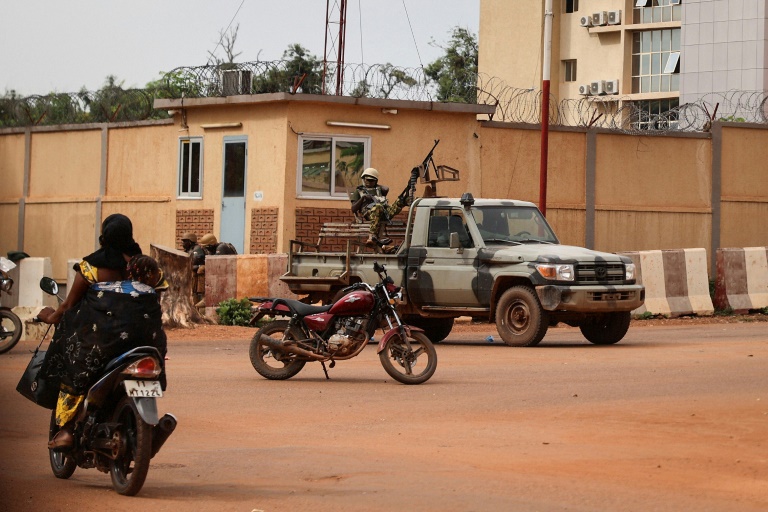
Shots rang out before dawn on Friday around Burkina Faso’s presidential palace and headquarters of the military junta, which itself seized power in a coup last January, witnesses told AFP.

Troops blocked several main roads in the capital Ouagadougou, AFP journalists said, and state television was cut, broadcasting a blank screen for several hours saying: “no video signal”.

“I heard heavy detonations around 4:30 am (0430 GMT) and now the roads around my home have been sealed off by military vehicles,” said a resident who lives close to the presidential palace.

The reason for the gunfire was not immediately clear.

But during the morning more shots were heard by an AFP cameraman in the Ouaga 2000 neighbourhood that houses both the presidential and military junta headquarters.

Junta leader Lieutenant-Colonel Paul-Henri Sandaogo Damiba “is in a safe place”, a government source told AFP, adding, “contacts are underway to find out exactly what the men want”.

A second government source said, “The negotiations are continuing… the soldiers are maintaining pressure through their presence at strategic points they occupied this morning” in the capital.

Soldiers were seen at  the city’s main crossroads, especially in Ouaga 2000 but also outside the state television centre, an AFP journalist said. The video signal was restored about 0915 GMT.

In Brussels, the EU voiced “concern” at events in the Burkina capital.

“A military movement was observed from 04:30 this morning. The situation still remains particularly confused,” said spokeswoman Nabila Massrali.

– Rein in jihadists –

Violence has long wracked the landlocked west African country where Damiba took power in a January coup, ousting elected leader Roch Marc Christian Kabore.

Damiba has pledged to restore civilian rule within two years and to defeat the armed factions.

As in bordering countries, insurgents affiliated with Al-Qaeda and the Islamic State group have stoked the unrest.

Damiba earlier this month sacked his defence minister and assumed the role himself.

The mini-shuffle, the first since the appointment of a transitional government in March, saw only one new minister introduced — Colonel-Major Silas Keita was named minister delegate in charge of national defence and promoted to brigadier general. 

Thousands have died and about two million have been displaced by the fighting since 2015 when the insurgency spread into Burkina Faso, which has since become the epicentre of the violence across the Sahel.

Attacks have increased since the start of the year, despite the junta’s vow to make security its top priority.

– Bloody September –

September has been particularly bloody.

On Monday, suspected jihadists attacked a convoy carrying supplies to the town of Djibo in the north of the country. The government said 11 soldiers were killed and around 50 civilians were missing.

On September 5 an improvised explosive device struck a supply convoy in the north killing 35 civilians dead and wounding 37.

In June, 86 civilians died in a massacre at Seytenga, near the border with Niger.

More than 40 percent of Burkina Faso, a former French colony, is outside government control.

Much of the impoverished Sahel region is battling the insurgency.

Starting in northern Mali in 2012, the insurgents attacked neighbouring Burkina Faso and Niger in 2015. The violence has in recent years begun to spill over into coastal states Ivory Coast, Togo and Benin.

“The deteriorating security situation in Burkina Faso and Mali has made the north of the coastal countries the new front line against armed groups operating in the Sahel,” the Konrad Adenauer Foundation, a German think tank, said in a report in April.

French forces supported Mali against insurgents for nearly a decade, but President Emmanuel Macron decided to pull out after falling out with the Malian junta  in the wake of two military coups since 2020.

The last French troops from operation Barkhane left last month. Despite the exit from Mali, Macron insists Paris remains committed to the “fight against terrorism” in West Africa. 
Court upholds Tanzania move to cordon off land to protect wildlife

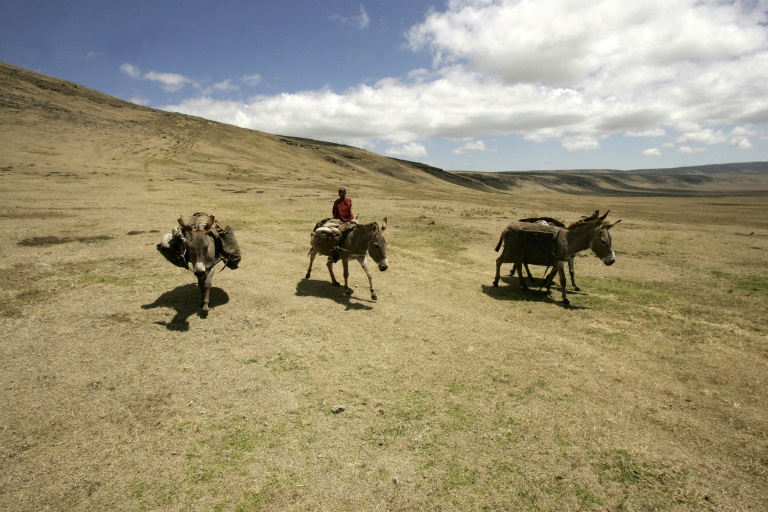
A regional court on Friday ruled that Tanzania’s decision to cordon off land for wildlife protection was legal, dealing a blow to Maasai pastoralists who had protested the move, two lawyers for the community said.

The nomadic community in Loliondo in the northern district of Ngorongoro has accused the government of trying to force them off their ancestral land in order to organise safaris and hunting expeditions.

But the government has rejected the accusations, claiming it wants to “protect” 1,500 square kilometres (580 square miles) of the area from human activity.

After several postponements, the Arusha-based East African Court of Justice upheld the government’s decision, a lawyer for the Maasai told AFP.

“Unfortunately, the court ruled against us,” Esther Mnaro said.

“They have delivered a very impugned judgement,” another lawyer, Yonas Masiaya, told AFP.

The Maasai had asked the court to “stop the evictions, the arrest, detention or persecution” of their members and demanded a billion Tanzanian shillings ($430,000) as damages.

The three-judge bench said no compensation was due, Mnaro said.

They “decided that there… was no loss of property and none of these people were injured during the evictions, but our evidence and our witnesses had said totally different things.”

Mnaro said the community would decide whether to appeal.

There was no immediate reaction to the ruling from the government, which had previously argued that the Arusha court did not have jurisdiction to hear the matter.

Tensions have soared in recent months with violent clashes breaking out in June in Loliondo between police and Maasai demonstrators.

More than two dozen Maasai protesters were charged with murder over the death of a policeman in the clashes.

– Population growth –

Tanzania has historically allowed indigenous communities such as the Maasai to live within some national parks, including the Ngorongoro conservation area, a UNESCO World Heritage site. 

But the authorities say their growing population is encroaching on wildlife habitat and began moving the pastoralists out of Ngorongoro in June, calling it a voluntary relocation.

The relocation has sparked concern, with a team of UN-appointed independent rights experts warning in June that “it could jeopardise the Maasai’s physical and cultural survival.”

Since 1959, the number of humans living in Ngorongoro has shot up from 8,000 to more than 100,000.

The livestock population has grown even more quickly, from around 260,000 in 2017 to over one million today.

As climate change leads to prolonged droughts and low crop yields, pressure on the pastoralists has increased, forcing them into conflict with wildlife over access to food and water.

In 2009, thousands of Maasai families were moved out of Loliondo to allow an Emirati safari company, Ortelo Business Corporation, to organise hunting expeditions there. 

The government cancelled that deal in 2017, following allegations of corruption.

The East Africa Court of Justice came into force in 2001 to ensure adherence to the laws establishing the seven-nation East African Community bloc, made up of Burundi, Kenya, Rwanda, South Sudan, Tanzania, the Democratic Republic of Congo and Uganda.

Defence says Rwanda accused was businessman not warlord

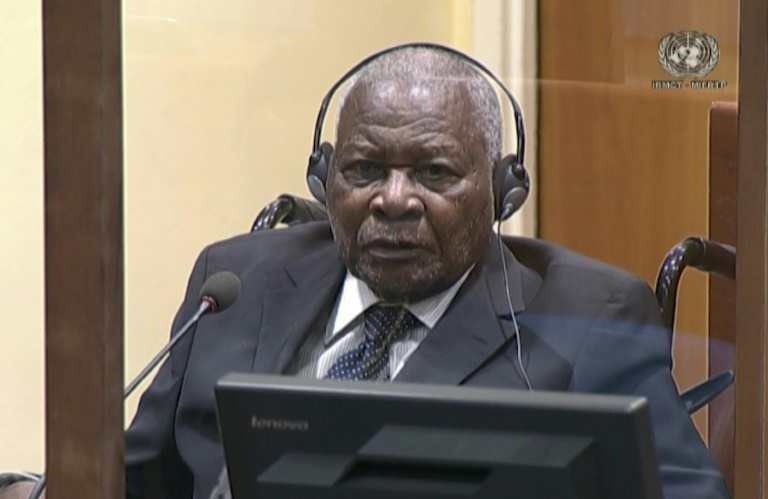
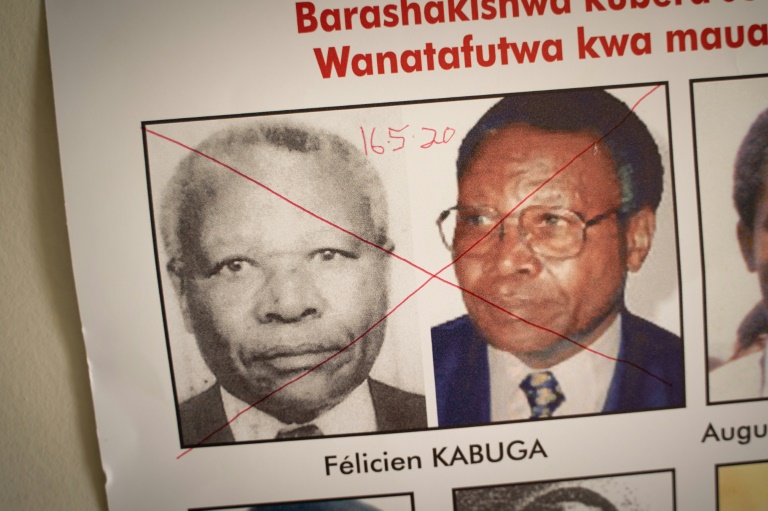
Top Rwandan genocide suspect Felicien Kabuga was not a warlord but merely a businessman caught up in the 1994 ethnic slaughter, his defence lawyers told a Hague tribunal on Friday.

Kabuga’s trial at a UN court began on Thursday with prosecutors accusing the 87-year-old of setting up hate media that urged ethnic Hutus to kill rival Tutsis and supplying death squads with machetes.

But in their opening statements his defence rejected the “caricature” of Kabuga, once one of Rwanda’s richest men, saying he was not responsible for what they called a “grassroots” explosion of violence.

Prosecutors were trying to “twist the facts and rewrite history”, lead defence lawyer Emmanuel Altit told the court.

Instead the allegations should be seen against the backdrop of years of civil conflict in Rwanda that proceeded the 100-day killing spree in which more than 800,000 people died, he said.

“In the context of the war, Felicien Kabuga’s conduct is seen in an entirely different light — he was no longer a warlord but a businessman caught up in the prevailing chaos,” added Altit.

Kabuga refused for a second day to appear in court in protest, after complaining that he had lost confidence in Altit, his court appointed attorney, and that the tribunal had refused to let him choose a new lawyer.

Describing Kabuga as a “farmer’s son” who taught himself how to read and write, Altit said the suspect raised himself to become a successful businessman whose wife came from a mixed Hutu-Tutsi family.

“He had good relations with everyone, rich and poor, Hutu and Tutsi,” he said.

– ‘Mostly music’ –

The defence played down Kabuga’s role in setting up Radio-Television Libre des Mille Collines (RTLM) — which prosecutors said helped fuel the genocide by calling for the extermination of Tutsi “cockroaches”.

The broadcaster launched the year before the genocide with “mostly music shows” and was not set up to fuel ethnic hatred, while Kabuga could not be held responsible for what journalists broadcast, said Altit.

Defence lawyers also denied that Kabuga directly supported the Interahamwe, a Hutu militia, during the genocide, by bankrolling them, organising training, and importing machetes and other weapons.

“Felicien Kabuga, a businessman, supposedly morphed overnight into a warlord,” said Altit. “These charges do not withstand analysis.”

Allegations that Kabuga was part of a pre-planned “conspiracy” by Hutus to commit genocide were also false because the bloodshed was “spontaneous”, Altit argued.

“What would have been Felicien Kabuga’s motive for such a frantic activity to destroy an ethnic group?” he asked.

More than 50 witnesses are expected to appear for the prosecution, starting next Wednesday, in a trial that is set to take months.

After fleeing Rwanda, Kabuga spent more than 20 years evading justice before his arrest in Paris in 2020.

He is one of the last Rwandan genocide suspects to face justice, with 62 convicted by the tribunal so far.

Rights groups and victims have described the trial as a big step forward in efforts to achieve justice more than a quarter of a century after the killings.

Life returns to Mozambique port city after bloody jihadist rule

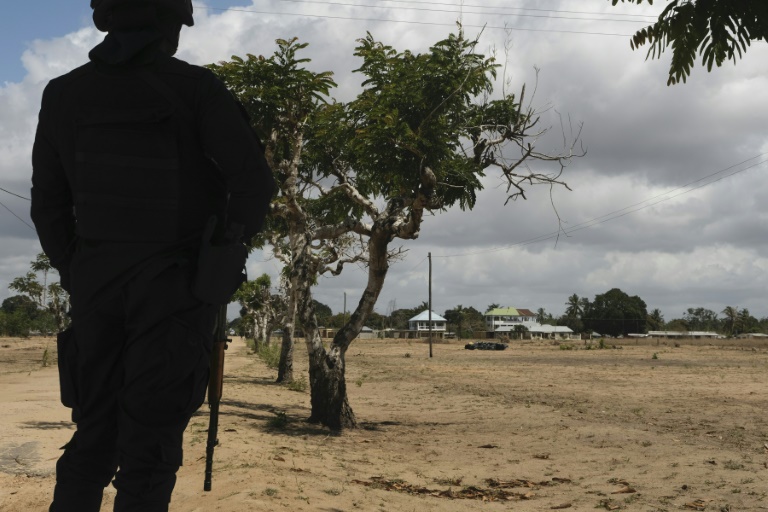
A year after jihadist militants were driven out of Mocimboa da Praia, the port city in northern Mozambique is slowly coming back to life.

Children play among piles of scrap metal, damaged buildings and charred vehicles that litter the streets.

Fishermen pull manta rays and colourful fish out of the turquoise waters of the Indian Ocean, as dhows come and go from the city’s sandy beach.

“We have security here in Mocimboa, but I’m still waiting to be able to return to my village, we need the soldiers to escort us,” Abdallah, a fisherman, who did not give his full name, tells AFP. 

In October 2017, about 30 armed men launched a dawn raid on police stations in Mocimboa da Praia — marking the start of an Islamist insurgency in the northern Cabo Delgado province, which monitoring groups say has since claimed more than 4,000 lives. 

Jihadists affiliated to the Islamic State have raided towns and villages uprooting hundreds of thousands of people.

In 2020, the group known locally as al-Shabab — though with no links to the Somali militants of a similar name — seized Mocimboa da Praia, and made it its main base. 

A year later, Rwandan troops deployed in support of Mozambican forces wrestled back control of the city, where an air of normality has since returned.   

Vehicles are a rare sight on the surrounding roads, but around 130,000 people have come back to their homes in Mocimboa and the neighbouring Palma district, according to the Rwandan army.  

They live among ruins left behind by the fighting, waiting for humanitarian aid, which is slow in coming.  

“Most people don’t have jobs and we haven’t received any help from the government,” says Abdallah, the fisherman.   

Forces from Rwanda and other African countries have helped Mozambique retake control of much of Cabo Delgado,and the jihadists have started to stage incursions further south.   

This week, police said 16 militants were killed during an operation in the Quissanga district.  

– ‘They cut off heads’ –

In Mocimboa, a stone’s throw from a market where few stalls are open, a football match between a local team and Rwandan soldiers draws a few hundred spectators.   

The crowd pours onto the pitch in celebration when a local player opens the score, while local women in traditional capulana dresses sing and dance.   

Among them is Lucia Da Silva. A charity worker for an international NGO, she was doing relatively well before her life was smashed by the insurgency.  

“I will talk to you if you give me a hundred metical ($1.5),” she quips bursting into laughter.   

The northern province of Cabo Delgado is the only part of Mozambique with a Muslim majority.  

The largest gas deposits ever found south of the Sahara were discovered here in 2010, in what is one of the world’s poorest regions.   

But fighting has hampered development.   

Sporting a head full of long braids wrapped under a scarf, a nose piercing and a leopard dress, Da Silva’s mood darkens when she recalls the events of the past two years.   

“Here, there were 40, 50 dead… police officers, old people,” she says pointing to a vacant lot, while walking through the debris-strewn streets of her Unitade neighbourhood. 

“They came while we were sleeping. Some were Tanzanians, they said: ‘Kill! Kill’. We were terrified. They ordered us to leave within two weeks, but we had no family elsewhere, so we stayed. 

“Then these bandits started killing. They cut off heads. They attacked churches, mosques,” she says.

Her four-bedroom house has been razed to the ground. All that remains are the foundations, a tarp thrown over wooden stakes and a burnt-out pickup truck.

“I was cooking for the kids when they came. Three times they asked us to open. They said: ‘We’re going to burn the house down’. I ended up opening,” she says.  

“One of them came into the room and took the children away. They said they would take good care of them. I managed to escape, they set fire to the mosquito nets with gasoline, and everything went up in flames”.

Thousands of children have been torn from their families by the jihadists.

“I have no news,” sighs Da Silva.

Rich nations to face climate pressure at pre-COP27 talks in DR Congo

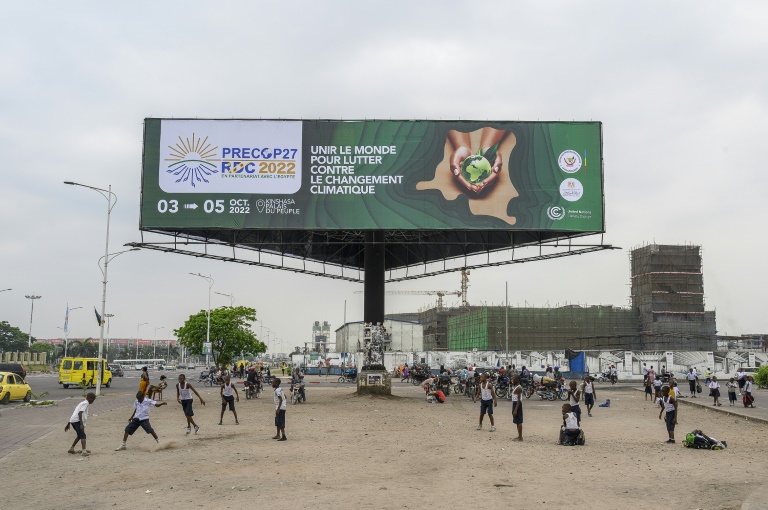
Environment ministers from some 50 countries gather in DR Congo on Monday for the pre-COP27 climate talks, with rich countries expected to come under pressure to contribute more to fight global warming.

The informal talks in the central African country’s capital Kinshasa come ahead of the COP27 climate summit in Egypt, from November 6-18.

Ministers and other delegates are expected to discuss points that could lead to impediments at the main summit.

But no formal announcements are expected at the pre-COP27 in the Democratic Republic of Congo, the country’s climate negotiator Tosi Mpanu Mpanu told AFP.

A Western diplomat, who requested anonymity, said that since the COP and pre-COP are both being held in Africa “the emphasis will certainly be on support from industrialised countries to countries in the south”.  

The theme was also present during the 2021 COP26 climate talks in Glasgow, which ended with a pledge to keep global warming at 1.5 degrees centigrade compared to pre-industrial levels.

Poorer countries had pushed for a mechanism that would account for damages caused by climate change. But wealthier nations — the largest polluters — rejected the call and the participants agreed instead to open a “dialogue” on financing damages. 

Egypt — which holds the presidency of the 27th meeting of the Conference of the Parties (COP) — has said it wants to make the latest summit about implementation.  

The pre-COP27 summit in Kinshasa ends on Wednesday. 

– Forest protection –

The DRC is expected to drive home the message that it is a country that can provide solutions for climate change during the talks.

Roughly the size of Western Europe, the DRC has 160 million hectares (395 million acres) of rainforest that acts as a carbon sink. 

It also has huge reserves of minerals such as cobalt and lithium, which are deemed critical for the transition to renewable energy because of their use in battery production.

Kinshasa is asking for more funding to protect its rainforests, which are currently threatened by slash-and-burn agriculture as well as logging for charcoal production. 

“The more resources we have at our disposal, the more climate action we can put in place,” said Congolese negotiator Mpanu Mpanu. 

Ahead of the pre-COP27 summit, the government organised a scientific conference at the Yangambi Biosphere Reserve in the forested northeast. It ended with scientists urging the international community to “support all initiatives” to protect the rainforest. 

However, the demand comes after the government put 30 oil and gas blocks up for auction in July — ignoring warnings from green activists that drilling could harm rainforests and peat lands and release vast amounts of heat-trapping gas.

Around 30 billion tonnes of carbon are stored across the Congo Basin, researchers estimated in a study for Nature in 2016. The figure is roughly equivalent to three years’ of global emissions.

The DRC, one of the poorest countries in the world, argues that drilling for oil and gas could help diversify its economy and benefit the Congolese people. 

Sierra Leone police summon Freetown mayor over 'disorderly behaviour'

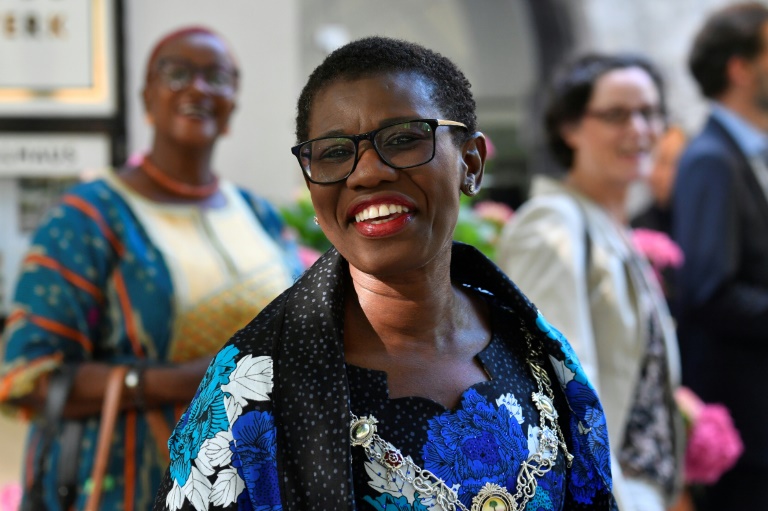
Sierra Leonean police Thursday summoned the mayor of the capital Freetown for questioning over allegedly obstructing police work and “disorderly behaviour”, according to a letter seen by AFP and confirmed by the mayor.

“I can confirm the police invitation letter and I plan to attend” the questioning on Friday, Mayor Yvonne Aki-Sawyerr told AFP by telephone.

The letter, from the criminal investigations department, accused Aki-Sawyerr of “obstruction to police duties” and “disorderly behaviour”, without providing further details.

The summons is likely tied to an incident at the airport earlier this month.

On September 17, the mayor streamed a live video on social media from Freetown International Airport, on her way to New York for an event coinciding with the annual UN General Assembly.

She claimed in the video that a city councillor travelling with her had been escorted away by airport immigration officers and handed over to the police, who said they had an arrest warrant for him accusing him of incitement over deadly protests that rocked the country in August.

Aki-Sawyerr said in the video that they had been about to board their flight when they were told that Sheku Turay, the city councillor who also goes by Ice T, was needed at the immigration office.

“Half an hour later, I received a call that he had been arrested,” the mayor said in the video.

According to eyewitness accounts in local media and on social media, the mayor went to the police station where Turay had been taken and an altercation took place there, before she returned to the airport and posted the video.

Local media reported that the minister of local government on September 22 issued a separate summons to ask the mayor why she had travelled to New York without informing her “superiors” in advance.

On Thursday, Aki-Sawyerr told AFP she was “on her way” to meet him.

The event she attended in New York was hosted by the Bill and Melinda Gates Foundation on September 20 and 21.

A former finance professional with a master’s degree from the London School of Economics, Aki-Sawyerr was awarded an Order of the British Empire in 2016 for her efforts battling Ebola in Sierra Leone.

Elected mayor in 2018, she has had a number of run-ins with authorities in recent months.

Earlier this year, she was fined by the anti-graft agency and ordered to refund travel expenses for an allegedly unauthorised staff member, but denied any wrongdoing.

Last month, she claimed the information minister and the presidential press secretary had falsely accused her of inciting the deadly August 10 protests. 

“This deliberate and continued action of making false accusations publicly has already led to constant attacks of me on social media and attempts of physical attacks on (Freetown City Council) property”, she wrote on social media.

Sierra Leone’s presidential election is scheduled for June 2023.

Top Zimbabwean author given suspended sentence over protest

A Zimbabwe court Thursday found award-winning novelist Tsitsi Dangarembga guilty of “inciting violence” after she held up a sign calling for reform at a small protest during the coronavirus pandemic, an AFP reporter said.

It handed her a fine of 70,000 Zimbabwean dollars (around $200) and a suspended six-month sentence on condition she does not commit a similar offence in the next five years.

“I’m not surprised,” the author told the media outside the court in the capital Harare.

“Our role as citizens is being changed into a role that is not an active citizen, but a subject, and we are not a monarchy,” she said.

“As citizens we have rights, and that is what is being contested right now in Zimbabwe.”

The 63-year-old feminist figure, known for her novel “Nervous Conditions”, was arrested at the end of July 2020, with a journalist friend, Julie Barnes, and a handful of other demonstrators.

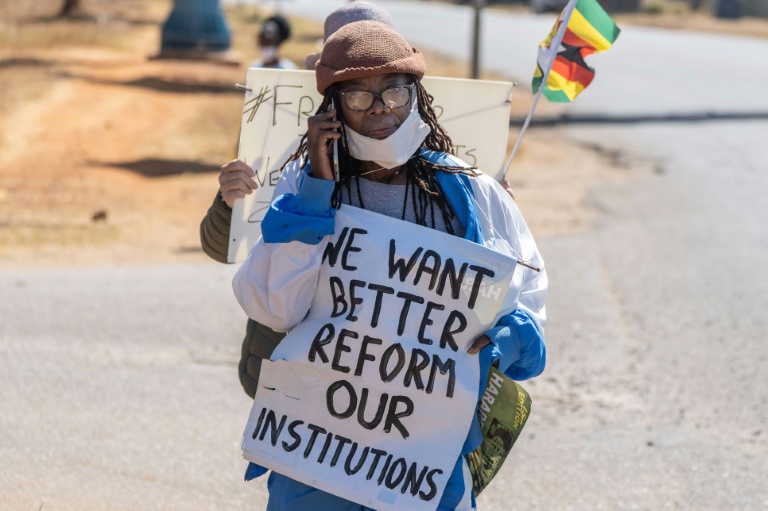
She had marched in the empty streets of Harare, holding a banner that read “We want better — reform our institutions”, before being hauled into a police van. She was freed on bail a day later.

She “demonstrated without having asked permission” and had “the intention of inciting violence”, an AFP journalist present in court heard. 

The author had also held up another sign that day calling for the release of a fellow journalist, , who was also imprisoned on similar charges of incitement to violence.

She denied resisting arrest but admitted asking the police what specific law she had violated.

Her 1988 novel “Nervous Conditions” was the first book to be published in English by a black woman from Zimbabwe, and earned her the prestigious Commonwealth Writers’ Prize.

Arbitrary arrests and repression against civil rights organisations have hardened under the presidency of Emmerson Mnangagwa, who succeeded Robert Mugabe in 2017.

Dangarembga said she would appeal her conviction.

Kenya president Ruto vows tax overhaul to lower inequality

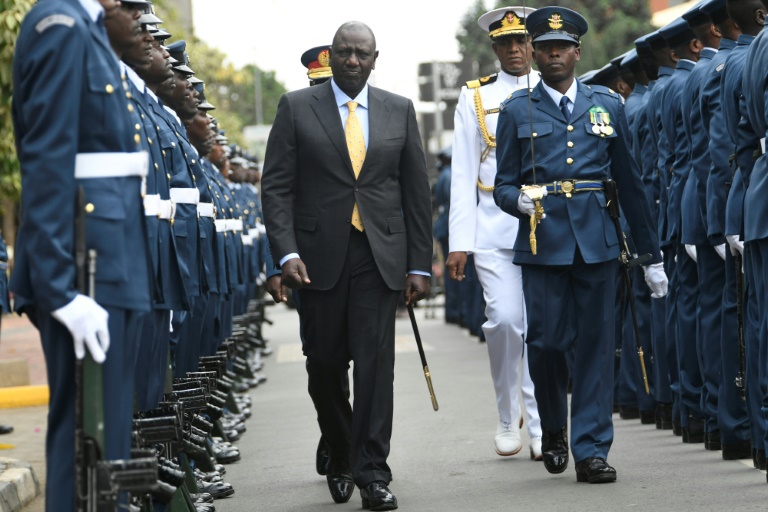
Kenya’s newly elected President William Ruto on Thursday vowed to overhaul the country’s income tax regime and introduce reforms asking high-earners to pay more in a bid to reduce inequality.

The 55-year-old leader, who cast himself as the champion of the poor in the August 9 poll, said he intended to establish a progressive income tax regime, in his first speech to parliament since winning the presidency.

“We are overtaxing trade and undertaxing wealth,” the rags-to-riches businessman told parliamentarians.

“I am committed and determined to ensure that our tax system is responsive to the needs of the economy,” he said.

“The economic principles of equitable taxation require that the tax burden reflects ability to pay.”

Ruto also promised to rein in borrowing to kickstart Kenya’s economy, which is creaking under the weight of a $70-billion debt mountain.

East Africa’s most dynamic economy is facing deep hardship with about a third of the country’s population of around 50 million living in poverty.

Prices for basic goods skyrocketed in the wake of Covid-19 pandemic and the war in Ukraine, and unemployment remains a major problem, particularly among the young.

Inflation soared to a 65-month high of 8.5 percent in August, while the Kenyan shilling has hit record lows at around 121 shillings to the US dollar.

Ruto, who was deputy to former president Uhuru Kenyatta, had a bitter falling-out with his boss while in office, lambasting his policies for increasing debt.

Ruto last month slashed the food and fuel subsidies introduced by Kenyatta.

British charity Oxfam said in a report earlier this year that the two richest Kenyans own more wealth than the bottom 30 percent of the population.

Rwandan tycoon had key genocide role, trial hears

Rwandan tycoon Felicien Kabuga played a crucial role in the 1994 genocide, prosecutors said Thursday as one of the most wanted remaining suspects from the slaughter boycotted the opening of his trial in The Hague.

Once among Rwanda’s richest men, the now 87-year-old set up a hate broadcaster that urged ethnic Hutus to kill rival Tutsi “cockroaches” and armed the murderous Interahamwe militia with machetes, a UN tribunal heard.

The wheelchair-bound Kabuga refused to appear in court and stayed in his jail cell as the trial got underway, more than a quarter of a century after the 100-day rampage that left over 800,000 people dead.

“Twenty-eight years after the events, this trial is about holding Felicien Kabuga to account for his substantial and intentional role in that genocide,” prosecutor Rashid S. Rashid told the court.

“Kabuga didn’t need to wield a rifle or a machete at a roadblock, rather he supplied weapons in bulk and facilitated the training that prepared the Interahamwe to use them,” he added.

“He didn’t need to pick up a microphone to call for the extermination of the Tutsi on the radio, rather he founded, funded and served as president of… the radio station that broadcast genocidal propaganda across Rwanda.”

After decades on the run, Kabuga was arrested in France in 2020 and sent to a UN court in The Hague.

Kabuga’s lawyers entered a not guilty plea in 2020 at the UN’s International Residual Mechanism for Criminal Tribunals, and have tried to halt the proceedings on health grounds.

– ‘Frenzied calls for extermination’ –

The trial is being closely watched in Rwanda, which still bears the scars of the genocide.

“It is a positive sign that justice is finally going to be served,” Naphtali Ahishakiye of the umbrella association for genocide survivors IBUKA told AFP.

“Kabuga’s refusal to attend his trial proves that he does not want to assist truth finding in any way.”

Head judge Iain Bonomy said on Thursday that Kabuga had decided not to attend the opening of the trial in person or watch by video link, but the “appropriate course is to proceed”.

Kabuga issued a statement saying he had lost confidence in his own court-appointed defence attorney, Emmanuel Altit.

Prosecutors said that as a wealthy ally of Rwanda’s then-ruling party, Kabuga helped create the pro-Hutu Radio-Television Libre des Mille Collines (RTLM).

As Rwanda descended into carnage after the shooting down of a plane carrying the country’s Hutu president in April 1994, RTLM’s spewed “constant frenzied overt calls for extermination” of Tutsis, said Rupert Elderkin, another prosecution lawyer.

The radio station described Tutsis as “cockroaches” and “subhuman vermin” and identified the hiding places of Tutsis where they were later killed, he said.

In a video played to the court, Kabuga defended the broadcaster at the time, saying it “can’t please everyone”.

Kabuga also directly supported the Interahamwe during the genocide, by bankrolling them, organising training, and importing machetes and other weapons.

He also allegedly handed out weapons at Interahamwe rallies. “Kabuga then told them to go and finish the job,” Elderkin said.

– ‘Significant step’ –

More than 50 witnesses are expected to appear for the prosecution, starting next week, in a trial that is set to take months.

After fleeing Rwanda, Kabuga spent more than 20 years evading an arrest warrant issued by the UN war crimes tribunal for Rwanda, helped by a network of former allies.

He was finally caught in a small apartment in Paris and sent to The Hague for trial.

Kabuga is one of the last Rwandan genocide suspects to face justice, with 62 convicted by the tribunal so far.

“This case is still of paramount importance,” the tribunal’s chief prosecutor Serge Brammertz told AFP at the court. 

Four key Rwanda suspects are still at large, with the “priority” being Fulgence Kayishema, who was last located in South Africa three years ago, added Brammertz.

Human Rights Watch welcomed the start of the trial as a “significant step in efforts to ensure accountability”.

But in Kabuga’s native village of Nyange, many residents still speak fondly of the man who rose from humble farming stock to run an empire of coffee, tea and real estate.

“He paid us well,” said Alphonsine Musengimana, 35, who worked on Kabuga’s tea plantations as a child.

'Extraordinary' elephant that survived poaching dies in drought-hit Kenya

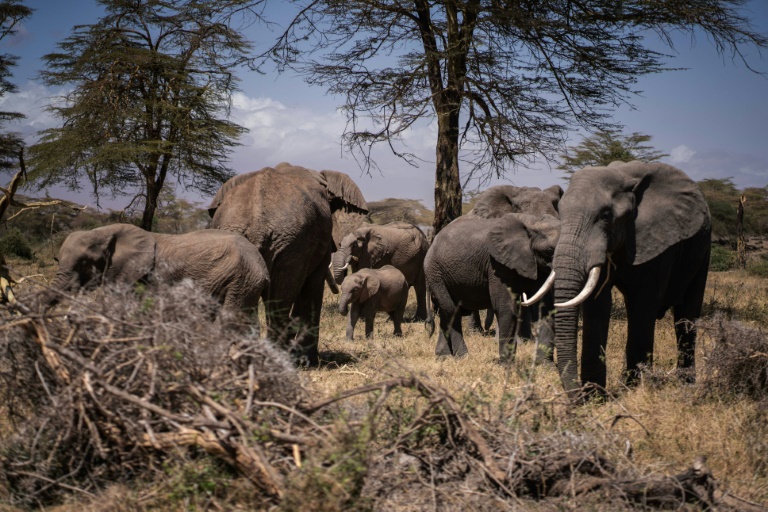
An “extraordinary and resilient” African elephant who defied all odds to give birth despite being shot five times by poachers has died in Kenya’s drought-ravaged north, conservationists said on Thursday.

“Monsoon” was euthanised by veterinarians after collapsing several times in poor health in Samburu, an arid expanse that like most of northern Kenya is suffering the driest conditions in 40 years.

The great matriarch was believed to be in her mid-60s, at the upper reaches of life expectancy for an elephant in the wild.

“It’s estimated her ill health was brought on by old age and exacerbated by the drought,” read a statement from Save the Elephants, a Kenya-based wildlife conservation group.

A mother of seven calves, Monsoon survived being shot five times during a rampant poaching crisis about a decade ago that sent Africa’s wild elephant populations into freefall.

During the wholesale massacre of elephants for ivory, Monsoon lost two of her own calves to poachers, and scientists believed she would never give birth again after the trauma of being shot.

But in 2018 she delivered a calf in Samburu, nine years after her ordeal.

It was not the first time she had defied the experts.

In 2006 she led her family to safety up one of the biggest hills in Samburu, shortly after Save the Elephants published a study asserting that elephants tended to avoid steep terrain.

Four consecutive rainy seasons have failed in Kenya, Somalia and Ethiopia, an unprecedented climatic event that has pushed millions across the Horn of Africa into extreme hunger.

Older elephants and young calves are the first to succumb to prolonged drought, experts say.

“Sadly the outlook for rain later this year is grim and there are fears the drought may stretch well into 2023, which is a major worry,” said Save the Elephants founder Iain Douglas-Hamilton.

“We are working with our partners, local communities and government in Kenya to address the long-term problems the drought will bring to wildlife and communities alike and doing our best to prevent more elephants like Monsoon from dying.”

Close Bitnami banner
Bitnami