Africa Business

Rwandan tycoon had key genocide role, trial hears

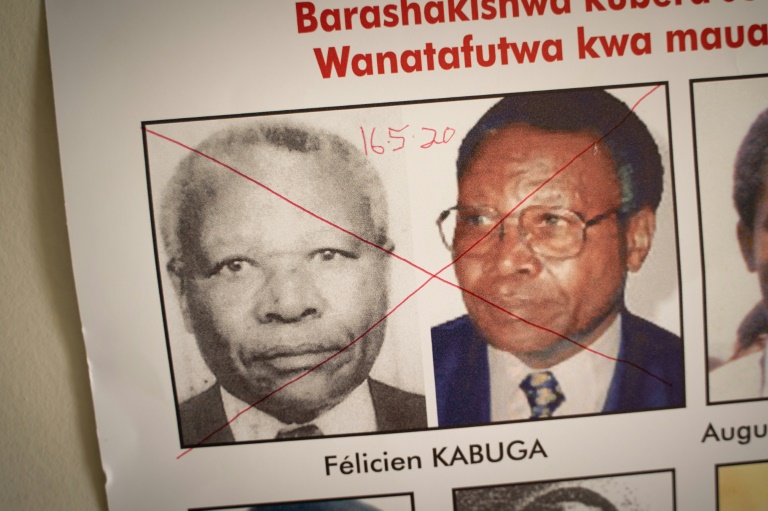
Rwandan tycoon Felicien Kabuga played a crucial role in the 1994 genocide that shocked the world, prosecutors said as he boycotted the opening of his own trial in The Hague on Thursday.

The last major suspect from the slaughter, the now-87-year-old set up a hate broadcaster that urged ethnic Hutus to kill rival Tutsi “cockroaches” and armed the murderous Interahamwe militia with machetes, a UN tribunal heard.

The wheelchair-bound Kabuga refused to appear in court and stayed in his jail cell as the trial got underway, more than a quarter of a century after the 100-day rampage that left over 800,000 people dead.

“Twenty-eight years after the events, this trial is about holding Felicien Kabuga to account for his substantial and intentional role in that genocide,” lead prosecutor Rashid S. Rashid told the court.

“Kabuga didn’t need to wield a rifle or a machete at a roadblock, rather he supplied weapons in bulk and facilitated the training that prepared the Interahamwe to use them,” he added.

“He didn’t need to pick up a microphone to call for the extermination of the Tutsi on the radio, rather he founded, funded and served as president of… the radio station that broadcast genocidal propaganda across Rwanda.”

After decades on the run, Kabuga was arrested in France in 2020 and sent to a UN court.

Kabuga’s lawyers entered a not guilty plea at a first appearance in 2020 at the UN’s International Residual Mechanism for Criminal Tribunals, and have repeatedly tried to halt the trial on health grounds.

– ‘Cockroaches’ –

Head judge Iain Bonomy said on Thursday that Kabuga had decided not to attend the opening of the trial in person or watch by video link but “appropriate course is to proceed”.

Kabuga issued a statement saying that he court had refused to let him appoint his own lawyer and that he had lost confidence in his own defence attorney, Emmanuel Altit.

Prosecutors said that as a wealthy ally of Rwanda’s then-ruling party, Kabuga helped create the pro-Hutu Radio-Television Libre des Mille Collines (RTLM), which broadcast anti-Tutsi propaganda.

As Rwanda descended into carnage after the shooting down of a plane carrying the country’s Hutu president in April 1994, RLTM’s spewed “constant frenzied overt calls for extermination,” said Rupert Elderkin, another prosecution lawyer.

The radio station described Tutsis as “cockroaches” and “subhuman vermin” and identified the hiding places of Tutsis where they were later killed, he said.

The prosecutor said RTLM broadcasts “were comparable to Nazi propaganda about the Jews.”

Yet in a video played to the court Kabuga defended the broadcaster at the time, saying it “can’t please everyone” and was trying to “enlighten the population”.

Kabuga also directly supported the Interahamwe militias during the genocide, prosecutors said.

He allegedly bankrolled the death squads, imported machetes and other weapons, and organised training for them.

Kabuga himself is also alleged to have personally handed out weapons at Interahamwe rallies. “Kabuga then told them to go and finish the job,” Elderkin said.

– ‘Significant step’ –

More than 50 witnesses are expected to appear for the prosecution, starting next week, in a trial that is set to take months.

After fleeing Rwanda, Kabuga spent more than 20 years evading an arrest warrant issued by the UN war crimes tribunal for Rwanda, helped by a network of former allies.

He was finally caught in a small apartment in Paris and sent to The Hague for trial.

Kabuga is one of the last top Rwandan genocide suspects to face justice, with 62 convicted by the tribunal so far.

Four key but lesser suspects are still at large while others have recently died, including the man seen as the architect of the genocide, Augustin Bizimana, and former presidential guard commander Protais Mpiranya.

The trial is being closely watched in the small central African nation, including in Kabuga’s native village of Nyange.

“We are looking forward to his trial. It has been a long time coming,” Anastase Kamizinkunze, the district head of IBUKA, the umbrella association for genocide survivors, told AFP.

Human Rights Watch welcomed the start of the trial.

“This is a significant step in efforts to ensure accountability for planning, ordering, and carrying out the genocide in Rwanda,” the rights group said.
Gunmen kill five soldiers, civilian in southeast Nigeria

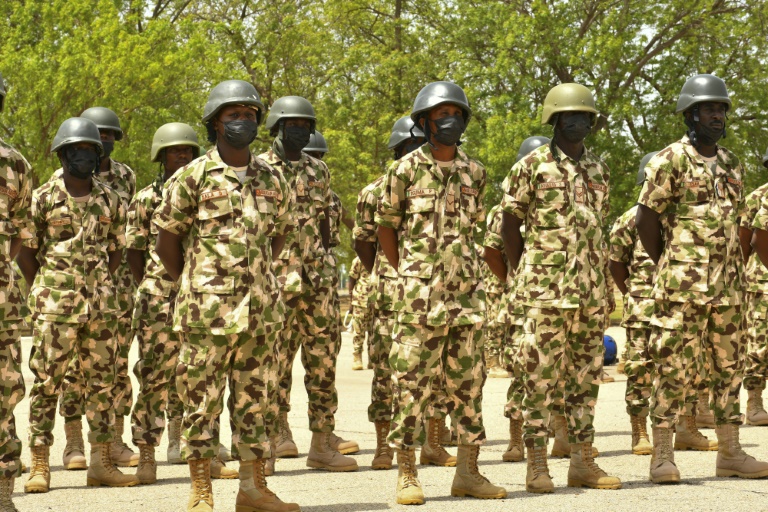
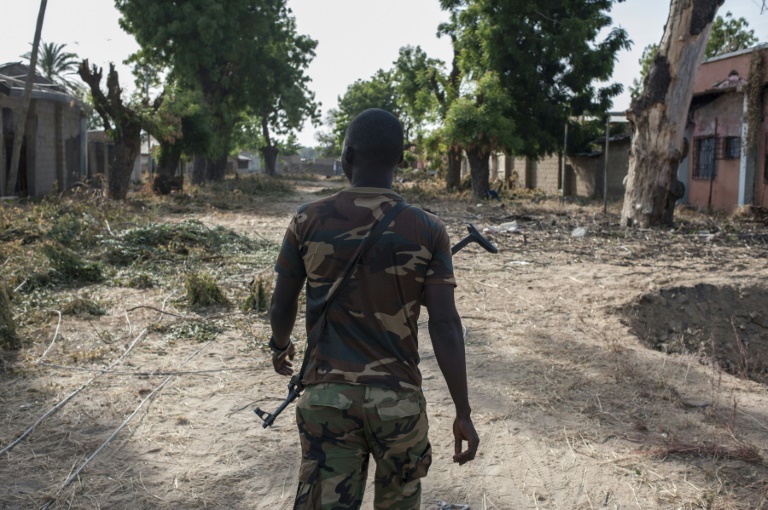
Gunmen killed five soldiers and a civilian in southeast Nigeria, police and local media said Thursday, after the latest bloodshed in a region where separatist tensions often flare.

Wednesday’s attack on troops in Umunze area of Anambra state was condemned by the  governor though he did provide casualty numbers.

Security will be a major issue in February’s election to replace President Muhammadu Buhari, with troops fighting jihadists, separatist gunmen and criminal gangs across parts of Nigeria.

“There was some shooting at Umunze yesterday leaving some people dead,” Anambra state police spokesman Tochukwu Ikenga told AFP, refusing to disclose casualty figures from Wednesday’s attack.

“We have deployed our men to hunt down the assailants,” he said.

Local media said five soldiers in a vehicle were ambushed and shot dead, while a civilian bystander was killed by stray bullet.

The armed forces did not immediately respond to a call seeking details.

The assault came barely three weeks after the convoy of an opposition lawmaker, Ifeanyi Ubah, was ambushed in the state, killing five people including two security escorts.

Although the senator was unhurt, the assault underscored growing insecurity in the region.

No group has claimed responsibility for the violence, less than five months before February 25 presidential, senate and congressional elections.

In a statement late Wednesday, Anambra state governor Charles Soludo condemned the killing of the soldiers and the attack on the lawmaker.

“We condemn this wicked and cruel attack in the strongest terms. The perpetrators of this act must pay,” Soludo said.

“We are not going to rest on our oars, including those people that attacked Senator Ifeanyi Ubah and the rest. There will be absolutely no hiding place for them.”

Southeast Nigeria has seen scores of attacks blamed on the outlawed Indigenous People of Biafra (IPOB) group or its armed wing ESN.

IPOB, which seeks a separate state for ethnic Igbo people, has repeatedly denied responsibility for violence in the region.

More than 100 police officers and other security personnel have been killed since the beginning of last year in targeted attacks, according to local media tallies.

Prisons have been raided with scores of inmates freed and weapons stolen. Local offices of the national electoral authorities have also been targeted.

IPOB’s leader Nnamdi Kanu is in government custody and faces trial for treason after he was captured overseas and brought back to Nigeria. 

Separatism is a sensitive issue in a nation where the declaration of an independent Republic of Biafra in 1967 by Igbo army officers sparked a three-year civil war that left more than one million people dead.

Rwandan tycoon had key genocide role, trial hears

Rwandan tycoon Felicien Kabuga played a “substantial” role in the 1994 genocide that shocked the world, prosecutors said at the opening of his trial in The Hague on Thursday.

Once one of Rwanda’s richest men, the 87-year-old Kabuga used his vast wealth to set up hate media that urged ethnic Hutus to kill rival Tutsi “snakes” and supplied the murderous Interahamwe militia with machetes, the prosecution said.

The wheelchair-bound Kabuga himself refused to appear for his trial at the UN’s International Residual Mechanism for Criminal Tribunals due to a dispute over his lawyer.

“Kabuga didn’t need to wield a rifle or a machete at a roadblock, rather he supplied weapons in bulk and facilitated the training that prepared the Interahamwe to use them,” prosecutor Rashid S. Rashid told the court.

“He didn’t need to pick up a microphone to call for the extermination of the Tutsi on the radio, rather he founded, funded and served as president of… the radio station that broadcast genocidal propaganda across Rwanda.”

After decades on the run, Kabuga was arrested in France in 2020 and sent to a UN court to face charges over the killing of 800,000 Tutsis and moderate Hutus.

Kabuga’s lawyers entered a not guilty plea at a first appearance in 2020 and have repeatedly tried but failed to halt the trial on health grounds.

But Rashid told the court, “Twenty-eight years after the events, this trial is about holding Felicien Kabuga to account for his substantial and intentional role in that genocide.”

The trial is being closely watched in the small central African nation, including in Kabuga’s native village of Nyange.

“We are looking forward to his trial. It has been a long time coming,” Anastase Kamizinkunze, the district head of IBUKA, the umbrella association for genocide survivors, told AFP.

Human Rights Watch welcomed the start of the trial.

“This is a significant step in efforts to ensure accountability for planning, ordering, and carrying out the genocide in Rwanda,” the rights group said.
– ‘Distributed machetes’ –

The UN says 800,000 people were murdered in Rwanda in 1994 in a 100-day rampage.

An ally of Rwanda’s then-ruling party, Kabuga allegedly helped create the Interahamwe Hutu militia group and the Radio-Television Libre des Mille Collines (RTLM), whose broadcasts incited people to murder.

The radio station identified the hiding places of Tutsis where they were later killed, prosecutors said in the indictment.

Kabuga also allegedly imported and distributed machetes to genocidal groups and ordered them to kill Tutsis.

More than 50 witnesses are expected to appear for the prosecution, which said they needed about 40 hours to wrap up their case.

After fleeing Rwanda, Kabuga spent more than 20 years evading an arrest warrant issued in 1997 by using a series of false passports.

Investigators say he was helped by a network of former Rwandan allies to evade justice in several countries before he was finally caught in a small apartment in Paris.

His lawyers argued he should face trial in France for health reasons but the nation’s top court ruled he should be moved to UN custody.

Kabuga is one of the last top suspects of the Rwandan genocide to face justice, with 62 convicted so far.

Others, including the man seen as the architect of the genocide, Augustin Bizimana, and former presidential guard commander Protais Mpiranya, have both died.

Victims have called for a swift trial for Kabuga noting “if he dies before facing justice, he would have died under the presumption of innocence”. 

But in Nyange, many residents still speak fondly of the man who rose from humble farming stock to run an empire of coffee, tea and real estate.

“He paid us well,” said Alphonsine Musengimana, 35, who worked on Kabuga’s tea plantations as a child.

burs-jhe-d/bp

Skin whitening products remain popular in Cameroon despite risks

Wearing a large hat protecting her face from the sun’s rays in Cameroon, 63-year-old Jeanne now bitterly regrets using skin whitening products after being diagnosed with skin cancer.

She is one of many women in Cameroon who use the controversial products that have been banned after social media outrage.

“I am embarrassed when people look at me,” the trader in the capital of Yaounde said, wishing to only use her first name.

After a lesion grew on her face over five months, she went to a doctor who diagnosed her with one of the most common skin cancers.

Doctors told her the cancer is linked to her use of skin lightening products for 40 years.

Jeanne, like millions worldwide, used the products for more “desirable” lighter skin, an ideal pushed by the beauty industry.

According to the Cameroon Dermatology Society (Socaderm), nearly 30 percent of residents in the economic capital Douala and a quarter of schoolgirls used the products in 2019.

For some like 20-year-old student Annette, the effects can be harsh. She said she suffers from red patches on her face, peeling skin and also burns. 

“Under a strong sun, my face became hot and I had to stop,” she said.

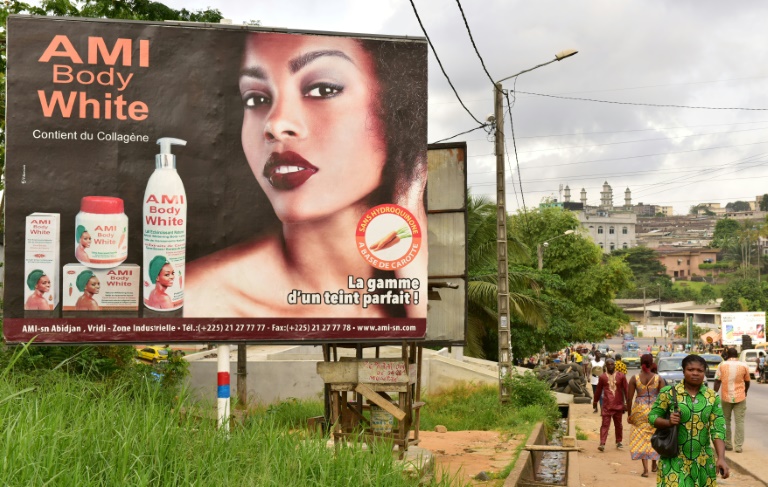
The products with names like “White now” and “Super white”, are instantly recognisable on shop shelves by the fair-skinned women on the packaging.

– Dangerous chemicals –

The furore began in the summer after social media users criticised opposition MP Nourane Fotsing over her company that sells the products, angry that an elected official would profit from them.

Many of the products have never been scientifically tested and contain dangerous levels of chemicals that inhibit the production of melanin, a substance produced in the body by exposure to the sun.

One of the chemicals is hydroquinone, banned in the European Union since 2001 because of the risk of cancer and genetic mutations.

Cameroon’s health ministry on August 19 banned the import, production and distribution of cosmetic and personal hygiene products containing dangerous substances such as hydroquinone and mercury.

Hydroquinone is in fact one of the most used in whitening products in Cameroon, according to a 2019 study by Yaounde I University.

– ‘Public health problem’ –

“We encounter patients complaining of symptoms linked to skin depigmentation every day,” Alain Patrice Meledie Ndjong, a dermatologist at a hospital in Douala, said.

It is a “public health problem”.

According to the World Health Organization, the products are commonly used in many African, Asian and Caribbean countries by both women and men, and also among dark-skinned populations in Europe and North America.

Other skin whitening products include potions, tablets and even injections.

Some of the substances, when ingested, can cause diabetes, obesity, hypertension or kidney or liver failure, warned Ndjong, adding there was also a psychological impact on individuals like “anxiety and depression”.

Despite the horror stories, men and women believe they will become more beautiful after using the products.

“Beauty standards promoted by media, advertising and marketing reinforce the bias that lighter skin tone is more desirable than darker skin tone.”

Sociologist Achille Pinghane Yonta of Yaounde University offers blunter analysis of why the creams remain popular.

“There is a desire” rooted “in our consciences to want to look like” Western populations, he said.

“It’s a very old practice. It’s even said, in some parts of the country, that a light-skinned woman’s dowry is higher than that of a darker woman.”

But for Pascaline Mbida, she felt the difference.

“I noticed that men were more attracted to women with lighter skin and I had confirmation of this when I whitened my skin, I had never got so much attention,” Mbida said.

– Black market –

But the cost put off Mbida, who is currently unemployed. She spent 30,000 Central African Francs (45 euros) per month on the products.

The mandatory monthly minimum wage in Cameroon is 36,270 (55 euros).

Since the ban, police have launched raids, much to the chagrin of the sector’s players who claim some seizures don’t distinguish between the products that are banned by the government and those that are not.

The WHO in 2019 said “the skin lightening industry is one of the fastest growing” worldwide and was estimated to be worth $31.2 billion by 2024.

The cosmetic and personal hygiene market grew in Cameroon by seven percent in 2020 and was worth 380 billion CFA (around 580 million euros).

Despite the ban, there is a already a black market for the products.

Nigerian town caught between jihadist war and peace

Once a symbol of the jihadist war in northeast Nigeria, the town of Bama today betrays the grinding nature of a 13-year conflict, caught between reconstruction and fighting that still rages beyond its borders.

In September 2014, Boko Haram fighters succeeded in seizing the commercial town of 300,000 inhabitants, before being driven out seven months later by the army following a heavy offensive.

Mostly destroyed, Bama became a ghost town deserted by its inhabitants.

But four years ago, life slowly resumed. Some 120,000 residents who had taken refuge in the Borno state capital of Maiduguri gradually resettled in Bama.

Today on one side, houses with new roofs welcome back former inhabitants, encouraged by official promises of peace.

On the other side, endless rows of tin shacks serve as a refuge for newcomers. Tens of thousands of displaced Nigerians have come out of the “bush”, the countryside where jihadists still battle soldiers beyond Bama’s trenches.

Inside the garrison enclave, dozens of destroyed houses, gutted roofs and charred walls are a painful reminder of Bama’s recent history.

– Camp closures –

Halima Tarmi Abba returned to Bama in 2018, four years after fleeing.

“The authorities gave us a new house because ours had been completely destroyed,” says the 36-year-old mother of three.

In all, the government has built and rehabilitated more than 10,000 houses, around 50 water pumps and 154 school classes, according to the UN.

But for a year, Bama has been unable to absorb the flood of returnees.

“The city is overcrowded, because the authorities have closed the camps in Maiduguri, and a large number are returning to Bama,” Abba says.

“There are too many children in the classrooms, and patients in the hospitals.”

Since May 2021, Borno state authorities have closed more than nine camps, which housed 140,000 people, to push the displaced to resettle outside Maiduguri, in areas they claim to have secured, such as Bama.

The trenches that encircle Bama illustrate that if the military holds the northeastern cities, they do not control the countryside, where they are vulnerable to militants who have turned to ambushes and roadside explosives.

The 2021 death of Boko Haram chief Abubakar Shekau during infighting with rival fighters from the Islamic State West Africa Province (ISWAP) did not signal the end of a conflict that has killed more than 40,000 and displaced two million since 2009. 

But it has allowed ISWAP to consolidate as the dominant jihadist force in the region, in particular in the Sambisa forest, not far from Bama.

– Gunshots and explosions –

“I’m happy to be living in Bama again, but we can’t say that the conflict is behind us,” Abba says.

“Sometimes we hear gunshots in the night, or even explosions, the jihadists are not far away.”

Every day, “hundreds of people continue to arrive from villages still controlled by armed groups, exhausted with fatigue and hunger”, explains Ousmane Umar, a Nigerian aid employee who has worked in Bama since 2018.

Since last summer, around 60,000 people have arrived in Bama: villagers who lived under Boko Haram, or families of its former combatants who have recently surrendered to the authorities.

Many find refuge in the camp for displaced people inside Bama, initially built for 25,000 people, but which the UN says hosts 88,000 now. There are plans to expand the camp as quickly as possible.

At its entrance, exhausted women and men drag themselves toward thousands of tin shacks; others sit impassive among hundreds of children playing noisily.

Ibrahim shares one of the huts — less than 10 square metres (108 square feet) — with 10 family members. 

“It’s not liveable, but where do you want us to go?” asks the father who arrived nine months ago. 

More than 50,000 children in the camp share a single primary school. Sanitary facilities are largely insufficient.

“People are literally living on top of each other, it’s a really desperate situation,” said Trond Jensen, head of the UN’s Office for the Coordination of Humanitarian Affairs in Nigeria.

There was also the risk of a “disease outbreak”, he added.

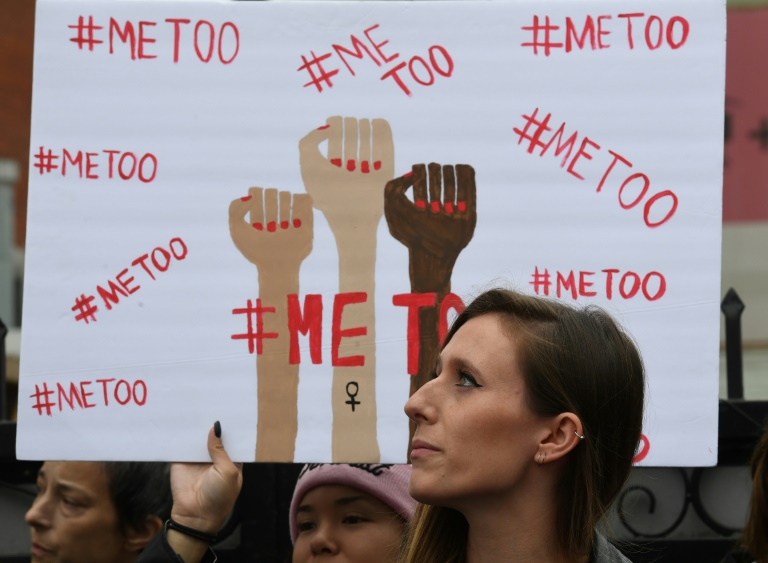
Five years on, how #MeToo shook the world

By forcing the world to wake up to the daily sexual abuse suffered by women, the #MeToo movement became a social revolution of historic importance. Its legacy is still being determined. 

It began with a tweet: on October 15, 2017, US actor Alyssa Milano invited women to share their experiences of sexual harassment under the words “Me too”. 

Within a year, the hashtag had been used more than 19 million times, according to Pew Research Center — pushing the issue of sexual assault to the top of the global agenda.

Of course, the movement sat on the shoulders of decades of feminist struggle — even the phrase “Me Too” was a decade old, created by activist Tarana Burke for a charity aimed at survivors of abuse.

It caught fire in the wake of an explosive New York Times investigation about film producer Harvey Weinstein who, it transpired, had for years been raping and assaulting women, many in the industry, and getting away with it. 

A reckoning came for many powerful figures in the entertainment industry.

Kevin Spacey was dropped from “House of Cards” and Ridley Scott’s “All the Money in the World” was reshot to replace him with another actor. 

The heads of Amazon Studios, Fox News, CBS and Vox Media were forced out. 

Actor James Franco, opera singer Placido Domingo, comedian Louis C.K., fashion photographer Terry Richardson, celebrity chef Mario Batali — barely a week went by without another illustrious name being shamed. 

The most serious allegations led to jail time for previously untouchable figures: Bill Cosby, once considered “America’s dad”, singer R. Kelly, and the ultra-connected financier Jeffrey Epstein.

The pressure spread beyond the entertainment business to embroil politicians, sports stars and major tech firms such as Google and Uber. 

– ‘A revolution’ –

Its strength lay in making visible what had always been lying in plain sight. 

“#MeToo showed that sexual and sexist violence was a daily reality, that it was banal,” said Sandrine Ricci, a sociologist at the University of Quebec in Montreal.

“The movement allowed people, especially victims, to better understand what was being done to them.”

The epicentre was the United States, but the aftershocks were global. 

When abuse cases emerged, they were harder to ignore, whether it was a Serbian drama teacher accused of rape, abuse by ultra-Orthodox leaders in Israel, or a “sex for grades” scandal at a Moroccan university. 

The Pew study found that a third of #MeToo tweets in the first year were written in a non-English language — seven percent were in Afrikaans, four percent in Somali — and that didn’t count the regional variants, such as #YoTambien in Spanish or #BalanceTonPorc (“rat out your pig”) in French. 

“People were surprised — they didn’t know how common sexual harassment is,” said Hillevi Ganetz at Stockholm University.

“Day after day there were testimonies, it was overwhelming,” she added. “It was a revolution and it was wonderful.”

– Resistance –

The backlash was almost immediate. 

By its nature, #MeToo targeted behaviour that was often hard to prove in court, and led to accusations that people were being “cancelled” without a proper enquiry.

Some fretted that it spelled the end of flirting — that it could strip the tension out of sexual tension. 

French film icon Catherine Deneuve was one who spoke out against the movement’s “puritanical” streak that threatened to turn women into “eternal victims”. 

The debate inevitably fell down the toilet bowl of the online culture wars — exemplified by the militant taking-of-sides in the Johnny Depp-Amber Heard trial earlier this year. 

The three-week disappearance of Chinese tennis star Peng Shuai after accusing former vice-premier Zhang Gaoli of forcing her into sex showed the serious extent that resistance could take. 

But even France — the scene of mass protests on the topic — has a president in Emmanuel Macron who has appointed at least three ministers carrying allegations of sexual assault. 

– ‘A long way off’ –

As the initial waves of the movement ebb, the hard task of encouraging societal change has taken over. 

“We are still a long way off putting solutions in place,” said Florence Rochefort of France’s National Centre for Scientific Research. 

With the world embroiled in economic and climate crises, “the timing is not great to resolve social problems”, she added.

Laws against rape have been toughened in many places, such as Sweden in 2018 and Spain last year.

Businesses around the world have introduced training, and no longer brush complaints under the carpet. 

Times Up, which campaigns on abuse in the film industry, is setting up a panel of experts to hear complaints, similar to standards authorities for doctors, teachers and other professionals. 

Such ideas cut both ways — providing a clear mechanism that encourages people to come forward, while countering those who claim the accused are found guilty without due process.

“We want to avoid trial by media,” said the group’s British chair Heather Rabbatts. 

“It doesn’t help anybody.” 

Top Rwanda genocide suspect Kabuga goes on trial

Alleged Rwandan genocide financier Felicien Kabuga goes on trial in The Hague on Thursday, one of the last main suspects in the 1994 ethnic slaughter that shocked the world.

Once one of Rwanda’s richest men, the 87-year-old Kabuga is accused of setting up hate media that urged ethnic Hutus to “kill Tutsi cockroaches” and of supplying death squads with machetes.

After decades on the run, Kabuga was arrested in France in 2020 and sent to a UN court to face charges over the killing of 800,000 Tutsis and moderate Hutus.

The trial opens at 0800 GMT at the UN’s International Residual Mechanism for Criminal Tribunals, which is pursuing cases left over from a war crimes tribunal for Rwanda.

Prosecutors and the defence will make their opening statements on Thursday and Friday, with evidence to start on October 5.

Kabuga’s lawyers entered a not guilty plea at a first appearance in 2020 and have repeatedly tried but failed to halt the trial on health grounds.

A frail Kabuga appeared in August before the judges in a wheelchair but it was not known whether he will be in court on Thursday as judges have said he can attend the hearings via a video link.

More than a quarter of a century after the genocide that devastated Rwanda, the trial is being closely watched in the small central African nation, including in Kabuga’s native village of Nyange.

“We are looking forward to his trial. It has been a long time coming,” Anastase Kamizinkunze, the district head of IBUKA, the umbrella association for genocide survivors, told AFP.

The UN says 800,000 people were murdered in Rwanda in 1994 in a 100-day rampage.

– ‘Distributed machetes’ –

An ally of Rwanda’s then-ruling party, Kabuga allegedly helped create the Interahamwe Hutu militia group and the Radio-Television Libre des Mille Collines (RTLM), whose broadcasts incited people to murder.

The radio station also identified the hiding places of Tutsis where they were later killed, prosecutors said in the indictment.

Kabuga also allegedly “distributed machetes” to genocidal groups and ordered them to kill Tutsis.

More than 50 witnesses are expected to appear for the prosecution, which said they needed about 40 hours to wrap up their case.

After fleeing Rwanda, Kabuga spent more than 20 years evading an arrest warrant issued in 1997 by using a series of false passports.

Investigators say he was helped by a network of former Rwandan allies to evade justice in several countries before he was finally arrested in a small apartment in Paris.

His lawyers argued that he should face trial in France for health reasons but France’s top court ruled he should be moved to UN custody.

Kabuga is one of the last top suspects for the Rwandan genocide to face justice, with 62 convicted so far.

Others, including the man seen as the architect of the genocide, Augustin Bizimana, and former presidential guard commander Protais Mpiranya have both died.

Victims have called for a swift trial for Kabuga saying “if he dies before facing justice, he would have died under the presumption of innocence.” 

But in Nyange, many residents still speak fondly of the man who rose from humble farming stock to run an empire of coffee, tea and real estate.

“He paid us well,” said Alphonsine Musengimana, 35, who worked on Kabuga’s tea plantations as a child.

burs-jhe-dk/jv/mca

Moroccan activists demand abortion rights after teen's death

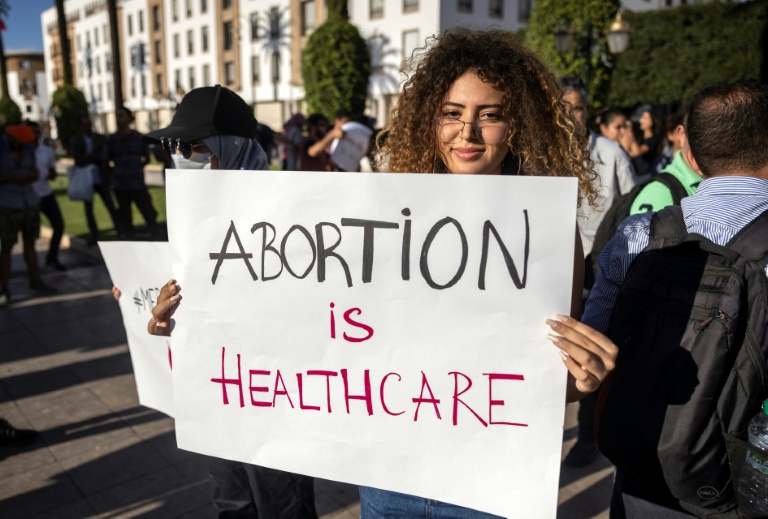
Dozens of feminist activists demonstrated Wednesday in Morocco’s capital, calling for legalised abortions after a teenage girl died following a clandestine procedure, AFP reporters said.

Protesters gathered outside the parliament, some holding placards denouncing the law which punishes abortion.

“Having a child must be a choice,” activist Sarah Benmoussa told AFP.

“We’re here today because our voices matter,” said Khaoula, 23, a journalism student who joined the crowd. “Every human being should be able to control their own body.”

The death of the teenager earlier this month in a village in central Morocco has reignited calls by feminist groups and activists to legalise abortions in the country.

Abortions in Morocco are punishable by up to five years in prison, except for cases when the woman’s health is in danger.

“We demand the decriminalisation of abortion from the age of 12,” said Fouzia Yassine from Spring of Dignity, a coalition of Moroccan feminist associations.

“We renew this call today. Lawmakers bear responsibility for this situation and for the violence and hardships the women endure.”

In 2015, Morocco debated the “urgent need” to reform legislation in the face of hundreds of clandestine abortions performed daily, often under appalling conditions.

An official commission recommended that abortion be legalised in special circumstances, including for cases of rape or serious foetal abnormalities. 

No law reform followed these recommendations, despite the lobbying of women’s rights supporters.

Low-key start for Nigeria's 2023 election campaign

Campaigning for Nigeria’s 2023 presidential election got off to a low-key start on Wednesday, with candidates holding a book launch and rallies or postponing official inaugurations.

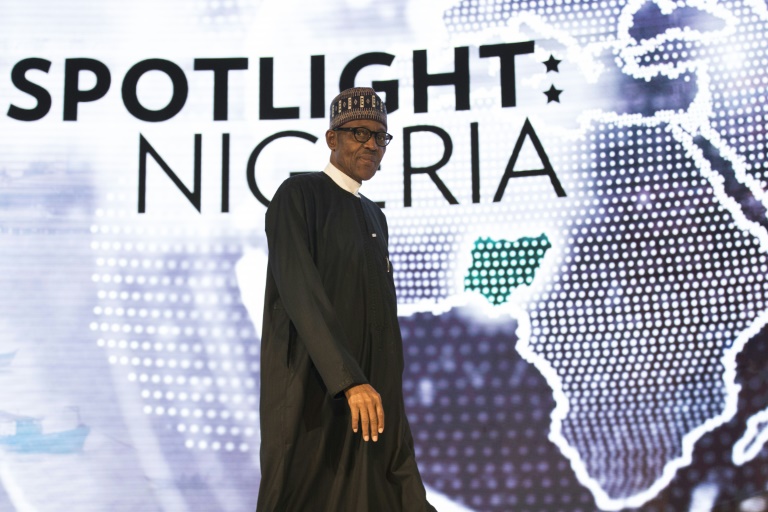
Five months before the ballot, four top candidates are emerging in a tight battle to replace President Muhammadu Buhari in governing Africa’s most populous country.

The fragile state of the continent’s largest economy, corruption and insecurity from jihadists and criminal gangs will be urgent problems for the winner of the February 25 election.

“This time around, I don’t want just to sit back and say whatever they bring for me is okay by me,” said student Apollo Sasha, 26, when asked about the campaigning. 

“Let me see if my vote will count or not.”

Buhari’s ruling All Progressives Congress (APC) is fielding former Lagos governor Bola Ahmed Tinubu, whose unofficial campaign slogan has become “It’s my turn”.

Tinubu, 70, known as the “Godfather of Lagos”, says his time as the city’s governor shows his experience, but analysts say he must shake off anti-establishment sentiment fuelled by perceptions about APC’s economic management.

APC this week said it was postponing the official launch of its campaign indefinitely to “accommodate more stakeholders and interests within the APC family”.

Some APC supporters held a small rally in the capital Abuja, waving the party’s flag, local media reported.

Opposition Peoples Democratic Party or PDP candidate Atiku Abubakar, 75, a former vice president and entrepreneur, began his campaign on Wednesday with a launch of his own book in Abuja.

Touting his business acumen and experience, Abubakar says he can “rescue” Nigeria, which has been hit hard by low oil production, a weak naira currency and high inflation.

The PDP governed Nigeria after the 1999 end of military rule until 2015 when APC’s upset victory bought Buhari to power for his first term. He beat PDP’s Abubakar in 2019 to get re-elected. 

“Even a blind man knows that Atiku who was a vice president is the tested, tried and trusted,” said PDP supporter and former official Mohammed Abba-Gana at the book launch.

– Alternative challengers –

But the APC and PDP have both presented candidates seen by many younger Nigerians as part of the country’s ageing political old guard.

That has left space for the Labour Party’s Peter Obi, a former state governor, to challenge the two main parties.

The fourth candidate is New Nigeria Peoples Party or NNPP’s Rabiu Kwankwaso, another former governor and minister.

Several local opinion polls have given an early lead to Obi, though methods have varied and one showed more of those polled were still undecided.

A former governor of the southeastern Anambra State who ran with the PDP’s Abubakar against Buhari in 2019, Obi left the PDP to run as the Labour Party’s candidate.

Obi, who plans to streamline government and has gained a strong following online among younger Nigerians, attended a solidarity campaign in the central city of Jos on Wednesday. His campaign has yet to start, his campaign manager said in a Tweet.

But political experts say he must build up momentum for the Labour Party’s lack of nationwide structure compared with the two mainstream parties.

US grants $350 mln for Malawi projects, hailing good governance

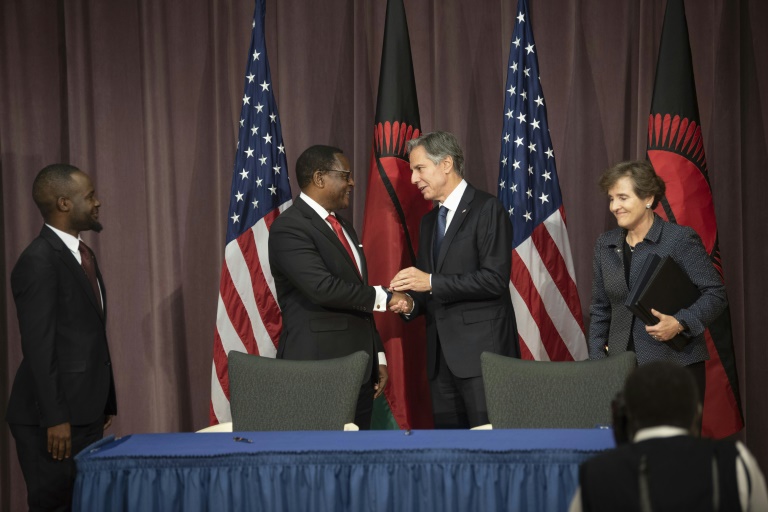
The United States on Wednesday signed a $350 million grant for infrastructure projects with Malawi’s President Lazarus Chakwera, hailing his record on good governance.

The aid through the Millennium Challenge Corporation, which assists developing nations that meet democratic benchmarks, will fund a major road network in the African country to connect rural and urban areas.

Secretary of State Antony Blinken hailed Chakwera for his “deep commitment to democratic and economic reform” and called the project a “remarkably positive opportunity” to boost agricultural production in Malawi.

“These projects will be transparent. They’ll be collaborative and built to meet the highest standards of quality,” Blinken said.

“They’ll provide grants to Malawi — not debt,” Blinken said, drawing an implicit contrast to rising power China, which frequently faces US-led charges of burdening developing nations with flashy projects that come in the form of unfavorable loans.

Chakwera was elected in 2020 on a campaign to fight corruption in the developing country. Earlier this year he sacked seven ministers over graft concerns.

“My administration has taken a zero-tolerance stance against corruption, shielding no one from investigation and prosecution,” Chakwera said before the signing with Blinken.

Voicing gratitude to the United States, he said, “Together we’re making strides for everyone’s good.”

Chakwera called on the United States to consider a further project that would jointly include Zambia and Mozambique and give landlocked Malawi reliable access to the Indian Ocean.

“Safe and reliable rail and road transport investments will certainly help reduce barriers to growth and create opportunities for all of our people,” Chakwera said.

President Joe Biden’s administration has put a renewed focus on Africa as it seeks to counter not only China but Russia, which has sought to limit support in the developing world for punishing Moscow over its invasion of Ukraine.

Blinken said the Malawi project would also address a key US priority by trying to reduce gender-based violence by making it safer for women to bring goods to markets.

Close Bitnami banner
Bitnami