Africa Business

Trial opens for Guinean ex-dictator over 2009 massacre

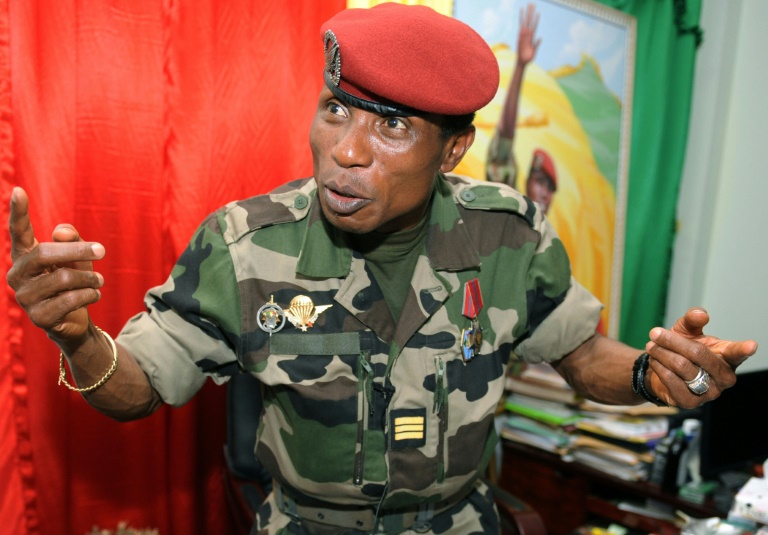
The trial of former Guinean dictator Moussa Dadis Camara and other former officials over the September 28, 2009 stadium massacre opened on Wednesday in the capital Conakry, an AFP correspondent reported.

Dozens of victims who had waited 13 years for the proceedings packed the upper galleries of the purpose-built courtroom. 

With crowds of journalists and officials below, they watched as Camara and 10 other former military and government officials standing trial entered the courtroom.

The proceedings were broadcast live on national television.

“It’s like a dream, even if we’ve always believed it would happen,” Asmaou Diallo, the head of a victims’ association, told AFP.

Camara, 58, and the other defendants face a litany of accusations from murder to sexual violence, kidnappings, arson and looting, and Camara himself is charged with “personal criminal responsibility and command responsibility” over the crimes.

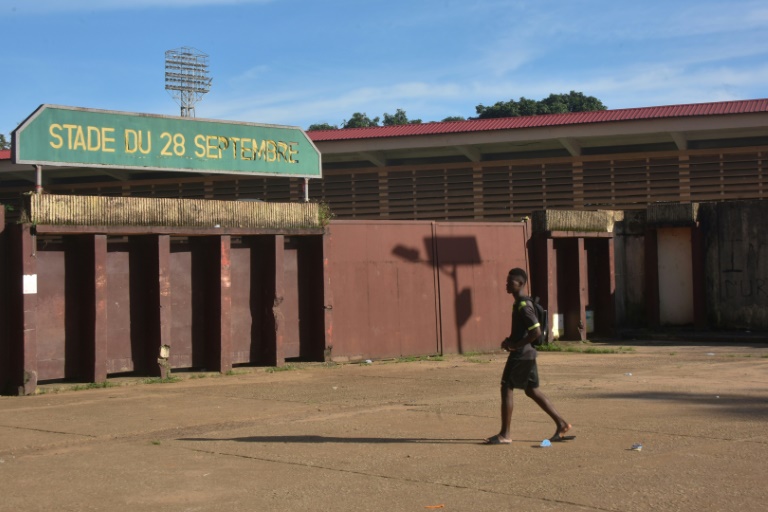
On September 28, 2009, and in the days that followed, security forces loyal to the then-junta leader slaughtered 156 people and raped at least 109 women who had gathered for a political rally in a Conakry stadium, according to a UN-mandated report.

The real figures are likely higher.

Tens of thousands of opposition supporters had been peacefully demonstrating against a possible election bid by Camara, who had come to power in a December 2008 coup before being sworn in as president.

Numerous testimonies report how security forces entered the stadium, cordoned off the exits and opened fire indiscriminately on a crowd that had previously been festive.

The killers attacked unarmed civilians with knives, machetes and bayonets, leaving the stands, corridors and grass strewn with the dead and dying. 

They sexually assaulted and then killed many women. Others were trampled to death in the panic.

International investigators found the abuses could qualify as crimes against humanity, noting the brutality went on for several days against sequestered women and male detainees who were tortured.

The chief prosecutor of the International Criminal Court (ICC), Karim Khan, on Wednesday called on Guinean authorities to respect international law, namely on witness protection and the presumption of innocence.

“Justice… is not a cosmetic exercise”, he said in Conakry. “I will be watching this trial very closely.”

– ‘Political will’ –

Pramila Patten, a UN special representative, congratulated the ruling junta for its “display of political will” for moving ahead with the trial. 

Despite recurring commitments under former president Alpha Conde’s regime, victims and relatives have been waiting more than a decade for the trial.

Delays by those in power and the impunity for security forces that had become an “institution”, according to the commission, long cast doubt on the chances of a trial.

Then the head of the current military junta, Colonel Mamady Doumbouya, who came to power in a putsch in 2021 after 11 years of civilian rule, in July demanded the trial be held before the next anniversary date.

Camara had been living in exile in Burkina Faso but returned to Conakry on Saturday to stand trial. Relatives say he intends to “clear his name”. 

The defendants were jailed on Tuesday and told they would be detained for the duration of the trial. 

“I don’t even dare believe that my rapists are still alive,” one survivor, who asked to remain anonymous, told AFP.

“But the fact that this trial is taking place is a relief.”
Guinean ex-dictator to stand trial over 2009 massacre

Hundreds of people flocked to a Guinean court Wednesday as former dictator Moussa Dadis Camara was set to stand trial over a 2009 stadium massacre in an historic moment 13 years in the making.

“It’s like a dream, even if we’ve always believed it would happen”, said Asmaou Diallo, the head of a victims’ association.

The trial is expected to begin Wednesday afternoon in a purpose-built court in the capital Conakry, and comes over a decade after more than 150 people were killed in days of violence that the ex-dictator and several co-defendants are charged over. 

The chief prosecutor of the International Criminal Court (ICC), Karim Khan, called on Guinean authorities to respect international law, namely on witness protection and the presumption of innocence.

“Justice… is not a cosmetic exercise”, he said. “I will be watching this trial very closely”. 

Pramila Patten, a UN special representative, congratulated the ruling junta for its “display of political will” for moving ahead with the trial. 

Camara, 58, and his co-defendants face a litany of accusations from murder to sexual violence, kidnappings, arson and looting, and Camara himself is charged with “personal criminal responsibility and command responsibility” over the crimes. 

On September 28, 2009, and in the days that followed, security forces loyal to the then-junta leader slaughtered more than 150 people and raped at least 109 women who had gathered a political rally in a Conakry stadium, according to a UN-mandated report.

The real figures are likely higher.

Tens of thousands of opposition supporters had been peacefully demonstrating against a possible election bid by Camara.

Numerous testimonies report how security forces entered the stadium, cordoned off the exits and opened fire indiscriminately.

They attacked unarmed civilians with knives, machetes and bayonets, leaving the stands, corridors and grass strewn with the dead and dying. 

They sexually assaulted and then killed many women. Others were trampled to death in the panic.

International investigators said the abuses could qualify as crimes against humanity.

Camara had been living in exile in Burkina Faso but returned to Conakry on Saturday. Relatives say he intends to “clear his name”. 

The defendants were jailed Tuesday and told they would be detained for the duration of the trial. 

“I don’t even dare believe that my rapists are still alive”, one survivor, who asked to remain anonymous, told AFP.

“But the fact that this trial is taking place is a relief”.

Oldest chimp from renown Guinean group dies

Guinea’s oldest chimpanzee and one of the last members of a globally famous endangered community has died in solitude around the age of 71, the environment ministry said.

Fana, a female chimp born around 1951, was part of a troop that gained global fame for uncanny abilities to use tools.

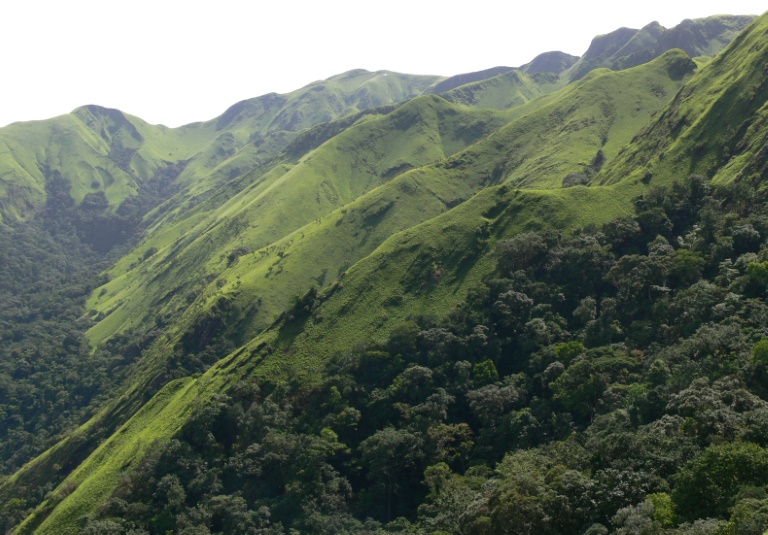
The tiny community of apes lives in a forest around the village of Bossou, in the far southeastern corner of the country.

Scientists have trekked to the remote location for decades to study the chimps’ remarkable use of stone hammers and anvils to crack open nuts — the most sophisticated act ever observed of humanity’s genetically closest relative.

But Fana’s death brings the number of Bossou chimpanzees down to just six or seven.

Half are females, though two are no longer able to reproduce.

Fana had been showing signs of exhaustion over the past few months, the environment ministry said on Facebook Tuesday. 

Her left upper limb has been paralysed since she took a bad fall nearly 25 years ago and she had long since stopped climbing trees. 

She lived alone as she became less mobile.

Her body was found on September 19 and she was buried the next day in the presence of local villagers.

The Bossou apes have a unique relationship with the village population.

The great apes live in the wild but share the territory and its resources with the locals, who protect them, believing them to be reincarnated ancestors.

Up until 2003, the Bossou chimp group had been relatively stable at around 21 animals. But it lost seven members to the flu that year.

It has also been affected by human activities in the area. 

Locals traditionally use slash-and-burn agriculture, and though they had preserved a 320-hectare block of forest around Bossou, surrounding deforestation has cut it off from the rest of the Mount Nimba Strict Nature Reserve, where there are more numerous chimp communities.

Slash-and-burn agriculture sees people cultivate lands until they become depleted, then clear forests to create new lands, and repeat the cycle.

The UNESCO World Heritage-listed reserve straddles Guinea’s borders with Liberia and Ivory Coast.

Fana leaves behind two sons, Foaf and Fanwa. She is predeceased by her daughter, Fotayou.

Sudan traditional wind instrument trumpets harvest time

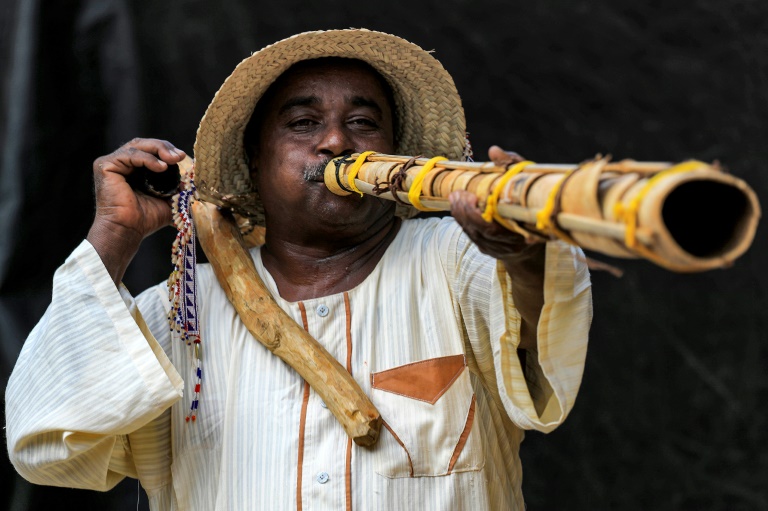
Near the lush fields of his village in Sudan’s southern Blue Nile state, Youssef Ismail has crafted a traditional horn-like instrument used for generations to usher in the harvest season.

“We make new wazza instruments every year,” Ismail, in his 70s, told AFP about the wooden wind instrument that is often longer than a grown man.

“We learned this craft from our parents.”

He assembled pieces of the conical gourd plant, meticulously cut and washed, to create a long trumpet with a bell-shaped end which produces a bright, loud and festive sound.

In the village of East Ganis, like in some other Blue Nile communities, “we use it to celebrate the harvest season”, which typically begins in November after the wet season, Ismail explained.

Agriculture is a major economic sector in Sudan, a country of 45 million people and one of the world’s poorest.

About 43 percent of its labour force works in agriculture which makes up 30 percent of the economy according to UN and World Bank estimates.

After more than 120 people were killed in clashes over access to land in Blue Nile state in July, the wazza was also played to celebrate a halt in violence, resident Ahmed Idriss said.

Little is known about its history, but the wazza “has strong links to rituals performed by the communities of the Blue Nile”, explained Mohammed Soliman, a music professor at Sudan University of Science and Technology.

Dafallah Ali Mustafa, 51, founder of the Sudanese Traditional Music Centre in the capital’s twin city of Omdurman, has reserved pride of place for the wazza.

Wazzas, which are particularly common among the ethnic Funj people in Sudan’s south, vary in size, with some as long as two metres (6.5 feet).

The size of each instrument determines its tone range, and wazza players perform in a band of up to 13 members.

The band leader “usually plays the smallest instrument”, Soliman said.

Some of the players would also use animal horns to tap their wazza for percussive effect.

Ismail, himself a member of a wazza band, said he expects future generations will carry on the tradition.

“We taught our children how to make and play the instrument,” he said. “They will keep it alive after we are gone.”

Climate change at 'point of no return': primatologist Goodall

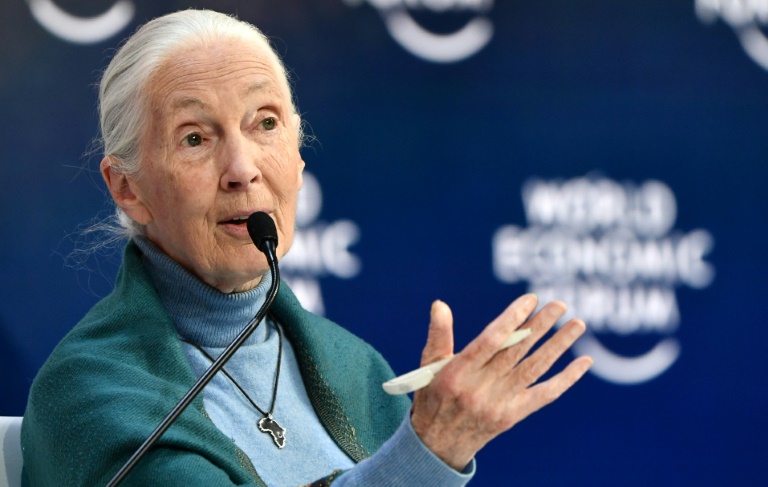
Earth’s climate is changing so quickly that humanity is running out of chances to fix it, primatologist Jane Goodall has warned in an interview.

Goodall, a grandee of environmentalism whose activism has spanned decades, said time was rapidly shortening to halt the worst effects of human-caused global warming.

“We are literally approaching a point of no return,” Goodall told AFP in Los Angeles.

“Look around the world at what’s happening with climate change. It’s terrifying.

“We are part of the natural world and we depend on healthy ecosystems.”

Goodall is best known for her pioneering six-decade study of chimpanzees in Tanzania, which found “human-like” behavior among the animals, including a propensity to wage war, as well as an ability to display emotions.

Now 88 years old, the Briton is a prolific writer and the subject of a number of films. She has also been immortalized as both a Lego figure and a Barbie doll.

Goodall said her own environmental awakening came in the 1980s while working in Mongolia, where she realized that hillsides had been denuded of tree cover.

“The reason the people were cutting down the trees was to make more land, to grow food as their families grew, and also to make money from charcoal or timber,” she said. 

“So if we don’t help these people find ways of making a living without destroying their environment, we can’t save chimpanzees, forests, or anything else.”

Goodall says she has seen some changes for the better over recent decades, but urged quicker action.

“We know what we should be doing. I mean, we have the tools. But we come up against the short-term thinking of economic gain versus long-term protection of the environment for the future,” she said. 

“I don’t pretend to be able to solve the problems that this creates because there are major problems. And yet, if we look at the alternative, which is continuing to destroy the environment, we’re doomed.”

Goodall was speaking Sunday on the sidelines of a celebration of her $1.3 million Templeton Prize.

The prize is an annual award for an individual whose work harnesses science to explore the questions facing humanity.

The cash went to the Jane Goodall Institute, a global wildlife and environment conservation organization, which runs youth programs in 66 countries.

“The program’s main message is that every single one of us makes an impact on the planet every day, and we get to choose what sort of impact we make,” Goodall said.

“It’s actually my greatest reason for hope.”

Ex-Nigeria and Chelsea star John Obi Mikel retires

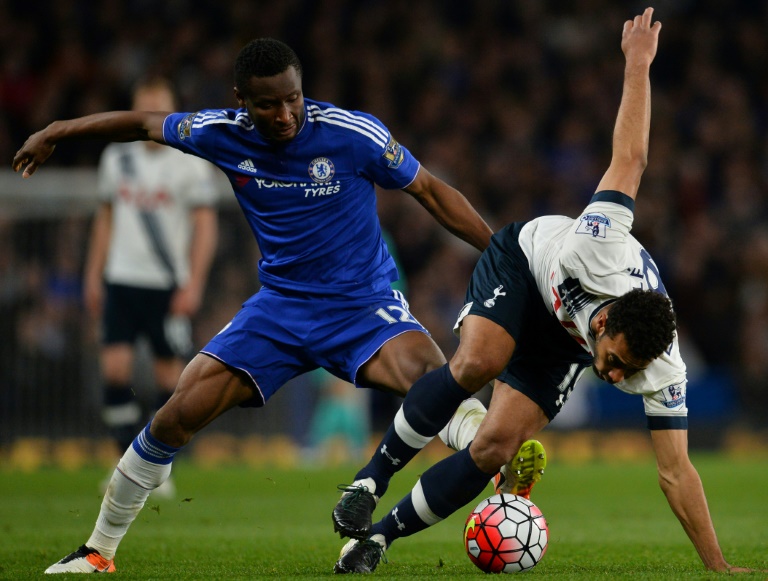
Former Nigeria and Chelsea midfielder John Obi Mikel announced his retirement after a long and decorated career on Tuesday, saying “all good things must come to an end”.

“I look back at the past 20 years of my career, and I must say that I am very satisfied with all that I was able to achieve and more importantly the human it has helped shape,” the 35-year-old posted on his Instagram account.

Among his many achievements was helping Chelsea to their first Champions League title in 2012.

And his former club were quick to pay tribute to the player who joined them “as a fresh-faced 19-year-old”.

In a decade of service, he clocked up 372 appearances in a Chelsea shirt, winning the Champions League, two Premier League titles, four FA Cups, the Europa League and two League Cups.

“Enjoy your retirement, John!” said the Chelsea statement.

In his retirement post Mikel wrote: “There is a saying that ‘all good things must come to an end’, and for my professional football career, that day is today.”

He paid particular tribute to his “ever-loyal fans”.

“You supported me through my highs and lows, even on days that I did not live up to your expectations. I say a big thank you,” he told them.

The Nigeria captain called time on his international career after helping the Super Eagles to third place in the 2019 Africa Cup of Nations in Egypt.

Mikel won 89 caps and scored six goals between 2005 and 2019 for his country, winning the AFCON in South Africa in 2013.

He also led Nigeria to a bronze medal at the 2016 Rio Olympics in Brazil as one of the over-aged players.

After leaving Chelsea in 2017 he had a couple of seasons in China with Tianjin, returning to England with Championship side Middlesbrough in 2019.

He signed for Trabzonspor as a free agent at the end of that season, only to terminate his contract early with the Turkish outfit in March 2020, as the coronavirus pandemic erupted.

He returned for the 2020-21 season with Stoke, another Championship side, with his last port of call a stint at Kuwait SC.

Guinean ex-dictator jailed on eve of 2009 massacre trial

Former Guinean dictator Moussa Dadis Camara and several co-defendants were sent to prison Tuesday, a day before their trial opens for the 2009 stadium massacre, their lawyers said.

The prosecutor had “our six clients taken to the central house (prison) where they will apparently be held until the end of the (trial)”, Salifou Beavogui, one of the lawyers, told journalists outside the court. 

“Very unfortunately, the trial is beginning with the violation of the defendants’ rights,” he said.

An AFP correspondent saw a minibus — surrounded by several pick-up trucks — speed away from the brand-new court built especially for the trial.

Captain Camara and 10 other former military and government officials are due to appear in court Wednesday at 10:00 am (local and GMT). 

A handful of defendants have already been detained for years. Those who were still free were detained Tuesday after being summoned at around midday. 

On September 28, 2009, and in the days that followed, security forces loyal to the then-junta leader slaughtered more than 150 people and raped at least 109 women at a political rally in a Conakry stadium, according to a report by a UN-mandated international commission.

The real figures are likely higher.

Tens of thousands of opposition supporters had gathered in the stadium to peacefully demonstrate against a possible election bid by Camara, who had come to power in a December 2008 coup before being sworn in as president.

Numerous testimonies report how the presidential guard’s Red Berets, police officers and militiamen entered the stadium around noon, cordoned off the exits and opened fire indiscriminately on a crowd that had previously been festive.

– Waiting for a trial –

The killers attacked unarmed civilians with knives, machetes and bayonets, leaving the stands, corridors and grass strewn with the dead and dying. 

They sexually assaulted and then killed many women. Others were trampled to death in the panic.

International investigators found the abuses could qualify as crimes against humanity, noting the brutality went on for several days against sequestered women and male detainees who were tortured.

On the eve of Wednesday’s trial, Amnesty International released a report calling for better protection for rape victims in Guinea and the “urgent” adoption of a comprehensive law on gender-based violence.

Camara, who had been living in exile in Burkina Faso, returned to Conakry on Saturday night to stand trial. 

Relatives say he intends to “clear his name”.

The international commission has accused him of “personal criminal responsibility and command responsibility”. 

Despite recurring commitments under former president Alpha Conde’s regime, victims and relatives have been waiting for the trial for 13 years. 

Human rights defenders have also been pushing for justice, as well as the International Criminal Court.

Delays by those in power and the impunity for security forces that had become an “institution”, according to the commission, long cast doubt on the chances of a trial.

Then the head of the current military junta, Colonel Mamady Doumbouya, who came to power in a putsch in 2021 after 11 years of civilian rule, in July demanded the trial be held before the next anniversary date.

Victims’ groups hope the opening will not just be a show before the trial is adjourned.

Morocco king invited to Algiers summit despite tensions

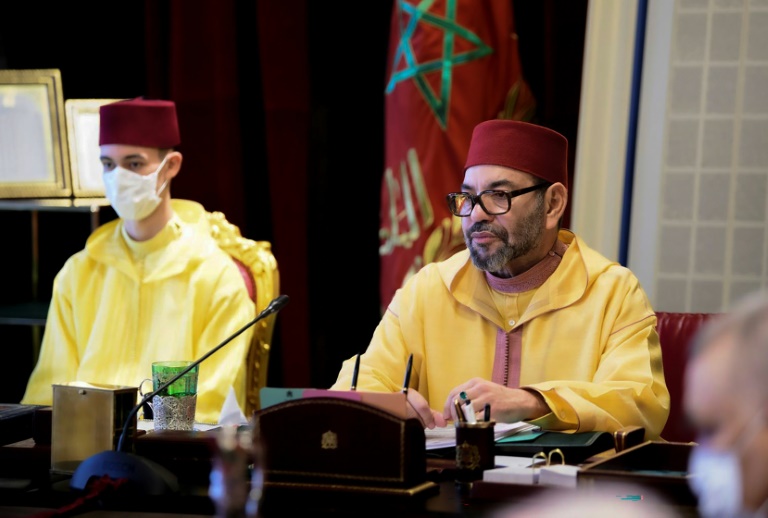
Morocco said Algeria on Tuesday invited its King Mohammed VI to attend an Arab League summit in Algiers in November, at a time of tensions between the North African neighbours.

The foreign ministry in Rabat said visiting Algerian Justice Minister Abderrachid Tabi had delivered a letter to Foreign Minister Nasser Bourita inviting the king to the November 1-2 summit.

The ministry has yet to specify who will represent Morocco at the gathering in Algeria’s capital.

According to Jeune Afrique magazine, the king is to attend, but there has been no official confirmation. Moroccan media have said Prime Minister Aziz Akhannouch and Bourita will travel to Algiers.

King Mohammed in late July renewed calls for a restoration of ties with Algeria, which broke off diplomatic relations with Rabat last year.

Morocco and Algeria have long been at odds over the disputed territory of Western Sahara, where the Algiers-backed Polisario Front is seeking independence from Rabat’s rule.

Algeria severed ties in August 2021, accusing Rabat of “hostile acts”, a move which Morocco said was “completely unjustified”.   

Amnesty calls for Guinea sexual violence law ahead of 2009 massacre trial

Amnesty International on Tuesday urged Guinea’s junta to pass a comprehensive law on violence against women and revise the definition of rape after failing to meet international obligations to combat sexual abuse.

It made the call in a report released a day before the trial begins of former junta members over the 2009 rape of at least 109 women and the slaughter of 156 people at a political rally in a Conakry stadium.

“The fact that the survivors of the 28 September 2009 massacre had to wait 13 years to finally hope for justice and reparation was a powerful symbol of impunity,” Amnesty said in a statement.

The report, based on research conducted with the International Planned Parenthood Federation (IPPF), found that a lack of data on sexual violence posed significant challenges to authorities and human rights organisations.

It called on Guinea’s government to criminalise all forms of violence against women and revise the definition of rape to reflect an absence of consent rather than the use of violence or coercion. 

It also urged authorities to accelerate the work of the National Observatory to Combat Gender-based Violence, which was created by decree in 2011 with the mission to collect and publish reliable statistics on violence against women and girls. 

But the observatory has not yet “effectively” begun activities, the report said.

– Outcry –

In November, the death of a 25-year-old woman allegedly raped by doctors in a private Conakry clinic led to national outcry and a social media movement.

In 2015, the case of Tamsir Toure, a Guinean rapper accused of raping a woman at knifepoint, provoked uproar from women’s rights groups and pushed the justice and human rights ministers to commit to combatting violence against women.

“Successive governments between 2015 and 2021 have taken important steps to address sexual violence and in particular rape”, including strengthening the legal framework and training magistrates, lawyers and police officers, Amnesty’s report said.

The gendarmerie also set up a special brigade for the protection of vulnerable persons.

“Despite these advances, this report presents numerous breaches of Guinea’s international obligations in terms of (the) prevention and fight against rape, (the) protection of victims’ rights and (the) fight against impunity”, Amnesty said.

Guinea does not have a reliable toll-free number for reporting sexual violence and many victims are unable to access medical care and justice, it said.

The trial of former junta leader Moussa Dadis Camara and others accused is set to begin Wednesday.

Heavy floods ravage West Africa farmlands

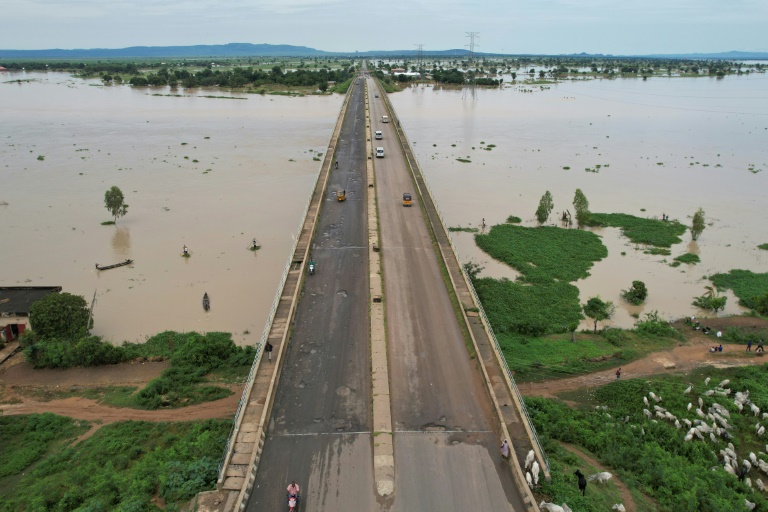
Nigeria rice farmer Adamu Garba squelched barefoot through his paddy fields, surveying damage from devastating floods that have destroyed farmland across the north of the country. 

Parts of West and central Africa have been battered by floods ravaging farms like Garba’s rice plots, wiping out crops and risking worsening food insecurity in a region already struggling with economic fallout from the Ukraine war.

Just in Nigeria, constant heavy rains caused the worst flooding in a decade, killing more than 300 people since the start of the rainy season and displacing at least 100,000, according to emergency officials.

“It is devastating but there is nothing we can do, we just have to be strong,” Garba told AFP at his farm near the city of Kano, where he normally harvests 200 bags of rice.

“Now in the condition we find ourselves we are not sure we will harvest half a bag here.”

Nigeria’s National Emergency Management Agency (NEMA) spokesman Manzo Ezekiel said flooding has been unprecedented due to continuous rainfall with 29 of the country’s 36 states affected.

“Thousands of farmlands have also been destroyed. The figures will rise further because we are still experiencing torrential rains and flooding,” he said.

Flood waters were made worse partly by neighbouring Cameroon’s release of excess waters from a dam and by Nigeria releasing waters to ease pressure on its Kainji and Jebba dams, Ezekiel said.

However, an official with Eneo, operator of Cameroon’s Lagdo hydro-electricity plant, said excess waters released from the dam  contributed only a small amount to flooding.

Parts of Nigeria, from northern farmlands to the coastal economic capital Lagos, are prone to flooding in the rainy season, though NEMA says this year is the worst since 2012, when 363 people died and more than 2.1 million were displaced.

– Climate change –

The Niger river — West Africa’s main river — flows through northern Niger past Benin’s northern border into Nigeria before reaching in the Gulf of Guinea on the Atlantic through southern Nigeria’s Niger Delta. 

Heavy rains falling in Niger since June and the severe floods have claimed 159 lives and affected more than 225,000 people, making this rainy season one of the deadliest in history, emergency officials said earlier this month.

“According to our studies, we can link these rains to climate change in general,” said Katiellou Gaptia Lawan, Director General of National Meteorology of Niger. 

“The rains are becoming more and more intense and the extreme precipitation is increasing.”

Rains in Niger this year have also totally destroyed or damaged more than 25,900 homes, and impacted farmland and cattle, authorities said.

The June to September rainy season regularly kills people in Niger, including in the northern desert areas, but the toll is particularly heavy this year. 

In 2021, 70 people died and 200,000 were affected. 

In Chad, the UN said more than 622,500 people had been affected “at different levels” by flooding in more than half of the country, including the capital N’Djamena, with most impacted areas bordering the north of Cameroon. 

According to the United Nations, in 2021, 5.5 million Chadians, more than a third of the population of the landlocked country were already in need of emergency humanitarian aid, even before the floods.

In northern Nigeria, Kabiru Alassan, a 19-year old farmer, said flood waters washed sand from the roads and covered his rice fields. But he was trying to salvage what he could.

“This is the little we have left by Allah’s grace which we are going to harvest,” he said.

“The rains have never been this destructive. We pray never to experience such a nightmare.”

Close Bitnami banner
Bitnami