Africa Business

S.Africa's ex-president Zuma eyes political comeback

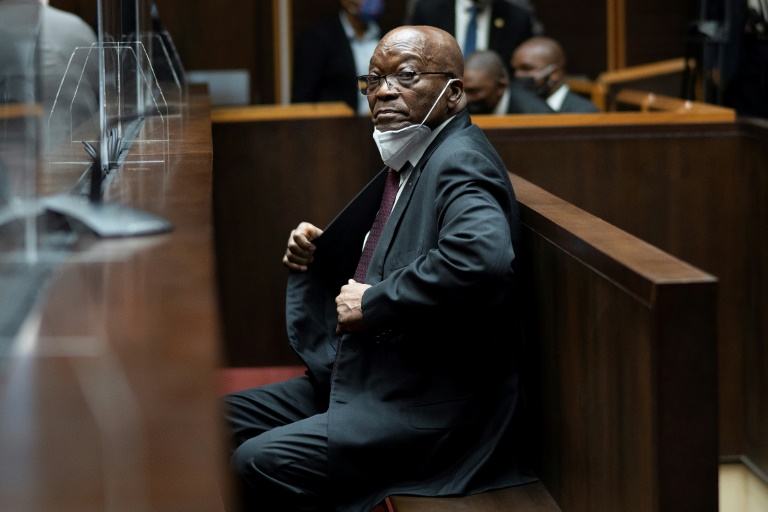
South Africa’s ex-president Jacob Zuma, who is facing corruption charges and served a short stint in jail, has said he is ready for a political comeback with the ruling party.

In a statement late Monday, Zuma, 80, said he has been asked by members of the African National Congress (ANC), which has ruled South Africa since the end of apartheid, to put himself forward as the party gears up to elect a new leadership.

“I will not refuse such a call should they deem it necessary for me to serve the organisation again,” he said, adding he has been consulting with party leaders “in spite of the difficulties caused by my current legal situation”.

The move comes amid heavy infighting within the ANC, ahead of a national elective conference in December. 

The party is to hold internal polls to pick a new leader, who would then become the  candidate for the next presidential election in 2024. 

Current President Cyril Ramaphosa is hoping to secure a second term but faces a challenge from a faction loyal to Zuma — a divisive figure whose name resonates with graft for most South Africans but remains a hero to many grassroots ANC members. 

Zuma said he supports his ex-wife Nkosazana Dlamini-Zuma to replace Ramaphosa and hinted he would be prepared to serve as party chairman, another key role. 

Support for the party of Nelson Mandela dropped below 50 percent for the first time in local elections last year, and the government is facing growing discontent over widespread poverty, unemployment, and a prolonged power crisis. 

Zuma became president in 2009 but was forced to step down nine years later in favour of Ramaphosa, then vice-president.  

In July last year he was jailed for 15 months for contempt of court after refusing to testify before a graft inquiry, but was released on medical parole just two months into the term. 

Kenya police probe death of lawyer on trial for ICC witness tampering

Kenyan police were investigating the death of a lawyer who was on trial for allegedly bribing and intimidating witnesses in the failed International Criminal Court case against President William Ruto, an officer said Tuesday.

Paul Gicheru had been accused by ICC prosecutors of running an “egregious and damaging” witness tampering scheme that made it impossible to pursue allegations against Ruto over post-election violence in Kenya in 2007-2008.

His trial opened in February this year, with prosecutors alleging that Gicheru paid bribes of up to one million Kenyan shillings ($8,300) and threatened the safety of ICC witnesses, one of them at gunpoint.

Gicheru had denied the allegations throughout, pleading not guilty at The Hague-based court, which is the world’s only permanent war crimes tribunal.

“The information we have from the family is that he had a meal and went to sleep and never woke. He was found dead in the house late Monday evening,” a senior police official told AFP on condition of anonymity. 

“An investigation is under way because we do not know the cause of death yet,” he said, adding that Gicheru’s son had been taken to hospital after complaining of stomach pains following their meal together.

The Kenya Human Rights Commission urged the authorities to “conduct swift and conclusive investigations” into the death.

“While the full details surrounding this death are still emerging, we remain concerned with the shocking news of the untimely death of Kenyan lawyer Paul Gicheru,” the KHRC said on Twitter.

– Witness tampering –

The disputed 2007 vote in Kenya was followed by the worst post-electoral violence in the country’s history and left 1,100 people dead.

Gicheru had “managed and coordinated a scheme to identify, locate and corruptly influence” witnesses throughout the ICC trial of Ruto and co-defendant Joshua Sang, which collapsed in 2016, ICC deputy prosecutor James Stewart had said.

Four “vital” prosecution witnesses had recanted their testimony as a result of Gicheru’s actions. Another two witnesses reported him to the ICC, Stewart said.

Prosecutors noted that of the individuals “caught up in the witness tampering scheme”, one witness had died and another had disappeared — although there were no allegations that Gicheru had been directly linked to their fate. 

The ICC had also launched a case against former president Uhuru Kenyatta over the post-electoral violence. That too collapsed in 2014.

Ruto, who served as Kenyatta’s deputy for nine years, was elected president in a bitterly-fought but largely peaceful vote held last month.

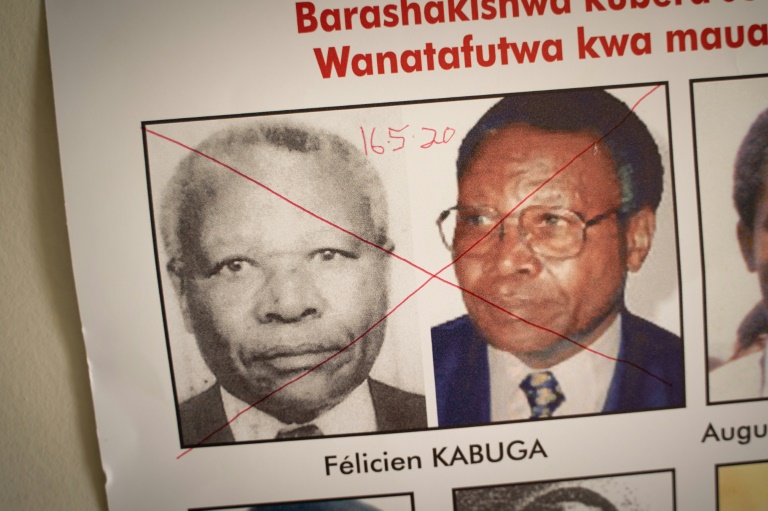
The long shadow cast by Rwanda genocide accused Kabuga

He has been described as the financier of the 1994 genocide in Rwanda — a businessman who allegedly turned his vast fortune to the massacre of some 800,000 of his countrymen.

But in his native village of Nyange, more than a quarter of a century later, residents still speak fondly of Felicien Kabuga, even as he prepares to stand trial in The Hague on Thursday for crimes against humanity.

Born in Nyange to parents who were farmers, Kabuga, now 87, rose from humble beginnings to become the virtual owner of the village and its surrounding tea plantations in Gicumbi district.

His empire stretched across sectors including coffee, tea and real estate.

At one point, his fortune was so vast that he was considered one of Rwanda’s richest men.

“I was a child at the time, but I remember everyone talking about how Kabuga was helping this community by providing jobs,” 35-year-old Alphonsine Musengimana told AFP.

Musengimana worked in Kabuga’s plantations as a child, picking tea leaves alongside other family members who were also employed by the businessman.

“He paid us well,” she said.

Kabuga hosted huge parties at his hilltop residence, relatives told AFP, recalling wild nights on his terrace.

“He had some of the best liquor… he was a good host,” Kabuga’s cousin Jean Baptist Munyaneza told AFP.

A lot has changed in the intervening years.

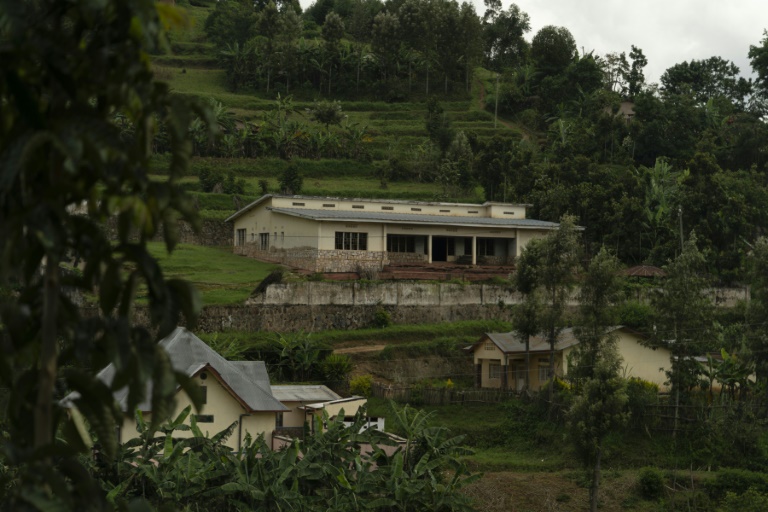
Kabuga’s mansion, which still looms over the small brick houses in Nyange, now lies in ruins, with holes in the ceilings, rusty fixtures, peeling paint and gibberish scrawled on its walls.

The tea plantations — about the size of 40 football fields — were auctioned off in 2013 to the tune of 153 million Rwandan francs ($147,000), with the government saying it would use the funds to help genocide survivors.

After a life spent on the run, using false passports and aliases, Kabuga was arrested outside Paris in 2020 and has been in prison ever since, awaiting trial.

But one thing has remained constant: the support from this close-knit community. 

– ‘Do not believe’ –

“They say that he bought machetes to be used for killing people, but he was a trader. He bought machetes, hoes and all sorts of things to sell them,” his cousin Munyaneza told AFP.

“He was a good man, and provided a livelihood for many people. I do not believe the things they say about him,” he added.

Many villagers told AFP they were reluctant to speak publicly in Kabuga’s favour, expressing fear of President Paul Kagame’s authoritarian government, which has been in power since the end of the genocide.

Others said Kabuga was being unfairly targeted for the mass killing of Tutsis and moderate Hutus that lasted for 100 days in 1994.

“When Kabuga was here, he never attempted to preach hate against the Tutsi,” said Martin Katabarwa, a relative.

“It was the government (at the time)… that killed Tutsis, not Kabuga,” he told AFP.

But the tycoon’s closeness to Rwanda’s former government remains indisputable.

In 1993, one of his daughters married the oldest son of then president Juvenal Habyarimana, whose assassination triggered the genocide.

Another daughter married Augustin Ngirabatware, the country’s planning minister who was sentenced to 30 years in prison for his role in the bloodshed.

Even in Nyange, some villagers told AFP they were in no doubt about his role.

“Kabuga betrayed Nyange and this country,” said Jean Nzabandora, a 54-year-old farmer.

“Those supporting him are shameless. They should think of the families that perished,” he told AFP.

Anastase Kamizinkunze, the district head of IBUKA, the umbrella association for genocide survivors, was circumspect.

“Even his conviction might not change the minds of some of these people,” he told AFP.

“We are looking forward to his trial. It has been a long time coming.”

Felicien Kabuga: Rwandan petty trader to alleged genocide financier

Felicien Kabuga, who goes on trial in the Hague on Thursday, rose from poverty to become one of Rwanda’s richest men before allegedly using his wealth to fund the 1994 genocide.

Kabuga’s money and connections also helped him avoid arrest for more than 20 years as he moved from Rwanda to Switzerland, the former Zaire, and Kenya.

Charged with genocide and crimes against humanity including persecution, extermination and murder, Kabuga was living under a false identity outside Paris when he was arrested and transferred to the Mechanism for International Criminal Tribunals (MICT) at the Hague in 2020.

One of the world’s most-wanted fugitives, the 87-year-old has often been referred to as the man who financed the massacre of some 800,000 people in Rwanda between April and June 1994.

Born to a modest farming family, Kabuga’s first jobs included peddling items door to door and selling cigarettes and used clothing at a market in his native Byumba region in northern Rwanda.

An industrious worker, Kabuga moved to Kigali where he opened several shops.

According to French press reports, he went on to own a tea plantation, a mill, and real estate, including apartments and warehouses.

By 1994 he was said to be one of the richest men in Rwanda and if farmers in remote villages saved up money, they were often nicknamed “Kabuga”.

– Paying for machetes –

As his wealth grew, so too did his political connections.

In 1993, one of his daughters married the oldest son of Rwandan president Juvenal Habyarimana, whose assassination triggered the 1994 genocide.

Another daughter married Augustin Ngirabatware, the  planning minister, who was sentenced to 30 years in prison for his role in the bloodshed targeting Tutsis and moderate ethnic Hutus.

Kabuga headed the National Defence Fund, to which he and other businessmen contributed, and which allegedly bought machetes and uniforms for the army and Interahamwe Hutu militia.

According to the International Criminal Tribunal for Rwanda (ICTR), whose work was later taken over by the MICT, Kabuga “contributed to the Interahamwe’s killing and harming of persons identified as Tutsis by organising meetings … to raise funds to purchase arms.” 

Jean Damascene Bizimana, executive secretary of the National Commission for the Fight Against Genocide, told AFP Kabuga had funded “tonnes of machetes and grenades which were imported and distributed across the country as weapons”.

Many of the victims were hacked to death with machetes.

– Broadcasting calls for murder –

In addition, Kabuga helped create the notorious Radio-Television Libre des Mille Collines (RTLM) that incited people to “kill Tutsi cockroaches” in its broadcasts.

“Kabuga served as president of RTLM and as such had de facto and de jure control of programming, operations, and finances of RTLM,” the ICTR indictment said.

He is also accused of directly supervising Interahamwe massacres in Gisenyi, northwestern Rwanda, and in the Kigali district of Kimironko.

In July 1994, Kabuga sought refuge in Switzerland but was thrown out a month later.

He flew to Kinshasa and later moved to Kenya, managing to avoid three arrest attempts by police and ICTR officials after a warrant was issued in 1997.

The United States offered a reward of $5 million in 2002 for information leading to his arrest and funded a media campaign in Kenya that splashed his photo across the country. 

In 2011, the ICTR organised forums to collect testimony for Kabuga’s eventual trial, in case some witnesses died before he could be arrested.

His lawyers attempted to halt legal proceedings on health grounds, but judges ruled against it in June this year, calling for the trial to begin “as soon as possible”.

strs-amu/np/bp

Senegal ferry disaster town remembers 20 years after 1,900 drowned

Twenty years after Le Joola ferry sank, the Senegalese town where half of the nearly 1,900 dead lived paid tribute on Monday to those killed in the disaster described as a “wound that never heals”.

When news spread that the vessel had capsized on the night of September 26, 2002, no one in the southern town could believe it.

“It was unthinkable,” said Nouha Cisse, who was head teacher at a secondary school in Ziguinchor that lost 150 pupils to the tragedy.

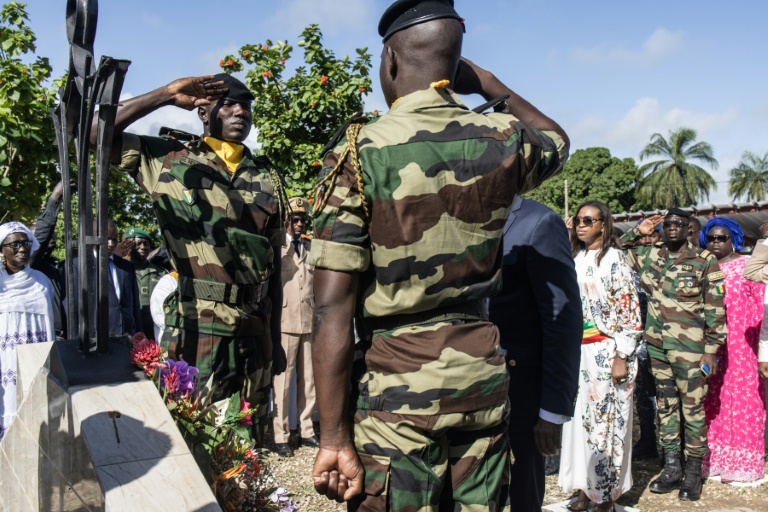
A hundred relatives and officials took part on Monday morning in two religious commemorative ceremonies — Catholic and Muslim — next to around 50 graves in Kantene cemetery on the outskirts of Ziguinchor.

An official delegation laid wreaths, before women in long traditional dresses and their families visited the graves.

“It’s very important for us to be here, to pay tribute to our mother and our nephew who we lost,” said Ndeye Astou Diba, 38.

Le Joola was one of the worst civilian maritime disasters in history.

A total of 1,863 people drowned or were lost — surpassing the Titanic toll of more than 1,500 some 90 years earlier.

Le Joola sailed into a storm off the coast of The Gambia on the way from Ziguinchor to the capital Dakar.

– Calls to raise wreck –

At another larger ceremony with several hundred people close to the Casamance river from where Le Joola had departed, the head of victims’ associations repeated a call for the wreck to be raised.

Le Joola, which sunk to a depth of 20 metres (66 feet), is thought to hold many bodies.

The ferry had played a major role in Ziguinchor in the isolated Casamance enclave, providing a lifeline to Dakar and transporting agricultural produce as well as tourists.

The Casamance, almost separated from the rest of Senegal by the tiny state of The Gambia, had since 1982 been wracked by a separatist rebellion. September 2002 saw a surge in attacks.

On September 26, more than 1,928 people officially crowded on to the ferry, which had a capacity for 536 passengers.

Victims’ associations say more than 2,000 passengers from more than a dozen countries died, and only 65 survived.

– ‘Unbearable’ news –

With crowds gathering at the port the morning after, the prime minister announced Le Joola had capsized.

“After that it was unbearable in Ziguinchor,” recalled Ibrahima Gassama, a journalist who covered the disaster for Sud FM radio.

“No one could console anyone. The gendarmes cordoned off the area because some people were threatening to throw themselves into the sea.

“They had lost everything,” Gassama said.

“It really was a catastrophe,” said 65-year-old Khadidiatou Diop, who lost her mother.  

“In this house one person died, in that house another death, across the road one dead. It was like that all over Ziguinchor.”

For Gassama, “it’s a wound that never heals.

“I don’t think it ever can because the subsequent behaviour over the handling of the catastrophe was a second shipwreck.”

He noted the rescue effort that only happened the next day and the official “lies”, denying the high death toll.

– Questions remain –

Two decades on, many questions remain unanswered.

The causes of the incident have never been fully established, despite a Senegalese government inquiry and a French probe launched because of the deaths of 18 French citizens. 

Engine failure, a navigational error, bad weather, poor maintenance and overcrowding — or a combination — were likely to blame.

Senegal closed the case in 2003 after concluding an investigation that blamed the captain, lost in the catastrophe.

French courts also dismissed a years-long probe, which found evidence against seven Senegalese officials, concluding that Paris did not have jurisdiction.

Senegalese and French victims’ associations have called for a memorial to be erected. One was promised for five years ago but the site was still nowhere near ready in Ziguinchor on Monday.

Senegalese victims’ relatives have been compensated but President Macky Sall has not attended the annual anniversary remembrance since he took office.

Sall later on Monday tweeted the country was in “solidarity” with the victims, adding: “We must ensure that such a tragedy never happens again.”

Five killed in Nairobi building collapse

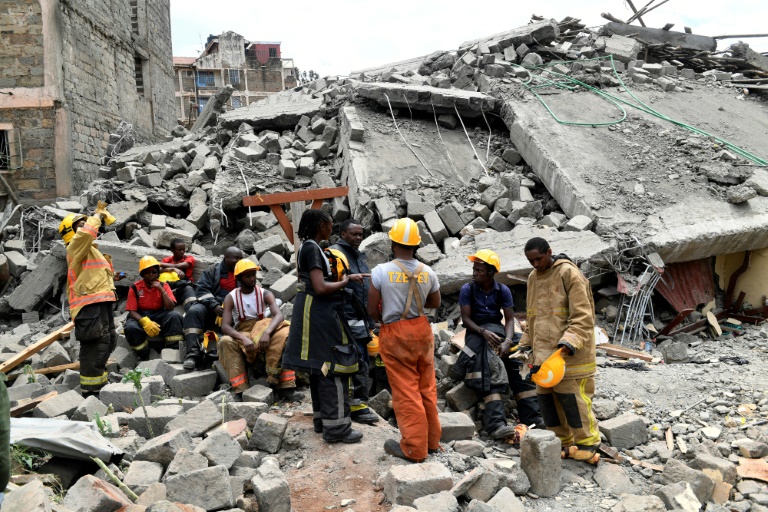
At least five people, including two children, were killed Monday after a six-storey building collapsed in a town on the outskirts of Kenya’s capital Nairobi, a senior official said.

The building, which was under construction in Kiambu, caved in on Monday morning, the town’s governor Kimani Wamatangi said on Twitter.

“We have lost five people in the collapsed… building,” he said, adding that search and rescue efforts were under way.

“Several people have already been pulled out of the rubble, and rushed to the hospital. Sadly, some are feared to have succumbed to their injuries,” he said.

Emergency workers and volunteers attempted to help people trapped under heavy concrete and brick debris, with a married couple as well as a mother and her two children among the five fatalities listed by the governor.

The cause of the collapse was not immediately clear.

In the past, shoddy construction and flouted regulations have led to deadly accidents in Kenya.

The East African nation is undergoing a construction boom, but corruption has allowed contractors to cut corners or bypass regulations.

At least three people died in December 2019 when a residential building collapsed in Nairobi.

That incident came three months after seven children died and scores were injured when their school was flattened in an accident blamed on third-rate construction. 

In April 2016, 49 people were killed when a six-floor apartment building crumbled in the northeast of the capital after days of heavy rain caused floods and landslides.

The building, constructed two years earlier, had been scheduled to be demolished after being declared structurally unsound.

China, Russia face historic scrutiny at UN rights council

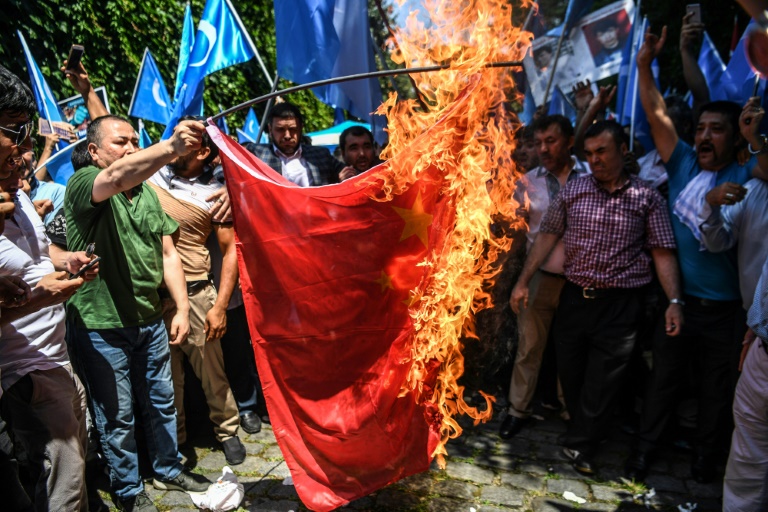
China and Russia face possible action by the UN’s top rights body following historic draft resolutions against the two powerful permanent members of the Security Council.

The UN Human Rights Council in Geneva frequently investigates and tries to rein in abuses inside countries but has not taken on the two heavyweights directly until now.

A damning UN report warning of possible crimes against humanity in China’s Xinjiang region, and concerns over an intensifying crackdown inside Russia as its war rages in Ukraine, have led to massive pressure on the West and its allies to act.

Western nations have taken unprecedented steps against the two giants, despite fears that a failed resolution would signal a shifting power balance and weaken the 47-member council.

Earlier this month, all European Union countries except Hungary agreed to draft a resolution urging the rights council to appoint a so-called special rapporteur to monitor violations inside Russia, in a move Moscow slammed as “politically motivated”.

And on Monday, the United States presented the first-ever draft resolution focused on China at the council, seeking “a debate on the situation of human rights in the Xinjiang Uyghur Autonomous region” during its next session.

The draft text, co-sponsored by Britain, Canada, Sweden, Denmark, Finland, Iceland and Norway, with others expected to join in, will be voted on by the council next week.

– ‘Cannot stay silent’ –

“As innocent as it looks on the surface, this is pretty significant… It places China on the agenda of the council,” a diplomatic source told AFP.

“This modest but essential step will bring much-needed scrutiny to Chinese authorities’ sweeping rights violations,” said John Fisher of Human Rights Watch.

During a general debate on Monday, a long line of countries voiced concerns about China and Russia.

“We can’t ignore such severe and systematic breaches of human rights,” British Ambassador Simon Manley said of the situation in Xinjiang. 

“This council cannot, must not, stay silent.”

China is facing intense scrutiny after the UN’s Xinjiang report was published on August 31 highlighting “credible” allegations of widespread torture, arbitrary detention, and violations of religious and reproductive rights.

It brought UN endorsement to long-running allegations by campaigners and others, who accuse Beijing of detaining more than one million Uyghurs and other Muslims, and forcibly sterilising women.

Beijing vehemently rejected such charges and has harshly criticised the report. 

– ‘Ready for the fight’ –

China has launched an all-out offensive since the current council session started two weeks ago, and has sent a large delegation from Xinjiang to Geneva to hammer home the “truth” about the situation.

Asked about how China would respond to a council resolution, Xu Guixiang, head of the Xinjiang government’s information office, told reporters Beijing would “resolutely adopt appropriate counter measures”.

“We are not afraid. We are ready for the fight.” 

During Monday’s debate, a high-level Xinjiang official, Shawkat Imin, said some Western countries were trying “to instrumentalise human rights issues to destabilise Xinjiang.”

He was backed by diplomats from many countries, including Pakistan, whose representative slammed “interference in China’s internal affairs under the pretext of human rights.”

Malawi’s representative Mathews Gamadzi also appeared to back China, saying the council “has become selective and paralysed by politicisation”.

Malawi was the only country out of 13 African council members which took the floor. 

Gamadzi’s comment could raise concerns that the African members, which often move as a bloc, might vote against one or both texts.

If a large enough number vote against them,  it could tank the resolutions.

Guinea massacre victims await justice 13 years after stadium horror

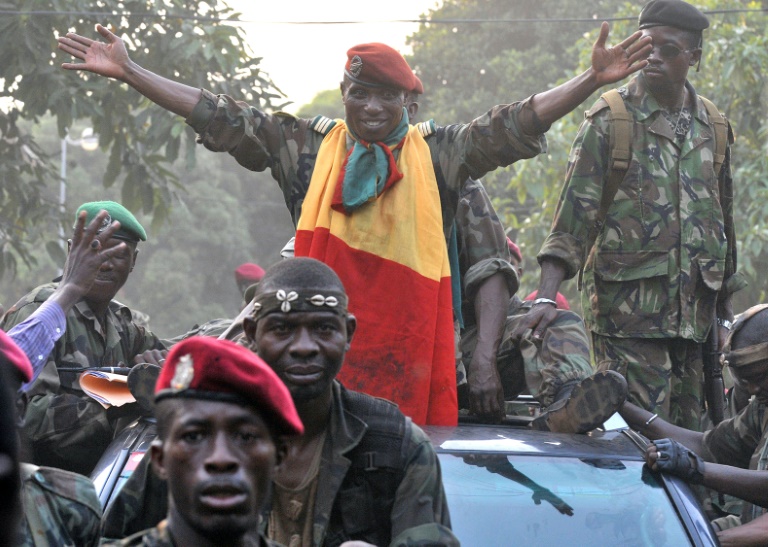
Countless Guineans have waited 13 years for the trial of former junta leader Moussa Dadis Camara and others held responsible for an appalling massacre committed on September 28, 2009. That time has come.

Victims and relatives will head on Wednesday to a brand-new court in  Conakry, where the trial of Captain Camara and 10 former officials will open, barring a last-minute adjournment.

The court is just a few kilometres (miles) from the September 28 stadium, where soldiers, police and militiamen cut down opposition supporters and sympathisers.

On that day and the next, 156 people were slaughtered and thousands injured, while at least 109 women were raped, says a report of a UN-mandated international commission, published three months after the event. The actual numbers are probably higher.

Delays by those in power and the impunity for security forces that had become an “institution”, according to the commission, long cast doubt on the chances of a trial. The west African country has mostly been ruled for decades by authoritarian regimes.

Then the head of the current military junta, Colonel Mamady Doumbouya, who came to power in a putsch in 2021 after 11 years of civilian rule, asked in July for the trial to be held before the next anniversary date.

— ‘I expect the truth’ —

“This year will not only be a commemoration, but a trial,” said Saran Cisse, who describes herself as a “survivor of September 28”.

She cannot hold back tears or find words for the “shame” of the treatment she endured, then the social stigma. “From this trial, I expect the truth, nothing but the truth, because 13 years is not 13 days.”

Tens of thousands of people were gathered at the stadium to demonstrate the strength of the opposition and to dissuade Camara from running for president in January 2010.

He had come to power nine months earlier via a coup in a nation steeped in poverty despite considerable natural resources.

Numerous testimonies report how the the presidential guard’s Red Berets, police officers and militiamen entered the stadium around noon, cordoned off the exits and opened fire indiscriminately on a crowd that had previously been festive.

The killers attacked unarmed civilians with knives, machetes and bayonets, leaving the stands, corridors and grass strewn with the dead and dying. They sexually assaulted and then killed many women. Others were trampled to death in the panic.

— ‘Like a jungle’ —

“It was like a jungle,” recalled AFP and Radio France Internationale correspondent Mouctar Bah.

“People were running everywhere, children and youths were climbing the walls while soldiers shot at them. The luckiest ones managed to escape, even wounded, but others… were finished off.”

One victim, Fatouma Drame, told AFP how soldiers held her by the stadium for two hours after the killing started. They put her in solitary confinement for two weeks where she was repeatedly raped by four men.

Drame still endures the trauma of the door opening. “It was infernal,” she said.

International investigators found the abuses could qualify as crimes against humanity, noting the brutality went on for several days against sequestered women and male detainees who were tortured.

The trial should establish the responsibilities of Captain Camara and his co-defendants, including several military and government figures of the time. Some have been detained for years.

“Dadis Camara played a central role in the September 28 massacre,” either by issuing the order or consenting to it, declared Human Rights Watch in 2009 after carrying out its investigation.

The international commission charges Camara with “personal criminal responsibility and command responsibility”.

— Camara’s return —

The former ruler lives in exile in Burkina Faso. In December 2009, his presidential guard chief Aboubacar Sidiki Diakite, alias “Toumba”, shot Camara.

Toumba, who accused Camara of ordering the massacre, is also due in court.

Camara returned to Guinea overnight on Saturday. “He will be there to deliver his part of the truth,” lawyer Almamy Somory Traore told AFP. “He proclaimed his innocence and we are going to prove it.”

Civic associations hope the trial opening will not just be a show, before being adjourned.

The junta wants to make a stand against impunity even as it has recently cracked down on civil liberties, say rights activists.

“We hope to have clear, transparent justice, no parody of justice, and in the presence of all the defendants,” said Asmaou Diallo, president of the Association of Victims, Parents and Friends of September 28.

Senegal ferry disaster town remembers 20 years after 1,900 drowned

Twenty years after Le Joola ferry sank, the Senegalese town where half of the nearly 1,900 dead lived paid tribute on Monday to those killed in the disaster described as a “wound that never heals”.

When news spread that the vessel had capsized on the night of September 26, 2002, no one in the southern town could believe it.

“It was unthinkable,” said Nouha Cisse, who was head teacher at a secondary school in Ziguinchor that lost 150 pupils to the tragedy.

A hundred relatives and officials took part on Monday morning in two religious commemorative ceremonies — Catholic and Muslim — next to around 50 graves in Kantene cemetery on the outskirts of Ziguinchor.

An official delegation laid wreaths, before women in long traditional dresses and their families visited the graves.

“It’s very important for us to be here, to pay tribute to our mother and our nephew who we lost,” said Ndeye Astou Diba, 38.

Le Joola was one of the worst civilian maritime disasters in history.

A total of 1,863 people drowned or were lost — surpassing the Titanic toll of more than 1,500 some 90 years earlier.

Le Joola sailed into a storm off the coast of The Gambia on the way from Ziguinchor to the capital Dakar.

– Calls to raise wreck –

At another larger ceremony with several hundred people close to the Casamance river from where Le Joola had departed, the head of victims’ associations repeated a call for the wreck to be raised.

Le Joola, which sunk to a depth of 20 metres (66 feet), is thought to hold many bodies.

The ferry had played a major role in Ziguinchor in the isolated Casamance enclave, providing a lifeline to Dakar and transporting agricultural produce as well as tourists.

The Casamance, almost separated from the rest of Senegal by the tiny state of The Gambia, had since 1982 been wracked by a separatist rebellion. September 2002 saw a surge in attacks.

On September 26, more than 1,928 people officially crowded on to the ferry, which had a capacity for 536 passengers.

Victims’ associations say more than 2,000 passengers from more than a dozen countries died, and only 65 survived.

– ‘Unbearable’ news –

With crowds gathering at the port the morning after, the prime minister announced Le Joola had capsized.

“After that it was unbearable in Ziguinchor,” recalled Ibrahima Gassama, a journalist who covered the disaster for Sud FM radio.

“No one could console anyone. The gendarmes cordoned off the area because some people were threatening to throw themselves into the sea.

“They had lost everything,” Gassama said.

“It really was a catastrophe,” said 65-year-old Khadidiatou Diop, who lost her mother.  

“In this house one person died, in that house another death, across the road one dead. It was like that all over Ziguinchor.”

For Gassama, “it’s a wound that never heals.

“I don’t think it ever can because the subsequent behaviour over the handling of the catastrophe was a second shipwreck.”

He noted the rescue effort that only happened the next day and the official “lies”, denying the high death toll.

– Questions remain –

Two decades on, many questions remain unanswered.

The causes of the incident have never been fully established, despite a Senegalese government inquiry and a French probe launched because of the deaths of 18 French citizens. 

Engine failure, a navigational error, bad weather, poor maintenance and overcrowding — or a combination — were likely to blame.

Senegal closed the case in 2003 after concluding an investigation that blamed the captain, lost in the catastrophe.

French courts also dismissed a years-long probe, which found evidence against seven Senegalese officials, concluding that Paris did not have jurisdiction.

Senegalese and French victims’ associations have called for a memorial to be erected. One was promised for five years ago but the site was still nowhere near ready in Ziguinchor on Monday.

Senegalese victims’ relatives have been compensated but President Macky Sall has not attended the annual anniversary remembrance since he took office.

Nigeria presidential hopefuls in tight race as 2023 vote campaign opens

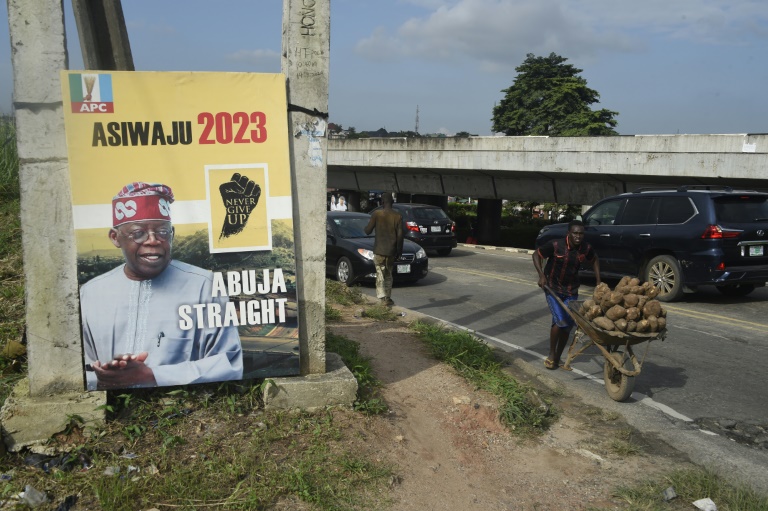
With Nigeria’s economy struggling and insecurity rife, four top presidential candidates start campaigning this week for next February’s election in an open race to replace President Muhammadu Buhari.

Less than five months before the ballot, no clear frontrunner has emerged with major candidates all confronting challenges on their path to the top political seat in Africa’s most populous country.

After two terms, Buhari steps down with Nigeria battling high inflation, oil production at record lows and security forces battling jihadists, separatist gunmen and criminal gangs across the country.

Top candidates lining up are Bola Tinubu, a former Lagos governor and stalwart of the ruling All Progressives Congress or APC and opposition Peoples Democratic Party or PDP candidate Atiku Abubakar, a former vice president on his sixth bid.

Two other candidates are challenging the dominance of the APC and PDP: Peter Obi, a former state governor generating a following among young Nigerians and another ex-state governor and former minister Rabiu Kwankwaso.

Campaigning starts officially on Wednesday, but five months is an unusually long time for Nigeria, analysts say, increasing risks that party infighting and the north-south ethnic and religious divides will complicate the election buildup.

Since returning to democracy after military rule in 1999, Nigerian elections have been marked by violence, delays, fraud claims and court challenges.

Voter turnout has also been generally low in Nigeria — 33 percent in 2019 — and the two main parties have fielded older candidates seen by many younger Nigerians as offering little change. 

That has left room for third party candidates to tap into growing anti-establishment feeling in what analysts see as a highly competitive electoral race.

There are 18 presidential candidates, including one woman. Voters will also elect Senate and Congress lawmakers in the February 25 ballot. 

“Unlike the previous six election cycles, the 2023 vote is not likely to be the usual two-horse race,” said Dapo Thomas, history and political science teacher at Lagos university.

– Divisions, splits –

Nigeria’s constitution requires candidates to win a simple majority and 25 percent of the vote in two-thirds of the country, a nod to the ethnic and religious makeup. 

North Nigeria is predominantly Muslim, the south is mostly Christain and there are more than 200 ethnicities, the largest being Yoruba, Hausa/Fulani and Igbo.  

In an unwritten, power-sharing agreement known as “zoning”, the presidency has also traditionally rotated between north and south.

After two terms under Buhari, a Muslim from the northwest, it was widely expected major parties would select a presidential candidate from the south.

But the PDP broke with zoning by naming Abubakar, a northern Muslim. APC also broke with practice by going with a Muslim-Muslim ticket. Tinubu is a southern Muslim and his vice president candidate Kashim Shettima is also a Muslim.

The APC says Tinubu’s time as Lagos governor shows his political experience. But the ruling party must contend with discontent over management of the  economy and tensions over its Muslim-only candidates.

“Strong anti-establishment sentiment will lend opposition candidates Atiku and Obi strong momentum at the start,” Eurasia Group said in a research note. 

“But divisions among the opposition, incumbency advantages for the ruling party and strong campaign messaging by Tinubu will likely give the ruling party a boost.”

PDP’s team says Abubakar has the public office experience and the business acumen to tackle Nigeria’s economy.

But the PDP is struggling with a major split. Abubakar’s victory has upset a core part of southern supporters, including Rivers State governor Nyesom Wike, an influential PDP stakeholder who has broken ranks.

PDP and APC “are dealing with quasi existential issues of their own, and important political and vote mobilisation blocks which are disaffected,” SBM Intelligence analyst Ikemesit Effiong said.

Obi’s campaign hopes their candidate can keep up his early momentum as an alternative. But his Labour Party does not have the political structure to match the APC and PDP nationwide.

“The 2023 general election will be a really difficult but seminal point in Nigeria’s evolving experiment with democracy,” SBM’s Effiong said. 

“It has the hallmarks of ending well or ending really badly.”

Close Bitnami banner
Bitnami